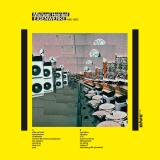
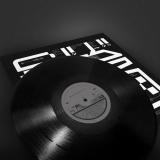
Beautiful soulful album by George Smallwood - including original material from home sessions prior to George's 1980 self- released LP. The rest, a sampling from the Smallwood mind's library of classic song writers. Huge tip!
"Recorded Live in Hyattsville, MD 1975-2015. George really had no interest in releasing this record. 'Seeing Is believing, they don't need records, trust me I did that, today they getting it live.' So this record is that, live tapes from the house, recorded on a government issued cassette recorder from National Library Service for the Blind. George calls these his practice tapes for songwriting, and performance warm-up, and never beyond his ears were they intended to travel. 'You just got to see me live if you want to really see me.. so when we get there just plug me in, and point me at that crowd' Last time I saw George they had him wired to the club system. He unplugs his Yamaha keyboard, licks the tip of the power cord and taps a beat on it, finally plugging in, synth lights up, tones all at zero, beats at zero. Then he builds from there, counting blind through a preset one hunderd factory tones and rhythm patterns. 'I gotta start off at zero, and go from there.' After the Marshmellow Band disperesed, he got this Yamaha keyboard, same one he's been playing since 1990, endless scrolling over the same presets, trying to make them fit, tempo down, tapping while telling the story and asking if that feels right to you. 'This always gonna be different live.'
Andrew Morgan (Peoples Potential Unlimited)
Search:final light
Summer of 2025, the UK techno community was shocked to hear of the sudden and untimely passing of one of its leading lights, James Baker, better known as ReKaB. As his light had been glowing ever brighter in recent years, with forays across the deep end of the techno spectrum, his passing was even more tragic. He had certainly found his voice, a particularly emotive, soul-tinged strain of techno building on the foundations of the 90s bastions of the form. Though bittersweet, Distant Worlds is immensely proud to present this release showcasing his personal evolution and mastery of the sound both he and the label love so much.
‘Art 4 Me’ opens with a transcendent chord progression, gradually incorporating brain piercing synth-work and chunky percussion before opening out into a perfect intersection of melancholy and euphoria. ‘Trapped In Boxes’ opts for a more introspective take on the classic techno template incorporating a Detroit palette of sound atop punchy bassline and beats.
Flip over for UK techno royalty Nuron’s take on ‘Art 4 Me’, a characteristically apposite reimagining. Teasing layers of inverted synth and percussive elements until a beautiful breakdown finally delivers that majestic chord progression. ‘Our World’ closes out this fantastic release with pure elegance; beats skitter, Detroit strings soar and cosmic pads align in timeless fashion. These are 4 tracks of deep, electro-soul music helping cement the legacy of one of the truest practitioners of the form over the last decade.
Megadeth have announced their final, self titled album, for release in 2026, via Dave Mustaine’s Tradecraft imprint in partnership with Frontiers Label Group’s new BLKIIBLK label. The campaign is anchored by the first single “Tipping Point”, multiple variants and exclusives and and a farewell tour has been hinted for 2026 “There's so many musicians that have come to the end of their career, whether accidental or intentional,” DAVE MUSTAINE says. “Most of them don't get to go out on their own terms on top, and that's where I'm at in my life right now. I have traveled the world and have made millions upon millions of fans and the hardest part of all of this is saying goodbye to them. We can't wait for you to hear this album and see us on tour. If there was ever a perfect time for us to put out a new album, it's now."
Music springs eternal. Recognising the enduring power of timeless albums to guide us through life, Forever Records is a reissue series dedicated to rediscovering lost musical treasures from across the spectrum of head-feeding, heart-rending electronic music.
Established by Rush Hour co-founder Christiaan Macdonald and Delsin founder Marsel van der Wielen, Forever Records places heartfelt faith in a carefully curated sequence of seminal, largely forgotten records from disparate eras, scenes and spaces within electronic music history. Tipped towards the mellow and introspective, these are albums that stop time when the needle hits the groove, stirring only when it's time to flip over before you sink back into the experience. That's what albums were always meant to be about, back then, right now, always and forever.
The Release:
Striking the sweet spot between sampledelic downtempo and earth-rooted deep house, Fila Brazillia's Old Codes New Chaos is a maverick patchwork of grooves and soundscapes. Crafted in North East England in the vibrant period before chill-out was co-opted by advertising, Steve Cobby and Dave McSherry's sharp-eared funk formula remains a cult classic suite of exquisite productions spanning deep house, broken beat and ambient shot through with wry humour.
Last physically released in limited quantities in 2002, Forever Records are revisiting this 1994 gem with an extensive reissue led by a triple vinyl pressing. As well as a new LP edition of the album, there will also be a uniquely numbered, limited edition housed in a gatefold sleeve that comes with a bonus 10" featuring two previously unreleased tracks.
'Chemistry' and 'Rankine', plus an exclusive print of Catherine Brennand's watercolour painting that graces the front of the album. All editions also features liner notes by veteran music journalist John McCready.
Press response to Old Codes New Chaos:
"The album that made the world finally sit up and take notice of the avant funk grooves coming from Hull's immaculately stoned tech funk magicians." Frank Tope, Mixmag, UK 1994.
"This album… stands out a mile from most of its peers as a work of untouchable genius." Bill Brewster, DJ Mag UK 1994.
"Fila works because they fit into that no man’s land, the space in your record collection where ambient seems too much like wallpaper and house seems just too braindead for your bedroom " Frank Tope, Mixmag, UK 1994.
"Having already created the perfect desert island disc, "Mermaids" and explored the darker side of sub bass on the 17-minute extravaganza "Fila Funk", Fila Brazillia have just unleashed their moving debut LP, "Old Codes New Chaos", and to be quite honest, you'd be fool to miss out this time around." Mandi James, Melody Maker, UK 1994.
“Where Cobby and Man rip up the rulebook on the four to the floor and probably make the greatest afterhours house album in the word”. Tony Marcus, Mixmag, 1996.
Music springs eternal. Recognising the enduring power of timeless albums to guide us through life, Forever Records is a reissue series dedicated to rediscovering lost musical treasures from across the spectrum of head-feeding, heart-rending electronic music.
Established by Rush Hour co-founder Christiaan Macdonald and Delsin founder Marsel van der Wielen, Forever Records places heartfelt faith in a carefully curated sequence of seminal, largely forgotten records from disparate eras, scenes and spaces within electronic music history. Tipped towards the mellow and introspective, these are albums that stop time when the needle hits the groove, stirring only when it's time to flip over before you sink back into the experience. That's what albums were always meant to be about, back then, right now, always and forever.
The Release:
Striking the sweet spot between sampledelic downtempo and earth-rooted deep house, Fila Brazillia's Old Codes New Chaos is a maverick patchwork of grooves and soundscapes. Crafted in North East England in the vibrant period before chill-out was co-opted by advertising, Steve Cobby and Dave McSherry's sharp-eared funk formula remains a cult classic suite of exquisite productions spanning deep house, broken beat and ambient shot through with wry humour.
Last physically released in limited quantities in 2002, Forever Records are revisiting this 1994 gem with an extensive reissue led by a triple vinyl pressing. As well as a new LP edition of the album, there will also be a uniquely numbered, limited edition housed in a gatefold sleeve that comes with a bonus 10" featuring two previously unreleased tracks.
'Chemistry' and 'Rankine', plus an exclusive print of Catherine Brennand's watercolour painting that graces the front of the album. All editions also features liner notes by veteran music journalist John McCready.
Press response to Old Codes New Chaos:
"The album that made the world finally sit up and take notice of the avant funk grooves coming from Hull's immaculately stoned tech funk magicians." Frank Tope, Mixmag, UK 1994.
"This album… stands out a mile from most of its peers as a work of untouchable genius." Bill Brewster, DJ Mag UK 1994.
"Fila works because they fit into that no man’s land, the space in your record collection where ambient seems too much like wallpaper and house seems just too braindead for your bedroom " Frank Tope, Mixmag, UK 1994.
"Having already created the perfect desert island disc, "Mermaids" and explored the darker side of sub bass on the 17-minute extravaganza "Fila Funk", Fila Brazillia have just unleashed their moving debut LP, "Old Codes New Chaos", and to be quite honest, you'd be fool to miss out this time around." Mandi James, Melody Maker, UK 1994.
“Where Cobby and Man rip up the rulebook on the four to the floor and probably make the greatest afterhours house album in the word”. Tony Marcus, Mixmag, 1996.
Ira James' Vessel Recordings keeps flying the flag for serious underground sounds with this new selection of remixes of 'Interlude.' Nonfiction goes first and keeps it deep with a chunky, heavyweight house bubbler with the most subtle synths adding colour and neat stabs lighting it up. DJ Sneak's Nitty Gritty Rub is a classic roller from the House Gangster, raw and undercooked and with serious heft in the kicks. Hector Moralez gets more upright with a warped, fleshy bassline and razor sharp hi-hats, then Andrew Macari's Kick Down The Wall mix is a final raw as you like house weapon that demands you get physical.
Groovin Recordings proudly announce the forthcoming release of "Back From Paradise", a track co-produced by the legendary Italian DJ Costantino “MixMaster” Padovano and renowned South Italian producer Antony Reale.
This record is a dedication to the enduring legacy of Costantino MixMaster Padovano. Originally produced in the late 90's but never officially released, this collaborative piece is finally seeing the light of day as a powerful celebration and tribute.
Costantino MixMaster Padovano needs no introduction to house music aficionados. He was one of the first Italian DJs to achieve deep respect in the 90s US house scene, regularly sharing the decks with titans like Frankie Knuckles, Kenny Dope Gonzalez, Louie Vega, and Todd Terry. His studio influence was massive, including official remixes for legends such as Marvin Gaye, Diana Ross, Gloria Gaynor, Chaka Khan, Mary J. Blige and many more.
Antony Reale is an established Italian DJ and producer with a large discography spanning the last two decades. He has produced and remixed a roster of top artists, including Chaka Khan, Mary J. Blige, Ultra Naté, and RuPaul.
"Back From Paradise": Originally created by Antony and Costantino during their creative prime in the late 90's, Antony has now decided to finally release the track. It serves as a beautiful and fitting monument to the memory and fantastic career of this iconic Italian DJ and producer who helped define the 90's house scene.
FAFO Records proudly presents its 36th release: Bahe Lumon EP, a long-awaited work by Giorgio Robles, founder of the label and a key figure in the underground scene. Originally produced over two years ago, this EP finally sees the light-delivering a deep, hypnotic, and groove-heavy journey rooted in minimal techno. The release features two original tracks, Bahe and Lumon, reflecting Giorgio's signature approach: elegant, rhythmic, and crafted for intimate dancefloors. The EP is further enriched by two outstanding remixes: one from Herman Saiz, a seasoned producer and founder of the acclaimed label Sound of Sirius (which previously featured a joint release with Giorgio), and another from Venda, a well-known name in the global minimal scene. Based in Australia, Venda has built a solid reputation through a series of quality vinyl releases, and his remix here is no exception. As always, this is a vinyl-only release, distributed by Memoria Records, and aimed at selectors, collectors, and true lovers of underground sounds.
Der Mittlere Westen, insbesondere der Teil, aus dem Eric D. Johnson stammt, ist eine weitgehend flache Weite. Wenn man auf der Autobahn hindurchbraust, sieht man Städte und Ortschaften in der Ferne aufragen, doch wenn man blinzelt, verpasst man andere von Menschenhand geschaffene Gegenstücke zum Leben in der Ebene, die die Landschaft prägen: Hügel um Hügel, erbaut aus den Abfällen der Vergangenheit: Mülldeponien. Einige dieser Hügel eignen sich hervorragend als Schlittenhügel, Parks und Wanderwege. Andere verwandeln organische Abfälle in Kompost. ,The Landfill" ist etwas ganz anderes: ein Berg, der die Landschaft in Johnsons Herzen dominiert. Im Laufe seiner mittlerweile 25-jährigen Karriere unter dem Namen Fruit Bats war der Großteil von Eric D. Johnsons Schaffen das Ergebnis von Geduld und Feinschliff. Seine Songs sind, um einen Ausdruck zu verwenden, Langzeitprojekte, die auf Alben zum Leben erweckt werden, welche lange Zeiträume und Erinnerungen umfassen. "Baby Man" änderte das - er verbot sich, auf Material zurückzugreifen, an dem er vor der Aufnahme des Albums gearbeitet hatte. Es war sowohl ein atemberaubendes Dokument von Johnsons Können als Singer-Songwriter als auch ein ungeschönter Bericht über die zwei Wochen, in denen er das Album aufnahm. "Diese Session war vorbei", erklärt er, "aber es gab noch viel mehr zu erkunden. Mir gefiel die Unmittelbarkeit davon, und ich wollte sehen, wie sich das auf ein Fruit-Bats-Album mit voller Bandbesetzung übertragen lassen würde." Innerhalb weniger Wochen war er wieder im Studio, diesmal mit seiner Band: David Dawda (Bass), Josh Mease (Gitarren, Synthesizer), Frank LoCrasto (Klavier, Synthesizer) und Kosta Galanopoulos (Schlagzeug). Wenn man sich "The Landfill" anhört, stellt man fest: Diese Band rockt. Johnson produzierte die ersten Aufnahmesessions in den Bear Creek Studios in Washington und machte sich daran , "den Sound dieser Band einzufangen, die mich immer wieder in Staunen versetzt - das Gefühl, in einem Raum mit Musikern zu sein, die man liebt und denen man genug vertraut, um sie einfach machen zu lassen." Sie nahmen das meiste davon in einem Durchgang auf - ohne Click-Tracks, ohne zusammengestellte Gesangsparts und mit minimalen Overdubs, wobei der häufige Mitwirkende Thom Monahan zurückkehrte, um zusätzliche Produktionsarbeit zu leisten und den finalen Mix von ,The Landfill" zu erstellen. "So machen wir es auch mit meiner anderen Band, Bonny Light Horseman, und ich war neugierig, wie es bei den Fruit Bats funktionieren würde", bemerkt Johnson. "Es ist sowohl ein sehr persönliches Album als auch mein bisher kollaborativstes." Es ist zudem das live-orientierteste Album der Fruit Bats seit "The Ruminant Band" aus dem Jahr 2009, und durch die Reduzierung der Spuren, die einen Song einer kompletten Band normalerweise ausmachen, ist die psychedelische, technicolorartige Verträumtheit ihres Sounds lebendiger denn je. Die Songs auf "The Landfill" zeichnen sich sofort als einige der besten in Eric D. Johnsons Werk aus, Suchende und Hymnen gleichermaßen. Es ist der bisher gewaltigste Gipfel, den er erklommen hat.
- 1: The Saddest Part Of The Song
- 2: All Wounds
- 3: Think Aboutcha
- 4: That Goddamn Sun
- 5: Silverfish In The Sink
- 6: Wild Pony Tower Moment
- 7: Fishin' For A Vision
- 8: Perhaps We're A Storm
- 9: Hummingbird Sage
- 10: The Landfill
PINK SPLATTER IN CLEAR VINYL[22,27 €]
Der Mittlere Westen, insbesondere der Teil, aus dem Eric D. Johnson stammt, ist eine weitgehend flache Weite. Wenn man auf der Autobahn hindurchbraust, sieht man Städte und Ortschaften in der Ferne aufragen, doch wenn man blinzelt, verpasst man andere von Menschenhand geschaffene Gegenstücke zum Leben in der Ebene, die die Landschaft prägen: Hügel um Hügel, erbaut aus den Abfällen der Vergangenheit: Mülldeponien. Einige dieser Hügel eignen sich hervorragend als Schlittenhügel, Parks und Wanderwege. Andere verwandeln organische Abfälle in Kompost. ,The Landfill" ist etwas ganz anderes: ein Berg, der die Landschaft in Johnsons Herzen dominiert. Im Laufe seiner mittlerweile 25-jährigen Karriere unter dem Namen Fruit Bats war der Großteil von Eric D. Johnsons Schaffen das Ergebnis von Geduld und Feinschliff. Seine Songs sind, um einen Ausdruck zu verwenden, Langzeitprojekte, die auf Alben zum Leben erweckt werden, welche lange Zeiträume und Erinnerungen umfassen. "Baby Man" änderte das - er verbot sich, auf Material zurückzugreifen, an dem er vor der Aufnahme des Albums gearbeitet hatte. Es war sowohl ein atemberaubendes Dokument von Johnsons Können als Singer-Songwriter als auch ein ungeschönter Bericht über die zwei Wochen, in denen er das Album aufnahm. "Diese Session war vorbei", erklärt er, "aber es gab noch viel mehr zu erkunden. Mir gefiel die Unmittelbarkeit davon, und ich wollte sehen, wie sich das auf ein Fruit-Bats-Album mit voller Bandbesetzung übertragen lassen würde." Innerhalb weniger Wochen war er wieder im Studio, diesmal mit seiner Band: David Dawda (Bass), Josh Mease (Gitarren, Synthesizer), Frank LoCrasto (Klavier, Synthesizer) und Kosta Galanopoulos (Schlagzeug). Wenn man sich "The Landfill" anhört, stellt man fest: Diese Band rockt. Johnson produzierte die ersten Aufnahmesessions in den Bear Creek Studios in Washington und machte sich daran , "den Sound dieser Band einzufangen, die mich immer wieder in Staunen versetzt - das Gefühl, in einem Raum mit Musikern zu sein, die man liebt und denen man genug vertraut, um sie einfach machen zu lassen." Sie nahmen das meiste davon in einem Durchgang auf - ohne Click-Tracks, ohne zusammengestellte Gesangsparts und mit minimalen Overdubs, wobei der häufige Mitwirkende Thom Monahan zurückkehrte, um zusätzliche Produktionsarbeit zu leisten und den finalen Mix von ,The Landfill" zu erstellen. "So machen wir es auch mit meiner anderen Band, Bonny Light Horseman, und ich war neugierig, wie es bei den Fruit Bats funktionieren würde", bemerkt Johnson. "Es ist sowohl ein sehr persönliches Album als auch mein bisher kollaborativstes." Es ist zudem das live-orientierteste Album der Fruit Bats seit "The Ruminant Band" aus dem Jahr 2009, und durch die Reduzierung der Spuren, die einen Song einer kompletten Band normalerweise ausmachen, ist die psychedelische, technicolorartige Verträumtheit ihres Sounds lebendiger denn je. Die Songs auf "The Landfill" zeichnen sich sofort als einige der besten in Eric D. Johnsons Werk aus, Suchende und Hymnen gleichermaßen. Es ist der bisher gewaltigste Gipfel, den er erklommen hat.
2026 Repress
HOLY GRAIL ALERT!!! Following on 2021’s massive reboot of Midnight Magic’s seminal classic Beam Me Up, Razor-N-Tape have now unearthed a bit of NYC indie disco history with 'I Found Love.'
Although recorded over 10 years ago in Midnight Magic’s nascent early period that produced many of their legendary hits, the song never received an official release; until now it has been heard only by select ears and lucky concert-goers. The package comes with a grip of luminous remixes by Dimitri From Paris & DJ Rocca, Sophie Lloyd, Perel, some solicited at the time of recording and some brand new, but all exceptionally fresh!
Here are some words about the song by the band:
“'I Found Love' was recorded in a fever on the heels of releasing 'Beam Me Up' New York dance music wizard Tommie Sunshine approached us about a co-write saying we should go as big as possible. So we did, it is one of our all time favorite vocal performances from our singer, Tiffany Roth. We had big plans, too, for a release but nothing quite felt right until meeting the Razor N Tape crew almost a decade later. Finally the stage is set, the lights are on, and we're ready. This song is very special to us because it is the last unreleased recording of our original lineup. We dedicate its release to our late bandmates Andrew Frawley and Jason Disu.”
Influences and inspirations come from far and wide. Sometimes they can be household names or pioneers. Other times, they can be lesser-known outfits; less known, but no less influential. Futuro belong to the latter category for Italo Moderni.
Javier and Raúl are two Spanish synthesizer sorcerers who are steeped in the traditions of italo disco and the analogue sounds of the 1980s. While Italo Moderni was still in its infancy, Futuro were a shining light with a young upstart by the name of Adrian Marth even making videos for their tracks. From these beginnings, a mutual respect and friendship developed. Now, the circle is complete with the six tracks making their way onto Accidenti; an EP that marks Futuro’s debut on Italo Moderni.
The collection showcases the breadth of Futuro’s sound. With all instrumentation played through classic analogue machines, the six works journey through neon-streaked city nights, deep uncharted jungle and sun-kissed beaches. Drawing on the music of Rimini, silver screen soundtracks and arcade innocence, this is an EP that remembers and reimagines the 1980s. Intent is immediately set, with the tense and textured “L’assalto” delivering movie score synth stabs alongside crisp percussion. “Matador” is pure elegance, panpipe playfulness countered by glacial refrains and shimmering key shifts. “Iguazu” transports the listener to the wildlife and wilderness of the Amazon; cascading chords glisten as the canopy sings. Futuro takes to the skies with the sonorous swoops of “Il sogno dell’aviatore” before the lovelorn landing of “Fantasma d’amore”, a sumptuous synthesizer serenade of unrequited romance. To close, we’re firmly on the ground for “Sotto le stelle.” Under these sparkling stars, glimmering notes glow with warmth in a finale fitting for such an EP.
And, it is fitting to finally have Futuro on Italo Moderni. A group that has inspired and will continue to do so well into the future. An accidental discovery, mutual respect and a partnership rooted in a love of synthesizers has brought Accidenti into being.
The new Endell Street release is another essential excavation from the deep, rare archives of London’s early 00’s tech house movement.
On the A side, the elusive T.V. Babies project finally sees the light of day, a hidden gem from some of the era’s most respected spinners, delivering that unmistakable after hours groove that defined the generation. Flip it over for the heavyweight Peace Division’s legendary remix of Smart Alex, a track that turned heads on the release and still carries the same raw, driving energy today.
A deep, funky and timeless slice of UK tech house, crafted for the heads and anyone tuned into the true Endell Street vibe.
Lantern in the Woods is the new album from musician and multi-instrumentalist Misha Sultan – a project that marks an important milestone for the artist. It is his first work conceived and realized as a coherent, unified statement, from the earliest ideas and sounds to the final mastering.
The story of the album began back in 2021 in Saint Petersburg, during studio jam sessions with Anton (Mårble), Vova Luchanskiy, and Nikita (Minereed). These live
improvisations eventually led to the formation of the collective Sri Primat and left a significant imprint on Misha Sultan’s solo sound. Some of the instrumental parts on the album were recorded during this period, preserving the spirit of spontaneity and open dialogue between the musicians.
Later, after moving to Thailand, Misha recorded the second half of the material. These tracks absorbed the atmosphere of southern nights, tranquility, and comfort – bringing a distinct “bedroom jazzy vibe”, a touch of sentimentality and gentle melancholy into the music.
The album offers a beautiful blend of jazz and various other influences. At its heart, it’s a search for balance between memories and the present moment, between nature and the city, between the light of the lantern and the darkness of the woods.
“It was especially important to me that my friends and close people were involved in this album. Their presence gave the music that warmth and personal feeling I value so much. My brother Zhenya (Dyad), Anton (Mårble), Vova Luchanskiy — they all contributed a part of themselves to these tracks, as did Nina Livanova, who recorded vocal parts for several songs,” says Misha.
Lantern in the Woods is a soft and sincere work, where all things intertwine naturally.
“From Birmingham and centred around the extraordinary songwriting talent of James and Patrick Roberts – initially as The Sea Urchins and since 1993 as Delta – they’ve only just got round to releasing their debut album, Slippin’ Out. It is a work of some beauty”. 9/10 NME ALBUM OF THE MONTH, 2000
“It’s classicist for sure, shot through with the influence of The Beatles, Byrds and Buffalo Springfield. In James’ downright beautiful closing ballad ‘I Want You’ one can also discern the school of ambitious English balladry that peaked in about 1968: The Casuals, Love Affair, Barry Ryan. The impression of accomplished old-schoolery is only furthered by the dizzying string arrangements penned by Louis Clark Jnr, son and namesake of the one-time orchestral chief of Electric Light Orchestra” – Mojo lead review, 2000
Having ended the 90s with the spirited ‘Laughing Mostly’ compilation of singles and demos (Guardian Album Of The Week) Delta finally released their debut studio album of twelve songs in the summer of 2000 on the Dishy Recordings label. Accepting that this might be their sole studio album the band threw everything at these recordings allowing it to exist in its own sphere, unbothered by their contemporary generation and disregarding the idea of even releasing a single.
Recorded at DEP International there was a notable difference to the scruffier, looser charm of their 1990s recordings, a tighter focus developed by having the experienced Lenny Franchi mixing the LP with them. Lenny had been working with a number of Island artists including My Bloody Valentine and Tricky so knew his way around a desk. There was also the question of budget (a few months passed between recording and mixing whilst funds were raised) so every day counted. Ultimately though you can hear the joy in the recordings, even amongst the melancholy and angst. As James recently recalled in an interview in Shindig! Magazine: “It was such a big deal for us. It’s one of my fondest memories doing that record. Everyone was happy. If there’s anything that I’d stand by, I think it would be that”
Louis Clark Jr joined the band towards the end of the ‘90s and brought a classically-trained element to the recordings particularly with his string arrangements. For ‘Cuckoo’, ‘I Want You’ and the prophetic ‘We Come Back’ Louis brought in eight players from the Birmingham Conservatoire; the baroque style is partly why the record often receives comparisons to Love’s ‘Forever Changes’.
On release ‘Slippin’ Out’ was a big favourite with writers at the NME, Mojo and The Guardian again and before long the band were signed to Mercury/Universal for their second studio album ‘Hard Light’, a far more expensive and expansive love affair. It was a temporary palatial home where things quietly fell apart again, but that’s another chapter.
“If long-term memory is nothing more than selective editing and only pop’s most weighty visceral works are built to last then it’s quite possible that in 50 years the Britpop era will be best recollected for the two bands it ostracised. Earlier this year we met Shack and thought their story of mercurial brilliance indicated the biggest music biz oversight of the 90s. We were wrong because we hadn’t met Delta yet. This is richer and more engrossing than anything by Shack”
The incredibly beautiful album "SHINSEKAI", released in 1994, is finally being reissued. Long considered a phantom masterpiece and a cornerstone of Japanese techno, the album had been out of print for many years due to the business circumstances of its original label, RISING HIGH.
Long time pals Motem (CA) and Coco Bryce (NL) team up once again as Light Club. Previously released on cassette tape in 2013, Apropos is now finally available on wax, backed with a brand new Skweee roller, O Superman.
- A1: Countrymusicdisco45 4 08
- A2: Sometimes Shooting Stars 2 57
- A3: Short Cut Home 3 25
- A4: Disappointment 3 00
- A5: Days Are Mighty 2 46
- B1: Don't Dance With Me Tonight 3 27
- B2: You Got It Wrong 2 39
- B3: Ring The Bells 3 57
- B4: Let's Make It Up 2 49
- B5: When Did You Stop Loving Me 3 54
- C1: Just Beginning 4 00
- C2: Wintering Of The Year 3 16
- C3: Let It Rain 3 04
- C4: We Tell Each Other Who We Are 3 27
- C5: Trip To You 4 06
- D1: Dirt 2 54
- D2: Heaven Right Here 3 38
- D3: If Later Ever Comes 3 03
- D4: Remember The Season 3 10
- D5: A Little Love 3 35
- D6: Weary Traveller 3 20
“The high priest of country cool” - Rolling Stone
“I like him very much. He’s very special. He’s singing with a voice I never heard before” - Townes Van Zandt
“A conscious, soulful brother” - Horace Andy
“He’s a brother to me - one of the best singer/songwriters I’ve ever met” - Adrian Sherwood
“Unearthed mine of gems from inner Wales - a songbook of ideas - that's Jeb!” - Gilles Peterson
Jeb Loy Nichols is a bonafide Country (Got) Soul legend. The Music Maker presents 21 incredibly deep, grooving and soulful songs from the cream of Jeb's catalogue; from its earliest days to his latest unreleased gems via countless rare and unbelievably good lost-classics. This 2LP set is presented in a gatefold sleeve complete with freshly commissioned artwork courtesy of Jeb himself.
In collecting these uncut, under-heard gems, we hope to do justice to Jeb's jaw-dropping artistic brilliance. A man who, in working with Adrian Sherwood, Dennis Bovell, Dan Penn, Larry Jon Wilson and countless other legendary characters, has crafted some of the most deeply affecting folk, country, soul, funk, blues, dub, reggae, gospel, rap and electronic music, ever heard.
The first music Jeb really felt a connection with was southern soul: "I used to listen to the radio at night and fell in love with Bobby Womack and Al Green, The Staple Singers and Joe Simon – that whole Nashville/Memphis/Muscle Shoals thing.” But Jeb was so much more than a soul boy, Indeed, he "went to bluegrass festivals with my dad and come home and listened to jazz records with my mother.” And, when he was fifteen, he heard his first punk record: "God Save The Queen" by The Sex Pistols. “That and The Ramones completely changed me.” In 1979 he got a scholarship to go to art school in New York: “A great time. Punk was over but hip-hop was starting and I got into that in an obsessive way.”
His first recording, in 1980, was an unreleased rap song called "I’m A Country Boy". If that isn't an insight enough into Jeb's kaleidoscopic path through music, in 1981 he visited friends in London and found himself living in a squat with Adrian Sherwood, Ari Up (from the Slits), and Neneh Cherry. “Adrian put me to work immediately, moving boxes of records all across London. It was Adrian that was and is my biggest influence – in his complete disregard for genre purity.” So, presumably you're getting the picture? A veritable musical magpie with a voracious appetite and unimpeachable taste.
"Mine has always been a meandering career. I've done what I've done, and made the music I've made, due to chance meetings. I'm not particularly ambitious; it's more important to me that I work with friends and like-minded people. I've been a big fan of Be With for years. Everything they release is essential. When they asked about rereleasing "Countrymusicdisco45" I was both pleased and flattered. We began talking about how we'd do it; two years and twenty-one tracks later, here we are. I've always thought of the music I make as Country Music. Music conceived in the country, written in the country, recorded in the country. I left London and moved back to the country so I could live among the trees, the grasses, the animals, those things that don't go to war and get greedy. This compilation is the story of that life. Hand made, lo-fi, ramshackle, stripped down, real deal music. Heartworn and funky. Music made in the kitchen, not in the studio. As the great Skip Mcdonald said, Perfect ain't perfect. It's great to see all these tracks gathered together. It feels like a family reunion. Some older members of the tribe, some newer arrivals."
Opener "countrymusicdisco45" is a song Jeb wrote about how his crew lives, tucked up blissfully in the hills: "House parties full of country folk dancing to disco, reggae, soul, country, hip-hop. All night. I recorded it at home under the influence of Stevie Wonder." It's one of the funkiest records you'll ever hear. "Sometimes Shooting Stars" was recorded in Nashville and mixed by the legendary Dennis Bovell. It's deep, dubby, majestic. A thing of fragile, melodic beauty. The party ramps back up again with the undeniable groove of "Short Cut Home" before the profoundly moving "Disappointment" arrives. One of many songs he's recorded with good buddy Benedic Lamdin (aka Nostalgia 77): "We were going for a Leon Thomas meets Richard Brautigan meets Alice Coltrane kind of thing". We think they nailed it. "Days Are Mighty", like a lot of the tracks on this collection, "started life as a demo, an attempt to get something down while it was fresh. No frills, nothing fancy, just feel." And what feels!
The irrepressibly funky "Don't Dance With Me Tonight" is a deeply moving, slow-mo organ-drenched head-nod-funky country-ballad. Next up, the breezy "You Got It Wrong" was recorded in Wales with some of Jeb's good friends and neighbours, The Westwood All Stars, featuring Clovis Phillips and Will Barnes. Skanking fiddle-flecked gem "Ring The Bells" was the first thing Jeb recorded when he moved to Wales. A combination of all his loves; country, reggae, soul. It's followed by "Let's Make It Up", a truly sumptuous string-drenched emotional groover. "When Did You Stop Loving Me" is another Nashville track, written and recorded during a time Jeb was spending a lot of time with the Muscle Shoals crew, Donnie Fritts, Spooner Oldham, George Soule and Dan Penn: "It shows, I'm sure, their influence." Oh, you bet it does!
The swaggering country-funk of "Just Beginning" should grace many groove-focused DJs' sets whilst "Wintering Of The Year", again made with Clovis, is pastoral, campfire soul. The glacial, gorgeous "Let It Rain" is from an unreleased record Jeb made with the great British jazz bass player Andy Hamill and "We Tell Each Other Who We Are" is freaky country-soul made by a man with a love for strutting, wonky hip-hop stylings. Rounding out the side, "Trip To You" is pure, uncut amphetamine-propelled drum-machine soul.
The spare, beautiful "Dirt" is from an EP Jeb made with Julian Moore in his house in South London: "All first takes, straight to tape." Swoon! "Heaven Right Here" was a very minor league hit in America: "It was produced by the brilliant and much missed Wayne Nunes. It was started in the countryside of Missouri, finished in the countryside of Wales, and recorded in the countryside of Sussex." Double swoon! "If Later Ever Comes" is electronica meets J.J. Cale business whilst "Remember The Season" is truly wonderful and breezy guitar soul. "A Little Love" was made with Wayne Nunes as well, after a night of listening to Studio One and Northern Soul. Bouncy dub closer "Weary Traveller" was written by Bill Monroe, the hero of Jeb's youth: "Monroe's music was heavily influenced by black southern churches; I've tried to keep some of that feral feel." This was the final recording by Jeb's 1990s Country-Dub band, Fellow Travellers.
The name of this compilation comes from a time when Jeb lived in Peckham, south London and he used to DJ and sometimes perform at a local bar: "The owner of the bar, a Jamaican named Count Percy, once asked me what I called my music. I told him I wasn't sure, I guess just pop music. He thought about it for a minute and then said, 'no, more like mom and pop music'. Rather than call me a country singer or a folk singer he always referred to me as The Music Maker."
With the long overdue deluxe overview of his beloved music, we hope to finally shine a light on the unheralded genius of Jeb Loy Nichols. RIYL Larry Jon Wilson, Townes Van Zandt, Bobby Charles, country got soul artists, dub, deep soul, disco, dancing, heartbreak. This deluxe collection, spellbinding from beginning to end, should hopefully go some way to ensuring Jeb reaches an ever bigger, ever more appreciative crowd of followers. Mastering for this special double vinyl edition was overseen by Be With regular Simon Francis and it was cut by the esteemed Cicely Balston at Abbey Road Studios to be pressed in the Netherlands by Record Industry. The artwork has been lovingly put together by The Music Maker, himself, Jeb Loy Nichols. "Be With is the perfect home for this mongrel music. I am forever in their debt." The pleasure is all ours, Jeb.
Glasses Man by Ken Laszlo is a catchy Italo disco track with charismatic vocals and a typical 80s flair. The song captivates with its danceable lightness and stays in your head with its distinctive hookline. Finally available again as a coloured maxi single – a highlight for collectors and fans of the genre.
In addition to the original versions, there are new and exclusive remixes by Flemming Dalum.
- A1: I Missed The Target Again (Radio Edit) 3.40
- A2: It's Gonna Rain 4.06
- A3: Hang On In There 3.59
- A4: Shine A Light 4.26
- A5: The Lord Will Make A Way 4.56
- B1: There Will Be Peace In The Valley 3.26
- B2: 1963 5.20
- B3: Reach Down And Touch Heaven For Me 2.48
- B4: Love Breakthrough 3.46
- B5: In God's Hands We Rest Untroubled 4.58
- A1: My God Has A Telephone 3.25
- B1: God's Gonna Use Me Anyway 4.02
Soul Music legend Candi Staton returns to her down-home Alabama roots on her 32nd album, Back to My Roots. The twelve-track Americana set features an array of Staton-penned originals and some well-chosen covers.
"These songs represent my roots," Staton adds as she reflects on her many trials and triumphs. "Even the new songs on some level represent something I've experienced and that's what real soul music is about." Back to My Roots was produced by Staton with her second eldest son, Marcus Williams, a professional drummer who has toured with the likes of Peabo Bryson, Isaac Hayes, and Tyler Perry. They brought in Mark Nevers of Lambchop fame, who produced three of Staton’s prior Americana albums for Honest Jon’s and Thirty Tigers, to sweeten certain tracks. “Some of the first songs I ever heard were songs like `Peace in the Valley’ and `It’s Gonna Rain,’” says Staton. “The new songs or cover songs are tracks that remind me of that era when I was growing up as a child and evolving as a young woman. That’s why I named the album Back to My Roots because I’m going back to the roots that made me who I am.”
Staton received the Americana Music Association UK’s highest honour, the International Lifetime Achievement Award, at the UK Americana Music Awards ceremony at Hackney Church in London last year for her southern soul work that stretches from her 1969 Muscle Shoals hits to her more recent collaborations with the likes of Americana kings Jason Isbell and John Paul White.
The album opens with a mid-tempo Bonnie Raitt-styled contemporary blues “I Missed the Target Again” that finds Harry Connick Jr.’s longtime guitarist Jonathan DuBose Jr. (aka the Prophesying Guitarist) showing off his skills that set the tone for the song and the album.
Staton’s older sister, Maggie Staton Peebles (who alongside Staton was a member of the Jewel Gospel Trio in the 1950s), joins her for two duets. The first, “It’s Gonna Rain,” features just a drum, steel guitar and vocals. “My mother used to sing that song to us all the time when I was a child,” Staton recalls. “It’s a really soulful kind of song I wanted to revisit.” They then take turns leading Thomas Dorsey 1939 gem “There Will Be Peace in the Valley” that Elvis Presley popularized in the 1950s.
“Hang on in There” is a new, mid-tempo song that has an old school gospel flavour and features vocals from veteran bluesman, Larry McCray.
While in Europe in 2023 for her farewell concert tour that took her to the Glastonbury Festival and Love Supreme, Staton and her British band, PUSH, went into a London studio to record a new version of The Rolling Stones’ 1972 gem, “Shine A Light.” “I love the way that came out,” Staton says. “We put a big choir on it and put our own twist on it.”
From there, Staton revives another Thomas Dorsey classic, “The Lord Will Make a Way Somehow,” with a bluesy vibe. When Al Green started recording gospel in the early 1980s, he re-introduced this song into the culture.
“God’s Gonna Use Me Anyway” is a new mid-tempo blues with subtle Caribbean influences.
The mood takes a turn on “1963.” It’s a poignant, spoken-word reflection on September 15, 1963, when four black girls were killed in the Birmingham Church bombing. “I was in the city that day and I remember the chaos and horror after the bombing,” Staton recalls. “Just thinking of how racism and hatred caused those men to kill those girls was so emotional for me that I could only do it in one take.”
It's a perfect segue into "Reach Down and Touch Heaven," a haunting, plea for divine intervention into the affairs of mankind. "That's straight Baptist," she says. "I used to be a church pianist back in the 1960s. I've never played piano on one of my records before so that's a unique song for me because I’m finally playing on one of my records. The message of that song is about the homeless. It came to me when a homeless person on the street asked me for $5. When God touches your heart to help somebody else that’s heaven to God’s hears. So, when we reach into our purse or wallet to help someone, we’re touching heaven."
Staton offers love as an antidote to hate on the bouncy, Motown-styled, “Love Breakthrough.”
Her publicist brought Aaron Frazer & the Flying Stars of Brooklyn NY’s 2017 cut “My God Has a Telephone” to Staton’s attention. She shifts the track from a retro 1960s groove to more of a 1980s Malaco Records arrangement, a subtle but distinct variation. Staton brought in her longtime friend and STAX Records legend, William Bell (“I Forgot to Be Your Lover” and “Trying to Love Two”), to add raspy seasoning to the track.
The album closes with the wistful, “In God’s Hands We Rest Untroubled,” that was originally written and recorded by the late country star, Lari White, who died in 2017 at the age of 52. “Lari sent me that song to consider at least ten years ago and I always loved it,” Staton says. “The record label didn’t want it on the album or something, so I just held it.”
Staton says, “I grew up hearing a lot of these old songs when they were new songs. I toured with the Jewel Gospel Trio in the 1950s and we got to know people like Mahalia Jackson, Sam Cooke and others who sang these types of songs. So, I’m sort of paying tribute to them and the influence they had on me by refreshing these songs and making new songs in the old style.”’
Bringing together the elder statesman of the Zulu guitar Madala Kunene and internationally acclaimed Sibusile Xaba, kwaNTU pulls two generations of South African guitar mastery into a single point of focus. Under-represented on recordings outside of South Africa, Madala Kunene (b. 1951), the ‘King of the Zulu Guitar’, is revered as the greatest living master of the Zulu guitar tradition. Sibusile Xaba, whose collaboration with Mushroom Hour Half Hour reaches back to his first recording in 2017 (Open Letter To Adoniah/Unlearning), has garnered international acclaim for his unique voice and virtuoso guitar stylings, which bring together multiple South African guitar lineages in an original, spiritualised fusion. Collaborating with Mushroom Hour and New Soil for kwaNTU, the two players come together to weave a filigree sonic fabric which reaches down to the heartwood of Zulu guitar music but moves resolutely outward, building on the past to create a deeply rooted statement about present conditions and future travels. kwaNTU – which can be roughly translated ‘the place of the life-spirit’ – is also conclave of teacher and student, as Xaba has been taught by Kunene for the last decade. Meditative, rich and sonically sui generis, kwaNTU finds these two musicians linking up within the inimitable space of sound and spirit that they share through Kunene’s teaching.
The great masters of South African music have not all had equal exposure. For many years the generation of musicians who were exiled during apartheid took centre stage, as the regime made it very difficult for those at home to be heard. More recently, a new cohort of important voices, especially in jazz, has broken through to international consciousness. But for the generation of musicians in between – those who shone like beacons in the most difficult final years of apartheid and immediately afterward – international recognition has been slow in coming.
Madala Kunene, ‘the King of the Zulu Guitar’, is among this number. A revered figure for current generations of South African musicians, Kunene began his recording career in 1990, at the bitter end of apartheid, with a now classic self-titled LP for David Marks’ storied Third Ear imprint. Born in 1951 in Cato Manor, near Durban, he had determined to be a musician from early childhood, and by the time he first entered a recording studio he had already had a long career as a popular performer. His virtuoso absorption and transformation of the venerable Zulu maskanda guitar tradition and his richly spiritualised approach to music immediately marked him out as someone special, and in the years that followed, Kunene cemented his position as one of South Africa’s musical elders. He is without doubt the grand master of the Zulu guitar tradition, but his sound and sensibility ranges far beyond it into varied sonic terrain, and he has collaborated with a wide range of musicians both at home and abroad. Now in his mid-seventies, he remains a shining light for those that are making music in contemporary South Africa.
‘He is really an amazing person,’ says the guitarist Sibusile Xaba, who has been mentored by Kunene for over a decade, and now invites a collaboration with him on kwaNTU. ‘As a mentor, he's really powerful in showing us the way. For us to have this opportunity to make music together and have a project together is really a blessing to me.’
Xaba himself grew up in Newcastle, KwaZulu-Natal, where his mother had been in a band and his father sang in a church choir, and from early childhood Xaba played homemade tin guitars. He only later realised that music was his calling. ‘I just loved music. I was fortunate. My parents loved music. And when it was time for me to leave home and go to study outside Newcastle, I knew that music was what I wanted to do. There was no second option. It was just music.’ Moving to Pretoria to study music formally, Xaba committed himself to his craft, developing a unique style that draws on both US jazz masters such as Wes Montgomery and Jim Hall, and the rich and varied heritage of the South African guitar, from inspirational jazz players such as Allen Kwela and Enoch Mthalane, to the music of the Malombo groups and Dr. Philip Tabane (Xaba has previously collaborated with Dr. Tabane’s late son, Thabang), and the Zulu guitar tradition embodied by Kunene.
‘I was really in love with the jazz guitar, I really admired it, and I was digging a lot in that direction,’ says Xaba, recalling his first encounter with Kunene’s music, over a decade ago. ‘And then one day on my timeline, Kunene popped up, and I was like – “What's this sound?” I was so connected to it. It really touched me deep. I started checking out his records, and then I found out he's from the same region as I am, which is Zululand.’ After Kunene played a show at the Afrikan Freedom Station in Johannesburg, Xaba make contact with him, and visited him at home in Durban. They struck up a friendship, and Xaba became the elder’s student, as Kunene began to pass on his knowledge and his inimitable way of playing.
kwaNTU is a tribute to this relationship and the deep learning that has defined it. The album was recorded in Zululand in the town of Utrecht, at a cultural centre called Kwantu Village, which gives its name to the album. ‘It's such a broad word,’ Xaba says, ‘but the elders teach us that Ntu is basically an energy, almost chi, an energy, a force that all living beings have within them. It's a living energy, so kwaNTU is like, almost the place of this energy.’ The two men sequestered themselves for five days of jamming, improvising and planning, and then the session was recorded in one take over a single night, with Gontse Makhene joining on percussion and backing vocals and Fakazile on vocals. Other voices and overdubs were later added in the studio in Johannesburg.
The result is a rich and meditative recording that finds two generations in a deeply engaged dialogue. Teaching and passing on his knowledge, the elder Kunene has brought Xaba into a space of sound and knowledge that they now share; Xaba’s own practice of deep communion with nature and his dedication to his musical craft make him the perfect interlocutor for Kunene. The result is an album that foregrounds the two musicians engaged at the highest levels of responsive listening, sympathetic unity, and collaborative concentration. Bringing an elder statesman of South African music to an international listening audience for the first time in decades by pairing him with one of South Africa’s most important new voices, kwaNTU is a meeting of generations and a powerful demonstration of musical lineage and continuity.
‘Before music, there is sound,’ Xaba observes, speaking of Kunene’s unique approach to music. ‘And sound is like a common compartment…it's not restricted to particular people or particular geographic places, you know what I mean? It's sound. Everybody can hear it. So when he constructs that sound into music, I think everybody resonates with the energy behind his construction of sound into song. Here at home, we really love him for preserving our history through the guitar, through his stories as well the music, the songs that he writes. We really, really admire him.’
Despite immense challenges, SOYUZ have delivered a career-defining album in KROK.
“Krok” means “step” in Belarusian - and for Alex Chumak and his band this word comes with a lot of meaning. It’s the title and theme that ran throughout СОЮЗ (SOYUZ)'s fourth album, reflecting the journeys the band has navigated in recent years, having moved to Warsaw due to political unrest in their homeland of Belarus and the outbreak of war in Ukraine. Embracing the uncertainty became both the inspiration and main lyrical theme for Alex Chumak, SOYUZ’ composer and arranger, who also decided to go a step further and change the language in which he writes songs from Russian, which is used as lingua franca in many post-Soviet countries, to his native Belarusian. The result is nine songs about dreams and outer space, ordinary miracles, things very close and very distant at the same time.
In early 2022, Chumak and original members, Mikita Arlou and Anton Nemahai, joined tens of thousands of Belarusians seeking safety abroad. Resettling in Warsaw, the band released Force of the Wind in October 2022, garnering widespread acclaim, a string of major European gigs, and led to Polish musicians Albert Karch and Igor Wiśniewski joining the band.
Deeper and more melancholic than previous works, KROK is quintessentially SOYUZ, laced with hope, dreams and a celebration of life. Given the difficulties with finding rehearsal and recording spaces in Warsaw and the departure of the drummer Anton Nemahai from the band, Chumak explored alternative options. He reached out to friend and fellow musical collaborator, Sessa, about the possibility of recording the new album in his recently finished studio in São Paulo, with Sessa and Biel Basile coming onboard as recording engineers.
At the tail end of 2024, Chumak and SOYUZ’ new drummer, Albert Karch, made the trip to São Paulo to record the first sessions for KROK. Laid down directly to tape, these sessions featured prominent Brazilian musicians Sessa, Biel Basile, and Marcelo Cabral, with a guest vocal feature by Tim Bernardes recorded at a later date. The final touches were then added back in Europe. Lush string and woodwind arrangements written by Chumak and Karch were recorded at the Polish Radio studio in Warsaw, and Rhodes parts were added by Chumak at Sven Wunder’s studio in Stockholm.
Though primarily recorded in Brazil, KROK is not a Brazilian or MPB album. It blends the band’s Eastern European roots with jazz, folk and global influences. The genre of the music is hardly identifiable: there are folk ballads and jazz-driven pop compositions covered in lush and often dissonant string and woodwind arrangements where each note is placed with care and meaning behind it.
The title track was the first song Chumak wrote in Belarusian as an adult, making for a fitting opener and one of the band’s finest tracks. Darker than most of SOYUZ’ songs, the tensions lift and lighten as the track progresses. The cinematic library jazz of 'Voo Livre', with ghostly vocals sung by Ciça Góes and Ina, feels like a modern twist on the Italian library composer Alessandro Alessandroni through its sublime choir and woodwind orchestration. Elsewhere, the heartfelt 'Lingua Do Mundo', composed, written, and sung by Chumak and the incredible Tim Bernardes, features one of the standout string arrangements from Chumak and Karch. 'Cichi Karahod' is an instant SOYUZ classic, almost Pat Metheny-esque as it opens, with the acoustic guitar and bass riff transitioning into jazzy AOR / pop-folk territory. The record closes with 'Smak žyćcia', a gentle, dreamy spoken-word poetry piece in Japanese by singer-songwriter Manami Kakudo.
- A1: Home & Garden Ft. Collette - Sexuality...he's 2 Young (Jt's Porno Beat Down Remix)
- A2: Brett Johnson - Jiffy Pop
- B1: Tiefschwarz - Acid Soul
- B2: Roy Davis Jr. - About Love (Solid Groove Remix)
- C1: Jt Donaldson Ft. Liv.e - Stay Inside
- C2: Dam Swindle - Hey Mister
- D1: Luke Solomon & Amp Fiddler - Come On Over
- D2: Honey Dijon Ft. Dave Giles Ii, Cor.ece & Mike Dunn - Work
The third and final volume of Classic’s 30th Anniversary vinyl series brings the party full circle - blending deep catalogue cuts, future-forward house, and tracks from the label’s tight-knit family of collaborators.
Like the volumes before it, this 2x12” release arrives in a raw reverse board outer sleeve, a nod to the aesthetic of Classic’s earliest releases. Inside, bold yellow and red GMUND card stock inner sleeves with embossed detailing reflect the label’s long-standing commitment to design, artistry, and collectability.
Record One kicks off with a certified Classic family affair. Home & Garden’s ‘Sexuality...He's 2 Young’ features the unmistakable voice of DJ Colette, a staple of Classic’s early era. Included here is JT Donaldson’s Porno Beat Down Remix—a stripped, low-slung rework with an irresistibly funky bass line and pure dance floor chemistry.
Brett Johnson’s ‘Jiffy Pop’, from his legendary Bounce! EP, follows up with a jittery, swaggering groove that epitomises Brett’s playful, funk-laced production style. Infectious, weird, and entirely unforgettable.
On the flip, Tiefschwarz’s ‘Acid Soul’ delivers a moody, muscular roller. Originally released during their prolific run on Classic in the early 2000s, it fuses baritone sax stabs, a Berlin-borne bass line, and a sultry vocal into a deeply spiritual house cut.
Roy Davis Jr. closes Side B with the propulsive ‘About Love’ (Solid Groove Remix)—a tough and driving interpretation by Dave Taylor that’s long been a DJ favourite in the Classic vaults.
Record Two showcases Classic’s more recent sonic evolutions. JT Donaldson’s return to the label in 2019 came with ‘Stay Inside’, a rich and breezy groove featuring the soulful voice of Liv.e. It’s an elegant and understated slice of modern house with timeless appeal.
Then comes Dam Swindle’s funk-charged ‘Hey Mister’. A punchy, bass-driven jam built around a 70s reggae-disco vocal sample. Raw and infectious, it’s been lighting up dance floors worldwide since its release.
Luke Solomon’s catalogue on Classic is vast, but ‘Come on Over’, his collaboration with Amp Fiddler, earns its place here. Seeing vinyl release for the first time, this cut overflows with musicality. Amp’s passionate vocal, free-time breakdowns, and deep funk grooves deliver pure emotional punch.
And to close, a modern masterpiece: Honey Dijon’s ‘Work’ (Extended Mix), taken from her ‘Black Girl Magic’ LP. Featuring Dave Giles II, Cor.Ece, and Mike Dunn, this powerhouse track brings together fierce vocal performances, live instrumentation, and top-tier production. It embodies everything Classic stands for: collaboration and innovation on the dance floor.
Wally Badarou is a synth pioneer and musical polymath. But rarely does he sing over his sumptuous tracks. The 6 songs that comprise new record Simple Things finally realise Wally's vision for select backing tracks from his beloved Colors Of Silence.
The tracks were originally developed back in 2001 for the release of the original CD; here, Wally has “simply" added overdubs and vocals to their mastered mixes with some discerning edits. Simply put, Simple Things is another slice of simply stunning Wally Badarou genius.
Simple Things has been decades in the making. Indeed, Wally struggled not only with the idea of singing these wonderful songs himself but singing them in English and writing his own lyrics, while wrestling with the sensational backing tracks, which themselves seemed to have taken on a life of their own.
As Wally explained to us: "In addition to the instrumental artist I have been known as, so far, there has always been a singer who simply was not sure he was, up until now. Even though “Back To Scales Tonight”, my very first album, was, indeed, a song album."
Opener "It Couldn't Be You" embellishes the uptempo groove of soca-funk gem "The Lights Of Kinshasa". As Wally explained to us, it's about “a simple love story somewhere, one rainy night, under the lights of Kinshasa. A woman, a man, online dating, quite usual in our times. Then they meet, almost missing each other." The guide vocal Wally had laid for Colors Of Silence - with an organ sound - seemed striving for words in Linguala, a Congolese language he could not speak. Therefore the decision to do it himself was not an easy one, for it had to be in English to fit his singing. We think it turned out pretty good!
"You Can't Hide Always" vocalises Wally's deep concerns set to the propulsive "Smiles By The Millions": "Populism, ostracism, radicalism, ethics and values all turned upside down worldwide, are they all inevitably exacerbated by our social networks? It could all melt down one day, like a house of cards in the ocean of fake news and false prophecies”. Wally wanted to keep the track as bare as possible but, inevitably, the backing vocals and the synth-brass arrive ultimately to present a welcome 70s flavour, with no snare-drum added.
The bright and breezy "We'll Make It Again" adds vocals to "Where Were We", a tropical, reggae-tinged bounce through the islands. Here's Waly: "Where were we when we last said: "I love you"? Simple words to express something quite common, but never quite simple to deal with. A simple song about the resilience of the broken hearts.” The reggae came from it being conceived when Wally was scoring for “Third World Cop”, a 1999 Jamaican action movie.
"Walk Straight Ahead" provides Wally's gorgeous, contemplative and idiosyncratic vocals to the deep serenity of Colors Of Silence highlight, "Amber Whispers". It's a gliding, divine, mini melodic masterpiece. It'll make you swoon in its extreme beauty. As Wally describes, "it started as just whispers, sweet amber whispers. Then the colour turned darker, as darker skies seemed to fall upon us while the whole world keeps on walking ahead, straight ahead, regardless of the blatant warnings, feeling much too comfortable in conformity. Initially, the verses were to be spoken only. I realised they could be sung all the while, without overshadowing the ethereal atmosphere." Amen.
The serene, celestial "Painting My Life Blue" presents the vocal version of "Days To Wonder". Says Wally, "how does it feel when your second half is gone after decades of riding life together? Past the temporary loss of your bearings, you come to realise you've been blind to the essential, and suddenly you can see...For this most intimate song of mine, I had tried to come up with a melody on top of the existing backing track, long before realising the melody was in the keyboard part already. It just needed to be properly mixed with it."
The profoundly emotional "Just Two Lovers" works up the formerly-too-brief and glorious "Crystal Falls" into a much fuller masterpiece and features acoustic guitar sparkle before fully glistening with some gentle head-nod percussion. Waly explains further: "Dear little green men, please tell me, what is it about us that makes you want to come and visit us so often (contrary to Fermi's assertion)? And here is the reply I believe I heard them sing: "You've got the key you've been searching for: Love”. I reverted to the initial backing track I had made around 1985, which already bore the melody, and which I added acoustic guitars to, before singing it." An astounding closer.
A synth specialist, there can be few artists more under-appreciated given their vast influence than Wally Badarou. His solo work practically defined the sound of the Balearic DJs of the 1980s, and thus the more sophisticated sound of dance culture thereafter. He was one of the Compass Point All Stars (with Sly and Robbie, Barry Reynolds, Mikey Chung and Uziah "Sticky" Thompson), the in-house recording team of Compass Point Studios responsible for a series of albums in the 1980s recorded by Grace Jones, Tom Tom Club, Mick Jagger, Black Uhuru, Gwen Guthrie, Jimmy Cliff and Gregory Isaacs. Badarou's keyboard playing could also be heard on albums by Robert Palmer, Marianne Faithfull, Herbie Hancock, M (Pop Muzik), Talking Heads, Manu Dibango and Miriam Makeba. He also produced Fela Kuti. Phew!
When we asked Wally about the significance of this collection's title, he explained: "These are "Simple things” that everyday’s life seems to build upon. The simplest are the harder to describe, but when satisfactorily described i.e. with simple words, they are the more genuine and authentic to express and share. I’ve immersed myself in other classic song lyrics, something I hardly did before, just to appreciate the genius behind the simple words they were made of, and had a great time studying how powerful they were in expressing complex ideas such as love."
Recording was twofold: first, most of the backing tracks were recorded in 2001, in Wally's studio in Normandy, mostly using hardware synths and Yamaha digital consoles. Then, he fine-tuned the melodies and wrote the lyrics in late 2023, then added some overdubs and sang them all during summer 2024. States Wally, "Digital Performer was and remains the DAW I’ve been using throughout, ever since the 80s."
Wally's sophisticated synth textures and expressive keyboard runs are so full of character, so full of life, that this work of art transcends any easy genre categorisation. Meticulously remastered and cut by both Simon Francis and Cicely Balston respectively, it has been pressed to the highest possibly quality at Record Industry in Holland. Sometimes, the simple things are the most extraordinary.
Unearthed from the Crammed Discs vaults after nearly four decades (Originally recorded in 1987), a hidden gem finally sees the light. Maurice Poto Doudongo’s The Lost Album arrives on vinyl for the first time—limited to 500 copies, with printed inner sleeve featuring release notes and photographs.
Back in the hazy margins of late-’80s Brussels, where boundary-blurring sounds were seeping through the cracks of pop music, a young autodidact named Maurice Poto Doudongo was crafting music that didn’t quite belong to any scene. Born in Kinshasa and growing up in Belgium, Maurice was a sonic nomad—raised on Franco, Miriam Makeba, and Tabu Ley Rochereau, transfixed by James Brown and Prince, and shaped by the fertile collision between African music and experimental electronics occurring all around him.
Leaving school at 16 to concentrate on music full-time, he began recording on borrowed 4-tracks, using cardboard boxes for percussion, and absorbing whatever sounds the airwaves served him: “Music has no frontier,” he says. “You take what you like. Prince, Fela, Papa Wemba—there is no contradiction. It’s all part of the sound.”
The result? A record that’s equal parts analog drum machine funk, homegrown Afro-pop futurism, and new wave R&B-informed synth poetry. Marc Hollander, founder of Crammed Discs, met Maurice through his friend and associate, musician/producer Vincent Kenis and quickly recognized the spark. The two began working in earnest, preparing tracks intended for a full-length release that, for reasons lost to time and memory, never materialized—until now.
Marc remembers: “The album was never completely finished. “Bolingo” was the only track that came out on a Crammed compilation at that time… and the rest sat on the shelf for decades until we started opening the Crammed vaults.”
Maurice recalls the session as being, “like an unstoppable current”. Listening now, the Lost Album feels both of its time and well beyond it. While tracks like “Momo” sound not a million miles away from the slinky and sophisticated Balearic pop ambience of Wally Badarou’s Echoes album, "Passport Train" shakes itself loose of any genre boundaries, veering into free-form Afro-electronica and tough electronic rhythm. Others pulse with a sweet and soulful groove that suggests dance floors dreamed of but never reached.
In decades hence, Maurice never left music, and the music never left him. Now working mainly as an arranger, he describes his job as being like that of a musical psychologist: “Someone comes to me with their sound, and before anything I have to understand their mind and heart,” he explains. That same intuitive fluency can be heard across this entire album—music that listens before it speaks, that absorbs before it asserts.
This reissue is more than a remastering. It’s a second breath. Sourced from cassette roughs and 24-track demos, carefully restored with Maurice’s blessing, and released as a complete album on vinyl for the very first time, The Lost Album isn’t lost anymore.
It just took nearly 40 years to find its way to you. - Editions de Lux
A record born of insurmountable joy and simultaneous profound loss; World Maker marks a time of great change for Psychonaut, both personally and musically, as the band burn away the philosophical narrative complexities of previous offerings with a searing, panoramic clarity that implores us to savour the beauty of the now as a means of leaving a legacy for the future. The traditional, three-piece line up of Belgian, psychedelic post-metal collective Psychonaut has long belied the compositional prowess, captivating narrative depth and crushing live presence of a band now operating at the forefront of forward-thinking, contemporary heavy music. Having sent a shockwave through the post-metal and prog scenes with their three times repressed Pelagic Records debut Unfold The God Man in 2020 before following it up with the transformative metaphysical complexities of 2022's Violate Consensus Reality, Psychonaut have played prestigious Belgian open-air festivals like Alcatraz, Rock Herk and Boomtown Festival as well as boutique events such as Soulcrusher, Roadburn Redux and A Colossal Weekend whilst sharing stages across Europe with the likes of Amenra, Brutus and Pelagic labelmates The Ocean and PG.Lost. The seed of World Maker took shape just as the campaign for Violate Consensus Reality came to a close, with the news that guitarist/vocalist Stefan De Graef was to become a father. This tilting of life's axis led De Graef, like most fathers-to-be, to re-assess what was really important. As such, the music he was inspired to write felt free of the band's previous philosophical and spiritual foundations and instead took the form of life lessons for his unborn son, a legacy of love in case something were ever to happen. This hopeful euphoria shines keenly throughout World Maker as an uncharacteristically optimistic warmth; from the reverberating Rhodes organ on the titular opening track and the meandering, free-jazz inspired guitar solo that introduces `Everything Else is Just The Weather' to elements of world music, electronica and the otherworldly voice of Dutch multi-instrumentalist and old friend Anthe Huybrechts (Anthe/Helion Creek) most notably on tracks like `Origins' which also features tabla, a pair of indian hand drums, as its propulsive heartbeat. Whilst Psychonaut's giant riffs, punishing polyrhythms and guttural vocal rage are more resplendent than ever, there is a wider dynamic spectrum to World Maker that sees the band proudly exploring their more delicate, intimate extremes as well as their most aggressive and abrasive. Not long after the birth of De Graef's son came the devastating news that both his own father and Psychonaut bassist/vocalist Thomas Michiels' father had been diagnosed with advanced cancers. Living day-to-day and torn between joy and grief, the band found themselves shedding the grand scope and world-shattering agenda of Violate Consensus Reality to focus on the here and now. Lead single `Endless Currents', the first full track on the album, explodes in a barrage of staccato guitar tapping but mellows to let the powerful, newly pared back lyrics ring out as a call to embrace the flow and follow joy. The song's final few words `Lead the way. / Soar. / Everlong.' double as both a greeting and a goodbye as the trio build their formidable post-metal might to a thunderous breaking point. Similarly, the pulsing, propellant `Stargazer', named so for De Graef's son being born in stargazer position, pairs delicate guitar motifs and folk-inflected optimism with huge and sprawling breakdowns as some of the band's most genre-pushing work to date; asking difficult but important questions of what happens next. It is `And You Came With Searing Light' though that most immediately exemplifies Psychonaut's redirected ambition on World Maker, as euphoria collides with blinding fury. The first track written for the album, `_Searing Light' is easily the most complex and initially wouldn't sound out of place on Violate Consensus Reality. Originally meant to be the new album's opening track; the decision to defer its impact, not to mention its compositional and dynamic gravity, speaks of a fundamental change to the band's very core. The words "Discover the world with wide eyes" recurring throughout speak as much to those having lost a part of their world as they do to those seeing it for the first time. Amidst such turbulent times, the band found strength and support within their Post-Metal community. The album was recorded and produced by the band alongside their longtime collaborator and close friend Chiaran Verheyden (Hippotraktor) with help and advice from Psychonaut's live engineer Victor, who will no doubt make this album sound just as awesome on stage. Even the artwork for World Maker was a family affair, being designed by close friend Sam Coussens of Belgian cosmic sludge metallers Pothamus. In the face of life's soaring highs and desolate lows, World Maker is direct and brave without sacrificing any of Psychonaut's raw power, creative innovation or inimitable musical depth. Where their previous full-length offerings have charted grand introspective courses through time and space, World Maker is breathtaking in its uncompromising clarity: a father singing to his newborn son as a son bids his own father farewell. FOR FANS OF Mastodon, Russian Circles, Tool, Gojira, The Ocean, Pelican, Hypno5e, Cult Of Luna, Amenra
Feel Fly, the alias of Perugia-based producer Daniele Tomassini — a visionary force in Italy’s electronic music scene and co-founder of Afro Templum — debuts on Taste Rec with his new EP.
Titled Festina Lente — an old Latin saying that means "make haste slowly" — this release invites listeners to surrender to dance, movement, and the flow of energy in a timeless space, untouched by the idea of an ending. A space that feels magical.
The EP is sincere and atmospheric, moving through the artist’s deep musical roots: progressive rhythms, cosmic moods, and a touch of lightness drawn from Italian dance culture.
The A-side opens with the title track: spacious arpeggios and dreamy textures create a soundscape that invites you to get lost in the music — a tribute to the carefree spirit of the ’90s.Techla follows with a more minimal, introspective vibe. Its hypnotic bassline feels like a journey into the unknown.
The B-side starts with Somo, a bright and catchy track full of sunny melodies and feel-good energy, evoking Italo disco moods. Finally, Flusso Libero closes the EP with elegance and depth. It features a unique vocal sample that stands out in Feel Fly’s style, tying everything together with a nod to ’90s nostalgia.
This is a musical story that blends sacred, dreamy visions with raw rhythmic sequences and warm, synthesized basslines.
A futuristic soundtrack for an ancient ritual.
COWBOY FAMILY kicks off their new edit series, MEAT HOPE., with its first installment: a long-circulated club weapon finally making its way to vinyl. Already spun across countless dancefloors, this much-requested cut now sees the light of day as an official release.
Crafted under aliases by members of the COWBOY FAMILY crew, these edits reflect a playful, subversive spirit—familiar, yet twisted just enough to make them irresistible on the floor.
Stuff a banana in the muffler of a Beverly Hills cop car and head out to grab this vinyl—once it’s on your decks, you’ll be “easily” lighting up dancefloors everywhere.
Vinyl only.
After the warm reception of its first VA release, Phosphor is back with a new chapter: darker, more mysterious, and with a solid line-up of artists. The A-side sets the tone with two club-focused tracks made to move the floor, while the B-side drifts into a more hypnotic and introspective territory.
The record opens with “Satisfaction”, a club-driven cut marking Jesse Maas’ first appearance on Phosphor. Heavy basslines, crisp percussion and a vocal hook give it a strong presence on the dancefloor.
Next up, “Unlimited” sees the label’s founders, Blue Vision, reaffirming their style: melancholic yet groovy, nostalgic yet forward-looking. Deep electro wrapped in lush synths and a powerful low end, it’s a track that continues to shape their identity.
On the B-side, Light Blue File steps in with “Consciousness”, a hypnotic journey marked by his signature production. Rolling basslines and intricate breakbeat drums build a tense, immersive energy.
The VA concludes with B.AI delivering a spacious, emotional piece. Floating textures, drifting pads and a subtle pulse create a deep and introspective finale.
This is the story of an artist in search of sound and breath: an artist who dares to question the rhythm of silence—an invitation to rethink music, sound, and musical collaboration. This is the story of a journey that, after opening countless paths, has finally found its vessel—and its messengers. Three artists of profound musical truth and radical freedom, merging into an exceptional trio that crosses genres and transcends words in a journey toward pure emotion.
Le Rythme du Silence is the culmination of this long search. Yom delivers it here with violinist Théo Ceccaldi and cellist Valentin Ceccaldi—kindred spirits in sound. “I’ve been working on this idea of the ‘rhythm of silence’ for years,” Yom explains. “I first heard the phrase from a Sufi master, describing the foundation of meditation. It struck something deep in me. I’ve practiced meditation for a long time, and we often think of it as a kind of stillness—opposed to noise and life. But in truth, the rhythm of silence enables meditation. It means accepting that the world continues to move and live around you, even as you try to be still. I wanted to compose from that place. To imagine sound as vibratory matter—the primal substance of creation. That required letting go of fixed structures: forgetting melodies, abandoning the idea of a constructed solo. I needed to leave behind music as a system, and touch sound as a living, breathing entity. It took years. Many projects led me elsewhere. But with the Ceccaldi brothers, I finally found the right resonance. Working with them was simply obvious—it was indredibly powerful.”
Yom first rose to prominence reimagining Jewish traditional music with his 2008 debut New King of Klezmer Clarinet. Since then, his path has led through rock (With Love, 2011; You Will Never Die, 2018), electronic utopias (The Empire of Love, 2013), meditative and sacred soundscapes (Prière, 2018), and countless unclassifiable hybrids (Unue, 2009; Green Apocalypse, 2010). It was inevitable that he would eventually cross paths with the free-spirited Théo and Valentin Ceccaldi—two artists who also place collaboration and genre-blurring at the heart of their artistic development. Their projects are always bold, demanding, and full of life (Kutu, Tricollectif, ONJ, Velvet Revolution, Grand Orchestre du Tricot, Lagon Noir, Constantine, etc.). And so, when the three met within the iXi string quartet, something clicked.
“I was seated between the two of them in the quartet,” Yom recalls, “and I could feel their energy flowing from both sides—it was wild! They’re so tuned into each other, they don’t need words. It’s like they’re connected by musical Wi-Fi. The groove happens instantly. They’re precise when they want to be—thanks to their experience in pop-influenced projects —but they can also let go completely, diving into pure sound. That’s exactly what this project needed.”
Without a single rehearsal, the trio formed instinctively. They began performing Yom’s compositions live, unfolding them into a single continuous piece, where clarinet and strings stretch the limits of sound and breath.
Bowed, plucked, or prepared with clothespins, the Ceccaldi strings engage in a playful and intense dialogue with Yom’s custom B-flat clarinet. Through their imaginative listening and fearless invention, air and space open into a vast new soundscape—one that lies somewhere between meditation and healing music.
“When Yom shared the concept of the rhythm of silence, we were immediately drawn in,” says cellist Valentin Ceccaldi. “There’s a deep intensity and spiritual commitment in his music that really spoke to me. With this trio, we’re trying to dive into the core of sound—but also to create a kind of communion with the audience. It’s like gradually turning up the volume on silence, and realizing it’s made of countless tiny sounds—the music of particles in motion" This stripped-down intensity demands full presence—body and mind—of these three musicians, vibrationally connected in a state close to trance. With them, we enter a journey - not religious, but sacred nonetheless.
The Rhythm of Silence becomes an echo of our most intimate, most distant inner landscapes.
An album—and a trio—to return to without end.
Following the lush listening LP outing by KAMM, the EG team is back in fine floorrocking form, this time with both label operatives on the dials as Rodney joins Dave Aju for his debut co-production. And what a debut it is: Highly-potent, raw, swinging house music of the highest order, complete with knocking 909 kicks, thick slapping snares, and a hypnotic melodic call-and-response tonal section that keeps things properly lifted and moving throughout. The vox evoke label boss Aju’s earlier catalog work, and he’s in particularly pointed mode here, spitting fire spoken word lines calling out various questionable corners of the dance music scene and humanity on the whole. A bold light-shining display during notably dark times, defending the once-sacred underground dance space against runaway trends of ego-driven capitalism, online image over actual skill sets, and the beyond low-ball barrier of entry into the arena. But by the time the soulful chorus lines hit and rise us up and onward toward the blissful musical finish, it is clear that this is in fact a unifying floor anthem and that indeed despite our differences amidst disheartening global chaos, at least “We Still Dancin". As always with the seasoned DJ-focussed three-piece Elbow Grease EP offerings, here we have the full A-side OG Vocal Mix cut at a crispy and tight 45rpm, a deliciously stripped and leveled-up EG Dub Mix on the B1, and finally the uplifting B2 Vibe Mix which doubles-down as half ambient instrumental builder and essential acapellacapella
Oscar Mulero and Another Machines join forces together for the next installment of their Joven Prisionero Project. No less than seven cuts on the zeroes and ones version and a six cut vinyl gonna be released on our 78th release. You may wonder what's inside this new outcome, and the answer is easy and direct: Pure techno with no roundabouts. But techno is an open language and this duo speaks all dialects: From the merciless and bleepy Conocete to the functional and fast paced minimalism on De tunica roja passing thru the drilling Surrealista Entorno stopping via Birmingham on Persiguiendo ecos, breaking the grooves and going martian for Mundo Efimero, back to Birmingham again with El nuevo jardin to finalize the duties with Identidad Variable in a pure scifi mood. If you want to spend your money on a totally useful collection of tools here you have the perfect package. El Joven Prisionero delivers to you exactly what your bodies and minds need under the strobe light. Soon available in your trusted physical and digital dealers.
Step into the emotional landscapes of Saudade’s new EP Expensive Noise, a multi-textured journey where analog machines speak louder than words. Each track captures a different state of mind, blending depth and groove with raw, honest sound design. The EP opens with “Expensive Noise” — direct, grounded, and hypnotic. No detours, no hesitation — just raw analog power locking into a loop with magnetic tension. The groove builds steadily, shifting your state of mind as the rhythm takes hold. “Anyway” brings a dreamy, bittersweet touch. Exclusive to vinyl, this extended version unfolds like a teenage memory you never shared — warm, nostalgic, somewhere between electro and pop, glowing softly from within. “Colored Life” dives into detailed minimal deep house territory. Rounded and generous, its sound design sculpts soft clouds of melodies against crisp, syncopated snares — floating between dream and presence, like a cushion made of rhythm and light. “Porte de la Villette 45” echoes the EP’s birthplace — a raw area near the Parisian périphérique, where engines roar, people hustle, and concrete weighs heavy. Yet within this urban friction stands Studio Villette 45 — a funky, soulful shelter where the machines find their groove. The record closes on “Cœur” (heart in French) — a stripped-down, heartfelt outro. Just a Prophet 5 pad, no tricks. A moment of vulnerability, stillness, and truth — as if the music had finally dropped its armor. Between analog heat and emotional honesty, Expensive Noise is Saudade at his most sincere — building bridges between power and softness, body and soul, sound and silence.
After a long hiatus, artist Yu returns with a new EP featuring four tracks in which he has finally been able to fully express his vision of sound. The album features hypnotic rhythms that move from dark atmospheres to moments of light, alternating between darker sounds and more lively and happy moments. Definitely suitable for the dance floor, but with emotional aspects that make each track a complete experience for the listener.
Finally, I was able to devote some time to actually getting some collaborations completed for a new release of the Meeting Of The Minds series, with some brand new names arriving to Future Retro London!
Nebula is one of my favourite artists making new jungle atm, his versatility in music on the darker & lighter sides of the spectrum, the richness of his atmospherics and melodies & the way his drum edits flow throughout his tracks, I consider him a big inspiration in what I make. It was an absolute pleasure to be able to work with him on "Without Fear".
I've been enjoying some of what Stekker's been doing in his music, representing the ruffer lo-fi side of production and he's been putting out some great stuff on his own label Ruff 'n' Tuff as well as on a release he did for Coco Bryce's label Myor. I reached out to him about a collaboration and he had started something, which I was really into and that led to "The Quest".
I owe a lot to DJ Trace, as he was one of the first big names in jungle/d&b to really show me support for what I was doing. He gave me my debut vinyl release when he asked me to remix an old classic of his called "Final Chapta", which he released in 2011 on his label DSCI4. I also had music released on a label he started a few years after that called 117 (which I also helped design artwork for), so we go way back. He's been making more music than ever before recently and I was lucky enough to be able to get a collaboration in with him and "Patterns Of Thought" is the end result of that.
I've known Ark X & Duburban for a number of years, I would see them at a lot of events up north, as well as at events in London that they'd travel down for. They also were good friends with Kid Lib and would drive down with him whenever he was visiting/DJing in London & I was becoming familiar with their music through him, through Ark X's labels Supercharger & Hypercharger (where some of Ark X's music was being released under his previous alias of Black Orchid) & through Duburban's collaborations with Jahganaut. Big up to both of them for collaborating with me on "Come A Dance"
Ottagono Italian Dojo presents the second release on the Ottagono Retro outlet imprint label through South America. This special occasion marks the opening of a second Ottagono headquarters in Argentina, introducing an exclusive project that blends the essence of the Italian music family. If you’re familiar with Latin American music genres like Rock, Post Punk, Industrial, Minimal Synth, New Wave, Synth Pop, and the broader electronic music scene of the last 40 years, you’ve surely heard of iconic bands such as Virus, Soda Stereo, and Sumo. Among these bands, having in common their birth in Argentina, Alfredo Peria is another influential music pioneer and key figure in the entire Latin American underground movement. In the mid-80s, he founded the techno duo Mimilocos. Because of this, over the years, Alfredo has been renamed the “Juan Atkins de Latino America”. Later in the 90s, he joined major labels like Polygram and BGM, living between Spain and the United States. He founded another project called Limbo with Julio Moura, a member of Virus and brother of Federico Moura. In the late ’90s, he released his first solo album with Fonovisa. After spending years travelling the world, Alfredo returned to Argentina and, alongside Cecilia Olariaga, founded his own production company, Pulpería Discos. The music world once again showcases the strong connection between Argentina and Italy, evident in the heritage of artists and figures like Maestro Alfredo Peria and la familia Ottagono, including the new Latin America manager, Federico Luchetti.
A.1: Sentidos is a new wave Latin American classic! After over 30 years, it finally received its first vinyl release. Originally written in the early ’90s by Alfredo and Julio Moura, then members of Limbo, a band formed after Virus disbanded following the passing of Federico Moura, Julio’s brother, Virus frontman. This updated version, enhanced with synthesizers and additional production by tech wizard Franco Colombo , transforms the original lyrics into a retro-futuristic club anthem with 80s vibes, It captures the essence of early Depeche Mode, Nitzer Ebb, and the Chicago Warehouse scene, while also being a great fit for fans of Juan Atkins and Yellow Magic Orchestra as well.
A.2: Yo soy su Cuba – 3.0 Adicta mix is the latest version inspired by the original demo from the 80s. This mix showcases Electro Tech Synth Pop music created by Alfredo, Rudie Martínez, Joaquín Franco, Juan Pablo Bidegain, Germán Moreno, and Pablo Torterolo, collectively known as Adicta.
A.3: Castillitos de arena – original ’87 demo, it’s a classic in Argentina underground music movement, among fans and people lost in club culture, even though it never got an official release in any format. This was frequently performed during the early years of Mimilocos live shows, but it was never officially released. A few years later in Spain, a Latin pop tropical house version was released, presenting a fresh and entirely different take from the original’s obscure essence marked by minimal synth, EBM, and deep, atmospheric sounds, which thanks to Ottagono family will see the light.
B.1: Gesell – From Villa Gesell to Ibiza, from Alfredo with love to another renowned
“Argentino” known as DJ Alfredo. This is an Ottagono tribute to one of the Isla masters and the Balearic sound. Gesell feels like a fresh 90s UK track by Farley & Heller or DJ Harvey, immersed in the emotive Alfredo Peria landscape—something you could easily hear at Café del Mar during sunset, played by another maestro we all miss, José Padilla.
B.2: Yo soy su Cuba – Now available on vinyl for the very first time, featuring the original demo. There’s not much to add—just sit back and enjoy this pure 80s treasure in all its glory.
B.3: Over the past months, Claudio and Federico have listened to many unreleased
demos and tapes from Alfredo’s extensive musical career. Among them, “7 Days” stood out for its simple beauty and potential as a hit for underground enthusiasts. This track seamlessly combines post-punk, new wave, and tropical Balearic vibes. From ’95 to ’25, it has remained fresh and innovative, once again proving that the Ottagono crew understands the essence of timeless music.
The year is 1989 and it's the peak of the Belgium New Beat craze. Not limited to records and clubs, the New Beat lifestyle was marketed to death with all sorts of fashion items, a plethora of accessories, and at least one erotic movie.
Fast forward a few decades. In the middle of nowhere, Switzerland, tucked inside a long-forgotten video store that closed its doors in 1999 and sat untouched for 20 years, we stumbled upon a strange treasure amongst tons of VHS hidden in the adult section. A mysterious VHS labeled "Erotiques New Beat."
What we found was pure 1989 Belgian erotica-low budget, fog-drenched, and neon-soaked. Minimalist sets. Girls in PVC. Flashing lights. Mirrors. Fog machines. Loud colors. It was erotic, sure-but also oddly sweet, almost innocent in its surreal, lo-fi dreaminess.
And then came the soundtrack.
That's what really floored us. A collection of New Beat gems, raw, simple, irresistible. Somehow, it captured the full spectrum of the genre: 100-110 bpm grooves with shades of EBM, sleazy coldwave rhythms, sensual synths, proto-Goa pulses, monk choirs, oriental melodies, and a healthy dose of movie samples. It felt alive. Timeless. Utterly perfect.
We had to know more. We dug, tracked down the source, and in 2020, reissued the soundtrack on vinyl. It sold out fast. Now, five years later, we thought about pressing one final batch. A special edition on picture disc, featuring the original smileys from the VHS.
- A1: Queen - Somebody To Love
- A2: Electric Light Orchestra - Livin' Thing
- A3: Fleetwood Mac – Say You Love Me
- A4: 10Cc - I'm Mandy Fly Me
- A5: Dr. Hook - A Little Bit More
- A6: Chicago – If You Leave Me Now
- A7: Eric Carmen - All By Myself
- B1: Frankie Valli & The Four Seasons – December, 1963 (Oh, What A Night)
- B2: Leo Sayer - You Make Me Feel Like Dancing
- B3: David Dundas - Jeans On
- B4: Bryan Ferry - Let's Stick Together
- B5: Sailor - A Glass Of Champagne
- B6: Smokie - I'll Meet You At Midnight
- B7: Slik - Forever And Ever
- B8: Showaddywaddy – Under The Moon Of Love
- B9: Brotherhood Of Man - Save Your Kisses For Me
- C1: Elton John & Kiki Dee - Don't Go Breaking My Heart
- C2: Cliff Richard – Devil Woman
- C3: Tina Charles - I Love To Love
- C4: The Real Thing - You To Me Are Everything
- C5: Billy Ocean - Love Really Hurts Without You
- C6: Dana - Fairytale
- C7: R & J Stone - We Do It
- C8: Gladys Knight & The Pips - Midnight Train To Georgia
- D1: Wings - Silly Love Songs
- D2: Neil Diamond - Beautiful Noise
- D3: Daryl Hall & John Oates – She’s Gone
- D4: Paul Simon - 50 Ways To Leave Your Lover
- D5: Thin Lizzy - The Boys Are Back In Town
- D6: The Who - Squeeze Box
- D7: John Miles - Music
- E1: Donna Summer - Love To Love You Baby
- E2: Andrea True Connection - More, More, More
- E3: Candi Staton – Young Hearts Run Free
- E4: Melba Moore - This Is It
- E5: Diana Ross - Love Hangover
- E6: Tavares - Heaven Must Be Missing An Angel (Part 1)
- E7: Barry White - You See The Trouble With Me
- E8: The Isley Brothers - Harvest For The World
- F1: Dolly Parton - Jolene
- F2: Pussycat - Mississippi
- F3: Bonnie Tyler - Lost In France
- F4: Demis Roussos - Forever And Ever
- F5: Guys N Dolls - You Don’t Have To Say You Love Me
- F6: Gallagher And Lyle - Heart On My Sleeve
- F7: Joan Armatrading - Love And Affection
- F8: Elton John - Sorry Seems To Be The Hardest Word
next instalment in our ongoing ‘Yearbook’ series – pressed in lovely-lime-green vinyl on a 3-LP set packed with 47 stellar tracks celebrating a brilliant year of pop singles. NOW – Yearbook 1976.
LP1: Kicking off in magnificent style with signature songs from legendary artists: A #2 in 1976, Queen’s ‘Somebody To Love’ is first up, followed by Electric Light Orchestra with ‘Livin’ Thing’, Fleetwood Mac with ‘Say You Love Me’, and 10cc with ‘I’m Mandy Fly Me’. Dr. Hook had a huge hit with ‘A Little Bit More’, and Chicago hit #1 with their all-time classic ballad ‘If You Leave Me Now’, while the side closes with Eric Carmen’s enduringly popular ‘All By Myself’. Flip the LP over for huge hits from the year – including 4 #1s: 14 years after making their UK chart debut, Frankie Valli & The Four Seasons enjoyed their first chart-topper with ‘December 1963 (Oh What a Night)’, whilst Leo Sayer reached #2 in the UK, and #1 in the US with ‘You Make Me Feel Like Dancing’. Pop gems follow from David Dundas, Bryan Ferry, Sailor, Smokie – and Slik, featuring a pre-Ultravox Midge Ure reached the top with ‘Forever And Ever’. Showaddywaddy celebrated their biggest hit and their first #1 with ‘Under The Moon Of Love’, and the UK won at Eurovision, with the winner ‘Save Your Kisses For Me’ by Brotherhood Of Man not only hitting the #1 spot but also becoming 1976’s biggest seller and bringing the first LP to a close.
LP2: Opening with a stellar run of pure-pop classics. Elton John celebrated his first UK #1 single, in a duet with Kiki Dee on ‘Don’t Go Breaking My Heart’, and Cliff Richard with ‘Devil Woman’, ahead of dance-floor favourites – and both #1s in ’76: Tina Charles with ‘I Love To Love’ and The Real Thing with ‘You To Me Are Everything’. More pop nuggets follow from Billy Ocean and Dana, before the side finishes with R&J Stone with ‘We Do It’ and the sublime ‘Midnight Train To Georgia’ from Gladys Knight & The Pips. Over on the second side, ‘Silly Love Songs’ gave Wings a UK #2 and became ‘76’s biggest seller in the US and opens a run of great vocalists; Neil Diamond, Daryl Hall & John Oates with ‘She’s Gone’, Paul Simon’s ’50 Ways To Leave Your Lover’ and a trio of the year’s classic rock smashes: ‘The Boys Are Back In Town’ from Thin Lizzy, ‘Squeeze Box’ from The Who, and closing with the epic ‘Music’ from John Miles.
LP3: Celebrating ‘76’s dancefloor with a stunning collection of disco and soul gold: First up, Donna Summer with her debut smash ‘Love To Love You Baby’ before ‘More More More’ from Andrea True Connection and Candi Staton’s timeless ‘Young Hearts Run Free’. Melba Moore with ‘This Is It’ comes ahead of Diana Ross with the genre-defining ‘Love Hangover’, and the side is completed with huge floor-fillers from Tavares and Barry White ahead of The Isley Brothers with the soul standard ‘Harvest For The World’ and over on the final side country music is represented with Dolly Parton making her UK singles chart debut with ‘Jolene’ three years after it was a hit in the US, but it was a Dutch band, Pussycat, who hit the top with their country-pop track ‘Mississippi’. Bonnie Tyler made her chart debut with ‘Lost In France’, and ‘Forever And Ever’ gave Demis Roussos a ’76 chart topper, and an easy-listening classic, whilst Guys N Dolls had a second Top 5 hit with their cover of ‘You Don’t Have To Say You Love Me’. The LP ends with a trio of the year’s most beautiful ballads: Gallagher And Lyle with ‘Heart On My Sleeve’, ‘Love And Affection’ the stunning singles chart debut for Joan Armatrading, and finishing with a second peerless single on this collection from Elton John with ‘Sorry Seems To Be The Hardest Word’.
NOW – Yearbook 1976 – a celebration of the diversity and wonderful creativity of a truly fabulous year in pop.
- A1: She's Getting Married In August
- A2: Evenin' Rain
- A3: Les Papillons
- A4: Zeena
- A5: Virgin Morn
- A6: Seeds
- B1: Crystal Blue
- B2: Lady Carole
- B3: Lotus Child
- B4: Last Prayer
- B5: Hymn For Today
- C1: Boston
- C2: Blackbird Charlie
- C3: My Sun
- C4: Closer To The Truth
- C5: Strange News
- D1: Moonchild
- D2: Red Shoe Truckin
- D3: Beautiful
- D4: Opal Blue Sunday
First time vinyl reissue, expanded and deluxe double gatefold 140g double vinyl, remastered audio with restored artwork and fresh liners written by Paul Hillery (Folk Funk & Trippy Troubadours)
Alan James Eastwood's glorious Seeds is a certified folk-funk lost-classic.
But who was Alan James Eastwood? He had never hit the big time and commercial success eluded him. By the mid-1970s, his musical career was pretty much over and he was almost unknown except among deep heads, amongst whom he would gain cult status.
Original copies of the 1971 vinyl release of Seeds exchange hands for high sums, if you can find one. This expanded 2LP contains an extra record, collecting 9 rare non-album singles and is presented in a gatefold sleeve complete with freshly commissioned liner notes courtesy of Paul Hillery (Folk Funk & Trippy Troubadours).
With the long overdue deluxe reissue of this prized artefact, we hope to finally shine a light on the unheralded genius of Alan James Eastwood. RIYL Nick Drake, Rodriguez, Richie Havens.
Alan James ‘Bugsy’ Eastwood was a renowned musician and singer who came to prominence in the late 1960s with The Exception, an unsung but excellent band from Birmingham. The Exception released many singles, the first featuring friend Robert Plant on tambourine, before an album, The Exceptional Exception. However, by this time, Bugsy was feeling constrained and restless; he left the band within weeks of the release.
Having vanished from the scene, he was honing a deeper, introspective edge to his songwriting. His demos found their way to the sound engineer and producer Mike Cooper at Pan Music Studios in Denmark Street. Loving what he heard, Eastwood soon entered a recording session with Cooper. The session was just Alan, his guitar and harmonica and - by all accounts - it was remarkable. With the songs, the voice and such an exceptional talent, it was hard to go wrong. Says Mike: "We had John Hawkins do the big string arrangements and Richard Hewson arranged the string quartet. We overdubbed the orchestrations on Alan's original session recordings, adding Chris Karan on tabla and various percussion. We considered re-recording the vocals but found that the magic on that original session was so exceptional overdubbing would not be as good as the atmospheric 'live' performance."
Mike and Alan viewed each track as a different entity, giving the album a diverse sonic palette. Assessing each song individually, they decided which would be suitable for each arranger. Top-flight session musicians were added to the roster to complete the sound, with Byron Lye Fook (father of musician Omar) on drums, bassist Mike Ward, Brian Pickles on marimba and jazz drummer Chris Karan on tabla and percussion. Recorded in a matter of days in Pan's small 8-track studio, they carefully added overdubs, rhythm sections and four string sessions arranged by Hawkins, with Hewson's arrangements recorded at Trident Studios.
Seeds was Alan James Eastwood's debut solo album – indeed, his only solo album - and was originally issued on President in 1971. It melded Eastwood’s impressive rock sensibilities with a folk thread to superb effect. His arresting voice - its deep, rough-hewn soulfulness - coupled with gorgeous string-drenched backing, make this a phenomenal listen. It really is a great 70s singer-songwriter record - with touches of acid-folk and folk-funk throughout.
It opens with "She's Getting Married In August", a mellow tune with Richard Hewson's strings arranged around Alan's straightforward guitar structure. Up next, the joyous, sun-dappled guitar and strings workout "Evenin' Rain" glides by before the fragile, accordion-enhanced "Les Papillons" breezes out of the speakers. The bluesy "Zeena" follows, featuring vocals and acoustic guitar and showcasing Eastwood's effortless harmonica. Starting out as a ballad, "Virgin Morn" builds with soaring strings and gospel-tinged backing vocals from Marilyn Powell and jazz singer Josephine Stahl. The A-side closes with the title track, "Seeds". With a chugging mid-tempo beat, soulful vocals and a beautiful Bacharach-esque string arrangement, it truly is stop-you-in-your-tracks spectacular.
Side B opens with "Crystal Blue", gilded by Lye Fook's marimba, lush gospel-esque backing vocals and handclaps. Eastwood's acoustic guitar begins "Lady Carole", which starts as a bluesy ballad and builds with more string arrangement, lifting the track to another height. A towering highlight of epic proportions, "Lotus Child" is a true masterpiece of arrangement. It opens with simple yet stunning do-do-dah vocal harmonies blended with John Hawkins's strings, bass lines and rhythmic beats, forming a vibe very much in conversation with the sounds coming from LA's Laurel Canyon. Next up, the heartwarming "Last Prayer", dedicated to Alan's first and last love, contains a melancholic vocal with a wistful string-drenched arrangement that would sit comfortably in a Federico Fellini score. Bringing the album to a close, "Hymn For Today" is a melodic raga with tabla, strings and a soft-psych feel. Eastwood's prophetic whisper - "I am real. At last, I am real" - profoundly hits home.
Kicking off the extra disc is the sparsely funky and country-tinged "Boston", released as the flip to the astonishing "Seeds". Next up are the two tracks that comprised Alan’s debut solo 7" single from 1968. The laconic, Bobby Charles-esque "Blackbird Charlie" evidences a real depth and charm in Eastwood's songwriting whilst the starkly brilliant flip, "My Sun", was a horizontal, atmospheric folk-tinged soundtracky precursor to his later work on Seeds.
In 1972, two further standalone singles followed. The first was the evergreen flute-driven folk-funk bomb, "Closer To The Truth", backed by the funky blues of "Strange News". The second, a deeply moving Havens-inspired "Moonchild" - rightly fawned over to this day - was flipped with "Red Shoe Truckin'", a groove-infused track. Eastwood also paired up with Marilyn Powell for a single produced by Powell's partner, Mike Cooper. Under the name Eastwood & Powell, they released their staggering rendition of "Beautiful", a rock-blues-pop song arranged by Ivor Raymonde and written by Carole King. Over on the flip, a funky Eastwood original "Opal Blue Sunday" lurked. This is not to be overlooked.
Over the years, Alan remained active on the music scene, but problems with alcohol and health complications from diabetes severely impacted his career. He spent his latter years living in London until his untimely death from heart failure on 25 October 2007, just one day before his 62nd birthday and without his music having received the real acclaim it so dearly deserved.
This deluxe reissue, spellbinding from beginning to end, should hopefully go some way to rectifying this tragic fact. Mastering for this special double vinyl edition was overseen by Be With regular Simon Francis and it was cut by the esteemed Cicely Balston at Abbey Road Studios to be pressed in the Netherlands by Record Industry. The original artwork has been lovingly brought back to life at Be With HQ, with the addition of passionately written liner notes specially for this landmark reissue by none other than Paul Hillery.
DJ Support: Tedd Patterson, Michael Gray, David Penn, Mousse T, Brian Tappert, Hector Romero, Derrick Mckenzie.
Definite Grooves 'Disco Light' EP is a vibrant, disco-infused collection that merges classic grooves with modern production. The title track, 'Disco Light', is a fun disco gem, capturing a Disco 70s mood with a fresh House twist. 'Getting Stronger' takes the funk further, building up to a filtered disco crescendo that's perfect for late-night floors, oozing with energy and sleek edits. On the flip side, 'Sundown' offers a happier vibe, giving the EP a well-rounded feel with its rich bassline and Vocal Hook. Finally, 'Let It show' is catchy and playful, bringing a polished sound that keeps the rhythm flowing. Altogether, 'Disco Light' is a solid pick for those craving both nostalgic and modern dancefloor moments.