“France absolutely engage the body... but the spectacle is one for your mind, especially as you start to wonder how much of what you’re hearing is really there.” The Quietus
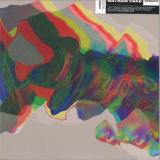
Legendary hurdy-gurdy-powered kraut/psych/folk/drone band France have announced a new album ‘Good Thoughts. Bad Thoughts’ on The state51 Conspiracy label; capturing a wild performance at The state51 Factory in East London - part of their very first tour of England. They played Liverpool Psych Fest as a one off some years back.
Forming 20 years ago as a trio in Valence, France, for this performance, were Jeremie Sauvage on bass, Yann Gourdon on electrified hurdy-gurdy, and Cyril Bondi (of La Tene and Cyril Cyril on drums (stalwart Mathieu Tilly was taking some much needed time off).
This album sees the band plunge into the depths of the human psyche, backed up by Hugo Hyart’s deep, all-over cosmic doodles and an unhidden homage to the Parliafunkadelicment state of mind : Uniting, dancing, staying creative and open minded despite the tribulations of life. Dedicated to the feeling of good (and baby they’re good... at being good).
On the night France were recorded by Hot Chip’s in-house engineer James Crump who subsequently mixed the record at Hot Chip’s studio in East London. The album was mastered by Richy Hughes at Binary Feedback.
Search:fir ya
Up Ya Archives returns with its first release of 2026, ‘Northern Step’, from Manchester-based jungle producer & DJ Worsleyy. The track arrives ahead of his upcoming EP of the same name slated for a 13th March release via Up Ya Archives Records.
Fuelled by crisp, tightly swung drums and a smooth, rolling bassline, ‘Northern Step’ is a salute to its junglist roots. Drawing from the Manchester rave records he was introduced to by his dad, and with the help of legendary Mancunion music mixologist Chimpo, Worsleyy channels those early warehouse energies and pairs them with his own progressive and futuristic lens. It’s heritage and evolution colliding, rooted, forward-thinking and built for sweat-drenched dance floors.
When speaking about ‘Northern Step’, Worlseyy said:
“Northern Step is a proper nod to the junglist past with the lush floaty vocals, calculated drum choppage, a smooth rolling bassline and Chimpo hopping on to drive forward the sound of the North.”
Worsleyy is a familiar face across the UK circuit, having played sets at The Warehouse Project and supporting Nia Archives on her 2024 UK tour in Manchester. Drawing from UK rave lineage and contemporary club sounds, his productions balance nostalgia with futurism, channelling the energy of Manchester’s acid raves. His tracks have travelled far beyond UK borders, spun by the scenes most forward-thinking tastemakers like DJ SWISHA, Sherelle, Pete Cannon, and Nia Archives on dancefloors around the world. Worsleyy’s rise has been as visible as it is audible — bold, bass-driven, and impossible to ignore.
One of the most innovative and ambitious albums ever made, Genioh Yamashirogumi’s Ecophony Rinne is a sonic masterpiece featuring over 200 musicians that expanded the limits of what music and sound could do.
Before Akira there was Ecophony Rinne. Originally released in 1986, Ecophony Rinne is a four-part symphony of “ecological music” by Geinoh Yamashirogumi that married ancient tradition with technological innovation, and changed the way we listen to music in the process.
Half-speed mastered at Abbey Road by Miles Showell, Time Capsule’s high-tech analogue reissue is the first to reproduce composer Ōhashi’s ground-breaking “Hypersonic Effect” theory on vinyl, cutting frequencies beyond the realm of human hearing into wax to capture the full spectrum emotional impact of this extraordinary work.
Founded by genius polymath Tsutomu Ōhashi aka Shoji Yamashiro, Geinoh Yamashirogumi is a shapeshifting collective of over a hundred members from across disciplines. Rejecting professional musicianship, Ōhashi cultivated an ethos where neuroscientists, psychologists, doctors, journalists, engineers and students could critique society through artistic expression and pursue their research in ethnomusicological performances that spanned global traditions, Eastern spirituality and Western classical form.
Ecophony Rinne represents the pinnacle of this vision - an expansive orchestral suite made with over 200 musicians that channeled Ōhashi’s thinking about mankind’s relationship with nature, and fundamental questions of life, death and rebirth.
Here pipe organ synths made from sampled Tibetan horns sit alongside field recordings from Central African forests, Buddhist mantras circle dummy head microphones, Javanese Jegog percussion ensembles pulse like verdant ecosystems, and the acoustics of temples, caves and landscapes are conveyed in the mix. Weaving together culture, nature and technology, it is a record that vibrates with the polyphony of life on Earth.
But Ecophony Rinne was not only musically innovative. Noticing the difference between vinyl and CD versions of the album where digital reproduction limited the sound, Ōhashi developed a theory of “Hypersonic Effect”, determining that ultra-high frequencies above 20khz can impact human perception even if they are inaudible. At once a physical and a psychological experience, to listen to Ecophony Rinne is to feel music differently.
The rest is history. After its release, Ōhashi was approached by director Katsuhiro Ōtomo to produce the soundtrack for Akira, the work for which Geinoh Yamashirogumi is best known. Emerging from the shadows at last, Ecophony Rinne was its transcendental blueprint, reissued in its most complete hypersonic form on vinyl for the first time.
Rather than describe nature, Ecophony Rinne embodied it. Rather than reflect culture, Ecophony Rinne defined it. Rather than explore technology, Ecophony Rinne changed it. As a work of art, it is more relevant than ever. You won’t have heard anything like it.
As Nathan Fake rises from the nocturnal subterranea and rave catharsis of his previous records, on Evaporator, he resurfaces into the domain of daylight, bringing a tangible sense of air rushing against your face, of big skies, and endless landscapes. The idea of pop accessibility that trickled into 2023’s Crystal Vision is refracted here through the prism of sweeping ambient, deep electronica, and trance uplift. Evaporator is Fake’s idea of “airy daytime music”, with each track a different barometer reading across the album’s varying atmospheres, which range from vibrant sunbursts, bracing rainscapes, and fine mists of clement melodics. “It’s not overtly confrontational electronic club music,” states Fake. “It’s quite pleasant, it’s accessible. As I was progressing through making the tracklist, I called it a daytime album. It doesn’t feel like an afterparty album.” For the past decade Fake has been gingerly introducing collaborations with heroes and friends alike into his lone, idiosyncratic working process. Border Community alumni Dextro AKA Ewan Mackenzie transmutes his ferocious drumming for Pigs Pigs Pigs Pigs Pigs Pigs Pigs into the blurred choral thump of ‘Baltasound’. ‘Orbiting Meadows’, meanwhile, is his second collaboration with Clark, an eerily idyllic duet where microtonal 18EDO piano clangs slowly twirl around wailing pads. Evaporator marks the junction point of old technology and ever fresh creativity for Nathan. The trusty “dinosaur” age software, particularly Cubase VST5, that has powered two decades of music is rarely updated. “I used to sort of feel a bit ashamed of using such old software, and then I kind of had an epiphany – that’s just how I work”, comments Fake. “That’s just how I play. I’m very fond of these old tools, and I get the most joy out of them, but now I’ve incorporated new technology too.” When an artist accumulates so much synergy with their instrument, music making becomes instinctual. By Fake’s account, much of Evaporator just fell into place. The album title arrived randomly in his head (“it felt completely perfect. Airy.”), ideas looped and developed until things locked into place and just felt right. ‘The Ice House’ is a fleeting glimpse of the sonic world he taps into in this creative state, its glassy FM synths built around a counterpoint between rough-hewn crystalline arpeggios and sparse yet gravitas-bearing bass. “That riff I just wrote out on the keyboard, I just played it forever and ever and ever. The original track ended up being really short. Here you go, and it’s gone!” These unplanned channellings of sound call forth records from Fake’s past while he looks ahead, perhaps getting at the very essence of his musicianship. The opener ‘Aiwa’ (“the breeziest,” he muses) reminds of the introspection that characterised Providence, excited by the fire and grit of Steam Days’ textural experiments, its chunky slams and clatters surging into a flood of harmonic buzzing as they reach out for old wisdom. ‘Hypercube’ stampedes in a similar chronological confluence, infusing an incessant synth line reminiscent of the golden age of rave with the crackling, ecstatic energy of modern festival anthems. Like the vaporisation of liquid to particles, everything that Evaporator presents has a mutant desire to be amorphous. Sounds rarely settle; the irradiated garage beat of ‘Bialystok’ is pitched downwards to driving, rebounding effect, while ‘You’ll Find a Way’ warps static into shivering energy, cinematic synth strings building anticipation into a gradual gush of chords. This translates into a more expansive stereo field than Fake has explored before. ‘Slow Yamaha’ saves the wildest, most kinetic transformations for last with a cornucopia of crispy melodies and fried drums; a sibilance of cymbals on the left, a susurrus of shakers on the right, and kaleidoscopic lasers pulsing and fizzing all around. Evaporation culminating in pure excited atoms. In a world where music has increasingly become background content, making albums remains lifeblood for Fake: “It makes me realise how long; twenty years is ages! It’s weird to see how much the world has changed. Release day back then you did fuck all, now you spend all day on socials. When I grew up the people who made the electronic music I was into were quite mysterious, and the artwork was very abstract. There was a massive distance between you and that music, and that was a key part of it, really. Now it helps to be an extrovert, and I'm just not, but the album marks the first time my face has graced the cover art. I’ve never wanted to do this before, I'm very shy, and generally I don’t like being seen,” he professes. “But, twenty years in, I supposed I could try something new. I'm very lucky that I'm somehow surviving in this world, where the media world favours extroverts and interesting looking people. It’s not my world but somehow I’m still in it.” Evaporator continues to prove Nathan’s necessary presence, with some of his most engaging, varied, and magical music yet.
- A1: Chiemi Eri - Aizu Bandaisan
- A2: Pinky & Killers - Soran Bushi
- A3: Tokyo Children's Choir - Kokiriko
- A4: Michiya Mihashi & Tokyo Cuban Boys - Sado Okesa
- A5: Dark Ducks - Konpira Funefune
- A6: Ebonee Webb - Cowboy's Elegy
- A7: Akira Ishikawa & Count Buffalo - Tanchame
- B1: Satoru Oda & His Group - Yagi Bushi
- B2: Pinky & Killers - Otemoyan
- B3: Miki Nakasone - Kunjan Sabakui
- B4: Leon Pops - Mamurogawa Ondo
- B5: The Peanuts - Ohara Bushi
- B6: Tokyo Academy Mixed Choir - Kiyari Kuzushi
- B7: King Orchestra - Dojou Sukui (Yasugi Bushi)
- For all fans of the Wamono series!
- All tracks selected by DJ Yoshizawa Dynamite. Includes the first ever vinyl release of The Peanuts' "Ohara Bushi" track, originally released only on tape in 1970.
- Fully licensed King Records masters.
- Mastering and lacquer cut by Jukka Sarapaa at Timmion Cutting Lab, Helsinki, Finland.
- 180g heavy vinyl pressing, reverse board jacket.
- Artwork by Nicolas Kerembellec (Nker).
---
Active as a professional DJ in Japan since the late eighties, DJ Yoshizawa Dynamite is also a renowned remixer, compiler and producer. An avid record collector and an expert of Wamono music, Yoshizawa has published in 2015 the now-classic Wamono A to Z records guide book, which instantly sold-out. The book unveiled a myriad of beautiful and rare records from a highly prolific, but still then unknown, Japanese groove scene. He has also selected a large part of the music in our highly acclaimed Wamono compilations.
For this brand new chapter in the series, Yoshizawa explores King Records' legendary catalog and unearths exceptional, rare and unknown musical gems. King Records has been releasing music since 1931 and is one of the most prestigious labels in Japan. Traditional Japanese music, known as "Minyo", are ancient songs once sung by fishermen, coal miners and sumo wrestlers. They are reimagined here with vibrant afro latin, rock, rare groove and funky arrangements in this killer selection of music released on King between 1963 and 1979. Also worth mentioning is the track Ohara Bushi by The Peanuts, which was released only on tape in 1970 and is now available for the first time ever on vinyl format.
Put the needle on the record, turn up the volume and dig right now into the Wamono sound - the cream of the Japanese funk, soul, rare groove and disco music developed throughout the years since the end of the fifties in Japan!
---
180GWALP08 - Manufactured and distributed by 180g.
Opaque Pink Version
Bubble Bath for Giants is an ode, a Tribute, a reverence for Oceans, for the Mighty Magnificent Power of Fairies, to the energy that we are all everything, whole, well, but in different sized and shaped vessels at times . . . It is a Celebration of Gentleness and of incredible Force, and Charge . . . These, I sea as the same. The Yang Springs from the Yin and together they ever reflect, dance, and express themselves . . .
Many Bells, Bowls, Ceramics, Chimes, Cymbals, Drums (Bass, Sakara, Surdo, Tom, and many more,) Gongs (Chao, Cup, Indonesian, Sun, and Symphonic,) Keyboards (Metal, Synthesizer, and Wooden,) Percussion, Plant Leaf Bundles and Fronds (Bamboo, Eucalyptus, and Palm,) Ratlles, Shakers, Voice, Whistles, and Sound Design by Carlos Niño.
Featuring:
Luis Pérez Ixoneztli, Bernard Xolotl, Aaron Shaw, Surya Botofasina, Nate Mercereau, Laraaji, Darius Jones, Sheila Govindarajan, Idris Ackamoor, Deantoni Parks, André 3000, Marshall Allen, Sam Gendel, Sibusile Xaba, Mia Doi Todd, Anisia Uzeyman, Saul Williams, Jojo Abot, Jowee Omicil, Aztlan Unearthed
///
Cover Photo by Carlos, from in the Maui Waters
Art Direction, Design and Original Art by Nep Sidhu
Layout Production by Jonny O'Hara
Recorded by Carlos Niño in Topanga, California, and by some of the Artists named above, from their Homes . . .
Mastered by David Allen
///
'winterswell' threads together raw emotion, playful rhythms, and analog warmth. Following singles on Tresor and Intercept Records, Kat pulls no punches with her first EP. "Manavgat" hurtles you down a dirt road at dusk, brooding and atmospheric, while "Baby I Know What You Want" threads vocals through rolling percussion and a driving bass as the club thrives in unison. Remixes extend the EP's landscape: Mr. G reshapes the material into grainy, coded dub house textures, while Ben Kaczor emphasizes low-end depth and taut, hypnotic tension. 'winterswell' is a vinyl release where intimacy, texture, and rhythm converge with confidence and nuance.
- Money (Demo)
- Unreleased (Demo)
- Scrape/North Of The Border
- Money (Reflex Mix)
- Extremities
- The Fanatic
- Intravenous
- Beautiful Dead
Clear Vinyl[32,98 €]
A journey into the raw and visceral origins: from the demo sessions mixed by Steve Albini to the night of the very first secret show on December 20th, 1988. In the heart of Chicago, Geordie and Martin Atkins turned frustration and distance into pure creative energy, recording the now-legendary "Black Cassette" demos at Albini"s house. Distorted, menacing bass lines, unruly oscillators, and Albini running endlessly up and down the stairs between the basement drum room and the pantry control room defined a sound that was brutally direct and uncompromising. The first interactions with the Yamaha drum machine foreshadowed elements that would later shape parts of the album. Those sessions sparked essential ideas, while the future studio - purchased from Steve and moved to Wabash Ave - would soon become the core of Invisible Records and Killing Joke"s operations. On the other side, a truly rare document: excerpts from Atkins"s very first show with the band, at Burberries in Birmingham on December 20th, 1988. In a small, mirror-lined club filled with tension, adrenaline, and inevitable collisions with the walls, Extremities, The Fanatic, Intravenous, and The Beautiful Dead were performed publicly for the first time. It was the night when everything ignited: the blast beat still in its embryonic stage, the controlled fury Geordie demanded - "can you go a bit more Moonie on it?" - and above all Jaz"s theatrical yet strikingly genuine laughter. Not just joy, but a declaration: a giant "fuck off" to the doubters and a prelude of what was about to come. A raw, essential, indispensable testimony: the birth of an era.
- A1: Ali Ou Hayani
- A2: Ana Sahraoui
- A3: Nihayat Hob
- A4: Angham Chaabia
- A5: Dikrayat
- A6: Alach Yayouni
- B1: Layali Fass
- B2: Lobna
- B3: Tanger L'été
- B4: Taksim Abdou
- B5: Hanan
- B6: Interlude
Abdou El Omari was born in 1945 in Tafraout, south of Agadir -- a village suspended between the pink granite peaks of the Anti-Atlas and the waves of the Atlantic. A landscape already musical in itself. He grew up in the dry mountain light, surrounded by the rhythms of nature and Berber's culture. Very little is known about the man -- a veil of mystery still surrounds his life, only deepening the fascination. In the 1970s, as Morocco was transforming, Abdou El Omari shaped a sound of his own -- a visionary blend of spiritual jazz, psychedelic funk, Moroccan traditions, and early electronic experimentation. Today, his work is resurfacing, rediscovered by a new generation of listeners in search of lost horizons. This record stands among its rarest and most precious fragments. At twenty-two, he founded his first group, Les Fugitifs, which gained him local fame. Soon after, he released records and cassettes on labels such as Cléopâtre, Hassania, Boussiphone, Hilali, and his own, Al Awtar, while performing on RTM (national radio and television). He also composed for artists like Naima Samih, Laila Ghofran, and Aicha El Waad. In 1976, through the label Gam, he released his only vinyl album, Nuits d'été -- a record that would become cult decades later, reissued in 2017 by Radio Martiko. In the 1980s, his music grew quieter, more secret. He tried to recover his old tapes from the studios he had recorded in, but gradually withdrew from the scene and returned to hairdressing. A pioneer of musical fusion, he opened paths that would remain unexplored for years. He passed away in 2010, never witnessing the rediscovery of his music by diggers, bloggers, and collectors online. One day, his close friend and poet Aziz Essamadi, rescued a cardboard box from the trash -- a box containing Abdou El Omari's personal archives. It was later entrusted to Casablanca based collector Ahmed Khalil, founder of the label Dikraphone. Inside were treasures preserved by chance: demos, rehearsals, private recordings, unseen photographs -- and a stunning, almost forgotten cassette. Here, El Omari sounds bolder than ever, exploring territories where pop, cosmic disco, electric blues, and Moroccan tradition merge without boundaries. Armed with his ARP Odyssey synthesizer, hypnotic grooves, and the celestial layers of his Farfisa, he expanded the dialogue between deep roots and electronic exploration. This album is the continuation of a vision -- a music of the Moroccan future: rooted, but reaching for the unknown. Colorful, magnetic and timeless, here is music for dancing as much as for dreaming.
This is the first release from the label, signed by Lukio (aka Luciano Gentile).
Four tracks built around a constant sense of depth and a clear focus on the dancefloor. The approach is straightforward: solid grooves, controlled saturation, and a sound palette designed for long sets and proper systems.
MPC-driven drums provide a strong backbone, while Blofeld pads and the vintage character of the Yamaha TQ5 add texture without cluttering the mix. The EP moves between minimalist passages and rougher, tech-driven sections, maintaining tension and cohesion throughout.
This record sets the foundation of the project: hardware-driven sound, deep dancefloor functionality, and a long-term vision.
- A1: Orchestral Manoeuvres In The Dark– Telegraph
- A2: Blancmange– That's Love, That It Is
- A3: China Crisis– Tragedy And Mystery
- A4: Adam Ant– Strip
- A5: Divine– Love Reaction
- A6: Yello – I Love You
- A7: Talk Talk– My Foolish Friend
- A8: Japan– Canton (Live)
- B1: Fun Boy Three– The More I See (The Less I Believe)
- B2: Tracie*– Give It Some Emotion
- B3: The Teardrop Explodes– You Disappear From View
- B4: Xtc– Love On A Farmboy's Wages
- B5: The Stranglers– Midnight Summer Dream
- B6: The Kinks– Don't Forget To Dance
- B7: Mari Wilson– Cry Me A River
- C1: Bauhaus– Lagartija Nick
- C2: Marc And The Mambas– Black Heart
- C3: The Glove– Like An Animal
- C4: Freur– Doot Doot
- C5: The B-52'S– Song For A Future Generation
- C6: Wall Of Voodoo– Mexican Radio
- C7: Joe Jackson– Breaking Us In Two
- D1: Oliver Cheatham– Get Down Saturday Night
- D2: Rockers Revenge– The Harder They Come
- D3: Freeez– Pop Goes My Love
- D4: Malcolm Mclaren– Soweto
- D5: Culture Club– I'll Tumble 4 Ya
- D6: The Belle Stars– Indian Summer
- D7: Level 42– Out Of Sight Out Of Mind
- D8: Daryl Hall & John Oates– One On One
- E1: Sparks & Jane Wiedlin– Cool Places
- E2: The Romantics– Talking In Your Sleep
- E3: The Fixx– Saved By Zero
- E4: The Motels– Suddenly Last Summer
- E5: Modern English– I Melt With You
- E6: Missing Persons– Walking In L A
- E7: Naked Eyes– Always Something There To Remind Me
- E8: Taco– Puttin' On The Ritz
- F1: Electric Light Orchestra– Secret Messages
- F2: Men At Work– Overkill
- F3: Pat Benatar– Little Too Late
- F4: Journey– Separate Ways (Worlds Apart)
- F5: Styx– Mr Roboto
- F6: Giorgio Moroder & Joe Esposito– Lady, Lady
- F7: Stephen Bishop– It Might Be You
Celebrating the first year of ‘NOW That’s What I Call Music’ – 1983. ‘Now Yearbook’ presents a stellar selection of 1983’s biggest and best hits… 80 huge chart hits from the year, alongside enduring and well-loved classics on 4 CDs. 1983 saw British artists achieving unprecedented success across the world with ‘Every Breath You Take’ from The Police being the year’s biggest seller in the U.S., and ‘Karma Chameleon’ from Culture Club being the top seller in the U.K. Breakthrough acts, achieving their first big hits – all here – include a staggering line-up of future superstars: U2, Eurythmics, Wham!, Paul Young, The Style Council, Marillion and Thompson Twins, to name a few..' Released on a LTD 4CD SET: This will be a limited run of 5000 4CD units housed in ‘hard-back book’ packaging and featuring a 28-page booklet that includes an overview of the chart music of 1983, a track by track guide including chart stats and fun facts, a selection of original picture sleeves and a quiz. 2CD Standard set and also a limited edition of 3000 units, pressed on 3LP translucent red vinyl...
Al Fajer Group was established in Kuwait in 1987, co-founded by four artists: Sima Kanaan (Vocals), Bashar Shammout (Guitar) Jameel Saraj (Oud and Guitar) and Nizar Alyan (Percussion). Al Fajer Group became known for their unique frequencies and the transparency of their sound. The band is rooted in acoustic oud, guitar and percussion and they never used any electronic equipment during their sets. When they were first established they would perform Palestinian patriotic songs, related to the Palestinian liberation struggle. They released their launch album, recorded on reel tapes, during the First Intifada in 1988, after which they began composing and writing their own original music. They were unable to release this due to the Iraqi invasion of Kuwait in 1990, when all the band members were forced to leave the country and could not reunite to release the second album. During the limited time in which they were able to work together, they participated in multiple tours in Kuwait, Iraq, Germany and other locations.
This is the first vinyl release for the band and includes original music, which has not been available until today.
نشأت فرقة الفجر في الكويت في العام 1987 بمبادرة ذاتية من قِبَل أعضائها الأربعة وهم سيما كنعان (غناء) وبشار شموط (غيتار) وجميل سراج (عود وغيتار) ونزار عليان (أيقاع). تميزت الفرقة بأدائها الموسيقي الشفاف والهادئ والذي اعتمدت به على استعمال آلتي العود والغيتار وبعض الآلات الايقاعية المتنوعة وتجنبت استخدام أي آلات كهربائية. اعتمدت الفرقة في بدايتها على إعادة أداء بعض الأغنيات الوطنية الفلسطينية ذات الكلمات الواضحة والهادفة. أصدرت فرقة الفجر ألبومها الوحيد في ظلال الانتفاضة الأولي في العام 1988 ثم بدأت في تلحين أغانيها الخاصة بها والتحضير لإنتاج ألبومها الثاني، لكن لم تتمكن من تسجيله وإنتاجه وذلك بسبب نشوب حرب الخليج عام 1990 في الكويت حيث اضطر أعضائها للرحيل من هناك ولم تعد الفرقة قادرة على الاستمرار. رغم المدة المحدودة جداً التي نشطت فيها فرقة الفجر، إلا أنها شاركت في عدد لافت من العروض والمهرجانات في الكويت والعراق وألمانيا وغيرها.
Siren Selector presents the first voyage of Remy Solar, as the producer takes a break from composing sound system exclusive dubs to expand his horizons with this by-turns lush, textured, menacing and plaintive album.
‘Heavy Terrain’ emerges from the depths of a lifetime inside the dub fraternity: reared on a potent diet of Lee Scratch Perry and Augustus Pablo, The Disciples and Digital Mystikz, it’s an album which stuck its head in a bass bin in an abandoned bingo hall in north London before striking out on a musical road-trip to imbibe sounds and rhythms from further afield.
The album opens with the militant drums and ethereal pads of 'Sound in the East' before being bookended by two mixes of 'Star Trail', where unformed musical space and time cross uncharted distances to coalesce into the beginning of direction and rhythm. The lush deep house chords and drilling synths of 'Lila #3' summon ghostly presences, while in its counterpart 'Lila #7' layers of melody rise and hang like mist before dissipating in percussive heat. 'Dakhla's’ swelling and retreating drones fade into swirls of drums. In the eponymous 'Heavy Terrain', off-beat keyboard chops respond to each other from uncertain depths while electronic horns pulse across miles of open space. 'Empty City 'sees walls of sound coalesce and fragment, falling into bursts of white noise.
Remy Solar explores a deliberately constrained hardware set-up to create the primordial conditions of trance, locking down a rhythmic foundation while semi-improvised excursions form and reform above it. It’s an album that takes the listener on a journey between order and chaos, past and future, all the while underlaid by a counterpoint of cavernous bass lines and echoing percussion, yang and yin, shade and light.
- Phonè
- Turenas
- Stria
- Sabelithe
Dr. John Chowning (b. 1934) is a pioneering computer musician, composer and professor who, in 1967, discovered the FM synthesis algorithm. This breakthrough in electronic music allowed for simple, yet rich timbres described as sounding "real." With this discovery, Chowning composed singular, dramatic electronic music and changed the timbre of music forever.
Chowning utilized the potential of computers to synthesize sounds according to programmed instructions. The composer's use of his own FM algorithms, digital synthesis with computers and the new compositional concepts offered by a programmable musical structure combine to create some of the most original and unique electronic music ever created.
The compositions on this LP were realized between 1966 and 1981 and the music on this LP, with the exception of Stria, was originally released on CD in Germany (Wergo, 1988). The version of Stria included here contains a section not included on the Wergo CD. Thus, this version of Stria is complete. This is the first time these purely digital recordings have been released on an analog medium. The original dynamics of these groundbreaking compositions have been preserved on this LP. As a result, listeners are advised to increase volume with caution.
In 1975, John Chowning founded the CCRMA - Center For Computer Research In Music and Acoustics at Stanford University. Through Stanford, Chowning licensed his groundbreaking algorithms to Yamaha resulting in numerous new instruments including the iconic DX series of keyboards. In 1972, his composition Tureens which is included on this LP, was the first to create the illusion of continuous 360-degree space using four speakers.
Technical Notes:
All pieces on this LP are originally quadrophonic. The illusion of moving sound sources is thus projected from the surrounding environment given by four loud-speakers on the stereo-basis.
STRIA was composed using Chowning’s own program to compile the musical structure into note-lists and MUSIC 10 (by D. Poole/Tovar) to generate the sounds in software-synthesis. The original quadrophonic version utilized 12 bits, two different sampling rates being used to accommodate the enormous amount of data on the magnetic disc-packs available at that time. The original sound-data was processed by sampling-rate conversion and digital mixes to achieve the stereo version presented on this LP.
SABELITH and TURENAS were synthesized originally using Smiths’ SCORE and MUSIC 10. However, their format was changed from direct sound-samples to a command stream for a special purpose computer, the System Concepts Digital Synthesizer, designed by Peter Samson, one of the first large-scale digital synthesizers for real-time sound processing - one was designed for CCRMA in the late seventies. For this recording the sounds were recorded directly from the synthesizer computing the samples in real-time.
PHONÈ was realized with the System Concepts Digital Synthesizer using again Chowning’s own program to create the note list.
The master tape of this LP was made directly from the computer system at CCRMA which generated and stored the sound data in digital format. No analog recording was involved at any stage of the production and editing process.
- Side A. Gypsy Song
- Side B. Never Land
After traveling through Mexico, Miami, the Bahamas, and New Orleans, Nishioka recorded his fourth album South American Journey in Los Angeles,
released in 1979. From this album, two of his most celebrated tracks—“GYPSY SONG”, a fan favorite with numerous cover versions, and “NEVER LAND”,
featuring the distinctive sound of steel pans and a Japanese reggae vibe are now being pressed on 7-inch vinyl for the first time in a limited edition!
The recording features members of the So What Review band, including Junshi Yamagishi (guitar) and Osamu Ishida (guitar), along with renowned steel pan
player Robert Greenidge, known for collaborations with Van Dyke Parks and Taj Mahal.
(FLATT THE LAIDBACK)
Kyozo Nishioka Profile
(Born May 7, 1948 – Died April 3, 1999)
Singer songwriter from the Shima Peninsula in Mie Prefecture, affectionately nicknamed “Zo-san”.
After enrolling at Kinki University and moving to Osaka, Nishioka became a regular at the folk cafe Dylan in Namba, opened in August 1969 by Masaji Otsuka
and Yoko Ishimura. Dylan was a gathering spot for folk music enthusiasts from all over Japan.
Nishioka formed the folk group The Dylan with Masaji Otsuka and You Nagai, performing at folk camps and the Nakatsugawa Folk Jamboree. In 1971, Nishioka
left the group, and Otsuka and Nagai continued as The Dylan II. Nishioka wrote and composed the song “Puka Puka” under the pen name Zokyozo, which became
one of his signature works. The song was first released in July 1971 as the B-side of The Dylan II’s single “Otoko rashii tte Wakarukai” on URC Records.
Nishioka began his solo career, releasing his debut album “Dylan nite” in July 1972, produced by Kinji Yoshino on Bellwood Records, which included his own
version of “Puka Puka”. In September 1973, he appeared at the farewell concert of Happy End titled CITY – LAST TIME AROUND at Bunkyo Public Hall in Tokyo.
His 1974 album “Machiyuki Murayuki” was produced by Haruomi Hosono, and his 1975 album “Rokka My Baby” featured support from Shigeru Suzuki’s band
HUCKLE BACK. Nishioka recorded three albums under Hosono’s production, deepening their friendship.
Together with his wife and lyricist KURO, Nishioka wrote songs for artists such as Eikichi Yazawa. The couple traveled the world, recording overseas albums such
as “Nanbei Ryoko” (1977), “Yoh-Sollo” (1979), and “New York to Jamaica” (1981), incorporating reggae, calypso, and other global sounds. In the 1980s, he released
works under the duo name KYOZO & BUN with Yoshifumi Okajima, and in the 1990s returned to solo projects with albums like “START” (1993) and “Farewell
Song” (1997).
After KURO’s passing in 1997, Nishioka continued his musical activities until his own death in 1999 at the age of 50. His music transcended the boundaries of folk,
blending jazz and tropical elements to create a unique world view, leaving an indelible mark on Japanese music history.
Soul Quest Records present the second edition of their Quest Series, a vinyl compilation featuring tracks that have previously only had digital releases.
Including music from label head, Max Sinàl & KingCrowney, Colm K alongside label co-founder Slxm Sol, Real Love Seeker x BB James & Berkely Hunt with a killer remix from Atlanta’s Stefan Ringer!
Soul Quest present the second edition of their Quest Series, a vinyl compilation featuring tracks that have previously only had digital releases. First up, label co-founder Max Sinàl once again teams up with label mainstay KingCrowney with ‘All Night’, a bumpy dance floor friendly groover featuring Yasmin on vocals. The track also samples an extract from Moodymann’s famous Red Bull interview, with clearance and blessings from the main man himself. Next up we have a track taken from Colm K’s ep released in the summer, ‘A Red Line In A Blue Sky’ remixed by another of the labels co-founders, Slxm Sol.
Deep, sexy grooving house with well placed vocal samples that keeps you zoned in from beginning to end. Flipping over to the b-side, we start off with Real Love Seeker x BB James with ‘I Want You’. Distinctive London flavours spoken through broken beat grooves and BB James’ captivating lyrics, ending with a gorgeous synth solo. Finally Stefan Ringer brings some ATL flavours to Berkeley Hunt’s ‘Wicked Sins’. Stefan twists the original in to a dark, enchanting roller, using the haunting vocals over a percussive groove with perfectly placed synths weaving themselves in and out.
- A1: Song Of Island
- A2: Morning Tide
- A3: Kemo Sabe
- A4: Groovy Samba
- A5: Song For Hope
- A6: Cumorah
- A7: Phoebus
- A8: ? Samba Ii
- B1: Cumulonimbus
- B2: Burning Cloud
- B3: Planets
- B4: Wolf’s Theme
- B5: Honey Sanba
- B6: Kirisame
- B7: Black Nile
- B8: Acoustic Chicken
Volume 4[43,66 €]
BBE Music presents J Jazz volume 3, the latest in its definitive compilation series exploring the finest modern jazz from Japan. Since the first volume in February 2018, the J Jazz compilation series has showcased some of the most creative, inspired and sought-after jazz recorded in Japan during a golden period spanning the 1960s to the 1980s. Illustrating the richness and versatility of the composers and musicians on this collection, the music spans a wide yet coherent range of styles: samba, funk fusion, modal, spiritual, post-bop and bossa all combine to present an aural portrait of a jazz scene that was constantly moving and shifting its multiple musical centres of gravity. Mastered at the Grammy-nominated Carvery studio in London, many of the tracks featured are reissued for the first time, including mega-rare private press cuts from the Yasuhiro Kohno Trio, Masaru Imada Trio, and Hideyasu Terakawa Quartet. There’s heavy post modal bop by J Jazz legends Kohsuke Mine and Koichi Matsukaze; samba heat from Tatsuya Nakamura, Hideo Shiraki and Seiichi Nakamura; and funky dance floor energy by Hiroshi Murakami, Ryojiro Furusawa Quartet and Shigeharu Mukai. Selected albums from which the tracks are drawn will be reissued in full as part of the acclaimed BBE Music J Jazz Masterclass Series. Released as a deluxe, heavyweight x3 vinyl set in a gatefold sleeve with obi strip and insert, the collection comes with extensive artist biographies and track information. J Jazz volume 3 is also available in a x2 CD set with three bonus tracks, and selected tracks are available across digital platforms for download and streaming. J Jazz is conceived, compiled and annotated by Tony Higgins and Mike Peden for BBE Music.
- とんでもマウンテン / Mount Amazing
- アドバタイズデモ / Advertise Demo
- キャラクターせんたく / Character Selection
- マジンディスコ / Genie Dancer's Disco
- マジンロック / Genie Dancer's Rock
- カンフーストリート / Kung-Fu Alley
- ドラゴンカンフー / Dragon Kung-Fu Fighter
- ウキウキおもちゃランド / Toytown
- わくわくテレビスタジオ2 / Funtime Tv Studio 2
- トレーニングスペース / Training Room
- とこなつアイランド / Eversummer Island
- ウエスタンビレッジ / Wild West Town
- ファンタジーナイト / Fantsy Knight
- たいけつ!ウッキーピンク(バナナにハートブレイク) / Battle! Monkey Pink
- ナイトキャッスル / Knight's Castle
- うちゅうテレビようさい / Space-Tv Fortress
- たいけつ!ウッキーイエロー / Battle! Monkey Yellow
- とのさまじょう / The Emperor's Castle
- サルなげスタジアム / Super Monkey Throw Stadium
- Happy☆センセーション / Happy Sensation
- マジンダンサー / Genie Dancer
- うみべリゾート / Seaside Resort
- わくわくテレビスタジオ / Funtime Tv Studio
- サルうらない / Hall Of Horoscope
- ピポサルのテーマ / Super Monkey
- ゲッチュマン / Cyber Ace
- とのさまじょう2 / The Emperor's Castle 2
- とんでもマウンテン2 / Mount Amazing 2
- カッチンコールたいりく2 / Freeze Continent 2
- ミニマルテーマ / Minimal Theme
- かくれんぼのもり / Hide-N-Seek Forest
- カッチンコールたいりく / Freeze Continent
- ワイルドウエストキッド / Wild West Kid
- へんしんとうじょう / New Morph
- ガチャメカとうじょう / New Gadget
- しんきろうタウン / Mirage Town
- ウエスタンビレッジ2 / Wild West Town 2
- ひこうきだいへんたい / Airplain Squadron
- どっきりホラータウン2 / Bootown 2
- けっせん!スペクター(スペクターのテーマ) / Final Battle! Specter(Specter's Theme)
- びゅんびゅんビッグシティ / The Big City
- クリアリザルト2 Sg3 / Result 2 Ae3
- クリアリザルト Sg3 / Result Ae3
- サルをつかまえろ!/ Catch Monkeys!
- どっきりホラータウン / Bootown
- テレビステーション / Tv Station
- トモウキシティ / Tomouki City
- サルティメットファイティング / Ultim-Ape Fighting
- ドンドコゆきまつり2 / Winterville 2
- はじめてのゲッチュ / The First Catch
- とこなつアイランド2 / Eversummer Island 2
- たいけつ!ウッキーレッド2 / Battle! Monkey Red 2
- たいけつ!ドクタートモウキ / Battle! Dr.tomouki
- トモウキシティ2 / Tomouki City 2
- しょうてんがい / Mall
- ミラクルニンジャ / Miracle Ninja
- びっくりおんせんランド / The Hot Springs
- けっとう!ウッキーブルー / Fight! Monkey Blue
- マジンワルツ / Genie Dancer's Waltz
- ナイトキャッスル2 / Knight's Castle 2
- マジンチーク / Genie Dancer's Cheek
- トモウキタワーはっしん! / Go Tomouki Tower!
- サトルねつべん / Satoru's Speech
- トモウキのカツラ / Tomouki's Wig
- たいけつ!ウッキーレッド / Battle! Monkey Red
- トモウキのテーマ / Tomouki's Theme
- スタッフロール Sg3 / Staffroll Ae3
- サルシネマ / Monkey Cinema
- びっくりおんせんランド2 / The Hot Springs 2
- だつりょくハカセ / Lazy Professor
- まよなかベイサイド / Midnight Bay
- たいけつ!スペクター / Battle! Specter
- うちゅうテレビようさい2 / Space-Tv Fortress 2
- ドンドコゆきまつり / Winterville
- たいけつ!ウッキーホワイト / Battle! Monkey White
- たいけつ!ウッキーブルー / Battle! Monkey Blue
- クリアジングル Sg3 / Clear Fanfare Ae3
- ウキウキおもちゃランド2 / Toytown 2
- ブルーのオルゴール / Blue's Orgel
- はくちょうのみずうみ / Swanlake
4XLP box set, 4 Coloured discs: translucent violet, ice, blue, and orange vinyl
Hardcover slipcase box
Celebrate twenty-five years of Ape Escape and thirty years of PlayStation with Ape Escape 3 Originape Soundtracks in a Box!
Saru Get You 3
As with the Ape Escape Originape Soundtrack, composer Soichi Terada has meticulously re-recorded and reconstructed all tracks from the Ape Escape 3 Original soundtrack. Previously only available on CD, this is the complete soundtrack's first time on vinyl. This box set was produced in partnership with Mr. Terada and Far East Recording, and is an officially licensed Sony Interactive Entertainment product.
This release contains eighty tracks, spanning four individually sleeved records, housed in a hardcover box. It is similar in construction to the Ape Escape Originape Soundtracks in a Box release (2024), and the two will look quite nicely next to one another on your shelf!
We are happy to announce that this box set features a definitive edition of the Ape Escape 3 Originape tracklist. This also includes "Swanlake," a track previously unavailable on the CD release. At its core, the Ape Escape 3 soundtrack features much of Soichi Terada's signature sound: lush electronic, jungle, silky smooth synthesizer, humor, and charm.
Ape Escape 3 was originally released in 2005 (Japan), and its moviemaking pipos were unleashed across the rest of the globe in 2006. The game features two new protagonists (Kei and Yumi) who battle the Freaky Monkey Five, underlings of the nefarious Dr. Tomoki and the evil monkey Specter.
Complimenting the game's journey through the TV-verse, the Ape Escape 3 soundtrack also features twists on themes from Wild West Showdowns, Kung-Fu movies, and space operas. Fans of the Ape Escape Originape Soundtrack, as well as newer work like Asakusa Light, will certainly enjoy all elements of Soichi Terada's music present in Ape Escape 3.
The music on this box set was mastered by Justin Perkins of Mystery Room Mastering, who also mastered the original Ape Escape Originape Soundtracks box set (2024). Using Mr. Terada's premastered source files, the music was completely and specifically mastered for vinyl. The box set also features original Ape Escape 3 character renders and key art. All of the design elements have been put together with careful thought, referencing the original Japanese guidebook for inspiration and visual cohesiveness.
It is with great pleasure that we celebrate Soichi Terada's music and the Ape Escape franchise with this four-disc release!
Original key art and renders from the サルゲッチュ team
Officially licensed © Sony Interactive Entertainment
©2025 Sony Interactive Entertainment Inc. “PlayStation”, ”プレイステーション”, “Ape Escape” and ”サルゲッチュ” are registered trademarks of Sony Interactive Entertainment Inc.