Oh yes! First ever official reissue of the positively sublime and very rare Butterfly LP, recorded in Tokyo in 1979 by Japanese songstress Kimiko Kasai and jazz legend Herbie Hancock.
Due to it's super-rare status as a Japan-only release, this exquisite collection of covers never got the recognition it deserved at the time, despite incredibly inspired performances from Kimiko, Herbie and the supremely talented musicians assembled for the project. From heavenly drummer Alphonse Mouzon and renowned organist Webster Lewis to bassist Paul Jackson, reedman Bennie Maupin and the master percussionist Bill Summers, the legendary performers crafted amazingly good vocal versions of Herbie / Headhunters jazz-funk. Unsurprisingly, it has been heavily in demand for many years.
The LP opens with Kimiko's highly desirable version of "I Thought It Was You", an elegant take on Herbie's own anthem. Other superb re-workings include the delicately soulful "Butterfly", jazzy groover "Sunlight", the smooth and sexy "Tell Me A Bedtime Story" and the beautiful ballads "Maiden Voyage" and "Harvest Time". A wonderful example of perfectly understated and masterful jazz-funk soul fusion that shouldn't be missed, the set closes with a jaw-dropping version of Stevie Wonder's "As".
This lovingly curated reissue enables a long overdue reappraisal of this hitherto unavailable masterpiece. The stunning artwork which adorned the original jacket - complete with OBI strip and sumptuous
4 page folded insert - has been faithfully restored. Simon Francis' sensitive mastering elevates the sound throughout and, as ever, it has been pressed at a reassuringly weighty 180g. Essential.
quête:first bass
Sunset Rubdown are set to release their fourth studio album_the first in fifteen years!_Always Happy To Explode.Twenty years ago Spencer Krug began using the name Sunset Rubdown for his solo bedroom recordings, experiments too low-fi and odd for what was then a blossoming Wolf Parade, but by 2005 Sunset Rubdown had evolved into a full band, with Michael Doerksen, Jordan Robson-Cramer, and Camilla Wynne joining Krug on stage and in the studio. The band recorded their third critically-acclaimed album, Dragon Slayer, in Chicago in 2008, then went on to play their last show in Tokyo in 2009, with the implicit knowledge it was their last. They broke up quietly, their certitude that they'd never reunite growing as the years rolled on. Then one night more than a dozen years after their final show Krug had a dream (he really did) that the band reunited, and the first thing he did upon awakening was email the band to see if the dream might be made real. The answer was a resounding yes, and soon enough Sunset Rubdown was onstage again. The first show in fourteen years was in Montreal, where they had formed so long ago. The tour was a success, most crucially in terms of having fun, the main condition of their continued pursuits. This fun was thanks in no small part to their blithesome new member, bassist Nicholas Merz. And thus they decided to make a new album together. The record is composed of nine songs cherry-picked from demos that Krug has been posting to his Patreon page over recent years, with the songs in many cases being pared down from their previous incarnations, yet no less lush. Being a band is no easy feat, perhaps especially as members age and spread across the continent, but it certainly is a privilege. With Always Happy to Explode, Sunset Rubdown have made something that captures their gratitude and the energy of their joyous (and sometimes difficult) reunion.
What an unbelievable record. From the wild cover to the iconic breakbeats, Roots from Ian Carr’s Nucleus is one of the dopest albums we know. This is seriously thick, funky-prog jazz-rock heaven. Originally released on Vertigo in 1973, other than a couple of versions at the time for other territories, Roots was never re-pressed since so it’s gone on to become another one of those impossible to find records.
Maybe it was a little too out there for the time, but it’s aged very, very well indeed and this Be With re-issue, re-mastered from the original analogue tapes, shows off just why this deserves to be back in press.
Genius trumpeter and visionary composer Ian Carr was one of the most respected British musicians of his era. He was a true pioneer and saw the potential in fusing the worlds of jazz with rock, just as Miles Davis and The Tony Williams Lifetime did in the US. In late 1969, following the demise of the Rendell-Carr quintet, and tiring of British jazz, Carr assembled the legendary Nucleus. Regarding music as a continuous process, Nucleus refused to “recognise rigid boundaries” and worked on delivering what they saw as a “total musical experience”. We can get behind that.
Under bandleader Carr, Nucleus existed as a fluid line-up of inventive, skilled musicians. This constant evolution and revolution was all part of the continuous musical exploration and discovery that took jazz to new levels.
Working together with producer Fritz Fryer and engineer Roger Wake, the seven compositions by Carr, Brian Smith and Dave MacRae that make up Roots flirt with perfection, and Nucleus at that time made up of the cream of 1970s UK jazz with Brian Smith on tenor saxophones and flutes, Dave MacRae on piano and electric piano, Jocelyn Pitchen on guitar, Roger Sutton on bass, both Clive Thacker and Aureo De Souza on drums and percussion, Joy Yates delivering the vocals and of course Carr on trumpet.
The spellbinding title track immediately renders the album indispensable. Riding the illest of loping breakbeats, “Roots” is low-slung, doped-out heist-funk. An absolute monster. If it sounds familiar then that’s likely down to it being sampled by Madlib for Lootpack and Quasimoto’s “Loop Digga”, as well as by a whole host of beat manipulators. “Roots” conjures prime instrumental hip-hop / beat music, only 20 years ahead of its time. Truly, these are the roots. Through sinuous bass, twinkling keys and a hypnotic guitar riff, a smoky brass motif weaves its way into a gloriously deep haze around Carr’s solos. “Roots” is over 9 minutes long, but there’s not a single wasted second, not surprising given that this is a condensed version of an originally 40 minute long commissioned composition.
The soothing vocal fusion delight of “Images” follows. Meticulously constructed, with gorgeous flute work from Brian Smith, with Joy Yates’ silky vocals and Dave MacRae’s Rhodes never sounding better. The cool, driving “Caliban” closes out the first side. Originally the third movement in a four part commission to celebrate Shakespeare’s birthday it stands up on its own, all robust rhythms and blended brass. Keyboard colour and Carr’s trumpet are splashed across the funk drums and basslines (and there’s even some bamboo flute). This really is fusion: the elements of jazz and rock coming together in beautifully synthesis.
Side two opens in riotous fashion with the short, thrilling samba of “Wapatiti”. Next up, “Capricorn” forms a smoothed-out, jazzy constellation. Mellow and dreamy, its twinkling percussion and languid horns slowly build the vibe before head-nod drums and a killer bassline enter the fray. With a distinct heaviness that Black Sabbath would’ve envied, “Odokamona” is a venomous slice of riff-soaked jazz metal (yes, you read that right), elevated by Carr’s wah-wah horns.
The album closes with MacRae’s exceptionally cosmic “Southern Roots and Celebration”. Very much in conversation with Weather Report, it opens as a languorous, spiritual jazz of chiming keys and serene guitar that turns slowly, gorgeously into a mid-paced, brass-laced banger. It’s another sure-fire party starter and the sound of the band having a righteous blast, building an ecstatic chaos that ends with Yates screaming.
And of course we need to talk about Keith Davis’ cover for Roots. Perhaps the coolest record cover of all time? Certainly one of the most bonkers. Just your run-of-the-mill high-gloss, acid-tinged airbrush dystopian/utopian living-room party scene. Consider this your chemical flashback trigger warning.
Front-and-centre the hip-to-death green robot holds court with their giant ball of yellow barbwire wool, hooked up to… something(?) being teased out from under the stairs (probably best not to ask). A thoroughly zoned-out, long-legged Pop Art party-goer lounges half-plugged in to the painting behind her as a pair of legs flail into shot from the the top of the stairs opposite. We won’t even begin to guess what the chap’s up to in the middle, but the view out of the windows is rather nice, and someone’s already got the hoover out ready to tidy up. All of the Nucleus sleeves are something special, but this particular one? Crikey.
This Be With edition of Roots has been re-mastered from the original Vertigo master tapes, Simon Francis’ mastering working together with Pete Norman’s cut to weave their usual magic with these wonderful recordings. The crazy cover has been restored at Be With HQ as the finishing touch to this long overdue re-issue.
Born in Aldershot on 11 September 1947, Catley's family moved to the Tile Cross area of Birmingham when he was young. He went on to attend the nearby Central Grammar School for Boys (Birmingham) and left to start an apprenticeship at the GPO before deciding on a musical career shortly after meeting similarly minded individuals at college. Whilst at college he joined several bands, such as The Smokestacks (Jeff Clark-guitar, Ron Savage-guitar, Derek Danks-bass & Brian Worrell-drums, Life and Clearwater). His first professional band was when he joined local outfit The Capitol Systems. The initial line-up was Bob Catley (vocals) Paul Sargent (guitar) Paul Whitehouse (bass), Dave Bailey (keyboards) and Bob Moore (drums). Shortly afterward they changed their name to Paradox, inspired by a science-fiction novel. A one-off deal was arranged with Mercury after Paradox had come to the attention of Francis Rossi and Rick Parfitt. The tracks were "Ever Since I Can Remember", backed with "Goodbye Mary". In addition, they recorded "Mary Colinto" and "Somebody Save Me". All of these songs were written by Dave Morgan. Paradox played festivals in the Netherlands and Italy before splitting up upon their return to the UK in 1970. Formed in 1972, Magnum throughout the next 16 years consisted mainly of Bob Catley on vocals and Tony Clarkin on guitar. Magnum began as the house band at Birmingham's famous Rum Runner night club (later the home of Duran Duran). They began to develop their own style by playing Clarkin's songs at a residency at The Railway Inn, in Birmingham's Curzon Street, in 1976. Joining Clarkin and Catley were drummer Kex Gorin and bassist Dave Morgan (later a member of ELO). Their most notable success during these early years was the Jeff Glixman produced Chase The Dragon (1982) which reached No. 17 in the UK, and included several songs that would be mainstays of the band's live set, notably ‘Soldier of the Line’, ‘Sacred Hour’ and ‘The Spirit’. Their breakthrough album came in 1985 with On a Storyteller's Night which featured the single ‘Just Like an Arrow’. This success continued in the following years with the Roger Taylor (Queen) produced Vigilante in 1986, the top 5 album Wings of Heaven in 1988, and the Keith Olsen produced Goodnight L.A. reaching No. 9 in the UK album charts in 1990. Subsequently, Clarkin decided to maintain a tighter control, and after their initial mainstream success, the band lost their major label backing and returned to a more personal level of production. This finally found the band splitting and the formation of Hard Rain in 1995, which saw Clarkin pursue a more Pop orientated direction with a band that included Sue McCloskey on lead vocals. This new direction didn’t sit well with Catley, and after a headline performance at The Gods in the late 90s, a conversation with Bruce Mee of Now & Then Records saw Catley agree with a decision which eventually led to his debut solo album, ‘The Tower’. This release was completely written by Gary Hughes of Ten, with the writing completely decided to be in the vein of classic Magnum. The album itself was recorded by various members of Ten, including the amazing Vinny Burns (Dare) on guitar. On release, the many positive reviews concluded that the release of ‘The Tower’ had succeeded beyond its wildest imagination…..and Bob Catley’s solo career had been launched with amazing success!! With a lyrical intricacy and majestic pomp, songs like ‘Far Away, ‘Fear of the Dark, ‘Madrigal’ and ‘Deep Winter’ take you back to that glorious period of Magnum between ‘Chase The Dragon’ and ‘Wings Of Heaven’ whilst hard melodic rockers such as ‘Scream’, ‘Dreams’ and title track ‘The Tower’ show just what Magnum would have sounded like if they’d gone a little bit harder. Another absolutely brilliant album that totally deserves to be filed alongside those mid-period Magnum classics.
No one has lived a life quite like Marcos Valle. He became an overnight international sensation, fled a military dictatorship, dodged the Vietnam war draft, had his music sung by Homer Simpson, made enemies with Marlon Brando, and became an unsuspecting fitness guru for multiple generations. But to truly understand the great Brazilian composer, arranger, singer and multi instrumentalist, one must listen to his music.
Lead Single (Life Is What It Is) : Between the release of his first album in 1962 and today, Marcos Valle has released twenty-two studio albums traversing definitive bossa nova, classic samba, iconic disco pop, psychedelic rock, nineties dance and orchestral music. He has also had his songs recorded by some of the all time greats, including Frank Sinatra, Sarah Vaughn, Sergio Mendes, Elis Regina, and (last but not least), Emma Button of the Spice Girls. He has also had his music sampled by Jay-Z, Kanye West, Pusha T and many more.
With his twenty-third studio album Túnel Acustico, Valle set out to bring it all together.
“I believe my music is many things. It goes in different directions. I have many different ways of writing music, sometimes it’s melodies and harmony, sometimes the groove is the focus. But all the music I have made over my sixty year career is unified. It is all natural and it is all sincere. And this is what I wanted to bring to my new album.”
A prominent feature of Valle’s career has been his dual residence between Brazil and the USA. Originally moving over in the mid-sixties on the back of bossa nova’s international proliferation, Valle toured with Sergio Mendes and became hugely in demand as a composer and arranger. But the Vietnam War loomed and the threat of being drafted saw him return to Brazil. He spent the following years in Rio writing music for TV and film, as well as four cult favourite albums in collaboration with some of Brazil’s most groundbreaking musicians including Milton Nascimento, Azymuth, Som Imaginario and O Terco.
By 1975, Brazil's military dictatorship was at its most oppressive, making living and working increasingly difficult. Valle moved back to the US where he would reside in LA, writing songs for, and collaborating with the likes of Eumir Deodato, Airto Moreira, Chicago, Sarah Vaughn and Leon Ware, amongst others.
Túnel Acústico features two songs originally conceived during Valle’s time on the West Coast: “Feels So Good”, a stirring two-step soul triumph written in 1979 with soul icon Leon Ware, and the sublime AOR disco track “Life Is What It Is”, composed around the same time, with percussionist Laudir De Oliveira from the group Chicago.
Built around an unfinished demo Marcos found on a shelf in his house 44 years after it was made, the “Feels So Good” demo was restored with the help of producer Daniel Maunick, who also utilised AI stem-separation to remove the placeholder vocal ad-libs. Valle added Portuguese lyrics to sit alongside Ware’s vocal hook, as well as extra keyboards and percussion.
Also written in late seventies LA, “Life Is What Is It” was co-penned by Laudir De Oliveira from the band Chicago and first released on the bands’ Chicago 13 album with lyrics by Robert Lamb. Another nod to his good times in LA, Valle recorded his own version for Túnel Acústico, upping the tempo and deepening the groove for a blast of irresistible summer soul.
On Túnel Acústico, Valle's core band features two members of the renowned Brazilian jazz-funk group Azymuth: Alex Malheiros on bass and Renato Massa on drums. The rhythm section is completed by percussionist Ian Moreira, with additional contributions from guitarist Paulinho Guitarra and trumpeter Jesse Sadoc.
The contemporarily composed music on Túnel Acústico features an impressive lineup of guest lyricists, including renowned Brazilian artists: Joyce Moreno (Bora Meu Vem), Céu (Nao Sei), and Moreno Veloso (Palavras Tão Gentis) as well as Valle's brother Paulo Sergio Valle (Tem Que Ser Feliz).
The album closes with "Thank You Burt (For Bacharach)", a tribute to the legendary composer who passed away in 2023.
Túnel Acústico will be released on 20th September 2024 via Far Out Recordings. Valle is set to tour Europe and America in support of the album.
"Highlights:
Available for the first time on Double 180g Black Vinyl.
Fully remastered at Abbey Road.
Includes 7 rarities chosen by Johnny.
Brand new art direction.
Released in 2003, Boomslang was Johnny Marr’s first solo studio album. After his departure from The Smith in 1987, Marr spent a number of years with the likes of The Pretenders before recruiting Zak Starkey (drums), Alonza Bevan (Bass) and more to form The Healers in 2000. Recorded at Clear Studios in Manchester, with James Spencer (New Order, The Charlatans), Boomslang comprised of eleven tracks that combined his signature guitar playing with heavy psychedelic rhythms."
New pressing in soon, note increased price. When Jerry Fuchs joined Maserati in 2004, he initiated a complete overhaul of the group: old songs were dropped, tempos were drastically sped up, and the budding psych-rock impulses of guitarists Coley Dennis and Matt Cherry were given room to grow. Beginning with the electrifying Inventions for the New Season, Maserati were a better, faster, stronger beast. That spirit shines bright on Maserati VII, their first album conceived since Fuchs' passing. Maserati has an uncanny ability to toggle time back and forth between the past, present, and future – often in the span of one song. On Maserati VII, they're grounded and driven by new drummer Mike Albanese (Cinemechanica), whose dexterity and stamina prove a perfect fit for Maserati's trademark relentless, driving rhythms and epic song lengths, anchored by bass badass, Chris "Coach" McNeal. To celebrate Maserati's 20th anniversary, we have finally made Maserati VII available again on vinyl for the first time in over five years, packaged in the original heavyweight, full-color old-style tip-on gatefold jacket with custom matte and spot gloss varnishes
Aesthetically, Ed Schrader’s Music Beat hates to tread water. At the same time, the Baltimore-based two-piece of vocalist Ed Schrader and bassist Devlin Rice won’t force their songs to fit a preconceived style. “The next album’s always gotta be different from the last one. We’re different people from record to record. So, writing authentically to ourselves will always bring our work to a place that we haven’t been to yet,” Rice said. Schrader added, “We’re terrified of turning into AC/DC. We never want to be married to one scene or time or sound. We want to be the Boba Fett of bands! Constantly altering the way in which we make records has been pretty key in that process.”
For Orchestra Hits, the band’s latest, that alteration was welcoming longtime musical comrade Dylan Going into the fold as a co-writer and co-producer. A songwriter in his own right, a guitar sideman for ESMB on their last two tours, and a collaborator with Rice in the noise riffage band Mandate, Going had both a unique vision and an intimate familiarity with the ESMB vibe.
“Dylan came to every show we’ve ever played in New York—no matter how weird it was,” Schrader said. “He’d be standing there ready to move an amp or feed us barbecued cactus after the gig and toss on some Golden Girls so we could decompress. It felt like family as soon as we began working, but I honestly had no idea how damn good he was at tossing out these hooks.”
According to Schrader, the songs “just poured out of us” over the course of a highly caffeinated three-day weekend in a tiny room in Devlin’s house while his cat, Sandy Goose, screamed continually. “It was like three kids hiding from the world to get into some lovely mischief,” they said. The lack of external pressure in the process gives Orchestra Hits an almost paradoxical vibe. For all of the album’s layers, that mix live and sequenced instruments, it never loses the raw energy of a small handful of friends in the same room plugging in, cranking up, and playing until they pass out.
Lyrically, the album finds Schrader, now 45, meditating on experiences in their youth to make sense of the present moment. “We are not into the garden,” Schrader wails on the relentless “Roman Candle,” a song about the sad debacle of Woodstock ’99, and a direct response to Joni Mitchell’s “Woodstock,” a utopian ode to hippie idealism. A 19-year-old Schrader, having snuck into Woodstock ’99 through a hole in the fence, was there the night members of the crowd used candles intended for a vigil for victims of the Columbine High School massacre to set fires all over the grounds. Even before the fires, Schrader remembered feeling disconnected from the music, the nostalgic cash grab, and the meatheads in the crowd. After watching a press tower collapse, they boarded a random shuttle bus and were dropped off near a Denny’s. “It was a far cry from the Garden of Eden,” Schrader said. “That experience defined what I didn’t want to be a part of, and yet America is more like Woodstock ’99 than ever.”
With percolating synthesizer arpeggios, and climbing bass grooves, “IDKS” is the album’s dance-floor slapper. “’IDKS’ is a funny one,” Schrader said. “We already had a pretty satisfying suite of songs when Dylan was packing up to head back to New York, but he missed the train because of a freak snowstorm. Realizing he’d be stuck in town another day, he says to me, ‘Here’s this other weird thing I have.’ It was ‘IDKS.’ The hooks were so good I felt like Homer Simpson at a free donut convention. I just dove right in, and we cranked that baby out in like 20 minutes.”
Lyrically, “IDKS” is a letter from the true self to public-facing self. “It’s an angry song,” Schrader said. “Because the public-facing self is always looking for an easy escape, but it forces the true self into a cage. I honestly thought my lyrics were corny and was about to change them, but Dylan was digging it just the way it was. So that’s what you hear.”
With the soaring “Daylight Commander,” the band went against all of their musty-basement-bred instincts. “I went full High School Musical with the vocals,” Schrader said. “At first it felt almost embarrassing, but I remember reading somewhere that Bowie recommended always floating a little bit above your comfort zone, and that’s what we did here.” The song is part exercise in absurdity and part pop Trojan horse. “If ever we had a ‘Shiny Happy People’ moment, I guess this is it,” Schrader said.
- A1: Sam Ruffillo & Fimiani - Mediterranea (Party Mix Extended)
- A2: Tommiboy Feat Dm Disco Band - La Sfinge
- B1: M¥Ss Keta & Kapote - Italomania Intermezzo
- B2: Severino & Giacomo Moras Ft M¥Ss Keta - Maledetto
- B3: Stump Valley Feat Femmina - Non Dire Di No (Extended Version)
- C1: Munk & Kapote - La Musica (Hot Dj Version)
- C2: Fimiani & Angeleri - Sessospaghetti (Extended Version)
- C3: Kapote - Sono Tropical (Extended Version)
- D1: Giovanni Damico - Tropica (Feat Martina)
- D2: Lele Sacchi Feat Elasi - Malamore (Extended Version)
- D3: Daniel Monaco Band - Milly
Toy Tonics ITALOMANIA Vol. 2 is a compilation dedicated to NEW ITALIAN DISCO. (Not Italo Disco.)
13 young contemporary Italian producers made new organic disco, indie dance, avant pop and house tracks with Italian vocals.
Everything on this compilation has been produced in 2023. Fresh dance music by Italian indie electronic star Myss Keta together with DJ Severino (of Horse Meat Disco) and newcomers Sam Ruffillo, Fimiani, Magou, Tommiboy, Daniel Monaco, Giovanni Damico. And new music by artists Stump Valley (from Dekmantel), Munk (Gomma records), Rodion (Slow Motion Records) and DJ legend Lele Sacchi,
The ITALOMANIA compilation was initiated by Toy Tonics boss Kapote. The idea is to show the status of Italian Disco of today. It’s like a „manifesto“!
Kapote invited the most relevant Italian producers to make new tracks with Italian vocals and show different styles of modern Italian disco, dance and house music.
with Italian vocals. All tracks compiled by Kapote aka Mathias Modica aka Munk. Italo-German producer, DJ, keyboarder and head of Toy Tonics and Gomma records.
Italian Disco is not Italo Disco.
While the last years the slightly trashy pop music of the 1980’s called Italo Disco (with English lyrics) had a big revival. But now also the attention for more quality and organic dance music with Italian language is rising. This compilation is about this Italian Disco,
It’s a fact that not just in Italy but also in France and Germany there are now artists singing in Italian or using Italian words and names - even if they are not Italian.
Let’s not forget: The world’s culture of party, dancing, showbizness and pop music would be unimaginable without the heritage and creativity that Italians contributed.
Italy is not just the country of good food, beautiful beaches and high fashion, but it’s also the original country of dance music. Since almost 3000 years, since the ancient roman times the Italians have been making (dance) music culture, creating popular culture and being the maestros in organizing parties.
Also the disco wave of the 1970ies and the Pop music of the 1980ies has been co-created by Italians (and Italo-americans in New York).
The ITALOMANIA artists & tracklist:
M¥SS KETA
The most famous artist on the compilation is singer M¥SS KETA. The Italian press calls her "the Italian Lady Gaga“. M¥SS KETA is an edgy performer that reached the top of the charts with indie pop songs, but is also well rooted in the Milan art, fashion and LGTB scene.
To create a song for Italomania she teamed up with DJ Severino. The Italian part of London’s Horse Meat Disco DJ collective. Probably the world leading queer DJ team. (M¥SS KETA recently was invited to perform Berghain in Berlin).
Sam Ruffillo
Sam Ruffilo has contributed a new (party) version of his song Mediterranea. A organic disco track with lyrics in Neapolitan dialect. Sam Ruffillo is an upcoming Italian DJ and producer and one of the lead artists of Toy Tonics (along with Coeo, Kapote and Cody Currie). He had a few underground hits combining leftfield disco and Lofi House with Italian vocals creating a new genre that is finding lot of fans right now. One of his songs (Chiamami Subito) made it into the rotation of big Italian radio station M20. On Instrgam you can see his DJ sets where hundreds of Italians sing his songs at Toy Tonics parties.
Munk
Toy Tonics head honcho Kapote reworked the Munk song ‚La Musica‘ for this compilation. Munk is the former producer name of Mathias Modica aka Kapote. The creative mind behind Toy Tonics and Gomma records. ‚La Musica‘ is an Italo house song that he originally released 2010 when he was doing his former label Gomma records. Now there is this new version of this catchy dance song with the Italian hookline that became almost iconic when first released.
It made sense to include a new version of this track on ITALOMANIA because its a blueprint of italian disco and sounds so fresh again now.
Giovanni Damico
The south Italian DJ, producer made „Tropica“. The song is a tribute to the music of the Italian discos of south Italy of the 1980ies. A Balearic session that can be great at a beach in the afternoon, but also for dancing in the early morning. Damico is part of the new Italian disco scene releasing his dance tracks on international labels like Lumberjacks in hell and White Rabbit records since 2013.
Kapote
His new song „Sono tropical“ is an ironic Latin pop song based on a classic salsa piano riff and a strong Latin soul bassline. It reminds the big tunes from the 1970ies New York Salsa Scene (Tito Puente, Willie Colon, Fania All Stars). The vocals performed by Kapote are a mix of Italian and Spanish. The girl’s voice is also performed by Kapote. But transferred into a female voice by an AI. All instruments played by Kapote who before starting to get into the DJ and label business used to to study jazz piano. Before starting Toy Tonics Kapote he released 3 albums under his former name Munk and produced records with big names from the electronic music scene like James Murphy of LCD Soundsystem, Peaches, The Rammellzee and three albums of Danish band WhoMadeWho. Mathias/ Kapote also worked with artists like Franz Ferdinand, The Rapture and Asia Argento.
Lele Sacchi
Lele Sacchi is an Italian DJ legend and host of Italy's most important DJ radio show on RAI national radio. He has been djing all around the world playing from Circoloco Ibiza to Avalon LA. He has Besides being on Italian national radio he has been doing shows on NTS Radio or guest on BBC Six. He produced for labels like Soul Clap, !K7, Internasjonal, Nervous, Snatch, Crosstown Rebels, Poker Flat and his own Stolen Goods imprint.
Sacchi teamed up with young vocalist Elasi, a new talent from Milano that is making waves in Italy for a few songs she released in a indie disco style. Their song is an interpretation of late 70’s cult slow disco pop classic ‘Malamore’ by the underdog Enzo Carella. A mix of slow house and playful pop with a slight touch of acid!
Tommiboy
Tommiboy made a nasty, disco rock song called Sfinge. Only 26 years old he is one of the most hyped up Italian disco diggers and collectors. Originally from Rimini, the capital of discos, he is the son of a father who was a regular dancer in Rimini’s clubs of the 1980is and fed his son with all things disco.
Tommiboy started to do parties and compilations under the name Disco Stupenda three years ago. By now he and his parties are a big thing in Italy and has fans all around the country. He also is DJ for fashion brands like Gucci and he is the guy who re-introduced 1980s stars like Pino D’Angio.
Fimiani aka BPlan
The DJ und producer from Napoli is part of the new, vibrant disco scene from Napoli. (NuGenea, Mystik Jungle, Manny Whodamanny )
His collabo with italian 1980ies crooner Angeleri called SessoSpaghetti is a remake of a song originally released in 1983, but never became famous when it came out. The drums on the song are played by Napoli legend Tullio De Piscopo and the guitar by Lucio Battisti guitar player Massimo Luca.
The new version is a ironic summer disco with sexy vocals and Italian fun rapping about beach life, beautiful girls and sex on the beach. Fimiani also does edits of rare italo disco under the name of BPlan
Daniel Monaco
Daniel Monaco is a multi-talented artist, producer, and bass player DJ, bandleader and producer from Napoli - but has been living for many years in Amsterdam where he hosted show on Red Light Radio released on Labels of the likes of Rush Hour and Bordello a Parigi. Is one of the key figures of the scene due to unique fusion of Italo Disco, Proto House, Obscure Disco, and a captivating tropical touch. His latest EPs came out on Slow Rush Hour records and Periodica Records contributed the song ‚Milly‘ for Italomania. Played with a 5 person band.
Stump Valley
The two DJs, producers and vinyl collector are experts in all things Italo Disco and Balearic music. Before joining Toy Tonics they released an album on Dekmantel records. One of the guys (Brain de Palma) is the favorite DJ of Peggy Gou. He is regularly opening the shows of Peggy as a warm up DJ and releases his solo records on Peggy's label Gudu records. For this compilation they made Non dire di no. An old school piano house track with catchy vocals in the finest tradition of the piano house style that Italians invented in the early 1990ies.
Big Crown Records is proud to present Dave Guy’s debut album Ruby. Having lent his talents both on stage and in the studio to artists like Amy Winehouse, Lizzo, Pharrell, and Sharon Jones to currently playing every night on The Tonight Show as a member of The Roots, Dave steps out on his own with a jazz record that is both unique and modern. Ruby mixes his musical influences with the energies of the city that raised him, capturing different moods and inviting the listener into the world as Dave Guy sees and feels it. Recorded in Queens at The Legendary Diamond Mine, the album is produced by Homer Steinweiss and Nick Movshon and features musical contributions from Leon Michels, Marco Benevento, Claire Cottrill, and more.
Ruby instantly sits with the classics as an album that is fully realized and not simply a collection of songs. Lead single “7th Heaven” opens the album with an anthemic energy as Dave’s horn lines soar over thundering drums, ethereal vocals, and dancing piano. Keeping the energy high, “Footwork” is a Latin inspired number that is sure to soundtrack many a dance floor from SoHo to Harlem. The synth intro of “Pinky Ring” cleanses your palate for the mood shift when the track drops. Deep bass tones underline the impeccable drumming and
Dave effortlessly finds the pocket wasting no notes as the verses and choruses trade off. The record leans into spiritual jazz vibes on “Diamond Encore” with a dark and deep almost “Axelrodish” rhythm track then picks the energy back up with the stomper “Still Standing”. “Dave Wants You” has a bop all its own with an unorthodox drum pattern that Dave anchors with his trumpet hits. The otherworldly arrangement of “Drony Boy” puts the production on a pedestal. The first intro almost serves as an intermission on the album while the second
intro sets up the neck snapping track that is about to drop. A menacing guitar signals the builds and the whole thing is juxtaposed by Dave’s beautiful trumpet riffs. “Quesodillas” & “Green Door” begin the autumn of the album with their mellow & intimate energy and “Ruby’s Rubies”, the album’s closer is the perfect ending to the journey.
The concept for and palette of Crystal Dorval aka White Poppy’s ‘Paradise Gardens’ trilogy first germinated in 2016 as a notion of “paradise music” combining new age, bedroom shoegaze, and bossa nova into “transcendental Tropicalia.” As she filled tapes of recordings exploring the idea, many of the songs gradually gravitated towards the hermetic dream pop her project is best known for, becoming the albums Paradise Gardens (2020) and Sound Of Blue (2023). Dorval describes these collections as a sort of “emotional purging or shadow work,” before arriving at “the state of inner paradise:” Ataraxia.
As the third, final, and most purist realisation of the original ‘Paradise Gardens’ vision, Ataraxia delivers. Nine instrumentals of nimble guitar, elevated bass, clean rhythm, and clear light, gliding like swans on a shimmering pond. There’s a sense throughout of playful tranquillity, of serenades at sunset, of kisses of blissful Muzak wafting along a boardwalk.
But behind the music is a patience, grace, and levity born of Dorval’s personal journey with spiritual healing that paralleled the trilogy. A process of transmuting pain into beauty, day by day, melody by melody, cleaving the darkness from the soul and re-entering one’s rightful home in the Garden.
Swiss intergalactic 3 piece experimentalists lean on a Dadaist theme for their late-night, jam-inspired, and smokey beat laden trip to the cosmos.
Distilling surf rock, jazz and ambience, energised and patched together with spoken word samples, wind instruments and, blunted hip hop beats, ali dada’s album SUM is their invitation to dadaversum’ - their eccentric universe of sound and emotion.
Featuring Orlando Ludens (guitar & ambient soundscapes), Rulla (beats & field recordings) and Max Licht (brass & trombone), experimentation is the trio’s constant and SUM is the result of jams and associative distillation’ always with a fluid sense of genre.
Whilst SUM clearly takes new and furtive steps, ali dada’s sound is wholly their own. Nothing feels rigid here and rules don’t apply. Improvisation lingers in the air, even after the last note fades. A series of sound sketches, dense in detail, stylistically rich, SUM gives licence to couch-melt, sungaze or for those used to wintry climes, add another log on the fire.
“The songs often emerge from imperfect elements or mistakes, like from a loop or glitch. or something I played that wasn’t quite clean and building on that becomes the challenge ” recalls Orlando. Rulla adds “I play a lot of instruments, very, very badly and in music production, I’m trained to craft something awesome out of wonky sounds. That’s how songs emerge from unusual sounds”.
As for who played the double bass, no one remembers. Who belongs to the band and who doesn’t is open to interpretation. Though a core group exists the spotlight remains on experimentation through jam sessions. ali dada is a construct, a dadaverse.
Highlights include the album’s opener 'abolish the police', a mix of guitars, weirded-out wind instruments and Häuserfrau’s ever chilled vocal presence. 'tone print' is the band’s first single from the album, which combines sliding guitar, the infamous psychedelic Tim as a narrator, some early CPU game sound-splats and a meteoric dope beat, providing the head nodding groove. 'ohnedi'’s ambient charm features some gorgeous manipulated choir moments and some fidgety electronic synths.
Bitter Calm is a band from Birmingham, AL. They make music that one would call “sad”, but much like the torrential rains that punctuate their lives, it’s a different kind of sad— less like a breakup at the dinner table and more like a breakup in the atmosphere. Deeply, loudly, profoundly sad.
Inspired by MJ Lenderman, Songs: Ohia, Jason Isbell and the 400 Unit and more, Bitter Calm's sophomore record is more about the destination than the journey— the destination being “hell” and the journey being “self-annihilation”. There is no relief to be found in the music itself save for the catharsis of accepting one’s own hopelessness. The relief comes from the fact that the songs were ever written, recorded, and performed in the first place.
On the other side of this endless descent, descent, descent... something beautiful happened. With support from violinist Meg Ford, bassist Alex Guin, and percussionist Chayse Porter— all Birmingham heavyweights in their own right— Harp eschews the uncomfortable trauma-dumping of his more whispery peers in favor of something darker, meaner, more “results oriented”. Building on the release of their debut LP, "Eternity In The Lake of Fire" is sure to solidify Bitter Calms place in Birmingham's tight-knit indie scene.
German Powerhouse Labels Public Possession and Running Back Team up to bring you a nostalgic tribute to 80s Disco-Synth-Pop and Balkan Self-Pity. In a blend of cultural nostalgia and contemporary resonance, be-friended artists Krystal Klear and La Raf are set to release their first collaborative record titled "Boli Boli" (It hurts, it hurts) this autumn. The record is a steamy homage to the 80s disco-synth-pop. La Raf’s vocals equipped with Krystal Klear’s sound remind us of the bittersweet memories of the bygone yet still beloved music-era from former Yugoslavia.
The song came to life during a spontaneous creative outburst when Krystal and Raf reunited in a studio in London last year. Singer La Raf, a Croatian native based in Berlin, channeled the raw emotions of a not so recent break-up regret into the lyrics of "Boli Boli."
Infused with Balkan self-pity, the song delivers a very personal experience of pain and regret, not as mere sorrow but as a confident, joyful indulgence in one's own grief. This emotional depth finds a perfect counterpart in Krystal Klear’s talent for crafting melodies
that evoke both happiness and melancholia. Together, they have created a track that is as introspective as it is danceable, offering its listeners a glimpse into a world where sadness is embraced with a sense of pride and joy, capturing the cultural tapestry of the Balkan region.
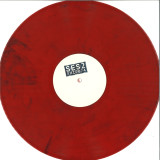
Volume Two in the Electro Sampler Series of Nijmegen's finest Shipwrec. Another compelling electro V/A with tracks by Konerytmi and Ian Martin, amongst others. SES1 set out what quality electro means for Shipwrec. The first in the series brought together six musicians from far and wide, musicians who journey through the colder edge of their analogue instruments with a clear ear for the floor. SES2 starts where its predecessor left off. The genre bending Ian Martin opens with the frigid funk of "Metaphysical Travellers." Stripped back, the track is bare in terms of its elements. Despite such meagre ingredients, Martin concocts an engaging and rich work of darkened grooves and sinister undercurrents. o-0._.0-o is the playful pseudonym of acid freetekno enthusiast Owen. His contribution, "Acidrobotik", releases a free and wandering 303 lines that forges a bubbling path through crisp percussion. The flip brings an artist better known for his work in techno. Cliche Morph delves into the clinical side of his palette and emerges with the stunning "Placebo." Balancing alienated and arctic blasts with a thawing warmth, the outcome is pure classic electro. A rising star of machine music follows, Fleck E.S.C. A dirty bassline is further sullied by layers of gritty distortion and glitched vocals in this re-wired work of ghetto. A legend of electronics closes, Kirill Junolainen. Under his lauded Konerytmi moniker, this synthesiser shapeshifter delivers "Kuva Alkio." Stuttering bass and tight drums are the foundation from which sci-fi inspirations take hold, sailing strings tethered by a terse snare as SES2 is brought to a triumphal close.
Merkwürdig is thrilled to present you our second VA EP, featuring a lineup of talented artists who are pushing the boundaries of electronic music. Nate.SU, Bodj, OBG Felix Bergleiter & Thomas Grün and Fabiano José come together to deliver a diverse and captivating collection of tracks.
First up, Nate.SU takes us on a cosmic adventure with „Neutrino". This mesmerizing track combines atmospheric textures with pulsating beats, creating a sense of weightlessness and exploration.
Next, Bodj invites us to explore „Inside Reflux" with his intricate production. The track blends deep grooves with obscure melodies, creating a hypnotic and immersive experience.
OBG takes us on an travel „with the wave" with their atmospheric composition. Ethereal pads and mesmerizing rhythms.
Closing the EP, Fabiano Jose brings the vibes with "Discotale". This infectious track is filled with funky basslines, and catchy vocal samples, guaranteed to get the dancefloor moving.
Merkwürdig MW 002 is a testament to the label's commitment to showcasing innovative and forward-thinking music. Stay tuned for this Vinyl-only release, as it promises to be a journey through diverse sonic landscapes.
Beloved Spanish indie rockers Hinds are back with their utterly triumphant fourth album, VIVA HINDS. Written by the band’s co-founders, co-vocalists, co-guitarists and co-songwriters Carlotta Cosials and Ana Perrote, it features their first-ever fully Spanish language songs, as well as first collaborations with the likes of Beck and Fontaines D.C.’s Grian Chatten. Recorded in rural France, the album was produced by Pete Robertson (Beabadoobee), engineered by the GRAMMY-nominated Tom Roach, and mixed by GRAMMY-winning engineer Caesar Edmunds (The Killers, Wet Leg).
Shortly after the band made their debut ten years ago, they hit what felt like an insurmountable obstacle – they had to change their name from Deers to Hinds for legal reasons. But, as their fans began to greet them at shows by cheering “¡VIVA HINDS!”, the band soon realized that what initially felt like an ending was actually just the beginning. Fast forward to 2023, and VIVA HINDS was written by Cosials and Perrote after a series of endings. They hit a creative rut after releasing their 2020 album The Prettiest Curse, and their bassist and drummer devastatingly decided to leave the band. They also split with their management team, lost touring revenue due to lockdowns, and were without a label for the first time. But when Perrote and Cosials got together to write again it became clear that their connection, one so special that they call themselves “millionaires in friendship,” would be all they needed to get them through. VIVA HINDS – the most accomplished, sonically adventurous, honest and celebratory record of Hinds’ career – is only the beginning.
PRESS/ONLINE: “The track, though signaling a new era for Hinds, arrives rapturous and catchy, as Perrote and Cosials trade verses and riffs. ...'Coffee' is a sweeping first chapter of where the duo aims to
“‘Coffee’ is a a gorgeous punk-indie cross contamination, instantly memorable, grungy” - Wonderland
“They bring the energy of a thousand rock bands, entrancing the crowd with their searing indie riffs, the constant interlocking of guitars and smiles, and deeply charming banter” - Rolling Stone
“The Prettiest Curse is an evolution. It is striking, complex, uncompromising indie-pop. More than that, it makes a bold statement: it canonises Spanish indie-rock” – Loud and Quiet 9/10
“They’ve taken their sound and unashamedly experimented with it. They’re all the better for it” – NME 4/5
“The Spanish group’s second album displays the superior songcraft of the band, as vocalists Ana Perrote and Carlotta Cosials wade through love’s messy feelings with confidence and exuberance” - Pitchfork
It’s 2024 and Egyptian-born artist of South Sudanese origin Sam Alfred has had a monstrous 12 months. A new year means stepping in a new zone with new tunes. This is Forward Step.
First is the title track “Forward Step (Journey Mix)”, an epic cow-bell-laden house hammer that blooms into a euphoric flower. Running with a 90’s club flavour, Sam lays airy synths over punchy piano and rave stabs while an all-powerful speech plays out, celebrating the idea that we’re all in control of writing our futures. There’s a bubbling over of excitement on this one as it builds and builds and builds!
Up next is “Care 4 U” – a crunchy drum club roller paired with fuzzy bass tones and a super hooky vocal loop. A section that’s been lodged in our brains from the moment we heard it. Toss in airy pads and a key melody that’s also impossible to forget and this track’s got you hook, line and sinker. In true Sam Alfred style, “Care 4 U” is yet more proof that this lad is a wizard at writing jacked-up club cuts, each full of fizz.
Third in line comes “Keep It” a relentless hypnotic piece of techno. Outer space synths drone while shuddering percussion rumbles beneath. It’s here where the EP takes a darker turn. The curtain closer and focus track for the EP drop is “Distance” – an acidic house track to seriously lock and load to. Characterised by sharp hi-hats and lively keys, as its name suggests this one goes and goes and goes.
They say you should never meet your heroes, but for Mike, meeting the legendary Adrian Sherwood has been a transformative experience, leading to creative collaborations that have benefited both of them.
Nearly 30 years after first being mesmerized by OnU Sound’s releases, a cheeky bit of radio ripping serendipitously led to Mike helping Pats Dokter, the label’s official archivist, with his work restoring master tapes, and eventually to him creating visual content for Adrian’s live shows.
A while after this collaboration began, Adrian offered to remix some of Mike’s music, either by his solo project @misledconvoy or our tunes, and it’s four cuts by us that grace this heavyweight platter.
From the dreamy dub of Transient Transmission to the rolling rhythms of A Doubtful Sound, our originals have been re-arranged and dubbed to $%># in Adrian’s signature style, with fluid melodies, pounding basslines and vocal samples awash in a wall of effects.
Trumpets by David “Ital Horns” Fullwood bookend the release, haunting in the first track and celebratory in the last, while Doug Wimbish (Tackhead) added an extra bassline to the heaving version of 1000 Mile Drift, which also features the voice of the iconic Lee “Scratch” Perry.
Reflecting on the collaboration, Mike says, “the whole experience has been slightly unreal, from working on Adrian’s videos to being in the OnU studio and watching him dub-mixing the tracks I’ve made, something I could never have imagined happening!”
Mike isn’t the only OnU fan, as a pivotal moment for Paddy was “watching Adrian mixing Tack>head at the Powerstation in 1995 and seeing the cause-and-effect of what he was doing and hearing the unbelievable sounds coming out of the speakers. It was the first time I’d ever seen somebody dub mix like that.”
The cover of Echoes of the Night is based upon an original artwork by Hamish Macaulay, while the vinyl has been pressed using a 100% recycled compound known as eco-mix, making each record totally unique as the colours subtly change across the pressing run.
Samosa Records dips its toes back into the Afrikano waters with Volume 3 of the Afro themed, genre-busting series and features four deadly tracks from some of Samosa’s most trusted lieutenants.
Breaking the ice as the first track of this exceptional EP is Vincent Galgo and ‘African Rebel’. Mr Galgo has clearly read the brief here – giving us a 125bpm marauder that’s a melting pot of unstoppable horns, furious rhythms and an Afro-pop style bass that is the beating heart of the track.
Track 2 is Samosa regular Frank Virgilio who introduces us to his ‘Mistress’. As a straight up jazz-infused, mid-tempo rhythmic chugger, ‘Mistress’ quickly gets down to the important business of racking up the beats and instrumentation. The generous spread of guitar riffs, assertive bass and organ stabs are expertly lifted by the layered and always rolling drums and bongos induce a trance-like state of mind, so be warned!
On the B-Side Samosa newcomer Casper Leo wears his Tribal heart on his sleeve with the enchanting and utterly captivating jangler - ‘Tom Tom’. You can never have too much Kora guitar and ‘Tom Tom’ has lashings of it, with delicious sprinkles of melodic Marimba – perfect for West African sunsets.
Closing the EP off in style is Afro beats grand master, Lego Edit and the filthy-sexy ‘El Safari’. No other producer can take the essence of the Afro beat structure and bend it to their will like Lego Edit can. Like a late night fist-fight in Club Coco Bongo, ‘El Safari’ punches its way out of the doors. A slinky, wily alley cat of a tune that digs deep with its claws and doesn’t let go and another masterpiece from Lego Edit.
Afrikano Vol.3 has done the impossible and set the bar even higher for this wonderfully diverse Samosa series. We want more. We want ‘4’. With this in your record box, you’ll come with a warning.