Highlights: Limey and the Yanks' A-side 'Love Can't Be A One Way Deal' is a garage song with a sound pitched somewhere between the Beau Brummels and the Beach Boys. 'Guaranteed Love', on the flipside, is an outstanding bluesy number with a stinging fuzz guitar, a concise harp solo and a rousing Bo Diddley-fied groove that has made its way to various compilations since the early 80s and now gets reissued for the first time on a 7" single. This release includes notes by Mike Stax (Ugly Things Magazine) Details: In California in the mid-sixties, with the British Invasion raging, having an authentic Englishman as the lead singer of your band was an ace in the hole that gave you an edge over the competition. Such was the case with Limey & the Yanks a quintet from Buena Park in Southern California's Orange County. Limey was young Steve Cook, and his Yanks by 1965 were guitarists Gregg DeLorto and Tim Gunne, bass player Bob Batman and drummer Wes Hunsinger. With his blonde Keith Relf-style hair, Steve was a striking front man who fortunately also possessed a decent voice, and with his father managing the group they were soon making waves throughout the area. A victory at a Battle of the Bands at the Hollywood Palladium put them on the map in Los Angeles, attracting the attention of producer Gary Paxton. By this time Wally Downing had joined on lead guitar, replacing Gregg DeLorto who had defected to the Spats. Paxton produced their debut single in late 1965, and it was released in January of the following year on his Starburst label. Paxton's business partner in Starburst was Lloyd Johnson, and the single's A-side was written by Lloyd's son Ken, who also recorded for Starburst with his group Ken & the Forth sic Dimension. Paxton had already produced a version of 'Love Can't Be A One Way Deal,' a couple of years earlier with the Rev-Lons, a girl group from Bakersfield, but the version by Limey & the Yanks took a completely different approach, turning it into a lovelorn garage number with a sound pitched somewhere between the Beau Brummels and the Beach Boys, with bright harmonies, mournful harmonica and a melodic twangy guitar solo. Swinging on a guitar hook based on Bobby Parker's 'Watch Your Step,' 'Guaranteed Love,' took a bluesier approach with a confident Limey vocal, stinging fuzz guitar, a concise harp solo and a rousing Bo Diddley-fied groove. The single was not a hit, but it added heft to the group's growing reputation. A second single, 'Out of Sight, Out of Mind,' was released in October, but it would be the group's last, although they did continue, through several lineup changes, into 1967. Limey's legacy lives on_
quête:first bass
This mega-rare 1969 album pays tribute to the Bronx and Brooklyn neighborhoods where young Latinos had invented the boogaloo a few years earlier. This record highlights the quality of Peruvian boogaloo and the talent of musicians such as pianist Otto de Rojas and percussionist Coco Lagos. First time reissue. In the mid-sixties, when young Latino musicians in New York fused Afro-Cuban rhythms with rock, soul and jazz, they had no idea that their boogaloo bang bang would reverberate just as strong and loud in a distant South American country. From 1955, La Sonora Macedo, took Cuban music to every corner of Peru, backed the leading musicians of the Peruvian tropical universe, such as Ñiko Estrada, Joe di Roma, the double bass player Pepe Hernández, and the trumpet players Tito Chicoma and Charlie Palomares. All diehard fans of Cuban music, always alert to any new artist arriving from the island. In the early sixties, light rock, doo-wop, ballads, Italian songs and bossa nova paraded across Lima's stages, making performances by Cuban bands, previously so frequent, a thing of the past. Moreover, the unanimous success of the Beatles from 1964 onwards, gave the impression that music from the English-speaking world would dominate the rest of the decade. But this was not the case. In large part because of Manuel Guerrero's good relations with U.S Latino labels, such as Alegre Records, which released the initial recordings by Johnny Pacheco and Charlie Palmieri, allowing listeners in Lima to follow the development of the salsa movement almost from the beginning. MAG was undoubtedly the best representative of these new sounds. In 1969, the LP "Acabo con Lima, huyo pa' Nueva York" was released on this label, a project which brought together three figures from Lima's show business world: Manuel Antonio Guerrero, owner and founder of MAG, who wasn't shy of joining in on the chorus and percussion during recordings, Pablo Villanueva "Melcochita", a multifaceted artist from a talented musical family from the popular district of La Victoria, was responsible for the vocals and percussion on the album. And the third Lima show business figure in this project was the musician, singer and comedian Alberto Montroy Laostervened, who gained fame in the sixties while still in his twenties for his imitation of Cantinflas, the Mexican actor. Alberto bore a devilish resemblance to Cantinflas, not only in his gestures but also physically. Under the name of Pepe Moreno "Karamanduka" he also went on to record songs abroad such as "El boogaloo de Cantinflitas". "Acabo con Lima, huyo pa' Nueva York" was immediately re-released in other countries, highlighting the quality of Peruvian boogaloo and talent of musicians such as pianist Otto de Rojas and percussionist Coco Lagos, who feature prominently on the album. Songs such as 'Vuela mi descarga', 'Peruvian boogaloo' and 'Peruvian guajira', pay tribute to the Bronx and Brooklyn, neighborhoods where young Latinos had invented the boogaloo a few years earlier.
For Thee Sacred Souls, the first time is often the charm. The band’s first club dates led to a record deal with the revered Daptone label; their first singles racked up more than ten million streams in a year and garnered attention from Billboard, Rolling Stone, and KCRW; and their first fans included the likes of Gary Clark Jr., The Black Pumas, Princess Nokia, and Timbaland. Now, the breakout San Diego trio is ready to deliver yet another landmark first with the release of their self-titled debut on Daptone Records.
“Every step of the way has just been so organic,” says drummer Alex Garcia. “Things just seem to happen naturally when the three of us get together.”
Indeed, there’s something inevitable about the sound of Thee Sacred Souls, as if Garcia and his bandmates—bassist Sal Samano and singer Josh Lane—have been playing together for a lifetime already. Produced by Bosco Mann (aka Daptone co-founder Gabriel Roth), Thee Sacred Souls is a warm and textured record, mixing the easygoing grace of sweet ’60s soul with the grit and groove of early ’70s R&B, and the performances are utterly intoxicating, with Lane’s weightless vocals anchored by the rhythm section’s deep pocket and infectious chemistry.
Hints of Chicano, Philly, Chicago, Memphis, and even Panama soul turn up here, and while it’s tempting to toss around labels like “retro” with a deliberately analog collection like this, there’s also something distinctly modern about the band that defies easy categorization, a rawness and a sincerity that transcends time and place.
Repress !
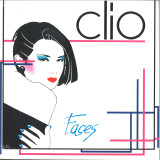
Worthy italo re-issue (in a newly mastered version) of this early Roberto Ferrante's project. Roberto started his career being part of various electronic music groups in Naples around the early 80s! His career took off when he made his first deal with Best Record by Claudio Casalini for ''Come On Closer'' by Pineapples which obtained worldwide success and was played at the legendary Chicago Radio Station WBMX by the mythological DJ's collective, Hot Mix 5. In 1985 it was time for another classic named â??Facesâ?Â�, a simple but direct and honest song with an irresistible rhythm and lyrics that tends to move away from that typical dark sound in other Italo-Disco songs of that era. This song is a triumph for synthesizers and electronic drums as it's fully electronic, something still a rarity in those days! The beautiful melody and spiritual essence of ''Faces'' represent the revolution of a new beginning of the Italian pop of the 80s with a perfect arrangement by Roberto Ferrante, a bouncing bassline, and strong and clear vocal. The sweet and sensual voice, full of personality and charm is by Clio (Maria Chiara Perugini). The graphics are by Patrizio Squeglia and all together it made this groundbreaking release which is one of the best Italo-Disco songs ever made.
Rising UK duo Mia Mendi returns for their second outing on Watergate Records with the retro-tinged Robosynapse EP.
The label debut of Mia Mendi was a notable 2021 highlight for the Oberbaumbrücke imprint. Titled 'Ubi’, the EP was a collaboration with Thomas Gandey and demonstrated their full-bodied dancefloor approach, injecting their unique sound signature into a modern progressive house palette.
‘Robosynapse’ is no less exciting (or fun). The title track is a plump nu wave houser, driven by soaring retro synths, a gutsy electro bassline and an 80s guitar solo. ‘Simulated Reality’ buzzes and hums, seven minutes of emotional electro and crispy drumlines, before handing the baton to ‘Cyborg String’, which continues the dreamy throwdown.
Alan Dixon makes his first contribution to Watergate Records and re-fashions ‘Robosynapse’ into a glistening cosmic-tinged beast, amplifying the focus on the guitar lead. Fresh off her label debut with the excellent ‘Mind Control’ EP, Henri Bergmann makes a welcome return to re-work ‘Simulated Reality’ into a powerful melodic gem, heightening the focus on the synths. An added bonus to the pack, Musumeci delivers a supreme chugging re-work of ‘Ubi’. Game on!
Polifonic Records is the melodic balance between antagonistic vibrations, spirits and energies that inhabit the land of Puglia since the dawn of time.
An harmonic exploration into colorful, vibrant sunrise atmospheres and emotional, introspective sunset sensations. One Body. Many Souls.
PF004 // The fourth vinyl of Polifonic Records label brings together artists from different cultures and ethnicities to create a seamless blend of sounds with diverse influences. Encompassing genres like house, Balearic beat, and acid, harmonized through ambient arrangements and 4-tothe-floor rhythm patterns to chill and groove to, this record is a material embodiment of the multicultural and polyhedric approach that Polifonic adopts throughout the multiple extensions of our projects.
The first track “Generations of Sunsets” by Lipelis joining with Andy Butler from Hercules and Love Affairs, vividly illustrates the extent of their sonic palette: a journey that runs through a Balearic groove - also with the use of guitar - and expands the mind to exotic places keeping the body moving with its acid touch.
Italian 90’s riviera house meets percussions and ethnic grooves in the born new track from the Milano duo Eternal Love. “Kuasi Riviera” reflects perfectly the nature of Polifonic between clubby atmospheres and connection with the wild world.
Then comes the darker side with Yu Su, who switches it up with new diversions in tempo and rhythm throughout “Oil” with a blend of deep basslines and obscure soundscapes contributing to this journey through space and time.
Benedek’s “Desperado” doesn’t shy away from deep diving right back to the 90s Italian house overlapping bold soundscapes through the lens of a contemporary producer. Distinctive,
immersive, and dauntless.
Bassist and composer Milo Fitzpatrick (Portico Quartet) launches new collaborative project with saxophonist Jordan Smart (Mammal Hands)
Vega Trails is a new project from double-bassist and composer Milo Fitzpatrick, a founder member of Portico Quartet, who has also performed with the likes of Nick Mulvey and Jono McCleary and features saxophonist Jordan Smart (Mammal Hands, Sunda Arc) in a richly powerful duo bringing together two powerfully charismatic musicians. The project which takes its name from Carl Sagan's science fiction novel 'Contact' (a book about signals of new life detected from the Vega system) andwas born out of a desire to bring the elements of bass and melody to the foreground in their rawest form and Fitzpatrick explains that he deliberatelychose the stripped back approach.
"There is so much in just one musician's sound; the emotional, the intellectual, the vulnerability and power of their character. But often these delicate nuances can be submerged in the quest for a group sound. In Vega Trails I wanted to grant the musicians space to breathe and be heard and for the listener to witness the intimacy and depth of a conversation between two voices, bass and melody. I was also interested in how the limitations would guide both the composition and performance and to push us both to places close to the limits of what we could play, and it is in this place where I believe the character of a musician blossoms and comes forward".
Tremors in the Static was composed during Lockdown as Fitzpatrick immersed himself in music that had space and sparseness such as Swedish fiddle music and Indian Classical music. Jan Johansson's legendary 'Jazz på Svenska' (jazz versions of Swedish folk songs) was another influence, as was a collection of ancient lullabies by Spanish soprano singer Montserrat Figueras. Through exploring the harmonic and textural possibilities on the bass, Fitzpatrick would cycle riffs and motifs whilst singing melodies, and he began to create the music debuted here. However, it was only after listening to Charlie Haden's album of duets, 'Closeness', that the project would come into focus as a duo, and Fitzpatrick immediately knew that the second musician had to be Jordan Smart.
"I saw Jordan play at two Gondwana Records events – in Berlin and Tokyo. Both times I was mesmerised by the intensity and conviction of his playing. His commitment to the cause of transcending himself and the listener made a lasting impression on me. When I began writing this record, I knew I needed a strong player who had equal conviction in their playing as me, but also someone who understood the importance of melody"
It was an inspired idea as Smart brought an openness and positivity which allowed the music to be both experimental and bold. Smart's ability to play tenor and soprano saxophone with equal command, as well as bass clarinet and Ney flute, allowed them to open up the pallet of sound and pull the melodies into varying emotional landscapes.The final piece of the puzzle was the performance space. Fitzpatrick knew that he wanted the two players to react off of a third element. The music was written for an ambient space which interacted with the notes: decaying and disintegrating them into silence. They found the perfect space in a church in Fitzpatrick's local neighbourhood of Stamford Hill.
"The recording space is the canvas on which the sound interacts and flows, it is the frame in which notes can live, breathe and die and is as important as the other elements. A resonant recording space, like a church, allows this stripped back sound to resonate, echo and linger, enough to create images and landscapes in which stories can play out".
This then is Vega Trails, a project that brings together two open-mined and communicative musicians for the first time, to tell beautiful winding stories together and to create something soulful and new.Something bigger than both of them and something that leaves us all richer for hearing it. Enjoy!
Just 100 copies pressed – make sure to book your place for this unforgettable journey.
Celebrating our tenth release, First Cut delivers the label’s first split release. Like the arbitrary scheduling of our hometown Dublin’s bus system, it took a while for these tracks to appear – and then they all came at once!
Tr One drops ‘Fold’, a rousing house track, led by insistent piano keys and tough drums, while on ‘Crash2’, Lerosa delivers a wonderfully sub-aquatic electro-techno jam. Bringing the listener back to earth with a driving bass and powerful rhythm is Giles Armstrong’s ‘Deep is For Dopes!’
- A1: Nothing To Declare
- A2: Totally Spies (Feat Lafawndah)
- A3: Nightflame (Feat Orion Sun)
- A4: Anthology
- A5: Discipline
- A6: Blessgrips
- A7: Easy Jet
- A8: Candace Parker (Feat Muqata'a)
- B1: No More Kings
- B2: Capitol (Feat Alli Logout)
- B3: Sixteen
- B4: Spirit Airlines
- B5: Crown
- B6: More Victories (Feat M Tellez)
- B7: Seven
- B8: Lead Level 15 (Feat Ase Manual)
The LP version is limited to 1000 copies, pressed on blue vinyl, in a high grade spot-varnished gatefold sleeve.
700 Bliss is the forward-thinking duo of DJ Haram and Moor Mother. Their first full length for Hyperdub is an album of noise rap that ties together the raw edges of club music and hip hop with punk energy, jazz, house-party catharsis, percussion-heavy analogue sound design, and cheeky skits, ranging from experimental rap tracks with rolling hi hats and lyrical bravado, to poetry set to noise and sound collage.
Moor Mother and DJ Haram started collaborating in 2014 and eventually formed 700 Bliss, a blistering live act in Philly's DIY scene, releasing their 2018 debut, Spa 700 on Halcyon Veil / Don Giovanni Records. Since that time, both artists have grown global followings. Moor Mother is a prolific solo artist and collaborator, writer, and member of Black Quantum Futurism while Haram has been curating and creating radio shows, DJing, and producing (including an EP for Hyperdub in 2019).
‘Nothing To Declare’ is a smart, danceable revelation, a chiseled soundscape of dive bombing bass, piercing bleeps, crunchy distortion, and wavering synth lines. Welcoming in a variety of voices from their extended, cross-genre scene, 700 Bliss also bring along a cast of collaborators, including vocalists Orion Sun, Lawfandah, Ase Manual, and Ali Logout (from the band Special Interest), plus Palestinian producer Muqata'a, and writer M Téllez who delivers a surreal sci fi monologue over a pounding kick drum on ‘More Victories’.
‘Nothing To Declare’ is a deeply layered rewriting of hip hop and electronic music that gives more with each listen. You won't hear another rap album like it in 2022.
- A1: Giacobinid Meteor Shower Attack (The Man From Giacobinid Meteor Comet)
- A2: Viva Astro Django
- A3: Sailing On Giacobini's Orbital
- B1: The Golden Apple And 400 Wives (Five Dimensional Nightmare)
- B2: Magic Fingers Of The Undesired Fiend
- B3: Or A Spell For Sargasso Of Space
- C1: Love Electrique
- D1: Pink Lady Lemonade (May I Drink You Once Again?) (May I Drink You Once Again?)
Continuing the ‘first time on vinyl’ purge of the AMT archives. Here’s the band's classic 2006 album finally available on double vinyl for the first time. Housed in full colour gatefold sleeve.
‘Myth of the Love Electrique’ is another scorcher from these ridiculously prolific psych masters. This album is notable for being the debut of their newest band member: Kitagawa Hao. Kitagawa's presence doesn't dominate the recording by any means, but her contributions nicely complement the swirling chaos the group generates. Acid Mothers Temple always manages to find a breath of fresh air at the most opportune times, and this is no exception. While remaining a tight unit, bringing Kitagawa into the fold adds another dimension to their chaotic sprawl without having to sacrifice any of their strengths on this incendiary album.
“Comprised of four lengthy tracks, the album explodes with a start: "The Man from Giacobinid Meteor Comet." Kawabata Makoto's guitar quickly becomes a tangle of screams, a frenzied surge that drags the band along with it. The rhythm section is ferocious. Bassist Tsuyama Atsushi frequently ventures out to the stratosphere, but he also knows when to hold back or to provide a vaguely melodic foundation. Likewise, the amount of energy drummer Shimura Koji dedicates to his performance is a lesson in endurance. Divided into three movements, this track eventually cools down and then glides to a drone landing, alighting the listener breathlessly upon calmer ground.
Kitagawa's voice makes its first appearance on "Five Dimensional Nightmare," floating over a bouzouki arrangement that sounds like singing glass. This one is divided into three sections like the previous track, but starts airy and then goes into a drone as Tsuyama briefly takes over the vocals. From here, strings are tortured like fingernails on a blackboard before a guitar and Higashi Hiroshi’s water drop electronics restore balance.
As much as I loved the two previous tracks, the band forges ahead into something different on "Love Electrique." Kitagawa's presence is most felt on this track. Her voice streaks across the mix as blistering guitars and freaky electronics blast all over the place. Over the course of 20 minutes, it hits several different moods and textures on a truly transcendent journey.
Of the four tracks, only the live staple "Pink Lady Lemonade (May I Drink You Once Again?)" may seem a little redundant. Kitagawa, however, breathes new life into this standard by bringing her vocals to the fore over the entire track, as if restoring an element that previously had been missing. It's hard to call it a definitive version because so many other excellent versions already exist, but it is a great one in its own right. For fans who may be weary of this song after all of its appearances over the years, it is easy enough to stop the disc after gorging on the first hour of music, and it is still a welcome dessert if the mood should strike”
- A1: Subp Yao - Reckless
- A2: Obese - Man Of My Word
- A3: Dayzero - Eye Of The Moon
- A4: Don Piper - Waan Fiyah
- A5: One2Six - Respond
- A6: Dead End - You're All Outta Time
- B1: Theoretical - Small Gangsta
- B2: Dj Ride - No Rest, No Sleep
- B3: Dope - Rude Boi
- B4: Dranq - Who The G's
- B5: Muadeep - Return Of The Ronin
- B6: Sigkill - Helios
SATURATED! The various artist series on vinyl has proven to be the epitome of curation in bass music since its inception.
The whole package is curated such that each track perfectly flows into the next.
Each volume is carefully hand-picked and serves as a snapshot of bass music at that moment,
SATURATE! has earned its spot as the first choice for those seeking fresh sounds from established and emerging artists.
and has been leading the way in all thing's bass heavy, breakbeat, experimental, glitch, hip-hop, psychedelic and trap for years now. They have a track record of propelling artists to the next level. Their roster includes some of the scene's biggest names. These compilations present
A weird, wonky and wonderful journey through the raw attitude of the blistering beat driven electronic music scene.
Get it now!"
Brewing another supremely heavy release on the horizon, Moonshine Recordings is stealing the spotlight once again. Proudly presenting Violinbwoy's first solo album, unadulterated sound system pressure at its finest. Slavic chants and drum rhythms meet the unrivalled power of Violinbwoy's eccentric take on modern bass music 'Fyetisov' kicks off the stellar 3x12' release with a high-powered Stepper emission. Setting the tone with a rumbling bassline and supremely energetic lead instrumentation, full force sound system music down to its core. Shining in a different light, 'Moonspell' reveals its melancholic nature - gradually intensifying through otherworldly percussion and anthemic vocal sample placements. Stripped down to its bare bones, 'Dubplate' unleashes its detuned, percussive shackles for a massive onslaught of four-to-the-floor, while keeping true to Jamaica's music roots. Warbling tape echo spheres and excellence in emotive expression Violinbwoy's collaboration with singer Marina P turns out to be an anthem by itself enthralling, whoever gets caught into the midst of this hymn of a track. Not backing down one step from the established level of quality, 'Sound System' featuring Junior Dread excels once more in a crystal-clear demonstration of modern roots music - mandatory repeat listening. Rejoicing in simplicity, 'Rig Alert' holds true to what the name suggests - cinematic bass meditation, fluidly scaling with the size of its speaker counterpart. Moving on to Dan's vocal skills in 'Wanted': Rastafarian wisdom chanting along a skanking rhythm and orchestral atmosphere. Ethereal bells being submerged in moving air and scattered white noise, 'Run & Hide' demonstrates a more experimental side within the LP - exhibiting Downtempo/Ambient inclinations in a magnificent combination with Dub characteristics, only increasing in energy to the call of the dub siren. Ready for more, the title track 'død' captures us within the expressive, introductory playing of the violin, deserting it for echoes and sub oscillations alike. Calling upon the prowess of Rider Shafique, his harmonic toasting is being escorted by a forward-minded halftime groove in 'Find The Way'. Topping the LP off with Sis' excellence in telling a story through song on a hypnotic instrumental. The nature of last tunes is often powerful, serving to concede with an explosion, appropriate of the session - as is the case with 'Surfacing' closing off the monumental EP with visceral lead movements, setting the tone alongside driving drums and one more murderous bassline, sure of receiving countless rewinds in the near future. Encompassing a plethora of current Roots- Dub- and Steppa- influenced styles, Moonshine's next LP installment is sure to be received for what it is: a definitive, quality expedition of what's firing up dance floors around the globe.
Lightning Bolt redefines what it means to be DIY. An utterly singular band in every way, unbridled creativity and energy propel them well past most categorical boundaries, least of which is the boundary between band and audience. Theirs is an immersive experience - a sound so huge it can swallow us all. Oblivion Hunter is a monster. Not a compilation, not concept album and more than the sum of its parts, the record is a peek into the band"s inner world on their home turf (the Hilarious Attic in Providence), collecting deep explorations into distortion, bass manipulation and its intersection with rhythm. A Limited release in 2012 sold out almost immediately. This first re-issue is a deluxe one coming with 4 different covers each matched with it"s own color vinyl. Re mastered by Josh Bonati, you can now immerse yourself in this pivotal Lightning Bolt album"s sonic oblivion and YOU are now the Oblivion Hunter. A cathartic listening experience, Oblivon Hunter finds blast-beats colliding with distorted vocals and all shapes and sizes of guitar noises, even some metallic riffage on the album closer and aptly named "World Wobbly Wide." Throughout, the sound is amped-up and free with an ear on the railroad tracks to the big sounds of industry and clamor. Bass sounds jump out of the speaker cones that conjure up ears in alien propulsion systems, nights in faraway wind tunnels. Experience this pivotal album in Lightning Bolt"s catalog like never before.
Like meeting an old friend again, Dalmata Daniel welcomes DJ Overdose back to their catalog. Six years ago the infamous Dutchman's '05 Poly 800 Loop' EP was released, which served as a powerful launch to Dalmata Daniel, opening the first chapter in their story. Later in 2019, a split release with Sematic4 was also a highlight in the life of the label; and now, 3 years later, DJ Overdose checks in with the 'Powers of Ten EP' with a J. Mono remix, available both in digital and vinyl format, the latter having 2 bonus tracks.
The distinct, crunchy sound of DJ Overdose, bearing aspects of old school hip-hop-infused sampling and contemporary analog vibes creates the perfect blend of both worlds. 'Garden of Lust' opens up the adventure with a combo of warm basslines and solid drum-programming. This initial track feeds us these cardinal elements as the bread and butter they are: subtle variations and fine spices do appear here and there as the track goes along, but the key, beating pulse in 'Garden of Lust' brings massive hits stable as a sledgehammer in the hands of a blacksmith.
'Feed The Beats' elevates the game to cinematic territories: its majestic string-like central melody makes me alert and ablaze, making me feel like I'm in a late 80s L.A. setting facing malevolent zombie-aliens in my Wayfarer shades. Blasting beats and Carpenterian coolness all over the place, while the spooky bassline just keeps sneaking up on me endlessly.
If you are wondering when's the best time of the year to bring out your boombox at last, then this is your lucky day: with 'BOB', the first bonus track on the vinyl, we can experience some roarin' bassdrums, snappy snares, MCs with the speed of light and all that jazz. The low-bit sampling and vinyl scratching come and kick you right in the face so hard that it becomes pretty obvious you'll can't help but start some serious beatbox battles in your bathtub with your rubber duck.
A feverish groove in the prime time of a funky bash, in the haze of a sensual rave-up: that's all one really wants when going for a Saturday night out. We definitely get this and much more from 'Room 714', another vinyl-only bonus track. A berserk voice and ethereal chords guide us through this mysterious track, but while we are busy trying to impress our crushes on the dance floor, things around us are slowly getting very, very freaky, maybe a bit way too freaky.
As wobbly and jolly as it gets, our Dutch friend ends his session with 'Ðr ¡v€ M€ ¢r@z¥', a vocoder-heavy disco banger, full of merry vocal FX and smart rhythmic glitches as he completes his flight. To close the EP, our local hero, J. Mono delivers an insane remix of 'Ðr ¡v€ M€ ¢r@z¥': one can clearly imagine how he grabs and turns the BPM knob all the way up, fires up some arpeggios on his mighty synths and casts a complete reimagination of the original track.
PRESSED ON OPAQUE YELLOW VINYL WITH JAPANESE STYLIZED INSERT AND DELUXE OBI STRIP
Remastered From The Original Analog Tapes
The first live Miles Davis electric band release since 1977’s very dark and heavy Dark Magus. The album features live performances from shows at Boston’s Kix Club. The double vinyl release contains reimagined versions of songs from The Man With the Horn (1981), tunes from the pre-electric Gil Evans collaboration Porgy and Bess (1959), and a dedication to the Boston venue called Kix. While this was one of the first live Miles Davis performances in over half a decade it certainly did not show!!! This album features R&B legend Marcus Miller on bass, Mike Stern on guitar, Bill Evans on saxophone, Mino Cinelu on percussion, and electric band alumni Al Foster on drums. Produced and edited by long time Miles collaborator Teo Macero.
On High Flying Man, the third LP by Matt Berry’s pseudo-eponymous project The Berries, loss and desire take center stage. Berry delves deep into 21st century malaise, crafting densely layered songs which project an unshakable yearning for deliverance from the world’s shortcomings. Each track extends an outstretched palm towards universal connection, blending a complex of mix of pop hooks, rock swagger, and psychedelia into dejected populist anthems. Faced with the perils of an isolating world, High Flying Man reignites the tradition of great American songwriting, speaking in the voice of the longing masses. At heart, Berry demands more life, rejecting both arty cynicism and nostalgic escapism.
Berry cut his teeth at a young age playing in the bands Happy Diving (Topshelf Records) and Big Bite (Pop Wig), and has since regularly served as a touring member for bands like Angel Dust and Dark Tea. His early work with Happy Diving and Big Bite solidified his position as an upcoming star in the world of fuzzed-out indie rock, earning him tours and opening slots with the likes of Turnstile, Dinosaur Jr., Nothing, The Swirlies, and The Coathangers. With The Berries, however, Berry turns the Big Muffs down (although not off), creating sonic space to stretch his wings as a burgeoning pop songwriter. The psychedelic-surrealist textures of his earlier output are not gone, per say, but rather find themselves folded into more expansive, rock-oriented arrangements, becoming accoutrements as opposed to the driving force of each song itself.
High Flying Man follows The Berries’ previous releases, 2018’s Start All Over Again and 2019’s Berryland. While longtime listeners will undoubtedly recognize Berry’s disaffected drawl and melodic sensibility, High Flying Man’s complex arrangements and expansive sonic landscape place it well apart from its predecessors. Berry enlisted live band members Danny Paul (drums), Emma Danner (backing vocals), and Lance Umble (bass) during the recording of High Flying Man, as well as the mixing talents of Rob Schnapf (Elliott Smith, Beck, Guided by Voices), breaking from the self-produced home recording ethos of the previous Berries LPs. The collaborative nature of High Flying Man’s recording process is reflected in the quality of each song’s arrangement. Freed from the pressure of being individually responsible for every detail committed to tape, Berry was able to focus his attention more fully on the creative demands of constructing a dynamic and cohesive record. High Flying Man pivots away from any sort of obvious nod to Americana tropes, baggy British attitude, or Neil Young-esque riffing, leaning head on into a lush, idiosyncratic grandeur.
Each track evokes the irreverent and flashy style of a songwriting voice finding itself for the first time. Berry’s guitar heroics extend towards new heights, channeling the simple pop mastery of Lindsay Buckingham (“Prime”) and the wicked emotion of a 21st century “November Rain” (“High Flying Man”). Unusual stylistic juxtapositions give certain songs an almost timeless quality: Bert Jansch-esque crooning finds its counterpoint in sweeping, distortion-soaked riffs (“A Drop of Rain”), the primitive rhythms of Amon Duul are given an arena-sized, Britpop facelift (“Life’s Blood”). On High Flying Man, however, the ballad reigns supreme. “Down That Road Again” drips with sentimentality, powered by soft, undeniable pop melodies and pared-down chord progressions. Album-centerpiece “Eagle Eye” teeters between pure grace and extreme sorrow, unfolding into a massive, immediately memorable tide of melancholic beauty.
Lyrically, High Flying Man is both simple and direct. Although often bitter about the state of the world, Berry has no overtly political axe to grind. In some instances, he takes jabs at the moral laziness of aging millennials, expressing his yearning for a return to vitality and conviction (“Prime”). In other instances, Berry turns his criticism inwards, examining his longing for a better life and his repeated tendency to self-sabotage (“Down That Road Again”). These two poles balance each other out, creating a thematic tenor which is more so self-implicating and empathetic than critical. If anyone is to blame, it is the world we have been saddled with, not the people left to pick up its pieces. Although often personal, Berry’s words evoke a universal experience of continued belief in the face of loss. “High Flying Man” chronicles the growing distance between Berry and an old friend who has been shipwrecked by the weight of trauma, evoking the sorrow of trying to love someone who is no longer able to keep up with reality. Even the most somber passages of “Eagle Eye” (“long before I become aware of it, my friend/it’s 6 AM and I’m gonna die”) find their redemption in a burning devotion towards something worth living for (“If there’s one thing I can depend on/it’s my old friend/my shining light/my eagle eye”).
With High Flying Man, Matt Berry embraces undying love in the face of isolation. Daring to want more life becomes a spiritual rallying cry against a world that has failed to make life either meaningful or beautiful. At their core, these songs are not about revolution, but they are about the faith that gives something like revolution a purpose in the first place.
The debut album from Jonathan Richman & The Modern Lovers and featuring the U.S. single tracks, “New England” and “Here Come The Martian Martians” This version of The Modern Lovers included drummer David Robinson (The Cars) and Greg “Curly” Keranen on bass (The Rubinoos) Co-Produced by Beserkley Records founder Matthew King Kauffman and Glen Kolotkin (Jimi Hendrix, Janis Joplin) Available CD & LP. Jonathan Richman formed The Modern Lovers in 1970 in Boston with Jerry Harrison (Talking Heads), Ernie Brooks and David Robinson (The Cars). The band recorded a series of demos, first with John Cale (The Velvet Underground) and later with producer Kim Fowley. Both sets of demos were eventually released, but not until the original group had disbanded. In 1975 Jonathan relocated to California and secured a recording deal with Beserkley Records. By 1976 he had pulled together a new version of The Modern Lovers. This group included the holdover David Robinson from the original band and added, Leroy Radcliffe and Greg 'Curly’ Keranen (The Rubinoos). The self-titled release delivered on Richman’s desire for more acoustic and harmony-based material. Unfortunately, nearly on top of the bands’ debut album release, the earlier demo material drawn mostly from the Cale demo sessions was issued, and Jonathan Richman & The Modern Lovers was overshadowed by “Pablo Picasso,” “Roadrunner,” and their—now classic—“debut.” Shortly after the release of their actual self-titled debut, Robinson departed to join The Cars. Needing a new drummer, the band found D. Sharpe (later of the Carla Bley Band) and this new line-up recorded Rock ’n’ Roll With The Modern Lovers which was released in 1977 and achieved some chart success in Europe with “Egyptian Reggae” making it to #5 on the U.K. Singles Chart. Greil Marcus called it “the purist Rock and Roll album I’ve heard this year.” However, another in the series of personnel changes, Keranen left the group. Modern Lovers ‘Live’ followed in 1977 with new bassist Asa Brebner. While the U.S. might not have caught on to the magic of Jonathan Richman & The Modern Lovers, the U.K. certainly did. Recorded at the Hammersmith Odeon, ‘Live’ features Jonathan and The Modern Lovers performing classics from their first two releases to an enthusiastic crowd. The set included the recent Top 5 U.K. single “Egyptian Reggae,” as well as tracks from The Modern Lovers’ previously releases plus an eight-minute version of “Ice Cream Man.” 1979’s Back In Your Life marked the end of any original versions of The Modern Lovers and closed the Beserkley era with Jonathan stepping back from music for a few years after its release.
Ever Crashing, the second LP by Kennedy Ashlyn aka SRSQ pronounced ‘seer-skew’, is the summation of a nearly three-year journey of soul searching, songwriting, and self-discovery: “I became myself in the process of making this record.” From the first choral swells of opener “It Always Rains,” it’s clear this collection exists on an ascendant plane, capturing an artist in super bloom. Every song hits like a single, heaving with guitar, synth, strings, live drums, and oceans of Ashlyn’s astounding voice, balletic and illuminated. The tracks gleam with detail, often assembled from as many as 100 separate tracks, all of which were written and played solely by Ashlyn – a feat of world-building as daunting as it is devastating.
For her, however, the process is intrinsic and intuitive – even a matter of survival. Her 2018 solo debut emerged in response to the tragic Ghost Ship fire in Oakland, which took the life of her bandmate and best friend Cash Askew. Similarly, Ever Crashing began materializing in the wake of an ADHD and bipolar disorder diagnosis, prompting a profound personal overhaul. Ashlyn cites such periods of turmoil as a muse of sorts, when “songs begin to echo within me,” gradually reverberating clearer and more vividly. As melodies and arrangements come into focus, the songs act like containers, vessels in which to externalize and exorcise tumultuous emotions, a transformation she memorializes in the climax of “Élan Vital:” “Reeling in and out of deep despair / I am saved by song.”
From swooning end credits balladry (“Dead Loss”) to orchestral slow-burn torch songs (“Abyss”) to dizzying shoegaze heavens (“Someday I Will Bask In The Sun”), the album exudes a sense of aching grandeur and bewildered joy, rich with triumphs hard won and lost loves never forgotten. Melodies pirouette and crescendo in dazzling, elevated acrobatics, somewhere between Kate Bush and The Sundays, threaded with ethereal undercurrents of shimmering shadow. Riffs brood and sparkle over crystalline synths, buoyant bass, and patient percussion, steadily building to holy moments of tidal power, finessed to perfection by producer Chris Coady (Beach House, Slowdive, Zola Jesus). Ashlyn’s is a dream-pop of questing catharsis, vulnerable but orchestral, as dense with hooks as heartbreak.
The album’s title refers to Ashlyn’s recurring sensation of being trapped in the crest of a wave, turned and churned in the surf, mirroring the cycles of self-flagellation and surrender that she battles being bipolar. But as the poetic raptures of these songs attest, her creative process thrives at transmuting trauma into potent music of arresting beauty and hidden divinity. Ever Crashing is an aching, rare work, shaded with gradients of reverie and regret, loss and letting go, “mourning the person I thought I should be, mourning the person I never was.” But even in its pain, Ashlyn’s voice exerts a redemptive gravity, yearning to transform and transcend: “Even on the inside / I’m bracing for impact / I’m waiting to destroy my life / To become sunlight.”
Ever Crashing, the second LP by Kennedy Ashlyn aka SRSQ pronounced ‘seer-skew’, is the summation of a nearly three-year journey of soul searching, songwriting, and self-discovery: “I became myself in the process of making this record.” From the first choral swells of opener “It Always Rains,” it’s clear this collection exists on an ascendant plane, capturing an artist in super bloom. Every song hits like a single, heaving with guitar, synth, strings, live drums, and oceans of Ashlyn’s astounding voice, balletic and illuminated. The tracks gleam with detail, often assembled from as many as 100 separate tracks, all of which were written and played solely by Ashlyn – a feat of world-building as daunting as it is devastating.
For her, however, the process is intrinsic and intuitive – even a matter of survival. Her 2018 solo debut emerged in response to the tragic Ghost Ship fire in Oakland, which took the life of her bandmate and best friend Cash Askew. Similarly, Ever Crashing began materializing in the wake of an ADHD and bipolar disorder diagnosis, prompting a profound personal overhaul. Ashlyn cites such periods of turmoil as a muse of sorts, when “songs begin to echo within me,” gradually reverberating clearer and more vividly. As melodies and arrangements come into focus, the songs act like containers, vessels in which to externalize and exorcise tumultuous emotions, a transformation she memorializes in the climax of “Élan Vital:” “Reeling in and out of deep despair / I am saved by song.”
From swooning end credits balladry (“Dead Loss”) to orchestral slow-burn torch songs (“Abyss”) to dizzying shoegaze heavens (“Someday I Will Bask In The Sun”), the album exudes a sense of aching grandeur and bewildered joy, rich with triumphs hard won and lost loves never forgotten. Melodies pirouette and crescendo in dazzling, elevated acrobatics, somewhere between Kate Bush and The Sundays, threaded with ethereal undercurrents of shimmering shadow. Riffs brood and sparkle over crystalline synths, buoyant bass, and patient percussion, steadily building to holy moments of tidal power, finessed to perfection by producer Chris Coady (Beach House, Slowdive, Zola Jesus). Ashlyn’s is a dream-pop of questing catharsis, vulnerable but orchestral, as dense with hooks as heartbreak.
The album’s title refers to Ashlyn’s recurring sensation of being trapped in the crest of a wave, turned and churned in the surf, mirroring the cycles of self-flagellation and surrender that she battles being bipolar. But as the poetic raptures of these songs attest, her creative process thrives at transmuting trauma into potent music of arresting beauty and hidden divinity. Ever Crashing is an aching, rare work, shaded with gradients of reverie and regret, loss and letting go, “mourning the person I thought I should be, mourning the person I never was.” But even in its pain, Ashlyn’s voice exerts a redemptive gravity, yearning to transform and transcend: “Even on the inside / I’m bracing for impact / I’m waiting to destroy my life / To become sunlight.”