Needless to remark the importance of Max Roach in the evolution of modern Jazz drumming. Let's just say that back In the mid Forties the young Roach has performed in most of Charlie Parker's recordings
including the legendary Savoy sessions, a crucial step in the history of Jazz recording. Recorded in NY between 1957 and 1958 and originally released on Emarcy label this is Roach's first official tribute to
Charlie Parker. This is also Roach's first pianoless group, a formula which will become a trademark in his later career. Here Roach displays a strong line up featuring Kenny Dorham on trumpet, George Coleman or Hank Mobley on tenor sax, and Nelson Boyd or George Marrow on bass. The tracklist includes six highly inventive versions of Parker's classic Bop tunes such as "Yardbird Suite", Confirmation", "Ko-Ko", "Billie's Bounce", "Apres-vous", and "Parker's Mood". What else?
Поиск:first bass
Все
Pixey grew up in the sleepy but picturesque village Parbold, Lancashire before moving to Liverpool for school and remaining there to this day. Now signed to Chess Club - a label famed for breaking new talent, where recent exciting signings include AlfieTempleman and Phoebe Green, and past successes include Jungle, Wolf Alice and Easy Life - Pixey is making more waves than ever before. ‘Just Move’ drew attention from BBC Radio 1 DJs Jack Saunders (who made Pixey one of his Next Wave artists) and Huw Stephens amongst many other admirers like Radio X’s John Kennedy who added the band to the X-Posure playlist at the station in October. Pixey has also featured as the cover artist of Spotify’s Indie Brandneu (GER) and Peach editorial playlists, and wasamongst the artists named in major annual tips lists, the Dork HYPE List and the NME 100.
New single ‘Electric Dream’ - with its accompanying video by Thomas Davies - combines cavernous drum machines and dreamy pop melodies with a signature dance stomp. Speaking about new single, Pixey explains: “‘Electric Dream’ was originally written as a piano ballad but after finishing the lyrics I felt the song worked as a dance track. I wrote it to make sense ofbeing locked in with nothing to rely on but technology. The verses are all of my anxieties that come with that - like trying to simulate humanity digitally and what kind of a future that would be - but the choruses are about the imperfections of real life that technology and AI can’t give us.”
Debut EP Free To Live In Colour was written, recorded and produced in Pixey’s bedroom in Liverpool - with additional production added by frequent Gorillaz and Jamie T collaborator James Dring - and draws inspiration from genres like hardcore breakbeat and
dream pop. Pixey says: “I wanted a collection of tracks which gave a quick snapshot into me and my brain - where I’m from, where I want to be and what I’m thinking about. I hope people can take something meaningful from it or simply have a dance.”
Pixey first discovered music as a toddler - she remembers not even being able to walk yet but desperate to sing and dance to Queen - before discovering the likes of Kate Bush, Björk, and George Harrison, whose classic songwriting struck a chord with her in her youth. The catalyst for Pixey’s musical coming of age however, was a near fatal viral illness suffered in early 2016 which hospitalised her, she says: “When I thought I was going to die I thought of all the things I wish I’d done and music was the first thing I thought of. As soon as I started recovering I started learning to record and produce.” She taught herself Ableton production software before mastering guitar and eventually drums and bass after her previous (and current) boyfriend(s) left their instruments lying around to prove she could learn it quicker and play it better.
Once able to carve out her own sound, Pixey turned to The Verve, The Prodigy and De La Soul for sonic inspiration, adding: “I particularly like the idea of using samples/making my own riffs sound like samples which was heavily inspired by the De La Soul album 3 Feet High and Rising. Starting out initially though Grimes was a huge catalyst when I realized she wrote, recorded &produced herself.” Her prolific and unusual songwriting style stems from an original riff or beat, with further layers added as she records and produces, and lyrics being added last - the process taking only a day or two.
With Free To Live In Colour and a whole arsenal of further material being readied on her new label home, Chess Club, Pixey is primed for big things in 2021 and beyond.
All music improvised by Michael Wollny, Emile Parisien, Tim Lefebvre
and Christian Lillinger (except ‘Nostalgia for the Light’, written and
arranged by Michael Wollny).
The music we hear doesn’t fit into any category. We’re in uncharted
territory, so a good way to capture its essence might be to break it
down into its four component parts. First there’s Michael Wollny, here
for the very first time playing only on electronic keyboard instruments.
He creates a characterful world of retro-futuristic sounds that is very
much his own. We find the occasional nod to early Jean-Michel Jarre,
references to science fiction and horror movies and also vivid
memories of the sounds of avant-garde Krautrock: Can and Irmin
Schmidt and Klaus Schulze.
As for Tim Lefebvre, here is a musician who has plied his very great
craft with stars such as David Bowie, the Tedeschi Trucks Band, John
Mayer, Knower, Steely Dan, Elvis Costello and Wayne Krantz. Here
he is like a rock in a tempestuous sea. He propels the music forward
with a combination of bass and effects. He builds structures and
tames unruly elements. The way he lays down a groove is
overwhelming.
As a counterbalance we find the explosive yet highly sensitive playing
of drummer Christian Lillin-ger. He stacks layer upon layer of rhythms
and textures.
And the melodic lines of Emile Parisien on soprano saxophone
always have an astonishing springy inventiveness. Such is Parisien’s
latent energy, it seems as if at any moment he could suddenly
become airborne.
The players’ eager curiosity as to what the next turn, the next
impulse, the next push will be is palpable to the listener. One can
sense the tension between the urge to construct forms, lines,
grooves, harmonies, textures, versus the illicit joy of tearing such
fragile structures apart before they have even been heard. There are
beats and patterns from the 90s, 80s and 70s, all coalescing into
cinematic bacchanalia of sound. These four master improvisers and
composers all have the urge to rewrite the rules of their musical world
- and to do so in real time.
LP pressed on 180g vinyl with digital download code.
Ryley Walker currently resides in New York City. But his latest LP is a Chicago record in spirit. The masterful Course In Fable, the songwriter’s fi@h solo effort,
draws from the deep well of that city’s ferCle 1990s scene, when bands like Tortoise, The Sea and Cake and Gastr del Sol were reshaping the underground,
mixing and matching indie rock, jazz, prog and beyond.
Walker spent his formaCve years in Chicago, absorbing those heady sounds and finding ways to make them his own. Even though he emerged at first in folkrock
troubadour mode, it makes sense that he’s arrived at this point; each LP has grown more intricate and assured, his influences disClling into something
original and unusual. To put it simply: Course In Fable is Walker’s best record yet, full of acCve imaginaCon and endless possibiliCes.
Last October, Ryley went straight to one of the primary architects of the Chicago sound to make the LP. John McEn:re, Course In Fable’s producer/engineer/
mixer, can rightly be called a legend for his work with Tortoise, Stereolab, The Red Krayola, Jim O’Rourke and countless others over a prolific career that now
spans more than three decades. Seeing his name in an album’s liners is preVy much a trademark of quality.
Another Windy City exile, McEnCre is based on the west coast these days, working out of the Portland, OR studio he’s dubbed Soma West. On the seven songs
here, he delivers the signature shimmering and prisCne sonics he’s become known for over the years. But McEnCre was also inCmately involved with Course
In Fable’s overall creaCve process. “I told him to take the mixes and have at it,” Walker says.
The result is a rich, immersive affair — a headphones record if ever there was one. Course In Fable’s songs are twisty, labyrinthine things, stuffed full of ideas
(Walker half-jokingly calls it his “prog record”). But no maVer how complex it gets, the album is never overwhelmingly busy. Wiry guitars melt into gorgeous
string secCons (arranged by Douglas Jenkins of the Portland Cello Project). Tricky Cme signatures abound but feel as natural as can be. Melodies o@en dri@ in
unexpected direcCons but remain downright hummable. Like Walker’s beloved Genesis, the pop element is never too far from the surface even when shit
gets weird. (And speaking of weird, Ryley says that in addiCon to Genesis, much of the album’s inspiraCon comes from “Australian extreme scooter riders on
YouTube and balding gear heads on Craigslist.” Go figure.)
To help put together these various puzzle pieces, Ryley assembled a band made up of several longCme collaborators. Bill MacKay (another Chicago mainstay)
and Walker have made two excellent instrumental duo records of interlocking guitars and warm give-and-take — a rapport very much in evidence
throughout Course In Fable. The freakishly talented drummer Ryan Jewell has performed with Walker for years now in a variety of seangs, from
straighborward song-centric sets to blown-out improv extravaganzas. Bassist Andrew ScoJ Young (Tiger Hatchery, Health&Beauty) has logged many miles on
tour with Walker; he and Jewell are frequently astonishing, a buoyant-but-always-locked-in rhythm secCon, able to navigate someCmes dizzying turnarounds
with apparent ease. Listening to the interplay between Walker and these musicians and you might be fooled into thinking they’d spent a year roadtesCng
Course In Fable’s songs. But it all came together relaCvely fast, thanks to demos, rehearsals and the kind of musical empathy that comes from years of
playing together.
Beneath the wondrous interplay, you’ll find some of Walker’s most personal – if sCll typically crypCc — lyrics, hinCng at some of the trials the songwriter has
been dealing with in recent years. Balanced with necessary doses of dark humor and oddball poetry, Course In Fable feels most of all like a life-affirming
record, fresh air in the lungs, sun on your skin. “Fuck me, I’m alive,” Ryley sings at one point, a moment of both disbelief and pure joy.
Walker has released his albums on a who’s-who of independent labels over the past decade — Tompkins Square, Dead Oceans, Thrill Jockey and Drag City
among them. This Cme around, he’s doing it DIY-style, puang Course In Fable out on his own Husky Pants imprint. You’re in good hands. This is an album that
sounds great (mastered by Greg Calbi), looks great (artwork by Jenny Nelson and design by Michael Vallera). It probably even smells great. Whether you’ve
been onboard since the beginning or are new to the Ryley Walker universe, you’re in for a treat.
Formerly of the legendary band Liquid Liquid, Dennis Young is proud to announce his new vinyl recording titled ‘Open Roads.’
The new record is a proud testament of Young’s talent and ability to expand the boundaries of his music, excelling in all facets. The vocal acoustic recording consists of 14 new and original tracks, accompanied by cello/viola and bass guitar.
The exciting new recording shows that Dennis Young isn’t able to be locked into any boundary, and is continuing to surprise new listeners whilst satisfying his current audience with the sounds they have grown to adore, and embrace.
Best known as the marimba player and percussionist for Liquid Liquid, Dennis Young is a self-taught musician who started his music journey at a young age, picking up drums first – which led him to other instruments, later on.
Liquid Liquid was an American no wave and dance-punk group that only lasted 3 years, but released many legendary hits like ‘Cavern’ and ‘Optimo’ which have granted the band a cult-like status within music history. Originated in New York in 1980, the quartet consisted of members Sal Principato, Scott Hartley, Dennis Young, and Richard McGuire.
Dennis Young believes ‘Open Roads’ will become one of your favourite albums as it easy to consume in one sitting, whilst being intoxicating enough to draw you back in for continuous listens.
everything one needs to know about this album: a misshapen,
CHUD-like figure wanders in a graveyard bearing a cross,
while a mutated fish flops in a polluted ditch and a clutch
of factories belch their smoke above it all. The message of
the illustration is not to frighten or warn, but to celebrate
and admire.
Originally released in January of 1984, Disease Is Relative
is an unapologetic and wholesale embrace of death,
disease, and dystopia, with liberal doses of absurdism
and an unrelenting devotion to anything unexpected,
chromatic, or evil sounding. Sporting influences as
diverse as no wave, death rock, funk, post-punk, hardcore,
metal, and prog rock, this music somehow happened in the
midst of a first wave hardcore scene, before there was a
“post-” to be “post” of. Less surprising is that this happened
in Cleveland, which also inspired a desire to recreate the
feeling of the city’s post-industrial desolation in sound.
There’s also some epic screaming and crazy guitar playing.
The album features three songwriters (brothers Andrew
& Chris Marec, Robert Griffin), who also divide guitar,
bass, and vocals equally between themselves here.
Drummer Bruce Allen is the secret weapon, and provides
a clue to what a young Bill Bruford might have done in a
band like this. And yet, beyond all odds, the end result is
cohesive, cathartic, and utterly idiomatic. The distinct vibe
of the album, and its sheer quantity of killer riffs, songs
and performances have made it an album that people have
championed over time, while others have come to know it
through the interwebs as a result.
everything one needs to know about this album: a misshapen,
CHUD-like figure wanders in a graveyard bearing a cross,
while a mutated fish flops in a polluted ditch and a clutch
of factories belch their smoke above it all. The message of
the illustration is not to frighten or warn, but to celebrate
and admire.
Originally released in January of 1984, Disease Is Relative
is an unapologetic and wholesale embrace of death,
disease, and dystopia, with liberal doses of absurdism
and an unrelenting devotion to anything unexpected,
chromatic, or evil sounding. Sporting influences as
diverse as no wave, death rock, funk, post-punk, hardcore,
metal, and prog rock, this music somehow happened in the
midst of a first wave hardcore scene, before there was a
“post-” to be “post” of. Less surprising is that this happened
in Cleveland, which also inspired a desire to recreate the
feeling of the city’s post-industrial desolation in sound.
There’s also some epic screaming and crazy guitar playing.
The album features three songwriters (brothers Andrew
& Chris Marec, Robert Griffin), who also divide guitar,
bass, and vocals equally between themselves here.
Drummer Bruce Allen is the secret weapon, and provides
a clue to what a young Bill Bruford might have done in a
band like this. And yet, beyond all odds, the end result is
cohesive, cathartic, and utterly idiomatic. The distinct vibe
of the album, and its sheer quantity of killer riffs, songs
and performances have made it an album that people have
championed over time, while others have come to know it
through the interwebs as a result.
‘The Watchful Eye Of The Stars’ is Adrian’s ninth studio album.
Produced by luminary John Parish (Aldous Harding, PJ
Harvey), this sublime collection of ten songs invites us to join
Adrian at his storytelling best, regaling us with tales of travel
and wonder, by sea, by road, all quietly transfixing,
transformative and wholly captivating.
Suffused with a hazy and surreal quality, Crowley describes
‘Watchful Eye’’s poignant narratives as those which insisted
themselves upon him. After the fact, it seemed these songs
came to him more or less fully formed. “It’s a beautiful and
mysterious thing,” he says. Perhaps it is a tendency to hold onto
memories (“It’s taken me so long to write to you / Well I just
couldn’t find a pen,” he laments in ‘Bread And Wine’), that
allows him to unleash them lyrically in completion. For Crowley,
the creative process is an organic event rather than a practice
he feels compelled to regulate or control. He approaches lyrics
much like he does short story writing. “The songs straddle the
conscious and subconscious world and some are even
psychedelic in my mind, but to me they are all at once true
stories and born of another place,” he shares.
In making the album, Crowley moved between studio and at
home recording, while John Parish produced. The pair worked
from tracks made initially by Crowley on a charity shop ¾ size
nylon string guitar or Mellotron: “In this way, John wanted to
keep some of the magic of that first take,” says Crowley.
Contradictions and complexities are left intact, initial recordings
were limited to one or two takes and the songs feel more like a
dream recounted upon waking.
Jim Barr of Portishead contributed double bass and was
brought in to engineer parts of ‘Watchful Eye’ in Bristol. Nadine
Khouri and Katell Keineg were invited in as guest backing
singers.
The heavyweight vinyl includes a digital download card.
Crumb’s second album, Ice Melt, takes its name from the coarse blend of salts that you can buy from your local hardware store for $9.99. When sprinkled on your wintry steps, this mixture absorbs water and gives off heat, transforming the ice into a viscous, briney
slush and, eventually, nothing at all. Beginning with the dynamic chaos of “Up & Down,” and ending with Crumb’s closest thing to a lullaby, Ice Melt’ s ten tracks combine, like ice sculptures melting into a glistening puddle.
From the start, the group knew that cohesion was best achieved through plumbing their individual strengths— frontwoman Lila Ramani’s earliest songwriting, which catalyzed the group’s first two EPs; Bri Aronow’s knack for building (dis)affecting soundscapes; the hypnotic grounding of Jonathan Gilad’s drums, a Crumb mainstay; and Jesse Brotter’s distinctive bass playing, which subtly traces Ramani’s vocal melodies while providing an unrelenting pulse. These collective skills make Crumb a project of independent self-discovery, four creative minds converging around an idea that is always shifting and reforming.
Convening in Los Angeles to work with producer Jonathan Rado, Crumb tapped into atmosphere-creation like never before, building experimental compositions that are at turns head-nodding and surrealist, energetic and euphoric. Ramani characterizes the album as a “return back down to earth,” a deeply felt examination of “real substances and beings that live on this planet.” It is also the cultivation of road-worn musicians exploring brand-new sounds and thematic concepts, pushing themselves into territory they could never have anticipated five years ago.
After two UK #1 albums, 2 million album sales and an array of international acclaim, you might’ve thought you knew what to expect from Royal Blood. Those preconceptions were shattered when they released ‘Trouble’s Coming’ last summer. Hitting a melting pot of fiery rock riffs and danceable beats, they delivered something fresh, unexpected and yet entirely in tune with what they’d forged their reputation with.
The reaction was phenomenal, with highlights including 20 million streams, a premiere as Annie Mac’s Hottest Record and a run on Radio 1’s A-list and earned alternative radio support and media attention across the globe. In short, Royal Blood are primed to be bigger than ever before. That feat is set to be realised when they release their eagerly anticipated third album ‘Typhoons’ on April 30th via Warner Records.
When Mike Kerr and Ben Thatcher sat down to talk about making a new album, they knew what they wanted to achieve. It involved a conscious return to their roots, back when they had made music that was influenced by Daft Punk, Justice, and Philippe Zdar of Cassius. It also called for a similar back-to-basics approach to what had made their self-titled debut album so thrilling, visceral and original.
“We sort of stumbled on this sound, and it was immediately fun to play,” recalls Kerr. “That’s what sparked the creativity on the new album, the chasing of that feeling. It’s weird, though - if you think back to ‘Figure it Out’, it kind of contains the embryo of this album. We realised that we didn’t have to completely destroy what we’d created so far; we just had to shift it, change it. On paper, it’s a small reinvention. But when you hear it, it sounds so fresh.”
Those traits pulsate throughout the new single and title track. Kerr’s spiralling bass riff casts an hypnotic allure as it grows in intensity, while his vocals switch at will between a raw rock roar and a soulful falsetto. It’s underpinned by Thatcher’s thundering beats, his taut rhythms infused with groove-laden hi-hats.
After setting the tone with ‘Trouble’s Coming’, the album opens in breathless, take-no-prisoners style with the fierce metallic grooves of ‘Who Needs Friends’ hitting an early visceral peak. Royal Blood further reference their fresh array of influences by deploying vocodered vocals on ‘Million & One’ before dynamically switching between the biggest contrasts of their sound with ‘Limbo’. Already a fan favourite having been a regular during the duo’s 2019 shows, ‘Boilermaker’ lives up to its reputation and is more than matched by ‘Mad Visions’, which evokes a hyper-aggressive Prince. It ends with a final surprise in the shape of the stark piano ballad ‘All We Have Is Now’, a vulnerable and revealing reminder to live in the moment.
That song’s unguarded sentiments gives the album a redemptive finale. Whether directly or allusively, the album focuses on exploring the flipside of success that they’ve experienced. It comes from the realisation that success is much more complicated than it seems and that having the time to regain perspective is a precious commodity which becomes ever more elusive. The situation called for reflection and change, which Kerr addressed in Las Vegas. He downed an espresso martini and declared it to be his last drink, and soon discovered that his new-found sobriety would have a positive impact upon his creativity and life as a whole.
That new approach manifested itself in the duo’s decision to produce the majority of ‘Typhoons’ themselves. ‘Boilermaker’ was produced by Queens of the Stone Age frontman Josh Homme, the two bands having first connected when Royal Blood supported them on a huge North American tour. Meanwhile, the multiple Grammy Award winner Paul Epworth produced ‘Who Needs Friends’ and contributed additional production to ‘Trouble’s Coming’.
After two UK #1 albums, 2 million album sales and an array of international acclaim, you might’ve thought you knew what to expect from Royal Blood. Those preconceptions were shattered when they released ‘Trouble’s Coming’ last summer. Hitting a melting pot of fiery rock riffs and danceable beats, they delivered something fresh, unexpected and yet entirely in tune with what they’d forged their reputation with.
The reaction was phenomenal, with highlights including 20 million streams, a premiere as Annie Mac’s Hottest Record and a run on Radio 1’s A-list and earned alternative radio support and media attention across the globe. In short, Royal Blood are primed to be bigger than ever before. That feat is set to be realised when they release their eagerly anticipated third album ‘Typhoons’ on April 30th via Warner Records.
When Mike Kerr and Ben Thatcher sat down to talk about making a new album, they knew what they wanted to achieve. It involved a conscious return to their roots, back when they had made music that was influenced by Daft Punk, Justice, and Philippe Zdar of Cassius. It also called for a similar back-to-basics approach to what had made their self-titled debut album so thrilling, visceral and original.
“We sort of stumbled on this sound, and it was immediately fun to play,” recalls Kerr. “That’s what sparked the creativity on the new album, the chasing of that feeling. It’s weird, though - if you think back to ‘Figure it Out’, it kind of contains the embryo of this album. We realised that we didn’t have to completely destroy what we’d created so far; we just had to shift it, change it. On paper, it’s a small reinvention. But when you hear it, it sounds so fresh.”
Those traits pulsate throughout the new single and title track. Kerr’s spiralling bass riff casts an hypnotic allure as it grows in intensity, while his vocals switch at will between a raw rock roar and a soulful falsetto. It’s underpinned by Thatcher’s thundering beats, his taut rhythms infused with groove-laden hi-hats.
After setting the tone with ‘Trouble’s Coming’, the album opens in breathless, take-no-prisoners style with the fierce metallic grooves of ‘Who Needs Friends’ hitting an early visceral peak. Royal Blood further reference their fresh array of influences by deploying vocodered vocals on ‘Million & One’ before dynamically switching between the biggest contrasts of their sound with ‘Limbo’. Already a fan favourite having been a regular during the duo’s 2019 shows, ‘Boilermaker’ lives up to its reputation and is more than matched by ‘Mad Visions’, which evokes a hyper-aggressive Prince. It ends with a final surprise in the shape of the stark piano ballad ‘All We Have Is Now’, a vulnerable and revealing reminder to live in the moment.
That song’s unguarded sentiments gives the album a redemptive finale. Whether directly or allusively, the album focuses on exploring the flipside of success that they’ve experienced. It comes from the realisation that success is much more complicated than it seems and that having the time to regain perspective is a precious commodity which becomes ever more elusive. The situation called for reflection and change, which Kerr addressed in Las Vegas. He downed an espresso martini and declared it to be his last drink, and soon discovered that his new-found sobriety would have a positive impact upon his creativity and life as a whole.
That new approach manifested itself in the duo’s decision to produce the majority of ‘Typhoons’ themselves. ‘Boilermaker’ was produced by Queens of the Stone Age frontman Josh Homme, the two bands having first connected when Royal Blood supported them on a huge North American tour. Meanwhile, the multiple Grammy Award winner Paul Epworth produced ‘Who Needs Friends’ and contributed additional production to ‘Trouble’s Coming’.
Crumb’s second album, Ice Melt, takes its name from the coarse blend of salts that you can buy from your local hardware store for $9.99. When sprinkled on your wintry steps, this mixture absorbs water and gives off heat, transforming the ice into a viscous, briney
slush and, eventually, nothing at all. Beginning with the dynamic chaos of “Up & Down,” and ending with Crumb’s closest thing to a lullaby, Ice Melt’ s ten tracks combine, like ice sculptures melting into a glistening puddle.
From the start, the group knew that cohesion was best achieved through plumbing their individual strengths— frontwoman Lila Ramani’s earliest songwriting, which catalyzed the group’s first two EPs; Bri Aronow’s knack for building (dis)affecting soundscapes; the hypnotic grounding of Jonathan Gilad’s drums, a Crumb mainstay; and Jesse Brotter’s distinctive bass playing, which subtly traces Ramani’s vocal melodies while providing an unrelenting pulse. These collective skills make Crumb a project of independent self-discovery, four creative minds converging around an idea that is always shifting and reforming.
Convening in Los Angeles to work with producer Jonathan Rado, Crumb tapped into atmosphere-creation like never before, building experimental compositions that are at turns head-nodding and surrealist, energetic and euphoric. Ramani characterizes the album as a “return back down to earth,” a deeply felt examination of “real substances and beings that live on this planet.” It is also the cultivation of road-worn musicians exploring brand-new sounds and thematic concepts, pushing themselves into territory they could never have anticipated five years ago.
La grande vallée (1993/95), 20'41
Musical composition, design and sound production carried out at the INA grm Studios (Paris) in 1993/95
Original audio recordings in the Drôme and the Mont Ventoux areas
Voice: Hélène Bettencourt
Vocal occurrences: Frédéric Malenfer, Bruno Roche, Lionel Marchetti
Bass clarinet (for processing): Jean Andréo
Micro-climat (1989/90), 21'33
Micro-climat is the first movement of the Sirrus cycle (Micro-climat, Passerelle, Sirrus) composed in 1989/90
Musical composition, sound design and production, audio recordings in 1989/90 at the CFMI studios in Lyon (Lumière University, Lyon 2)
"I wonder if my fascination for clouds (without being an obsession) may have risen at the end of the 80s as, whilst composing Micro-climat, I would regularly wander between the Vercors mountains and the high plateaus of the Monts du Forez discovering, through my eyes, body, breath, active observation and walk, that natural forms when constantly changing and yet swollen with a unity of matter (in this instance, water) open one up to a deep, fundamental breath and a clear field for the mind. The sky and its forces: our ally.
A model for a natural music which, although fixed, as in musique concrète (a rule of the genre), moreover on a recording tape, will remain charged with such a poetic quality that (isn't it its role or rather its reality?) it will ensure a perpetual renewal for our senses, so as to reach another idea of the world, far more open and richer than what we could have imagined."
Lionel Marchetti, 2011
Lionel Marchetti is a major figure of the "third generation" of concrète musicians, a term he values. Listening to these works, imbued with poetry and traversed by micro-narratives, one can indeed retrieve the original concrète spirit, the one that draws from the sonic world, with ears wide open, so as to extract a fertile, rich and multiple substance then shaped and conveyed towards a formal and musical abstraction. Lionel Marchetti has mastered this process, but his real distinctive feature is a truly unique talent for setting climates (as one sets traps) and keeping us on constant alert. The two pieces in this record perfectly illustrate the entrancing dimension of Lionel Marchetti's music, whose charm leads us, through each successive listening, to become voluntary captives so as to better liberate ourselves.
François Bonnet, Paris, 2020
Minimal Wave presents ‘Recordings 1980-1982’ (MW077), a triple 7” box set by pioneering south Florida synth-punk band Futurisk, in honor of their 40th anniversary. Founded by Jeremy Kolosine in 1978, Futurisk recorded many songs and performed live throughout the early 1980s. Though they had released two 7”s that sold out, had a legendary live show, and even some videos, by 1984 Futurisk was history. Eventually, the main core of Futurisk would be the Jeremy Kolosine, Richard Hess, and Jack Howard line-up though much happened leading up to this point.
In 1979, the teenage Jeremy Kolosine won studio time and money in a competition with his drum-machine-triggered guitar-synth act called ‘Clark Humphrey & Futurisk’. He decided to form a band around the name to record a more punk release titled The Sound of Futurism 1980 / Army Now. It was an ambivalent anti-war anthem with Jack Howard on drums, Frank Lardino on synth, and Kolosine on vocals and guitar synth. Many live shows ensued with the line-up which included Jeff Marcus on bass and Vinnie Scrimenti on drums but in 1981 a rift between the band caused them to part ways. They continued for a bit as ‘Radio Berlin’ (no relation to the Vancouver act) and Kolosine, who had gotten absorbed in a new analog synthesizer with sequencer continued as Futurisk.
He recruited synthesist and recording engineer Richard Hess who had a myriad collection of Moogs, Oberhieims, and CATs. Jack Howard returned on drums and syn-drums and the lineup for the Player Piano EP was cast. The EP, like the live show, was a strange blend of punk, minimalist, and disco-influenced electro-pop, with drum machine triggered synths and often frantic real drums all led by Kolosine’s schizophrenic Bowie / Ferry / Foxx adulations. It was recorded by Richard Hess and the band in the rooms of a friend’s house. The drum sound, recorded in a bathroom, rocks, even today. Reportedly, Futurisk may have been the first synth-punk band in the American South, and their 1981 track ‘Push Me Pull You (Pt. 2)’ was an early pre- ‘Rockit’ excursion into electro-funk.
The ‘Recordings 1980-1982’ box set includes three 7”s, an Army Now (1982) Flexi 5” x 7” postcard, and a 16-page full-color booklet featuring unpublished photographs of the band, the history of the band, and an interview with founder Jeremy Kolosine. The three 7”s are The Sound of Futurism 1980 / Army Now which includes an unreleased track from the same session, the Player Piano five-song 7” EP from 1982, and the Ocean Sound 7”, which has not been released in this format until now. All three 7”s are remastered, pressed on heavyweight 70-gram vinyl, and housed in heavy color printed matte sleeves featuring the band’s original artwork. The box is case wrapped and depicts an early illustration of the band printed in black on white with a spot gloss. Limited edition of 600 copies.
The 'Abroad EP' catalogues a period of time spent travelling Japan in the spring of 2019. Throughout the course of the month-long trip, Rudy carried around a portable recorder, capturing various sounds that caught his ear. That collection of found sounds would eventually become the foundation for the EP, each track utilizing a handful of different recordings ranging from bird calls in Tokyo's Yoyogi Park, to windchimes in the coastal town of Kawazu. The EP took a full year of patient, daily work to complete, during which time Rudy invited a diverse group of collaborators in to help finish the songs. Throughout the recording process, harp, saxophone, and violin parts were added to create a unique blend of organic and electronic sounds.
POSY is the recording name of Rudy Klobas, Portland-based producer and multi-instrumentalist with a unique sound that intersects jazz, R&B, and electronic music. Originally trained on classical guitar, POSY gradually taught himself piano, bass, and drums and began writing and recording his first songs on a four-track cassette recorder. POSY's music is lush and densely layered, but maintains an element of simplicity that ultimately leaves one feeling relaxed, nostalgic, and hopeful all at the same time.
With their 25th anniversary celebrations well underway, Hospital Records are bringing their esteemed ‘Classic Symptoms’ series into 2021 with four stellar selections.
The fifteenth edition will be the first to celebrate the label’s milestone achievement by shining the spotlight on some of the original versions of tracks from the highly anticipated ‘H25PITAL’ compilation set to be released on 26th March 2021. Expect an eclectic mix of sound supplied by Netsky, SKC & Bratwa, Hugh Hardie and Q-Project pressed to an extremely exclusive vinyl run.
An undeniable anthem which has cemented itself in the hearts of countless drum & bass lovers, Netsky’s ‘Memory Lane’ marked his first release on Hospital Records and is the perfect starter for ‘Classic Symptoms 15’. Opening the ‘Sick Music 2’ compilation which originally came out in 2010, ‘Memory Lane’ is now approaching its 11th year in circulation.
“It was an exciting time, I had been sending demos through AIM to Hospital for some time, hoping something would get picked up.” - Netsky
Hailing from Hungary, SKC & Bratwa’s nostalgic ‘Heart Of Love’ follows. First seeing the light of day as part of the ‘Weapons Of Mass Creation’ compilation in 2004, this one will take you on a funk-infused liquid trip back to the days of the original Hospital loungecore sound.
Bringing things back to the future, Hugh Hardie’s soulful slammer ‘Tearing Me Apart (feat. Kyan)’ provides ‘Classic Symptoms 15’ with alluring groove and, of course, that infamous double bass melody. Initially released on the ‘Hospital: We Are 18’ compilation back in 2013, it’s safe to say this one is timeless.
Sending it way back to 2006, Q-Project steps up with the title track of his 2006 ‘Computer Love’ electro-infused smasher. Rugged breaks and future-retro synthesis, this one sounds just as good now as it did back then.
Don’t sleep on securing your extremely limited press of four Hospital classics.
This one is for the serious collectors - once they’re gone, they’re gone.
Rich in musical associations yet utterly singular in its voice, joyous with an inner tranquility, the music of Natural Information Society is unlike any other being made today. Their sixth album in eleven years for eremite records, descension (Out of Our Constrictions) is the first to be recorded live, featuring a set from London’s Cafe OTO with veteran English free-improv great Evan Parker, & the first to feature just one extended composition. The 75-minute performance, inspired by the galvanizing presence of Parker, is a sustained bacchanalia of collective ecstasy. You could call it their party album.
This was the second time Parker played with NIS. Joshua Abrams: “Both times we played compositions with Evan in mind. I don’t tell Evan anything. He’s a free agent.”
The music is focused & malleable, energized & even-keeled, drawing on concepts of ensemble playing common to musics from many locations & eras without any one specific aesthetic realization completely defining it.
“The rhythms that Mikel plays are not an exact reference to Chicago house, but that’s in there,” Abrams says. “I like to take a cyclic view of music history, can we take that four-on-the-floor, & consider how it connects to swing-era music? Can we articulate a through line? I dee-jayed for years in Chicago & lessons I learned from playing records for dancing inform how I think about the group’s music. The listener can make connections to aspects of soul music, electronic music, minimalism, traditional folk musics, & other musics of the diaspora as well. It’s about these aspects coming together. I don’t need to mimic something, I need to embody it to get to the spirit, to get to the living thing.”
For jazz fans, the sound of Parker’s soprano & Jason Stein’s bass clarinet might evoke Coltrane & Dolphy, even though they didn’t necessarily set out to do that & they play with complete individuality. Abrams sees a bridge to the historical precedent, too. “Since we first met in the 1990s, one of the things that Evan and I connected on was Coltrane’s music,” he says. “I hoped that we would tap into that sound world intuitively. In this case, I think that level of evocation adds another layer of depth, versus a layer of reference.”
Indeed, this is a performance in which the connections among the ensemble & the creative tension between improvisation and composition build into a complex mesh of associations & interactions. While the band confines itself to the territory mapped out by Abrams’ composition, they are remarkably attentive & responsive, making adjustments to Parker’s improvisations. When Parker’s intricate patterns of notes interweave with the band, the parts reinforce one another & the music rockets upward. Sometimes, Parker’s lines are cradled by the group’s gentle pulse & an unearthly lyrical balance is struck.
Drummer Mikel Patrick Avery is locked-in, playing with hellacious long-form discipline, feel & responsiveness. Jason Stein’s animated, vocalized bass clarinet weaves in & out with Lisa Alvarado’s harmonium to state the piece’s thematic material; the pulsing tremolo on the harmonium brings a Spacemen 3 vibe to the party. Abrams ties together melody & rhythm on guimbri, a presence that leads without seeming to. Like his bandmates, he shifts modes of playing frequently, improvising & then returning to the composed structure.
“As specific as the composition is, the goal is to internalize it & mix it up,” Abrams says. “The idea is to get so comfortable that we can make spontaneous changes, find new routes of activity, stasis & byways every gig. It’s like a web we’re spinning. If someone makes a move, we all aim to be aware of it, make room for it. Experiencing & listening is what it’s about, & Evan supercharges that.”
& “supercharged” is the word for this album. With Parker further opening up their music, descension (Out of Our Constrictions) is the sound of Natural Information Society growing both more disciplined and freer, one of the great bands of its time on a deep run.
Aguirre edition: Mastered by Helge Sten, Audio Virus, Oslo. Lacquers by Dubplates & Mastering. Liner Notes by Theaster Gates. LPs pressed on premium audiophile-quality vinyl at Pallas Records. US 2xLP edition available thru Eremite records.
On February 27, 2018, Chris Forsyth & The Solar Motel Band (comprised, in this iteration, of long-time SMB bassist Peter Kerlin and Kerlin’s Sunwatchers battery mate Jason Robira on drums) were close to wrapping up an 18-date tour of the EU and UK with a two-set, one hour and 45 minute show at Cafe OTO, London’s premier venue for adventurous music. Highlights of that show are included in this live release, RARE DREAMS: SOLAR LIVE 2.27.18, recorded before a packed house seated mere feet from the band’s amplifiers. These recordings reveal a band that is clearly in high spirits and high gear, operating with an expansive, improvisatory fleetness that allows them to stretch the material to almost ludicrous extremes and then let it to snap back to some semblance of form while somehow seemingly never wasting a note, a beat, a gesture. The four tracks included here comprise material culled from (at the time) the two most recent Solar Motel Band records DREAMING IN THE NON-DREAM (No Quarter, 2017) and THE RARITY OF EXPERIENCE (No Quarter, 2016) plus covers of two Neil Young songs - the autobiographical plaint “Don’t Be Denied,” lyrically relocated by Forsyth from Young's Canada and Hollywood to the more personally relevant geography of New Jersey and Philadelphia, and encore “Barstool Blues” (they’d run out of material to play, so another Neil Young tune it was). While the covers establish Forsyth’s basis, serving as an homage to Young and the quest for self-realization, the long tracks’ jams showcase the trance-inducing power of the Solar Motel Band as a performing entity. Kerlin’s gymnastically propulsive bass playing locks in with Robira’s relentless thud, each serving as counterpoint to some of the most blistering guitar work of Forsyth’s career. The telepathically dynamic interplay of the trio explodes with whiplash intensity across the 15-plus minute takes of “Dreaming In The Non-Dream” and “The First 10 Minutes of Cocksucker Blues,” each song’s structure serving as a framework for extended lava flows of energy. At one point late in the “Dreaming” jam, Forsyth unplugs the jack from his guitar, dragging it across the strings and lashing the body of his single-pickup “parts" Esquire, producing a desiccated barrage of percussive static. This is music beyond the notes; it is an expression of pure electric ecstasy, a simultaneous negation and celebration of rock music’s (indeed all musics’) essential energy. In contrast to the expansive but meticulously detailed guitar arrangements of his recordings, here Forsyth’s unhinged live guitar sound positively roars with a barely restrained vocal intensity, from liquid melodic lines to gnarled blasts of free jazz scree, to pulsating lead/rhythm vamping. I’ve had the pleasure of witnessing this band up close for a number of years now and I can authoritatively attest that while every show is different, when the SMB is running down a steep hill at full speed (as on these takes), they become a single leaderless vibrating sonic tornado, possibly beyond the control and logic of the players themselves, picking up listeners along the way and taking them along for the ride straight into a solar furnace of sound. - Jerome Onfront, Philadelphia
Scottish producer Gavin Sutherland revives his Other Lands alias with a collection of tracks that were crafted between 1997 and 2012, and were transferred straight from the original cassette.
"What Year Is It? Who Is The President?", is Sutherlands' first full offering with PULP. After multiple remixes for the label (under his Fudge Fingas alias), the release schedule for the Other Lands guise has picked up in the last few months. This resurgence of previously unreleased material will add to Sutherland's elaborate catalog, and confirm that even bits that never saw a release at the time, are sounding relevant and superbly produced.
"What Year Is It? Who Is The President?" (PULP13) starts with "The Caged Bird", which is a synth laden, lush sounding cut that is built around a playful bass sound and beautifully orchestrated chords. The drums are swinging as ever, and the hypnotic character of the lead is present throughout.
"Kaleidoscope" is a venture into the otherworldly. Deep splashes of synth and fx come together effortlessly to create an almost meditative state. The musicality of it all is remarkable, and hard to capture in a few words. The rhythm section is always the backbone, but the fx are equally as important. Fans of Sutherland's work will surely recognize and appreciate the ambiance that is set in Kaleidoscope.
The flipside starts with "It's Something Else". The main lead is indeed something refreshing. In a sense, it's reminiscent of a guitar, but it's clearly not that. The dance floor nature of everything else is supporting the wildness of the lead. Altogether this is something to space out to. On a dance floor, at home or perhaps even during a run.
The final track on the B-side is called "Mind Like A Steel Trap". This sample heavy, hazy sounding piece of beauty is blending soulful flutes, drums and the catchphrase of the song - no more mind games - together with an astonishing ease
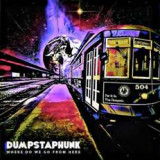
"Where Do We Go From Here" is Dumpstaphunk's first album in seven years. It will be released on April 23, 2021 on The Funk Garage, an imprint of Mascot Label Group.
Over its past 17 years, Dumpstaphunk has earned its reputation as the most well-regarded next-generation New Orleans live powerhouse, the type of band whose live shows attract sit-ins from legends like Carlos Santana, Bob Weir and Trombone Shorty. Alongside Hall, Daniels, Alex Wasily, Ryan Nyther and drummer Devin Trusclair, cousins Ivan and Ian Neville have built upon their family’s iconic NOLA legacy as they’ve transformed Dumpstaphunk into the city’s pre-eminent 21st-century funk-fusion export.
The band’s mix of classic and modern influences can be heard throughout the party-friendly mix of R&B, funk, rock, swamp-pop and blues of "Where Do We Go From Here," from the slap-bass rave "Make It After All" to the band's contemporary renderings of NOLA R&B rarities (the 1975 Blackmail gem "Let’s Get At It") and early Seventies classics (Sly and the Family Stone's "In Time”).
‘Where Do We Go From Here’ is perhaps the best evidence yet of Dumpstaphunk’s ability to strengthen and transform their singular NOLA roots in combination with the deeper outside musical and philosophical influences on which the band is founded.