MSG is a legendary name. After two phenomenal records under the guise of Michael Schenker Fest, a true guitar hero is returning to his roots. By forming Michael Schenker Group (MSG) back in 1979, Michael Schenker laid the foundations for one of hard rock’s most glorious solo careers of all times. And while nobody expected anything less from a former guitarist for Scorpions and UFO, it’s close to impossible mentioning everything Michael has built over the past 50 years, or the countless people he influenced or played with. This, truly, is the stuff that hard rocking myths are made of.
“I never looked back,” is how Michael dryly sums up an extraordinary career. Due to this mindset, he only realised much later what a huge impact his playing had made on the world of metal and hard rock. Very few guitarists can be cited as a primary influence for the likes of James Hetfield, Kirk Hammett, Dave Mustaine, Dimebag Darrell, Slash or Kerry King. However, to understand Michael Schenker means to understand one primary thing: he’s not here to be worshipped or adored, he’s not here to get rich, he’s here to play. And at 65, he’s doing it with the same swagger, verve and dizzying artistry as always. “I’m still 16 in my head,” he laughs.
Right in time for his 40th anniversary as a solo artist and his 50th birthday as a musician, he resurrects the immortal Michael Schenker Group. “Immortal” is also the name of his new album, recorded by likely the strongest line-up in his long history. Its a lightning bolt of an album that sounds fresh, bloodthirsty and agile. “Immortal” showcases the gargantuan vocal talents of Chilean hard rock prodigy Ronnie Romero (Rainbow), backed by singers Ralf Scheepers (Primal Fear), Joe Lynn Turner (ex-Deep Purple) as well as Schenker’s brother in arms, Michael Voss (Mad Max) who again produced the record alongside Michael Schenker – flawlessly, punchy and at full steam as if their very lives depended on it.
Next to Michael Schenker caressing his iconic black and white Dean Flying V, we hear bass player Barry Sparks (Dokken), keyboard player Steve Mann as well as the three drummers Bodo Schopf, Simon Phillips (ex-Toto) and Brian Tichy (ex-Whitesnake) pumping gallons of fresh blood through the tracks. And that’s not all, keyboard wizard extraordinaire Derek Sherinian (Dream Theater, Black Country Communion) gives the listener a baptism of fire in the blistering, heavy hitting opener “Drilled to Kill”, powered by Ralf Scheepers’ unbelievable vocal tornado.
Michael Schenker doesn’t live to play, he plays to live, and there’s no better way of summing up his relationship to his music than this – now for half a century and counting. The most emblematic representation of this relationship is the monumental closing track “In Search Of The Peace Of Mind”, a new recording of the very first song he ever wrote. “I composed this track in my mother’s kitchen back when I was 15,” he looks back half a century and smiles broadly: “The solo is just so perfect, I wouldn’t change a single note even today. This is the most important song of the last 50 years for me. It’s what started it all.”
When it finally got released in 1972 on the Scorpions’ debut “Lonesome Crow” Schenker had already moved on to UFO. What followed were several decades of pure hard rock ecstasy on and off stage, featuring a rotating cast of stellar players, always pressing the pedal to the metal. Now, in 2020, he reaps what he sowed. Alongside many of his peers, friends and contemporaries, he is celebrating 50 years of hard rock – fittingly with an album that is something like a zeitgeisty reminiscence of everything he’s ever done. The massive midtempo smasher “Don’t Die On Me Now” sees Joe Lynn Turner going all in, Ronnie Romero works his magic in “Knight Of The Dead” while Michael Voss cuts a grand figure before the microphone as well as behind the mixing desk on the furious second single “After The Rain”.
Towering above them all, Michael Schenker and his guitar prove they’re truly and utterly invincible. The celebrated icon pulls out all the stops – including his legendary “howler”, the fabled magnet he’s used on his fingerboard for a while now. And here’s yet another thing that’s just so archetypically Schenker, when bringing up his fiery and dedicated performance on “Immortal” he nonchalantly shrugs it off: “I simply played from the heart, as always.” This, dear Michael, is the understatement of the year – all the more so for a record that is already one of the top contenders for hard rock/metal album of the year.
Поиск:first bass
Все
MSG is a legendary name. After two phenomenal records under the guise of Michael Schenker Fest, a true guitar hero is returning to his roots. By forming Michael Schenker Group (MSG) back in 1979, Michael Schenker laid the foundations for one of hard rock’s most glorious solo careers of all times. And while nobody expected anything less from a former guitarist for Scorpions and UFO, it’s close to impossible mentioning everything Michael has built over the past 50 years, or the countless people he influenced or played with. This, truly, is the stuff that hard rocking myths are made of.
“I never looked back,” is how Michael dryly sums up an extraordinary career. Due to this mindset, he only realised much later what a huge impact his playing had made on the world of metal and hard rock. Very few guitarists can be cited as a primary influence for the likes of James Hetfield, Kirk Hammett, Dave Mustaine, Dimebag Darrell, Slash or Kerry King. However, to understand Michael Schenker means to understand one primary thing: he’s not here to be worshipped or adored, he’s not here to get rich, he’s here to play. And at 65, he’s doing it with the same swagger, verve and dizzying artistry as always. “I’m still 16 in my head,” he laughs.
Right in time for his 40th anniversary as a solo artist and his 50th birthday as a musician, he resurrects the immortal Michael Schenker Group. “Immortal” is also the name of his new album, recorded by likely the strongest line-up in his long history. Its a lightning bolt of an album that sounds fresh, bloodthirsty and agile. “Immortal” showcases the gargantuan vocal talents of Chilean hard rock prodigy Ronnie Romero (Rainbow), backed by singers Ralf Scheepers (Primal Fear), Joe Lynn Turner (ex-Deep Purple) as well as Schenker’s brother in arms, Michael Voss (Mad Max) who again produced the record alongside Michael Schenker – flawlessly, punchy and at full steam as if their very lives depended on it.
Next to Michael Schenker caressing his iconic black and white Dean Flying V, we hear bass player Barry Sparks (Dokken), keyboard player Steve Mann as well as the three drummers Bodo Schopf, Simon Phillips (ex-Toto) and Brian Tichy (ex-Whitesnake) pumping gallons of fresh blood through the tracks. And that’s not all, keyboard wizard extraordinaire Derek Sherinian (Dream Theater, Black Country Communion) gives the listener a baptism of fire in the blistering, heavy hitting opener “Drilled to Kill”, powered by Ralf Scheepers’ unbelievable vocal tornado.
Michael Schenker doesn’t live to play, he plays to live, and there’s no better way of summing up his relationship to his music than this – now for half a century and counting. The most emblematic representation of this relationship is the monumental closing track “In Search Of The Peace Of Mind”, a new recording of the very first song he ever wrote. “I composed this track in my mother’s kitchen back when I was 15,” he looks back half a century and smiles broadly: “The solo is just so perfect, I wouldn’t change a single note even today. This is the most important song of the last 50 years for me. It’s what started it all.”
When it finally got released in 1972 on the Scorpions’ debut “Lonesome Crow” Schenker had already moved on to UFO. What followed were several decades of pure hard rock ecstasy on and off stage, featuring a rotating cast of stellar players, always pressing the pedal to the metal. Now, in 2020, he reaps what he sowed. Alongside many of his peers, friends and contemporaries, he is celebrating 50 years of hard rock – fittingly with an album that is something like a zeitgeisty reminiscence of everything he’s ever done. The massive midtempo smasher “Don’t Die On Me Now” sees Joe Lynn Turner going all in, Ronnie Romero works his magic in “Knight Of The Dead” while Michael Voss cuts a grand figure before the microphone as well as behind the mixing desk on the furious second single “After The Rain”.
Towering above them all, Michael Schenker and his guitar prove they’re truly and utterly invincible. The celebrated icon pulls out all the stops – including his legendary “howler”, the fabled magnet he’s used on his fingerboard for a while now. And here’s yet another thing that’s just so archetypically Schenker, when bringing up his fiery and dedicated performance on “Immortal” he nonchalantly shrugs it off: “I simply played from the heart, as always.” This, dear Michael, is the understatement of the year – all the more so for a record that is already one of the top contenders for hard rock/metal album of the year.
MSG is a legendary name. After two phenomenal records under the guise of Michael Schenker Fest, a true guitar hero is returning to his roots. By forming Michael Schenker Group (MSG) back in 1979, Michael Schenker laid the foundations for one of hard rock’s most glorious solo careers of all times. And while nobody expected anything less from a former guitarist for Scorpions and UFO, it’s close to impossible mentioning everything Michael has built over the past 50 years, or the countless people he influenced or played with. This, truly, is the stuff that hard rocking myths are made of.
“I never looked back,” is how Michael dryly sums up an extraordinary career. Due to this mindset, he only realised much later what a huge impact his playing had made on the world of metal and hard rock. Very few guitarists can be cited as a primary influence for the likes of James Hetfield, Kirk Hammett, Dave Mustaine, Dimebag Darrell, Slash or Kerry King. However, to understand Michael Schenker means to understand one primary thing: he’s not here to be worshipped or adored, he’s not here to get rich, he’s here to play. And at 65, he’s doing it with the same swagger, verve and dizzying artistry as always. “I’m still 16 in my head,” he laughs.
Right in time for his 40th anniversary as a solo artist and his 50th birthday as a musician, he resurrects the immortal Michael Schenker Group. “Immortal” is also the name of his new album, recorded by likely the strongest line-up in his long history. Its a lightning bolt of an album that sounds fresh, bloodthirsty and agile. “Immortal” showcases the gargantuan vocal talents of Chilean hard rock prodigy Ronnie Romero (Rainbow), backed by singers Ralf Scheepers (Primal Fear), Joe Lynn Turner (ex-Deep Purple) as well as Schenker’s brother in arms, Michael Voss (Mad Max) who again produced the record alongside Michael Schenker – flawlessly, punchy and at full steam as if their very lives depended on it.
Next to Michael Schenker caressing his iconic black and white Dean Flying V, we hear bass player Barry Sparks (Dokken), keyboard player Steve Mann as well as the three drummers Bodo Schopf, Simon Phillips (ex-Toto) and Brian Tichy (ex-Whitesnake) pumping gallons of fresh blood through the tracks. And that’s not all, keyboard wizard extraordinaire Derek Sherinian (Dream Theater, Black Country Communion) gives the listener a baptism of fire in the blistering, heavy hitting opener “Drilled to Kill”, powered by Ralf Scheepers’ unbelievable vocal tornado.
Michael Schenker doesn’t live to play, he plays to live, and there’s no better way of summing up his relationship to his music than this – now for half a century and counting. The most emblematic representation of this relationship is the monumental closing track “In Search Of The Peace Of Mind”, a new recording of the very first song he ever wrote. “I composed this track in my mother’s kitchen back when I was 15,” he looks back half a century and smiles broadly: “The solo is just so perfect, I wouldn’t change a single note even today. This is the most important song of the last 50 years for me. It’s what started it all.”
When it finally got released in 1972 on the Scorpions’ debut “Lonesome Crow” Schenker had already moved on to UFO. What followed were several decades of pure hard rock ecstasy on and off stage, featuring a rotating cast of stellar players, always pressing the pedal to the metal. Now, in 2020, he reaps what he sowed. Alongside many of his peers, friends and contemporaries, he is celebrating 50 years of hard rock – fittingly with an album that is something like a zeitgeisty reminiscence of everything he’s ever done. The massive midtempo smasher “Don’t Die On Me Now” sees Joe Lynn Turner going all in, Ronnie Romero works his magic in “Knight Of The Dead” while Michael Voss cuts a grand figure before the microphone as well as behind the mixing desk on the furious second single “After The Rain”.
Towering above them all, Michael Schenker and his guitar prove they’re truly and utterly invincible. The celebrated icon pulls out all the stops – including his legendary “howler”, the fabled magnet he’s used on his fingerboard for a while now. And here’s yet another thing that’s just so archetypically Schenker, when bringing up his fiery and dedicated performance on “Immortal” he nonchalantly shrugs it off: “I simply played from the heart, as always.” This, dear Michael, is the understatement of the year – all the more so for a record that is already one of the top contenders for hard rock/metal album of the year.
Parisian label Chuwanaga proudly presents the first opus of its new 12inch series, starting with the brand new EP of Koji Ono: Ricochet / Maloja Pass. Recorded during a short week-end in Paris, it is the result of a true collaboration by a team of musicians who wanted to bring a modern twist to a classic and timeless sound, staying true to the original late seventies/early eigthies dance music spirit and the passion of Chuwanaga for the original Britfunk.
On bass, you’ll hear Lester Batchelor aka LB from Atmosfear, the legendary British JazzFunk band best known for their En Transe LP and the classic track « Dancing In Outerspace». Killing it on the drums, Roy Mistry is their 2020 official drummer. Recording together in Studio Delta, with Koji playing almost all the other instruments, from keys to guitars to percussions, they all had a blast collaborating on these two new tracks. Add a blazing Rhodes solo by Jean-Michel Bernard on « Maloja Pass », some precious magic from producers Seiji Ono & Saint-James, a great dose of savoir-faire by sound engineer David Cukier aka Greita (Disques Flegon)… And you end up with two killer tunes ready to blast their way through your speakers.
On both tracks, you’ll immediately recognize Koji Ono’s touch – as found on his previous Incognito EP : simple but uplifting melodies on synthetizers, sparkling guitars and a certain playfulness in the arrangements. On side A, « Ricochet » sounds like an irresistible mid-tempo boogie banger. On B side, the uptempo « Maloja Pass » is faster paced and bursts with energy, giving the listener an irresistible urge to travel endlessly through the night.
- A1: Vassilis Vassiliadis - Tsiftetelli 1969
- A2: Stelios Kazantzidis & Litsa Diamandi - Den Sou Eleipe Tipota (You Had It All) (You Had It All)
- A3: Stratos Dionisiou - Allaxe Koritsi Mou Myalo (Change Your Mind Girl!) (Change Your Mind Girl!)
- A4: Vassilis Vassiliadis/Dimitris Xanthakis & Litsa Diamandi - Nkount Bai (Goodbye) (Goodbye)
- A5: Michalis Menidiatis - Ena Tefariki
- B1: Panagiotis Michalopoulos - Anastenazo Kaigontai (I Sigh Everything Is Burning) (I Sigh Everything Is Burning)
- B2: Podromos Tsaousakis & Litsa Diamandi - Ti Thes Kai Pas Stis Magises (Why Do You Visit The Witches) (Why Do You Visit The Witches)
- B3: Katy Grey - Dos Mou Tin Kardia Mou Piso (Give Me Back My Heart) (Give Me Back My Heart)
- B4: Vangelis Perpiniadis & Ria Norma - Naxera Pios Pire Ti Chara Mou (I Wish I Knew Who Stole My Happiness) (I Wish I Knew Who Stole My Happiness)
- B5: Ria Norma & Vangelis Perpiniadis - Konta Mou Irthes Pali (You Have Returned To Me) (You Have Returned To Me)
- C1: Stratos Dionisiou - Tsiftetelli Pechnidiariko (Flirting Belly Dance) (Flirting Belly Dance)
- C2: Vangelis Perpiniadis - Ego Den Eimai San Tous Beatles (I'm Not Like The Beatles) (I'm Not Like The Beatles)
- C3: Vassilis Vassiliadis - Solo Tsiftetelli '72
- C4: Manos Papadakis/Babis Tsetinis & Litsa Diamandi - Mavros Kapnos (Black Smoke) (Black Smoke)
- C5: Charoula Lambraki & Vassilis Tsitsanis - Andra Mou Paraponiari (Man, You Grumble Too Much) (Man, You Grumble Too Much)
- D1: Panos Gavalas & Sofia Kollitiri - Tha Fygo Kai Tha Me Zitas (I Will Leave, & You Will Search For Me) (I Will Leave, & You Will Search For Me)
- D2: Sofia Kollitiri - Ego Pono Ki Esy Gelas (I Suffer While You're Having A Good Time) (I Suffer While You're Having A Good Time)
- D3: Charoula Lambraki & Theodoros Sinaidis - Kai Na Fygis Tha Gyrisis (You Will Come Back) (You Will Come Back)
- D4: Giota Lydia - Nacha Ekato Kardies (I Wish I Had Hundred Hearts) (I Wish I Had Hundred Hearts)
- D5: Stelios Kazantzidis & Litsa Diamandi - Efige Efige (She Left She Left) (She Left She Left)
Monster grooves, driven by a perfect symbiosis of fiery oriental rhythms and the deep, relaxed heartbeat of the bass line, with virtuosic, intoxicating solos on bouzoukis, Farfisa organs, clarinets and violins. This is the sound of laika, Greek-oriental pop music from the 60s and early 70s that sets every dance floor on fire!
These 20 carefully selected songs serve as an introduction to this mind-blowing music for the non-aficionado, as it is the first album of its kind to be released outside of Greece or the Greek migrant communities. The extended and illustrated liner notes take you back to the heyday of Greek pop music and put this cultural movement into an historical perspective.
Two years after the release of 'Kreise' Selm have once again peered out from the torture racked enclave they call a studio. Originally conceived as two separate EP's and later stacked into an all-consuming album over 44 minutes 'TiiiER / Post-Adrenaline' pushes Selm's agenda of black dwarf techno and physically exhausting industrial churning to new levels. The opening salvo of tracks that form the 'TiiiER' disc (tracks 1-5) posit a techno minimalism coated in the incredible, almost edible crust of controlled distortion and flaking edges garnered through masterful gain staging. Opener 'Sin' accrues greater density with each iteration and pass. 'Kreise' is classic DBX style beep ran into manic filters and weight gain classes.'Moger' is a truly sinister and clinical piece of industrial sound design raising blood pressure with its stainless steel poise. 'Laus' is a real percy, syncopated just the right side of falling over and baked into the toughest compression throbs. It closes the first 'disc' and perhaps what could be considered the more straight forward tracks of the album. 'Post-Adrenaline' the second disc of the set is where Selm's love of intensely textural sound design work can be best felt. 'Nineteen Voices' opens with its disembodied conversations utterly smothered by the roiling mass of bass synth which surrounds on all sides. 'Irr' terrifies the young with it's truly OTT undulance of seismic tone, as reverential to death industrial as it is to guitar music, the riff laid bare. 'Brett' is a damp, warm environment of intelligent growth. Fermenting itself again in a stew of gnashing bass heaviness now crowned with glowing bowed metal and tuned feedback. 'Sommeil' closes the second disc with not a single positive note played, it's a dreary escalation of all the albums previous incarnations, flickering noise shaped rhythm, serpentine bass formations and no rush to please or to entertain. At just under 6 minutes, it and the album are over. Selm do not hold up on this follow up to Kreise. While the albums share ideas they are refined to a point of punishment here. 'TiiiER / Post-Adrenaline' is hyper-modern music that sounds like it's made from air, stone and rust.
- A1: White Room
- A2: Sitting On Top Of The World
- A3: Passing The Time
- A4: As You Said
- A5: Pressed Rat & Warthog
- B1: Politician
- B2: Those Were The Days
- B3: Born Under A Bad Sign
- B4: Deserted Cities Of The Heart
- B5: Anyone For Tennis
- B6: Deserti Ride
- B7: Hey Now Princess
- B8: Weird Of Hermiston
- C1: Crossroads (Live At The Fillmore)
- C2: Spoonful (Live At The Fillmore)
- D1: Traintime (Live At The Fillmore)
- D2: Toad (Live At The Fillmore)
Back in print! Gold sleeve 180 gr. Wheels of Fire is the third album by the British rock band Cream. It was released in August 1968 as a two-disc vinyl LP, with one disc recorded in the studio and the other recorded live. It reached number three in the United Kingdom and number one in the United States, becoming the world's first platinum-selling double album. The band's drummer Ginger Baker co-wrote three songs for the album with pianist Mike Taylor. Bassist Jack Bruce co-wrote four songs with poet Pete Brown. Guitarist Eric Clapton contributed to the album by choosing two older blues songs.
For the second disc, Felix Pappalardi chose "Traintime" because it featured Jack Bruce performing a harmonica solo, and "Toad" because it features Ginger Baker's drumming while "Spoonful" and "Crossroads" were used to showcase Eric Clapton's guitar playing.
‘Del Rio’ is the third album from the Austin triumvirate of guitarist Craig Clouse (Shit and Shine), bassist Nate Cross (Marriage, Expensive Shit) and drummer King Coffey (Butthole Surfers) and the band’s first release to feature vocals from Colby Brinkman (Taverner). While their two prior albums (2017’s ‘Laredo’ and 2019’s ‘Matamoros’) were somewhere on the periphery of rock music , ‘Del Rio’ is a step or several beyond and a real testament to human imagination (maybe you’re impressed by Tesla Powerwall batteries but that’s because you’ve not heard “Soft Taco”, yet)
Coming off a pair of records their respective labels could barely keep in stock and critical assessments that put reviewers’ own chops to the test (see below), USA/Mexico have delivered their most fully realized statement to date.
Prior praise for ‘Matamoros’ :
“Laredo was a bent-out sunstroke of processed vocals and noise-laden riffs, and its follow up Matamoros is slower, freakier, and somehow louder…too defiantly weird and alien for pigeonholing, that’s how they fit inside Austin’s storied noise rock and experimental music scenes: by refusing to fit exactly in anywhere.” Andy O’Connor, Pitchfork
“Monolithic without being monotone: dirty sounds and gritty textures sliding over each other like sandpaper wiped across a chalkboard.” Marc Masters, Bandcamp
“The amplifiers sound broken, the vocals suggest someone's got their leg caught in a mantrap while deep in the woods trying to poach fat brown hares, and the mixing desk squeals as if it is undergoing physical tort
In 1968 Status Quo’s first hit record “Pictures of Matchstick Men” was released and the debut album soon followed. The single reached #7 in the UK, and remains the band’s only major hit single in the US, where it reached #12. Picturesque Matchstickable Messages from the Status Quo features several covers, including “Green Tambourine” by The Lemon Pipers and “Spicks and Specks” by The Bee Gees.
South London members Alan Lancaster (bass) and Francis Rossi (guitar) were the original members and founders of Status Quo. Formerly known as The Spectres and later renamed to Traffic or Traffic Jam they settled for Status Quo as their band name in 1967. The following years they were joined by John Coghlan (drums), Roy Lynes (keyboard) and Rick Parfitt (guitar).
Ever since his early teenager days Kareem El Morr has been working on tracks in the studio. Techno was and has always been the basis. Dirty, raw and in a positive way escalating are his sets, which he has been playing since the mid of the noughties. Not being limited when playing in the clubs or producing in the studio makes him undisputedly one of the most versatile artists in Munich. How multi-faceted he is, is now being shown on his latest RFR release.
“Supersonic” throws the gate open wide to electroid sceneries. Not a few will be reminded of I-F’s “Playstation” by the first sounds of the decently wobbeling bassline. Sick bassline variations, breaky drum parts and a pinch of Neo-Goa – any questions? „Quake“ portrays Morr’s infinite and unconditional love to Techno. Reminiscences of Detroit’s High Tech Jazz are floating relentlessly through widely varied rooms, which we absolutely adore since the Basic Channel era.
On the flip Morr expands his driving functionality by a melodic component. “Blaze” kicks in with a lot of delay, distorted bells and Highspeed drums. This ain’t no dance, this is a ceremony! „Trance with Benefits“ marks the ending of the “Supersonic EP”. Pictures of wafts of mist, whose intensity is being ruptured by the first rays of sunlight penetrating the club on an early Sunday morning. Happy people lying in each other’s arms, unified by the principle that Techno would be nothing without Trance.
Having established himself as a core Apollo artist with three fantastic EPs since 2016, Sieren now steps up with a first full length for the label. 'Timelapse' is a majestic 13 track trip into this unique artist's very emotional fusion of post-bass bliss. Sieren aka Matthias Frick is a master of intricate electronics and bittersweet emotions, of deep atmospherics and compelling rhythms. He has been building a dedicated following for some years now, putting out his debut album on Christian Loffler's Ki Records in 2016. Inspired by a rich history of bass-driven UK sounds, he pairs that with a love of field recording and experimental soundscaping, and now shows he is an ever evolving master of his art on this stunning new record.
Take a much-loved UK soul gem, Loose Ends classic from ‘85 ‘Hangin’ On A String’ and hand it to the godfather of house, Frankie Knuckles to work his unquestionable magic and there was no doubt the result would be a slice of house music heaven. South Street Records unlock the vaults once again, reissuing this melding of transatlantic minds presenting a triple threat that sees both Frankie’s 1992 Club Mix and the elusive Classic Club Reprise sit alongside the Loose Ends Original 12 Inch Mix, on either side of a 12 inch.
Taking the best of London’s soul and coupling it with the heart of Chicago, the master Frankie Knuckles purrs this one out across the highways with a slung-back house interpretation of ‘Hangin’ On A String’. A bumping beat, punchy bass line and effortless percussive touches give the perfect platform for Loose End’s vocal dynamics to provide a power, emotion and sincerity often lacking in modern dance music.
Flip it over to find the Classic Club Reprise - straight up sunset business with Frankie side-lining the vocals to let the instrumentation sing with added trademark flourishes in true spiritual style. Finally, the Original 12 Inch Mix gets a well-deserved inclusion which, back in 1985 was a true game changer bridging a multiplicity of scenes in the UK with its use of drum machines and synthesizers whilst maintaining that pure soul vibe. A track that topped the US Billboard R&B chart, making Loose Ends the first ever British band to do so, it’s a UK soul classic drenched in drum machine hits, soaring synths and crunchy guitar licks that’s infused with an ‘80s electro style and a quintessentially London flavour.
Without bottle opener
The eighth chapter of the Apparel Wax saga brings with it, as always, a multitude of sounds and suggestions. The masked producer always manages to renew himself, bringing something new and special to each record but always remaining faithful to his musical line. APLWAX008 will be released in January and consists of four tracks: the first is a track with a very marked dynamics and is characterized by a solid rhythm section, a bass line that recalls the UK garage, vocal samples and a beautiful harmonic evolution produced by evolving chords. The second track, A2, winks at Jazz and Soul with a production rich in rhythmic virtuosity, keyboard solos and an almost hypnotic vocal loop while the second side starts with B1, which takes us back to an imaginary dancefloor with a powerful beat and airy disco chords. The EP closes with B2 that softens the tones giving a more intimate, classy and deep end, with references to Funk and R&B. In short, an EP that touches many genres while remaining compact as a whole. Another small masterpiece of production and music selection by Apparel Wax.
Kiwi Jr. is a phenomenal "rock" and/or "punk" and/or "indie-rock" (whichever you like more) band from Canada, made up of Jeremy Gaudet (mic, guitar), Brohan Moore (drums), Mike Walker (bass), and Brian Murphy (guitar). Cooler Returns is their second album, and their first for Sub Pop. Despite being a snapshot of the pandemic-infused beginnings of this decade, Cooler Returns is truly a whole lot of fun. RIYL indie-pop from down under, things that are smart/exuberant/catchy all at once. Buildings burning in every direction; macabre unknowns in your friendly neighbor's basement; undecided voters sharpening their pencils: under pressure we could call Kiwi Jr.'s Cooler Returns "timely." But what year is it, again? On Cooler Returns, Kiwi Jr. cycle through the recent zigs & looming zags of the new decade, squinting anew at New Year's parties forgotten and under-investigated small town diner fires, piecing together low-stakes conspiracy theories on what's coming down the pike in 2021. Put together like a thousand-piece puzzle, assembled in flow state through the first dull stretch of quarantine, sanitized singer shuffling to sanitized studio by streetcar, masked like it's the kind of work where getting recognized means getting killed, Cooler Returns materializes as a sprawling survey from the first few bites of the terrible twenties, an investigative exposé of recent history buried under the headlines & ancient kings buried under parking lots. Not so long since their debut Football Money in archaeological time, unending gray eons later in the dog years of quaran-time, spiritually antipodean Canadians Kiwi Jr return to disseminate this year's annual report to the shareholders, burying the incriminating numbers in the endless appendices of a longform narrative record, a 3,000 word tract for stakeholders to pore over. These stories - memories of Augusts past, unrepressed & transcribed fast - go down easier thanks to meaningful changes enacted in 2019's KiwiCares Pledge: delivering on a promise to transition from Crunchy to Smooth by 2021, the caveman chug of Football Money has been steamed & pressed with the purifying air of a saloon piano - operated with bow-tie untied - and a spring green side-salad of tentatively up-tempo organ taps & freshly fluted harmonica. A chronically detuned spin of the dial through swivel-chair distractions & WFH daydreams, an immersive ctrl-tab deluge cycling through popular listicle distractions like the unentombing of Richard III, or the deja vu destruction of the Glasgow School of Art, Kiwi Jr. sing this song to an indoor audience, crisscrossing canceled, every other prestige distraction source wrung dry, only songwriting remaining to deliver engrossing tales to the populace, just how I imagine it worked in the old days. Fixing loose ingredients into a sturdy whip, Kiwi Jr. beam in live from the 9-5, striding into 2021 with a mastered brainwave that comes equally from the back room of the record store as the penalty box. And how do we, left holding this box of deliberate entanglements, sign off to those as yet uninitiated, undecided, uncertain, unseen, absent return coordinates - Best Wishes, Warm Regards, Good Luck? Cooler Returns, Cooler Returns, C o o l e r R e t u r n s ! Cooler Returns was produced by Kiwi Jr., mixed and engineered by Graham Walsh (METZ, Bully) in Toronto, and mastered by Phillip Shaw Bova at Bova Labs in Ottawa, Ontario.
LTD. LOSER EDITION
Kiwi Jr. is a phenomenal "rock" and/or "punk" and/or "indie-rock" (whichever you like more) band from Canada, made up of Jeremy Gaudet (mic, guitar), Brohan Moore (drums), Mike Walker (bass), and Brian Murphy (guitar). Cooler Returns is their second album, and their first for Sub Pop. Despite being a snapshot of the pandemic-infused beginnings of this decade, Cooler Returns is truly a whole lot of fun. RIYL indie-pop from down under, things that are smart/exuberant/catchy all at once. Buildings burning in every direction; macabre unknowns in your friendly neighbor's basement; undecided voters sharpening their pencils: under pressure we could call Kiwi Jr.'s Cooler Returns "timely." But what year is it, again? On Cooler Returns, Kiwi Jr. cycle through the recent zigs & looming zags of the new decade, squinting anew at New Year's parties forgotten and under-investigated small town diner fires, piecing together low-stakes conspiracy theories on what's coming down the pike in 2021. Put together like a thousand-piece puzzle, assembled in flow state through the first dull stretch of quarantine, sanitized singer shuffling to sanitized studio by streetcar, masked like it's the kind of work where getting recognized means getting killed, Cooler Returns materializes as a sprawling survey from the first few bites of the terrible twenties, an investigative exposé of recent history buried under the headlines & ancient kings buried under parking lots. Not so long since their debut Football Money in archaeological time, unending gray eons later in the dog years of quaran-time, spiritually antipodean Canadians Kiwi Jr return to disseminate this year's annual report to the shareholders, burying the incriminating numbers in the endless appendices of a longform narrative record, a 3,000 word tract for stakeholders to pore over. These stories - memories of Augusts past, unrepressed & transcribed fast - go down easier thanks to meaningful changes enacted in 2019's KiwiCares Pledge: delivering on a promise to transition from Crunchy to Smooth by 2021, the caveman chug of Football Money has been steamed & pressed with the purifying air of a saloon piano - operated with bow-tie untied - and a spring green side-salad of tentatively up-tempo organ taps & freshly fluted harmonica. A chronically detuned spin of the dial through swivel-chair distractions & WFH daydreams, an immersive ctrl-tab deluge cycling through popular listicle distractions like the unentombing of Richard III, or the deja vu destruction of the Glasgow School of Art, Kiwi Jr. sing this song to an indoor audience, crisscrossing canceled, every other prestige distraction source wrung dry, only songwriting remaining to deliver engrossing tales to the populace, just how I imagine it worked in the old days. Fixing loose ingredients into a sturdy whip, Kiwi Jr. beam in live from the 9-5, striding into 2021 with a mastered brainwave that comes equally from the back room of the record store as the penalty box. And how do we, left holding this box of deliberate entanglements, sign off to those as yet uninitiated, undecided, uncertain, unseen, absent return coordinates - Best Wishes, Warm Regards, Good Luck? Cooler Returns, Cooler Returns, C o o l e r R e t u r n s ! Cooler Returns was produced by Kiwi Jr., mixed and engineered by Graham Walsh (METZ, Bully) in Toronto, and mastered by Phillip Shaw Bova at Bova Labs in Ottawa, Ontario.
Following the 2020 release of RoundAgain, Nonesuch reissues on vinyl Joshua Redman's first album with his own band — pianist Brad Mehldau, bassist Christian McBride, and drummer Brian Blade — originally released in 1994. MoodSwing was Redman’s third recording as a band leader and his first featuring all-original compositions. The young saxophonist sought to change what he believed to be the public perception of jazz — a largely academic and overly intellectualized form of music devoid of the emotional themes that drive many other genres. As he explains in the original liner notes, jazz was seen as, “an elite art form, reserved for a sophisticated intelligentsia who rendezvous in secret.” With MoodSwing, Redman makes the case that jazz can be an accessible musical medium that could evoke basic and visceral emotional reactions.
From the playfully coy ‘Chill’ to the urgent energy of ‘Rejoice’, Redman offers up a communicative and inspired record ofemotional diversity. Joining him in this task was a young band of his peers, all of whom have since become established and esteemed figures in jazz. MoodSwing was one of the first exposures the jazz community had to young pianist Brad Mehldau, then beginning his career in Redman’s quartet. Mehldau anchors these compositions behind Redman’s lyrical playing, occasionally stepping out front to show his talents in ‘The Oneness of Two (In Three)’ and ‘Past in the Present’. The band’s rhythm section has since been recognized as one of jazz’s best, with Christian McBride on bass, and then little-known Brian Blade on the drums.
As the follow-up to his breakout Wish, MoodSwing was universally praised by critics and enjoyed commercial success, selling over 300,000 units worldwide. Entertainment Weekly wrote, ‘saxist Redman finds ingenious ways of creating a modeof acoustic jazz that is both entertaining and enlightening.’ This record continues to provide a cornerstone for Redman’s currentcareer; many of these compositions are still featured in the saxophonist’s live sets today.
Redman’s previously announced European summer 2020 tour dates with Mehldau, McBride and Blade have been rescheduled for 2021, including London’s Barbican, now on July 11.
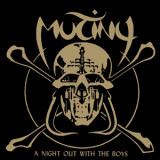
- Rare P-Funk album from 1983 - Funkadelic/Parliament All-Star Line-Up - First ever vinyl reissue - Comes with a repro of the original insert - 180g Black Vinyl Edition - Limited to 500 copies, comes with obi strip // Jerome "Bigfoot" Brailey is an American drummer who started performing in the early 1970s with several R&B groups from the likes of The Unifics, The Chambers Brothers and The Five Stairsteps where he developed his unique style and finesse on drums. Later in 1975 he joined George Clinton's P-Funk collective and has appeared on many of Parliament & Funkadelic's most popular recordings (some of which he also co-wrote). Brailey played on classic albums like `Mothership Connection' and `One Nation Under A Groove'. Samples from that body of work (and his drum arrangements) have since then appeared on hundreds of hip hop and contemporary R&B songs by renowned artists such as Kendrick Lamar and Childish Gambino. Jerome Brailey is a member of the Rock and Roll Hall of Fame (inducted in 1997) and part of their `50 greatest drummers in the Hall' list (stating that his drum style kept Parliament-Funkadelic rooted in the old-school `James Brown-style funk')_next to this achievement, he was proclaimed by Rolling Stone as one of the `100 Greatest Drummers of All Time' for his steady kick drum, shifty hi-hat action and intricately unpredictable snare patterns. Brailey earned numerous Gold and Platinum records with the P-Funk Organization and has worked as a session drummer for many talented artists such as Herbie Hancock, Buddy Miles, Snoop Dogg and Pharoah Sanders. George Clinton's funk empire was not without its disagreements and Jerome Brailey's `Mutiny' project was a direct result of just such a disagreement (as well as one of the more notable offshoots of the P-Funk axis). Mutiny performed in a style not far removed from the classic P-Funk style and with a lot of emphasis on the dual lead guitar work, but what makes them unique compared to their contemporaries is that at times their recordings also emit a darker, more sinister feeling. Besides Brailey on drums (and on most of the lead vocals) Mutiny featured a funk-alumni line-up and released three amazing and collectible albums: `Mutiny On The Mammaship' (CBS, 1979), `Funk Plus The One' (Columbia, 1980) and `A Night Out With the Boys' (J. Romeo, 1983)_these were followed by two comeback albums: `Aftershock' (Rykodisc 1995) and `Funk Road' (Catbone, 2013). The `Mutiny' album we are proudly presenting you today (A Night Out With The Boys) is an underrated gem made by musicians who defined the funk scene of the '70s and '80s! Featuring an all-star line-up that includes Rodney Curtis (Fred Wesley, Maceo Parker), Michael Hampton (Funkadelic-Parliament, Deee-Lite), Kenni Hairston (Cameo) and Maceo Bond of Osiris/Afrika Bambaataa fame! `A Night Out With The Boys' has it all: Jerome's trademark drumbeats, funky bass grooves, driving riffs accented by stinging synth parts, slow spacey (and prominently featured) guitars, top-notch lead vocals and chants that recall Sly Stone's "Loose Booty". The whole album is a hot dance jam with crisp percussion_an extremely infectious, locked-in-the-pocket bass-heavy monster-funk-bomb that any serious self-respecting funk fanatic must have in his/her collection!
A folk/bluegrass troubadour from Vermont who delves into shape-note traditions and Appalachian ballads and makes it all beguilingly his own. His guitar lines have the fancy fingerwork of a crack banjo player and his banjo lines have the tugging suspensions of a jazzer.’ – Guardian
‘Amidon is a rare Americana artist whose … signature banjo-strewn style … and disparate mix of influences play into a sound that is at once archaically rootsy and savvily refined.’ – Wall Street Journal
Sam Amidon considers his new self-titled album the fullest realization to date of his artistic vision. It comprises his radical reworkings of nine mostly traditional folk songs, performed with his band of longtime friends and collaborators. Amidon produced the record, applying the sonic universe of his 2017 The Following Mountain to these beloved tunes, many of which he first learned as a child. ‘Pretty Polly,’ for example, was one of the first traditional tunes he learned to play, and ‘Time Has Made A Change’ is a song that his parents – singers who were on the 1977 Nonesuch recording Rivers of Delight with the Word of Mouth Chorus – sang around the house when he was young. Amidon will perform two concerts at Kings Place in London on October 3. A limited number of tickets will be available in the venue, as well as tickets to stream the event from home. Further details are available here.
Amidon and his frequent band of multi-instrumentalist Shahzad Ismaily and drummer Chris Vatalaro were joined in the studio by Belgian guitarist Bert Cools (who played on his last EP), as well as Amidon’s wife, Beth Orton, who adds vocals on three songs. Acoustic bassist Ruth Goller and saxophonist and labelmate Sam Gendel also play on the album, which was mixed by Leo Abrahams. Sam Amidon was mostly recorded live in the studio. Amidon arranged the songs, which are traditional tunes, with the exception of Taj Mahal’s ‘Light Rain Blues’, Harkins Frye’s ‘Time Has Made A Change’, and ‘Hallelujah’, which is an 1835 William Walker shape-note tune using earlier words by Charles Wesley, found in the Sacred Harp collection of early American folk-hymns.
Sam Amidon is Amidon’s fifth recording on Nonesuch and follows the 2019 EP Fatal Flower Garden (A Tribute to Harry Smith). Additional recordings include his 2017 album The Following Mountain and Kronos Quartet’s Folk Songs the same year, on which he was a featured singer along with Rhiannon Giddens, Natalie Merchant, and Olivia Chaney; Lily-O in 2014; and his label debut, Bright Sunny South, in 2013.
The Master Scratch Band was first break-dance / hip-hop / electro funk band in Yugoslavia in 1984. The band members were Zoran Vracevic, Zoran Jevtic and Milutin Stoisiljevic, previously known as Data and Sizike. Jugoton, the biggest label in Yugoslavia, published Data 7'' and MSB's 'Degout' 12'' with limited edition cassette containing two bonus tracks. Impossible to find on the collectors market, Fox & His Friends team in collaboration with Jugoton / Croatia Records is releasing a full, complete version of the rare "The Breakwar" tape, with tracks "Tonight" and "Pocket" never pressed on vinyl. All tracks are sourced from original studio tapes. With the kind help of Zoran Vracevic on credit list and liner notes, this is now the ultimate Master Scratch Band album, released originally in a year 1984 when break-dance was in the peak of its popularity in Yugoslavia. While Data was synthpop, Sizike mellow synth-disco recorded in private studio, this release is pure breaks and hip-hop electro, done old-school way in one of the best studios in Yugoslavia, Enco Lesic's 'Druga maca' in Belgrade. MSB used impressive electronic gear and were helped by huge list of famous musicians and guests: Duca Markovic from hit-show 'Hit meseca' (Yugoslavian Top Of The Pops); Japanac on bass, Max Vincent of Max & Intro on synths, Dudu Vudu from Du-Du-A, Goranka Matic as photographer and many more. MSB sampling technique and choices are unique: from obscure industrial records to freestyle; from found-sounds to cut-up breaks and even real prank-calls. This is document of time that still sounds fresh and needs to find it's new, young audience of hip-hop history researchers, break-dancers, b-boys, b-girls and DJ's. When you know that it's produced in 1984 Yugoslavia, far away, but actually, so close to its USA & EU brothers and sisters, it's even more mind-boggling. Thanks to Fox & His Friends and Jugoton CR collaboration, this gem is waiting for your freezes, footwork and electric boogie moves. ----- Equipment used: Commodore 64 Computer, Roland MC-4B Microcomposer, Prophet Pro-One, RSF Cobol II Expander, Korg Mono-Poly Synthesizer, PPG Wave 2.3 Synthesizer, PPG Waveterm Computer, Boss DE-200 Digital Delay, Drumtraks Digital Drum Machine, Roland TR-808 Rhythm Composer, Electro Harmonix Vocoder, Linn Drum MKII, Juno 60, SH-101, SVC-350, VP-330 Vocoders, Polysix & MS10, Simmons drum module.
“The earth shall rise again...”
AMOR/LEMUR finds the Glasgow quartet AMOR in partnership with Norwegian improvising ensemble LEMUR to hopeful and ecstatic effect. Conceived before the onset of Covid 19 but finished during spring lockdown, their eponymous EP is the most loose, alive and elevated recording in AMOR’s catalog. AMOR/LEMUR takes the template of throbbing avant disco expanded upon on previous recordings for Night School and lifts it into new
territories, with new tonalities and unexpected turns on the journey. More than anything, the expanded, near- cinematic expression of human connectivity feels like a lightning new energy to grasp in the dark.
Following a revelatory concert in Glasgow in January 2020 wherein the two sets of musicians met and performed together for the first time, a recording session was arranged the following day, resulting in the most elevated permutation of AMOR’s art to date. Each track was built upon a rhythmic bedrock of percussion and drums performed by Paul Thomson and samples/synthesizer by Luke Fowler. Thomson used bamboo Javanese gamelan (most notably on For You) and scrap metal, as well as traditional percussion and drums while Fowler incorporated processed ambient field recordings recorded in enclosed acoustic spaces around Glasgow. Singer/pianist Richard Youngs contributes some of the most bright and mindful work of his career. Acoustic bass player Michael Francis Duch, whose lush playing as ever provides the elastic spine to each song, scored the string parts for LEMUR on piano at home in Norway. The addition of swelling strings and drones fills out the AMOR sound significantly, lending a sonorous tone to 8 minute, epic closer For You or an ascending melodic introduction to Stars Burst that feels like a new morning dawning on a world saved from certain death. With the circumstances of lockdown forcing the musicians to work differently, a thread of optimism and utopia grounded in the moment weaves through these tracks. Unravel reveals a spine tingling vocal from Youngs. It’s a song about the simultaneously grounding and ecstatic effect of love, feeling connected to others. It’s a simple message, “I’m finding myself in your smile, always unravels me” speaks of ego death, the dissipation of the material into a nirvana of pure energy, the power of surrender. This isn’t a quasi-religious message, this is the power of each other, a love song to connection in a temporary age of isolation. Stars Burst is a play on the inner and outer cosmos, with narrator Youngs exploring wonder to a pounding galloping rhythm and snake-charming synth. It’s an open dance, with the group locked in together for the wild ride. Fear is the centerpiece of the record, starting with drones and scraped overtones before swirling synth notes filter upwards to meet reverberating minor chords. Over 8 minutes of tight but loose playing, Youngs is the shaman instructing us to use Fear as a celebration of the moment, embrace it and jump into the unknown. The only way to overcome your fear is to feel it, use it as an energy. The use of the studio as an instrument throughout side 2 is particularly important, with the dubbing and mixing prowess of engineer Paul Savage (who mixed unattended due to lockdown restrictions) and tape manipulations performed by Jason Lescallet coming into play. For You closes out with a largely instrumental, evolving composition that uses many of the abstract and novel aspects of this permutation to aid the trance. It’s massive, an unfurling creature with unexpected tonalities and serious heft.