Texas born Freddie King was one of the all time great Blues guitarists. He is considered one of the "Three Kings of the Blues Guitar" (along with Albert King and B. B. King, none of whom are related). Mostly known for his soulful and powerful voice and distinctive guitar playing, King had a major influence on electric blues music and on many later blues guitarists including the likes of Eric Clapton, Jeff Beck, Peter Green, and Mick Taylor.
This selection showcases live recordings from his classic repertoire over a period from 1969 to 1975. His signature tune “Hideaway” was named after a nightclub on Chicago’s Westside; “Mel’s Hideaway lounge”.
Поиск:float
Все
- A1: The Pieman Cometh
- A2: Orientasian
- A3: Slow Walkin' Talk
- A4: Man In A Deaf Corner
- B1: Belsize Parked
- B2: Hope For Happiness
This LP is a selection of tracks by The Wilde Flowers representing the origins of the ‘Canterbury Scene’. It features early works by Robert Wyatt, Mike Ratledge, and brothers Hugh and Brian Hopper.
All tracks are mono except “The Pieman Cometh” and a re-working of the Soft Machine classic “Hope For Happiness” recorded by Brian Hopper in 2003 which are both in stereo.
Label and collaborative musical collective, +33JOY announce their debut release, this first one from Bopperson & Bikbaye.
Born out of a meeting at New York’s annual Winter Jazz Festival, back in 2020, this 4 track EP entitled ‘The Wellness Project’ is a very personal project.
Neil Bopperson is a DJ, musician and producer originally from Yorkshire. Having travelled the world working as a DJ and chef, he landed in London for a while where he remixed afrobeat legend Dele Sosimi for Wah Wah 45s. Now residing in Paris, France, a sharer and carer of music in every aspect, he chooses not to follow trends but instead follow his heart, with variety being an essential part of his musical DNA.
Based in Los Angeles, Bikbaye Inejnema works as a cultural activist, writer, teacher, counselor and spoken word artist. He has a bachelor’s degree in Sociology boasting over ten years experience in social work. He works as a A.T.O.D. (alcohol, tobacco & other drugs) prevention specialist for Homeless Healthcare in L.A. He is also the Executive Director of The Conscious Youth Global Network (CYGN)
Bikbaye strives to utilize art to equip the youth with the skills to become positive, productive citizens. Focusing on diverse topics ranging from leadership development to financial literacy to health and nutrition, Bikbaye gives youth the tools they need to create empowered and enlightened content.
As Bikbaye says, “The goal is to flood the airwaves, the media, everywhere with enlightened art.”
This first release on +33JOY comes in the form of a collaborative project, with music coming predominantly from Neil, with a little help from some additional players - Sam Crowe; keys (Lianne La Havas, Little Simz & Native Dancer) and the saxophone of Nick Briggs; (Joel Culpepper, Poté & The Last Skeptik). All words and vocals are from Bikbaye.
After a chance meeting in NYC, where Bikbaye was hosting talks at The Winter Jazz Festival, speaking mainly about mental health and wellness in the music industry. His words really resonated with Neil, they connected and this EP is the outcome.
Sitting somewhere in the alternative hip hop world, music is used as a vessel for Bikbaye’s words to ring out. Upon being presented with Bikbaye’s recordings, Neil composed music and collected sound design accordingly.
Starting out the set is the stripped back ‘Wellness Is A Practice’, as the opener to proceedings the vocals take forefront and the message is clear. Found sound, an old crunchy keyboard and some guitar pulses keep the poem afloat.
‘Who Are You?’ raises important questions, directed at other artists and music industry professionals. Flute, choirs and spacy drums come together for an eerie and dubbed out moment.
Third track ‘Consumption’ conveys perhaps the most important memo on the release. Sam Crowe’s grand piano floats beautifully over the reading, really highlighting Bikbaye’s statements.
Finally, and with a more hopeful feel, ‘Changes’ was the last addition to the recording sessions. A sketch Neil had been sitting on for a while, DJ Bobafatt added some cuts and Nick Brigg’s sax solo opens this track out to a goosebumps inducing ending. The most upbeat of the four tracks serves as a perfect prelude to the club-ready remixes that will follow this release.
Who is Isabelle Lewis, anyway?
What kind of music does she make? Is she an opera singer? Does she write pop songs? Does she compose ethereal ambient soundscapes? Does she play chamber music on the violin? Is she producing dark, electronic beats?
Well… yes. But Isabelle Lewis is not so much a person as a project. Isabelle’s debut album, Greetings, credits a trio of composer–performers at its heart: producer Valgeir Sigurðsson, vocalist Benjamin Abel Meirhaeghe, and violinist Elisabeth Klinck. The sound of the elusive Isabelle Lewis is heard most clearly in the push and pull between them, the three-way tension that gives the album its musical and emotional drive.
Each of the three brings more to the collaboration than those epithets might imply. Elisabeth’s solo performance practice incorporates composition, improvisation, live electronics, and a close command of bowing and fingering techniques that make her fiddle sing, whisper or whistle as required. Benjamin is a self-taught countertenor - keening, crooning, and swelling to a voluptuous sensuality—but also an interdisciplinary stage director and performer. Well known for his work as a producer and studio collaborator, and as a composer of scores for film and stage, Valgeir’s solo discography interweaves meticulously crafted electronics, drones, noise, and other digital elements with acoustic instruments and vocals recorded with naked, unflinching clarity.
But the extravagant theatricality Benjamin brings to the aptly titled “Drama”—also featuring a heroic violin solo from Elisabeth—grapples against the thudding bass of the implacable digital backdrop. On “Mother, Shelter Me” Valgeir’s austere and detailed production throws the hushed violin and vocals into stark relief. The result is an exquisitely uncanny juxtaposition of past and present, human and mechanical, like a Rococo treasure viewed under cold fluorescent lights, or an 18th-century automaton slowly opening its clockwork eyes.
Even the lyrics seem somehow out of time. On “O Solitude,” Benjamin goes so far as to quote an entire song by the first great English opera composer, Henry Purcell, verbatim. No stranger to Purcell’s music, which has made its way into Benjamin’s theatrical productions as well, here Isabelle Lewis removes Purcell’s melodies and harmonies and sets the text, Katherine Phillips’s 17th century translation of a poem by Antoine Girard de Saint-Amant, to new music whose heightened, archaic character nevertheless seems haunted by Baroque ghosts.
Throughout the album, the outsized emotions and timeless archetypes of Benjamin’s lyrics feel like relics from some half-forgotten past—from the neatly rhymed couplets of “Fisherman,” a seemingly straightforward (but still somewhat askew) character study, to the abstraction of “Moonshell,” whose words seem like the fragments of some ancient, lost lament. It is just another of many ways in which Isabelle Lewis carefully distorts the listener’s notions of time. On a more micro level, time can stop for a moment of weightless, drifting ambience, and then plunge forward as the cloud of harmonies suddenly lock into tempo with the drop of the bass or the change of a chord. Or else that weightless moment is allowed to be, as in the aptly named prologue and epilogue to these Greetings (“Voicemail”/“…and farewell”), or in the interstitial tracks that bind the album together, connecting its dramatic peaks with expanses of meditative stasis.
The album as a whole is elegantly shaped, swelling from an intimate, interpersonal statement into something deeper and more spacious. The first half of the album leans slightly towards self-contained pop songcraft and ticking beats, while side B jumps off from “O Solitude” into the almost symphonic grandeur of songs like “Moonshell” or the instrumental “Not the water, air, or the dirt.”
But as it progresses, the contrasts only grow more sublime: antique and postmodern, human and machinelike. The ominous weight of the droning sub-bass and trombone (guest player Helgi Hrafn Jónsson) only makes the interplay between vocals and violins (guest player Daniel Pioro joining Elisabeth) seem more delicate and vulnerable. The ethereal string tremolos of “Moonshell” seem to pull against the heavy, shuddering electronics and layers of crooning vocals.
And that, in short, is where you will find Isabelle Lewis. Like an ancient stone archway, or a delicate house of cards, the architecture of Greetings is held together by the tension between opposing forces. Not just in Elisabeth’s playing, Benjamin’s singing, or Valgeir’s arrangements and production but in the conflict and contrast that generates the synergy between them.
Oh—Isabelle says hi, by the way. She’s looking forward to meeting you.
An extremely prolific artist, whose work encompasses composition, opera, theatre, radio plays, film or performance, Ergo Phizmiz returns in due time to the Discrepant fold long after his 'Two Quartets' and 'Disco Carousel' - under his given DW Robertson name - albums. A purveyor of the Creative Commons rights, Phizmiz has been deploying much of his work on the ever expanding Free Music Archive directed by WFMU since the early 2000's, creating a sprawling and defiant body of work that defies given and stale notions of sound hierarchies, history and copyright through a process that comprises collage, sampling, reappropriation, songwriting, covers and pretty much any available media with a playful and thoughtful approach.
For this new Discrepant entry, Phizmiz goes back in time to push into the future a number of pieces recorded more than two decades ago creating this perpetual motion outside a linear chronologic progression. Anticipating by almost 20 years the memefication of ASMR videos, 'Selected Ambient & ASMR Works 2001-2003' - itself a pun on the AFX classics - embraces the ambient tag not at its functional face value, but instead as a means to the "evocation of imaginary spaces, and correspondingly the invention of their sonic environments". Collecting recordings from a myriad of instruments - violin, xylophone, banjo, kora, found percussion and so on...-, shortwave radio and field recordings to create loops with different lengths that play with and/or against themselves continuously in a process "(dis)conjunction" not far removed from Feldman's 'Why Patterns?' or hip-hop's sampledelia. A free-floating temporal space that collapses the flashing images of Angelfire pages unto Web 2.0 sense of displacement.
Pain Management presents a debut collaborative release from Bristol’s Larry McCarthy & mysterious newcomer Eris FM. The limited edition single fuses hellish Bristolian dub with tender vocal excursions on two dark cuts in equal parts tough and tender. A heartfelt comedown offering for the hyperactive via two cathartic weapons primed for maximum emotional release.
The A side’s foolish titular opener is a hellish mess of dub delays and eerie narrative exposition. Reminiscent of blown-out early No Corner offerings; a tangled mess of sirens and harsh noise ensnare FM’s disembodied commands. Turn your phone off / Tell no one where you are / Go out / Press your lips to the cracks in the soil. Overtly human exposition shrouded in a plosive shell of sawtoothed frequencies and machine drum paranoia. The effect is an unsettling hybrid of softness and uncertainty. A teeth-grinding mess of grit and potent anxiety primed for anti-dancefloor devastation; one to comfort the disturbed or disturb the comfortable depending on where you’re at.
On the flip ‘Red’ applies this same methodology to a beatless format, noisy chaos swapped out for ascendent grandeur. Here FM’s voice has more room to breathe, floating above an ever expanding synthscape. Reflective prosaic cohesion replaces the A side’s splintered present-tense directives.The rawness remains but on Red it takes the form of a commanding emotive clarity rather than claustrophobic uncertainty. A subtle heartbeat rhythm pulses beneath the nebulous pads, swaying like a slow dance in the early hours.
Hyper-limited run of 100 7” records
2024 Repress
“Live at Sound City” is an instrumental collaboration between bassist Pino Palladino, guitarist/multi-instrumentalist/producer Blake Mills, and LA-based saxophonist Sam Gendel. Recorded in one day at the legendary Sound City Studios in Van Nuys, the EP presents new versions of compositions from Palladino & Mills’ Grammy-nominated 2021 album “Notes with Attachments” in an intimate chamber trio setting. Across four tracks, the accomplished trio explores common musical vocabularies, then goes about the work of defamiliarizing them in search of something new, blending the sounds of West African and Cuban music, jazz, R&B, English folk, pop, and beyond.
Pino Palladino is a Grammy Award winning songwriter, producer and bassist who helped create the rhythm-section sound of D’Angelo’s Voodoo and Black Messiah, and over a four-decade career has worked with artists including Keith Richards, Erykah Badu, Eric Clapton, Nine Inch Nails, Questlove, John Mayer, Paul Simon, Jeff Beck, Herbie Hancock and Adele.
Blake Mills is a two-time Grammy Awards Producer of the Year nominee. He has released four solo albums and produced and recorded with artists such as Alabama Shakes, Fiona Apple, Bob Dylan, John Legend, Perfume Genius, Jim James, Moses Sumney, Laura Marling, Phoebe Bridgers, Cass McCombs, The Killers, Sara Bareilles, Weyes Blood and Randy Newman. His most recent album Mutable Set, released last year, was praised by Pitchfork as “a hushed collection that floats through the subconscious like a tender dream,” and earned their Best New Music title.
Sam Gendel is a musician living in Los Angeles, CA. He is most known for his work with the saxophone, though he is proficient on multiple instruments. His work is diverse and includes collaborations with a wide range of artists including Ry Cooder, Laurie Anderson, Mach-Hommy, Sam Amidon, Perfume Genius, Moses Sumney, Knower, Vampire Weekend, and inc. no world.
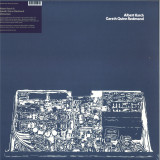
WRWTFWW Records is happy to announce a new collaborative album between Polish producer, multi-instrumentalist and sound engineer Albert Karch (notably known for his superb 2019 album Celestially Light featuring Ichiko Aoba) and Irish ambient master and label’s favorite Gareth Quinn Redmond (Ar Ais Arís, Laistigh Den Ghleo, Umcheol albums from the WR catalogue). The 6-track LP comes as a limited edition of 300 copies worldwide with an artwork by Dublin artist Barry Gibbons and liner notes. It is available in digital format as well.
Recorded in at Albert Karch’s studio in Warsaw in January 2023, Warszawa is conceptually rooted in the reason the two artists met in the first place: the work of Japanese composer Satoshi Ashikawa (Still Way - Wave Notation 2) who sought to compose a time that was stationary. Sparse in approach but sharp with intention, the 6 pieces of the collaborative album were sculpted with precise and floating use of piano, drums, synthesizers, and strings. The result is gentle but emotionally deep minimalistic ambient, reassuring environmental music with an indescribable Mark Hollis touch, also an artist whose worked influenced the recording sessions.
Gareth Quinn Redmond’s previous albums, Laistigh Den Ghleo, another ode to the work of Satoshi Ashikawa, Umcheol, mixing ambient with traditional Irish music instruments, and his tape loops wonder Ar Ais Arís are still available on WRWTFWW Records - complete the collection now!
Warszawa by Albert Karch and Gareth Quinn Redmond is dedicated to the memory of Satoshi Ashikawa.
Carrying on a string of stunning archival releases from major figures of Indian classical tradition (including releases from members of the Dagar family and Amelia Cuni), Black Truffle is pleased to announce an unheard recording from tabla master Kamalesh Maitra (1924-2005). For over fifty years, Maitra devoted himself to the rare tabla tarang, a set of between ten and sixteen hand drums tuned to the notes of the raga to be performed. While the tabla tarang has its origins in the late 19th century, Maitra was the first to recognise its potential as a solo concert instrument, using the set of tuned drums to perform full-length raags. Seated behind a semi-circular array of drums, Maitra produced stunning waves of melodic improvisation enlivened with the rhythmic invention of a master percussionist.
Across his career, Maitra performed in ensembles led by Ravi Shankar, collaborated with George Harrison, and led his own East-West fusion group, the Ragatala Ensemble. However, it is in the solo setting that his remarkable artistry and the otherworldly timbral qualities of the tabla tarang are most strikingly on display. Recorded during the same 1985 Berlin sessions that produced Maitra’s self-released solo LP Tabla Tarang: Ragas on Drums, on Raag Kirwani on Tabla Tarang we are treated to Maitra stretching out for over forty minutes on the late night Raag Kirwani, accompanied by Laura Patchen on tabla and Mila Morgenstern and Marina Kitsos on tanpura. The performance begins with the traditional free-floating exposition section, where Maitra’s spacious melodic improvisation at times almost resembles a plucked string instrument (like the sarod, which Maitra also played). For the listener unaccustomed to the tabla tarang, the sound of these microtonally inflected melodic patterns played on drums has a magic quality. As Maitra begins to imply the rhythmic cycles more strongly, Patchen joins on tabla, beginning half an hour of rhythmic-melodic exploration, where virtuosity sits side by side with delicacy and meditative attention. Accompanied by beautiful archival images and extensive liner notes from Laura Patchen, for many listeners Raag Kirwani on Tabla Tarang will be the perfect introduction to the magical world of Kamalesh Maitra, released to coincide with the hundredth anniversary of the master musician’s birth.
- 01: Ha-Ha
- 02: Big Boy
- 03: Disco Shift
- 04: Lucky Strike
- 05: Tropical Dino Ride
- 06: Errol&Apos;S Quest
- 07: Home Entertainment
- 08: Giga Touch
- 09: Suzy`s Return
- 10: Lillian
Research Records teams up with organist and synthesist E. Bobby G. to release his sophomore album, Bobby Business. Once again, the album is primarily centered around the 1982 Kawai DX900, but it masterfully explores more genres than his debut, Giving You M.O.R.E.
Bobby Business was recorded in 2022 after E. Bobby G. received an eviction notice from his beloved sharehouse of 12 years. After moving out, he stored the organ at his workplace, Bakehouse Studios, where his boss let him use the space overnight to record until the early hours. The remainder of the album was recorded in his old studio space, NGBE.
The first track, "Ha-Ha," is as meditative as it is glittery, with floating sustained chords. "Big Boy" and "Disco Shift" bring back a slightly more polished E. Bobby G. sound—lo-fi library music with bright tones that will appeal to fans of proto-electronic icons like Brian Bennett. Tracks like "Lucky Strike" and "Tropical Dino Ride" are video game music dreams, featuring West Coast lead lines and strutting percussion. The second half of the album explores spaced-out '90s downtempo and dub elements, with a distinctive refinement that hides the fact it was created primarily using the Kawai DX900.
Bobby Business closes with "Lillian," a sonic dedication to the artist's Grandmother, with a more traditional song structure that hints at what Bobby has planned next.
- A1: Banished Bridge
- B1: High Evolution
- B2: Laughing
- B3: Inside Of Me (Inside Of You)
Ltd. to 500 colored copies worldwide. The band's first album from 1993, lovingly remastered by Johannes Scheibenreif. A classic of German progressive rock. The band's only English-language album. In 1973 the band signed a contract with Brain Records and Jochen Petersen (later keyboarder with Randy Pie) produced their debut album "Banished Bridge" at the Chameleon Studios in Hamburg. The album was recorded completely without electric guitars, the centerpiece being the 17-minute title track "Banished Bridge". The music is slightly fragile, flowing, almost lyrical. The floating synthesizer and keyboard passages are reminiscent of the early works of Pink Floyd and Genesis. A debut album that already showed where the band would later go. "Banished Bridge" remained Novalis' only English-language record, but for many it is still considered a classic of German progressive rock.
Released on 15th November via Polydor Records, “Small Changes” is the eagerly anticipated follow-up to Michael’s eponymous third LP, the Mercury Prize winning, and Grammy Award nominated “KIWANUKA”.
“Small Changes” was produced alongside Danger Mouse and Inflo, the team behind the globally acclaimed “KIWANUKA” and its equally acclaimed predecessor, “Love & Hate”. The new record was recorded between London and Los Angeles. The core trio made up of Kiwanuka and his trusty co-producers expanded into a wish-list ensemble that featured legendary bassist Pino Palladino (D’Angelo, John Mayer, Beyoncé) and Jimmy Jam of the iconic Jam and Lewis songwriting and production duo (Janet Jackson, Prince, SOS Band).
A welcome return for one of Britain’s most talented of songwriters, most recognisable of vocalists, and most virtuosic of guitarists.
Art by YOUT and photography by Marco Grey.
180g heavyweight black vinyl in gatefold sleeve. Includes full size 12pg lyric booklet.
Brandneue Auflage auf lavendelfarbigem Doppelvinyl: "Best Day Ever" ist das fünfte Mixtape des US-Rappers Mac Miller und erschien ursprünglich 2011 als Nachfolger des gefeierten Mixtapes "K.I.D.S." (2010). Es besteht aus 16 Songs, die von 9 Produzenten (hauptsächlich ID Labs) produziert wurden, und enthält Features von Wiz Khalifa und Phonte. Die Single "Donald Trump" war Millers erster Einstieg in die US-Singlecharts, erreichte #75 und wurde mit Platin ausgezeichnet. Seite D ist geätzt.
Originally released in 2023 via a humble run of 100 cassette tapes, c-thruʼs debut album “The Otherworld” is now available on black vinyl with a full colour jacket designed by Vancouver based illustrator Tylor Macmillan.
C-thru - The Otherworld is a collection of introspective cosmic-leaning dance music that gives a healthy nod to the golden era of trance, ambient, and downtempo from Austin, Texas-based producer Jesse Edwards. Inactive for several years, these 10 tracks mark a new chapter for Jesse Edwards. Previous works include his well-received psychedelic project, Red Morning Chorus, that included Boards of Canada amongst its fans. Edwards began his musical journey in the late 90s playing shoegaze and experimental music with Jessica Bailiff (Kranky). The pair collaborated on several albums together, including works with Flying Saucer Attack, His Name is Alive, and Odd Nosdam (Anticon).
Essential listening for anyone enamoured with the golden era of futuristic audio.
This third volume of Universal Synthesizer Interface delves further into early MIDI sequencing software for personal computers, focusing on Intelligent Music Software founded by Joel Chadabe in 1984. In a short period of time (1986-1990) Intelligent Music published a series of MIDI sequencing software titles that would have rippling effects throughout the music world: M, Jam Factory, UpBeat, MidiDraw, Ovaltune, Realtime, as well as an unreleased first version of Miller Puckette’s Max. These programs were a reflection of Chadabe’s desire to create interactive and intelligent algorithmic tools for home computers. Intelligent compositional tools had been floating around for decades in mainframe computer labs, but they had largely only been accessible to people working in academic or corporate laboratories. With the birth of Intelligent Music, these tools became available to anyone with a home studio. As the personal computers of this era had become less expensive and more accessible, they had also grown exponentially in processing power and seeming intelligence. In the music press from this time, we find the same two words used again and again to describe algorithmic computer systems: smart and intelligent. The tone of such articles may seem quaint by today’s standards, when AI and algorithmic control underpin so much of our technology, but the question of machine intelligence remains. Universal Synthesizer Interface VOL III Focuses exclusively on one of the more obscure of Intelligent Music’s software creations - UpBeat: The Intelligent Rhythm Sequencer, released in 1987, and hailed by reviewers of the time as “the world’s best drum machine.”
- A1: Pink Frosty Demo
- A2: Lusty Scripps
- A3: Arpeggiator Demo
- A4: Afterthought
- A5: Trio's
- A6: Turkish Disco
- A7: Me And Thumbelina
- A8: Floating Boy Demo
- A9: Link Track
- B1: Little Debbie
- B2: H B
- B3: I'm So Tired
- B4: Rend It Demo
- B5: Closed Captioned Demo
- B6: Guilford Fall Demo
- B7: Swingset
- B8: Shaken All Over
- B9: Slo Crostic
2024 Repress
Original music from the film,"Instrument", culled from demos and various sources, by Fugazi from 1988-1998,
The 12" LP format was re-cut and re-issued in December 2009.
Originally Released: 1999
Ian MacKaye vocals & guitar Guy Picciotto vocals & guitar Joe Lally bass Brendan Canty drums
Jan Anderzén - living in Tampere, Finland - is a collage artist making music, quilts, drawings, mosaics, videos and other things. From him, among a few others, sprang the The River of Finland. A stream that shook the European underground for infinity, back from the years 2005 and up. Jan is/was involved in acts like Kemialliset Ystävät, Avarus, Tomutonttu and The Anaksimandros. When in the past some of that River of Finland tasted like a fermented ocean of mycelia - today it tastes different, like sparkling water.
Halki pilvien - transl. Trough the clouds - brings exactly what one expects from the clouds. It is a collection of soft and gentle movements, as playful as a ‘Jan Anderzén type of music’ is always. A collection of patterns that solidify for just a brief moment in time, before sublimating in the back of the mind. This album is in constant motion.
Push play. A warped piano and cartoonish SFX’s might foretell a hyperreal approach to music. Yet while the champion of hyperrealism, Noah Creshevsky, describes his music as being written in a language we already understand (realism) yet in an exaggerated manner (hyper) - I have to add that things on this album do not sound exaggerated at all. Moreover, i have the feeling that somehow on this work, Jan is trying to underwhelm us. In the best possible way. Because clouds float trough and dissolve. Thus instead of hyperrealism, is Jan maybe speaking to us in a certain Serenerealism? Or Mildrealism?
What Jan’s music does have in common with Creshevsky’s is the no rush part. Listening to Halki pilvien makes time non-directional. The music seems to be designed to be played over and over again. This music has no direct impact like one can experience at a punk show, or at a classical music concert. This music is not that one gigantic raincloud covering the world dark. Quite the opposite, it is a pattern of clouds and clearings, floating over the lands. Trough this music a shadow play appears. This music is durable.
And it is when the sounds are at its faintest, that Jan touches the core: in the smallest detail, we find the fullest musical information.
Following on from the House-infused punch of her Peach Discs release in June, Bristol’s Daisy Moon treats us to a shapeshifting debut on Timedance - entering a new era with a splash sure to be felt in most abyssal zones.
‘Shadow Of Silhouettes’ showcases a singular exploration of tough yet scintillating sounds, between wiggy electro, bass-laden grooves and inspired bursts of FWD techno- pop.
In this diverse body of work, Daisy’s vocals are the glue tying things together. They appear like sonic silhouettes, abstracted through sound design and unveiling a taste for the experimental. In other moments they are stripped from their abstract form and float above the surface, revealing Daisy Moon’s blossoming talent for ear-worm melodies.
The making of a maiden album can be a capricious process. One moment of outright musical flow paired with another period of sustained creative struggle are feats experienced by seasoned producers the world over. So when Miraclis was forced to hole away in his makeshift studio - in the midst of a global pandemic - the stage was set for something magical. Now it will see the light of day for the very first time.
Having released two singles on Secret Teachings to critical acclaim already this year, Chilean talent Miraclis will accomplish a milestone achievement in July with the release of his debut album: Origin Of Truth.
Difficult experiences were fundamental to the creation of such work, as were Miraclis’ inherent musical interests. He explains: “Origin Of Truth had its birth during the pandemic. I created it as a way of communicating to myself the sensations and feelings that were spinning around my head at the time. I've always been inspired by Bristol trip hop, as well as classical rock, and these genres definitely contributed to the making of these melancholic tracks. In a way I wanted to fuse all the musical influences that were part of my childhood, up until this point now, so this album really means a lot to me. It was my way of communicating, when there was a lack of social contact and communication itself was hard to come by.”
It's this meditative quality that initially drew Damian Lazarus to the project. “It’s a record that has its roots in electronic music, but it’s a very alternative, very deep, melancholic album. I find it both soothing and stirring at the same time, and that’s a quite interesting juxtaposition in that it feels edgy but delicious at the same time,” says Lazarus. “The fact that this was written in this place surrounded by the most incredible desert landscapes makes this a very important piece of work to me. It doesn’t sit in any particular genre, which is why it feels right for a Secret Teachings release. It hints at so many genres that I as a DJ am quite into, and it feels like a first as it’s unique and unclassifiable. That mystical, esoteric, edgy feel makes this a perfect release for the label.”
Sonnet opens proceedings, with ghostly vocals residing next to raw instrumental elements throughout. Miraclis’ signature guitar riffs soon converge on saddened keys, paving the way for Scienter. It takes the form of an instrument-based, electronic-inspired cut, building slowly before reaching a crescendo midway through via an enrapturing acoustic solo.
Floating Child comes next, brimming with a darker intensity courtesy of broody synth pulses and rhythmic hi-hats, as Shiver arrives next. There’s a rock-leaning sensibility to the piece that gives way to earnest lyrical offerings, opening swiftly into the breakbeat-esque world of Perceptions. Hard-hitting drums act as the focal point, with electric chords adding depth and intrigue, whilst Bright continues in a similarly heartfelt vein.
Introspective pads leave us feeling pensive, ahead of Interstellar taking us on a celestial journey through warped bass tones. Acting as the LP’s penultimate number, it’s a four-and-a-half minute showcase of guitar-based musical goodness and one that perfectly sets the stage for Trapped, a closing saga of suitably emotive proportions.
Miraclis earned his stripes as a DJ under the name Max Clementi in his native Chile, as well as Spain after a stint at the Barcelona SAE Institute. Playing and writing music since his parents gave him his first guitar at age twelve, he found himself inspired by synth wave, electronic pop, trip hop, and psychedelic rock of the ‘80s and ‘90s, drenching himself in music by the likes of Massive Attack, Tricky, Depeche Mode, and Nine Inch Nails. However, it wasn’t until he had to move back to Pucón to take care of his father during the pandemic that he began working on what would become Origin Of Truth.
Serendipity seems to play a large part in Crosstown Rebels’ new label Secret Teachings. Just look at the story of how Damian met Miraclis in the first place. It involved a chance midnight encounter in Pucón, Chile at a woodland campfire after the DJ was locked out of his hotel room. This meeting of minds was the start of a remarkable friendship, where Miraclis invited Lazarus to stay at his house and break bread with his family. The two kept in touch, exchanging music and ideas as a result.