After ‚`till things ghosts‘ Jonas Landwehr returns to Serial Sound with a club focused EP. This project is mainly based around the idea of local collaborations with two Cologne based artists. ‚Coeln Flowerz‘ consists of three tracks where as the Dembow infused, stripped down Techno tool ‚Low Tide‘ with the focus of a heavy bassline is functioning as the main track of this EP. ‚Sittin‘ Right’ was created from the same approach as ‚Low Tide’ but in collaboration with the Cologne based RnB singer ‚Bay B Hazel‘ to give this one a new perspective and house vibey like twist. 4 Sure closes this project and is a collaboration with the Cologne based MC ‚bienniap‘. This Reggaeton & Perreo infused track shows a more moody and simplified side carried through the interaction of the vocalist, deep chords and hypnotic percussions.
out of Stock
Last delivered 2 years ago available to reorder, subject to availability
Rhetoric & Terror is Berlin-based Hemphill’s second album since leaving Liars back in 2016.
No stranger to reinventing his approach towards composition, Rhetoric & Terror feels like we are – perhaps for the first time – opening a doorway into Hemphill’s personal life, to his disparate sonic influences, his wide-ranging journeys through philosophy, and his own reflections on his role as an artist.
Like different thoughts and feelings emerging in a state of meditation, Hemphill invites you to pause on one ‘scene’ for a moment before moving onto the next. There’s space to get lost here – both emotionally and in the colour of the album’s wide-ranging textures.
With his wife Angelika Kaswalder on vocals throughout the album and multi-instrumentalist Morgan Henderson – a longtime friend of Hemphill’s since Henderson’s time in the post- hardcore band The Blood Brothers - adding woodwind, Nonpareils is no longer simply a solo project – and it’s apparent in this openness.
The name of the album – Rhetoric & Terror – describes this split that Hemphill is making from the conceptual nature of his first solo album (2018’s Scented Pictures), and the new direction that he – perhaps – hopes to continue taking. The title comes from a chapter in Giorgio Agamben’s book, “The Man Without Content”, where he describes the concepts of rhetoric and terror to describe two different types of writers: the rhetorician and the terrorist. The terrorist is a misologist who is only into the feeling; the rhetorician is committed to logic and form.
“With Rhetoric & Terror, I wanted to start with emotions and feeling. I was playing with my kids, listening to Cocteau Twins, I have a wonderful partner, and it seemed very contrary to any sort of growth to sequester myself from this life in order to get into character as a musician. Instead, I tried to remove the boundaries between my creative life and my. responsibilities and have it all be one fluid thing. All things at all times, and trust that this will guide my music rather than more intellectual concepts or limitations.”
Despite its catalysts being in philosophy and conceptual art, Hemphill has created an album that’s deeply “emotionally available”. It’s also helped him take a new stance on life that combines his life as a partner and parent in a kind of unity with his role as the artist. It’s plain to hear as a listener – Rhetoric & Terror, despite its intimidating name, is welcoming
and playful, even during its most intense moments.
Blending death growls with ethereal soundscapes and elements of progressive rock, Crimson Veil have been stunning audiences with their unique take on metal. The group of multi-instrumentalists emerge as a new project from their previous band, Birdeatsbaby, who worked with the likes of Paul Reeve (Muse fame) and John Fryer (Depeche Mode, Nine Inch Nails…). Their music was featured in ‘Close to Me’ (Channel 4 thriller starring Connie Nielson and Christopher Eccleston) and was reviewed by magazines such as Orkus and Prog. Stepping further into the heavy world of alternative metal, these accomplished musicians now embark upon a new chapter with a suitably esoteric name, Crimson Veil. Their debut album promises to engulf the senses with a dark visual aesthetic and a musical style that will challenge your preconceptions of metal. Lead singer, Mishkin Fitzgerald, having had most of her musical training at church, was strongly influenced by hymns, classical music and later on, all things rock and metal. Mishkin met guitarist and bassist, Garry Mitchell, when the two were studying music at University in Brighton. A thriving musical partnership was formed, with a mutual love for dark and progressive music. Later joined by infamous Hana Piranha on violin, cello and harp and renowned drummer Anna Mylee, the band have forged a musical path that’s a unique combination of their past and current passions. For their world debut, the four-piece from the UK joined Lordi as part of their Unliving Pictour Show. Dressed as deities of light and darkness, the band transform the stage into a sinister scene of flowers, thorns and animal skulls. Described as “ritualistic, even shamanic” their live performances are a blend of fragile beauty and fierce energy that pulls the audience into an unearthly world of their design, the world of Crimson Veil.
SWASTIKAS FOR NODDY is possibly, probably, maybe, or not, a seminal and sidereal masterpiece, the inspiration for 93,000 Masks On Nothings, none of which were Groovy. For me, well, it was my first Hallucinatory PickNick, and the skies turned Pixie Red for it.
I was given the album’s title during an Acid Trip: seeing Noddy Crucified In The Sky, I asked God what the most inappropriate BirthDay present for Noddy might be. God answered me from the Acid Whirlwind: “Swastikas!”
I recorded her in a run-down basement studio in West London, whilst I was simultaneously recording IMPERIUM. On playing the finished album to certain well-chosen friends, I was told by them that I had “destroyed Current 93”, and that it sounded like “demented children on drugs singing Simon & Garfunkel in a playground”. I then knew the album sounded exactly as I had dreamed it to sound, and as God had intended it to sound. Had I ditched the earlier darkness, and skipped into flowered fields? Great Black Time had already told me “NO!—GO!”
Remastered by The Bricoleur at Bladud Flies!, and with the original artwork refreshed and reborn by Rob Hopeye, this 12” vinyl picture-disc comes in a full-colour die-cut sleeve, which is printed on both the outside and inside.
This is one of the first 4 reissues of the entire back catalogue of C93 on picture-disc and standard vinyl, in the lead-up to the publication of my autobiography at the end of 2025, whilst I also work on many other recording, publishing, and painting projects, and Watch And Pray! Each release in the picture-disc vinyl reissues series is limited to 1,000 copies, and the titles will not be repressed as picture-discs once they have sold out.
For fans of Mount Kimbie, Damon Albarn, Beach House, King Krule. London based singer-songwriter Rollo Doherty releases his debut EP on Lewis Recordings. Frontman for the indie guitar band ISLAND, his solo work is a radical departure from what fans would previously have known him for. As the title suggests, Rollo began this new DIY project from the tranquility of his own home and drew inspiration from the many small, subtle occurrences happening just on the other side of his bedroom window. 90’s Hip-Hop, Movie Soundtracks and Shoegaze are just a few of several influences explored across this diverse piece of work. ‘Out of My Window’ features some scratching from the infamous DJ Yoda as well as crossing the pond, landing in the hands of Brooklyn based duo The Still Brothers, who provided new life through their brilliant analogue production and arrangements alongside the expertise of producer Mike Hill (Arlo Parks, ISLAND) at Lemontree Studios, L.A. The circle became complete when by chance the LA mastering legends Becker Mastering (Doja Cat, Tyler The Creator, Harry Styles) happened upon the unreleased music when mixing engineer Mike visited their studio and asked to hear his latest work. The EP’s duration serves as a metaphor for a single day, as it spans over approximately the duration of 24 minutes, each representing an hour of the day. Ambient soundscapes are heard in-between each track, all moments captured at corresponding parts of the day on Rollo’s handheld microphone which he poises from his window.
Rosebay Music presents Darker Flowers - a V/A project showcasing 4 hotly-tipped new school producers - all representing a haunting soul sound with elegance and class. Romanian wiz kid Azotix has been making moves recently with his ultra-clean future bangers. But here he shows another side of his sound with the beautiful 'Hurt'. Styke & label boss Submorphics linked up in The Hague for a unique collab in 'Lonely Dub' - channeling dub techno + moody film noir D&B. LO! represents Chicago with the timeless banger 'Transition' - bringing an early 2000s sound into 2024. And imo-Lu finishes the EP with the gorgeous- yet-deadly bassbin rattler 'Inhibition'. Epic soundsystem music straight out of Glasgow.
out of Stock
Last delivered 14 months ago available to reorder, subject to availability
Perhaps one of the most exciting and anticipated projects in the world of heavy instrumental music is Parlor Greens, a fresh organ trio on Colerine Records! You could say that Parlor Greens are greater than the sum of their parts.. however, the individual parts are simply stellar on their own. Tim Carman (GA-20) on drums, Jimmy James (True Loves, formerly Delvon Lamar Organ Trio) on guitar, and Adam Scone (Scone Cash Players, The Sugarman 3) on organ. Parlor Greens started off as an idea before it even had a name. Carman had been chatting with Colemine label boss Terry Cole about their shared love for organ combo records of yesterday on labels like Blue Note and Prestige. Cole said he'd love to have an organ trio be the first project at the label's new studio, Portage Lounge, located in Loveland, Ohio, So when Carman tapped James and Scone for the session, the stage was set. Carman and Cole had started work a day early to dial in the drum sound, so when the rest of this murderer's row arrived they hit the ground running. It was instant chemistry, Within the first ten minutes of everyone plugging in, a song was written and recorded, "West Memphis". And over the next three days, these three maestros conducted a beautiful and soulful symphony straight to tape. As natural and fun as three old friends getting together after a long absence, only this was the first time they had written and performed together. True magic. So this is the result of that session. Eleven outs. Ten originals. Two sides. All killer, no filler. Straight to the old reliable Tascam 3BB tape machine, mixed up nice and dirty for your enjoyment. Parlor Greens are proud to present their debut long player, in Green / We Dream.
Perhaps one of the most exciting and anticipated projects in the world of heavy instrumental music is Parlor Greens, a fresh organ trio on Colerine Records! You could say that Parlor Greens are greater than the sum of their parts.. however, the individual parts are simply stellar on their own. Tim Carman (GA-20) on drums, Jimmy James (True Loves, formerly Delvon Lamar Organ Trio) on guitar, and Adam Scone (Scone Cash Players, The Sugarman 3) on organ. Parlor Greens started off as an idea before it even had a name. Carman had been chatting with Colemine label boss Terry Cole about their shared love for organ combo records of yesterday on labels like Blue Note and Prestige. Cole said he'd love to have an organ trio be the first project at the label's new studio, Portage Lounge, located in Loveland, Ohio, So when Carman tapped James and Scone for the session, the stage was set. Carman and Cole had started work a day early to dial in the drum sound, so when the rest of this murderer's row arrived they hit the ground running. It was instant chemistry, Within the first ten minutes of everyone plugging in, a song was written and recorded, "West Memphis". And over the next three days, these three maestros conducted a beautiful and soulful symphony straight to tape. As natural and fun as three old friends getting together after a long absence, only this was the first time they had written and performed together. True magic. So this is the result of that session. Eleven outs. Ten originals. Two sides. All killer, no filler. Straight to the old reliable Tascam 3BB tape machine, mixed up nice and dirty for your enjoyment. Parlor Greens are proud to present their debut long player, in Green / We Dream.
The genesis of "Nosthaigia" is as fascinating as the music itself. Onra spent several years living in Thailand, immersing himself in the vibrant culture and scouring local record shops for rare gems. The result is a collection of Thai songs from various genres, all sourced on 7 inches. These short instrumentals serve as time capsules, transporting listeners to a bygone era filled with nostalgia and longing.
Produced entirely on the MPC1000 in 2017 and revisited in 2020, "Nosthaigia" is a testament to the power of serendipity and artistic evolution. What began as a casual exploration of unfamiliar musical territory blossomed into a deeply personal and meaningful project for Onra. Amidst a series of unfortunate life events, he found solace and inspiration in the beats he had crafted years prior.
Each track on "Nosthaigia" is a reflection of his journey, a sonic expression of longing and introspection. Onra describes the process of creating the album as a cathartic release, a way of letting go of old memories and embracing the present.
Despite the somber undertones, there is a quiet beauty to "Nosthaigia" that is impossible to ignore. Onra's vintage production skills breathe life into each track, infusing them with warmth and depth. From the haunting melodies of "Until The End" to the hypnotic rhythms of "Close Your Eyes And Remember" every moment feels poignant.
Onra's decision to "remove all the bangers" from the album speaks volumes about his artistic integrity and dedication to authenticity. "Nosthaigia" is not about flashy beats or catchy hooks; it's about raw emotion and genuine expression. It's a reminder that music has the power to heal, to uplift, and to connect us to something greater than ourselves.
In the end, "Nosthaigia" is more than just an album; it's a testament to the human experience. It's a reminder that even in our darkest moments, there is beauty to be found, if only we're willing to listen.
Two original albums by the noise rock/industrial band from Los Angeles, Health, in one commemorative 2LP set.
HEALTH's DISCO4::GENERATIONS brings the highly desired and highly collaborative DISCO4::PART I & DISCO4::PART II into a cohesive singular project. Step into the unconventional world of DISCO4::GENERATIONS and discover the totality of HEALTH directly from the band & those who inspire them.
LP1: CYBERPUNK 2.0.2.0. / BODY/PRISON / POWER FANTASY / JUDGEMENT NIGHT / INNOCENCE / FULL OF HEALTH / COLORS / HATE YOU / D.F. LOOKS / MASS GRAVE / DELICIOUS APE / HARD TO BE A GOD
LP2: DEAD FLOWERS (Vinyl Version) / ISN'T EVERYONE / MURDER DEATH KILL / IDENTITY (Vinyl Version) / COLD BLOOD (Vinyl Version) / AD 1000 (Vinyl Version) / GNOSTIC FLESH/MORTAL HELL (Vinyl Version) / THE JOY OF SECT (Vinyl Version) / STILL BREATHING (Vinyl Version) / NO ESCAPE (Vinyl Version) / EXCESS (Vinyl Version) / THESE DAYS 2.0.2.1. (Vinyl Version)
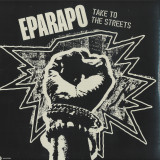
Wah Wah 45s are proud to present the full debut album from Afrobeat supergroupEparapo. Having come togetherduring the unprecedented events of the pandemic and the Black Lives Matter movement, and despite being a project born from the privations of lockdown, their music is ultimately an expression of hope, resilience & resurgence.
The word "eparapo" means "join forces" in Yoruba, the language of Afrobeat. It's also the title of a track by the late, greatTony Allen- drummer for Afrobeat legendFela Kutiand lifelong friend and mentor of our very own "Afrobeat Ambassador",Dele Sosimi. Not only did Tony help to invent Afrobeat, he always looked for ways to push the boundaries, never content with recreating what had gone before but constantly expanding and developing the genre. This project hopes to pay homage to his legacy, and that of Fela Kuti himself. Its aim is to innovate, fuse and diversify while still retaining the essence of the music.
The force behind Eparapo is bassist, composer & producerSuman Joshi.He has been a member of Dele Sosimi's Afrobeat Orchestra for nearly a decade and has performed on stage with the likes of Tony Allen, Seun Kuti, Ginger Baker & Laura Mvula. He is also bassist with UK jazz ensemble Collocutor and fusion project Cubafrobeat.
"The Eparapo project was conceived during a time of lockdowns & government scandals. The music that makes up this album was written and recorded against a backdrop of societal upheaval, culture wars and rising wealth inequality. With little scrutiny or resistance from the mainstream media, our human and democratic rights were being eroded and our institutions debased. Even our right to protest is now under threat. This is a call to action, an expression of frustration & anger at what our nation has become. It's saying that enough is enough, it's time to join forces and make our voices heard. It's time to take to the streets."Suman Joshi
The title track is an epic eleven minute musical representation of this frustration and anger, where the musicians really let loose and allow their voices to be heard. As the only instrumental track on the album it acts as a call to action that is central to this body of work. Featured vocalists on the album are Fela Kuti disciple and Wah Wah 45s artistDele Sosimi, who appears on the singlesBlack Lives Matter,From London To LagosandWho Invented Back & White?as well as a more recent recording,Follow The Money; and London based, Ghanaian born master percussionist and vocalistAfla Sackey, who takes lead vocals on the mournful yet somehow hopefulBeautiful City.
The rest of the group comprises of highly rated UK jazz vocalistSahra Gure; saxophonist, composer, producer and bandleader of the renowned forward thinking jazz outfit Collocutor,Tamar Osborn; keyboard player, producer and front man for Lokkhi Terra and Cubafrobeat,Kishon Khan; one of the UK's finest and most in demand trumpeters,Graeme Flowers, who has played with Quincy Jones, Gregory Porter and many more; trombonist for Bellowhead and mainstay of Dele's Afrobeat Orchestra,Justin Thurgur; and finally drummer for Steamdown and Sons of Kemet, as well as the man behind the Nache project,Eddie Wakili Hick.
The album will be available digitally and limited edition vinyl LP, with striking artwork by our award winning designer Animisiewasz.
out of Stock
Last delivered 19 months ago available to reorder, subject to availability
Originally released on tape by SicSic in 2014, Aprilnacht commemorates a decade of music from Brannten Schnüre and marked the spring in a tetralogy of albums about the four seasons when it came out. Back then the Würzburg-based project consisted solely of Christian Schoppik, who later welcomed Katie Rich to take over the vocals. He used to perform as Agnes Beil, but dropped the name when, while making this album realized his music was becoming "much gentler and more fragile". Aprilnacht already captured the particular musical ideas that Schoppik would thoroughly keep exploring, delving deeper and deeper into the use and manipulation of samplers from sources so diverging as to wander between the five continents to post-war German family television and cult cinema. Heir of the ritualistic intensity of Coil, of the intricate sampler assemblies of Ghédalia Tazartès', and of the dusty, dismal old ballads from around the world, Brannten Schnüre manages to make these paths cross in a territory that is as inherent as it is uncanny; sieged by the past and intimate as a hearth. An organic approach to folk, ambient, and sound collage, where ethereal yet thoroughly textured pieces coalesce in enthralling, delicate, and innermost musical rituals.
The album cover paintings reveal the temper: dreary old towns where shadows come to dim the slow passage of crepuscular colors, a soft area of reanimation where wind and light come close and foresee the night of spring. Aprilnacht was inspired by the stories of German philosopher and writer Friedrich Alfred Schmid Noerr, whose work exhaustively examines the conflict between paganism and Christianity, safeguarding myth in a way that Schoppik describes as boldly modern, humorous and unpredictable in its variations of the Germanic folklore motifs. "I wanted to do the same with the music," he states, and the music here could as well be suitable for a night when household deities welcome wandering will-o'-the-wisps, water nymphs, and gyrovagues to discuss Perchta's leadership of The Wild Hunt, but this album is not a folk tale, it's not an elegy to worlds already gone, hidden in years; it's an intersection of routes that open mysteriously before our ears like a congregation of vapors. Aprilnacht is a gathering of voices; "There are too many children, and none of them keeps quiet," reads the last verse of «Requiem für eine Ringelnatter.»
Sensuality drips over the music to celebrate both the voluptuousness and tragic quality of nature; "It's raining on me, urine from your flowers," Schoppik sings in «Urin deiner Blüten» and later on, faced with a snake's erotic features, as if he wanted to be embraced by it: "Your quick, sharp tongue and your warm venom; that's what the pond is missing." Orality is where this profusion of contents thrives. When the voices get closer and condense, the words reveal the saliva employed to pronounce them; we feel the mouth and the tongue, but when breath envelops them in sorrow and softens their edges, they sound distant, diffused in the atmosphere, letting go of the body that held them. These two vocal facets oscillate permanently and interact naturally with the fertile assembly of samplers and instruments that develop throughout the album, which condense and disperse impersonating each other, interweaving to search for a specific syntax. Tangled whisperings of enigmatic phrases, timid voices that stick out to check the scene but hide away quickly, shivering trance chants and monastic ambiances, distant screams and clamors in between chaos and warfare swirl until bursting into subtle songs where even Mother Mary comes forth softly. Soothed by foggy atmospheres and crackling punctuations, these voices shape a vulnerable crowd, an occasion of fragility. Along this swarm of songs thrown into thin air, accordions sound like heavy-breathing lungs; clarinets sigh like curtains shaking; violin solos wander around like bees; Gjallarhorns cries distend like fleeing cattle; glockenspiels evoke remote music boxes and inherited toys; backward emanations emerge like slender waves retreating. On the banks of stretching loops and ember textures is where the songs slowly nest, collecting the words to find their tone.
A poem by Jorge Teillier says, "To talk with the dead you have to choose words that they recognize as easily as their hands recognized the fur of their dogs in the dark. To talk with the dead you have to know how to wait: they are fearful like the first steps of a child. But if we are patient one day they will answer us with a flame that suddenly revives in the fireplace." This may be Brannten Schnüre's main purpose: To find the voice to speak to those of whom we were a vision. Not in mourning, but acknowledging the obscure and volatile nature of spring's regenerative force, searching for the treasure of balance, as evidenced in the lyrics of «Requiem für ein Schwalbennest,» "Its nest was destroyed so many times before it was finished, and despite that, the shallow builds as if it is infatuated." The same idea is here in the words of Schmid Noerr, who made poetry an act of resistance to the horror of Nazism; "Since having seen the ability of a brilliant spirit to die, with a calm mouth that everyone saw, health is true again and we affirm it, even if rivers of blood flow." And as we call for the dusk's kindness, waiting to return home and eat with our kin by the stove, our ears become used to the games of the night. We feel like we're rowing on wetlands, while the "moon musick" keeps us vigilant against the slightest movement of water or sweet moan because eeriness here is imperative for survival. Do not succumb to the insipid howl of death, for nothing may last but mutability. You see, the rock has moved a little during the night; the rest is just wind fleeing from the void.
out of Stock
Last delivered 2 years ago available to reorder, subject to availability
In Season 5, the long-awaited fifth full-length by beach-pop project The Tyde, frontman Darren Rademaker unveils his vision of an ’80s-inspired Suave Nouveau, with a clutch of sweet, melancholic love songs evoking lush mustaches, mellow macho, the ghost of Jimmy Buffett, white sand beaches, flamingos swooping across a cerulean sky, speedboats cutting through the bay and pastel linen suits billowing in the breeze as the sun dips beneath the horizon. “Spanish conquistador Juan Ponce de León ‘discovered’ Florida in 1513, naming the peninsula La Florida, the flowering land. In Season 5, Rademaker reflects on his own return to the flowering land, and the artistic diaspora that caused him to quit California in 2020 in search of a New World of his own. ‘I lived in Florida from the ages of ten to twenty-five, but never really got to explore it,’ he says. ‘When I came back, I decided to really embrace the whole Florida aesthetic. I moved into an art deco home in Sarasota with pink seashell lamps. I visited Key West, like seven times. I also quit smoking weed and cigarettes, and stopped saying shit like LOL and amazeballs. It felt different. It felt good.’ “The record features the talents of many good friends, including Dan Horne, Colby Buddelmeyer, Matt Correia (Allah-Las), Clay Finch (Mapache), Albert Hickman, Derek James (The Entrance Band), Alex Knost (Tomorrow’s Tulips) and Adam MacDougall (Circles Around The Sun / Black Crowes), with artist / musician Matt Fishbeck (Holy Shit) designing the deco-inspired album artwork. “And as much as they are inspired by the past, these songs are keenly aware of an uncertain future—because there is no such thing as a time machine, and there is no going back. Ultimately, Season 5 asks the question—where do we go after the sun sets on our dreams? Where the fuck is the New New World? In Rademaker’s eyes, it no longer exists in any specific American geography—rather, all hope remains in the timeless, unending power of music, and its power to take us to the places we wish we could be. Even if they don’t exist anymore.” — Caroline Ryder
Big Crown Records is proud to present the debut full length offering from Les Imprimés, Rêverie. The stirring and ethereal sounds of Les Imprimés have been making fans of anyone who hears them since their first 7" single hit the speakers. Morten Martens is the man behind the band. Born, raised, and working in Kristiansand, Norway, he keeps a low prole while making his heart felt, highly infectious, and unique music. This album is a long time coming for Martens and it is sure to make him a name to be reckoned with. The first thing you notice listening to Les Imprimés is the high level of musician-ship. Martens plays nearly every instrument on the recordings and handles the production and arranging. He has been making records for decades, winning a Spellemann Award (aka, the Norwegian Grammy) in 2006 for producing a HipHop album as well as getting nominations across three other genres. While awards and accolades speak to the level of his talent, this new album really shows who he is an artist on his own terms. Moving away from being a hired gun on the touring scene naturally led him to start doing more studio work. Slowly collecting gear and getting more experi-ence behind the boards he built his own studio on the island of Odderoya and was making a living playing with and recording other people's music. As the story goes, after those sessions would end he would work on his own project into the wee hours of the night. From these late night sessions, Les Imprimés was born and Rêverie began to take shape. However, "it wasn't until COVID, when things locked down, that I was really able to nd the time to focus on Les Imprimés" Morten says about creating and leading his own solo project. "It was a scary time. But I knew I had to do something with it." He took the sum of his inuences, combined them with his own vibe and got busy writing the music, playing the instruments, and singing the songs. "It's soul music, but I don't exactly have the soul voice," Morten explains humbly. "But I do it my own way, in a way that's mine. "It is his sound, his fingerprint, his sensibility, that makes his music hard to put in a box. The album showcases both Martens' range and his ability to make a cohesive album. The lead single "Falling Away" starts with a raw drum break and turns into a lushly arranged tune that paints the picture of love when it slips away. On "Still Here" he professes his resilience through life's twists and turns over a thundering track that puts a new spin on the B side ballad genre. Songs like "You" and "Our Love" mix tones from 60s and 70s Soul with arrangement nods to Doo Wop records while Martens' lyrics and delivery leave you singing the melodies long after they finish. "Love & Flowers" finds Martens in a moment of clarity with a song that ts the niche sub genre of happy break up tunes, the four on the floor track will move the dancefloor or while the message will resonate with anyone who put too much effort into the wrong situation in their lives. However, it is songs like "Muse" and "Chess" that really encapsulate the uniqueness of Les Imprimés as they push the boundaries of genre, one a profession of love for music and the other a cover of an electronic record respectively. Martens' lyrics, emotion, and delivery truly make the whole thing come together and stand out from any of his peers. There's an infectiousness and a pop sensibility in the writing that is done with the utmost class and taste giving Les Imprimés the rare quality of immediate attraction that only deepens the more you listen.
out of Stock
Last delivered 2 years ago available to reorder, subject to availability
Donovan’s Original
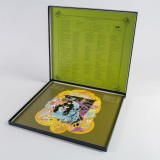
A Gift From a Flower to a Garden made for a few firsts: the first double LP of Donovan’s
career, one of the first box sets in pop and, most importantly for Donovan himself; the first
pop album for the children of tomorrow.
He resolved to make A Gift From a Flower to a Garden an album of two halves. The first,
Wear Your Love Like Heaven, was intended for his own generation as they started to think
about the kind of world they wanted to leave behind. The second, For Little Ones, was for
the children they had or would have in the years to come. The result was a kaleidoscopic
folk-jazz suite on the power of love, imbued with all the romance and mystery of an Arthur
Rackham illustration for an ancient English fairy tale. The songs, remarkably adventurous
given Donovan was a globally famous singer at his commercial height, combined the
influences he had amassed so far.
There is something about A Gift From a Flower to a Garden that could never be repeated,
though. It is such an innocent evocation of the childlike imagination, so redolent of its time,
yet set apart from it too. All these years later, the peaceful qualities of this pioneering,
enchanting, deeply unusual album feel more valuable than ever.
The state51 Box Set
With authenticity core to the project, The state51 Conspiracy engaged one of the UK’s
leading experts in box set design, Daniel Mason at Something Else, to painstakingly recreate
the box, records and accompanying ephemera. The first challenge was to find the deep blue
leatherette paper the original box set was covered in; a problem since it was no longer in
production. “I knew people who had stacks of it, gathering dust on top shelves, so I bought it
up wherever I could find it,” says Mason. Then came the reproduction of 12 loose leaf lyric
sheets on fine art watercolour paper, each of them featuring a watermark and a fairytale-like
illustration by Donovan’s artist friends Sheena McCall and Mick Taylor. Where, though, to
find the same paper stock? “I found out that it was made at a paper mill in North Wales
called Abbey Mills. Unfortunately the mill dissolved in the early 70s and very little of the
paper remained. However enough paper remained to allow us to produce the numbered
certificate also signed by Donovan that sits within the box.”
Then to the iconic cover image. Donovan and Jimi Hendrix’s personal photographer Karl
Ferris, used infra-red film to achieve the psychedelic effect on the cover, but the original
negatives couldn’t be found. Mason then used digital technology to ramp up the colour levels
on a reproduction from an original copy of the album while allowing it to remain a little bit
faded, as it would be after half a century. The same labour of love and care has gone into
producing all elements of the box; from the rebuilding of the famous front cover font to the
hand-numbered and signed certificate; letterpress printed on the original paper stock of the
1968 UK release lyric sheets.
To cap it all off the original mono master tapes were waiting safely in the EMI Donovan
Archive and transferred from tape to digital by Abbey Road Studios where new lacquers
were cut, ensuring Donovan's favoured mono version of the album would be presented both
physically (and digitally for the very first time) in striking audiophile quality. The final touch to
ONO Records is proud to present a long awaited project from EDN, the recording project of Elena Nees. Hailing from Adelaide / Kaurna, Elena has crafted her sound in the form of sweet bedroom folk and pop, self releasing a number of tender EPs since 2020 along with releasing a fantastic six track cassette with the esteemed Naarm based cassette label Healthy Tapes under her Allume alias. Here, the EDN moniker takes these folk pop sensibilities and filters them through a love for electronic hardware production and music.
The record begins with the end-of-the-night dancefloor ballad ‘A Mirror’. Jittering and agitated drum programing makes way for EDN’s feather-weight vocals, cleverly manipulated over bubbling synths as the track melts into a bonafide braindance-pop anthem. ‘(Blue!) Flor’ keeps the tempo rising, breaking out into a funked drum machine jam allowing pearlescent pads to intermittently wash over. The thumping ‘Ummmm’ continues the jam ending the first side with an urgent techno-not-techno freak out.
Side B opens with the crystalline fourth world ambience of ‘Mess 1’ before EDN’s angelic antipodean twang takes the spotlight again on the gorgeous and introspective ‘2 Bored Angels’. Interluding briefly with the trip-hop induced breakbeat experiments of ‘Slo’, ‘Mirror Fuck’ bookends the record perfectly with glistening keys and EDN’s soulful vocals singing of longing and desire. An excellent closer. EDN gives us a triumphant and utterly unique record that unveils itself more and more with each listen and highlights her immense and diverse talent. One we are proud to include in the ONO catalogue!
Written & Produced by Elena Nees
Artwork by Mathieu Larone & Grace Otto
Mastering by Marco Pellegrino
out of Stock
Last delivered 2 years ago available to reorder, subject to availability
Geneva-based duo Bound By Endogamy delivers a heavy blend of rave, synth-punk, and industrial music. Shlomo Balexert and Kleio Thomaïdes are both prominent figures in the local squat and punk scene, having been involved in numerous projects over the past decade.
Following several cassette releases and a remarkable debut 7'' on Lux Records, the band presents a self-titled album that combines raw, growling basslines, crisp analog rhythms, and passionate vocals ranging from breathy to fiercely cutting.
On stage, the project consists of drums, a sampler, and vocals. Shlomo handles the drums alongside sharp synthesizers, while Kleio delivers powerful vocals reminiscent of a professional boxer. Expect a fusion of DAF and Kleenex with a hardcore edge
Repetitive actions, looping in your head forever. Forever? Never. Zero is endless. All flowers and fades. No permanence is ours. We are a wave, that flows to fit. And yet, “Music for a film”, a cassette tape by Swedish artists Sofie Herner aka Leda, inheres the power for perpetuity. A circulating dreamland, built on loop pedals, guitar, and tape manipulation.
The Malmö based artist, who is already famed in the global experimental, improvisational, lo-fi noise underworld for her own musical creations as well as being part of bands and projects like Enhet För Fri Musik, Källarbarnen, or Neutral, brings music made for the film “Dödfött“ - an interactive flick by director Niklas Hansson about failed online karate and caducity, screened with a stage art performance at Hypnos Theatre, Malmö, in early autumn 2022. Cinematic sounds for all the Velvets, that never awaken from their first DIY Super 8 dream.
Colorful, yet monochrome electrified and acoustic guitar melodies, monotonous, working like drones, getting all stranded in the zones. Six minimal compositions. Full of plenty, always friendly. Heavy, calm, dreamy, shredding, scratching, created for the woman of the world. And all other creatures, that seek features in unbroken repetition. As nobody keeps any of what he has, one day the eternal veil of forgetfulness will warp us all. Until that hour we dance in circles. Making karate moves, sidestepping caducity, reenacting ourselves, endless at the edges, through night and day, craving form that binds. As form is emptiness, emptiness is form itself. Welcome to the world of Leda, riff, 7/4, loop, the young, the middle aged, the old…
Tape is hand-stamped along the top, in printed card housing, with
Vestigios, Aeondelit’s second full length record after recently releasing an EP of shifting club music influenced by postmodern philosopher Leotard on Tel Aviv’s Sadan records, tells a lucid, captivating story of heritage, transformation, vulnerability and healing. It will be released via Berlin-based art platform and record label Unguarded as a digital and tape release with an artwork created by Petra Hermanova, and will be accompanied by limited textile pieces by Diane Esnault. Aeondelit’s music is strongly influenced by the rocky surrounding of his hometown Manizales and fuses electronic sensibilities, ambient streams and avant-percussive rhythms that build his sound identity. Aeondelit's evocative music has previously been released via the Insurgentes imprint, Vienna-based Ashida Park and was recently featured on the 'Unguarded 2 – Entangled' compilation. Cortés describes the meaning of Vestigios as such: “The memories of past generations: the lives that burn within me, are the pillars of who I am. They constitute longings and traps, sin and strength, the temple that breaks down and rebuilds. The different dimensions of consciousness converge in the mind, which constantly tells us who we are, synthesizing and projecting our contradictions. The pain that comes with getting in touch with our vulnerabilities opens the doors to healing through confrontation. This lays the foundation for a more honest relationship with our past, present and future. 'Vestigios' is the bridge between the temporal and the eternal, the crystallized remnant of pain caused by transformation and recognition of the convulsive underworld of our psyche.” Aeondelit, birth name Sergio Cortés, is a Colombian music producer who explores themes related to technology and human condition in sound. He focuses on the creative use of sample manipulation techniques and digital sound synthesis to deepen the idea of a dialogue between computer and human, and how both influence each other. Deep in Colombia's Andes, surrounded by big mountains and the sacred Nevado del Ruiz, Aeondelit has been forging his own sound identity, exploring the intersection points between sparkly experimental club music and melodic ambient electronic. His first release Editing Destiny on the Colombian label Insurgentes was well received by the public and DJs, named one of the best albums of 2020 on Mixmag. His last release on Sadan Records, Anima Minima, was reviewed and premiered on platforms like DJ Mag, THE BRVTALIST and Orb Mag. He is also the co-founder of the independent record label Nvrclose, where his debut album as Æon Series: Dualidad, was released. About Unguarded: Unguarded is a Berlin based experimental electronic music label and art platform. In 2020 long-term collaborators Tim Roth aka Sin Maldita aka 1k Flowers and Phillipp Hülsenbeck founded Unguarded to foster forward thinking artists with a focus on exploring cross-disciplinary collaboration and embarking on sonic adventures. Unguarded was founded in a time of turmoil and uncertainty for artists and music, trying to keep personal connections alive through shared personal and collective experiences between doom and destruction and glistening hope. Amongst their own contributions, Hülsenbeck and Roth gather a collection of genre-defying works by longtime collaborators as well as artists they bonded with in recent years. Their releases constantly escape from definition but through entangling their unique artistic marks, this diversity remains absorbing and compelling throughout their sprawling sonic miasmas. Combining earth-shattering club cuts, equally elegant and bouncy, Unguarded contributes to and connects the experimental music scene in and outside of Berlin. We invite the curious to a deep, tense but rewarding experience.
out of Stock
Last delivered 2 years ago available to reorder, subject to availability
10 year anniversary edition of the 6th Baby Woodrose album limited to 500 copies on clear vinyl. All Baby Woodrose albums have a different vibe and with Third Eye Surgery they have made their space rock album. For the first time Lorenzo Woodrose integrates the heavy psych of his side projects Dragontears and Spids Nogenhat with the fine song writing of Baby Woodrose. No matter how much the fuzz guitar is wailing or the echo machine is tripping, there's always a good song hiding beneath the rumble. Several of them clocks in at 6 minutes so there are only 9 songs on Third Eye Surgery. Songs like Nothing is Real and Love Like a Flower have an Eastern flavour thanks to the sitar of Vicki Singh while Just a Ride sounds like a trip to India in more than one way. Even though the central songs on Third Eye Surgery like Waiting for the War, Bullshit Detector and the title song are very spaced out there are also a few tunes that sticks out. Dandelion is a sweet and melancholic psychedelic pop song and is also a duet with Emma Acs while Honalie is a dreamy ballad that makes time stand still. Almost. Third Eye Surgery has been recorded in the Black Tornado studio in Copenhagen and is engineered by Anders "Evil Jebus" Onsberg and produced by Lorenzo Woodrose. The artwork is made by German artist Kiryk Drewinski who has worked with the band several times before and also did the artwork for the demo collection Mindblowing Seeds and Disconnected Flowers released in 2011.
Yearly compilation album RADAR by KEROXEN returns with its fourth volume in the ongoing series of themed based albums showcasing the talents and misfortunes of carefully selected musical projects based or connected with the Canary Islands.
With its first volume released in 2020 aiming to promote and divulge adventurous Island based music, the Keroxen imprint now presents Vol.4 with another showcase of the various insular musical scenes made in the outermost regions – in this case, a very rare incursion outside the Canary Archipelago by way of handpicking friends and colleagues working in the further most regions we can think of. A very special showcase then, featuring the Azores Islands, Reunion Island, Canary Islands and French Guiana - a true connection of likeminded minds whom demonstrate once again that you do not need to be in an western hipster mecca to make interesting work.
The presentation format sticks to its breakable rules, with each artist offering one track per side and the full thing of course wrapped up in Pura Marquez dizzying post-tropical art.
The album opens with the Julee Cruise inspired project Akane by Tenerife’s Carolina Machado where synth arpeggios intertwine organically with her soothing voice, setting the tone for Reunion Island’s Jako Maron and his unique take on local Maloya music by way of electrifying it into a trance like looping beat. Enter French Guyana’s Daryanna Jean unique sound artistry with sampling, cutting and pasting local(?) sounds into a disorientating needle jump glitch fest. Side A eventually closes with a very Azorean take on the very English hauntological sound by borrowing those pastoral melodies and synth riffs of yesterday and transposing it to the remote Sub-Tropical fields of São Miguel island, in the Azores, courtesy of Flipping Candy.
Side B emphatically reinforces the compilation’s original concept that no matter where you are, in this post internet, post everything world, outsider music thrives and keeps raising the invisible bar, true that!
I want to introduce this work ‘Halos of Perception’ to you in the way Lisa introduced me to it, through the sharing of experiences.
Lisa and I met for a walk near South Yarra station to talk about this work, when inclement weather made it too wet to visit the tunnels. Moving almost seamlessly from a world of leisurewear, infinite milk alternatives and blaring neons to stretches of green by the water that brimmed with sounds and life, we saw a few people climbing the Burnley bouldering wall, butterflies suspended in the hot wind and lots of plants I wish I knew the names of. Overhead the cars rumbled like a ceaseless animal as we talked about hidden ecosystems, imagined spaces and networks of care.
Stemming from a serendipitous encounter with an original Cave Clan member that led to many underground adventures, this work explores the worlds that exist outside of our perceptions. By the river, I leafed through a selection of tunnel photos Lisa had printed off at Officeworks, revealing alien textures, tunnels that stretch on into abysses of their own, underground flowing streams. Light is sparse and delicate, something reflected by the flickering and wavering in Lisa’s piano compositions.
As we walked, we noticed the ways in which infrastructure is often designed to keep people out—cut doors into fencing and clipped wires show an active and ongoing defiance of this. We spoke about how her Cave Clan friend used to go down to this painted room and read in solitude, using candles for light. The way sound exists underground, encased in these hollow cement tunnels, a painted room with its own deep hum. How people used to hold underground shows, how there were rules for safety (no exploring after rain, never alone) that was shared with each other. This warmth and absorption of other’s experiences is present in Lisa’s work—it’s immersive, like wading in water.
We paused on the walk to eat berries and talk about how The Caretaker creates transitory worlds with recorded sound, how this technology captures memory, and the exploratory pursuits of Pauline Oliveros’ Deep Listening Band. These citations of memory and deep listening inform Lisa’s use of analogue and classical instruments, playback artefacts and acoustic feedback in her own world-building. When speaking about ‘Halos of Perception’, she describes it as a fascination with timbre and acoustic artefacts.
Ideas of networks and enmeshment are felt deeply in Lisa’s compositions, motifs overlaid over each other evoking the image of many hands interlinking playfully, tenderly, softly. The way her compositions delve into refraction and echo makes me think about the tunnels and the way they splinter off into many possibilities. Manipulated textures reminiscent of the chalky, earthy, moss air that perfumes the tunnels’ subterranean air. Tactile details that gesture towards close attention, verging on obsession.
This work is also about imagining ecosystems of potential. Lisa shared with me that during this project, she has been reimagining subterranean networks in dreams, thinking about oral traditions, and the way water moves—from the sky to the earth, through the ground, connecting all these spheres. Realised in collaboration with hyperreal video artist Tristan Jalleh, Lisa’s dream landscape melds waterfalls, leaks, flower graffiti, and hidden messages lit up by imagined light sources with existing subterranean networks. There’s a real sense of wonder in this world she has built, how the city can reveal itself to you with some patience and care, how the city and its secrets can find its way into your dreams.
‘Life And Death - The Five Chandeliers Of The Funereal Exorcisms’ pulls back the veil unto a nocturnal scene populated by shadows, embers burning coldly in the underworld. Marina Zispin is your guide, siren and protector both. Marina Zispin is the negative space between musicians Bianca Scout and Martyn Reid. Love And Death is the duo’s debut release, five chandeliers of melancholic, vibrant synth pop twinkling in the inky blackness. Both originally hailing from the North East of England and forming a musical partnership before lockdown, Bianca Scout and Martyn Reid initially worked remotely. Having relocated to South London and Newcastle respectively, Marina Zispin was born in earnest after the duo could begin writing and practising in the same space. Bianca Scout is a celebrated musician and dancer with a number of solo and collaborative works in her discographywhile Martyn Reid is a mainstay of the UK noise and power electronics scene, most recently with solo project Depletion. Marina Zispin largely eschews both Scout’s deconstructed approach to song and Reid’s focus on visceral, noise- based productions; the result is a new entity, the underground pop star that exists only in darkened dreams. Marina Zispin, then, is an avatar cajoled, nurtured and directed by Scout and Reid. Analogue electronics redolent of the early 80s Cold Wave and Synth Pop era form the base of the Zispin worldview, with Bianca Scout donning the Marina disguise, embodying the character over five songs of swooning drama, playful melodic interplays and tear-stained, doe-eyed sentiment. Flowers In The Sea opens with an austere 4/4 beat and hypnotic synth parts before Scout/Zispin floats in across the lagoon. Scout’s vocal tone is an instant winner, sweet like honey pouring down over the cold, robotic productions and stereo-panned synth work. We can almost see the petals drift into the horizon before being pulled under by the artist’s sadness. Ski Resort bursts out with a Jacno-inspired bassline and backing that could have been buried in a French disco in 1982 (think Stereo or Linear Movement) before Scout’s narrative details frivolousness and regret before a magical shift for the final coda into major key. Backworth Gold Club closes Side A, a mysterious rigid beat and minor chord synth arpeggios swimming in space, floating and obscure. On Side B, Hymn carries the tone on, church-like synths holding down the pattern for Zispin/Scout to float above in a flowing gown of reverb. The marriage of Reid’s cold musical backbone and Scout’s effortless vocal and co- production is in full flow here, the vocals at times rising to the rafters of this nocturnal place of worship, at other points they’re fuzzy samples cutting in and drifting out or sung with an extreme autotune, abstract and perfect in the moment. Surprise Party is the most straightforward pop bullet, Scout/Zispin’s vocal peering out more from the fog, perhaps revealing more than usual: vulnerability, maybe, the wandering muse of the artists behind the veil or just another layer of mystery behind the enigma? Marina Zispin’s Life & Death - The Five Chandeliers Of The Funereal Exorcisms ends as it began, scintillating in obscurity, leaving everything unanswered but open.
out of Stock
Last delivered 2 years ago available to reorder, subject to availability
After an international tour, the multi-instrumentalist FKJ presents his new 6-tracker jazz EP : Ylang Ylang
Produced in an intimate context, the project, both bright and melancholic, is a real journey within the artist's time capsule.
Its numerous instruments - often accompanied by warm choruses - between apotheosis and rhythmic lull, tell the different parts of his life. Story of musical and familial love, loneliness and passing time, this project spotlights his name, coming from a soothing local flower.
Full of influences, there is Bas - the first rapper signed on Dreamville, label created by J.Cole - on the single "Risk", which deals with similar themes. French Kiwi Juice introduces us to a sweet orchestral ballad. Finally, between gratitude and lightness, he states "I am still the same".
out of Stock
Last delivered 56 days ago available to reorder, subject to availability
Legendary 2010’s indie band Crocodiles’ guitarist Charles Rowell’s new synthpop-meets-gothic rock project. Think Nick Cave crooning over Martin Rev’s minimal electronics or The Lords of the New Church-era Stiv Bators jamming with Wayne Hussey and Douglas Pearce.
After relocating from New York to France, Charles Rowell began stuffing his suitcase with various synths and samplers while taking cheap bus rides to bordering countries.
While living out of a hotel in north east Paris, he played his demos for Third Coming Records who quickly released the Bad Trip EP in 2020. Concerts became more frequent after the pandemic, with the release of Spellwound and a few have become infamous with guitars smashed to pieces, broken glasses, unruly audience front flipping onto the stage.
With Paris providing the background and a scene of friends such as avant-garde drag artist Tuna Mess and industrial techno veteran Poison Point who pushed his creativity even further, Crush Of Souls constant spirit is that it remains unpredictable and thrives on collaboration.
This is even more true with his upcoming album (A)Void Love.
Written over a period of intense insomnia that coincided with a run of shows playing guitar for Australian legend Harry Howard, Crush Of Soul’s main man Charles Rowell finally found rest after writing and recording the last song entitled World of Fear. Six months prior he had quit his job as a chef, traveled east to Prague for inspiration and returned ragged and sleepless.
Rowell’s insistence on keeping the instrumentation simple and clean came from an arduous two years of literal blood, sweat and tears. Every bit of drama, eastern excursion and sleep psychosis can be found within the walls of (A)Void Love.
Acoustic guitars and dramatic synths provide a cold wilderness for the various rhythms to inhabit; touches of minimal electronics, cold wave and synth pop can be found while the song writing remains classic for lovers of Echo & the Bunnymen and Nick Cave & the Bad Seeds.
There’s always been a thread of synth-punk, death rock and DIY noise running through all of Charles’ projects (Crocodiles, ISSUE, Flowers of Evil), however Crush Of Souls pushes harder and further into the darkness with the new album ‘(A)Void Love’.
out of Stock
Last delivered 3 years ago available to reorder, subject to availability
Woods are in bloom again, inviting you to disappear into a new spectrum of colors and sounds and dreams on Perennial. Formed in Brooklyn in 2004, Woods have matured into a true independent institution, above and below the root, reliably emerging every few years with new music that grows towards the latest sky. Operating the Woodsist label since 2006 and curating the beloved homespun Woodsist Festival for the musical universe they’ve built, Perennial is the sound of a band on the edge of their 20th anniversary and still finding bold new ways to sound like (and challenge) themselves. Perennial grew from a bed of guitar/keyboard/drum loops by Woods head-in-chief Jeremy Earl, a form of winter night meditation that evolved into an unexplored mode of collaborative songwriting. With Earl’s starting points, he and bandmates Jarvis Taveniere and John Andrews convened, first at Earl’s house in New York, then at Panoramic House studio in Stinson Beach, California, site of sessions for 2020’s Strange To Explain. With a view of the sparkling Pacific and tape rolling, they began to build, jamming over the loops, switching instruments, and developing a few dozen building blocks. The album’s resulting 11 songs, 4 of them instrumental, are in the classic Woods mode--shimmering, familiar, fractionally unsettling--but with the half-invisible infinity boxes of Earl’s loops burbling beneath each like a mysterious underground source. From source to seed to bloom, each loop unfolds into something unpredictable, from the jeweled pop of the aching “Little Black Flowers” to the ecstatic starlit freak-beat of “Another Side.” They are blossomings both far-out and comforting, like the Mellotronic cloud-hopping of “Between the Past,” or sometimes just plain comforting, like the widescreen snowglobe fantasia of the instrumental “White Winter Melody,” touched by Connor Gallaher’s pedal steel. Woods have long used the studio as a place of songwriting, naming 2007’s At Rear House after their shared dwelling and recording space. But Perennial also carries with it an even longer view of Woods. Emerging from the process alongside the music was Earl’s reflection that “perennial plants and flowers are nature’s loops,” an idea rolling under the album’s lyrics like the loops themselves. It certainly applies to the band, too, who have quietly tended to a long, committed project of being a band in the weird-ass 21st century, both individually and communally. Though separated by coasts, the communal sprit carries through Earl, Taveniere, and Andrews’ collaboration, a living embodiment of the freedoms rediscovered every time a new collectively created piece of music emerges. For nearly two decades, Woods have survived subgenres, anchored in the fertile soil below hashtags like lo-fi and freak-folk and psychedelic and indie, and built a shared history that’s something to marvel at. As the flagship band for Woodsist, they’ve accumulated a striking extended family of collaborators (and Woods alum) that have made the label one of the most dependable imprints in the kaleidoscopic low-key underground. It’s a glow that’s transferred whole to the blissed-out Woodsist Fests held in Accord, New York in recent years, which have folded in a wide range of diverse sounds, from the the jazz cosmoverse of the Sun Ra Arkestra and adventurous legends Yo La Tengo, to a hard-to-even-count family tree of contemporaries, like Kevin Morby (who served a few tours of duty as Woods bassist) and Kurt Vile (who released his 2009 debut on Woodsist), a living community in sound. Perennial carries all of this, shaped by decades, but made in the moment, and here right now. The smell of the flowers doesn’t remain, but sometimes the flowers do. Jesse Jarnow Recorded and mixed by Jarvis Taveniere at Panoramic House in Stinson Beach, CA with additional recording at The Ship in Los Angeles, CA and Cottekill Bird Sanctuary in Stone Ridge, NY. Produced by Jarvis Taveniere and Jeremy Earl. Mastered by Timothy Stollenwerk at Stereophonic Mastering in Portland, OR. Jeremy Earl - vocals, guitars, drums, percussion, sk-5, mellotron, vibraphone, autoharp, loops Jarvis Taveniere - guitar, bass, upright bass, hammond, vocals John Andrews - piano, organs, mellotron, drums, vocals Connor Gallaher - Pedal Steel Kyle Forester - sax, wurlitzer
Woods are in bloom again, inviting you to disappear into a new spectrum of colors and sounds and dreams on Perennial. Formed in Brooklyn in 2004, Woods have matured into a true independent institution, above and below the root, reliably emerging every few years with new music that grows towards the latest sky. Operating the Woodsist label since 2006 and curating the beloved homespun Woodsist Festival for the musical universe they’ve built, Perennial is the sound of a band on the edge of their 20th anniversary and still finding bold new ways to sound like (and challenge) themselves. Perennial grew from a bed of guitar/keyboard/drum loops by Woods head-in-chief Jeremy Earl, a form of winter night meditation that evolved into an unexplored mode of collaborative songwriting. With Earl’s starting points, he and bandmates Jarvis Taveniere and John Andrews convened, first at Earl’s house in New York, then at Panoramic House studio in Stinson Beach, California, site of sessions for 2020’s Strange To Explain. With a view of the sparkling Pacific and tape rolling, they began to build, jamming over the loops, switching instruments, and developing a few dozen building blocks. The album’s resulting 11 songs, 4 of them instrumental, are in the classic Woods mode--shimmering, familiar, fractionally unsettling--but with the half-invisible infinity boxes of Earl’s loops burbling beneath each like a mysterious underground source. From source to seed to bloom, each loop unfolds into something unpredictable, from the jeweled pop of the aching “Little Black Flowers” to the ecstatic starlit freak-beat of “Another Side.” They are blossomings both far-out and comforting, like the Mellotronic cloud-hopping of “Between the Past,” or sometimes just plain comforting, like the widescreen snowglobe fantasia of the instrumental “White Winter Melody,” touched by Connor Gallaher’s pedal steel. Woods have long used the studio as a place of songwriting, naming 2007’s At Rear House after their shared dwelling and recording space. But Perennial also carries with it an even longer view of Woods. Emerging from the process alongside the music was Earl’s reflection that “perennial plants and flowers are nature’s loops,” an idea rolling under the album’s lyrics like the loops themselves. It certainly applies to the band, too, who have quietly tended to a long, committed project of being a band in the weird-ass 21st century, both individually and communally. Though separated by coasts, the communal sprit carries through Earl, Taveniere, and Andrews’ collaboration, a living embodiment of the freedoms rediscovered every time a new collectively created piece of music emerges. For nearly two decades, Woods have survived subgenres, anchored in the fertile soil below hashtags like lo-fi and freak-folk and psychedelic and indie, and built a shared history that’s something to marvel at. As the flagship band for Woodsist, they’ve accumulated a striking extended family of collaborators (and Woods alum) that have made the label one of the most dependable imprints in the kaleidoscopic low-key underground. It’s a glow that’s transferred whole to the blissed-out Woodsist Fests held in Accord, New York in recent years, which have folded in a wide range of diverse sounds, from the the jazz cosmoverse of the Sun Ra Arkestra and adventurous legends Yo La Tengo, to a hard-to-even-count family tree of contemporaries, like Kevin Morby (who served a few tours of duty as Woods bassist) and Kurt Vile (who released his 2009 debut on Woodsist), a living community in sound. Perennial carries all of this, shaped by decades, but made in the moment, and here right now. The smell of the flowers doesn’t remain, but sometimes the flowers do. Jesse Jarnow Recorded and mixed by Jarvis Taveniere at Panoramic House in Stinson Beach, CA with additional recording at The Ship in Los Angeles, CA and Cottekill Bird Sanctuary in Stone Ridge, NY. Produced by Jarvis Taveniere and Jeremy Earl. Mastered by Timothy Stollenwerk at Stereophonic Mastering in Portland, OR. Jeremy Earl - vocals, guitars, drums, percussion, sk-5, mellotron, vibraphone, autoharp, loops Jarvis Taveniere - guitar, bass, upright bass, hammond, vocals John Andrews - piano, organs, mellotron, drums, vocals Connor Gallaher - Pedal Steel Kyle Forester - sax, wurlitzer
Big Crown Records is proud to present the debut full length offering from Les Imprimés, Rêverie. The stirring and ethereal sounds of Les Imprimés have been making fans of anyone who hears them since their first 7" single hit the speakers. Morten Martens is the man behind the band. Born, raised, and working in Kristiansand, Norway, he keeps a low prole while making his heart felt, highly infectious, and unique music. This album is a long time coming for Martens and it is sure to make him a name to be reckoned with. The first thing you notice listening to Les Imprimés is the high level of musician-ship. Martens plays nearly every instrument on the recordings and handles the production and arranging. He has been making records for decades, winning a Spellemann Award (aka, the Norwegian Grammy) in 2006 for producing a HipHop album as well as getting nominations across three other genres. While awards and accolades speak to the level of his talent, this new album really shows who he is an artist on his own terms. Moving away from being a hired gun on the touring scene naturally led him to start doing more studio work. Slowly collecting gear and getting more experi-ence behind the boards he built his own studio on the island of Odderoya and was making a living playing with and recording other people's music. As the story goes, after those sessions would end he would work on his own project into the wee hours of the night. From these late night sessions, Les Imprimés was born and Rêverie began to take shape. However, "it wasn't until COVID, when things locked down, that I was really able to nd the time to focus on Les Imprimés" Morten says about creating and leading his own solo project. "It was a scary time. But I knew I had to do something with it." He took the sum of his inuences, combined them with his own vibe and got busy writing the music, playing the instruments, and singing the songs. "It's soul music, but I don't exactly have the soul voice," Morten explains humbly. "But I do it my own way, in a way that's mine. "It is his sound, his fingerprint, his sensibility, that makes his music hard to put in a box. The album showcases both Martens' range and his ability to make a cohesive album. The lead single "Falling Away" starts with a raw drum break and turns into a lushly arranged tune that paints the picture of love when it slips away. On "Still Here" he professes his resilience through life's twists and turns over a thundering track that puts a new spin on the B side ballad genre. Songs like "You" and "Our Love" mix tones from 60s and 70s Soul with arrangement nods to Doo Wop records while Martens' lyrics and delivery leave you singing the melodies long after they finish. "Love & Flowers" finds Martens in a moment of clarity with a song that ts the niche sub genre of happy break up tunes, the four on the floor track will move the dancefloor or while the message will resonate with anyone who put too much effort into the wrong situation in their lives. However, it is songs like "Muse" and "Chess" that really encapsulate the uniqueness of Les Imprimés as they push the boundaries of genre, one a profession of love for music and the other a cover of an electronic record respectively. Martens' lyrics, emotion, and delivery truly make the whole thing come together and stand out from any of his peers. There's an infectiousness and a pop sensibility in the writing that is done with the utmost class and taste giving Les Imprimés the rare quality of immediate attraction that only deepens the more you listen.
Big Crown Records is proud to present the debut full length offering from Les Imprimés, Rêverie. The stirring and ethereal sounds of Les Imprimés have been making fans of anyone who hears them since their first 7” single hit the speakers. Morten Martens is the man behind the band. Born, raised, and working in Kristiansand, Norway, he keeps a low profile while making his heartfelt, highly infectious, and unique music. This album is a long time coming for Martens and it is sure to make him a name to be reckoned with.
The first thing you notice listening to Les Imprimés is the high level of musicianship. Martens plays nearly every instrument on the recordings and handles the production and arranging. He has been making records for decades, winning a Spellemann Award (aka, the Norwegian Grammy) in 2006 for producing a Hip Hop album as well as getting nominations across three other genres. While awards and accolades speak to the level of his talent, this new album really shows who he is as an artist on his own terms.
Moving away from being a hired gun on the touring scene naturally led him to start doing more studio work. Slowly collecting gear and getting more experience behind the boards he built his own studio on the island of Odderøya and was making a living playing with and recording other people's music. As the story goes, after those sessions would end he would work on his own project into the wee hours of the night. From these late night sessions, Les Imprimés was born and Rêverie began to take shape.
However, "it wasn't until COVID, when things locked down, that I was really able to find the time to focus on Les Imprimés" Morten says about creating and leading his own solo project. "It was a scary time. But I knew I had to do something with it." He took the sum of his influences, combined them with his own vibe and got busy writing the music, playing the instruments, and singing the songs. "It's soul music, but I don't exactly have the soul voice," Morten explains humbly. "But I do it my own way, in a way that's mine."
It is his sound, his fingerprint, his sensibility, that makes his music hard to categorize. He has crafted an album of songs with different energies that all fit together to make one gorgeous record. The lead single “Falling Away” starts with a raw drum break and turns into a lushly arranged tune that paints the picture of love when it slips away. On “Still Here” he professes his resilience through life’s twists and turns over a thundering track that puts a new spin on the B side ballad genre. Songs like “You” and “Our Love” mix tones from 60s and 70s Soul with arrangement nods to Doo Wop records while Martens’ lyrics and delivery leave you singing the melodies long after they finish. “Love & Flowers” finds Martens in a moment of clarity with a song that fits the niche sub genre of happy break up tunes, the four on the floor track will move the dancefloor while the message will resonate with anyone who put too much effort into the wrong situation in their lives. However, it is songs like “Muse” and “Chess” that really encapsulate the uniqueness of Les Imprimés as they push the boundaries of genre, one a profession of love for music and the other a cover of an electronic record respectively. Martens’ lyrics, emotion, and delivery truly make the whole thing come together and stand out from any of his peers. There’s an infectiousness and a pop sensibility in the writing that is done with the utmost class and taste giving Les Imprimés the rare quality of immediate attraction that only deepens the more you listen.
Bollywood rarities handpicked and remastered on a double LP release with laminate gatefold and multi-layered flower petal foldout. Featuring rare, overlooked or not-previously-on-vinyl music from Bappi Lahiri, R. D. Burman, Ilaiyaraaja, Kalyanji-Anandji, Anand Milind, Raamlaxman and Kirti Anuraag released between 1982 and 1986. Mastered for and cut to vinyl by multi Grammy-nominated Frank Merritt at his mastering studio The Carvery.
Naya Beat is incredibly proud to present the first in our series of ‘Awaaz’ (‘sound’ in Hindi) archival projects focused on uncovering the sounds of 1980s Bollywood Original Soundtrack Recordings (OSTs). Series 1 focuses exclusively on the musical output of CBS Gramophone Records & Tapes (India) Ltd. Active during India’s peak disco era – a time when synthesisers and drum machines became a mainstay in Indian popular music – CBS India became a home for established composers to be experimental, up-and-coming composers to get their start, B-movie soundtracks, and straight-to-VHS releases.
Expertly curated by Naya Beat co-founders Turbotito and Ragz, who were given unprecedented access to the original label archives, this compilation is not just a collection of four-to-the-floor Bollywood disco (although there are plenty of those). ‘Awaaz’ is designed to take listeners on a musical journey that includes everything from leftfield electronic and mood music to outrageous proto house.
Be it classic and hard to find cuts like Ilaiyaraaja's "Aye Zindagi Gale Lagaa Le" and “Mere Jaisi Mehbooba” (Bappi Lahiri’s Hindi remake of Herbie Hancock's “Rockit”), or the instrumental mood music of Kirti Anuraag’s VHS movie soundtracks, to the proto house of Raamlaxman’s “Dil Gadbad Jhala” and Kalyanji-Anandji’s “Aage Bhi Dushman,” or the synth and guitar drenched breakdance madness of R. D. Burman’s “Dekho Idhar Jano Jigar,” the music on this compilation captures the output of a label that was unique as it was unconventional.
An homage to the genre, every detail in this stunning release has been lovingly crafted. From the laminate cover to the absolutely incredible foldout, to the cut-out and collage design, to the font type and layout, there are countless authentic details and nods to classic Bollywood releases of the era. As much of the album has been made in India as is possible. The sleeves have been handmade in New Delhi. The liner notes have been compiled by music archivist Nishant Mittal (aka Digging In India).
out of Stock
Last delivered 3 years ago available to reorder, subject to availability
The next chapter of the Natural Information Society is here. Since Time Is Gravity, credited to Natural Information Society Community Ensemble with Ari Brown, presents a newly expanded manifestation of acclaimed composer & multi-instrumentalist Joshua Abrams nearly 15 year, 7 albums &-counting flagship ensemble. Joining the core NIS of Abrams (guimbri & bass), Lisa Alvarado (harmonium) Mikel Patrick Avery (drums) & Jason Stein (bass clarinet) are Hamid Drake (percussion), Josh Berman & Ben Lamar Gay (cornets), Nick Mazzarella & Mai Sugimoto (alto saxophones & flute), Kara Bershad (harp) & Chicago living legend of the tenor saxophone Ari Brown. Recorded live to tape at Electrical Audio & The Graham Foundation, cover painting Vibratory Cartography: Nepantla, by Lisa Alvarado. 2xLP on Eremite USA, 2xLP & CD on Aguirre/Eremite Europe. Out 14-04.
Since first developing Natural Information Society in 2010, Joshua Abrams has been gradually expanding the group’s conceptual underpinnings, its musical references & the sheer number of the group’s members. Its music is, in a sense, an expansive form of minimalism, based in repeated & overlaid rhythmic patterns, ostinatos & modality. Its roots, its scale & its meaning become clearer in time. If time is gravity, it also allows us to carry more. Having begun as fundamentally a rhythm section with Abrams’ guimbri at its core, the version here can stretch to a tentet, including six horns.
Abrams has been expanding his minimalism gradually, but he has long understood a key to minimalism’s potential: the breadth of its roots in the late 1950s & early 1960s, ranging from the dissatisfaction of young European-stream composers with the limitations of serialism to the simultaneous dissatisfaction of jazz musicians with the dense harmonic vocabulary of bop & hard bop. The former began exploring rhythmic complexity & narrow tonal palates in place of harmonic abstraction (Steve Reich’s Drumming, Philip Glass’ Music with Changing Parts; perhaps above all Terry Riley’s In C & his late ‘60s all-night organ & loop concerts); the later reduced dense chord changes to scales (signally with Miles Davis' Kind of Blue, but rapidly expanding with John Coltrane’s vast project). In the 1950s the LP record opened the world with documentation of Asian & African musics, key influences on both minimalists & jazz musicians. If John Coltrane’s soprano saxophone suggested the keening shehnai of Bismillah Khan, the instrument was rapidly taken up by two key minimalists, LaMonte Young & Riley, similarly appreciative of its flexible intonation, the same thing that kept it out of big bands.
If the guimbri, the North African hide-covered lute that Abrams plays with NIS, involves a rich tradition of hypnotic healing music associated with the Gnawa people, Abrams’ music also touches on other musics as well — other depths, memories & healings, different drones, rhythms & modes. As the group expands on Since Time Is Gravity, he has made certain jazz traditions in the same stream more explicit as well. If there is a mystical & elastic quality involved in the experience of time, both in direction & duration, you will catch it here. The parts for the choir of winds expand on the roles of Abrams’ guimbri, Mikel Patrick Avery & Hamid Drake’s percussion & Lisa Alvarado’s harmonium: at times, the winds are almost looping in the tentet version, each hitting a repeating note in turn, at once drone & distinct inflection on temporal sequence. The brilliance of the work resides in Abrams’ compositions, the NIS’ intuitive execution & in Ari Brown’s singular embodiment of the great tenor saxophone tradition, including the oracular genius of Eddie “Lockjaw” Davis, & Yusef Lateef. The three pieces by the expanded NIS featuring Brown —the opening “Moontide Chorus” & “Is” & the ultimate “Gravity”— have an immediate impact, & togther might be considered a kind of concerto for tenor saxophone. Here Brown presses almost indistinguishably from composed melody to improvised speech, getting so close to language that he might have a text. Everything here is a sign. Note the tap of the Rhythm Ace that links “Moontide Chorus” to “Is”, the attentive heart always present, even when signed by a machine. There’s a link here to the methodologies & meanings of dub music & the linear & vertical collage of beats, textures & tongues: treated with reverence, a sample of a beat-box can be as soulful, as hypnotic, as a mbira or a tamboura. If those pieces with Brown are heard as a suspended concerto, the three embrace & enfold the other works, like the sepals of a flower. That placement will also touch on the mysteries of our perception of time.
Particularly in “Is”, but elsewhere as well, a phenomenon of transcendence arises in which time appears to be tripartite, at once moving backwards & forwards & standing still. This is an act of technical brilliance certainly, but also an illumination of music’s ability to represent temporal consciousness through polymetrics. This particular listener has only heard it before in a few places, including the horn shouts & bowed basses of Coltrane’s Africa, in moments of Charles Mingus’ The Black Saint & the Sinner Lady, in certain pieces where tapes were literally running backwards, & earlier still in Dizzy Gillespie’s Cubana Be, Cubana Bop, in which the composer George Russell & conguero Chano Pozo found a music that spoke at once in the voices of Stravinsky’s Rite of Spring & the vestigial rites, rhythms & songs of the Yoruba language & Santeria religion of inland Cuba.
In Joshua Abrams’ compositions & the realization of them by the NIS, in the time of one’s close listening & memory thereof, distinctions between the “natural” & the “social”, the “quotidian” & the “transcendent” are erased, suspended or perhaps irrelevant. Consider two of the ensemble pieces, one named for nature, the other social science. In “Murmuration” the repeated wind figures of flute & alto saxophone combine with the interlocking patterns of harp, guimbri & frame drum (tar) to create a perfect moving stillness, not an imitation but a witness to the miracle of the starlings’ astonishing collective art, a surfeit of beauty that might be the ultimate defense tactic.
“Stigmergy” takes its name & concept from the Occupy movement’s Heather Marsh, who proposes a social system based on a cooperative rather than competitive models, one in which ideas are freely contributed & developed as ideas rather than an individual’s property. In its form, Abrams’ “Stigmergy” is the closes thing to traditional jazz, a series of accompanied solos by each of the wind players. However, the composed accompaniment is a radically collectivist notion: a repeated rhythmic figure, call it ostinato or riff, in which the different winds each play only a note or two of the figure, a concept both more collectivist & individualistic in its conception than any typical unison figure. It suggests another of the underlying recognitions that propel the Natural Information Society, the group as social organism, the teleology of hypnotic anarchy, all parts in place, functioning systematically, evolving & expressing itself, its nature & society, as a transformative organism.
George Lewis has described music as “a space for reflection on the human condition”. This suggests that, rather than a “distraction”, at least some music might serve as a distraction from distraction. It’s a focus, a clarity, a awareness, an external invitation to interiority, as if music itself is a model for form & contemplation, an organism contemplating for us or as us. If that is a possibility, & I am sure I have heard such musics, than this music is among them. How many of our rhythms, melodies & harmonies (cultural, historical, biological, psychic) might such music carry, translate & transform in the particulate ecstasy of our own murmuration? (Stuart Broomer, April 2022)
out of Stock
Last delivered 3 years ago available to reorder, subject to availability
While the hook line for this new local trio would have to be that bassist/leader Brenda Sauter used to be a member of the later-'80s incarnation of the famous Feelies (and it's notable offshoot, The Trypes), even if you didn't worship at the altar of that group (and especially if you did!), Wild Carnation is a revelation. While
the persistent, pumping beat and hard-played jangle guitars of most of the tracks here emanate from her previous band and from their forerunners, the Velvets (especially), Television,and the Byrds - Sauter's beguiling voice is perfect for the ultra-appealing pop hooks the group writes as well as the thoughtful lyrics she composes.
Way back in the 1990s, a young Delmore stumbled into now defunct NYC nightclub Wetlands (during the sadly also now defunct, NYU Independent Music Festival), just as WILD CARNATION were about to begin their set.
Having lived in NYC / Brooklyn / Hoboken the previous decade, where countless mesmerizing gigs by THE FEELIES, YUNG WU, TRYPES, and SPEED THE PLOUGH had been experienced, it was the chance to see Brenda Sauter fronting her new group that drew Delmore in. A few songs into their set, it was apparent, however, that this trio was more than a Feelies offshoot project, despite melodic similarities, and Brenda's cool vocals / presence.
WILD CARNATION played raw, loud and fast (and occasionally out of control), with Richard Barnes distorted, jangly guitar lines perfectly colliding with Brenda's propelling bass notes, while Chris O'Donovan
kept it together, while pounding the living hell out of his drums. It was a garagey, indie rock mess, more reminiscent of Hib-Tone / Chronic Town era REM, and emergent New Zealand bands like The Bats and The Clean, than The Feelies.
Delmore was smitten, and determined to sign them, despite the fact that the Delmore label did not yet exist.
In 1993, Wild Carnation's debut 7", "Dodger Blue" b/w "The Lights Are On (But No One's Home)", taken from raw home demos recorded the previous year, became the second Delmore release. A full length album was then commissioned, and an evolving Wild Carnation holed up at Mix-O-Lydian recording studios with engineer Don Sternecker (The Feelies, Speed The Plough, Wake Ooloo) to record their debut full length, Tricycle, released in 1994.
On Tricycle, the pastoral quality of their most beautiful ballads was captured perfectly, while retaining enough of the rawness of the live experience. Waves of critical acclaim followed, from now defunct publications (CMJ Jackpot! Raygun, Trouser Press) followed, including this one by Jack Rabid of The Big Takeover, written for All Music Guide:
"While the hook line for this new local trio would have to be that bassist/leader Brenda Sauter used to be a member of the later-'80s incarnation of the famous Feelies (and it's notable offshoot, The Trypes), even if you didn't worship at the altar of that group (and especially if you did!), Wild Carnation is a revelation. While the persistent, pumping beat and hard-played jangle guitars of most of the tracks here emanate from her previous band and from their forerunners, the Velvets (especially), Television,and the Byrds - Sauter's beguiling voice is perfect for the ultra-appealing pop hooks the group writes as well as the thoughtful lyrics she composes.
Trading the occasional Feelies drone for sugar-sweet melodies (yes!) and utilizing the pretty ring of the guitars to maximum effect, songs such as Wings are the perfect pop confectionery, too honeyed and
delightful to miss capturing your bending heart and too consistently insistent and edgy to be wimpy, kind of like Reckoning-era R.E.M. It's all so well captured with pristine production, with balls to match the heart, too!
And though the 12 tracks are largely cut from a similar mode, all seem special just the same on their own.
A truly shining, first-rate effort, along with Lotion's and Nyack's early EPs and the last Flower LP, the best release to come out of a New York group this decade, and exceptionally crafted at that! Do not miss."
Flower Storm is a new multi-disciplinary project from the minds of Sepehr and Kasra V -- recontextualizing classic Iranian sounds and folklore, with the modernity of each artists aural palettes to create a sharp-edged musical sword. Birthed from the desire to combine contemporary club culture with the deep roots of their nationalities and motherland, Flower Storm is a simultaneous deep dive into the history of their ancestors as well as a nod to underground electronic soundscapes. Their debut EP entitled 'Yek' (translates to the number 1 in Farsi) is a fierce, four track collection of music alluding and akin to the mythical journeys of ancient stories like Shahnameh. New and classic sounds interlay and converse with each other in an explosive yet intimate manner, like flowers raining from the sky.
out of Stock
Last delivered 8 months ago available to reorder, subject to availability
The new album from hip-hop duo Atmosphere, So Many Other Realities Exist Simultaneously, opens with veteran rapper Slug and seasoned producer Ant taking a gentler approach. A departure from the brute intros of earlier works, the lead-off track “Okay” sounds focused on comforting and reassuring the listener, as if informed by fatherhood and implicit duty. With Slug rapping over one of the most twinkling productions Ant has released, the song lays the groundwork for an album-length exercise in fumbling consciousness without setting a precedent for how they intend to navigate it. Yet, as gently as the album begins, there’s an unmistakable sense of unease from the onset that continues to evolve throughout the project, as Slug and Ant weave the listener through indistinct themes of insomnia and woe.
From the subtle panic at the heart of songs like “Dotted Lines,” to the overt anxiety of songs like “In My Head,” the tension seems to cede and swell, but just as the tears begin to well, they seem to find resolve again through songs like “Still Life,” whose hopeful outlook undercuts the tensity of the album. Meanwhile, the rhythms on So Many Other Realities are some of the most inventive of Ant’s career. The playful percussion on “In My Head” acts as a nice counterweight to the roiling writing, while the drum patterns on “Holding My Breath” and “Bigger Pictures” allow Slug to play with his
flow to emphasize the anxiety driving the record.
Where previous records in this most recent act of Atmosphere’s career have been focused on emphasizing the parts of life that carry the most meaning—family, brotherhood, purpose—So Many Other Realities is an almost unnerving excavation of paranoia that can be grafted onto the general malaise of a pandemic weary society full of civil unrest. The tension of these songs is palpable, but the album’s mere presence is a testament to the hope that has to underpin even the most stressed out songs. Regardless of when the curtains might close, the music goes on.
Dauw presents 'babel', the debut album from Belgian duo ZONDERWERK. The duo’s name means ‘’without work’’, but it also comes from “bijzonder werk”, where bijzonder is particular, special, unique. They like to work with images/paintings that are “bijzondere werken”, odd works.
babel is an ambitious exercise in translating images into sound. babel was initially created for the eponymous theatre piece by architect and artist Steve Salembier. Inspired by the biblical legend, Salembier envisions the legendary city as an abstract, sprawling modern metropolis in continuous flux. Its steel and glass skeleton is a representation of both an accumulation of overlapping contemporary cityscapes and a metaphor for the anonymous repetitiveness of our daily routines mirrored by the architecture. Subway lines, sky scrapers and whirling highways converge into a megalopolis of monstrous proportions. Despite the composition’s initial context as soundtrack for a theatre play, for the band this album is seen as a standalone work, whose complex sonic material can be appreciated without having seen the piece.
Their score focuses on fleshing out the imposing imaginary universe both in terms of scale and meaning. One of their biggest inspirations were Michael Woolf’s photographs, which served as the basis for the original theatre piece. His use of grey and repetition is translated into looped harmonies and fine-grained drones that progressively open up like blooming ice flowers.
With sounds of bells and metal as their primary materials, Carrijn and Sanders build soundscapes that are at once seductive and unsettling. The atmosphere on tracks like “DreamArp4Kort4” make for majestic, mysterious synths conjuring otherworldly visions, while the angelic glockenspiel set against subtle explosions in “VuurFeest” suggest a serene yet potentially dangerous place. Other tracks like “RoomCarousselTapeLoop5” create multi- layered textured drones through the process of tape decay, a commentary on the cannibalistic nature of the city.
Resulting from an arduous improvisational processusingold samplers with elements such as the Beam harp, a self-made metal instrument with piano strings, reel to reel tape recorders, field recordings and violin, babel perfectly captures the oxymoron of the man-made concrete jungle that is at once inhospitable yet endlessly awe-inducing.
ZONDERWERK is a duo consisting of Linde Carrijn and Dijf Sanders who started this project during the pandemic as a way of exploring their relationship as creative partners. Carrijn has a background in acting but recently came more to the fore as composer/performer with original scores for theatre and her other band Brik Tu-Tok founded with multi-disciplinary artist Maxim Storms. Sanders is a composer and gear enthusiast, more well-known for his eclectic works that draw from a wide-array of non-Western music. His milestone-album Moonlit Planetarium paved to way to a broader audience and recognition from major press in Belgium. In 2021, his work as a producer was recognized with a nomination at the Music Industry Awards.
Golf Trip is the new solo project of Gautier de Bosredon, former member of the Camel Power Club that he co-founded in 2013. The tracks he co-produced and co-wrote have now accumulated over 50 million listens on streaming platforms and the project is now touring all over Europe to present them.
Resulting from a writing that was done since his departure from the group, the music of Golf Trip is goovy and solar. The will to make a record which is soft and positive was the thread of all its realization. Long sessions allow the elaboration of a musical framework based on straight rhythmics, funky guitars and soft synthesizers.
A quiet fleet on board which the listener embarks for 6 tracks whose arrangements and mixing were realized by the Norwegian Olefonken (aka Hubbabubbaklubb).
out of Stock
Last delivered 19 months ago available to reorder, subject to availability
For the past 20 years Nostalgia 77 has become a catch all for the musical life of Ben Lamdin. His schizophrenic offerings range from songwriting sessions, soundtracks, excursions into Soul and in this case Jazz. The Loneliest Flower in the Village is an album that sees Lamdin reunited with longtime collaborator and arranger Riaan Vosloo and experienced veterans from a host of Nostalgia 77 projects.
'It had been a long time since we'd gigged or recorded so the idea was as much a little reunion in the studio as any grand plan to record an album' says Lamdin. 'The idea wasn't to do anything new (the material is both a few originals and a few covers), more just hear these players and their easy familiarity with each other after the disruption of Covid'.
Playing a clutch of originals by Riaan Vosloo and James Allsopp and covers by long term influences from South Africa such as Chris MacGregor and Abdullah Ibrahim, the emphasis is on strong melodies and open reaches for the soloists. The title track draws upon the song written by South African bassist Johnny Dyani and the result is spectacular; British jazz at heart but awash with references to South Africa and its strong jazz heritage.
'I'm pleased to say that I think this record is the best account of how the band (playing in this lineup since about 2010 ) sounds live. Full of energy and ranging from serene to firing on all cylinders.'
out of Stock
Last delivered 3 years ago available to reorder, subject to availability
Observatories is the collaborative music project by Ian Hawgood and Craig Tattersall. This is their second opus together after their first release "Flowers Bloom, Butterflies Come" on IIKKI in March 2021.
Born in the United Kingdom, Ian Hawgood spent most of his adult life living in Japan, Italy and Poland. Currently he calls Peacehaven (on the south coast, near Brighton) his home. Since 2009, he’s well-known with his work as the curator of the Home Normal label. He makes music using an array of reel-to-reel and tape machines in his studio by the sea, where he also master works for many labels and artists alike. You could often catch him on the coast with his faithful Nagra recorder, hydrophone and field microphones. These days his focus of music is on decayed ambient works using old synths and reels mostly, alongside his childhood piano.
Craig Tattersall is a former member of The Remote Viewer and Famous Boyfriend bandmate Andrew Johnson. Tattersall's music can be found these days more often under his alias The Humble Bee; as a founder member of The Boats; and in his collaborative works with the likes of Bill Seaman in The Seaman And The Tattered Sail. He has run the wonderful label Cotton Goods from 2008 to 2015 and since 2009 he has recorded 15 solo albums on his moniker The Humble Bee and almost the same under his name on some collaborations.
In 2021, nyMusikk's annual festival of sound, "Only Connect", commissioned an interpretation from I LIKE TO SLEEP of the first movement of Olivier Messiaen’s Turangalila symphony. A project which initially led to a 15-minute piece performed at the festival, with the trio re-writing the music of Messiaen, but also rewriting the music of their own. Messiaen as a reference and compositional tool may be heard in the album for those really listening for references. With “Sleeping Beauty” the trio also explore even heavier riffs than before, seasick grooves and tempi, and deeper ambient soundscapes. Through extensive improvisation, the effects and processing of the sounds are way more extreme than before, almost awakening the sleeping beauty. During the pandemic, the band also had to find new ways to write music without the presence of every member, introducing the vibe-samples from the old Mellotron sound gallery to the band. Quarantillity, one of the themes which appears several times throughout the album - almost used in a similar way as the flower theme in the Turangalila symphony - is a direct result of sitting alone in quarantine, playing the Mellotron while listening to vibraphone extraordinaire Bobby Hutcherson. This theme could also be seen as a continuation of the previous album tracks named Pause I & Pause II from “Bedmonster” (2017) and “Daymare” (2020). Like “Daymare”, “Sleeping Beauty” was recorded in Duper Studio in Bergen, co-produced with the band’s all-time favourite sound wizard Jørgen Træen. It is also mixed and mastered by Træen, making the music sound as brutal, intense and intimate as experiencing I LIKE TO SLEEP in a live setting. “Infernal, scrotum-shrivelling energy sorely missing in today's music” said Jazzwise about their previous album, mentioning King Crimson, Magma, Tony Williams Lifetime, electric Miles and 60s free energy jazz as possible references. But that’s only one side of the story, there are plenty of quieter moments at work here, and the dynamic range is wide. Nicolas and Øyvind first met in high school in Trondheim before they joined up with Amund in a youth big band. It soon became apparent that they shared the same musical background centered around 70s progressive rock, classical music, jazz and improvisation. Taking their name from a Thelonious Monk quote, I LIKE TO SLEEP was formed, first for fun, but soon with higher ambitions, winning the prestigious "Young Jazz Musicians of the Year" award in 2018. Still only in their early 20s and still studying jazz at NTNU in Trondheim, they are also active as composers, freelancers and in other projects and are among the most promising on Norwegian scene. Amund Storløkken Åse – vibraphone and Mellotron Nicolas Leirtrø - baritone guitar, bass-VI and Mellotron Øyvind Leite – drums Tracks