The formative years of Hunter Thompson’s music as Akasha System were seeded and shaped by the shrouded meadows and wet woodlands of the Pacific Northwest: Sea Glass, Shadow Self, Echo Earth, Geomind. But pandemic flux flipped the script, prompting a migration to the monsoon tropics of Tampa. Heliocene ushers in a fresh chapter in the Akashic record, recasting the project’s precision synergy of cellular melody, holographic pads, spiral tribalism, and eco-futurist swing for a new solar age.
The album’s eight songs were recorded across 2023 and 2024, inspired by explorations of the many sanctuaries hidden in Florida’s ragged paradise: singing towers, ancient grottoes, emerald lagoons. From vortex house (“Purity Vector,” “Sun Particle”) to mirage electronica (“Haunted Planet,” “Soma Totem”) to hand drum divination (“Terraform Dream”), the sides flow, glow, and gleam, dialed in but dreaming out, tracing radiant waves of the eternal now.
“This album is a meditation to experience where and when you are, fully and wholly, regardless of where the path leads.”
Suche:flux
In 2047, amidst the deafening yet oh-so-familiar soundscape of the Movement Festival in Detroit, we met again: I, pdqb, and Scape One, known as two of the most respected electronic music composers worldwide. The air pulsed not only with the latest beats but also with a barely perceptible energy only the two of us knew. We hadn't simply flown in; we'd arrived with our fantastic "Diskmind" time-travel machine, an incredible invention, capable of effortlessly catapulting us through the centuries.
"It's unbelievable, isn't it?" I shouted over the bass, eyebrows raised. "A machine that lets us travel through all of history, and there isn't a single song that honors it! Not one!"
Scape One nodded vigorously, his gaze sweeping over the stage lights. "That's absurd! How can such a revolutionary invention remain unsung? It's almost an insult to music history itself."
We looked at each other, a silent understanding in our gazes. The mission was clear: The "Diskmind" needed its anthems. And who, if not us, who used and loved it, should create them?
And so, we decided to become the musical chroniclers of the "Diskmind," ready to tell the story of our time machine across four different eras...
For Synaptic Cliffs, it's an extraordinary honor to present these three Scape One variations of the original song 'Diskmind' (first released on The Electrifying Dojo, 2025). Each masterpiece was recorded in different future decades of the 21st century (of ourse with the help of the Diskmind time travel machine) and reflects the corresponding trend in electronic music. A1: A timeless, pristine Electro composition from the year 2035. A2: An IDM marvel from late summer 2075, recorded in the Zero gravity of Space Station 775. B: An Experimental Electronica symphony recorded at pdqb's Studio 577 on Mars Outpost 47A. Only musical equipment that doesn't currently exist was used for this release
- 01: Leela Chitnis, Ashok Kumar & Chorus - Chal Chal Re Naujawan
- 02: Zohra Ambala - Ankhiyan Milake
- 03: Shamshad Begum - Ek Kali Nazon Ki Pali
- 04: Ashok Kumar & Sitara - Jalja Jalja Patange
- 05: Noor Jehan - Badnam Mohabbat Kaun Kare
- 06: Noor Jehan, Kalyani, Sohrabai &Amp; Chorus - Aahen Na Bharin Shikve Na Kiye
- 07: Suman Kalyanpur & Shamshad Begum - Dil Gaya To Gaya
- 08: Roshanara Begum - Desh Ki Pur Kaif
- 09: Ameerbai - Ghar Ghar Mein Diwali Hai
- 10: Raj Kumari - Pardesi Ghar Aaja
- 11: Noor Jehan & Surendra - Aawaz De Kahan Hai
- 12: H Khan Mastana - Panghat Pe Ek Chhabili
- 13: K L. Saigal - Hat Gai Lo Kaali Ghata
- 14: Suraiya - Chale Dil Ki Duniya
- 15: Parul Ghosh & Suresh - Tum Ko Mubarak Ho
Death Is Not The End release a second part collecting pre-partition film music, compiled by Gary Sullivan of Bodega Pop.
As the 1940s began, South Asian cinema entered a transformative phase. Playback singing, still a new idea in the previous decade, quickly became standard practice. Actors no longer had to sing, and singers no longer had to act, opening the door to a wave of dedicated vocal talent that redefined the sound of the industry.
Voices like Noor Jehan, Shamshad Begum, and Suraiya rose to prominence, becoming household names across the subcontinent. Behind them, composers like Naushad, Anil Biswas, and Ghulam Haider were expanding the sonic palette of film music, blending ragas with Western orchestration, folk tunes with jazz-era instrumentation. Harmoniums, sarangis, violins, accordions, and clarinets filled out increasingly complex arrangements, while ghazals and qawwalis continued to influence mood and structure.
Although the post-Partition years are often considered to be Bollywood's "Golden Age," thanks to filmmakers like Raj Kapoor, Bimal Roy, and Guru Dutt, the music started its peak just before the divide. By 1947, Naushad and others were producing some of the most emotionally rich and musically intricate work in the industry's history, compositions that would prove challenging to surpass in the decades that followed.
Yet this high point came during a time of immense upheaval. The Second World War, the Bengal famine, and the crumbling of colonial rule all loomed large. Film songs often reflected the uncertainty, sometimes mournful, sometimes romantic, sometimes defiant. And when the Partition finally came, it fractured the world that had created this music. Artists became refugees, studios were split, and careers were thrown into flux. Noor Jehan, who would go on to become Pakistan's most iconic singer, recorded many of her most beloved songs in Bombay. Khursheed, another major star, faded from public life after migrating. K.L. Saigal, a towering figure of the 1930s and '40s, died in Lahore just months before the split.
This collection spans those final years before Partition, a time of creative flowering and looming catastrophe. Like Part 1, these songs were sourced from immigrant-run music shops in New York and New Jersey. They are fragments of a vanishing world, each one a snapshot of the art, longing, and resilience that defined this extraordinary era.
Im Sommer 1968 traf sich der 18-jährige Genesis P-Orridge (damals Neil Andrew Megson) mit Freunden in einem bescheidenen Dachgeschoss, um mit Klängen zu experimentieren. Das Ergebnis war "Early Worm", eine Sammlung von Aufnahmen, die die aufkeimende Kreativität eines Künstlers einfing, der später eine Schlüsselfigur der Avantgarde-Musik werden sollte. Diese Sessions, die 1969 auf ein einziges Acetat gepresst wurden, zeigen eine furchtlose Erforschung von Geräuschen, Improvisationen und Tonbandexperimenten, die Einflüsse von Psychedelia, Fluxus, John Cage und Beatnik Bohemia widerspiegeln. "Early Worm" ist ein Zeugnis für P-Orridges frühes Engagement, musikalische Grenzen zu überschreiten. Die rohen und ungefilterten Klanglandschaften des Albums bieten dem Hörer einen seltenen Einblick in die Gründungsmomente, die schließlich zur Gründung von COUM Transmissions, Throbbing Gristle und Psychic TV führen sollten. Remastered und in einer limitierten Vinyl-Pressung, mit Linernotes geschrieben von Genesis Breyer P-Orridge, die den Zeitgeist des UK Undergrounds der späten 60er Jahre in Erinnerung rufen. "If nothing else, (Early Worm) revealed that P-Orridge's approach to music was defiantly left-field from the start: noise, improvisations and tape experiments that sounded a little like a more chaotic version psychedelic folkies the Incredible String Band." . The Guardian
After what seems like an aeon of anticipation, Yugen Blakrok returns bolder than ever with The Illusion of Being, a raw, fearless exploration of emotion and resilience. This album is a call to triumph. Through poetic lyricism and experimental soundscapes, this project offers the listener a journey into the heart of uncertainty and the power of perseverance. Created and recorded in a world in flux, The Illusion of Being reflects the artist's evolution as a storyteller and resonates directly with the era that shaped her. Driven by incisive lyrics andsoundscapes blending grunge, trip-hop, and 90s spirit, this project tests the boundaries of alternative hip-hop. Here, rhythm speaks louder than reason, and the acceptance of "Being" becomes the thread that ties each track together. This album captures a bold new chapter in Yugen Blakrok's discography. While rooted in the lyrical mastery and poetic precision that fans cherish, it marks a departure from the familiar, embracing a more unfiltered and experimental approach. The collaborations seem purposeful, and match this intensity: Sa-Roc delivers combative and sisterly energy,Cambatta brings his visceral urgency, while Hannah Allen offers a touch both delicate and impactful. Instrumentally, the arrangements dare to break new ground: wailing electric guitars,enchanting flutes, and hypnotic beats create a striking sonic alchemy. As described by Yugen in three words: Free. Involved. Anti.Free from convention. Involved in the fight. Anti-establishment. In many ways this album is a sonic manifesto. Each track resonates as a call to rebellion, an anthem for those who refuse to bow down. The Illusion of Being is not just a work of art; it’s a statement: for freedom, for community, against oppression. A mirror of our collectivestruggles and a light for those who keep moving forward. It promises its listeners a deeply personal connection, offering a glimmer of hope amidst despair and a soundtrack for their fight.
LIVE AT OBLICUO is a label of Abstract Electronica, experimental, downtempo releases. It's a collection of live concerts which takes place at Barcelona's OBLICUO HIFI Bar.
The Easy Mountain Listening album Live at Oblicuo records the performance at OblicuoHIFI in Barcelona on January 5, 2024
The atmosphere is densely populated by a crowd of gentle ghost sounds where uncertainty empowers tranquillity. Music to crack meanings of a deeper sea where broken textures need no repair. Its like Squarepusher in slowmotion is being sucked by Oval most hidden layers. There are no beats, and no easy way out in each these four adventures in the spatial self. Synthetizers sounds like blades floating underwater and the Phoenix will return again after seeming to disappear.
The musical project is called Easy Mountain Listening, and it features Warren Walker on Eurorack and Francesco Geminiani on the Buchla Easel. They both come from the jazz saxophone world, and one summer day in 2023 they got together for the first time to experiment with synthesizers. They recorded for a few hours and that first session, completely improvised, was magical. Something really fit, and that recording became their debut album, published on Foehn Records in June 2024.
Warren Walker
Tenor Saxophonist, synthesist, composer and producer Warren Walker comes from Grass Valley, California before moving to Paris, France in 2007. He operates in an effervescent musical universe that is in constant flux and infuses jazz with widescreen inspirations.
Francesco Geminiani
Tenor Saxophonist, electronic musician and composer Francesco Geminiani comes from beautiful Verona (IT) before moving to Switzerland, NYC and Paris. An endless musical curiosity drives him across styles and melodies, sharing the stage with great human beings across the New and the Old World. Inspired by the masters, he embraces impressionism to connect with the curious listener.
The annual Bonkers Music compilation returns, delivering another round of high-energy bangers. This year, the release explores a slightly evolved musical style while staying true to its signature sound. Celebrating its sixth edition, “Year VI” will be available on 12” vinyl, accompanied by a few exciting surprises.
A1. Neskeh’s “106 Cabrel” revolves around a melodic yet hypnotically repetitive lead sequence, crafted to evoke a trance-like state on the dance floor and radiate positive energy. The foundation of big, punchy kicks and a robust bassline gives it a quintessential club vibe.
A percussive break in the middle shifts the mood entirely, paying homage to Goa rhythms and shamanic rituals, immersing listeners in a more primal atmosphere. The drop reignites the momentum, enhanced by the warm tones of the beloved Minilogue, adding an almost epic dimension to the journey.
A2. Berlin’s Mike Sacchetti and Madrid’s David Meyer unite on “Agria Pachanga,” a dance energy piece that pulses with percussive drive and a subtle touch of Latin identity.
Acid-inspired arrangements swirl around classic drum machine sounds. The syncopated rhythms and pumping basslines push the track towards an agitated club atmosphere, building this song into a bold declaration of fiesta.
A3. Two friends from Guadalajara, Mexico, Leonor & Ludviq, now living in different European cities, (Barcelona & Lyon) join forces to bring you Capybara Trance, This electrifying track combines dark, driving energy with intricately sequenced melodies, a hard-hitting chugging bassline, and the unique touch of capybara-inspired sounds. Anchored by a commanding kick drum that sets an unrelenting tempo.
B1. “Nebula” is a deep, atmospheric journey through cosmic sounds and pulsating rhythms. The track blends hypnotic melodies with dark synthetic textures, evoking a sense of drifting through endless galaxies. With a strong groove and intricate arrangements, it delivers energy that fits perfectly in both morning sets and more conceptual playlists. The collaboration between Radial Gaze, Ducati Flux, and Persona RS captures the spirit of exploration, creating a versatile track that can be the highlight of any set
B2. Intruso hailing from Bogota, now based in Barcelona brings “Somos Acido” this track draws inspiration from the early 2000’s House and Trance, capturing the nostalgia and emotional resonance of his first experiences with electronic music as a child. A driving Acid bassline injects dynamic energy, making it perfectly suited for the dance floor.
B3. Argentinian born, Australia based producer Poulper teams up with Mexican maestro Hugo Vallejo to kick off this intergalactic adventure. This track weaves together acid-laced elements and an infectious rhythm, layered with haunting post-dark vocals that narrate the fiery, cosmic tale of love burning in the vast expanse of space. A bold and immersive journey into the unknown, perfect for this stellar compilation.
LIMITED POSTER EDITION (inclusive stickers)
Get ready for The Electro Guilde V on Zodiak Commune Records, featuring:
Robodrum - Call Me Bitch: Sharp electro beats, electrifying basslines and Commanding vocals.
RedJack - Call The Monster: Dark, ominous basslines to awaken the beast in you.
Baka - Flux: Smooth, futuristic grooves that pull you in.
Baka - Androids Hate Marching: Electrifying beats and razor-sharp rhythms.
These tracks are set to dominate the dance floor-don't miss them!
Since his early days at Chain Reaction, K. Soublis (Fluxion) has carved his own unique style, combining elements of dub, ambient, techno, score, textural, and even jazz elements, all glued together with his distinct production aesthetic.
Haze is a broad selection of pieces that was recorded between 2023- 2024. The music is moving from more slow cyclic compositional pieces on Life Motif, Nexus, Desiderium, to ambient dub pieces, on Magenta and Touch, on to more euphoric and uplifting ones on Footsteps, Berlin and What Tommorow Brings, reflecting on artist's need to tell stories. As a whole Haze showcases the artist's versatility on moving and combining different genders with his own distinct crafted sound, bringing a bold always fresh unique view, making the album an indulging and intriguing listening experience as a whole.
Fluxion has managed to constantly adding to his sound through the years always evolving and Haze is a testament of his restless nature and the artist's need to move towards more uncharted territories without alienating the listener.
Since its founding back in 2014, Blume has carved a unique place in cultural landscape, issuing free-standing works, spanning the historical and contemporary, that represent singular gestures of creativity within the field of experimental sound. Joining their broad efforts in building networks of context and understanding that already includes the works by Werner Durand, Sarah Hennies, Bruce Nauman, John Butcher, Jocy de Oliveira, Mary Jane Leach, Valentina Magaletti, Alvin Curran, Julius Eastman, Alvin Lucier, and others, Blume return with the first ever vinyl release to attend to James Tenney’s legendary “Postal Pieces”, Marking the first ever appearance of five of the suite’s works - “Maximusic, for Max Neuhaus” (1965), “Having Never Written a Note for Percussion, for John Bergamo” (1971), “FFor Percussion Perhaps, or... Night, for Harold Budd” (1971), “Cellogram, for Joel Krosnick” (1971), and “Beast, for Buell Neidlinger” (1971) - on vinyl, drawing upon recordings made in 2003, by the Amsterdam based ensemble, The Barton Workshop, under the direction of James Fulkerson. Among the most important and highly regarded efforts in Tenney’s canon of compositions, as well as within the history of 20th Century music, these five pieces represent a crucial bridge between Fluxus-oriented conceptualism, minimalism, and the microtonal complexities that would emerge in their wakes. Issued in a highly limited vinyl edition of 300 copies, it includes exact replicas of the original postcard graphic scores, and features newly commissioned liner notes by Bradford Bailey, Blume’s brand new edition takes great steps to centring Tenney at the eye the storm during some of experimental music’s most important years.
A student of composition under Carl Ruggles, John Cage, Harry Partch, and Edgard Varèse - remaining close to all of them, and later performing in both Cage and Partch’s ensembles - as well as acoustics, information theory, and tape music composition under Lejaren Hiller, James Tenney carved a wide path within the contexts of experimental and avant-garde music during the second half of the 20th Century. Not only was he a tangible bridge between the generations of composer’s who laid much of the groundwork and the later movements of Fluxus, Minimalism, and the broader practices of experimental music, but Tenney is credited as having contributed one of the earliest applications of gestalt theory and cognitive science to music in 1961, before helping to pioneer the field of computer music at Bell Labs, during the following years.
Over the course of his career, Tenney produced music of such complexity and sophistication - paying little mind to the seductions of taste or dominant tropes of its own moment - that his work and legacy have largely remained under-recognised by the broader publics that have attended to most of his peers. Perhaps more pertinently, the body of work he produced can be perceived as too varied and complex to fit neatly within standard creative histories or critical frameworks, comprising harmonically complex works for acoustic instrumentation, musique concrète, the groundbreaking 1961 “plunderphonic” composition, “Collage No.1 (Blue Suede) (for tape)” - sampling and manipulating a recording of Elvis Presley - as well as algorithmic and computer synthesized music. Even here, within this single decade, a clear image of Tenney’s endeavours remains elusive. In addition to penning important theoretical texts, he collaborated and / or played with Max Neuhaus, La Monte Young, Steve Reich, Philip Glass, Michael Snow, Terry Riley, and numerous others; was an active member of Fluxus; starred in and composed music for Stan Brackage’s films; regularly worked with the Judson Dance Theater; co-founded and played in the ensemble, Tone Roads, with Malcolm Goldstein and Philip Corner; was a vocal advocate of the works of Conlon Nancarrow and Charles Ives, playing a significant part in the revival of both of their legacies; and regularly collaborated as a composer, musician, and actor with his then-partner, the artist Carolee Schneemann, notably co-starring in her film, “Fuses” (1965) and her legendary 1964 performance, “Meat Joy”, as well as creating sound collages for her films “Viet Flakes” (1965) and “Snows” (1970). Curiously, for a relatively absent figure in the historical and critical narratives, Tenney seems to have been the thread that bound multiple generations and disciplines of avant-garde practice in New York during this period.
Tenney was deeply invested in the quality and perception of sound. By 1970, this led him back to composing exclusively for acoustic instrumentation (though sometimes processed with tape delay) - in most cases utilising non-well tempered tuning systems to explore harmonic perception - a practice that he would remain steadfast to for the remainder of his life. This development roughly corresponded with his relocation to California, at the outset of the 1970s, following an invitation to teach at the newly founded music department at California Institute of the Arts (CalArts) in Valencia. Finding himself in regular contact with the harpist Susan Allen and the artist Allison Knowles, as well as at a great distance from many of his friends, in 1971 he completed (with the assistance of Knowles and Marie McRoy) “The Postal Pieces”, a project he had begun in 1965.
A suite of eleven compositions, “The Postal Pieces”, stands among Tenney’s well known and celebrated compositions, and illuminates the dualities embraced by the composer, notably his use of sound to develop consciousness in and of others, and his willingness to draw on elements and observations of everyday life; citing his strong dislike of writing letters as being the primary inspiration for their inception. In lieu, he conceived to send his friends - John Bergamo, Allison Knowles, Pauline Oliveros, La Monte Young, Harold Budd, Philip Corner, Joel Krosnick, Buell Neidlinger, Susan Allen, Max Neuhaus, and Malcolm Goldstein - short scores on the back of postcards. The suite is composed around three themes: Tenney’s concept of swell form (utilizing repetition and progressing through a structurally symmetrical arch), intonation, and the desire to produce “meditative perceptual states”.
A hugely important addition to Blume’s ever expanding efforts in context building and networks of creative practice, James Tenney’s “Post Pieces” is issued in a highly limited vinyl edition of 300 copies, which includes a exact replicas of the original postcard graphic scores, and features newly commissioned liner notes by Bradford Bailey.
Italy's Francesco Argentieri mints his TRUE IDENTITY label with the 'Self Control' EP, landing September 2024.
Argentieri has been active since 2019, with a discography spanning labels like Dutch institution Planet Rhythm, Insolate's Out Of Place and his 2021 'Natural Killer' album on Diffuse Reality - now starting his own label as a home for his output.
First up on Fransesco Argentieri's 'Self Control' EP is the title track, a raw techno tool with excellently built-out loops set to keep the dance floor in full flux. Next up, 'Chili' boasts an infectious groove shot through with soulful techno stabs before 'Awareness' rattles and shakes with ample layers of distortion. Argentieri's 'Self Control' EP on TRUE IDENTITY is a versatile release that will find a home in the record bags of many, with closer 'Model' being yet another classy and gorgeous techno cut with plenty of nostalgia.
The second instalment from London Odense Ensemble digs deeper into the group's vision of what modern psychedelic jazz should sound like. Cut from the same sessions as Jaiyede Sessions vol. 1, released last summer, vol. 2 presents a more nuanced approach to the material. On this set the ensemble focuses on shorter, layered pieces - travelling from deep spiritual jazz grooves to gorgeous free-flowing minimalism to full-on acid jazz. There's echo-drenched flutes being absorbed into layers of analog synth pads and guitars, bossa beats and double bass sequences merging with electronics. It’s an intoxicating mélange of sounds and styles, spanning wide temporal and geographical distances. London Odense Ensemble came together when two of the finest exponents of London's flourishing jazz scene, flautist and saxofonist Tamar Osborn and keyboard specialist Al MacSween, came over to Denmark to explore new sounds with Causa Sui's Jakob Skøtt and Jonas Munk, as well as local bass player Martin Rude. For two days the group laid down grooves and ideas and experimented in the studio, and later the best segments were edited and mixed by Jonas Munk, who took a somewhat liberal approach to the mixing process, often dyeing the material with external effects and synthesizers. Jaiyede Sessions are the kinds of records that defy genre-terms, yet have its own instantly recognizable fingerprint. It carries a unique shared vision between the players of what modern psychedelic jazz sounds like. bios: Tamar Osborn: Saxophonist, composer and multi-wind instrumentalist is the creative force behind modal jazz ensemble Collocutor (On The Corner Records). She is a member of the Dele Sosimi Afrobeat Orchestra, performs and collaborates regularly with Sarathy Korwar, Jessica Lauren, Emanative, Ill Considered and DJ Khalab. Al MacSween: Keyboard player & founding member of Kefaya. Collaborations include American jazz legend Gary Bartz, Syrian qanun master Maya Youseff, London Community Gospel Choir, Palestinian jazz singer Reem Kelani & kora player Kadialy Kouyate. Martin Rude: Multi-string instrumentalist & lead singer in Sun River & Edena Gardens with members of Papir & Causa Sui. Jakob Skøtt: Drummer in Causa Sui with a slew of side projects on El Paraiso, including Chicago Odense Ensemble, as well as being responsible for the label’s visuals. Jonas Munk: Guitarist in Causa Sui & studio wizard on most releases on El Paraiso. Also works with a wide palette of electronic music.
One of the most prolific electro artists of his generation, Boris Bunnik aka Versalife, returns to TRUST with an exceptional soundtrack for the algorithmic hellscape we live in. As neofeudalist power structures solidify around us, Versalife's tracks remain in constant flux. Subtle tonal shifts and undulating synth currents create tension and beauty while crisp machine beats provide the clockwork rhythm for humanity's march into the singularity.
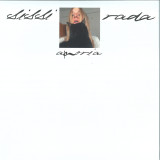
Sissi Rada's humble manifestations of the miracle of life, the troubles of love, the thoughts that span through a human mind while performing simple tasks, educated by her love and natural inclination to poetry, read like small vignettes, or marginalia notes on a diary that is of constant flux.
Recorded, mixed and produced by Sissi alone, in her Athens’ home, using a spartan but powerful instrumentation of harp, a Prophet synthesizer, and first and foremost her intimate and enchanting voice, Aporia’ stands out with its simplicity and familiarity, like a page out of a diary, shared with a blush and a witty smile."
Part 3 of tech house pioneer Terry Francis’ All & All compilation of seminal UK Acid tracks is here.
Of the highest quality, these tracks are now officially remastered and reissued for this exclusive release, so no more eye watering Discogs prices.
A very rare chance to get Terry’s most sought after tracks that won’t be reissued again anytime soon.
Life might be a predominantly linear affair, but when lived right, it’s nevertheless a turbulent experience. It’s a system of trial and error, ebb and flow, order and chaos, action and reaction. And paradoxically, this system somehow still feels balanced amid all this turmoil. In fact, the same can be said about Keope’s second longplayer for Bigamo. Easily.
Keope might be a duo consisting of Marcus Rossknecht and Toni Bruna, but they actually sound like a collective of rather nomadic - and heavily gifted - musicians on their ever-present quest to reach different musical spheres. Everything is in motion, everything is in constant flux. Everything, everywhere, all at once. Their previous record “Triangulo“ already provided the audience an idea of their elaborate rhythmic vocabulary, but it’s the cryptically titled “Flikka Flokka“, which sees their multilayered compositions bloom into a fully-formed, new musical Esperanto.
You can immediately sense that Keope must be a phenomenal live act because the twelve tracks on “Flikka Flokka“ sound as if they were born from endless jam sessions fueled by a whole variety of influences. As a result, the work of Rossknecht and Bruna presents itself as a prime example of sound in motion that responds solely to its very own pulse by taking the aforementioned influences and making them completely their own. Now, let’s dance!
Soom T aka “The Raggamuffin Queen” will release her sixth studio album “The Louder The Better” on October 13, 2023. A combination of live band studio recordings and digital compositions, it took only 3 years to fully realize from the very first live band recordings in Brazil during the 2020 pandemic to its release this year. Entirely self-produced with her own music label Renegade Masters with Kunta as executive producer, Soom T called on her most trusted collaborators to produce this new Reggae/Dub gem, and it’s sunnier than ever.
“Path of the Wanderer” with its poignant and deeply emotive vocal, irresistible rolling bass line and driving rhythm was composed by French production maestro Tom Fire with “Ezekiel’s Vision” and “Michael” being the fruits of live band recordings at Pangea Studios in Sao Paolo Brazil under the skilled direction of Mauro Rabello.
“Fly My Bird” and sunny pop anthem “Good Will Come” are original compositions by Terry Vibes out of the USA while “Bad Road”,“Emergency” and “Normal People” were stylised digital productions by France’s own Dr Bud reminiscing on Soom T’s first love of digital. Additional synths were added by executive producer Kunta and studio partner Green Teddy of Highly Seen.
“Prophets”, “Free the Man”, “There is love”, “No worries” and “Don’t Make Me” composed and curated by Christian Cowlin who is the live sound engineer for The Wailers USA, takes the journey into a more roots direction with some solid harmonies and flashbacks to a bygone era. Many of the instruments on these songs were performed by Mr Cowlin himself among other seasoned musicians and recorded at his studio in the UK. Led by her great respect for activists whose aims and efforts are rooted in making society movw forward with dignity and honour, Soom T denounces the incarceration of businessman/politician Schaeffer Cox, unjust in her eyes and tens of thousands of others globally, in a call to “Free the Man”.
If “The Louder The Better” has definite roots influences, “Like a Dog” composed by French label and music production studio Irie Ites and “Walk the Earth” performed by legendary British drum & bass duo Mafia & Fluxy, added some more digital delight alongside a sweet roots trip for the listener to indulge in a medley soup of varying influences throughout this album, mixed by Mista Maff and mastered by Simon Capony at Basalte Studio.
« Hail to the Watchman », an easy favourite for more traditional reggae lovers was composed by Kunta in conjunction with Green Teddy, both of whom contributed to the production of the 2017 ‘Arch’ LP.
Finally, with this new reggae album, Soom T sticks to what is closest to her heart covering a multitude of topics from the corrupt state of the world, to the emptiness of politics and the urgent need to awaken to the reality of the condition of society.
Behind the need to inform and urge society moving forward, « The Louder The Better » delivers a positive and inspiring message, led by melodies and vocals at the crossroads of genres, that fans will love to listen to at any time.
See you on October 13, 2023 to discover this new opus by Soom T.
More than a decade after the release of ´Land Lines', the mythical Humboldt County, California based duo of Brian Pyle and Merrick McKinlay reappears seemingly out of nowhere with 'Atheistsaregods'. With past releases on such cult-like labels as Root Strata, Weird Forest, Blackest Rainbow or Digitalis, Starving Weirdos were an indelible part of a sprawling and loose network of artists in Northern America whose DIY work ethic and extreme activity revolved around shoestring-budget constant touring, numerous limited editions on CDR, tape and vinyl and a relentless drive to push the boundaries of genre.
Out of that cauldron, Starving Weirdos stood out as one of the most persistent and visionary acts, developing a mind altering body of work that went from warm soundscapes through droney digressions, freeform improvisation and raucous noise summoned from a myriad of instrumentation and low budget processing - vocals, keyboards, violin, flute, percussion and an assortment of less identifiable sound sources. 10 years on their legacy remains a timeless and wildly under-appreciated one, but hopefully this new album will shine a light on their idiosyncratic approach. As time itself was never a constraint. This is music suspended outside of it.
Right from the start with the echoing percussion, dissonant keys and processed vocals of 'Haiku Nagasaki', 'Atheistsaregods' draws a continuous flux of psychedelic elevation that goes from the gloomy electronic motifs not unlike the early Cluster vibes of 'Invocation' into the dank percussive maze of the appropriately titled 'Barulho do Samba'. The self titled track induces a sense of post-apocalyptic vertigo via hallucinatory scraps of voice, suspended synth tones and reverberating field recordings, connecting into the droney mystics of 'Dudukahar (Reed Prayer)'. Coming full circle, 'For Vinny' brings back the echoing percussion amidst hypnotic cello lines until it drifts off into the unknown. With the same palpable sense of urgency, Starving Weirdos feel as vital as ever. And even if we didn't realize it we were in need of them. Welcome back.