'Bruno & The Birds' is an album by Jullian Gomes that dives into the depths of the internal battles we face and the courage required to break free from our comfort zones. With forward thinking production and introspective messages in the music, the album takes listeners on a transformative journey of self-discovery. Throughout the album, Jullian Gomes skilfully weaves a narrative centred around the character, Bruno, who serves as a metaphor for the struggles and conflicts we encounter within ourselves. The songs delve into the inner demons that individuals face, representing the personal challenges and doubts that affect us all. The album is thought-provoking and emotive, resonating with the universal themes of self-doubt, fear, and the quest for personal growth.
With its dynamic soundscapes and diverse musical influences, 'Bruno & The Bird' invites listeners to embark on their own introspective voyage. Jullian Gomes combines elements of electronic soul and jazz, and pushes the ideas of traditional house music, creating a rich and immersive sonic experience.
The album features the likes of Jordan Arts, Sio, Kuniyuki Takahashi, Sabrina Chyld, Dwson, NLite, Robin Fassie & KJM Cornetist which all add their unique touch to this soul-stirring album.
Search:flyin
'The John Carter and Bobby Bradford Quartet/Quintet were critical to the progressive jazz movement around Los Angeles in the late 60s alongside the likes of Horace Tapscott. Both hailed from the Watts area and trumpeter, Bradford played with a woodshedding Ornette Coleman for two years in the early 60s when the legendary free movement leader decided not to record for a while but wanted to hone his trademark sound on the saxophone. Multi-reed player, Carter also worked with Coleman who brought them together to lead their own band.
Their first outing on Flying Dutchman was “Flight For Four” as the Carter Bradford Quartet that was released in 1969. This is the second album they recorded where Carter and Bradford were supported by Tom Williamson (bass), Buzz Freeman (drums) and another uncredited bass player on four extended improvisations – ‘The Sunday Afternoon Jazz Blues Society’, ‘The Eye Of The Storm’, ‘Loneliness’ and ‘Encounter’.'
'This is an unusual album in the catalogue of Ornette Coleman, and one that passes by most critics. It is however a unique insight into the ‘free jazz’ pioneer’s way of working in the early 70s. Recorded at his large loft space in downtown New York which inspired a whole scene of experimental musicians who were locked out of playing established venues.
The music is a romp showing Ornette playing trumpet as well as saxophone. His quartet which featured second saxophonist Dewey Redman alongside long term cohorts Ed Blackwell and Charlie Haden prove to be the perfect foil for this short set.
This is the first vinyl reissue in nearly 20 years and utilises a fresh 24/96 transfer from the original production master.'
Colored Repress!
'DEEP TRAX VOLUME ONE' is a fine selection of 4 edited, remixed and previously unreleased Trax from the 90s.
The EP starts with a re-dub of the classic 'I Need A Rhythm' and gets you flying with warm 808 beats and minimal jazzy riffs.
The second track on the A-side “Reign Of Swing” comes with a deep, warm bass, dope keys and lots of shuffle!
B1 kicks out the subwoofers with 'All I've Got' and makes the crowd scream - Uuhhhh!
The E.P. ends with 'Swing Ting', a brilliant track that takes you into other dimensions with a flying jazzy flute solo!
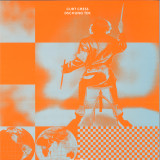
From Ōtautahi, Aotearoa (Christchurch, New Zealand) comes a collaboration between James Barrett, best known for his work in techno on Perc Trax, Mord, South London Analogue Material, and KAOS/OAKS as Keepsakes, and Henry Nicol, a founder of industrial-freak outfit Loghorn Breed who’s work as a member of Dog Power saw his music signed to legendary Aotearoa indie label Flying Nun. As CUT 989 the two bring their respective musical worlds in to collision,
producing a debut EP representing a mutated hybrid of industrial, post-punk, techno, and experimental music tied together with cynical lyricism musing on anxiety, human nature and the crumbling state of politics and society in the modern era.
The A1 starts with bass driven drum hits and rolling metallic percussion combine with booming vocals and looping dark synth melodies in ‘The Dominant Trough’. The A2 follows with ‘Castle Of Doubt’, where sombre atmospheres and hand-drum rhythms come together with melancholy Lyra-8 refrains and verbed-out vocals to complete the first side of the record.
‘TPOTT’ launches the flip and picks up the energy with gated reverb toms, weighty kick drums, heavy bass sweeps and vocals ranging from enraged screaming to faint whispers in a driving slab of electronic bitterness. The B2 closes this debut offering with ‘Skin’ – a mournful bass-heavy piece featuring tribalistic drumming, experimental percussions, gloomy synth work and lyrics pondering political betrayal.
Because the 8th time is the charm.
For our 008 interpret teams up with with one of Montreal's finest jazz imprints “Ensoul records”.
This collaboration presents a four remixes record featuring songs from Dominique fils aime's album “Nameless”.
For the A1 interpret's founder Ohm Hourani revisits “Birds” with his own signature of walking bass and shuffle drums. Sharing this side, Ben Nevile inserts a healthy dose of funk to “Grow mama grow” with a remix that visits a past era with a flavour of modern twist.
The B side commences with a dance floor roller for the title song “Nameless” by Paris's Pepeno and shake expert Ben Vedren.
Closing this four tracker is Montreal's dynamic duo “Flabbergast”. Vincent Lemieux & Guillaume Coutu Dumonts work their own charm on “Birds” pairing the voice with a deep groove accompanied by warm keys.
Bobby's 2019 tour ended in New York City and he had two days off before flying home to Finland. Leon invited him to the Diamond Mine to record some music. Bobby had been talking about wanting to stretch out lyrically and write about more esoteric subject matter, Leon was game. They recorded "Reasons" in one session which put the chemistry between the two on the world stage and sparked the idea of doing a full length album together. More than halfway through the recording process, they have decided to treat us to another two-sider of the new material. On the A side, "Whatcha Know" Bobby explores death and the human experience, putting his philosophical ponderings into his music. Michels' production and overall ethos is the perfect compliment to Bobby's desire to stretch out his sound. EMA provides a gorgeous backing track that compliments Bobby's style and simultaneously broadens its scope. The B side "Losing It" is a dramatic and moving number that Bobby sings in Spanish and English. A gorgeous guitar riff is countered with eerie sound effects that crescendo when the drums come in. Bobby professes he's "Losing It" over a love too strong and El Michels Affair's production turns the whole affair into a saga that thunders through speakers.
We’re starved for two-sided 12”s in the world of ambient music, but Chris Madak aka. Bee Mask has refreshingly graced us with one this week.
It should be said that there’s Skee Mask and then there’s Bee Mask; the latter is far more unsung, undeservingly so. Madak’s music is abstract and cerebral enough to have lent him credo enough to have released on the likes of Weird Forest, Spectrum Spools and Room40.
But this latest reissue, ‘Versailles Is Not Too Large Or Infinity Too Long’, hears him plunge the aethereal heights for the US label Unifactor. Originally released on cassette on Chondritic Sound in 2008, these pieces deserve the renewed attention and the fresh laying to wax, since they’re not “regular ole” ambient cuts in the slightest.
Unafraid of indulging the high end freqs, Bee Mask fleshes out a mood of uncertain, urgent bliss - sizzling, crunching and soaring the drone, as if its maker were a modern Icarus flying too close to the sun.
Recent times have seen After Caposile become one of the most sought after locations on the underground circuit, and this reflects in their acclaimed record label - Caposile Music. This Spring they have prepared a stellar release of firm favourites from the club. “The Sound Of Garden” release will come in two parts, both on 12” and will include a heavy hitting lineup such as Romanian duo Super Moon (Arapu & Priku), family members and residents Maggio, Francesco Maddalena, and Yaar Kü, Silat Beksi, Mihai Pol, Giuliano Lomonte and Sublee. A perfect blend of club affiliates, coming together to provide the soundtrack from that famous garden.
Volume One kicks off with the dynamite combination of Arapu & Priku under their Super Moon moniker. Hypnotic movements set a serious tone for the journey ahead, mysterious elements simmering throughout “I Can Help”. Dreamy meets dance floor in Maggio’s aptly named “Just Landed” floating synths calmly lift you, but you remain grounded by the killer elasticated groove. After delivering the previous EP on the label Yaar Kü returns with a stripped back encounter, his unique touch shining bright. Silat Beksi provides a certain sunshine jam with his track “Jaho”, you immediately feel the warmer times are coming, after parties in the sun.
Landing just a few weeks after is the equally special Volume Two, packed full of ammo for the tastemakers. Mihai Pol inaugurates proceedings with “Sugar Rush”, the 7 minute quest boasts shimmering synths and a sweet bass line to match. Francesco Maddalena ups the ante with his garage influenced “Breath Of Air”, an energy boost for the peak times of the party. Giuliano Lomonte’s “More Time” rumbles from the get go, begging to be played on a high quality system to allow each of the intricate details to speak for themselves. Last but not least is Sublee, his “Day Six” track is a chugging body of work, blurring the lines between house and minimal with a raw edge.
With a huge European tour on the table, and a release of this stature After Caposile are flying high at the moment with an indispensable team behind the project. Expanding on their party paradise location, but simultaneously propelling innovative underground sounds under the Caposile Music offshoot. Both Volume One and Two will land this May, right on cue for the summer time madness.
Just mention 'Terrace' in a techno environment and soon someone else will shout "pioneer!" As Florence, Terrace and (half of) Acid Junkies, Brabant-based producer Stefan Robbers was at the flying centre of Dutch techno in the early 1990s.
Perks is Robbers' fifth EP for Delsin in a relatively short time. On the one hand, it contains his signature sound: melancholic melodies and complex drum patterns wrapped in outstanding production; on the other, Perks surprises on many fronts. For starters, the overall vibe is a lot more sombre, the chosen route much more experimental. Take 'Model A', a dreamy, 12 minute-long meandering epic that nods to the kraut-infused electronica of Tangerine Dream and Cluster but at the same time proudly carries the techno DNA. A fascinating return of a true pioneer.
Croatian DJ & producer heavyweight Insolate debuts on Luke Slater's legendary Mote-Evolver imprint with a massive four-tracker of pure bred techno ready for the dance floor. After leaving her signature on highly respected labels such as DJ Deep's Deeply Rooted, Developer's Modularz, Ben Sim's Symbolism as well as her Out Of Place imprint which she operates along with Volster, she now delivers 'Push' a finely crafted EP of peak time material. Opening the A side, fierce workout 'Outer Bass' is showcasing a sinister driving energy that is followed by the raw frenetic groover title track 'Push'. On the flip side 'Blow' is a trippy, no-compromise cut, while closing, classy atmospheric track 'Desire' finishes off the EP with its effortless soulful touch and elegant, melodic synth pads flying by.
Recent times have seen After Caposile become one of the most sought after locations on the underground circuit, and this reflects in their acclaimed record label - Caposile Music. This Spring they have prepared a stellar release of firm favourites from the club. “The Sound
of Garden” release will come in two parts, both on 12” and will include a heavy hitting lineup such as Romanian duo Super Moon (Arapu & Priku), family members and residents Maggio, Francesco Maddalena, and Yaar Kü, Silat Beksi, Mihai Pol, Giuliano Lomonte and Sublee. A perfect blend of club affiliates, coming together to provide the soundtrack from that famous garden.
Volume One kicks off with the dynamite combination of Arapu & Priku under their Super Moon moniker. Hypnotic movements set a serious tone for the journey ahead, mysterious elements simmering throughout “I Can Help”. Dreamy meets dance floor in Maggio’s aptly named “Just Landed” floating synths calmly lift you, but you remain grounded by the killer elasticated groove. After delivering the previous EP on the label Yaar Kü returns with a stripped back encounter, his unique touch shining bright. Silat Beksi provides a certain sunshine jam with his track “Jaho”, you immediately feel the warmer times are coming, after parties in the sun.
Landing just a few weeks after is the equally special Volume Two, packed full of ammo for the tastemakers. Mihai Pol inaugurates proceedings with “Sugar Rush”, the 7 minute quest boasts shimmering synths and a sweet bass line to match. Francesco Maddalena ups the ante with his garage influenced “Breath Of Air”, an energy boost for the peak times of the party. Giuliano Lomonte’s “More Time” rumbles from the get go, begging to be played on a high quality system to allow each of the intricate details to speak for themselves. Last but not least is Sublee, his “Day Six” track is a chugging body of work, blurring the lines between house and minimal with a raw edge.
With a huge European tour on the table, and a release of this stature After Caposile are flying high at the moment with an indispensable team behind the project. Expanding on their party paradise location, but simultaneously propelling innovative underground sounds under the Caposile Music offshoot. Both Volume One and Two will land this May, right on cue for the summer time madness.
One of the greatest soul voices working in the US today, Billy Valentine's latest release, first plotted out in the summer of 2020, sees the artist responding to the chaos of a global pandemic and the seismic impact of George Floyd's murder via legendary works from Curtis Mayfield, Gil Scot Heron and Pharaoh Sanders. In collaboration with acclaimed producer and songwriter, Bob Thiele Jr. (son of Flying Dutchman founder, Bob Thiele), Valentine's rich, velvety vocals breathe new life into these already-powerful tracks, bringing them into the contemporary political context with renewed urgency. Released on Acid Jazz in partnership with renowned US label Flying Dutchman, Valentine's latest output marks the first new music from the label since the '70s - a momentous return for a keystone tastemaker of the American jazz world.
- A1: Green Baize “Switch Back”
- A2: Night Communication “Let’s Face The Music”
- B1: Mental Detector ”Get Up”
- B2: More Heavy Soul "Load In Total Darkness”
- B3: Ivan Iacobucci "Melt The Sun”
- C1: Sima “Give You Myself (Ricky Montanari Ethos Mama Remix)”
- C2: Ricky Montanari & Davide Ruberto “London (Original Mix)”
- D1: Workin’ Happily ”Make My Move (Tira Dub)”
- D2: Sound Set ”So In Love With You (Club Mix)
Following up on the success of House Of Riviera released in 2019, Mona Musique releases House Of Riviera Volume 2 curated by label head Nick V, a compilation that pays homage to forgotten gems of the classic Italian House scene, circa 1991-1994. 9 tracks from the artists and record labels that were central to this seminal era of House music, including two never released cuts from Ricky Montanari, Davide Ruberto and Ivan Iacobucci.
In the early 1990s, Italy hosted one of the most prolific scenes in the burgeoning world of House music. Whilst the majority of Europe was only just beginning to digest the arrival of this new musical genre born in the US, Italian clubs, DJs and labels were hot on the heels of their counterparts in the already established scenes of New York and London. The clubs of the Adriatic coast, also known as the Italian Riviera, were full every weekend, hosting the major US and UK Djs of the time, but also seasoned resident DJs that had been honing their trade since the early 80s. By the early 90s, Italian House music was regularly exported around the world with labels such as UMM, MBG, Flying, Palmares, DFC, Oversky, Zippy, D:Vision, Irma - and its sublabels Antima and Calypso, releasing tracks inspired by the original New York House and Garage sound, but with a very different, unique and emotional take. This was the specific aesthetic that was to become the House sound of the Riviera, the soundtrack to the golden era of Italian House music.
With all releases between 1992 and 1994, House Of Riviera Vol. 2 unites a selection of 9 tracks that encapsulates the atmosphere, the energy and creativity that reigned during that era. Including 2 previously unreleased tracks from Ricky Montanari and Davide Ruberto, and Ivan Iacobucci, both in the vaults since 1992, the compilation spans the different shades of the genre : from classic deep vocal house by Ricky Montanari and Sound Set, to the more dubbier late night dance floor cuts by Workin’ Happily and Night Communication, with Mental Detector and More Heavy Soul bringing some well chosen disco samples to their contributions, without forgetting the characteristic deep Italian dream house style by Green Baize. Artists featured are iconic producers and DJs from the day : Ricky Montanari & Davide Ruberto, Alex Neri & Marco Baroni, Ivan Iacobucci, Workin’ Happily and More Heavy Soul.
- A1: Chris Rock (Intro)
- A2: Life Is What You Make It
- A3: Live My Life (Feat Ashtin Martin)
- A4: Faithful (Feat Westside Gunn)
- A5: The Rear View
- A6: Godly (Feat Ashtin Martin)
- A7: Neva Settle (Feat Ashtin Martin & Dre)
- B1: Ouuu (Feat Stacy Epps)
- B2: Smoke Sumthin
- B3: The Wrong Thing (Feat Ashtin Martin)
- B4: Flying High (Feat Posdnuos)
- B5: The Man's Swift
- B6: The Scorn (Feat Kp)
- B7: Inertia
Fresh off the heels of 2021’s collaborative LP, Gotham from Talib Kweli and Diamond D, the BX icon returns with his sixth studio album, The Rear View. Comprised of 13 tracks, the album proves that without a shadow of a doubt, Diamond D’s reputation as the best producer on the mic remains unrivaled.
Never one to bogart the spotlight, Diamond is joined by a supporting cast of guest appearances that include Westside Gunn, Dre (Cool & Dre), Posdnuos (De La Soul), Ashtin Martin, Stacy Epps and KP, with a momentous introduction from the great Chris Rock. To boot, Diamond adds to the unblemished production value with additional board work from the likes of Nottz, Focus, D.R.U.G.S. Beats and Mr. Brady.
"I took my time crafting this LP to make sure every track could stand on its own as a possible single,” says Diamond. “Every feature and track was carefully selected from an elite group of artists and producers that I had the honor of working with. The end result is top tier bar work over pristine production,” he concludes.
Another one from the fruitful collaboration with LA's highly regarded Patrick Houchen aka Shakaman. After Shakeena's “I bet you” 12" re-issue flying off the shelves, we deepen the exploration within Shakaman's treasure chest of Reggae/Dub gems with Shakeena's first and last album on Majicaa Records. Originally released in 1987, this album is a proper act of musical generosity, not so easy to point out the “hit” track here – clearly a case of all killer no filler. Unlike too many albums where the format length sadly gets the best of the artists' work, rest assured with this one you can play from the beginning to end and you'll only have to come back to flip it. The professional execution of what is hands down an ensemble of highly seasoned musicians sets the tone for the dreamy lyrics and arrangements to unravel. Besides expected reggae rhythms, Shakaman brings in other influences with subtle electro/freestyle hints that might have been hard to ignore in LA at the time. New remastered version sounding especially big and cozy on the low end. Can't go wrong!
Dedicated to the dancefloor but completely untethered to traditional notions of genre, the music enthusiastically pulls from grime, jungle, techno, hardcore, footwork and other less-defined areas of the bass continuum, its chest-rattling thumps and fast-flying percussion offering a concentrated dose of instant energy.
London-based Bread And Butter Recordings is back to serving the goods, this time with a tasty number by the always-in-shape Silat Beksi. The entitled "Special Edition" EP is the first-ever solo EP on the label, and follows four successful VA compilations that have hosted Sublee,DoubtingThomas,Costin Rp, Herck, Miroloja, Macarie, and Direkt to name a few.
Opening the games, "Just Play It!" hits hard and clean with its crispy percussions, gnarly sounds, and hefty short pads that really give a floating touch. As soon as the track goes, some bongos and extra hi-hats appear, all together into a delightful ever-evolving groove.
A2 "Hero Suit" features fluffy chords that get reverberated throughout the track, flying over a sexy and engaging bassline and tight drum patterns. Fairytale synths and overprocessed vocals join the symphony, making this one a lovely dancefloor roller.
Closing the BR005, "Jungle Meditation" sticks to its name, with the Ukrainian artist relying on his signature groovy signature sound, which this time focuses on more hypnotic moods that interlock sharply in an unpredictable or volatile manner. Proper B-side, late-night affairs.
The next two courses - BR006 & BR007 - are on the way and they will not stop surprising you. A unique and delicious sound for refined palates.
This man is unstoppable, Retromigration with all the hits and more - lining up another juicy slice of genius from the depths of Dam for wewillalwaysbealovesong. Showcasing his clear love cross genres, ‘Secret Of A Pimp’ has it all, from dusty jazz samples to R&B licks and delectable basslines, all MPC crunched for good measure. Jimpster then steps up with a darker, club focused, heads down remix.
On the B, ‘Flying Lotus’ hits, an endorphin inducing jazzed up, summertime house heater, before Franc Spangler takes things down slow, with sultry hazed out downtempo trip.
- A1: Strie - Proun
- A2: Strie - Man & The Cosmos Around
- A3: Strie - Untitled 1956
- A4: Strie - The Steamer Odin
- A5: Strie - Chance & Order
- B1: Strie - Foxes
- B2: Strie - Aeroplane Flying
- B3: Strie - Vogel Wolke
- B4: Strie - Enigma Of The Day
- C1: Scanner - Reconsider Chance
- C2: Scanner - Nuorp
- C3: Scanner - The Earthbound Fox
- C4: Scanner - Odin Ready
- D1: Scanner - Enigma Typher
- D2: Scanner - Untilt
- D3: Scanner - Woman & The Cosmos
Polish composer Olga Wojciechowska and veteran electronic producer Robin Rimbaud aka Scanner, combine on A Strangely Isolated Place to revisit a beloved Strie album - Olga's more electronic and experimental alias. With previous releases on Serein and Time Released Sound as Strie, Olga Wojciechowska's 'Struktura' was released in 2015 to a limited audience due to its physical-only format.
As Olga's work becomes increasingly more coveted, through her more recent releases on A Strangely Isolated Place (Unseen Traces & Infinite Distances), and with Struktura praised as one of her finest albums to date, the discussion to breathe new life into the album resulted in a unique pairing with Scanner, an electronic music producer and multimedia artist responsible for some of the most defining works of the genre since the early 1990s.
Blurring the line between harmony and dissonance, Struktura's original recordings paint an eerie, haunting and beautiful picture, conceptualized around abstract art, with intricacies and mystery abound. Here, Strie's original recordings remain untouched, albeit lovingly remastered by Rafael Anton Irisarri, and it is left to Scanner to provide further interpretations of Olga's original recordings. Scanner productions can typically traverse a myriad of styles, but here, Robin took a primarily live-hardware approach to the remixes, allowing the rawness of his recordings to add story and depth. Recorded in one take, with no overdubs, the reinterpretations strip the melodies and textures to their original essence, bringing an entirely analog element to Olga's intrinsically detailed originals. Featuring artwork by Rep Ringel and mastered by Rafael Anton Irisarri, Struktura Revisited will be available on Gatefold 2LP in a black/grey half-and-half vinyl, with 6x6" soft-touch heavy art card.
Baby Buddha is David Javelosa and musical partner Charles Hornaday playing instruments and providing their own whacked-out vocals. Baby Buddha really was less of a band than a project; a side project in fact, for some members of another group, Los Microwaves. Baby Buddha would eventually record and release an album, 1981's provocatively-titled Music for Teenage Sex on Robbie Fields' L.A.-based Posh Boy label.
Happily, the project's guiding creative light, David Javelosa has recently seen to a vinyl reissue of the now-40-year-old record, mystifyingly retitled Music for Teenage Sects. Definitely among the stranger releases of the new wave era, Music for Teenage Sex/Sects could perhaps only have been created when and where it was made. But on the occasion of its 40th anniversary, the music sounds as weirdly wonderful as ever. "We Are Not" sounds like Human League stuck in a car with The Residents. And their cover of "All Shook Up" sounds like a musical kin to those inscrutable eyeball guys too; it wouldn't be out of place on Meet the Residents. "Little Things" is a house-of-mirrors, scary track, with spoken-word vocals by Los Microwaves' Meg Brazill and label head Fields.
The album cover is slightly different as well: it displays a bedroom scene like the original LP, but with the young female model absent. The new release (on Javelosa's own Hyperspace Communications label) is pressed on beautiful translucent blue vinyl and comes in a gatefold sleeve with a lively collage of photos, buttons, gig posters. Limited to 500 copies.This playfully titled release features David Javelosa (on synth and vocals) along with Meg Brazill (on bass and vocals) plus drummer Todd "Rosa" Rosencrans. Side One features five studio tracks, none of which were included on the band's 1981 Posh Boy LP, Life After Breakfast. Three of these tracks were recorded in '82; there's no information regarding the provenance of the other two songs. The records' second side collects five live recordings, capturing Los Microwaves onstage in New York City (The Peppermint Lounge) and Boston as well as at San Francisco's own I-Beam, a venue that often played host to the band. Those tracks date form roughly the same ear, 1980-83. Sonically the songs variously recall Blondie, Flying Lizards, Gang of Four and a far less dour Human League. Importantly, the band rocks, even when it's employing a spare drum kit, solid but elemental bass, and monophonic analog synthesizers. The stripped down aesthetics of the group – necessitated by its minimalist instrumental approach – are nonetheless thrilling. Even if you weren't there in 1980, this'll take you back.
- A1: Sarah Vaughan - Inner City Blues
- A2: Buddy Terry - Quiet Afternoon
- B1: Blue Mitchell - Last Tango In Paris
- B2: Lamont Johnson - M'bassa
- B3: Prophecy - Betcha Can't Guess My Sign
- B4: Dave Hubbard - Family Affair
- C1: Sugar Billy - Super Duper Love (Part 1)
- C2: John White - Right Off
- C3: Mike Longo - Matrix
- D1: Barry Miles - Little Heart Of Pieces
- D2: Johnny Coles - Betty's Bossa
- D3: Pete Yellin - It's The Right Thing
Wewantsounds continues its collaboration with Bob Shad's venerable
jazz label Mainstream Records, and present a selection of 12 turntable friendly tracks recorded between 1971 and 1975 and showcasing the
label's superb blend of Spiritual Jazz, Funk and Soul by the likes of Buddy Terry, Sarah Vaughan, LaMont Johnson and Johnny Coles.
Most of the tracks are released on vinyl for the first time since their original release in the early 70s. The 2-LP set comes with gatefold sleeve featuring never seen photos from the Mainstream vaults and new liner notes by UK journalist Paul Bowler.
Mainstream Records is one of the key independent jazz labels of the early 70s, together with Flying Dutchman, Strata East, CTI and Black Jazz. Founded by legendary label man Bob Shad (who had been head of A&R at Mercury Records and set EmArcy in the 50s), the label concentrated on Psychedelia in the 60s before switching back to Shad's jazz roots in the early 70s, signing a new crop of jazzmen fed on John Coltrane and Miles' electric experiments. Thus was born the
cult Mainstream "300 series" with its distinctive artwork and outstanding music from which this selection is largely drawn.
Giving a chance to many young jazz players and a few old friends, Shad recorded some of the most exciting jazz of the early 70s, mixing spiritual influences with funk and soul. Mainstream Records has a lot more exciting music in the vaults and 'Mainstream Funk' is just the tip of the iceberg serving as a timely reminder that Bob Shad's taste as a producer and A&R man was one of the finest on the scene.
HDSN is an artist of distinct talent. Even he´s still flying under the radar of the broader audience chances are high that you came across his musical output that is singularly creative. His work not attached to any trends. Instead, he operates within a deeply personal sphere, working influence from experiences spanning his lifetime and old-skool records that inspire him. He made his name with balmy house thumpers carried out over twelve instalments on NBAST for the best part of more than five years now. So it´s no wonder that he follows up with a beefy sequel to his previous released joint “For My People” a release that did connect as closely with people’s hearts as it does with their feet in the club. “I House You But Love” marks another fruitful EP for the producer. A record that feels like he’s just cracking the next piece of the puzzle. By the time you get the opportunity to experience these tracks live, there’s no doubt they will pull you into the get down groove. That is to say: NBASTWAX013 is vivid and it will move you. Grab your copy #datsoulthang
Mischa Blanos - acoustic piano, electric piano, synthesizers.
Khori Ander - bass clarinet, clarinet.
Cezar Lazăr - electronics and sound manipulation on track 7.
"The seven stories unfolded on this album, debugged by a
fabulous clarinet technique and a wonderful piano craft, narrate
about the Universe, about the Chaos and also about the miracle
of the musical sound.
These imaginative stories, made with talent by musicians
Mischa Blanos & Khori Ander, talk about a special attitude
towards a distinguished estate of mind, a unique colour of the
space around us, devoted to a spirit of meditation, introspection
on vast temporal surfaces, each piece representing facets of the
same unique and unrepeatable algorithm of an improvisational
euphonious Universe.
By developing ideas in the process Cezar Lazar engineering
craftsmanship reveals the outcome of a thoughtful recording
and duo's synergy, refining and defying predictable musical
territories."
Dr. Irina Hasnas
Composer, Musicologist , Journalist and Professor
Recorded, engineered, mixed and produced by Cezar Lazăr
Assistant engineer Stefan Mihăilescu
Vinyl & Digital master Cezar Lazăr
Lacquer Cut Mike Grinser @ Manmade Mastering, Berlin
Recorded in 2019 @ Understand Studios, Bucharest
- A1: Litfiba – Yassassin
- A2: Neon – Lobotomy
- A3: Frigidaire Tango – Recall
- B1: Gerry And The Holograms – Gerry & The Holograms
- B2: The Sisters Of Mercy – Body Electric
- B3: Dark Day – No, Nothing, Never
- B4: Crash Course In Science – Flying Turns
- C1: Gaznevada – I C. Love Affair
- C2: Alexander Robotnick – Dance Boy Dance
- C3: My Mine – Hypnotic Tango (Original 7" Version)
- D1: Chris & Cosey – Dancing Ghost
- D2: Fad Gadget – Lady Shave
- D3: The Neon Judgement – The Fashion Party
- D4: The Normal – Warm Leatherette
Lapalux kehrt für sein viertes Album zu Flying Lotus' Brainfeeder-Label zurück! Während es beim Vorgängeralbum „Ruinism“ 2017 um klangliche Wrackteile und Dekonstruktionen ging, ging Howard mit „Amnioverse“ einen anderen Weg, indem er jeden Track um einen Ausschnitt gesprochenen Wortes von „Freund*innen, Liebhaber*innen und Ex-Partner*innen“ konstruierte und die Musik darum baute.
Die erste Inspiration für das Album kam von einem Foto von James Turrells „Twilight Epiphany Skyspace“ Installation in Texas. „Ich habe es mir drei Jahre lang jeden Tag angesehen, während ich diese Platte gemacht habe.“, erklärt Howard, „die Leute sitzen in einem Wartezimmer, das in einem violetten Farbton beleuchtet ist, und schauen durch ein rechteckiges Loch in der Decke in den dunklen Nachthimmel.
Das Bild hat so viel Tiefe und bedeutet mir so viel … es scheint, als wären wir alle in diesem Wartezimmer und warten darauf, irgendwo zu sein oder irgendwo hinzugehen. Das ist es, was ich versucht habe, mit dieser Platte abzubilden.“
Comet presents the first release from its new Disco Highlife series, featuring remastered originals by Ghanaian legends Ebo Taylor & Pat Thomas and disco reedits by LeonxLeon and Leo Nanjo.
Founder of Comet Records, Eric Trosset, started working with those great heroes of West African music, back in 2010. Taking on the role of manager/publisher, Comet teamed up with Strut Records
and musician/producer Ben Abarbanel Wolff to revive Ebo Taylor‘s international career with a string of album releases: Love & Death, Appia Kwa Bridge and Life Stories. In 2014, he collaborated with
Pat Thomas & The Kwashibu Area Band on a new album, gathering together the old ‘pals’ (Ebo Taylor, Pat Thomas, Tony Allen) in producer Kwame Yeboah’s studio in Accra.
It is with great pleasure that Comet launches this new series. Let's make this beautiful and timeless music the soundtrack to an unforgettable summer!
On side A, comes “Enye Woa” by Pat Thomas, originally released in 1988 on Nakase Records and taken from the album Me Do Wiase. It’s killer disco cut, and as innovative a piece of highlife as it
was 30 years ago. Paris-based producer LeonxLeon has been cooking up songs in his Parisian home-studio since 2013. He did a remarkable remix of Cerrone's "Funk Makossa" and more recently released his new Rokanbo EP on Cracki Records. His remix of “Enye Woa” is a classy modern disco cut with funky bass and spacey synths.
On side B is “Atwer Abroba” by Ebo Taylor, a stand out up-tempo track from the album Twer Nyame, originally released in 1978 on Philips West African Records. Tokyo-based multi
instrumentalist/producer/arranger Leo Nanjo formed the first Japanese afrobeat group, Kingdom
Afrorocks. Since the band broke up in 2014, Leo has been producing and arranging music with various collaborations, such as DJ Muro, Pushim and Misia. This is a trippy afro-futurist, broken
beat reedit with highlife grooves flying to deep space
we're very happy to announce the debut release of best kept secret artist in san francisco. dmitri aka slope114 is a good friend of kink as both of them are modular synth mania... original version is old school chicago house sound with very emotional vocal,it reminds us how house music is musical.... kink remix is just bomb.2018 ver is for big room and another one is for all around. enjoy!
repressed !
RFBCOLOURS 002 bring L'Atelier on board. This pair from Amsterdam bring you a 4 track EP with a digi only bonus. It starts off with Again, which hits that great sample hard and gets the party started on a disco vibe with a house twist. Then theres XTC which carries on where the A1 left off. On the flip we see a serious piano workout on top of a a grooving drum arragement. To finish off the vinyl package we see Times Are Ruff take the remix on a deeper tip with some seriously crunchy basslines and rolling groove. Then if that wasnt enough theres a digital bonus that will warm up any willing club room.
Feedback:
Telonius (Gomma)
'thanks nice one'
Laurin Fedora (Sleazy McQueen (Morris Audio / Paper Recordings))
'I'm looking forward to this vinyl. Nice return to late 90s filter disco!'
kostas tassopoulos (Ekkohaus (2020 vision, morris audio, cargo edition, liebe detail))
'Solid house record, loving it, thanks....'
Harri (Sub Club)
'liking afew of these'
Gameboyz (Clouded Vision / Relish)
'we dont usually play this kind of house music, but this is very nice! will try! thanks!'
Sebastian Wilck (Sebastian Wilck, Watergate)
'times are ruff remix is strong! support'
Jonny Cade (2020 Vision / Leftroom)
'great house ep'
Tensnake
'wow, that's quite a killer, downloading thanks!'
Lauhaus Lanting (Polder / Intacto)
'nice ep guys, also diging the times are ruff mix. thanx!'
Julien Barthe (Plaisir de France, Pro-Zak Trax)
'yeah remmeber 2000'years'
Julien Sandre (Morris Audio)
'nice music'
Doc Martin (none)
'XTC for Me!!!!'
Tom Findlay (Groove Armada)
'great EP, a little bit of everything and in all the right places....'
Andrew Claristidge (Acid Washed (Records makers))
'good stuff...'
Mihai Popoviciu (Highgrade, Fear Of Flying, Hudd Traxx)
'again is cool for me!'
Dorian Paic (Raum Musik)
'xtc times are ruff remix is the one for me ! cheers Dorian.'
Hector Couto (Tribal Sessions)
'full support for this release! good music!!!'
Gianluca Pandullo (I-Robots)
'LAtelier - XTC (Times Are Ruff Remix) ! I-Robots approved!'
Igor Tamerlan is a stranger in his own land. Born in 1954 the Hague and spent most formative years in Paris, Igor suddenly had the urge to relocate to Bali in 1986. “I want to settle in Indonesia and marry a local girl,” he told his sister shortly before flying out.
His next journey would be as audacious as his time in the Fifth Republic. Born from a prominent Indonesian expatriate family in Paris with ties to Indonesia’s first prime minister Sutan Sjahrir, Igor earned a degree in architecture at Ecole nationale supe´rieure d’architecture de Paris-La Villette.
He could have been a brilliant architect or a political scientist (he was accepted to Sciences Po), but his passion for music distracted him from his academic works. He was after all named after Russian composer Igor Stravinsky.
During his brief stint at Sciences Po, Igor spent most of times hanging out at recording studios and rub shoulders with the likes of singer-songwriter Jean-Jacques Goldman and Michel Polnaref. He had a brief encounter with The Rolling Stones at the Cha^teau de Thoiry studio in the early 1970s.
But Igor’s musical education and his occidental eyes appeared to be ill-suited for Indonesia. His first record, titled Langkah Pertama (First Step) on the mainstream label Musica was met with a shrug and was a commercial dud. An experimental record blending the influence of Spanish motifs, Francophile production and a whiff of hip hop and ska was seen by critics as being too alien. His sarcasm-laden lyrics and his biting critique of excessive materialism among the upper tier of Indonesia’s nouveau riche in the album was met with confusion from the audience. He was just too far ahead of his time.
He left the label Musica – or may had been dropped – soon after Langkah Pertama and decided to go independent. He then relocated to Bali and set up a state-of-the-art recording studio in Sanur, across the street from Southeast Asia’s first boutique hotel where luminaries like Mick Jagger, David Bowie, Sting, Yoko Ono and Ringo Starr stayed for their holiday.
From the studio, Igor recording everything from the sounds waterfalls, geckos, minibuses to motorized rickshaw and mix them with hip hop, jazz, electronica, dub and Balinese gamelan. A visionary, Igor was the first musician to use MIDI, which started to be available globally in the early 1980s.
On paper, songs like “Bali Vanilli” should not work, a mish mash of disparate elements mentioned above, sung in three languages, Balinese, English and Bahasa Indonesia while tackling the subject of overtourism. The song was also the first to introduce rap to an unsuspecting audience. But for some strange reason “Bali Vanilli” became a sensation and overnight Igor became household name. And in 1987, long before overtourism was an issue, Igor broached the subject to a national audience in Indonesia on the possible destruction of nature and culture from tourism.
Ever an iconoclast, Igor decided to step out of the limelight following the success of “Bali Vanilli” and in early 1990s he relocated to Indonesia’s cultural capital, Yogyakarta. Here, he worked on some more experimental music while juggling as music video director. He passed away in 2018 at the age of 64.
The 10 songs in this compilation, Bali Vanilli: Experimental Pop from Paradise Island (1987-1991), are some of Igor’s best works, music that would have gone into obscurity had it not been for the diligent work of film director Alfred Pasifico Ginting, who managed to track down some of the master tapes while researching on a documentary on the musician.
These recordings have never before been released outside of Indonesia. Igor would have been proud with this reissue project.
The first resonant space Zosha Warpeha played in was the Emanuel Vigeland Museum in Oslo, Norway. Built as a mausoleum, its walls reach up into a gradual archway, creating an environment where sound expands and reverberates for twelve seconds before decaying into silence. Warpeha was greeted only by dim lights when she entered, and it wasn’t until she had spent several minutes listening that she was able to make out the frescoes that covered every inch of the room: graphic depictions of the cycle of life from conception through death. As the sound of her Hardanger d’amore encountered the walls and these slowly emerging scenes, they obscured its point of origin in both time and space, augmenting its own life cycle. The experience sat in the back of her mind over the next several years as she developed her own patient style of composition and performance, one that comes into full bloom on her new album I grow accustomed to the dark.
When Warpeha was selected as an artist in residence at Brooklyn’s ISSUE Project Room in 2025, she saw it as an opportunity to more intentionally explore how her music might fill a room with ample natural reverb. I grow accustomed to the dark documents two single-take solo performances for Hardanger d’amore and voice at IPR, with both pieces composed in a unique tuning system developed to interact with the space itself. Listeners can trace resonance from the contact of the bow on gut strings into the body of the instrument, its five sympathetic strings offering another layer of refraction, before the sound is thrown about the cavity of the room. The echoes emerge like a photographic double exposure, or wisps of smoke that linger in the air, creating ghostly harmonic convergences that blur the line between what is there and not-there. Sound begins to act like light, a synesthetic alchemy that transforms drones into beams and ornamental trills into flickers.
Both side-long compositions, “filament” and “visual purple,” exemplify a duality that animates Warpeha’s music: an expressive, individualistic style that draws on extensive knowledge of her instrument’s history in folk traditions, and an austere, devotional quality maintained by focus and precision. Though very different in character and structure, both pieces evolve slowly through numerous repetitive phrases, passages of stillness, and bursts of intensity. “filament” opens with a cycle of delicate melodic fragments played and sung around a drone before blossoming into an outpouring of swooping arpeggios, harmonics flying from the strings like sparks off a bonfire. The disorienting pulsation of harmonic beating forms the core of “visual purple,” the close-tone dissonance building to a swarm of open strings ringing boldly throughout the space. After the knotty tones reach their climax, the piece collapses into studied quietude, hushed, but without any drop in intensity.
When Warpeha first visited the Vigeland Museum in 2019, she was in Oslo to deepen her relationship to the Hardanger fiddle through the study of Norwegian traditional music, which is primarily passed down aurally. The experience of learning songs by ear, not only internalizing the tune but also absorbing the techniques and tonalities by listening, was a crucial step in her development as a composer. The years since have seen her sharpen those skills as a prolific member of the New York avant-garde and improvised music communities. Warpeha’s music encourages listeners to join her in this journey, to listen closely with each repeated phrase and through each dramatic shift. Like the frescoes on Vigeland’s walls, with time and intention, the depth of I grow accustomed to the dark comes on like a revelation.
With Hyperbola, Laima Adelaide frames speed as a condition of softness rather than impact. The fan- tasy of flying through the air with effortless move- ment forms its emotional core, as tracks move fast, yet nothing collides: rhythms skim the surface, tex- tures hover, and motion unfolds through glide inste- ad of strike. Energy is continuous and diffused, pro- ducing propulsion without aggression, momentum without weight.
The hyperbola operates as both image and method. Sounds trace curved trajectories, drawing close only to diverge again, suspended in a state of gentle tension. Elements never resolve into force, they re- main airborne, elastic, and permeable, as if shaped by an invisible geometry. Across the EP, velocity becomes a tool for lightness, revealing an ethereal space where motion is elegant, friction dissolves, and intensity is carried through grace rather than pressure.
Credits:
Mastering by HWA
Artwork and Graphic Design by Enrico Caldini
Distributed by One Eye Witness
- 1: Heavydale
- 2: Superposition 1
- 3: Flying Hotel
- 4: Vander
- Scanner
- 6: Apex
- 7: Rocker
- 8: Tesla's Future War
- 9: Nexus
- 10: Red Cuffs
- 11: Radio Hotel
- 12: Untitled@33Rpm
- 13: Superposition 2
- 14: Radium
- 15: H'vydale
The singles are long out of print!! “It's like electronic stoner rock. Very doomy, very sabbath! Sit back and nod your head to it. I don't know what this sounds like!’ JACK OSBOURNE (review of Kling Klang’s Heavydale in Kerrang) KKKKK - Single of The Week // “I could not believe it when I saw that there was a band named Kling Klang from Liverpool. A group named after Kraftwerk's Dusseldorf studio? I had to check them out. Pounding Krautrock inspired Motorik beat, like Neu! welded to incessant Phillip Glass keyboard riffs on acid. But somehow creating their own authentic style. I had to go and say “hello” and offer them studio time. Great maverick music… Their recordings still sound amazing, and like no other band that I have heard before or since.” Andy Mccluskey, OMD // “I first heard Kling Klang when recording The Coral with Geoff Barrow (BEAK>) and we immediately loved them. Heavydale blew me away then and still does. When we curated All Tomorrows Parties festival we invited them to play, then invited them to come on our European Tour for our Album Third. They were so awesome live. For me, when they played it was the beginning of the whole show and not just a support band. So cool this collection of singles is happening.” Adrian Utley, Portishead.
- Room Service
- Open Road
- 18: Til I Die
- Let's Make A Night To Remember
- Back To You
- (Everything I Do) I Do It For You
- Summer Of 69
- Cuts Like A Knife
- Heaven
- It's Only Love
- The Only Thing That Looks Good On Me Is You
- Cloud Number Nine
- Run To You
- The Best Of Me
- Flying
- All For Love
- Straight From The Heart
- Room Service
Zum ersten Mal auf Vinyl erhältlich: "Bryan Adams - Live in Lisbon" ist ein mitreißendes, ausverkauftes Konzert aus dem Jahr 2005 im Pavilhao Atlântico in Lissabon. Ursprünglich als DVD-Konzertfilm veröffentlicht und später auch digital erhältlich, enthält diese neue Vinyl-Edition 18 der größten Hits von Bryan Adams, die neu gemastert und für Vinyl neu geschnitten wurden. Das bei Bad Records erschienene Set umfasst 18 Titel auf 2 LPs in einer Gatefold-Hülle.
“Tubby did three original dub albums, ‘Dub From The Roots’. ‘The Roots of Dub’ and the third is ‘Brass Rockers’ with Tommy McCook ‘pon the flying cymbals. Where he mixed it with the horn going in and out in a dub way and one named ‘Shalom Dub’ you can call Tubby’s too because he mixed the versions as they were off forty fives’’
Bunny ‘Striker’ Lee
King Tubby and Producer Bunny ‘Striker’ Lee are intertwined in the birth of Dub Music. After discovering a mistake that made a ‘serious joke’ (more of which later...) they went on to release the first pressings of this new musical genre namely ‘Dub Music’. Tubby’s vast knowledge of electronics and Bunny’s vast catalogue of rhythms would lay the foundations of what today is taken as a standard... the Remix / Version cuts to an existing vocal tune.
Osbourne ‘King Tubby’ Ruddock was born in Kingston, Jamaica on 28th January 1941 and grew up in the High Holborn Street area of downtown Kingston. He studied electronics at Kingston’s National Technical College and also on two correspondence courses from the U.S.A... When he had qualified Tubby began repairing radios and other electrical appliances in a shack in the back yard of his mother’s home. His work in the early days included winding transformers and building amplifiers for Kingston’s Sound Systems. Tubby built his first Sound System in 1957 playing jazz and Rhythm & Blues at local weddings and birthday parties. His reputation as a man who knew and understood both electronics and music grew steadily and as the sixties drew to a close. Tubby
purchased his own basic two track equipment. He installed this alongside his dub cutting machine, a home-made mixing console, and his impressive collection of jazz albums in the back bedroom of his home at 18 Dromilly Avenue which he christened his music room.
Tubby and Striker were at Treasure Isle Studio’s one day while Ruddy from Spanish Town was working with the engineer Byron Smith....
“Tubby and myself was talking when Ruddy was cutting some dub but Smithy (engineer) made a mistake through we were talking and forgot to put in the voice. It was two track recording in those days. Ruddy said ‘No Man! Make it stay! and so they cut the rhythm. When I went over to Ruddy’s that Saturday night a dance was in progress and when they played the vocal to the tune... then he said we’re going to play ‘Part Two’. They never called it ‘Version’..and then he played the rhythm track. The song was a catchy song and everybody started to sing along and the deejay started to toast so everything went down well. On Monday morning I went up and I said ‘Tubbs the mistake we made was a serious joke.It mash up Spanish Town! The people went wild. So you have to start to do that now ‘cause when the man put on the ‘Part Two’ everyone start singing this song. It played about twenty times. I said you try Tubbs!’...Well the next Saturday night now when Tubby strung up down the farm U Roy said he’s going to play ‘Part Two’ but Tubby did it different now. He started with the voice then dropped it out and let the rhythm run and then he brought in the voice in the middle and from there Tubby started to get really popular.’’
Bunny ‘Striker’ Lee
Dynamic Sounds upgraded to sixteen track recording in 1972 and Tubby purchased, again with the help of a deal brokered by Bunny Lee. The old four track equipment and the MCI console from their Studio B. The four tracks now gave him far wider scope to work with and he began to create a new musical form where the bass and drum parts were brought up while the faders allowed Tubby to ease the vocal and rhythm in and out of the mix. It was only a matter of time before Tubby’s dub plate experiments began to make it on to vinyl and the first ever long-playing King Tubby releases would feature a collection of his mixes to a selection of Strikers rhythms. So please sit back and enjoy this historic set of sounds. Lovingly restored and with a few extra gems added to the CD Editions. These releases were the first to carry the name of King Tubby and the first to credit the great musicians that contributed so much to the rhythms that made these albums possible.