Pager Records returns with catalog number sixteen, dropping another essential slab of wax: The Aquatic Genie — a 5-track journey that blends house, disco, funk and a wink of humor — this time from Aladdin, a French DJ and Producer based in Lyon, coming in HOT with his unique approach to house music, influenced by jazz, funk and reggae. Drawing from these influences his sound feels fresh yet rooted in the DNA of Pager’s signature aesthetic.
Intro (Flying Carpet Airlines) – hazy lift-off joint, saturated samples and dubbed-out FX pulling you into a low-slung groove. Cosmic Lounge Energy…
Forever – breaky house with elastic low-end and vocoder shimmer that sneaks into your head. Pure sunrise material…
You Smell Like Fish – house on a g-funk trip! Funk-driven bass, warm keys, and talkbox heat bringing a modern boogie twist — guaranteed eyebrow-raiser.
Doyoulike2dance – straight-up party trigger with a smile. Funk-loaded drums and a hook that says it all. Pure body music.
Rock The House – stripped-down, Detroit-tinged funk workout to shut it down raw and sexy…
Playful and funky — The Aquatic Genie keeps one foot in the house nation and taps the other into the disco world. Full of character, bounce, and club weight — another Sureshot from Pager for both DJs and Listeners <3
Limited Vinyl Pressing. Don’t sleep on it.
Cerca:foot
Limited Cassette
67 minutes (A side:35" / B side: 32")
Originally released in 1996
Compiled and DJ Mixed by Jeff Mills
Recorded at Liquid Room- Shinjuku, Tokyo October 28, 1995
Mastering: Ron Murphy at Studio Enterprises, Detroit
This year marks a major milestone in the history of electronic music: the 30th anniversary of Jeff Mills’ legendary Live at Liquid Room, recorded in 1995 in Tokyo and widely regarded as one of the greatest DJ mixes of all time. A true techno anthology, this set made history with its boldness and intensity, inspiring generations of DJs and producers around the world.“30 years ago, Techno music was still in its infancy, still formulating itself and attempting to find firm footing in the genre of Dance Music. Many new artists and records labels were introduced to the World as many DJs were justifiably recognized. This Liquid Room mix marks a cornerstone of the genre. The crossing and never returning back to way things were. Techno could only move forward and it did. “-Jeff Mills
MOb return this November with their second album on Veego Records, continuing the adventurous journey they began with their 2023 debut MOb 1. Hailed by the press as one of the boldest and freshest statements in the Greek scene, their first record moved seamlessly between jazz, punk, and electronic forms, creating a sound often described as “an entire orchestra played by just three musicians.”
On their new release, Marios Valinakis (saxophone, effects, synthesizers), Alexandros Delis (bass, double bass), and Panagiotis Kostopoulos (drums) construct an even more intricate and ambitious sonic universe. The compositions range from the explosive energy of “Tipping Point” and the dark atmospheres of “Utu and Sin”, to the radical reimagining of Wayne Shorter’s “Fall” and the polyphonic outburst of “The Listener”, featuring the Kos Choir.
Guest appearances further expand the palette: Phillip “Felipe MC” Manev lends his voice to “Tipping Point” and “Encounters”, while Angelos Polychronou enriches “Encounters” and “The Listener” with his percussions.
The album was produced and recorded by MOb themselves, with Bruno Ellingham handling mixing and mastering for most tracks, while “Utu and Sin” was mixed by Malcolm Catto at the Quatermass Sound Lab. The cover artwork is designed by Apostolos Mitrelis, and the back cover features a photograph by Maciej Moskwa.
If MOb 1 revealed a band capable of fusing free improvisation with rhythm-driven “bangers” that reached audiences beyond Greece, the new album confirms their evolution: more intense, more diverse, and more imaginative. With one foot rooted in tradition and the other firmly in the present, MOb deliver a work that breaks boundaries and builds bridges across genres and audiences, solidifying their reputation as one of the most exciting groups in today’s Greek music scene.
MOb return this November with their second album on Veego Records, continuing the adventurous journey they began with their 2023 debut MOb 1. Hailed by the press as one of the boldest and freshest statements in the Greek scene, their first record moved seamlessly between jazz, punk, and electronic forms, creating a sound often described as “an entire orchestra played by just three musicians.”
On their new release, Marios Valinakis (saxophone, effects, synthesizers), Alexandros Delis (bass, double bass), and Panagiotis Kostopoulos (drums) construct an even more intricate and ambitious sonic universe. The compositions range from the explosive energy of “Tipping Point” and the dark atmospheres of “Utu and Sin”, to the radical reimagining of Wayne Shorter’s “Fall” and the polyphonic outburst of “The Listener”, featuring the Kos Choir.
Guest appearances further expand the palette: Phillip “Felipe MC” Manev lends his voice to “Tipping Point” and “Encounters”, while Angelos Polychronou enriches “Encounters” and “The Listener” with his percussions.
The album was produced and recorded by MOb themselves, with Bruno Ellingham handling mixing and mastering for most tracks, while “Utu and Sin” was mixed by Malcolm Catto at the Quatermass Sound Lab. The cover artwork is designed by Apostolos Mitrelis, and the back cover features a photograph by Maciej Moskwa.
If MOb 1 revealed a band capable of fusing free improvisation with rhythm-driven “bangers” that reached audiences beyond Greece, the new album confirms their evolution: more intense, more diverse, and more imaginative. With one foot rooted in tradition and the other firmly in the present, MOb deliver a work that breaks boundaries and builds bridges across genres and audiences, solidifying their reputation as one of the most exciting groups in today’s Greek music scene.
British-Brazilian jungle artist Janaway announces his brand new EP International Luv via Up Ya Archives Records.
‘50/50 Vision’ is the defining statement of Janaway’s upcoming EP, a single that captures the project’s full essence in one. Blending pulsing jungle rhythms with the rich textures of Brazilian vocals, together, with his UK-centric underground lens, he creates this rolling, dancefloor-ready track that bridges continents and culture.
The title, a play on “20/20 vision,” reflects Janaway’s experience as a dual-heritage artist who views each of his cultures from a balanced perspective. This sense of duality runs throughout his work, expressed through a distinctive fusion of sounds, stories, and collaborations that mirror his own world. The accompanying visuals deepen this connection, featuring Janaway alongside his collaborators and friends, not only adding a personal and authentic layer but providing a snapshot of the community that shapes his music.
‘50/50 Vision’ is a collaboration with two incredible artists that represent each side of his heritage. MC Tchelinho’s (Rio’s Heavy Baile collective), dynamic flow injects raw Brazilian energy and is enhanced by Arinola’s signature mix of UK funk and Ragga vocals which layer in an infectious groove. Together, they create a dynamic intersection of contrasting sound that feels both global and grounded - full of rhythm, movement and connection.
Growing up between cultures, Janaway has always gravitated toward sounds without borders. Now based in Bristol, he’s part of the new wave pushing jungle forward while keeping its essence alive. His signature blend of heavyweight basslines and sharp breakbeats has earned support from Nia Archives, Tim Reaper, Sherelle and Fracture. His acclaimed high-octane DJ sets packed with unreleased tracks, move effortlessly through jungle, footwork, and jungle funk, keeping crowds locked in and dancefloors moving. After a European tour and standout appearances at Boomtown, Glastonbury, and Outlook Festival, Janaway is fast becoming one of the most exciting names shaping the next gen of jungle.
SKYLAX RECORDS presents a monumental new release by two of France’s most revered electronic music icons: ARNAUD REBOTINI & ACID WASHED. This record marks the first chapter of a secretive 4-part project — each release forming a piece of a bigger picture — a bold and mysterious tribute to the roots and future of rave culture. Following in the footsteps of Rebotini’s landmark album "Musical Component", this new project feels like a natural evolution — deepening his vision while expanding it into new sonic territories. Without giving too much away, this is SKYLAX BLACK 2 (after the LAXBLACK 1 "Winter Sequences EP" which marked the collaboration between Rebotini & Skylax) and features a set of four stunning tracks. On the A-side, Redshifts to Blueshifts opens the EP with an epic and soulful Detroit-style journey, evoking the finest moments of Underground Resistance — militant yet emotional, full of futuristic melancholy. 99 Shakes follows with a more direct club-driven assault, propelled by massive synth riffs and machine-gun rhythms, pushing the boundaries of dancefloor energy. Flip to the B-side and discover Futur Race, a pure electro odyssey à la Juan Atkins and early Metroplex (think 1985 sci-fi transmissions), sharp, robotic, and ultra-funky. Closing the EP is Gen Mix, a powerful and cinematic slice of what can only be called Wagnerian techno — intense, dramatic, orchestral in scope, and unmistakably Rebotini. This release is a statement — timeless and forward-thinking. This release is the first in a series — a mysterious and powerful journey through sound, vision, and legacy. What’s next? You’ll find out… one piece at a time.
a fascination flows down the chemical gradient. songbirds take flight from a colonial square in montevideo and fall as acorns in the foothills of the sierra nevada. the moon aches, holding a teeming darkness to the edges of the clearing as we make quick work for the machines. first a pulse, then an armature is spun up around it while the whipping plasma of virtual half-thoughts cools and hardens into something more familiar. a gleaming clash of frogsong begins to reveal its cadences, unspooling into regular striations. it forms a grid in the air, the water rises to meet it, and pressed between these mirrored planes of disappearance we find our vector and glide towards the horizon.
Liverpool-based DJ and production duo North 90 channel the raw energy of classic electro on their new EP, Panorama, via M.A.D Records. Fusing punchy drum programming, funk-laced basslines, and icy synth textures, the release pays homage to the genre’s old-school roots while keeping one foot firmly in the modern club landscape.
Some records are answers to questions no one asked out loud. With Where is Acid Eric, Cornelius Doctor & Tushen Raï deliver a psychedelic missive from a parallel timeline — a time-traveling tribute to Goa’s golden age, filtered through their unmistakable signature.
Returning to their home base, Hard Fist, the duo steps into new territory with this release, and yet, it feels like they’ve been heading here all along. This isn’t a retro-fetishist trip, nor a copy-paste homage. It’s a reimagination of a sound, a space, and most of all, a spirit.
The EP is rooted in the mythic nights of late-80s and early-90s Disco Valley, where British acid house collided with Indian hedonism, where freedom wasn’t a pose but a necessity, and where dancefloors became temporary utopias. But in the hands of Cornelius Doctor & Tushen Raï, this past gets warped, stretched and reanimated with 2025’s tools and sensitivities.
Across three extended tracks, the duo summons a sound that’s dense yet breathable, tribal yet precise, nostalgic yet futuristic.
They weave Goa’s swirling trance lines with broken rhythms, analog squelches, and post-industrial textures. The acid lines are sharp, but never cliché — more mantra than gimmick. Voices float in and out like half-remembered chants. Basslines slide, hypnotize, and then vanish in a cloud of smoke. It’s not a flashback. It’s a vision.
The title, Where is Acid Eric, feels like a lost broadcast — part question, part invocation. Eric is a symbol. IS Eric a ghost ? The true legend of a forgotten raver on a dusty Anjuna morning. What matters is the search. The longing. The dance.
Hard Fist, true to its form, continues to blur the lines between ritual and rave, tradition and invention. And with this record, Cornelius Doctor & Tushen Raï don’t just revive a genre — they reconnect with an ideal: dance music as exploration, as transcendence, as resistance.
One foot in the dust, one foot in the cosmos. The answer isn’t important. The trip is.
Beat Machine Records is proud to present the fifteenth chapter of its iconic Swinging Flavors series, starring Ac1d Vicious—a brutalist force in underground jungle and acid rave—backed with a remix from high-speed specialist Samurai Breaks.
“Screamer” is exactly that: a hardware-driven sonic assault that draws from 90s breakbeat chaos and acid techno ferocity. Think distorted amen breaks colliding with tortured 303 riffs, all arranged on glitchy hardware gear with no safety nets. Every snare slices through, every bass stabs deep—it’s raw, unstable, and unapologetically intense.
The B-side flips the script with Samurai Breaks’ signature footwork‐meets-jungle rework. Twitchy, fast-paced and percussively scattered, his remix injects hypermodern energy while preserving the original’s rave DNA. The two tracks together form a high-pressure 7” that captures both the nostalgia of old-school warehouse violence and the momentum of cutting-edge club experiments.
Following artists like DJ Sofa, Ornette Hawkins and naco, to name a few recent ones, Ac1d Vicious marks a new evolution for the Swinging Flavors series—one where tempo and texture are weapons, and the dancefloor is a war zone.
This release continues Beat Machine Records' mission to highlight forward-thinking club music rooted in global underground culture, with a sharp focus on physical formats and hybrid rhythms.
b b1. Screamer Samurai Breaks Remix
Drumcode launches a new V/A series ‘DC4’ inspired by their popular A-Sides compilations. ‘DC4’ showcases a quartet of sure-fire heaters from the label’s extended family of artists. The EP features two mainstays of Drumcode, Timmo and Mark Reeve, while fleshing out the techno sides of Kaufmann and Goom Gum (in collaboration with rising London artists RDNK) after they debuted on Truesoul in recent times. Kaufmann’s curiously titled ‘Broncho’s Sandman’ kicks things off, a punchy slice of dancefloor tackle marked by a catchy vocal line, with a foot in techno and progressive alike. Timmo follows up last year’s tidy contribution to A-Sides Vol.13, with a technicoloured techno cut that bubbles with bags of personality, as any cut titled ‘Miami Vice’ should! The Bulgarian has poured plenty of hours into the creation of the track, which espouses an otherworldly celestial energy. It's been four years since Mark Reeve’s last contribution on Drumcode, with the excellent mini album ‘Breathe’. The Frankfurt-based British producer makes a timely return with the storming ‘Stop, Go’, that fuses together elements of techno, hard trance and pop for an inspired five minute dancefloor workout. Goom Gum & RDNK team up for the first time ‘It’s Time To Get High. The track begins life as a crisp melodic cut, before transforming into a trippy slab of psychedelia in the second half. This is begging to be rinse in an outdoor party setting.
Punching in with his debut vinyl EP for Fluid Funk, Chilean house producer Massiande follows up to a string of head-turning releases on an array of labels, including Jimpster’s Freerange Records. His much anticipated new offering, “Essential”, packs all the attributes of his vivid, floor-focussed vision, taking us on a bouncy ride across densely forested coastal house scapes and heavy-lidded electronics. Draped in washed-out pads and cottony textures, Massiande’s tracks have us floating in a chromatic daze of sorts, light-hearted and somewhat nostalgic, but above all hopeful and resilient.
A textbook slab of Massiande’s ever-expanding palette of woozy house tropes and silken disco touch, A1 “Tears” (also presented in bare instrumental form on the flip side B2) has it all, from the euphonic synths arrangements to the no-nonsense, club-igniting jack and irresistible footwork, via the infectious bass and Chicago-style soulfulness of its vocals. Proper fiery number and absolute weapon for any DJ seeking either impactful elegance in a peak-time context or to rekindle the flame when the after gets a bit too prosaic and requires that extra funky boost to get back on tracks. Grooviness exemplified.
More of a straightforward affair, A2 “Essential” unflappably beckons us on the path of utter vaporous escapology with its pulsating tableau of FX-soaked machine talk, semi-acidic bass and zero-G synthwork painting the sky all shades of pastel. The result is a rather captivating piece of weightlessly intuitive though carefully engineered sonic daydream. Injecting further oomph to the groove, B1 “Come On” pulls out a symbiotic collage of Sino-flavoured melody, Stax-ian vox sampling and straight out Detroit house-indebted propulsion, neatly showcasing both Massiande’s broad spectrum of influences and that idiosyncratic take of his on the said genres’ tried-and-tested leitmotivs.
2025 Repress
When people think of Tough Gong they usually think of Bob Marley and rightly so, as he was nicknamed and often called Tough Gong and from this his early releases which came out on the Tough Gong label. But Tough Gong was also the name of a recording complex named after Bob Marley hat included a top level recording studio, pressing plant and distribution centre that would allow reggae music to carry on many years after his sad and too early demise.
Bob Marley had take over the former residence of Island Records boss Chris Blackwell the Island House, 56 Hope Road around 1974. Just before the 'Smile Jamaica' concert on 03rd December the same year the house was ambushed by gunmen. Bob's manager Don Taylor was hit 5 times AND Bob was shot in the arm and his wife Rita Marley was hit in the head by a stray bullet. How no one was fatally injured is staggering. Immediately after the concert Bob Marley started his self imposed exile from Jamaica, settling in London, England. This would lead to the aptly named exodus album being recorded there in the summer of 1977. It would not be until the 'One Love' peace concert in Kingston's national arena on the 22nd April 1978 that would see Bob's return to the island. Marley felt is was important to show his commitment to the people of Jamaica and on his return to 56 Hope Road he began construction of his own recording studio with the help of music mogul Tommy Cowen. Unfortunately Bob Marley's short life would end on the 11th May 1981 from cancer which originated form a football injury. His passing would lead to 56 Hope Road being turned into a museum to the legend of reggae music.
A new location would have to be found to carry on Bob's work which was 220 Marcus Garvey Drive, Kingston 11. The buyer would be Rita Marley and the Tough Gong International Organisation.
Engineers working at the new facility included Errol Browne who had worked at Treasure Isle studios and Hopeton Overton Browne known as 'Scientist', named by the great producer Bunny 'Striker' Lee who worked with him previously at King Tubbie's and Channel One's studios described his ground breaking style as being like that of a scientist.
We focus for this release on the work carried out by the great Scientist on the songs of the Black Solidarity Label run by Ossie Thomas (aka Joe The Boss) recorded at Tough Gong studios. One of the foremost recording, pressing and distribution facilities on the Jamaican island set up from the work of Bob Marley to carry forward reggae music. Hope you enjoy this set......
Following a string of acclaimed collaborations, including Agua Dulce with percussionist Laura Robles and Mapambazuko alongside Congolese guitarist Titi Bakorta, Peruvian artist Alejandra Cárdenas (aka Ale Hop) returns with her most personal work to date yet, A Body Like a Home. Marking her first album under her birth name, the project is a sonic memoir exploring the tangled realms of trauma, recovery, and love through autobiographical soundscapes.
A Body Like a Home is the artist at her most exposed. Comprising 13 songs and 15 poems, the album sees her set aside collaborative fusions for solo catharsis, channeling years of turbulence - intergenerational scars left by colonialism, racism, domestic violence, and alcoholism - into a work that oscillates between brutality and tenderness. Cárdenas states: “I grew up under Alberto Fujimori’s dictatorship, when a veil of hopelessness seemed to settle over everything. This is the backdrop of the album. The songs and poems trace the inevitable loop between private wounds - addiction, domestic violence, fractured intimacy - and Peru’s national scars, carved by colonialism. It’s not a straight story or a resolution. Writing and composing became a ritual of digging for meaning, into what’s buried, disguised, or renamed, until the body itself became a living archive.
” At the heart of the album is Cárdenas’s own voice - part witness, part confessor - reciting over layers of electric guitars, electronic textures, the haunting violin of Mexican musician Gibrana Cervantes, and a collage of field recordings, from rainfall, muffled whispers, broken glass, to archival protest footage from Peru. The result is a work that resonates like a diary written in sound.
The first single, "Motherland", is a searing testimony where Cárdenas voice cracks under the weight of history and personal loss. Amid a storm of distorted guitars, she traces the cyclical legacies of colonialism, from state massacres branding Indigenous bodies as “terrorists” to the spiral of addiction as an unavoidable future. The lyrics draw parallels between political and domestic violence: a mother’s drunken knife pressed to her chest, and a motherland where racism is currency. She utters: “sacrifice demands a body.” Yet, amid the wreckage, a willful grip on love and faith persists. Ultimately, A Body Like a Home is a document of transformation. Tracks like "Evangelina" and the title piece "A Body Like a Home" hold space for resilience, spirituality, and love, while "Early Road" and "Going South" thread subtle nods to Peruvian folklore, opening up bright vignettes into a sense of belonging.
The poetry chapbook accompanying A Body Like a Home (five of its pieces are also recited on the album) extends the work, building a parallel architecture. Oscillating between the documentary and the mythic, the intimate and the forensic, the profane and the oniric, these poems practice a theology of the ordinary, where everyday objects - cameras, knives, moth-eaten cotton - are charged withspiritual and historical weight. Here, the body is land, house, battlefield, collective pain, geological territory; and trauma is, in contrast, archival, cellular, ritualistic, inherited. Read alongside the music, the stories refract across two mediums: songs give them breath and poems give them bone.
Interception, the second long player from Jensen Interceptor following 2018's Mother, is something of a state-of-the-nation that finds Melas consolidating several eras of his career, past and present, to form a distinct new sound that is the most experimental work he has produced to date.
In 2024, a freak accident at an event he was playing left him with multiple broken bones in his foot. The forced downtime became an opportunity for introspection, allowing him to revisit earlier projects and explore new musical territories. Blending his signature electro with genres such as IDM, footwork, and baile funk, Melas used this recovery period to fuse old influences with fresh global sounds. "Since I started making music I've always made music geared towards use in my DJ sets but there's always been an urge to explore the deeper side of electronic music.
That time off after the accident gave me the space to dive into genres and really experiment.
" The accident came at a time when he had already spent time, like so many others though the COVID-19 pandemic, assessing his next move. A full tour schedule had left him feeling constrained by the limitations of working in a single genre. As such, Interception is the end point of this reassessment and the start point of what Melas sees as the next stage of his musical evolution.
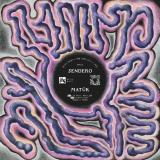
"I really wanted to challenge and, I guess, prove myself in other spheres, to take my music to a new place. I've never wanted to be too repetitive and found that expectations, imagined or real, were forcing me to get stuck on a specific sound both in my productions and DJ sets." This renewal is reflected in the title of the album, which eagle-eyed fans will note is the same as the first EP that was released under the Jensen Interceptor moniker, and the emotional and personal nature of the LP is likewise mirrored in the abstract impressionism of the artwork created by fellow Australian, Brodie Kaman, the artist behind the visual look of Lady Gaga's recent Mayhem LP as well as works for FKA Twigs, Nine Inch Nails, and more.
The design-resembling oil drifting across a microscope slide-uses a mix of vivid pastels and moody darks to express the album's emotional depth: a collection of distinct elements coalescing into something richer and more evocative.
- A1: Yellow Days
- A2: Find A Way
- A3: Everyday Words
- A4: It’s Ok, Feel It
- A5: Windup
- B1: Get Along
- B2: Smile Today
- B3: Inner Meaning
- B4: Nostalgia
'Find a Way' is the new album from Manchester-based pianist, composer, and producer Matt Wilde, released via his own imprint Hello World Records. The album serves as a reminder that creativity should be accessible and the importance of opening yourself to the unexpected as you 'Find a Way' through all endeavours. Digging into improvisation and jazz harmony on the LP, he crafts a sound that bridges jazz, hip hop, and electronic music, adding: "The creative act is not a matter of waiting for the perfect conditions, but of moving gently, insistently, through the imperfect".
Focus and title track "Find a Way" encapsulates this journey of process. Humans are known for adaptation and response when they face challenges, seeking solutions towards a better world. "Find a Way" leans into our instinctive reaction to improvise and reshape, taking the listener on an unexpected journey. The opening loop could as easily feel at home as part of an electronic soundscape, developing into a clock-like effect from the drums. This keeps time, allowing a duet between keys and trumpet to unfold, symbolising the individual, imperfect and non-linear paths we all carve out day to day.
The album was funded by Arts Council England and created in close collaboration with trumpeter and composer Aaron Wood, with the pair recording in Aaron's rural DIY studio in Huddersfield. Through improvising upright piano, Rhodes and trumpet over intricately programmed beats, the duo captured the spontaneity that makes jazz feel alive, but with the forward-facing touch of Ableton live production. "I actually had live drums recorded for this project and then deleted all of them and instead programmed intricate drums on Ableton live myself to create the kinds of drum sounds I could hear in my head," Matt adds, explaining the onerous process that truly made 'Find a Way' a labour of love.
Matt Wilde discovered jazz through an unconventional journey, and 'Find a Way' is an introspective map of this musical development. Starting out as a self-taught beatmaker, growing up Matt made tracks for friends in the grime scene before falling in love with jazz through the sample-heavy works of Madlib, J Dilla, and Pete Rock. Hints of this influence can be found on "Windup", driven by a deeper bass and a glitchy intensity not commonly associated with jazz. There are also nods to the weekly DJ residencies Matt had in his late teens, establishing a love for club music at iconic Manchester venues like Sankeys. "It's Ok, Feel it" incorporates pitched-up kicks and crisp, papery snares that pay tribute to UK dance culture and the foundation of connection in this world.
Guided by values of accessibility and creativity, Matt has become a key voice in the UK's boundary-pushing jazz and beats scene. His debut album 'Hello World' alongside EPs and single releases, have been championed by the likes of BBC Radio 1, Jamie Cullum and Soweto Kinch (BBC Radio 2), 'Round Midnight (BBC Radio 3), and across BBC 6Music, Jazz FM and Worldwide FM. He has performed headline shows at Band on the Wall (Manchester) and The Lower Third (London) and showcased his music at Brick Lane Jazz Festival and London's iconic Jazz Café.
A proud Mancunian with Polish roots, Matt's values-driven approach reflects his passion for community and empowering others through the arts. Matt founded the UK's first youth-led charity and is a trustee of Manchester music charity Brighter Sound. Driven by these values of equality and inclusion, Hello World Records strives to champion grassroots music with a backbone of fairness built into the business model. The imprint is named after Matt's debut album, released via Band on the Wall Recordings; simultaneously championing the music scene and global musical footprint of Manchester and highlighting the importance of artists reminding people: Hello World, I've made it. I'm still here.
- Martha Cleary, Glow Artists
Eden Burns releasing his debut Album titled „Eden Burns & The Makebelievers“. The dance musics prophet, notorious for his ingenious string of club tracks (if you don’t follow —> check the „Big Beat Manifesto“), is gifting the world with yet another, cult creating musical
adventure. Ecstatic beats, melodies that cast a spell on you, if there ever was something to truly, blindly believe in: it’s the power of music? Be Free, set foot into the garden of Eden. All apples are to be bitten, the snakes venom is mildly hallucinogenic. Get your eyes opened for everything that is true enough and beyond. Bless.
"The Happening by Tomorrow Comes The Harvest is the least case, a provocative confrontation. It's a challenge or dare to the idea that music can be useful if we are able to experience it. I would imagine that to many, music having an objective beyond the listener doesn't make sense because the general thought is that Music is made for us to consume, to make us remember, to influence us and to make us feel something. The Happening does all those things but much more. What it does is expand the scope from us to "it". Creating and constructing music for the subject of existence is a tall order.
The concept of The Happening is about the beginning and the end of Time and Space; the initial point of when reality starts and its conclusional apex. In the beginning, there is a great light. And from this light, comes life. Life is lived until it isn't.
This is what The Happening implies. It speaks about a 9-minute frame in reality, used to emphasize something that happened a very long time ago, something that happened in its creation and what will eventually happen far in the future.
The Happening was of an accidental birth. The love child of three musicians (Jeff Mills, Prabhu Edouard and Jean-Phillippe Dary) who was just asked to play "something" so that the camera crew could have extra b-roll for all the previous footages of the band while they were working in the recording studio in the North of Paris for their album Forbidden Planet. There was no discussion of what they'll do, no plan, no direction other than to use music to reach a level of consciousness.
Somehow within these transformative 9 minutes, something was felt by each of them, explored to its furthest point, which lead to this extraordinary creation. The Happening refers to the life and death of everything living thing. Infinity."
Jeff Mills
"New Juke Swing" marks SHONIIA's debut in the Juke/Footwork genre, where he fully embraces the rhythmic freedom that defines the style. Centered around sampling, the release weaves together a rich palette of New Jack Swing, R&B, and soul samples, layered over rapid, broken Chicago rhythms built primarily on the genre's staple drum machines - the RolandR70 and 808 - and spiced with looping vocal phrases.
The album doesn't reject the genre's rules - it plays with them. You'll hear breakbeat elements (MY MUSIC), signature clipping and lo-fi textures (KEEP FREAKY, LOOK AT ME), and even drill influences (HUNG UP AGAIN). The final countdown in DROP ITDOWN LIKE THIS can be read as both a tribute to the cyclical nature of beat-driven music - a core part of the producer's background - and a hint at a possible continuation of the series.
Logbook. Exploration mission.
Day 1. The planet is dead. An anomaly is detected — the time flow is slightly distorted.
Day 2. Landed in the central crater. The clocks of our suits show different times from the clocks on the ship. The gap is increasing.
Day 4. Logs contain records of events that never happened. A report of tomorrow’s evacuation appeared in the system. No one wrote it.
Day 5. We found footprints leading from the landing site to the crater, identical to ours. The ship log was discovered nearby. Final entry: “Do not enter the crater.”
Log transmission terminated. The crew did not reestablish contact.
Exit were a five-piece ensemble of journeymen musicians from the lone star state of Texas who came together in the early 1980’s to record a handful of popular local 45’s including two Football-mania songs. The groups line-up consisted of lead guitarist and vocalist Clennis High, rhythm guitarist Lonnie Jones, his brother Johnny K. Jones the groups keyboardist, bassist Frank Houston Jr and George Oliver on Drums.
Clennis High, a promising Football player with a flair for playing the guitar began his early musical career while attending Wheatley High school. Aged 17, Clennis played on several Crazy Cajun, Huey P Meaux’s recording sessions for Eugene Gamble and Barbara Lynn. Further recording sessions on Roy Head followed before he accepted an invitation by his neighborhood friend Willie Parnell to play alongside a group of fellow students in a band called ‘The Drells’. ‘The Drells’ had been founded by Archie Bell in 1966 pulling together neighborhood friends James Wise, base singer Cornelius Fuller, Billy Butler, Willie Parnell joined later by Archie’s brother Lee Bell. Clennis would play with ‘Archie & The Drells’ through their time on Skipper Lee Frazier’s Ovide label often accompanied by the ‘Texas Southern University Toronadoes’ where they scored a hit with the dance instruction song “Tighten Up” which on the strength of Atlantic Records picked the group up. Clennis played on all 3 of the Drells studio albums “Tighten Up”, “I Can’t Stop Dancing” and There’s Gonna Be A Showdown” under Gamble and Huff’s tutelage before quitting to return home to complete his degree. He continued to play with several local Houston bands including the Cold Four who recorded the sort after “Love And Care/Low Riden” (Drells).
Clennis later formed ‘The Reality Band’ with his friend Jerald Grey which introduced him to George Oliver and Frank Houston Jr. Occasionally ‘The Reality Band’ played with other groups, one group in particular (which Jerald previously knew) being an outfit from Conroe, Texas called the ’58 Engineers.
‘The 58 Engineers’ were founded by Johnny and Lonnie Jones, taking their name from the Army unit Johnny served with during his time in the service. By 1973 having grown to 8 members the group entered the studio to record the highly collectable and popular funk outing “The Funky Fly (Part1 & 2)” on their own Bryant Records label (Bryant being the Jones brother’s mother’s maiden name).
As members of the ‘58 Engineers’ moved on, the Jones brothers found themselves working more and more with the ‘Reality Band’ so when Jerald Grey too later moved on the remaining ‘Reality Band’ members Clennis, George and Frank having grown fond of the two “Country Brothers from Conroe” as they affectionally called the Jones’s made the decision to continue working with them, which led to the foundation of the group, Exit.
During 1980 the recently formed Exit recorded the first of their two Football -mania songs but it is from the groups 1981 release “Success/One More Hour” (Dat-Tex 105) that Soul Junction have taken the splendid ballad “One More Hour” to pair with the flipside of the groups third release “The Little Green Monster” (Dal-Tex 106) which is now highly regarded and sort after by sweet soul/lowrider connoisseurs alike. Both of these songs have been put back-to-back to feature on Soul Junction’s forthcoming September 45 release.
- A1: Custard Pie
- A2: The Rover
- A3: In My Time Of Dying
- B1: Houses Of The Holy
- B2: Trampled Under Foot
- B3: Kashmir
- C1: In The Light
- C2: Bron-Yr-Aur
- C3: Down By The Seaside
- C4: Ten Years Gone
- D1: Night Flight
- D2: The Wanton Song
- D3: Boogie With Stu
- D4: Black Country Woman
- D5: Sick Again
- E1: Brandy & Coke (Trampled Under Foot) (Initial Rough Mix)
- E2: Sick Again (Early Version)
- E3: In My Time Of Dying (Initial Rough Mix)
- F1: Houses Of The Holy (Rough Mix With Overdubs)
- F2: Everybody Makes It Through (In The Light) (Early Version / In Transit)
- F3: Boogie With Stu (Sunset Sound Mix)
- F4: Driving Through Kashmir (Kashmir) (Rough Orchestra Mix)
2025 marks the 50th anniversary of Led Zeppelin’s iconic sixth album, and their first double LP, Physical Graffiti.
To celebrate this landmark, Led Zeppelin will release an updated 50th Anniversary edition of 2015’s Physical Graffiti Deluxe Edition 3LP vinyl set, on 180g black vinyl, still featuring the Companion Audio disc, and now including a new bonus replica Physical Graffiti promotional poster (sized 443mm x 610mm).
Released on February 24, 1975 in the US (and four days later in the UK), Physical Graffiti immediately achieved platinum sales status and has recently been certified 17x platinum in the United States.
After the conceptual depth of "Parallel Traces of the Jewel Voice" (2021), dj sniff returns to Discrepant with a more direct and visceral document: Turntable Solos.
Composed from live recordings made during the latter half of 2024, Turntable Solos captures dj sniff’s improvised performances in their rawest form. At the core of his setup is Cut ’n’ Play, a software sampler he originally built in Max / MSP in 2007. Since then, he has continued developing custom tools and instruments that extend what Derek Bailey called the “instrumental impulse” — the tactile, responsive relationship between musician and machine that defines improvisation.
Following a summer 2024 tour of Japan with Gonçalo Cardoso, sniff was encouraged to document and release a selection of his live sets. Not long after, a performance at 20α (Alpha) in Hong Kong would become the emotional and conceptual anchor for the project.
In the liner notes, sniff reflects on the eerie parallels between recent footage of protestors in Los Angeles — assaulted by police using so-called “less-lethal” weapons, and civilians being abducted into detention centers — and the 2019 Hong Kong protests. A place once filled with personal nostalgia began to feel like a grim foreshadowing of what might unfold in Western societies.
In this turbulent context, 20α stands out as a space of resistance and renewal — a beacon for a new generation of experimental musicians, growing in defiance of increasing censorship and surveillance. "Turntable Solos" is both a personal statement and a public act of sonic resilience.
Hi girls! Don't tell your boyfriend you need this record. It's so dirty! He can't compete.
With his second release, "Wrong Friends Keep Colouring My Days EP," Easy comes through with an audacious two-tracker on the Doublecross XX imprint. And you thought he would change his style? Think again. Side A is a gritty breakbeat track influenced by Rotterdam gabber and early breakcore. The B-side is a tribute to the raw teknival sound of the '90s, combined with 2020s-style hardcore footwork.
This EP is dedicated to and inspired by a dearly special friend of this label: Graham Kerr, aka Kerso, our pal. His passions in life were friends, records, clothes and his beloved football team, Motherwell FC. It's the first anniversary of his passing in September 2025 and this is just a wee reminder of his presence, and his dancing, all these years. For Kerso.
Sticking a dirty thumb in the eye of fate, our third collaboration sees this marrow deep family malarky turn official as Pace Yourself teams up with YS’s own imprint ERF REC for a split release. As if our status as minor celebrities and footnotes of the underground could level off no further: the unification no one asked for is here. Sticking it to the man, handing your arse to ya on plate; cauterising infected suburban minds world over.
Burn is the second YS album and written as a direct follow-up album to Brutal Flowers. If their first album was an exercise in the incremental, a construction of poise and patience, Burn, should be taken way the fuck at it’s word: it quite literally finds catharsis in twisted reverse. Birthed out the malignant kick found in deconstruction and chaos. Evil twin, psychotic younger sibling, call it what the hell you like. It might take you a moment to get the lay of the land in this darkly mutated world. Like a bug eye’d native first confronted with a zippo, the hit is radical and instant: a new way for the world to go up in smoke.
Splice the Seattle slacker scene with the spliffhead soundsystem culture of the 90s Bristol trip-hop scene, then cross-breed that with the DIY optimism and glee in creation found in the cut-and-paste worlds of skate, graffiti and hiphop, now run that through the skitzo basement mind of John.T. Gast and you’re close to the kind of scorched earth and spiked suburbia that birthed Burn.
Dunno quite what YS have been ingesting of late but this massively twisted LP touches on a host of gloriously fucked totemic underground sources while not sounding much like any of them. It has the ballsy swagger and hard flipping of the script as Massive Attack’s seminal Blue Lines. Indeed, the eponymous album tracks sound similar - the opener ‘Burn’ is like a hard nosed jammed out redux of ‘Blue Lines’. Getting into a kind of slow-spinning overdubbed maximal euphoria ending with mumbled downer vocals, struggling to conceal their tongues in their cheeks there’s an air of paranoia and proto-conspiracy theory. It’ll leave you scratching your head, feeling like you’ve stepped into a New World Order governed by a cacophony of drop outs, dope fiends and apocalyptic stoners. A cracked out world somewhere between Richard Linklater’s movie Slacker (1990) and Marc Singer’s Dark Days (2001).
The rest of the album parts like a tongue on a wine glass: Smith and Mighty, Bandulu, ambient Luke Slater records, Wah Wah Wino, Nurse with Wound, Land of the Loops, Placid Angels, Adrian Sherwood, Urban Tribe and DJ Shadow can all be heard in momentary splatters - but Burn like other works by YS, is its own ritual beast. ‘Moth’, a track which has been knocking about the underground deejai circuit for many moons, is a real raw chopped and screwed slice of stoner erotica that reeks of obsession and unrequited desire. Elsewhere, on tracks like ‘Switch’, ‘Trying’ and ‘Drift’ the throughline from Brutal Flowers can be heard. Underneath the driving heavy gravity the trademark emotional intimacies of YS linger: eternal recurrence, ghosts of static and shortwave, worn memories of the playful and painful sort. The brief moments where flashes of orchestral ambience get out from underneath the swagger are so pure, personal and unguarded that for a moment they leave you completely lonesome. In the album’s closer ‘End’, you can hear the fleeting promise and DIY possibilities of an analogue world and embers of ash that flutter in its wake: where it seemed, for a brief moment, that collective of DJs, engineers, rappers, graffiti artists and skate crews were emerging from the streets, giving the middle fingers to the system, before just as quickly disappearing back to the doldrums of obscurity. ‘End’ is a bittersweet ode to early soundsystem culture, MCs and pirate radio - an out of step time where for a moment the underdogs and weirdos seemed to be kicking on the door of something bigger.
A veritable teenage doof suite dosed with desire, claustrophobia and deviance. Burn is a good old howl at the moon: lonely, raw, and out for blood; basement style exegesis at its best. A thump to the gut, a stud through your blood. A dubbed-to-death classic straight out of the annals of nowhere. A perfect post card from oblivion. A bleak, bold and personally ferocious vision of tomorrow and tomorrow and tomorrow.
This is everything that record collectors skip dates for. Fuck the scene and keep that shit underground. That’s what it is all about. Know what I mean, if you do? You’re in…
Naarm/Melbourne trio Acopia return with Blush Response, their highly anticipated third album, and first release on Scenic Route. Arriving September 12, this 8-track LP captures the band at their most open and self-assured—an emotionally resonant work shaped by silence, space, and sincerity.
At its core, Blush Response is an exploration of emotional distance, unresolved feelings, and the quiet tension between vulnerability and strength. It’s introspective and melancholic, yet with an underlying clarity that marks a new chapter for the group.
Formed in 2018 by Kate Durman, Lachlan McGeehan, and Morgan Wright, Acopia began with a minimalist palette—slow tempos, sparse arrangements, and a distinct sense of restraint. Since then, they’ve evolved into a more fluid and expressive unit, blending elements of dream pop, downtempo, indie, and post-punk into a sound that’s as delicate as it is disarming.
Following the release of 2022’s Chances and their self-titled 2023 album, Acopia gained significant critical momentum with praise from Pitchfork, The Guardian, The FADER, and The Beat. Pitchfork described their work as “a nod to 1980s ennui and 2020s anxiety”—an apt summation of their unique place in today’s musical landscape. Their growing international footprint includes support slots for Bar Italia and Tirzah, festival appearances at Golden Plains, Rising, and NTS Naarm, and a sold-out 2024 headline show at London’s Lexington.
Recent collaborators include UK producer Daniel Avery, who’s shown strong support for the band—elevating their profile across both electronic and alternative audiences.
With Blush Response, Acopia deliver their most expansive and expressive project to date—anchored by the emotional depth fans have come to expect, but now sharpened by bold songwriting and a broader sonic reach. Their arrival on Scenic Route marks an exciting new era, one that’s already resonating with tastemakers, record buyers, and a fast-growing global fanbase.
Just when you thought every holy grail must have been unearthed by now, here come Basic Unit with their deep cover late 90s masterpiece Timeline, the dankest darkcore-electronica-tech step album you've likely never heard.
Ben England and Rick Dallaway formed Basic Unit and debuted on Moving Shadow in 1997. They also moved on Nocturnal, a cult label that reached beyond D&B to platform some more experimental sounds. It was a short-lived label with some ominous footnotes — 'Several people involved with Nocturnal have vanished or are dead' reads the label's Discogs description. But in 1998 Nocturnal put out Timeline, a CD-only album from Basic Unit that cut a sharp, scathing figure against most D&B of the era. England and Dallaway embraced the album format as a chance to go deep, inhaling their inspiration from early days Autechre as much as Source Direct and boiling down the results to a steely, minimalist framework.
The likes of 'Resolution' are desolate, stark workouts that feel fractured and raw enough to align with early grime, complete with the strings, but the rhythms move in mysterious formations designed to confound like the most bloody minded electronica artists of the late 90s. Blown out bass and scattered flurries of machine gun breaks, squashed tundra drones that sound like they were pulled from 10th generation VHS b-movies and bit-crushed animal grunts fit for a Mega Drive beat 'em up. The sonics are redolent of the times, but Basic Unit chisel them mercilessly into their spartan vision, deploying brain-frying beat science with a stern restraint.
It's the kind of record that gives so much while holding so much back — a deadly tease that has flown under the radar for too long. This is the sort of shock reissue material that gets us gassed at Sneaker, and we're proud to be giving it a re-boost and a first ever outing on wax, all the better to shock you out.
Planning For Burial is the solo project of Thom Wasluck, emerging from Wilkes-Barre, Pennsylvania. It’s Closeness, It’s Easy is the long-awaited follow-up to 2017’s Below The House. If Below The House was about returning home, following in the footsteps of one’s father and joining a union, and leaving behind youth’s wild days, It’s Closeness, It’s Easy embraces what comes next—the weight of all years, the quiet shifts, the reckoning with what remains. This record is many things. It captures the slow drift of time, the unnoticed shifts in a loved one—the creeping changes in mental health, the quiet pull of addiction, the kind of grief that settles in the bones rather than announces itself.
At its core, It’s Closeness, It’s Easy is about stepping into middle age and taking stock. It confronts the reality of living with the hand that’s been dealt and searching for meaning in what remains. It speaks to loss—the crushing weight of saying goodbye to a beloved 17-year old cat, the slow-motion grief of watching friends self-destruct, the inescapable passage of time as it bears down on aging parents and the self. But it also reflects the warmth of reconnection, the kind of love that never burns out but instead deepens. The feeling of picking up where things left off, untouched by the years in between.
While written over the course of two years, the recording process reflects a sense of immediacy. Rather than assembling songs piece by piece over time, the album took shape in singular, immersive sessions—less an act of construction, more an unveiling of something already waiting to take shape.
Rooted in a staunch DIY ethos, Wasluck handles every aspect of Planning For Burial project himself—recording the music, designing the artwork, and performing live as a one-man band. He books his own tours, ever and independent creative. This hands-on approach has led Planning For Burial to play hundreds of shows solidifying his place in the underground music scene. A defining moment came in 2018 when he performed at the Meltdown Festival in London, curated by Robert Smith of The Cure.
Seoul-based producer and DJ Yetsuby conjures immersive, layered soundscapes that glide between breakbeat, jungle, and leftfield bass. As one half of the duo Salamanda and co-founder of Computer Music Club, she has released music on labels like Wisdom Teeth, all my thoughts, Human Pitch, and Métron. And her boundary pushing sets on Seoul Community Radio, Boiler Room, and NTS Radio have brought her experimental Seoul roots to a global audience.
Her new album, 4EVA, invites listeners to wander through strange musical landscapes. Blending digital, analog, and acoustic sounds, Yetsuby explores the magnetic pull between people and music—an experience that feels both cosmic and deeply personal. Effortlessly weaving through genres such as bass, breakbeat, ambient, footwork, contemporary club, and IDM, she creates maximalist compositions that remain cohesive and refined.
The inspiration behind 4EVA is equally surreal. A childhood doodle from her sister, calling her a “brain-ful human,” sparked reflections on loneliness, togetherness, and the joy of navigating both. The album channels these themes of connection, introspection, and the transformative power of music, delivering catchy melodies and restless harmonies that invite listeners to lose themselves in its nuanced rhythms.
Out on Pink Oyster Records in LP and digital formats, 4EVA marks a bold new chapter for Yetsuby. With this release, she emerges as one of electronic music’s most original and exciting voices, defining the sound of Seoul’s underground—and beyond.
Pink Oyster is a new label from Jess Goodchild and Jack Hardwicke (Métron Records)
This 15-track album features the original score composed by Nicolas Godin (of AIR) for Fire of Love, the Oscar-nominated documentary directed by Sara Dosa in 2022 (available for streaming on Disney+), as well as original music inspired by the film.
Fire of Love tells the extraordinary love story of fearless French volcanologists Katia and Maurice Krafft, who died as spectacularly as they lived, capturing some of the most breathtaking footage ever recorded of their greatest passion: volcanoes.
The writer Max Sebald often pondered over the nature of human memory, specifically, how our thoughts and desires - and their results - overlap and mutate over time. In A Place in the Country, he writes of the significance of what see as “similarities, overlaps and coincidences”. Are they the “delusions” of the self and senses, or manifestations of “an order underlying the chaos of human relationships, ... which lies beyond our comprehension”?
Song of the Night Mists, the new album by post-classical composer Stefan Wesołowski, often feels it draws on Sebald’s premise.
On a simpler plane, the one where the market dictates the neatly ordered information we consume, Song of the Night Mists can be described thus: recorded in the main by Stefan Wesołowski in Gdańsk, both in his studio and in Saint Nicholas' Basilica, the album incorporates acoustic instruments - piano, violin, double bass - and classic synthesizers such as the Roland Jupiter-8, the Soviet Polivoks. A Roland Space Echo RE-150 tape delay was also pressed into service as an instrument. We also hear the basillica’s organ and field recordings from the Tatra Mountains. Other musicians were Maja Miro, who played the flute parts on ‘Glacial Troughs’ and brother Piotr Wesołowski, who played the organ on ‘Wilhelm Tombeau’. Sound engineer was Marcin Nenko, who was also on hand to record the basilica organ parts. The album was mixed in New York by Al Carlson (Oneohtrix Point Never, Jessica Pratt, Zola Jesus, Lady Gaga, and Liturgy) and Rafael Anton Irisarri handled the mastering.
Ostensibly, Song of the Night Mists is the last in a trilogy, following on from albums Liebestod (2013) and Rite of the End (2017). All three deal with existential matters such as love, death, decay and “an ultimate end”; apocalyptic and Promethean in spirit, and betraying very human conceits. The Sebaldian nature of the new record starts to make itself felt when Wesołowski talks of how he used sampling. One element is unexpected, that of sampling himself: “I go back to dozens of my own unused sketches and recordings, treating them as raw material to cut, slow down, reverse, and transform in every possible way.” Memory as sound, to be reemployed by the listener through their own imaginings.
Another set of samples made by Wesołowski plays another role. These are field recordings, originally created for an audio illustration of the formation of the Tatra Mountains, and used in a film by sound designer Michał Fojcik. Wesołowski: “You can hear cracking ice, streams, footsteps in the snow and the wind, and a real avalanche, recorded from the inside.” The “Tatra connection” on the album is also found in samples referencing composer Karol Szymanowski. The album’s title alludes to a poem about the mountains by Polish poet, Kazimierz Przerwa-Tetmajer.
Wesołowski’s Tatra recordings are “about a world without humans - about the fact that the world existed, was beautiful, and had meaning long before people arrived, and for the vast majority of its history, it was a place without us.” Wesołowski, using one iteration of the natural world, plays out in sound Sebald’s idea of another order, underlying the chaos of human relationships lying beyond human comprehension.
These feelings play themselves out on the five album tracks. Sonorous and rich, they illustrate tectonic shifts we have no control over. Wesołowski hints that the overall sound is a “meditation on the metaphysics of the non-human set against the spirituality that human presence has brought into it.” In that light, the opening number, ‘Core’, with its slow build, and crackling and straining sound effects, create an effect of the earth groaning into life in a creation myth. Once the piano part raps out a simple melody and modulated tonguing trumpet samples add to the overall atmosphere, the listener can certainly find a cue in the “spiritual”, or “human” side of the story. Human versus nature: from the strains and harmonic muscle stretches of the second number, ‘Glacial Troughs’, through to the powerful and filmic ‘Stalagmite’ and heart-on-sleeve romance expressed in closer, ‘Wilhelm Tombeau’, we listeners are cast as Friedrich’s wanderer, looking out over a landscape that will appear only if we engage with it.
Formations of melody appear incrementally, almost appearing by chance - like hidden footings in the rock shelves to give us something to grasp onto. Rhythms are used sparsely: the prolonged percussive taps on ‘Glacial Troughs’ are an anomaly and maybe there to give pace to the album to come; essentially to keep the listener strapped in. Elsewhere, percussion is used as an aid to mood, the two thudding, timpani-style passages on ‘Peak’ there to offset the short, beautiful, kosmische passage that splits them.
Elements of the borderline religious spirit that drove German electronic music in the late 1960s and 1970s also find a place on Song of the Night Mists. The swells and recessions of the organ find their emotional climax on ‘Wilhelm Tombeau’, a track which summons up echoes of the “mountain magic” vistas created by Popol Vuh or Tangerine Dream, especially with the slightly atonal wobble of the Mellotron that counters it.
This is a dramatic album, but it does feel a strangely short, or curtailed listen on ending, evoking the feeling one gets when waking from a dream, and, for all its incipient grandeur, a track like ‘Stalagmite’, for instance, ends on a minor note. Wesołowski admits that Song of the Night Mists is born of the all too human process of temptation, doubt and recalibration - Sebaldian overlaps and coincidences forming something that must live another life, away from its creator. In Wesołowski’s words, the album is “a newborn foal must stand up and walk right after birth.” Now it is yours to ponder.
Asphalt DJ returns to Oddysee with another intoxicating 4- track formula, titled “Double O”. Operating on a solo tip this time around, the Berlin-based producer further expands his sonic palette and offers a versatile collection of steamy club workouts geared towards various stages of dancefloor
functionality. The record seamlessly touches on seductive after-hours bounce, slices of late nite propulsion and flawless rhythmic explorations, while keeping firm footing in the 90 and 00’s sound spectrum. With an eye on the ongoing terror inflicted upon the Palestinian people, we (artist &
label) decided to donate all proceeds from this release to Save The Children - Gaza and West Bank Emergency.
Free Palestine
The brand new ANORAX RECORDS label’s mantra is #eatsleepcollect - which makes its’ debut release right on point.
Drizabone’s anthemic “Pressure” has become a huge collectors want with appeal to Modern Soul fans, Northern Soul followers and House addicts via the much loved Roger Sanchez remix.
Drizabone burst on to a dazzling British Soul scene in the early 1990’s, following the footsteps of Soul II Soul and Loose Ends, rubbing shoulders with the likes of The Brand New Heavies as UK acts laid down their own distinctive Soul DNA.
After debuting with “Real Love” which went from a mystery white label to a chart smash, Drizabone went on to record the iconic “Conspiracy” album.
“Pressure” has endured like fine wine and is now hailed as an all time classic.
ANORAX present the original and very in-demand original backed with Roger Sanchez’s Nu- Solution remix on limited edition 7 inch single.
Driving, disco-infused sample House including feel-good vibes – with Footjob’s 30th release, the Darmstadt-based label delivers another prime example of its signature sound. The studio jams by label head Phonk D and Sascha Ciminiera are set to exhaust legs more than a thousand squats and are just waiting to be pumped through the club PAs of this world.
From groove monsters (“Sax Mode”) to peak-time tools with vocal cuts (“All Night”), you’ve got everything you need to raise eyebrows and arms. For the milestone catalog number, none other than Italian legend LTJ Xperience joins the group. The master of dirtgrooves lends his own unmistakable touch to “Perspective” and embeds the title track in a slower hypnotic setting.
An elusive and quiet figure amidst the Portuguese electronic scene, Timóteo Azevedo aka Random Gods releases his debut album on Discrepant's sub label Souk after his killer appearance in the long sold out 'Antologia de Música Atípica Portuguesa Vol. 2' compilation back in 2019.
With two previous EPs on Danse Noire and ZABRA, Random Gods' futurist visions project themselves through a scavenger-like body music assembled from the hopes and debris of these uncertain and dread-inducing times. Rituals conjured from metal shards, blunted kickdrums, submerged basslines, reverberating textures, cut up vocals and lazer guided melodies.
The orchestral runs of opener 'Abertura' as a glimmer of nervous light into the deep end bass weight meditations on syncopated kicks and grimey synth stabs of 'Somatiga'. Slow burner 'Pneuma' conjures neon synth lines into its halfstep flow, while 'Acervo' complicates the rhythm further with its profusion of crumbling kickdrums, tossed off claps and tonal percussion. 'Prumoo' dwells deeper into post-industrial ardkore nuum with its merciless drum patterns and molten basslines and 'Alvoro' feels like footwork taken into those same wastelands, with a nervous percussive backbone from some ancient future - take that as you will. Closer 'Ex.Tejo' brims with a certain sunrise melancholy among the storm as if there's still some hope after all.
Let's hold on to it.