Debut solo album from guitar player of Calicos. The result is a record that balances melancholy and raw intensity, where vulnerability is never far from power.Aäron Koch's voice cuts straight through, while the band builds a sound that feels both timeless and urgent, echoing The Veils, My Morning Jacket and Strand of Oaks.
For years, Aäron Koch was the guitarist in other people's bands. Writing intricate riffs and odd time signatures came naturally, but the thought of writing a simple song, a verse, a chorus, a melody that could stand on its own, felt out of reach. He tried and failed, discarded demos, and pushed himself through the humbling exercise of writing "bad songs" just to learn the craft.
'For Once', his debut album (out via Unday Records), is the unexpected outcome of that long struggle. What began as an exercise became a set of songs that refused to stay in the drawer. Months after recording rough sketches, Koch listened back and realized they weren't throwaways after all. With a small heart, he shared them with friends, musicians from bands like Calicos, Uma Chine and Tin Fingers, who immediately heard their potential and joined the project.
The result is a record that balances melancholy and raw intensity, where vulnerability is never far from power. Koch's voice cuts straight through, while the band builds a sound that feels both timeless and urgent, echoing The Veils, My Morning Jacket and Strand of Oaks.
"This music is about weaknesses and vulnerability," Koch says. "Autobiographical really, something I only realized once the album took shape."
That honesty struck a chord. In 2024, after only a handful of shows, Aäron Koch reached the finals of Humo's Rock Rally and was invited to open for Belle & Sebastian at a sold-out Ancienne Belgique. Now 'For Once' shows why: it's the sound of someone learning to write songs the hard way, and discovering in the process that he has something entirely his own to say.
Search:for disco only
- A1: 100%
- A2: Helsinki
- A3: Outside Over There
- A4: Seeing Docks Unlock
- A5: Hellfire Relations
- B1: Where I Come From
- B2: Behind The Mall
- B3: And Music Shall Untune The Sky
Heavyweight psychedelic improvisers EarthBall are back with their third and most monstrous record to date: ‘Outside Over There’, released on Upset The Rhythm (Nov 7th). Born from the haunted basements of Nanaimo, Canada, the quintet thrives on spontaneity, shaping improvisation into jagged hallucinations and ecstatic eruptions.
Recorded live-off-the-floor in 2024 in Jeremy, Izzy, and Kellen’s basement, and mixed by drummer John Brennan, ‘Outside Over There’ is an album that feels both summoned and inevitable. Each track lands with uncanny purpose, as if uncovered rather than written.
The opener, 100%, features a cameo from comedian and English icon Stewart Lee, who lent his blessing for the band to use a fragment of his stand-up. The album was mastered by John Dieterich (Deerhoof), with liner text contributed by longtime comrade John Olson (Wolf Eyes). Olson describes the album in his unmistakable style:
“This eight-track odyssey unfolds like a dreamscape, where whispered incantations brush against the shadowy fringes of the cosmos, and wild, Cézanne-inspired rock anthems erupt like geysers of color in the midst of a western warm and wet rain storm… culminating in the sprawling eleven minute masterpiece, ‘And The Music Shall Untune The Sky,’ aptly dubbed the Earth Crusher. A creation so utterly deconstructed and intertwined with the pulse of nature itself that if AI was called upon to conceive ‘Outside Over There’ anew, it would just spit back, “F.U. in Tree Font”. An enchanting invitation for even the flat-earthers to join the circle, if only just a little.”
EarthBall’s trajectory has been relentless. Their 2024 album ‘It’s Yours’ was praised by The Quietus as “fully aggressive and fully life-affirming,” and by The Wire as "a boisterous mind-melting album”. The band’s live double set LP ‘Actual Earth Music Vol. 1 & 2’ (2025) captured blistering performances: a performance opening for Wolf Eyes at the Fox Cabaret, and a Café OTO improvised throw-down featuring Chris Corsano and Steve Beresford. These releases on their own confirm them as one of Canada’s most vital experimental exports, not to mention the impressive self-released discography on their Bandcamp. The band’s reach has stretched far beyond their west coast roots with a UK tour May 2024, plus this past June, EarthBall closed Montreal’s Suoni Per Il Popolo Festival alongside Pulitzer Prize-winning composer Raven Chacon. This November they will perform at Le Guess Who? Festival in Utrecht, with a European tour to follow (tour dates below). Outside of EarthBall, each member carries their own torch. Jeremy Van Wyck, founding member of the legendary Shearing Pinx, has toured extensively, released over 100 records, and has been a vital force in the Vancouver and West Coast underground for the past 25 years. He and Isabel Ford (Izzy) play together not only in EarthBall, but also in Psychedelic Dirt, Shearing Pinx, Behaviours, and Crotch.
John Brennan collaborates widely, including recently with Endlings (Raven Chacon and John Dieterich), Evichen (Victoria Shen), Francesco Fonassi, Plan Your Future (with Greg Saunier of Deerhoof), Brennan/Corsano duo and Physics with John Dieterich. Kellen Maclaughlin performs with KVMP and Ora Corgan, while saxophonist Liam Murphy is a west coast staple, playing with the best across Vancouver Island and the mainland. On three of the tracks of ‘Outside Over There’, the band is joined by their comrade Justin Patterson, who also plays with Brennan in the duo Modale. This cross-pollination fuels EarthBall’s sound - a collective improvisation, psychically overdriven, and grinding into bloom.
Outside Over There’ is more than an album though, it is a ritual, a gathering of sound at the forest’s edge; where feedback, saxophone screams, and ecstatic vocals dissolve the boundary between chaos and clarity. EarthBall invite you into their circle, to share in the joyful terror of spontaneous creation. ‘Outside Over There’ will be released on November 7th through Upset The Rhythm digitally and as a limited blue-in-black vinyl LP.
ANORAX goes for the jugular - offering 2 in-demand gems from the legendary USA All-Platinum label - with its’ latest #eatsleepcollect 7” release.
The a side is a real coup, the first ever worldwide issue on single of the much loved Just Having Your Love by veteran Soul trio The Moments. JHYL is up there with the acts much loved Nine Times and I’ve Got The Need as a creator of dancefloor frenzy but being an album only track has restricted its DJ plays.
Now, for the first time in 50 years, it is available on 7” single so the simmering demand can finally be satisfied. The track fuses timeless Soul harmonies with exuberant magically produced New Jersey Disco and as well as being a Modern Soul connoisseurs favourite has long been a Northern Soul floor filler. The flip was also released on All Platinum’s Turbo imprint and was produced and written by The Moments. The Rimshots were the house band at All Platinum’s recording studio in Engelwood and had close links with The Moments who they toured with as support. Do What You Feel saw them take centre stage in 1975 as the adrenalin up chanted jam became a funk anthem. Five decades on it is still a timeless gem at jazz funk venues.
- Para Incomodar
- No Vou Parar De Lutar
- Curso De Liderança
- Tediosa Sobriedade
- Plano De Governo
- Aos Bandeirantes
- Idéias Perdidas
- Heróis Ou Rebeldes
- Conquistas
- Geraço Domesticada
- Até Quando
- Pré-Julgamento
- Nada Fácil Ou Real
- Adiada Pela Ressaca
- Sub-Gerência
- Tiros No Escuro
- País Sem Memória
Mardi Gras Marble Coloured Vinyl Sao Paulo, Brazil's Blind Pigs are excited to give an essential record in their renowned discography - 2006's Heróis ou Rebeldes (Heroes or Rebels) - the re-issue it deserves. Considered by many in the band's home country as their finest release, many fans around the world have yet to hear it. It was originally released only on CD in Brazil, with the lyrics written entirely in Portuguese. Consequently, the band released it under their Portuguese name: Porcos Cegos. However, when it was released, many fans did not realize it was the same band! On top of that, it has never had a release outside of Brazil_until now! Nevertheless, within Brazil, the album was an instant sensation that bridged the gap between punk, streetpunk, and Oi! - exposing the country to sounds influenced by contemporary US streetpunk bands such as Reducers SF, Dropkick Murphys, and the bands on TKO Records. In particular, the title track, for which the band made a music video, became a shout along anthem for the band's fans, AKA "The Legion of the Unconformed." After a 10" vinyl pressing quickly sold out in 2013, the album has been tragically out of print. The new edition on 12" Mardi Gras Marble Vinyl from Pirates Press Records has been remastered by Dan Randall (Subhumans, The Slackers, Fucked Up), bringing new life to a master that the band was never quite satisfied with. With the addition of a song cut from the original tracklisting - "Tiros No Escuro" ("Shots in the Dark") - this is truly the record the band have always wanted fans to hear. And with it finally bearing the name "Blind Pigs" on the cover, there will be no more confusion_and as the band's frontman Henrike Baliu proudly puts it, "the world can finally witness a record that was so important to the Brazilian punk rock scene."
Sometimes there are discoveries that hit like thunderbolts! Matt Pascale & The Stomps are undoubtedly one of them-and a major one at that. Everything here is simply perfect. Musically, the backbone of this album remains blues, but rock, funk, soul, and even hip-hop are never far off. The compositions flow like a string of potential hits. It only takes listening to this album once or twice for certain melodies to lodge themselves firmly in your brain. As for the performance, it"s downright incredible. Matt Pascale has a raspy voice with a "more Italian you couldn"t get" vibe, his guitar playing is a sheer marvel of precision and feel, and The Stomps are a rhythmic and groovy powerhouse capable of waking the dead. Un-be-lie-va-ble!
- You're So Cool
- All In A Day's Work
- Guerilla Warfare
- Joyful Sounds
- Above The Gun
- 4: Hours
- In A Metal Box
- No Emotion
- Inhibitions Run Wild
- Looking For The Hotel 10 Shoot It Down
- 12: Xu
- Saunty Sly Chic
- Why Me
- No Time
- Everything
- Won't Have To See You
- Inja
- Every Five Minutes
- A Cappella
- Beyond Explanation
- Learning Disco
- Echo Loop
- He Dreamed About The Corner
- Don't Turn Back
- America Today
- Don't Put Me In A Guillotine
- Kill The Unborn
Due to demand (and that we zero copies of their vinyl studio album left, and only a few of their live vinyl album), we've compiled all the tracks from both (and more - see below), we're reissuing them both on a 2xCD with a 24-page booklet. Before Suicide had really made it to the West Coast, Grey Factor were working in a similar realm - early post-punk, a little before punk (as such) and proto-industrial music. Here's what the band has to say: The future is tricky - and while we may have been left behind, this is our attempt to catch up with it. We offer a double CD capturing everything we've ever recorded. The Future Arrives Without You includes the previously released vinyl LPs - 1979-1980 A.D. Complete Studio Recordings and A Peak In The Signal: Live 1979-1980_plus a few surprises, including our first new studio tracks in 45 years. Both songs are covers, Wire's 12XU and Campag Velocet's Sauntry Sly Chic, and nine more lost studio tracks. 12XU was a jolt of pure adrenaline_two minutes of perfection from one of the era's best bands, a huge influence on us. Sauntry Sly Chic, from a group few remember but we never forgot, had one of the most infectious grooves we had ever heard. We also loved their lead singer's live getup: a cycling helmet and fencing gear. Perfection. These tracks inspired us to head back into the studio after four decades away. On A Peak In The Signal, we've added nine unreleased pieces we call the In-Betweens. Created out of necessity in 1979-1980, pre-recorded and played between our live performances, these sonic interludes filled the dead space while we reprogrammed our temperamental analogue synths between songs. Absurd, experimental, audience favourites.
In between the folds of ceremony and commonality lies a perennial spring of musical expression.
A statement along the time continuum, or a testament to the resilient resourcefulness embedded in that truth, forms the philosophical approach of this album – the first outing of Dídac.
Studying an extensive archive of instruments, artifacts, and field recordings at the Musée d’ethnographie de Genève—a space steeped in folkloric gesture – Dídac encountered a cosmos of liturgical music and folk song. Anchored in reverance for tradition and transformation alike, this album navigates the old-world Mediterranean lore through a post-modern ambient lens, threading drone, gentle rhythm, electroacoustic textures and the crude tactility of archival material into one woven tapestry.
Under the guidance of Dr. Madeleine Leclair, Dídac was invited to work within one of the world’s most extensive ethno- musicological archives—L’AIMP. In the saturated basements and tape-lined backrooms of the museum, he submerged himself in the sounds of ritual and rural life: wax cylinders from the Eastern Mediterranean, tapes of liturgical hymn, the worn edges of communal song.
In a makeshift studio on the fourth floor of the museum, he sifted through the hours of material he collected, gradually discovering that the archive was no static source – It did not dictate; rather, it served as a companion—offering not answers, but questions. Not a beaten track, but a cluster of sonic clues and riddles. Samples do appear occasionally, tenderly interwoven into the dialogue of the songs. In Dídac’s self-titled debut, the past is not worn as ornament or kitsch; it is listened to and responded to. The museum, its archives, and the visit to Geneva became a foundational culisse of sorts, igniting a myriad of rough cuts and improvisational outtakes.
Dídac, or Diego Ocejo Muñoz, was born in Madrid in 1994 to a family of both Catalan and Castilian origin.
Brought up in a religious household, the influence of the Catholic Church innately shaped the social fabric, schooling and daily life. This lingering dominance led the adolescent Diego into a path of rejection of everything sacramental, promptly resorting to subversion in the shape of grafitti, skateboarding and underground music. Only later in life, after a rigorous venture as an acid and electro producer, the Church re-emerged before him in new light, invoking a deep fascination for its mysticism, iconography and choral tradition.
Spain in general and Catalonia in particular, has long served as a crossroads of the eastern–western Mediterranean continuum, with many of its cultures sharing aspects of way of life and ceremony. At the MEG, Diego found himself puzzled with this realization, resulting in a sonic amalgamation that reaches farther away from the rugged mountains of Catalonia than you might perceive at first encounter.
The deeply embedded memory of rite and public ceremony, religious hymn and landscape—sieved through the undercurrent of personal re-emergence, forms the emotional topography of this album. The record does not trace this landscape; it inhabits it. Its repetitive mysticism and ambient, wide-eyed gaze could possibly evoke (perhaps redundant) comparisons to artists such as Dimitris Petsetakis, or Popol Vuh’s late 70’s cinema scores.
The delicate lines between the sacred and the secular – between memory and re-invention – serve as a cipher to understanding this album in its entirety. Titles like Malpàs Mines or Pantocrator’s Portal Outro nudge toward a folkloric and devotional bedrock—places where labor and spirituality coexist, where names preserve both dust and veneration.
Nevertheless, this is far from mere nostalgia. It is a reclamation — singing alongside the spirits of the past, nurturing what still hums beneath the soil. It is an intimate reflection on tradition, rebellion, adolescence, ceremony and fantasy – a pastoral contemplation on what once was and what is to be.
“…I still don’t understand what is the meaning of these Poppers records, please unsubscribe me from this newsletter.”
• Hans Zimmer
If you’ve ever been in the countryside and happened to lift a larger rock that might have been laying about for a while only to find an entourage of many different insects scrambling about in awe of the existence of sunlight and wondered what music they might have been listening to in that moment, the A-side tries to explore ways of responding to such curiosities. While the B-side, to end things on a good note, offers a convenient edit of live Japanese cover version of Paul McCartney’s “Silly Love Song” along with the quintessential prelude (or interlude) to a Horse Meat Disco party with the opening monologue of Sidney Lumet’s Equus. All in all, a Swiss Army knife packed with an assortment of most likely useless tools, courtesy of DJ Dipshit.
DJ Support: DJ Harvey, Kelvin Andrews/ Balearic MIke (Down to the Sea and Back), Howler (Pikes/Totem Projects) Joe Morris (Shades of Sound/Pikes)
New vinyl only 4 track EP of reinterpretations on the fledgling Oswego Music label, from the mysterious Lovehandles.‘Unrequited Dub’ sees a quintessential eighties tune and Larry Levan favourite reframed as an epic 11 minute balearic slow jam- with scarce copies available digitally getting plays in recent months from Kelvin Andrews/ Balearic Mike (Down to the Sea and Back), Howler (Pikes/Faith/Totem Projects) Joe Morris (Shades of Sound/Pikes) and even Mr Harvey Bassett seeking out a copy. One for sunsets and heartbreak. Next up-‘Stars before the Sun’ is a recut of a thrift store Hare Krishna disco funk cut. WIth solina strings, drum breaks and a positive message to live for now. ‘Crystal Lites’ first on the flip; heads to the disco. Versioned here with whacked out pinging delays and reverbs. It’s been reworked before, but never like this. ‘It’s a Long Shot’ second on side two, is a 12” mix that never was- an eighties Balearic drum machine pop favourite,extended for djs. Its ethereal vocals, minor keys and spaced out fx perfect for late nights and early mornings. ‘The Drum-Set (skit)’ rounds things off here- a short and sweet reminder of the international, multiracial origins of rhythm. Perfect for mixtape intros and interludes.
Ben Pest and ARA-U unite for the next release on No Static / Automatic. Kaos Sympatic EP started life with the pair recording jams of various vintage studio kit, including an EMS VCS3, Roland VP330 and an Orgon Systems prototype known only as the “Silver Box”, which developed into full tracks over subsequent sessions. Ben Pest has been busy releasing high grade club tracks including collabs with Radioactive Man and Kursa for Asking For Trouble and Love Love Records last year, and with solo EPs dropping on Cultivated Electronics and Posh End music. Here he links with NS/A boss ARA-U, turning out some of their headiest material to date.
The EP kicks off with ‘Err Hello’, it’s wholly discordant, lairy, and unapologetically weird. ‘‘Get A Grip’ drifts in with hallucinatory wafts of sound over a warped riff, building into a granular, distorted headfuck of a hoover-bass moment. This one will make the subs rattle on the right side of distortion. On the B Side title track ‘Kaos Sympatic’ gets stuck in with a big broken beat and guttural sub that transforms into a techno drop to drive this track home. Finishing up, ‘Slapback’ serves up a cut of high energy electro funk, coming off like classic ERP on heat. Limited edition purple vinyl.
- A1: Natty Dub Source: Natty Dread In A Greenwich Farm / Cornell Campbell
- A2: Lee's Dub Source: Lee's Dream / Derrick Morgan
- A3: Wonder Why Dub Source: Wonder Why / Cornell Campbell
- A4: I'm Gone Dub Source: I'm Gone / Derrick Morgan
- A5: Country Boy Dub Source: Country Boy / Cornell Campbell
- A6: True Believer Dub Source: True Believer / Johnny Clarke
- A7: Care Free Dub Source: Care Free / Mighty Diamonds
- A8: Rasta Train Dub Source: Mule Train / Johnny Clarke
- B1: Move Out Of Babylon Dub Source: Move Out Of Babylon / Johnny Clark
- B2: Give A Little Man A Great Big Hand Dub Source: Give A Little Man A Great Big Hand / Cornell Campbell
- B3: Feel So Good Dub Source: Feel So Good / Derrick Morgan & Paulette
- B4: For The Rest Of My Life Dub Source: Wonder Why / Cornell Campbell
- B5: When Will I Find My Way Dub Source: When Will I Find My Way / Owen Grey
- B6: I'm Leaving Dub Source: I'm Leaving / Derrick Morgan & Hortense Ellis
- B7: Feel Lost Dub Source: Feel Lost / Bb Seaton
- B8: Dawn Dub Source: Dear Dawn / Barrington Spence
2024 Reissue
“Tubby did three original dub albums, ‘Dub From The Roots’. ‘The Roots of Dub’ and the third is ‘Brass Rockers’ with Tommy McCook ‘pon the flying cymbals. Where he mixed it with the horn going in and out in a dub way and one named ‘Shalom Dub’ you can call Tubby’s too because he mixed the versions as they were off forty fives’’
Bunny ‘Striker‘ Lee
King Tubby and Producer Bunny ‘Striker’ Lee are intertwined in the birth of Dub Music. After discovering a mistake that made a ‘serious joke’ ( more of which later...) they went on to release the first pressings of this new musical genre namely ‘Dub Music’. Tubby’s vast knowledge of electronics and Bunny’s vast catalogue of rhythms would lay the foundations of what today is taken as a standard... the Remix / Version cuts to an existing vocal tune.
Osbourne ‘King Tubby’ Ruddock was born in Kingston, Jamaica on 28th January 1941 and grew up in the High Holborn Street area of downtown Kingston. He studied electronics at Kingston’s National Technical College and also on two correspondence courses from the U.S.A... When he had qualified Tubby began repairing radios and other electrical appliances in a shack in the back yard of his mother’s home. His work in the early days included winding transformers and building amplifiers for Kingston’s Sound Systems. Tubby built his first Sound System in 1957 playing jazz and Rhythm & Blues at local weddings and birthday parties. His reputation as a man who knew and understood both electronics and music grew steadily and as the sixties drew to a close. Tubby purchased his own basic two track equipment. He installed this alongside his dub cutting machine, a home made mixing console and his impressive collection of Jazz albums in the back bedroom of his home at 18 Dromilly Avenue which he christened his music room.
Tubby and Striker were at Treasure Isle Studio’s one day while Ruddy from Spanish Town was working with the engineer Byron Smith....
“Tubby and myself was talking when Ruddy was cutting some dub but Smithy (engineer) made a mistake through we were talking and forgot to put in the voice. It was two track recording in those days. Ruddy said ‘No Man! Make it stay! and so they cut the rhythm. When I went over to Ruddy’s that Saturday night a dance was in progress and when they played the vocal to the tune... then he said we’re going to play ‘Part Two’. They never called it ‘Version’..and then he played the rhythm track. The song was a catchy song and everybody started to sing along and the deejay started to toast so everything went down well. On Monday morning I went up and I said ‘Tubbs the mistake we made was a serious joke.It mash up Spanish Town! The people went wild. So you have to start to do that now ‘cause when the man put on the ‘Part Two’ everyone start singing this song. It played about twenty times. I said you try Tubbs!’...Well the next Saturday night now when Tubby strung up down the farm U Roy said he’s going to play ‘Part Two’ but Tubby did it different now. He started with the voice then dropped it out and let the rhythm run and then he brought in the voice in the middle and from there Tubby started to get really popular.’’
Bunny ‘Striker’ Lee
Dynamic Sounds upgraded to sixteen track recording in 1972 and Tubby purchased, again with the help of a deal brokered by Bunny Lee. The old four track equipment and the MCI console from their Studio B. The four tracks now gave him far wider scope to work with and he began to create a new musical form where the bass and drum parts were brought up while the faders allowed Tubby to ease the vocal and rhythm in and out of the mix. It was only a matter of time before Tubby’s dub plate experiments began to make it on to vinyl and the first ever long playing King Tubby releases would feature a collection of his mixes to a selection of Strikers rhythms. So please sit back and enjoy this historic set of sounds. Lovingly restored and with a few extra gems added to the CD Editions. These releases were the first to carry the name of King Tubby and the first to credit the great musicians that contributed so much to the rhythms that made these albums possible.
Many Amerindian cultures share the belief that the future lies behind us, while the past is what we face ahead. This challenge to Western chronology is, however, rooted in common sense: the open possibilities of what is to come are, in theory, what we cannot see—the uncertain—whereas the events that have already happened unfold before our eyes and are available for us to learn from.
This second album by Chilean producer, live performer, and DJ Valesuchi could be described as an experiment with time through music. Some years after relocating to Rio de Janeiro, she released Tragicomic LP (2019) on MAMBA rec—a label founded by the boundary-pushing Brazilian party Mamba Negra—and the self-released EP Cascada (2024). In both works, we can already appreciate her musical imprint: rhythmic and emotional timbral lines—wet, filtered, mathematical,
devotional, multilingual, fantastic, and unreal. However, in Futuro Cercano (Discos Nutabe, 2025), we can hear a leap: the sedimentation of her lived experiences in electronic communities across Latin America, her search for a universal yet personal language to convey emotion and new spiritual meaning, finds in this release a consistency and spontaneity that is rarely heard these days.
In a time when all cultural expression is not only expected to be taggable, but is also increasingly produced from templates that precondition our perception—favoring categorization and connections to works or scenes of the past—the tracks on this album are generically unclassifiable. They represent an openness to experiment without prejudice with electronic instruments and rhythms that are asancestral as they are futuristic. They publicly reveal an intimacy born from the compositional process, a bond formed through the encounter—sometimes tense, sometimes harmonious—between human will and that of the machines themselves. Or, as Valesuchi put it, "cyborging my friendship with the machine and becoming a tempest." Tempest as an eruption of the unknown into the present, the result of opening oneself to a nearly meditative state to uncover the deepest feelings through improvisation on cybernetic feedback and loops. And in that improvisation, to develop “técnicas para estirar o medir el tiempo”
“techniques to stretch or measure time” as she sings in 22, the album’s first track. “Connecting knowledges” as a portal to access that future so near it lies behind us, and to anticipate it as intuition and prospection.
That’s why Futuro Cercano is more than just electronic music: it is a technological ritual, an immersion into the secrets that machines hold as artifacts of human and non-human knowledge, as mysterious objects that allow us to connect with our own otherness—the personal alien hiding beneath the skin that opens us up to uncertainty as possibility rather than catastrophe.
- 1: Checkmate
- 2: Fantasy
- 3: Feel-It-All Phase
- 4: Free Advice
- 5: Giant Silent Disco
- 6: Gun To My Head
- 7: I've Already Won
- 8: One Catch Of The Eye
- 9: Somebody God Would Want To Chill With
- 10: Too Tired To Love You
- 11: Trampoline
"The very last day of recording the album that became checkmate, Ron Gallo wrote and recorded the title track. Which, in his words, half-jokingly, is ""my first true love song that also happens to be the best love song ever written"". It encapsulates the entire purpose of the album which takes his previous motto - ""The world is fucked, but the universe is inside you"" and changes it to ""The world is ending, what can I hold on to?"".
After years of navigating artistic reinvention and resisting change, Ron Gallo arrives at his latest album, checkmate, with a newfound clarity and sense of purpose. Stripped down and direct, checkmate marks a reset: a shedding of old selves, old anger, and the need for introspection. Social commentary has always been a driving force behind Gallo’s music, and checkmate finds the bridge between personal inner dialogues and cultural analysis, grasping the vulnerability he once avoided.
What remains here is distilled: raw thoughts about love, identity, and survival in a collapsing world. Gallo calls it “a process to kill off my old self,” a release from years of hiding, whether it’s behind a comic veil or a wall of instruments and noise. With checkmate, he finds himself aligned with a new audience who have found his music through social media riffs turned viral smashes, 7am Songs, who come with no preconceived notions—only a desire to connect. The personal vulnerability found in these songs are far more relatable than Gallo could have first imagined. Inner dialogues we all seem to be having, but struggling to find the words for, until now."
INTEMPORARY AND INDETRONABLE FRENCH COLD WAVE CLASSIC in a SPECIAL EDITION to celebrate the 40th anniversary of this mythical album.
This edition includes a 45T with 2 previously unreleased tracks, available nowhere else.
Thierry Müller, who initiated the RUTH project, is not at his first try when the album POLAROÏD/ROMAN/PHOTO including the eponymous track is released in 1985. His older brother Patrick along with one of their cousins make his musical education and he quickly becomes familiar with contemporary and experimental music. He starts quite early to tinker sounds on old tape recorders by himself but it is in 1977 that Thierry launches with some friends his first group, ARCANE, while studying at the School of Applied Arts. Their sound is weird, a mixture of saturated scratches and feedback tapes: there is no discographic or scenic testimony of this experience.
Alongside ARCANE, Thierry is already working solo on his ILITCH project / concept, an experimental and innovative work, whose first album Periodmindtrouble is released in 1978 on the Oxigène label. Despite insubstantial sales, this album brings Thierry recognition and success in the very elitist circles of experimental and underground music.
ILITCH’s musical bias was too narrow for Thierry’s ceaseless experimental curiosity, parallel to these activities, he therefore develops a Punk project called RUTH ELLYERI with the author, actress and photographer Murielle Huster. The title is an anagram of Thierry Müller (the complete name is Ruth M. Ellyeri). The character is meant to impersonate one of his schizophrenic facets and allows him to extend his field of expressions to musical styles differing from those in ILITCH.
From this work, the very cult punk piece Mescalito emerges, song that can be found on the mythical but unfortunately very rare compilation 125g de 33 1/3 tours (1979) of the Oxigène label (first “french punk” sampler). At the end of 1978, he meets Philippe Doray at the Oxigene office. Doray is another big name of French experimental music. Thierry moves to his home near Rouen, a remote farmhouse with a music studio made of odds and ends.
They work on their respective creations but meet from time to time on experimentations in common, including CRASH (a tribute to JG Ballard) As early as 1982, a first version of the track Polaroïd/Roman/Photo is out under the name of the project RUTH. “I wanted to write a piece to make the girls dance and make fun of the boys. I plugged a small handmade clock on my Farfisa organ as a sequencer. I had a small Roland synth-guitar, I put the organ in it and that’s how it started.” Philippe is quite amused by the idea of working on a more Pop project and offers to write the text. Thierry works on other tracks for the future LP and asks some friends to write other texts : Edouard Nono, visual artist, writes the lyrics of Mots, Frédérique Lapierre those of Misty Mouse and Tu m’ennuies . It is her voice you hear on these 2 tracks and on the first version of Polaroïd/Roman/Photo. Later, Thierry settles down in the Anagramme recording studio to carry out acoustic sound recordings. But when the sessions are over, the 2 musicians are not too happy with the results of Polaroïd/Roman/Photo: according to them, they lack “flamboyance”. They decide then to record a new female voice with a professional singer and the sound engeneer Patrick Chevalot offers to mix the track in the Synthesis studio “so that it blows out”.
With his tape ready and the help of Jacques Pasquier (S.C.O.P.A. / Invisible records where Ilitch’s second album, 10 Suicides, is released) he starts to contact record companies. “I visited almost all the major record companies and was thrown out every time. Only at RCA’s I found someone interested in my music. It was Francis Fottorino who had signed Kas Product but when it reached the the big boss, no way! Philippe Constantin from Virgin records raised some hope but in vain.
The album was finally released in 1985 with Paris Album, a small independant label.” The album barely sells 50 copies in 1985, despite the eponymous title as a potential success. « In 2004, 2 DJs Marc Colin and Ivan Smagghe discover the track Polaroïd/Roman/Photo and decide to exhume it from oblvion. They release it on a compilation called So Young but so cold (Tigersushi) and then with Born Bad records on the BIPPP compilation in 2008. Thanks to them, the track and the album start a new life.
Alongside his activity as graphic designer, Thierry Müller carries on producing music under his name, those of ILITCH and RUTH for his own creations and various collaborations.
From the crypts of Parisian funk obscurity comes the long-lost Halloween holy grail, Disco Frankenstein from Ice AKA Lafayette Afro Rock Band. A teasing album of horror-disco oddities originally released as a compilation—a misnomer cloaked in mystery, as the tracks themselves hail from the group’s playful experiments in the mid-to-late ’70s.
This album unearths a twisted treasure trove of grooves, originally scattered across obscure side-projects and international pressings, brought back to life by Strut on blood-soaked vinyl exclusively for Halloween 2025.
Originally released as a 1976 Japan-only compilation featuring the Lafayette Afro Rock Band under a plethora of pseudonyms—Sweet Exorcist, Captain Dax, Hot Blood, Krispie and Co., and more, the release was masterminded by producer Pierre Jaubert and led by bandleader Frank Abel with the funk-virtuosity of the Lafayette Afro-Rock Band group, the minds behind the much sampled ‘Soul Makossa’ and ‘Malik’ albums.
Disco Frankenstein represents the band at their most creative—layering wah-wah guitars, thunderous Afrobeat rhythms, and creepy-crawly synths into a funky stew of horror-disco gold. Tracks like “Dr. Beezar (Soul Frankenstein),” “Disco Vampire,” “Zeke the Zombie,” and “Igor’s Reggae” blur the line between Halloween novelty and dancefloor fire, conjured with full seriousness by studio wizards who knew how to raise the funk.
Resurrected by Strut Records and remastered by The Carvery, this compilation finally gets the deluxe treatment it deserves: pressed on limited blood-stained vinyl just in time for Halloween 2025.
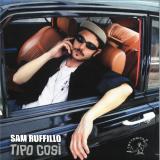
Italian producer, musician, DJ, and groove architect Sam Ruffillo drops his long-awaited debut album Tipo Così on Toy Tonics – a sun-drenched, genre-blurring statement that blends classic house with Mediterranean flair, romantic funk, and tongue-in-cheek Italo vibes. Over 11 expertly crafted tracks, Ruffillo delivers a dancefloor-ready, emotionally rich LP that connects deep musicality with irresistible rhythm and light-hearted elegance.
After three acclaimed EPs and collaborations with revered artists such as Barbara Boeing, Kapote, and Fimiani, Ruffillo has firmly cemented himself as a core artist on the Berlin-based label. Known for his unmistakable signature sound — a warm mix of vintage disco, 90s house, and Italian vocals — Sam’s music has garnered widespread DJ support from tastemakers like Gerd Janson, Palms Trax, Seth Troxler, and DJ Tennis, while becoming a staple on Italian airwaves. His infectious summer anthems like Danza Organica and Perfetta Così have soundtracked countless club nights and festivals, creating a loyal following that eagerly awaited this full-length debut.
Tipo Così is the natural culmination of a musical journey that’s both playful and profound — a travel diary written in grooves, synth stabs, and melodies that feel like postcards from a parallel Mediterranean universe. The album expands and deepens Ruffillo’s world into a fully immersive experience: lush emotional chords meet tight syncopated grooves, vintage synth textures collide with irresistibly catchy pop refrains, and the boundary between sincerity and playful irony is exquisitely blurred.
Entirely written, produced, and recorded in Italy, in his beloved hometown of Bologna, the album finds Ruffillo at the helm on keys, drum machines, and production, supported by a talented cast of musicians contributing live bass, guitar, and other organic elements — further enriching his trademark fusion of electronic grooves and natural instrumentation. There’s a tactile warmth in these tracks, a hands-on feel that adds soul and depth to every beat.
This album also marks Ruffillo’s heartfelt return to singing in Italian, with standout tracks like House Tipo Così, Mi Fa Volare, Ancora, and Dentro Di Me, where romantic naïveté meets pulsing club energy in a way that feels both timeless and refreshingly new. The vocal performances add an intimate, human touch to the music, reinforcing the personal stories woven into each song. There’s poetry in the casual, a bittersweet elegance in the way the lyrics float over groove-heavy production.
Having toured extensively across Europe, Australia, Indonesia, New Zealand, and Mexico — with sets at iconic venues like Panorama Bar and festivals such as Sónar Barcelona — Ruffillo has fine-tuned much of this album in front of live audiences. The real-world testing ground infused the record with a dynamic energy and immediacy that only comes from genuine crowd interaction. These songs weren’t just made in the studio — they were lived on dancefloors around the world.
Tipo Così is not just a collection of tracks. It’s a philosophy — playful, stylish and unmistakably personal. A modern club album bursting with heartfelt emotion and sophistication. Music for dancers with taste; for lovers of beauty, rhythm, and the little imperfections that make things feel real.
But what exactly is Tipo Così? More than just a phrase, it’s a way of being. It’s about embracing elegance without effort, mixing irony with sincerity, and letting nostalgia slip into the room without taking over the party. It’s Sam Ruffillo’s signature language: relaxed, confident, meticulous yet never rigid — where a chord progression can say as much as a lyric, and every beat carries intention.
The album’s visual identity complements this vision perfectly. The artwork and promotional materials lovingly reference Italian design from the ’80s and ’90s, combining bold graphic elements with playful pop culture nods. This aesthetic mirrors Ruffillo’s music — a fusion of vintage warmth and contemporary freshness, delivered with authenticity and charm.
Sam Ruffillo belongs to a new generation of European artists who are reshaping electronic music by blending past and present, analog and digital, groove and emotion — without nostalgia or pose. His artistic universe is coherent, vibrant, and alive; a rich tapestry of sound, images, and stories that coexist with lightness, precision, and a distinctive voice.
Reflecting on his artistic journey, Sam describes music as a vital, deeply human impulse — a tribal connection to rhythm and body that has driven him since he was a teenager. His creative process balances meticulous planning with room for spontaneity, usually sparked by clear melodic ideas that evolve naturally. Collaborations with close friends, especially vocalists like Ninfa, add warmth and authenticity, exemplified in tracks like “House Tipo Così.” For Sam, music is honest self-expression — crafted for listeners who crave memorable melodies and rhythms imbued with genuine feeling.
While technical perfection is tempting, Sam prioritizes emotion, knowing that what truly resonates is the soul behind the sounds. His long-standing partnership with Toy Tonics has been key in nurturing his vision, offering a blend of creative freedom and professional support. Looking ahead, Sam Ruffillo is excited to broaden his live performances, and release new projects that continue to blend electronic grooves with organic, heartfelt sounds — maintaining the delicate balance between playful irony and sincere emotion that defines Tipo Così.
Kurzversion:
Italian DJ, producer and musician Sam Ruffillo drops his debut album Tipo Così on Toy Tonics - a sunny blend of house, funk, Italo and pop, full of groove and emotion. Written and recorded in Bologna with live instruments and Italian vocals, it’s a playful, elegant journey shaped on dancefloors worldwide. A stylish, sincere club album where nostalgia, irony and rhythm meet in perfect harmony.
- Mi Fa Volare
Road-tested across continents and now finally released, “Mi Fa Volare” channels 90s uplifting euphoria with big breakbeats, lush chords, and Italian vocals built to stick. Somewhere between balearic bliss and piano house nostalgia, it’s a feel-good club weapon made for peak-time moments - already sung back by crowds after just one listen.
- Ancora
“Ancora” is a vibrant hi-NRG track inspired by 80s Italo disco, sung entirely in Italian. It blends driving rhythms with dreamy melodies, capturing the radiant spirit of the decade. This fresh yet nostalgic song delivers euphoric vibes and timeless energy, making it a perfect fit for both dancefloors and reflective listening moments worldwide.
- Dentro Di Me
“Dentro Di Me” channels ‘90s sensuality through a fast-paced, UK house-inspired lens. Entirely in Italian, it’s a bold and contemporary dance track where hypnotic vocals meet high-energy grooves. Blending nostalgic textures with forward-thinking production, the result is a seductive and euphoric trip - equal parts emotional and club-ready.
- Amigo
“Amigo” blends Latin groove, acoustic guitar-driven rhythm, and Mediterranean flair into a warm, magnetic, cross-cultural dance anthem. Sung in Spanish and Italian, it celebrates connection, inclusivity, and the joy of moving together - whether stranger or friend. With its unstoppable rhythm and vibrant energy, it’s a feel-good track with a unifying spirit.
- Ma Sei Fuori
“Ma Sei Fuori” is a tongue-in-cheek dancefloor bomb blending raw house energy with catchy vocal phrases and a nod to classic French touch. Driven by hypnotic vocal lines and a playful attitude, it doesn’t take itself too seriously - while still proving serious club impact. Built for late-night moments, it’s bold, bouncy, and impossible to ignore.
- A1: Lady Madonna ~Melancholy Spider~
- A2: Your Song
- A3: Last Smile (Extension Mix)
- A4: I Mean Love Me
- A5: Moon Only
- B1: Are You Still Dreaming Ever-Free?
- B2: I Miss You
- B3: Nostalgic '69
- B4: These Days
- B5: Low (Ver. 1.1)
- B6: A Day For You
LOVE PSYCHEDELICO is celebrating its 25th anniversary.
Under the full supervision of KUMI & NAOKI, seven original albums will be released on vinyl.
The long-awaited rebirth of "THE GREATEST HITS," a landmark of 2000s Japanese rock, is here.
180g heavyweight vinyl / Cutting: Toru Kogetsu (JVC Mastering Center)
2025 Repress
FINALLY! The very first commercial release of two legendary remixes of Arthur Russell's "In The Light Of The Miracle". Both are widely regarded as transcendent masterpieces and very much befitting of the title “holy grails”.
These long-beloved mixes are the types you'd wish would last for eternity. With almost 30 minutes of music here, we very nearly get our desires granted. At last, these jaw-dropping mixes are widely available to every Arthur fan in the world. This is musical perfection.
The deep Loft classic "In The Light Of The Miracle" remained unreleased during Arthur's lifetime, finally discovered when Phillip Glass included the original version on Another Thought on Point Music in 1993. As Steve Knutson told us, when Another Thought was being put together, the plan was to release a companion album of remixes that was overseen by Steve D'Aquisto but the project only got as far as these two remixes of "In The Light Of The Miracle".
Some dodgy scans of some centre label designs suggest that Point Music might’ve been planning to release these on a 12" but it didn’t happen. The story goes that Gilles Peterson heard the remixes on a visit to the Point Music offices and wanted to release them on Talkin’ Loud. We’re not sure how many white label copies made it out into the wild, but again, these remixes didn’t make it to a proper release.
These remixes both extend and undeniably enhance the original, elevating it to new heights. The 13 minute remix on the A-side is by Danny Krivit & Tony Smith with editing duties performed by Tony Morgan. As ever with Arthur, the music is almost impossible to describe: is it Disco? Garage House? Avant Garde? None of these tags do full justice to its sheer majesty. You best just listen. Stretching out the original with some unbelievably great percussive elements, until we're in a deeply spiritual, otherworldly realm, it's just too beautiful for words. As many have claimed, it's the prototype for EVERYTHING.
The "Ponytail Club Mix (Part 1 & 2)", produced by Tony Morgan in the mid-90s, is in a more up-tempo style, with vocals higher in the mix, the BPM upped to 120 and the addition of a housey 4/4 kick drum. A 14 minute epic, you could say this is a more straight ahead "club-friendly" mix (but can things ever be that straightforward with Arthur?!) It also has some really interesting vocal parts not used in the other versions, including some vocals from guest poet Allen Ginsberg.
These remixes are part of the same original project that also produced the Another Thought album so it seems only right that they have a sleeve that matches. Thanks again to Janette Beckman for letting us use another of her photos of Arthur and the rest of the design follows what Margery Greenspan, Tina Lauffer and Michael Klotz did for Another Thought back in 1994.
Simon Francis remastered the original audio for both tracks and Cicely Balston's precise cut for Alchemy at AIR Studios ensures this 12" well and truly slaps. The immaculate Record Industry pressing will ensure this incredibly sought-after treasure finds a home in many more collections, this and every year.
- The Slammer
- Bruiser
- Incarcerate The Rich
- Disco Misfits
- Their Law
- Vive Le Rok
- Mofo Face
- Superficial Intelligence
- Never Mind The Botox
- Built For Fun
- Play A Fast 'Un
- Where There's Hope
Formed in the mid-eighties Midlands, they are still not only eating pop but spewing it up in a chaos of thrilling ideas on new album ‘Delete Everything’. Their eighth record sees them further refine, define and deconstruct their melange of industrial rock, loop da loop techno, gonzoid hip hop and punk rock into a series of captivating sci-fi anthems. The band still look and sound like they have stepped out the pages of 2000 AD magazine with Graham Crabb and Mary Byker trading vocals like bouncing Duracell bunnies to the itching, compulsive beats surrounding them. Davey Bennett brings the bottom end and Cliff Hewitt plays the beats whilst Adam Mole delivers guitar aggro and sometimes waves his keyboard around with a delinquent glee. Still creative, still in a world of their own Pop Will Eat Itself have deleted everything and started all over again.