Suche:for disco only

Styles
Alle
Datacide - Datacide Nineteen

Datacide

Datacide Nineteen

BooksDATACIDE19
Datacide
30.09.2025

Pandemic, war, inflation, apocalyptic scenarios about climate change and artificial intelligence, all connected with widespread bonkers conspiracy narratives and growing fascist sentiments – in this crisis environment we re-emerge with a new issue.

What may appear like a ‘normal’ datacide issue – which it is indeed – is however also a part of a broader strategy. We’ve been busy expanding activities into the field of videos, documentaries and interviews. The very first signs of this are visible on our Noise & Politics YouTube channel.

There will be much more.

Datacide nineteen is now at the printers and will be available for the first time at the Hekate event at Forte Prenestino in Rome on October 6/7.

Subscribers, depending where they are based, will receive their copies soon after.

General distribution will commence later in October, our aim is to have the issue available in all the most important radical bookstores around Europe by early November. If you are interested to resell datacide in your area, please get in touch!

We will also have a table at the Radical Bookfair in London on November 4th, presenting the new magazine along with older issues.

With this issue we pick up the story where we left it with the last one. We’re unfolding a countercultural panorama, this time beginning in the mid-20th century with Howard Slater exploring the beginnings of the Electronic Disturbance Zone, multiple reflections of 1948 via the 1990s, sonic adumbrations of new social relations.

Christoph Fringeli then introduces us to a document from 1967 where situationist ideas popped up in the Extra-Parliamentary Opposition in West Berlin, in a text called Vietnam, the Third World and the Self-Deception of the Left, which contains a détournement of the Address to Revolutionaries of Algeria and of all Countries published by the Situationist International the previous year.

From 1967 we move on to 1978 with Ian Trowell, in an excerpt from his forthcoming book ‘Throbbing Gristle – An Endless Discontent’, tracking the movements of Throbbing Gristle as they play their first gig up north at the aptly named Wakefield Industrial Training College. Uncanny overlaps of the timelines of TG’s operation and The Yorkshire Ripper’s killing spree reveal themselves.

The time window from the 90s to the present day is illuminated by Nihil Fist, as we’re printing the interview previously published in video form on our YouTube channel.

This issue then moves into ficticious territory with stories and poetry by Joke Lanz, Dan Hekate, Howard Slater and Riccardo Balli. Book and record reviews follow, as do the charts and a short report of our wider activities since the last issue.

Please pre-order your copy now (6 euro incl. Shipping in Europe, 8 euro elsewhere) or, even better, take out a subscription (standard subscription for only 23 euros for 4 issues (Europe) or 3 issues (rest of the world) – or our super-subscription which includes also records, t-shirts, books and digital items.

Or just make a donation if you can’t be bothered with print, but want to support our work.

vorbestellen30.09.2025

erscheint voraussichtlich am 30.09.2025

10,88
Guerre Froide - Guerre Froide
  • A1: Ersatz
  • A2: Demain Berlin
  • B1: Mauve
  • B2: Peine Perdue

First time reissue of this French cold-wave / minimal-synth treasure.


November 1981 – In the heart of autumn, we set off in two cars along the Nationale 1 (!) to reach Choisy-le-Roi, where a 16-track studio was waiting for us—a place where, over the course of a weekend, we would finally be able to carve our own grooves into vinyl. We were quite nervous, as Guerre Froide had already been around for a year and a half. Our elders in Kas Product had already released two EPs—one with four tracks, the other with three—in 1980, even though they’d started only a few months before us. Admittedly, there wasn’t really a sense of urgency—some of us came from the punk movement, where the prevailing mood was still very much No Future, even if we’d long since stopped believing in it... And yet others had truly lost everything, like those from the generation before us. The reasons, ironically, were often the same: heroin and/or love—hard drugs, in both cases.

Speaking of which, I had a terrible stomach ache—due to nerves or some form of tension—which forced us to make a pit stop in the Oise region so I could rush to the toilet of a local café. That same stomach discomfort would hit me again once we arrived at the studio—whose name, incidentally, I’ve since forgotten...

We had gotten there thanks to the generous initiative of a friend, Sylvain S., known as “Perlin” (what a phonetic coincidence!?), who had specifically created the Stechak Products label to produce our record. Stechak because it was consistent with his earlier association called Tchernoziom, and Products as a plural tribute to the trailblazers from Nancy.

Guerre Froide originally consisted of four members: Fabrice Fruchart on guitar-synth (Korg MS-20), Patrick Mallet on bass, and Gilbert Deffais, known as “Bébert”, on Korg drum machine. At the time, I was already singing in a rock/post-punk band called Stress, and that’s how Guerre Froide picked up the bad habit of rehearsing in the same basement in Amiens as Stress. Within a month or two, we had half a dozen songs. We then had the opportunity to record a 4-track demo with a friend from Radio France Picardie, and to perform in October at a festival held at the Amiens municipal circus. Then came the now-legendary concert on November 11 at B.J.’s Club. After that, we self-produced and released 50 completely DIY copies of a cassette titled Cicatrice. A few concerts later—after Jean-Michel Bailleux had joined us on bass and Patrick had switched to guitar, which felt more natural to him—and with more concrete plans starting to take shape, we had to find a new rehearsal space and start renting a room.

Then came the moment when Fabrice told us he was leaving to go study in Lille... After the June 19, 1981 concert, which was naturally dubbed “Farewell to 2F,” Marie-José, Bébert’s wife, offered to take over on synth.

That’s when Perlin, who was a close friend of the Deffais couple and a great fan of our music, offered to fully finance the production of a 4-track 12-inch EP—covering the studio time, mastering, pressing, and artwork. What up-and-coming band would have turned that down? An improvised contract was signed with each member of Guerre Froide. The first step was choosing which four songs we would record. Berlin 81 was an obvious pick, having already become the group’s flagship track. We wanted to avoid reusing songs from Cicatrice, so the focus shifted to new material—some written before, some after Fabrice’s departure. Ersatz, for example, was his composition, but Mauve and Peine Perdue, which were also selected, were both written by Patrick.

vorbestellen26.09.2025

erscheint voraussichtlich am 26.09.2025

20,97
ABRAHAM - IDSUNGWÜSSÄ LP 2x12"
  • Fate Of Man Lies In The Stars
  • I Am The Vessel And The Vessel Is Me
  • A Discomposite Shell
  • Naked In A Naked Sky
  • Suurwäut
  • En Tüüfus Tümpu
  • 06: 00.40U
  • Home
auch erhältlich

TRANSPARENT GREEN VINYL[34,87 €]


Still staged in the gritty atmosphere and philosophical weight of post-metal, sludge, and ambient noise, `idsungwüssä' sees Abraham march even further into dissonant and defiant territory. "The three albums are clearly linked together thematically" comments the band, "although, rather than an additional chapter, idsungwüssä is more like a parallel narrative to 'Débris de mondes perdus'. The latter was a jump in time after 'Look, Here Comes the Dark!, whereas 'idsungwüssä' is a jump in space, a journey away from earth. It should be the final piece of this little jolly ride." This album isn't just heavy, it is absolutely drenched in delicious filth, and yet by embracing even more the melodic interludes and melancholic passages, they create a devastating contrast to the wall of power coming from stacked guitars, catastrophic drums and raging, sharp vocals - delivered in Swiss-German dialect. From the patient grandeur of coming extinction, to the chaos and fevered urgency of the aftermath, in `idsungwüssä' Abraham move forward from prophetic lamentation to an elegiac visceral response. The emotional closure of this expression is felt, something final that will leave you speechless and with only one real option; listen to it again.

vorbestellen26.09.2025

erscheint voraussichtlich am 26.09.2025

29,83
ABRAHAM - IDSUNGWÜSSÄ LP 2x12"

ABRAHAM

IDSUNGWÜSSÄ LP 2x12"

2x12inchPELVC293
Pelagic Records
26.09.2025

Still staged in the gritty atmosphere and philosophical weight of post-metal, sludge, and ambient noise, `idsungwüssä' sees Abraham march even further into dissonant and defiant territory. "The three albums are clearly linked together thematically" comments the band, "although, rather than an additional chapter, idsungwüssä is more like a parallel narrative to 'Débris de mondes perdus'. The latter was a jump in time after 'Look, Here Comes the Dark!, whereas 'idsungwüssä' is a jump in space, a journey away from earth. It should be the final piece of this little jolly ride." This album isn't just heavy, it is absolutely drenched in delicious filth, and yet by embracing even more the melodic interludes and melancholic passages, they create a devastating contrast to the wall of power coming from stacked guitars, catastrophic drums and raging, sharp vocals - delivered in Swiss-German dialect. From the patient grandeur of coming extinction, to the chaos and fevered urgency of the aftermath, in `idsungwüssä' Abraham move forward from prophetic lamentation to an elegiac visceral response. The emotional closure of this expression is felt, something final that will leave you speechless and with only one real option; listen to it again.

vorbestellen26.09.2025

erscheint voraussichtlich am 26.09.2025

34,87
D Stone - Time selection EP

D Stone debuts on Heist Recordings with a record that shows us why he's one of the hottest talents in house music right now

Chloe Caillet is in on it. Cinthie is in on it. SG lewis and Demi Riquísimo are in on it too. So are Folamour, Barry Can't Swim and, of course, Dam Swindle. In on what exactly?

In on the fact that D Stone might be the most exciting young producer and DJ you will find in the house scene right now. Oh, and he's also a great guy who says Heist was his dream label to release on. When we found out we were fans of on each other, it was only logical that we signed his 'Time Selection' EP; A 5-track record that shows us how cool and catchy underground house music can be if it's done well.

D Stone, born Daan Steenhuizen has had a meteoric rise in the scene in the past years and has only just finished his study at the Conservatory, where Lars was one of his mentors. His vinyl debut was on Cecille in 2023 with that absolute anthem 'Total unison'. He then released on Cinthie's 803 Crystal Grooves in 2024 and has a busy 2025 with releases on Chloe Caillet's label Smiile, Semi Delicious, a release planned for Barry Can't Swim's fresh label 'Earth's only paradise' and now, Heist. He's been touring relentlessly in between, already playing legendary places like Ibiza's Pikes, Amsterdam's Shelter and with big shows planned at Warehouse project and in Australia, you can just feel all the right things happening for him.

The 'Time Selection' EP kicks off with 'Yes I Am', an upbeat house track with plenty of hints of the old school, playful vocal chops and above all, some lovely piano work. It's stripped back, but full of energy, with driving 909 percussion, retro flutes and a rolling bass line. It's as much a pallet cleanser in a set as it is a teasing mid-set highlight.

'Move Over' features the vocals of ELY and sees D Stone dive deeper into vintage house territory, with a classic bassline and percussion that stays true to the core of the classic drum machines, hinting as much towards the electro-pop sound of New Order and the futurism of early Mr. Fingers releases. The vocal is daring and cute at the same time, and does a great job tapping into the nostalgia of the pop-house cross-over songs of the early 90s.

'Time Selection' is arguably the heaviest cut of the record, much in style of his breakthrough track 'Total Unison'. This track is built around a strong piano theme, supported by driving 909 drums, strings and cleverly placed disco bleeps to keep the track accessible and uplifting. Add to that a big breakdown, and you'll understand why we've been reaching for this track peak set for the past months.

On the flip, we've got 'One Thing', a subtle and introverted track built around a bumpy disco bassline with a hook that's silly on first listen but will end up being the one thing you'll keep humming for the rest of the day. In short, it's a banger in disguise.

The last track of the EP is 'Everything from the Organ', a track where D Stone is not afraid to show his love for throwback ravey elements. There's organ licks, horns and chopped vocals that propel you straight to the front-left of whichever dancefloor D Stone is reigning at that moment.

Don't sleep on the Heist debut of one of Amsterdam's biggest talents, cause this one will go like hot cakes! As always, enjoy the music and play it loud!

Yours, Maarten & Lars

nicht am Lager

Bestelle jetzt und wir bestellen den Artikel für dich beim Lieferanten.

11,72

Last In: vor 86 Tagen
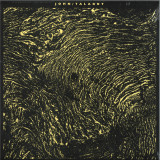
John Talabot - ƒin LP

John Talabot

ƒin LP

12inchPERMVAC089-1
Permanent Vacation
19.09.2025

If there is one person, who has been causing a stir on the international club circuit recently, it is Barcelona's John Talabot. Already his debut “My Old School“ (which is meant literally by the way) on Permanent Vacation in 2009 and shortly after that the single “ Sunshine”, which he put out on his own Hivern Disc imprint, made him one of the most promising musicians of the Spanish electronic scene. And those two releases also already set the mark for John Talabot’s unparalleled music: raw, loopy, heavy on the kick drum, sample based, moderate on the tempo, distorted on the drums and light years away from the clean and ever revolving house sound of today. This unique style which also blends influences from afro beat, Detroit techno, Chicago house and cosmic disco, but also northern soul or the energy of Flamenco, immediately turned some heads around. James Murphy, Âme and Aeroplane started including Talabot music in their sets like it was the most natural thing. However - and this is quite rare - he not only gained legions of fans in the house and disco community, but also amongst the leftfield pop and indie rock followers. NME and Resident Advisor both had “Breakthrough“ features on John Talabot and he can be proud of a “Best New Music“ dubbing on
Pitchfork. (Being rather elusive on showing his face in magazines or the web it also came to some funny rumors that John Talabot was the alter ego of a well-known techno producer from Detroit).
At the same time he drew the attention of like-minded artists like James Holden and Luke Abott from Border Community, Blondes or Delorean, which lead to a bunch of fertile collaborations: Luke Abbott and Blondes remixed Talabot’s “Sunshine“ single , John Talabot remixed a track by Delorean and vice versa Delorean’s Ekhi contributed vocals to the track “Journeys “ on John’s album). Another example is the Young Turks Label (home of Jamie XX, Holy Fuck, El Guincho or SBTRKT ) on which he released the “Families“ EP in 2010. It was praised beyond limits. Pitchfork for
instance hailed: “… where pop and house influences sweetly buffer up against one another to provide an unyielding sense of elation“ and even brought Talabot a comparison with artists like Four Tet or Caribou.
While staying true to his sound, John Talabot has nevertheless shown a constant evolution as a producer since his first release. He has traced a solid musical path that has turned him into one of the big references of European House and has made him also a highly in demand Remixer (for the likes of The XX, Francesco Tristano’s “Aufgang” project, Shit Robot on DFA, Thaiti 80, Joakim or Teengirl Fantasy to name just a few ).
A progression that now crystallizes in “ƒin”, his first full-length album for Permanent Vacation. A record, in which the Barcelona mastermind sets aside the danceable immediacy to expand his stylistic palette more than ever. For that purpose, Talabot melts all the elements that have constructed his distinctive sound until now and makes them emerge from a new perspective, in which the construction of complex song structures, intricate rhythms and superpositions of ever-evolving melodies and atmospheres pick up the baton of the “a kick-drum and a sampler” philosophy of his initial productions. The result brings us 11 tracks (we should call them songs really!) dominated by dark ambiances, gaseous textures and bittersweet moods that, above all, reveal a kind of vivacity that’s really hard to find in contemporary electronics. “Fin” is far from being a track collection. From the majestic opener “Depak Ine“ to it’s solemn ending with
“So Will Be Now“ , one of the two tracks that features Talabot’s soul and label mate Pional, each song traces an overall dialogue with the rest, culminating a highly emotional journey through Talabot’s always compelling and unique musical vision.

nicht am Lager

Bestelle jetzt und wir bestellen den Artikel für dich beim Lieferanten.

19,12
Dave Mothersole, Rob Pearson - Wanting You

Unearthing old gems, remastering and bringing them back to the forefront is what Private Parts are up to for release number 07 in the catalog. Original London Tech masters Rob Pearson & Dave Mothersole originally released Wanting You in the early 00’s, but with the extreme prices on Discogs it seemed like the right choice to get this re pressed for your pleasure.

Wanting you is everything you ever wanted from those timeless sounds of London Tech. Dubbed out vocals, tribal rhythms, pulsating acid lines and a groove to keep you locked right in.

Flipping to the B, and the biggest thank you to Rob himself for spending weeks searching old DAT tapes in his loft to find the original pre master of the driving remix from the late Iteration X. They don’t come more heads down, and hypnotic than this. Throbbing bass stabs, luscious chords and in true Iteration X style, a roller that you could keep you shaking for days on end.

It only seems fitting to dedicate this re issue to Simon Copleston, Mr Iteration X. Thank you for the music!

nicht am Lager

Bestelle jetzt und wir bestellen den Artikel für dich beim Lieferanten.

13,87

Last In: vor 5 Monaten
Kyoto Jazz Massive - KJM EOANDO LP

In 2024, Kyoto Jazz Massive released their third album as a digital-only project, 30 years after their debut. It now receives the honor of a special vinyl edition, featuring brand-new exclusive mixes by Young Pulse—elevating these already great tracks to even greater heights, for both your ears and your feet.
This marks the first and exclusive collaboration between KJM and Echoes Of A New Dawn Orchestra (aka Jéroboam), the unique Parisian band that has been performing live with KJM across Europe for the past three years. On this occasion, KJM recorded four new tracks with EOANDO, including three original songs ("Power", "Love Wars", and "Impulsive Procession") and a new rendition of “Stand Up”, a previously released composition. To complete the album, you'll also find a stunning cover of KJM’s iconic track "Substream" by EOANDO, as well as their signature piece, “EOANDO's Theme”.
"Power" and "Stand Up" were recorded with Vanessa Freeman, while "Love Wars" features Bembe Segue. This London-based duo has been singing live with KJM since 2004.
"Power" is a crossover anthem, blending jazz-funk and French disco with a gospel touch. Vanessa Freeman’s uplifting lyrics call for collective awareness and energize audiences. "Love Wars" is a live-band interpretation of broken beat with a boogie spirit, enhanced by Bembe Segue’s sharp and spiritual vocals. “EOANDO’s Theme” was specially composed by Echoes Of A New Dawn Orchestra for KJM, capturing the Okino Brothers' love for boogie-funk jams with Brazilian and Balearic influences reminiscent of Azymuth.
“Impulsive Procession” fuses Afro, funk, jazz, fusion, soul, rock, house, and techno—drawing inspiration from several of KJM’s most respected musical heroes. A brand-new version of “Stand Up”, originally released in 2008, was re-recorded live in the studio with EOANDO and fresh vocals by Vanessa Freeman.
The album closes with a reimagined version of “Substream”, one of KJM’s most beloved tracks, covered by EOANDO for the official Tokyo Crossover/Jazz Festival 2023 compilation. This new version was recorded as an organic disco interpretation at Danilo Plessow’s studio in Paris.

nicht am Lager

Bestelle jetzt und wir bestellen den Artikel für dich beim Lieferanten.

18,91

Last In: vor 3 Monaten
Various - Italians Do it Better (A Tribute to Madonna) 2x12"

Since 2006, listeners have been curious about the origin of the label name Italians Do It Better. Some say it's an homage to Italo Disco, others guess it's related to ancestry, but in fact it's a nod to the iconic T-shirt Madonna wears in the "Papa Don't Preach" video circa 1986.
Fast forward to a world pandemic... To encourage creativity & lift spirits, Italians Do It Better President, Megan Louise asked every artist “If you could cover your favourite Madonna song…What would it be?”

As a tribute to their label muse & the impact Madonna’s music has had on the world around us, Italians Do It Better are sharing a compilation of covers simply titled “Italians Do It Better”. One of the tracks (“Lucky Star” by Club Intl) is even produced by Max Kamins, the son of Mark Kamins, the New York DJ who helped break Madonna in the early 1980's. From the experience he says “Dance music was the soundtrack of my early childhood. Working on "Lucky Star" reconnected me not only to my father, but also reminded me that a good song is timeless".

Executive produced by Johnny Jewel, the compilation is a passport to 20 covers from the bedrooms of 19 artists across 10 different countries.

nicht am Lager

Bestelle jetzt und wir bestellen den Artikel für dich beim Lieferanten.

44,50

Last In: vor 16 Monaten
Michael Franks - The Reworks 2

Michael Franks

The Reworks 2

12inchTSTDREWORKS03
Too Slow To Disco
12.09.2025

lim. Colored Vinyl Edition (Oxblood)

Part 2 of our series of official reworks of The Warmer Music catalogue
For this new 12 Inch we are still in the warm Michael Franks land. A full MF compilation will be coming later.
After our first 12 Inch with DoctorSoul Reworks, we now return with more smooth, high class Edits/Reworks by 3 outstanding modern producers of soulful/jazzy dance vibes.
Michale Franks is one of the most prolific musicians of the Californian Westcoast/Jazz/AOR/Yacht scene, the one and only Michael Franks, who approved personally the new version. Over the languorous course of 33 years and 16 albums, Michael Franks has mesmerized an international legion of fans with his one-of-a-kind artistry. Seamlessly weaving lyrics of stunning sensuality, wit, reflection and literary eloquence over music that tastefully utilizes top shelf shadings of jazz, soul, pop, chamber and music from around the globe. His music was covered by countless international stars, like The Carpenters, Shirley Bassey, Rin

nicht am Lager

Bestelle jetzt und wir bestellen den Artikel für dich beim Lieferanten.

14,71

Last In: vor 6 Monaten
Various - Dolores: Salsa & Guaracha From 70's French West Indies

In Guadeloupe, many people think that jazz and ka music are like a ring and a finger. To some extent, the same could be said about so called Latin music and the music played in the French West Indies.

Both aesthetics were born in the Caribbean and bear so many connections that they can easily be considered cousins. In constant dialogue, there are lots of examples of their fruitful alliance and have been for a while. The English country dance that used to be practiced in European lounges came to be called kadrille in Martinique and contradanza in Cuba. They both featured additional percussion instruments inherited from the transatlantic deportation. Drawing from shared feelings about the same traumatized identity – later to be creolized – it would be hard not to assume that they were meant to inspire each other. The golden age of the orchestras that graced the Pigalle nights during the interwar period further proves the point. As soon as the 1930s, Havana-born Don Barreto naturally mixed danzón and biguine music in a combo based at Melody's Bar. In the following decade, Félix Valvert, a conductor who was born and raised in Basse-Terre in Guadelupe, also worked wonders in Montparnasse with La Coupole, which was an orchestra made up of eclectic musicians. Afro- Caribbean performers of various origins were often hired on rhythm and brass sections in jazz bands, which used to enliven the typical French balls of the capital. In the 1930s and onwards, Rico’s Creole Band was one of them.


Martinican violinist-clarinettist Ernest Léardée, who would become the king of biguine music as well as the main figure of French Uncle Ben's TV commercials (a dark stigma of post-colonial stereotypes), had musicians from the whole Caribbean sphere play at his Bal Blomet – and they all enchanted "ces Zazous-là" (according the words of Léardée's biguine-calypso piece). In les Antilles (French for French West Indies), music history started to speed up in the 1950s, when trade expanded and radio stations grew bigger. The Guadelupean and Martiniquais youth tuned in their old galena radio sets to South American and Caribbean music. As for the women traders, les pacotilleuses, they bought and sold goods across different islands (the "passing of items through various hands" was thought to be most pleasurable) and brought back countless sounds in their luggage. Such was the case of Madame Balthazar, who once returned from Puerto Rico with the first 45rpm and 33rpm to ever enter Martinique.

Out of this adventure was created the famous Martinican label La Maison des Merengues, a music business she opened and undertook with her husband and which proved to be a major landmark. At the end of the 1950s, in Puerto Rico, Marius Cultier competed in the Piano International Contest playing a version of Monk's Round 'Midnight. He won the first prize and this distinction foreshadowed everything that was to come. Cultier, the heretic Monk of jazz, was quickly praised for writing superb melodies, always tinged with a twist that conferred a unique sound to his music. It didn't take long for the gifted self-taught musician to get to play with Los Cubanos, making a name for himself thanks to his impressive maestria on merengues.

The rest is history. Besides, in the late 1950s, Frantz Charles-Denis, born into the upper middle class in Saint-Pierre and better known by his first name Francisco, went back home after working at La Cabane Cubaine – a club located rue Fontaine where he had caught the Latin fever. Francisco's music was therefore heavily marked by his Cuban cousins' influence, which gave the combos he led a specific style and also led to renewal. Things were swinging hard in La Savane, located in the main square in Fort-de-France. He set up the Shango club close by and tested out the biguine lélé there, a new music formula spiced up with Latin rhythms. Soon afterwards, fate had him fly to Puerto Rico and Venezuela.

As for percussionist Henri Guédon (percussions were only a part of his many talents), he was born in Fort-de-France in May 22nd 1944, the day marking the celebration of the abolition of slavery. As an old man, he could remember that in " his father's Teppaz, a lot of hectic 6/8 music was constantly playing...". In the opening lines of his Lettre à Dizzy, a small illustrated collection of writings published by Del Arco, he highlighted the huge impact that cubop had on him as a teenage boy, around 1960. He eventually turned out to be the lider maximo in La Contesta, a big band steeped in Latin jazz. He was also the one who originated the word zouk to describe music which brought the sound of the New York barrio to Paris. It was the culmination of a journey that started in Sainte-Marie: "a mythical place for bélé, the equivalent of Cuban guaguancó". In the early 1960s, the tertiary economy developed to the detriment of agriculture. Yet rural life was where roots music emerged in Martinique and in Guadeloupe.

Record companies played a major part in the process of Latin versions sweeping across the islands – before reaching everywhere else. Producer Célini, boss of the great Aux Ondes label, and Marcel Mavounzy, both the head of Émeraude records - a firm which was founded in 1953 - as well as the brother of famous saxophonist Robert Mavounzy, were big names to bear in mind. Although there were many of them - all of whom are featured on this record - Henri Debs was definitely the major figure in the recording adventure. He proved to be so influential that he even got compared to Berry Gordy. In the mid 1950s, when he acquired his first Teppaz, he worked on his first compositions: a bolero and a chachacha. Then, he became the one man who made people discover Caribbean music, from calypso to merengue. He was among the first ones to rush out to San Juan, Puerto Rico, to buy records and distribute them through a store run by one of his brothers in Fort-de-France. He had members of the Fania All Star come and perform there, which he was madly proud about. He was also the first one to pay attention to Haitian music, such as compas direct and various other rhythms which would soon flood the market. As a result, many of the combos hitting his legendary studio would end up boosted by widespread "Afro-Latin" rhythms. However, he never denied his identity: gwo ka drums were given a major role, although they were instruments which had long been banned from the "official" music spheres. The present selection bears witness to such a creative swarming. Here are fourteen tracks of untimely yet unprecedented cross-fertilization: all types of music rooted in the Creole archipelago have found their way, whatsoever, to the tracklisting. Whether originating from the city or being more rural, they all go back to what Edouard Glissant, in an interview about the place of West Indian music in the Afro-American scope, called "the trace of singing, the one which got erased by slavery." "It is so in jazz, but also in reggae, calypso, biguine, salsa... This trace also manifests through the drums, whether Guadelupean, Dominican, Jamaican or Cuban... None of them being quite the same. They all point to the idea of a trace, seeking it out and connecting to each other through it. This is the hallmark of the African diaspora: its ability to create something new, in relation to itself, out of a trace. It may be the memory of a rhythm, the crafting of a drum, a means of expression which doesn't resort to an old language but to the modalities of it." The opening track features one of the emblematic orchestras of this aesthetic identity, criscrossing many music types from the archipelago. The 1974 Ray Barretto guajira – Ray Barretto was a major New York drummer influenced by Charlie Parker and Chano Pozzo – is magnificently performed by Malavoi, a legendary Fayolais group (i.e from Fort-de-France). Additionally, the compilation ends on a piece by Los Martiniqueños de Francisco. It symbolically closes the circle as it is a genuine potomitan of Martinique culture which also functions as a tireless campaigner for Afro-Caribbean music. Practicing the danmyé rounds (a kind of capoeiria) to the rhythm of the bèlè drum, it delivers a terrific Caterete, a kind of champeta of Afro- Colombian obedience which was originally composed by Colombian Fabián Ramón Veloz Fernández for the group Wgenda Kenya. The icing on the cake is Brazilian Marku Ribas, who found refuge in Martinique in the early 1970s, bringing his singing to the last trance-inducing track. These two "versions" convey the whole tone of a selection composed of rarities and classics of the tropicalized genre, swarming with tonic accents and convoluted rhythms. It is the sort of cocktail that the West Indians never failed to spice up with their own ingredients. For instance, the Los Caraïbes cover of Dónde, a famous Cuban theme composed by producer Ernesto Duarte Brito, has a typical violin and features renowned Martinique singer Joby Valente and his piquant voice.


The track used to be – or so we think – their only existing 45rpm. The meaningful Amor en chachachá by L'Ensemble Tropicana, a band which included Haitian musicians among whom was composer and leader Michel Desgrotte, also recalls how Latin music was pervasive in the tropics in the mid-1960s. They were the ones keeping people dancing at Le Cocoteraie in Guadelupe and La Bananeraie in Martinique. Around the same time, another "foreign" band, Congolese Freddy Mars N'Kounkou's Ryco Jazz, achieved some success on both islands by covering Latin jazz classics – such as their adaptation of Wachi Wara, a "soul sauce" by Dizzy Gillespie and Chano Pozo whose interweaving of strings and percussions can have anyone hit the dancefloor. How can you resist Dap Pinian indeed, a powerful guaguancó by Eugene Balthazar, performed by the Tropicana Orchestra and published by the Martinique-founded La Maison des Merengues? It also acts as a symbol of the maelstrom at work. Going by the name Paco et L'orchestre Cachunga, Roger Jaffory used to play guaguancó too: his Fania-inspired Oye mi consejo is one example of his style. Baila!!!!! Dancing was also one of the Kings' focus points. Oriza is a Puerto Rican bomba and a "classic" originally composed by Nuevayorquino trumpeter Ernie Agosto, which reserves major space for brasses, giving it a special sheen.

Emerging from the New York barrios crucible was also La Perfecta, a Martinique group originating from Trinidad, whose name directly references the totemic Eddie Palmieri figure as well as his own band, also called La Perfecta. Here they borrow Toumbadora from Colombian producer and composer Efraín Lancheros and interpret it by emphasizing percussions, which set fire to the track even more than the wind instruments. The same goes for Martinique's Super Jaguars, who use Tatalibaba – a composition by Cuban guitarist Florencio "Picolo" Santana which was made famous by Celia Cruz & La Sonora Matencera – as a pretext for sending their cadences into a frenzy. In a more typically salsa vein, the Super Combo, a famous Guadelupean orchestra from Pointe-Noire that was formed around the Desplan family and had Roger Plonquitte and Elie Bianay on board, adapt Serana, a theme by Roberto Angleró Pepín, a Puerto Rican composer, singer and musician also known for his song Soy Boricua. Here again, their vision comes close to surpassing the original. In the 1970s, L'Ensemble Abricot provided a handful of tracks of different syles, hence reaching the pinnacle of the art of achieving variety and giving pleasure. They played boleros, biguines, compas direct, guaguancó and even a good old boogaloo - the type they wanted to keep close to their hearts for ever, "pour toujours", as they sang along together in one of their songs. Léon Bertide's Martinican ensemble excelled at the boogaloo which had been composed by Puerto Rican saxophonist Hector Santos for the legendary El Gran Combo.


Three years later, in 1972, Henri Guédon, with the help of Paul Rosine on the vibraphone, tackled the Bilongo made famous by Eddie Palmieri. Such a classic!!!!! And so were the Aiglons, the band from Guadelupe: choosing to execute Pensando en tí, a composition by Dominican Aniceto Batista, on a cooler tempo than the original, they noticeably used a wonderfully (un)tuned keyboard in place of the accordion. On the high-value collectible single – the first one released by Les Aiglons under the Duli Disc label – there is a sticker classifying the track under the generic name "Afro". Now that is what we call a symbol. Jacques Denis

nicht am Lager

Bestelle jetzt und wir bestellen den Artikel für dich beim Lieferanten.

21,43

Last In: vor 30 Tagen
BARONS OF SOUL - Time or Tide / I Loved and I Lost
  • A1: Time Or Tide
  • B1: I Loved And I Lost

Occasionally, one experiences serendipitous events in life. On the 13th of July this year, I received a message from Tim Trapnell, who had discovered an unknown 60’s track on YouTube and expressed his admiration for its exceptional quality. Intrigued by the message, I clicked on the link and was immediately captivated by the musical composition. Within minutes, I embarked on a quest to uncover more information about the band and the particular track. On the 16th of July, only three days after, I’ve received a message from Jim Bojorquez (aka JC), the lead vocalist of the Baron of Soul, “Hello Yann, I was delighted to hear that you have discovered and enjoyed my original composition, ‘Time or vs Tide.’ It was written by myself and Clark Baldwin. that the recording was performed live and this song was never released in any format back in the day. I have reached out to Jim Bojorquez the next day and we spent a considerable amount of time conversing via video chat about his illustrious 60-year music career as an artist in San Jose, California.

I proposed to Jim that I could release two songs from The Barons of Soul through Epsilon Record Co. I re-mastered both songs and made a deal with Jimmie that same day. So today, I am so pleased to present these two previously unissued tracks. "Time or Tide" is a powerful uptempo piece featuring an exceptional brass section and a Hammond B3. The vocals are exceptionally punchy and catchy, ensuring an unforgettable listening experience. "I Loved and I Lost” is a remarkable take of the Impressions classic written by Curtis Mayfield’s If you are an enthusiast of 60s uptempo music like Tim and myself, then this new and exceptional 45 is an absolute must-listen and must have!

vorbestellen10.09.2025

erscheint voraussichtlich am 10.09.2025

19,96
Faetooth - Labyrinthine LP 2x12"
  • 1: Iron Gate
  • 2: Death Of Day
  • 3: It Washes Over
  • 4: Hole
  • 5: White Noise
  • 6: Eviscerate
  • 7: October
  • 8: Mater Dolorosa
  • 9: The Well
  • 10: Meet Your Maker
auch erhältlich

Sea Blue Vinyl[38,61 €]

Cassette[18,07 €]


Los Angeles trio Faetooth sophomore album Labyrinthine is a deeply felt exploration of emotional weight: grief, memory, uncertainty, and the quiet work of growing around your own wounds. Following the band's 2022 debut Remnants of the Vessel, which introduced the band’s signature blend of heaviness and mysticism, Labyrinthine pushes further inward. True to its name, the album winds through a maze of feeling and form, where meaning is never handed over easily. It’s rooted in self-discovery through disorientation, the idea that understanding comes not from escape, but from getting lost. Ari May (guitars and vocals), Jenna Garcia (bass and vocals), and Rah Kanan (drums) manage to stay grounded in the immediate in parallel with fantasy themes of the band's namesake. Labyrinthine holds space for this contradiction; tenderness and intensity, restraint and release. The band's self-branded “fairy doom” sound fits between shoegaze, doom, and grunge. It isn’t just texture; it’s a framework for navigating the unsaid. Like the myth that inspired its title, Labyrinthine doesn’t end in victory, but in confrontation—not with escape, but with the Minotaur. Only here, the Minotaur isn’t a monster. It’s something quiet and more familiar: unresolved feelings, old memories, and sadness that refuse to stay buried. The album winds like a maze, sometimes heavy, sometimes hushed, always intentional. Faetooth isn’t chasing catharsis. They’re creating space to reflect, to feel, and maybe to get a little lost along the way.
Artist quote: "White Noise" emerged from a diary entry, and is a relentless and intense reflection on inner turmoil. We’re often drawn to the familiar, even when we don’t realize we’re reaching out for it. It is an emotional upheaval, carrying harsh truths that weigh heavily on the heart. Guitarist, Ari May mentions, “Performing the song always takes me back to a specific place, even if just for a moment.”
“Riffs and melodies brimming with loneliness and longing… this band’s incantations affect my mood the whole day after listening.” — The Sleeping Shaman
“Bringing otherworldly hazy doom goodness… dreamy clean vocals, echoing harsh vocals, entrancing riffs, meditative shoegaze melodies.” — Nine Circles
“Slow, lumbering behemoths of great weight… couched in a melancholy atmosphere and explosions of crushing heaviness.” - Where Strides The Behemoth

vorbestellen05.09.2025

erscheint voraussichtlich am 05.09.2025

35,25
Faetooth - Labyrinthine LP 2x12"

Faetooth

Labyrinthine LP 2x12"

2x12inchFR184LPX
Flenser Records
05.09.2025

Los Angeles trio Faetooth sophomore album Labyrinthine is a deeply felt exploration of emotional weight: grief, memory, uncertainty, and the quiet work of growing around your own wounds. Following the band's 2022 debut Remnants of the Vessel, which introduced the band’s signature blend of heaviness and mysticism, Labyrinthine pushes further inward. True to its name, the album winds through a maze of feeling and form, where meaning is never handed over easily. It’s rooted in self-discovery through disorientation, the idea that understanding comes not from escape, but from getting lost. Ari May (guitars and vocals), Jenna Garcia (bass and vocals), and Rah Kanan (drums) manage to stay grounded in the immediate in parallel with fantasy themes of the band's namesake. Labyrinthine holds space for this contradiction; tenderness and intensity, restraint and release. The band's self-branded “fairy doom” sound fits between shoegaze, doom, and grunge. It isn’t just texture; it’s a framework for navigating the unsaid. Like the myth that inspired its title, Labyrinthine doesn’t end in victory, but in confrontation—not with escape, but with the Minotaur. Only here, the Minotaur isn’t a monster. It’s something quiet and more familiar: unresolved feelings, old memories, and sadness that refuse to stay buried. The album winds like a maze, sometimes heavy, sometimes hushed, always intentional. Faetooth isn’t chasing catharsis. They’re creating space to reflect, to feel, and maybe to get a little lost along the way.
Artist quote: "White Noise" emerged from a diary entry, and is a relentless and intense reflection on inner turmoil. We’re often drawn to the familiar, even when we don’t realize we’re reaching out for it. It is an emotional upheaval, carrying harsh truths that weigh heavily on the heart. Guitarist, Ari May mentions, “Performing the song always takes me back to a specific place, even if just for a moment.”
“Riffs and melodies brimming with loneliness and longing… this band’s incantations affect my mood the whole day after listening.” — The Sleeping Shaman
“Bringing otherworldly hazy doom goodness… dreamy clean vocals, echoing harsh vocals, entrancing riffs, meditative shoegaze melodies.” — Nine Circles
“Slow, lumbering behemoths of great weight… couched in a melancholy atmosphere and explosions of crushing heaviness.” - Where Strides The Behemoth

vorbestellen05.09.2025

erscheint voraussichtlich am 05.09.2025

38,61
Faetooth - Labyrinthine (TAPE)

Faetooth

Labyrinthine (TAPE)

CassetteFR184MC
Flenser Records
05.09.2025

Los Angeles trio Faetooth sophomore album Labyrinthine is a deeply felt exploration of emotional weight: grief, memory, uncertainty, and the quiet work of growing around your own wounds. Following the band's 2022 debut Remnants of the Vessel, which introduced the band’s signature blend of heaviness and mysticism, Labyrinthine pushes further inward. True to its name, the album winds through a maze of feeling and form, where meaning is never handed over easily. It’s rooted in self-discovery through disorientation, the idea that understanding comes not from escape, but from getting lost. Ari May (guitars and vocals), Jenna Garcia (bass and vocals), and Rah Kanan (drums) manage to stay grounded in the immediate in parallel with fantasy themes of the band's namesake. Labyrinthine holds space for this contradiction; tenderness and intensity, restraint and release. The band's self-branded “fairy doom” sound fits between shoegaze, doom, and grunge. It isn’t just texture; it’s a framework for navigating the unsaid. Like the myth that inspired its title, Labyrinthine doesn’t end in victory, but in confrontation—not with escape, but with the Minotaur. Only here, the Minotaur isn’t a monster. It’s something quiet and more familiar: unresolved feelings, old memories, and sadness that refuse to stay buried. The album winds like a maze, sometimes heavy, sometimes hushed, always intentional. Faetooth isn’t chasing catharsis. They’re creating space to reflect, to feel, and maybe to get a little lost along the way.
Artist quote: "White Noise" emerged from a diary entry, and is a relentless and intense reflection on inner turmoil. We’re often drawn to the familiar, even when we don’t realize we’re reaching out for it. It is an emotional upheaval, carrying harsh truths that weigh heavily on the heart. Guitarist, Ari May mentions, “Performing the song always takes me back to a specific place, even if just for a moment.”
“Riffs and melodies brimming with loneliness and longing… this band’s incantations affect my mood the whole day after listening.” — The Sleeping Shaman
“Bringing otherworldly hazy doom goodness… dreamy clean vocals, echoing harsh vocals, entrancing riffs, meditative shoegaze melodies.” — Nine Circles
“Slow, lumbering behemoths of great weight… couched in a melancholy atmosphere and explosions of crushing heaviness.” - Where Strides The Behemoth

vorbestellen05.09.2025

erscheint voraussichtlich am 05.09.2025

18,07
Ara-u & Ben Pest - Kaos Sympatis Ep

Ben Pest and ARA-U unite for the next release on No Static / Automatic. Kaos Sympatic EP started life with the pair recording jams of various vintage studio kit, including an EMS VCS3, Roland VP330 and an Orgon Systems prototype known only as the “Silver Box”, which developed into full tracks over subsequent sessions. Ben Pest has been busy releasing high grade club tracks including collabs with Radioactive Man and Kursa for Asking For Trouble and Love Love Records last year, and with solo EPs dropping on Cultivated Electronics and Posh End music. Here he links with NS/A boss ARA-U, turning out some of their headiest material to date.

The EP kicks off with ‘Err Hello’, it’s wholly discordant, lairy, and unapologetically weird. ‘‘Get A Grip’ drifts in with hallucinatory wafts of sound over a warped riff, building into a granular, distorted headfuck of a hoover-bass moment. This one will make the subs rattle on the right side of distortion. On the B Side title track ‘Kaos Sympatic’ gets stuck in with a big broken beat and guttural sub that transforms into a techno drop to drive this track home. Finishing up, ‘Slapback’ serves up a cut of high energy electro funk, coming off like classic ERP on heat. Limited edition purple vinyl.

nicht am Lager

Bestelle jetzt und wir bestellen den Artikel für dich beim Lieferanten.

20,97

Last In: vor 6 Monaten
Various - Nihon No Wave  2x12" + 7"

Japan’s electronic music scene has always stood out as uniquely distinctive. In the late 1970s and early 1980s, a wave of underground projects, bands, and independent labels—primarily based in Tokyo and Osaka—began crafting their own sound. Inspired by the post-punk, new wave, and experimental movements emerging from Europe and North America, these artists embraced a DIY ethic, using whatever technology they had access to in order to forge something entirely their own.

This movement, often referred to as the "Nippon-wave" scene, remained largely hidden from the outside world. Many of its releases—on cassette tapes, flexi-discs, and privately pressed vinyl—were never distributed beyond Japan’s borders, making them rare treasures for the few who managed to discover them. “Nihon No Wave” presents a selection of these long-overlooked recordings, making them accessible to listeners beyond Japan for the first time.

vorbestellen05.09.2025

erscheint voraussichtlich am 05.09.2025

39,45
PICKLE DARLING - BATTLEBOTS
  • Obsolete
  • Violence Voyager
  • Earthshaped
  • Congratulations Champion
  • Human Bean Instruction Manual
  • Steps
  • Massive Everything
  • Infinite Trolley

Pickle Darling has always existed just outside of the periphery. In a heightened time of fast music, algorithmic consumption and rapid virality, Lukas Mayo (they/them) has remained focused on the album. Their discography is a reflection of their creative evolution, and they deliberately look for ways to push sonic boundaries from release to release. Since debuting with Bigness in 2019 followed by Cosmonaut in 2021, Mayo has curated a catalog that is deeply personal and strangely tactile, where tiny, unexpected details_an off-kilter loop, a whispered aside, the warmth of an old Casio_become as crucial as melody itself. Their 2023 LP Laundromat was a precise and polished expansion of that world, a record that felt like it had been carefully placed behind glass. Their forthcoming fourth album, Battlebots, by contrast, is unruly and full of static: a collection of songs that feel like they could only ever exist on scratched CD-Rs passed between friends. Self-recorded in their home studio in Christchurch, New Zealand, it finds Mayo taking a scalpel to their own songwriting. Songs were stretched, chopped, reversed. Some ideas started as "unlistenable garbage" before morphing into something unexpectedly beautiful. If a song felt too straightforward, Mayo had to mess it up. That friction of old and new, organic and digital, melody and noise is what drives Battlebots. Drawing inspiration from a strange, scattered lineage: Four Tet's Rounds, The Books, Neneh Cherry's Broken Politics, The Wrens' Three types of reading ambiguity, but also the emotional directness of 2000s pop like Madonna's Ray of Light and Robyn's Body Talk, the result is an album that feels like a glitch in the system, pushing against past constraints while embracing the weird, beautiful mess of making something new.

vorbestellen05.09.2025

erscheint voraussichtlich am 05.09.2025

22,27
World Brain - Open Source

Lucas Chantre, aka WORLD BRAIN, last graced us with a solo release half a decade ago, with 2019’s Peer 2 Peer. As its name suggests, that album explored the promise and perils of universal connectivity via quirked-up songwriting and instrumental psychedelia. His new release, Open Source, deepens this internal and external journey. Bursting beyond the four walls of ‘bedroom pop’ and reflecting a move from Berlin to Paris—where much of the album was recorded—and on to Brussels, the album has a jazzy, cinematic scope (as on the Brubeck-inspired march “Fromage collatéral,”) enveloping the listener in a cosmic-pastoral audiosphere.

There are still many tones that evoke the software sounds of decades past (the exemplar here is “cAPTCHA,” whose virtual marimba and vocalese suggest a breathless, Exotica-inspired introduction .mov for the information superhighway) but the palette has become richer and more organic, lead by the woodwinds which play a major role throughout, with flute provided by labelmate Martha Rose. (On the aforementioned “cAPTCHA” one also hears the world-class whistling talents of the incomparable Molly Lewis.)

Yet the single most noticeable new element may be the use of Chantre’s native French, sung by his sister on “Ville fleurie” and the gorgeous, fluttering “Minute papillion” (the title an idiomatic injunction to slow down!) Chantre initially wrote these lyrics in English, but felt something wasn’t quite right, only realizing what was off when he heard them sung in another language. That spirit of discovery – of finding a new spark in returning home – suffuses Open Source. It invites us to play, beckons us to relax, reminds us to find serenity amidst the churn of the present: minute papillon, dans le tourbillon.

nicht am Lager

Bestelle jetzt und wir bestellen den Artikel für dich beim Lieferanten.

19,54

Last In: vor 7 Monaten
The Ballistic Brothers - Blacker (7")

*Re-press of first-time 7″ release / limited 300 copies red vinyl / Shipping from 11 August* If you were part of a clubbing tribe in 1994 – any clubbing tribe – you will have danced to the Ballistic Brothers astounding ‘Blacker’. A track on a mysterious 12-inch that no-one could quite work out if it was a 12-inch single of a cheaply packaged album (it was in effect a 12 inch EP), but in the end it didn’t matter. It provided any DJ with a guaranteed dancefloor winner. A sly mix of beats and samples, it is nothing short of an anthem, and with the full cooperation of the group, we are making it available for the first time as a 7-inch single. The Ballistics – Ashley Beedle, Rocky, Diesel and David Hill – went on to record a further 12-inch EP and two full-length albums, making them one of the cult names of 1990s music. On the flip of this seven is one of their most popular cuts, what at the time was an LP-only track ‘Cubafro Con Amigos’, which has been specially edited for this release. Following the sellout of the first-time 7″ in 2023, we are excited to offer a repress. Limited to 300 copies and pressed on transparent red vinyl in a black disco bag!

nicht am Lager

Bestelle jetzt und wir bestellen den Artikel für dich beim Lieferanten.

13,87

Last In: vor 5 Monaten
Artikel pro Seite:
N/ABPM
Vinyl