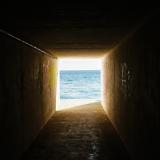
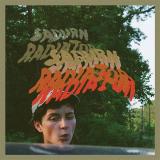
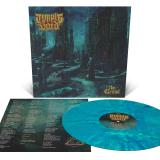
Artwork by Taychin Dunnvatanachit.
Siamese Twins embarks on its 10th release milestone with the acclaimed Thai performance artist Tul Waitoonkiat. In หนึ่งคำถาม (One Question), Waitoonkiat's poetry is conjoined into a versatile sonic meeting of minds, created in collaboration with producers Black Merlin, Sapphire Slows, and Sleep D. Aligning seamlessly with Siamese Twins' trademark ethos of cultural reflection and interdisciplinary exploration.
Waitoonkiat, known for his socio-political work "2553," which reflects on the 2010 military crackdown in Thailand, has presented his novel "Silence is Violence" through multidisciplinary art exhibitions across Bangkok. One of these collaborations with Siamese Twins’ Khun Fluff in 2022 established a profound connection and laid this release's foundational recording layer. The recorded poem explores existential themes, pondering the endless cycle of questioning and the dichotomy between silence and imagination, darkness and light, with its contemplative imagination setting the stage.
The A-side unveils George Thompson's universe, known in the terrestrial realm as Black Merlin, with two noirish cinematic explorations that compose Waitoonkiat’s trademark expressive and enigmatic voice into the release's fabric. Showcasing Thompson’s ability to create hypnotic, depth-charged soundscapes that captivatingly feed into a broader story rather than claiming center stage.
The B-side begins with a delicate approach to sound design, crafted through the Buchla synthesizer by Japanese modular artist Sapphire Slows. The charm of this version lies within the sustained notes that gently inhale and exhale between enigmatic vocoder effects and layers of beauty, nature, and technology.
B2 closes with a seven-and-a-half-minute peak timer revolving around a pulsating bassline and driving force of drum energy. One craving for packed warehouses and bush raves by the Australian wizards of OZ and Butter Sessions label owners, Sleep D, aka Corey Kikos and Maryos Syawish.
Buscar:force of nature
avigating vibrant influences of Latin-jazz, Tropicália and joyful grooves; multi-instrumentalist, songwriter, singer and producer Inês Loubet presents her utterly gorgeous debut album ‘Senga’. The album covers Inês’ experiences over the past five years, originating in Portugal, travelling through Brazil, before finding home in London.
Previously, Inês co-wrote and performed on Caravela’s album 'Orla' on None More Records, which was praised by the likes of Gilles Peterson and The Line of Best Fit. Her music has been played on Jazz FM, BBC 6 Music, BBC Radio 3, NTS and Soho Radio. A relentless live performer, she’s played alongside Brazilian legends Gilberto Gil & João Bosco, graced the stage of The Royal Albert Hall, Union Chapel, and O2 Shepherds Bush, around UK and international tours.
The album explores a range of profound themes including nature, travel, grief, unconditional love, separation, family dynamics, and the nuanced experience of womanhood in contemporary society. Dedications to the music, philosophy and revolutionary history of samba (‘Sambo Mesmo Sem’), everyday observations of joy (‘Guri’), and motivating generational change for the better (‘Sab Sabim’); glide across romantic harmonies and the Brazilian rhythms at the melodic heart of the album.
“I started writing whilst living in Salvador da Bahia, Brazil, in February 2020”, says Inês. “I was shy and hadn't written fully composed tracks before then. During lockdown I received support from The Arts Council’s DYCP, started making demos, gained confidence and started playing them live”. In October 2022 Inês was presented with the Drake YoLanda award and went to Giant Wafer studio in Wales for three days, before recording the final vocals at her home studio and mixing and mastering in Porto, Portugal.
Inês is joined on the album by a band of close friends. Percussionist and long-time collaborator Jansen Santana from Salvador da Bahia brings the soul of the drums, the tambor. “I always have the Bahia drums present in my mind when I write a new composition. I studied Latin percussion at University and then lived in Salvador absorbing all that heritage and knowledge”. Playing four different stringed instruments on the album, Greg Sanders is a long-time friend and collaborator from London “I met him in a samba band in 2015 and he was the first person I ever showed my songs to and played with”. The band is completed by Ruta Sipola on flute, Jake Burgess on tenor sax, Peu Meurray who recorded a lot of the percussion and lead vocals, and bassist Julio de Castro from Sao Paulo. “I was blown away by his bass playing, his swing and creativity, his ton of experience and professionalism but also his voice - he's an amazing singer and I believe that adds a lot to the magic”.
Inês concludes, “Last year, I had a show in London and I asked everyone in the audience to write down what they felt when they listened to the music. These are some of the things they wrote: wholesome, refreshing, lifted, moving, joyful, happy, nostalgic, warmth, force, goosebumps, emotional, togetherness, transported, rooted”. ‘Senga’ captures all of these feelings and more in a memorable first impression from a highly talented musician.
Tempest Of Intimacy.
It's part of the nature of man to start with romance and build to a reality and this is what System Olympia has done with this new 4 track EP.
Love, longing, and the restlessness of the heart and body are the foundation forces of this record.
"Luce Rossa" presents itself as an emblem of a credo, an irreverent manifesto delivered via daring melodies and empowering vocals.
System Olympia inhabits a world in which human senses are mightier than religion and "Sanctified" feat Working Men's Club is an ecstatic and highly articulated fusion of passion and redemption - a new truth about reality, whispered to your ear with infinite sweetness.
Poetic desire as a force of beauty and vitality is all over Lenzuola Di Raso. Fantasising in between satin sheets on the hottest day of the year because art and imagination mean freedom from the solitude of the mind.
Mi Dimentico makes beauty out of melancholy, and nostalgia out of
the oscillation between resignation and demand.
Sanctified EP is naked skin over a sunken heart, and a soaring mind.
Coming from a diverse background of equal amounts hip hop and rock, the producer behind the alias of nrl:ndr got into dance music late in his musical career. After playing in kraut-oriented bands like So Many Mammals, parts of that group reformed into the live techno outfit Tren Né, with the goal of fusing techno elements with live drums. Playing for illegal raves with a punk-like energy, nrl:ndr has cemented his relationship with his machines in service of the dance floor.
But his solo debut on blundar is quite far removed from that scene. To understand this music, one should be aware of the conditions under which it was manufactured. Reluctant to consider himself an artist in the traditional sense, nrl:ndr makes his music free of anticipation and without apparent goals. To glean into this outré musical space is like putting one's ear to the boarded up windows of the photograph that adorn the front sleeve.
The album makes extensive use of the Roland JV-2080, a sample-based synth rack from 1996 with a distinctly clean sound. Our producer dives deep into the expansion cards (labeled after genres like “Hip Hop” and “World”) for curious and sometimes cheesy samples. But he also forces the JV-2080 to do things which are not its forte, like the arduous task of programming decent kick drums.
Another technique that is testament to his experimental view on music making, is the idea of using sketches of unfinished tracks with different time signatures, and mash them together into something new - of which the results of one of these experiments can be heard on the closing track and its bilingual conversation between ambient and tribal.
Full of stunted rhythms and eerie melodies, the unclassifiable nature of the music of nrl:ndr lies somewhere in the vicinity of IDM, classical avant garde and private press synth. From the epic opening track - echoing the post-kraut drumming style of Michael Shrieve - to juggling with chopped up vocal samples and treading into almost trap-like territories on A4, he crosses into a multitude of genres without getting his hands too dirty with nostalgia.
- A1: Drift On
- A2: Piñata 02 50
- A3: Gunz
- A4: First Among Misfits (Ft The Narrator) 04 28
- B1: La Vacanza (Ft Kidä)
- B2: Sublime
- B3: Exit To Cisco
- B4: Lady (Ft Bbymutha) 03 44
- C1: O Vampiro
- C2: Bonehead Behavior
- C3: Vicious Chambers
- D1: Ultra Scuro
- D2: And There Goes The Challenger
- D3: Less Burners Bigger Hearts (Ft The Narrator, Azekel)
Multidisciplinary artist GAIKA returns with a new track titled “LADY” featuring bbymutha from his forthcoming album, Drift out on September 8th.
Thrashing drums and droned out guitars take immediate effect on “LADY” but it’s the two mavericks' electrifying chemistry that is the driving force of this track. Enlisting KIDÄ (Yves Tumor) on production with additional contributions from Azekel (Gorillaz) and Max Winter, alternative rock and audacious rap come crashing together as GAIKA and bbymutha flex their lyrical prowess, unapologetically expressing their devotion to their lovers on this twisted, feverish affair.
Newly signed to Big Dada Recordings, home to Roots Manuva, Yaya Bey, Kae Tempest, Brian Nasty and more, GAIKA jumps back into music with new invigoration after delving into work as a composer to unveil Drift - his most expansive work to date. The visionary invites listeners on a high-speed journey where love, pain, brutality and beauty collide to produce a vivid and provocative cinematic masterpiece. The sonic universe of Drift is the most stylistically accurate representation of GAIKA’s personal tastes to date, stitching musical influences past and present such as Prince, Wu Tang Clan, Massive Attack, John Coltrane, Pink Siifu and A$AP Rocky to land on a gritty, distorted sound pulsating with an unwavering, formidable energy that’s disruptive yet timeless.
Drift is 14 tracks of nostalgic escapism, a shape-shifting body of work with hip hop and club music cultures at its core, as those simply run through the veins of GAIKA. Analogue and retro in feeling, Drift’s psychedelic feel is formed by incorporating 90s grunge, dark wave, post-punk and alt-rock into its tapestry. It’s a representation of his heritage and environment, featuring calypso steel pans to gospel vocals, reverberating dub to frenetic rap and elements of sound design taken from recordings of the real world. GAIKA’s music transcends borders and his nomadic nature means he simultaneously belongs and doesn’t, his music cannot be confined to just one genre and this unique new record further cements him as one of the most progressive artists of our time, telling the tale of modern day renaissance man driving away from the economic hierarchy he doesn't believe in.
GAIKA endeavoured to create a waking dream by constant participation in communal art making, removing the separation between art and life, his imagination and community and breaking the boundary between real life and any spectacular representation of it. He set up a number of situational arts facilities in the heart of London including shows at ICA, 180 the Strand, Now Gallery and as the world reopened, created pop up galleries, studios, exhibitions and raves with the intention to enhance the experience of real life by dreaming. To achieve this coherently and authentically the process became akin to a form of psychological examination of memories made before music “mattered” to GAIKA - before becoming commodified, individualised and his name capitalised.
Drift became the term used to describe the creative happenings in these spaces and the name for the collective of people who made this record. GAIKA is the central writer and composer working closely with KIDÄ on production and a group of classically trained musicians with contributions from Azekel, Charlie Stacey, Brbko and The Narrator over an extended period of time where they recorded music late into the night, night after night.
Composed, produced and arranged by Evangelia VS, the artist behind Abyss X, Freedom Doll is the culmination of a year of emotional unloading through songwriting, offering an introspective journey into the ocean of her mind. Produced and recorded between an artist residency near the Mayan jungle in Mexico and her Berlin home, the album chronicles transformations the performer tackled mentally during the writing process, tracing the rollercoaster of falling in love during the pandemic, as well as the pleasures and tribulations of womanhood.
Freedom Doll encapsulates the romantic escapade between her voice and the guitar. The amalgamation of seduction, sexual tension, vulnerability and assertiveness pulses throughout the entirety of the album, spiralling out of the cracks spawned from her vocal chords. From the twirling dance between her lush harmonies and the progressions of the acoustic guitar in tracks such as Ascend and From Hot to Cold, to the explosive confrontation between the metallic and operatic qualities of her voice, the searing sound of the electric guitar in industrial rock / psychedelic anthems such as Torture Grove and Banyana and the cathartic momentum found in the gospel inclined chants in A CHEW - Freedom Doll untethers the dramatics and theatricality that defines Abyss X’s vocal performance and music production, while maintaining the sensual vibrations of her creative essence.
Freedom Doll is the encapsulation of the Minoan woman, the elusive harlequin tiptoeing her way through the “circus of terror” that is living and loving her way through womanhood. With this visual reference, Abyss X pays tribute to her ancestors and their groundbreaking ancient artistry. The back cover of the vinyl features a reiteration of depictions of bulls leaping found in Minoan frescoes; an inherently male cultural act that in the ancient Minoan times presumably gave expression to a tension that underlies man's somewhat tenuous mastery of nature. Freedom Doll’s artwork challenges this preconceived notion through an eco-feminist approach, bringing the Minoan woman slash Gaia in the seat of the bull leaper, taming the unhinged and predominantly male earth - threatening human force.
microCastle’s third offering of 2023 welcomes Ditian back to the label for his first artist EP. Splitting time between Buenos Aires, Berlin and Barcelona, the Argentinean artist has carved out a unique place in the electronic underground over the last half decade. With an immediately recognizable sonic signature, Ditian channels languages of varied musical landscapes, churning them into his own complex rollercoaster of intricate electronica. A sound that is equally at home on rebellious dance floors around the world or in the sweet spot of a late-night leftfield listening session. A short but meticulous discography reflects Ditian's choosy nature; with Exit Strategy, Innervisions and TAU serving as the primary landing spots for his musical output. Having remixed Ivory’s ‘Arpstairs’ for his microCastle debut last summer, a project which was followed by a contribution to Dixon and Ame’s Secret Weapons 15 collection to begin the year, Ditian now returns to the label with a four-track showcase entitled ‘Serpenta’.
The crushing title track crashes in and sets any preconceived ideas of Ditian’s music alight, forecasting jet force propulsions and wild signal bending synths. As somewhat of a departure from his previous experiments, Ditian’s clustered pungi mutations provide an enduring main theme, while a wonderfully warped break is sure to cast a paranoid spell over the dancefloor.
‘Venena’ follows in fine style and further hammers down Ditian’s elusive vision. Dizzying, rapid-fire sequences of rhythm, granular textures and heavily manipulated synths travel to the very edges, while maelstroms of drums and contorted basslines highlight a high-octane second act.
‘Inertia’ lands at the collection’s midway point and does so in remarkably twisted fashion, stepping decisively on the gas and steering into shadowy transgressions. Never one to shy away from darkness or pushing boundaries, Ditian’s metallic storyboarding rises and falls across act one, consciously withholding energy, as grooves pulse and effects orbit, creating tension that eventually gets resolved as clusters burst open and oscillate in kaleidoscopic fashion.
Ditian’s creative attitude reveals itself further on collection closer ‘Influenza’. Presenting some of his most club-adjacent rhythms yet, it’s a clever coax of billowing tones and scrappy melodica which get wrapped up in a concordant fog, eventually getting washed away; because after all, the oceanic drones are all the better when they’re magnified to full size.
Cover art: Mauricio Seidel
Flautist Johanna Orellana teams up with Carmen Villain for a collection of horizontal, pastoral field recordings and close mic-ed flute sounds that zero in on the instrument’s unstable resonance and levitational magic. There’s no cringe virtuoso business or fourth world firewalking here - just sonic purity, sublime minimalism and the precise capture of time, place and poetry.
You might have come across Johanna Orellana before if you’ve listened to Carmen Villain’s music (or seen her perform live), and Villain appears here in a producer’s role, using her engineering expertise to impart a level of restraint and sonic fidelity that’s quite startling. There are only really two central elements to the album: environmental recordings and flute. There’s no psychedelic delay, no cavernous reverb; no audible treatments at all - Orellana and Villain instead force us to consider the flute and its musical lineage.
‘El Jardín I’ introduces the instrument as a physical conduit; Orellana allows her breath to distort the sound - the padded pat pat of the keys forms a kind of rhythm, closely recorded so it’s amplified and jarring, linking to primal wind instruments like conch shells, bamboo flutes and wooden whistles. Recalling the way in which Debit interfaced with the ancient world using AI- assisted tech on last year’s ‘The Long Count’, Orellana uses a comparatively modern contemporary transverse flute, an instrument with roots that stretch back through the baroque era, into Medieval Europe, back to the Byzantine era and into Asia. The component that connects the instruments and eras is breath, and its amplification and modification through differently shaped pipes and vessels.
Orellana lets the environment sing: insects, rushing water and zephyr-like winds form a stage that presents her mortal energy, suggesting a harmony between our use of breath and its environmental ubiquitousness. Her technique is steeped in folk history and decouples itself from expectation by rooting itself in nature. It allows her to bridge the gap between equal temperament and less ordered (less commercially-focused) microtonality without overstating the concept. Other sounds waft in from the sidelines; what might be an Indian bansuri, stray notes, a gust of air.
There’s a link to the foundational new age recordings that Joanna Brouk made with Maggi Payne back in 1980, but Orelanna also absorbs the outdoor folk magic of Fonal or Stroom, and the improvisational grist of Bendik Giske or legendary US horn duo Nmperign.
2023 Repress
It's always a huge pleasure to have him back. Lewis Fautzi's astronomic ascension is well known and we are delighted that he decided to 'play home' one more time.
Although the years are passing by, Lewis is faithful to his principles. His personal style is almost a trademark and impossible not to recognize. Techno scene has evolved and he has evolved with it but always in a straight line, adapting himself perfectly to the new tendencies and keeping his touch and his vision.
This new ep is full of trippy pads and powerful bass lines. Mesmerizeng techno as its finest and with a small cherry on top of the cake: a remix by Rødhåd. His first time with us and there is no greater feeling, specially knowing the huge artist he is. Established nowadays as a techno force, the german producer combines the hypnotic with different theatrical approaches and came a long way demonstranting the uncontainable nature of his brand of shadowy dance creations, as someone once described his work. We couldn't be happier with the result.
In summary, the first ep by Lewis Fautzi on his own imprint with a remix by Rødhåd.
Lewis, welcome back home!! And thank you for bringing such an illustrious guest.
(warehouse find)
With an extensive legacy and a list of alter egos longer than your arm, Martin Damm aka Biochip C achieves a delicate balancing act on this 11 year old record, a handful of extras copies of which were recently unearthed in what can only be described as a highly fortunate 'warehouse find'. He pulls off a delicate balancing act here, letting the abrasive, industrial punk rock side of his music off the leash to frolic unhindered, while never losing sight of the needs of dancefloor and its needs across the six tracks. Highlights? Well, the title track's speedy electrofunk is highly addictive, 'Eraser' has a driving, chunky techno edge that fans of Force Inc will love, while the double dub speed grooves of 'Knobgine' and 'Liquid Silence' are forces of nature in themselves.
Zov Zov, a musical project formed by London-based duo Oliver Ho and Tommy Gillard, create a raw soundscape that is very appropriate for the era we are currently living in. The human race depends on destruction, the annihilation of our fellow man and the devastation of our environment, peace and coexistence is just a condition we experience between one war and the next. Songs of Blood And Earth is an EP based on experimentation and the development of intense textures. Blessed Are The Killers opens the A-side of the album with a minimalist first sequence involving only a kind of deep bursts and a tinkling sound that can remind us of hunger queues and the isolation suffered when the aggressor force sweeps over a vast territory. Musically, however, the track intensifies with heart-wrenching textures that hover above a haunting and disturbing vocal. On the next cut, The Maim, a constantly interrupting rhythmic structure reigns, which gives the feeling that at some point it will have a proper continuity, however, and although that continuity never comes, these pauses perfectly define the main idea which is that of the splitting of one or more body parts. The B-side of the EP is entirely religious in nature. Amen 2.5 is an updated version of the atrocities committed in the name of religion, a harsh sonic tale, in which a crushing roar subdues the listener to the point of collapsing his or her capacity for reasoning. The Holy Murder takes a more sinister turn, this time there is an incessant dominance with an unstoppable base that advances without changing its tempo or its form, in which everything that is built on it ends up yielding to its grandeur and ferocity. Godess Of The Hunt, the last track of the album, denotes an enormous cruelty, represented by the terrified screams of the victims who succumb to its exterminating atmosphere.
Jesse Bru joins forces with Max Ulis this April for the collaborative ‘Similar Nature’ EP, comprising five original cuts from the duo and pencilled for release on SlothBoogie Records.
West Coast Canada producer and DJ Jesse Bru, as well as being a regular on SlothBoogie Records, has been releasing his twist on contemporary house via the likes of Happiness Therapy, Pulse Msc and Inhale Exhale amongst others in recent years. Here we see him team up with fellow Vancouver-based artist Max Ulis, who also operates as one half of the duo Sabota.
‘Banh Mi’ leads the way and much like the Vietnamese delicacy itself lays down a delectable soul-infused feel filled with dubbed out chords, distorted drums, and vocal chants. ‘Moisture Cult’ follows and retains a similarly dubbed out feel, fusing spiralling stab echoes and pulsating subs with shuffled drums. ‘TBH’ then shifts focus over to a modern electro feel with crunchy 808 drums, snaking arpeggio lines, resonant leads, and elongated subs.
Up next is ‘Semblance’ which twists and turns through choppy breaks, intricately intertwined bass stabs, plucked synths and airy atmospherics before ‘Big Chirp’ rounds out the release on a raw house tip with swinging drums, squelchy acid bass tones and sweeping ethereal pads.
Remastered for 2025
Drumcode has become a label synonymous with some of the most-cutting edge and forward-thinking techno over the last 20 years. Their artists include both emerging and established names, and one of those well recognised is Enrico Sangiuliano. Now announcing the very first concept album of his career.
iomorph is born. A very special concept album designed to take the listener on a journey of evolution. A musical adaptation describing how biological and technological advances over numerous generations of time have all started from the same first step in our own biological journey.
Divided into 4 parts, Organisms opens with atmospheric tones, gradually blending complex textures and timbres to begin the evolutional process. The beginning of this section combines full sounding arrangements before stripping it all back to basics. From here it dissolves into the atmosphere. Organisms then progresses into a break-beat influenced, down tempo track using synths to add complexity to the straight, broken rhythms.
Galactic, futuristic elements are found in both tracks in Cosmic Forces. Upbeat, groovy, electronic synths resonate, before 'Hidden T' brings the tension to get things pumped up with stratospheric swirls and twirls to lay down one of the most mind meltingly deep drops.
Metamorphosis is mysterious, its opening beat is a deep and piercing tone that sends the listener into a sensory awareness of their surroundings before breaking into a fully charged, techno track, with Enrico's trademark sounds and textures.
All evolution has an ending.
Two Probabilities shows the positive, starting out evocative and emotional, with a gentle harmony, gazing towards a 'New Dawn'. On the other side of the spectrum lies the negative. This is influenced with a rhythm that articulates the beat of death, mathematical, cold and metallic in texture, it shows the unsustainability of its nature, with a hectic, anxious break beat influenced ending.
Analog Fingerprints Vol. 0 is a compilation bringing together the early 2000s works of Marco Passarani under his Analog Fingerprints alias, collecting key tracks originally released on Rome’s Plasmek and Pigna labels.
For Numbers, the story starts long before the label itself. In their formative years, digging in Glasgow’s Rubadub, Passarani’s records felt like dispatches from a future city. Releases on his own Nature Records and on labels such as Generator and Interr-Ference Communications were mind blowing: rooted in Detroit techno, Chicago house and electro, yet pushing somewhere new. Much like fellow travellers Autechre, who would remix him in 2001, Passarani’s music balanced machine funk with restless experimentation.
Information was scarce, and you would hear these records first on the dancefloor or at listening stations in shops like Rubadub. Print fanzines like Ear and early web outposts such as Forcefield offered only fragments. But there was a palpable axis forming between Detroit techno and a new European wave of record labels including Skam, Rephlex, Clone, Viewlexx and Nature itself. It was the sound that defined Saturday nights at Rubadub’s ‘69’ parties in Paisley, just outside of Glasgow.
Passarani’s records, in particular, were instrumental in bringing together the future Numbers co-founders. Richard had already booked him pre-Numbers; meanwhile Calum (Spencer) and Jack (Jackmaster), then 16/17 year olds working alternate Saturdays in Rubadub, were so enamoured with the Roman sound that they travelled to Rome for the Bitz Festival in 2003 to seek out Passarani and Lory D at their source.
The first Analog Fingerprints release landed as a 12” on Plasmek in 2001, following the fractured, IDM-leaning 6 Katun material. For Passarani, the project marked a recalibration. A DJ first and foremost, he had moved into production via early computer setups, from a Commodore Amiga through primitive PC audio, Cubase and Logic, later experimenting with Ableton. The IDM scene had offered a playground for trial and error, but there was always a tension between abstraction and the dancefloor. Analog Fingerprints became the bridge: still intelligent, but with more dance than distance. After years of broken beats and complex arrangements, he wanted directness without surrendering identity.
Working closely with Francesco de Bellis and Mario Pierro in the Pigneto district, the trio formed Pigna as a vehicle for reclaiming a more accessible dance sound, deliberately steering away from the minimal wave beginning to dominate Europe. Sessions were fast, instinctive, often stretching late into the night with friends dropping by. It was a studio as social space, production as collective energy.
“In that constant search for balance, Analog Fingerprints was my way of expressing something closer to the classic dance floor. The track 'Tribute' - a tribute to my favourite early Detroit techno track of all time, 'First Bass' by Separate Minds - came after I realised I had almost lost my connection with the dance floor. The simplest step was to take inspiration from early Chicago and Detroit and twist it in our Roman ‘Pigna’ way. My goal was to create more accessible dancefloor tracks by mixing my unconscious Italo roots with my teenage love for that early US sound, ensuring the result was as far as possible from the minimal sound that was starting to dominate everywhere.” - Marco Passarani
Technically, the Analog Fingerprints tracks span a transitional era: Roland TR-909, SH-101 and Alpha Juno hardware met early software experiments. A Novation Drumstation rack stood in for the unattainable TR-808, syncing with TB-303 and TR-606. Yet the true secret weapon was Jeskola Buzz, a tracker-style modular environment that allowed step-by-step parameter control and strange melodic constructions, later exported into the audio sequencer. Even the lead on ‘Tribute’ came from an early PPG Wave-style plugin. It was hybrid thinking at a moment when digital tools still felt unstable but full of possibility for technologists like Passarani.
Behind the music sat Finalfrontier, a loose Roman collective orbiting Nature and Plasmek. Distribution and production were intertwined; importing obscure records into Italy built connections with like-minded outsiders across Europe and the US. Expensive phone bills and fax machines forged an “electronix network” that linked Rome to Clone, Viewlexx, Skam, Rephlex, Rubadub and Detroit’s Underground Resistance. There was a shared sense of survival and resistance, of operating against commercial systems.
Passarani recalls “The first time I found a sheet of paper inside an Underground Resistance 12” with info about upcoming releases... and a huge picture of Spock on the back. Imagine that: you love the music, you love Star Trek, and there’s someone on the other side of the ocean sharing those same values and sounds. It was the perfect match. We even gave our original company the suffix ‘Finalfrontier’: that says it all.”
Feedback in that era arrived physically: distributor faxes, conversations with visiting DJs, the experience of playing abroad and meeting kids who had connected with the records. Glasgow became a key node in a scattered outlier network. Passarani personally brought the first two Nature releases to Fat Cat in London, playing them in-store. Shortly after, a fax arrived from Rubadub in Glasgow requesting copies.
“I still remember that phone buzz and the fax paper slowly sliding out, with someone I didn’t know saying they wanted 75 copies of Nature 001. Or like the time we got a fax from the Rephlex crew just saying, “Hello Nature Records, Keep up the good work.” That was how we knew the message was getting through. It was a fantastic feeling; just one piece of thermal fax paper as an analog notification - the mood for the entire week would change.” - Passarani
The connection to Glasgow has since stretched across generations. As Passarani reflects, links often fracture as scenes renew themselves, but in Glasgow something different happened. New and old mixed seamlessly. There was a visible trust in what came before, and a willingness to carry it forward rather than discard it. Observed from Rome, it was deeply encouraging.
Analog Fingerprints Vol. 0 captures that moment of exchange: Rome to Glasgow, Detroit to Europe, experiment to dancefloor. It documents an artist recalibrating his sound and a network of scenes discovering one another in real time, connected by vinyl, faxes and shared intent.
Heavyweight psychedelic improvisers EarthBall are back with their third and most monstrous record to date: ‘Outside Over There’, released on Upset The Rhythm (Nov 7th). Born from the haunted basements of Nanaimo, Canada, the quintet thrives on spontaneity, shaping improvisation into jagged hallucinations and ecstatic eruptions.
Recorded live-off-the-floor in 2024 in Jeremy, Izzy, and Kellen’s basement, and mixed by drummer John Brennan, ‘Outside Over There’ is an album that feels both summoned and inevitable. Each track lands with uncanny purpose, as if uncovered rather than written.
The opener, 100%, features a cameo from comedian and English icon Stewart Lee, who lent his blessing for the band to use a fragment of his stand-up. The album was mastered by John Dieterich (Deerhoof), with liner text contributed by longtime comrade John Olson (Wolf Eyes). Olson describes the album in his unmistakable style:
“This eight-track odyssey unfolds like a dreamscape, where whispered incantations brush against the shadowy fringes of the cosmos, and wild, Cézanne-inspired rock anthems erupt like geysers of color in the midst of a western warm and wet rain storm… culminating in the sprawling eleven minute masterpiece, ‘And The Music Shall Untune The Sky,’ aptly dubbed the Earth Crusher. A creation so utterly deconstructed and intertwined with the pulse of nature itself that if AI was called upon to conceive ‘Outside Over There’ anew, it would just spit back, “F.U. in Tree Font”. An enchanting invitation for even the flat-earthers to join the circle, if only just a little.”
EarthBall’s trajectory has been relentless. Their 2024 album ‘It’s Yours’ was praised by The Quietus as “fully aggressive and fully life-affirming,” and by The Wire as "a boisterous mind-melting album”. The band’s live double set LP ‘Actual Earth Music Vol. 1 & 2’ (2025) captured blistering performances: a performance opening for Wolf Eyes at the Fox Cabaret, and a Café OTO improvised throw-down featuring Chris Corsano and Steve Beresford. These releases on their own confirm them as one of Canada’s most vital experimental exports, not to mention the impressive self-released discography on their Bandcamp. The band’s reach has stretched far beyond their west coast roots with a UK tour May 2024, plus this past June, EarthBall closed Montreal’s Suoni Per Il Popolo Festival alongside Pulitzer Prize-winning composer Raven Chacon. This November they will perform at Le Guess Who? Festival in Utrecht, with a European tour to follow (tour dates below). Outside of EarthBall, each member carries their own torch. Jeremy Van Wyck, founding member of the legendary Shearing Pinx, has toured extensively, released over 100 records, and has been a vital force in the Vancouver and West Coast underground for the past 25 years. He and Isabel Ford (Izzy) play together not only in EarthBall, but also in Psychedelic Dirt, Shearing Pinx, Behaviours, and Crotch.
John Brennan collaborates widely, including recently with Endlings (Raven Chacon and John Dieterich), Evichen (Victoria Shen), Francesco Fonassi, Plan Your Future (with Greg Saunier of Deerhoof), Brennan/Corsano duo and Physics with John Dieterich. Kellen Maclaughlin performs with KVMP and Ora Corgan, while saxophonist Liam Murphy is a west coast staple, playing with the best across Vancouver Island and the mainland. On three of the tracks of ‘Outside Over There’, the band is joined by their comrade Justin Patterson, who also plays with Brennan in the duo Modale. This cross-pollination fuels EarthBall’s sound - a collective improvisation, psychically overdriven, and grinding into bloom.
Outside Over There’ is more than an album though, it is a ritual, a gathering of sound at the forest’s edge; where feedback, saxophone screams, and ecstatic vocals dissolve the boundary between chaos and clarity. EarthBall invite you into their circle, to share in the joyful terror of spontaneous creation. ‘Outside Over There’ will be released on November 7th through Upset The Rhythm digitally and as a limited blue-in-black vinyl LP.
- 1: Cast Adrift
- 2: Voice On The West Wind
- 3: Stair Into The Vortex
- 4: Craven Acts Of Desperate Men
- 5: From The Yawning Crevasse Shrieks A Transmorphic Gale
- 6: Corsairs Of The Daath Gulf
- 7: Nightmare Cartographer
- 8: Six Doors Guard The Original Knowledges
- 9: Servants Of The Second Death
- 10: It Echoes In The Wild
Here we find ourselves, among the Canadian miscreants Egregore whereupon they return from whence the wind howls like a damned choir and the Earth knows no master, to chart a broader sonic wilderness via ‘It Echoes In The Wild’. And much as sea-rogues and freebooters sought fortune upon blackened waters, so too does Egregore venture musically into diabolic and ungoverned lands. Presenting something more expansive, elemental and untamed on ‘It Echoes In The Wild’, the early occult Black Death Metal lunacy embraces atmospheric breadth equally alongside primitive force to delve deep into not only geographic wilds, but the psychological, esoteric and spiritual hinterlands at the edges of complete madness. Dark invocations and secret tongues draw forth echoes from forest and fen, cave and cliff, tempting the temporally tethered to receive the curse, all the while driven by a primal, unknowable sardonic menace. Though the voyage be perilous, to succumb to ‘It Echoes In The Wild’ is to become ensconced in a lawless dominion of the soul in service of a higher call. Mirroring nature’s unbridled forces and the hidden echoes that dwell within, Egregore’s second album takes the band’s mystical insanity and magickal perversion to the edge of the abyss and plunges forward.
- 1: Poison Icon
- 2: Godless Cynic
- 3: The Crawl
- 4: A Dead Issue
- 5: Thy Mountain Eternal
- 6: Soulburn
- 7: The Twin Stranger
Critically acclaimed Death Metal force TEMPLE OF VOID return with their new album, The Crawl. The caveman brawn of previous albums, namely Summoning the Slayer (2022), remains, but there’s a wider dynamic on the group’s fifth full-length album at play. Now a quartet—featuring guitarist Alex Awn, drummer Jason Pearce, vocalist/guitarist Mike Erdody, and bassist Justin Malek—the Michiganders aren’t shying away from their non-metal influences, seeking greater integration of grunge and post-punk with their brutish signature. Singles “The Crawl” and “Soulburn” demonstrate the proficiency of TEMPLE OF VOID's death-cloaked, spearheaded attack. From the high intensity of opener “Poison Icon” to the granite wall of “The Twin Stranger,” The Crawl isn’t just TEMPLE OF VOID evolved, it’s a harbinger of death metal to come. “The biggest shift for me on this record was not feeling like we had to fly the ‘death-doom banner’ as part of our identity,” says Alex Awn. “Death-doom, as a genre, gave us something to anchor our sound around when we started. It was always a reference and touchstone. At the same time, we always wanted to make sure we had our own spin on it. We’ve always been adding to the conversation, adding to the genre, giving our point of view. A huge part of what makes a Temple of Void record is the non-death-doom influences that make up our DNA. And on album five we never once asked ourselves, ‘Do we have enough death metal? Do we have enough doom metal?’ We simply wrote a heavy-ass record—let the chips fall where they may.” For lyrics, Erdody built on the psychology and fear themes of Summoning the Slayer. The overarching theme of The Crawl is, put rather simply, an “allegory about life, choices, and consequences.” It’s a qualitative view on the horrors of the human condition and the contemplation of our monstrous capabilities. “The Twin Stranger,” for example, is about being stalked by a person’s doppelganger; “Godless Cynic” draws on a short story by sci-fi author Harlan Ellison; and “Poison Icon” tackles the crushing effects of mankind’s intrinsic nature to deceive and control.
- Limited edition Orange 2x12” vinyl LP.
- Housed in PMS printed inner sleeve, featuring custom fonts by No Format and spot gloss abstraction of the original album artwork.
- Accompanied with a double sided 2-panel insert and double sided 4 panel poster.
- All sleeved in a custom PMS reverse board outer sleeve with die cut square centre panel and belly band.
The Boy and the Tree was composed after a visit to Yakushima Island, an outstandingly beautiful world heritage site off the southern tip of Japan, scored by a deep, lush and ancient ravine, home of the ancient 7000-year old ‘Jōmon Sugi’. Tree. Also the inspiration for Miyazaki's epic anime Princess Mononoke, a conflict between the rampant greed and destructive force of humanity, and the stoic, mysterious fragility of nature.
This fleeting immersion in nature lent the album a profound introspection and mystery, and the its twelve tracks unfold in dream sequence, each drifting seamlessly into the next while still managing to steer the listener in myriad directions, from eerie butoh atmospheres, to ebullient raga, to desolate, cavernous chanson. The Boy And The Tree is definitely one of, if not the most, visually evocative and cinematic Yokota releases.
- 1: Jacob Miller – Keep On Knocking
- 2: Junior Delgado – Away With You Fussing And Fighting
- 3: Hugh Mundell – Africa Must Be Free By 198
- 4: Jacob Miller – Baby I Love You So
- 5: Delroy Williams – Think Twice
- 6: Spliffy Dan – No Justice Place
- 7: Tetrack – Let’s Get Together
- 8: Sister Erica – One In The Spirit
- 9: Dillinger – Brace A Boy
- 10: Jacob Miller – Who Say Jah No Dread
- 11: Earl Sixteen – Changing World
- 12: Paul Blackman – Earth Wind & Fire
As the meteoric rise of reggae began to captivate listeners around the globe in the 1970s, innovative artist Augustus Pablo emerged as vital creative force pushing the genre forward. An important figure in the Jamaican music scene during this remarkable era, Pablo was not only a skilled musician but an influential producer who shaped the sound of countless classic recordings. While his instrumental work and legendary dubs remain essential, Pablo was also responsible for iconic vocal tracks from a wide range of local talent, many of which were released on his own label Rockers. Now, Nature Sounds is proud to present Rockers United!, a collection of classic and rare vocal selections from the Rockers archives, all produced by Augustus Pablo. Deeply rooted in hypnotic, bass-heavy instrumentation, the album features remastered audio transferred from the original master tapes, with vocals by Jacob Miller, Delroy Williams, Hugh Mundell, Tetrak, Junior Delgado, Earl Sixteen, Spliffy Dan and more.
Heavyweight psychedelic improvisers EarthBall are back with their third and most monstrous record to date: ‘Outside Over There’, released on Upset The Rhythm (Nov 7th). Born from the haunted basements of Nanaimo, Canada, the quintet thrives on spontaneity, shaping improvisation into jagged hallucinations and ecstatic eruptions.
Recorded live-off-the-floor in 2024 in Jeremy, Izzy, and Kellen’s basement, and mixed by drummer John Brennan, ‘Outside Over There’ is an album that feels both summoned and inevitable. Each track lands with uncanny purpose, as if uncovered rather than written.
The opener, 100%, features a cameo from comedian and English icon Stewart Lee, who lent his blessing for the band to use a fragment of his stand-up. The album was mastered by John Dieterich (Deerhoof), with liner text contributed by longtime comrade John Olson (Wolf Eyes). Olson describes the album in his unmistakable style:
“This eight-track odyssey unfolds like a dreamscape, where whispered incantations brush against the shadowy fringes of the cosmos, and wild, Cézanne-inspired rock anthems erupt like geysers of color in the midst of a western warm and wet rain storm… culminating in the sprawling eleven minute masterpiece, ‘And The Music Shall Untune The Sky,’ aptly dubbed the Earth Crusher. A creation so utterly deconstructed and intertwined with the pulse of nature itself that if AI was called upon to conceive ‘Outside Over There’ anew, it would just spit back, “F.U. in Tree Font”. An enchanting invitation for even the flat-earthers to join the circle, if only just a little.”
EarthBall’s trajectory has been relentless. Their 2024 album ‘It’s Yours’ was praised by The Quietus as “fully aggressive and fully life-affirming,” and by The Wire as "a boisterous mind-melting album”. The band’s live double set LP ‘Actual Earth Music Vol. 1 & 2’ (2025) captured blistering performances: a performance opening for Wolf Eyes at the Fox Cabaret, and a Café OTO improvised throw-down featuring Chris Corsano and Steve Beresford. These releases on their own confirm them as one of Canada’s most vital experimental exports, not to mention the impressive self-released discography on their Bandcamp. The band’s reach has stretched far beyond their west coast roots with a UK tour May 2024, plus this past June, EarthBall closed Montreal’s Suoni Per Il Popolo Festival alongside Pulitzer Prize-winning composer Raven Chacon. This November they will perform at Le Guess Who? Festival in Utrecht, with a European tour to follow (tour dates below). Outside of EarthBall, each member carries their own torch. Jeremy Van Wyck, founding member of the legendary Shearing Pinx, has toured extensively, released over 100 records, and has been a vital force in the Vancouver and West Coast underground for the past 25 years. He and Isabel Ford (Izzy) play together not only in EarthBall, but also in Psychedelic Dirt, Shearing Pinx, Behaviours, and Crotch.
John Brennan collaborates widely, including recently with Endlings (Raven Chacon and John Dieterich), Evichen (Victoria Shen), Francesco Fonassi, Plan Your Future (with Greg Saunier of Deerhoof), Brennan/Corsano duo and Physics with John Dieterich. Kellen Maclaughlin performs with KVMP and Ora Corgan, while saxophonist Liam Murphy is a west coast staple, playing with the best across Vancouver Island and the mainland. On three of the tracks of ‘Outside Over There’, the band is joined by their comrade Justin Patterson, who also plays with Brennan in the duo Modale. This cross-pollination fuels EarthBall’s sound - a collective improvisation, psychically overdriven, and grinding into bloom.
Outside Over There’ is more than an album though, it is a ritual, a gathering of sound at the forest’s edge; where feedback, saxophone screams, and ecstatic vocals dissolve the boundary between chaos and clarity. EarthBall invite you into their circle, to share in the joyful terror of spontaneous creation. ‘Outside Over There’ will be released on November 7th through Upset The Rhythm digitally and as a limited blue-in-black vinyl LP.
- A1: The Intent Of Vengeance
- A2: Bullet Proof Confidence
- A3: Senzu
- A4: Not For Sale
- B1: Heavy Handed
- B2: Kumite
- B3: Makankosappo
- B4: A Step Further
With an ever-growing horde of rappers clamoring for attention, manifesting a successful long-term career in hip-hop has become an almost supernatural achievement, reserved for artists with near-mystical talents. Atlanta emcee Tha God Fahim embraces this role, positioning himself as a divine warrior with lyrical powers transcending this earthly realm, battling dark forces with tactical ingenuity and relentless dedication. This artistic vision has become even more vivid in recent years, culminating in the wildly creative series Hyperbolic Time Chamber Rap with acclaimed producer Nicholas Craven. Inspired by the anime phenomenon Dragon Ball and its conception of a dimension unconstrained by the rules of time, Fahim and Craven just concluded the ambitious endeavor with a staggering fifteen volumes released in only eight months. Taken collectively, Hyperbolic Time Chamber Rap forms a vital entry in Tha God Fahim's catalog, blending gritty narratives of hustle and hardship with intergalactic rhyme wizardry. Fahim's stratospheric ambitions are elevated by exquisite production from Nicholas Craven, known for his work with Roc Marciano, Mach-Hommy, Westside Gunn, Conway, Boldy James, Pink Siifu, and more. This first ever vinyl pressing of volume 3 contains
- 1: Puritatem Tuam Interiorem Serva
- 2: Todeslied
- 3: The Road
- 4: Hero And Leander
- 5: Mariner's Song
- 6: Shores In Flames
- 7: White Dress
Blue, Grey & Black Marble vinyl[23,49 €]
Through crushing riffs and haunting vocals, it reflects on loss, the forces of nature, and existential struggle. The production balances raw intensity with a deep, immersive atmosphere, enhancing the album's emotional depth. The album opens with a song in Latin, setting the tone with a ritualistic invocation. As its title suggests, it serves as a reminder to preserve one's inner purity in a decaying world, weaving ancient echoes into the album's foundation.
Todeslied follows as a hymn to death, carrying a solemn mood. The record also draws upon literary inspirations: one track is based on The Road by Cormac McCarthy, evoking apocalyptic desolation and the desperate fight for survival, while Dress in flames gives voice to the fury and imprisonment of Bertha Mason, the tormented character in Charlotte Bronte's victorian novel Jane Eyre. Compared to her previous release, which was more personal, Moonstone marks a shift towards greater collaboration within the band, with a more unified approach to songwriting and arrangements. The album, featuring two tracks by bassist Francesca Papi, has been arranged and refined together with Davide Rosa (guitar) and Fabio Orticoni (drums). The release also includes a powerful tribute to Bathory with a reinterpretation of Shores in Flames.
Recorded at Produzione Rumorose, mixed by Maurizio Baggio, and mastered by Giovanni Versari, this record represents a powerful evolution in the band's sound, sharpening their identity and pushing the boundaries of their musical expression.
Through crushing riffs and haunting vocals, it reflects on loss, the forces of nature, and existential struggle. The production balances raw intensity with a deep, immersive atmosphere, enhancing the album's emotional depth. The album opens with a song in Latin, setting the tone with a ritualistic invocation. As its title suggests, it serves as a reminder to preserve one's inner purity in a decaying world, weaving ancient echoes into the album's foundation.
Todeslied follows as a hymn to death, carrying a solemn mood. The record also draws upon literary inspirations: one track is based on The Road by Cormac McCarthy, evoking apocalyptic desolation and the desperate fight for survival, while Dress in flames gives voice to the fury and imprisonment of Bertha Mason, the tormented character in Charlotte Bronte's victorian novel Jane Eyre. Compared to her previous release, which was more personal, Moonstone marks a shift towards greater collaboration within the band, with a more unified approach to songwriting and arrangements. The album, featuring two tracks by bassist Francesca Papi, has been arranged and refined together with Davide Rosa (guitar) and Fabio Orticoni (drums). The release also includes a powerful tribute to Bathory with a reinterpretation of Shores in Flames.
Recorded at Produzione Rumorose, mixed by Maurizio Baggio, and mastered by Giovanni Versari, this record represents a powerful evolution in the band's sound, sharpening their identity and pushing the boundaries of their musical expression.
For over six decades, Charlemagne Palestine (b. 1947, New York) has been a pioneering composer, performer, and multimedia artist, celebrated for his ecstatic sonic explorations and ritualistic, metaphysical performances. Emerging from the cross-disciplinary New York art scene of the 1960s and ’70s, he helped shape a heretical edge of minimalism alongside figures like Conrad, Riley, Niblock, and Glass. Trained as a Jewish cantor and later as the carillonneur at St. Thomas Church, Palestine cultivated a deep fascination with resonance and overtone—an obsession that evolved through his use of percussion, early synthesizers, and monumental piano works, influencing artists from John Cale to Nick Cave.
Animated by a spirit of ecstatic play and what he calls his »meschugge« (Yiddish for »crazy«) sensibility, Palestine’s universe blends the sacred and the absurd, filled with soft toys, ritual gestures, and immersive sound environments. Rejecting the »minimalist« label in favor of a maximalist, »spontanimalist« approach, he creates long-form, resonant performances that transform spaces into vibrating, living organisms—opening portals into the nature of time, sound, and devotion.
In the same vein, the aptly titled live record »The Organ is the World’s Greatest Synthesizer« – performed during the Sonic Acts Festival at Amsterdam’s Oude Kerk in 2025, and taking its title and cover art from a drawing realized by Palestine himself during the concert – adds to his opaque yet vibrant personal mythology and intimate transcendence, marking a return to the Staalplaat catalog after »Fffroggssichorddd« (2020) and »Music for Big Ears« (2001).
Beginning with a resonating bell and his falsetto overtone singing, then surrendering to the endless, wild soundscapes of tone-feeling and beat frequencies generated by the church’s organ, across 40+ minutes, single sound sources evolve into clusters, entangle fully with one another, and establish their own spatial existence and aural architectures. We witness the traces of something that can be described as a perpetual performance, a test for the ever-changing interaction between artist, instrument, space and, ultimately, us.
Since Palestine has always defined his execution as a form of anti-composition - of simply »being in the music« as if inhabiting a space - the true power of »The Organ is the World’s Greatest Synthesizer« lies in encapsulating a moment of Palestine’s practice in its most authentic, live dimension. Sound becomes at once subtle substance and strange telluric force, animating physical forms from some unknown channel beyond and within, accessible only through our sensorium. The point in this liminal temple of tone, timbre and frequency is not to learn anything but to simply enter. Palestine earns once again his self-given title of contemporary shaman by keeping this sonic portal open, allowing us to witness and make it last.
»I have always felt and heard and mixed the sounds in my world as liquids not as solids. Sonic liquids are material that is endlessly transformable. But I’m not crazy about people who go around defining stuff.«
An’archives presents 'sensitive', a new album, and the first solo vinyl release, by Japanese keyboardist and synth player, Mitsuhisa Sakaguchi. A deftly assembled suite of glistening electronic tonalities, 'sensitive' is the latest in a lengthy run of excellent, idiosyncratic albums by Sakaguchi. A low-key yet productive artist, Sakaguchi has released banks of solo titles via his own Bandcamp page, and is also an in-demand improvisor for electronics: see, for example, recent collaborations with Yoshiki Ichihara ('TO(R)RI INFRANTA', 'Ftarri', 2025), Tatsuhisa Yamamoto ('non equal mad', self-released, 2020), and the - trio with Yamamoto and Uchihashi Kazuhisa ('self-titled', Modern Obscure, 2023).
'sensitive' is a startling album for many reasons, not least its rich attention to detail. Sakaguchi’s ear is sensitized to the complexity of electronic sonority, something he’s developed through decades of performance and improvisation, though he’s not limited to that language. “I mainly use multiple synthesizers and process the sounds with effects,” he clarifies, detailing his approach to his music. “I also use a lot of acoustic sounds such as field recordings and percussion; sometimes I also use sounds such as prepared piano.”
Indeed, you can hear this see-sawing balance between the electronic and acoustic written across 'sensitive' – see the activated cymbals that twist and stutter through the first half of “metatoxic”, which are soon replaced by a similar stream of burbling synth-flow. The opening “sensitive rot” folds field recordings into Sakaguchi’s electronic kit to such a degree that the differing forms dissolve into each other; on “green shrine”, the field recordings are more present, yet still poetically framed, taken as they are “from the mountains of my hometown, Yawata City, Kyoto,” Sakaguchi explains.
The tender balance achieved by Sakaguchi as he moves between practices, tonalities and temporalities helps manifest the guiding conceptual force behind 'sensitive', where Sakaguchi explores a cleansing reverie. “What I wanted to portray with this album was to create an album of sounds that shattered and reassembled my current ‘sense’ and ‘toxins’,” he nods, “along with the ‘nature’ around me. Electronic sounds, our bodies, the environment around us, and nature all blend.”
From there, Sakaguchi attempts a transformation, or transmutation – an alchemical process of exchange. “I am attempting to explore whether it might be possible for the sounds to come closer to each other,” he concludes, “or perhaps even to interchange places.” On the five pieces that comprise 'sensitive', you can hear this fusing and exchange. Inhabiting similar spaces as the music of Nuno Canavarro, Asmus Tietchens, Omit, and other like-minded visionaries, 'sensitive' traverses curious, quixotic terrain between electronic composition, electro-acoustics, and improvisation.
- Bloom
- The Fall
THE FALL CLEAR VINYL ED[24,79 €]
Bruit's sound is a tectonic collision of raw noise and patient, cinematic structure: layers of metallic percussion, low-end rumbles and fractured melodic fragments that creep, accumulate and then converge. Balancing soaring melancholy and industrial grit with meticulous dynamics, they turn long-form pieces into physical architectures where silence, resonance and sudden force are equally important. In this reissue of their staggering debut EP `Monolith', Bruit give us the opportunity to rediscover their first ever release, the completely self-produced and recorded record that defined their direction and introduced their world-shattering sound. `Monolith' is an epic portrayal at the centre of the human experience, the band's use of melancholia, industrial textures reimagined through patient dynamics, sculpted resonances, and a singular attention to momentum gives listeners access deep and power terrains. `Monolith' is the first expression of Bruit's exploration of material sound and human scale. Building on the dense palette of integrity and compositional mastery, Bruit interrogates what long-form composition can hold: memory, pressure, and a cinematic coalescence. Bruit's sound captures the exorbitant nature of the times, the outrageousness of humanity at a moment in time that is grotesque in scale and overwhelming in scope. Two long tracks for FOR FANS OF Hans Zimmer * Nils Frahm * Godspeed You! Black Emperor * Balmorhea * Max Richter * Olafur Arnalds * A Silver Mount Zion * Boards Of Canada
Sometimes artistic genius can be hiding in plain sight. Innovators and sonic pioneers that are stalwarts of the 140 dubstep scene can be taken for granted with just how damn good they are.
With DDD favourite Abstrakt Sonance’s second LP on the label ‘Nature of Things’, he is taking his organic fuelled, harmonically intuitive, bass driven madness to new heights.
With his signature blend of primitive percussion, scattered chops and savage sub frequencies - Abstrakt’s record is an 11 track tour-de-force of production mastery, impish tendency and true artistic expression.
To single out particular tunes on the album seems a fallacious exercise, given the strength in-depth of the sequence of work - with guest appearances scattered in from producers Wraz., Coltcuts and Outsider, alongside the stunning vocals of Sahala and bars from the godson of grime, Saskilla.
Let us just tell you that each one will have you flying through the jungle like tarzan on speed, with enough adrenaline to fend off any silverback gorilla and emotional guile to lead a troop of chimpanzees.
Existential musings over the Nature of Things can be confusing at best - but with Abstrakt Sonance it equates to sonic and visual clarity.
Careful though, he could still pop you with the Snipa.
- 1: Broken Radio Intro
- 2: No's One Stop (Feat. Dj Romes)
- 3: Community Trenches (Feat. Kazi, Med, Blu, And Roc C)
- 4: Around Here (Feat. Rah Digga And Talib Kweli)
- 5: Rooftop Shottas (Feat. Blacca, Ghostface Killah, And Tristate)
- 6: Dr. Nodega Infomercial (Interlude)
- 7: Gutter Streams (Feat. Alchemist)
- 8: Watch Ya Steps (Interlude)
- 9: Grounding Stars (Feat. Guilty Simpson, Vic Spencer, And Montage One)
- 10: Nodega Run (Feat. J. Sands)
- 11: Money Everyday (Feat. Big Twins And Tha God Fahim)
- 12: Nobody Told U (Interlude)
- 13: How Crime Works (Feat. Crimeapple)
- 14: Alley Loitering (Interlude)
- 15: No Parking Zone (Feat. Logic)
- 16: Czarnobyl Torture (Feat. Esoteric)
- 17: Good Beer Therapy (Interlude)
- 18: Likwit Smoke (Feat. Wildchild And Tash)
- 19: Icu With Bottle Service (Feat. Bishop Lamont And Khrysis)
- 20: Corner Goons (Feat. Roc C And Jayo Felony)
Oh No helped shape the texture of modern independent hip-hop, introducing the world to his turbulent lyricism with the 2004 Stones Throw classic The Disrupt before establishing himself as one of the world’s most dynamic beat architects. Ranging from soulful to sinister, hypnotic to chaotic, Dr. No’s psychedelic production has become a vital force in hip-hop, bringing the best out of artists like Mos Def, Action Bronson, Prodigy, Murs, Dilated Peoples, Danny Brown, Elzhi, Your Old Droog, and more. The California native has also released several acclaimed sample-themed instrumental collections, mining Mediterranean psyche funk, the work of jazz icon Roy Ayers, Italian library music, rare Ethiopian grooves, and more. Now, Oh No is back with Nodega, his first vocal album in more than a decade. Conceptualized as a corner store where microphone assassins stop through to lay down their street tales, the project finds Oh No cooking up a fresh batch of wild creations as the drama unfolds. While contributing a handful of memorable verses himself, Oh No mostly focuses on crafting soundscapes for a staggering array of guests, including Logic, Ghostface Killah, Talib Kweli, Tha God Fahim, Alchemist, Guilty Simpson, Blu, Crimeapple, Rah Digga, Esoteric, Vic Spencer, Wildchild, Big Twins, and more. “I work with some of the most dangerous emcees in the game,” he explains. “I wanted the album to be like a hip-hop play, with all these different geniuses showing how they steal the scenes.” This concept is brought to life by music Oh No describes as a “cinematic landscape ranging from dark stabbing pianos to melodic jazz interludes, raw gutter loops to funk grit, dirty synths to nighttime thrills.” A visceral experience elevated by immense collective talent, Nodega is a compelling one-stop shop for Oh No’s expansive artistry.
- 1: The Weed (.5)
- 2: Carnaval De Barranquilla (7.0)
- 3: Archie Et John Feat Archie Shepp (4.26)
- 4: The Movie Critic (3.2)
- 5: La Naissance De La Comédie (2.4)
- 6: Wonderful World Leaders (.03)
- 7: Pacifiques Biches (5.25)
- 8: Only Fan Feat Iggy Pop ( 2.10)
- 9: Où C’est ? Qui Sait ?Feat Djeuhdjoah ( 5.55)
Wild by nature, the Does of the Florian Pellissier Quintet could never be contained in a creative pen that would have forced them never to cross potential geographical limits. Travelers, spending their energy without restraint to let the hard bop of their jazz wander and export itself wherever the groove guided them, they went as far as Africa or South America, from the Cape of Good Hope to Rio. Rio, precisely where, for their last appearance, exposure to a brief electric current had carried them into outer space. A revelation.
Furious strides, exhausting gambols, the Does had done so much that they could not escape the obvious call of calm and serenity. Freed from distances, and after a stop in Colombia to mingle with the crowd at the Barranquilla carnival, it was California and its Pacific coast they reached, to rest before the peaceful immensity of the ocean.
One hundred sixty-five million square kilometers, an infinite expanse to contemplate in order to fling wide open the gates to an even vaster space. A spiritual domain conducive to the search for new sounds. That of the open sea, where measuring miles is neither relevant nor meaningful, and where the only compass becomes the musical tracks the Does follow.
Beneath their coppery hooves, to the crystalline sound of the Fender Rhodes and the sweep of electric layers, the path to take revealed itself in this meditative and abstract realm they had never before explored. Invited to join the purely organic textures, the synthetic notes distilled a few aromas of sweetness into an album of ten tracks, where the FPQ abandoned written scores on some pieces in order to be guided only by the inspiration born of a newfound freedom.
Blue when they began their journey five albums ago, their coat has now taken on the colors that illuminate the Pacific coast. That moment when, as you gaze at the horizon swallowing the sun, only glowing shades filter through—reddish, orange, violet.
Departing without haste or frenzy from one of the shores bordering the ocean, the voices of Archie Shepp, Iggy Pop, and DjeuhDjoah still resonating in their antlers, the Does may now be on the opposite shore. Carried all the way to the Japanese coast by Hokusai’s wave…
Wild by nature, the Does of the Florian Pellissier Quintet could never be contained in a creative pen that would have forced them never to cross potential geographical limits. Travelers, spending their energy without restraint to let the hard bop of their jazz wander and export itself wherever the groove guided them, they went as far as Africa or South America, from the Cape of Good Hope to Rio. Rio, precisely where, for their last appearance, exposure to a brief electric current had carried them into outer space. A revelation.
Furious strides, exhausting gambols, the Does had done so much that they could not escape the obvious call of calm and serenity. Freed from distances, and after a stop in Colombia to mingle with the crowd at the Barranquilla carnival, it was California and its Pacific coast they reached, to rest before the peaceful immensity of the ocean.
One hundred sixty-five million square kilometers, an infinite expanse to contemplate in order to fling wide open the gates to an even vaster space. A spiritual domain conducive to the search for new sounds. That of the open sea, where measuring miles is neither relevant nor meaningful, and where the only compass becomes the musical tracks the Does follow.
Beneath their coppery hooves, to the crystalline sound of the Fender Rhodes and the sweep of electric layers, the path to take revealed itself in this meditative and abstract realm they had never before explored. Invited to join the purely organic textures, the synthetic notes distilled a few aromas of sweetness into an album of ten tracks, where the FPQ abandoned written scores on some pieces in order to be guided only by the inspiration born of a newfound freedom.
Blue when they began their journey five albums ago, their coat has now taken on the colors that illuminate the Pacific coast. That moment when, as you gaze at the horizon swallowing the sun, only glowing shades filter through—reddish, orange, violet.
Departing without haste or frenzy from one of the shores bordering the ocean, the voices of Archie Shepp, Iggy Pop, and DjeuhDjoah still resonating in their antlers, the Does may now be on the opposite shore. Carried all the way to the Japanese coast by Hokusai’s wave…
Acclaimed Scottish composer Craig Armstrong releases his new work Pacific via his own label CMA Records. Written for piano, cello, and electronics, the three-movement piece was originally commissioned in December 2024 by Christian Kellersman, a pioneering figure in contemporary classical and jazz music, for his new live event series Berlin Confidential, co-curated with Alexander Szlovák. The series aims to promote innovative new music projects, with a particular focus on emerging musicians and composers.
Armstrong was among the first artists invited to perform as part of Berlin Confidential, premiering Pacific at Berlin’s historic Meistersaal concert hall in March 2025. The concert featured Armstrong on piano alongside cellist Lena Angelina von Almen and producer and musician Guy Sternberg, combining acoustic instruments with live electro-acoustic treatments to create a rich and atmospheric sound world.
Recorded in May 2025 at Lowswing Studios in Kreuzberg, Pacific continues Armstrong’s ongoing exploration of blending acoustic and electronic sound in a natural, seamless way. Over several days in the studio, Armstrong, von Almen and Sternberg developed the work’s intricate textures and dynamic interplay, resulting in a recording that captures both the intimacy and expansiveness of the original live performance.
Speaking about the inspiration behind the piece, Armstrong says: “I wrote this work during a time of great instability in the world, I wrote “Pacific” as an Elegy dedicated to the many suffering in today’s conflicts and in the hope that peace will prevail.”
Across its three movements, Pacific 1 is elegiac in nature, with the main themes stated and developed throughout the piece, punctuated by recurring piano motifs. The movement is reflective and atmospheric, with subtle electronic interventions. The second movement is arrhythmic in nature, following shifting time signatures that reflect a sense of uncertainty - the music is searching and static, ending without resolution but leaving hope for one to come. Pacific 3 moves towards peace and resolution, bringing the work to a close with quiet strength and emotional release.
When speaking about the creative process and his collaborators, Armstrong said: “Lena’s beautiful playing , tone and expression worked so beautifully on Pacific, Lena was also a great collaborator and was always willing to experiment and try new musical approaches. Lena is such a natural musician and she brought so much emotion and beauty to the piece. I wish her all the best in her future musical journey.”
He continues: Guy is a unique combination of being a brilliant engineer and mixer and a prolific very talented musician/composer. I was very fortunate to spend time with Guy in his studio in Berlin. His sensitivity to the project and his electronic programming made a wonderful contribution to the composition. His collaboration and friendship made the days working in Berlin such a great experience I would like to thank Emma Ford for her dedication, enthusiasm and guidance on Pacific”
For both von Almen and Sternberg, the collaboration was equally meaningful. Von Almen reflects on the experience of recording the piece, saying: “As a musician, it is always a great privilege to work on a piece together with the composer, and of course I felt even luckier to go through the process of creating something new with an artist like Craig Armstrong. Figuratively speaking, it felt like knitting a silk scarf: using the finest materials and taking the utmost care during the recording, we have realised another beautiful and touching work by Craig, which will bring us and certainly many others great joy. I feel very honoured to have been part of this and to have experienced this warm encounter.”
Sternberg adds: “Diving into Armstrong’s music while working on this record felt like examining a diamond under a microscope, discovering endless beauty within simplicity. Perfection and complexity emerging from simplicity, where every note, tone, noise, and gesture has meaning. I’m deeply grateful to have been part of this process, and for the freedom Craig gave me to express myself through his music, to let our sonic visions merge into one. It’s been both a lesson in music-making and in setting the ego aside, if only for a moment.”
Reflecting Armstrong’s belief in the role of music as a force for empathy and reflection, proceeds from Pacific will be donated to charities working towards peace: Médecins Sans Frontières and the Red Cross.
The limited-edition vinyl release has been pressed on Eco Vinyl at SeaBass Vinyl, a sustainable plant near Edinburgh. The record features striking cover art by Dirk Rudolph, who has designed several of Armstrong’s previous releases.
- A1: 100%
- A2: Helsinki
- A3: Outside Over There
- A4: Seeing Docks Unlock
- A5: Hellfire Relations
- B1: Where I Come From
- B2: Behind The Mall
- B3: And Music Shall Untune The Sky
Heavyweight psychedelic improvisers EarthBall are back with their third and most monstrous record to date: ‘Outside Over There’, released on Upset The Rhythm (Nov 7th). Born from the haunted basements of Nanaimo, Canada, the quintet thrives on spontaneity, shaping improvisation into jagged hallucinations and ecstatic eruptions.
Recorded live-off-the-floor in 2024 in Jeremy, Izzy, and Kellen’s basement, and mixed by drummer John Brennan, ‘Outside Over There’ is an album that feels both summoned and inevitable. Each track lands with uncanny purpose, as if uncovered rather than written.
The opener, 100%, features a cameo from comedian and English icon Stewart Lee, who lent his blessing for the band to use a fragment of his stand-up. The album was mastered by John Dieterich (Deerhoof), with liner text contributed by longtime comrade John Olson (Wolf Eyes). Olson describes the album in his unmistakable style:
“This eight-track odyssey unfolds like a dreamscape, where whispered incantations brush against the shadowy fringes of the cosmos, and wild, Cézanne-inspired rock anthems erupt like geysers of color in the midst of a western warm and wet rain storm… culminating in the sprawling eleven minute masterpiece, ‘And The Music Shall Untune The Sky,’ aptly dubbed the Earth Crusher. A creation so utterly deconstructed and intertwined with the pulse of nature itself that if AI was called upon to conceive ‘Outside Over There’ anew, it would just spit back, “F.U. in Tree Font”. An enchanting invitation for even the flat-earthers to join the circle, if only just a little.”
EarthBall’s trajectory has been relentless. Their 2024 album ‘It’s Yours’ was praised by The Quietus as “fully aggressive and fully life-affirming,” and by The Wire as "a boisterous mind-melting album”. The band’s live double set LP ‘Actual Earth Music Vol. 1 & 2’ (2025) captured blistering performances: a performance opening for Wolf Eyes at the Fox Cabaret, and a Café OTO improvised throw-down featuring Chris Corsano and Steve Beresford. These releases on their own confirm them as one of Canada’s most vital experimental exports, not to mention the impressive self-released discography on their Bandcamp. The band’s reach has stretched far beyond their west coast roots with a UK tour May 2024, plus this past June, EarthBall closed Montreal’s Suoni Per Il Popolo Festival alongside Pulitzer Prize-winning composer Raven Chacon. This November they will perform at Le Guess Who? Festival in Utrecht, with a European tour to follow (tour dates below). Outside of EarthBall, each member carries their own torch. Jeremy Van Wyck, founding member of the legendary Shearing Pinx, has toured extensively, released over 100 records, and has been a vital force in the Vancouver and West Coast underground for the past 25 years. He and Isabel Ford (Izzy) play together not only in EarthBall, but also in Psychedelic Dirt, Shearing Pinx, Behaviours, and Crotch.
John Brennan collaborates widely, including recently with Endlings (Raven Chacon and John Dieterich), Evichen (Victoria Shen), Francesco Fonassi, Plan Your Future (with Greg Saunier of Deerhoof), Brennan/Corsano duo and Physics with John Dieterich. Kellen Maclaughlin performs with KVMP and Ora Corgan, while saxophonist Liam Murphy is a west coast staple, playing with the best across Vancouver Island and the mainland. On three of the tracks of ‘Outside Over There’, the band is joined by their comrade Justin Patterson, who also plays with Brennan in the duo Modale. This cross-pollination fuels EarthBall’s sound - a collective improvisation, psychically overdriven, and grinding into bloom.
Outside Over There’ is more than an album though, it is a ritual, a gathering of sound at the forest’s edge; where feedback, saxophone screams, and ecstatic vocals dissolve the boundary between chaos and clarity. EarthBall invite you into their circle, to share in the joyful terror of spontaneous creation. ‘Outside Over There’ will be released on November 7th through Upset The Rhythm digitally and as a limited blue-in-black vinyl LP.
Ostinato as resistance: Rafael Anton Irisarri’s landmark work reimagined. Marking the tenth anniversary of the American composer’s critically acclaimed album 'A Fragile Geography', this new edition arrives renewed, both sonically and visually.
First released in 2015 (Room40) during a period of personal upheaval and creative reinvention, it endures as a testament to resilience, transformation, and the connection we hold with the places that shape us.
Written in the aftermath of a devastating theft, A Fragile Geography was born out of loss. Just days before a cross-country move to New York, Irisarri’s entire Seattle-based studio was wiped out. Instruments. Recordings. Archives. Gone without a trace. He arrived on the East Coast to an empty room and the daunting task of starting over.
“This album wasn’t just a record; it was a lifeline,” Irisarri reflects. “It became a way to process the emotional chaos that followed: uprooting, instability, and ultimately, the slow, intuitive rebuilding of a life.”
Composed and recorded in the rural woods of the Hudson Valley, the album took shape in seclusion, surrounded by nature, and through a process guided by improvisation. Embracing limitations, Irisarri wove textural layers of field recordings with half-remembered melodies from his Seattle years, piecing them together like fragments of memory. Tracks like “Displacement,” “Hiatus,” and “Persistence” juxtaposed haunting stillness with restless momentum, mapping an inner terrain of grief, catharsis, and rebirth.
Among its defining sounds is “Empire Systems,” a monumental centerpiece built around a simple four-chord progression, organ textures, and guitar drones. Gradually, the track expands into layers of immersive loops and thick, enveloping distortion that wash over the listener like a rolling wave. Often cited as the album’s most majestic passage, it captures Irisarri at his most sonically ambitious. With a harmonically saturated structure crafted from restraint and repetition, it remains one of his most recognizable compositions: an exercise in the art of maximal minimalism.
From the outset, “Reprisal” received praise from BBC’s Mary Anne Hobbs, who championed the track on her radio show. Her support played a key role in introducing Irisarri’s work to wider audiences and solidifying his place within the lineage of electronic, drone, and experimental sound artists. A slow-burning elegy, the piece emerges from a haze of distortion and sub-bass, with dense, unrelenting drones carrying a sense of mounting tension. Just as it seems to collapse under its own weight, flickers of guitar emerge like distant light through fog. It’s a meditation on dissonance, resolve, and the elusive possibility of release.
The closing track, “Secretly Wishing for Rain,” is steeped in saudade: a longing for Seattle’s dour grey skies, lush green landscapes, and desaturated sunsets. Through it, Irisarri mourns a vanished chapter of life bound to the city, a time documented in scattered mementos and cherished collections, now permanently gone. A reflection on what could never be recovered: an era lost to time. Julia Kent’s looped cello motifs added a melancholic warmth to the track, marking the first collaboration between the two artists and sparking a musical dialogue that would keep growing in the years that followed.
More than a career highlight, A Fragile Geography has laid the foundation for Black Knoll studio, which Irisarri rebuilt from the ground up. The studio has since grown into a creative hub for countless projects, with Irisarri engineering records for iconic music figures like Terry Riley, Ryuichi Sakamoto, William Basinski, MONO, Devendra Banhart, Grouper, Emeralds, Steve Hauschildt, Julianna Barwick, and many others. Carried by its lasting influence, the album has quietly captured the ear of a younger generation, its sound and emotional arc finding new listeners in unexpected corners.
The album’s new visual language was reimagined in collaboration with Mexico City–based designer Daniel Castrejón. Irisarri captured ghostly images at Gaztelugatxeko Doniene, a historic coastal site in Bermeo, Euskal Herria. Castrejón then treated the photographs with distressed textures and spectral overlays. The final artwork channels the rugged, elemental forces that shaped both the music and Irisarri’s aesthetic, renewing his ties to ancestral ground inspired by the Basque homeland of his bloodline.
Mastered by Stephan Mathieu with exceptional attention to detail, this anniversary edition uncovers every nuance in the sound design, enhancing clarity and presence. With each listen, new elements emerge, inviting discovery and reconnection.
“I don’t experience this album as a document of grief anymore,” says Irisarri. “I hear adaptation and I'm reminded that when everything falls apart, something meaningful, maybe even beautiful, can emerge.”
Ostinato as resistance: Rafael Anton Irisarri’s landmark work reimagined. Marking the tenth anniversary of the American composer’s critically acclaimed album 'A Fragile Geography', this new edition arrives renewed, both sonically and visually.
First released in 2015 (Room40) during a period of personal upheaval and creative reinvention, it endures as a testament to resilience, transformation, and the connection we hold with the places that shape us.
Written in the aftermath of a devastating theft, A Fragile Geography was born out of loss. Just days before a cross-country move to New York, Irisarri’s entire Seattle-based studio was wiped out. Instruments. Recordings. Archives. Gone without a trace. He arrived on the East Coast to an empty room and the daunting task of starting over.
“This album wasn’t just a record; it was a lifeline,” Irisarri reflects. “It became a way to process the emotional chaos that followed: uprooting, instability, and ultimately, the slow, intuitive rebuilding of a life.”
Composed and recorded in the rural woods of the Hudson Valley, the album took shape in seclusion, surrounded by nature, and through a process guided by improvisation. Embracing limitations, Irisarri wove textural layers of field recordings with half-remembered melodies from his Seattle years, piecing them together like fragments of memory. Tracks like “Displacement,” “Hiatus,” and “Persistence” juxtaposed haunting stillness with restless momentum, mapping an inner terrain of grief, catharsis, and rebirth.
Among its defining sounds is “Empire Systems,” a monumental centerpiece built around a simple four-chord progression, organ textures, and guitar drones. Gradually, the track expands into layers of immersive loops and thick, enveloping distortion that wash over the listener like a rolling wave. Often cited as the album’s most majestic passage, it captures Irisarri at his most sonically ambitious. With a harmonically saturated structure crafted from restraint and repetition, it remains one of his most recognizable compositions: an exercise in the art of maximal minimalism.
From the outset, “Reprisal” received praise from BBC’s Mary Anne Hobbs, who championed the track on her radio show. Her support played a key role in introducing Irisarri’s work to wider audiences and solidifying his place within the lineage of electronic, drone, and experimental sound artists. A slow-burning elegy, the piece emerges from a haze of distortion and sub-bass, with dense, unrelenting drones carrying a sense of mounting tension. Just as it seems to collapse under its own weight, flickers of guitar emerge like distant light through fog. It’s a meditation on dissonance, resolve, and the elusive possibility of release.
The closing track, “Secretly Wishing for Rain,” is steeped in saudade: a longing for Seattle’s dour grey skies, lush green landscapes, and desaturated sunsets. Through it, Irisarri mourns a vanished chapter of life bound to the city, a time documented in scattered mementos and cherished collections, now permanently gone. A reflection on what could never be recovered: an era lost to time. Julia Kent’s looped cello motifs added a melancholic warmth to the track, marking the first collaboration between the two artists and sparking a musical dialogue that would keep growing in the years that followed.
More than a career highlight, A Fragile Geography has laid the foundation for Black Knoll studio, which Irisarri rebuilt from the ground up. The studio has since grown into a creative hub for countless projects, with Irisarri engineering records for iconic music figures like Terry Riley, Ryuichi Sakamoto, William Basinski, MONO, Devendra Banhart, Grouper, Emeralds, Steve Hauschildt, Julianna Barwick, and many others. Carried by its lasting influence, the album has quietly captured the ear of a younger generation, its sound and emotional arc finding new listeners in unexpected corners.
The album’s new visual language was reimagined in collaboration with Mexico City–based designer Daniel Castrejón. Irisarri captured ghostly images at Gaztelugatxeko Doniene, a historic coastal site in Bermeo, Euskal Herria. Castrejón then treated the photographs with distressed textures and spectral overlays. The final artwork channels the rugged, elemental forces that shaped both the music and Irisarri’s aesthetic, renewing his ties to ancestral ground inspired by the Basque homeland of his bloodline.
Mastered by Stephan Mathieu with exceptional attention to detail, this anniversary edition uncovers every nuance in the sound design, enhancing clarity and presence. With each listen, new elements emerge, inviting discovery and reconnection.
“I don’t experience this album as a document of grief anymore,” says Irisarri. “I hear adaptation and I'm reminded that when everything falls apart, something meaningful, maybe even beautiful, can emerge.”
- The Big
- Changing Tides
- All
- Bendico
- Vice Versa
- Martha's Dance
- Dunkelflaute
Trailblazing outlet for forward-thinking Danish Jazz, April Records proudly presents the debut from trumpeter/composer Rolf Thofte; a vivid and personal record that blends lyrical melodies, inventive rhythms, and subtle harmonic exploration. Written while Thofte adjusted to fatherhood - the album captures moments of joy, reflection, and experimentation, brought to life by a handpicked quintet of Denmark"s most exciting young jazz talents. Martha"s Dance is set for release on September 19th, 2025 via April Records. The title track is a tribute to Thofte"s three-year-old daughter - a playful, clapping, goat-hoof-stomping tune in quirky 5/4 that channels the spirit of childhood joy and spontaneity. "It"s just a fun tune to play, and I feel like it really captures Martha"s spirit," says Thofte. "This band came together at a time when I was trying to get a foothold in a new life situation as a father, so it felt perfect to make this the title track." The album moves between moods and textures with elegance: from the rich harmonic language of "Vice Versa" - inspired by Wayne Shorter"s ability to cast simple melodies in shifting harmonic light - to the understated power of "Changing Tides," a piece about imperceptible gradual changes in our lives, nature, and politics. "Bendico," written in 15 minutes as a conservatory assignment, showcases Thofte"s gift for strong melodic statements, while "Dunkelflaute" evokes melancholic Nordic greyness through sparse, emotive phrasing. From the swaggering second-line feel of "The Big 5" to the hypnotic pulse of "All...", the album explores rhythm as both a driving force and a canvas for creative interplay. Throughout, Thofte"s trumpet and flugelhorn lead the ensemble with warmth and clarity. The quintet features some of Copenhagen"s top next-generation players: Andreas Toftemark (tenor saxophone), a powerhouse improviser and composer who brings NYC-honed energy and detail to the group dynamic. Rasmus Sorensen (piano), a rising star of the European scene, known for his sensitive, exploratory playing and fearless interaction. Jakob Roland (bass) and Henrik Holst (drums) - two of Thofte"s oldest musical collaborators - round out the rhythm section with deep swing, taste, and musical empathy.
- In The Rural Pattern
- What To Look For Outside
- Birds In General: And The Rook
- Outline Of Nature
- Moths That Rally To A Soundless Call
- Rotating Seasons
- All The Animals Under A Fractal Sky
First released on August 18, 2023, "Outline of Nature" started as an experiment in building a modular synthesizer system and ended up as a voltage controlled outpouring of love for the natural world. Sylvan-born and pastoral-powered, sap-blooded and lightning-charged, this album grew out of the damp florescent corners of the woods, each note and sound, a fractal extension of their seedling sounds. It was nurtured into being at The Twilight Research Centre, a studio facility situated on the border of Somerset and Dorset. During Covid lockdown 1.0, I spent the outdoor hours we were permitted, wandering through the centre's surroundings, in the green lanes, woodlands and corridors of the wilds with their wary and flickering inhabitants, beneath the distant eyes of the soaring buzzards and the hulking red kites. I didn't expect it, but it was in the quiet, ferociously vibrant dens of nature, that I found a deeply profound connection with the natural world. It once again made sense to feel as much a part of the woods as the trees were; I felt like a natural entity in its habitat again, not something I'd properly felt since running wild through the gullies, dells and fells of the Midlands as a child. And I became afflicted with a powerful urge to build strange electronic sound systems that were organic, chaotic, fractal and in some way reflective of the awesome natural systems that surround us and surround the centre. I plugged in the modular, and went searching for signs of life. Adding to this, just before the lockdowns, I stumbled across a three volume nature encyclopedia in a local charity shop, called "Outline of Nature in the British Isles" by Sir John Hammerton. The sub-heading reads "A Comprehensive Photo-Survey of the Varied Life of Field and Hedgerow, Moor and Mountain, River, Pond and Sea", and it's a stunning collection of grainy photographs, beautiful illustrations and wondrously poetic writing, some of which inspired track titles and of course, the album title. I also rekindled my love of Ladybird nature books such as the "What to Look for in Spring/Summer/Autumn/Winter" series, "Birds and How They Live" and "Butterflies, Moths and Other Insects", rebuilding a small collection I had as a child and discovering numerous volumes new to me. Between the two literary sources, I had a rich well of imagery, writing and pastoral nostalgia to draw from; and coupled with the extended sessions of blissing out in my own heavily ecstatic awe descended on me in the sheer grandness of the wilderness, I set about enticing out of the woods an album of phosphorescent electrical music, abundant with comparatively microscopic, but persistent and wild life-forces.
Ostinato as resistance: Rafael Anton Irisarri’s landmark work reimagined. Marking the tenth anniversary of the American composer’s critically acclaimed album 'A Fragile Geography', this new edition arrives renewed, both sonically and visually.
First released in 2015 (Room40) during a period of personal upheaval and creative reinvention, it endures as a testament to resilience, transformation, and the connection we hold with the places that shape us.
Written in the aftermath of a devastating theft, A Fragile Geography was born out of loss. Just days before a cross-country move to New York, Irisarri’s entire Seattle-based studio was wiped out. Instruments. Recordings. Archives. Gone without a trace. He arrived on the East Coast to an empty room and the daunting task of starting over.
“This album wasn’t just a record; it was a lifeline,” Irisarri reflects. “It became a way to process the emotional chaos that followed: uprooting, instability, and ultimately, the slow, intuitive rebuilding of a life.”
Composed and recorded in the rural woods of the Hudson Valley, the album took shape in seclusion, surrounded by nature, and through a process guided by improvisation. Embracing limitations, Irisarri wove textural layers of field recordings with half-remembered melodies from his Seattle years, piecing them together like fragments of memory. Tracks like “Displacement,” “Hiatus,” and “Persistence” juxtaposed haunting stillness with restless momentum, mapping an inner terrain of grief, catharsis, and rebirth.
Among its defining sounds is “Empire Systems,” a monumental centerpiece built around a simple four-chord progression, organ textures, and guitar drones. Gradually, the track expands into layers of immersive loops and thick, enveloping distortion that wash over the listener like a rolling wave. Often cited as the album’s most majestic passage, it captures Irisarri at his most sonically ambitious. With a harmonically saturated structure crafted from restraint and repetition, it remains one of his most recognizable compositions: an exercise in the art of maximal minimalism.
From the outset, “Reprisal” received praise from BBC’s Mary Anne Hobbs, who championed the track on her radio show. Her support played a key role in introducing Irisarri’s work to wider audiences and solidifying his place within the lineage of electronic, drone, and experimental sound artists. A slow-burning elegy, the piece emerges from a haze of distortion and sub-bass, with dense, unrelenting drones carrying a sense of mounting tension. Just as it seems to collapse under its own weight, flickers of guitar emerge like distant light through fog. It’s a meditation on dissonance, resolve, and the elusive possibility of release.
The closing track, “Secretly Wishing for Rain,” is steeped in saudade: a longing for Seattle’s dour grey skies, lush green landscapes, and desaturated sunsets. Through it, Irisarri mourns a vanished chapter of life bound to the city, a time documented in scattered mementos and cherished collections, now permanently gone. A reflection on what could never be recovered: an era lost to time. Julia Kent’s looped cello motifs added a melancholic warmth to the track, marking the first collaboration between the two artists and sparking a musical dialogue that would keep growing in the years that followed.
More than a career highlight, A Fragile Geography has laid the foundation for Black Knoll studio, which Irisarri rebuilt from the ground up. The studio has since grown into a creative hub for countless projects, with Irisarri engineering records for iconic music figures like Terry Riley, Ryuichi Sakamoto, William Basinski, MONO, Devendra Banhart, Grouper, Emeralds, Steve Hauschildt, Julianna Barwick, and many others. Carried by its lasting influence, the album has quietly captured the ear of a younger generation, its sound and emotional arc finding new listeners in unexpected corners.
The album’s new visual language was reimagined in collaboration with Mexico City–based designer Daniel Castrejón. Irisarri captured ghostly images at Gaztelugatxeko Doniene, a historic coastal site in Bermeo, Euskal Herria. Castrejón then treated the photographs with distressed textures and spectral overlays. The final artwork channels the rugged, elemental forces that shaped both the music and Irisarri’s aesthetic, renewing his ties to ancestral ground inspired by the Basque homeland of his bloodline.
Mastered by Stephan Mathieu with exceptional attention to detail, this anniversary edition uncovers every nuance in the sound design, enhancing clarity and presence. With each listen, new elements emerge, inviting discovery and reconnection.
“I don’t experience this album as a document of grief anymore,” says Irisarri. “I hear adaptation and I'm reminded that when everything falls apart, something meaningful, maybe even beautiful, can emerge.”
Signals Aligned stands as a sonic testament to the intersection of science, spirituality, and the vast unknown. Inspired by pioneering theories on the nature of anomalous phenomena, viewing them not as extraterrestrial but as a complex, multidimensional enigma.
There’s a consistent theme of “discovery through distortion.” Truth is often obscured by layers of misinformation, disinformation, and misperception. The music plays with the concept of clarity and distortion, revealing hidden textures beneath shifting layers of sound.
The sound palette is vast and ethereal, incorporating elements of noise, shimmering synths, and organic textures. There’s a sense of both wonder and unease that mirrors theories on the strange and unexplainable.