In spring 2025, Abul Mogard and Rafael Anton Irisarri created the source material for their second album, Where Light Pauses in the Silence of the Sun, during a three-day residency at Morphine Raum in Berlin. Functioning as both recording studio and performance venue, the space has no stage, with the audience gathered around the performers. Working within an open framework, the duo reshaped the music each evening while recording the performances live to multitrack. Rotary speakers, modular synthesizers and bowed guitar formed the core of their sonic language, captured through a 1970s mixing console and microphones placed around the room.
Back in Mogard’s studio in Rome, the material was further crafted as motifs were stretched, fragments isolated, and tempos dissolved. Irisarri recorded additional guitar textures and treatments in New York, while passages recorded by Martina Bertoni and Andrea Burelli in Berlin reinforced the harmonic centres and brought breath, refinement and a new sensibility to their compositions. The process continued as Mogard’s layering and subtraction reassembled everyone’s parts into the final arrangement.
The album opens with “In the Eastern Wild,” building from a sparse outline into a monumental formation of low-frequency weight, its internal motion shaped by the rotating Leslie speaker. “Over the Domes” widens into a broader acoustic field, where sustained modular tones meet waves of softly plucked guitar. The music then turns inward with “A Blue Descent,” centred on Bertoni’s cello, whose growling timbre introduces a melancholic depth.
At the album’s centre, “In a Quiet Radiance” unfolds around a slow guitar ostinato, its luminous stillness opening into a more expansive and reflective state. Across its ten-minute span, Burelli’s violin lines and Bertoni’s lower cello phrases gradually surface, weaving through the harmonic field. Mogard brings Burelli’s processed voice to the fore, its emotive, operatic presence becoming one of the record’s pivotal moments. “Of Blessed Ages” suspends the sonic flow, shifting between parallel major and minor chords as lingering, slowly decaying melodies shape the music’s internal drift. The closing “Among Shadows” settles into a darker resonance as layered textures recede.
Mogard and Irisarri’s shared language balances restraint and maximalism. UK magazine Crack describes the music as “a tidal wave held in suspension,” while Dutch newspaper de Volkskrant writes, “What a colossal sound, and how this music strikes at the emotions.” Reflecting on the residency sessions, Irisarri recalls: “At moments I genuinely couldn’t tell if a sound was coming from me or from Abul. It stopped feeling like two people making decisions and began to feel like we were inside a system moving on its own."
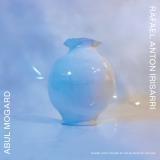
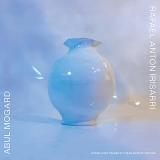
Marja de Sanctis’ cover artwork revisits the vessel sculpture from the duo’s first album, Impossibly Distant, Impossibly Close. There it appeared as raw, unfired clay. Here it has been fired in the kiln and finished with a glaze. Light gathers on its polished surface and spills into the surrounding space. As she explains, “I wanted to convey the idea of continuity within the duo, and the vessel became a kind of container for that idea. However, their music felt different this time, and with the collaboration of Martina and Andrea, I felt it should have a sleeker, softer, more glamorous look, very distant from the first raw appearance.” The transformation of the vessel from raw clay to fired form suggests a passage from immediacy toward permanence, mirroring the music’s gradual expansion.
Поиск:formation
Все
In spring 2025, Abul Mogard and Rafael Anton Irisarri created the source material for their second album, Where Light Pauses in the Silence of the Sun, during a three-day residency at Morphine Raum in Berlin. Functioning as both recording studio and performance venue, the space has no stage, with the audience gathered around the performers. Working within an open framework, the duo reshaped the music each evening while recording the performances live to multitrack. Rotary speakers, modular synthesizers and bowed guitar formed the core of their sonic language, captured through a 1970s mixing console and microphones placed around the room.
Back in Mogard’s studio in Rome, the material was further crafted as motifs were stretched, fragments isolated, and tempos dissolved. Irisarri recorded additional guitar textures and treatments in New York, while passages recorded by Martina Bertoni and Andrea Burelli in Berlin reinforced the harmonic centres and brought breath, refinement and a new sensibility to their compositions. The process continued as Mogard’s layering and subtraction reassembled everyone’s parts into the final arrangement.
The album opens with “In the Eastern Wild,” building from a sparse outline into a monumental formation of low-frequency weight, its internal motion shaped by the rotating Leslie speaker. “Over the Domes” widens into a broader acoustic field, where sustained modular tones meet waves of softly plucked guitar. The music then turns inward with “A Blue Descent,” centred on Bertoni’s cello, whose growling timbre introduces a melancholic depth.
At the album’s centre, “In a Quiet Radiance” unfolds around a slow guitar ostinato, its luminous stillness opening into a more expansive and reflective state. Across its ten-minute span, Burelli’s violin lines and Bertoni’s lower cello phrases gradually surface, weaving through the harmonic field. Mogard brings Burelli’s processed voice to the fore, its emotive, operatic presence becoming one of the record’s pivotal moments. “Of Blessed Ages” suspends the sonic flow, shifting between parallel major and minor chords as lingering, slowly decaying melodies shape the music’s internal drift. The closing “Among Shadows” settles into a darker resonance as layered textures recede.
Mogard and Irisarri’s shared language balances restraint and maximalism. UK magazine Crack describes the music as “a tidal wave held in suspension,” while Dutch newspaper de Volkskrant writes, “What a colossal sound, and how this music strikes at the emotions.” Reflecting on the residency sessions, Irisarri recalls: “At moments I genuinely couldn’t tell if a sound was coming from me or from Abul. It stopped feeling like two people making decisions and began to feel like we were inside a system moving on its own."
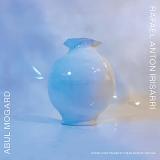
Marja de Sanctis’ cover artwork revisits the vessel sculpture from the duo’s first album, Impossibly Distant, Impossibly Close. There it appeared as raw, unfired clay. Here it has been fired in the kiln and finished with a glaze. Light gathers on its polished surface and spills into the surrounding space. As she explains, “I wanted to convey the idea of continuity within the duo, and the vessel became a kind of container for that idea. However, their music felt different this time, and with the collaboration of Martina and Andrea, I felt it should have a sleeker, softer, more glamorous look, very distant from the first raw appearance.” The transformation of the vessel from raw clay to fired form suggests a passage from immediacy toward permanence, mirroring the music’s gradual expansion.
In spring 2025, Abul Mogard and Rafael Anton Irisarri created the source material for their second album, Where Light Pauses in the Silence of the Sun, during a three-day residency at Morphine Raum in Berlin. Functioning as both recording studio and performance venue, the space has no stage, with the audience gathered around the performers. Working within an open framework, the duo reshaped the music each evening while recording the performances live to multitrack. Rotary speakers, modular synthesizers and bowed guitar formed the core of their sonic language, captured through a 1970s mixing console and microphones placed around the room.
Back in Mogard’s studio in Rome, the material was further crafted as motifs were stretched, fragments isolated, and tempos dissolved. Irisarri recorded additional guitar textures and treatments in New York, while passages recorded by Martina Bertoni and Andrea Burelli in Berlin reinforced the harmonic centres and brought breath, refinement and a new sensibility to their compositions. The process continued as Mogard’s layering and subtraction reassembled everyone’s parts into the final arrangement.
The album opens with “In the Eastern Wild,” building from a sparse outline into a monumental formation of low-frequency weight, its internal motion shaped by the rotating Leslie speaker. “Over the Domes” widens into a broader acoustic field, where sustained modular tones meet waves of softly plucked guitar. The music then turns inward with “A Blue Descent,” centred on Bertoni’s cello, whose growling timbre introduces a melancholic depth.
At the album’s centre, “In a Quiet Radiance” unfolds around a slow guitar ostinato, its luminous stillness opening into a more expansive and reflective state. Across its ten-minute span, Burelli’s violin lines and Bertoni’s lower cello phrases gradually surface, weaving through the harmonic field. Mogard brings Burelli’s processed voice to the fore, its emotive, operatic presence becoming one of the record’s pivotal moments. “Of Blessed Ages” suspends the sonic flow, shifting between parallel major and minor chords as lingering, slowly decaying melodies shape the music’s internal drift. The closing “Among Shadows” settles into a darker resonance as layered textures recede.
Mogard and Irisarri’s shared language balances restraint and maximalism. UK magazine Crack describes the music as “a tidal wave held in suspension,” while Dutch newspaper de Volkskrant writes, “What a colossal sound, and how this music strikes at the emotions.” Reflecting on the residency sessions, Irisarri recalls: “At moments I genuinely couldn’t tell if a sound was coming from me or from Abul. It stopped feeling like two people making decisions and began to feel like we were inside a system moving on its own."
Marja de Sanctis’ cover artwork revisits the vessel sculpture from the duo’s first album, Impossibly Distant, Impossibly Close. There it appeared as raw, unfired clay. Here it has been fired in the kiln and finished with a glaze. Light gathers on its polished surface and spills into the surrounding space. As she explains, “I wanted to convey the idea of continuity within the duo, and the vessel became a kind of container for that idea. However, their music felt different this time, and with the collaboration of Martina and Andrea, I felt it should have a sleeker, softer, more glamorous look, very distant from the first raw appearance.” The transformation of the vessel from raw clay to fired form suggests a passage from immediacy toward permanence, mirroring the music’s gradual expansion.
- A1: Sunrise
- A2: Bryce
- A3: Arches
- A4: Totem
- A5: Waters And Geysirs
- A6: Indian Summer
- A7: Opening
- B1: Cpu
- B2: Soft Edge
- B3: Las Vegas
- B4: Rhythm Score
- B5: Space Shuttle
- B6: Disco Funk
Once again Trunk Records comes through with an album of sublime 1980s new age synthwave
music from an artist and library company you have never heard of.
With most Trunk LPs we write the story about how Jonny came across the music. And yes, this LP is no different...over to Jonny…
“My first encounter with Peter Patzer was when I was writing and researching the updated and fully expanded version of The Music Library Book, published by Fuel. The initial book - called The Music Library, was the first ever overview of library music and the wild, unpredictable graphic art of their sleeves. It was first published in 2005 and featured about 400 sleeves and about 120 library companies over 200+ pages. The book was based on over a decade of intense library LP collecting by myself and a handful of other geeky weirdos and made for fascinating and revealing reading and looking. It was a great education for many entering this odd, hidden musical world for the first time. The book quickly sold out.
A few years later the price of the original book had gone bananas. But the geeky weirdos like me had all carried on voraciously consuming and collecting library music so I strongly felt the first book could easily be doubled in size with new info, new sleeves and many newly discovered lost library companies. Which is exactly what I set about doing. The Music Library expanded edition came out in 2015. You have to realise here that The Music Library book was very much a first - until its unexpected arrival (and even the arrival of the much larger expanded edition) there was no published survey, accessible catalogue or anything about international library music. It was still an odd old world shrouded in some historical mystery - even the internet had not really caught up. And I was still finding unusual British one-off library LPs, more unusual Italian library diversions, hidden French funky things and then I finally found Peter Patzer. From Germany.
Hidden away in a very obscure music library corner. All on his own.Peter was unusual in that he was an artist and musician who made his own music and issued it all on his own library, called Crea Music, based out of Bremen in North Germany. Over a series of eight whitevinyl LPs produced in the 1980s Peter Patzer created synth heavy experiments for possible use in film, TV, video and anything else coming along. All his LPs had the same simple red, white and blue sleeve and a typed name and number. Across the eight LPs Peter goes to musical space, creates post-disco funk,travels to Vegas, goes all geological and more.
The eight Peter Patzer / Crea Music LPs are as follows:
01 - Puddy’s Bus 02 - Straight Line 03 - Pos-Attractions 04 - Patterns 05 - Canyons 06 - MIls Maniac 07 - Classic Themes 08 - Formation 17
This is a compilation of some of the music featured across those eight LPs, and yes, it was initially
licensed a few years ago but I held it back as I wasn’t sure people were quite ready for the plugged-inway out drifting 1980s electro sound of Peter Patzer with his synth washes, rhythms and chords. Or maybe I wasn’t ready. Anyway it’s here now... and if this sells out there could be another Peter Patzer LPbut with all his longer 7 minute compositions which there wasn’t room for here.
The journey continues with Constellations Vol. 3, weaving together a powerful blend of electro and techno. Anthony Rother delivers his signature precision in sound design, while Maelstrom bends the grid with a glitchy, IDM-infused excursion. Credit 00 dives deep into electro's darker corners, joined by a trippy collaboration from Serge Geyzel & Dagga, the rolling energy of TaronX, and The Spy'sindustrial-tinged intensity.
A bold and atmospheric continuation of the Constellations saga - built for exploration beyond the dancefloor.
- A1: Chaos Cosmos (01:25)
- A2: Land Of The Sun (03 56)
- A3: Evolution (02 18)
- A4: Il Canto Della Luce (04 31)
- A5: Chandranandan (10 22)
- B1: Luna Mia Domina (02 48)
- B2: Pizzica Lunatica/Votata Cosmica (04 56)
- B3: The Prophecy (02 52)
- B4: Cosmic Melodies (07 32)
- C1: Cosa Dicono Gli Uccelli? Parte I (10 58)
- D1: Cosa Dicono Gli Uccelli? Parte Ii (12 28)
- D2: Epilogue (03 00)
Color Vinyl[31,51 €]
"The Land of the Sun, the Moon and Cosmic Melodies" is a conceptual Opera of III movements, inspired by a cosmogony that features the planets of the sun and the moon. These two characters guides us on a journey of light and shadow, rising and setting in a cycle of unexplored musical territories.
The Collective Move presents its debut album with a broad palette of sounds, ranging from jazz to opera, from southern Italian folk music to northern Indian classical music, orchestrating a 60-minute "sonic narration" that ends with the fable "What do the birds tell?".
The Collective Move is an international group of young musicians formed in the Amsterdam Conservatory in 2022. The Collective's vision is to unite diverse artistic expressions and musical genres, inviting diverse artists and musicians from diverse cultures and countries to collaborate in flexible and interdisciplinary formations.
ULURU is a large sandstone rock formation in Australia. It's sacred to the Anangu, the local Indigenous of the area. For many years it had been deprived of its spiritual significance, due to mass tourism, capitalism, as well as greedy and selfishness of people who just want to make money out of it. However, as a result of the Anangu’s resilience, care and staunchness, huge changes took place in the national park around Uluru as well as in the broader public's consciousness, giving again to the Uluru the sacred identity that had been lost.
You might be reading and thinking now: so what's the point? Actually, there's no real point. I would rather say, there’s hope. The hope of seeing humans all around the world following the example of the Anangu. The hope of seeing humans finally stopping to treat the earth and all what’s part of it, what’s on and what’s in it, as a slave without soul. The hope of changing today, and if not today at latest by tomorrow. This system is failing. It's no longer sustainable, and there's no much time left.
So everybody, don't sleep, be critical.
Default Mode by Raleigh & Takenaga continues the newly established X series – Harmony’s platform for new voices and limitless exploration. Hailing from Prague, the duo embodies the next wave of adventurous sound design and musical talent from the imprint’s home town.
Incentive Program opens the EP’s A side with a drifting, trance-tinged flow wrapped in sweeping pitch movements and fractured vocals. The track sets a shadowy, almost sinister atmosphere, pulling all witnesses into its slow-burn gravity. It’s a steady build, tipping the floor over the edge. Stiff Envelope pulls you into its depths as it continues to build tension with resonating synth hits that quiver over a powerful trance foundation. With a few moments of silence that let its unsettling atmosphere settle across the stereo field before swinging back in at full force, this one is tailor-made for big systems.
B side’s Ground Floor carries on with metallic swells and shimmers that ring underneath the surface as the tension built on the A side bursts, settling into a grounding four-on-the-floor moment and leaving just enough time to breathe before Raleigh stirs up a concoction of devious vocals, snappy percussion, and a seductive bassline that lifts the mood tastefully. Takenaga wraps up the record with Head Count, a razor-sharp blend of crisp percussive cuts and stuttered crumbles that are seeking the perfect pitch all the way, climbing up and down. Heads are counted on a lively groove that radiates playful momentum and commands the dance floor to get in formation, keeping a tight rhythmic focus. Infused with the pulse of UK club culture, this track delivers a fresh and forward-thinking sound perfect for adventurous turntables.
Continuing his refraction of the rave continuum into pointedly dislocated, delicately bruising sound system meditations, Low End Activist returns to Peak Oil with a second instalment in his Airdrop series. This time around, he channels the ghosts of foundational tech-step and the quantum leaps of late-90s D&B to provide the inspirational fuel for his skeletal, astral constructions. A strong stylistic thread continues to weave through the LEA output from his earlier self-released EPs and Sneaker Social Club albums, where haunted atmospherics, blown out subs and snatches of breaks dart around each other in empty dancehalls, but the finer point of the sound design and synthesis makes very specific references to landmark moments in hardcore's evolution.
By weaving his own autobiography into the music, the Activist maintains a fundamental theme of his work to date. 'Colin's Golf', 'Smithy's Porsche,' 'Merv's Lazy Eye' and 'Brillo's Teeth' are all personal codes harking back to the formative Oxford rave scene. With the framework in place, he uses textures, timbres and studio tricks from scene-leading pioneers and local heroes of the era as ingredients in thoroughly modernist concoctions. None of the reference points are deployed as literal callbacks — they're waymarkers for the creative process and faint triggers bedded deep into Airdrop II's strange formations. Fleeting sonics might trigger latent memories for those who were there. For everyone else, Airdrop II is another step further along rave's eternally unspooling odyssey, guided by decades of precedents on a path into the future.
Lantern in the Woods is the new album from musician and multi-instrumentalist Misha Sultan – a project that marks an important milestone for the artist. It is his first work conceived and realized as a coherent, unified statement, from the earliest ideas and sounds to the final mastering.
The story of the album began back in 2021 in Saint Petersburg, during studio jam sessions with Anton (Mårble), Vova Luchanskiy, and Nikita (Minereed). These live
improvisations eventually led to the formation of the collective Sri Primat and left a significant imprint on Misha Sultan’s solo sound. Some of the instrumental parts on the album were recorded during this period, preserving the spirit of spontaneity and open dialogue between the musicians.
Later, after moving to Thailand, Misha recorded the second half of the material. These tracks absorbed the atmosphere of southern nights, tranquility, and comfort – bringing a distinct “bedroom jazzy vibe”, a touch of sentimentality and gentle melancholy into the music.
The album offers a beautiful blend of jazz and various other influences. At its heart, it’s a search for balance between memories and the present moment, between nature and the city, between the light of the lantern and the darkness of the woods.
“It was especially important to me that my friends and close people were involved in this album. Their presence gave the music that warmth and personal feeling I value so much. My brother Zhenya (Dyad), Anton (Mårble), Vova Luchanskiy — they all contributed a part of themselves to these tracks, as did Nina Livanova, who recorded vocal parts for several songs,” says Misha.
Lantern in the Woods is a soft and sincere work, where all things intertwine naturally.
In 1978 a newly formed Augusta, Georgia group Marshall, Donovan and Broomfield chose to record cover versions of two songs previously recorded in 1973 and 1974 respectively by Florida siblings group Cornelius Brothers and Sister Rose. These Eddie Cornelius penned songs “Let me Down Easy” and “Since I Found My Baby” would form both sides of Marshall, Donovan and Broomfield’s first 45 single, released on group founder John Marshall’s own Augusta label. The flipside “Since I Found My Baby” would eventually gain popularity across the pond with aficionados of the UK modern soul scene of the early 1980’s and beyond.
John Marshall began his musical career in a high school group called The Fabulous Gardenias who recorded the doowop ballad “It’s You, You, You” backed with the up-tempo R n B mover “What’s The Matter With Me” released on Tommy Brown’s local Liz label (named after his wife future Motown recording artist, Liz Lands) in 1961.The Fabulous Gardenias featured John Marshall, the late Atlanta alumni Calvin Arnold, “Little” Joe Jones Jr (later of the Tams) and a fourth guy only remembered as Harold. John Marshall later sang with another Atlanta group The Tams of “Hey Girl Don’t Bother Me” fame from 1970 through to 1978.
Later in 1978, John Marshall having relocated to Augusta, GA the previous year was casually emptying the contents of his mailbox outside his home when a car suddenly pulled up. The driver called out “Hey I recognize you, you’re John Marshall you used to be with the Tams!” The driver continued to introduce himself as John Donovan stating that he too was a singer, followed by an impromptu performance, and hey! sure enough he could sing! A later introduction to Charles Broomfield (John Marshall’s next-door neighbour at that time) would lead to the formation of the group Marshall, Donovan, Broomfield with the addition of Mary Marshall and Pat Donavan (the then, two John’s respective wives) as backing vocalists. The previously mentioned group’s first release the John Donovan led “Let Me Down Easy/Since I Found My Baby” was recorded at the now defunct Jam Studio’s in Atlanta. Upon release, the “Let Me Down Easy “side received considerable local radio play but only led to the group performing a handful of local shows. On the strength of the group’s first release a second 45 release followed in 1980 “Let’s Dance/That’s Love” both sides of this 45 were penned by Charlston, South Carolina native, Harold Thomas who John Marshall knew from his time with the Tams, Thomas having once been part of Bill Pinkney &the Original Drifters and later the Tams management teams. This second 45 never gained the same local attention of “Let Me Down Easy” and after three years together the Marshall’s, Donovan’s and Charles Broomfield went their separate ways. John Marshall lost contact altogether with his former group members and left the music business taking up employment at International Paper Mill until his retirement in 2013.
Due to the current resurgence in popularity of “Since I Found My Baby” with copies regularly selling for four figure sums, Soul Junction have reacquainted ourselves with John Marshall to you bring you “Since I Found My Baby” backed with “Let Me Down Easy” with the addition of the excellent and lesser, known stepper “That’ Love” making this an excellent value 45 release.
A Place In My Memory Is All I Have To Claim is the new album by Australian atmospheric pop trio Hydroplane, the storied 'offshoot' formed by three quarters of independent pop group, The Cat's Miaow. On this, their first music after two decades plus of radio silence, Andrew Withycombe, Kerrie Bolton and Bart Cummings return to the gentle, close-quarters musical world they shared around the turn of the century.
Recorded during 2024 in Melbourne and Ballarat, A Place In My Memory… picks up the thread Hydroplane set down with its precursor, 2001's The Sound Of Changing Places, though you can hear echoes of their other releases, too, with Withycombe noting a through-line from the group's 1998 "Failed Adventure" single. There's little quite like A Place In My Memory…, then or now, though. Maybe you can draw some connections between Hydroplane and their sister group, The Cat's Miaow, while fellow travellers might include Empress, The Ah Club, and further back, Young Marble Giants, Veronique Vincent (the muffled, ticking drum machine also makes me think of Robin Gibb's Robin's Reign).
There's also an umbilical to the bedroom-crafted electronica doing the rounds in the late nineties and early noughties. Hydroplane hint at this through their approach to songwriting, which often builds creatively around loops as structural devices. Through all this, the trio achieve an effortless, organic weightlessness across these nine lovely songs. Many feature Bolton's clear singing voice, drifting along, while guitars, keyboards, drum machines and loops tickertape away. The constituent parts fit together, but they also have a curiously detached quality - think of abstract cloud formations sharing the same sky.
Hydroplane and The Cat's Miaow often dealt in emotional ambiguity and uncertainty, and the uncertainty of the nostalgic. This was always one of the most appealing facets of their music, and A Place In My Memory… is thus named perfectly. I couldn't dream up a better title for the album and its reflections on history, lived experience, and the inevitable tangle between these two phenomena. These reflections variously address such concerns as human cruelty, flight, space travel, adventurism and spiritualism. There's also "To the Lighthouse", not a direct reference to the Virginia Woolf book, but a great title, nonetheless. (They've always had excellent titles, often borrowed, for songs and albums.)
A beautiful collection of drowsy, sleepy pop, humble and quiet, but resolute in its craft, A Place In My Memory Is All I Have To Claim is dream work in practice; a lovely reintroduction. Welcome back, then.
C.A.R. (Choosing Acronyms Randomly) is the musical project of Chloé Raunet, a Canadian-born, London-based artist known for her icy synths, warm vocals, and left-field pop sensibility. Drawing from post-punk, electro, and experimental songwriting, she creates music that’s both emotionally charged and sonically adventurous.
Following a five-year hiatus, C.A.R. returns with Shyana, the first single from her long-awaited fourth album, Dance at Oscar’s. Produced by Nathan Ridley, the release marks a creative rebirth: a new label, a new live formation with Joni Green, and a sound pulsing with revitalised energy. After a pandemic-induced break to focus on filmmaking — and a period of burnout and disillusionment — Raunet was ready to walk away from music altogether. But a pair of carried-over festival dates and an impromptu onstage reunion with longtime friend Joni Green unexpectedly reignited the spark. What was meant to be a farewell became the start of something new.
Shyana is a shimmering slice of machine-funk — a warped and groovy tribute to Paul Anka, filtered through C.A.R.’s surreal pop lens. A meditation on teen hysteria, pop manufacture, and the strange alchemy of early fame, the track pulses with wonky elegance and strutting confidence. One of the most playful cuts from Dance at Oscar’s, it showcases Nathan Ridley’s tight, swaggering production while capturing the album’s embrace of movement, humour, and the weirdness of cultural nostalgia.
On the B-side, Cecilia Road offers a more reflective counterpoint — a nostalgic, synth-drenched ballad built around a call-and-response vocal, throbbing melodies, and emotional tension. Intimate yet expansive, it hints at vulnerability without losing the pulse.
Artwork by Chloé Raunet, Craig Richards and Oliver Hupfau.
C.A.R. (Choosing Acronyms Randomly) is the musical project of Chloé Raunet, a Canadian-born, London-based artist known for her icy synths, warm vocals, and left-field pop sensibility. Drawing from post-punk, electro, and experimental songwriting, she creates music that’s both emotionally charged and sonically adventurous.
Following a five-year hiatus, C.A.R. returns with Shyana, the first single from her long-awaited fourth album, Dance at Oscar’s. Produced by Nathan Ridley, the release marks a creative rebirth: a new label, a new live formation with Joni Green, and a sound pulsing with revitalised energy. After a pandemic-induced break to focus on filmmaking — and a period of burnout and disillusionment — Raunet was ready to walk away from music altogether. But a pair of carried-over festival dates and an impromptu onstage reunion with longtime friend Joni Green unexpectedly reignited the spark. What was meant to be a farewell became the start of something new.
Shyana is a shimmering slice of machine-funk — a warped and groovy tribute to Paul Anka, filtered through C.A.R.’s surreal pop lens. A meditation on teen hysteria, pop manufacture, and the strange alchemy of early fame, the track pulses with wonky elegance and strutting confidence. One of the most playful cuts from Dance at Oscar’s, it showcases Nathan Ridley’s tight, swaggering production while capturing the album’s embrace of movement, humour, and the weirdness of cultural nostalgia.
On the B-side, Cecilia Road offers a more reflective counterpoint — a nostalgic, synth-drenched ballad built around a call-and-response vocal, throbbing melodies, and emotional tension. Intimate yet expansive, it hints at vulnerability without losing the pulse.
Artwork by Chloé Raunet, Craig Richards and Oliver Hupfau.
Just when you thought every holy grail must have been unearthed by now, here come Basic Unit with their deep cover late 90s masterpiece Timeline, the dankest darkcore-electronica-tech step album you've likely never heard.
Ben England and Rick Dallaway formed Basic Unit and debuted on Moving Shadow in 1997. They also moved on Nocturnal, a cult label that reached beyond D&B to platform some more experimental sounds. It was a short-lived label with some ominous footnotes — 'Several people involved with Nocturnal have vanished or are dead' reads the label's Discogs description. But in 1998 Nocturnal put out Timeline, a CD-only album from Basic Unit that cut a sharp, scathing figure against most D&B of the era. England and Dallaway embraced the album format as a chance to go deep, inhaling their inspiration from early days Autechre as much as Source Direct and boiling down the results to a steely, minimalist framework.
The likes of 'Resolution' are desolate, stark workouts that feel fractured and raw enough to align with early grime, complete with the strings, but the rhythms move in mysterious formations designed to confound like the most bloody minded electronica artists of the late 90s. Blown out bass and scattered flurries of machine gun breaks, squashed tundra drones that sound like they were pulled from 10th generation VHS b-movies and bit-crushed animal grunts fit for a Mega Drive beat 'em up. The sonics are redolent of the times, but Basic Unit chisel them mercilessly into their spartan vision, deploying brain-frying beat science with a stern restraint.
It's the kind of record that gives so much while holding so much back — a deadly tease that has flown under the radar for too long. This is the sort of shock reissue material that gets us gassed at Sneaker, and we're proud to be giving it a re-boost and a first ever outing on wax, all the better to shock you out.
Lucy Duncombe and Feronia Wennborg compose a modern symphony for virtual choir on 'Joy, Oh I Missed You', muddling sound poetry with Nuno Canavarro and ‘Systemische'-style machine-damaged surrealism. Like a mashup of Lee Gamble's 'Models', Akira Rabelais' 'Spellewauerynsherde' and Robert Ashley's timeless 'Automatic Writing’ screwed to perfection.
Duncombe and Wennborg have been chewing over ‘Joy, Oh I Missed You’ for four long years, working their process until they were "queasily intimate" with their arsenal of artificial voice tools. Tracing the history of the technology, from voice synthesisers and chatbots to AI voice analysis tools, the duo experiment relentlessly to develop a digital-age response to IRL extended vocal technique - think François Dufrêne, Yoko Ono or Phew. Less interested in replicating human sounds exactly, they instead test how various tools might cough up their own idiosyncratic tics as they stretch and stutter through attempts to mimic their "fleshware" counterparts.
Duncombe's got prior form here, most recently re-synthesising her voice on the brilliantly oily 'Sunset, She Exclaims' 45 for Modern Love, following a stunner for 12th Isle in 2021. Wennborg brings along experience from her tenure as one half of microsound duo soft tissue, whose 2022 LP 'hi leaves' (Students of Decay) was a haptic treasure. These approaches mesh remarkably well on their first collaborative full-length, with Duncombe's eerie bio-electronic incantations providing the ideal foil for Wennborg's carbonated hardware processes. It's not completely clear where the human voice ends and the zeroes and ones begin on 'Your Lips, Covering Your Teeth', as rolling cyborg syllables tumble over OS-startup womps and surprisingly svelte outcroppings of glassy, synthetic glitches. The music is surprisingly mannered, a sonic reflection of the cover, where a mouth is pixellated until only colour swatches remain. Duncombe and Wennborg trace the gradual erosion of their voices, leaning into the chaos as their various tools veer off into unique patterns of failure.
What sounds like a far-off, ghosted folk rendition (we're reminded of the Icelandic laments that Rabelais chewed up on 'Spellewauerynsherde') is offset by gnarled, bitcrushed machine faults and pneumatic lip smacks on the brilliant 'Residue', and on 'Brushed My Hair', the duo massage the voice until it sounds like a flute. Assembling stutters and barks and sighs into a celestial chorus alongside time-stretched moans, they create a levitational atmosphere on 'Smell It', freezing the energy from bizarre pitch steps to configure a zonked vocal ensemble.
'Joy, Oh I Missed You’ is an album that, like its source material, constantly morphs, testing the boundaries of its concept repeatedly without bubbling over into conceptual goo. In fact, it's remarkably euphonious, even at its most theoretically abrasive; Duncombe and Wennborg wring out uniquely angelic formations through a process of trial and error that packs a surprising, hefty emotional punch.
The writer Max Sebald often pondered over the nature of human memory, specifically, how our thoughts and desires - and their results - overlap and mutate over time. In A Place in the Country, he writes of the significance of what see as “similarities, overlaps and coincidences”. Are they the “delusions” of the self and senses, or manifestations of “an order underlying the chaos of human relationships, ... which lies beyond our comprehension”?
Song of the Night Mists, the new album by post-classical composer Stefan Wesołowski, often feels it draws on Sebald’s premise.
On a simpler plane, the one where the market dictates the neatly ordered information we consume, Song of the Night Mists can be described thus: recorded in the main by Stefan Wesołowski in Gdańsk, both in his studio and in Saint Nicholas' Basilica, the album incorporates acoustic instruments - piano, violin, double bass - and classic synthesizers such as the Roland Jupiter-8, the Soviet Polivoks. A Roland Space Echo RE-150 tape delay was also pressed into service as an instrument. We also hear the basillica’s organ and field recordings from the Tatra Mountains. Other musicians were Maja Miro, who played the flute parts on ‘Glacial Troughs’ and brother Piotr Wesołowski, who played the organ on ‘Wilhelm Tombeau’. Sound engineer was Marcin Nenko, who was also on hand to record the basilica organ parts. The album was mixed in New York by Al Carlson (Oneohtrix Point Never, Jessica Pratt, Zola Jesus, Lady Gaga, and Liturgy) and Rafael Anton Irisarri handled the mastering.
Ostensibly, Song of the Night Mists is the last in a trilogy, following on from albums Liebestod (2013) and Rite of the End (2017). All three deal with existential matters such as love, death, decay and “an ultimate end”; apocalyptic and Promethean in spirit, and betraying very human conceits. The Sebaldian nature of the new record starts to make itself felt when Wesołowski talks of how he used sampling. One element is unexpected, that of sampling himself: “I go back to dozens of my own unused sketches and recordings, treating them as raw material to cut, slow down, reverse, and transform in every possible way.” Memory as sound, to be reemployed by the listener through their own imaginings.
Another set of samples made by Wesołowski plays another role. These are field recordings, originally created for an audio illustration of the formation of the Tatra Mountains, and used in a film by sound designer Michał Fojcik. Wesołowski: “You can hear cracking ice, streams, footsteps in the snow and the wind, and a real avalanche, recorded from the inside.” The “Tatra connection” on the album is also found in samples referencing composer Karol Szymanowski. The album’s title alludes to a poem about the mountains by Polish poet, Kazimierz Przerwa-Tetmajer.
Wesołowski’s Tatra recordings are “about a world without humans - about the fact that the world existed, was beautiful, and had meaning long before people arrived, and for the vast majority of its history, it was a place without us.” Wesołowski, using one iteration of the natural world, plays out in sound Sebald’s idea of another order, underlying the chaos of human relationships lying beyond human comprehension.
These feelings play themselves out on the five album tracks. Sonorous and rich, they illustrate tectonic shifts we have no control over. Wesołowski hints that the overall sound is a “meditation on the metaphysics of the non-human set against the spirituality that human presence has brought into it.” In that light, the opening number, ‘Core’, with its slow build, and crackling and straining sound effects, create an effect of the earth groaning into life in a creation myth. Once the piano part raps out a simple melody and modulated tonguing trumpet samples add to the overall atmosphere, the listener can certainly find a cue in the “spiritual”, or “human” side of the story. Human versus nature: from the strains and harmonic muscle stretches of the second number, ‘Glacial Troughs’, through to the powerful and filmic ‘Stalagmite’ and heart-on-sleeve romance expressed in closer, ‘Wilhelm Tombeau’, we listeners are cast as Friedrich’s wanderer, looking out over a landscape that will appear only if we engage with it.
Formations of melody appear incrementally, almost appearing by chance - like hidden footings in the rock shelves to give us something to grasp onto. Rhythms are used sparsely: the prolonged percussive taps on ‘Glacial Troughs’ are an anomaly and maybe there to give pace to the album to come; essentially to keep the listener strapped in. Elsewhere, percussion is used as an aid to mood, the two thudding, timpani-style passages on ‘Peak’ there to offset the short, beautiful, kosmische passage that splits them.
Elements of the borderline religious spirit that drove German electronic music in the late 1960s and 1970s also find a place on Song of the Night Mists. The swells and recessions of the organ find their emotional climax on ‘Wilhelm Tombeau’, a track which summons up echoes of the “mountain magic” vistas created by Popol Vuh or Tangerine Dream, especially with the slightly atonal wobble of the Mellotron that counters it.
This is a dramatic album, but it does feel a strangely short, or curtailed listen on ending, evoking the feeling one gets when waking from a dream, and, for all its incipient grandeur, a track like ‘Stalagmite’, for instance, ends on a minor note. Wesołowski admits that Song of the Night Mists is born of the all too human process of temptation, doubt and recalibration - Sebaldian overlaps and coincidences forming something that must live another life, away from its creator. In Wesołowski’s words, the album is “a newborn foal must stand up and walk right after birth.” Now it is yours to ponder.
- A1: Bps - Within Reason
- A2: 5Atms - A Dub Called Mondo
- A3: Scott K -Tighter & Tighter
- B1: Gryph - Winona At Sunset
- B2: Ssri - .Omnicallora
- B3: Scott Coats - Be Work Zone Alert (Pw Edit)
- C1: Gold Code & Dave Aju - Yolo Jungle
- C2: Warehouse Preservation Society - Data Bliss
- C3: Stacy Christine - .Smart Move
- D1: Sos - Obsesion Romantica (Free Winona Dub)
- D2: Dave Aju & Moniker - Chuy Luis
- D3: Vastir - Turnpike
LA underground hubs DISCOS XXX aka DX3 and Elbow Grease join forces to proudly present Point Winona Sound Library Vol 1 — featuring 20 distinct artists from the inspired local dance music scene, working under one unified studio roof in various collaborative
formation at the mighty Los Feliz hilltop palace Point Winona, overseeing the city they collectively represent. These timeless warehouse-wrecking tracks all stand on their own, but the compilation as a whole offers a solid geographic sonic statement with shared rhythmic DNA and bold rooted-futurist production blueprints, guided by the champion efforts of studio executive producers/curators Tavish DJ and Dave Aju.
The BPS stage-setting opener evokes crispy A.M. hours with lush Detroit-meets-Cali feels on “Within Reason” — then studio dream team 5 ATMs bring the dubwise floor vibes up a notch on “A Dub Called Mondo” and Chitown-to-LA legend Scott K lays down an FM bass-laced acid house heater with “Tighter & Tighter”. Nashville-born producer Gryph funks things up on the live space boogie bump of “Winona at Sunset” while SSRI, comprised of Underground Resistance’s DJ Dex/Nomadico, Aju, and Black Lodge’s fearless leader Kosmik, drop fierce robo-Italo bliss on “Omnicallora”. Things take a further psychedelic twist with the PW edit of Scotty Coats’ sublime midtempo tripper “Be Work Zone Alert”, then Omakase’s own Gold Code alongside longtime rave brother Aju drop the nasty J Saul-salute “Yolo Jungle”, and Warehouse Preservation Society aka Tavish DJ & TK fully detonate floors inna raucous Wicked Crew stylee with “Data Bliss”. Undisputed LA scene queen Stacy Christine arrives with her shining debut “Smart Move”, where she and Aju trade sly vox lines of party advice over a bouncing tech banger for the ages, before the “Obsesion Romantica (Free Winona Dub)” sees Sisters Of Sound aka Maddy Maia and Tottie's, OG track getting stripped back and fired up to acidic peak time form. Then Dave Aju and SF homies Moniker aka EO & Kenneth Scott unleash wild uptempo melodic bruk heaven on “Chuy Luis”, and Vastir sends us home with the stratospheric drum n bass closer "Turnpike"
Apocryphal cycles are those that are not observed with the naked eye or those that interact implicitly.
Apocryphal cycles of atoms and molecules refer to chemical reactions and changes of state that occur at the subatomic level, often without being directly observable on the macroscopic scale. These cycles involve the creation and destruction of molecules, the movement of atoms, isomerization, and other processes that underlie the properties and reactions of matter.
Apocryphal cycles are fundamental to understanding the properties of matter, the chemistry of life, the behavior of materials, and the formation of new compounds. They are the basis of science and technology, enabling the creation of new materials, medicines, and chemical processes.
Laibach und A/POLITICAL präsentieren 'Alamut' - ein brandneues Album mit symphonischen Originalwerken, die auf dem gleichnamigen Roman basieren - veröffentlicht als Doppel-Vinyl und 2CD via Mute.
Das Album wurde von Laibach und den Musikern aufgenommen, die 'Alamut' im Jahr 2022 in einer ehemaligen Kreuzritterburg in Ljubljana live aufführten. Zu den beteiligten Musikern gehören das RTV Slovenia Symphony Orchestra, die Vokalgruppe Human-Voice Ensemble aus Teheran, der Gallina Women's Choir und AccordiOna, ein Frauen-Akkordeon-Orchester, das von zusätzlichen Akkordeonspielern unterstützt wird und vom iranischen Dirigenten Navid Goharib geleitet wird.
'Alamut' ist ein symphonisches Originalwerk von Laibach, das auf einer berühmten Geschichte aus dem Persien des 11. Jahrhunderts basiert, die der slowenische Schriftsteller Vladimir Bartol in seinem 1938 erschienenen gleichnamigen Roman erzählt. Im Mittelpunkt steht Hassan-i Sabbah, der charismatische religiöse und politische Führer der Nizari-Ismailiten und Gründer einer geheimnisvollen militärischen Formation, die als die Assassinen bekannt ist und deren Name noch heute gefürchtet und respektiert wird. Hassan-i Sabbah ist ein selbsternannter Prophet, der von seinem Horst - der Burg von Alamut - aus einen heiligen Krieg gegen das Seldschukenreich führt. 'Alamut' befasst sich mit den Mechanismen der Propaganda zu der Zeit, als der slowenische Autor Bartol den Aufstieg des Faschismus in Triest, Italien, wo er lebte, miterlebte.
In Laibachs 'Alamut' verweben sich die Ideen des radikalen Nihilismus mit der klassischen persischen Poesie von Omar Khayyam, die sinnlichen Verse von Mahsati Ganjavi verschmelzen mit minimalistischen Orchesterfarben, die aus der iranischen Tradition stammen. Hassan-i Sabbahs Propagandamechanismen finden ihren Widerhall im industriellen Prinzip der Arbeitsweise des Orchesters und im einzigartigen Klang von Laibach.