Ketapasando presents “Mesetarian Breaks” (KTPV004): a high-speed journey through breakbeat terrains Madrid-based label Ketapasando returns with its fourth vinyl release: “Mesetarian Breaks” (KTPV004) — a 12” compilation that celebrates the raw energy and diversity of breakbeat in all its forms.
Four artists, four unique visions, one common goal: break the dancefloor. Pressed on 180g vinyl with full-color artwork and a protective silicone sleeve, this EP delivers an explosive blend of jungle, technoid, ragga-core, and futuristic breaks.
Each track showcases a distinct approach to rhythm, crafted by key figures from both the Spanish underground and the broader European scene.
THE ARTISTS:
FFF, a cornerstone of the European jungle scene, brings a ragga-core blast soaked in rave heritage and hardcore attitude.
Berman, co-founder of Madrid’s Bellota Dubs, delivers a rolling cut built on tight vocal samples and chopped-up 160 bpm energy.
Jailed Jamie, known for his audiovisual storytelling, blends jazzy melodies with sharp breaks for a cinematic yet floor-ready experience.
Tarek, core Ketapasando producer, makes his vinyl debut with a deep, heavyhitting technoid track forged in the fires of the 174 bpm realm.
“Mesetarian Breaks” is more than a record — it's a love letter to broken rhythms, a sonic dive into the Iberian underground, and a statement of intent from a label fully committed to the breakbeat spectrum. Snippets available in this email.
quête:forms
On Biotope, Valentino Mora ventures even further from the dancefloor, delving into a rich, psychoacoustic realm shaped by modular and spectral synthesis. Built primarily around the Rossum Panharmonium, a module that analyzes and re-synthesizes audio into evolving harmonic clusters in real time, the album conjures an imagined ecosystem, where sound behaves with the logic and fluidity of organic life. Eschewing traditional field recordings, Mora instead sculpts textures and gestures that feel deeply natural yet are entirely synthetic. Inspired by elements such as soil composition, air, humidity, light, temperature, and the chemical properties of both land and aquatic environments and the living creatures that inhabit them, the soundscapes emerge as a kind of sonic biology. The result is a collection of slow-moving, tension-laden compositions that blur the boundaries between physical sensation and abstract design. Biotope unfolds like a closed ecosystem: modular synthesis treated as a breathing entity, shaped by resonance, friction, and organic motion. It embodies a kind of mystical biology, where textures mimic living forms, and frequencies pulse with intent. This is music to be felt as much as heard, Biotope invites you to listen with your skin, not just your ears.
- A1: Music Is My Life Ft. Unlimited Touch
- A2: You Got Me Dancing Ft. Audrey Wheeler & Cindy Mizelle
- B1: Come Away Ft. Kerri Chandler
- B2: Seven Mile Ft. Moodymann
- C1: The Star Of A Story Ft. Lisa Fischer
- C2: Change Your Mind Ft. Bernard Fowler
- D1: All My Love Ft. Robyn
- D2: Free To Love Ft. Karen Harding
- E1: Feel So Right Ft. Honey Dijon
- E2: How He Works Ft. Nico Vega
- F1: Joy Universal Ft. Two Soul Fusion
- F2: Igobolo Ft. Joaquin Joe Clausell
- G1: It's All Good Ft. Bebe Winans, Debbie Winans Lowe & Korean Soul
- G2: Touch The Sky Ft. Tony Momrelle
- H1: Love Has No Time Or Place (Louie Vega & Elements Of Life)
- H2: Dreamin Ft. Cindy Mizelle
Limited repress!
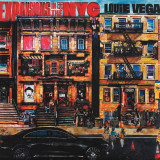
What is it about New York City, that concrete jungle that continually inspires the creative spirit? From Warhol’s Factory to Larry Levan’s Paradise Garage to David Mancuso’s Loft, collectives that celebrate and nurture unfettered, organic artistry have been absolutely intrinsic to the story of this sprawling metropolis. Its latest chapter is being written at the hands of ‘The Maestro’, Grammy Award winner Louie Vega and his Expansions NYC parties, the sound documented in his latest album Expansions In The NYC (Nervous Records).
Starting in February 2019 in Manhattan and Brooklyn venues, Vega’s Expansions NYC parties have their origin not in his revered prowess as a DJ but rather his whole-hearted appreciation of the different elements of the dance floor surrounding him: the dancers, the musicians who bring their instruments to join him ad-hoc on the night, the small, dedicated crowd of clubbers whose ears to the ground keep them informed on the underground party information. The events included 6-hour DJ Sets with Louie under his select curation, and would usually end with 3 AM jam sessions involving keyboardists, guitar players and poets all performing in front of a jam packed crowd. In just a few short years the Expansions NYC events have evolved into an NYC-clubland institution, an intimate celebration of house, funk, disco, afro, R&B and more.
As with his parties, so goes his album. The collective vibe that forms the beating heart of Expansions NYC parties is absolutely front and centre in Expansions In The NYC, Vega drawing in one of the most comprehensive lists of collaborators in recent memory. House heavyweights Honey Dijon, Joe Claussell, Moodymann, Kerri Chandler and Anané rub up against legendary vocalists Bernard Fowler, Cindy Mizelle, Lisa Fischer, Audrey Wheeler and Tony Momrelle. Gospel royalty BeBe Winans and Debbie Winans, pop icon Robyn and rising star Karen Harding sit alongside disco-era champions Unlimited Touch, Cuban jazz pianist Axel Tosca, Nico Vega, Two Soul Fusion with Josh Milan and Vega and underground legend DJ Spinna. At the centre of it all, fingerprint on every beat, touch on every groove, sits a master at work, weaving the individual threads into a rich dance music tapestry.
"In the past few years I’ve found new inspiration both from the musicians I’m working with and the audiences coming to see me at my DJ shows,” Vega says. “So for me this album represents new beginnings, bringing together a beautiful mosaic of artistic perspectives to express musically what we call Expansions In The NYC."
At its heart, Expansions In The NYC is a love letter to New York, as much as melting pot as the city it represents, the scope of its line-up possible only because of the influence and reverence of Vega the artist, the DJ, the producer, the curator. In creating this album, Louie Vega has once again utterly enriched the lives and libraries of music lovers the world over, far beyond the hustling streets of NYC that have so indelibly left their mark on his work.
It's time for a new compilation in our house and we have some good music to fill it up. This collection of talent is going to be served in two flavours, the physical one a four cut vinyl EP featuring previously only digital tracks and the second one a ten track selection from our back catalogue featuring some of the best producers in our family.
Asier Morillas ( A4 ) is probably one of the most original sci fi specialists out there and he's been part of our sound since his first steps into production. His track Kynosoura is a perfect example of hi tech jazz.
David Reina is also a science fiction specialist, also featured with a full length work in our catalogue, our pick for this collection is Autoscopy, a mental and complex sonic voyage into the best outer space techno.
From Mod 21 we have selected one of his most played tools, Escalation of Violence, the perfect hypnotic drill to boost your mixes properly.
Vertical Spectrum brings us to hyperspace in BALN006 combining a distorted groove with floating alien bleeps in a sci-fi techno masterpiece.
This four cuts will be pressed on wax, let's talk about the next eight:
From his Idle Ep we have chosen Temudo's Spiritual Song, a merciless floor weapon heavily tested on the best clubs and big stages out there.
Next comes BiiBii by Null Forms approaching a more abstract and sci-fi terrain, maintaining the danceable pulse and well-managed distortion. The result is more mental and synthetic. A kind of controlled chaos.
Axial Rotation from Translate starts with a fast paced groove, heavily bass fuelled with a continuous synth line moving across the basement. All sound elements are constantly mutating and evolving although the mood is linear and loopy.
Eight cut comes from Dutch veteran Dimi Angelis, the third from his
A Journal of Impossible Things EP from 2023. The hypnotic bleep penetrates your mind while the dirty sound of the old drum machine sets the pace for your feet. Special mention to the occasional resonant sweep that appears from time to time creating the required tension.
On the ninth, Ruman's Lizard from Where The Ring Ends LP, mental and hypnotic, perfect for adding tension to a mix, again heavily tested on the best dancefloors extensively.
Closing the release, CONCEPTUAL with Red Sun a magnificent closing anthem, no more words needed here.
With this collection you get a tiny snapshot of the sonic palette of Warm Up Recordings sound. Check our full catalogue to get the proper picture.
Berlin-based musician and media artist Michael Vorfeld celebrates the 20th anniversary of his unique sonic explorations with a new volume of his Glühlampenmusic (Light Bulb Music). Mastered by Rashad Becker.
Michael Vorfeld is a musician and media artist, plays percussion and self-designed string instruments, and realizes electroacoustic sound pieces. He works in the field of experimental, improvised music and sound art, realizing installations and performances with light and sound, and working with photography and film. In addition to his solo activities, he is a member of various ensembles and collaborates with artists who work in many different art forms, e.g. Burkhard Beins, Mazen Kerbaj, Ute Wassermann, Reinhold Friedl, to name a few. Based in Berlin, his list of activities includes numerous concerts, performances and exhibitions in Europe, America, Asia and Australia. Michael Vorfeld participated in the documenta 8, Kassel with the sound performance group "Heinrich Mucken".
Since the mid-1980s, Vorfeld has been realizing a multiplicity of partly site-specific light works (most of which also included sound) and where the incandescent lamp played an essential role. He conducted many tests to research the interplay of light and sound, experimented with all kinds of incandescent lamps in relation to various light-controlling devices and used many different types of microphones and pickups to "eavesdrop" into the acoustic potential of the various light events. The result of this research is Glühlampenmusik (Light Bulb Music), an electro-acoustic and audio-visual performance where sounds are generated through the use of different light bulbs and actuating electric devices. The incorporation of different analog light controllers such as switches, dimmers, relays, flashers and various others leads to diverse variations within the light event, made audible with the help of various microphones and pickups. The changes in the light intensity, the incandescence of the filaments and the rhythmic variety of the flickering and pulsing lights is directly transformed into a comprehensive and microcosmic electro-acoustic world of sound. First performed publicly under the titleGlühlampenmusikin the Labor Sonor series at Kule, Berlin in January 2005, and released in 2010, this new volume of Glühlampenmusik celebrates its 20th of these sonic adventures that can range from sparse abstractionism to almost "clubby" pulsations.
Craigie Knowes day-one affiliate The Burrell Connection rejoins Craigie Knowes for his much anticipated EP ‘I Waste My Time So You Don’t Have To’. Featuring the fantastic ‘E Before I’ which has been heard in various forms across Berlin’s underground in the past few months, accompanied by an additional version taken from The Burrell Connection’s recent LIVE performance in Tresor, invited by Wania’s LNS & DJ Sotofett. The B-Side comes correct with the dubbed-out power of ‘Celestial’ alongside the quintessential Burrell Connection galaxy-spanning pads and bass combo on ‘Ensemble’. One for the real heads, from dub to club.
2026 Repress
Thirteen years after their landmark debut, Italian duo Voices From The Lake (Donato Dozzy & Neel) return with their much-anticipated second album, 'II' (two) on their own Spazio Disponibile.The record marks a new chapter in one of electronic music's most revered projects. Born from a friendship and a singular musical vision, Voices From The Lake first emerged as a one-off live performance in the Japanese Alps, later distilled into their self-titled 2012 album. That record has since become a touchstone in ambient techno, reshaping the global landscape of hypnotic and atmospheric electronic music. In the years since, the duo have performed worldwide, released a handful of EPs, worked on installations, and founded record labels, all while continuing to refine the project's unique identity. Yet the core of Voices From The Lake has always been its deep, aqueous approach to sound, a sensibility that returns in full force on II. "The project was never meant to become what it did," the duo reflect. "At one point, we even paused it. Only to later embrace it in all its forms. II is both a continuation and a reinvention." True to that spirit, Voices From The Lake have explored extremes in recent years, from high-tempo live sets to seated listening concerts, while remaining anchored in the meditative pulse of ambient techno. II extends this lineage, carrying forward the immersive sound design and boundary-pushing vision that has defined their work from the beginning.
- A1: Talisman & Hudson - Warmth Re-Heated
- A2: Conscious - Morpheus
- B1: Treacle People - Rupununi Rhythm
- B2: The Obsession Project - The Dream
- C1: Interphaze - Aman
- C2: So-Low - The Hourglass (Time Mix)
- C3: Jay Trance - Ridiculous
- D1: Connective Zone - Multiple Sensory Contact
- D2: Cxx - The Comfort Of Strangers (Rhythm Doctor Mix)
- D3: C Hudd & P. Lazonby - The Colours (Mix 2)
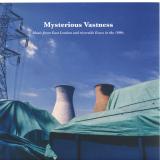
Barking-born Jane Fitz, and Transmigration label founder David Fogarty, curate a collection of tracks from East London and Essex’s rich but largely overlooked constellation of independent record labels and distributors operating from London’s E16 to the edges of the Thames estuary during the 1990s.
Mysterious Vastness documents a hidden and largely detached scene that only forms into something coherent with hindsight. From a time when record labels could press and hand-distribute 1000 copies locally, the late 80s acid house and outdoor rave scenes were moving from the fields to the clubs of London and DJs such as Colin Dale, Colin Faver and Darren Emerson were dominating the airwaves and parties with a distinct mix of other-worldly techno, trance and out-there house music. Among the seemingly bland post-war housing estates and factories, a scattered handful of producers were experimenting with early versions of music production software to create an exotic, end-of-the-century soundtrack to the suburban-meets-industrial landscape.
The compilation features a selection of finds from East London’s second hand record or charity shops over a period of 15 years. Many of which have featured in Jane’s sets over the years, most notably the “Beyond The A13" Podcast for Furthur Electronix. A mix she described at the time as the soundtrack to an area of London “totally bereft of natural beauty, but to me, somehow always full of mystery and wonder.”
The object appears at close range, triggering neuro-pop circuits that activate deep within a network of dubwise rhythmic traces. their glow begins to pool between the gaps in the wires as we zoom, in four jumps, from a the span of a familiar room to the diameter of a paranoid microscopic twitch. Externalism all the way down. two longtime collaborators re-render: loveshadow’s anya prisk again lends her voice, wrapping a heavy halfstepping throb in her signature panorama of sheer and lace. sean conrad, west coast stargazer and steward of the inner islands label, paints wistful figures with his ewi. moving closer, the arrangements reappear as hollowed-out echoes, shedding their semantic forms as their edges leave view. closer still, the surface becomes a total matrix of vision comprised of countless flickering bits.
Facta returns to Wisdom Teeth with ‘GULP’: a zippy, hi-def mini-album full of scrambled vocals, blown-out basslines, dripping synths and spring-loaded grooves that together map out his playfully psychedelic corner of contemporary club music. Written in a quick creative burst in late 2024, the record brings together a range of the producer’s distinct creative strands into a sharp, cohesive whole. Sitting snugly within the stylistic niche carved out by his A&Ring and DJ sets (alongside label co-founder K-LONE), we hear the influence of 00’s minimal, tech house, UK soundsystem music, ambient electronica, dub and more rubbing shoulders in a way that feels effortless and personal. Many of the tracks began life as sketches penned on the road - dotting between festivals, European club shows, and on tour in Japan - and so the record carries with it a sense of movement and forward momentum, and feels populated by voices, memories, people and places.
The Londoner’s characteristic approach to sound design and genre interplay are on full display here. Generative vocal hooks melt and warp into strange fluid forms, while synths stretch, detune, bend and dissolve into space before snapping back into shape again. Keyboards mirror human vocal formants, forming melodies that feel at once organic and alien. Basslines warp and distort, as if being re-moulded out of different synthetic properties.
Across the record there’s a commitment to expressing simple or familiar ideas in new and unexpected ways, whilst experimentations and innovations are presented clearly and intuitively. Cherished genre references are lovingly deployed as personal touchstones across the record - bleeping minimal- and tech-house; breakbeat dubstep and funky; Chicago house; dub techno - yet sounds and influences are combined and meshed in unexpected ways. Each track is tightly engineered and reduced down to its key elements, which are then manipulated, flipped, warped and pushed to breaking point. As is typical of Facta’s music, uncanny contrasts are worked throughout the music in unexpected ways. Warm, balmy moods come laced with seams of tension or uncertainty, whilst the record’s darker moments are handled with a light, playful touch.
With 15 years experience writing, DJing and A&Ring under his belt, ‘GULP’ is testament to Facta’s love of creation and curation - of seeking out, absorbing, experimenting, and channeling new sounds to create your own sonic world. A record borne of playful experimentation and happy accidents, ‘GULP’ shines bright with a simple, pure energy - a testament to writing quickly and intuitively and, above all else, enjoying the process.
The album’s artwork features photography by award-winning Boston-based photographer, Pelle Cass, whose complex time-lapse composites present hyperreal yet impossible tableaus of seemingly simple everyday scenes - an approach that parallels the record’s blurring of the familiar and the unfamiliar. Cass’s work has been widely exhibited, collected, and published, including solo shows at Gallery Kayafas, Boston, the Photographic Resource Center, Boston, and the Houston Center for Photography, and in collections such as the Fogg Art Museum, the Peabody Essex Museum, and the Museum of Fine Arts, Houston. He was twice a Critical Mass Top 50 photographer and has received two fellowships from Yaddo and one from the Berkshire Taconic Foundation.
On his first release for another label in seven years, Batu presents *Question Mark*, a bold statement on his hypermodern approach to UK-influenced club music. Marking the debut of Lethal Press, Oath's boutique sister-label, this EP showcases Batu's signature fusion of sound design and club energy.
Known for pushing bass-driven dance music forward through his Timedance and A Long Strange Dream labels, Batu has crafted four striking tracks that embody his evolving sound. From the warped arpeggios of *Question Mark* to the heavy-hitting swagger of *Seize*, the dembow-infused groove of *Clump*, and the meditative depth of *Meridian*, the EP navigates futuristic rhythms with precision and intensity.
This release sees Batu channel his experimental instincts into fresh, club-ready forms-staying true to his roots while embracing new sonic possibilities.
Gradually, the latest album by Julien Mier, is a sonic journey that delves into the transitions of life, identity, and the blurred boundaries between art and personal growth. With a trilingual brain, Mier reflects on how language shifts have shaped his sense of self throughout his life and the music that he writes. Gradually is his exploration of shapelessness—an urge to break free from rigid musical genres and get closer to his most fundamental expression. The album is composed of nine tracks, each representing a distinct cultural and linguistic influence, all tied together by the theme of gradual evolution.
The first section, Ciel, Soleil, and Espace (French for Sky, Sun, and Space), draws on Mier’s French heritage, evoking the feeling of childhood memories bathed in a warm, nostalgic glow. This fluid, atmospheric section mirrors the soft, ever-changing air, symbolising a time of pure, untainted intention. It feels like a hazy, sepia-toned dream, as fleeting and elusive as the scent of an old friend. The gentle flow of the music mirrors the flow of wind, effortlessly shifting from one element to the next, a reflection of the innocence and clarity of youth.
The second section, Steen, Zee, and Zand (Dutch for Stone, Sea, and Sand), channels the influence of Mier’s childhood in a small Dutch dune village. These tracks are grounded in the hard-edged textures of electronic dance music, a genre that introduced him to a world of rhythm and movement. With a sonic palette of blues, greys, and more defined shapes, this section captures the solid, enduring forces of nature—earth, water, and stone. It’s a sonic landscape rooted in stability, a foundation from which everything can grow. The tracks build from the fluidity of the first section into more structured, rhythmic territories, mirroring the natural transition from childhood innocence to the discovery of deeper, more grounded musical influences.
The final section, Scrap (a collaborative track with the Japanese producer Daisuke Tanabe), Soil, and Spark, dives into the exploration of the world beyond familiar borders. Mier’s relocation from the Netherlands to Australia in 2016 is reflected in these pieces, which grapple with the contrast and complexity of different cultures and environments. These tracks are tinged with rust-red hues and a sense of eroded beauty, evoking a more fragmented, distorted view of the world. The music here is marked by tension, conflict, and the erosion of once-solid forms—symbolic of the digital and ecological storms that shape our modern existence. The closing piece, Spark, signals a new beginning, a hopeful initiation into the cycle of renewal.
The album artwork for Gradually is a conclusive visual representation of this journey, captured in the final frame of an analog film roll that began in the Netherlands and concluded with an image of the streets of Sydney, Australia—a perfect metaphor for the album’s narrative of gradual transition and discovery.
For his second output on his own label, the Swiss electronic composer Robin Félix, takes this time the listener to West-Africa ; that said, Incantation is lightyears away from “world music”, but closer to the first “Fourth World” LP Jon Hassell recorded with Brian Eno. Moreover, Robin has teamed up with fellow Swiss sculptor, Christian Pauchon, who makes “woodoorina”, inspired by “bolis”, some rather objects used by the Bamanas in Mali and neighbouring countries, that ethnologists view as “fascinating mediators between man and his environment” ; a topic that led the Mauritanian Abderrahmane Sissako and Damon Albarn to compose the opera, The Theft of the Boli. Right from the outset of Goat Skin, one realises that Robin has applied his idiosyncratic way of (mis)treating field-recordings, to dissect and re-model an array of woodoorina calls (sometimes close to drones) entwined to a rhythmic pulse, conjuring up a starry night under which a shaman, adresses his incantations to the spirits of Nature. Robin Félix being who he is, as soon as Corten, his form of quiet electronics show that he is no stranger to Throbbing Gristle or Cosey Fanni Tutti, the self-explanatory Ritual Smoke taking it a little further. The spellbinding organic basses of Rains and Cauris, fused to textures that remind the experiments of David Toop and the electroacoustics of Pierre Henry, lead the listener even deeper into a contemporary avatar of a spiritual journey. In tune with the “call and response” mode, ubiquitous in African music, Pangi brings the EP even closer to the beating heart of the continent, the interactions of the sculptor and the composer blending to such a point that one may wonder if they have exchanged roles. As a meeting point of disciplines and art forms which are not supposed to meet, Incantation is also a convincing demonstration of what the word “inspiration” means, the superb visuals included ; of course, it requires a lot of finesse and respect on all sides
As most of us now live in a world saturated with information, this album feels like a reflection of how the modern world might sound if it were to process its own chaos through a unified scream. Hailing from the highlands of Bandung, West Java, a city where tradition and modernization intertwine in the rhythm of daily life, Xin Lie unpretentiously translates this cultural fusion into a sonically rich and rhythmically bold debut LP.
The artist’s roots in the hardcore and punk scenes reverberate throughout the album, though they’ve been reshaped and refined for the club. There’s an undeniable pleasure in experiencing the chaos Xin Lie channels—irregular beats, dynamic frequencies, and disjointed grooves collide and expand, each track laced with a sense of unpredictable energy. Yet even in its most chaotic moments, the music feels deliberate, its edges softened by a sense of compositional care.
The album reveals a strange duality: tracks that seem to beckon you to the dance floor but never quite let you settle there. Frequencies flicker and fluctuate in patterns that feel just slightly off-grid, as though resisting traditional structures. Yet, amidst the digital textures, Xin Lie weaves in organic sounds—snippets of native conversations or environmental noise—creating layers that feel both intimate and expansive.It’s fair to say this album extends far beyond the boundaries of today’s club music.
Picture this: you’re moving through your daily routines—mundane, repetitive—and suddenly, the music shifts your perspective. It reframes the ordinary as something surreal, as though it’s deconstructing itself in real-time, breaking into fragments or conjuring entirely new forms. Perhaps it’s best imagined as the soundtrack to a multi-sensory art installation or a performance staged not in a gallery but in an unassuming house down your street. Who’s to say where it might take you?
AN ATLAS OF LOSS
Do minerals dream of becoming semiconductors? Do they yearn to carry charges, amplify, switch, and convert energy into emotions comprehensible to humans? And what if, from the darkness of the underground, they had been listening to us sing in caves before the emergence of the first flute? Could they have guided us, through the course of history, to find them, extract them, and create new sounds through sinusoidal waves, to form valves and bend circuits?
If so, minerals would transition from what philosopher Eugene Thacker defines as the ‘planet’—that virginal and unreachable realm for humans that we study through geology, paleontology, and environmental sciences—to the ‘world,’ the space we inhabit, interpret, and synthesise in our daily lives. Sadly, we only remember the world when it erupts violently, through climate catastrophes or when a new virus emerges. Sometimes a tsunami collides with a nuclear plant, or viruses are cultivated as biological weapons in high-security laboratories, provoking a deep biological anxiety, hard to quell, which we all feel beneath our skin.
There exists a third realm, disconnected from both the world and the planet: the ‘earth’, an immense, dense rock floating in space alongside other planets, situated in the cosmological dimension. Relating to the earth is so complex that we only do so through theoretical speculations of a scientific nature or through science fiction, interweaving until one becomes the prophecy of the other, in an infinite, pendular dance. Beyond the darkness of space and Lovecraft’s cosmic horror, the fantasy of human extinction is the most recurrent: to reach a collapse so devastating that we do not survive it, even though the earth does, without us.
In a world where we quantify everything through body sensors, financial algorithms, nanometre-scale robots, and surveillance drones—a world in which everything that can be domesticated and controlled can also be commodified—a superior artificial intelligence would survive the collapse of the species (some speculate it might even cause it) and learn from our mistakes, thanks to our obsessive gathering of data.
Long after our voices fade, minerals will persist in the darkness of screens, in the silicon of chips, and in their pure form, still unexploited underground. Over the millennia, this intelligence might piece together fragments of our reasoning, as if an alien civilization finally connected with one of our spacecrafts loaded with messages cast into the void. It would sort through endless streams of data, unable to grasp the depths of emotion behind what it quantified, recreating simulations of our past, stripped of the nuance that once defined us and conducting experiments in sandboxes.
Some remnants of our existence—faint echoes of forgotten beauty—would be pieced together in an atlas of loss, buried beneath layers of numbers, decayed bots, and corroded hard drives. What will follow? Perhaps bison will once again roam—trotting to the strange pulse of techno, their ancient forms framed by the ruins of our cities.
Buildings will crumble, slowly dissolving under the soft touch of ambient music, and a thousand flowers will bloom with that ancient music created through electrical signals and computation. 7 songs for a future both improbable and inevitable—a final message from a world lost to itself, from planet Earth to planet Earth.
Alfons Pich, 2025
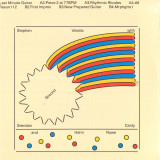
When you’re running a label, a demo occasionally comes across your desk that makes you reconsider everything you thought your label was all about. For Balmat, such was the case with this stunning album from Stephen Vitiello, Brendan Canty, and Hahn Rowe. It sounds like nothing we’ve released so far—and that very otherness opened up a whole new world of possibilities for us.
Fans of ambient, experimental electronic music, and sound art will be familiar with Vitiello, a New York native, long based in Virginia, who has collaborated with a cross-generational list of greats: Taylor Deupree, Steve Roden, Lawrence English, Tetsu Inoue, Nam June Paik, Ryuichi Sakamoto, Pauline Oliveros, and many more. On labels like 12k, Room40, and Sub Rosa, he has explored a wide range of minimalism, microsound, lowercase, ambient, improv, and other styles. But this album is something different. It may begin in ambient-adjacent territory, but it quickly veers off, and it just keeps zigzagging, taking on elements of krautrock, post-punk, dub, and the groove-heavy interplay of groups like Natural Information Society and 75 Dollar Bill.
This stylistic turn is thanks in large part to Vitiello’s choice of collaborators. “We’re coming from three different schools,” Vitiello says: “sound art, art rock, and punk rock.”
Active since the early 1980s, Rowe—a violinist, guitarist, and producer/engineer—has played with, or manned the boards for, a frankly jaw-dropping list of musicians: Herbie Hancock, Gil Scott-Heron, the Last Poets, Roy Ayers, John Zorn, Glenn Branca, Swans, Live Skull, Brian Eno, David Byrne, Anohni, R.E.M., Yoko Ono, and many more. But he might be most closely associated with Hugo Largo, a one-of-a-kind New York quartet—two basses, vocals, and Rowe’s violin—that in the late 1980s helped lay the groundwork for what would eventually become known as post-rock.
Canty, of course, is the legendary drummer of Fugazi, the visionary DC post-hardcore group, as well as Rites of Spring before them, and, currently, the Messthetics, a Dischord-signed instrumental trio with guitarist Anthony Pirog and Fugazi bassist Joe Lally.
Vitiello’s trio first collaborated on First, a 17-minute piece released on the Longform Editions label in 2023. Second picks up where the freeform drift of First left off, channeling the trio’s exploratory energies into more intentionally structured tracks and—in a real first for Balmat—some almost shockingly muscular grooves. “Sometimes my projects are more conceptually driven,” Vitiello says, “but I think this was more musically geared. I just wanted to open up the references and bring in an incredible drummer, bring in some melodies, and I’m sort of the center.” But his collaborators, he stresses, are “vastly creative in making anything I might suggest better.”
Like its predecessor, Second took shape in phases, shifting between improvisation and collage. Vitiello laid down the skeleton of the music at home, sketching out initial ideas on Rhodes keyboard and acoustic and electric guitar; he then fed the parts through samplers and his modular system, recording 10- or 20-minute jams. Once he had edited them into more structured forms, he hit the studio with Canty, who added not just drums but also bass and piano; finally, Vitiello took the results of those sessions to Rowe, who played violin, viola, electric bass, and 12-string acoustic and bowed electric guitar, and assisted in some of the final structuring and mixdown.
A few more surprises along the way: Reanimator’s Don Godwin, the studio engineer where Vitiello recorded with Canty, contributed what he calls “resonant dustpan”; and none other than Animal Collective’s Geologist, who just happened to be in the studio that day, sits in on hurdy gurdy on “Mrphgtrs1,” the album’s gorgeous, stunningly atmospheric drone closer. “I love these chance encounters,” Vitiello says. “Somebody I admire, a group I admire—that was an unexpected gift.”
An unexpected gift is a great way of describing Second as a whole: three veteran musicians venturing outside their usual zones and finding a new collaborative language together. The results can’t be neatly slotted into any given genre; they belong not to any given category, but to the spirit of conversation itself.
The Patchouli Brothers are best friends bound together by oddities. They share an affinity for the esoteric side of disco, house, and all other forms of soulful dance music. They hold down a residency at Beam Me Up, a disco night in Toronto & Montreal, and have had releases on some of their favourite labels like Defected, Nervous, Razor-n-Tape, Soundway, GAMM, Soul Clap, Star Creature, Pleasure of Love & Basic Fingers.
We are so stoked to have them join us here for their first release on Sosilly and our seventh vinyl release SSE007… Like Bond they delivered nothing short of pure class! 4 x absolute fire cuts that can turn any place upside down.
This third volume of RAVEBREAKERZ presents again four banging anthems! Signed by Sunil Sharpe (on RAVE OR DIE 07 with Umwelt), LPV & Umwelt aka Dystopian Attack, Formshift, Ramel featuring Jeune Lord, here is the new ecclectic but never boring compilation mixing big names and new names for one of the best uncompromised crazy techno-rave-trancy sounds tinted with raw french hip hop roots !
Repress! with New Artwork
FELT’s sixth volume extracts another fascinating mineral from Guy Brewer’s Carrier alias, further descending the wormhole of darkside minimalism with his most obfuscated rhythmic explorations yet.
FATHOM witnesses Guy Brewer’s unrelenting distillation of precision electronics develop beyond prior incarnations into unclassifiable mutations. Carrier is his sonic vessel in this new era, liberating his prior restrictions to highlight the outer kinetic recesses of experimental sounds that finds a natural home on Perko’s ever-evolving FELT imprint.
The title track twitches along in hallucinatory abstraction, circling the depths with glitched-out programming and fogged-out atmospherics. The Cusp narrows its gaze, meditating on a tense drum rollage that teeters on mellowed menace. Markers then forms a mechanised rinse-out of rumbling subs and plummeting steppers momentum. Trooper unfurls in a finale of future-shocked half time rollage and arpeggiated textures that affirms Carrier’s unwavering vision in sound and style.
- A1: Patrick Bernard - Interieurs
- A2: Cecilia Angeles - Climax Our First Day Of Love Its A Love Day
- A3: Carla Music Orchestra - A Meet With Bond
- A4: Remy Boussengui - Coco Lando
- B1: Francisco Et Son Orchestre - Cafe Rete
- B2: Francis Bebey - Crocodile Crocodile Crocodile
- B3: Michel Lorentz - Zantye An Metro
- B4: Egide Sadey - High Emotion
- B5: Princess Erika - Trop De Bla Bla Dub Version
Isle of Jura teams up with French digger Switch Groove on the next compilation titled ‘Archipelago – Cosmic Fusion Gems from France (1978-1988)’.
Switch Groove explains the concept “When I seriously began to search for and collect records, I was mostly interested in sounds from african-american, afro-latin and UK contemporary scenes. Sounds from distant territories, faraway from my native Massif Central, a highland region in the middle of France. The grass is always greener, I guess however, as I was digging in fleamarkets in the early sunday morning light, as well as spending regular sessions in second hands record shops, I began to discover hidden treasures, underground gems and side-projects of an unknown French musical repertoire.
French music is often reduced to its most famous musical forms, characters and signatures : French songwriting and voices, 60s yéyé, prog rock concept albums and soundtrack explorations, 80’s indie rock scene or more recently electronic French touch. All these sounds have a common feature : a geographical link, forged on mainland French territory, following the contour of the so-called Hexagone, the border that shapes the grounds for an homogeneous cultural expression. But beyond this showcase lie more complex, hybrid and global French productions. From French Caribbean Antilles to Parisian suburbs - especially during the ‘Sono Mondiale’ era -, in French areas outside urban cultural centers, musicians have created fusion and cosmic musical expressions. As the mid-seventies meant a greater freedom to make and record music, a wider use of electronic instruments like synthesizers and drum machines helped to deliver some magical projects you could only find lost in the middle of cheap records during a sunny record digging session. I selected these tracks, in an attempt to shape an ARCHIPELAGO that highlights significative contributions of African diasporas and ultramarine territories into French musical borders. It is the map of a land I have gradually drawn, thanks to deep listening of amazing cosmic and fusion tunes. I hope you enjoy the journey.”