The Microphones, Bon Iver, Lomelda, Vegyn, Hovvdy, Dijon. “Lemon Cream” vinyl is for Indies Only. Follow up to 2019’s critically acclaimed ‘bunny’. Sam Hall’s new album as ghost orchard, ‘rainbow music’, is a collage of patience and meditation. It’s filled with nuances as quietly imperceptible as the seasons, or the profound movement of time, where one day looking back you realize your whole spirit has shifted. Where 2019’s critically revered ‘bunny’ was a love letter to a romantic relationship, ‘rainbow music’ documents the culmination of Hall’s first personal experience with loss in several forms. At the end of 2020, his longterm childhood pet passed away, and with it the last continuing threads of familiarity between being a kid and adulthood. Still based in the Grand Rapids, Michigan town he’d grown up in, the static ease of familiar living seemed to be coming apart at the seams, as friends moved on to bigger cities, relationships shapeshifted and in a short period of time, another kitten he’d adopted passed away prematurely, leaving Hall to question the trajectory in which he himself was headed. Like “songs in the key of life,” the title ‘rainbow music’ refers to the myriad of colors and qualities within Hall that are refracted throughout. It’s a symbolization of hope and the aftermath, the flickering light at the end of the tunnel (or “when a rainbow shows up after a big storm”). “Wish I could have fun anymore,” Hall ruminates on “dancing”, as well as confessing he “wish he made more upbeat bangers.” But reality packs more of a punch, and this collection of songs sees him finally be at peace with the current state of affairs. Relatable to anyone who has contemplated what it means to settle down, or even just catch your breath in an era where anguish is commonplace, the release of ‘rainbow music’ is a happy ending in its own right, a marker of survival that remains close to the bone. // Ghost Orchard’s “bunny” is a blushing, beatific beat. - The FADER // Fluttering and transportive, a swirl of beats and plucky guitar and strings that feels like a cocoon. - Stereogum // Hip-hop inflected, stream-of-consciousness confessionals that’ll have you swooning in the lazy summer sunlight. – Paste // Track listing: 01. Rest 02. Jessamine 03. Cursive 04. Maisy 05. Cut 06. soot 07. memory storage 08. Dancing 09. bruise 10. sweet song 11. comfort (rainbow)

Cerca:forms
The Microphones, Bon Iver, Lomelda, Vegyn, Hovvdy, Dijon. “Lemon Cream” vinyl is for Indies Only. Follow up to 2019’s critically acclaimed ‘bunny’. Sam Hall’s new album as ghost orchard, ‘rainbow music’, is a collage of patience and meditation. It’s filled with nuances as quietly imperceptible as the seasons, or the profound movement of time, where one day looking back you realize your whole spirit has shifted. Where 2019’s critically revered ‘bunny’ was a love letter to a romantic relationship, ‘rainbow music’ documents the culmination of Hall’s first personal experience with loss in several forms. At the end of 2020, his longterm childhood pet passed away, and with it the last continuing threads of familiarity between being a kid and adulthood. Still based in the Grand Rapids, Michigan town he’d grown up in, the static ease of familiar living seemed to be coming apart at the seams, as friends moved on to bigger cities, relationships shapeshifted and in a short period of time, another kitten he’d adopted passed away prematurely, leaving Hall to question the trajectory in which he himself was headed. Like “songs in the key of life,” the title ‘rainbow music’ refers to the myriad of colors and qualities within Hall that are refracted throughout. It’s a symbolization of hope and the aftermath, the flickering light at the end of the tunnel (or “when a rainbow shows up after a big storm”). “Wish I could have fun anymore,” Hall ruminates on “dancing”, as well as confessing he “wish he made more upbeat bangers.” But reality packs more of a punch, and this collection of songs sees him finally be at peace with the current state of affairs. Relatable to anyone who has contemplated what it means to settle down, or even just catch your breath in an era where anguish is commonplace, the release of ‘rainbow music’ is a happy ending in its own right, a marker of survival that remains close to the bone. // Ghost Orchard’s “bunny” is a blushing, beatific beat. - The FADER // Fluttering and transportive, a swirl of beats and plucky guitar and strings that feels like a cocoon. - Stereogum // Hip-hop inflected, stream-of-consciousness confessionals that’ll have you swooning in the lazy summer sunlight. – Paste // Track listing: 01. Rest 02. Jessamine 03. Cursive 04. Maisy 05. Cut 06. soot 07. memory storage 08. Dancing 09. bruise 10. sweet song 11. comfort (rainbow)
Finnish electronic maestro, Turunen's previous solo ventures without his Morphology cohort are rare. The last time was a track for AC Records in 2013 (which was remastered earlier this year for Bandcamp), but appearances have also cropped up on Abstract Forms, Muhk and Bliq in previous years.
ASA 808's new album Boy, crush is a very personal inner journey as well as a call to fight and free ourselves from toxic masculinity. In eight tracks that subtly merge electronica, ambient, breakbeat and house, the Berlin-based artist process their own quest for gender identity. Out on vinyl and digital via the TOYS Berlin imprint, the album proposes new, softer and more diverse forms of gender fluidity.
ASA 808 invites listeners to expand their views of the gender spectrum. The title Boy, crush plays with the term "boy crush" and is meant as an encouragement for all men to "collectively crush manhood" with all its toxic traits and consequences:
"Toxic masculinity has kept our grandmothers and mothers small and brought deviant boys into line. It took me a long time to unlearn so much sexism and queerphobia and find my inner queer child again to let it grow, bloom and shine. I dream of a world in which men emasculate themselves. In which masculinity (if we feel it's still needed) will embrace softness, weakness, vulnerability, solidarity, consideration, mindfulness, self-reflectiveness and nonviolence", explains the non-binary producer and DJ who discovered their gender-nonconforming side already at an early age.
Talkbox is multidisciplinary artist Michael O’Mahony’s third album and his first for 33-33. It’s his most complete and cohesive music project to date, a culmination of ideas, happy accidents and compositions that have been cut up and re-arranged over many years. The album’s sonic signature is the Vocaloid software synthesizer – the titular ‘talkbox’ – famously by Japanese cartoon Hatsune Miku. O’Mahony became aware of Vocaloid in 2015 through the popular Nyan Cat meme, which em marketed ploys the software. Excited by the emotive potential and realism of Vocaloid’s voice synthesis, he began to imagine an album that combined its capabilities with italo disco- and UK garage-inflected sounds. As the version of Vocaloid O’Mahony had access to sang only in Japanese, O’Mahony relied on Google Translate to obtain the required characters to enter into the software. In early experiments with the software, the north Londoner translated BBC match reports from his beloved Arsenal FC. Eventually, he amassed a library of syllables and phonetic sounds, from which he created the melodies crystallised on the record. As far as we know, these vocal lines have no meaning in lyrical terms. O’Mahony works largely in an iterative way; song ideas are reworked over and over in different styles, sometimes over a period of years. Multiple versions of a song might appear on an album, each one with its own particular nuances in feeling. Music perhaps does not always flow out of O’Mahony, but emerges over time. O’Mahony’s album forms part of his wider project: an analysis of his subjectivity through art and psychotherapy. The music complements his writing and video work, which feature in his performances. He writes in chains of association, speculating on topics such as family dynamics, or the meaning of recurring dreams about a childhood game console. His video practice features footage of objects found in his parents’ house, such as his sister’s childhood My Little Pony toy and his retired psychiatrist father’s lecture tapes. The music, at once synthetic and heartfelt, imbues the writing and video work with a strange tenderness. Taken together, these various aspects of O’Mahony’s work form a meditation on the emotional attachments we make to consumer objects and the role of early life in character formation. Tracklist 1/Talkbox 2/More Succinct 3/Electricity 4/Not Giving Up 5/Dinosaur 6/Trumpet 7/Electricity (Rock Version) 8/Aliss 9/Be Good 10/Not Giving Up (Slow Version)
Bootlickers of the Patriarchy was written about Senator Susan Collins
and her infamous press conference after the Kavanaugh/Blasey Ford
hearings
It's about women who succeed from undermining the success of other women or
choose to gain success from exploiting the oppression of other women. This is a
character who has taken many forms throughout history, the kind of woman who
seems perfectly content playing Gamma to the Alpha male. "Bootlicker" is my
direct challenge to the notion of 'women supporting other women,' and the
falsehoods and unrealistic expectations that comes with a statement like that." "I
wrote the song to be played in two different arrangement styles, the first half
being slow and haunting and the second going balls- to- the- wall rage. I was re
exploring a lot industrial/proto industrial music I had listened to as a teenager in
the 90s and used some elements of synth/drum machine sounds to convey all
that anger, panic and darkness." // "Well, why not do a cover of your influences as
a B- side? I was obsessed w/ the Ministry album 'With Sympathy' when writing
tracks for my upcoming album. It is the record Al Jourgenson has stated multiple
times that he's ashamed of most, which is saying a lot considering this man's
autobiography. I teamed up with my friend Heather Elle of Flossing, formerly of
post punk bands Bodega and The Wants for this collaboration. It's my first official
recorded track where I'm playing guitar, so as the saying goes, it's never too late
to pick up a new instrument and get totally lost in it."
Repressed !
We are proud to present a set of edits of this long-lost classic from the golden age of African music, from a figure who is still beginning to get his props internationally, Eji Oyewole.
Born to a royal lineage in Ibadan, Prince Eji Oyewole has had a career as a flautist, saxophonist and sometime bandleader spanning well over half a century. He trained both in Nigeria and then at Trinity the prestigious music school in London, and his life as an itinerant musician also saw him living for extensive periods in Geneva, Hamburg and in Lyon.
While for many years Fela Kuti (with whom Eji played) and King Sunny Adé commanded international attention to the exclusion of most other Nigerian musicians, as if there was only room for one Nigerian superstar at a time on the world stage, on the domestic scene things were very different. Eji was part of the huge craze for ‘highlife’, a generic term that in fact subsumed many different styles, united in their fusion of traditional west African forms with jazz influences and electric instruments, and in the bands’ working practices as entertainers at the nation’s numerous hotel / nightclubs. As this cracking album, recorded for EMI Nigeria at the tail end of the ‘70s and now remastered, reveals, Eji’s version of highlife was even more distinctive than most, eschewing the usual emphasis on guitars for a brasher, horn- laden sound, seemingly influenced as much by American funk as it was jazz, and of course with the heavy percussive undertow central to most African music.
This gave Eji a chance to shine, and there are some scorching solos as well as tight ensemble playing across the four lengthy (to ears accustomed to the three-minute pop song) songs. Eji also played piano on the session. The material has an element of social commentary (Oil Boom and Unity In Africa) and should help feed the seemingly insatiable appetites of the many who have been turned onto African music by the enterprising efforts of devoted collectors, labels and fellow fans.
Surely one of the few musicians who has played with Fela, Miles Davis and Bob Marley, Eji Oyewole still plays regularly in Lagos, recently had an album of new material out with his current band The Afrobars, and has been a member of Faaji Agba, a super-group that has toured internationally and been dubbed ‘the Nigerian Buena-Vista Social Club’.
Vargmal Records is an independent record label and multidisciplinary platform founded by Gent Gjonbalaj. Operating from Prishtina, Kosovo, the imprint publishes hypnotic compositions of various forms, exploring the realms of electronic music and beyond. The label's debut release marks the birth of an initiative started several years ago, reflecting on a process of growth, research and refinement.
Conceived as a foundation record, the 'Classics' EP demonstrates Vargmal's concept and overall spirit. The Italian pioneer Leo Anibaldi inaugurates the label featuring two cuts on the A-side, originally produced in the early 1990s--'Muta 5' and an as yet unheard version of 'Endurance 4'--replete with Anibaldi's signature sound programming and high-octane output. On the flip, the torch is passed to another Italian master, Donato Dozzy, who takes them to another level with his peculiar and precise remix treatment. Where Anibaldi paves the way for a possible future, Dozzy applies a modern touch to the same fundamental approach--a balancing act that shows a spectrum within the conceptual framework from two different points in the continuum, transcending any individual style or place in time.
Selected by their ability to extract the full potentiality of the sound, the tracks on this release reflect a minimalist approach that is inherently resourceful and discerning, whilst maximizing effect and impact. The efficiency of the sound can be heard in the stripped-back elements, practical arrangement and execution of the creative idea. 'Muta 5' opens the EP, a throbbing mass of pressure cooker action, continuously building tension with rippling percussion lines and syncopated beats. Ahead of its time in 1993, 'Muta 5' has a raw, driving energy and commanding authority. Dozzy reworks it into a tighter, linear forma--whilst retaining the angst of the original, he applies new synth motifs and notches the speed down for extra poise. 'Endurance 4' (Version II) is a tribal workout with hallmarks of the classic Italian deep techno sound. With arching drones, chugging rhythms and dramatic narratives, 'Endurance 4' presents an idiosyncratic style and emotive character which later became the model for this sound. Dozzy's hypnotic faculty shines through on the remix, a polished re-run that elaborates on the ominous melodic theme, and lifts the sound majestically to a gliding altitude--marking the end of this record and the beginning of Vargmal's journey.
crystal clear vinyl / limited
Vargmal Records is an independent record label and multidisciplinary platform founded by Gent Gjonbalaj. Operating from Prishtina, Kosovo, the imprint publishes hypnotic compositions of various forms, exploring the realms of electronic music and beyond. The label's debut release marks the birth of an initiative started several years ago, reflecting on a process of growth, research and refinement.
Conceived as a foundation record, the 'Classics' EP demonstrates Vargmal's concept and overall spirit. The Italian pioneer Leo Anibaldi inaugurates the label featuring two cuts on the A-side, originally produced in the early 1990s--'Muta 5' and an as yet unheard version of 'Endurance 4'--replete with Anibaldi's signature sound programming and high-octane output. On the flip, the torch is passed to another Italian master, Donato Dozzy, who takes them to another level with his peculiar and precise remix treatment. Where Anibaldi paves the way for a possible future, Dozzy applies a modern touch to the same fundamental approach--a balancing act that shows a spectrum within the conceptual framework from two different points in the continuum, transcending any individual style or place in time.
Selected by their ability to extract the full potentiality of the sound, the tracks on this release reflect a minimalist approach that is inherently resourceful and discerning, whilst maximizing effect and impact. The efficiency of the sound can be heard in the stripped-back elements, practical arrangement and execution of the creative idea. 'Muta 5' opens the EP, a throbbing mass of pressure cooker action, continuously building tension with rippling percussion lines and syncopated beats. Ahead of its time in 1993, 'Muta 5' has a raw, driving energy and commanding authority. Dozzy reworks it into a tighter, linear forma--whilst retaining the angst of the original, he applies new synth motifs and notches the speed down for extra poise. 'Endurance 4' (Version II) is a tribal workout with hallmarks of the classic Italian deep techno sound. With arching drones, chugging rhythms and dramatic narratives, 'Endurance 4' presents an idiosyncratic style and emotive character which later became the model for this sound. Dozzy's hypnotic faculty shines through on the remix, a polished re-run that elaborates on the ominous melodic theme, and lifts the sound majestically to a gliding altitude--marking the end of this record and the beginning of Vargmal's journey.
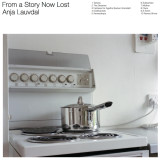
Produced by Laurel Halo and released via Norway's respected Smalltown Supersound label, Anja Lauvdal's first solo release, From a Story Now Lost, is a gorgeous musical essay reflecting on time, its perception, and lost histories rediscovered. Finally exploring her own voice after more than a decade of collaborative improvisational playing - starting at her time in jazz conservatory in Trondheim - the album is a jewel of subtle beauty and innovative detail. A freeform musician on piano, synthesizers, and electronics, Lauvdal's discography stretches back to 2013 and includes her participation in a myriad of ensembles and collaborations exploring the limits of sound and music in many forms, including noise, jazz, and more. Following her move to Oslo after graduation, she became deeply embedded in the music community there, touring with Jenny Hval as well as playing on her records. When pandemic hit and isolation was the norm, Lauvdal began working on her own, recording her improvisations in an attempt to capture something new for herself. Connecting to Laurel Halo via Smalltown's founder Joakim Haugland, the acclaimed American artist agreed to work with Lauvdal in shaping her solo record, becoming integral to its creation through all of its stages. Lauvdal credits Halo as a deep listener and gentle "thought-provoker", who contributed ideas as well as helping to shape the finished versions (Halo also worked alongside Rashad Becker on the final mix of the album). Together, they found a method of recording Lauvdal's improvisations, making small loops from those, feeding them back into the synthesizers, and making synthesizers out of the improvisations, which Lauvdal would then re-improvise with. She describes the end result, "like seeing different pieces of time around in the universe." While the record is based on Lauvdal's improvisations, some tracks were inspired Agathe Backer Grondahl, a Norwegian classical pianist and composer from the latter half of the 19th century. Lauvdal notes that Grondahl is not widely known, although her best friend Edvard Grieg is still considered Norway's most famous composer. Yet now, partly through Lauvdal, her story resurfaces and persists. "From a Story Now Lost means the story is still there," Lauvdal explains. "It hasn't gone anywhere even though nobody heard it, or maybe you're hearing it for the first time. And actually it was told a long time ago - maybe you weren't ready to hear that story at the time." This hints at the limitless nature of her music, as well as its new emotional texture. Direct in its vulnerability, immediate in its tenderness, From a Story Now Lost is a sophisticated evocation over restrained artistry spilling over with meaning.
We like the idea that if someone were new to us and they played this record it would convey everything that we are about.
To convey the almost 20-year career of the band is to take a deep dive into all forms of electronic music - from pop to house to disco to acid - along with nods to 1970s Germany, psychedelia, funk and art pop. And that's exactly what this record does, while also capturing the duality of a band who can craft meticulously constructed studio music as seamlessly as they can lock into unpredictable yet infectious grooves on stage.
AI-32 signals the arrival of ‘The Fifth World Recordings’, by Son of Chi (Hanyo van Oosterom) and long-term collaborator Arthur Flink. A tribute to the late Jon Hassell, who passed away in 2021, the album connects a deep running thread that goes back to the source of Chi project. Carrying on from where Hassell left off, the album takes inspiration and references from his Fourth World music concept and the ancient Hopi tradition of Native America. Illuminating the subliminal space of the arising Fifth World, Son of Chi pays respects to an inimitable force in contemporary music.
Hassell’s ‘Dream Theory in Malaya’ forms a touchstone to Hanyo van Oosterom’s musical journey, which soundtracked long, deep and reflective periods living in the cave of the Kallikatsou (Patmos, Greece) back in the early 80s. This period resulted in Hanyo’s track as Chi - ‘Hopi’ - in 1984. Hanyo met Hassell shortly after in 1987 at his “The Surgeon in the Nightsky” concert in Rotterdam - it wasn’t until twenty years later that Hanyo invited him for two magic nights of “Instant Composing Sessions” with the Numoonlab Orchestra (with a host of other artists) at the LantarenVenster, the very same stage where Hassell had performed in 1987 and also where Chi did their first live performance.
Dreamful, mysterious, prophetic, the Fifth World Recordings features the quiet yet elaborate sound of Chi awash with rich instrumentation, field recordings, and old stories by the firelight. Sketches were created with drones, loops, and soundscapes, with which Arthur Flink (also a member of the Numoonlab Orchestra) jammed on trumpet. Channelling Hassell’s idiosyncratic style, floating melodies and lyrical improvisations are parsed into the mix, where Hanyo has processed and manipulated the recordings, also referencing Hassell’s exotic scales and unique harmonics.
Additionally, the wah Bamboo flute at the closing piece is an homage to the works of Chi co-founder Jacobus Derwort (1952-2019). For this piece Hanyo used his first bamboo flute he made at the cave of the Kallikatsou in 1984. Arthur Flink answers in counterpoint with the wah trumpet, almost like the intuitive communication of the nightbirds..
The sun, kissing the forehead through half-closed blinds; the night, coming uninvited through a windowpane like a damp, sticky shroud. Light and darkness, solid foundations and elusive glimpses of parallel realities. Armies of digital insects - taken aback by warmth of one brave heart, 90s chillout rooms updated for todays vast and desolated space full of fragile souls desperate in their look for any kind of communion; “artificial intelligence” after three decades of wandering, trying to finally find a helping hand, solace and peace. Shimmer and shine. Welcome to “Pristine”, a new recording from the mind of Jacek Sienkiewicz.
For the past years Jacek has been escaping his image of relentless producer and performer of driving, multi-layered club music. His most recent works include deep ambient records, abstract electro-acoustic experiments, and super smart, stripped-down yet incredibly complex contemporary electronica. The last few records, mostly on his own label Recognition include albums with Max Loderbauer and Atom™, reinterpretations of works by Bogdan Mazurek of the legendary Polish Radio Experimental Studio, scores for radio plays and last year’s massively overlooked “Krasz”, music for theatrical performance of Ballard’s/Cronenberg’s “Crash”.
“Pristine”, a labour of love, is at times abstract and atonal, at times breathtakingly beautiful and tender.
8 tracks written and performed in Jacek’s unmistakable, singular style, and covering many grounds - abstract, electronic forms, neo-classical wonders, super tight compositions and freeform, jazz-like improvisations and stripped-down rhythms. Different moods, machine-translated and reverseengineered in a variety of recording locations, make up this exceptional record.
Shimmer and shine, immerse and enjoy.
Co-Financed By The Minister Of Culture And National Heritage of Poland.
The project has been implemented in co-production with Recognition Records and the National Centre for Culture of Poland
French-Senegalese artist anaiis shares her debut album ‘this is no longer a dream’, out now via her own independent imprint Dream Sequence Recordings. The debut album explores themes of isolation and disillusionment and forms an inner conversation that flourishes from angst and neurosis to self-affirmation and hope. The project includes contributions from Chronixx, Topaz Jones, Sjava, Jay Prince, CKTRL, Onyx Collective, Jesse & Forever. The artwork was captured by iconic Brazilian photographer Raphael Pavarotti and phenomenal creative director Ib Kamara. Long Press Release here
TOHO, the creators of GODZILLA, unleash SPACE AMOEBA aka Gezora-Ganime-Kameba: Kessen! Nankai No Daikaijû! A space probe is lost while on its way to the planet Jupiter but returns to Earth after being overtaken by a deadly and dastardly single-celled organism.
The organism then mutates into giant kaiju that mimic a cuttlefish, a stone crab, and a matamata turtle, and uses these destructive forms in their plan to take over the planet. The only thing that stands between humanity and the insidious invertebrates is a group of photographers doing recon for a tourism company!
Directing, of course, is the legendary Ishirō Honda (MOTHRA, RODAN) alongside producer Tomoyuki Tanaka, with the dreamy Akira Kubo (DESTROY ALL MONSTERS) as photographer Kudo. As with GODZILLA, Honda recruited the great Akira Ifukube to compose the thrilling score, and Ifukube brought his trademark innovation and dramatic grandeur.
The title theme is beautifully distinctive, mixing thick brass and low piano to match the destruction of the kaiju with higher horns and trumpet, providing a lighter contrast. Ifukube scores action and horror with his iconic lumbering colours but provides suspense with piano and otherworldly strings, with a unique slithering theme for the evil amoeba. Another Ifukube triumph! (Charlie Brigden)
Composed by Akira Ifukube
Artwork by Matt Taylor
Manufactured in Czech Republic
'Swooping, sub-heavy sci-fi from Riz Maslen. Leda Maar is a new moniker for the established artist who’s released a crop of downtempo and electronic music as Neotropic and Small Fish With Spine, as well as collaborated with the likes of Future Sound of London, filmmaker Andrew Kötting, and featured in PSP-era Grand Theft Auto soundtracks.
Mana’s long lasting love of Riz’s 1996 Laundrophonic EP, released under her Neotropic name, spurred this new release. That 12” was a deep and dark web of rhythm and ghostly urban found sound that one Discogs reviewer aptly named “coin-slot Dubstep”. With elements mostly sourced from tape recordings made in and of her local laundromat, it still stands out as a remarkably contemporary feeling work; more like a post-Fisher, post-hauntology observation of urban life from the last decade, taking the ambient temperature and undercurrent pressures of the 90s. Asking if she had anything in continuity with this slice of her discography, and describing our interest in her take on “space and bass”, Maslen returned to us with Stairway 13.
Heavy-lidded and ethereal in long form, the album’s balance of bass weight, mechanical metre, and darkly tinted new age feels like a cinematic re-approach to some of the textures, moods, and themes of Laundrophonic. Originally designed for an installation, Stairway 13 folds in her decades’ experience in sound design and theatre, along with shards and elements abstracted from her more recent folk-like music, zoning into a deep, retreated, altogether dreamlike and expansive atmosphere. The scale and soundscape is reminiscent of Geinoh Yamashirogumi and their Ecophony album series, resonating to similar frequencies and exploring themes of chaos and re-birth in feature-length form.
Stairway 13’s four parts spread and swoop as single extended sides across this double LP. Carried by waves of sub bass and heavenly chorus, and later punctuated with autonomic clicks of machinery, whirrs, and pulses - sometimes reminiscent of FSOL’s weirder and more clipped staccato sampling in sections of their cyberpunk ISDN - the work forms a gothic, otherworldly ambience. A subtle space opera.'
The 'Privacy Angels' dwell in a liminal zone, a folk magical world sprawling within some remote nodes of the digital universe. An a-chronic plane of contradictions in which the spiritual and the machinic exist in a contrast that, instead of leading to mutual annihilation or subjugation, produces weird forms of life and uncanny forms of beauty. Like flowers sprouting from glitching fluxes of data transmissions, in the corrupted memory of a heavenly landscape. It is the vision of Italian (though London-based) musician and multidisciplinary artist Nicola Tirabasso, channeled through his usual musical avatar VISIO, a dimension he came in contact with while retreating in his native Sibillini Mountains in Marche, central Italy. A type of forced hermitage dictated by the global pandemic and whose idyllic premises were constantly unbalanced and contaminated by the constant presence of the digital world. But again, it is by means of this contrast that art is born. While channeling the magic, the fables and even the superstitions the locals have imbued the region with, Tirabasso developed them into audial spirits of electronic abstraction. A juxtaposition of mystic retreat and information-age alienation that, for some brief, ineffable and baffling moments, seemed to make him able to hear the angels. The album itself is a collection of digitally broken folk songs and logarithmic chants of praise. Acoustic instruments are broken down, replicated and re-materialization, while computer-generated ghosts and synthetic tones are allowed to exist and resonate in ancient spaces. Most of the actual recordings have been in fact made at desecrated XVI church in a town near Montappone, not far from the birth place of XX century painter Osvaldo Licini, whose influence echoes all throughout the region. Licini’s idiosyncratic mix of primitivism, futurism and orphic realism similarly echoes all throughout the record, with VISIO even paying tribute to his painting ‘Angelo Ribelle’ in titling one of the tracks. Collaborations made in person and through file-swaps have traversed the album’s conception and enrich its palette by presenting different versions of reality. Haunter co-founder Daniele Guerrini (Heith) co-produced every track with Tirabasso and gave a fundamental contribution to the album’s final form. Elsewhere, City and Kenichi Iwasa evoke their own privacy angels and let them dance with VISIO’s. Be it, in the depths of the earth or in the dissolution of a digital cloud, it is just as possible to (un)know the divine. Genre: Electronic / Experimental Listen: Track list: 1. Moonchild 2. Extasi Exile 3. Youth Grows Forever 4. Untitled X 5. Blessed Mystery 6. Years Of Silence 7. angelo ribelle
Following the compass of an entrancing debut, Flore Laurentienne's Volume II presents another palette of rich orchestral sound, where changing forces of water inspire metaphorical markers that navigate passages of life and loss. Mathieu David Gagnon resumes his voyage into environment and emotion with Volume II, drawing inspiration from the rivers and rugged wilderness of the composer's native Quebec. In his return as Flore Laurentienne - the namesake of an inventory documenting St. Lawrence Valley flora - Gagnon assembles vivid melodic motifs and delicate modulation with a vast string ensemble to emulate the tides of human experience. Listeners of Volume I will recognise Gagnon's signature approach towards reworking and reframing an emblematic melody or concept across a series of works in Volume II, a process he likens to that of a painter creating multiple sketches of the same view. Continued from the first album, the enigmatic "Fleuve" series is conjured to evoke the multiple personalities of the great St. Lawrence River, and the "Navigation" works ("III" and "IV") wade through dappled progressions and expansive streams of string, the latter of which harbors the gentle meanderings of improvised clarinet. In the world of Flore Laurentienne, complexity emerges from simplicity as the composer roams familiar environments in constant flux. Gagnon extracts beauty through repetition and constraint, utilizing the writing style of counterpoint for which one of his greatest musical inspirations, Johann Sebastian Bach, is renowned. The lilting waves of "Canon" possess the eponymous formation of melodic 'leader and follower' motif, and magnify the softness of the album's eighteen string musicians into a force of full euphoric resonance. In Volume II, Gagnon continues his expansion of classical composition archetypes to meet a new realm of sonic romanticism. Thematic conventions of wandering the pastoral sublime become altered into glimmering refractions, relaying the emotional and kinetic power of natural energies. Volume II forms an estuary where streams of auditory microcosm reach a horizon of dynamic contrast, and reflect the parallel tenors of nature and humankind.
- A1: Onewayticket.ins Paradies 02:09
- A2: Überflug 01:23
- A3: Centauri Nachtclub Pt. 1 03:51
- A4: Durch Den Asteroidengürtel 02:48
- A5: Secu's Im Anmarsch 01:41
- A6: Fancy Cocktail 02:20
- A7: Intergalaktischer Diskocharme (Skit) 01:23
- A8: Schüttel Alles Ab 02:05
- A9: Kosmische Einflüsse 02:08
- A1: Rasch Zum Tresen 01:31
- B2: Geheime Lagune 01:44
- B3: Nackte Tatsachen 02:16
- B4: Tanzhypnose 02:15
- B5: Neptun Kitsch 01:18
- B6: Aufstieg Einer Weltraumstation (Skit) 00:53
- B7: Tanz Der Toy-Roboter 02:13
- B8: Die Astronautenjacke 02:49
- B9: Für Immer Deins 01:25
- B10: Blick Durchs Glas 01:20
- B11: Centauri Nachtclub Pt. 2 01:40
- B12: Woohoo (Ab Nach Hause) 01:52
Genug von verschlossen Clubtüren und abgesagten Parties? Capitano Tito lässt dich nicht im Stich. Der neueste Stop seiner intergalaktischen Reisen ist der angesagteste Vergnügungstempel des Universums, der Centauri Nachtclub! Schüttel alles ab beim Tanz der Toy Roboter, entdecke nackte Tatsachen in der geheimen Lagune und spüre kosmische Einflüsse beim Blick durchs Glas. Und gibt es doch mal Stress in der Weltraumdisko, so sind schon die Secus im Anmarsch, denn Nachtclubmanager MXM hat alles im Griff. Diskretion ist oberstes Gebot, die Raumstation ist gegen digitale Streams abgeschirmt. Sichert euch die formschönen Vinyltickets bevor die Gästeliste voll ist.
Unlearn is the long awaited fourth album of DJ and producer 2econd Class Citizen. It marks the artist's return back to the newly relaunched label Equinox Records. Their previous collaborations achieved high acclaim for their genre bending fusion of hip hop, electronica and folk music.
The new album is an exploration of an artist journeying beyond their conventional confines. It is a musical adventure peppered with vintage samples concerning the perception of reality and our struggles with conforming to a broken society.
Unlearn is the most musically accomplished work of 2econd Class Citizen to date. As one would expect the drum programming, scratching and production is on point. Several tracks feature soothingly melodic and energetic passages of jazz saxophone from Leroy Horns and electric guitar riffs provided by long term collaborator Paul Drury.
2econd Class Citizen, real name Aaron Thomason, resides in Brighton, UK. He is also a painter and visual artist fascinated with abstraction and the chaos of mixing colours. His musical approach on the new LP draws many parallels to this creative process. An original painting from the artist forms the albums striking cover.
Equinox Records is run by DJ Scientist in Germany. The Unlearn project marks the 51st release and provides the perfect launch vehicle for the dormant label to rise again. The vinyl release of Unlearn as well as the single Be Together signify the first stops in a release plan which will please fans of the label.
FEEDBACK:
"Woah! It's sounds rad! Really heavy and cinematic!"
Kid Koala
"A dark and deep dive into a world of dense and diced samples and moody muted melodies. Would sit well next to Shadow's freakier forays into fractured funk. Or Format's last psychy LP, for sure."
DJ Moneyshot of The Allergies
"I love it. The new treatments with the additional instruments sound great, especially the horns. Glad to see that Equinox is back in action. Dope cover art."
Dday One
"It sounds like 2econd Class Citizen has been at a mountaintop retreat studying and meditating and came back with some superpowers."
Buddy Peace