Mondoj presents Jeremy, the latest release from LA's Roy Werner, who is perhaps better known for his work as G.S. Sultan. While the Max/MSP magician's previous works delved into ideas of "avant-garde pointilism" (ad.sculpt tutorial, Orange Milk Records) or presented "abstract noise as a communicative medium" (Redundancy Suite, Phinery), Jeremy repurposes pop music to create abstract, vaporous forms.
Search:forms
Max Duke's first LP “My Sins” is a journey between house and Techno via electronica, with a unique french house touch that forms an unusual and cohesive debut album. It’s the sound of the musical universe and the influences that have taken hold of the french artist. The album unfolds over the course of 11 tracks, each piece serving as a building block and the result of many months of Max’s work. It is the product of experimenting in the studio, seizing the mood of the moment and reflecting on life experiences. Each song has its own story and helps to complete and close the circle of this captivating musical journey. Guitar, piano and synths are his words in the story; the channel that perfectly transmits all the emotions and feelings bottled up in the album. The range of moods, tempos, impressions, sounds and rhythms oscillates between
downtempo and techno with hints of breaks and house.
Straight up dancefloor cuts like “Almost Done”, “Echoes” and title track “My Sins” rub shoulders with the closed-eye mind wandering soundtrack of “Covered”. “A New Reality” emerges as a tribute to 90s trance. The two sections of “Characters” explore an instrumental middle ground between almost orchestral and minimalism. “My Sins” is the work of an artist in constant movement and evolution who opens the door to his unique world in full. The album will be released 30th September on Redlight Music.
The first album on Numbers from Complete Walkthru aka US producer Max McFerren, titled Scrolls, is out on 20th September 2019.
Scolls plays around with themes of privacy, disillusionment and personal development over eleven tracks, representing a transitional time in McFerren’s life. Through Scrolls’ early stages he moved from New York, where he was holding down a residency at Brooklyn’s Bossa Nova Civic Club and playing regularly in downtown Manhattan at the iconic China Chalet and the now much missed Santos Party House, to the open, rural setting of South Carolina.
The albums personality, and the thematic preoccupations underlying it, reflect the impact of this contrast. It’s sound textures cast widely into what McFerren describes as “the ephemera of the saturated digital realm” while moving through arcane rhythms, chiming melodies and expansive, metallically tinged ambient passages. First single Lean In, streaming in full now, is a dusty breaks-tight miasma of fragmented cyber-consciousness. There are playful, hyperactive refrains on Getting Ridiculous. Leavin’ Church Early is an expansive beat free meditation, while NYC’s dynamic momentum is a cityscape of bad-faith corporate aspiration.
McFerren refers to his motivations with Scrolls as being “anti-nihilism”, as reacting against a dark emptiness he perceives in certain forms of techno. Ultimately with the record, he is seeking the potential of centring joy in the present moment, in a conscious awareness of now.
An artist who deliberately plays with labels, taking in contemporary and novel forms, boldly launching into experimentation (as demonstrated by her collaboration with percussionist Vassiléna Sérafimova), Chloé wanted to take the album’s tracks and transform them in front of an audience by feeding them with new textures and inspirations. Performed over a year at events such as Nuits Sonores, Sónar, Mutek (in Montréal and Mexico), The Peacock Society, and festivals such as Marsatac, Musilac and Colors of Ostrava, Endless Revisions’ live performance has evolved with every show. It was out of the question to let these new versions - replayed, recreated and restructured alongside the evolution of the performance’s very architecture - fade away without a trace Chloé’s prolific Lumière Noire label, in the wake of its first anniversary, had to produce a recording that bears witness to the work that these ephemeral creations represents. Slowly introduced by Dune, then propelled by the impulse of Because it’s There, the mix is articulated around the appropriatelytitled Outerspace, followed by Party Moonster and the bewitching The Dawn, heard here in “clubbier” versions and adapted to a context in which the audience (whose enjoyment of the performance was audibly captured in the recordings), must be kept in suspense, as if carried away in a narrative. The set leads up to Moonscape, an exclusive track created during the performance series, before the performance ends with a new version of Sometimes, Chloé’s relentless 2002 instant classic. At nearly 50 minutes, this recording is like a snapshot of a work’s vital momentum, remaining faithful to the spirit of Chloé’s Endless Revisions while detaching itself in order to conquer new territories. It is what music must also be: a moving creation that is activated and reacts in contact with its audience.
- A1: Theme For Us Feat Joshua Idehen & Chip Wickham
- A2: The Socials Feat Soothsayers
- A3: Life Is Valuable Feat James Alexander Bright
- A4: Before
- A5: After Feat And Is Phi
- B1: I Never Feat Madison Mcferrin
- B2: Won’t Get Better Feat Emma-Jean Thackray
- B3: Don’t Stop Here Feat Ego Ella May
- B4: Thru You Feat Georgia Anne Muldrow
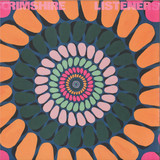
Albert’s Favourites co-founder Adam Scrimshire is set to release his fourth album 'Listeners'. Musically, 'Listeners' draws from Scrimshire's passion for jazz, soul and electronic music of all styles; from an energetic combination of Afrobeat and garage on 'Won't Get Better', to the lushly orchestrated neo-soul of 'Thru You', and the harmonious jazz experimentations of 'I Never'. The album features a host of esteemed guest vocalists and musicians telling their own personal stories, including Georgia Anne Muldrow, Emma-Jean Thackray, Joshua Idehen, Madison McFerrin, Chip Wickham, and James Alexander Bright.
"With this album I wanted to get a more focused sound after six years of relearning and development in the studio. But I also struggled to find my own words, to speak about where I/we are now. So I allowed my collaborators total freedom to tell their own story and as they came back to me, they were telling the same stories I wanted to. It's resulted in some deeply personal confessional pieces: mourning family, collapsing relationships, extremes of self doubt and analysis, trying to balance public and inner persona, and a reminder that life in all forms is important.
It’s called 'Listeners' as I am a listener here, I feel like I've been given these very personal experiences to care for. Listeners because, the travesty of the last few years is that we stopped listening to each other, everyone is shouting at each other and no one is learning. And Listeners because I hope I've made something that is for other people more than I have before. I've tried to craft something warmer and more enjoyable, made for those who give me their time in listening to my music."
- Adam Scrimshire
Since joining the Wah Wah 45s label in 2007, Scrimshire has released three albums of experimental cinematic jazz, and electronic sounds. Following his 2009 debut ‘Along Came The Devil One Night’, his second album ‘The Hollow’ (2011) was a BBC 6 Music Album of the Week, with Gilles Peterson calling it “A late contender for album of the year”.
In the time since the release of his last album ‘Bight’ (“An eclectic range of influences ranging from disco to fusion to more contemporary electronic styles” XLR8R) in 2013, Adam has worked with long-time musical accomplice Dave Koor on new project Modified Man, and launched Albert’s Favourites releasing projects by The Expansions, Hector Plimmer and Jonny Drop. He has continued to gain radio and DJ support for his successful “Scrimshire Edits” series and has produced and mixed records for artist including Stac, Daudi Matsiko, Bastien Keb, Ronin Arkestra, Jonny Drop. He has also continued to develop the Wah Wah 45s label, where he is now a co-owner and director.
Preceded by singles 'Thru You' featuring Georgia Anne Muldrow and 'Life Is Valuable' featuring James Alexander Bright; 'Listeners' is set for release on LP and digital formats via Albert’s Favourites on 19th July 2019.
DJ Support / Press:
Huey Morgan (BBC Radio 6 Music)
Jamie Cullum support on BBC Radio 2
Jamz Supernova on BBC Radio 1Xtra
Thru You Premiered By Mary Anne Hobbs on BBC 6 Music “So Beautiful
Canadian composer Scott Morgan’s 12th long-player as loscil takes its title from an influential series of early 20th century photographs by Alfred Stieglitz, abstracting clouds into miasmic, painterly canvases of smoke and shadowplay.
It’s a deeply fitting analog for Morgan’s own musical process across the past two decades, fraying forms and tones into widescreen mirages of opaque texture and negative space.
The name Equivalents referred to Stieglitz’s notion of the photographs as being equivalent to his “philosophical or emotional states of mind;” the same could be said of these eight weighty, shivering chiaroscuros of sound. Each piece unfolds and evolves enigmatically, adrift in low oxygen atmospheres, shifting dramatically from pockets of density to dissipated streaks of moonlit vapor.
The entirety of the record was created specifically for the album with the exception of “Equivalent 7,” which began as a dance score for frequent collaborator Vanessa Goodman.
The album version of this track was reworked with Vancouver musician Amir Abbey aka Secret Pyramid.Cloud photographs taken by Scott Morgan at various locations throughout Cascadia in 2018.
In the early eighties, Edmond Mondésir, professor of philosophy and Léon Bertide, trade unionist, founded the Bèlènou group. They were actors of the great agricultural strike of 1974, which resulted in the death of two workers (Ilmany and Marie-Louise) and left many wounded. Activists of the patriotic movement Asé Pléré An Nou Lité (Stop crying, Fight), they were part of the identity and the cultural affirmation la revendication identitaire et culturelle of the time. Like the Guadeloupean musician Gérard Lockel and his work on the Gwo Ka, they put the Bèlè, in its traditional form, back in the spotlight during Swaré Bèlè (Bèlè nights).Minimalist and spiritual, a true rural ancestral art from Martinique, the Bèlè combines dance and music from responsorial monodies, which is a choir that responds to the lead singer (Respondè / La vwa dèyè), on codified drum rhythms and ti-bwa (2 sticks that hit the back of the drum or a piece of bamboo). It comes in a series of collective choreographies, working up into the trance. The texts are simple, short and tell the story of everyday life and struggle. While preserving the emotion and the drum’s central place, the fundamental contribution of Bèlènou is to keep the traditional form of Bèlè while adding a modern instrumentation: bass, guitar, saxophone, drums...
Emosyon Tambou-a (Emotion of the Drum) was released in 1990. This third opus of the band expands the musical spectrum in harmonies, arrangements and influences to create a contemporary music anchored in the Bèlè matrix, while keeping the beat, the energy and ancestral roots of music. Bèlènou adapts some classic rhythms: Bélya, Gran Bèlè, Bèlè Pitjé or Ting-Bang rewritten here for an orchestra.With the appearance of long couplets and a complex harmonization of the choruses, Bèlènou's music brings a form of modernity, it opens notably to jazz territory as well as to other forms of music and grooves. Also, Bèlènou leaves the musicians with space for improvisation: not only on the saxophone or the guitar, but also with the drums (cleverly adaptating traditional rhythms to the drums).
The texts sung in Creole are of a social nature, appealing to the solidarity and self-denial of the people (Bélya pou péyi-a, Tout pèp-la sanblé), to the struggle for political emancipation towards a new democracy (Wi ny ké rivé, Ni dé jou, Démokrasi); land protection (Sové tè-a); finally, to the vitality of the Bèlè culture ... (Emosyon Tambou-a, Dansé Ting-Bang)...Culture participates, according to the expression of Aimé Césaire, as "Miraculous Weapons". Bèlènou sings a project of a new and united society. A precursor group, experimental in the its early years, Bèlènou reconciles with talent tradition, modernity and cultural identity.
Lovely crafted tip-on sleeve. Remastered. 700 copies
For our fourth installment of the “Roar Groove meets Dirt Crew” series we present you this new set of shimmering and dubbed out Revenge cuts. After the last episode Graeme has been very busy working his “live” studio setup to come up with a whole range of new jams of which we have selected the below four tracks. We think these best represent his unique style and once you hear these in a club you instantly know “That’s a Revenge Tune”, something we have always loved about his sound.
The opening “Like an Ending” is a trippy, melancholic-euphoric track driven by a Moog Voyager bass line and classic House keys and vibe. The original recording was an 11 minute live take that he has been able to capture the essence off and narrow it down to this thumping club jam.
The A2 is all about those good times and it reminds us a lot of early 90s “French Touch”, filtering House at it’s best, it keeps running around in your head and with it’s slower pace we are sure this one will do especially well on the early morning dance floors and high summer sun drenched beaches.
On the other side we enter darker and more dubbed out territories. Here is the first track in Graeme’s words “This one had been knocking around for a couple of years in various forms, but it wasn’t really until I stripped it all back and let the arpeggiated synth do it’s thing that it really seemed to gel. It’s really the rhythm of the whole thing, I ended up scrapping extra hi-hats and stuff that was just getting in the way.” And we have to mention that we personally love that marimba! This track is like a spaceship floating the skies and eventually touching down.
To close out this new work we have one of these typical stab-y Revenge chuggers, loose and floating, synth lines underlaid by a distinctive beat, it has kind of a breakbeat feel to it and with the improvising on those synths and melodies on top of it all it’s a true Dub House track.
Summer is here and this record sets the pace and tone! Enjoy!
As with the first SchleiBen series, Emotional Response follows the success of the second set of split releases with a stand-alone album by one of the highlights, in Neil Tolliday.
Recorded over a 17-year period, the ambient, drone and noise pieces collected here offer a glimpse in to the depth of a supremely talented, thoughtful and at times, troubled musical mind.
As his love for house music and the success of his Nail moniker grew and waned during the ascent 90s boom, there followed his somewhat surprising success as one half of Balearic-pop combo Bent, propelling Tolliday in to a world of indie-charts and endless touring. The eventual unhappiness of this 'music career' and increasing need for personal escapism led him start experiment new musical forms of expression.
A thinker and oft-over drinker, success was viewed with a deep suspicion and introspection, drug use and later, depression. As his other music projects slowly imploded, this new, personal music was for many years, made purely for Tolliday's own absorption and comedowns.
Taken from an initial 4 track recording in Nottingham in 2000, more pieces were subsequently recorded around the globe on numerous devices - old portable cassette recorders, hand held digital stereos and even mobile phones. These heavily manipulated samples were slowed down, reversed, smudged and stretched before analog and modular patching, Mellotron, editing, programming and post production were added to the melting pot.
With hundreds of tracks collated, in the last few years Tolliday began putting them out via Bandcamp using different aliases, on made up record labels, with no press or mention to anyone. This would happen every 6-9 months - a new label was created with logo, band/artist names and a few albums worth of music, leaving it there for a few weeks before then deleting the lot.
Here then is a snapshot of those recordings, chosen to represent the depth of music, while trying not to think too much about in to the emotions that were used in making them. With special hand painted artwork by Sam Purcell, commissioned from the artist's own photographs taken from a adjournment at Homerton hospital, the hope is to do justice to such wonderful music and present Neil Tolliday, finally an artist, shorn of pseudonyms, in a broader light.
- A1: Afrodite Se Quiser - Fora De Mim
- A2: Lilith - Todo Amor E Bom (Remix)
- A3: Fabio Fonseca - Ladroes De Bagda Feat.marina Lima
- A4: Fernanda Abreu - Hello Baby
- A5: Luna E Dj Cri - Acabou Como Comecou
- B1: Junior - Vim Te Buscar
- B2: Thaide & Dj Hum_Coisas Do Amor (Trepanado Edit)
- B3: As Damas Do Rap - Um Sonho Real
- B4: Mc D' Eddy - Jeito Do Se Menina (Inst)
- B5: Sharylaine_Saudade
I grew up fascinated with the music played late at night on the radio.
As a kid, when times were tough and I couldn't get myself to sleep, I would tune the radio to my favourite FM station and dream on.
This was back in the late 80's and lasted until the mid 90's, a time when I was getting hooked by Hall & Oates, Loose Ends, Maze, S.O.S. Band, Soul II Soul, and other artists that used to rule the dial in the wee hours.
So this music didn't only comfort and nurture me at the time, it also shaped my music personality.
When Renata approached me in order to work on the first ever compilation for Hello Sailor, I knew the selection would end up reflecting this side of me. It had to come from the heart.
It also had to bring to the table something different than what's already associated with Brazilian music, and exploring our own take on the street soul genre sounded good.
It was never done before and it's also faithful to Brazil's musical heritage.
Back in the 80's and into the 90's, it was very common at parties to have a slow dance moment in between the more uptempo sections. A timeout from all the frantic dancing, when people could cool off and flirt in a more romantic way. (It does sound like a great idea to have this intimate just-the-two-of-us moment in the middle of a party; maybe it explains the number of marriages at that time.)
This is a tradition that goes back to the black music balls in the late 70's, which helps to explain why the majority of the early rap acts from Brazil used to have a couple of romantic songs in their albums. When you add to this recipe the power of the mellow pop acts during the aforementioned period, one can realise why it extended its tentacles to deeper depths of pop music in Brazil.
This compilation features some of my favourite music ever, songs that I've crossed paths with in different moments of my life.
Fernanda Abreu, for instance, is a longtime crush - I have been in love with her music since the mid 80's when she used to sing in a band called Blitz, which my mom loved.
Afrodite Se Quiser, on the other hand, created some buzz while the group was active with the minor hit "O Que Que Ela Tem Que Eu Nao Tenho", from their first album (1987), but I didn't know about "Fora de Mim" until 2015. My point is: even if it took me 25 years to find this track, I had a reserved spot in my brain for it and it laid there perfectly as if it innately belonged there.
It's a built memory, and I love playing with this idea when presenting music to people.
Street Soul Brasil is part mellow pop, part R&B, part rap.
One can surely feel a lot of street energy from the B Side. The music reflects the influence of international pop at the time, but it also shows how Brazilians are talented in making any sound their own!
This compilation is supposed to be a mixed collection of songs, something that might trigger the feeling of flipping through an old photo book full of tender memories. These are songs that should speak straight to the heart, music to comfort and heal, music that deals with joy and pain, feelings that I always liked being transmitted through music.
It's among the best forms of therapy. It worked for me and I hope it works for you...
Coming to the table with a fresh mutant sound, Darker Than Wax is proud to welcome Leeds-based artist Captain Over to our sonic universe with his Deep Blue EP. A solo project from one of the minds behind the band Paper Tiger, Captain Over represents a firm focus on dancefloor experimentation, blending the sounds of grime, broken beat, house, and LA beat music to create an entirely new beast. Much like the chess-playing supercomputer of the same name, ‘Deep Blue’ occupies a space between electronic weight and the human touch, fusing together icy digital synths borrowed from grime with off- kilter grooves and jazzy motifs.
Following a string of releases led by vocal tracks with grime MCs, ‘Deep Blue’ is the first fully instrumental offering from Captain Over, lending the artist a platform to make a strong statement about his creative vision and technical prowess. From the expansive arrangement of ‘4D’ to the duelling sci-fi synths on ‘Mind’s Eye’, the Deep Blue EP is a deeply creative yet functional record, signalling a bright future for the Captain Over project.
Aggelos Baltas is a veteran of the global electronic music scene, responsible for a handful of celebrated EBM 12”s as Dream Weapons, and a particularly heady and open-ended brand of krautrock as Fantastikoi Hxoi. His newest project, Anatolian Weapons, was conceived as a way to bring together these two seemingly mismatched concepts, with the polyrhythmic percussion and wailing tones of Greek folk music serving as their unlikely bonding agent. His output garners praise particularly around the Golden Pudel scene, such as Vladimir Ivkovic, and Phuong Dan. Lena Willikens, from the same circle, included Baltas’ track “Disillusioned” on her Dekmantel Selectors compilation in 2018.
But where much of what Baltas has released as Anatolian Weapons is instantly recognizable as dance music, To The Mother Of Gods—Baltas’ debut album for Beats In Space—is something else entirely. Created in tandem with Greek folk musician Seirios Savvaidis, it is a work of simultaneous collaboration and subtraction whose meticulous construction becomes more apparent with every listen. An album-length exploration of what happens when the principles of dance music are applied to pre-digital musical modalities. It is a record of psychedelic folk music that has more in common with Kikagaku Moyo, Minami Deutsch, and the Habibi Funk label than it does with anything else Baltas has produced under any alias. It’s difficult to imagine this music in any kind of club setting.
And yet, it’s very much the work of a DJ. Baltas initially heard Savvaidis’ music through a friend, and was absolutely amazed. “It was his very esoteric, pagan [music and] beautiful lyrics that grabbed me,” he writes. Seirios is a composer and performer of traditional Greek folk music with a growing discography of regional psych-rock gems. Baltas reached out to collaborate and the seeds of To The Mother Of Gods were sown.
Savvidis contributed stems of ten songs, which Baltas deconstructs and rearranges with appreciation of the ancestry of their lineage and of the deceptively ancient eerie, droning qualities inherent in the style. Occasionally augmenting Savvaidis’ recordings with his own, Baltas treats these elements as if raw materials for an architectural process.
To The Mother Of Gods showcases Baltas’ arrangement skills. He treats Savvaidis’ songs as landscapes, filling them with slanted, droning light and setting the singer’s vocals in dead center. His years behind the decks have given him an intuitive understanding of dynamics—drums crest and recede like tides, snippets of bassline repeat and swirl. He knows how to entrance, and when to push the music from the head to the body. Opener “Taratchi Katarratchi” (“Stormy Cataract”) is sung as a spell to ward off the fear of death, but Baltas’ orchestration demonstrates that dancing is an equally effective way of dispelling the darkness. The beat he assembles from Savvaidis’ playing recalls the late-night ecstasies of Primal Scream circa Screamadelica.
To The Mother Of Gods is a reminder that folk music and dance music are both powered by their audience as much as the musicians themselves. Savvaidis’ lyrics echo pagan Greek themes, touching on what Baltas calls “the magic of nature.” At times, as on “Kalesma” (“Invitation”), this can feel incantatory. Savvaidis chisels his vocal melodies into hard, clipped syllables, their cadence recalling Gregorian chant, and yet Baltas cloaks these details in washes of distortion. “Ston Stavraito” (“In Stavraithos”) is delivered with a lamentive tenderness that Baltas swells into a prideful stomp, immersing Savvaidis in marching drums and distant vocals that form a resilient protest-song. To The Mother Of Gods is a testament to the ongoing and innate truth that music can take us beyond ourselves. That repetition and drone can shepherd us to a liminal space beyond thought and rationality, where the wall between perception and reality does not exist. Call it spirit, if you want, and watch as it courses its way through modern-day dance music, mid-century psych, and the ancient sounds of the anatol.
Anatolian Weapons’ To The Mother Of Gods will be available from Beats In Space on June 14, 2019 in limited vinyl and unlimited digital forms.
Artist Highlights
• Aggelos Baltas is an Athenian music producer creating and Djing under the monikers of Anatolian Weapons, Fantastikoi Hxoi, and Dream Weapons.
• The Anatolian Weapons moniker is an outlet for Baltas to explore global music—from African to Anatolian and Middle Eastern, while also incorporating sounds from his home country of Greece.
Next up on COS_MOS is a label debut from Tom Dicicco. The UK techno artist has amassed a fine discography on the likes of Delsin, Off Minor and Dred Records, always with a rugged and club focussed current running through what he does.
The four cuts he offers here kick off with the hammering synth stabs and coarse claps of 'Varykino', a brutal twisted dance floor mover. 'Laser Life' then cuts loose, with squeaking machines and alien life-forms jumping about in a broken beat framework that brings off balance grooves to the party. Acidic bouncing bass lines jumping over the b-side on '99 Rising', where 'Quiet Theory' flips the script again, this time with percolating and trippy synth loops rising and falling with skeletal beats stuttering below. A well balanced party pack for every hour of the night.
The album starts with 'St. Fabian Tower', named after the now demolished tower block in Chingford where Anthoney used to DJ for Rude FM. The track's lush detuned synths and syncopated drums are girded by stern low end frequencies. Drum and bass, jungle and hardcore are the touchstones here, but the forms he creates make no attempt to imitate the music of those eras. Take the rolling, bubbling, almost jazz-drummer patterns of 'Yeah, I Like It' and 'I Want You' where strange pops and bubbles seem to be forced through the grid almost like they're an effect of pressure. It's an odd juxtaposition next to the soulful vocals but an effective one. 'Edge Of Darkness' meanwhile, is an intense, rough ride of sliding rhythms and elephantine bass. Elsewhere, like on 'A New Consciousness', things are tempered into a more streamlined techno-like hybrid. He lets loose in the claps and kicks banger of 'Fi Di Gyal', but even here there are neat sonic tricks that sound like nods to minimalist composition.
On The Threshold is a balance of smart and energetic, non linear thoughtfulness and makeshift experimentalism that does away with boundaries, but is very much its own self contained world.
Worst records is proud to present the third release of its growing catalogue. Unlike his
alias could evoke, Christian Coiffure is not so much specialized in online hairdressing
tutorials but has a fierce passion into brushing serious quality tracks. « Un Nouvel Âge
Réminiscent » hits hard with its progression into sharp and colorful forms, never bound to
redundancy. From slow EBMish , industrial tainted marching anthems of « A New New
Hope » and « Slowly Merging Into One » to synth-infused acid railroads built for futuristic
Trance Europe Express trains in « Révolutions Synchrones » and « La Dernière Volonté
des Atlantes », everything functions as a toolkit for imagination. Add to this a breaky
andrefreshing post-dubstep turn on « Biosphere is Reborn » alongside a delicious
headshot surprise on digital bonus with « Pouvoir Lacrymal Renforcé », and you will
never see the word « coiffure » the same way again.
Black Truffle is honoured to announce the first ever vinyl reissue of David Rosenboom’s legendary Brainwave Music, originally released on A.R.C. Records in 1975 and here expanded to a double LP with the addition of over 40 minutes of contemporaneous material. Pioneer of live electronics, innovator in music education, collaborator with artists as diverse as Jon Hassell, Jacqueline Humbert, Terry Riley and Anthony Braxton, Rosenboom is renowned for his ground-breaking experiments with the use of brain biofeedback to control live electronic systems.
Each of the three pieces that make up the original Brainwave Music LP integrates biofeedback with musical technology in different ways. In the side-long opening piece “Portable Gold and Philosophers’ Stones”, four performers have electrodes and monitoring devices attached to their bodies to receive information about brainwaves, temperature, and galvanic skin response. This information is analysed and fed into a complex set of frequency dividers and filters, manned by Rosenboom, but essentially played by each of the performers through their psychophysiological responses to the situation. The result is a slowly unfolding web of filtered electronic tones over a tanpura-esque fundamental, possessing the unhurried, stately grandeur of an electronic raga. In “Chilean Drought”, three different variations of a text about a drought in Chile, each read by a different voice in a different style, are associated with the Beta, Alpha, and Theta brainwave bands. Alongside an insistent piano accompaniment, we hear a constantly shifting combination of the three vocal recordings controlled by the relative preponderance of each of the brainwave bands in the soloist whose brainwaves are being monitored. “Piano Etude I (Alpha)”, the earliest piece included here, is based on research into the link between Alpha brain wave production and the execution of repetitive motor tasks. As Rosenboom plays a very rapid, incessantly repeated pattern in both hands – deliberately designed to be difficult to execute without being in an alert, non-thinking state similar to that associated with strong Alpha brainwave production – two filters controlled by monitoring his brainwaves process the piano sound, moving gradually higher in frequency as the average Alpha amplitude increases, resulting in a hypnotic, constantly shifting blur of repeated notes reflected through the shimmering, watery lights of the filters. For this reissue, the original LP is supplemented with an additional LP containing an unreleased 1977 live recording of Rosenboom’s “On Being Invisible”, in which the composer himself performs on an array of electronics that are fed information from his brainwaves. Stretching out over 40 minutes, the piece begins in similar territory to “Portable Gold and Philosophers’ Stones” but eventually becomes far wilder, building up to pointillistic bleeps and dense layers of electronic fizz that unexpectedly cut to near-silence. As Rosenboom explains, the piece creates a situation in which the ‘performer’s active imaginative listening became one of the ways to play their instrument, as well as an active agent in how self-organizing musical forms might emerge.’ Enriched with archival images and new notes from the composer, this expanded reissue of Brainwave Music is essential listening for anyone interested in the history of live electronic music and alive to the possibilities it might still contain.
U Know Me Records proudly presents a special album showcasing Polish drumming scene - each track was produced by a different drummer - these are their portraits.
official video promo: https://youtu.be/qxuTYjMRUMM
In the 21st century drummers imperceptibly switched from the background to the front line, despite popular music not exactly pandering to them. In the early days of rock culture this joke made the rounds "What's the last thing a drummer says in a band?" "Perhaps we could play one of my songs…?"
In popular music the drummer became the first to compete with machines. They were the first band members that consequently began disappearing, however, as contemporary electronic music took hold, they were also the first to return. First they were incorporated into compositions but gradually - took centre stage. Thanks partly to the ubiquitous culture of Hip Hop recognising the drummer's role as key in any recording, alongside the eclecticism of new music, which demanded fluid transitions between musical forms, a drummer's adaptive skills – as a trained multi instrumentalist – became truly impressive. This new generation of drummers seen on Polish stages today are exceptional even against the backdrop of today's unusually creative and well-educated music scene which rejects narrow minded or genre-centric views.
This album exhibits portraits from the cream of today's Polish drummers. Kovalevo Tone Bank by Michał Bryndal tags the 1980's, the era which began stealing drummers' bread. Incidentally, the heavy groove laid down by the artist references a hit by Wham!, the same hit in which the group decided to cut the drummer's part because he was late and replace him with a LinnDrumm machine. Hubert Zemler in The Life and Death of Ben Bekele and Łukasz Moskal in Father Sparrow show they've found themselves perfectly in close cooperation with electronic instruments.
Multifaceted improvisors - Qba Janicki (Kabina projekcyjna) and Jan Młynarski (Roj) - transform their drums kits into multifunctional devices capable of delivering wildly diverse palettes of sound. Rafał Dutkiewicz (Displaced) showcases drums as the lead instrument on a club track. Marcin Rak (Alpaka) does the same, but with the conventions of Funk and Hip Hop, whereas Krzysztof Dziedzic (Vagabonde) gravitates towards the edges of jazz. Each of them here is a leader and… plays one of their songs.
Bartek Chaciński
(translation: Sean Palmer)
Temporary linearity in a lysergic world.
Imagination and reality, science and humanity: SPIME.IM weave their audiovisual tales from the ethereal textures that shape our worlds. Their album "Exaland" synthesizes reality by combining human expression with technological potentialities in an infinitely changeable virtual world. The seven tracks are defined by razor-like sounds, crystal textures and digital overload, captured in those weightless seconds on a parabolic flight. Just as SPIME.IM's live performances, this album is a temporarily linear journey through a narrative space shaped by psychedelic landscapes, synthetic colors, mutating objects and transient life-forms.
SPIME.IM was born as a word pun between the concept theorized by Bruce Sterling - the spime for the note, an object that can be traced through space and time for the duration of its existence - and the contraction of English "I am". If the Being is therefore the object of the intertwining between the real and the virtual, then it becomes possible to create new imaginaries that turn into immersive environments and narrative spaces in which artificial and natural, science and humanity, imagination and reality interpenetrate, giving life to new boundaries to be explored, to experience the own consciousness and what, while invisible to our eyes, surrounds and influences us.
Affirming digital reality, the Turin-based media art collective SPIME.IM explores the boundaries and possibilities of identity and perception in a world where virtual doppelgängers take on an all-encompassing position. SPIME.IM use technology, 3D art and electronic music to weave immersive audio-video experiences.
Berlin’s Answer Code Request and Marcel Fengler remix two cuts from AVION’s ‘Untrod’ album on his Crossing Imprint.
Established in 2013, Crossing has become a home for the majority of VAION’s releases including his debut album that picked up support from the likes of Darko Esser, Cosmin Trg, Anastasia Kristensen, Steve Bicknell and many more.
For this compelling remix package, AVION invites Answer Code Request and Marcel Fengler two legendary Berghain residents known for releasing on Ostgut Ton and their own eponymous imprints, who together have been honing a musical hybrid that stands apart from some of the more uniform forms of techno.
Answer Code Request’s ‘Evasion’ kicks off proceedings with an ethereal ambience balancing a tough syncopated drum sequence, resonant pads and atmospheric synth keys floating underneath. On the flip, Marcel Fengler’s remix of ‘Streetlights’ rounds off proceedings with menacing breaks-tinged percussion,
murmuring oscillations graciously fused with Emika’s delicate vocals and resilient modulations throughout.
Spell PETS backwards to get STEP. Spell STEP forwards and you get PETS going back to basics. STEP is the new vinyl-only label from the founders of PETS – Catz n Dogz – with a focus on the rawest forms and root functions of dance music. STEP searches for the fundamentals with under-theradar house and techno that’s not afraid to be rough around the edges. It’s all about the music.