“It was a rainy day at the recycling centre in Leitrim. There, amongst the tangle of discarded kettles and broken-down toasters, I first laid eyes on her…” A few years after her stand-out contribution to our ‘Wacker That’ compilation and following a bunch of purple patch releases for Nyahh Records, TakuRoko, Fort Evil Fruit and Eiderdown Records, Natalia Beylis graces Touch Sensitive with a true landmark album for the label – ‘Mermaids. Recorded both at home in Leitrim and at neighbour Mat Warren’s studio (Studio Moo Moo – a converted cow shed), ‘Mermaids’ was inspired by two salvaged items: a CRB Elettronica Ancona - Model: Diamond 708 E electric keyboard from the local tip and a photo taken by her father found in a pile of old family scraps. Smuggled home in the back of the van and ridded of the nine purple crayons lodged inside, the keyboard sounded perfect to Natalia; “The sounds that come from her when I play always move me like water; swimming in rivers and floating in the murk beneath the surface.” The striking image which would become the cover art features Natalia’s mother and two friends during a dip in the ocean. We see three women hanging out on a large rock – their bad-ass hairdos and poses perfectly framed and saturated in sepia. “There are complete siren vibes coming from the rock. Three women, three girls, three witches, three mermaids. I wish I was one of them. Or friends with them.’ After testing compositions and recordings for months on the rescued keys, the discovery of her father’s image formed the final work: “A confluence of the sounds and the image charged through me, and the album began to flicker into being.” Much like the push and pull of the River Shannon, Natalia’s own local swimming spot, ‘Mermaids’ flow is both organic but unstoppable. Anchored around the album’s hypnotic 17-minute title track, we are fully immersed within this subaquatic suite from the first splash. Alongside the keyboard’s glistening tone, field recordings from Natalia’s expansive archive bring us back up for air; taking stops to check in with the chittering chickens and ducks of Athlone. In keeping with her back catalogue and extensive body of work, ‘Mermaids’ exists within its own imagined universe. This is truly singular work that continues to underline Natalia as one of the finest underground artists of her time. We wholeheartedly encourage you to take a forty-minute sonic dip into a deep, murky, watery world of her own creation.
Cerca:forty 6
- A1: Ultradyne Clones Z Therapy Remix
- A2: Cisco Ferreira Womans Scent Heinrich Mueller Remix
- A3: Jauzas The Shining Victoria Lukas Bohrium 274 Remix Heinrich Mueller
- A4: Rough Days For Diamond Trade Somehow Dopplereffekt Remix
- B1: Albert Van Abbe Rytumtraks 0002 Rudolf Klorzeiger Remodel
- B2: White Car Now We Continue Heinrich Mueller Continuum
- B3: Duplex Autosug Heinrich Mueller Remix
- C1: Fasenuova Cachito Turulo Heinrich Mueller Remix
- C2: As One Where Did He Go And Why Heinrich Mueller Lamb Shift Model
- C3: The Exaltics The Truth Remixes Instinct Dopplereffekt Hubble Constant Remodel
- D1: 6D22 Longwang Heinrich Mueller Remix
- D2: Yan Wagner Forty Eight Hours Heinrich Mueller Apeture Synthesis Model
- D3: Dollska So Long For A Small Storm Rudolf Klorzeiger Remodel
Its been five years since Belgium's WeMe Records lovingly selected the first ever collection of Heinrich Mueller's (Drexciya/Doppleffekt) best remixes/remodels for a new generation of listeners that won't have to pay collector prices to have them on vinyl. Volume 2 of False Vacuum is now with us and still has riches to choose from.
These 13 rare and hard to find tracks (3 of which make their vinyl debut) all deliver in different ways as he systematically reinvents each one.
Beginning with his raw and now classic remix of Ultradyne's 'Clones', the hard-edged dance-floor friendly 'Woman's Scent' by Cisco Ferreira (The Advent), the more laidback and futuristic sounding 'Bohrium 274' by Jauzas the Shining and Victoria Lukas, the slow and mysterious and first time on vinyl 'Somehow' by Rough Days For Diamond Trade, reinventing the darkest of dance-floors on 'Rytumtraks 0002' by Albert van Abbe, the moody masterpiece and first time on vinyl 'Now We Continue' by White Car, Duplex's 'Autoslug' sounding like its been rearranged inside a black-hole, a balancing act between the light and darkness on Fasenuova 'Cachito Turulo', an insistent rise and falling workout for As One's 'Where Did He Go and Why', a tightly wound and almost meditative 'The Truth' by The Exaltics, an angular stomping march of the robots 'Longwang' by 6D22, a jumpy fidgety groove for first time on vinyl 'Forty Eight Hours' by Yan Wagner and perhaps one of his most sublime pieces is kept for last with 'So Long For A Small Storm' by Dollska.
Ils Veulent Nous Tuer is Bérurier Noir's 3rd maxi 45tours, the title of which is borrowed from the slogan of a banner unfurled by the mutineers from the roof of Fresnes prison. It was an apt title for the group, too, since at the time of its release, the political and police authorities decided to destabilise them by associating them with the Black War activists and arresting many of the Bérus' entourage.
It's a dark album, with hard-hitting lyrics rooted in the social reality of the time (1988) and tackling subjects as diverse as the problems of access to food for the precarious (On A Faim !), prison repression (Sur Les Toits), the excesses of marginal youth (Mineurs En Danger) and the omnipresence of the military and police in our daily lives (Et Hop !). The album compo
--
The band's name alone evokes the epic of alternative rock: rebellious and committed.
Born by mistake on a February evening in 1983, Bérurier Noir soon found themselves the driving force behind a vast "Mouv'ment d'la Jeunesse", determined to take control of their lives in the face of a society that was ultra-conservative at the time. Times have hardly changed.
From their first self-produced records distributed by hand to the creation of self-managed labels, from concerts in squats and wild appearances at demonstrations, on the street or in the metro to endless tours, from interviews given to fanzines and free radio stations to unclassifiable appearances in the mainstream media, Bérurier Noir waged the most exciting war of independence in the history of French rock, with just a microphone, a guitar, a drum machine, a few red noses and patched-up theatre masks.
François, Loran and their 'Troupeau d'Rock' gave the last finger to this turbulent, irredeemable raia, committing hara-kiri at the height of their glory, during three final concerts in the heart of Paris in November 1989.
Forty years after its birth, Bérurier Noir's work continues to resonate, whether at demonstrations or free parties, fuelling the hopes of all those who wish to turn this world upside down and build a truly libertarian society based on solidarity and brotherhood.
For those who missed this unprecedented adventure, the Archives de la Zone Mondiale label is bringing you 8 recordings by Bérurier Noir in the form of limited-edition reissues on highly original colour vinyl ("crown" finish), distributed throughout the year.
During the latter half of the seventies very few came close to emulating the success of the productions of Joe Gibbs and Errol Thompson. 'The Mighty Two' took the greatest of Kingston's musical and technical innovations and transformed the cutting edge into a commercial proposition that crossed over to the rest of the world. 'Under Heavy Manners'' was an essential purchase as well as a defining statement on the sombre mood of the times in the year that two sevens clash and forty years after its original release, the raw reality of 'Under Heavy Manners' continues to hit home.
Factory Benelux presents a limited (500 copies only) coloured vinyl edition of Nature + Degree, the sixth studio album from post-punk trailblazers Section 25, originally released in 2009.
Self-produced in 2009, Nature + Degree was the first SXXV project to feature new members Stephen Stringer and Stuart Hill. Founder members Larry and Vin Cassidy are also joined on several tracks by Beth Cassidy, whose vocal style recalls that of her late mother Jenny on From the Hip and Love & Hate.
Stand-out tracks include Garageland, Singularity, Remembrance and Saddled With Something, the latter burnished by a string quartet.
"All Factory groups now have a cult following and Section 25 have done more than many to deserve it. The electronic pop-rock sound is no longer novel, but on their second album of new material since 2007 the group turn in an album that's straightforward, sincere and musically ebullient" (The Wire)
"The natural follow-up to Part-Primitiv, yet still recalling the Factory legacy" (Brainwashed)
- 1: The Milkman Of Human Kindness
- 2: To Have And To Have Not
- 3: Richard
- 4: A New England
- 5: The Man In The Iron Mask
- 6: The Busy Girl Buys Beauty
- 7: Lovers Town Revisited
- 8: Intro (Live)
- 9: Lovers Town Revisited (Live)
- 10: To Have And To Have Not (Live)
- 11: The Busy Girl Buys Beauty (Live)
- 12: The Man In The Iron Mask (Live)
- 13: Richard (Live)
- 14: The Milkman Of Human Kindness (Live)
- 15: A New England (Live)
As part of The Roaring Forty (1983-2023) celebrations marking the 40th anniversary of Life's A Riot with Spy vs Spy, Cooking Vinyl has repressed the 30th Anniversary Edition of the album on black vinyl. Comprising the original album, plus a live solo version by Billy recorded as a unique encore at his London Union Chapel show on Wednesday 5 June 2013. Life's A Riot (30th Anniversary Edition) features a sleeve based on the original 1983 Barney Bubbles artwork in a vinyl card sleeve with inner sleeve. Pressed in 180g heavyweight black vinyl.
- 1: Splitterty Splat
- 2: Wreck And Roll
- 3: You?Re Full Of Shit
- 4: Tidal Wave
- 5: Refrigerator (Alt)
- 6: Cold Meat
- 7: Spinach Blasters
- 8: Jaguar Ride
- 9: Zoot Zoot
- 10: Giganto (Cyclotron)
- 11: Bunnies
- 12: Roll On, Big O
- 13: You Crummy Fags
- 14: No No
- 15: Sewercide (Alt)
- 16: Silver Daggers
- 17: As If I Cared
- 18: Natural Situation
- 19: Cards And Fleurs
- 20: Agitated (Orig)
- 21: Cyclotron
- 22: Black Leather Rock
- 23: Dead Man?S Curve
- 24: Safety Week
- 25: Accident
- 26: Anxiety
- 27: No Nonsense
The electric eels were the first punk band, full stop. They may not have “started” the genre, but they were the first to tick all the boxes. The eels rejected every 1970s rock convention—professionalism, virtuosity, subject matter, image. Dave E.’s caustic vocals, complete with an aggressive lisp and a head full of snot, would become de rigeur a few years after the group disbanded. Meanwhile, the songs’ focus on car crashes, suicide, neuroses, and generally hating people were as far out of the mainstream as possible. The two eels tracks that do approach the subject of romance couch it in terms of not really caring that much about it (“Jaguar Ride”) or placing it in the context of a grisly murder (“Silver Daggers”). Also consider John Morton’s signature guitar sound, a nails-on-chalkboard tone with brutally free soloing inspired more by Albert Ayler than the blues or aspirations to technical facility. Ditto Dave E.’s clarinet playing and affection for lawnmowers and vacuums during live performance. They were notoriously violent not only among themselves, but towards audiences, police, and anyone unfortunate enough to be around them when things went south. Then of course there are the leather jackets, the clothing festooned with rat traps or safety pins. And no bass player, why bother. There is simply no other “proto” band to have had all these pieces in place circa 1973- 1975. Yet it is a mistake to consider the eels exclusively in such a context. Yes, the eels could and did shock anyone who encountered them, but they also had great songs. While both Dave and John were visionary writers, they also had rhythm guitarist Brian McMahon, a melody and riff machine who wrote many of the band’s signature songs. And they were no one-trick pony. Although much of the band’s material is appropriately high-energy, there is also the downer eels—morbid, harmonically risky, and in full existential crisis. Although it’s not a focus of this compilation, the eels also had a penchant for completely free improvisation. Over the last forty plus years, there have been several electric eels compilations. Spin Age Blasters is quite simply the best one ever assembled, every single key track is here in its best version, properly mastered by John Golden, and sequenced with an eye towards both flow between tracks as well as individation between sides. A true monster of an album.
Mike Cooper wrote his final songwriter record, a suite of gloaming glam-rock anthems performed with a spiritual jazz trio, while living on the Costa Tropical of Granada, Spain, an era when he was considering retiring from music altogether. A chance encounter and a last-ditch record deal convinced him to make one last album, which he recorded in 1974 at Pathway Studios in London, with “The Greatest Rock and Roll Band in the World,” featuring the inventive South African jazz rhythm section of Louis Moholo and Harry Miller with UK saxophonist Mike Osborne. This first-ever reissue includes a bonus CD of Milan Live Acoustic 2018, a previously unreleased solo set that represents Cooper’s return, after forty-four years pursuing free improvisation and electronics, to a new, deconstructed approach to singing, steel guitar, and songcraft. The deluxe LP+CD edition also features a six-panel insert with additional artwork and an essay by the artist about both records. The deluxe 2xCD gatefold edition features an eight-panel version of the same insert. In the wake of his magisterial triptych of early 1970s avant-folk-rock records Trout Steel (1970), Places I Know (1971), and The Machine Gun Co. (1972) the British songwriter, guitarist, and fledgling improviser Mike Cooper retreated to the Costa Tropical of Granada, Spain. With no prospects for touring or recording again, his fiery band the Machine Gun Co. had disintegrated. Cooper sets the scene in his liner notes of the first-ever reissue of his unjustly forgotten next album Life and Death in Paradise (1974): No one came running with offers of fame and riches, and we fell apart, and I left the country and headed for the beach, disillusioned and a bit disorientated musically. I went to Almuñécar in Andalusia, a place I had been going since 1969, because a painter friend from Reading, Rowland Fade who made the collage in the gatefold of my earlier album Trout Steel had moved there in 1968. It was in this synthetic coastal “paradise,” unmoored and adrift, considering retiring from music altogether, that he began tentatively writing new songs. A chance encounter with producer Tony Hall, who offered Cooper a last-ditch record deal on Hall’s nascent Fresh Air label, convinced him to make one last album with the stipulation that he could assemble what he called “The Greatest Rock and Roll Band in the World.” I told Tony that I would do it if I could hire some of my South African jazz musician friends that I had used on my Pye/Dawn albums and some friends from Reading that I still knew and admired. I called up Harry Miller, Louis Moholo, and Mike Osborne, who were in fact a trio at the time … and several local Reading heroes, including the singer-songwriter Terry Clarke. The result, recorded live with minimal overdubbing at Pathway Studios in London, was Life and Death in Paradise, an utterly singular suite of gloaming glam-rock anthems performed with a spiritual jazz trio comprising the inventive South African jazz rhythm section of Moholo and Miller with UK saxophonist Osborne. Unlike anything else in Cooper’s extensive catalog. Fresh Air fizzled, and Life and Death became Cooper’s final record as a songwriter, having pushed the form as far as he could. Drifting north from Spain back to the UK, he fell into the scene of the London Musicians Collective (LMC) including Paul Burwell, David Toop, and saxophonist Lol Coxhill, Cooper’s bandmate in the Recedents and fully embraced free improvisation. He was still, however, interested in singing and lyrics, so, influenced by Tom Phillips, William Burroughs, and Brion Gysin, he began experimenting with text collage and cut-up techniques, arriving at his own hybrid compositional strategy for improvisatory songs. The previously unreleased solo set Milan Live Acoustic 2018 represents Cooper’s return, after more than four decades pursuing free improvisation and electronics, to a new, deconstructed approach to singing, lap steel guitar, and songcraft. Presented here together with Life and Death in Paradise, the two records provide fascinating bookends to Mike Cooper’s long, mercurial, and pioneering practice as a songmaker.
epressed! Proto-punk and garage Zamrock: the celebrated guitarist Paul
Ngozi’s essential debut album. Featuring Chrissy Zebby Tembo
Guitarist/vocalist Paul Ngozi’s debut album – under the name Ngozi Family - is an important record: not just in the Zamrock genre,
but in the global rock canon. Day of Judgement is an introduction to the most intense, raw and inimitable golden era Zamrock
recorded, as it paved the way for a dozen Paul Ngozi and Ngozi Family releases (the most famous being drummer Chrissy Zebby
Tembo’s My Ancestors) that straddled the line between funk and punk, of driving hard rock and Zambian folk melodies and rhythms.
Day of Judgement was released in 1976, the same year as other, now famous, Zamrock albums, from WITCH’s Lazy Bones!! to Rikki
Ililonga’s Zambia. But it sounds like none of its counterparts. Part of that stems from its frenzied primitivism, the Ngozi Family’s
attempt to overcome a lack of musical acumen with sheer force of will.
That will allowed Paul Ngozi to overcome a humble upbringing to become the most unlikely combination: Zamrock’s most beloved
star in its brief but now-well chronicled arc; the only musician to maintain his fame and recording prowess in the dark ages of the
’80s; an inspiration to not only aging but young Zambians — and now others, beyond Zambia’s borders.
But one cannot imagine Paul Ngozi without this album, a full-on aural assault that sounds as wild nearly forty years after its release
as it must have sounded in the developing Zamrock landscape from which it emerged. We listen to this anachronistic yet prescient
album now as a wholly original, completely unpredictable album in line with those from mavericks from across the world – from the
Ramones to the Sex Pistols to Death. And, though it’s been over two decades since Paul Ngozi’s passing, his voice and vision still
seem exciting, powerful, unique, unvarnished, new.
You heard them first on Brown Acid “The Thirteenth Trip”. We are very excited to present to you the full unreleased recordings from this amazing band from Detroit. Master Danse was formed in late 1973 in Detroit, Michigan when drummer Tom Riss and bassist Cary Fletcher, formerly of the Detroit band Licking Stick, went looking for a new guitarist/lead vocalist and jammed with John Giaier, who had most recently played in the band Crawdad. The three musicians hit it off immediately, and a new power hard rock trio was born. In 1973, Detroit was clearly “Rock City”, featuring such local icons as Bob Seger, Alice Cooper, Grand Funk Railroad, Ted Nugent, and Mitch Ryder, and the high energy punch of Master Danse reflected this proud heritage. Unfortunately, this union would only last one year, and by the end of 1974 the power rock trio known as Master Danse had disbanded. What was left for posterity were only two live reel to reel recordings and one promo 45 single. Some forty-seven years later, the 45 found its way onto the internet and a small cult following of audiophiles was born, people who appreciate the raw power and high energy of early ‘70s rock. Bands like Master Danse and others from this era were riding the wave of transition from the pop rock sound of the ‘60s to an edgier sound that would eventually lead to metal and punk music. With the help of modern-day tape restoration techniques, the two live recordings were restored, and together with the 45, the best versions of the eight songs that have survived the decades are featured on this album. Although recorded live forty-eight years ago on a two-track stereo tape recorder, you can still feel the power of Giaier’s Marshall stack, Fletcher’s twin Acoustic 360 amps, and the relentless attack of Riss’ Ludwig drums. So, sit back and enjoy. Rock on!
Abracadaboum is the third studio album for Bérurier Noir.
While the group went on a concert strike in the summer of 1987, they remained active and took advantage of the opportunity to record a new album with a sharp eye on world events.
Les Bérus, always in the vanguard of an alternative youth that challenges taboos and norms, release 10 new hymns to insurrection and try to explode the borders set up by intolerance.
The future is not violence but solidarity!
-
The band's name alone evokes the epic of alternative rock: rebellious and committed.
Born by mistake on a February evening in 1983, Bérurier Noir soon found itself the driving force behind a vast "Youth Movement", determined to take control of its life in the face of a society that was ultra conservative at the time. Times have hardly changed.
From the first self-produced records distributed by hand to the creation of self-managed labels, from concerts in squats and wild appearances in demonstrations, on the street or in the metro to endless tours, from interviews given to fanzines and free radio stations to unclassifiable appearances in the mainstream media, Bérurier Noir has waged the most exciting war of independence in the history of French rock, with only a microphone, a guitar, a drum machine, a few red noses and patched-up theatre masks.
The last finger of honour of this turbulent and irrecoverable raia, François, Loran and their "Troupeau d'Rock" commit hara-kiri, at the peak of their glory, during three last concerts in the heart of Paris in November 1989.
Forty years after its birth, Bérurier Noir's work still resonates, whether in demonstrations or free parties, nourishing the hopes of those who wish to overthrow this world to build a truly libertarian, united and fraternal society.
The label Archives de la Zone Mondiale reminds those who missed this unprecedented adventure, 8 discographic parts of the group Bérurier Noir in the form of reissues on particularly original colour vinyls (crown finish), in a limited series and distributed throughout the year.
Unlike the majority of previous Davis albums, E.S.P. consisted entirely of new compositions written by members of the group. Despite the profusion of new material, only one tune ("Agitation") is known to have appeared in the group's live performances. "Little One" might be best known for being revisited on Hancock's landmark album, Maiden Voyage, recorded a few weeks later. This version is somewhat more embryonic; Carter's bass is halting, and Davis and Shorter state the theme with winding, interlocking contrapuntal lines that evoke Davis and Coltrane's version of "Round Midnight". Hancock's solo on Carter's composition, "Eighty-One", also presages his work on that LP - particularly its title track.
The title track is reminiscent of Jackie McLean's "Little Melonae", which Davis had recorded with John Coltrane in 1956. "Iris", by contrast, is another Coltrane-like ballad, not too dissimilar to "Infant Eyes" on Shorter's Speak No Evil album. Shortly thereafter, Shorter's compositions would begin to dominate the Quintet's recordings, though here he contributes only two of the seven songs.
This was the first time Wayne Shorter recorded with Miles, and the band - in this configuration - had been together for less than a year. As you will hear, the connection between the musicians is uncanny, as if they had been playing together for decades. Especially notice Wayne Shorter's brilliant interplay with Miles on the closing track "Mood," the haunting ballad written by bassist Ron Carter. At over forty-eight minutes, E.S.P. is one of the longest jazz albums of its period.
In November 1985, Bérurier Noir and his band of agitated*e*s returned to the studio, in the middle of a social strike. The surprise strikes that plunged the country into a "Joyeux Merdier" were the ideal setting for this new Christmas prank and tinged with rage but also with fun, 4 new tracks and not the least. It is THE record that contains "Salut à toi" and opens the door to the first radio broadcasts of the group, before becoming the eternal anthem of a youth always in solidarity with the peoples of the world zone.
The band's name alone evokes the epic of alternative rock: rebellious and committed.
Born by mistake, one evening in February 1983, Bérurier Noir quickly found itself the driving force behind a vast "Youth Movement", determined to take control of its life in the face of a society that was ultra conservative at the time. Times have hardly changed.
From the first self-produced records distributed by hand to the creation of self-managed labels, from concerts in squats and wild appearances in demonstrations, in the street or in the metro to endless tours, from interviews given to fanzines and free radio stations to unclassifiable appearances in the mainstream media, Bérurier Noir has waged the most exciting war of independence in the history of French rock, with only a microphone, a guitar, a drum machine, a few red noses and patched-up theatre masks.
The last finger of honour of this turbulent and irrecoverable raia, François, Loran and their "Troupeau d'Rock" commit hara-kiri, at the peak of their glory, during three last concerts in the heart of Paris in November 1989.
Forty years after its birth, Bérurier Noir's work still resonates, whether in demonstrations or free parties, nourishing the hopes of those who wish to overthrow this world to build a truly libertarian, united and fraternal society.
The label Archives de la Zone Mondiale reminds those who missed this unprecedented adventure, 8 discographic parts of the group Bérurier Noir in the form of reissues in particularly original colour vinyls (crown finish), in a limited series and distributed throughout the year.
First-ever reissue of the 1988 album. Gatefold LP includes new and restored artwork and a chapbook, featuring forty-eight pages of lyrics, essays, photographs, and Gordon's extraordinary drawings for each song. The Choctaw, Assiniboine, and Texan poet, journalist, visual artist, American Indian Movement activist, and musician Roxy Gordon (First Coyote Boy) (1945-2000) was above all a storyteller, known primarily as a writer of inimitable style and unvarnished candor, whose wide-ranging work encompassed poetry, short fiction, essays, memoirs, journalism, and criticism. Over the course of his career he recorded six albums, wrote six books, and published hundreds of shorter texts in outlets ranging from Rolling Stone and The Village Voice to the Coleman Chronicle and Democrat-Voice, in addition to founding and operating, with his wife Judy Gordon, Wowapi Press and the underground country music journal Picking Up the Tempo. Along the way he cultivated close friendships with fellow Texan songwriters such as Lubbockites Terry Allen, Butch Hancock, and Tommy X. Hancock, as well as Ray Wylie Hubbard, Billy Joe Shaver, and, most famously, Townes Van Zandt, whom he called his brother. Although his work covered a vast array of topics exploring strata personal, local, global, and cosmic alike, Gordon's primary subject as a writer, musician, and visual artist was always American Indian culture, specifically the ways it collided and coexisted with European American culture in the South and West-and within the context of his own life and braided identity. The ten songs on Crazy Horse Never Died, his first officially released and distributed album, were recorded in Dallas in 1988. "Songs" is perhaps an imprecise taxonomy for what Roxy captured on this and his other albums, all of which remain out of print or were released in instantly obscure limited editions of homebrew cassettes and CD-R's. (Paradise of Bachelors plans to reissue remastered, expanded editions of his catalog; Crazy Horse is the first.) He only occasionally attempted to sing, and his musical recordings are primarily corollaries of, and vehicles for, his poems. His sharp West Texan drawl, tinged by formative years of reservation living in Montana and unmistakable once you hear it-high, lonesome, flat, and cold-blooded as a bare rusty blade-instead patiently unfurls in skewed sheets of anecdotal verse and discursive narrative rants. Although Gordon's music at times incorporated powwow style drumming, fiddling, or unaccompanied ballad singing, the majority of it hews to an idiosyncratic spoken word style, accompanied by atmospheric, sometimes synth-damaged country-rock that skirts ambient textures and postpunk deconstructions. His songs are essentially recitations over backing tracks of finger picked guitars, rubbery washtub bass, and buzzing, oscillating keyboards. On the stark yellow and red jacket of Crazy Horse, which he designed himself, Gordon describes these recordings as innately ambivalent in terms of form, content, and identity: These are poems and/or songs about the American West, white and Indian. My life has been Indian and/or white. Maybe there's not a lot of difference-maybe. I guess that's mostly according to which white person or which Indian you're talking about. That's probably what this album's about. Crazy Horse Never Died comprises songs that span the personal and political arcs of his writing practice and the poles of his native and white ancestries.
Anarcho Punk was the one sub-genre of Punk that emerged in isolation from the rock & roll establishment. During its pioneering days of the early 1980s it thrived in opposition to the music industry, existing as a fiercely underground alternative to the bands, labels and venues of the commercialised mainstream Punk scene. It continues to do so. Anarcho Punk represented one of the last truly underground and autonomous music movements ever witnessed and remains a movement that has never sold out and has never gone away.
The major differentiation between the Anarcho Punk acts and the more traditional Punk outfits was that for the former, albeit often more due to musical limitation than intent, the message was more important than the music. Standard song structures were often dispersed with in favour of a relentless lyrical polemic accompanied by a similarly uncompromising aural assault. As the scene grew, so did the diversity of records that emerged under the Anarcho Punk umbrella: from D & V (drums & vocals) to the proto-EBM synth-pop of Belfast’s one-man Hit Parade and the Dadaist Beefheart hybrid of The Cravats. In later days the two biggest acts of the scene, Flux of Pink Indians and Crass themselves, both released LPs which had more in common with improv Jazz than hardcore punk.
The resounding victory of Anarcho Punk is that it is now a the unifying soundtrack to a culture of resistance that spans Scotland to Indonesia and remains without compromise. It is still as removed from mainstream music and oppositional to conventional culture as it was over forty years ago and shows no sign of changing. Quite the opposite: the more popular Anarcho Punk becomes the less it has to engage with the music establishment and the more control it can enjoy. In 2023, that message remains as uncompromising as ever.
This is a double vinyl retrospective compilation of some of the most radical music ever made, a musical force that changed lives. Covering the years 1979 - 86 and including classic tracks from Crass, Poison Girls, Flux Of Pink Indians, The Mob, Zounds, Annie Anxiety, The Ex, ATV plus 10 more, all newly remastered by iconic Punk mastering engineer Daniel Husayn. It has been lovingly compiled by JD Twitch and Anarcho legend Chris Low and was ten years in the making. There are also a couple of previously unreleased mixes included. It comes as a high quality double vinyl pressing, and has a full colour sleeve with back and front images designed by the legendary Gee Vaucher. It also comes with a 6 page fold out poster on one side with detailed sleeve notes, recollections and essays on the other side.
The compilation is a fundraiser for Faslane Peace Camp. Not so far from Glasgow Faslane Naval Base is home to Britain's abhorrent Trident nuclear missiles. The camp has been there, protesting since 1982 and is still active to this day. We hope in our lifetime we will see those missiles leave Scottish soil. We have so much respect for those who have dedicated their lives to protesting these weapons and it seemed an obvious choice that the proceeds from this release should go to help them, and the Scottish Campaign for Nuclear Disarmament.
DRAIN – the Santa Cruz, CA based hardcore band, whose energetic live shows have propelled them to peak underground popularity (during a global pandemic) and they are ready to break wide open in 2023.
Living Proof is the band’s Epitaph Records debut and follow up to their 2020 breakout release, California Cursed.
The new album is a testament to the hard work and heartfelt ethos that’s at the center of DRAIN’s good-time psyche. There are a couple surprises on the album. Rapper Shakewell appears on the track, “Intermission”.
There’s also a cover of “Good, Good Things,” a nearly four-decade old melodic punk carol by the Descendents: slam-pit forebearers to DRAIN if there ever were any. “It’s crazy because the song’s been out like forty years, but lyrically it’s a DRAIN song!” exclaims vocalist
Sam Ciaramitaro.
“It just hits on everything that I love, that I’m about.”
What Sammy’s about is plenty wholesome. “I hope with this record that when someone hears it, it gives them hope,” beams. “If we were able to get through the tough times, anyone can. I can’t wait to play these songs and hear a room full of people singing back to us. We’re what the title says, the Living Proof.”
Produced by longtime friend and multi-instrumentalist Taylor Young (God’s Hate, Suicide Silence), then mixed by John Markson (Drug Church, Koyo), this is hardcore for everybody.
“As the band gets bigger, I try and keep that feeling alive,” says the smiling singer. “Every night I set up the merch and run it until it’s time to play. I want to be the guy that everyone says hello to. I want to thank every single kid that comes out for being there.”
AZMLP01COR[19,29 €]
Part 31[19,71 €]
Part 6[14,92 €]
Part 4[14,92 €]
Part 15[14,92 €]
Part 43[14,92 €]
Part 17[14,92 €]
Part 26[14,92 €]
Part 27[14,92 €]
Part 12[14,92 €]
Part 9[19,71 €]
Part 3[19,71 €]
Part 2[19,71 €]
Part 7[19,71 €]
Part 41[19,71 €]
Part 40[19,71 €]
Part 37[19,71 €]
Part 39[19,71 €]
Part 44[19,71 €]
Part 38[19,71 €]
Part 29[19,71 €]
Part 20[19,71 €]
Part 19[19,71 €]
Part 33[19,71 €]
Part 42[19,71 €]
Part 45[22,06 €]
Part 21 Standard[22,06 €]
Part 22[22,06 €]
Part 5[29,79 €]
Part 8[29,79 €]
Part 18[29,79 €]
Part 35[29,79 €]
Part 16[29,79 €]
White/Purple Vinyl[26,01 €]
Part 21 Edition Or[26,01 €]
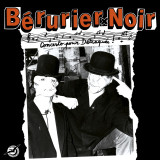
Concerto Pour Détraqués" was ranked 52nd best French rock album by Rolling Stones magazine in 2010.
Eleven tracks like so many vitriolic pictures of a sick society: rape, extreme right-wing, psychiatric confinement, security paranoia, alcoholism and all the other crap that the future seems to hold. Loran and François express more than ever their rage and their refusal of the adult world in a recital with three chords: more aggressive guitars, more incisive lyrics and voices while an armada of chorus members and a saxophone come to heckle or underline this darkness.
"Concerto Pour Détraqués" is the band's reference album, with a string of hymns to insubordination and freedom: Petit Agité, Vivre Libre ou Mourir, Les Rebelles, Porcherie, Hélène et le Sang...
The band's name alone evokes the epic of alternative rock: rebellious and committed.
Born by mistake on a February evening in 1983, Bérurier Noir soon found itself the driving force behind a vast "Youth Movement", determined to take control of its life in the face of a society that was ultra conservative at the time. Times have hardly changed.
From the first self-produced records distributed by hand to the creation of self-managed labels, from concerts in squats and wild appearances in demonstrations, on the street or in the metro to endless tours, from interviews given to fanzines and free radio stations to unclassifiable appearances in the mainstream media, Bérurier Noir has waged the most exciting war of independence in the history of French rock, with only a microphone, a guitar, a drum machine, a few red noses and patched-up theatre masks.
The last finger of honour of this turbulent and irrecoverable raia, François, Loran and their "Troupeau d'Rock" commit hara-kiri, at the peak of their glory, during three last concerts in the heart of Paris in November 1989.
Forty years after its birth, Bérurier Noir's work still resonates, whether in demonstrations or free parties, nourishing the hopes of those who wish to overthrow this world to build a truly libertarian, united and fraternal society.
The label Archives de la Zone Mondiale reminds those who missed this unprecedented adventure, 8 discographic parts of the group Bérurier Noir in the form of reissues on particularly original colour vinyls (crown finish), in a limited series and distributed throughout the year.
After almost two years of work, we're glad to invite you to a new journey through the fog of time and enjoy the upcoming reissue of the great Ambient/Folk record from 1984. A well-known to collectors but extremely rare record by Jon Iverson a multi-instrumentalist from Palo Alto and his college friend, mandolinist Tom Walters. They shared a love for singer/songwriter fare and gigged around campus playing covers of Neil Young, CSN, and Loggins/Messina in the late '70s.
"First Collection" was recorded during the Spring of 1984 in a small garage that had been converted to a one-room apartment in the seaside community of Los Osos, California.
With an instrumentation of 12-string guitar, piano, mandolin, analog synthesizers, and sampler, the duo has recorded nine bright, weightless, and diverse compositions where electronic experiments mix with ethnic rhythms, sweeping through inspired folk reminiscent of the work of William Ackerman, John Fahey, Master Wilburn Burchette, and Robbie Basho, to homemade pastoral space folk exuding sophisticated, pale, lunar sonic moods that somehow might remind of the work of Roedelius from the early 80s.
Equipment used for tracking included a rented 1/2" 8-track Otari MX5050 analog tape machine and assorted mics. With only a few thousand albums pressed, First Collection has become a collectable in some circles.
Now, almost forty years later, First Collection has been remixed and remastered from the original 1/2" tapes for this release.