James Baldwin was an unparalleled master of the written and spoken word. He was best known for his brilliant essays, plays and novels that shone light on his insights into race, sexuality, spirituality and humanity. Baldwin was an incredible orator who commanded the power of words. Whether on the pages of his books or in speeches and debates, he was passionate, compelling and powerful. This EP is the second half of a project that is a tribute to Baldwin. It features extracts from the audio portion of a documentary film shot of a discussion led by James Baldwin and Dick Gregory at the West Indian Student Centre in London in 1968.
Peabody & Sherman is a partnership between Phillip C Hertz and Curtis Ruptash - drummer and bass player respectively. They share common interests in dub, afrobeat, funk, jazz, ambient and improvisational music. They have long histories of the employing 'studio as instrument' approach to recording. The foundations for this EP was P&S rhythm tracks recorded at the Wayback Machine Studio in 2011. Supplemental instruments were layered on to create the final product. The same original sessions were also the source for their James Baldwin EP released in 2012. That EP featured remixes by Area and Afrikan Sciences.
The same concept is applied here, with remixes being contributed by Waajeed and BusCrates. Waajeed is a Detroit producer known for inventive and genre-defying music. He is background includes his work with Slum Village through to the Platinum Pied Pipers and to his work with his own Dirt Tech label today. BusCrates is a Pittsburg based producer known for his inventive use of electric and vintage synths to create deep layers of analog goodness.
Suche:foundation sound
* These recordings stretch back to the tail end of the late 1980's, with the original line up of Dub The Earth, who were one of a few dub reggae-inspired groups sprouting up in the west of England in those times, such as Military Surplus (who morphed into Radical Dance Faction), Rhythmites and Revolutionary Dub Warriors who all had a strong presence in the free festival scene in the UK at that time.* Featuring the late Steve Swann (Revolutionary Dub Warriors, On-U Sound) on vccals and mixed & produced by Rej Forte from Jah Works.
* The 10" features a vocal, dub and a violin cut.
* The vocal and violin cut have only previously appeared on the cassette only various artists release `One Foundation' from 1990.
- A1: Ohne Titel
- A2: Ländliches Kouzert
- A3: Vier Brüder Auf Der Bank
- A4: Blaue Dominante, Öl Auf Kupfer
- A5: Susanna Im Bade
- A6: Marktfrau Mit Gemüse
- B1: Halbakt Im Gegenlicht
- B2: Aargauische Kleinlandschaft
- B3: Van Der Rande, Massstäblich
- B4: Goffersberg Mit Traktor
- B5: Selbstbildnis Mit Frau Und Söhnen
- B6: Ohne Titel
Black Truffle is excited to announce the release of the first-ever vinyl reissue of Ruedi Häusermann's Galerie Randolph, a masterpiece of solo multi-tracking originally released on CD by Unit Records in 1995. Born in 1948 and residing in the medieval Swiss town of Lenzburg, and virtually unknown outside of the German-speaking world, Häusermann is a multi-instrumentalist and enormously prolific composer who works primarily in the medium of absurdist music-theatre. A virtuoso wind player and free improviser who also composes for traditional classical instrumentation, his work is characterised by subtly surreal humour and the unlikely combination of extended technique and simple, at times almost child-like, melodic ideas. Named after his rehearsal room in Lenzburg, Galerie Randolph uses an enormous array of instruments to craft a work of singular compositional vision. Each of the twelve pieces begins from the same two elements: a woozy, sliding scatter of tones played on a home-made contraption stretching two guitar strings between the top of Häusermann's alto saxophone and an amplified cup, and a series of uneasy block chords sounded on accordion and reeds. On each piece these two elements (whose pitch gradually raises throughout the record) are complemented by entirely different material, all of it played by Häusermann. Ranging from layered flutes to one-finger piano melodies to unintelligible vocals to musique concrete interjections to free jazz saxophone explosions, these additional layers combine with the endlessly returning idée fixe of the foundational elements to create a truly dream-like listening experience, a gently deranged realm in which we lose all sense of linear time. Calling up the most unlikely combinations of possible predecessors - Erik Satie, Gerry Mulligan, and Helmut Lachenmann perhaps -Galerie Randolph ultimately defies comparison. Almost unknown except to a select group of cognoscenti such as Jim O'Rourke, yet destined to become a cult classic, Galerie Randolph is an instance of that most rare thing: music the likes of which you have never heard before.
Presented in a deluxe gatefold sleeve with gorgeous archival images by the composer. Design by Stephen O'Malley. Mastered and cut by Rashad Becker at D&M, Berlin
Key selling points: - Black Truffle is excited to announce the release of the first-ever vinyl reissue of Ruedi Häusermann's Galerie Randolph, a masterpiece of solo multi-tracking originally released in 1995, the album utilises an enormous array of instruments to craft a work of singular compositional vision.
- Calling up the most unlikely combinations of possible predecessors - Erik Satie, Gerry Mulligan, and Helmut Lachenmann perhaps -Galerie Randolph ultimately defies comparison.
- Each of the twelve pieces begins from the same two elements: a woozy, sliding scatter of tones and a series of uneasy block chords sounded on accordion and reeds. On each piece these two elements are complemented by entirely different material, ranging from layered flutes to one-finger piano melodies to unintelligible vocals to musique concrete interjections to free jazz saxophone explosions, these additional layers combine with the endlessly returning idée fixe of the foundational elements to create a truly dream-like listening experience, a gently deranged realm in which we lose all sense of linear time.
- Almost unknown except to a select group of cognoscenti such as Jim O'Rourke, yet destined to become a cult classic, Galerie Randolph is an instance of that most rare thing: music the likes of which you have never heard before.
- Galerie Randolph is presented in a deluxe gatefold sleeve with gorgeous archival images by the composer with design by Stephen O'Malley. Mastered and cut by Rashad Becker at D&M, Berlin
The final release in the Eight Trigram series. Alpha Steppa concludes the Trigram series with an etherial heavyweight dub staying true to the Trigram sound. Super limited edition press housed in the reverse-board Trigram house bag. Raw, unadulterated tribal bass music with a deep roots foundation
Lost Futures is a new label that explores experimental and often radical approaches to dance music from the past. In a musical landscape that increasingly claims to seek and reward new forms and ideas, Lost Futures delves into the recent past to revisit forward-thinking, optimistic projects that, owing to the social, musical or outright political climate, perhaps struggled to find an audience. Allowing only time to re-contextualise these leftfield, sometimes misunderstood and ultimately human bodies of work, Lost Futures taps into the inherent idealism of rave.
LF001 trips back until the early nineties to revisit the alternative scene emerging from the Dutch city of Utrecht. Here, three young men - DJ Zero One (Sander Friedeman), TJ Tape TV (Arno Peeters) and DJ White Delight (Richard van der Giessen) - joined forces to form 'The Awax Foundation'. Inspired by the transcendent and revolutionary electronic music arriving on their shores imported from Chicago and Detroit, combining their knowledge, gear and ever-expanding vinyl collection allowed additional freedom in paying sincere tribute to these intoxicating sounds, while also developing their tastes in a more personal, eclectic direction.
The musical flavours of Awax initially leaned toward acid house and the roots of techno. However, with three different mindsets in the mix, their tastes were rarely fixed. One thing each shared in common was a devotion to collecting rare sounds, specifically more adventurous and international samples than those emanating from the increasingly-hard, masculine dance music emerging from the Netherlands during the period. Inspired by the cross-over global sound of bands like Suns of Arqa, or 'World Music', as it was perhaps patronisingly termed at the time, the trio became interested in the idea of making techno with 'ethnic instruments'.
Of course, this being 1992, none of The Awax Foundation had access to such instruments, instead, they had a vast, collective library of samples from all over the world. There were no collaborations and no clear plan. Instead, they set to work using a Yamaha TX16W sampler, the legendary Atari 1040ST computer, a cheap mixing desk and a couple of low-end synths and FX machines. When Richard mentioned the project to his friend, Akin Fernandez, the London DJ and owner of cult label Irdial Discs, Fernandez was intrigued enough to invite the trio to record a one-hour show for his 'Monster Music Radio' series on London's then-burgeoning Kiss FM.
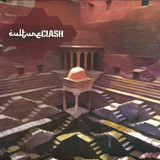
Forced to come up with a name, 'CultureClash' seemed like the obvious choice, even if the members of Awax were only creatively sparring among themselves. Along with the term 'ethno-techno', slightly dubious to a hopefully more conscious Western audience in 2017, these were the only guiding principles to the quietly ambitious project that soon combined cutting-edge machine rhythms with samples sourced from everywhere from Bolivia to Togo, and inspired by everything from Ravi Shankar's epic soundtrack to the Oscar-winning movie Ghandi, to the technical limits of their own setup requiring a dazzling degree of cut-and-paste work. Some tracks even emerged out of academic studies within the ethnomusicology department at The University of Amsterdam.
The show aired on October 2nd, 1992, recorded in one blistering take and without any rehearsals, traversing a huge variety of tempos and styles. If the performance wasn't seamless, it was undeniably thrilling, fresh and ambitious. As such, several labels, including Fernandez's aforementioned Irdial Discs expressed an interesting in commercially releasing CultureClash, while another imprint proposed a series of twelve-inches and an album. But the sheer complexity of the project meant that it never saw the light of day, while the trio embarked on different journeys ahead, both creative and personal.
Twenty five years later, and the original CultureClash lineup and founding members of The Awax Foundation provide the sound of the first release from Lost Futures. An otherworldly, ambitious and optimistic compilation, accompanied by extensive sleeve notes from the trio, CultureClash is a timeless ode to experimentation in dance music's ever-overlapping culture.
Mark Barrott is the man behind International Feel, Roca, Future Loop Foundation, as well as being a founding of the Balearic boy-band 'Talamanca System' alongside Gerd Janson & Lauer. Nature Sounds of The Balearics is Mark's debut LP on Running Back Incantations.
For the last 20 years London-based author and party organiser Tim Lawrence has dedicated himself to excavating the history of New York City party culture and bringing some of the most powerful aspects of that culture to London's dance scene, from where it has ricocheted around the world. Having conducted the first set of major interviews with David Mancuso, Lawrence started to put on Loft-style Lucky Cloud Sound System parties with David and friends in London in June 2003. In early 2004 he published Love Saves the Day: A History of American Dance Music Culture, 1970-79, which tracked the influence of the Loft on the wider New York DJ, dance and disco scene. In 2009 his biography of the iconic musician Arthur Russell became the first book to map the wider downtown music scene. These beautifully written and politically insightful histories have educated, inspired and celebrated the previously overlooked foundations of contemporary dance music.
Lawrence's most recent publication, Life & Death On The New York Dancefloor, 1980 - 1983, published in late 2016, shines a light on 'one of the most dynamic and creative periods in the history of New York City'. Falling between the more regularly celebrated sounds of disco, house and techno, the period produced a uniquely hybrid series of sounds that never acquired a settled name. This led them to be largely ignored by historians and even DJs, yet the power of the period's music and the scenes it birthed, Lawrence argues, remains undeniable. Met with a rapturous response, Life and Death On The New York Dance Floor saw Lawrence on the road for most of the next year as he spread the word about the characters, the records, the clubs and the bands that shaped the post-Disco, post-Punk, and burgeoning Hip Hop landscapes of New York City during the early 1980s—a period when freedom still ruled.
This, the first of a 2-part sonic tribute to the 1980 - 1983 era as well as a musical companion piece to Life & Death On The New York Dance Floor sees recognised musicians (David Byrne of Talking Heads) nestle up alongside the belatedly recognised (Arthur Russell's Dinosaur L and Loose Joints, and Suicide's Alan Vega) and the downright obscure (Gray, 2 Teens Kill 4 and Tuxedomoon). An indication of what's to follow, Dinosaur L's original album version of 'Go Bang' has been dramatically overshadowed by the definitive François Kevorkian remix yet received regular play by David Mancuso and remains an enthralling experimental Arthur Russell jam.
Lovingly curated across 2 slabs of vinyl, the album introduces listeners to a stunning array of sounds, styles, vibes and feelings that encapsulate this most fertile and forward-thinking era, when music, fashion, sound system innovations, leaps in music technology, a DIY attitude and a freedom from corporate politics combined with extraordinary expressivity. All music contained within this album has been hand-picked and programmed by Tim Lawrence. It represents a selective yet rich introduction to one of the most extraordinary periods in New York City's epic musical history.
This is the first release on Reappearing Records, a label led by Tim Lawrence and distributed worldwide by Above Board distribution. Licensing courtesy of Tracksuit Music. Mastering by Optimum Mastering, Bristol UK. Artwork & design courtesy of Atelier Superplus. 2018.
- 1: Lamb With A Wolf Mask
- 2: Museum Of The Two Of Us
- 3: Nari Yuko Jin
- 4: Nobody`s Gold
- 5: My Black Jacket
- 6: Friendly Enemies
- 7: The End Of Metaphor
- 8: Dirty Dirtiness
- 9: The Place Where Designers Go To Die
- 10: Bean Tale
- 11: The Night Before The Typhoon
- 12: Gangsters, Seoul
- 13: Day Drinking At A Seaside Town
- 14: Bats We Are
The demons of night are out again: Seoul's one-stop shop creative collective Byul.org returns this fall with its third international album, entitled Nobody's Gold, out via Alien Transistor (worldwide) and the group's own Club Bidanbaem imprint (South Korea). Comprising 14 new songs, it's a dizzying, haunting affair that channels the group's manifold influences and references points (from post-punk to Stockhausen and back via club culture) and yet sounds intriguingly coherent.
Moving in and out of the shadows, Nobody's Gold breaks forth as pure sonic landscape - a universe of its own, folding and unfolding into both more experimental patterns, yet also with occasional hooks and dark catchy structures, gracious build-ups flickering among the hazy roar and thunder. After the screak and squeal of 'Lamb with a Wolf Mask,' the foreboding sounds of 'The Museum of The Two of Us' segue into a synthesized party tune about a missing friend being chased by police ('Nari Yuko Yin'), one of several vocal tracks with a sinister edge. Taking things up another notch, 'Friendly Enemies' is probably the closest this group will ever get to creating a stadium-ready anthem. On the other end of the spectrum, 'The Place Where Designers Go To Die' is a magnificent void with an immense and irresistible undertow...
Never too jolly (not even while 'Day Drinking at a Seaside Town' or during takeoff via epic pop tune 'Bats We Are'), Nobody's Gold compiles soundscapes with a very tangible, corporeal presence - iridescent sonic sculptures placed in unlikely settings (e.g. outer space, see: 'Dirty Dirtiness'), born at the fringes where night blends into day and vice versa.
Inspired by everyday life, half-remembered drug/club experiences, Pascal Quignard's disturbing La haine de la musique, Stockhausen and Bill Evans, the new LP sees the collective remain true to its DIY foundations while repeatedly questioning our listening habits and 'the exaggerated love for the concept of love,' as they put it.
Founded around the dawn of the millennium as a group of poetry-loving friends who'd occasionally meet for drinks, Byul.org has long become an extremely prolific and versatile collective within Seoul's scene: Main song-writer TaeSang Cho and his mates Yu Hur, Jowall, YunYi Yi, SuhnJoo YI, HyunJung Suh, and SoYoon Hwang went from publishing to recording, from releasing tunes to design, art direction and more. Although their list of clients includes Atelier Herme`s and the Venice Biennale (they did the Korean Pavilion twice), the group still remains a drinking circle of close friends at its core: Pals who simply like to create and carouse and dream and live and perform and play tunes together.
john Yancey' Is The Second Album Illa J Will Release On Jakarta Records, Following The Successful
Release Of Home Last Year. The Project Is The Second Collaboration With Los Angeles
Based Producer Calvin Valentine, Who Once Again Contributed All Of The Production For The Long
Player. While home' Was Largely Inspired By Illa's Native City Of Detroit, john Yancey' Now
Focuses On His Time In California.
(this Album Is) Definitely More Personal Than All Of My Projects, Nothing Specific, But I Basically
Talk About About The Ups And Downs Of All My Relationships Over The Past 10 Years, Still Grieving
About My Bro, Etc. This One Is Trippy Because The First Single Comes Out A Day Before My 32nd
Birthday And The Original Title Was 32 Because This Is A Special Year To Me Because My Brother Died
At That Age So It Had A Lot Of Meaning. But It Makes Sense That It Ended Up Being Called John
Yancey Because For So Long In My Career I Felt Like I Was Tryna Be Me And My Brother, And I'm Finally
At Peace, Like I'm Not J Dilla's Younger Brother Illa J, I'm James Younger Brother John.'
While The Story Of The Album Might Have Changed, There Are Certain Continuities As Well, Built
Around The Strong Foundation Of The Combination Of Illa's Voice And Calvin Valentine's Soulful
Sample Based Production. The Previous Album Already Saw Illa J Incorporate More Singing Into
His Raps And He Goes Down This Path Even Further: i Wanted To Emphasize The Singing But Use
More Of My Natural Singing Voice, As Well As Rap More Than On Home.' In Regards To The Music,
Calvin Wanted To Make The Project Sound a Bit More Polished Where Home Was Purposely
Rough Around The Edges.' Still, The Production Remains Soulful And Rich With Layers To Leave Things
Interesting For The Listener, The More Spins You Give The Record.
The Cover Was Created By Robert Winter, A Cologne Based Photographer Who Was Also Behind The
Visual Appearance Of Home.
- A1: Impotence
- A2: Those Words They Say
- A3: Don't Try To Change Me
- A4: Parchman Farm
- A5: Almost Grown
- A6: She's Gone
- A7: He's Bad For You
- A8: It's What I Feel
- A9: Never Leave Me
- A10: Just Where I Want
- A11: Time After Time
- B1: No Game When You Lose
- B2: Slow Walkin' Talk
- B3: She Loves To Hurt
- B4: The Big Show
- B5: Memories
- B6: The Pieman Cometh
- B7: Summertime
Although the band never released
an album during the years of their
activity, Wilde Flowers is certainly
to be counted among the foundation
stones of the Canterbury scene
of the mid-to-late Sixties. After
their departure from the band, the
members formed other two seminal
groups of the Canterbury Sound: Soft
Machine (Robert Wyatt, Kevin Ayers,
and Hugh Hopper) and Caravan
(David Sinclair, Richard Sinclair, Pye
Hastings, and Richard Coughlan).
The name is of course an homage
to Oscar Wilde, and this album is a
selection of some of their rarest gems
that originally came out in 1994.
Wild Oats proudly presents the new EP from Kyle Hall entitled 'Equanimity'. This release marks the 10 year anniversary of Wild Oats and its only fitting that we celebrate with a release from the label boss himself. Along with the engineering treatment from 'Chicago's very own" (C.V.O.) deep house legend, Glenn Underground, "Equanimity" takes on a new foundational sound and assembly.
Following on from the three highly-acclaimed CoOp Presents 'Selectors Assemble' compilation EPs from the past year, it's now time to focus on some of the individual talents from the ever-evolving movement. As the international foundation grows, we invite aboard the extremely talented Neue Grafik into the fold.
French producer, instrumentalist and DJ, Neue Grafik, has been building a strong rep for himself over the past few years, releasing records previously on labels such as Rhythm Section, 22a and Wolf Music. His sound is a hybrid of jazz, house, broken beat and hip hop, all with his unique geographical flavours of African ethnicity, Parisian roots and a love for London thrown into the mix.
So to the music - two brand new tracks, 'I Miss Something' and 'Bed Stuy's Mood', complete with remixes from EVM128, Danvers, Xtra Bruk and NameBrandSound (aka label bosses IG Culture & Alex Phountzi) respectively, making this one essential package for the bruk soldiers and beyond.
In Neue Grafik's words...
"I remember the first time I was at a CoOp party and met IG - I just said something like "unbelievable party, well done! Thank you, man". I didn't expect to be a part of this brilliant family a few months after that; it's totally insane to think about it now.
I began to hang properly with the CoOp fam during a DJ session at The Flex in East London. I was so happy to live in this moment; surrounded by these talented performers, artists and producers, excitedly talking about unreleased music on everyone's USB sticks.
This EP is a personal vision of the broken beat scene and my love for that. A meeting with artists who build my own taste, with friends keeping the same vibrancy and desire for this music. 'I Miss Something' and 'Bed Stuy's Mood' are two tracks dedicated to Porte Des Lilas (Paris), and Bedford-Stuyvesant (New York). One was made in my house, the other on holiday. These two tracks, as well as the remixes from the Selectors Assemble crew, represent a real and deep friendship."
More essential music from the CoOp Presents camp, available on limited vinyl and all digital services. Don't sleep.
With her debut album Self Fulfilling Prophecy, released by InFiné last June, the French producer closed the loop on the first sequence of her life. A sequence filled with transformations, encounters and collaborations: her successive moves to Montréal and Berlin (where she was closely involved with feminist activism), and her foundational residency at Detroit's Underground Resistance, among others, informed her authentic, global-minded techno aesthetic. The aptly-named Self Fulfilling Prophecy is thus the honest expression of a artist who has found herself at the center of techno activism, an eloquent testimonial to 'how today's electronic is made.' With the necessary hindsight and application, La Fraicheur has created an opus that blends raging techno with more atmospheric moments. An opus that is now being reviewed in light of the electronic scene's main pillar: the dancefloor. 'Self Fulfilling Prophecy remixes' recasts in vinyl version the Techno esprit of La Fraicheur´s original album with four reworks, which condition the dancers to unstoppable footwork as much as they open the listeners 'minds up. On the A-side, an activist of the Polish scene, VTSS is a leading figure in the protest against conservatism, racism and ambient homophobia and one of the founders of the Brutaz parties in Warsaw. She rocks 'Eau Troubles' in an 'industrial' soundscape, as disturbing as fascinating
Standard Edition, Mastered at half speed, 140g vinyl, Sticker We Release Jazz (WRWTFWW Records' new sister-label) is thrilled to present the official reissue of criminally overlooked Japanese jazz gem Mellow Dream (1977) by Hokkaido pianist wunderkind Ryo Fukui, released in conjunction with the its legendary predecessor Scenery, sourced from the original masters and mastered at half speed. Firmly standing on the foundation he laid down with Scenery, Ryo Fukui continues his exploration of modal, bop and cool jazz sounds with meticulous grace and absolute mastery. As its title suggests, Mellow Dream ventures into slightly mellower, more soulful, and sometimes more contemplative territories (the Bill Evans-reminiscent 'Mellow Dream' and 'My Foolish Heart") while still packing the commanding punch Fukui's work is loved for, as heard on the amazingly bombastic 'Baron Potato Blues' or the gigantic McCoy Tyner/John Coltrane-influenced 'Horizon' which sees each member of the trio (Satoshi Denpo is on bass and Yoshinori Fukui is on drums) demonstrating their virtuosity for 9 exhilarating minutes. With his sophomore album, Ryo Fukui swings from melancholy to vibrant joy with ease, reminding us that jazz is best served with a pinch of blues, and displays an immensely rare combination of pure talent, unique personal approach and focused discipline. The man undeniably deserves a spot in the pantheon of all-time great jazz pianists. After releasing the outstanding Scenery and Mellow Dream back to back, Ryo Fukui worked on developing his live skills, often performing at Sapporo's Slowboat Jazz Club (which he co-founded with his wife Yasuko Fukui), and even releasing 2 live albums. He sadly passed away in March 2016, leaving behind a legacy of works that all jazz lovers should explore.
This is the third album of Book Of Air, a series created by the granvat platform and curated by the composers and brothers Stijn and Bert Cools.
As in the first Book Of Air album "Fieldtone" and the second "vvolk", the parameters time and sound are again widely present. This time the 3 interwoven bass lines give the deep drive and foundation of the sound, completed with a layer of acoustic instruments and sparkling chords on top. "Se (In) De Bos" is inspired by the fluctuation objectivity of our daily observations.
vvolk investigates performing and improvising music, in close relation to present time; what are the possibilities in playing music, when changes in this music pass by unnoticed How do we as musicians relate to the running time of a performance This clearly challenges the improvising musicians, and makes audience and
performers discover new territories in collective improvisation.
Leifur James will release his debut album in October through Late Night Tales' artist label Night Time Stories.
A Louder Silence is the London-based producer and multi-instrumentalist's first proper release; his two earlier singles feature on the record, after gaining support from Gilles Peterson's Worldwide FM with a live airing and interview in 2017, plus continued backing from XLR8R, Stamp the Wax, and BBC Radio 6 Music DJ's.
The album is both spacious and thought-provoking, energetic yet restrained, brimming with nuanced electronic instrumentals, dubby synths, and jazz breaks — creating an array of rich textures, complemented occasionally by James' own soulful vocals.
While James' early unreleased work was singularly electronic, A Louder Silence focuses on analog synths and warm acoustic instruments, all played by his own hand. It's the product of a two-year spell in James' home studio, with additional live drums recorded with Jim Macrae at London's Old Paradise Audio.
James' rich musical influences are laced through the release. Encouraged by his mother, a classically trained pianist, he learned to play the cello and developed adeep understanding of rhythm and melody that informs his approach to writing electronic music. James playsthe piano he grew up listening to in 'Mumma Don't Tell' and samples an indefinable percussive element to drive forward 'Suns Of Gold.' 'Night and Day' sees cello plucks and long melodic strokes interlink with a grooving synth line. He also field records the atmospheric Moroccan sea in 'Red Sea.' Inspiration stems from the experimentation of modern day electronic producers, fused with the Jazz, Classical, Blues, and Soul music that soundtracked his youth.
Central to the album is the idea of space. James recalls the early advice of his uncle, a jazz guitarist, who features on 'Uncle Blue': 'I remember him saying to me: "What goes in comes out' James says. 'Every detail should be a worthy detail; sometimes nothing is better than something.' Moments of blissful, structured intensity are juxtaposed with stillness and near silence — dark and light; loud and quiet. This also forms the foundation for the album title: A Louder Silence reflects the dichotomy of finding pockets of stillness in a noisy world.
The result is 10 distinct tracks delivered as one coherent and well-structured long-player debut, set for release on LP, CD, and digital, on 5th October 2018.
Live dates follow a debut live show earlier this year at the Jazz Café with Yazz Ahmed, including an album launch at London's Ghost Notes in October.
In 1975, the prolific and multi-talented Brazilian comedians Chico Anysio and Arnaud Rodrigues recorded an album based on the protagonist of one of their most celebrated TV series. Sporting a dodgy moustache and an equally troubling haircut, Carioca conman Paulo Maurício Azambuja (played by Anysio) would flog his own mother's leg if he could, and his ever-ridiculous scams are inevitably always destined to fail. This soundtrack/musical re-imagining of the series combines jazz-funk with samba soul and MPB, with the help of cult Brazilian trio Azymuth. Keyboard maestro Jose Roberto Bertrami, who arranged the album alongside renowned conductor and composer Jose Menezes, elevates the groovy odd-ball sound to another dimension, with his set up including Fender Rhodes, Arp Strings, Arp Omni, Clavinet and Hammond organ. Remaining Azymuth members Ivan Conti (drums) and Alex Malheiros (bass) provide the signature Azymuth foundation, and saxophone prodigy Victor Assis Brasil and legendary multi-instrumentalist producer Durval Ferreira also feature.As well as its distinctly comedic character, what makes the music so special is the coming together of traditional samba roots, and Azymuth's ahead-of-its-time psychedelic funk influence. Each side ends with a comedy monologue, complete with live audience laughter, but before that you get seven tracks of weird and wonderfully emotive Brazilian groove music.
- A1: Don Drummond & The Skatalites - Rain Or Shine
- A2: The Gaylads - Morning Sun
- A3: Delroy Wilson - Just Because Of You
- A4: Alton Ellis - Sunday Coming
- B1: Jackie Opel - I Am What I Am
- B2: Peter Tosh - I Am The Toughest
- B3: Delroy Wilson - Get Ready
- B4: Mr. Foundation - Timo-Oh
- B5: Roland Alphonso & The Soul Brothers - Provocation
- C1: Leroy & Rocky - Love Me Girl
- C2: Slim & Delroy - Look Who Is Back Again
- C3: The Skatalites - Spread Satin
- C4: Barrington Spence - Contemplating Mind
- D1: Ernest Ranglin - Psychedelic Rock
- D2: Bob Marley & The Wailers - Destiny
- D3: Roland Alphonso - Reggae In The Grass
- D4: Zoot Simms - We Can Talk It Over
- D5: Jackie Mittoo - Hi Jack
Studio One Freedom Sounds Is The New Collection From Soul Jazz/studio One Focussing On The Intense Period In The Second Half Of The 1960s When Studio One's Vast And Unbeatable Output Of Ska, Soul, Rock Steady And Reggae Made It Literally One Of The Hottest Musical Empires In The World.
During This Highly Successful Period, Clement 'sir Coxsone' Dodd Released Hundreds And Hundreds Of Superlative Singles Seemingly On An Almost Daily Basis, In The Process Making Huge Stars Out Of Jamaican Singers Such As Alton Ellis, Delroy Wilson, The Wailers, Slim Smith, Jackie Opel And Many More.
Powered By The Finest In-house Musicians Working In Jamaica, Whether It Was The Skatalites, Jackie Mittoo's Soul Brothers, The Sounds Dimension Or The Soul Vendors, Studio One Functioned As Hit Factory On The Scale Of Motown In The Usa, Shaping And Defining Reggae Music For Decades To Come.
Singlehandedly Studio One's Founder Clement Dodd Was Able To Create The Most Successful Vertically-integrated Record Company That Jamaica Had Ever Known With Pressing Plant, Printers, Studio, Shops, And Sound Systems All Running At Once, With Over 50 Employees And Hundreds Of Artists Working With Studio One During This Time.
Studio One Freedom Sounds Tells The Story Of Studio One In The 1960s With A Stunning Set Of Ska, Soul, Rock Steady And Reggae Killer Tunes As Well As Informative Sleevenotes And Track-by-track Info By Noel Hawks. The Album Is Released As Heavyweight Double Vinyl (+ Free Download Code), Deluxe Cd And Digital Album.
Produced by Jenn Wasner of Wye Oak. LP is on coloured coke bottle green vinyl + inclues download code and 12x12' lyric sheet/ liner note insert.
Madeline will be on tour throughout the UK and Europe this Autumn.
'Building from understated beauty to dense guitar theatrics. It reminds me of Chicago circa '93 as remembered in a dream — a little bit of Liz Phair 'Exile In Guyville' - rendered in soft-focus with the graceful confidence of a young master. ' STEREOGUM
In January of 2018, five months after the release of her debut album Night Night at the First Landing, Madeline Kenney traveled from Oakland, California to the woods outside of Durham, North Carolina to record her sophomore album with a new collaborator, Wye Oak's Jenn Wasner.
The choice was a conscious decision to explore new methodology in writing, recording, production and even genre. Perfect Shapes sees Kenney leaping headfirst into fresh and adventurous territory, largely eschewing conventional rock structures in favor of theme and melody. Its ten songs are full of surprises big and small - from vibrant synth lines to taut bass figures and subtly modulated vocals - that instead of feeling fussed over, reveal Kenney's penchant for elegant and abstract composition.
Kenney's 2017 debut, Night Night at the First Landing, was a guitar-centric rock album, produced by friend and collaborator Chaz Bear of Toro Y Moi, Perfect Shapes leans on the foundational pieces of Night Night - fuzzed-out guitar tones, coy wordplay and Kenney's notably strong voice - but with an unconventional approach that allows them to bloom, reincarnated. Perfect Shapes marks Wasner's first foray into producing another artist's work and is permeated by the pair's collaborative spirit. Both Wasner and Kenney play multiple instruments on the record, and engineered the session alongside Kenney's touring percussionist, Camille Lewis.
An eagerness to explore and experiment is apparent from start to finish, as Kenney and Wasner weave endless sonic curve balls into the arrangements. From the delightfully warped percussion on opening track 'Overhead' to the burbling synths on the R&B-tinted 'The Flavor of the Fruit Tree' and the left-field trumpet solo in 'Your Art,' these rich and inventive ideas echo Yo La Tengo's everything-but-the-kitchen-sink mentality, as well as the surging soundscapes of Tame Impala and Wye Oak at their most impressionistic. Lead single "Cut Me Off" is a surprise of its own - the most pop-forward song Kenney has written yet. 'Bad Idea,' finds her balancing fragility as foil; later, 'I Went Home' manages to evoke both frustration and affection in a single breath.
The complex and open-ended questions that lay at the core of Perfect Shapes mark Kenney's arrival into a hard-hitting reflective space: How do you love another when it hurts to do so What is the physical limit to which one can carry the emotions of others How does a modern female artist reckon with the expectations demanded of her femininity Yet for all the notes of doubt and fear that Kenney raises, she delivers each song with confidence and poise, grounded by the pointedly laid and surging soundscape.
Kenney has always had a penchant for curiosity and experimentation. Raised in the Pacific Northwest, she began studying classical piano and dance in kindergarten, and grew to believe her future lay in modern dance choreography. Not one to be tied to a singular pursuit, however, Kenney took a hard left in college, studying Interpersonal Neurobiology and supporting herself with a career in baking. Music remained a constant however, and after moving to the Bay Area in 2013, Kenney quickly found footing in the supportive arts community in Oakland. There, she met and began collaborating with Chaz Bear (Toro Y Moi), which led to the production of her Signals EP and later her debut album, Night Night at the First Landing. Both releases were received with great critical acclaim, and saw Kenney exploring the sounds within her self-proclaimed twang-haze genre, defined by cathartic fuzz breakdowns and lyrical sensitivity.
Following a killer acid-piano house 12" and contributing a Test Pressing-certified new-disco chug to a split release with Tuff City Kids (both) on Terre des Pommes in 2014, The Working Elite further refine their ability to soundtrack festivities with Rockman / Born Again. While "Rockman" conveys an understatedly cinematic mood with repeated imitation string cycles over crisp electro foundations, "Born Again" presents a new wave / rave endurance test, summoning perspiration from dedicated day-dancers with its metronomic hammer of a beat overlaid with motivating synth-lines like marching toys. On the flip, Saap and Lauer (Tuff City Kids) provide inventive interpretations of these tunes, reshaping "Rockman" into a stomping, flashing-lights electro jam while "Born Again" gets a delightfully multi-dimensional digi-dub treatment complete with acid-reggae breakdown over a 4/4 house beat.