Coming from Northern Ireland, Domhain is a new band brought by four
experienced musicians from the Irish metal scene
With their emotional mix of post black, blackgaze and atmospheric black metal,
featuring omnipresent vocal harmonies and cello (featuring guest Jo Quail),
Domhain's debut EP "Nimue" is a work of mythical and ethereal beauty.
Cerca:four hands
- Zen And The Art Of Nonsense
- Fun On The Floor
- The Blessed West
- Taken For Granted
- Looks Can Kill
- Sacred Measure
- Flare
- Black Five
- Vigilante
- Zor Gabor
- Tightrope
The Scream, Siouxsie & the Banshees' first album, was released late enough in the punk era to bear some claim as the first post-punk album, with only a minor traces of 'punk' (one lingering early song, "Carcass" comes to mind) and enough hints of what had come even earlier, Andy MacKay-like saxophone flourishes - to feel utterly new. Not to mention the effort producer Steve Lillywhite must have put into the album, his first fully-credited major label production. Siouxsie was clearly the focus of the band, with her unique vocal style and lyrics, but the real star, we've always known, was John McKay, who wrote most of the album's music (as well as singles like "Hong Kong Garden"), creating a wholly new guitar sound - harsh and brittle, yet melodically intoxicating . . . best articulated by a somewhat confounded Steve Albini years later ". . . only now people are trying to copy it, and even now nobody understands how that guitar player got all that pointless noise to stick together as songs". McKay's influence lives on; many of the most influential guitarists of the past four decades credit him as a major influence - Geordie from Killing Joke, Jim Reid of The Jesus And Mary Chain, U2's The Edge, Thurston Moore, Johnny Marr and even the two guitarists - The Cure's Robert Smith and Magazine's John McGeoch - who followed him in The Banshees. McKay's burgeoning status as the anti-guitar hero was halted when he and Banshees drummer Kenny Morris - at odds with Siouxsie and bassist Steve Severin - fled the band just after the start of a tour supporting the group's second album, Join Hands. It was a weekly music paper scandal, later the subject of a BBC documentary, and Siouxsie's vitriol working its way into the lyrics of a later Banshees b-side, "Drop Dead / Celebration". Aside from a solitary single on Marc Riley's In Tape label nearly a decade later, no music was heard from McKay again. So it comes as a major surprise to learn of a pile of excellent recordings made in the years just after he left The Banshees, unheard by all but a very few, some of which feature drummer Kenny Morris, plus Mick Allen from Rema Rema, Matthew Seligman of the Soft Boys and longer-term collaborator Graham Dowdall and John's wife Linda . . . the latter three of whom now all sadly deceased. Sixes And Sevens is an historic lost album. Brazenly genius and bearing fair claim as the lost treasure of the post-punk era, the album collects eleven studio tracks, carefully mastered from original tapes. It's a masterpiece which best speaks for itself.
The Scream, Siouxsie & the Banshees' first album, was released late enough in the punk era to bear some claim as the first post-punk album, with only a minor traces of 'punk' (one lingering early song, "Carcass" comes to mind) and enough hints of what had come even earlier, Andy MacKay-like saxophone flourishes - to feel utterly new. Not to mention the effort producer Steve Lillywhite must have put into the album, his first fully-credited major label production.
Siouxsie was clearly the focus of the band, with her unique vocal style and lyrics, but the real star, we've always known, was John McKay, who wrote most of the album's music (as well as singles like "Hong Kong Garden"), creating a wholly new guitar sound - harsh and brittle, yet melodically intoxicating . . . best articulated by a somewhat confounded Steve Albini years later ". . . only now people are trying to copy it, and even now nobody understands how that guitar player got all that pointless noise to stick together as songs". McKay's influence lives on; many of the most influential guitarists of the past four decades credit him as a major influence - Geordie from Killing Joke, Jim Reid of The Jesus And Mary Chain, U2's The Edge, Thurston Moore, Johnny Marr and even the two guitarists - The Cure's Robert Smith and Magazine's John McGeoch - who followed him in The Banshees.
McKay's burgeoning status as the anti-guitar hero was halted when he and Banshees drummer Kenny Morris - at odds with Siouxsie and bassist Steve Severin - fled the band just after the start of a tour supporting the group's second album, Join Hands. It was a weekly music paper scandal, later the subject of a BBC documentary, and Siouxsie's vitriol working its way into the lyrics of a later Banshees b-side, "Drop Dead / Celebration". Aside from a solitary single on Marc Riley's In Tape label nearly a decade later, no music was heard from McKay again. So it comes as a major surprise to learn of a pile of excellent recordings made in the years just after he left The Banshees, unheard by all but a very few, some of which feature drummer Kenny Morris, plus Mick Allen from Rema Rema, Matthew Seligman of the Soft Boys and longer-term collaborator Graham Dowdall and John's wife Linda . . . the latter three of whom now all sadly deceased.
Sixes And Sevens is an historic lost album. Brazenly genius and bearing fair claim as the lost treasure of the post-punk era, the album collects eleven studio tracks, carefully mastered from original tapes. It's a masterpiece which best speaks for itself. John McKay will be made available for a limited number of interviews . . . and yes, there are surprises in store.
To celebrate the label's 10th & 11th release, Soul Quest Records have curated a family type affair that sees faces both new and old for the label. An encapsulation of the sound that the label has been pushing since its inception back in 2023, the VA contains a wide reaching spread of house orientated cuts that showcases the labels musical personality and depth - and is reflective of the supreme talents behind the music.
The A side opens proceedings with three emotive house numbers, with label co-founder Max Sinàl and King Crowney’s track ‘Intentions’ landing first. A smooth, soul-laden progression, with subtly placed muted trumpet throughout. From the ethereal vocal lines of Liv East through to the gentle breeze of thechords, this one is Soul Quest to its core. Co-founder SIxm Sol lands next with ’NYBB’, a percussive groover that once again demonstrates a deft level of subtle interplay within the melodic layers. Dreamy vocal lines hit all the right notes alongside a blend of atmospheric pads and tinkling jazzy notes. Wrapping up the A side, Hitch 93 presents ‘Uno, Dos, Tres, Four’, which features an ear worm of a chord progression weaves its way around a rock solid percussive foundation, as the vocals chime out through the middle that helps craft a deeply hypnotic atmosphere.
The B Side opens up with Rob Redford and his track ‘Garden Party’. This track focuses around an inspired ‘everybody loves the sunshine’ sample, and exudes big level, blue sky energy, with hands in the air feels throughout as the dance shifts with smiles all round.
Two prime house steppers land next, with ‘The Blues Kitchen’ by Soul Groove presenting a top quality drum pattern that entices whilst the vocal lines and engrossing melodic section wrapping the dance around its little finger; and finally, ‘Edith’ by Flying Moth may be short but its ever so sweet - skipping stepped grooves interlaced with a bass line that thuds to the rhythms of the heart, whilst the melodies atop stir the emotions ever so delicately.
Following the success of his self-released Woldsman001 two-tracker, standout sets at Tresor and Unfold, and praise from the likes of RA and Mixmag, London-based Yorkshireman Dyslecta launches his new imprint, Tenuous Links.
The first release comes from Dyslecta himself in the form of ‘Fulcrum’. Four wigged-out techno cuts aimed squarely at the dance floor
The EP draws inspiration from the natural wolds surrounding his hometown in East Yorkshire. Deep, cyclic drum patterns contrast with the brash, distorted bass elements mirroring the duality of the region’s chalk quarries and glacier-carved valleys.
With the aim of pushing innovative club sounds forward, Fulcrum sets a staunch tone of what’s to come on Tenuous Links.
Coming out on super limited 12” handstamped vinyl
- A1: My Little Girl - Bobby Garrett
- A2: Baby, Without You - Danny Monday
- A3: Lighten Up Baby - Ty Karim
- A4: You Hit Me (Right Where It Hurt Me) –Alice Clark
- A5: Cigarette Ashes - Jimmy Conwell
- A6: (Just A Little) Faith And Understanding - The Magicians
- A7: I Can Feel Your Love - Felice Taylor
- B1: Gone With The Wind Is My Love – Rita & The Tiaras
- B2: You Turned My Bitter Into Sweet - Mary Love
- B3: Would You Believe - Jackie Lee
- B4: Try My Love - Toni & The Showmen
- B5: The Same Old Thing - The Olympics
- B6: What Good Am I Without You - Darrow Fletcher
- B7: What Should I Do - Little Ann
Northern soul is in the news again, as once more this most resilient of dance floor cults is discovered by a new generation. For four decades now Ace Records has been a natural home for the music and using that experience we are bringing you our first ever all classics collection of some of the scene's greatest hits. All on one LP.
The recordings featured on this release are tried and tested, often in the hot forge of the scene's earliest day, when new discoveries were coming thick and fast, and only the strong survived. These did.
So we have 14 tracks which filled floors in Wigan, Blackpool, Cleethorpes, London's 100 Club and many other legendary venues. From West Coast Mirwood and Kent/ Modern label classics by Jackie Lee, Bobby Garrett, Mary Love and Danny Monday, to the big City Chicago soul of Darrow Fletcher via the super rare recordings by Rita & The Tiaras and Little Ann, which are now accepted standards of the scene.
This is an album for the beginner, those who want to know what all the fuss is about, or those older hands who just want to relive some exceptional memories.
The Ibex Band, with Giovanni Rico and Selam Woldemariam at the creative helm, provided the musical backbone for legends like Aster Aweke, Girma Beyene, Tilahun Gessesse, Mulatu Astatke, and Mahmoud Ahmed, including the iconic album Ere Mela Mela, shaping modern Ethiopian music as we know it today. This 1976 album (Ge’ez Year 1968) played a pivotal role in that legacy and has now resurfaced to set the record straight.
There’s a tendency to talk about the seventies as a golden age of Ethiopian music. There are good reasons for that, and just as good reasons against it. However, the notion of a golden past privileges the role of Western explorers and suggests that the pinnacle of Ethiopia’s musical culture is something only a foreigner can appreciate and unearth. It downplays the complexities of Ethiopia’s culture and history, creating an artificial divide between then and now. And it underestimates the constantly evolving sound that has followed.
The legendary musical outfit The Ibex Band, later metamorphosed into The Roha Band, has played a central role in defining the sound of many of the greatest stars on the music scene of Ethiopia from the mid-seventies onwards–but their golden output has never really waned. The story of the origins of the band that provided the musical backbone for greats such as Aster Aweke, Girma Beyene, Tilahun Gessesse, backing the solo career of group member Mahmoud Ahmed as well as backing Mulatu Astatke and many others has yet to be properly told.
Two misconceptions plague the image of Ethiopian music, one is that the music is pure because it is, by some notion, unexploited, the other is that it is all traditional. To begin with, a combination of political changes between the late sixties and the mid-nineties created an environment where only the most dedicated and skilled musicians struggled on and pursued a musical career against fierce odds. The whole Ibex Band, with Giovanni Rico and Selam “Selamino” Seyoum Woldermarian at the creative helm, are arguably the origo of the vibrant scene in the mid-seventies, and the said pair are foremost responsible for not only navigating the band through troubled times, but also modernizing the 6/8 chickchicka rhythm to a contemporary form. Giovanni laid the rhythmic foundation with heavy looped basslines that reinvented traditional melodies as dance music, and with Selamino’s innovative guitar work they influenced scores of musicians from Abegaz Kibrework Shiota to Henock Temesgen. Even Giovanni’s Fender bass and Selamino’s Gibson guitar inspired younger musicians in their choice of instruments. Not only in choice of instruments but also in sound–even as the digital revolution hit Ethiopian music, a lot of popular music still took its cue from the masters from Ibex and Roha.
Ibex emerged out of the ashes of the sixties group the Soul Echos band, adding Giovanni and Selamino to their ranks and taking their cues from a slew of influences, such as Motown and The Beatles, fused with traditional music. A tighter-knit unit than most bands at the time – Ibex has remained six to seven members throughout their whole career, compared to many bands that were as large as fifteen or sixteen men strong when Ibex set out. Their playing has been viciously focused, economical yet heavy. Just a year before the recording sessions of the album in your hands, Giovanni and Selamino made a contribution to the popular musical lexicon of Ethiopia that was simply defining the popular sound: their arrangement and recording of bandmate Mahmoud Ahmed’s solo effort and real commercial breakthrough tune and eponymous album, Ere Mela Mela, from 1975.
Selamino has never limited himself to being an adroit lead guitarist, but has always been a scholar of history, and as such he has probably contributed as much to modern Ethiopian music with his guitar playing and compositions as with a deepened understanding of modern or contemporary – Zemenawi – Ethiopian music. Selamino’s contributions serve as a metaphor for those of the whole band, at one and the same time creating and defining a new, danceable and updated sound anchored in Giovanni’s bass, whilst also elevating the broader scene through their support for others on the scene and on top of that, increasing the understanding of the music.
There is an understandable desire to romanticize the musical heyday Ibex and Roha were at the forefront of, because so much of the output is sorrowfully hard to come by. Ibex creativity was nothing short of ridiculously fierce compared to many of their Western contemporaries. Based on their sheer recorded output alone they could have usurped the title “hardest working in show business” from James Brown, recording more than 250 albums or 2500 songs in the seventies and eighties. Some only surface as cassettes today, others were never given full LP release, and some are simply impossible to find today. In the light of that, it’s nothing short of a miracle that the recording Stereo Instrumental Music from 1976 (Ge’ez Year 1968) has resurfaced. Unearthed in perfect condition on a chrome cassette, this is musical history comes alive–to set the future straight. Stereo Instrumental Music was recorded in collaboration with Karl-Gustav Lundgren, a Swedish national working for the Radio Voice of the Gospel. It took two sessions at the Ras Hotel ballroom in Addis Ababa. The Ibex Band was the first band in Ethiopia to employ a four-track recorder for their recording (the first available in the country, lent by Karl-Gustav). Later the same week, Giovanni and Selamino realized that, lengthwise, the recorded material fell short of what they wished for, so they recorded four more tracks in one more session on a single-track recorder. The Ras Hotel and Ghion Hotel, where the Ibex Band held musical residencies were to Ethiopia in general and Addis Ababa in particular what Motown was to the USA and Detroit a few years earlier – a hotbed of musical creativity and showmanship.
The most astonishing thing about Ethiopian music of the last half century is how tradition and modernity are intertwined. Because of this feature, it’s kind of hard to tell when there ever was or when we are in a “golden age”. So much of music from the past has been criminally neglected, but because of the hardships in the past, it would be an oversimplification to say that said past was a golden age. Probably, the golden age is what we are approaching, because for the first time both the past and future are accessible, and the monumental contributions from before can lay a firm foundation for a thriving music scene today. The Ibex Band stands firmly in the past, present and the future. That, if anything, is golden.
The detailed history of Stereo Instrumental Music is in many ways unique. To begin with, it couldn’t have been recorded earlier (there were no four-track recorders available) and it really couldn’t have been recorded afterwards either, at least not in the years directly following, because of the toll the musical scene took from the unfavorable political climate that followed when the nascent Derg regime and rival groups tried to assert themselves, the musical equipment lent from The Voice of Gospel Radio simply disappeared from Ethiopia when the radio station folded in 1977. Karl-Gustav Lundgren,
the Swedish foreign national who assisted during the recording, worked with the Ethiopian Evangelical Church Mekane Yesus at the time, recalls how they only had about fifteen minutes to get the microphones in place for the recording as to not alert neither the management at Ras Hotel nor the authorities and most importantly, to complete the recording before the curfew came into effect at midnight. In leaping to the opportunity to use previously unavailable equipment to push their sound forward and improvising to meet the logistical challenges, the Ibex Band displayed the very avant-gardism and adaptability that explains their longevity as a band through the years. The recording of Stereo Instrumental Music is from a given time in history, but it sounds as beyond time.
Much of the energy that burst out of the scene that Stereo Instrumental Music came out of dissipated or got sidetracked during the societal changes Ethiopia went through in the 1970s and 80s. Whilst leaders might have professed to be revolutionary, the work ethic of the Ibex Band can truly be described as that. They never called it quits, but adapted, toured extensively abroad in Africa, Europe, and the Middle East, and found ways to work even in the face of the curfew that curtailed a lot of musical life. They even played major arenas in the nineteen eighties, despite said curfew and restrictions. The whole extent of their legacy has never been told, but their music speaks louder than words, so therefore… tune in to the Ibex Band’s Stereo Instrumental Music.
First Reissue of this fantastic Folk Funk masterpiece on 'starflower leaf green' Vinyl, a beautiful collection of songs from the late great Linda Waterfall, the record sells for over £50 and has been exhanging hands between collectors for more than that for the past few years. Essential reissue for collectors, portion of the profits will go towards the Linda Waterfall Foundation. Joni Mitchell-esque folky funk blissness.
Rerelease of the fourth album of the Intercommunal Free Dance Music Orchestra recorded with the Guinean saxophonist Jo Maka. The title says it all: Vol.4 – Jo Maka.
The Intercommunal Free Dance Music Orchestra was created in 1971 by an “old hand” of French free jazz, François Tusques. Free Jazz, was also the name of the recording made by the pianist and other like-minded Frenchmen (Michel Portal, François Jeanneau, Bernard Vitet, Beb Guérin and Charles Saudrais) in 1965. But, six years later Tusques had had his fill of free jazz.
So he then founded the Inter Communal, an association a name under which the different communities could become closer and compose, simply. In 1976, on the first album: L’Inter Communal, we can already hear Tusques playing without borders in the company of Carlos Andreu, Ramadolf, Michel Marre and Jo Maka (as a conclusion to this Vol. 4, we can hear them in 1977 at the Moulin de Prades Le Lez). Over the next decade, the, association kept going with concerts at the Dunois theatre, in 1980 and 1981, it welcomed old hands and new recruits (Bernard Vitet, Jean-Jacques Avenel, Jacques Thollot, Sylvain Kassap…).
If Vol. 4 – Jo Maka is an homage to the Guinean saxophonist, who passed away a few months before the release of this selection of concert recordings, it also displays a proud collective inspiration! One foot in the blues, and ears open to everything else, Tusques begins with a lament that the Company rapidly transforms into a joyful dance (“Vive la Commune”), weaves a full-blown party piece (“Poses ton fardeau et remets la machine en route”, “7 rue des prêcheurs”, “Mazir”) or gets fabulous with Mingus (“Fable Of Faubus”). And there you have it, with so many revolutions François Tusques is almost back to free jazz.
With Leaving It All to Chance, Roomer don't quite leave everything up to fate. The Berlin outfit's debut album hums with guitar-driven heartbreak, pairing mind-splitting noise with seductive melodies. Capturing the gritty yet emotive energy of their live performances, the album welcomes in the occasional ear-candy, staying true to the raw physicality of a hazy club show all while sharpening its edges-crafted in true DIY spirit and released by Munich's Squama Recordings.
Roomer is the meeting point of four distinct creative forces in the European music scene, united through long-standing friendships and years of collaboration across projects ranging from avant-garde free improv to ethereal folk and ambient electronica. Inevitably-if surprisingly late-the question arose: why not start a band? In their hands, the rock band format became a canvas for their many musical worlds to collide.
Marking the fourteenth chapter in the Swinging Flavors series, Beat Machine Records proudly unveils a gripping release by Helsinki-based producer DJ Sofa. Packed with deep, nostalgic energy, this installment delves into the darker side of drum and bass, with a sound inspired by the genre’s golden era of the late 90s and early 2000s.
DJ Sofa, known for their emotive and intricate productions, brings a raw, jungle-infused energy to the forefront. Drawing inspiration from jungle and breakbeat hardcore, their sound reflects a deep connection to the classic UK rave era while maintaining a forward-thinking edge. Known for captivating listeners with rich atmospheres and complex breakbeats, DJ Sofa’s music resonates strongly with audiences far beyond their Finnish roots, particularly within the UK underground scene.
“Drums For The Lost,” the lead track on Swinging Flavors #14, exemplifies this blend. A menacing roller, it marches forward with unwavering determination, offering a guiding light through shadowy soundscapes. With its haunting basslines, intricate percussion, and mysterious atmosphere, the track is a testament to DJ Sofa’s ability to create immersive and emotionally charged music.
The journey doesn’t stop there. Swinging Flavors #14 also features a remix of “Drums For The Lost” by Siu Mata. The Parisian producer reinterprets the track with their signature style, adding pulsating rhythms and hypnotic layers that elevate it to a peak-time dancefloor weapon. Siu Mata’s remix infuses the original with a modern edge, creating a vibrant and dynamic sound that bridges the gap between tradition and innovation.
Swinging Flavors #14 is available in both digital format and as a limited edition 7” vinyl, ensuring it finds its way into the hands of collectors and music lovers alike. DJ Sofa and Siu Mata’s contributions to the Swinging Flavors series underscore Beat Machine Records’ commitment to showcasing the best of underground electronic music. With its bold exploration of drum and bass and an eye on the future, this release is set to captivate audiences worldwide.
- A1: Yves Deruyter - The Rebel (40 Years Yves Deruyter Rework)
- A2: F.u.s.e. Vs Lfo - Loop
- B1: Two Pieces - Magic Bells (Final Mix)
- B2: Channel X - Rave The Rhythm
- B3: Master Techno - My Noise
- C1: Circuit Breaker - Overkill
- C2: Dj Misjah - Karin's Paradox
- D1: Technicida - Purgatorio
- D2: Meng Syndicate - Sonar System
- D3: Epilepsia - Epilepsia
- E1: Insider - Destiny
- E2: Symphony Of Love - Quantum Leap
- F1: Ramin Feat. 2 Stripes - Brainticket
- F2: Peyote - Alcatraz
- G1: A.paul - Juice
- G2: The Effect - Green Angel (Angel Mix)
- H1: Cybersonik - Technarchy
- H2: Dna - La Serenissima
- H3: Tronikhouse - The Savage & Beyond (Savage Reese Mix)
- I1: Yves Deruyter - Back To Earth (40 Years Yves Deruyter Rework)
- I2: Dream Concept - Shy Kid (In Rhythm Mix)
- I3: All In One - Mama's Kick
- J1: F.u.s.e. - Substance Abuse
- J2: Dj Bountyhunter - The Bountyhunter
- L2: The Wavecatcher - Flight Dh2126
- M1: Yves Deruyter - Feel Free (40 Years Yves Deruyter Rework)
- M2: Methadon - Synthetic Fruits
- N1: Edge Of Motion - Set Up 707
- N2: Reese & Santonio - Rock To The Beat
- N3: Mechanical Soul Saloon - Punos
- O1: Plastikman - Panikattack
- O2: Reese - Funky Funk Funk
- P1: The Prodigy - Charly (Alley Cat Mix)
- P2: Phantasia - Inner Light
- P3: Second Chance - In Paradise
- Q1: Final Exposure - Vortex
- Q2: Quazar - Dragonfighters
- R1: Ecstasy Club - Jesus Loves The Acid
- R2: Quadrophonia - Quadrophonia
- S1: Illuminatae - Tremora Del Terra
- S2: Josh Wink - Higher State Of Consciousness (Tweekin Acid Funk Mix)
- T1: Phuture - Rise From Your Grave (Wild Pitch Mix)
- T2: Black Scorpion Aka Steve Rachmad - Empyrion
- J3: Cybersonik - Backlash
- K1: Robert Armani - Circus Bells (Full Length Original Mix)
- K2: Photon Inc. Feat. Paula Brion - Generate Power (Wild Pitch Mix)
- L1: L.s.g. - Netherworld (Dj Randy's Smoke Free Remix)
Celebrating 40th anniversary of Yves Deruyter's musical career with this 10 x 12" Vinyl Box Set. Including tracks from F.U.S.E. vs LFO, Tronikhouse, Robert Armani, L.S.G., Edge Of Motion, Plastikman, The Prodigy, Ecstasy Club, and the master himselfYves Deruyter.
Yves Deruyter - 40 Years at the Pinnacle of the Night
Forty years. A rollercoaster of a musical career, meandering through five decades, leaving timeless marks on the collective dancefloor memory. Yves Deruyter is the exception that proves the rule. An icon behind the decks, celebrated far beyond national borders for his legendary sets, impeccable musical choices, and the anthems released under his name. The result of collective effort, where Yves, with his vision and unique touch, consistently left his mark-transforming good tracks into inescapable bombs that still resonate through time.
If you've spent forty years living to the pulse of music, the night is in your DNA. Yves Deruyter, a DJ to the core-the real deal. The man who bent the night to his will, dragging weekend vibes into the workweek like a warrior, a true master behind the turntables who made his people dance. His beats: the oxygen that generations lived on.
Yves sharpened his musical weapons in the early '90s within the iconic afterparty scene of Barocci and The Globe-places that became sanctuaries in Belgium's endless night. Here, die-hard dancefloor warriors, cutting-edge music lovers, and night owls from the four corners of the globe gathered. They willingly followed Yves' masterful mixing and his razor-sharp set construction. Clubs with a more conventional timeframe were the next step, with the iconic Cherrymoon as his home base for years-alongside endless guest DJ spots and global gigs. From there, the underground pulsed through Yves' hands and crates, reaching ever-larger crowds-without ever compromising for commercial or crossover sounds. Yves stayed true to his choices, lifting his audience to euphoric heights like a craftsman, armed with his hits, hidden gems, and freshly unearthed nuggets.
From the pounding energy of Rave City to the flippy, epic flashes of Calling Earth-tracks that not only captured the spirit of the times but conquered dancefloors worldwide. This isn't just music; it's a time capsule-a connection between generations and a reminder of the energy from a golden era.
With musical partners like Roel Butzen, Frederico Santini, M.I.K.E. Push, and more recently, Insider, Yves forged a sound that etched its place into rave and dance history. From The Rebel to The House of House, parts of Yves' musical taste have become immortal pillars of dance music heritage. In the early rave days, he topped Belgium's DJ rankings year after year, elevating every club he played to the highest echelons of popularity. The same held true for the records where his name appeared like a badge of honor.
From The Globe to the globe itself-it seemed almost written in the stars. Yves, thestar DJ, became one of the instigators of the electronic music storm that put Belgium on the global map-a storm that never subsided. Festivals like Love Parade, Mayday, I Love Techno, Nature One, and Tomorrowland saw Yves as a trusted force, effortlessly commanding crowds and turning dancefloors inside out. Forty years later, that storm still ignites partygoers, vibrates through dancefloors, and keeps entire generations moving.
Even today, Yves still holds a steady residency with Yves Deruyter and Friends at Club Moustache, where his concept always sells out. Here, both fresh talent and seasoned DJs deliver a killer blend of modern electronic dance music and timeless classics, creating an atmosphere that hooks the crowd every single time.
Because partying doesn't need an excuse. But forty years? That deserves the spotlight-not as a mere milestone, but as a showcase of timelessness. Music mutates, reinvents itself for new generations, yet retains the same impact as that very first time. Yves proves that forty is just a number, and relevance isn't about trends-it's about vision, energy, and an unmistakable touch. His sets? Indestructible. His sound? A heartbeat echoing through time.
And Yves? He doesn't live in the past. Today, Yves distills those four decades into a compilation capturing the essence of his career. Belgian beats, interpreted and refined into a sound that powered raves around the world. Ten vinyls featuring not just a fiercely curated selection that contextualizes the magic of his early days, but also new versions of three unbeatable anthems-potent hits designed to turn dancefloors upside down in wonder, without losing a shred of their soul. Yves remains a beacon in the night, a searchlight for that one perfect beat-always relevant, always chasing that magical moment.
Yves Deruyter-a name spoken in the same breath as the greats of the scene. A ten-vinyl compilation is more than a celebration; it's a well-earned trophy. As unique, indestructible, and uncompromising as the man himself.
Founded by Robbie Redway and psychedelic researchers Mathieu Seynaeve and WaiFung Tsang, UK-based 'United Freedom Collective' has grown into a network of artists including Jordan Stephens, Falle Nioke, Eliza Shaddad, Labdi, William Rees and Facesoul. Originally conceived around psychedelic therapy sessions, online yoga and breathwork channels, the musical scope has expanded on each of the four EPs released on Maribou State's 'Dama Dama' label, and here continues with their debut on Multi Culti. This time Robbie takes the lead on production and sole vocal duties on all five tracks, presenting a range of influences and style. Lead single 'Between Memories' blends tropes of ecstatic dance with uplifting vocal piano house, somehow making flutes fit in with Detroit strings to epic, hands-in-the-air effect.' Title track ‘Bright Patterns’ bridges the gap between Jungle, Jai Paul, and Jamiroquai, a fusion of funky filtered disco-house and electroclash with side-chained pop vocal hooks. ’El Yo’ smooths things out, a dope, laid back groove with a measured reflection on psychedelic healing and the perils of spiritual bypassing. ‘Higher Drums’ warms things back up for the dancefloor with trumpet, afro-latin percussion, and flute flourishes. Finally, ‘Moonshine’ is a soaring, Amapiano-inflected post-desert-house ballad. Influenced, in their words, 'by birds, trees, Buddhism, yoga, headless way meditations, Jungian analysis, Zen Taoism, Chinese plant medicines, indigeneity, Amazonian and psychedelic cultures, icaros and world healing traditions,' the music is eclectic, ranging from afro-inspired jazz to Chinese folk, psych-rock to dub and dance music, an ambitious and inclusive range, collabs that extend well beyond the borders of western musical traditions. Their sound was described by Clash Magazine as an 'aural mosaic that glitters with colour and potential,' and while the sheen of the production and precision of the arrangements might seem a departure from Multi Culti's left-field endeavours, the psychedelic idealism and global connectivity make it a natural fit with the open-ended ethos of the label. Having already had radio support from KEXP, BBC6 Music (Laverne, Ravenscroft, Charles, Nemone, Letts), Jazz FM and Worldwide FM (Gilles Peterson), with a live show that sold out Dalston Curve Garde and The Waiting Room as well as supporting Maribou State for their recent comeback show at Islington Assembly Hall in London the collective's future is looking exceptionally bright.
- 1: I Can Lie
- 2: Rolling Backwards
- 3: Charred Grass
- 4: Right Thing By Me
- 5: God Fax
- 6: Cutting A Cake
- 7: Led Through Life
- 8: Dorset Area Of Natural Beauty
- 9: Pearl Through A Funnel
- 10: Designed In Hell
- 11: Crush Me
- 12: Twisted Up Fence
Cross Record's new album, Crush Me, is steeped in the pressures and wonders of existence—a profound statement, especially coming from artist and death doula Emily Cross. A two-and-a-half-year gestation period offered challenges, disappointments, and joys reflected in the cramped space of the album, which explores how we handle the weights we carry. Emily Cross had held hundreds of Living Funerals and was as many episodes deep into her podcast, What I’m Looking At. She was five years into serving clients as a death doula and fresh off a tour with Loma, her band with Jonathan Meiburg (Shearwater) and Dan Duszynski, when she began work on her fourth album. After moving from Austin, TX to Dorset, UK, she established the Steady Waves Center for Contemplation (named after a track from her second record, Wabi-Sabi ), where she hosted Living Funerals, met clients, scheduled mindful tea sessions, and showcased experimental music nights. All the while, she was scribbling down song ideas. Cross’s Tascam four-track demos finally reached readiness, and she sent them to an interested major independent label. She was encouraged to push her imagination to the limits of what a record could be. So, unlike her usual process of recording as inexpensively as possible, she prepared a two-week recording session in Germany with a group of skilled musicians from around the world. True to her previous work, Cross left plenty of room in her demos for experimentation, collaboration, chance, improvisation, and complete obliteration, then resurrection when necessary. Comfort and traditional structure were eschewed in favor of unaccountable magic, prayers whispered into The Void. Cross is comfortable with the chaotic and unpredictable, a perspective demanded by her work and writing style. The Berlin Airbnb was packed with people, instruments and luggage. During a ride down in a tiny elevator to the studio, Cross realized how central the sense of being crushed was to the album. “I thought of it later and it dawned on me that ‘Crush Me’ perfectly embodied the record,” says Cross. Yes, the weight of a body laying limply atop yours, or the tight squeeze of a hug, can be pleasant. Go too far, and you’re in the hands of a cruel, adolescent god. Upon leaving Germany, the record was unfinished, and without a roadmap. As passages were recorded as isolated parts, Cross and musician Marcin Sulewski collaborated, facing a haphazard brick pile, waiting to be assembled. Work dipped in and out of view like a buoy bobbing in a violent sea over many months. During that time, the aforementioned interested label went radio silent, suddenly not seeming so sure of a thing. Collaborators disappeared, continuing the themes of abandonment, surrender, and disarray that followed the project. Cross physically felt her entire body go numb: In a twist of fate, the record was rescued by long-time friend and supporter Ben Goldberg at Ba Da Bing Records who was eager to help realize the project. Cross worked for months on the album, all the while nursing a pregnancy and continuing her full-time funeral work. The last minute participation of Seth Manchester of Machines with Magnets, who mixed and mastered, was an essential liferaft. He gave true final form to the abstracted songs. Crush Me has the effect of a spell being cast, with songs balancing heaviness and levity. Vocals, guitars, and keyboards float above, as drums and upright bass (often bowed) lurch beneath. On “Rolling Backwards” percussion wanders about while feedback squeals and persists in the distance. “Dorset Area Of Natural Beauty” starts with a thick, unhinged church organ progression punctuated by the disquieting sounds of laughter reaching the point of hysteria. “God Fax” is a slow-moving panic attack, with shallow breaths in and out framing a guttural cacophony like a wooden freighter encountering increasingly turbulent waters and vocals struck emotionless by autotune. The album ends with “Twisted Up Fence,” a reflection on life from outside the wall--wistful, warm, and comforting. Cross, likely with a smile on her face, sings: “You say it’s an endless abyss” “And I say the abyss is the best”
- Soulville
- Late Date
- Time On My Hands
- Lover Come Back To Me
- Where Are You?
- Makin' Whoopee
- Ill Wind
The complete album - pressed on limited edition 180g vinyl
Tenor saxophonist Ben Webster (1909 - 1973) had already enjoyed a long and fruitful
career by the time this 1957 session was recorded. However, as Bob Blumenthal
explains in the original liner notes, he still wasn't known for the sensual ballad feeling
that became his trademark during the last two decades of his life. At that time, he was
still recognized for the hard blowing fast tenor sax style he played with both the Duke
Ellington Orchestra and his own multiple small groups.
Even though his repertoire was generally linked to that of Duke Ellington, this classic
Norman Granz produced session presents Webster playing four popular ballads and
two of his own bluesy compositions, Soulville and Late Date. On hand in support are
the incredible Oscar Peterson Trio (Herb Ellis, Ray Brown), and drummer Stan Levey.
"The by turns grizzled and vaporous-toned Webster really hit his stride on the Verve
label. This 1957 date with the Oscar Peterson Trio is one of the highlights of that
golden '50s run. After starting off with two bluesy originals, Webster gets to the heart
of things on five wistful ballads. Providing sympathetic counterpoint, Peterson
forgoes his usual pyrotechnics for some leisurely compact solos; his cohorts -
guitarist Herb Ellis, bassist Ray Brown, and drummer Stan Levey - are equally assured
and splendid. Newcomers shouldn't hesitate to start here." - ***** Stephen Cook,
AllMusic
2025 Repress
The follow-up to the first Acid Sampler is now in the hands of a single artist. Space Dimension Controller does Running Back the honor to leave his fingerprints on the (usually) silver box - and it’s a match made in heaven. The Irish man’s music is mostly a nod to the subtle and more delicate ramifications of electronic music. His Acid Sampler is no exception. Most of the EP presents itself as an ode to the brain dance vibe of acid house rooted music. While leaving out the harder and faster styles of the genre, SDC manages to pour his heart and soul as a producer into these four charming tracks.
Kosmische Conga works as the leader of the pack and pirouettes with memorable hooks, synthesizer swells and descant acid lines. Echopet introverts the whole concept, while Minehead peaks with it. Named after the seaside town that harbored the Bloc Weekend festival, its a warp-free romantic reflex of the brain dance vibe – or a heartfelt love song for circuits. Carinacid completes the quartet with a chugging and hugging mid tempo beat that could have gone on forever. Acid test passed! Artwork by Gasius.
As one of the brightest and most prolific new songwriters to emerge from the Birmingham music scene over the past few years, Will Stewart has made a name for himself as both an imaginative storyteller and six string gunslinger whose detailed accounts of life around the Deep South seem to capture the essence of not just the humid, kudzu-covered environs they come out of, but also the creative cultural milieu that makes such narratives possible in the first place. Taking cues from everyone from Big Star and R.E.M., to Phosphorescent and the Drive-By Truckers, and even classic Southern literary figures like Eudora Welty and Barry Hannah, Stewart has managed to carve out a place for himself as a conjurer of time, place and characters— and the stories that swirl around them— in a way that’s simultaneously reflective, empathetic and unapologetic in their presentation.
Now on his fourth solo LP, over his past three studio efforts Stewart has shown a deft touch for not just engaging character arcs and succinct studies in the human condition, but also a range of musical modes that span everything from quiet dissertations on love and loss, to brash rockers and moody explorations of the complicated nature of modern Southern living. As someone who also wears the hat of a highly sought after sideman who lends his talents to friends and fellow travelers like Birmingham locals The Blips, Terry Ohms and Sarah Lee Langford, there are few sonic spaces that Stewart’s hands haven’t touched in some way.
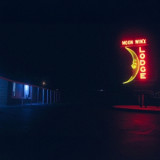
Stewart’s newest offering sees him poised to deliver his most ambitious project yet, with a 10-track song cycle centered around the iconic, and now defunct, Moon Winx Lodge in Tuscaloosa, AL, and some of the characters and scenarios that have played themselves out there over the years.
- Spanish Ladies
- Northern Sky
- Hurt
- Tall Tales
- Red Is The Rose
- The Nights
- Leave Her Johnny
- Song Of Durin
- Santiana
- Wild Mountain Thyme
- Leaving Of Liverpool
- Amazing Grace
Turquoise[25,17 €]
Music is storytelling, and some of the best stories have been told through centuries-old traditional folk songs. On their new album ‘Northern Sky’, The Wellermen have given this rich traditional musical history a new sound, hoping to continue to captivate millions of fans around the world. It helps that The Wellermen’s four members all bring their respective experience and perspectives to the table. The fact that they’re from different corners of the world really adds something to the music - there’s something romantic about the way the members have to go on a voyage to see each other.
The Wellermen’s history is well-known: having been the originators of the sea shanty trend on Tiktok, they’ve since gone from strength to strength, gaining a huge following across social media with new trends linked to their music. Their versions of ‘Misty Mountains’ and Ed Sheeran’s ‘Nancy Mulligan’, along with their spine-tingling rendition of ‘Hoist The Colours’ have racked up billions of views across Tiktok and youtube and over 110m streams of their debut album, and led them to appearances on shows like Ant and Dec, LAst Week Tonight with Jon Oliver, The Colbert Show and more.
The group have now returned with their new album ‘Northern Sky’, where they have gone above and beyond to show they are indeed masters of their craft. Recorded in a cottage in the picturesque hills of Surrey, they poured their considerable knowledge and prowess into the album’s 12 tracks, all of which fit their love of storytelling. On the Scottish folk song ‘Wild Mountain Thyme’, for example, the group’s harmonies and rich vocals capture the nostalgic, wistful nature of the song, which speaks of love and nature’s beauty. The group’s tribute to Johnny Cash on the song ‘Hurt’ is set to be a fan favourite - melding the raw and uninhibited torment of the original with the dignified but heart-rending grief of Cash’s version.
Elsewhere on the record the original song and title track ‘Northern Sky’ is a perfect demonstration of the Wellermen’s gift for creating a real dynamic, steering it gently from the darker, more ominous numbers into something truly uplifting. ‘Tall Tales’, another original, is a wonderful portrayal of humorous one-upmanship - a call-and-response that is likely to get crowds’ feet stomping and hands clapping. Say the Wellermen: “It’s all about connection and storytelling, and we hope the listeners are able to find something meaningful.” One thing is absolutely certain: these talented young men are in it for the long haul.
First vinyl edition of Carme López’ debut album of entrancing bagpipe arrangements. Unravelling forms of early music and funereal, queered droneworks full of strange tonalities, phased harmonics and curious subversions.
Carme López is a researcher and teacher of traditional Galician oral music, and ‘Quintela’ features her debut recordings for the Galician bagpipe, split into four longform movements totalling 40 minutes of supremely engrossing drone flourishes. Misunderstood by many, the bagpipe is here brought into the experimental realm as a form of decontextualisation, fashioning the instrument’s naturally peculiar timbres into soft, wavering tones.
Despite its unusual resonance, in López's hands the bagpipe almost becomes a pipe organ, producing long, swaying, sustained tones that highlight the instrument's complex timbral qualities. López plays with its breathy overtones, placing microphones on the bag itself to pick up residual sounds while she sculpts its squeals into cavernous siren calls, and then extracting half-rhythms from its reeds on the elegiac closer 'iv: CACHELOS. a César De Farbán'.
The instrument’s inherent wheezing and anomalous timbre lend the recordings a wavering foundation that feels designed to unsettle, but somehow becomes nothing short of entrancing through almost imperceptible harmonic shifts and odd tunings. It’s meditative music that requires active participation, focussed listening - so as to make sense of all the infinitesimal shifts and faults - in a way that feels unique to this most maligned, misunderstood, almost mystical instrument.