Suche:fragile records collection

Styles
Alle
  • 1
Bill Wells - Dreams '24 / '25

Bill Wells

Dreams '24 / '25

12inchKALK143LP
Karaoke Kalk
08.05.2026
 
24

On Dreams ’24 / ’25, Scottish composer Bill Wells turns his nocturnal imagination into a sequence of delicate musical miniatures. The album brings together 24 short pieces, most of them under two minutes, unfolding in just under half an hour like a quietly drifting dream diary.

The album is split into two parts. On the Dreams 2024 side, Norman Blake lends his voice to Wells’ dream-born melodies. Blake, best known as a founding member of Teenage Fanclub, recorded the songs with Wells in a single afternoon at his home, capturing their fragile immediacy in direct and unadorned performances.

For Dreams 2025, Aby Vulliamy — one of Yorkshire’s best kept musical secrets — takes over vocal duties. In mid 2025, Wells sent her a batch of demos; Vulliamy recorded them at home and sent them back to him. The result is a second chapter that feels more introspective, intimate and gently surreal.

The songs themselves are born directly from dreams. Wells wakes from the dream, records it on his mobile and later shapes it into a brief, lyrical composition. One piece, Mackenzie’s Return, was inspired by a dream in which Elvis Costello marched through the streets of a suburban town complaining that he had run out of song ideas, a detail that perfectly captures the album’s blend of humour, strangeness and quiet melancholy.

Dreams ’24 / ’25 is not a collection of fully formed pop songs, but rather a series of fleeting emotional snapshots: soft voices, simple motifs, and melodies that appear and vanish before they can fully settle. It is an album that rewards close listening, inviting the listener into a private, half-lit space somewhere between memory and imagination.

The album is accompanied by a striking cover artwork by Annabel Wright.

vorbestellen08.05.2026

erscheint voraussichtlich am 08.05.2026

23,49
Yara Asmar - everyone I love is sleeping and I love them so much

'Yara Asmar’s new album presents 11 pieces recorded over the past year between the small town of Alfred in upstate New York and Beirut. These sometimes fragile and tentative sound sketches reflect the times as Yara steps out, as if onto ice, into a new life on a new continent during a time of tragedy, turmoil and upheaval. She works with unfamiliar instruments, new materials and new sounds to build on her intimate style; homemade mechanical music boxes and a personal archive of family recordings form the backbone of its delicate textures. Asmar explores the peculiar resonance of the metallophone and her collection of deconstructed toy pianos, and guides her music into ever more surreal territories. The result is a work that is dreamlike, fragmentary and strangely timeless.'

Auf Lager

Bei uns am Lager und sofort versandfertig

23,11
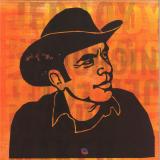
Jeb Loy Nichols - The Music Maker (LP 2x12")

“The high priest of country cool” - Rolling Stone

“I like him very much. He’s very special. He’s singing with a voice I never heard before” - Townes Van Zandt

“A conscious, soulful brother” - Horace Andy

“He’s a brother to me - one of the best singer/songwriters I’ve ever met” - Adrian Sherwood

“Unearthed mine of gems from inner Wales - a songbook of ideas - that's Jeb!” - Gilles Peterson

Jeb Loy Nichols is a bonafide Country (Got) Soul legend. The Music Maker presents 21 incredibly deep, grooving and soulful songs from the cream of Jeb's catalogue; from its earliest days to his latest unreleased gems via countless rare and unbelievably good lost-classics. This 2LP set is presented in a gatefold sleeve complete with freshly commissioned artwork courtesy of Jeb himself.

In collecting these uncut, under-heard gems, we hope to do justice to Jeb's jaw-dropping artistic brilliance. A man who, in working with Adrian Sherwood, Dennis Bovell, Dan Penn, Larry Jon Wilson and countless other legendary characters, has crafted some of the most deeply affecting folk, country, soul, funk, blues, dub, reggae, gospel, rap and electronic music, ever heard.

The first music Jeb really felt a connection with was southern soul: "I used to listen to the radio at night and fell in love with Bobby Womack and Al Green, The Staple Singers and Joe Simon – that whole Nashville/Memphis/Muscle Shoals thing.” But Jeb was so much more than a soul boy, Indeed, he "went to bluegrass festivals with my dad and come home and listened to jazz records with my mother.” And, when he was fifteen, he heard his first punk record: "God Save The Queen" by The Sex Pistols. “That and The Ramones completely changed me.” In 1979 he got a scholarship to go to art school in New York: “A great time. Punk was over but hip-hop was starting and I got into that in an obsessive way.”

His first recording, in 1980, was an unreleased rap song called "I’m A Country Boy". If that isn't an insight enough into Jeb's kaleidoscopic path through music, in 1981 he visited friends in London and found himself living in a squat with Adrian Sherwood, Ari Up (from the Slits), and Neneh Cherry. “Adrian put me to work immediately, moving boxes of records all across London. It was Adrian that was and is my biggest influence – in his complete disregard for genre purity.” So, presumably you're getting the picture? A veritable musical magpie with a voracious appetite and unimpeachable taste.

"Mine has always been a meandering career. I've done what I've done, and made the music I've made, due to chance meetings. I'm not particularly ambitious; it's more important to me that I work with friends and like-minded people. I've been a big fan of Be With for years. Everything they release is essential. When they asked about rereleasing "Countrymusicdisco45" I was both pleased and flattered. We began talking about how we'd do it; two years and twenty-one tracks later, here we are. I've always thought of the music I make as Country Music. Music conceived in the country, written in the country, recorded in the country. I left London and moved back to the country so I could live among the trees, the grasses, the animals, those things that don't go to war and get greedy. This compilation is the story of that life. Hand made, lo-fi, ramshackle, stripped down, real deal music. Heartworn and funky. Music made in the kitchen, not in the studio. As the great Skip Mcdonald said, Perfect ain't perfect. It's great to see all these tracks gathered together. It feels like a family reunion. Some older members of the tribe, some newer arrivals."

Opener "countrymusicdisco45" is a song Jeb wrote about how his crew lives, tucked up blissfully in the hills: "House parties full of country folk dancing to disco, reggae, soul, country, hip-hop. All night. I recorded it at home under the influence of Stevie Wonder." It's one of the funkiest records you'll ever hear. "Sometimes Shooting Stars" was recorded in Nashville and mixed by the legendary Dennis Bovell. It's deep, dubby, majestic. A thing of fragile, melodic beauty. The party ramps back up again with the undeniable groove of "Short Cut Home" before the profoundly moving "Disappointment" arrives. One of many songs he's recorded with good buddy Benedic Lamdin (aka Nostalgia 77): "We were going for a Leon Thomas meets Richard Brautigan meets Alice Coltrane kind of thing". We think they nailed it. "Days Are Mighty", like a lot of the tracks on this collection, "started life as a demo, an attempt to get something down while it was fresh. No frills, nothing fancy, just feel." And what feels!

The irrepressibly funky "Don't Dance With Me Tonight" is a deeply moving, slow-mo organ-drenched head-nod-funky country-ballad. Next up, the breezy "You Got It Wrong" was recorded in Wales with some of Jeb's good friends and neighbours, The Westwood All Stars, featuring Clovis Phillips and Will Barnes. Skanking fiddle-flecked gem "Ring The Bells" was the first thing Jeb recorded when he moved to Wales. A combination of all his loves; country, reggae, soul. It's followed by "Let's Make It Up", a truly sumptuous string-drenched emotional groover. "When Did You Stop Loving Me" is another Nashville track, written and recorded during a time Jeb was spending a lot of time with the Muscle Shoals crew, Donnie Fritts, Spooner Oldham, George Soule and Dan Penn: "It shows, I'm sure, their influence." Oh, you bet it does!

The swaggering country-funk of "Just Beginning" should grace many groove-focused DJs' sets whilst "Wintering Of The Year", again made with Clovis, is pastoral, campfire soul. The glacial, gorgeous "Let It Rain" is from an unreleased record Jeb made with the great British jazz bass player Andy Hamill and "We Tell Each Other Who We Are" is freaky country-soul made by a man with a love for strutting, wonky hip-hop stylings. Rounding out the side, "Trip To You" is pure, uncut amphetamine-propelled drum-machine soul.

The spare, beautiful "Dirt" is from an EP Jeb made with Julian Moore in his house in South London: "All first takes, straight to tape." Swoon! "Heaven Right Here" was a very minor league hit in America: "It was produced by the brilliant and much missed Wayne Nunes. It was started in the countryside of Missouri, finished in the countryside of Wales, and recorded in the countryside of Sussex." Double swoon! "If Later Ever Comes" is electronica meets J.J. Cale business whilst "Remember The Season" is truly wonderful and breezy guitar soul. "A Little Love" was made with Wayne Nunes as well, after a night of listening to Studio One and Northern Soul. Bouncy dub closer "Weary Traveller" was written by Bill Monroe, the hero of Jeb's youth: "Monroe's music was heavily influenced by black southern churches; I've tried to keep some of that feral feel." This was the final recording by Jeb's 1990s Country-Dub band, Fellow Travellers.

The name of this compilation comes from a time when Jeb lived in Peckham, south London and he used to DJ and sometimes perform at a local bar: "The owner of the bar, a Jamaican named Count Percy, once asked me what I called my music. I told him I wasn't sure, I guess just pop music. He thought about it for a minute and then said, 'no, more like mom and pop music'. Rather than call me a country singer or a folk singer he always referred to me as The Music Maker."

With the long overdue deluxe overview of his beloved music, we hope to finally shine a light on the unheralded genius of Jeb Loy Nichols. RIYL Larry Jon Wilson, Townes Van Zandt, Bobby Charles, country got soul artists, dub, deep soul, disco, dancing, heartbreak. This deluxe collection, spellbinding from beginning to end, should hopefully go some way to ensuring Jeb reaches an ever bigger, ever more appreciative crowd of followers. Mastering for this special double vinyl edition was overseen by Be With regular Simon Francis and it was cut by the esteemed Cicely Balston at Abbey Road Studios to be pressed in the Netherlands by Record Industry. The artwork has been lovingly put together by The Music Maker, himself, Jeb Loy Nichols. "Be With is the perfect home for this mongrel music. I am forever in their debt." The pleasure is all ours, Jeb.

Auf Lager

Bei uns am Lager und sofort versandfertig

28,99
Tommy Guerrero - A Little Bit Of Somethin'

2025 Repress

It's rare that a certain sound is entirely an artist's own. Although undeniably a stew of impeccable influences - from blues to folk to Latin to dusty funk, soul and hip-hop - one cannot hear a Tommy Guerrero song without immediately recognising it as his - and his only.The cult skater from San Francisco is globally renowned as one of the original members of the legendary "Bones Brigade" team. And as an accomplished multi-instrumentalist, his laid-back soul is beloved by all who've basked in its blissful glow.There's something elemental about this music that really stirs the soul. Strikingly beautiful and instantly addictive, it's a kind of funk-fuelled, melody-driven, groove-based magic. There's a serenity and heart in the playing that radiates warmth and splendour, as if crafted for endless sunsets. His albums that surfaced on Mo Wax at the turn of the century have been treasured since their release and it's two of his most vital LPs that we're honoured to reintroduce.The originals were quietly pressed on to a single piece of vinyl so we've worked closely with Tommy this year to bring you these fresh, limited editions. They have been lovingly remastered, cut nice and loud on to heavyweight double vinyl and presented in deluxe gatefold jackets.A Little Bit Of Somethin' is a quietly majestic gem. Brimming with Guerrero's horizontal "loose grooves", these brief but innovative instrumentals demonstrate a rich variety and, as such, comprise an LP that is aptly titled. An enchanting start-to-finish listen, it was instantly regarded as essential upon release via Mo Wax in 2000. It has aged remarkably well.Throughout this inspired collection, simplicity is key. In deploying it, Guerrero presents a beautifully crafted melodic soundscape. The distinctive, mellifluous approach of his guitar style, blending Brazilian, Cuban, Mexican, soul and jazz motifs, is at once startlingly new and tantalisingly familiar. Set against unrushed percussion, the music releases a crystal clear stream of healing frequencies to create a fragile, hypnotic atmosphere.Each track clocks in at around three minutes and, with a lack of studio polish or commitment to traditional song structure, it's a wonder how this enigmatic record demands your attention. However, through its gentle dynamism and impressive playing, it does just that. Whilst resolutely low-key, this lo-fi aesthetic feels genuinely organic and remarkably personal, its powerful intimacy truly connects. It's what makes this album so beloved of those lucky enough to be already familiar with it. From Margaret Kilgallen's truly iconic cover artwork to the music contained within, it's all brilliantly effortless.Guerrero's musical ideas are consistently compelling throughout, making it impossible to select highlights. The album's laconic drift touches upon jazz-fusion workouts and slow-mo hip-hop drums, Tortoise-style experimental post-rock and cinematic sound textures. It's at once hazy, light and bouncy yet sombre and bluesy. The Latin soul of El Chicano blends with the breezy jazz of Grant Green. By employing guitars and drum machines to create a stripped down rhythmic tapestry of spellbinding, addictive songs, there are even traces of The Durutti Column. A little bit of country, a little bit of rock & roll. A Little Bit Of Somethin', indeed.

Auf Lager

Bei uns am Lager und sofort versandfertig

27,69
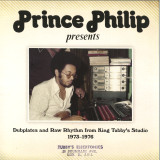
Various - Prince Philip Presents: Dubplates & Raw Rhythm from King Tubby's Studio 1973-1976 LP 2x12"

This compilation is dedicated to the memory of the late great “Prince” Philip Smart - the first apprentice of King Tubby and the first engineer at Tubby’s studio besides Tubby himself. Alongside Tubby, Philip was integral to the innovation that took place at Tubby’s studio in the mid 1970s, where the mixing of new roots reggae revolutionized the sound of Jamaican music and created styles and techniques that are still being echoed today, nearly 50 years later.

Though rarely credited on records in comparison to Tubby, Philip also mixed a lot of the paramount music produced by those close associates of Tubby’s studio such as Bunny Lee, Yabby You, and Augustus Pablo. Philip was closely tied to Pablo due to their childhood friendship and was a partner in his stylistically significant early production works. In the early years of Tubby’s studio, both men were making and cutting custom dubs there for their sound systems before starting to produce their own tunes from scratch, and Philip becoming the second chair engineer.

Several of the songs on this compilation are a selection of the aforementioned work. All of the songs here are sourced from Philip’s personal tape archive, and basically all of these mixes and versions have been scarcely if ever heard, and never released before. This double album comprises a rare and genuine glimpse into the dubplate workings of the inner circle of Tubby’s studio in the mid 1970s, where the prime players and emerging giants of reggae music production and sound system versioned, remixed and voiced rhythms for custom and exclusive cuts. Some of the cuts heard here were formerly exclusive power plays on King Tubby’s own legendary sound system, and unlike some previous issues of such material, these are genuine mixes done at the time. Some other tracks clearly exude the youthful enthusiasm of the participants. In both cases we find this collection of tracks to be truly compelling, so please enjoy this glimpse into such rare air. Rest in power Prince Philip Smart.
-RB/DKR, Summer 2023

Auf Lager

Bei uns am Lager und sofort versandfertig

17,61
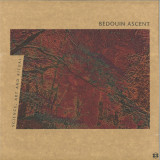
Bedouin Ascent - Science, Art And Ritual  3x12"

'Science, Art And Ritual' is a story of ‘process'. Growing up in Harrow (a then quiet suburb of London) in the 70’s and 80’s from the age of about 10, Kingsuk Biswas aka Bedouin Ascent's ears opened up to sound as he scanned the airwaves. The undeniable righteousness of 80’s dub via David Rodigan’s Roots Rockers shows was the first prominent influence he received, and with punk roots —and his burgeoning record collection— became exposed to the breathless post punk experimentation that followed in the early 80’s sweeping up free jazz, noise, dub and much more. Throughout though, he maintained his fascination with Indian Classical music which was a mainstay in his parent’s house and spoke with the same infinite space as Joy Division's 'Unknown Pleasures', and King Tubby’s Studio dispatches. Through those teens he assembled and de-assembled, knocking about with fellow travellers —punk bands, garage, space rock, noise. Something was happening. On-U Sound, ECM, Factory Records kept him plugged in and sane.

At that time Kingsuk's core studio setup revolved around his vintage Gretsch, Fender Jazz, Moog, TR-606 and rudimentary FX. He added congas, folk instruments, pipes, hand percussion, gongs, and jammed out shards of funk, noise, jazz fusion, electro and ambience into his hungry Tascam Portastudio. By 1987 these had morphed into what we’d now refer to broadly as techno, but the genre didn't exist beyond the reverberating walls of his bedsit, and he hadn’t yet plugged into the global conversation.

'Science, Art And Ritual' was released in 1994 by Rising High Records and was presented as Bedouin Ascent's debut album, although 'Music for Particles' (released in 1995, again on Rising High) was recorded even before —'SAR' sessions span from 1992-1993, whereas 'Music for Particles' were earlier from 1989-1992, with some older 4-track references from about 1986 too.

Weaved in throughout the album are subconscious references to music that Kingsuk heard in the past that still remained within sight as companions. The opening track "Ancient Ocean III", referencing the extinct ocean Tethis, unapologetically channels Tackhead, Colourbox, Mantronix and Lee Perry. The style was also deliberately juxtaposed to the prevailing sound in techno at the time, which had locked onto a rigid form of symmetrical kicks and light snare drums. Elsewhere 80’s soul and funk are frozen and captured in fragile glass lattices. Electric pianos resound throughout, such as in "He Is She", probably a half-memory of 70’s MOR radio from childhood sleepy night drives. A duel between kick drums from three generations of Roland drum machines —TR-808, TR-707 and R-8— is a central theme in "Transition-R", all in conversation, calling and responding. These were not just machines to Bedouin Ascent, but part of an extended family, with heart and soul.

Three decades after seeing the light, Lapsus is proud to present a special 30th anniversary reissue of this
left-field techno gem in a repackaged and redesigned edition. All pressed on a deluxe 3LP marbled vinyl and including a limited lithographic insert print of the original album cover. All tracks have been restored and remastered directly from the original DAT tapes, and the album also features previously unreleased tracks such as "In the Clouds" and "Thru Water" —regularly performed live at that time and produced in the same period as the album sessions in 1993.

'Science, Art And Ritual’ may refer to esoteric traditions in Indian philosophy, but equally embodies the collision of the science, the art and the ritual that is at the core of being immersed in a deep musical journey.

Auf Lager

Bei uns am Lager und sofort versandfertig

31,89
DEPECHE MODE - SOUNDS OF THE UNIVERSE 7x12"
 
33

Sounds Of The Universe | The 12" Singles, a deluxe collector's
edition box set, contains seven 12" vinyl discs presenting
singles--including Wrong, Peace, the double A-side Fragile
Tension/Hole To Feed--alongside B-sides, remixes, dub
versions and other recordings contemporaneous to Depeche
Mode's 12th studio album, Sounds Of The Universe, originally
released by Mute Records in April 2009.
Sounds Of The Universe | The 12" Singles offers a full range of
ear-grabbing mixes--radio, club, dub and more--of Depeche
Mode originals with three discs (Discs Two, Four and Seven)
newly compiled for this collection, bringing together B-sides
and mixes first released across CD and maxi-singles
contemporaneous to the album's release.
When it came time to record the Sounds Of The Universe
album, DM's classic core (Dave Gahan, Martin Gore, Andrew
Fletcher) returned to the studio to make their second album
with producer Ben Hillier, whose intuitive contributions to
their previous studio album, 2005's Playing The Angel, had
created new sonic possibilities for the band expanding
Depeche Mode's vision and repertoire while continuing their
tradition of issuing monumental 12“ singles.

Auf Lager

Bei uns am Lager und sofort versandfertig

137,77
Ben Kweller - Cover The Mirrors LP
  • A1: Going Insane
  • A2: Dollar Store (Feat. Waxahatchee)
  • A3: Trapped
  • A4: Park Harvey Fire Drill
  • A5: Depression (Feat. Coconut Records)
  • A6: Don't Cave
  • B1: Optimystic
  • B2: Brakes
  • B3: Killer Bee (Feat. The Flaming Lips)
  • B4: Letter To Agony
  • B5: Save Yourself
  • B6: Oh Dorian (Feat. Mj Lenderman)

San Francisco–born singer-songwriter Ben Kweller returns with Cover The Mirrors, his seventh studio album — and perhaps his most personal work to date. Known in the late ’90s as a member of post-grunge outfit Radish, who were signed to Mercury Records and even counted Nils Lofgren among their fans, Kweller has since carved out a long and prolific solo career rooted in melodic indie rock and unfiltered emotion. Cover The Mirrors is a deeply poignant record, written in honour of what would have been Kweller’s late son Dorian Zev’s 19th birthday. It also marks Kweller’s first release since Dorian’s tragic passing in 2023 — an event that reshaped both his life and his music. Far from retreating into silence, Kweller channels his grief into a collection of songs that explore loss, love, and renewal with raw honesty. “This is the most personal, emotionally raw project I've ever worked on,” he reflects, and every track bears that truth. The album features an impressive roster of collaborators from across the indie landscape: Waxahatchee joins on “Dollar Store,” a sparse and arresting song built on two vocals and a guitar that eventually erupts into a distorted, soaring finale; MJ Lenderman lends his touch to “Oh Dorian,” a tender tribute steeped in warmth and melancholy; Jason Schwartzman resurrects his mid-aughts project Coconut Records for the haunting “Depression”; and psych-rock icons The Flaming Lips appear on the shimmering, otherworldly “Killer Bee.” Musically, Kweller’s craft is as sharp and sincere as ever — intimate yet expansive, stripped-down yet powerful. Cover The Mirrors captures an artist walking through grief with purpose, turning heartbreak into something both fragile and transcendent. It’s the sound of Ben Kweller looking loss directly in the eye — and finding beauty, courage, and connection reflected back. - “One of the great American songwriters” – Jack Antonoff TRACKLIST: A1. Going Insane A2. Dollar Store (feat. Waxahatchee) A3. Trapped A4. Park Harvey Fire Drill A5. Depression (feat. Coconut Records) A6. Don't Cave B1. Optimystic B2. Brakes B3. Killer Bee (feat. The Flaming Lips) B4. Letter To Agony B5. Save Yourself B6. Oh Dorian (feat. MJ Lenderman) Clear Vinyl LP

vorbestellen27.02.2026

erscheint voraussichtlich am 27.02.2026

28,53
Siavash Amini & Saffronkeira - The Faded Orbit

Siavash Amini is a composer from Tehran, Iran. He Has worked with labels like Room40, Hallow Ground, Opal Tapes and Umor Rex for the better half of the past ten years. He has performed at festivals like CTM & MUTEK and many other well known international events. Apart from it Siavash is a co-founder of the “SET experimental art events” and “SETfest” in Tehran, Iran. His work ranges from fragile ambient pieces and brittle IDM (incorporating his distinctive style of atmospheric guitar playing) to noisy drones and bleak modern classical pieces. His compositions have been inspired by films such as Andrei Tarkovsky's The Mirror as well as novels by Dostoyesvky and poems by T.S. Eliot.

Saffronkeira is the Sardinian sound researcher Eugenio Caria being active in the electronic music scene since almost two decades. His most recent work - a cooperation with the Italian jazz trumpet legend Paolo Fresu - earned a lot of praise from the international music press for the pure timelessness of the album.

"Upon hearing a small snippet of sound an image is conjured, not a memory but not unfamiliar. A shell of a memory, thousand events superimposed on each other. While trying to extract points of a narrative to ease the discomfort of this recollection, I try to separate and unfold the image and with it the points of the spectrum which make up the sound, a shell of a narrative. Here is an album based upon an almost entirely imagined/ synthesized happening upon hearing a snippet of sound. It sounded like of a whole story that never happened but yet I felt myself amongst it’s participants, a sound triggering a false memory. Each sound in Eugenio’s collection of sounds and ideas guided me a to a point in the narrative and it’s construction. He had handed me a portals of some kind to a few scenes of the whole narrative. This is the soundtrack for that false memory from all the perspectives I can think of."

nicht am Lager

Bestelle jetzt und wir bestellen den Artikel für dich beim Lieferanten.

20,97

Last In: vor 59 Tagen
Rafael Anton Irisarri - A Fragile Geography

Rafael Anton Irisarri

A Fragile Geography

12inchBKE021-LP-YE
Black Knoll Editions
02.10.2025

Ostinato as resistance: Rafael Anton Irisarri’s landmark work reimagined. Marking the tenth anniversary of the American composer’s critically acclaimed album 'A Fragile Geography', this new edition arrives renewed, both sonically and visually.

First released in 2015 (Room40) during a period of personal upheaval and creative reinvention, it endures as a testament to resilience, transformation, and the connection we hold with the places that shape us.

Written in the aftermath of a devastating theft, A Fragile Geography was born out of loss. Just days before a cross-country move to New York, Irisarri’s entire Seattle-based studio was wiped out. Instruments. Recordings. Archives. Gone without a trace. He arrived on the East Coast to an empty room and the daunting task of starting over.

“This album wasn’t just a record; it was a lifeline,” Irisarri reflects. “It became a way to process the emotional chaos that followed: uprooting, instability, and ultimately, the slow, intuitive rebuilding of a life.”

Composed and recorded in the rural woods of the Hudson Valley, the album took shape in seclusion, surrounded by nature, and through a process guided by improvisation. Embracing limitations, Irisarri wove textural layers of field recordings with half-remembered melodies from his Seattle years, piecing them together like fragments of memory. Tracks like “Displacement,” “Hiatus,” and “Persistence” juxtaposed haunting stillness with restless momentum, mapping an inner terrain of grief, catharsis, and rebirth.

Among its defining sounds is “Empire Systems,” a monumental centerpiece built around a simple four-chord progression, organ textures, and guitar drones. Gradually, the track expands into layers of immersive loops and thick, enveloping distortion that wash over the listener like a rolling wave. Often cited as the album’s most majestic passage, it captures Irisarri at his most sonically ambitious. With a harmonically saturated structure crafted from restraint and repetition, it remains one of his most recognizable compositions: an exercise in the art of maximal minimalism.

From the outset, “Reprisal” received praise from BBC’s Mary Anne Hobbs, who championed the track on her radio show. Her support played a key role in introducing Irisarri’s work to wider audiences and solidifying his place within the lineage of electronic, drone, and experimental sound artists. A slow-burning elegy, the piece emerges from a haze of distortion and sub-bass, with dense, unrelenting drones carrying a sense of mounting tension. Just as it seems to collapse under its own weight, flickers of guitar emerge like distant light through fog. It’s a meditation on dissonance, resolve, and the elusive possibility of release.

The closing track, “Secretly Wishing for Rain,” is steeped in saudade: a longing for Seattle’s dour grey skies, lush green landscapes, and desaturated sunsets. Through it, Irisarri mourns a vanished chapter of life bound to the city, a time documented in scattered mementos and cherished collections, now permanently gone. A reflection on what could never be recovered: an era lost to time. Julia Kent’s looped cello motifs added a melancholic warmth to the track, marking the first collaboration between the two artists and sparking a musical dialogue that would keep growing in the years that followed.

More than a career highlight, A Fragile Geography has laid the foundation for Black Knoll studio, which Irisarri rebuilt from the ground up. The studio has since grown into a creative hub for countless projects, with Irisarri engineering records for iconic music figures like Terry Riley, Ryuichi Sakamoto, William Basinski, MONO, Devendra Banhart, Grouper, Emeralds, Steve Hauschildt, Julianna Barwick, and many others. Carried by its lasting influence, the album has quietly captured the ear of a younger generation, its sound and emotional arc finding new listeners in unexpected corners.

The album’s new visual language was reimagined in collaboration with Mexico City–based designer Daniel Castrejón. Irisarri captured ghostly images at Gaztelugatxeko Doniene, a historic coastal site in Bermeo, Euskal Herria. Castrejón then treated the photographs with distressed textures and spectral overlays. The final artwork channels the rugged, elemental forces that shaped both the music and Irisarri’s aesthetic, renewing his ties to ancestral ground inspired by the Basque homeland of his bloodline.

Mastered by Stephan Mathieu with exceptional attention to detail, this anniversary edition uncovers every nuance in the sound design, enhancing clarity and presence. With each listen, new elements emerge, inviting discovery and reconnection.

“I don’t experience this album as a document of grief anymore,” says Irisarri. “I hear adaptation and I'm reminded that when everything falls apart, something meaningful, maybe even beautiful, can emerge.”

nicht am Lager

Bestelle jetzt und wir bestellen den Artikel für dich beim Lieferanten.

27,52

Last In: vor 3 Monaten
Rafael Anton Irisarri - A Fragile Geography

Ostinato as resistance: Rafael Anton Irisarri’s landmark work reimagined. Marking the tenth anniversary of the American composer’s critically acclaimed album 'A Fragile Geography', this new edition arrives renewed, both sonically and visually.

First released in 2015 (Room40) during a period of personal upheaval and creative reinvention, it endures as a testament to resilience, transformation, and the connection we hold with the places that shape us.

Written in the aftermath of a devastating theft, A Fragile Geography was born out of loss. Just days before a cross-country move to New York, Irisarri’s entire Seattle-based studio was wiped out. Instruments. Recordings. Archives. Gone without a trace. He arrived on the East Coast to an empty room and the daunting task of starting over.

“This album wasn’t just a record; it was a lifeline,” Irisarri reflects. “It became a way to process the emotional chaos that followed: uprooting, instability, and ultimately, the slow, intuitive rebuilding of a life.”

Composed and recorded in the rural woods of the Hudson Valley, the album took shape in seclusion, surrounded by nature, and through a process guided by improvisation. Embracing limitations, Irisarri wove textural layers of field recordings with half-remembered melodies from his Seattle years, piecing them together like fragments of memory. Tracks like “Displacement,” “Hiatus,” and “Persistence” juxtaposed haunting stillness with restless momentum, mapping an inner terrain of grief, catharsis, and rebirth.

Among its defining sounds is “Empire Systems,” a monumental centerpiece built around a simple four-chord progression, organ textures, and guitar drones. Gradually, the track expands into layers of immersive loops and thick, enveloping distortion that wash over the listener like a rolling wave. Often cited as the album’s most majestic passage, it captures Irisarri at his most sonically ambitious. With a harmonically saturated structure crafted from restraint and repetition, it remains one of his most recognizable compositions: an exercise in the art of maximal minimalism.

From the outset, “Reprisal” received praise from BBC’s Mary Anne Hobbs, who championed the track on her radio show. Her support played a key role in introducing Irisarri’s work to wider audiences and solidifying his place within the lineage of electronic, drone, and experimental sound artists. A slow-burning elegy, the piece emerges from a haze of distortion and sub-bass, with dense, unrelenting drones carrying a sense of mounting tension. Just as it seems to collapse under its own weight, flickers of guitar emerge like distant light through fog. It’s a meditation on dissonance, resolve, and the elusive possibility of release.

The closing track, “Secretly Wishing for Rain,” is steeped in saudade: a longing for Seattle’s dour grey skies, lush green landscapes, and desaturated sunsets. Through it, Irisarri mourns a vanished chapter of life bound to the city, a time documented in scattered mementos and cherished collections, now permanently gone. A reflection on what could never be recovered: an era lost to time. Julia Kent’s looped cello motifs added a melancholic warmth to the track, marking the first collaboration between the two artists and sparking a musical dialogue that would keep growing in the years that followed.

More than a career highlight, A Fragile Geography has laid the foundation for Black Knoll studio, which Irisarri rebuilt from the ground up. The studio has since grown into a creative hub for countless projects, with Irisarri engineering records for iconic music figures like Terry Riley, Ryuichi Sakamoto, William Basinski, MONO, Devendra Banhart, Grouper, Emeralds, Steve Hauschildt, Julianna Barwick, and many others. Carried by its lasting influence, the album has quietly captured the ear of a younger generation, its sound and emotional arc finding new listeners in unexpected corners.

The album’s new visual language was reimagined in collaboration with Mexico City–based designer Daniel Castrejón. Irisarri captured ghostly images at Gaztelugatxeko Doniene, a historic coastal site in Bermeo, Euskal Herria. Castrejón then treated the photographs with distressed textures and spectral overlays. The final artwork channels the rugged, elemental forces that shaped both the music and Irisarri’s aesthetic, renewing his ties to ancestral ground inspired by the Basque homeland of his bloodline.

Mastered by Stephan Mathieu with exceptional attention to detail, this anniversary edition uncovers every nuance in the sound design, enhancing clarity and presence. With each listen, new elements emerge, inviting discovery and reconnection.

“I don’t experience this album as a document of grief anymore,” says Irisarri. “I hear adaptation and I'm reminded that when everything falls apart, something meaningful, maybe even beautiful, can emerge.”

nicht am Lager

Bestelle jetzt und wir bestellen den Artikel für dich beim Lieferanten.

27,52

Last In: vor 6 Monaten
Rafael Anton Irisarri - A Fragile Geography

Ostinato as resistance: Rafael Anton Irisarri’s landmark work reimagined. Marking the tenth anniversary of the American composer’s critically acclaimed album 'A Fragile Geography', this new edition arrives renewed, both sonically and visually.

First released in 2015 (Room40) during a period of personal upheaval and creative reinvention, it endures as a testament to resilience, transformation, and the connection we hold with the places that shape us.

Written in the aftermath of a devastating theft, A Fragile Geography was born out of loss. Just days before a cross-country move to New York, Irisarri’s entire Seattle-based studio was wiped out. Instruments. Recordings. Archives. Gone without a trace. He arrived on the East Coast to an empty room and the daunting task of starting over.

“This album wasn’t just a record; it was a lifeline,” Irisarri reflects. “It became a way to process the emotional chaos that followed: uprooting, instability, and ultimately, the slow, intuitive rebuilding of a life.”

Composed and recorded in the rural woods of the Hudson Valley, the album took shape in seclusion, surrounded by nature, and through a process guided by improvisation. Embracing limitations, Irisarri wove textural layers of field recordings with half-remembered melodies from his Seattle years, piecing them together like fragments of memory. Tracks like “Displacement,” “Hiatus,” and “Persistence” juxtaposed haunting stillness with restless momentum, mapping an inner terrain of grief, catharsis, and rebirth.

Among its defining sounds is “Empire Systems,” a monumental centerpiece built around a simple four-chord progression, organ textures, and guitar drones. Gradually, the track expands into layers of immersive loops and thick, enveloping distortion that wash over the listener like a rolling wave. Often cited as the album’s most majestic passage, it captures Irisarri at his most sonically ambitious. With a harmonically saturated structure crafted from restraint and repetition, it remains one of his most recognizable compositions: an exercise in the art of maximal minimalism.

From the outset, “Reprisal” received praise from BBC’s Mary Anne Hobbs, who championed the track on her radio show. Her support played a key role in introducing Irisarri’s work to wider audiences and solidifying his place within the lineage of electronic, drone, and experimental sound artists. A slow-burning elegy, the piece emerges from a haze of distortion and sub-bass, with dense, unrelenting drones carrying a sense of mounting tension. Just as it seems to collapse under its own weight, flickers of guitar emerge like distant light through fog. It’s a meditation on dissonance, resolve, and the elusive possibility of release.

The closing track, “Secretly Wishing for Rain,” is steeped in saudade: a longing for Seattle’s dour grey skies, lush green landscapes, and desaturated sunsets. Through it, Irisarri mourns a vanished chapter of life bound to the city, a time documented in scattered mementos and cherished collections, now permanently gone. A reflection on what could never be recovered: an era lost to time. Julia Kent’s looped cello motifs added a melancholic warmth to the track, marking the first collaboration between the two artists and sparking a musical dialogue that would keep growing in the years that followed.

More than a career highlight, A Fragile Geography has laid the foundation for Black Knoll studio, which Irisarri rebuilt from the ground up. The studio has since grown into a creative hub for countless projects, with Irisarri engineering records for iconic music figures like Terry Riley, Ryuichi Sakamoto, William Basinski, MONO, Devendra Banhart, Grouper, Emeralds, Steve Hauschildt, Julianna Barwick, and many others. Carried by its lasting influence, the album has quietly captured the ear of a younger generation, its sound and emotional arc finding new listeners in unexpected corners.

The album’s new visual language was reimagined in collaboration with Mexico City–based designer Daniel Castrejón. Irisarri captured ghostly images at Gaztelugatxeko Doniene, a historic coastal site in Bermeo, Euskal Herria. Castrejón then treated the photographs with distressed textures and spectral overlays. The final artwork channels the rugged, elemental forces that shaped both the music and Irisarri’s aesthetic, renewing his ties to ancestral ground inspired by the Basque homeland of his bloodline.

Mastered by Stephan Mathieu with exceptional attention to detail, this anniversary edition uncovers every nuance in the sound design, enhancing clarity and presence. With each listen, new elements emerge, inviting discovery and reconnection.

“I don’t experience this album as a document of grief anymore,” says Irisarri. “I hear adaptation and I'm reminded that when everything falls apart, something meaningful, maybe even beautiful, can emerge.”

vorbestellen19.09.2025

erscheint voraussichtlich am 19.09.2025

26,01
LAURA AGNUSDEI - FLOWERS ARE BLOOMING IN ANTARCTICA LP

Italian composer and saxophonist Laura Agnusdei returns with “Flowers Are Blooming In Antarctica” a career defining record that sees the artist diving into uncharted waters, a profound timeless meditation on our relationship with planet Earth, the eco-conflicts arising and the fascination with non human forms of life, backdropped to a vivid soundtrack of coral exotica, spiritual Jazz, fourth-world minimalism, tropical electronics, tribal futurism and contemporary elegance.

Every step of Laura Agnusdei’s path, from electroacoustic experimentation to her constant research based upon the acoustic dimension of wind instruments and their interaction with polymorphic electronic sounds, seems to have pivoted into a new sense of awareness, as if the mind and intellectual practice has finally caught up with the body, the heart and the soul, resulting in her most organic and transcendent work yet. “Flowers Are Blooming In Antarctica” is loosely inspired around a trifecta of pioneering ideas that explore unconventional reality: James Bridle’s ‘Ways Of Being’ with his radical story that mixes ecology, tech and intelligence; Luigi Serafini’s late-70s fantastical ‘Codex Seraphinianus’, an unparalleled collection of flora, fauna, anatomies metamorphosed into new fragile beings; J.G. Ballard’s climate-fiction foreshadowing sci-fi ruminations. These influences shift Agnusdei’s musical trajectory injecting doses of terrestrial malaise, the earthy sub-saharan ‘Ittiolalia’ with its wah-wah filtered sax and trance inducing groove; the rubbery playfulness of ‘Oasi Bar’; the gentle eco-system of ‘P.P.R.N’ reminiscent of Herbie Hancock’s innovative synthesis of funk, space and synthesizers; the kaleidoscopic northern lights of ‘Emperor Penguin Lullaby’, where south-east Asian echoes reach icy shores; the Jon Hassell hyper-ambience of ‘Cuttlefish REM Phase’; the post-apocalyptic march of ‘The Drowned World, a jazz standard for an artificial civilization on the brink of self-destruction. Nothing feels out of place and it’s no coincidence that one of the most powerful messages on the record is delivered on centerpiece ‘Are We Dinos?’ via an interview conducted with two preschoolers. Radical optimism or sonic liberation?

Laura Agnusdei’s tenor sax cuts deep all across “Flowers Are Blooming In Antarctica”, a laser baton raised up to the clouds, a conductor orchestrating devotional soundscapes for a three-eyed dolphin, guiding us through prismatic pastures and acidic oceans. Her tropicalized realm is pin-pointed with Miles-like sheer clarity, a bristling nakedness on the verge of exploding at any time, creating an album where ascension becomes the unifying code.

vorbestellen21.02.2025

erscheint voraussichtlich am 21.02.2025

30,21
Bobbi Lu - Arrow, Four

Bobbi Lu

Arrow, Four

12inchMAYWAYLP049
MAYWAY RECORDS
25.10.2024

Bobbi Lu is the moniker of Lucy Ryan, born and raised in Oxfordshire in the UK, now living in Bruges after following love a few years ago. As a DIY bedroom producer, she’s released a handful of singles and is now ready with a debut album – ‘Arrow, Four’ – that will be out on 25 October. Drawing inspiration from acts like Radiohead, FKA Twigs, Jockstrap and Saya Grey, Bobbi Lu intertwines piano melodies with deep crunchy bass, electronica and samples, coming together in a dystopian and mysterious sound. As Ryan started gigging, she quickly attracted attention and went from supporting acts like The Haunted Youth and Sylvie Kreusch to playing her own headline shows and amazing festivals like The Great Escape (UK).

‘Arrow, Four’ is a collection of ten songs, written over the course of a few years, the process of each one completely different. “I guess the individual tracks have their own story, but in my head each story is just a symptom of a bigger theme, mostly inspired by the book Future Shock by Alvin Toffler. In it he talks about people’s ability to adapt having essentially a limit, and with growth accelerating could we be overloaded and experience a 'future shock'. And maybe that’s already happening, most notably in the form of mental health struggles.” “It made me think of how progression creates new challenges, an arrow going one way is pulled back by another in the opposite direction. I feel like it’s a topic more relevant than ever, especially with AI most recently. I think I use this topic to fuel my lyrics mainly as a way of forgiving myself and others, in those moments where we struggle and make mistakes, that we're all just doing our best in trying to keep up with a rapidly changing environment.” This is also reflected in the artwork by Maarten Derous. “It ties everything together. He came to me after listening to it and said something that came out for him was fragility, which at the time I completely did not think of. But he nailed it. It’s like, yes do it, be fragile and take it easy, it’s a pretty good answer to stuff being pulled in all directions.”

Limited LEMON Vinyl Edition

vorbestellen25.10.2024

erscheint voraussichtlich am 25.10.2024

25,17
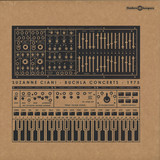
Suzanne Ciani - Buchla Concerts 1975

2024 Repress

Finders Keepers invite you to witness the incredible first ever Buchla synthesiser concerts/demonstrations providing a distinctive feminine alternative to The Silver Apples Of The Moon if they had ever been presented in phonographic form. This is history in the remaking.

This spring Finders Keepers Records are proud to release an archival project that not only redefines musical history but boasts genuine claim to the overused buzzwords such as pioneering, maverick, experimental, groundbreaking and esoteric, while questioning social politics and the evolution of music technology as we've come to understand it. To describe this records as a game-changer is an understatement. This record represents a musical revolution, a scientific benchmark and a trophy in the cabinet of counter culture creativity. This record is a triumphant yardstick in the synthesiser space race and the untold story of the first woman on the proverbial moon. While pondering the early accolades of this record it's daunting to learn that this record was in fact not a record at all... It was a manifesto and a gateway to a new world, that somehow never quite opened. If the unfamiliar, modernistic, melodic, pulses, tones and harmonics found on this 1975 live presentation/grant application/educational demonstration had been placed in a phonographic context alongside the promoted work of Morton Subotnick, Walter Carlos or Tomita then the name Suzanne Ciani and her influence would have already radically changed the shape, sound and gender of our record collections. Hopefully there is still chance.

In short, Suzanne was a self-imposed twenty-year-old employee of the Buchla modular synthesiser company, San Francisco's neck and neck contender to New York's Moog. Buchla was run by a community of festival freaks and academic acid eaters whose roots in new age lifestyles and the reinvention of art and music replaced the business acumen enjoyed by its likeminded East Coasters. In the eyes of the consumer the creative refusal to adopt rudimentary facets like a piano keyboard controller rendered the Buchla synthesiser the more obscure stubborn sister of the synth marathon, steering these incredible units away from the mainstream into the homes and studios of free music aficionados, art house composers and die-hard revolutionaries. Championed and semi-showcased by composer Morton Subotnick on his albums The Bull and Silver Apples Of The Moon, Buchla's versatility began to open the minds of a new generation, but the high-end design features and no-compromise modus operandi was often confused with incompatibility and, in the pulsating shadow of Moog's marketing, the revolution would not be televised nor patronised. Suzanne Ciani, as one of the very few female composers on the frontline (and also providing the back line) did not lose faith.

These concerts' are the epitome of rare music technology historic documents, performed by a real musician whose skills and academic education in classical composition already outweighed her male synthesiser contemporaries of twice her age. At the very start of her fragile career these recordings are nothing short of sacrificial ode to her mentor and machine, sonic pickets of the revolution and love letters to an absolutely genuine vision of and 'alternative' musical future. In denouncing her own precocious polymathmatic past in a bid to persuade the world to sing from a new hymn sheet, Suzanne Ciani created a bi-product of never before heard music that would render the pigeon holes ambient' and futuristic' utterly inadequate. Providing nothing short of an entirely different feminine take on the experimental records' of Morton Subotnick and proving to a small, judgmental audience and jury the true versatility of one of the most radical and idiosyncratic musical instruments of the 20th century. These recordings have not been heard since then.

The importance of these genuinely lost pieces of electronic musics puzzle almost eclipses the glaring detail of Suzanne's gender as a distinct minority in an almost exclusively male dominated, faceless, coldly scientific landscape. Those familiar with Suzanne's work, a vast vault of previously unpublished non-records', will already know how the creative politics in her art of being' simultaneously reshaped the worlds of synth design, advertising and film composition before anyone had even dropped a stylus in her groove. Needless to say this record, finally commanding the archival format of choice, courtesy of the Ciani and Finders Keepers longstanding unison, was not the last first' with which this hugely important composer would gift society, and the future of a wide range of exciting evolving creative disciplines.

You have found a holy grail of electronic music and a female musical pioneer who was too proactive to take the trophies. With the light of Buchla and Ciani's initial flame Finders Keepers continues to take a torch through the vaults of this lesser-celebrated music legacy shining a beam on these non-records' that evaded the limelight for almost half a century. You can't write history when you are too busy making it. With fresh ink in the bottomless well, let's start at the beginning. Again. You, are invited!

nicht am Lager

Bestelle jetzt und wir bestellen den Artikel für dich beim Lieferanten.

14,75

Last In: vor 5 Jahren
Hania Rani - Music for Film and Theatre

Writing music for film and theatre has always been a big part of Hania Rani's musical world. It is also a part of the creative process that can be tantalisingly out of reach for listeners, either the project doesn't come to fruition or the music simply isn't available away from the film or play. From early collaborations with friends, to last year's two scores for full length films (xAbo: Father Boniecki directed by Aleksandra Potoczek and I Never Cry directed by Piotr Domalewski') Rani has been involved in many such projects, each representing an important step in her artistic development and life as a composer and artist:

"Composing for motion picture or theatre is for me a very different kind of work than writing for my own projects. Firstly, I need to collaborate with somebody else who sees the world through the lense of their own art and craft. That's why these kinds of encounters can be so exciting - they are a promise of creating something very new, as a result of creative work of so many people from all walks of life. Secondly, I feel that music in film is an invisible character, a missing emotion that creates a special atmosphere and sensation. It doesn't illustrate, it completes the work of art. I think it is an extremely sensitive matter that rejects banal associations and easy solutions. I feel like composing for film works like an exercise for my imagination."

It is the nature of these collaborations though, that sometimes the composers own preferred compositions don't make the final cut. This is where Music for Film and Theatre comes in as it allows Rani to present a selection of her own personal favourite pieces composed for film and plays. Pieces that made it to the final cut and pieces that were rejected by the director or the producer. Bringing the music together as an album offers a chance for Rani to share her music with her listeners on her own terms and a chance for her fans to hear a different side of her art.

"I put them in one place, as a collection of precious objects that were kept for years in a drawer. Some of them were composed a couple years ago, some are the result of recent research. I am very happy to finally be able to present them as a separate project."

Rani is of course grateful to all of the directors who have entrusted her to create music for their projects, but she professes especially warm feelings for the pieces composed for her first 'real' theatre play, Pradziady, directed by Michał Zdunik. The title comes from 'Dziady' a term in Slavic folklore for the spirits of the ancestors and a collection of pre-Christian rites, rituals and customs that were dedicated to them. The essence of these rituals was the 'communion of the living with the dead', namely, the establishment of relationships with the souls of the ancestors. "I felt this story needed extremely dark and fragile music, and at the same time a sound that could express the mixture of the two worlds - the living and the dead. I decided to compose part of the soundtrack with a string quartet but including two cellos, viola and only one violin. We recorded in a little house, completely built from wood, mostly from Finnish pine. I always felt this space has a very special, warm and natural acoustics - especially when it is combined with string instruments. The track composed for this theatre play is called Ghosts but actually didn't finally make it to the performance, although I like it so much that I thought it would perfectly fit


this compilation". Other highlights include the enchanting Soleil Pâle written for a collaboration with director Neels Castillon, and improvising dancers Alt Take, the beautiful melancholy of In Between (from the film score for xAbo: Father Boniecki) and the magical bliss of The Beach (from I Never Cry) and together they create a beautiful offering from an artist whose every note is worth hearing, but for whom the journey is just beginning:

"I am very happy to see that many artists consider my music as the right soundtrack for their works, because film music was always a huge inspiration for any of my compositions. I find there a lot of life and real emotions, but also a feeling of freedom. Freedom from my own thinking patterns and prejudices. I also believe strongly in collaboration between people, I always feel this is the way to create something really new, based on a mixture of different ways of thinking, feeling, expressing."

This then is Hania Rani, Music for Film and Theatre – enjoy!

nicht am Lager

Bestelle jetzt und wir bestellen den Artikel für dich beim Lieferanten.

30,21

Last In: vor 20 Monaten
Drew McDowall - A Thread, Silvered and Trembling LP

Scottish experimental/electronic musician Drew McDowall's lifelong interest in an elegiac solo bagpipe style called pibroch (ceòl mòr in Gaelic) has been an inspiration for much of his previous work (including Coil's legendary Time Machines). This form, often traditionally used for laments and for tributes to the dead, fuses modal drones with flickering dissonance and plaintive melody evoking an ancient, solemn mood. His latest work, A Thread, Silvered and Trembling, both incorporates and transforms these elements via exploratory electronic processing, weaving an electro-acoustic tapestry of strings, shudders, voids, and voices, alternately disembodied and displaced. Co-produced with engineer Randall Dunn at Circular Ruin Studios in Brooklyn, the collection's four pieces capture McDowall at his most elevated and elusive, in thrall to "the ineffable - that which refuses to be spoken." McDowall's palette here is unusually eclectic, sourced from a dynamic orchestral ensemble arranged by Brent Arnold and comprised of cello, viola, violin, harp (Marilu Donovan of LEYA), and french horn. Ebbing between shrouded electronics and enigmatic, sometimes spectralist orchestration, the album moves with a seething, simmering energy, surging into elegant, uneasy crescendos. The first two pieces are inspired by a liberatory hijacking and inversion of a grim biblical story (and by a cryptic and strange UK simple syrup branding). Opener "Out of Strength Comes Sweetness" shivers with short echo and resonant pads, before shifting into the album's centerpiece: the 14-minute saga "And Lions Will Sing with Joy." A murmuring electrical storm of keening strings and disorienting drones gradually grows darker and denser, until suddenly there's a crack in the clouds, revealing mutated choral voices and sparkling harp. McDowall describes the track as "an incantation to help usher in a break, and a new beginning." The record's latter half evokes a deep untamed animism shot through with spiraling radiance. "In Wound and Water" sways with harp, plucked strings and eerie cello undertows while lush layers of disorientated electronics hang in the dusk. There is no resolution, only a faint gradient of fragile dissipation, leading into the album's harrowing and climactic closer, "A Dream of a Cartographic Membrane Dissolves." Processed voices (credited on the liner notes to "The Ghosts Who Refuse to Rest") contort, whisper, and gather as the rest of the ensemble sharpens, poising to strike. Then it does - grand, tragic stabs of strings and horns lashing the sky, storming heaven by force. The fallout is poetic and inevitable, raining embers into a dark sea. But the journey and catharsis of A Thread linger long after it goes silent. Like so much of McDowall's multifaceted catalog, this is music of immanence and alchemy, attuned equally to the sacred and the profane, to the tile and the mosaic.

nicht am Lager

Bestelle jetzt und wir bestellen den Artikel für dich beim Lieferanten.

23,32

Last In: vor 21 Monaten
STUMBLEINE - DELETED SCENE LP

Stumbleine

DELETED SCENE LP

12inchMONO232VNL
Monotreme
14.06.2024

Limited vinyl edition of 300 copies on 180g white vinyl with download card. Deleted Scene, the 8th studio album from UK producer Stumbleine, overflows with beautiful nostalgia-tinged electronica. The album is steeped with cloud-like beauty, with opener I Can Stop Anytime I Like fusing addictive sampled vocals with soft, glassy guitars, as if a reflecting pool of the listeners' memories. Cinderhaze ripples that pool with a more driving, magnetic force, shifting and pulling its emotional weight in cyclic waves. Ursa Minor Sleeps Forever is fittingly sleepy, circling soft slow synth arpeggios in a dreamy haze, a sound built upon by Somnia to an epiphany-like string bed, never straying too far from Stumbleine's serene haven of melodic grace. On Catastrophette Stumbleine crafts a more dramatic and poignant web of sound, as if running through the memories created by the rest of Deleted Scene. The album as a whole is an escape to a dream-state of Stumbleine's making, captivating, yet familiar, and completely enveloping. According to Peter, "Deleted scene refers to the memories that play over and over inside your own head, replaying hazy copies of hazy copies that evolve into a bittersweet fever dream. Everybody has their own unique collection of deleted scenes slowly distorting and fading away." 'Stumbleine is the alias of Peter Cooper. With roots in the UK post rock scene, the reclusive producer began blending slow dream-like pop with fractured lo-fi beats as Stumbleine in 2012. Melancholic rnb vocals ebb and flow above submerged guitar ballads. Sand blasted samples intertwine with broken beats to create music with a nostalgic fragile warmth. Stumbleine is known for a DIY ethic, releasing music directly to fans or via the independent label Monotreme Records.'

vorbestellen14.06.2024

erscheint voraussichtlich am 14.06.2024

26,68
MO TROPER - SVENGALI LP

Before "Svengali" came to describe any vaguely megalomaniacal personality in the entertainment industry-from the genuinely evil Phil Spector and Colonel Tom Parker all the way to their Diet Rite equivalent Jack Antonoff-he was a literary character who was probably the prototypical megalomaniacal personality in the entertainment industry. The antagonist in the famously mid and otherwise unmemorable 19th century novel Trilby, Svengali is depicted as a machiavellian manipulator who transforms the guileless titular character into a famous singer. Mo Troper's Svengali is a deeply psychological record with the throbbing heart of a fragile giant. It is a meditation on evil-ness. At certain points across Svengali's 13 tracks, Troper relishes his own innate evil-ness; just as often he's repulsed by it. Like any Mxo Troper album, Svengali is a collection of razor-sharp pop songs that sound like they were written yesterday, or in 1990 by Paddy McAloon, or in 1966 by Brian Wilson, or in 1936 by some unheralded Tin Pan Alley great. Troper has always belonged in the Pop Hook Hall of Fame but his latest and sixth LP of original material is, lyrically, a "look, there are levels to this" moment.

vorbestellen03.05.2024

erscheint voraussichtlich am 03.05.2024

24,79
ORPHAX & PONI - INHERITANCE lp

Orphax & PONI (person of no importance) is a collaboration between the two Dutch brothers, Sietse (Orphax) and Tjeerd (PONI) van Erve. Since their early years they share a broad interest in music, fed mostly from their fathers’ record collection, ranging from early blues to Pink Floyd or Beethoven. But also listening to Belgian radio channel Studio Brussels (which during the late 80s and early 90s was a common listening close to the borders between The Netherlands and Belgium), and the late night Dutch radio inspired them in exploring the rough edges of underground music.

An exploration that gave them a common interest in indie and noise rock, but soon enough both followed their own path in music. Tjeerd moving more into underground guitar music, whilst Sietse developed a wider interest in (experimental) electronic and contemporary music. Both as listeners, but also exploring their own interests as musicians.

Now many years later these musical paths cross again in this album Inheritance (with a slight imagination, a translation of their last name van Erve). An album where Tjeerd brings in his dark and noisy lo-fi guitar songs and Sietse brings in his drones and electro-acoustic composition styles.

The album opens with its longest track, “As Received”. This combination results in a slow developing drone, with the intensity and tension of a well build-up post-rock track, that slowly unfolds Tjeerd his guitar layers and vocals. The title of the song refers to one of the PONI projects, where Tjeerd would send rough recordings to befriended musicians who than would rework those recordings without any restrictions which then would be released side by side with the original rough recordings. A project which actually sparked the idea of this collaboration (and that can still be listened to on PONI’s bandcamp-page).

On the flip side of the record, three shorter works give more room for regular song structures. In “Sunburns” this results in slowcore with subdued vocals, melancholic guitars and nasty synth and organ drones. When Tjeerd wrote the basis for the song, he actually had been listening to a lot of Codeine and Bedhead. One does not need much fantasy to recognize the influences of these bands.

“The Tears Are Necessary” is build up around various broken up piano tracks accompanied by moody drones to develop a fragile song.

The album closes with “Lockdown”, opening with silence as a moment of contemplation after the previous work but then quickly develops in a playful song where improvised play on piano, guitar and modular synthesizer create a lo-fi gem that clearly shows that both brothers still haven’t lost their love for Sentridoh or Guided By Voices.
All together resulting in an album that is an ode to the love of music, experiment, and creativity and a celebration of brotherhood.

vorbestellen09.12.2023

erscheint voraussichtlich am 09.12.2023

25,42
Akhira Sano - Far More Decentralized LP

Following on from recent works for 12k, The Trilogy Tapes, and Important, Far More Decentralized is a new collection of subtle, enchanting pieces from Tokyo-based sound and visual artist Akhira Sano. Working with electronic, instrumental, and concrete sounds, he crafts immersive assemblages of long overlapping tones and blurred resonance, cut through with textural crunch and hiss. The resonant bell-like tones of opener ‘Kouai’ invite the listener in, calling up the warm sound palette of ambient classics like Hiroshi Yoshimura’s Music for Nine Postcards, but leaving any sense of compositional anchor behind for a free-floating harmonic drift. Woven through this seductive tonal cloud is a wavering stream of white noise and tactile pops, its textural grit threatening to derail the calmly reflective pool of pitched sounds, but never quite doing so. Each of these seven pieces occupies a similarly ruminative harmonic space while possessing its own identity. On ‘Neow’, lush tonal swells form around fragmented samples, touching on the techniques of early 2000s glitch artists like Ekkehard Ehlers. ‘Orbv’ is particularly subtle in its combination of rippling back-masked tonal wash, almost subliminal suggestions of field recordings, and distant traces of raw electronic interference, as if a Toshimaru Nakamura recording is playing through an open window across the road. ‘Margin’ weaves together a skein of wistful slow-motion melodies while untraceable, resonant clinks and ambiguous static washes rise gradually to the surface. In comparison to his recent Phase Contrast for Recollection on 12k, recognisable instrumental sounds are a rarity here, yet a hand-played feeling is present throughout. On ‘Teens’, filtered electric guitar tones reminiscent of the melancholic miniatures of Andrew Chalk float over aqueous burbles, bringing the album to a magisterial close. In the crowded field of contemporary electronic music tending toward ambience, Sano is a distinctive voice. Like his elegant abstract paintings, here seemingly static surfaces of unhurried calm reveal rich interior worlds of subtle activity and gentle chaos. Where much contemporary ambient music aims for an almost stifling cleanliness of tone, Sano breathes life into Far More Decentralized through the acceptance of imperfection, accident, and rough edges. As the artist himself says, ‘In a world where everything can be made perfectly, I think it’s a beautiful and primal act to touch the fragile and imperfect’

vorbestellen27.11.2023

erscheint voraussichtlich am 27.11.2023

24,79
Ben Folds - What Matters Most LP

“More than anything, I wanted to make an album that was generous, that was useful,” says Ben Folds. “I want you to finish this record with something you didn’t have when you started.” Indeed, Folds’ masterful new collection, What Matters Most, isn’t so much a statement as it is an offering, an open hand reaching out to all those wounded and bewildered by a world that seems to make less and less sense every day. Recorded in East Nashville with co-producer Joe Pisapia, the album marks Folds’ first new studio release in eight years, and it’s a bold, timely, cinematic work, one that examines the tragic and the absurd in equal measure as it reckons with hope and despair, gratitude and loss, identity and perspective. The songs are bittersweet here, hilarious at times, but often laced with a quiet sense of longing and dread: a text message goes unanswered; an old classmate descends into the dark depths of internet conspiracies; a relationship unravels in the middle of a lake. And yet, taken as a whole, the result is an undeniably joyful record that refuses to succumb to the weight of the world around it, an ecstatic reminder of all the beauty and promise hiding in plain sight for anyone willing (and present enough) to recognize their moments as they arrive.

vorbestellen17.11.2023

erscheint voraussichtlich am 17.11.2023

39,45
Red Snapper - Red Snapper Live at The Moth Club

Musical innovators, Red Snapper, have announced that they will release a new album on Lo Recordings on the 20th of October 2023.

‘Live at The Moth Club’, the follow up to 2022’s acclaimed ‘Everybody Is Somebody’ long player, features nine tracks from a vast and impressive back catalogue on Warp Records and Lo Recordings and captures perfectly the energy of their celebrated sold out London show from May 2022 in Hackney.

With an incredible and genre bursting career that spans nearly thirty years, the new album demonstrates the band’s ability to constantly rework classic and new tracks, keeping them impassioned, experimental and relevant. The collection includes a version of ‘Suckerpunch’ which originally appeared on their 1998 album ‘Making Bones’ and will now be released as a single on the 15th of September 2023.

Notorious for casting convention aside, and remaining one of the UK’s most forward thinking and rule breaking live bands, Red Snapper embrace a unique blend of live, euphoric Afro-Jazz, Future Funk, Dub, Dark Hip-Hop and fragile soundscapes.

Formed in 1994, the original line up of Rich Thair (drums), Ali Friend (double bass) and David Ayers (guitar) released three EPs on Rich Thair and Dean Thatcher’s label Flaw Recordings. The first EP ‘Snapper’ featured Beth Orton on vocals.

Over the initial years the band released the sonically pioneering albums; ‘Reeled and Skinned’, ‘Prince Blimey’, ‘Making Bones’ and ‘Our Aim Is To Satisfy Red Snapper’ (Warp records), touring globally and supporting the likes of Massive Attack, Bjork, The Prodigy, De La Soul and The Fugees. They also acquired a reputation for innovative and expansive remixing – reworking tunes by Trouble Funk, David Holmes, Sabres of Paradise, Garbage, Lamb, S-Express and Edwyn Collins amongst others.

Since then the band have released the eponymous ‘Red Snapper’ and ‘A Pale Blue Dot’ on Lo Recordings followed by ‘Key’ on V2 Records which featured the track ‘Spikey’ which was on the soundtrack for El Camino, the Netflix Breaking Bad film directed by Vince Gilligan in 2019.

In 2013 Red Snapper composed a new soundtrack to the 1970’s Senegalese, psychedelic road movie Touki Bouki which had been restored by Martin Scorsese. The band toured Europe performing the soundtrack live to the film, culminating in the celebrated sell-out show at The Queen Elizabeth Hall on London’s Southbank. In 2014 the album ‘Hyena’ was released on Lo Recordings featuring all the music from their original film score.

vorbestellen27.10.2023

erscheint voraussichtlich am 27.10.2023

22,90
Patio - Collection LP

Patio

Collection LP

12inchLPFTK233C
FIRE TALK RECORDS
13.10.2023

More complex and purposeful than the fragile post- punk of 2019 debut Essentials, the album reflects transition, conceived to flow from "day" (contemplative opener "The Sun") to "night" (dub- inspired closer "Inheritance"). New sonic influences like disco (Donna Summer, The Bee Gees) and 2000s New York indie (Yeah Yeah Yeahs, Interpol) evoke freedom and euphoric joy -- maintaining the band's signature minimalism, When the members of Patio contemplated the inspirations for their long-awaited second album, Collection, they came up with an eclectic mood board comprising videos and images.

A 1977 David Bowie performance of "Heroes" on Top of the Pops.

Laura Branigan belting "Gloria" beneath a sea of disco balls. Masterpieces in marble by Michelangelo and Bernini. Jude Law in The Young Pope. Portraits of iconic superstars: A dapper Bryan Ferry, a melancholy Carmela Soprano, Bianca Jagger serving side-eye, and Andy Warhol eating a cheeseburger. "Collection" is out in September on Fire Talk.

vorbestellen13.10.2023

erscheint voraussichtlich am 13.10.2023

28,53
Jaimee Harris - Boomerang Town

Sophomore album from the singer who NPR are calling "the Next Queen Of Americana Folk." Boomerang Town marks a bold step forward for this country-folk-leaning singer-songwriter. It is an arresting, ambitious song-cycle that explores the generational arc of family, the stranglehold of addiction, and the fragile ties that bind us together as Americans. This is a record that understands that love and grief are two sides of the same coin. Jaimee Harris turned 30 during the pandemic. It’s a milestone that is a rite of passage even during normal times. But for this Texas-born singer-songwriter, it came in the midst of one of the strangest and most tumultuous periods in American history. When the world stopped during lockdown, Harris, like many others, found herself gazing back into the past, ruminating on the nature of her hometown and family origins, and reckoning with their imprint on her. The term ‘nostalgia’ derives from the Greek words nostos (return) and algos (pain), and if Harris’s Boomerang Town can be regarded as a nostalgic album, it is only nostalgic in the sense that the longing for home is a desire to return to the past and heal old wounds. For Harris, the album began gestating around 2016, a time of great loss for many in the Americana community, with the songwriter losing several musicians close to her. The shift in the nation’s political landscape had ushered in a new level of polarization that saw whole swaths of cultural life being demonized. For someone who grew up in a small town outside of Waco, Harris believed the values instilled in her by her parents were not entirely in line with how many on the left were viewing — and vilifying — Christians, citing them as responsible for the new change in leadership. As a person in recovery, Harris has had to re-evaluate her own connection to faith and find strength in a higher power (“Though he’s not necessarily a blue-eyed Jesus,” she laughs), though she certainly knows what it’s like to “be told how to vote” in a Southern church setting. It was from the intersection of these social, personal, and political currents the album was born. And while much of the material on Boomerang Town was inspired by personal experience, the songs on this collection are far from autobiographical xeroxed copies. More than anything, they come from a place of emotional truth. “My goal is to just write the best possible song I can write,” Harris says, “and I wanted to have ten songs that made sense together sonically.

vorbestellen17.02.2023

erscheint voraussichtlich am 17.02.2023

26,68
Howe Gelb - ‘The Coincidentalist’ and ‘Dust Bowl’ LP 2x12"

Released on gold vinyl, ‘The Coincidentalist’ and ‘Dust Bowl’ are two discs of Howe Gelb filled with randomness and happenstance, a typical treasure trove spanning all genres from alt country to Cohen-esque grandeur. They traverse, unflinchingly, his chameleon-like repertoire. This deluxe re-issue includes ‘Dust Bowl’ on vinyl for the very first time, with the records housed in a gatefold sleeve featuring updated artwork and liner notes. ‘The Coincidentalist’, originally released in 2013, features a raft of friends and collaborators including Bonnie Prince Billy, Andrew Bird, M. Ward, Steve Shelley, and Jason Lytle of Grandaddy with John Parrish on mixing duties. Ever the focal point of Giant Sand and Gelb releases, the Arizona Desert serves as a key inspiration for the record, animating the barren landscape with stories of those that have navigated them. Praise for the release was not short, with AllMusic proclaiming that it’s “one of Gelb's most realized efforts; despite its relaxed, airy presentation, it's musically and lyrically provocative, as poetic, strange, and mysterious as the desert itself." The accompanying collection ‘Dust Bowl’ is a personal sketchbook of songs, a more stripped back set than it’s counterpart. Featuring everything from the country blues of ‘Porch Banjo’ and ‘John Deere’, to off-kilter piano ballads like ‘The Old Overrated’ and ‘Reality Or Not’ and the deconstructed desert pop on ‘Forever And A Day’ and the fragile ‘Man On A String’. ‘Dust Bowl’ is an insider’s view of Howe’s songwriting craft, a unique insight into the man himself. “‘Dust Bowl’ was primarily for fans that have followed me for a while. ‘The Coincidentalist’ is for the friends of the fans.” Howe told Under The Radar. While Nightlife magazine reported that; “Without warning, the Giant Sand frontman and polymorphous countryman dropped this compilation of house recordings via Bandcamp… At a time when so much harmless, soulless folk resonates, Howe Gelb is a mandatory point of reference for any fan of the genre.”

vorbestellen30.10.2022

erscheint voraussichtlich am 30.10.2022

31,51
Lee Tracy & Isaac Manning - Is it What You Want

As the sun sets on a quaint East Nashville house, a young man bares a piece of his soul. Facing the camera, sporting a silky suit jacket/shirt/slacks/fingerless gloves ensemble that announces "singer" before he's even opened his mouth, Lee Tracy Johnson settles onto his stage, the front yard. He sways to the dirge-like drum machine pulse of a synth-soaked slow jam, extends his arms as if gaining his balance, and croons in affecting, fragile earnest, "I need your love… oh baby…"

Dogs in the yard next door begin barking. A mysterious cardboard robot figure, beamed in from galaxies unknown and affixed to a tree, is less vocal. Lee doesn't acknowledge either's presence. He's busy feeling it, arms and hands gesticulating. His voice rises in falsetto over the now-quiet dogs, over the ambient noise from the street that seeps into the handheld camcorder's microphone, over the recording of his own voice played back from a boombox off-camera. After six minutes the single, continuous shot ends. In this intimate creative universe there are no re-takes. There are many more music videos to shoot, and as Lee later puts it, "The first time you do it is actually the best. Because you can never get that again. You expressing yourself from within."

"I Need Your Love" dates from a lost heyday. From some time in the '80s or early '90s, when Lee Tracy (as he was known in performance) and his music partner/producer/manager Isaac Manning committed hours upon hours of their sonic and visual ideas to tape. Embracing drum machines and synthesizers – electronics that made their personal futurism palpable – they recorded exclusively at home, live in a room into a simple cassette deck. Soul, funk, electro and new wave informed their songs, yet Lee and Isaac eschewed the confinement of conventional categories and genres, preferring to let experimentation guide them.

"Anytime somebody put out a new record they had the same instruments or the same sound," explains Isaac. "So I basically wanted to find something that's really gonna stand out away from all of the rest of 'em." Their ethos meant that every idea they came up with was at least worth trying: echoed out half-rapped exhortations over frantic techno-style beats, gospel synth soul, modal electro-funk, oddball pop reinterpretations, emo AOR balladry, nods to Prince and the Fat Boys, or arrangements that might collapse mid-song into a mess of arcade game-ish blips before rallying to reach the finish line. All of it conjoined by consistent tape hiss, and most vitally, Lee's chameleonic voice, which managed to wildly shape shift and still evoke something sincere – whether toggling between falsetto and tenor exalting Jesus's return, or punctuating a melismatic romantic adlib with a succinct, "We all know how it feels to be alone."

"People think we went to a studio," says Isaac derisively. "We never went to no studio. We didn't have the money to go to no studio! We did this stuff at home. I shot videos in my front yard with whatever we could to get things together." Sometimes Isaac would just put on an instrumental record, be it "Planet Rock" or "Don't Cry For Me Argentina" (from Evita), press "record," and let Lee improvise over it, yielding peculiar love songs, would-be patriotic anthems, or Elvis Presley or Marilyn Monroe tributes. Technical limitations and a lack of professional polish never dissuaded them. They believed they were onto something.

"That struggle," Isaac says, "made that sound sound good to me."

In the parlance of modern music criticism Lee and Isaac's dizzying DIY efforts would inevitably be described as "outsider." But "outsider" carries the burden of untold additional layers of meaning if you're Black and from the South, creating on a budget, and trying to get someone, anyone within the country music capital of the world to take your vision seriously. "What category should we put it in?" Isaac asks rhetorically. "I don't know. All I know is feeling. I ain't gonna name it nothing. It's music. If it grabs your soul and touch your heart that's what it basically is supposed to do."

=

Born in 1963, the baby boy of nine siblings, Lee Tracy spent his earliest years living amidst the shotgun houses on Nashville's south side. "We was poor, man!" he says, recalling the outhouse his family used for a bathroom and the blocks of ice they kept in the kitchen to chill perishables. "But I actually don't think I really realized I was in poverty until I got grown and started thinking about it." Lee's mom worked at the Holiday Inn; his dad did whatever he had to do, from selling fruit from a horse drawn cart to bootlegging. "We didn't have much," Lee continues, "but my mother and my father got us the things we needed, the clothes on our back." By the end of the decade with the city's urban renewal programs razing entire neighborhoods to accommodate construction of the Interstate, the family moved to Edgehill Projects. Lee remembers music and art as a constant source of inspiration for he and his brothers and sisters – especially after seeing the Jackson 5 perform on Ed Sullivan. "As a small child I just knew that was what I wanted to do."

His older brother Don began musically mentoring him, introducing Lee to a variety of instruments and sounds. "He would never play one particular type of music, like R&B," says Lee. "I was surrounded by jazz, hard rock and roll, easy listening, gospel, reggae, country music; I mean I was a sponge absorbing all of that." Lee taught himself to play drums by beating on cardboard boxes, gaining a rep around the way for his timekeeping, and his singing voice. Emulating his favorites, Earth Wind & Fire and Cameo, he formed groups with other kids with era-evocative band names like Concept and TNT Connection, and emerged as the leader of disciplined rehearsals. "I made them practice," says Lee. "We practiced and practiced and practiced. Because I wanted that perfection." By high school the most accomplished of these bands would take top prize in a prominent local talent show. It was a big moment for Lee, and he felt ready to take things to the next level. But his band-mates had other ideas.

"I don't know what happened," he says, still miffed at the memory. "It must have blew they mind after we won and people started showing notice, because it's like everybody quit! I was like, where the hell did everybody go?" Lee had always made a point of interrogating prospective musicians about their intentions before joining his groups: were they really serious or just looking for a way to pick up girls? Now he understood even more the importance of finding a collaborator just as committed to the music as he was.

=

Isaac Manning had spent much of his life immersed in music and the arts – singing in the church choir with his family on Nashville's north side, writing, painting, dancing, and working various gigs within the entertainment industry. After serving in the armed forces, in the early '70s he ran The Teenage Place, a music and performance venue that catered to the local youth. But he was forced out of town when word of one of his recreational routines created a stir beyond the safe haven of his bohemian circles.

"I was growing marijuana," Isaac explains. "It wasn't no business, I was smoking it myself… I would put marijuana in scrambled eggs, cornbread and stuff." His weed use originated as a form of self-medication to combat severe tooth pain. But when he began sharing it with some of the other young people he hung out with, some of who just so happened to be the kids of Nashville politicians, the cops came calling. "When I got busted," he remembers, "they were talking about how they were gonna get rid of me because they didn't want me saying nothing about they children because of the politics and stuff. So I got my family, took two raggedy cars, and left Nashville and went to Vegas."

Out in the desert, Isaac happened to meet Chubby Checker of "The Twist" fame while the singer was gigging at The Flamingo. Impressed by Isaac's zeal, Checker invited him to go on the road with him as his tour manager/roadie/valet. The experience gave Isaac a window into a part of the entertainment world he'd never encountered – a glimpse of what a true pop act's audience looked like. "Chubby Checker, none of his shows were played for Black folks," he remembers. "All his gigs were done at high-class white people areas." Returning home after a few years with Chubby, Isaac was properly motivated to make it in Music City. He began writing songs and scouting around Nashville for local talent anywhere he could find it with an expressed goal: "Find someone who can deliver your songs the way you want 'em delivered and make people feel what you want them to feel."

One day while walking through Edgehill Projects Isaac heard someone playing the drums in a way that made him stop and take notice. "The music was so tight, just the drums made me feel like, oh I'm-a find this person," he recalls. "So I circled through the projects until I found who it was.

"That's how I met him – Lee Tracy. When I found him and he started singing and stuff, I said, ohhh, this is somebody different."

=

Theirs was a true complementary partnership: young Lee possessed the raw talent, the older Isaac the belief. "He's really the only one besides my brother and my family that really seen the potential in me," says Lee. "He made me see that I could do it."

Isaac long being a night owl, his house also made for a fertile collaborative environment – a space where there always seemed to be a new piece of his visual art on display: paintings, illustrations, and dolls and figures (including an enigmatic cardboard robot). Lee and Issac would hang out together and talk, listen to music, conjure ideas, and smoke the herb Isaac had resumed growing in his yard. "It got to where I could trust him, he could trust me," Isaac says of their bond. They also worked together for hours on drawings, spreading larges rolls of paper on the walls and sketching faces with abstract patterns and imagery: alien-like beings, tri-horned horse heads, inverted Janus-like characters where one visage blurred into the other.

Soon it became apparent that they didn't need other collaborators; self-sufficiency was the natural way forward. At Isaac's behest Lee, already fed up with dealing with band musicians, began playing around with a poly-sonic Yamaha keyboard at the local music store. "It had everything on it – trumpet, bass, drums, organ," remembers Lee. "And that's when I started recording my own stuff."

The technology afforded Lee the flexibility and independence he craved, setting him on a path other bedroom musicians and producers around the world were simultaneously following through the '80s into the early '90s. Saving up money from day jobs, he eventually supplemented the Yamaha Isaac had gotten him with Roland and Casio drum machines and a Moog. Lee was living in an apartment in Hillside at that point caring for his dad, who'd been partially paralyzed since early in life. In the evenings up in his second floor room, the music put him in a zone where he could tune out everything and lose himself in his ideas.

"Oh I loved it," he recalls. "I would really experiment with the instruments and use a lot of different sound effects. I was looking for something nobody else had. I wanted something totally different. And once I found the sound I was looking for, I would just smoke me a good joint and just let it go, hit the record button." More potent a creative stimulant than even Isaac's weed was the holistic flow and spontaneity of recording. Between sessions at Isaac's place and Lee's apartment, their volume of output quickly ballooned.

"We was always recording," says Lee. "That's why we have so much music. Even when I went to Isaac's and we start creating, I get home, my mind is racing, I gotta start creating, creating, creating. I remember there were times when I took a 90-minute tape from front to back and just filled it up."

"We never practiced," says Isaac. "See, that was just so odd about the whole thing. I could relate to him, and tell him about the songs I had ideas for and everything and stuff. And then he would bring it back or whatever, and we'd get together and put it down." Once the taskmaster hell bent on rehearsing, Lee had flipped a full 180. Perfection was no longer an aspiration, but the enemy of inspiration.

"I seen where practicing and practicing got me," says Lee. "A lot of musicians you get to playing and they gotta stop, they have to analyze the music. But while you analyzing you losing a lot of the greatness of what you creating. Stop analyzing what you play, just play! And it'll all take shape."

=

"I hope you understood the beginning of the record because this was invented from a dream I had today… (You tell me, I'll tell you, we'll figure it out together)" – Lee Tracy and Isaac Manning, "Hope You Understand"

Lee lets loose a maniacal cackle when he acknowledges that the material that he and Isaac recorded was by anyone's estimation pretty out there. It's the same laugh that commences "Hope You Understand" – a chaotic transmission that encapsulates the duality at the heart of their music: a stated desire to reach people and a compulsion to go as leftfield as they saw fit.

"We just did it," says Lee. "We cut the music on and cut loose. I don't sit around and write. I do it by listening, get a feeling, play the music, and the lyrics and stuff just come out of me."

The approach proved adaptable to interpreting other artists' material. While recording a cover of Whitney Houston's pop ballad "Saving All My Love For You," Lee played Whitney's version in his headphones as he laid down his own vocals – partially following the lyrics, partially using them as a departure point. The end result is barely recognizable compared with the original, Lee and Isaac having switched up the time signature and reinvented the melody along the way towards morphing a slick mainstream radio standard into something that sounds solely their own.

"I really used that song to get me started," says Lee. "Then I said, well I need something else, something is missing. Something just came over me. That's when I came up with 'Is It What You Want.'"

The song would become the centerpiece of Lee and Isaac's repertoire. Pushed along by a percolating metronomic Rhythm King style beat somewhere between a military march and a samba, "Is It What You Want" finds Lee pleading the sincerity of his commitment to a potential love interest embellished by vocal tics and hiccups subtlely reminiscent of his childhood hero MJ. Absent chord changes, only synth riffs gliding in and out like apparitions, the song achieves a lingering lo-fi power that leaves you feeling like it's still playing, somewhere, even after the fade out.

"I don't know, it's like a real spiritual song," Lee reflects. "But it's not just spiritual. To me the more I listen to it it's like about everything that you do in your everyday life, period. Is it what you want? Do you want a car or you don't want a car? Do you want Jesus or do you want the Devil? It's basically asking you the question. Can't nobody answer the question but you yourself."

In 1989 Lee won a lawsuit stemming from injuries sustained from a fight he'd gotten into. He took part of the settlement money and with Isaac pressed up "Saving All My Love For You" b/w "Is It What You Want" as a 45 single. Isaac christened the label One Chance Records. "Because that's all we wanted," he says with a laugh, "one chance."

Isaac sent the record out to radio stations and major labels, hoping for it to make enough noise to get picked up nationally. But the response he and Lee were hoping for never materialized. According to Isaac the closest the single got to getting played on the radio is when a disk jock from a local station made a highly unusual announcement on air: "The dude said on the radio, 107.5 – 'We are not gonna play 'Is It What You Want.' We cracked up! Wow, that's deep.

"It was a whole racist thing that was going on," he reflects. "So we just looked over and kept on going. That was it. That was about the way it goes… If you were Black and you were living in Nashville and stuff, that's the way you got treated." Isaac already knew as much from all the times he'd brought he and Lee's tapes (even their cache of country music tunes) over to Music Row to try to drum up interest to no avail.

"Isaac, he really worked his ass off," says Lee. "He probably been to every record place down on Music Row." Nashville's famed recording and music business corridor wasn't but a few blocks from where Lee grew up. Close enough, he remembers, for him to ride his bike along its back alleys and stumble upon the occasional random treasure, like a discarded box of harmonicas. Getting in through the front door, however, still felt a world away.

"I just don't think at the time our music fell into a category for them," he concedes. "It was before its time."

=

Lee stopped making music some time in the latter part of the '90s, around the time his mom passed away and life became increasingly tough to manage. "When my mother died I had a nervous breakdown," he says, "So I shut down for a long time. I was in such a sadness frame of mind. That's why nobody seen me. I had just disappeared off the map." He fell out of touch with Isaac, and in an indication of just how bad things had gotten for him, lost track of all the recordings they'd made together. Music became a distant memory.

Fortunately, Isaac kept the faith. In a self-published collection of his poetry – paeans to some of his favorite entertainment and public figures entitled Friends and Dick Clark – he'd written that he believed "music has a life of its own." But his prescience and presence of mind were truly manifested in the fact that he kept an archive of he and Lee's work. As perfectly imperfect as "Is It What You Want" now sounds in a post-Personal Space world, Lee and Isaac's lone official release was in fact just a taste. The bulk of the Is It What You Want album is culled from the pair's essentially unheard home recordings – complete songs, half-realized experiments, Isaac's blue monologues and pronouncements et al – compiled, mixed and programmed in the loose and impulsive creative spirit of their regular get-togethers from decades ago. The rest of us, it seems, may have finally caught up to them.

On the prospect of at long last reaching a wider audience, Isaac says simply, "I been trying for a long time, it feels good." Ever the survivor, he adds, "The only way I know how to make it to the top is to keep climbing. If one leg break on the ladder, hey, you gotta fix it and keep on going… That's where I be at. I'll kill death to make it out there."

For Lee it all feels akin to a personal resurrection: "It's like I was in a tomb and the tomb was opened and I'm back… Man, it feels so great. I feel like I'm gonna jump out of my skin." Success at this stage of his life, he realizes, probably means something different than what it did back when he was singing and dancing in Isaac's front yard. "What I really mean by 'making it,'" he explains isn't just the music being heard but, "the story being told."

Occasionally Lee will pull up "Is It What You Want" on YouTube on his phone, put on his headphones, and listen. He remembers the first time he heard his recorded voice. How surreal it was, how he thought to himself, "Is that really me?" What would he say to that younger version of himself now?

"I would probably tell myself, hang in there, don't give up. Keep striving for the goal. And everything will work out."

Despite what's printed on the record label, sometimes you do get more than one chance.
nicht am Lager

Bestelle jetzt und wir bestellen den Artikel für dich beim Lieferanten.

11,72

Last In: vor 3 Jahren
Lee Tracy & Isaac Manning - Is it What You Want LP

As the sun sets on a quaint East Nashville house, a young man bares a piece of his soul. Facing the camera, sporting a silky suit jacket/shirt/slacks/fingerless gloves ensemble that announces "singer" before he's even opened his mouth, Lee Tracy Johnson settles onto his stage, the front yard. He sways to the dirge-like drum machine pulse of a synth-soaked slow jam, extends his arms as if gaining his balance, and croons in affecting, fragile earnest, "I need your love… oh baby…"

Dogs in the yard next door begin barking. A mysterious cardboard robot figure, beamed in from galaxies unknown and affixed to a tree, is less vocal. Lee doesn't acknowledge either's presence. He's busy feeling it, arms and hands gesticulating. His voice rises in falsetto over the now-quiet dogs, over the ambient noise from the street that seeps into the handheld camcorder's microphone, over the recording of his own voice played back from a boombox off-camera. After six minutes the single, continuous shot ends. In this intimate creative universe there are no re-takes. There are many more music videos to shoot, and as Lee later puts it, "The first time you do it is actually the best. Because you can never get that again. You expressing yourself from within."

"I Need Your Love" dates from a lost heyday. From some time in the '80s or early '90s, when Lee Tracy (as he was known in performance) and his music partner/producer/manager Isaac Manning committed hours upon hours of their sonic and visual ideas to tape. Embracing drum machines and synthesizers – electronics that made their personal futurism palpable – they recorded exclusively at home, live in a room into a simple cassette deck. Soul, funk, electro and new wave informed their songs, yet Lee and Isaac eschewed the confinement of conventional categories and genres, preferring to let experimentation guide them.

"Anytime somebody put out a new record they had the same instruments or the same sound," explains Isaac. "So I basically wanted to find something that's really gonna stand out away from all of the rest of 'em." Their ethos meant that every idea they came up with was at least worth trying: echoed out half-rapped exhortations over frantic techno-style beats, gospel synth soul, modal electro-funk, oddball pop reinterpretations, emo AOR balladry, nods to Prince and the Fat Boys, or arrangements that might collapse mid-song into a mess of arcade game-ish blips before rallying to reach the finish line. All of it conjoined by consistent tape hiss, and most vitally, Lee's chameleonic voice, which managed to wildly shape shift and still evoke something sincere – whether toggling between falsetto and tenor exalting Jesus's return, or punctuating a melismatic romantic adlib with a succinct, "We all know how it feels to be alone."

"People think we went to a studio," says Isaac derisively. "We never went to no studio. We didn't have the money to go to no studio! We did this stuff at home. I shot videos in my front yard with whatever we could to get things together." Sometimes Isaac would just put on an instrumental record, be it "Planet Rock" or "Don't Cry For Me Argentina" (from Evita), press "record," and let Lee improvise over it, yielding peculiar love songs, would-be patriotic anthems, or Elvis Presley or Marilyn Monroe tributes. Technical limitations and a lack of professional polish never dissuaded them. They believed they were onto something.

"That struggle," Isaac says, "made that sound sound good to me."

In the parlance of modern music criticism Lee and Isaac's dizzying DIY efforts would inevitably be described as "outsider." But "outsider" carries the burden of untold additional layers of meaning if you're Black and from the South, creating on a budget, and trying to get someone, anyone within the country music capital of the world to take your vision seriously. "What category should we put it in?" Isaac asks rhetorically. "I don't know. All I know is feeling. I ain't gonna name it nothing. It's music. If it grabs your soul and touch your heart that's what it basically is supposed to do."

=

Born in 1963, the baby boy of nine siblings, Lee Tracy spent his earliest years living amidst the shotgun houses on Nashville's south side. "We was poor, man!" he says, recalling the outhouse his family used for a bathroom and the blocks of ice they kept in the kitchen to chill perishables. "But I actually don't think I really realized I was in poverty until I got grown and started thinking about it." Lee's mom worked at the Holiday Inn; his dad did whatever he had to do, from selling fruit from a horse drawn cart to bootlegging. "We didn't have much," Lee continues, "but my mother and my father got us the things we needed, the clothes on our back." By the end of the decade with the city's urban renewal programs razing entire neighborhoods to accommodate construction of the Interstate, the family moved to Edgehill Projects. Lee remembers music and art as a constant source of inspiration for he and his brothers and sisters – especially after seeing the Jackson 5 perform on Ed Sullivan. "As a small child I just knew that was what I wanted to do."

His older brother Don began musically mentoring him, introducing Lee to a variety of instruments and sounds. "He would never play one particular type of music, like R&B," says Lee. "I was surrounded by jazz, hard rock and roll, easy listening, gospel, reggae, country music; I mean I was a sponge absorbing all of that." Lee taught himself to play drums by beating on cardboard boxes, gaining a rep around the way for his timekeeping, and his singing voice. Emulating his favorites, Earth Wind & Fire and Cameo, he formed groups with other kids with era-evocative band names like Concept and TNT Connection, and emerged as the leader of disciplined rehearsals. "I made them practice," says Lee. "We practiced and practiced and practiced. Because I wanted that perfection." By high school the most accomplished of these bands would take top prize in a prominent local talent show. It was a big moment for Lee, and he felt ready to take things to the next level. But his band-mates had other ideas.

"I don't know what happened," he says, still miffed at the memory. "It must have blew they mind after we won and people started showing notice, because it's like everybody quit! I was like, where the hell did everybody go?" Lee had always made a point of interrogating prospective musicians about their intentions before joining his groups: were they really serious or just looking for a way to pick up girls? Now he understood even more the importance of finding a collaborator just as committed to the music as he was.

=

Isaac Manning had spent much of his life immersed in music and the arts – singing in the church choir with his family on Nashville's north side, writing, painting, dancing, and working various gigs within the entertainment industry. After serving in the armed forces, in the early '70s he ran The Teenage Place, a music and performance venue that catered to the local youth. But he was forced out of town when word of one of his recreational routines created a stir beyond the safe haven of his bohemian circles.

"I was growing marijuana," Isaac explains. "It wasn't no business, I was smoking it myself… I would put marijuana in scrambled eggs, cornbread and stuff." His weed use originated as a form of self-medication to combat severe tooth pain. But when he began sharing it with some of the other young people he hung out with, some of who just so happened to be the kids of Nashville politicians, the cops came calling. "When I got busted," he remembers, "they were talking about how they were gonna get rid of me because they didn't want me saying nothing about they children because of the politics and stuff. So I got my family, took two raggedy cars, and left Nashville and went to Vegas."

Out in the desert, Isaac happened to meet Chubby Checker of "The Twist" fame while the singer was gigging at The Flamingo. Impressed by Isaac's zeal, Checker invited him to go on the road with him as his tour manager/roadie/valet. The experience gave Isaac a window into a part of the entertainment world he'd never encountered – a glimpse of what a true pop act's audience looked like. "Chubby Checker, none of his shows were played for Black folks," he remembers. "All his gigs were done at high-class white people areas." Returning home after a few years with Chubby, Isaac was properly motivated to make it in Music City. He began writing songs and scouting around Nashville for local talent anywhere he could find it with an expressed goal: "Find someone who can deliver your songs the way you want 'em delivered and make people feel what you want them to feel."

One day while walking through Edgehill Projects Isaac heard someone playing the drums in a way that made him stop and take notice. "The music was so tight, just the drums made me feel like, oh I'm-a find this person," he recalls. "So I circled through the projects until I found who it was.

"That's how I met him – Lee Tracy. When I found him and he started singing and stuff, I said, ohhh, this is somebody different."

=

Theirs was a true complementary partnership: young Lee possessed the raw talent, the older Isaac the belief. "He's really the only one besides my brother and my family that really seen the potential in me," says Lee. "He made me see that I could do it."

Isaac long being a night owl, his house also made for a fertile collaborative environment – a space where there always seemed to be a new piece of his visual art on display: paintings, illustrations, and dolls and figures (including an enigmatic cardboard robot). Lee and Issac would hang out together and talk, listen to music, conjure ideas, and smoke the herb Isaac had resumed growing in his yard. "It got to where I could trust him, he could trust me," Isaac says of their bond. They also worked together for hours on drawings, spreading larges rolls of paper on the walls and sketching faces with abstract patterns and imagery: alien-like beings, tri-horned horse heads, inverted Janus-like characters where one visage blurred into the other.

Soon it became apparent that they didn't need other collaborators; self-sufficiency was the natural way forward. At Isaac's behest Lee, already fed up with dealing with band musicians, began playing around with a poly-sonic Yamaha keyboard at the local music store. "It had everything on it – trumpet, bass, drums, organ," remembers Lee. "And that's when I started recording my own stuff."

The technology afforded Lee the flexibility and independence he craved, setting him on a path other bedroom musicians and producers around the world were simultaneously following through the '80s into the early '90s. Saving up money from day jobs, he eventually supplemented the Yamaha Isaac had gotten him with Roland and Casio drum machines and a Moog. Lee was living in an apartment in Hillside at that point caring for his dad, who'd been partially paralyzed since early in life. In the evenings up in his second floor room, the music put him in a zone where he could tune out everything and lose himself in his ideas.

"Oh I loved it," he recalls. "I would really experiment with the instruments and use a lot of different sound effects. I was looking for something nobody else had. I wanted something totally different. And once I found the sound I was looking for, I would just smoke me a good joint and just let it go, hit the record button." More potent a creative stimulant than even Isaac's weed was the holistic flow and spontaneity of recording. Between sessions at Isaac's place and Lee's apartment, their volume of output quickly ballooned.

"We was always recording," says Lee. "That's why we have so much music. Even when I went to Isaac's and we start creating, I get home, my mind is racing, I gotta start creating, creating, creating. I remember there were times when I took a 90-minute tape from front to back and just filled it up."

"We never practiced," says Isaac. "See, that was just so odd about the whole thing. I could relate to him, and tell him about the songs I had ideas for and everything and stuff. And then he would bring it back or whatever, and we'd get together and put it down." Once the taskmaster hell bent on rehearsing, Lee had flipped a full 180. Perfection was no longer an aspiration, but the enemy of inspiration.

"I seen where practicing and practicing got me," says Lee. "A lot of musicians you get to playing and they gotta stop, they have to analyze the music. But while you analyzing you losing a lot of the greatness of what you creating. Stop analyzing what you play, just play! And it'll all take shape."

=

"I hope you understood the beginning of the record because this was invented from a dream I had today… (You tell me, I'll tell you, we'll figure it out together)" – Lee Tracy and Isaac Manning, "Hope You Understand"

Lee lets loose a maniacal cackle when he acknowledges that the material that he and Isaac recorded was by anyone's estimation pretty out there. It's the same laugh that commences "Hope You Understand" – a chaotic transmission that encapsulates the duality at the heart of their music: a stated desire to reach people and a compulsion to go as leftfield as they saw fit.

"We just did it," says Lee. "We cut the music on and cut loose. I don't sit around and write. I do it by listening, get a feeling, play the music, and the lyrics and stuff just come out of me."

The approach proved adaptable to interpreting other artists' material. While recording a cover of Whitney Houston's pop ballad "Saving All My Love For You," Lee played Whitney's version in his headphones as he laid down his own vocals – partially following the lyrics, partially using them as a departure point. The end result is barely recognizable compared with the original, Lee and Isaac having switched up the time signature and reinvented the melody along the way towards morphing a slick mainstream radio standard into something that sounds solely their own.

"I really used that song to get me started," says Lee. "Then I said, well I need something else, something is missing. Something just came over me. That's when I came up with 'Is It What You Want.'"

The song would become the centerpiece of Lee and Isaac's repertoire. Pushed along by a percolating metronomic Rhythm King style beat somewhere between a military march and a samba, "Is It What You Want" finds Lee pleading the sincerity of his commitment to a potential love interest embellished by vocal tics and hiccups subtlely reminiscent of his childhood hero MJ. Absent chord changes, only synth riffs gliding in and out like apparitions, the song achieves a lingering lo-fi power that leaves you feeling like it's still playing, somewhere, even after the fade out.

"I don't know, it's like a real spiritual song," Lee reflects. "But it's not just spiritual. To me the more I listen to it it's like about everything that you do in your everyday life, period. Is it what you want? Do you want a car or you don't want a car? Do you want Jesus or do you want the Devil? It's basically asking you the question. Can't nobody answer the question but you yourself."

In 1989 Lee won a lawsuit stemming from injuries sustained from a fight he'd gotten into. He took part of the settlement money and with Isaac pressed up "Saving All My Love For You" b/w "Is It What You Want" as a 45 single. Isaac christened the label One Chance Records. "Because that's all we wanted," he says with a laugh, "one chance."

Isaac sent the record out to radio stations and major labels, hoping for it to make enough noise to get picked up nationally. But the response he and Lee were hoping for never materialized. According to Isaac the closest the single got to getting played on the radio is when a disk jock from a local station made a highly unusual announcement on air: "The dude said on the radio, 107.5 – 'We are not gonna play 'Is It What You Want.' We cracked up! Wow, that's deep.

"It was a whole racist thing that was going on," he reflects. "So we just looked over and kept on going. That was it. That was about the way it goes… If you were Black and you were living in Nashville and stuff, that's the way you got treated." Isaac already knew as much from all the times he'd brought he and Lee's tapes (even their cache of country music tunes) over to Music Row to try to drum up interest to no avail.

"Isaac, he really worked his ass off," says Lee. "He probably been to every record place down on Music Row." Nashville's famed recording and music business corridor wasn't but a few blocks from where Lee grew up. Close enough, he remembers, for him to ride his bike along its back alleys and stumble upon the occasional random treasure, like a discarded box of harmonicas. Getting in through the front door, however, still felt a world away.

"I just don't think at the time our music fell into a category for them," he concedes. "It was before its time."

=

Lee stopped making music some time in the latter part of the '90s, around the time his mom passed away and life became increasingly tough to manage. "When my mother died I had a nervous breakdown," he says, "So I shut down for a long time. I was in such a sadness frame of mind. That's why nobody seen me. I had just disappeared off the map." He fell out of touch with Isaac, and in an indication of just how bad things had gotten for him, lost track of all the recordings they'd made together. Music became a distant memory.

Fortunately, Isaac kept the faith. In a self-published collection of his poetry – paeans to some of his favorite entertainment and public figures entitled Friends and Dick Clark – he'd written that he believed "music has a life of its own." But his prescience and presence of mind were truly manifested in the fact that he kept an archive of he and Lee's work. As perfectly imperfect as "Is It What You Want" now sounds in a post-Personal Space world, Lee and Isaac's lone official release was in fact just a taste. The bulk of the Is It What You Want album is culled from the pair's essentially unheard home recordings – complete songs, half-realized experiments, Isaac's blue monologues and pronouncements et al – compiled, mixed and programmed in the loose and impulsive creative spirit of their regular get-togethers from decades ago. The rest of us, it seems, may have finally caught up to them.

On the prospect of at long last reaching a wider audience, Isaac says simply, "I been trying for a long time, it feels good." Ever the survivor, he adds, "The only way I know how to make it to the top is to keep climbing. If one leg break on the ladder, hey, you gotta fix it and keep on going… That's where I be at. I'll kill death to make it out there."

For Lee it all feels akin to a personal resurrection: "It's like I was in a tomb and the tomb was opened and I'm back… Man, it feels so great. I feel like I'm gonna jump out of my skin." Success at this stage of his life, he realizes, probably means something different than what it did back when he was singing and dancing in Isaac's front yard. "What I really mean by 'making it,'" he explains isn't just the music being heard but, "the story being told."

Occasionally Lee will pull up "Is It What You Want" on YouTube on his phone, put on his headphones, and listen. He remembers the first time he heard his recorded voice. How surreal it was, how he thought to himself, "Is that really me?" What would he say to that younger version of himself now?

"I would probably tell myself, hang in there, don't give up. Keep striving for the goal. And everything will work out."

Despite what's printed on the record label, sometimes you do get more than one chance.

nicht am Lager

Bestelle jetzt und wir bestellen den Artikel für dich beim Lieferanten.

23,49

Last In: vor 3 Jahren
Kit Grill - Spirit (TAPE)

Critically acclaimed artist, producer and NTS radio host Kit Grill is set to release his new album 'Spirit' on the 18th February 2022 via his own imprint Primary Colours.

Having received glowing praise from electronic music tastemakers including Boiler Room, Resident Advisor, Electronic Sound, The Ransom Note, Headphone Commute, Inverted Audio and more, Grill's endless enthusiasm to write and produce music has seen him amass a rich and varied catalogue taking in influences including acid house, new wave, post-punk, ambient, electronica and techno.

Kit Grill's new album Spirit is a reflective collection of songs written and produced at the same time as 2020's Fragile. "The aim was to write an album completely different to Fragile, something much slower and open. I wanted to have a real distinction between the 2 records and producing them at the same time helped create this difference in sound and pace. Where Fragile is about maintaining an energy, Spirit is about creating a sparse uncluttered world." Spirit moves between hope and grief, transforming Grills personal experiences into a stillness of shimmering beauty.

Written and produced by Kit Grill
Mastering by Ryan Schwabe
Cover photography by Kit Grill

vorbestellen25.03.2022

erscheint voraussichtlich am 25.03.2022

7,77
Siavash Amini & Saffronkeira - The Faded Orbit

Siavash Amini is a composer from Tehran, Iran. He Has worked with labels like Room40, Hallow Ground, Opal Tapes and Umor Rex for the better half of the past ten years. He has performed at festivals like CTM & MUTEK and many other well known international events. Apart from it Siavash is a co-founder of the “SET experimental art events” and “SETfest” in Tehran, Iran. His work ranges from fragile ambient pieces and brittle IDM (incorporating his distinctive style of atmospheric guitar playing) to noisy drones and bleak modern classical pieces. His compositions have been inspired by films such as Andrei Tarkovsky's The Mirror as well as novels by Dostoyesvky and poems by T.S. Eliot.

Saffronkeira is the Sardinian sound researcher Eugenio Caria being active in the electronic music scene since almost two decades. His most recent work - a cooperation with the Italian jazz trumpet legend Paolo Fresu - earned a lot of praise from the international music press for the pure timelessness of the album.

"Upon hearing a small snippet of sound an image is conjured, not a memory but not unfamiliar. A shell of a memory, thousand events superimposed on each other. While trying to extract points of a narrative to ease the discomfort of this recollection, I try to separate and unfold the image and with it the points of the spectrum which make up the sound, a shell of a narrative. Here is an album based upon an almost entirely imagined/ synthesized happening upon hearing a snippet of sound. It sounded like of a whole story that never happened but yet I felt myself amongst it’s participants, a sound triggering a false memory. Each sound in Eugenio’s collection of sounds and ideas guided me a to a point in the narrative and it’s construction. He had handed me a portals of some kind to a few scenes of the whole narrative. This is the soundtrack for that false memory from all the perspectives I can think of."

nicht am Lager

Bestelle jetzt und wir bestellen den Artikel für dich beim Lieferanten.

21,30

Last In: vor 4 Monaten
Dntel - Away

Dntel

Away

12inchMORR179-LP
Morr Music
30.08.2021

Jimmy Tamborello returns with a collection of 10 pop-infused vocal hymns – simultaneously perfect dance floor fillers and lullabies. "Away" is the second of two Dntel albums to be released in 2021 by Morr Music in collaboration with Les Albums Claus. While "The Seas Trees See" showcased Tamborello's more intricate and quiet side, "Away" embraces his love for pop music. A genre which like no other has been resonating the advancements of technology from the very beginning. Songwriting was sequenced and computerized on such a large scale that it would change the sonic aesthetics of the charts forever.

Dntel is a musician who changed pop music forever – and still works in this never-ending labour of love, both effortless and highly focused, constantly tweaking the universe of our musical perception. Whether beatless or uncompromisingly embracing the limelight of collective ecstasy with one of his most remembered tunes "(This Is) The Dream Of Evan And Chan", his almost forgotten anthem "Don’t Get Your Hopes Up" or his work as James Figurine. "Away" features 10 of these extravaganzas – uniting his audience once more in hope and future-bound optimism.

"I grew up with 80s techno-pop – these influences always come through in my music", Jimmy writes from Los Angeles. For this album, though, "I was thinking more of 80s indie pop or labels like 4AD. It is a mix of those influences along with trying to figure out what elements of my own discography I still connect with. I wanted it to reflect old Dntel records as well as the techno-pop band Figurine I used to be in. I have always considered my music basically being techno-pop, but not referring to pop as popular music – I just like pretty melodies. But with the Dntel moniker, I never had the ambition to produce music for a really big audience.”

It is exactly that looseness in approaching music which makes Tamborello’s style of composing so unique. On "Away" he combines a healthy dose of distortion with the most-sticking melodies, vocals and bitter-sweet lyrics he ever came up with – performing all vocals himself, with the help of technology. "My voice has a limited range. When I applied this vocal processing it seemed to bring out the emotions more. I don’t see it as the same as the more artificial, autotuned style of modern pop music. I think it still sounds like it could be a real person singing, just not me."

Using this technique, Dntel disembodies himself from his own art, welcoming all kinds of interpretations re. his current state as an artist. "Somehow this processed voice feels closer to how I see myself than my normal voice, for better or worse…", he writes. Pop music is a fragile entity, making its kingpins vulnerable. Many emotions reveal a lot of the originator’s personality –this is something one has to be prepared for. On "Away", Jimmy Tamborello finds the perfect way of marrying his unique musical personality with both the demands and possibilities of pop music. Just listen to "Connect" and you’ll know what we’re talking about. A perfect, yet timeless album for less than perfect times.

nicht am Lager

Bestelle jetzt und wir bestellen den Artikel für dich beim Lieferanten.

17,44

Last In: vor 4 Jahren
Yamaneko - Spirals Heaven Wide

One of the most quietly influential underground artists of recent times, Yamaneko returns with Spirals Heaven Wide, his fourth full-length album. Since breaking through in 2014 with his cult debut album Pixel Wave Embrace, Yamaneko has been one of the key artists re-contextualising ambient music for a new generation, crafting fragile compositions that draw as much from the angular shapes of grime, techno and keygen music as they do the soothing soundscapes of new age cassettes, ambient records and video game soundtracks. Written during Yamaneko’s last winter in London before relocating to Tokyo, Spirals Heaven Wide is his longest and largest-sounding release to date, combining some of his most evocative long-form pieces with the kind of haunting miniatures that made his early music so distinctive. The majority of the tracks were written after Yamaneko's first run of audio-visual shows at the end of 2018, and so are rooted in the same kind of live workflow and production methods that he explored with those sets. As with last year’s Afterglow EP, Spirals Heaven Wide is underpinned by a underlying influence of euphoric dance music, with distant trance and hardcore signifiers - both key influences on Yamaneko from an early age - visible through the album’s thick blankets of wind and fog. These influences come fully to the forefront on ‘This Spring of Love' and 'Fall Control’, two of the most outright spine-tingling tracks Yamaneko has released to date. Elsewhere, the album explores his love of emo music’s bittersweet melancholy, a fascination with constellations and the cosmos and an increasing love of writing extended, long-form compositions: a side of Yamaneko first explored on 2017’s Spa Commissions collection and continued on his contribution to respected ambient series Longform Editions.

nicht am Lager

Bestelle jetzt und wir bestellen den Artikel für dich beim Lieferanten.

11,72

Last In: vor 5 Jahren
Robert Millis - Related Ephemera

The globe-trotting Robert Millis returns to Helen Scarsdale for this beautifully fragile album of dissolved glass rendered as a collage of recontextualized minimalism. To astute listeners, Millis should be a household name due to his work in the unpredictably diverse Climax Golden Twins as well as his impeccable curations for Sublime Frequencies (collections include the Deben Bhattacharya: Men and Music on the Desert Road and Indian Talking Machine books). Hie previous solo work include Relief (released here on The Helen Scarsdale Agency in 2013) and The Lonesome High for the Sun City Girls’ Abduction Records in 2016. His scholarship into the hidden corners of music across the world has also earned him Guggenheim and Fulbright fellowships.

Related Ephemera is an album composed mostly from the hiss, the crackle, the surface noise of 78rpm shellacs and wax cylinders. “Horrifying,” Millis explains “is the concept to record collectors that vinyl degrades and can be easily damaged. however, initially records were considered ephemeral, especially 78rpm records. They were novelties. Fleeting. Entertainment.” Millis intends for the album to be a feedback loop whereby the patina of handling, playing, living with the record will circle back to the original source material. Furthering that metaphor, Millis amplifies and dilates feedback tones generated from his collection of vintage gramophones.

That said, Millis does cite the intrusion of exactly one field recording, a broken toy, and a few notes from a cello. But the construction of these rarified tones, crispy textures, ghostly rattles, and fluid resonance that ripples through all of Related Ephemera has its origins in the tactile nature of the vinyl medium. It’s hardly the stuff of sentimental nostalgia though. Related Ephemera is more an act of time travel, slipping backwards and forwards with the scratch of a needle (Watch out! What pre-recorded needle jump sound is not your turntable going haywire!). The emotional core to the album is that of a resigned melancholy, almost Bergman-esque in its starkness but not without a brief moment of dark humor.

Here is an album that aligns itself aesthetically with Nurse With Wound’s Soliloquy For Lilith, Philip Jeck’s more languid collages, and even some of Harry Bertoia’s sculptural atmospherics.

The vinyl was mastered and cut by Helmut Ehler at D&M Berlin, whose expertise was necessary given that part of the original compositions from Millis’ reworked surface noise were exceedingly problematic to cut. The D&M cut does temper the composition into a mysterious, diaphanous cloud; where the digital-only mastering provides a cascade of insects gnawing within your inner ear. Two facets. One piece of music.

nicht am Lager

Bestelle jetzt und wir bestellen den Artikel für dich beim Lieferanten.

17,61

Last In: vor 5 Jahren
Various - NIGHT CITY LIFE (COMPILED BY ILAN PDAHTZUR)

Should you find yourself taking a Thames-side stroll in the shadow of the City of London, keep an eye out for the headphone-clad figure of Ilan Pdahtzur. While be-suited bankers and frustrated office workers scurry home to their families, Ilan can frequently be found casting admiring glances towards the blinking lights of towering skyscrapers while filling his ears with the synthesizer-driven sounds of lesser-known 1980s dance music.

Ilan, an avid but little-known record collector best known for sharing the artwork of obscure and under-appreciated early-to-mid ’80s club cuts on his popular Instagram feed, has been digging for vibrant, kaleidoscopic records since his teens. Now, thanks to Spacetalk, he’s been given a chance to offer a glimpse into his neon-lit nocturnal musical world.

The result is Night City Life, a killer collection of 1980s synthesizer songs inspired by Ilan’s admiration for the glow of London’s late night skyline. Over the course of 13 essential tunes, Ilan escorts us on a vibrant sprint through rare Italo-disco, steamy South African synth-boogie, fizzing American freestyle, oddball Austrian electrofunk and so much more.

There are naturally a fair few sought-after cuts present, but also a fine selection of under-appreciated gems that for one reason or other have been all but ignored since they were released three and a half decades ago. In fact, some selections are so obscure that barely any information exists about them online.

Check for example Preludio’s “Mysterious Nights”, an evocative fusion of slow electronic grooves, dreamy chords and twinkling piano motifs previously buried on a lesser-known album of unremarkable German synth-pop, or the dollar-bin brilliance of Fragile’s sweet synth-pop gem “We’ve Got Tonight, Boy”, a cut that Ilan says is capable of “wrapping itself like tendrils around your soul”. He’s not wrong.

At the other end of the scale you’ll find the ultra-rare Italo-disco breeziness of Friend of Mine’s incredible “Just Your Pride” and Mac & Monica’s soulful 1986 South African synth-boogie cut “You’re So Good To Me”, copies of which regularly change hands for hundreds of pounds online. Ilan originally reached out to the men behind the record last year to tell them how one of their other forgotten gems had been played on a Boiler Room session; naturally, they were thrilled.

There’s plenty to admire elsewhere on the compilation, too, from the waves of analogue synths, bubbly melodies and bobbing beats of the instrumental dub version of Brian Tatcher’s “Hot Love” – a cold-war era cut inspired by the idea of love blossoming in the midst of a nuclear meltdown – to the Bobby Orlando-esque freestyle bustle of Janelle’s “Don’t Be Shy (Dub)” and the sparkling post-boogie brilliance of Jarmaz’s “Night City Life (Disco Remix)”, a track Ilan has listened to countless times while admiring the midnight skyline of his home city.

nicht am Lager

Bestelle jetzt und wir bestellen den Artikel für dich beim Lieferanten.

26,01

Last In: vor 7 Monaten
Susan Christie - Paint A Lady

A mythical and misplaced masterpiece of lost soft rock and acidic folk funk by a one-hit wonderer lost in the wilderness for four decades. From the producer of Margo Guryan, writer behind Wool, Gerry Mulligan collaborator, Tarantino soundtracker and Wendy & Bonnie confidant, Paint A Lady now emerges from folkloric obscurity, to bring a wash of soft psychedelic colour to your vinyl collection and quench the repeat requests of a thirsty new found audience waiting for the rain.

Within certain record collecting circles, especially those who gather under the umbrella that covers fragile niches like 'acid folk' and 'soft rock', it's difficult to imagine a time when the legendary Susan Christie album didn't exist. When Finders Keepers Records first shared the unheard 60's songs like Paint A Lady, For The Love Of A Soldier and Echoes In Your Mind with a wide-eyed audience thirsty for organic soul and festival friendly acoustic funk, Susan's new found fan base instantly felt like they had known these songs all of their lives, and with a single needle drop we saw the birth of what could rightfully be described as an 'instant classic'. Which is why it's hard to believe that the music on this lost 60s acetate was only pressed 12 years ago. As our lucky seventh release in an international discography that now surpasses the 100 mark (and one of a small clutch of English language recordings on the label) Paint A Lady has slowly become one of our most requested re-releases, and with this 2018 edition it is technically accurate to say that this pressing is the first-ever reissue of this elusive and essential LP.

The oft over used term mythical applies to this album on many levels. Perhaps it's the woozy nostalgia found within the pop craft of Paint A Lady that has led to false rumours that original 1960's copies used to exist on the collectors market, or the bizarre claim that songs like the head-nodding title track, and the acid-drenched sound effects on Yesterday Where's My Mind were just a product of a contemporary studio band trying to create a fake folk funk red herring. As a result Susan Christie and her producer and husband of 40 years, John Hill have happily taken the repeat phrase 'unbelievable' as a compliment to their songwriting skills and foresight. In all fairness, with a decade to ponder, the original 1969 song titles alone do seem custom-built for the nostalgia market... No One Can Hear You Cry might lament the unrequited yearning for a record deal which never quite followed Susan's won one-hit wonder novelty hit I Love Onions; similarly When Love Comes might allude to the subsequent 35 year wait for the right label to eventually come along. Echoes In Your Mind and the aforementioned Yesterday... could easily allude to the haunting melodies that sat in the can on John Hill's studio shelf while his projects for Margo Guryan, Wool and Pacific Gas & Electric sat proudly in record racks before benefitting successful French cover versions or making their way on to Quentin Tarantino soundtracks. The track Paint A lady itself, complete with it's future-proofed sample-worthy rhythm section, seems like the perfect title for a mock rock pseudo psych contender - at which point you eventually step back and see the bigger picture. These guys were simply one drop too far ahead of their time; a family force of experimental pop perfection that late 60's America simply wasn't ready for. It is just over 12 years since champion record rustler Keith D'Arcy (who you'll meet on the inside sleeve) stumbled upon one of the original acetates that led to the final release of Paint A Lady, and it's almost a longer 50 years since Susan and John added their final touches to these recordings which tragically went into hibernation for over four decades.

Whether this album has been on your wish-list for what seems like a lifetime, or you are taking a plunge into this deep puddle for the first time, when the needle drops on the first track you'll find that Susan Christie, John Hill and Finders Keepers have been saving up for a very rainy day.

nicht am Lager

Bestelle jetzt und wir bestellen den Artikel für dich beim Lieferanten.

19,54

Last In: vor 7 Jahren
  • 1
Artikel pro Seite:
N/ABPM
Vinyl