Auf Lager
Bei uns am Lager und sofort versandfertig
Last In: vor 69 Tagen
11,72 €
Bei uns am Lager und sofort versandfertig
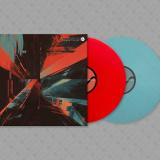
The master of ambient soundscapes, intertwining authentic old school breakbeats with his inimitable style returns with a fresh album of choice cuts for the Spatial crew. A1 - Form of Defraction Opening the LP in his gloriously unique style, Aural Imbalance sets the tone with a powerfully ambient intro of padwork and delicately filtered breaks before dense, analogue old school breakbeats roar to life sending the track skyward. The sublime 808 bassline simmers beneath an ever-evolving soundscape of twinkling melodies and strings, the very essence of serenity captured in just under 7 minutes of audio bliss. A2 - Discreet Function Enveloping the listener with a warm blanket of silky ambience, Discreet Function soon jolts to life with a crunchy breakbeat that counteracts yet compliments the pads and myriad of delicious micro melodies so well, you wonder how it’s possible to take such extremes and mix them down so expertly that our ears accept it as one. After a relatively brief breakdown the track rolls out before the breaks are snatched away at the death - capping off a quite unique composition. B1 - Softlight Light cymbals and delicate textures introduce us to Softlight, a track which sees Aural Imbalance guiding the listener through the clouds to a haven of gentle serenity where your troubles simply fade away, punctuated by a stunningly programmed and memorable Hot Pants break pattern, timid classic basslines and an overall plethora of sun-baked energy - perfect for the headphones and the record box - as always. B2 - Airwave Immensely old school vibes are immediately present in Airwave, with analogue breaks and succinct female vocal samples that mingle with echoing melodies and synthwork to create a beautifully flowing and unique slice of atmospheric gold. Additional breaks are fused into the mix as the track progresses, elevating the piece to the heights we have come to expect from Aural Imbalance, yet never cease to amaze. C1 - Speed of Light Gentle cymbals and filtered breaks open Speed of Light, before a crisp barrage of amen goodness descends and dominates proceedings - just as a good amen should! Programmed to perfection with an immensely danceable rolling pattern, the amens lead us through a sea of washing synths and delicate melodies, intertwining and frolicking in the mix, completing a charming and memorable piece. C2 - Fading Star Playful strings and a luscious 808 bassline play with sumptuous padwork in the intro to Fading Star, a track which sees Aural Imbalance capture the essence of 90’s jungle and it’s symbiotic relationship with atmospheric drum & bass perfectly. Developing throughout with an array of unassuming effects and a quietly moving vibe, Fading Star is the perfect addition to sets spanning the entire history of this music. D1 - Drifting Under Bright Skies Aural Imbalance resurrects the excellent break last featured on Spatial in his sublime track Surface Area, this time chopped and sliced to a different vibe, with kickdrums at the forefront and that fantastically crunchy snare deployed more sparingly. Shimmering padwork and light melodies dance across the mix throughout to leave us with a refreshingly unique and memorable track you won’t be able to get enough of. D2 - Violet Completing this fine LP of old school ambient breakbeat mastery, Aural Imbalance deploys Violet to see us out - a climactic-feeling romp that opens with quiet intent before launching the listener through cheery melodic tones and bustling soundscapes, sprinkled liberally with airy pads and fluttering micro melodies that zip and whoosh around thick analogue breakbeats. A fitting end to a thoroughly enjoyable album. Words by Chris Hayes (Spatial / Red Mist) credits
Bei uns am Lager und sofort versandfertig

Otto Taimela returns with his second album for London ambient free divers SWIMS, following 2024's celebrated "Inner Beauty".
"Uncommon & Fragile" departs from Otto's meadowed, ivory-centric introspections, reaching further into binaural sound design, trance pointillism, and groundswells of angular percussion. This is less a club record, more something to soothe post-rave tinnitus on the bus home.
For fans of Lorenzo Senni, Lusine ICL, Huerco S., Shinichi Atobe...
Bei uns am Lager und sofort versandfertig
At the heart of ‘Diese Fragile Praesenz’ lies a melancholic yet propulsive drone, constructed from a field recording and drenched in white noise. Around this softly glowing orb Kelovolt constructs a vast, shifting, sombre soundscape. Lush, magisterial pads, starry-eyed synth work, cold washes of tape hiss and static melt in and out of the mise-en-scène. Crumbling walls of bass and distortion collapse in slow motion even as rich, brasslike harmonies elevate the listening mind. Long keening synth notes emerge from the fog, intertwining with falling tubular figures, a journey through a wormhole of sound both monumental and fragile.
The accompanying reinterpretations approach this deeply rich source material with discerning reverence. Voltmar's version deepens the grain of the original, with sharper percussion and washes of static that blow through the mix like little gales of dust. Anthony Linell's PM and AM remixes delve into a darker emotional core, placing at the centre a low, shadowy synth pulse around which mists of tape hiss and distortion swirl. Black Merlin steers the track down the path of eerie psychedelia, echoing clicks and dubwise space around a groove often found in the deeper chasms of contemporary techno.
Elsewhere, Die Wilde Jagd stretches the original into a mesmeric landscape of drones, occasional distant percussion and heavy fog, punctuated by fleeting moments of melodic clarity and beautifully resonant bell tones. CV313's pair of reworks complete the collection by exploring two complementary dimensions of the original through his signature dub approach. The Gravitational Pull mix feels the most true to the title track, amplifying its starry-eyed, celestial qualities, with a softer, hazier version built around a deep bass groove, while the Dimensional Dub descends into vast caverns of echo, resonance and alien texture - strong dub-techno sensibilities loom large in this mix.
Endlessly contemplative, endlessly exploratory, minimood027 is a trip to its own sonic galaxy that spirals inexorably outward, carrying the mind to ever wider astral planes. But at the core is that ever-pulsing drone, the black abyss that draws consciousness powerlessly back into the great nothingness.

Arriving just over a year after their last release, Fragile World marks a striking shift in tone and energy for the band. Recorded live to tape in New Zealand by Paddy Hill, with production by Tom Healy (Tiny Ruins, The Chills, Folk Bitch Trio), Fragile World captures The Veils in an urgent and instinctive mode. The album's title is both a reflection of the present moment - a time in which many institutions appear to be crumbling before our eyes - and a metaphor for the act of creation itself. The process of making music, Andrews notes, is a delicate and fragile undertaking where thousands of small decisions gradually coalesce into a finished whole.
erscheint voraussichtlich am 19.06.2026
Long-running event series Point inaugurates its new label with the debut EP by co-owner Laimonas. These four tracks draw on the weighty lineage of EBM and electro to evoke fragile mental states and their sublimation into cathartic dancefloor experience. ‘Ček’ is a brooding, almost military opener, its implacable beat tempered by expressive synth work and a striking mid-track break. ‘Fusion Glasses’ gets funkier, with ricocheting shards of percussion and jazzy keys, while ‘Editional’ leans darker, its roiling textures punctured by cosmic fanfares. The closing title track ‘Fragile Signals’ pairs the strict march of classic EBM with wordless vocal fragments and tense harmonies. This is a highly accomplished and intensely personal debut, establishing Laimonas’s voice as a producer and Point’s position at the leading edge of contemporary club music.
Bestelle jetzt und wir bestellen den Artikel für dich beim Lieferanten.

Vita Noctis is a curious Belgian formation that, in a more experimental vein, recorded two cassette tapes featuring a dark and distorted sound blending industrial with minimal, darkwave, and synthpop. Active during the 1980s, they remained inactive for many years until Dark Entries Records revived their work in 2011, releasing recordings created between 1984 and 1986. This encouraged Kris and Martine, the current members of the band, to continue the legacy of Vita Noctis by creating new music.
This EP is a selection of tracks created by Vita Noctis from the 2000s onwards. It includes songs that have never been released before, such as “Betrail,” an extended version of the song “Engaged,” along with other tracks that will appear on vinyl for the first time, marking the first release of Casual Strippers Rubicon Records. Also the EP comes with an insert featuring an image of Vita Noctis printed on yellow paper.
Hope you enjoy!
Der Artikel ist noch nicht erschienen. Du kannst den Artikel jetzt vorbestellen, dieser ist nach Wareneingang für dich versandbereit.

erscheint voraussichtlich am 19.12.2025

erscheint voraussichtlich am 19.12.2025

erscheint voraussichtlich am 28.11.2025

A decade after its release, A Fragile Geography returns transformed. This limited edition cassette accompanies the AFG10 anniversary reissue, offering an inspired re-envisioning of Rafael Anton Irisarri’s landmark compositions. Reworks presents distinctive readings of these pieces, with each artist leaving their personal mark on the material. The titles remain unchanged, with the sole exception of “Hiatus,” reborn here as “Ausencia.” Together, these reimaginings extend the emotional cartography of the album into new terrains.
KMRU reframes “Displacement” with expansive, glimmering layers that open into meditative ambient landscapes. Nairobi born and Berlin based, he is known for morphing field recordings into vivid aural experiences, often capturing the texture of footsteps, foliage, and distant city life and weaving them into contemplative soundscapes. In this version he introduces subtle new sounds, including stringlike synths that trace and heighten the piece’s emotional arc. The result invites close listening, offering enveloping tones where the organic and the synthetic gently collide and flow.
Penelope Trappes renders “Reprisal” as a voice-led invocation of the delicate and the intimate. Her wistful vocals bloom with fragile sorrow, rising over shimmering strands of strings to create a sound world at once sacred and shadowed. She is adept at channeling inherited grief into music that is transcendent and otherworldly. The interplay of her voice, the strings, and her use of space and depth draws those qualities into Irisarri’s orbit, imbuing “Reprisal” with the same spiritual weight and clarity that define her most powerful work.
Kevin Richard Martin (a.k.a. The Bug) transforms “Empire Systems” into a cavernous “Iced Mix,” driven by polyrhythmic double bass motifs and sculpted from subterranean pressure and negative space. Known for pushing sound to its physical limits, Martin brings the stark intensity of his dub and noise infused practice into Irisarri’s architecture. The track seethes with harmonic distortion and erupts in white noise rhythms, its brooding low end depth and icy reverberant textures amplifying the tension. Vulnerability and force are set in stark relief, as silences feel as heavy as the bursts of sound themselves. The result is a stark study in atmosphere, restraint and impact, reframed through Martin’s singular lens of sonic mass and low end intensity.
On Side B, Mabe Fratti opens with a cinematic, dreamlike, Lynchian reimagining of “Hiatus” in her native Spanish (“Ausencia”). She threads cello and voice so wondrously that her rendering feels at once hauntingly beautiful and disquieting. Emotionally charged melodies shift in unexpected directions, while her soft, intimate vocals hover above Irisarri’s brooding synth textures. Fratti’s gift for blending experimental and avant pop sensibilities with visceral, emotionally powerful expression shines resplendently here. She gives voice to Irisarri’s reflections on the passage of time and his growing desire to reconnect with his familial roots.
Abul Mogard stretches “Persistence” into a vast drone elegy. A master of patient sound sculpting, Mogard layers evolving waves of analog synths into a dense shroud that radiates its own internal light. Gradual surges of tone and subtle harmonic shifts emphasize the piece’s endurance and inevitability. Irisarri’s original composition, in Mogard's hands, becomes a rumination on time’s unrelenting flow. Melancholy and transcendence coexist in equal measure in this engulfing, cathartic rework.
William Basinski and Gary Thomas Wright close the cycle with a spectral version of “Secretly Wishing for Rain.” Basinski’s field recordings of Reseda rainfall and birdsong, which open and close the rework, add a personal touch and evoke the imagined sound of a grainy film reel flickering to life. The piece suspends Irisarri’s yearning for the Pacific Northwest, lodging it hazily between memory, place and an unreachable dream. It feels like a fading recollection, half forgotten and half felt. A final gesture that dissolves the album into vapor, leaving the listener adrift in its lingering afterglow.
Mastered with great care by Stephan Mathieu and featuring a remixed version of the original artwork by Daniel Castrejón, this edition refracts the language of the original through new prisms. Less a return than a passage, across time, across interpretation, into uncharted emotional realms.
Bestelle jetzt und wir bestellen den Artikel für dich beim Lieferanten.

Ostinato as resistance: Rafael Anton Irisarri’s landmark work reimagined. Marking the tenth anniversary of the American composer’s critically acclaimed album 'A Fragile Geography', this new edition arrives renewed, both sonically and visually.
First released in 2015 (Room40) during a period of personal upheaval and creative reinvention, it endures as a testament to resilience, transformation, and the connection we hold with the places that shape us.
Written in the aftermath of a devastating theft, A Fragile Geography was born out of loss. Just days before a cross-country move to New York, Irisarri’s entire Seattle-based studio was wiped out. Instruments. Recordings. Archives. Gone without a trace. He arrived on the East Coast to an empty room and the daunting task of starting over.
“This album wasn’t just a record; it was a lifeline,” Irisarri reflects. “It became a way to process the emotional chaos that followed: uprooting, instability, and ultimately, the slow, intuitive rebuilding of a life.”
Composed and recorded in the rural woods of the Hudson Valley, the album took shape in seclusion, surrounded by nature, and through a process guided by improvisation. Embracing limitations, Irisarri wove textural layers of field recordings with half-remembered melodies from his Seattle years, piecing them together like fragments of memory. Tracks like “Displacement,” “Hiatus,” and “Persistence” juxtaposed haunting stillness with restless momentum, mapping an inner terrain of grief, catharsis, and rebirth.
Among its defining sounds is “Empire Systems,” a monumental centerpiece built around a simple four-chord progression, organ textures, and guitar drones. Gradually, the track expands into layers of immersive loops and thick, enveloping distortion that wash over the listener like a rolling wave. Often cited as the album’s most majestic passage, it captures Irisarri at his most sonically ambitious. With a harmonically saturated structure crafted from restraint and repetition, it remains one of his most recognizable compositions: an exercise in the art of maximal minimalism.
From the outset, “Reprisal” received praise from BBC’s Mary Anne Hobbs, who championed the track on her radio show. Her support played a key role in introducing Irisarri’s work to wider audiences and solidifying his place within the lineage of electronic, drone, and experimental sound artists. A slow-burning elegy, the piece emerges from a haze of distortion and sub-bass, with dense, unrelenting drones carrying a sense of mounting tension. Just as it seems to collapse under its own weight, flickers of guitar emerge like distant light through fog. It’s a meditation on dissonance, resolve, and the elusive possibility of release.
The closing track, “Secretly Wishing for Rain,” is steeped in saudade: a longing for Seattle’s dour grey skies, lush green landscapes, and desaturated sunsets. Through it, Irisarri mourns a vanished chapter of life bound to the city, a time documented in scattered mementos and cherished collections, now permanently gone. A reflection on what could never be recovered: an era lost to time. Julia Kent’s looped cello motifs added a melancholic warmth to the track, marking the first collaboration between the two artists and sparking a musical dialogue that would keep growing in the years that followed.
More than a career highlight, A Fragile Geography has laid the foundation for Black Knoll studio, which Irisarri rebuilt from the ground up. The studio has since grown into a creative hub for countless projects, with Irisarri engineering records for iconic music figures like Terry Riley, Ryuichi Sakamoto, William Basinski, MONO, Devendra Banhart, Grouper, Emeralds, Steve Hauschildt, Julianna Barwick, and many others. Carried by its lasting influence, the album has quietly captured the ear of a younger generation, its sound and emotional arc finding new listeners in unexpected corners.
The album’s new visual language was reimagined in collaboration with Mexico City–based designer Daniel Castrejón. Irisarri captured ghostly images at Gaztelugatxeko Doniene, a historic coastal site in Bermeo, Euskal Herria. Castrejón then treated the photographs with distressed textures and spectral overlays. The final artwork channels the rugged, elemental forces that shaped both the music and Irisarri’s aesthetic, renewing his ties to ancestral ground inspired by the Basque homeland of his bloodline.
Mastered by Stephan Mathieu with exceptional attention to detail, this anniversary edition uncovers every nuance in the sound design, enhancing clarity and presence. With each listen, new elements emerge, inviting discovery and reconnection.
“I don’t experience this album as a document of grief anymore,” says Irisarri. “I hear adaptation and I'm reminded that when everything falls apart, something meaningful, maybe even beautiful, can emerge.”
Bestelle jetzt und wir bestellen den Artikel für dich beim Lieferanten.

Ostinato as resistance: Rafael Anton Irisarri’s landmark work reimagined. Marking the tenth anniversary of the American composer’s critically acclaimed album 'A Fragile Geography', this new edition arrives renewed, both sonically and visually.
First released in 2015 (Room40) during a period of personal upheaval and creative reinvention, it endures as a testament to resilience, transformation, and the connection we hold with the places that shape us.
Written in the aftermath of a devastating theft, A Fragile Geography was born out of loss. Just days before a cross-country move to New York, Irisarri’s entire Seattle-based studio was wiped out. Instruments. Recordings. Archives. Gone without a trace. He arrived on the East Coast to an empty room and the daunting task of starting over.
“This album wasn’t just a record; it was a lifeline,” Irisarri reflects. “It became a way to process the emotional chaos that followed: uprooting, instability, and ultimately, the slow, intuitive rebuilding of a life.”
Composed and recorded in the rural woods of the Hudson Valley, the album took shape in seclusion, surrounded by nature, and through a process guided by improvisation. Embracing limitations, Irisarri wove textural layers of field recordings with half-remembered melodies from his Seattle years, piecing them together like fragments of memory. Tracks like “Displacement,” “Hiatus,” and “Persistence” juxtaposed haunting stillness with restless momentum, mapping an inner terrain of grief, catharsis, and rebirth.
Among its defining sounds is “Empire Systems,” a monumental centerpiece built around a simple four-chord progression, organ textures, and guitar drones. Gradually, the track expands into layers of immersive loops and thick, enveloping distortion that wash over the listener like a rolling wave. Often cited as the album’s most majestic passage, it captures Irisarri at his most sonically ambitious. With a harmonically saturated structure crafted from restraint and repetition, it remains one of his most recognizable compositions: an exercise in the art of maximal minimalism.
From the outset, “Reprisal” received praise from BBC’s Mary Anne Hobbs, who championed the track on her radio show. Her support played a key role in introducing Irisarri’s work to wider audiences and solidifying his place within the lineage of electronic, drone, and experimental sound artists. A slow-burning elegy, the piece emerges from a haze of distortion and sub-bass, with dense, unrelenting drones carrying a sense of mounting tension. Just as it seems to collapse under its own weight, flickers of guitar emerge like distant light through fog. It’s a meditation on dissonance, resolve, and the elusive possibility of release.
The closing track, “Secretly Wishing for Rain,” is steeped in saudade: a longing for Seattle’s dour grey skies, lush green landscapes, and desaturated sunsets. Through it, Irisarri mourns a vanished chapter of life bound to the city, a time documented in scattered mementos and cherished collections, now permanently gone. A reflection on what could never be recovered: an era lost to time. Julia Kent’s looped cello motifs added a melancholic warmth to the track, marking the first collaboration between the two artists and sparking a musical dialogue that would keep growing in the years that followed.
More than a career highlight, A Fragile Geography has laid the foundation for Black Knoll studio, which Irisarri rebuilt from the ground up. The studio has since grown into a creative hub for countless projects, with Irisarri engineering records for iconic music figures like Terry Riley, Ryuichi Sakamoto, William Basinski, MONO, Devendra Banhart, Grouper, Emeralds, Steve Hauschildt, Julianna Barwick, and many others. Carried by its lasting influence, the album has quietly captured the ear of a younger generation, its sound and emotional arc finding new listeners in unexpected corners.
The album’s new visual language was reimagined in collaboration with Mexico City–based designer Daniel Castrejón. Irisarri captured ghostly images at Gaztelugatxeko Doniene, a historic coastal site in Bermeo, Euskal Herria. Castrejón then treated the photographs with distressed textures and spectral overlays. The final artwork channels the rugged, elemental forces that shaped both the music and Irisarri’s aesthetic, renewing his ties to ancestral ground inspired by the Basque homeland of his bloodline.
Mastered by Stephan Mathieu with exceptional attention to detail, this anniversary edition uncovers every nuance in the sound design, enhancing clarity and presence. With each listen, new elements emerge, inviting discovery and reconnection.
“I don’t experience this album as a document of grief anymore,” says Irisarri. “I hear adaptation and I'm reminded that when everything falls apart, something meaningful, maybe even beautiful, can emerge.”
Bestelle jetzt und wir bestellen den Artikel für dich beim Lieferanten.

WHAT I SEE IS BEAUTIFUL, BUT I DON'T THINK IT'S ENOUGH. "I’m beyond thrilled to announce that my brand new novel, WE’LL NEVER BE FRAGILE AGAIN, is ready and waiting to enter the world. It’s my sixth novel, and a book that I’m really proud of. I feel it’s the best writing I’ve done so far and I’m excited to share it with you very soon. "And again, I’m honoured that the incredible Michael Salerno has given me his miraculous skills and created such gorgeous, beautiful artwork for the book. "It’s a strange, painful book about memory, regrets, art, friendship, desire and death." -- Thomas Moore 100 pp Original cover photography and design throughout by Michael Salerno. The dream team is back!
erscheint voraussichtlich am 20.06.2025

erscheint voraussichtlich am 25.04.2025

erscheint voraussichtlich am 28.03.2025

Pressed at Quality Record Pressings. Tip-on old style gatefold double pocket jacket by Stoughton Printing
Fragile was Yes' breakthrough album, propelling them in a matter of weeks from a cult act to an international phenomenon. Not coincidentally, it also marked the point where all of the elements of the music (and more) that would define the group's success for more than a decade fell into place fully formed, writes AllMusic, giving Fragile a 5-Star rating.
Propelled by the timeless hit "Roundabout," Yes' fourth album, Fragile, became an instant classic and is undoubtedly one of prog-rock's finest moments. It was the first Yes record to feature Rick Wakeman on keyboards and the first to display the inimitable artwork of Roger Dean. Here's the ultimate way to enjoy one of Yes's most popular and enjoyable albums.
This Analogue Productions (Atlantic Series) reissue of Fragile is a standout for your collection. First, we turned to Chris Bellman at Bernie Grundman Mastering to cut lacquers from the original master tape. Pressing on 180-gram vinyl is by Quality Record Pressings, and the album is housed in a tip-on old style gatefold double pocket jacket by Stoughton Printing.
Dream on, on to the Heart of the Sunrise!
erscheint voraussichtlich am 31.01.2025

Nine Inch Nails' The Fragile is an intense and haunting masterpiece that pushes the boundaries of industrial rock. The album, released in 1999, showcases Trent Reznor's raw and emotional songwriting, exploring themes of isolation, anxiety, and self-destruction. The tracks range from aggressive and chaotic to delicate and introspective, creating a dynamic and immersive listening experience. With its intricate layers of electronic beats, distorted guitar riffs, and haunting vocals, The Fragile is a powerful and thought-provoking album that solidified Nine Inch Nails' status as one of the most influential and innovative bands in the industrial rock genre.
Bestelle jetzt und wir bestellen den Artikel für dich beim Lieferanten.

Analog cut from "Lovers Covers J-Pop 2", a reggae cover compilation of J-Pop hits.
Side A is a reggae cover of Judy and Mary's "Sobakasu,"(1996) which was used as the first opening theme for the anime Rurouni Kenshin and reached number one on the Oricon Singles Chart, sung with an ennui voice. Side B features R-Crown's smooth and touching R&B rendition of Every Little Thing's classic song "fragile" (2001), which was the theme song for the romantic variety TV show Ainori.
erscheint voraussichtlich am 27.12.2024

erscheint voraussichtlich am 30.10.2024

Die Komfortzone seiner eigenen Band zu verlassen, um sich auf neue musikalische Pfade zu begeben, erfordert Mut. Daran sollte es MARCO GLÜHMANN als Sänger einer der erfolgreichsten deutschen Artrock-Bands SYLVAN nicht mangeln, da er es ja gewohnt ist, ganz vorne im Rampenlicht zu stehen. Es spricht für seine enorme Kreativität, eine längere Schaffenspause seiner Haupt-Band zu nutzen, um sich ohne die notwendigen Kompromisse, Vorgaben und Beschränkungen seiner Mitstreiter neu auszuprobieren. Herausgekommen ist ein fantastisches Album, das voller Energie und Esprit steckt und irgendwo zwischen Rock, Artrock und anspruchsvoller Popmusik wandelt. Nachdem seine SYLVAN-Bandkollegen Volker Söhl und Johnny Beck letztes Jahr das Projekt VIOLENT JASPER vorstellten, darf man nun auf das Werk "A Fragile Present" ihres Frontmanns gespannt sein!
Speziell die erste Single "My eyes are wide open" hat Marco nicht nur in kürzester Zeit geschrieben, sondern auch die Lyrics sind geblieben. "Die Textstelle 'Lay your head on me, oh my little boy' bereitet mir immer noch Gänsehaut, da ich mir hier mich und meinen Sohn vorstelle und die Liebe, die Kurzweiligkeit des Moments, aber auch Verantwortung spüre, ihn in diese Welt zu ‚schicken'." so der Künstler weiter. Dass gerade dieser Song von keinem geringeren als MARILLION-Gitarrist STEVE ROTHEREY veredelt wurde, einem von Marcos musikalischen Helden, setzt ein ganz besonderes Ausrufezeichen.
Apropos Musiker, das Line-up liest sich wie ein "Who is who" der Artrock-/Progressive-Rock-Szene: neben dem bereits erwähnten STEVE ROTHERY gibt auch BILLY SHEERWOOD von YES ein Gastspiel: er steuerte die Chöre bei "Hear Our Voice" in allerbester YES-Manier bei. RPWL-Gitarrist KALLE WALLNER spielt die meisten Gitarren auf dem Album und war nicht nur als Co-Produzent, sondern auch als Arrangeur maßgeblich beteiligt. Natürlich gibt sich SYLVAN-Gitarrist JOHNNY BECK die Ehre und die Rhythmusgruppe besteht aus Drummer TOMMY EBERHARDT und dem Bassisten MARKUS GRÜTZNER (RPWL). All das wurde aufgenommen, gemischt und produziert von RPWL-Mastermind YOGI LANG in den Farm-Studios, der zudem noch einige Keyboards beigesteuert hat.
"A Fragile Present" ist ein wahres "Bilderbuch"-Album, das man sich schöner nicht wünschen könnte. Tolle und einprägsame Melodien, die einen nicht mehr loslassen, hochemotionale Musik und grandiose Musiker. All das will einen das Album wieder und wieder genießen lassen.
Line-Up:
Marco Glühmann - vocals, keyboards, guitars
Steve Rothery (Marillion) - guitar on "My eyes are wide open"
Billy Sheerwood (YES) - choir on "Hear our voice"
Kalle Wallner (RPWL) - guitars
Johnny Beck (Sylvan) - guitars
Yogi Lang (RPWL) - keyboards
Markus Grützner (RPWL) - bass
Tommy Eberhardt - drums
Die Presse meint:
eclipsed 8.5/10 - ALBUM DES MONATS: "Insgesamt ein wunderbares Album und Beispiel für gelungene Kooperation."
Piranha/Start: "Von dieser Progrock-Basis aus wagt Glühmann den Schritt in Richtung intelligenten Mainstream-rocks: Songs wie "For A While" oder "Reach Out" würden ins Programm der Rockpop-Sender passen, die noch 80s-Rock wie "Boys Of Sum-mer" oder "Kayleigh" in ihrer Playlist haben."
Rock Hard 7.5/10: "…eine ohrenfreundliche Progrock-Scheibe… die etwas straighter und rockiger daherkommt als die Sylvan-Platten. Die stilistische Ausrichtung kann überzeugen, und kompositorisch ist auch alles im deutlich grünen Bereich."
Good Times: "Bei solchen Cracks versteht es sich von selbst, dass mit A FRAGILE PRESENT ein lupenreines - äußerst lyrisches - Prog-Rock-Werk entstanden ist."
erscheint voraussichtlich am 14.06.2024
The opening line of Emily Dickinson’s short poem ‘‘Hope’ is the thing with feathers’ inspired the central image of Emily Barker’s new single ‘Feathered Thing’, written while she navigated cumulative grief.
When Barker was first introduced to producer Luke Potashnick (Gabrielle Aplin, Jack Savoretti, Katie Melua) in May 2022, she brought with her a full album’s worth of songs. But after visiting Potashnick’s storied studio, The Wool Hall and hearing his ambitious production ideas, she was inspired to write one more song.
“I also needed to process some heavy news” she comments. Barker and her husband Lukas Drinkwater had been trying to start a family. Following a couple of failed IVF cycles (and other “starts that we’d lost”), they investigated adoption and had decided to relocate to Australia to be closer to Barker’s family.
“It felt like we couldn’t work out what we wanted, but we finally reached a point where we both felt at peace with not having kids,” Barker recalls. “It had been an incredibly intense time, coinciding with a house move and the pandemic.”
And then Barker found she was pregnant. “We’d done all these things to try to make it happen, and then it happened naturally (and against all biological odds). Having previously navigated losses throughout our pregnancy journey, we now had to get our heads around what having this new person in our lives might look like - emotionally and practically.”
Soon after work began on the album, Barker had a miscarriage.
“Songwriting has always been a way of processing throughout my life.” Barker reveals how the new song came quickly as she sat at her piano at home. She shared an early version with Potashnick and remembers him politely asking, “Do you mind telling me what this is about?”
“I think I’d left it too abstract, initially,” she reflects. “It was difficult to open up about the miscarriage, but Luke was very supportive and encouraged me to dig a little deeper without necessarily being specific. I revisited the lyrics, and the result is much stronger.”
“I went to the burnt-out woods/ A tourist with some damaged goods/ Remembered how the trees withstood fires before…”
“The opening line is a metaphor for knowing that I’ll get through this,” Barker clarifies. “It’s about recovery and hope, allowing yourself both the space to grieve and permission to move on”. But Barker’s optimism is never misplaced – she knows the imprint of imagined futures and lost children are carried in hearts and minds forever:
“It’s so hard to let go, wanted to know wanted to know you …”
“I think that it's important to share and normalise these stories, which are all too common, yet not openly spoken about. People hide their pain and don’t want to burden friends and family. I think behind all this anguish, there’s a deep, often untold story.”
Now that Barker is settled back in Western Australia, she’s embracing being an auntie. “I’ve got three younger siblings over here who I’m close to, and they all have kids,” she enthuses. “I look after my brother's kids, aged two and five, one morning a week.”
Recorded - along with the entirety of the new album - at The Wool Hall, ‘Feathered Thing’ begins gently, with oscillating piano and distant drums, until the arrangement gradually transforms into an instrumental dervish of vibrant strings, bass drones and cymbal crashes. Throughout, Barker’s vocals float tantalisingly like a slipstreaming feather.
Watch the video, filmed at The Wool Hall here. The Wool Hall is a studio in Beckington, Somerset, set up by Tears for Fears in the 1980s and used by artists including The Smiths, Pretenders, Joni Mitchell and many more.
Emily Barker is an award-winning singer-songwriter, best known as the writer and performer of the theme to the hugely successful BBC crime drama ‘Wallander’ starring Kenneth Branagh.
Her last album, 2020's ‘A Dark Murmuration of Words’, was produced by Greg Freeman and recorded at StudiOwz, a converted chapel in the Welsh countryside. Lyrically probing, by turns both dark and optimistic, Barker searches for meaning through the deafening clamour of fake news and algorithmically filtered conversation, delivering a timely exploration of the grand themes of our age. It garnered widespread acclaim, with Uncut calling it “…a kind of Australian equivalent of PJ Harvey’s Let England Shake”.
Barker has released music and toured as a solo artist as well as with various bands and collaborations, most notably her long association with Frank Turner, and has written for TV and film, including composing the soundtrack for Jake Gavin’s lauded debut feature ‘Hector’ starring Peter Mullan and Keith Allen.
‘Fragile as Humans’ is scheduled for release on May 3rd 2024 through Everyone Sang/Kartel Music Group. The album will also feature earlier singles: the vast, cinematic ‘Wild to be Sharing This Moment’ and the meditative, crestfallen ‘Loneliness’.
erscheint voraussichtlich am 03.05.2024

Disco Segreta breathes new life into two of the most elusive and coveted italo disco tracks of all time!
Originating from the paradisiac island of Sardinia, Italy, Susy Pintus embarked on her musical journey alongside her brother at Radio Cagliari Centrale, one of Sardinia’s very first “free radios,” which opened its doors in 1977. Her singing career took flight in 1978, and by 1979, she attained national acclaim with her single “C’Est Magnifique,” a disco reinterpretation of the renowned Cole Porter track.
However, Susy’s most sought-after single undoubtedly remains her 1986 italo-disco 45 featuring the tracks “Fragile” and “Live for Your Love”. These compositions, expertly arranged by Italian jazz piano virtuoso Danilo Rea and superstar musician Aldo Tamborrelli, weave a captivating tapestry of sound using instruments like Yamaha DX7 and CP80, Roland Juno 60 and JX 8P, as well as the omnipresent Linn 9000. The result is a distinctive blend of italo-disco, synth-pop, and a touch of the “balearic” vibe.
Originally released in a limited run of 1500 copies on a 45, these tracks have become exceedingly rare over time, finding their way into the wishlists and collections of discerning italo-disco enthusiasts.
Now, Disco Segreta proudly reissues these two exceptional italo disco gems, granting them the expanded 12” treatment they rightfully deserve.
This deluxe edition includes the original tracks, meticulously remastered to meet contemporary standards without destroying the feel of the originals, along with two remixes of “Fragile” and “Live For Your Love” by Italian wonder Cosimo Mandorino aka Cosmo Dance.
Bestelle jetzt und wir bestellen den Artikel für dich beim Lieferanten.

Wolfgang Tillmans’ latest album, Build from Here, is driven by a desire to explore and to expose. It navigates joy and heartbreak amid ruin and rebuilding, embodying hopeful defiance in uncertain futures. The songs vary in style, from propulsive and catchy to contemplative, featuring lush instrumentals transitioning into danceable beats. Tillmans’ voice, whether growling and confrontational or tender and stripped down, maintains its prominence throughout, serving as the album's core.
Bestelle jetzt und wir bestellen den Artikel für dich beim Lieferanten.

2023 Repress
Moon in Earthlight describes the phenomenon one can see in the first few days after a New Moon, when the slim crescent of the moon is completed into a full circle by a faint light that is not lit by sunlight but by the light reflected from Earth. It is also the apt title for the first album from an artist whose first love was astronomy. After 6 EPs over the course of 5 years, Wolfgang Tillmans now releases his first album, Moon in Earthlight, a singularly plural 53-minute piece comprised of 19 tracks.
Opening with more that connects us than divides us, 'Celloloop / More That Connects Us', a looped cello sets out a discursive path for a bright keyed melody to flirt with while the sounds of the organ and synthesizer build their supporting roles, all along a bouncing four-to-the-floor beat punctuated with bright electronic chimes and the rhythmic tempo of a shaker. The invitation is hard to resist as a yearning voice opens up to let us know he's left his "place in security." And, "you're shining … All the way down to this glittering place … you're shining." Where voices and laughter are then overheard in the background of another field recording sounding water dripping from a 'Rain Gutter' later caught by the soft, warm rhythmic bounce between two synth notes on 'Fourth Floor' where chime-like and percussive timbres resonate from the metal tine keys of the kalimba creating a meditative acuity, which Tillmans peppers with arpeggiated synth riffs.
A composition of multiplicities, Tillmans' album debut is a collage of sounds, field recordings, words, studio jam sessions and live recordings, voice, soundscapes, and instrumentation scored with audible space to breathe along the way. Keeping pace, the first 'Kardio Loop' is a vocal callisthenics contemplating 'the possibility of a happy life' and/or the propositional properties of its semantic constructions backed by the recording of a heartbeat from a cardiogram. This movement is gradually accompanied by a set of orchestral synth pads that build to a crescendo before the soft, twirling melody of 'Stonerella' carries us along a carousel-like melodic, pop, instrumental timed in the percussive clapping of pebbles.
Not knowing where one leaves off and the other begins is part of this album's enigma, as we move in and out of these aural spaces choreographed with the slightest, open hand, where we can float through 'Don't Kill It by Naming It' before dancing along 'Insanely Alive' all the while contemplating the inherent, fragile complexities of language and being.
This enigma also stems from the raw vulnerability of Tillmans' voice. Whether lyrically playful or introspective, it is always giving: intimately unfolding as in the surprising take on Simon & Garfunkel's 'El Condor Pasa' or shapeshifting in 'Can't Escape into Space' or fully naked as raw material expression in 'Kantine' and 'Ocean Walk'.
Whether it's Tillmans voice or voices overheard, a field recording or a pop synth melody, these sounds defy track listings, audibly held together as one of many in an aural space that becomes a reflective cycle that develops over the course of the album. The accumulative effect of which (reminiscent of the artist's installations), drives the singularity of each of the album's elements into a complete, unconsolidated whole. Like a phenomenon that marks time, Moon in Earthlight is the shadow and the reflection, fifty-three minutes in time.
Bestelle jetzt und wir bestellen den Artikel für dich beim Lieferanten.
It contains all the signatures of her best lyricism: delicate and precise phrasings, moments that flicker between beauty and banality, meaning that forms through the accretion of observations, memories, and unexpected adages. This is an album that is at once post-theistic and devoted to a relationship with the divine, each song blinking in and out of "the fragile plane," a place Krieger describes as "a middle ground in the universe," both abstract and peaceful, where time, bodies, and names don't exist.
Krieger initially collaborated with Luke Temple and Jeremy Harris to record her vocals and guitar to tape at Panoramic Studios in West Marin, CA. As the album continued to form, Krieger envisioned instruments - like the French and English horn (Nancy Ranger and Priscilla Reinhart), electric guitar (Jacob Drab), and pedal steel (Kevin Copeland) - as characters which would walk in and out of the soundscape. What emerged from conversations with composer Sammy Weissberg, are brass parts that have a dark, almost surreal logic: horns arise to emphasize a word or phrase, fall out completely, only to rush back with dissonant orchestrations that gesture simultaneously toward deterioration and generation.
While Krieger takes inspiration from Elliot Smith's honesty, Judee Sill's cosmic reaching, and Joni Mitchell's sharp noticing, the dream-like association, harmonic dissonance, and angular melodic ascensions in each song are singularly and delightfully Krieger's.
"I Keep My Feet on the Fragile Plane" is a daring collection of songs by an artist who scries with both the cold glass eye of truth and the beating heart of empathy; who portrays life in all its twisted complexities.
erscheint voraussichtlich am 08.09.2023

Structured chaos- perhaps the most fail-safe description of the ins and outs of being an artist. Between the peculiar highs and all too relatable lows, chaos follows art like houses in motion; all lofty ambitions, and fast-paced progress. For Brighton’s Porchlight, chaos, and the art of being a band, in all its complex commodities, is nothing more than mere childsplay, in the grand scheme of lawless artistry.
Loosely inspired by tales of small-town rural England- cottage villages with dark exteriors, ‘Wives Tales & Hymns of the Earth’ as a whole, is the outcome of five individual tales coming together to form a conceptually emphasised entity to end all conceptually emphasised entities. Completed by the poetic brood of ‘Blue Chalk’, the jagged anxieties of ‘Spin Doctor’ and Porchlight aficionado familiarities of opening track ‘From Monday’, in just short of twenty minutes ‘Wives Tales & Hymns of the Earth’ perfectly captures the sweeping emotions of a debut; a soul-stirring, ear-pounding documentation of a group taking their first steps into a whole new unknown of their own fine-crafted design.
erscheint voraussichtlich am 08.09.2023

Fragile is the fourth studio album by the English progressive rock band Yes, released on 12 November 1971 by Atlantic Records. It received a positive reception upon its release, and was a commercial success, reaching No. 4 on the US Billboard Top LPs chart and No. 7 on the UK Albums Chart. An edited version of "Roundabout" was released as a single in the US in January 1972, which reached No. 13. Fragile has since been certified double platinum by the Recording Industry Association of America for selling over two million copies in the US.
erscheint voraussichtlich am 27.01.2023

Bestelle jetzt und wir bestellen den Artikel für dich beim Lieferanten.

Purple Vinyl
Live jazzy house track featuring a collective from Chicago's jazz scene recorded live at the Sonotheque club in 2007. Written by RICK GHERENBECK & VICK LAVENDER, both formerly of MR ALI. Deep and jazzy for fans of RAHAAN, DJ SPINNA, and RON TRENT. Limited 1-sided heavyweight purple color vinyl.
Bestelle jetzt und wir bestellen den Artikel für dich beim Lieferanten.

Both regulars of the club, arts and queer scenes of New York, Berlin and London of the last three decades, it's surprising Wolfgang Tillmans and Honey Dijon only met five years ago. A walk between clubs in Brooklyn resulted in the two having a mutual interest to collaborate. Busy as both are, the wait was long, but well worth it. This week's release of Honey Dijon's Euphoria Mix of 'Can't Escape into Space' sets the tone for what is left of this summer: Our desire to be together, with friends and strangers, close up on dancefloors, festivals and open airs. Honey's and Wolfgang's shared unapologetic spirit comes alive as Dijon transforms Tillmans's original song into an electrifying dance floor banger. As we can already sense a reawakening of our freedom blowing in the air, even if many clubs remain closed, the two musicians' call to come together again is euphoric and inescapable.
The original version of the song was released last winter in the midst of lockdown, accompanied by a video showing an empty nightclub and its mirror balls performing for the camera, filmed in 2017 by Tillmans, in pre-pandemic Fire Island. A new video accompanies Honey Dijon's Euphoria mix with three vignettes of longing and passion.
Bestelle jetzt und wir bestellen den Artikel für dich beim Lieferanten.

Work on 'Fragile' began last August at the height of lockdown. Grill locked himself in the recording studio where he found himself experimenting with new sounds and technologies and was able to learn more about the techniques involved in mixing, production and arrangement. "The aim was to write a physical album maintaining an energy throughout and utilising sounds and structures I'm interested in. Using limitation was a big part of the process to push what I used as far as possible. Reading about Robin Guthrie's breakdown of Cocteau Twins minimal setups across different albums and how Prince distorted the Linn Drum Machine were also inspirations."
Musically, 'Fragile' is a more dance-centric record than 2020's 'Ride', with eleven blistering tracks aimed straight for the dancefloor. From the lush, pulsing synths and blistering beats of 'Another Time', to the hazy, sun-soaked 'Wildflower', Grill seeks to create dance music that is endlessly catchy and hugely uplifting. He draws heavily on a Euro-dance influence in his search for pop perfection with melody instrinsic to each track. The Italo disco sound of Giorgio Moroder is never too far away, climaxing with the pumping 'Crash' while the emotive dance of New Order is echoed in 'Wandering Sky' and 'Romance'.
From a visual perspective, 'Fragile' is inspired by gothic, renaissance art and architecture. The album artwork is a photograph Grill took on Château d'If, a fortress and former prison located on the Île d'If, the smallest island in the Frioul archipelago, a short distance from Marseille in southeastern France.
erscheint voraussichtlich am 15.10.2021

Fragile X is an exciting new collaboration between vocalist Inga Schunn and producer Dylan Chase.
The group began in 2019 when Schunn posted an iPhone voice recording on Facebook in which she sang an acapella in her native German. Her friend Chase, who was recording and releasing at that time as Caffeine Worldwide, heard the 30-second clip and immediately asked Schunn, at that time only an acquaintance, if she might like to record something. Neither of them realised at the time that the first sessions would lead to a debut 4-track EP that capably references as many styles as most full-length albums from established artists, while also setting a blueprint for a project that could go anywhere from here.
The opening track alone, 'Lifetime', opens with a woozy blend of UKG rhythms and Royksopp synths, before giving way to Schunn's sedate rendition of Daniel Johnston's 'Some Things Last A Long Time'...basically the years 1990-2002 distilled into 5 furious minutes of 5am energy.
Across the whole release, Chase's productions show the same cinematic flair that made his previous releases on French Press Lounge, Third Try and Human Concrete Block must-haves for your late-night record bag.
A2 'Prix' with the kind of R&S attitude that would make forebears like LFO or Lone proud, could be the soundtrack for an illegal outback rave or a sunset drive over a Big Sur overpass.
The album closer, 'Fragile X Theme,†sounds something like if late 90's Bjork was commissioned to soundtrack the movie Hackers with Akai samplers on loan from the Hartnoll brothers.
The whole release may be overshadowed by the B1, 'Karaoke Girl', a track Schunn and Chase wrote in Mexico City in 2019 after a rough night at a Zona Rosa karaoke bar.
Opening with dripping synths as soft and inviting as the last drink before sunrise, Schunn tells a story of a woman who overstays her invite at an intimate birthday party between friends, taking the mic from the birthday girl and singing "Seal, Rush and Kate Bush" with a "death grip on the mic."
It's a bizarre, vivid song for such new artists to have come up with, and the lyrics are underpinned by Chase's equally adventurous combination of Nordic disco elements with heavily treated bursts of Japanese koto.
The Lifetime EP's title is a reference to the laborious process that it took to make the record, with multiple recording sessions across two countries followed by endless edits and a Covid 19 related vinyl slowdown bringing its release to a crawl.
The record itself is a fast-paced, dopamine rush debut that we are proud to share with you as both the culmination of a long process, and the beginning of a strange new story.
Bestelle jetzt und wir bestellen den Artikel für dich beim Lieferanten.
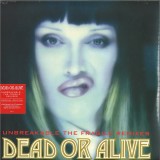
a a1. Turn Around And Count 2 Ten Y&Co."B" Mix 7.54
b a2. My Heart Goes Bang Love Machine Remix 5.05
[c] a3. Hit And Run Lover [Ventura Mix] 5.01
[d] b1. You Spin Me Round (Like A Record) [Zi Zone Mix] 4.35
[e] b2. Something In My House [Deadend Of Eurasia Mix] 5.42
[f] c1. Lover Come Back To Me [Earthquake Mix] 9.31
[g] c2. Isn't It A Pity [Bustard Remix] 5.15
[h] d1. Just What I Always Wanted [R.M. Hyper Techno Mix] 4.47
[i] d2. Blue Christmas [P.K.G. Remix] 4.32
[j] d3. I Paralyze [B4 Za Beat Remix] 6.35
Bestelle jetzt und wir bestellen den Artikel für dich beim Lieferanten.

‘Life Guarding’ offers a first glance into an upcoming album by Wolfgang Tillmans. The song finds Tillmans in open waters, lyrically exploring wor(l)ds as they appear like undertows and tie in the listeners by his candid approach to accept whatever the drift throws at him and leaving him exposed at his most vulnerable. It seems no coincidence that the video Tillmans’ shot and directed for the song finds a similar approach to ‘liquidity’ in visual language. Shifting the lens between micro and macrocosms, collages of body parts, fruit and insects, we find him equally paying attention to the waves of the Atlantic Ocean as well as to the ’same’ water in the form of drops, evaporating on a hot kitchen plate. This current shape of ‘Life Guarding’, in equal measures upbeat and melancholic, emerged in sessions with Tillmans’ long term musical collaborators Tim Knapp and Jay Pluck in early 2019 at Trixx Studios in Berlin, that were further developed and produced by Tim Knapp and Bruno Breitzke. ‘Growing’ was originally part of Wolfgang Tillmans’ sound, light and video installation ‘South Tank’ at Tate Modern in 2017. This summer finally sees the independent release of this collaboration with the L.A.-based duo Wreck and Reference. The song also features excerpts of Fred Weyrich’s lyrics for German singer Alexandra’s 1968 hit ‘Sehnsucht’ (Longing). ‘Growing’ involved the band placing samples of Tillmans’ singing and spoken word over a kick drum-driven techno track made with synthesizers, acoustic drum recordings converted to digital drums, and noisy samples of jangling keys. ‘Wreck and Reference’ are an experimental music project from California by Felix Skinner and Ignat Frege. Drawing upon the blown-out intensity of black metal and noise rock, they eschew traditional guitar-centric instrumentation to construct songs with digital samples, drums, and voice. To date, the band has released four EPs and four full-length albums, and has contributed to the producti
Bestelle jetzt und wir bestellen den Artikel für dich beim Lieferanten.
Bestelle jetzt und wir bestellen den Artikel für dich beim Lieferanten.

'Source', a new release by Wolfgang Tillmans, comes in an original version and two remixes by legendary German producer Roman Flügel.
The sixteen-minute original version is a vocal piece in which Tillmans explores his abilities to generate vocal sounds to tell a story while refraining from using actual words. Meshing six different sequences into one composition, each sequence investigates different moods and emotions meandering between the guttural, sacral, and absurd. Recorded in a studio session in 2017, the piece focuses on the immediacy of vocal improvisation as much as on its post-production and edit.
Tillmans knows that whatever is achieved through spontaneity can as easily be lost, as he recently told Emily Bicks in a feature for 'The Wire': I am, of course, always planning things ahead, and I am managing an archive of 25 years, and communicating in the now with dozens of contacts, but the fortunate thing that I feel I've retained is an ability to get in touch with this moment of being in the here and now, and seeing, or hearing, or allowing words or melodies to pop into my head in such moments.
The A-side and an additional bonus track are both remixes by German producer Roman Flügel. In a ten-minute remix, the multi-faceted producer stays true to the original's spontaneity and develops changing arrangements wherever Tillmans' vocals are creating momentum. Exploring various directions, Flügel's experience allows him to glide effortlessly through the different sequences. The bonus 909 Mix instead takes a tighter direction with claps and high-hats and builds up around Tillmans' staccato laughter before culminating in beautiful house piano chords.
The title may suggest a specific origin, a 'source' that is to be located, but in Tillmans' understanding it is a transient space abundant of undiscovered possibilities.
.
Bestelle jetzt und wir bestellen den Artikel für dich beim Lieferanten.

A year after his last 12 inch release Here We Are / That's Desire EP and few months after a CD release Hamburg Süd/Nee IYaow eow eow featuring experimental field recordings and vocal improvisations, Wolfgang Tillmans returns with a new extended play on his own label Fragile. Heute Will Ich Frei Sein sets an energetic tone for the 5 track EP that leads straight on the dancefloor, a space that Tillmans has observed and discussed from various angles throughout his artistic career. While Los Angeles based experimental noise project Wreck and Reference's beats and 808 staccato claps instantly create a hedonistic dance moment, it is Tillmans' lyrics that contrast the simplicity of this message. Tillmans knows that clubs have always been spaces mirroring constant crisis of 'western' societies towards minorities, race and gender. In the light of current political events, it is the singers' nod that informs us about the precarity and necessity of such spaces as no contradiction. Completely Changed and On My Own, Tillmans and his long-term collaborators Jay Pluck, Kyle Combs and Tim Knapp return to more song based recordings but with a stronger approach on synthesiser soundscapes. On My Own finds Tillmans again singing simple lines over a staggering pop production that can be read as a comment on nightlife as well as the artist emerging into a more mature stage in life. It is this ambiguity that marks Tillmans' writing and constant striving for variation. Almost last, the extended play features a remix of Fast Lane, originally released on 2016 / 1986 EP - tracing back to Tillmans' first musical steps with collaborator Bernd Lessmann in 1986.
Bestelle jetzt und wir bestellen den Artikel für dich beim Lieferanten.

Bestelle jetzt und wir bestellen den Artikel für dich beim Lieferanten.

Special remarks: The record sleeve and inner sleeve were designed by Wolfgang Tillmans. Videos directed by Tillmans will be released for Device Control and Make It Up As You Go Along - Salem Remix.
Bestelle jetzt und wir bestellen den Artikel für dich beim Lieferanten.
