
No en stock
Haga su pedido ahora y le encargaremos el artículo en nuestro proveedor.
10,88 €
Haga su pedido ahora y le encargaremos el artículo en nuestro proveedor.

The Untold Stories offer up their next double pack collection on their trademark transparent yellow and black vinyl. For Chapter V they welcome some new artists into the label with Jerome C, Jarz=Polors, Volta Cab, and MD Wallholz, all featuring for the first time. This combined with some superb works from Franco Cinelli and UNTLD regulars Ztrl, Ivan Lopez, Pheek, and Jonas Sella: makes for a memorable album of highly identifiable music, with varying vibes from the Street Knowledge track by Volta Cab to Ztrl's one perfect for summertime afterhours, altogether another very enjoyable collection.
Haga su pedido ahora y le encargaremos el artículo en nuestro proveedor.

Haga su pedido ahora y le encargaremos el artículo en nuestro proveedor.

Gari Romalis and Lello Di Franco - Dreamin For the uninitiated, our man Gary Romalis is the unsung master of Detroit's house and techno scene. Having DJed across the motor city's top venues for the last three decades, Gary is somewhat of a seminal figure for many of Detroit's DJs currently at the forefront. Following a slew of high quality releases on various labels over the past few years, Gary now unleashes that special flavour on us for SKYLAX 142! He is not alone though. With him, he brings all round Italian partymaker, and top selector in his own right, Lello Di Franco. Let me tell you, this duo's collaboration is something to behold. Throughout all 3 tracks on the record, Gary and Lello maintain the essence of what the Detroit underground is all about; stripped back tracks with soul that never feel like they go 'big' for the sake of it. While Dreamin (Wanda Mix) may be packing a big kick and power clap combo, it's the elegantly filtered, jazzy sample that will leave you wishing that the track lasted forever. The vibe takes a dip right into the deep in Detroit Underground (Beat Dat Mix). Spacious pad synths alongside a mesmeric vocal carry us through. Taking a step back up, Afrobeat rounds off the EP, made with a solid toolkit of afro-centric samples.
Haga su pedido ahora y le encargaremos el artículo en nuestro proveedor.

Following the soothing 'Landscapes Of The Future' compilation, featuring selected ambient works by Argentina's nest (Jonas Kopp, Gustavo Lamas, Leonel Castillo...)
GREENER RECORDS is proud to present its rst split EP, with label boss ANDRES ZACCO and brother in soul FRANCO CINELLI.
Haga su pedido ahora y le encargaremos el artículo en nuestro proveedor.

Everybody love soccer. Soccer is the world's official game. Soccer merges people and culture. So why don't we play it~ For this release our artist Franco Cazzola ( already producer for Carnival, Material, Upon you, Toys for Boys, Monique Musique ) discovered the famous theme "Stadium" wrote in 1978 by the italian Oscar Prudente.
Haga su pedido ahora y le encargaremos el artículo en nuestro proveedor.

Haga su pedido ahora y le encargaremos el artículo en nuestro proveedor.

Double Vinyl Lp 16 Tracks
The Bang Riddim, Di Land Riddim, So Deep Riddim, Modern Times Riddim, West Town Riddim...
d3 Brother Wildman - Jah Jah Warrior (Modern Times Riddim)
| d4 Alerta Kamarada - Save The Children (Bonus Track)
d3 Brother Wildman - Jah Jah Warrior (Modern Times Riddim)
| d4 Alerta Kamarada - Save The Children (Bonus Track)
d3 Brother Wildman - Jah Jah Warrior (Modern Times Riddim)
| d4 Alerta Kamarada - Save The Children (Bonus Track)
d3 Brother Wildman - Jah Jah Warrior (Modern Times Riddim)
| d4 Alerta Kamarada - Save The Children (Bonus Track)
d3 Brother Wildman - Jah Jah Warrior (Modern Times Riddim)
| d4 Alerta Kamarada - Save The Children (Bonus Track)
d3 Brother Wildman - Jah Jah Warrior (Modern Times Riddim)
[|] d4 Alerta Kamarada - Save The Children (Bonus Track)
[] d3 Brother Wildman - Jah Jah Warrior (Modern Times Riddim)
[|] d4 Alerta Kamarada - Save The Children (Bonus Track)
[] d3 Brother Wildman - Jah Jah Warrior (Modern Times Riddim)
[|] d4 Alerta Kamarada - Save The Children (Bonus Track)
[] d3 Brother Wildman - Jah Jah Warrior (Modern Times Riddim)
[|] d4 Alerta Kamarada - Save The Children (Bonus Track)
[] d3 Brother Wildman - Jah Jah Warrior (Modern Times Riddim)
[|] d4 Alerta Kamarada - Save The Children (Bonus Track)
[] d3 Brother Wildman - Jah Jah Warrior (Modern Times Riddim)
[|] d4 Alerta Kamarada - Save The Children (Bonus Track)
[{] d3 Brother Wildman - Jah Jah Warrior (Modern Times Riddim)
[|] d4 Alerta Kamarada - Save The Children (Bonus Track)
Haga su pedido ahora y le encargaremos el artículo en nuestro proveedor.

Als in den Neunzigern Punk durch Bands wie Green Day und The Offspring sein großes melodisches Revival
erlebte, bedeutete das auch den endgültigen Durchbruch für NOFX. Das kalifornische Trio hatte sich schon
1983 gegründet, schuf 1994 mit "Punk In Drublic" einen bis heute unvergesslichen Skatepunk-Klassiker und
avancierte spätestens mit seinem siebten Studioalbum, "So Long And Thanks For All The Shoes", zum
Punkrock-Schwergewicht. Im Gegensatz zu vielen anderen Formationen weigerten sich NOFX jedoch
resolut, Kapital aus dem wieder erwachten Interesse an Punk zu schlagen. Angebote von Majorlabels wurden
daher konsequent ausgeschlagen. Bis "Pump Up The Valuum" im Jahr 2000 auf den Markt kam, standen
NOFX bei Epitaph unter Vertrag, dann wechselten die Kalifornier zu Fat Wreck Chords, dem Label von
Bassist und Sänger Fat Mike. Zum Ausstand veröffentlichte Epitaph 2004 die Kompilation "The Greatest
Songs Ever Written (By Us)". Die Zusammenstellung enthielt Evergreens wie "Linoleum", "Reeko", "All Outta
Angst", "Bob", "Leave It Alone", "180 Degrees", "Kill All The White Man" oder "The Longest Line" in neu
gemasterten Fassungen. Epitaph bringt die Sammlung nun erstmals auf Vinyl heraus.
Haga su pedido ahora y le encargaremos el artículo en nuestro proveedor.

Haga su pedido ahora y le encargaremos el artículo en nuestro proveedor.

Max Loderbauer, who has so far made consistently engaging contributions to the Arjunamusic family, is back to lend his unique interpretive skills to the master recordings for the Brightbird album by João Paulo Esteves da Silva, Mário Franco and Samuel Rohrer. Loderbauer has set himself up for a chal- lenge, since the original album's completely improvised flow of small-ensemble, conversational jazz feels complete enough without outside intervention. However, Loderbauer's role as electronics operator in the similarly attuned Ambiq trio has already shown that, through his mastery of tone color, he has a talent for teasing out the additional hidden details within an apparently 'complete' sonic environment. It's a task he mana- ges to accomplish without ever overriding or contradicting the cohesive message provided by his collaborators.
Adding to the challenge here, Loderbauer chooses to re- mix using only sounds from the original recordings. By doing so, it might seem he is willfully denying himself the chance to use his own signature tools and turn Brightbird's source materi- al into stunningly new electro-acoustic hybrid blooms. Yet Loderbauer succeeds here by becoming something more like a translator than an augmenter - he finds a way to make mea- ningful syntactical changes to the trio's rich and versatile vo- cabulary, and once again unveils a verdant world of hidden details in the process.
The A-side 'Trusting Heart/Cosmos' has an anxious tone introduced by a set of Doppler-effected piano notes that seem to melt in the sun, and is soon complemented by a va- riegated, chattering rhythm line. Here Loderbauer builds up a tactile tension between rhythmic certainty and sharp-angled, de-tuned, and occasionally scrambled instrumentation, framing a disorienting (yet engaging) virtual space where ob- jects' bright hues rapidly change as they contract and expand along multiple dimensions. For the b-side 'Noontide', Lo- derbauer switches to a more focused and streamlined idiom with an uncanny ease, riding along steady waves of sequencer patterning and silvery, resonant shiverings. Reverberating, ho- lographic piano again provides the tonal center here, and the notes ring with a forward-thinking optimism not far removed from classics of the 'Krautrock' era.
Current supporters of all the artists involved will find this to be an invigorating synopsis of their work to date, while newcomers will be treated to a soundworld where skillful fu- sion (the act itself, rather than the music genre with the same name) is constantly on display.
Haga su pedido ahora y le encargaremos el artículo en nuestro proveedor.

DreamsAreNotInside next 12" comes from Italy's Alex Tea and Vivi, with monster 14 min long interpretation from Argentina's Franco Cinelli Dark dubby Techno at its finest..300 Press Vinyl Only
Haga su pedido ahora y le encargaremos el artículo en nuestro proveedor.

Haga su pedido ahora y le encargaremos el artículo en nuestro proveedor.

Repress
The second of the three vinyl EPs featuring tracks from Perc Trax's 'Slowly Exploding' compilation groups together three of the label's main artists and closes with a producer making his Perc Trax debut. The A1 slot goes to label boss Perc, whose 'Hyperlink' builds on the sound of the dancefloor tracks of his last album with a huge kick giving way to swooping 8-bit chords whilst Sawf's 'Goves', already tried and tested by Perc over the last few months is an unrelenting breakbeat monster. On the B-side Truss delivers one of the stand-out tracks of this series, with the Surgeon supported analogue juggernaut that is 'Brockweir. Closing things off is Drvg Cvltvre, who lowers the tempo but not the intensity with one of his trademark 303 workouts.
Haga su pedido ahora y le encargaremos el artículo en nuestro proveedor.

Haga su pedido ahora y le encargaremos el artículo en nuestro proveedor.

Yellow Vinyl
AirDrop Record is new record label based out of Boston ( USA ) & the lovely country of Argentina. These two places have come together to not only expose new talent but also contribute in ways many young labels do not these days, by still pressing vinyl, not feeding into trends, & publishing some proper tech ear candy.
Haga su pedido ahora y le encargaremos el artículo en nuestro proveedor.

Nacho Marco drops Colors in Dub Vol.1—deep house soaked in warm analog dub. From the hypnotic “Midnight Blue” and its Satoshi Tomiie remix to the raw pulse of “Bumblebee Yellow” and “Electric Green,” this wax rides late-night frequencies straight from Valencia to Paris.
DJ Feedbacks :
Francois Kevorkian (Wave) : Love the Satoshi mix
Eddie Fowlkes (Detroit Wax, Rekids, Classic Music Company) : thanks
Travis Kirschbaum (Warehouse Preservation Society) : Loving this. Especially Midnight Blue!
Sascha Dive : Midnight Blue for me!!
Brothers' Vibe (Luv4Wax) : Super ep, great works!!
Radio Slave (Rekids) : Another superb ep from Phonogramme and Satoshi's mix is great.
Giles Smith : "midnight blue" is nice
Alexkid (Rawax / FUSE / NG Trax) : Totally my vibe. <3
Aleqs Notal : Yes !!
Italojohnson (Italojohnson) : Track 1 for me!
Ben Sims : Now downloading... will check asap!
Okain (Talman / Infuse / Pleasure Zone) : Electric Green is dope!
Satoshi Tomiie (Abstract Architecture) : Receiving great feedback from the dance floor!
Steffi (Dolly) : lovely release!!
Laurent Garnier : Cool tracks
DJ Bone (FURTHER) : Electric Green and Satoshi Tomiie remix work for me.
Harri (Sub Club) : lovely stuff, will play and support
Rob Pearson (Evasive Records / Sine 102.6fm) : lovely - right up my street, cheers ;-)
Felix Dickinson (Futureboogie, Rush Hour, Cynic) : Solid E.P. current fave Electric Green
Jorkes (Freeride Millenium) : lovely, thanks so much. xo
Kassian (Phonica White / Heist Recordings) : wicked
Jaye Ward (Dalston Super Store / Netil Radio) : massive quality as ever!! super deep and pulsing gear, electric green is ace! thx
Tim Sweeney (Beats In Space) : Sounds great
Chloe Caillet (Smile Records) : love this!
Stevie Cox (Sub Club) : really lush, thank you !
Raresh (ar:pi:ar) : thanks
Ame (Innervisions) : thanks
Geir Aspenes (G-Ha (Sunkissed)) : Thank u
Saoirse (Body Movements) : Super nice dubby vibes
Amotik : Very nice :)
Kai Alce (Real Soon) : Satoshi remix is hot!
Domenic Cappello (Subclub) : nice dubby house
Cee ElAssaad (ENSOULED) : Just the way I like it! dubby and groovy.
Mike Shannon (Cynosure) : Excellent work here from Valencia's finest!
debe ser publicado en 30.09.2026

Red Vinyl Edition[21,43 €]
This exclusive ‘dub plate’ features 4 brand new dubs mixed live by Dennis Bovell, presented in a discomix style.
Released on the occasion of the US theatrical premiere of Dread Beat an Blood, the original documentary on LKJ by Franco Rosso, director of Babylon.
debe ser publicado en 30.09.2026

Black Vinyl[19,54 €]
This exclusive ‘dub plate’ features 4 brand new dubs mixed live by Dennis Bovell, presented in a discomix style.
Released on the occasion of the US theatrical premiere of Dread Beat an Blood, the original documentary on LKJ by Franco Rosso, director of Babylon.
debe ser publicado en 30.09.2026

DJ DIE SOON is the apocalyptic alter-ego Daisuke Imamura, whose performances of masked malice have been a fixture in the Berlin underground for the past decade. His latest record My Brothel The Wind takes inspiration from Sun Ra at his most grotesque, conjuring a distorted phantasmagoria with an eclectic crew of compatriots like Rully Shabara, Sara Persico, and longtime collaborator Kiki Hitomi. Film director Hiroo Tanaka’s visual contributions in the album art, poster, and music video complete the album’s narrative, telling a story not of villainy but of phantom caprice in a dying world.
My Brothel The Wind shows DJ DIE SOON as an alchemist of distortion, transmuting the club-forward beats of his 2020 debut Kappa Slap and the seething horrorscapes of DIEMAJIN, his 2022 collaboration with Tokyo vocalist MA. Imamura’s obsession with noise stems from his upbringing in Tokyo, where he grew up hearing the deafening roar of trains every day. “The buildings were really tall, so the sounds reflected so much and it was so loud that you couldn’t even have a conversation on the phone. Hearing this noise every minute when living in this flat, it became a normal thing,” he says. While most would content themselves with avoiding loudness, DJ DIE SOON seeks to unpack its visceral potential.
DJ DIE SOON’s subterranean productions form a monstrous gestalt with the eclectic contributions of his network of co-conspirators. “Unfinished” and “Directions” are pulsating chimeras that highlight animalistic vocalizations from Hitomi and Shabara; Italian MC Franco Franco’s verses snake underneath the noisy onslaught. The tectonic textures of “Dandelion Crackers” are courtesy of multi-instrumentalist Laure Boer’s handmade stone synth. Sara Persico’s mangled vocables hang as fleshy reminders of human fragility on “SAQ4IME”; in the Hiroo Tanaka-directed music video, the track’s sonic uncanniness is made cinematic, with an ambient dread that references Hiroshi Teshigahara’s 1964 psychological thriller Woman in the Dunes.
While Sun Ra’s intergalactic Moog reached for the stars, DJ DIE SOON plunges into the depths of hell. “Everybody, Shake Your Body, We Chill At Party” feels like the sonic equivalent of a wax museum burning to the ground, rigid smiles melting into the fire. Rather than a vision of the future, My Brothel The Wind is a laugh-cry of despair in the face of a Hadean present. DJ DIE SOON confronts the world with a new hand-made mask, reborn in the ashes.
El artículo ya está en camino a nosotros y se espera que sea enviado desde 01.10.2026.

With World Beats Vol. 3, Lello Di Franco recruits a powerhouse team of remixers known for their dancefloor instinct—featuring Gerd Janson, Johannes Albert, Ben Hixon, and Gerd. Together, they preserve the cosmopolitan, percussive pulse of the original tracks while elevating them into peak-time club anthems. This masterfully crafted remix EP breathes new life into the project through diverse yet seamlessly cohesive interpretations. A must-listen for lovers of sophisticated house, nu-disco, and forward-thinking global sounds.
debe ser publicado en 01.10.2026

Argentinian artist Juan Hansen presents his debut album 'Ultrasonido'; twelve tracks spanning indie dance, tech house, and soft melodic house, released on his own newly founded label Ultrasonido, with the second single 'Inside My Mind' coming out via belonging by Innellea.
After his breakthrough Boiler Room appearance in 2019, Juan has been on a relentless quest to push the boundaries, playing major stages around the globe, becoming one of the figureheads of the Argentinian electronic music world. As an exceptional live artist, multi-instrumentalist and vocalist, Juan brings a real sense of groove to the stage, merging two worlds effortlessly: deeply emotional songwriting and direct, dancefloor-focused club tracks. 'Ultrasonido' brings both sides together. The album is a clear evolution of Juan Hansen, presenting a wider range of his sound, which he also presents in his live performances. A journey through the musical world of Juan Hansen.
Across twelve tracks, with contributions from Clér Letiv, Santi Portillo, Franco BA, Rocio Giorgi, Miko Franconi, Brigado Crew and Marley Waters, Juan shifts between club-focused tracks and more intimate, song-driven moments, moving naturally between Spanish and English. It’s a debut album that captures both his roots and the direction he’s evolving toward.
Juan Hansen's story doesn't start on the dancefloor, it starts with acoustic instruments. He built his foundation in the indie and rock scenes of Argentina before crossing into electronic music, a journey that's still audible in every track he makes. After years of building his profile with live performances, mesmerizing audiences from Cosquín Rock and Ultra in Argentina to Watergate in Berlin, Burning Man in the Nevada desert, and Grand Factory in Beirut.
His search is real and visceral; a search for the different, mixing genres without prejudice, with a seriously playful attitude. Positioned within a new generation of artists dedicated to improvising on stage, Juan fuses electronic sounds with analog instruments and organic soundscapes. There's no genre cage. 'Ultrasonido' is his debut album and the launch of his own label, also named Ultrasonido. A long-form statement after years of singles, EPs, and shows around the globe.
debe ser publicado en 02.10.2026

Berlin-based producer and live act Volkan Akin lands on Secret Society with a brace of finely tuned minimal house sounds for the small hours. 'Famosus' is stripped back but not lacking in clout: the drums and bass are tightly coiled while the hits pop out of the mix as a soft acid line wiggles endlessly in the middle of the mix. Franco Cinelli remixes with a bolder sense of swing and trippy vocals that are like voices in your head. '2SHY4' is the other original and is dry, dusty tech house with jazzy chords softening the edges and bringing some warmth, then Thomas Melchior remixes with his masterful touch and distils everything into deft, hypnotic grooves.
debe ser publicado en 05.10.2026

Early DJ Support: Massimiliano Pagliara, Paranoid London, Logan Fisher, Terry Farley, James Holroyd, Rocky (X Press 2), Francois K, Marcel Vogel, Sean Johnston, Austin Ato, Ron Basejam, Richard Rogers, Oliver Dollar, Crazy P and many more
Creating an international name for itself over the past decade as a sample pack label, Samples From Mars made its inevitable venture into the music world originally as a home for founder Teddy Stuart’s work. Long before making samples, Stuart garnered credits working as a grammy-nominated recording engineer in the hip hop world, and DJing / producing with Justin Strauss as A/JUS/TED, for labels such as DFA, Domino Records and Southern Fried Records. Now the label is set to release a variety of genres - house, disco, techno, ambient, all with a vintage tinge and a focus on high quality, analog production.
Enter Salt Queen. Visual artist and musician Magali van Caloen together with Samples From Mars founder, Teddy Stuart. Based in New York, the duo combine hardware dance aesthetics with dry, salty takes on familiar club moments into music that sits somewhere between funny, raw and unpredictable.
Salt Queen’s debut ‘ARE U OK’ is an acid-laced, deadpan spoken word track with an opening line that snaps any room to attention. A disorienting club encounter unfolds over Italo-inflected 808s and a relentless 303 bassline. There are no chords and no melodies - just a skeletal groove and an intimate voice circling the dancefloor. Drifting between concern and provocation, the vocal runs through cliché club conversations before destabilizing completely into a siren-laden crash out. The ‘Freak Nasty Club Mix’ ditches the plot and lets the hardware breathe, with a thick SH-101 bassline anchoring the first half before a sudden switch into an unrelenting acid pattern that refuses to settle. Two versions of the same wild night out.
debe ser publicado en 09.10.2026

Produced by François Tétaz and Luke Howard and recorded primarily at Melbourne's Synth Temple, Tina Arena's Way Of The World reimagines “True Faith” (New Order), “Way of the World” (Max Q / Michael Hutchence), “Enjoy the Silence” (Depeche Mode), “Ordinary World” (Duran Duran), “Torno Bambina” (Ada Mori) and “Cayendo” (Frank Ocean) through stunning orchestral arrangements, prepared piano, analogue synthesis and electronic textures.
Rather than traditional cover versions, these are complete artistic reimaginings that reaffirm Tina Arena as one of Australia's most expressive and enduring vocalists. Of first single “True Faith”, Tina says: “Making the deliberate choice to focus on the lyric of true faith was musically revelatory for me. It presented a blank musical canvas with endless vulnerability and space for me to explore.”
François Tétaz, a Grammy and ARIA-winning producer known for his work with Gotye, Kimbra and Architecture in Helsinki, contributes synthesisers, Rhodes, prepared piano and drum machines throughout, while pianist and composer Luke Howard shapes the EP's restrained, cinematic language. The pair are joined by an ensemble including the Budapest Art Orchestra, Peter Knight, James Rushford, Mindy Meng Wang and orchestrator Felix Watson, giving the collection its rich, orchestral backbone.
The EP announcement lands amid a landmark 50-year career anniversary for Tina — one of Australia's highest-selling artists of all time, having sold more than 10 million albums worldwide.
debe ser publicado en 16.10.2026

debe ser publicado en 19.10.2026
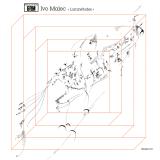
Composed over a period of twenty years, these four electroacoustic pieces by Ivo Malec reflect the richness of his sonic universe and reveal the unique power of his musical writing. His strength lies in an ability to harness emerging sounds and techniques (ranging from complex editing to early computer music and electronic synthesis) and develop them through an exploratory approach, giving rise to musical ideas of rare clarity. This sense of determination, not only in terms of the future of sounds but also of musical forms, is what makes Ivo Malec an essential composer on the contemporary music scene and a key figure in the GRM’s repertoire.
François Bonnet, Paris, 2025
debe ser publicado en 23.10.2026

Melissa Weikart and her piano have proceeded through life in step, from her early classical
training to the experimental practice that defines her work today, a blending of sounds and forms that has never been so clear—and so fully realized—as on her new album, Contact. Across twelve shifting and evocative tracks that examine the connective tissue binding us to ourselves and others, the Franco-American musician’s voice and piano navigate personal and emotional terrain with clarity and nuance, forging a rich dialogue between artist and instrument, artist and self, and artist and listener.
Winner of the 2022 Nancy Jazz Pulsations emerging artist award and the instrumentalist prize at the 2023 La Défense National Jazz Competition, Weikart has released two EPs and an album as a solo artist, and one EP and an album—Surprise and Secret—with her electronic duo Beatrice Melissa. A student of jazz and ’70s folk-pop, and a keen lover of improvisation since her time at the New England Conservatory in Boston, Weikart has always conjured the confessional candor of the singer- songwriter in her music, even as she dispenses her lyrics across rich, shifting, dreamlike tableaux.
On Contact, written and arranged entirely by Weikart (aside from “New angles”), she pushes her sound further than ever before. The album is animated by a pressing need for connection, observing what brings us together and what drives us apart, and the life-saving revelations that emerge along the way. The album’s opener, “Crash,” is a dreamy telephone-hour ode, a message in a bottle, to connections new and old. On the wistful “Mesurer le vent,” Weikart conjures Debussy or Ravel, layering contrasting sounds like an Impressionist painting. The title track begins as a showcase of Weikart’s frank lyricism, a splice-reel of missed connections and wasted time, then glides into a hazy, euphoric galaxy of pleas, circling around her thesis—“I wanted to make contact”—that ushers us into “The Intersection,” a song that recalls her the beginning of her career, when it was just Weikart and her keys. “Appétit.e” is built around a sample of her down-the-hall neighbor’s drumming—another subtle, affecting gesture toward proximity and connection—while pulsating synths reminiscent of Air lend the track an unsteady atmosphere. On the Carpenters-inspired “Expectations,” Weikart muses on the relationship patterns, universal and specific, that have always been a hallmark of her songwriting.
The psychedelic “L’amour de construit” is a slow-motion fall down the rabbit hole, as Weikart
considers the way her own emotions are captured and commodified by the confining ways we think about love. The interlude—“L’amour pt. 2”—finds her near the end of that trip, shouting into the void as a last-ditch effort to rescue herself from the fall. The drums near the end of the interlude warn us that there may be no cushion for, until she is saved, again, by the power of revelation, on the confident, resilient “Not Right”—on which a show-stopping, frenetic conversation between singer and piano is gracefully interrupted by a rush of transcendent strings, lifting her back up.
On solid ground anew, “New angles,” featuring Manu Delta, creates a percussion-less groove that relies on experimental synth sounds. The 11-o’clock stunner “Catching up”—composed in a church—meets the singer in a state of ecstatic confession, bringing her to the formative memory that propels “Bicycle,” the album’s closer. Younger, more wide-eyed, she reflects on her move from Boston to Strasbourg, those early days, when Weikart had no other companion than that loyal hunk of scrap metal that took her to the shores of her own soul. She seems to suggest, on “Bicycle,” that a backward-glance is not always troublesome, not always anxiety-producing, but can be grounding: a reminder of where we come from, so that we can keep moving forward.
debe ser publicado en 23.10.2026

DJ Support: Glenn Underground, Crazy P, Terry Farley, Aroop Roy, Chris Coco, Frank Tope, Greg Wilson, Dom Servini, Francois K, Max Essa, Oliver Dollar, Pete Herbert and many more
Danny Ward’s Balaphonic project, one of many the long-serving performer, producer, percussionist, drummer and DJ has utilised over a career spanning over three decades, has evolved considerably since his first release under the alias 11 years ago. Conceived as a platform to explore his love of Afro-Cuban and Brazilian musical culture, it gathered new impetus during lockdown and the recording of superb first album Resolution Revolutions, which fused these influences with nods to Balearica, dub, dancehall and deep house.
On the Organic Matters EP, Ward’s follow-up to that critically acclaimed set, the Balaphonic musical universe has expanded once more, with the Manchester native showcasing a wealth of eye-catching collaborations and an even more intricately layered and sonically detailed sound rich in live percussion and instrumentation. It’s an ambitious and widescreen musical vision wrapped in sun-soaked melodies, morning-fresh motifs and simmering, sunset-friendly soundscapes.
The dizzying new heights scaled by Ward on Organic Matters is evident from the opening bars of ‘Dew Drops’, a piece created in unison with internationally renowned composer and arranger Robin Dewhirst. Between them, the pair have conjured up a yearning, life-affirming samba shuffler where picturesque piano, xylophone and balafon melodies rise above Ward’s dense, layered Latin percussion and warming bass.
Next, Ward delivers a thrillingly different take on his 2005 composition ‘Switch’, featuring legendary Brazilian jazz vocalist Flora Purim and her equally talented daughter Diana Moreira Booker. Whereas that was a jazzy deep house workout, Ward’s Balaphonic re-make is a shuffling, gentle exploration in 7/4 time – a heartfelt tribute to the Brazilian records with which Purim first made her name in the 1960s and ‘70s.
‘Balaventurers’ sees Ward join forces with an old friend from the North-West scene, R.S.L founder Joe Botham AKA Baleardelica – a multi-instrumentalist and producer whose Flamenco-inspired acoustic guitar motifs provided the starting point for another vividly colourful exploration rich in layered vocalisations, twinkling keys and impeccably arranged percussion.
It’s followed by ‘Life of Strings’, a more up-tempo and dancefloor-leaning excursion written and recorded alongside Amsterdam-based violinist, and composer Katya Gabeli. While Ward’s percussion-rich groove provides propulsion and a rock-solid foundation, it’s Gabeli’s evocative string arrangement that provides the focal point and emotional resonance. It’s a genuinely brilliant collaboration.
To round off a second stunning Balaphonic release on NuNorthern Soul, Ward delivers two simmering, slow-motion delights: the Afro-Cuban rhythms, cascading melodies and melodic percussion motifs of ‘Boxfresh’, and stunning EP closer ‘Home’ – an almost overwhelmingly poignant and beautiful number that gently ebbs and flows on waves of tracked piano, dreamy chords and a comforting sense of closure. It’s a genuinely sublime conclusion to another wonderful Balaphonic release.
En el almacen y preparando para el envío

Jason Wilkins aka Cammile welcomes Lello Di Franco to his long-running Adeen imprint. As usual the Italian veteran has an eye-catching selection of collaborators in tow. Chief amongst these is Javontte, who not only guests on opener 'Do It Right' - a nostalgic chunk of classic house/boogie/jazz-funk fusion - but also flipside cut 'Elements', a hybrid deep house/Afro-house/disco house bouncer topped off with poetic spoken word vocals courtesy of Yvette Garrett. Alongside the duo's original vocal mix, we also get a jacking, stripped-back Toddsonic33 take and a propulsive, percussion-rich 'Vocal Dub'. Elesewhere, Orlando Voorn lends a hand on the appropriately titled 'The Deep', and Di Franco offers up the languid, organ-rich mid-tempo house shuffle of 'Lely The SBT'.
debe ser publicado en 30.10.2026

Mit Autobigophonie schuf Françoise Cactus, die unvergessene Sängerin von Stereo Total, einen der charmantesten Klassiker der deutsch-französischen Popliteratur. In diesem autobiografisch inspirierten Roman erzählt sie mit lakonischem Humor, Melancholie und feiner Ironie vom Aufwachsen in der französischen Provinz, von Jugend, Rebellion und dem Aufbruch ins Berlin der Hausbesetzer- und Punkära. Zwischen Schloss, Mädchenpensionat, Revolutionsgeist und Underground-Musikszene entsteht das Porträt einer jungen Frau, die sich gegen Konventionen und Erwartungen behauptet. Fast 30 Jahre nach der Erstveröffentlichung erscheint dieses literarische Juwel nun in einer überarbeiteten Neuausgabe. Ein kluger, witziger und zeitloser Roman über Selbstfindung, Popkultur und die Sehnsucht nach einem anderen Leben.
debe ser publicado en 30.10.2026

2026 Repress.
In honor of the January full moon, 2016.
Supported by Alan Backdrop, Claudio PRC, Ness, Svreca, Antonio de Angelis, Arnaud le Texier, Exium, Kwartz, Takaaki Itoh, The Noisemaker, Unam Zetineb, Vilix, Oscar Mulero, Eric Cloutier, Conrad van Orton, Acronym, Felix Lorusso, Jose Pouj, Nihad Tule, Nobody Home, Brando Lupi, Brendon Moeller (Echologist), Francois X, Gianluca Meloni, Artefakt, Iori, Rasmus Hedlund, Reggy van Oers, Retina.IT, Stefan Vincent, Antonio Ruscito, Sam Kdc and more.
En el almacen y preparando para el envío

Limen brings together two artists whose musical paths converge around a shared sensitivity to listening, resonance, and the evocative power of sound.
Recorded at Ritmo e Blu Studio during a five-day residency between spring and summer 2025, the album emerged from a series of spontaneous encounters free from predetermined structures. The pieces preserve their original form, retaining the immediacy and temporal flow of the dialogues as they first unfolded.
Subsequent interventions were conceived not as revisions, but as an exploration of the open spaces already present within the recordings—deepening what remained unspoken and extending resonances without altering the music's natural evolution.
The title, derived from the Latin word for “threshold,” reflects the nature of the project itself: a place of passage between improvisation and composition, silence and vibration, memory and imagination. Limen inhabits a suspended territory where listening becomes an experience of openness, presence, and transformation.
---
Lino Capra Vaccina
Lino Capra Vaccina is one of the most distinctive voices in Italian experimental music. A percussionist, composer, and pioneer of minimalist and meditative sound practices, he first emerged in the early 1970s as a founding member of the influential group Aktuala, whose visionary fusion of ancient traditions, improvisation, and contemporary research anticipated what would later become known as world music.
Over a career spanning more than five decades, Vaccina has cultivated a unique artistic language centred on vibration, resonance, and the transformative power of sound. His landmark 1978 album Antico Adagio remains a touchstone of European minimalism, while his collaborations have included figures such as Franco Battiato, Juri Camisasca, Markus Stockhausen, Keith Tippett, Paolo Tofani, and many others.
Whether working with percussion, piano, electronics, or voice, Vaccina's music seeks a state of suspension and contemplation. His compositions unfold as immersive sonic environments whereancient echoes and contemporary sensibilities meet, inviting listeners into an experience that is at once intimate, spiritual, and timeless.
---
Luca Formentini
Luca Formentini is an Italian composer, sound artist, and improviser whose work unfolds at the intersection of experimentation, atmosphere, and deep listening. Active since the late 1990s, he has developed a highly personal language in which guitar, voice, field recordings, and electroacoustic processes become tools for exploring memory, perception, and the expressive potential of sound itself.
His music resists easy categorization, moving freely between ambient, contemporary composition, improvisation, and sound art. Throughout his career he has released numerous solo works and collaborated with a wide range of internationally acclaimed musicians, including Holger Czukay, Robert Rich, Markus Stockhausen, Steve Jansen, Theo Travis and Steve Lawson.His recordings have appeared on labels across Europe, Asia, Australia, and the United States.
Rooted in a practice of attentive listening and sonic exploration, Formentini creates evocative musical landscapes that invite reflection rather than certainty, opening spaces where silence, texture, and resonance become as meaningful as melody itself.
debe ser publicado en 06.11.2026

Siân Pottok is a citizen of the world.
Born in West Palm Beach, Florida, to a mother of Indian and Congolese heritage and a father of Slovak and Belgian descent, Siân grew up between Belgium and New York before finally letting her travelling wings come to rest in Paris. What could have become a story of fragmentation instead became a source of creative strength. Singer, songwriter, composer and photographer, Siân has always turned borders into bridges.
She first honed her voice in the jazz clubs of Paris and New York, performing alongside renowned artists such as Richard Bona, Jon Batiste and Mike Stern. Yet her path has always extended far beyond the stage. For nearly a decade, she led cultural initiatives with women and children living through exile, violence and poverty across India and Southern Africa, weaving together music, photography and artistic transmission as tools for dialogue and empowerment.
The true turning point came when she discovered the kamele ngoni, the West African harp whose ethereal sound seemed to echo something long buried within her. The instrument became her musical alter ego—the invisible thread binding together her many inheritances. Guided by Malian master Abou Diarra, Siân embarked on an inward journey towards her African roots. Yet this return to her origins was never an act of retreat into identity. Instead, it gave rise to a body of work that remains profoundly open to the world, where Africa enters into conversation with jazz, folk, soul, alternative pop and the rhythms of Brazil.
Along the way, she has crossed paths with remarkable artists including Rogê, Chico César, Fatoumata Diawara, Lokua Kanza, Flavia Coelho, Thomas de Pourquery and Philippe Baden Powell. On stage and in the studio, Siân continues to shape a musical universe that refuses labels. Like artists such as Björk, Joni Mitchell and Laura Mvula, she moves forward as an explorer, guided not by genre but by intuition.
Today, Siân stands as one of the most distinctive voices of the new Francophone music scene an artist capable of uniting musical sophistication with emotional power, introspection with collective celebration, depth with an irresistible urge to dance.
Animal — The New Album
With Animal, produced by British musician Tom Excell (Nubiyan Twist, Africa Express...), Siân delivers her most intimate and assured work to date. Every song feels like a shedding of skin, a quiet metamorphosis, exploring self-acceptance, femininity, the freedom to be oneself, cultural heritage, and the reconciliation of one's own imperfections.
From Stereotype, a fearless manifesto against the expectations imposed on women, to the title track Animal, an anthem celebrating the beauty of imperfection ("I've turned my cracks into a crown"), the album gives a voice to everyone who refuses to fit into predefined boxes. In Terre, je danse sur toi, featuring Fatoumata Diawara, Siân pays tribute to Mother Earth and to the roots that unite us all. Oh! Congo, recorded with Lokua Kanza, reconciles her cultural heritage with an ancestral homeland that feels both distant and intimately familiar. En équilibre, with Flavia Coelho, embraces the exhilaration of risk and the courage to leap, while Put a Mask and I Could Kill confront hidden wounds and the invisible violences that quietly shape who we become.
In ADé, Siân addresses Adenomyosis as though speaking to an unwanted housemate. "My body is your battlefield," she sings, giving voice to an intimate shadow lodged deep within herself. This bittersweet lullaby transforms a pain so often left unspoken into an act of profound tenderness towards oneself.
The album also holds a rare treasure: Reste tel(le), an unpublished text by Pierre Barouh, the founder of the Saravah label. Never before set to music or performed, this elusive poem of free love finds new life through Siân's voice, becoming a dialogue across time between two artists united by the same devotion to freedom, métissage and openness to the world.
Driven by Tom Excell's vibrant Afro-pop pulse, the spiritual breath of the kamele ngoni, organic arrangements and deeply personal songwriting, Animal is an album of liberation. It invites us to lay down our masks, embrace our contradictions and reconnect with the free, instinctive and powerful animal that lies dormant within us all. More than a collection of songs, it is a radiant manifesto for the richness of identity, the passing on of memory, and reconciliation with oneself.
Animal is not simply the title of an album, it is a declaration of independence. An invitation to live fully, unapologetically, and without instructions.
A citizen of the world, travelling freely between continents, languages and memories, Siân Pottok delivers with Animal her most personal, and perhaps her most universal work to date: an album that reminds us that our fragilities, our roots and our differences are, beyond doubt, our greatest strength.
— Christophe Tison
debe ser publicado en 13.11.2026

Luca “DJ Rocca” Roccatagliati isn’t just a producer, he’s a shapeshifter of sound. Emerging from the late ’90s under the Maffia Soundsystem alias, he’s spent decades bending genres, dissolving boundaries, and reconfiguring the DNA of club music.
From cosmic disco to leftfield house, Rocca’s catalogue reads like a map of underground excellence. He’s collaborated with a roll call of innovators—Howie B, Dimitri From Paris, Daniele Baldelli, François K, Jazzanova, Zed Bias and many more. Crafting releases for some of the most respected imprints in the game: like Rekids, Toy Tonics, International Feel, Defected, Rush Hour, Hell Yeah, Rotters Golf Club among others.
His output is prolific, restless, constantly evolving.
Partnership is central to Rocca’s universe. With Dimitri From Paris, he co-created Erodiscotique, a sleek electro-disco project that fuses vintage sensuality with future-facing production. Alongside Daniele Baldelli, he’s explored deeper, more psychedelic terrain, delivering albums like Podalirius and Quagga—records that blur the line between Balearic mysticism and dancefloor propulsion.
His aliases Ajello, Supersonic Lovers, Crimea X are parallel auditory dimensions. Each one pushes a different facet of his sound, from Italo-tinged grooves to raw, analog-driven club cuts. As a remixer, Rocca has reworked everyone from Andrew Weatherall to Soul Clap, always imprinting his unmistakable signature.
To say we are excited about this new EP is kind of a massive understatement……
Having been huge fans for over two decades, when he reached out to us it was a bit of an eye rubbing and arm pinching moment.
We have been graced with a 3 track EP titled “Tonight is the Night”
A1. Sun Deck – A link-up with Athens mainstay Lex, drifting somewhere between yacht funk and late-night boogie. Sun-washed grooves, crisp synth leads, and just enough 80s energy to keep it moving without trying too hard.
B1. Italo Boogie Stomp – Does exactly what it says. Rolling Linn drums, sharp synth lines, and a nostalgic flute motif that nods to NYC’s street soul era without getting stuck in it.
B2. Ferroso – Picks up the pace slightly. Deep house drums meet a driving electro bassline, with arpeggiated synths and warm pads rounding it out—focused, functional, and built for the floor.
En el almacen y preparando para el envío

Emotional Rescue returns after a much-needed year hiatus, refreshed and ready, as it moves into its 15th year, to further explore the environs of oft-forgotten musical secrets and present them to new heads and minds.
To celebrate, the label looks back to one of its favourite collaborations, the music of French ‘Ethno-Industrialists’ Vox Populi! in presenting a truly unique EP of “In Dub”, inspired remixes by 4 fellow Paris based artists of today in Full Circle, Froid Dub, Krikor and Shelter.
“In Dub” takes a selection of songs from the series of albums reissued or compiled on Emotional Rescue and sister label, Platform 23, and gives the Master tapes to this talented ensemble to offer their own, unique dub reworks. The project explores the on-going advances in technology offered, mixed with pure talent and a respectful homage.
Formed by Axel Kyrou and including wife Mitra, as well as long-term music and art partners Pierre Jolivet aka Pacific 231 and Francis Lafont aka FR6 Man, they forged a path from obscure, drum and drum-based cassette releases on to fully realized albums and compilations on their now cult Vox Man Records.
Alexis Le Tan and Joakim’s Full Circle project starts, with their electronic dub remake of Soleyman Dub from the ‘Alternatif Réalisme’ compilation (ERC079). With releases on Good Morning Tapes, Offen and their own “Released” label, their plaudits as master diggers and producers of dubby tripped-out inspired electronics – releasing slowed Trance some 10 years before anyone else – is inspired. Tuning in and turning on the original dub into a mantra style slow-breaks (Digi)dub is the perfect experimental flavour.
Jube Man is next, a twisted, psychedelic dub out by rising stars Froid Dub. The stand-out from the ‘Magiques Creations’ release (ERC052), an album that explored Vox Populi’s furtive post-industrial period of 1984 to 1988, Jube Man was the perfect selection by the duo of François Marché and Stéphane Bodin.
Froid Dub have steadily developed their “cold” Digidub style to acclaim –
releasing a steady flow of dub inspired electronics on their own label Delodio, as well as recently appearing on sister label Emotional Response’s 10th year anniversary collection, ‘All Trades’. Their haunting, shuffling and murky acid / piano dub, with the drifting “Space Echoing” of Mitra’s vocals from the live desk mix, creates a ghostly version to effect.
Next, master mixer, producer and engineer Krikor serves a steppers remake with his “OverDub” of Zen-Dub. With a career that spans releases on Tigersushi, LIES and Soul Jazz, his sound has developed from Electro, House and Techno, to Acid, Bleep, Dancehall, Dub and touches of Gabba.
Taken from Vox Populi!’s master-opus Aither (ERC030), the first of our reissues dating back to 2016, Zen-Dub’s pacey, lo-fi dub experience is transformed and overdubbed into an incessant sound system throb, a true bass quaking “steppa”.
To close, Micro Climax is put through Shelter’s increasing avant dub exposition. Appearing on the likes of Growing Bin, Emotional Response and his own Protopost, as well for – and being in-house designer – on the much-missed Séance Centre, Alan Briand aka Shelter productions have developed from Balearic, Edits and House to explore Avant, Raga and live Dub productions.
Appearing on the recent ‘Ethniques Pyschedeliques’ compilation on Platform 23 (PLA032), in original form Micro Climax is a sprawling 10-minute ethno-dub of whispered vocals, drone and sub bass. Shelter strips it back, keeping background effects, adding live bass and percussion to create a wonky, slow, shuffling ska-lite excursion to complete a true “In Dub”.
En el almacen y preparando para el envío

Francesco Messina is perhaps best known for his split album with fellow composer Raul Lovisoni, Prati Bagnati del Monte Analogo, originally released on the seminal Italian label Cramps in 1979. Along with contemporaries Franco Battiato, Juri Camisasca and Giusto Pio, Messina helped reshape the world of modern composition with an organic rawness and haunting beauty.
In November 2023, Messina performed Prati Bagnati live for the first time in Milan, Italy – along with pianist Michele Fedrigotti, who appeared on the original LP. The concert was a tremendous success and led the composer to further reflect upon the music he made over 40 years ago. From his home piano – a hundred-year-old Schimmel with magnificent resonance – new pieces began to emerge out of these meditative sessions.
As Messina says in the liner notes, "The idea of making a new album wasn't the driving force at all; what mattered was trying to reconnect with the 'freedom' I had experienced back then while creating that music. I started over without haste or deadlines, simply trying to find a deeper, inner connection."
W.25TH / Superior Viaduct is honored to present Le api dell'invisibile. From the hazy drone of "For Florian" and the title track to the gentle swells of "Letter for an Absent Friend," the album is a lush amalgam of new age and ambient minimalism that is vividly reminiscent of Messina's earlier work.
The title draws inspiration from a famous reflection by Austrian poet Rainer Maria Rilke: "We are the bees of the invisible. We ceaselessly gather the honey of the visible, to store it in the great golden hive of the Invisible." It is a phrase that has long shaped the way Messina looks at his music – transforming lived experience into sound, making audible what normally eludes the eye.
debe ser publicado en 27.11.2026

Lello Di Franco aka L.D.F. leans fully into his curatorial instincts here, and the result is less a traditional “producer ep” and more a cohesive, late-night DJ narrative. World Beats Vol. 2 doesn’t try to grab you instantly it unfolds, patiently, like a deep set in a small, packed club where the focus is on groove rather than spectacle. The collaborations are the real backbone: Byron the Aquarius injects looseness and jazz DNA his touch is immediately recognizable in the swung rhythms and slightly off-grid keys. These moments feel alive, almost jam-session-like. Tilman brings polish and restraint. His contributions tend to be more hypnotic, smoothing transitions and keeping the flow meditative. Trinidadian Deep adds emotional weight his Afro-deep sensibility introduces warmth and a sense of space that elevates the project beyond pure club functionality. Fire Drums II close the ep, an electronic/percussive track with a tribal and hypnotic feel. It combines intense drum rhythms with dance and worldbeat sounds, creating an energetic and ritualistic atmosphere. World Beats Vol. 2 is a refined, deeply musical project aimed at listeners who value texture, groove, and atmosphere over instant hooks. It’s less about standout singles and more about immersion.
En el almacen y preparando para el envío

Mit "Adonia" erscheint ein außergewöhnliches Werk zwischen elektronischer Avantgarde, Progressive Rock und kosmischer Klangforschung. Entstanden 1978 in Paris, vereint das Projekt um Hervé Picart musikalische Vision, literarischen Anspruch und technische Innovation zu einem beeindruckenden Gesamtkonzept. Gemeinsam mit Richard Pinhas (Heldon) und Schlagzeuger François Auger entwickelt Ose einen Sound, der sich zwischen Berlin School, Kraut-Elektronik und klassischem Prog bewegt. Analoge Synthesizer wie das Moog-System treffen auf dynamische Gitarren und präzise Rhythmik. Inhaltlich verbindet das Album Mythologie und Science-Fiction: Der imaginäre Planet "Adonia" wird zur Projektionsfläche für eine Klangwelt zwischen organischer Wärme und elektronischer Weite. Erstmals 1978 veröffentlicht und bis 1979 international auf Vinyl erschienen, blieb das Album über Jahrzehnte hinweg ohne offizielle CD-Veröffentlichung zugänglich. Adonia entwickelte sich so zu einem faszinierenden Dokument einer kreativen Übergangsphase - visionär, atmosphärisch und stilistisch einzigartig.
En el almacen y preparando para el envío

Double vinyl reissue of Skullflower’s epochal “IIRD GATEKEEPER” album - the first time that this album has been available on vinyl for 30 years. In addition to the original LP this definitive and expanded edition includes extra and unreleased tracks taken from the recording sessions. For the first time all the tracks recorded by the band during this period can be heard together giving fans unprecedented access to material previously only available in the bands’ archives. Recorded in London in 1991 and released in 1992 on Justin “Godflesh” Broadrick’s HeadDirt label in 1992, IIRD GATEKEEPER established a worldwide reputation and following for Skullflower and convinced many who heard it that they had encountered nothing less than the best band on the planet. Arriving at the height of the “grunge” and the expansion of underground guitar “rock” into corporate America, IIRD GATEKEEPER had its roots deep in the UK noise and power-electronics scene. Guitarist Matthew Bower and bassist Anthony Di Franco were both graduates of the Broken Flag school of British noise making with their respective projects PURE, TOTAL and JFK. IIRD GATEKEEPER was Skullflower’s third album and was the first of the band’s albums to feature a consistent line-up throughout its production: Matthew Bower (guitar), Anthony Di Franco on (bass) and Stuart Dennison (drums). Recorded and mixed in four sessions between January and June 1991the tracks on this edition of IIRD GATEKEEPER shows the band’s new line up developing their sound, warping and evolving in real time. As such this edition of IIRD GATEKEEPER provides a unique document of the band in a state of transition, with the chemistry of the individual playing combusting in the studio to create a wave of astonishing creativity. IIRD GATEKEEPER is perhaps the definitive British underground rock album of the 1990’s – unique and never equalled. With this new edition Dirter Promotions allows Skullflower fans old and new to listen to this classic album as it was intended: spark up, crank it up and prepare to have your ears and mind blown
En el almacen y preparando para el envío
