Fresh from delivering a stellar remix on Subtle Audio, Earl Grey drops a stellar four tracker of dark and smoke-filled vibes on Rua Sound. Its a moody, doped-up trip worth taking as a scary soundtrack into the darkness with plenty of frantic, detailed precussion to lead you off the beaten track.
Поиск:frantic
Все
Cryovac is a family of artists that work as one machine. Individual style bands together and moves, as cogs, this machine forward. A.Garcia maintains and manages production on every level, even the pressing at the world famous Archer Record Press. Cryovac is a collaboration between artists and craftsmen to make a quality product. Each project Cryovac champions is meant as a gift for the true believer.
Cryovac #28 starts out with Jason Garcia's frantic head banger “Trapped in purgatory”. This classic 4/4 rocker builds intensity by layering screaming tones to crescendo in a steady drive. “Ichabod”, Garcia’s second track on the A side, is a spartan groove with a stoic delivery of minimalism; a stripped down rhythm with a serious attitude.
A.Garcia and M.Kretsch begin the B side with a reggae-punk techno experiment that delivers a rowdy funk.“Rock the dance bah” is Clash inspired minimal with a walking bassline, texas style percussion, and a guitar twack on the up beat. Garcia and Kretsch collab again on the B2 with “Stillgar”; a blend of synths working around each other as one storm guiding a rambunctious beating to a mystic reverie. These tracks illustrate the duo's production method and approach to the techno sound.
Our artwork for this release was provided by Nick Retzlaff. He is an artist and stand-up comic living with autism, and expressing his unique view of the world.
Crypt of the Wizard is proud to present Peace Vaults - I & II on vinyl and digital formats. New blood from the Viennese gutters. Amidst the vile and hostile ravines of sooted stone and waste filled waters is a glade to be found. Peace Vaults erect four pillars of crude and stoic Black Metal, guided by luring vocals and synth melodies, which shimmer like ominously kaleidoscopic light through cracks in the walls of rat filled sewers. Hissing through cracked and blackened feedback Peace Vaults produce jangly off-kilter rhythms, awash with raw metal energy and diffuse post punk lethargy. Frantically pulling chaotic drum patterns and howling guitar leads into rhythmic structure until, wild, they pull themselves apart again. This compilation of the band's two demo tapes rightly now presented on vinyl marks the beginning of an ongoing union between Peace Vaults and Crypt of the Wizard with new material due in the not so distant future
'The Space Lady's Greatest Hits' features the best of these recordings - mostly covers of 60s pop and psych alongside interstellar originals and features archival photographs and liner notes from The Space Lady herself. "Greatest Hits" contains The Space Lady's personal favourites; her haunting take on The Electric Prunes' "I Had Too Much To Dream (Last Night)," a frantic "Ballroom Blitz", and an unbelievably perfect version of "Major Tom" - amidst other reconstructed pop music.
Italian cosmic couriers San Leo return with fifth album, ’Aves Raras’: a resounding statement of intent, arguably their most accomplished and well-rounded effort so far. Clocking in at around 38 minutes, “Aves Raras” has it all: analog slag of tribal ritual music, bold guitar riffs, shimmering layers of synths. Frantic grooves, ghostly vocals, dazzling walls of noise and pastoral tonal passages – the ultimate call to enlightenment through euphoria. Over again, San Leo prove to be inclined to explore new pathways in their sonic journey, without relying on formulas of any kind. It doesn’t get any tighter, crucial, and most alive than this. Recorded by Andrea Scardovi at Duna Studio. Drums recorded by Yuri Pierini at Blue Audio Studio. Additional recording by San Leo. Mixed by Francesco Donadello at Kalimba Studio and Synecdoche Music Research, Berlin. Mastered by Giovanni Versari at La Maestà
Atomçk are back! Expanded to a quartet, here is more of their uniquely eccentric and offbeat brand of grindcore for thee end-tymes. Another head crusher of cacophonous chaos, all furiously catchy riffs and inhumanly shrill, stuck-ape vocals with pinpoint drums that border on the chaotic. "Newly expanded to a quartet, Towering Failures is undoubtedly the band’s heaviest and most sonically flattening release to date, boasting a gigantic tone that sounds downright apocalyptic on slower numbers. For the most part though, this album races past at lightspeed, but manages to convey a host of different moods and textures in amongst its frantic delivery. Atomçk have been getting better and better with each subsequent album, but this is surely their most powerful and definitive record to date, and one of the most inventive and memorable grindcore records of the year thus far." - The Quietus "Like a budgie with a whistle" – Ninehertz
"Reptile Brain Music" - Imperial State Electric's third studio album was originally released in 2013.
Clocking in at a little over 33 minutes RBM boasts a dozen tracks of their particular and peculiar rock'n'roll.
The album is bookended by two high-energy live favorites, "Emptiness into the Void" and "Down in the Bunker" in a classic Andersson style. However, the less obvious songs within also reveal some unexpected treats. The heavy Blackmoresque "Faustian Bargains" showcases some unexpected time signatures. "Dead Things" feels like Beatles meets horror movie soundtrack (Fred Estby contributes lyrics). While the frantic "Born Again" is far from pieous, delivering a blistering blow to religion.
RBM also shows the further development from solo project into a full-fledged band with multiple songwriters and different lead vocalists. Tobias Egge opens new doors with his contribution "Stay the Night" and Rudolf de Borst screams lead vocals for the wonderfully primitive title track - "Reptile Brain".
Recorded at Gutterview Recorders, mixed by Fred Estby & Nicke Andersson & produced by Nicke Andersson.
Originally released on Warner Music and promptly "Out of Print" fans have been clamoring for a reissue.
From the press release 2013 "Imperial State Electric is entering phase 3 in its ongoing battle against mediocrity.
An endless quest to make the rock roll".
"Reptile Brain Music" - Imperial State Electric's third studio album was originally released in 2013.
Clocking in at a little over 33 minutes RBM boasts a dozen tracks of their particular and peculiar rock'n'roll.
The album is bookended by two high-energy live favorites, "Emptiness into the Void" and "Down in the Bunker" in a classic Andersson style. However, the less obvious songs within also reveal some unexpected treats. The heavy Blackmoresque "Faustian Bargains" showcases some unexpected time signatures. "Dead Things" feels like Beatles meets horror movie soundtrack (Fred Estby contributes lyrics). While the frantic "Born Again" is far from pieous, delivering a blistering blow to religion.
RBM also shows the further development from solo project into a full-fledged band with multiple songwriters and different lead vocalists. Tobias Egge opens new doors with his contribution "Stay the Night" and Rudolf de Borst screams lead vocals for the wonderfully primitive title track - "Reptile Brain".
Recorded at Gutterview Recorders, mixed by Fred Estby & Nicke Andersson & produced by Nicke Andersson.
Originally released on Warner Music and promptly "Out of Print" fans have been clamoring for a reissue.
From the press release 2013 "Imperial State Electric is entering phase 3 in its ongoing battle against mediocrity.
An endless quest to make the rock roll".
These songs came to be a record accidentally and unintentionally. They were written sporadically over a tumultuous two years riddled with more valleys than mountaintops. We considered it a victory when we could actually make ourselves get together to write, even if we struggled to produce anything of any quality. Creativity was tough amidst half-hearted business relationships, being dropped from our label, inconsistent touring, and filing personal bankruptcy. It took a toll on everything: our confidence, our outlook, our health, our happiness. In late 2015, our friend Brandi Carlile invited us to Seattle to play a couple of shows in her hometown. It was there that we explained all that had transpired with our career, how we were barely staying afloat. It was also there that she told us she would be producing our next record. Once we saw that this fantasy could actually become a reality, the frantic search for enough songs to make an album began. To our surprise, we had many things to say, and though some were difficult to write and slow to reveal themselves, we pushed onward. The songs here carry a common thread of what remained when we felt like we’d lost everything. It was in the hardest times that we saw the core of where our music and our souls originate. We still had our homes, our family, our friends, and our fans. This is not a record about rising from the ashes. Rather, it is a deep look into ourselves in an attempt to put out the flames. These songs are our catharsis; an effort to forgive, an effort to heal, an effort to look back into the darkness with newfound light and undeterred fearlessness, an effort to redeem ourselves. The damage was done, but our hearts remained.
Tokyo based Yuto Takei's latest work is an assortment of numbers that represents fairly well his versatility as a music maker. His capability of painting afterglow soundscapes with a cinematic approach is counterpoised by an almost obsessive interest in percussive experiments.
The sparse presence of subtle natural field recordings together with vast open sonic spaces is recurrently sustained by repetitive semi-artificial and frantic cosmic repetitions. Comes with a riso-printed insert, handstamped innersleeve, and a label sticker.
The last twelve months have been a whirlwind for Henry Counsell and Louis Curran, the men who make up Joy (Anonymous). Having established themselves during the Covid-19 era by playing impromptu meet-ups on London’s South Bank, they have graduated to bigger venues, travelled to far-flung locales and recorded their second album, Cult Classics, while maintaining the spontaneous energy and irrepressible joy that made their name. Their music revels in the euphoria of being alive and all the feelings, good or bad, that come with it. It invites us into a community, draws us close and promises the night of our lives.
Recorded over the course of a year, the blueprint for Cult Classics was laid down over a two-week span at Imogen Heap’s Round House in east London. Joy (Anonymous) invited friends old and new to visit - they’d record live instruments in jam sessions upstairs and then retreat to a second room to flip and loop and generally mess with the sounds, moulding them into sizzling dance tracks. “Loads of people were coming up to me like ‘I thought this was going to be a dance record?’” Louis says, remembering the quietly beautiful music they’d be recording. “I’d be like, don’t worry about that, just keep playing.” He’d send it back to people later and they’d be floored - “That was my bit and you’ve made it... jungle!”
It was an organic and creatively fulfilling approach, one that didn’t allow any of the music to get stale or stagnate. As they built the tracks from the sounds they’d collected, Joy (Anonymous) would weave the new songs into their famously improvised live sets, testing them, refining them, taking note of the audiences’ reactions. In a year punctuated by a lot of travel, they’d also incorporate the voices of people they met along the way - “Beazley’s Poem”, which opens the record, features the words of a man who was working security at a Fred Again show at New York’s Terminal Five. “He was basically doing the opposite of his job and being a hype man, climbing on the fence and ramping up the crowd - we ended up hanging out with him - like, who’s this legend?” Louis explains. “He just speaks really amazingly about his life, all these amazing thoughts and opinions - he started jumping on the mic when we were playing, preaching these amazing messages to the crowd, like that we all need to be nicer to each other. The first time we played the record in its entirety, he introduced us and that’s the recording we’ve used.”
Joy (Anonymous) remain dedicated to the spirit of spontaneity. They shut a street down with a surprise waterside party in New York. On a trip to Copenhagen they played an impromptu set in a cafe, which turned into a house party and a night-long good time. In Lithuania, they ended up playing in a decommissioned prison. It’s harder, perhaps, to keep that spirit alive now that they are operating more within the confines of the music industry but they will keep lugging their kit to wherever the party calls for as long as they can. “I think if we lose that, we’ve kind of lost what makes us us,” Henry says.
Bursting with multi-genre reference points and disparate influences, Cult Classics is very much a dance album. The samples we made ourselves or we took from music that is quite different to dance music, but we definitely wanted to shout out a lot of the dance influences that we love,” Henry says. They listened to a lot of Daft Punk and Basement Jaxx as well as The Prodigy (“more rage stuff”), taking songwriting tips from their dance forebears, but also recording bits that felt more like jazz and motown (see: A Place I Belong and the lovely album closer, You’re In Or You’re Out). Emir Taha’s gentle classical guitar runs like a thread throughout Cult Classics, washing into the undertones of the record, tying it all together.
The album follows the beat of a night out, from frenetic, sweaty movement to the gentler winding down as the dawn breaks. At times it is euphoric, celebratory and pure, whirling fun, at others it seeks the joy in the darker emotions that life throws our way. 404 is designed to encapsulate everything about the Joy (Anonymous) journey so far. Skittering beats and ghostly vocals give way to vibrating house chords: sirens blare as we approach a dubstep drop. It’s dramatic and wild, ratcheting up, seeming to settle then hitting you with an intense and frantic breakdown before the ghostly vocal returns to lull us back into the world. It has the feel of a hungry cat playing with a mouse, toying with it before letting it get away.
What sounds like someone playing the spoons on playful, housey How We End Up Here is actually Louis’ restless habit of clicking his rings on everything, one of a myriad of calling cards and easter eggs that day one fans will recognise. They rework Miley Cyrus and Swae Lee’s Party Up The Street into a French-electro-inspired future classic, adding a note of melancholy to a tune that you can imagine hearing blaring from every car on a summer drive. The lyrics on Cult Classic are generally reassuring, inspirational, originally drawn from Henry in stream-of-consciousness freestyles. You’re fine the way you are, they seem to say - the repeated “No need to try” of A Place I Belong, the assurance that “It’s in me all the time” on In Me All The Time. Even the summery but regretful Did You Wrong hints at the growth that is possible from less than ideal behaviour. For Joy (Anonymous), joy isn’t about just being “happy” all the time - it’s about relishing every element of your being.
The name ‘Joy (Anonymous)’ is taken from the work Henry did with Alcoholics Anonymous groups: it is a way to build a community around sharing joy. Their impromptu live sets are known as ‘meetings’; they encourage fans to share moments of joy to their website. They care deeply about the scene they’ve come up in and are determined not to leave it behind. Every show is another chance to reach out and connect with people who love to come together and revel in music as loud as it can go.
Support slots for Fred Again and The Streets, wild B2Bs with Fred and Skrillex, and a set at Four Tet’s Finsbury Park all-dayer this summer have given the duo the opportunity to live out childhood dreams and introduced their infectious live shows to new audiences at huge venues.
With an album as assured and joyful as Cult Classics on the horizon (and a killer collab with The Blessed Madonna coming up), they’re only going to reach higher heights. But the essence of Joy (Anonymous) remains on the South Bank. Between shows at Ally Pally in September, they dragged their camping chairs and gear back down to the banks of the Thames: and it just felt right.
Polish jazz rebels sneaky jesus are back with their second studio album For Chaching Taphed.The highly imaginative quartet out of Wroclaw comprising Maciej Forreiter (Guitar), Matylda Gerber (Saxophones), Ben Łasiewick i(Bass) and Filip Baczyński (Drums) have won fans around the world for their restless, quirky brand of jazz which takes in breakbeats, twisting chord progressions and improvisation as well as a wealth of musical influences.
The band have been touring their asses off ever since they surprised the world with their debut album For Joseph Riddle in 2021. From out of nowhere their debut LP of 500 copies sold out in a month and they quickly went on to sell close to 1,000 CDs of the album. Fast-forward to 2023 and the band are sharing stages with artists such as Ill Considered and Theon Cross.
For Chaching Taphed was created in complete isolation. The group locked itself in a barn at the Museum of Agricultural Technology in Piotrowice Świdnickie. It worked on its sophomore output surrounded by machinery, trucks and carriages. These new compositions mirror the abstract conversations which the group frequently has just for fun. Contrary to For Joseph Riddle, this album is simple and does not rely on ongoing grooves. This enabled the group to be much more experimental. The band was joined by friends Flautist Mariya Mavko on Piękno Niemożliwe (Impossible Beauty) and her playing is sampled in Hipotetyczny Taras (Hypothetical Terrace). Pięciu Pszczelarzy (Five Beekeepers) closes the album featuring EABS' Jakub Kurek on trumpet. His fiery solo is one of the most intense moments of the album.
Spacer Po Nadodrzu (A walk around Nadodrze) opens the album and is inspired by one of the districts of Wrocław. It is a sonic story depicting a walk through Nadodrze late at night. A steady bass rhythm imitates a careful pace and the responding sax line is a spooky theme that might pop to oneʼs head in a moment of uncertainty.
The album's first single Krztusiec (Whooping Cough) finds the group diving head first into their most recent influences. The trackstarts with drum improvisation, rolling into a solid hip-hop backbeat provided by Ben Łasiewicki on Bass and Drummer Filip Baczyński. Sax and Guitar weave steady but dissonant lines, written by Maciej Forreiter after many hours spent listening to the Ethiopian jazz greats. The track takes off right after that. Matylda Gerber delivers a fiery Sax solo, while the group picks up the tempo and quickens the groove. The essence is the middle section, a dubby collective improvisation. Forreiter, Gerber and Baczyński take turns playing both classic dub phrases and fierce avant grade lines. Łasiewicki keeps everybody in check with a steady bassline. The energy slows down until Baczyński's drum solo, which explores phrasing detached from the rest of the tune.
Second single Chiński Sprzedawca Smażonych Kasztanów (Chinese roasted chestnut seller) is a fusion of breakbeats, energized songo rhythms and motifs inspired by South African melodies. Presenting the group with spacious and rhythmic horn lines, guitarist Maciej Forreiter wrote a chord progression while Beniamin Łasiewicki and Filip Baczyński took care of the rhythm section. This first part of the track suddenly drops out and explodes into the dramatic main motif which includes double sax and fierce guitar playing in harmony, plus the rhythm section playing more and more jungle-esque. Powerful guitar and sax solos feature before we return to the main theme with a completely different rhythmic backdrop.
W Klatce z Bykiem (In a cage with a Bull), starts like a race. The music plays with an incredible nerve and when the theme is right on edge it suddenly stops. It is followed by an animalistic growl on the saxophone and a doom metal-esque bash of downtuned, distorted guitars and heavy drums. In this heavy fashion it slowly approaches the finishing line hitting one final metallic clang.
Piękno Niemożliwe (Impossible Beauty) features wonderful flute playing of Mariya Mavko (Kadabra Dyskety Kusaje). Her work in the opening motif evokes sounds of Polish and Ukrainian folklore. This brief mellow moment serves as a contrast to the usual frantic sounds of sneaky jesus. It is an appreciation of thepolish jazz music of the past, intrinsically-linked to folklore. The band took this idea and reworked it into their own unique style.
Hipotetyczny Taras (Hypothetical Terrace) is built on top of a lengthy vamp in an unusual 7/8 time-signature. The bass anchors the quartet in a simple line, while the rest of the quartet share an emotional conversation. This track is the most open of the whole project and it ends accordingly. The final burst is a call back to the basics ofspiritual jazzand the whole band shows every emotion simultaneously and gracefully fades out.
Pięciu Pszczelarzy (Five Beekeepers) is For Chaching Taphed's conclusion and is a non stop assault of heavy horn lines, punk rhythms and noise. The band is joined by the extraordinary trumpeter Jakub Kurek from EABS, who blends in perfectly with sax and guitar. His exchange of solos with Maciej Forreiter is a combination of classic jazz phrasing and discordant clatter. In the same fierce manner the whole group works within the motif, switching up accents and breaks.
In the short space of two years, sneaky jesus has gone from ambitious upstart looking to break out from its home city playing spit and sawdust venues, to touring Europe as well as prestigious Jazz clubs such as Jassmine in Warsaw. In the process, it has delivered two full-length albums that don't stay in lane or pander to established jazz sub-genres as so many groups do. Some artists make the same record twice or even more than that, but not sneaky jesus. For Chaching Taphed shows the band as restless, experimental, fun, irreverent but purposeful as never before.
“A lot of over-hyped improv / jazz projects out there at the moment and Sneaky Jesus are genuinely excellent and out on their own. Drawing on the expansive atmospherics of a barn as the recording's setting, the album immediately pulls you in with the unsettling 'Spacer Po Nadodrzu' and lifts off on 'Krztusiec', effortlessly moving from angular, abrasive jazz to trippy dub and cinematic intrigue. Tempos shift and intensities shift naturally. The whole set warrants a deep listen from start to finish and watch out for two great guest features from flautist Mariya Mavko and Jakub Kurek bringing some mad fuzz licks to the boisterous closer. Brilliant album.”
Quinton Scott — Strut Records
- 1: Kaleidoscope World
- 1: 2 Satin Doll
- 1: 3 Frantic Drift
- 1: 4 Rolling Moon
- 1: 5 Bite
- 1: 6 Flame Thrower
- 1: 7 Pink Frost
- 1: 8 Purple Girl
- 1: 9 This Is The Way
- 1: 0 Never Never Go
- 1: Don't Even Know Her Name
- 1: 2 Bee Bah Bee Bah Bee Boe
- 2: 1 Whole Weird World
- 2: Dream By Dream
- 2: 3 Doledrums
- 2: 4 Hidden Bay
- 2: 5 I Love My Leather Jacket
- 2: 6 The Great Escape
- 2: 7 Oncoming Day (Early Version)
- 2: 8 Dan Destiny And The Silver Dawn (Unplugged)
- 2: 9 Martyn's Doctor Told Me
- 2: 10 I'll Only See You Alone Again
- 2: 11 Green-Eyed Owl (Live)
- 2: 1 Smile From A Dead Dead Face (Live)
The Chills reissue their celebrated early singles compilation, this 24-track expanded version of Kaleidoscope World gathers together tracks from the ‘Dunedin Double’ compilation, live recordings, Doledrums’ single and the band’s seminal ‘Pink Frost’. The collection also contains ‘The Lost EP’, with early takes on their groundbreaking ‘Submarine Bells’ album, alongside the aching ‘I Love My Leather Jacket’, perfectly illustrating the rollercoaster ride of Martin Phillipps and The Chills as portrayed in the award film The Triumph And The Tragedy Of Martin Phillipps. “Singer/guitarist Martin Phillipps’ group was at the forefront of the extraordinary little guitar-pop scene in New Zealand in the early ’80s.. Kaleidoscope World is the major document of their early era.” Pitchfork. Part of the 80’s extraordinarily vibrant and innovative independent music scene in New Zealand, The Chills became flag bearers, taking the Dunedin sound, as championed by the Flying Nun label, to the world. Long recognised as one of New Zealand's most influential bands, Kaleidoscope World is a definitive artifact from Martin Phillipps’ groundbreaking project.
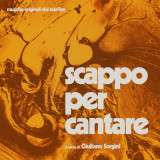
Another dream coming true! One of Giuliano Sorgini's finest and most sought-after titles is finally available as an official LP reissue – the first ever – remastered from the original tapes.
Originally released in 1971on the small library music imprint FAMA, which operated as a sub-label of RCA Italy, the record contains the original music written for Scappo per cantare, a small, pseudo-psychedelic 'musicarello' (musical comedy film) broadcast on RAI television and starring, among others, Italian singers Gianni Morandi and Mauro Lusini.
The only credited album artist is Sorgini, but it's impossible not to perceive, in this record, the hand of his close friend and colleague Alessandro Alessandroni.
This should not come as a surprise. In the early 70s, the two composers and multi-instrumentalists had a fruitful collaboration that saw them, under the monikers Braen (Alessandroni) and Raskovich (Sorgini), produce an abundance of works together, most of which have now gained the recognition they deserve. These include, among others, two 7" singles from their band The Pawnshop, three records in the series Alle sorgenti delle civiltà (Folkmusic), the crime/noir library albums Quarta pagina (Usignolo) and Inchiesta giudiziaria (Octopus Records), as well as the LP Tempo Libero (Panda Records), which was released shortly after the record presented here and in some ways drew rhythmic inspiration from it.
While their collaboration remained unacknowledged on the original release of Scappo per cantare (this was not uncommon at the time, especially in the field of library music), the record sounds perfectly in line with other works composed by Alessandroni in the early 70s, such as Complesso Gisteri's Mostra Collettiva (co-written with Oronzo De Filippi), or even a landmark album like Spontaneous, where Sorgini contributed to a handful of tracks.
So, yes, the sheer beauty of Scappo per cantare is the result of an incredible synergy between two heavyweights of Italian library music! Airy and sweeping melodies à la Zoo Folle, psychedelia à la Under Pompelmo, and various percussion instruments played by Sorgini seamlessly blend and fuse with elements and touches provided by Alessandroni.
More specifically, we find Alessandroni's signature, melancholy whistle in "Desolazione"; the peaceful and dreamy sound of his 12-string guitar in "Scogliere" and "Con Amore"; the trademark harmonies of his vocal ensemble Cantori Moderni in the last two tracks mentioned and in "Per cantare"; and his ingenious use of distortion on his Fender Stratocaster in the suspenseful transitions "Concentrazione" and "Fantocci", as well as in the frantic/hypnotic hippie numbers "Mordente" and "Fendente" (as a side note, it is worth remembering that Alessandroni experimented extensively with distortion in the rock-infused album Underground, co-written with De Filippi and released in 1971 under the moniker Braen's Machine, probably a reference to British psychedelic band Soft Machine).
The creative relationship between Sorgini and Alessandroni was so symbiotic that it would be useless to try to identify in more detail their respective contributions to the sound of Scappo per cantare. The alchemy between these two musical geniuses is the key to the album's exquisitely Italian mixture of cheerful lounge, sweet psychedelia and smooth easy listening.
To do justice to the quality of the music, this remastered reissue is enriched by a new artwork by Eric Adrian Lee, who drew inspiration from the psychedelic visual culture of the period in which the album was written and recorded.
Capra made a name for themselves with the adrenaline jolt that is In Transmission, and return with their riveting sophomore effort Errors. Maintaining all the elements that made their 2021 debut so compelling--raucous energy, frantic riffs, the from-the-gut lyrics and soul-searing delivery of vocalist Crow Lotus—they’ve stepped things up, with stronger songwriting and a determination reach the next level. “We wanted to create something authentic, something real and honest. Nothing more and nothing less,” says Lotus. Adds guitarist Tyler Harper, “I knew that I wanted it to pick up where the first album left off, but that it needed to have an entirely new attitude. If you listen to the last song from In Transmission into the first song on Errors, it’s a continuation. From there the album steers off into a direction that still feels similar, but is new.” Coming primarily from a hardcore background but incorporating elements of metal that complement the overall tone, everything the band do on Errors resonates with emotion; nothing is forced. Kicking off with the vicious “CHSF,” which is pure sonic bile and pounds the listener, they work their way through “Silana,” with its grinding, punishing riff, and the thrashy “Kingslayer.” The LP culminates with the frankly gorgeous “Nora,” showing yet another dimension to their sound. “My main goals going in were to structure the songs to let the vocals shine more often, more breakdowns, and to keep the raw attitude of the first album alive,” says Harper. “This album is a party. A heavy, fast, fun, loud party. The first album was definitely more chaotic but this one brings something to the table for everyone to enjoy.”
TPG long term friend and homeboy Ben Oyefeso pulls out a trio of double-jointed cuts for the club and not, the German producer's debut EP ‘Lagerfeuer’ packs that left-of-centre house punch that’s come to define the label throughout the previous ten releases and certainly more than just that. Cutting his lane at the junction of oddball party music and deconstructionist boogie, Oyefeso’s maiden sortie floats like a butterfly and stings like a bee. A weird, buzzing slab of body-jacking electronics that doesn’t play by the book.
An off-road bouncer of a track, the opening number ‘Matt’ has us nodding our heads to a high-in-vitamin mix of jacking house programming and erratic acid patterns gone astray. Knee deep in 303-marinated puddles of psychedelic squelch, Oyefeso keeps swinging the pendulum between a proper syncopated 4x4 motif’d framework and frantic digressions into an abstract-leaning headspace.
A2 ‘Kool’ opts for a further sliced-and-diced rhythmic line of action, generously infused with twisted Rephlexian phrases and sustained waves of micro-house clicking. Topping off that strange journey, the title-track ‘Lagerfeuer’ merges polyrhythmic intricacies with a forward-moving, earwormy kind of linear groove, all laced with a spooky baseline that stretches out into a purgatory of frankly eerie dissonances. Enough with the words, just jump on board Ben Oyefeso’s ghost train for a seriously tortuous, nonconformist ride across dance music’s jagged ridges and most secret crevasses.
Lost in time yet always in season, here’s a blast of that old perennial, the punk rock, representative of the swiftly changing times around Bailey’s Crossroads, just outside Washington DC, in the early 80s. Skam recorded this stuff in 1982-1983, then broke up, leaving these songs to be released… maybe never? Or more preferably, now, to race into the bloodstream of jaded, faded today with all the vigour and rigour of Skam’s eternal youth.
Though they didn’t release any records during their three years of existence, it’d be wrong to call Skam ‘never-was’ - in addition to these recordings, there’s a trail of flyers for shows with Scream, No Trend, United Mutations and Media Disease, as well as the memories of the student alumni from Bishop O’Connell High, class of ‘83 or so.
The conglomeration of scenes around the greater DC area at that time produced a variety of bands, but the prevailing recollection of the era is of the incendiary hardcore punk and subsequent straight edge values of the Dischord bands. The band that became Skam was a world apart; they were posited for the first time by 8th graders Vince Forcier and Jack Anderson at a Jackson Browne concert, and their initial rehearsals in their parents’ basement were highlighted by covers of Beatles, Stones, Who and Led Zeppelin songs. Bad covers.
It wasn’t until they’d been playing a bit that they discovered The Ramones, and it was then that the die was cast and pedal pressed to the metal for another frantic couple of years.
The Skam recordings from 1982 have an undeniably Clash-like countenance that sets them definitively apart from the ‘First Four’ of Dischord - in some ways, prefiguring the pop-punk sound of Green Day at the dawn of the 1990s instead - but subsequent recordings found them quickly evolving - or devolving - into a personal mastery of savage riffs and tempos, as well as post-punk conceptions.
But even as they were verging into this new territory, their three years together had frayed their alliance and they soon broke up. Jack joined No Trend, Vince played in Racer X and then Second Wind. And life went on. However, the rediscovered Skam tapes make for an incredible addendum to the more well-known music of that incredible time and place
The tone always makes the music. But only those who actually make the sound An ancient-house-avantgarde dream has always been there since the legendary -Warehouse- days of Ron Hardy, to bring more sounds and tones constantly to an independent, repetitive development. And thus beyond the limits of an executive creative artist on the otherwise purely commercial sense what we call in common -beyond imagination-. -Raw Footage-, the latest album concoction of Chicago house legend Ron Trent (Prescription) on his new imprint -Electric Blue- works in the best sense of Stanislav Lem heroes Trurl & Klapauciusals, cruising like those two metal brains frantically invented by the universe of 4/4-Sounds to get insane tracks out of the new material matter located there, and put them together to brand new ones. This trackwerk varies as well as of course between classical Chi-Town to the context of contemporary, epic house dubs and lives in a perfidious manner from the interaction of various computer
modules that constantly spits out new and exciting interactions. In the end, the software sings only as digital output of great analog sounds, which may well be understood as a mocking voice to the majority of contemporary Homeboy wackiness formats.-Unpredictable- and less -cryptic- might fit here as a keyword excellent, where you kick out of the rough house plant a significant entertainment value must, without the need to posess necessarily the same nerves of steel. Anyone who has ever really wondered what House sound could be appropriate for a journey through the vastness of the universe is, gets there now at this point completely to his fullest expense. Trent 2012 and its tracks on this album reflect a lot about the revolutionary founder of -Spirit of music- from the mid-80s, who is recorded then as now but with inadequate slogans such as -light years ahead of its time-. For as
Trents body of work -Raw Footage- is also particularly scary genius material, although still of totally solid stress field and background from the musical spectrum between the Windy City and the Motor City engine bridled her.-But heres to the Future- For Sir Trent more than twenty years after -Altered States- and the relevant follow-ups, thats not really a problem!
Der Ton Macht immer die Musik. Nur wer macht eigentlich den Ton Ein uralter-House-Avantgarde-Traum war und ist es seit den legendären
:Warehouse: Tagen eines Ron Hardy, Sounds und Töne immer ständig neu zur selbstständigen, repetitiven Entfaltung zu bringen und somit die kreativen Grenzen des exekutiven Künstlers über die sonst im rein kommerziellen Sinne gängige Vorstellungskraft hinaus zu sprengen.
:Raw Footage:, das neueste Album-Machwerk von Chicago House-Legende Ron Trent (Prescription) auf seinem neuen Imprint :Electric Blue: kommt im besten Sinne der Stanislav Lem Heroen Trurl & Klapauciusals, und cruiost wie jene beiden Metallgehirne wie wahnsinnig durch das All der 4/4-Sounds, um aus dem dort befindlichen Materiematerial neue, wahnsinnige Tracks zu erfinden und zusammenzustellen. Dieses Trackwerk variert denn auch wie selbstverständlich zwischen dem klassischen Chi-Town-Kontext bis zu kontemporären, epischen House-Dubs, und lebt auf perfide Art
und Weise aus der Interaktion verschiedenster Computermodule, die dabei ständig neue aufregende Interaktionen ausspuckt. Am Ende singt eine digitale Software nur noch als Output großer analoger Sounds, die durchaus als Spottgesang auf den Großteil eitgenössischer Homeboy-Frickelei Formate verstanden werden dürfen.:Unberechenbar: und weniger kryptisch mag hier als Schlagwort vortrefflich passen, wo man dem rohen Housewerk ganz erheblichen Unterhaltungswert abgewinnen muss, ohne das man dazu unbedingt gleich Nerven wie Drahtseile benötigt. Wer sich je
eigentlich gefragt hat , welcher House-Sound so für eine Reise durch die endlosen Weiten des Universums angemessen sein könnte, kommt an dieser Stelle jetzt völlig(st) auf seine Kosten. Trent 2012 und seine Tracks reflektieren mit diesem Album zwar viel von dem revolutionären Gründerspirit einer Musik aus der Mitte der 80er-Jahre, die damals wie heute dennoch nur unzureichend mit Slogans wie ihrer Zeit um Lichtjahre voraus zu erfassen ist. Denn wie Trents Gesamtwerk ist eben auch :Raw Footage: insbesondere furchteinflößend genialer Stoff, wenngleich auch immer noch vom ganz und gar soliden Spannungsfeld und Background des musikalischen Spektrums zwischen der Windy und der Motor City her aufgezäumt. :But here's to the future: - Für Trent auch mehr als zwanzig Jahre nach :Altered States: und den einschlägigen follow-ups nicht wirklich ein Problem!
Raised on Colombia's Caribbean coast and united by its capital, Bogota, Ghetto Kumbé combines the rich musical heritage of their home, to invoke the spirit of digital rumba in audiences all over the world. The secret behind their irresistible electronic ritual lies in their powerful percussion base; Caribbean house beats and traditional afro-Colombian rhythms inherited from West Africa. The album's co-producer, The Busy Twist, adds all the legacy of UK's Bass scene to the Afrofuturistic sounds of the 3 Colombians. Inspired by the different revolutionary movements emerging all over the world, Ghetto Kumbé will release their first full-length album in July 2020 on pioneering Latin Ameri-can electronic label ZZK. Their self-titled debut is visceral, committed, and rebellious, denouncing through frantic rhythms the inequalities and abuses imposed by corrupt governments, while simultaneously enticing listeners to join in the fight. Dance mingles with awareness to create a global community, where family, friends, and strangers come together through our shared love of music and activate change amongst themselves. Using musical motifs from Africa and Colombia's Caribbean coast such as the gaita, call-and-response vocals, and an array of hand drums and rhythms, coupled with the elegant electronic production of Tech/House, Ghetto Kumbé creates an Afro-futurist soundscape with lyrics to motivate, elevate, and inspire. Their first single to come out, `Vamo a Dale Duro', is a fluorescent criticism of the unjust divide between the poor and the rich, the rising prominence of dirty politicians, and the ethics of the capitalist sys-tem while encouraging people to stand up and fight for a dignified existence. The al-bum's tone fluctuates fluidly between tracks that include ancestral chants, voices both deep and resounding, and anthems to uplift and inspire, as well as features by up-and-coming Réunion island artist Melanie and the Palenque-based folk/hip-hop band Kombilesa Mi. In the Americas, Ghetto Kumbé has become one of the most important alternative groups to come out of Colombia. They've played Barranquilla's world famous Carnival, Bogotá's recent Boiler Room, and have even opened for Radiohead. The ancient yet modern sound of the three powerful musicians has made them a legitimate representative of the new Afrohouse scene burgeoning all over the world.
True to themselves and their art, as always, no matter the cost, Axe To Fall continues to push relentlessly forward, much like a shark that needs to always keep swimming to survive. Where No Heroes was a refinement and broadening of hostilities declared on previous assaults such as Jane Doe, Axe To Fall returns to the more AmRep-inspired noisecore abrasions of You Fail Me while also updating and making vital the thrash influences that defined earlier Converge efforts (Caring and Killing, Petitioning the Empty Sky) and retaining the hardcore hostilities and frantic pace so vital to their foundation.