
In Stock
Disponibile in Stock e pronto per la spedizione
Last In: 2 years ago
13,66 €
Disponibile in Stock e pronto per la spedizione

2 Of Clubs may have enjoyed only a brief recording career, but Linda Parrish and Patti Valentine left behind a remarkable body of work. This 10-inch vinyl mini-album gathers their complete recordings for the first time, including every Fraternity Records release and two previously unissued tracks discovered in the label’s tape archive.
The duo became local favourites in Cincinnati during the mid-1960s after meeting while performing at the popular Guys & Dolls nightclub, accompanied by the Driving Winds, led by Linda’s husband Carl Edmondson. Discovering how well their voices blended, they joined forces as 2 Of Clubs and soon caught the attention of Fraternity Records founder Harry Carlson, who signed them to the label with Edmondson acting as producer and manager.
dovrebbe essere pubblicato su 28.08.2026

Questo articolo non è stato ancora rilasciato. È possibile pre-ordinare il prodotto ora.

Questo articolo non è stato ancora rilasciato. È possibile pre-ordinare il prodotto ora.

Released here on vinyl for the first time ever, this collection of rare recordings by Australian rock legends FRATERNITY was unearthed and curated by author and co-manager Victor Marshall from the archives of original band manager Hamish Henry whilst performing research for his book on the band, entitled 'Fraternity: Pub Rock Pioneers' (Brolga Publishing 2021). - Original cover artwork by renown Australian artist Vytas Serelis who also designed the cover artwork for Flaming Galah. - Deluxe package includes gatefold jacket packed with original press clippings and previously unpublished period band photos plus extensive liner notes by original band co-manager Victor Marshall. - Album features legendary AC/DC front man BON SCOTT on lead vocals! His work with FRATERNITY put Scott on the radar of George Young, AC/DC co-producer and older brother of Angus and Malcolm, eventually leading to Scott replacing then-front man Dave Evans in 1974.
dovrebbe essere pubblicato su 24.11.2023
Album features legendary AC/DC frontman BON SCOTT on lead vocals.His work with FRATERNITY put Scott on the radar of George Young, AC/DC co-producer and older brother of Angus and Malcolm, eventually leading to Scott replacing then frontman Dave Evans in 1974
For the first time since its initial release in 1972, the sophomore album by Australian psych band FRATERNITY is released again on vinyl, fully sanctioned by the surviving band members and their management since the album’s original release in 1972
Collection includes the original 10-track album plus a bonus second disc featuring three rare maxi-single tracks and two obscure live tracks making their debut vinyl appearance, all newly remastered.
Deluxe package includes gatefold jacket packed with original press clippings and previously unpublished period band photos plus extensive liner notes by original band co-manager Victor Marshall.
dovrebbe essere pubblicato su 12.05.2023
dovrebbe essere pubblicato su 15.07.2022
dovrebbe essere pubblicato su 15.07.2022

Disco icon D.C. LaRue and Fraternity Music Group go back to the original multitracks and rework two classics from the Pyramid Disco catalog. With DJ Spinna, Johnny Juice (Public Enemy) and Mell Starr on remix duties, LaRue’s “Face Of Love” and “Indiscreet” are revitalized and tuned up by and for DJs and dancers. Juice’s intense, ‘80s house flip of “Face Of Love” sets things off before DJ Spinna gives the song a classic white glove treatment, extending and dropping drum breaks at all the right times. Mell Starr rounds things out with straight-to-the-point mix.
The flip side sees Juice get creative with it once again, with a dubby, cut-filled version of the break beat classic “Indiscreet.” As a DJ who’s cut the original up a million times, Spinna knows exactly where to freak the beat on his version of “Indiscreet,” lacing it with monster open drums throughout. Once again, a classy Mell Starr mix closes out the side of this jam-packed 12-inch.
Heavyweight pressing and an immaculate full color jacket utilizing the original Pyramid Disco sleeve design makes this a must-have for any funky DJ.
Ordina ora e ordineremo l'articolo per te presso il nostro fornitore.

“Kjorstad is an intriguing musician. He’s fascinated by the world, its history and future, nature and sound.”
Songlines
“Routinely blurs lines between folk, jazz, free improvisation, experimental, and contemporary music. Impressive, elusive, superb. I’m never less than spellbound.”
the Quietus
“Just as likely to appeal to followers of classical, folk and improvised music as to the jazz fraternity…A deep listening experience. Enchanting.”
Jazz Journal
Norwegian multi-instrumentalist Hans P. Kjorstad debuts on Phantom Limb (following works with Sam Gendel and Ernst Reijseger) with new album Inn, a nuanced, lower case, orchestra-in-miniature full of curiosity, charm, and sensitive mastery of its form."
dovrebbe essere pubblicato su 23.10.2026

A surefire Salsoul classic and comfortably one of the label's finest moments, the self-titled LP from The Strangers was originally released in that golden year of 1983 and is one of the greatest albums of the post-disco era. It’s one of Be With's favourite ever LPs and it's a complete honour to be giving it our reissue treatment.
Still strangely overlooked but not for much longer, The Strangers contains flawless tracks with truly top tier production and includes the eternal Paradise Garage favourite "Step Into My Dream."
Are they Strangers to us? Well, no, they shouldn't be. The Strangers were a US electronic-funk studio concept group comprising Edward "Tree" Moore, Howard King and Hubert Eaves III, all key members of Mtume and Gary Bartz NTU Troop and, in the case of Eaves, one half of D-Train.
Now I KNOW you're gonna dig this!
We kick off with the dope electro-funk of "Wanna Take Your Body" which features Gary Bartz on sax (!) and becomes more sensational and irresistible the longer it plays. The wonky super-bomb "Let Me Take You Home" has a punk-funk, post-Prince feel, driving and delicate all at the same time while "Show Me How You Like It" is pure FUNK, the groove just pure fire.
Side B is perfection. It kicks off with the NTS favourite "Love Rescue", a track so slick it positively SLAPS out the gate and, while it bangs throughout, the vocals and melodies elevate this to the status of EMOTIONAL POP.
Next up, "Step Out Of My Dream" swaggers forth, the undisputed masterpiece that was huge with the London DJs and UK Soul fraternity; it's not hard to see why. It's a gliding, smooth, soulful piece of once-in-a-lifetime magic.
Disponibile in Stock e pronto per la spedizione

“No-one does 140 better than the UK, the way it gets done here is different and I really wanted to explore that…”
King Kashmere is an experimental musician from North West London.
Best known as a voice of distinction among the UK rap fraternity and frontman of decorated duo Strange U, much less is known about his work as a producer.
After years of fine tuning his craft, King Kashmere reveals ’Zero Point Modulations’, his first full length release as executive producer / from behind the boards.
A feature-stacked, genre-blurring spectacular that shines a powerful light on what Kashmere sees as his true calling, the 23-track release marks the start of a long-awaited shift in King Kashmere’s output; rooted in the coding boom of the mid-eighties but encapsulated in a double disc vinyl this Summer.
FEATURE LIST (in order of appearance):
Gawd Status, Joker Starr, Durrty Goodz, Flirta D, Harry Shotta, Genesis Elijah, Killa P, Dabbla, Jaz Kahina, PAV4N, Jae Mann, Jazz T, Cappo, Illaman, Ramson Badbonez, Flowtecs, Micall Parknsun, BVA, Fliptrix, Farma G, C.O.N-Vers, Verb T, AyiTe, Tommy Biz, Ray Vendetta, HPBLK, Reign MC, Confucious MC, Alecs DeLarge, TrueMendous, Raggo Zulu Rebel, AnyWay Tha God, JayaHadADream, Larwood
[d] 04 - Big [Bad] Feat. Genesis Elijah, Killa P & Dabbla
dovrebbe essere pubblicato su 31.07.2026

“No-one does 140 better than the UK, the way it gets done here is different and I really wanted to explore that…”
King Kashmere is an experimental musician from North West London.
Best known as a voice of distinction among the UK rap fraternity and frontman of decorated duo Strange U, much less is known about his work as a producer.
After years of fine tuning his craft, King Kashmere reveals ’Zero Point Modulations’, his first full length release as executive producer / from behind the boards.
A feature-stacked, genre-blurring spectacular that shines a powerful light on what Kashmere sees as his true calling, the 23-track release marks the start of a long-awaited shift in King Kashmere’s output; rooted in the coding boom of the mid-eighties but encapsulated in a double disc vinyl this Summer.
FEATURE LIST (in order of appearance):
Gawd Status, Joker Starr, Durrty Goodz, Flirta D, Harry Shotta, Genesis Elijah, Killa P, Dabbla, Jaz Kahina, PAV4N, Jae Mann, Jazz T, Cappo, Illaman, Ramson Badbonez, Flowtecs, Micall Parknsun, BVA, Fliptrix, Farma G, C.O.N-Vers, Verb T, AyiTe, Tommy Biz, Ray Vendetta, HPBLK, Reign MC, Confucious MC, Alecs DeLarge, TrueMendous, Raggo Zulu Rebel, AnyWay Tha God, JayaHadADream, Larwood
d 04 - Big [Bad] Feat. Genesis Elijah, Killa P & Dabbla
[d] 04 - Big [Bad] Feat. Genesis Elijah, Killa P & Dabbla
dovrebbe essere pubblicato su 31.07.2026

“No-one does 140 better than the UK, the way it gets done here is different and I really wanted to explore that…”
King Kashmere is an experimental musician from North West London.
Best known as a voice of distinction among the UK rap fraternity and frontman of decorated duo Strange U, much less is known about his work as a producer.
After years of fine tuning his craft, King Kashmere reveals ’Zero Point Modulations’, his first full length release as executive producer / from behind the boards.
A feature-stacked, genre-blurring spectacular that shines a powerful light on what Kashmere sees as his true calling, the 23-track release marks the start of a long-awaited shift in King Kashmere’s output; rooted in the coding boom of the mid-eighties but encapsulated in a double disc vinyl this Summer.
FEATURE LIST (in order of appearance):
Gawd Status, Joker Starr, Durrty Goodz, Flirta D, Harry Shotta, Genesis Elijah, Killa P, Dabbla, Jaz Kahina, PAV4N, Jae Mann, Jazz T, Cappo, Illaman, Ramson Badbonez, Flowtecs, Micall Parknsun, BVA, Fliptrix, Farma G, C.O.N-Vers, Verb T, AyiTe, Tommy Biz, Ray Vendetta, HPBLK, Reign MC, Confucious MC, Alecs DeLarge, TrueMendous, Raggo Zulu Rebel, AnyWay Tha God, JayaHadADream, Larwood
d 04 - Big Bad Feat. Genesis Elijah, Killa P & Dabbla
d 04 - Big [Bad] Feat. Genesis Elijah, Killa P & Dabbla
[d] 04 - Big [Bad] Feat. Genesis Elijah, Killa P & Dabbla
[d] 04 - Big [Bad] Feat. Genesis Elijah, Killa P & Dabbla
dovrebbe essere pubblicato su 31.07.2026

The Mexican band The Survival created a blend of blues and acid rock influenced by the U.S. West Coast movement and British blues, captured on this 1971 album-the only one they recorded. They are often described as a combination of Country Joe and the Fish, Quicksilver Messenger Service, Moby Grape, and Ten Years After. One of the rarest records ever released in Mexico, it stands as a significant testament to the "onda chicana," a historical moment when Mexican youth took up instruments to express their reality. The group formed in August 1970 and recorded a single album, "La onda de The Survival" (1971), which combined laid-back blues with distortion. One distinctive feature was that lead vocals were handled by drummer Andrés Lusher-an unusual choice that gave the band a unique sonic identity. The album captured the spirit of the time, portraying generational shifts, repression of youth, fraternity, pacifism, and the influence of drugs. Despite their brief existence, The Survival and their sole album remain a significant testament to the "onda chicana", a lasting mark on the history of Mexican rock. Includes an insert with liner notes.
dovrebbe essere pubblicato su 26.06.2026
2026 Repress
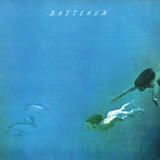
A notoriously jaw-dropping folk-funk classic, long treasured by the Balearic fraternity, the self-titled LP from the brothers Batteau nevertheless remains a criminally underheard gem. Appealing to fans stuck on Ned Doheny's scorching blue-eyed soul as well as Gene Clark's rich country-rock, it's an honour to present the first officially licensed vinyl reissue of this undoubted masterpiece of proto-Yacht-Rock.
Like a forgotten piece of baroque folk caught in 1973, Batteaux's eponymous album somehow sounds magically timeless. A full 45 years after the fact, it remains a mystery as to why they weren't better known. The lush production and virtuoso playing conforms with the ruling aesthetic of the time - well-crafted, melodic songs performed with precision and balance - whilst the shimmering AOR atmosphere and sun-dappled vocal washes align neatly with the best Crosby, Stills & Nash records.
Throughout, the beautifully penned tracks hold traces of Jimmie Spheeris, America and Seals & Crofts. The immaculately orchestrated percussion and additional instrumentation (electric piano and fiddle to name a few) are performed by perennially celebrated West-Coast cats including Tom Scott, John Guerin and Andy Newmark.
It's no surprise that the heavenly "High Tide" is such a Balearic touchstone. A free soul aqua-space groover, its sophisticated rhythms predict the swing of CSN's canonical "Dark Star" by a full four years. An alternative measure of its enduring magnificence can be gauged by MF Doom sampling Paul Horn's wonderful version, subsequently used by Ghostface Killah.
The highlights are many and memorable. Gorgeous opener "Tell Her She's Lovely" is the perfect example of the addictive, melody-driven songwriting which really should have earned them stardom. Moody ballad "Living's Worth Loving" is nothing short of heartbreaking whilst the chugging elegance of "Wake Me In The Morning" showcases their bewitching harmonies. The hypnotic yearning of "Lady Of The Lake" is an exquisitely string-drenched, piano-laced favourite that achieves a peculiar strutting-funk. It's that good.
This lovingly curated reissue enables a long overdue reappraisal of the hitherto buried genius of Batteaux. The serene aqua artwork which adorned the original jacket - their father worked on a dolphin-human communication project in Hawaii, hence the infamous design - and sumptuous inner sleeve have been faithfully restored. Whilst, with access to the original tapes, Simon Francis' sensitive mastering elevates the sound throughout and, as ever, it has been pressed at a reassuringly weighty 180g.
Ordina ora e ordineremo l'articolo per te presso il nostro fornitore.
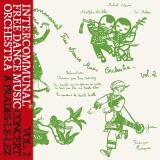
Concert at Prades-le-Lez marks the origins of the Intercommunal Free Dance Music Orchestra. In 1974, François Tusques and his companions (Michel Marre, Jo Maka, Adolf Winkler and Guem), in the spirit of Don Cherry or Chris McGregor, playfully dismantle all borders and all styles of creative music.
On this second volume, the Intercommunal builds unprecedented soundscapes around a song of revolt, a dance tune, or a burst of dissonance. The journey is unforgettable, no question about it. On repeat listening, it even becomes… lunar!
“The music that we make is primarily meant to be listened to live,” warned a leaflet from the Intercommunal Free Dance Music Orchestra. This is precisely why the (restored!) reissue of the two volumes of Concert at Prades-le-Lez, recorded on January 25 and 26, 1974 by François Tusques and his comrades, is such an important event.
In 1971, after recording a series of albums that would leave a lasting mark on French jazz (Free Jazz, of course, with Michel Portal, François Jeanneau, Bernard Vitet, Beb Guérin and Charles Saudrais, but also Le Nouveau Jazz with Barney Wilen, or the solo Piano Dazibao), François Tusques founded the Intercommunal—a grouping whose very name called for the fraternization of the various communities making up the country: Our music will help, we hope, to resolve the contradictions that exist between workers be longing to different communities, by breaking down various forms of national chauvinism, and more particularly the chauvinism of certain French people toward the cultures of Third World countries… Long live the friendship between the peoples of the whole world!
Among the great records made by the Intercommunal Free Dance Music Orchestra, the two volumes of Concert at Prades-le-Lez come first, before L’Inter Communal, Vol. 4, Le Musichien, and Après la marée noire (four titles already reissued by Souffle Continu). François Tusques and his companions (Michel Marre and Jo Maka on saxophones, Adolf Winkler on trombone, and Guem on percussion) performed on January 25 and 26, 1974 at the Moulin de Prades-le-Lez, a few kilometers from Montpellier. It was thus in the southern region of Occitanie that the first echoes of this musical vision of a borderless brotherhood were recorded.
“We’re not among the Colonels,” the Intercommunal reassures us right away, performing a stride piano tune carried by African winds that the audience cannot resist for long. The energy is already striking and it never lets up throughout these two recordings, from start to finish: jazz, blues, traditional music, minimalism, even funk… The musicians of the Intercommunal have heard a lot of great music and now delight in reinventing it by mixing it all together.
“We want the song form to take its place as a weapon in the struggle against capitalist exploitation and all those who oppress us morally and materially,” declared an Intercommunal leaflet, quoting Jean-Baptiste Clément, author of the lyrics to “Le Temps des cerises.” The struggle was therefore serious—but it did not prevent François Tusques and his group from waging it in a festive spirit: each piece on Concert at Prades-le- Lez sends out a call for love and fraternity. Fifty years later, the message remains as relevant as ever—and once again, it is François Tusques who makes it heard.
dovrebbe essere pubblicato su 17.04.2026

2[23,95 €]
Concert at Prades-le-Lez marks the origins of the Intercommunal Free Dance Music Orchestra. In 1974, François Tusques and his companions (Michel Marre, Jo Maka, Adolf Winkler and Guem), in the spirit of Don Cherry or Chris McGregor, playfully dismantle all borders and all styles of creative music.
On this first volume, the Intercommunal takes its audience from New Orleans to Brittany and on to North Africa. The journey was bold, without a doubt—and its memory remains unforgettable.
“The music that we make is primarily meant to be listened to live,” warned a leaflet from the Intercommunal Free Dance Music Orchestra. This is precisely why the (restored!) reissue of the two volumes of Concert at Prades-le-Lez, recorded on January 25 and 26, 1974 by François Tusques and his comrades, is such an important event.
In 1971, after recording a series of albums that would leave a lasting mark on French jazz (Free Jazz, of course, with Michel Portal, François Jeanneau, Bernard Vitet, Beb Guérin and Charles Saudrais, but also Le Nouveau Jazz with Barney Wilen, or the solo Piano Dazibao), François Tusques founded the Intercommunal—a grouping whose very name called for the fraternization of the various communities making up the country: Our music will help, we hope, to resolve the contradictions that exist between workers be longing to different communities, by breaking down various forms of national chauvinism, and more particularly the chauvinism of certain French people toward the cultures of Third World countries… Long live the friendship between the peoples of the whole world!
Among the great records made by the Intercommunal Free Dance Music Orchestra, the two volumes of Concert at Prades-le-Lez come first, before L’Inter Communal, Vol. 4, Le Musichien, and Après la marée noire (four titles already reissued by Souffle Continu). François Tusques and his companions (Michel Marre and Jo Maka on saxophones, Adolf Winkler on trombone, and Guem on percussion) performed on January 25 and 26, 1974 at the Moulin de Prades-le-Lez, a few kilometers from Montpellier. It was thus in the southern region of Occitanie that the first echoes of this musical vision of a borderless brotherhood were recorded.
“We’re not among the Colonels,” the Intercommunal reassures us right away, performing a stride piano tune carried by African winds that the audience cannot resist for long. The energy is already striking and it never lets up throughout these two recordings, from start to finish: jazz, blues, traditional music, minimalism, even funk… The musicians of the Intercommunal have heard a lot of great music and now delight in reinventing it by mixing it all together.
“We want the song form to take its place as a weapon in the struggle against capitalist exploitation and all those who oppress us morally and materially,” declared an Intercommunal leaflet, quoting Jean-Baptiste Clément, author of the lyrics to “Le Temps des cerises.” The struggle was therefore serious—but it did not prevent François Tusques and his group from waging it in a festive spirit: each piece on Concert at Prades-le- Lez sends out a call for love and fraternity. Fifty years later, the message remains as relevant as ever—and once again, it is François Tusques who makes it heard.
dovrebbe essere pubblicato su 17.04.2026

Siren Selector presents the first voyage of Remy Solar, as the producer takes a break from composing sound system exclusive dubs to expand his horizons with this by-turns lush, textured, menacing and plaintive album.
‘Heavy Terrain’ emerges from the depths of a lifetime inside the dub fraternity: reared on a potent diet of Lee Scratch Perry and Augustus Pablo, The Disciples and Digital Mystikz, it’s an album which stuck its head in a bass bin in an abandoned bingo hall in north London before striking out on a musical road-trip to imbibe sounds and rhythms from further afield.
The album opens with the militant drums and ethereal pads of 'Sound in the East' before being bookended by two mixes of 'Star Trail', where unformed musical space and time cross uncharted distances to coalesce into the beginning of direction and rhythm. The lush deep house chords and drilling synths of 'Lila #3' summon ghostly presences, while in its counterpart 'Lila #7' layers of melody rise and hang like mist before dissipating in percussive heat. 'Dakhla's’ swelling and retreating drones fade into swirls of drums. In the eponymous 'Heavy Terrain', off-beat keyboard chops respond to each other from uncertain depths while electronic horns pulse across miles of open space. 'Empty City 'sees walls of sound coalesce and fragment, falling into bursts of white noise.
Remy Solar explores a deliberately constrained hardware set-up to create the primordial conditions of trance, locking down a rhythmic foundation while semi-improvised excursions form and reform above it. It’s an album that takes the listener on a journey between order and chaos, past and future, all the while underlaid by a counterpoint of cavernous bass lines and echoing percussion, yang and yin, shade and light.
dovrebbe essere pubblicato su 09.03.2026

For years, L.A.’s David Jasso and the UK’s Mike Vest walked separate but parallel routes through psychedelic noise rock—two genre outsiders pulling the music toward raw instinct, intensity, and sonic extremity. Their paths kept echoing each other, from their own projects and collaborations—most notably through their work with key artists in the Japanese psych underground—both speaking the same volatile language of improvisation and avant-garde abrasion. A collision wasn’t just likely—it was inevitable.
This ethos and commitment to raw, volume-overdosed psych rock led to this new collaboration. Rather than deliver the expected heavy psych freakout, they opted for something more direct and confrontational.
The result is Non Violence and the album “Lifted Curse,” a six-track blast of noise rock focused not on mysticism and psych tropes, but on psychological depth. The album rips through raw male emotion: fraternity, loss, carnal impulses, mental states. Jasso’s lyrics read like an unfiltered journal mid-burnout; Vest’s swirling, savant-garde guitars create tension with Jasso’s own guitars; and Sned’s rocksteady grooves form a fistfight of harmony and dissonance.
Together, this new power trio carves out a new sonic language—heaviness rooted not in posturing, but in realness and weight: fragility, weakness, and the human efforts forged to break out from it. Non Violence is noise rock with an unironic violent aim in the physical dimension—a new conversation in a familiar space, where vulnerability hits harder than distortion and conviction outweighs myth.
David Jasso — Guitars, Bass & Vocals
Mike Vest — Guitars, Bass & Mix
Dave Sneddon — Drums
dovrebbe essere pubblicato su 20.02.2026

The 3rd album from Jana Horn was written in New York and recorded in the Texas desert. Horn went to Sonic Ranch studio with her trio (Jade Guterman - bass / Adam Jones - drums) to record her self-titled record, comprised of 10 sonic landscapes which don't quite sound like they're from anywhere. Past comparisons to Yo La Tengo and Phil Elverum are still apt on "Love" and "All in bet", while spare post-punk rhythms drive "Designer" and
"Don't Think."
In 2023 The New Yorker stated: "Horn's work aligns with a fraternity of the lonely that cuts across genres: traces of Young Marble Giants, Syd Barrett, and Broadcast all waft through her songs."
dovrebbe essere pubblicato su 16.01.2026

New R&B discoveries continue to emerge and entertain the many followers of the New Breed musical cult; nobody finds more than the Kent connoisseurs.
Berna Dean’s two previously unheard recordings are by far her best. They were laid down at Cosimo Matassa’s New Orleans’ studios by GNP Crescendo but eschewed in favour of two relatively average sides. The great 50s R&B songwriter Jesse Stone provides a rocker for the much-admired Jimmy Breedlove and a super-catchy ‘This Morning’ for an unknown mixed vocal group that has a joyous gospel feel. Jesse also penned ‘Private Eye’, a classic early 60s story-song, for Buddy Wilkins which was issued on Al Sears’ Tri-Ess imprint.
The title track is used twice, on two very different Fraternity recordings. Kenny Smith’s version was issued in 1964 and has many followers, but the equally meritorious Coasters-inspired composition by the Citations is newly discovered. Win Menifee’s ‘I’m Runnin’ Around’ from the same Cincinnati label comes complete with a fascinating back-story.
There are three cover versions. Vermettya Royster’s ‘All Around The World’ is backed by James Brown’s 1961 band, while Roosevelt Lee's 1970 update of the 1947-originated ‘Hey Little Girl’ funks the tune up a la Godfather of Soul. The cover that will make the biggest noise is undoubtedly west coast band the Afterglows’ version of Barbara Lynn’s evergreen dancer ‘I’m A Good Woman’ – this is a future monster.
Golden Crest provides two fabulous male vocal group sides – the swinging ‘What’s On Your Mind’ by Eddie Daye’s Four Bars and the delightful harmonies of the appropriately-named, but unknown Delights ‘Mary Don’t You Weep’.
Blues still thrived into the 70s as Albert Washington’s mean and moody ‘Case Of The Blues’ proves. Smokey Wilson took the music into the late 70s with the storming ‘Goin’ Away Baby (Round Like An Apple)’, which benefits here from a 45-style edit. His Pioneer Club on 88th Street in South Central L A provides the atmospheric photo for this collection.
More early 60s movers come from Wilbur “Hi-Fi” White with ‘Don’t Look Now’, future hit songwriter Johnny Madara’s raucous ‘You Make Me Mad’ and Big Boy Groves ‘Bucket O’ Blood’ which brilliantly describes the kind of club these tracks would fit right into.
The LP version loses a few tracks, but so many collectors have strong preferences we’ve thrown the vinyl junkies a lifeline.
dovrebbe essere pubblicato su 27.06.2025
On June 6th, Death In Vegas return with new album ‘Death Mask’, where disintegration, overload and total sonic immersion tell a personal tale. With dirty circuitry and rough-hewn textures at the fore, this is gritty, unpolished techno; an audio outlier that’s full of personality, and a bold artistic statement. It’s closer in DNA to the grainy growl of sunn O))), or the searing intensity of Underground Resistance at their fiercest, and as far from generic influencer business as you could possibly get.
“I’ve been soaking in Ramleh’s ‘Hole In the Heart’, the machine funk of Terrence Dixon’s Population One, Jamal Moss’ psychedelic techno jams, the stunning minimalism of Mika Vanio’s Ø and Panasonic, the layered drones of LOOP, and drowning in the acid of TM 404”
Broader inspirations are weaved into the album’s fabric too; from his Thameside Metal Box studio and evocations of nautical ghosts, to lamentations for a broken world, to memories of a youthful Detroit pilgrimage, and the innocent fraternity of rave euphoria, there’s a lot going on, acting as a chronicle of moments, and locations.
Ordina ora e ordineremo l'articolo per te presso il nostro fornitore.

Cincinnatian blues stalwart Albert Washington was a prolific recording artist from the 60s to the 90s. His ‘I’m The Man’ has become a New Breed R&B classic, which despite several US and UK releases, including our Kent one in 2003, is still eagerly sought out by people willing to pay whatever it takes.
‘Case Of The Blues’ is a similarly hip R&B dancer that was first issued on the Rye label in 1971. This slightly earlier Fraternity version is very similar.
dovrebbe essere pubblicato su 25.04.2025

Black Vinyl[27,69 €]
Up The Bracket arrived like a raging bull in a tired post-Britpop china shop and introduced the world to The Libertines, a new gang of London bohemians, whose ragged tunes, red military tunics, opiated poetry and "live now pay never" lifestyle came to define the millennial angst of the early noughties. At the heart of the band is the blood bond bromance between the ramshackle Music Hall Jagger/Richards, Peter Doherty and Carl Barat, ably assisted by the rock solid rhythm twins John Hassall and Gary Powell. Any bookie worth his salt would have given you short odds on this quartet surviving more than a month or two, given the teetering on the brink lifestyle they chose to lead, but here we are two decades later and our Byronic heroes, though older and wiser, are still fighting the good fight and making music every bit as vital as their debut. The belief, talent and fervour that Doherty spoke of in their earliest manifesto has stood them in good stead. Up The Bracket, justly considered one of the greatest albums of the noughties, was originally released on October 21st 2002 by Rough Trade Records. The album, a heady stew of indie rock, skiffle, blues, dub and English bucolic pop, was a huge shot in the arm to a largely redundant music scene and helped to inspire the rebirth of guitar music, going on to influence countless artists who followed in its wake. Up The Bracket, which was produced by Mick Jones of The Clash, takes you on a wondrously poetic journey into the band"s mythical world and their fevered dreams of Albion, a land of squalid glamour, liberty, equality, fraternity, gin palaces and chip shops. Quite simply Pete, Carl, Gary and John created a hugely compelling timeless British rock"n"roll classic debut as relevant now as it was upon its release.
Ordina ora e ordineremo l'articolo per te presso il nostro fornitore.

"This is the time that we, who have benefitted from the Last Poets shouldbe able to say, 'it's the Last Poets. It's them we should be honouring, because we did not honour them for so many years_"
KRS One wasn't just addressing the hip hop fraternity when he uttered
those words by way of introducing the video for Invocation - a poem
written thirty years ago, around the time of the Last Poets' last significant comeback. He was speaking to everyone who's been affected by the word, sound and power issuing from the most revolutionary poetry ever witnessed, and that the Last Poets had introduced to the world outside of Harlem at the dawn of the seventies.
In 2018 the two remaining Last Poets, Abiodun Oyewole and Umar Bin
Hassan, embarked on another memorable return with an album -
Understand What Black Is - that earned favourable comparison with theirseminal works of the past, whilst showcasing their undimmed passion andlyrical brilliance in an entirely new setting - that of reggae music. Trackslike Rain Of Terror ("America is a terrorist") and How Many Bullets demonstrated that they'd lost none of their fire or anger, and their essential raison d'etre remained the same.
"The Last Poets' mission was to pull the people out of the rubble o f their lives," wrote their biographer Kim Green. "They knew, deep down that poetry could save the people - that if black people could see and hear themselves and their struggles through the spoken word, they would be moved to change."
Several years later and the follow-up is now with us. The project started when Tony Allen, the Nigerian master drummer whose unique polyrhythms had driven much of Fela Kuti's best work, dropped by Prince Fatty's Brighton studio and laid down a selection of drum patterns to die for. That was back in 2019, but then the pandemic struck. Once it had passed, the label booked a studio in Brooklyn, where the two Poets voiced four tracks apiece and breathed fresh energy, fire and outrage into some of the most enduring landmarks of their career. Abiodun, who was one of the original Last Poets who'd gathered in East Harlem's Mount Morris Park to celebrate Malcolm X's birthday in May 1968, chose four poems that first appeared on the group's 1970 debut album, called simply The Last Poets. He'd written When The Revolution Comes aged twenty, whilst living in Jamaica, Queens. "We were getting ready for a revolution," he told Green. "There wasn't any question about whether there was going to be one or not. The truth was many of us still saw ourselves as "niggers" and slaves. This was a mindset that had to change if there was ever to be Black Power." He and writer Amiri Baraka were deep in conversation one day when Baraka became distracted by a pretty girl walking by. "You're a gash man," Abiodun told him. The poem inspired by that incident, Gash Man, is revisited on the new album, and exposes the heartless nature of sexual acts shorn of intimacy or affection. "Instead of the vagina being the entrance to heaven," he says, "it too often becomes a gash, an injury, a wound_" Two Little Boys meanwhile, was inspired after seeing two young boys aged around 11 or 12 "stuffing chicken and cornbread down their tasteless mouths, trying to revive shrinking lungs and a wasted mind." They'd walked into Sylvia's soul food restaurant in Harlem, ordered big meals, then bolted them down and run out the door. No one chased after them, knowing that they probably hadn't eaten in days. Fifty years later and children are still going hungry in major cities across America and elsewhere. Abiodun's poem hasn't lost any relevance at all, and neither has New York, New York, The Big Apple. "Although this was written in 1968, New York hasn't changed a bit," he admits, except "today, people just mistake her sickness for fashion." Umar is originally from Akron, Ohio, but had arrived in Harlem in early 1969 after seeing Abiodun and the other Last Poets at a Black Arts Festival in Cleveland. That's where he first witnessed what Amiri Baraka once called "the rhythmic animation of word, poem, image as word- music" - a creative force that redefined the concept of performance poetry and stripped it bare until it became a howl of rage, hurt and anger, saved from destruction by mockery and love for humanity. When Umar's father, who was a musician, was jailed for armed robbery he took to the streets from an early age where he shined shoes and raised whatever money he could to help feed his eight brothers and sisters. By the time he saw the Last Poets he'd joined the Black United Front and was ready to join the struggle. Once in Harlem, Abiodun asked him what he'd learnt in the few weeks since he'd got there. "Niggers are scared of revolution," Umar replied. "Write it down" urged Abiodun. That poem still gives off searing heat more than fifty years later. In Umar's own words, "it became a prayer, a call to arms, a spiritual pond to bathe and cleanse in because niggers are not just vile and disgusting and shiftless. Niggers are human beings lost in someone else's system of values and morals." And there you have it. It's not just race or religion that hold us back, but an economic system that keeps millions in poverty and living in fear - a system born from political choice and that's now become so entrenched, so bloated on its own success that it's put mankind in mortal danger. It was many black people's acceptance of the status quo that inspired Just Because, which like Niggers Are Scared Of Revolution, was included on that seminal first album. Along with their revolutionary rhetoric, it was the Last Poets' use of the "n word" that proved so shocking, but it would be wrong to suggest that they reclaimed it, since it never belonged to black people in the first place. There's never any hiding place when it comes to the Last Poets. They use words like weapons, and that force all who listen to decide who they are and where they stand. Umar's two remaining tracks find him revisiting poems first unleashed on the Poets' second album This Is Madness! Abiodun had left for North Carolina by then where he became more deeply enmeshed in revolutionary activities and spent almost four years in jail for armed robbery after attempting to seize funds related to the Klu Klux Klan. Meanwhile, the 21 year old Umar was squatting in Brooklyn and had developed close ties with the Dar-ul Islam Movement. A longing for purity and time-honoured spiritual values underpins Related to What, whilst This Is Madness is a call for freedom "by any means necessary," and that paints a feverish landscape peopled by prominent black leaders but that quickly descends into chaos. "All my dreams have been turned into psychedelic nightmares," he wails, over a groove now powered by Tony Allen's ferocious drumming. Those sessions lasted just two days, and we can only imagine the atmosphere in that room as the hip hop godfathers exchanged the conga drums of Harlem for the explosive sounds of authentic Afrobeat. Once they'd finished, the recordings and momentum returned to Prince Fatty's studio, since relocated from Brighton to SE London. This was stage three of the project, and who better to fill out the rhythm tracks than two key musicians from Seun Anikulapo Kuti's band Egypt 80? Enter guitarist Akinola Adio Oyebola and bassist Kunle Justice, who upon hearing Allen's trademark grooves exclaimed, "oh, the Father_ we are home!" Such joy and enthusiasm resulted in the perfect fusion of Nigerian Afrobeat and revolutionary poetry, but the vision for the album wasn't yet complete. He wanted to create a new kind of soundscape - one that reunited the Poets with the progressive jazz movement they'd once shared with musicians like Sun Ra and Pharoah Sanders. It was at that point they recruited exciting jazz talents based in the UK like Joe Armon Jones from Mercury Prize winners Ezra Collective, also widely acclaimed producer/remixer and keyboard player Kaidi Tatham, who's been likened to Herbie Hancock, and British jazz legend Courtney Pine, whose genius on the saxophone and influence on the UK's now vibrant jazz scene is beyond question. The instrumental tracks on Africanism are in many ways as revelatory and exciting as the Last Poets' own. It's important to remember that the kaleidoscope of styles and influences we're presented with here aren't the result of sampling but were played "live" by musicians responding to sounds made by other musicians. That's where the magic comes from, aided by Prince Fatty's peerless mixing which allows us to hear everything with such clarity. Music fans today have grown accustomed to listening to all kinds of different genres. Their tastes have never been so broad or all- encompassing, and so the music on this new Last Poets' album is as groundbreaking as their lyrics, and perfectly suited to the era that we're now living in. John Masouri
dovrebbe essere pubblicato su 06.12.2024

"7"" single for the djs of the initial digital 45 of Peixeira Amolada e Quebra Queixo b/w Mariposa Tigre.
Peixeira Amolada e Quebra Queixo It represents two popular stereotypes common in the third world: the sharp cutting knife and the quebra-queixo, the coconut candy brought from Angola by enslaved blacks. But, playfully, it is also the expression of direct speech and a sharp blow, also as a duo of anti-heroes in search of justice, equality and fraternity. This song also features an element never used before in the band: the guitar. One of the most popular instruments in the world, it provides the basis for the song, which goes through a groove full of counter-melodies that bring that feeling of a cut (hence the name of the song), in non-obvious conventions, and a surprising ending in another time signature. As well as the musical reference for the name, this track represents the struggle that many Brazilians go through every day to have a decent life. You have to have a ""sharpened knife"" to open the way.
Quebra Queixo Represents the playful and magical beings of the forest. How can a moth be a tiger? This song carries a lot of the sound Nomade has built up over the course of their career. Strong funk influences, ethno groove, with unconventional brass themes and a very jazzy accent. Halfway through the song, another of the band's very strong references comes to the fore: reggae, more precisely ragga, which makes the song even more danceable. Finally, a convention from the whole band brings the song to a grand end, making you want to listen to it again."
dovrebbe essere pubblicato su 15.11.2024

These days it seems as if at every turn, week in week out, the Reggae fraternity grieves the loss of another journey man singer, unassuming session musician or foundational sound man.
The power of remembrance, of tribute, of deeply honouring the historical legacy of so many singers & players has been, from its very inception, central to the mission of Ital Counselor Records. The arrival of IC008 carries forth this tradition in the form of an epic tribute to two of our most cherished influences who have recently passed on – The ever-spirited drummer Angus “Drummie Zeb” Gaye of Aswad fame and the indomitable UK sound man, the Mighty Zulu Warrior Jah Shaka.
This release brings together some of the usual Ital Counselor collaborators Chris Lane (AKA the Dub Organiser, Fashion Records), Soothsayer Horns, Inyaki BDF, along with new IC collaborator Gil Cang (Riz Records, Tuff Scout Records).
Collectively known as the IC All Stars, their mission was to rebuild a mythic dubplate made legendary by Shaka in the early 1980s. Known on the scene as Rasta Serenade, this horns driven instrumental dubplate was a never released version of Aswad’s vocal cut “Just a Little Herb” only ever played on Shaka’s sound.
To achieve maximum effect, the Dub Organiser dug back into the Fashion records vaults to unearth an unused loop of ‘Drummie’ marching out a militant beat. Inyaki BDF was recruited to lay down the bassline. Soothsayers horns hit harder still. Chris and Gil put the final guitar, keys, and mix touches to make this 4-cut maxi 12” a sound system killer; a set of big people dubs for the young and old. Meditative and marching; Weighted and spritely IC008 must mash up sound system dance north, south, east and west. Take a listen and you will hear.
Drummie Zeb of the Tribe of Zebulon.
Jah Shaka of the Tribe of Simeon.
This is a tribute. This is a remembrance.
This is also a pushing forward of a tradition
In a new Direction
A movement Forward
Ital Counselor Style.
Ordina ora e ordineremo l'articolo per te presso il nostro fornitore.

Hot on the heels of our New Year’s smash, “Someday” by The Tempests, Outta Sight proudly presents the Cornelius Brothers and Sister Rose with their two most requested sides… back-to-back for the very first time!!!
The group formed in 1970 in their home town of Dania Beach, Florida. Original members were siblings Carter, Eddie and Rose Cornelius and friend Cleveland Barrett who was tragically killed in a car crash before they hit the charts. In mid-1970 they released their first single “Treat Her Like A Lady” which went to #3 on the U.S. Hot 100 earning the trio a Gold Disc. The follow-up single, “Too Late To Turn Back Now” (featured here),faired even better, hiting #2 on 22nd July 1972 scoring a second Gold Disc. Both tracks featured on their self-titled debut LP, a top 30 Pop hit in ’72. Despite the huge Stateside success of “Too Late To Turn Back Now” it failed to hit in the U.K. and even at the time, it resonated more with the easy-listening MOR audience than the soul fraternity who were tuned in to the harder-edged funky grooves of the likes of Isaac Hayes and Curtis Mayfield. It wasn’t until the Nineties that the Cornelius family finally caught the imagination of the U.K. rare soul scene and have remained a turntable favourite ever since.
Our chosen B-side, “Big Time Lover”, is the title track from the group’s second album released in 1973 and, wonderful as it is, it failed to break the Hot 100, and only dented the R&B Charts peaking at #88. Again, it was completely ignored by the U.K. and yet today it is the more popular of the two sides. Ironically, both original United Artist singles are actually quite hard to find in the U.K., despite the Gold Disc status of “Too Late To Turn Back Now”. A quick look on ‘discogs’ reveals only one copy currently available and zero copies of “Big Time Lover”!
Ordina ora e ordineremo l'articolo per te presso il nostro fornitore.
DJ and producer David Holmes is welcomed to the Late Night Tales fraternity with an evocative collection of personal songs and music, peppered with exclusive new material and rare gems. By now, I think we all know David Holmes, right There's acid house Holmes, with bone-rattling Chicago jams and Detroit destroyers, break-digger Holmes responsible for the grittily shaking 'Let's Get Killed' and seminal Essential Mix compilation (which brought Sixto Rodriguez to people's attention, and then there's soundtrack Holmes. His most enduring and vital source of musical inspiration - cinema - plugged into David's rst solo record 'This Film's Crap, Let's Slash the Seats' and inspired 2000's 'Bow Down to the Exit Sign', created as the soundtrack to a not-yet-made movie. Ofcial soundtracks have been bountiful, including scores for Soderbergh's Out Of Sight and Ocean's trilogy, '71, Hunger and Good Vibrations. In a series of personal songs sung by himself, David's last solo album 'The Holy Pictures' explored inuences of La Düsseldorf, The Jesus and Mary Chain and early Brian Eno. His Unloved collaboration with Keefus Ciancia and Jade Vincent then took us on a musical journey full of raw 60s pop-noir, psychedelia and French Ye Ye with a contemporary twist. Somehow he's also found time to produce records by Primal Scream and Jon Spencer Blues Explosion. Unsurprisingly, for someone au fait with matters cinematic, this Late Night Tales conjures up its own mindmovies. It's not only packed with the judiciously selected nuggets for which his mixes are noted but also stuffed with original material, including collaborations with BP Fallon and Jon Hopkins and an amazing new reading of 10cc's 'I'm Not In Love' by Holmes-produced Song Sung. In fact, there's a Celtic thread running through the whole journey with Stephen Rea's reading of an extract from Seamus Heaney's AENEID BOOK VI - Elsewhere Anchises. Among the other gems included here are David Crosby's lush 'Orleans', Buddy Holly's celestial 'Love Is Strange' and the Children Of Sunshine's 'It's A Long Way To Heaven'. David Holmes loves music. It's a way of expressing the sometimes inexpressible or the inconsolable, a questing desire to nd out just what is over the next hill. It's no surprise to learn he's a keen walker. Always on the move, headphones on, lost in some reverie or piece of music, the soundtrack to his life, the stuff that feeds his imagination. I walk a lot. It's amazing for listening to music: your phone or your emails aren't going and you're just in the forest listening to music. It's so intimate. Anyway, I was listening to the KLF's Chill Out album, which still sounds amazing, but it triggered an idea with concrete sounds through travelling and movement. And one of the things I was trying to do was to use this idea not just break up the moods but also as a metaphor for moving through life and arriving in different destinations or arriving at different stages in different parts of your life. Memory, Love, Living, Family, Friendship, Healing, Death and The Afterworld are some of the themes I wanted to explore within this record. Although these strong themes and tracks are personal to me, I also wanted it to be a great listen that was unpredictable yet had a seamless ow - a journey that was personal to me yet to the listener a great compilation of music that they may or may not have heard before. I hope I've succeeded in the later.' David Holmes 2016
Ordina ora e ordineremo l'articolo per te presso il nostro fornitore.

Red Vinyl[27,69 €]
Up The Bracket arrived like a raging bull in a tired post-Britpop china shop and introduced the world to The Libertines, a new gang of London bohemians, whose ragged tunes, red military tunics, opiated poetry and "live now pay never" lifestyle came to define the millennial angst of the early noughties. At the heart of the band is the blood bond bromance between the ramshackle Music Hall Jagger/Richards, Peter Doherty and Carl Barat, ably assisted by the rock solid rhythm twins John Hassall and Gary Powell. Any bookie worth his salt would have given you short odds on this quartet surviving more than a month or two, given the teetering on the brink lifestyle they chose to lead, but here we are two decades later and our Byronic heroes, though older and wiser, are still fighting the good fight and making music every bit as vital as their debut. The belief, talent and fervour that Doherty spoke of in their earliest manifesto has stood them in good stead. Up The Bracket, justly considered one of the greatest albums of the noughties, was originally released on October 21st 2002 by Rough Trade Records. The album, a heady stew of indie rock, skiffle, blues, dub and English bucolic pop, was a huge shot in the arm to a largely redundant music scene and helped to inspire the rebirth of guitar music, going on to influence countless artists who followed in its wake. Up The Bracket, which was produced by Mick Jones of The Clash, takes you on a wondrously poetic journey into the band"s mythical world and their fevered dreams of Albion, a land of squalid glamour, liberty, equality, fraternity, gin palaces and chip shops. Quite simply Pete, Carl, Gary and John created a hugely compelling timeless British rock"n"roll classic debut as relevant now as it was upon its release.
dovrebbe essere pubblicato su 21.10.2022

"Même Soleil" is the result of a dialog between the French photographer Gaël Bonnefon and the French musician Frédéric D. Oberland initiated by IIKKI, between December 2019 and June 2021.
Self-taught multi-instrumentalist & photographer, Frédéric D. Oberland finds himself at the crossroads of image and sound, favoring a synesthetic approach. He articulates different modes of narration, combining the raw character of the documentary form with the transfigured reality of myth and poetry, allowing him to question notions such as the sacred, the monstrous, the fraternity, while at the same time returning to the political news of the present. Attentive to the pulse of the body, his work is willingly itinerant, modulating between the ripples of dreams, watching the points of incandescence and the bursts of electricity that act as revelations of our presence in the world, here and now. He’s the co-founder of leading bands such as Oiseaux-Tempête, FOUDRE!, Le Réveil des Tropiques, FareWell Poetry and is co-curating the label NAHAL Recordings.
"Fueled by travels and their emanations, Frédéric D. Oberland’s music had to build new horizons this year, outlined by the curves of semi-modular synthesizers, the avalanches of effect pedals and the zigzagging paths of electric circuits. Même Soleil, his third solo album, manages to merge mystical visions of the unconscious and the absurdity of an apocalyptic present in a sensory whirlwind, operating an astonishing mutation with tones still unexplored in his previous releases. A visual as well as a musical journey that takes shape in a book and a record of the same title, Même Soleil is the result of a collaboration with the photographer Gaël Bonnefon. Seeking the tension between the blinding light of day and the glittering visions of saturated night skies, the two pieces in dialogue transcend reality to deliver their own truth, as bright as the first light of the sought-after morning." (Alice Butterlin)
Gaël Bonnefon graduated with highest honours from the Fine Arts School of Toulouse (Isdat) in 2008. He has exhibited at Villa Pérochon, at the Eté photographique in Lectoure, at the 104 in Paris during Jeune Création 2012, at Rencontres Internationales de la Photographie d’Arles and at PhotoEspaña, at the Abattoirs Museum in Toulouse in 2014, at the Château d’Eau Gallery in 2012 and 2019 and in the Vitrine of Frac Île-de-France in 2020. His work is part of the collections of Frac Midi-Pyrénées, Château d'Eau gallery, Kulturamt in Dusseldorf and Kiyosato Museum in Japan ; he participated in Temps Zero projects Berlin, Braga, Rome, Bucarest, Groningen and Thessaloniki. He has also been granted artist’s residencies in Germany, France and Israel. His first book Elegy for the Mundane was published by La Main Donne in 2019. He continues his intimate and dense journey and presents his second publishing, Même Soleil with photographic works from 2009 to 2021.
"At first brutal and declining, the substance of Gaël Bonnefon's photography is just like a gaze that fears being one day extinguished and that is always looking to be born again. In photography as in love, recoil and desire, tension and easement, repetition, wandering and rest, flight and pursuit. Here photography allows itself to be traversed by flashes of life, renewed forces, echoes of far-off kindnesses and lost joys. It sings silently, lover of a thousand faces from which the thread of a single and same image is born, followed without relent, from the snowy peaks of childhood to the lost worlds of the present." (Michaël Soyez)
Ordina ora e ordineremo l'articolo per te presso il nostro fornitore.

MEDWAY GARAGE UPSTARTS! 2nd LP! The Shadracks are a three-piece rock n’ roll group hailing from Medway, Kent. With timeless and expert precision the Shadracks play from 37.3 years in the past 33.7 years into the future. The actual origins of the group date back even further with their cultural appropriation of Babylonian 'Rhythm and Punk. A mere 3 years ago Huddie Shadrack and Elisa Abednego had a brief encounter in deserted parkland. Discovering sheared an interest in vacant park benches, herbaceous borders and beat music it became paramount that they form a group - and quickly. After the release of there self titled debut LP, a subsequent live BBC 6Music session for Marc Riley and a fast selling EP, Elle Meshack retired from The Shadracks to peruse a career as a Poly Styrene impersonator aboard a Tahitian cruise liner: SS Honolulu Baby. Fortunately for the bass bereft Shadracks an advert placed in the window of a local stationers was answered by a certain Rhys ‘King Nebuchadnezzar’ Webb. A meeting issued and after proclaiming "Oh merciful Marduck, may the house that I have built endure forever” Their followed a two-hour induction ceremony (in which to learn all the new tracks for their forthcoming long player From Human Like Forms and Webb, for it was he, was sworn into The Shadracks fraternity. From Human Like Forms sees The Shadracks achieving giddy new heights in their song writing and performing abilities - pushing their ancient sound 3.7 years ahead of the current lunar time module. Councillor Duxbury. 2021
dovrebbe essere pubblicato su 13.08.2021

Fine Art Book, Ltd. to 400 copies:
Hardcover book printed on Munken Print White 115g/m2 // 108 pages, 24cm x 22cm, 65 photos // Logo, slot and circle embossed // Matt laminate + selective varnish // Hand-numbered, hand-stamped
"Même Soleil" is the result of a dialog between the French photographer Gaël Bonnefon and the French musician Frédéric D. Oberland initiated by IIKKI, between December 2019 and June 2021.
Self-taught multi-instrumentalist & photographer, Frédéric D. Oberland finds himself at the crossroads of image and sound, favoring a synesthetic approach. He articulates different modes of narration, combining the raw character of the documentary form with the transfigured reality of myth and poetry, allowing him to question notions such as the sacred, the monstrous, the fraternity, while at the same time returning to the political news of the present. Attentive to the pulse of the body, his work is willingly itinerant, modulating between the ripples of dreams, watching the points of incandescence and the bursts of electricity that act as revelations of our presence in the world, here and now. He’s the co-founder of leading bands such as Oiseaux-Tempête, FOUDRE!, Le Réveil des Tropiques, FareWell Poetry and is co-curating the label NAHAL Recordings.
"Fueled by travels and their emanations, Frédéric D. Oberland’s music had to build new horizons this year, outlined by the curves of semi-modular synthesizers, the avalanches of effect pedals and the zigzagging paths of electric circuits. Même Soleil, his third solo album, manages to merge mystical visions of the unconscious and the absurdity of an apocalyptic present in a sensory whirlwind, operating an astonishing mutation with tones still unexplored in his previous releases. A visual as well as a musical journey that takes shape in a book and a record of the same title, Même Soleil is the result of a collaboration with the photographer Gaël Bonnefon. Seeking the tension between the blinding light of day and the glittering visions of saturated night skies, the two pieces in dialogue transcend reality to deliver their own truth, as bright as the first light of the sought-after morning." (Alice Butterlin)
Gaël Bonnefon graduated with highest honours from the Fine Arts School of Toulouse (Isdat) in 2008. He has exhibited at Villa Pérochon, at the Eté photographique in Lectoure, at the 104 in Paris during Jeune Création 2012, at Rencontres Internationales de la Photographie d’Arles and at PhotoEspaña, at the Abattoirs Museum in Toulouse in 2014, at the Château d’Eau Gallery in 2012 and 2019 and in the Vitrine of Frac Île-de-France in 2020. His work is part of the collections of Frac Midi-Pyrénées, Château d'Eau gallery, Kulturamt in Dusseldorf and Kiyosato Museum in Japan ; he participated in Temps Zero projects Berlin, Braga, Rome, Bucarest, Groningen and Thessaloniki. He has also been granted artist’s residencies in Germany, France and Israel. His first book Elegy for the Mundane was published by La Main Donne in 2019. He continues his intimate and dense journey and presents his second publishing, Même Soleil with photographic works from 2009 to 2021.
"At first brutal and declining, the substance of Gaël Bonnefon's photography is just like a gaze that fears being one day extinguished and that is always looking to be born again. In photography as in love, recoil and desire, tension and easement, repetition, wandering and rest, flight and pursuit. Here photography allows itself to be traversed by flashes of life, renewed forces, echoes of far-off kindnesses and lost joys. It sings silently, lover of a thousand faces from which the thread of a single and same image is born, followed without relent, from the snowy peaks of childhood to the lost worlds of the present." (Michaël Soyez)
dovrebbe essere pubblicato su 23.07.2021

• When Lonnie Mack’s treatment of Chuck Berry’s ‘Memphis’ broke into the US Hot 100 on 8 June 1963 and peaked at #5 during its 13-week stay, he was initially pigeonholed as an instrumental artist. This perception was heightened by ‘Down In The Dumps’ on the flip, and furthered by his double-sided instrumental follow-up whose topside, ‘Wham!’, reached #28.
• Six months later the other side of Lonnie was revealed with his first vocal 45. The topside was a dynamic re-vamp of Jimmy Reed’s ‘Baby, What’s Wrong’, backed with a version of the gospel classic ‘Where There’s A Will’. Here you could hear him emoting in a way white singers never did – hollering, pleading and screaming in the very finest gospel tradition. The track was even picked up by some black radio stations in the south, but quietly dropped once it was realised that Lonnie was white.
• ‘Memphis’ was recorded at King Records Studio in Cincinnati on 12 March 1963. Carl Edmondson had been booked to produce a split session for Max Falcon, Kenny Smith and the Charmaines, but Edmondson’s band had recently broken up, so Lonnie and his crew were drafted in. With some time left at the end of the session, Lonnie was asked if he had anything he might like to record. ‘Memphis’ was the result. Edmondson thought the track had potential and suggested to Fraternity Records boss, Harry Carlson, that he should put it out. Within weeks it was climbing the charts, launching Lonnie’s long career.
• Post-Fraternity releases on Elektra, Capitol, Epic and Alligator cemented his reputation as the man who brought gospel, soul, blues, country and rock’n’roll together. He was one of the creators of blue-eyed soul, as well as the leading light for the legion of blues-based rock guitarists who plied their trade from the 60s onwards. It has to be said, though, that the bedrock of his legend rests on his Fraternity recordings, which highlighted both sides of Lonnie Mack – the vocalist and the guitarist.
dovrebbe essere pubblicato su 30.04.2021

Isasa’s fourth LP is a guitar excursion from a skillful, humble guide. Minimal, contemplative songs, rich in atmosphere and warm in spirit.
Some musicians give their name to their first album, signifying introduction. Some hold it in reserve — it took Wire 39 years to get around to calling an LP Wire. But whenever they do so, they are making a statement. For Conrado Isasa, an acoustic guitarist from Madrid, Spain, the decision to call his fourth album Isasa reflects the fact that his music’s relationship to his own identity has evolved. Isasa presents an artist whose work reflects that he knows and accepts where he comes from.
Between 1993 and 2003, he played electric guitar in the hardcore metal band Down For The Count and the post rock combo, A Room With A View. These were collective statements, communications between small groups and a select underground community. After the latter group’s demise, Isasa stepped back from recording, and for a while from guitar playing as well. He spent some time learning to play the trumpet, but was inspired to return to the guitar in 2007 after he heard Geoff Farina play a Mississippi John Hurt song for the encore of a Glorytellers gig. Then came another period of learning, during which he studied the playing of Hurt, John Fahey, Jack Rose, and Glenn Jones.
Performing as Isasa, he made three records, each of which can be heard as confrontation with an artistic challenge. Las Cosas (2015) is between the man and his acoustic guitar; what could he do with his fingers, a slide, six steel strings, and a box of wood? Los Días (2016) faces the broader issue of how to deal with the requirements of the American Primitive guitar style. Like Fahey, Rose, and Jones, Isasa sought to make an album that used a cohesive sequence of guitar and banjo instrumentals to express personal experiences. With its references to the sights, sounds, and tastes one might encounter in Madrid, it is like a poetic diary written with the distance that comes from having mastered a second language. After making that record, Isasa toured parts of the United States, and played at The Thousand Incarnations Of The Rose, a festival that gathered representatives of American Primitive guitar’s past, present, and future in Takoma Park, the town where the style’s original synthesist, John Fahey, was born. Insilio (2019) began to look beyond that style, dealing with Hindustani raga forms and adding other instrumental textures.
And now comes Isasa. The name suggests something very personal, and it’s true that it draws upon Isasa’s closest relationships. Two compositions are either named for or feature the voices of his children, but their presence helps this music to transcend the purely personal. For what could be more universally shared than the joy and love one feels for children? Others invoke concepts — absence, liberty, love, reunion. They may mean one thing to Isasa, and another thing to you, but by sharing his reactions to them, he invites you to recognize yours. Isasa isn’t just using his experiences to tell you about his life; he is using what he knows about life to help us know a little more about ours.
dovrebbe essere pubblicato su 16.04.2021

Following highly praised releases by Hermeto Pascoal & Grupo, Leonardo Marques, Xenia Franca and Moons, 180g and the legendary Disk Union continue to explore the best of today's Brazilian music scene with this wonderful psychedelic and funky pop album by Rio de Janeiro's Gus Levy: Magia Magia.
The mystical universe of Magia Magia reflects influences from the samba rock of Jorge Ben, the romantic grooves of Djavan and the psychedelic pop of Connan Mockasin and Negro Léo. The lyrics and sensations suggest a new way of seeing the reality of the world and relationships: union, spirituality, magic, complicity, happiness, courage, love, fraternity, dilemmas and contradictions lead the poetical subject of Magia Magia. Inspired by a conception of the universe ruled by feminine entities, Gus Levy brings with Magia Magia a masterpiece of modern Brazilian psychedelic and funky pop, with exquisite artwork by Fernanda Varella.
A composer and multi-instrumentalist from Rio de Janeiro, Brazil, Gus Levy has been gaining more and more attention on the Brazilian music scene during the last few years. He is also a producer at Rio de Janeiro's Estúdio Carolina studios, a member of the band "Os Dentes" for more than 10 years, and the guitarist of choice for artists like Antonio Neves, Filipe Marones and João Werneck.
Ordina ora e ordineremo l'articolo per te presso il nostro fornitore.

We’ll get to the vocal content in a second, but first it’s time to acknowledge what a patchwork tapestry of genius ‘Peace is not the word to play’ is in terms of production. Large Professor being a prodigy on the SP-1200 is well established, but the way he flips parts of MFSB’s ‘TLC’ and Milly and Silly’s obscure ‘Gettin’ Down for Xmas’ with a sprinkling of Lyn Collins here establishes his credentials in the top tier.
Lyrically, it’s a tour de force, with Main Source taking exception with the misuse of the word ‘peace’ by the hip-hop fraternity. With even the most homicidal of gangster rappers dropping it at the end of tracks at the time, time was overdue for some regulation.
The album version makes its point pithily in a single verse, while the remix, included on the flip of this first ever 7” release, expands on the topic with new verses and some new samples too. It’s a welcome reminder of the time when remixes were remixes – not just the identical track with the latest hot rappers joining in.
Most of all, Main Source once again walk the fine line between lyrical lecture and head-nodding banger – the rare example of a track with a point to make that can still fill a dancefloor and get necks snapping.
• Samples MFSB’s ‘TLC’; Milly and Silly’s obscure ‘Gettin’ Down for Xmas’ and Lyn Collins
• First ever 7” release of the Remix
Ordina ora e ordineremo l'articolo per te presso il nostro fornitore.

We’ll get to the vocal content in a second, but first it’s time to acknowledge what a patchwork tapestry of genius ‘Peace is not the word to play’ is in terms of production. Large Professor being a prodigy on the SP-1200 is well established, but the way he flips parts of MFSB’s ‘TLC’ and Milly and Silly’s obscure ‘Gettin’ Down for Xmas’ with a sprinkling of Lyn Collins here establishes his credentials in the top tier.
Lyrically, it’s a tour de force, with Main Source taking exception with the misuse of the word ‘peace’ by the hip-hop fraternity. With even the most homicidal of gangster rappers dropping it at the end of tracks at the time, time was overdue for some regulation.
The album version makes its point pithily in a single verse, while the remix, included on the flip of this first ever 7” release, expands on the topic with new verses and some new samples too. It’s a welcome reminder of the time when remixes were remixes – not just the identical track with the latest hot rappers joining in.
Most of all, Main Source once again walk the fine line between lyrical lecture and head-nodding banger – the rare example of a track with a point to make that can still fill a dancefloor and get necks snapping.
• Samples MFSB’s ‘TLC’; Milly and Silly’s obscure ‘Gettin’ Down for Xmas’ and Lyn Collins
• First ever 7” release of the Remix
Ordina ora e ordineremo l'articolo per te presso il nostro fornitore.

HOUSEWAX welcomes Barry Christie aka Milton Jackson to the family!
We are very happy to have him on board for the 30th edition of the main HOUSEWAX label! "Sunset in A Frame" will be out 1st of June. Highly recommended House Music!
Info Milton Jackson:
Released his first EP aged 19 on Solemusic's Tronicsole imprint. Known for his dark, almost techno influenced deep house music. Milton Jackson tends to fuse straight driving beats with eclectic, techy production styles. His debut long player, 'The Bionic Boy' was received well by critics and the house fraternity and it spawned the Pepe Bradock influenced 'Sunlight'. After having mainly appeared on Glasgow labels such as Solemusic and Glasgow Underground, 2006 sees Milton spread his wings with EPs due out on Freerange, Silver Network, Urbantorque and Luke Sardello's Icon Recordings.
He has also recorded under a variety of pseudonyms, even venturing into the down-tempo domain as Napoleon Solo. His Bear Trax imprint released Mylo's first vinyl release when the pair recorded as 'The Pretty Boys'.
Ordina ora e ordineremo l'articolo per te presso il nostro fornitore.
