The most political music is often the most explicit, battering its audience with its beliefs. But that isn't always the case; sometimes it embeds its ideas in subtler, more successful ways. Take The Hotelier (previously The Hotel Year), whose second full-length Home, Like Noplace Is There is comprised of what can only be described as anthemic, cathartic rock songs, sent occasionally to delicate and destructive extremes. Singer Christian Holden pushes his clean voice until it crumbles, on "The Scope of All of This Rebuilding" against a strutting pace, and on the furious "Life in Drag", but most powerfully during the chorus of "Your Deep Rest" where his words are heart-wrenching and haunting. As drummer Sam Frederick stamps out an enormous beat and chords - strummed by Cody Millet, Scott Ayotte, and Chris Hoffman - clamor around him, Holden sings, "I called in sick from your funeral / tradition of closure made it feel impossible... / I should have never kept my word to you / Not a cry not a sound / Might've learned how to swim but never taught how to drown /You said remember me for me, I need to set my spirit free." By making political statements through personal explorations, The Hotelier has not only make a uniquely political record, but also a subtler, more successful one.
Suche:fred again
The most iconic italian italo-disco-syntpop, nu disco duo: “Italoconnecon” (aka Fred Ventura and Paolo Gozze!) are back on track with a brand new vinyl only release which collects 6 among their best producons of the near present, recently released digital only on Bandcamp. Their very many worldwide fans have been awaing a lot for this and finnally they have now their favourite tracks pressed on a vinyl support for the first me! This is an unmissable release unique for the freshness and contemporary quality of the sound, in fact, their remixes have been out on the most relevant publicaons so far such as Savage, Styloo, Scotch and many more… This is a super limited edion printed in only 100 copies on transparent blue vinyl and 100 copies on red vinyl, each edion come with a 30x30 cm insert poster , the blue one is signed by the duo and both variants are hand numbered
- A1: The Arterials - What We Have
- A2: Andre & Zero Plus - Sparkle In A Woman's Eye
- A3: Coast To Coast - I Want You Dear
- A4: Cold Blooded Express - You're The Life Of Me
- A5: Fred Moss - I'll Always Love You
- B1: The Ultimates - Why I Love You
- B2: The Ledgends - A Fool For You
- B3: The 5 Stepping Stars - I'll Never Love Again
- B4: Rick St John - One Heart Hurting
- B5: Young Mods - I Can't Hurt You Back
The follow up to last years initial release, The Key To Our Love Vol.2 continues to highlight the rarer side of Sweet Soul by recording artists from the late 60s onwards.
The album comprises of musicians who shared their hope & dreams through independent vinyl releases. The obscurity of these privately pressed singles limited their audience; originally released in small quantities and sold locally, the artists remained largely unknown but created some of the most poignant & timeless tracks.
LA BUSH TEAM SERIES
Let's dive straight into the heart of the matter: we're discussing a rare and unique series. A series that has made its mark not only on dance floors but also in people's minds. The La Bush Team, as its name implies, is connected to the legendary club LA BUSH and consists of three equally legendary members: Marino Stephano (CM - Dream Universe), Mauro Crisci (Hand's Burn - Good Shot), and Frédéric Dourlens.
This 4-vinyl release, launched in 1999 alongside a CD album (equally rare to find), indelibly etched its place in the history of Belgian Trance. Its collection of hits and a distinctive, instantly recognizable sound left an enduring impact. The vinyl records were an instant sell-out upon release, and in 25 years, they've never been re-released, remaining subjects of speculation.
Now, it's time to bring this series back into the spotlight. In celebration of the 25th anniversary of this iconic release, we've chosen to present you with a collection of the best tracks from the four vinyls of that era, along with exclusive bonus tracks from the CD album never before released on vinyl. All tracks have been remastered for this occasion, making these two samplers an absolute "must-have" for trance connoisseurs and vinyl collectors of all kinds.
You'll rediscover the famous Flanger (Vocal Mix), Renaissance, Backspace, First Day, and many others. Each sampler is a limited edition, so order before it's too late once again.
Emm Gryner is an award winning singer, songwriter, actor and best-selling author. Emm sang and played keyboards in David Bowie's band, and appears on numerous recordings, including his landmark 1999 SNL appearance, Bowie at The Beeb and Toy. Bowie's acclaimed Glastonbury 2000 documents her performance in front of more than 100,000 fans at Worthy Farm. With Trapper she shared arena stages with Def Leppard, and she also helped bring the first music video recorded in outer space to the world.
Detroit radio formed the soundtrack of Emm's life and career and her brand new record is a celebration of that music. From Motown,jazz and pop, to Steely Dan, Fleetwood Mac and the Doobies, Business & Pleasure is infused with the sunshine soul and stellar playing of the late 70s and early 80s. These songs, produced by Fred Mollin, written with poet Michael Holmes, and recorded with drummer Shannon Forrest (Toto), keyboardist Pat Coil (Michael McDonald), bassist Larry Paxton (Alison Krauss), and guitarists Tom Bukovac (Taylor Swift) and Pat Buchanan (Hall & Oates, Dolly Parton), embody a take on yacht rock that sails deep into the 2020s and introduce the world to a bold new character: a powerful woman whose passion, presence, conviction, humor and grace serves to unite the world in
music, joy and love, once again.
Scandinavian jawbreakers Harmagedon offer up a nightmare future on their debut album Dystopian Dreams, with a refreshingly modern concoction of melodic death metal and crust punk. Three piece riff machine from Stockholm Sweden, Harmagedon is a raw festering carcass of dynamic grind and roll. Featuring members of Martyrdöd and Freedom raising hell once again, Harmagedon’s debut record Dystopian Dreams is a fusion of heaviness that is difficult to pin down but makes all the damn sense in the world! With focus on primal minimalism but maximum animalism, Dystopian Dreams is the ground zero of an explosive power trio summoning raw energy into being. With no frills and no gimmicks, just relentless heaviness, Harmagedon is a matured brew of “crust punk” or “d-beat” (“kängpunk” for the diehards) infused with ravishing death-metal. Dystopian Dreams is made by adepts of distortion and grime to be imbibed by connoisseurs of rage and chord-fury. Recorded live at their own studio, Dystopian Dreams was conjured with the help of Fred Forsberg of Mass Worship at the controls, capturing Harmagedon’s wildfire and blending this dense stew together. With the addition of Magnus Lindberg of Cult of Luna mastering it, Dystopian Dreams has that exceptional flavour of a future classic, where all the cogs and wheels of this merciless weapon fire on all cylinders. Black Sabbath, Entombed, Neurosis & High on Fire spring to mind, as the calibre of Harmadgedon’s riff whirlwind is of the finest quality, the antithesis of royalty but epic and majestic in delivery. Dystopian Dreams’ hulking magnetism leads you expertly to headbang and worship at the altar of timeless metal, without the slightest remnant of doubt. Songs like Reptilian and Controlled Chaos groove and churn, but pack a hell of a concrete punch, with nihilistic, gravelled guitars and spewing vocals of molten brimstone. Guitarist and vocalist Tim Rosenquist says: “Controlled Chaos is about propaganda actions and distractions but Reptilian is about how hard work makes you into this emotionless beast of a being. That song is best served blasting on the factory floor or in the car on your way to the office! Reptilian’s themes are at the core of what Harmagedon is about”. Look to the masters to deliver true heavyweight metal when the current scene lacks enough muscle and teeth. From a band made up of underground titans, Harmagedon is drawn from the well of eternal heaviness, living in death forever, what nightmares are made of. Harmagedon is: Tim Rosenquist - Guitars & Vocals Magnus Berglund - Bass Jens Bäckelin - Drums
"Reptile Brain Music" - Imperial State Electric's third studio album was originally released in 2013.
Clocking in at a little over 33 minutes RBM boasts a dozen tracks of their particular and peculiar rock'n'roll.
The album is bookended by two high-energy live favorites, "Emptiness into the Void" and "Down in the Bunker" in a classic Andersson style. However, the less obvious songs within also reveal some unexpected treats. The heavy Blackmoresque "Faustian Bargains" showcases some unexpected time signatures. "Dead Things" feels like Beatles meets horror movie soundtrack (Fred Estby contributes lyrics). While the frantic "Born Again" is far from pieous, delivering a blistering blow to religion.
RBM also shows the further development from solo project into a full-fledged band with multiple songwriters and different lead vocalists. Tobias Egge opens new doors with his contribution "Stay the Night" and Rudolf de Borst screams lead vocals for the wonderfully primitive title track - "Reptile Brain".
Recorded at Gutterview Recorders, mixed by Fred Estby & Nicke Andersson & produced by Nicke Andersson.
Originally released on Warner Music and promptly "Out of Print" fans have been clamoring for a reissue.
From the press release 2013 "Imperial State Electric is entering phase 3 in its ongoing battle against mediocrity.
An endless quest to make the rock roll".
"Reptile Brain Music" - Imperial State Electric's third studio album was originally released in 2013.
Clocking in at a little over 33 minutes RBM boasts a dozen tracks of their particular and peculiar rock'n'roll.
The album is bookended by two high-energy live favorites, "Emptiness into the Void" and "Down in the Bunker" in a classic Andersson style. However, the less obvious songs within also reveal some unexpected treats. The heavy Blackmoresque "Faustian Bargains" showcases some unexpected time signatures. "Dead Things" feels like Beatles meets horror movie soundtrack (Fred Estby contributes lyrics). While the frantic "Born Again" is far from pieous, delivering a blistering blow to religion.
RBM also shows the further development from solo project into a full-fledged band with multiple songwriters and different lead vocalists. Tobias Egge opens new doors with his contribution "Stay the Night" and Rudolf de Borst screams lead vocals for the wonderfully primitive title track - "Reptile Brain".
Recorded at Gutterview Recorders, mixed by Fred Estby & Nicke Andersson & produced by Nicke Andersson.
Originally released on Warner Music and promptly "Out of Print" fans have been clamoring for a reissue.
From the press release 2013 "Imperial State Electric is entering phase 3 in its ongoing battle against mediocrity.
An endless quest to make the rock roll".
Svart Records are proud to present the vinyl debut of the album '8 Convulsions' (1994) by Crisis (NYC, USA) "I am really glad that Svart are re-releasing 8 Convulsions, so more people can rediscover this wonderful and intriguing heavy music." Michel 'Away' Langevin, Voivod Remastered and repackaged with the vinyl format in mind, the package comes with a large booklet full of lyrics and exclusive photos. This is the first time an album from the NYC cult band's oeuvre is pressed on vinyl. There will also be a CD edition of the remaster. Hailing from the mean streets of NYC in the year 1993, Crisis was a band that defied classification from the very start. During a time when heavy music was dominated by a mostly male presence, founders Afzaal Deen and original drummer Fred Waring envisioned a female-fronted band to run against the grain and destroy expectations. Seeking out a singer with a singular sound and presence, and found their match in groundbreaking vocalist and avant-visual artist Karyn Crisis. Soon after, a newspaper ad for a bass player was answered by Gia Chuan Wang and the original unit was formed. During their first rehearsal, Karyn became so enmeshed and driven by the music that she inadvertently destroyed a microphone stand and threw herself to the floor in an outpouring of unmitigated expression. This was barely a hint at the intensity she would soon bring to the stage and studio. Karyn’s guttural growls and angelic melodic notes meshed perfectly with the mixture of grinding guitar, pounding rhythm and deep bass tones. The underground music scene would now begin to experience the dynamic intensity of this burgeoning powerhouse band in full force. Crisis signed to Too Damn Hype records and released their debut album '8 Convulsions', now being reissued to mark its 30th anniversary. In a time where inclusivity is more crucial than ever, Crisis remains a band as diverse and distinct as the city from which they originally hailed. “The United Nations of Rock” as they’ve been called, continue to break boundaries and crush antiquated archetypes with their unprecedented sound and vision. "One of the most captivating bands I’ve ever experienced in New York City in the early 90s. They had a very unique sound where you couldn’t categorize them though they had elements of metal, punk with a very dark experimental approach, which gave them their unique sound. Just raw and relentless energy." Roy Mayorga, Ministry/Soulfly/Nausea etc 8 Convulsions is available on Svart exclusive blue/red marble vinyl, limited transparent yellow vinyl, classic black vinyl, and CD. Release date October 20th.
Reggie Soul real name Reginald Stone is just one of many illusive recording artists who had a very limited recording career for a handful of small independent Chicago labels then disappeared into obscurity, Reggie reputedly left Chicago in the mid 1970’s for the lone star state of Texas never to be seen or heard from again!
Reggie’s recording legacy is the sum total of 3, 45 singles two of which he recorded under the supervision of respected Chicago songwriter and producer Clarence Johnson., firstly the funk outing “I Got Jody” backed with the soulful “I Feel So Bad” for Red Balloon Records, “I Feel So Bad” was composed by Lee Sain who recorded his own version under the title of “Baby Don’t Leave Me” for the Broach label. Reggie Soul’s “I Got Jody” also came out as a B-side on Nation Time Records, the A-side was a version of the James Brown song “Soul Walkin’ but this side was credited under the mis-credited artist name of Reggie Smith?
Finally, Reggie’s third release “My World Of Ecstasy/Mighty Good Loving” was released on the Scott Brothers own Capri Records label in 1968. Both sides of the 45 were written by Reggie with Charles and Walter Scott, arrangements were provided by John Jackson and Bill McFarland who provided the horn section to many of the Scott’s future productions. The Scott Brothers of which there were several (all musicians) had begun their own careers during the late 1950’s recording under the group name of The Masquerades on the Formal label. Often referred to as The Scott Brothers Orchestra with Howard Sephus Scott at the head of their growing musical dynasty they formed their own company Capri Productions circa 1968, their initial recording productions were Fred Johnson (Shi-Lush Records) and the aforementioned Reggie Soul & The Soul Swingers. The Scott’s were also the house band in one of Chicago’s Southside’s most popular night clubs ‘The Bonanza Lounge on 7641, South Halsted. The Scott’s often used the Bonanza as a source of finding future artists for their labels, such as The Soul Majestics, Judson Moore, Bobby Jones & Duke Turner amongst others, they even recorded a live performance on The Bonanza Lounges’ resident comedian Randolph Browner which gained a release on the Shi-Lush label.
“My World Of Ecstasy” like several Capri 45 releases were heavily imported into the UK, often sold in soul packs before finding favour with aficionados of the Crossover Scene in the late 1980’s with it’s popularity still remaining high to the present day.
Soul Junction through their licensing deal with Scot-Tees Publishing would like to present the first release of their Capri Records series.
The last twelve months have been a whirlwind for Henry Counsell and Louis Curran, the men who make up Joy (Anonymous). Having established themselves during the Covid-19 era by playing impromptu meet-ups on London’s South Bank, they have graduated to bigger venues, travelled to far-flung locales and recorded their second album, Cult Classics, while maintaining the spontaneous energy and irrepressible joy that made their name. Their music revels in the euphoria of being alive and all the feelings, good or bad, that come with it. It invites us into a community, draws us close and promises the night of our lives.
Recorded over the course of a year, the blueprint for Cult Classics was laid down over a two-week span at Imogen Heap’s Round House in east London. Joy (Anonymous) invited friends old and new to visit - they’d record live instruments in jam sessions upstairs and then retreat to a second room to flip and loop and generally mess with the sounds, moulding them into sizzling dance tracks. “Loads of people were coming up to me like ‘I thought this was going to be a dance record?’” Louis says, remembering the quietly beautiful music they’d be recording. “I’d be like, don’t worry about that, just keep playing.” He’d send it back to people later and they’d be floored - “That was my bit and you’ve made it... jungle!”
It was an organic and creatively fulfilling approach, one that didn’t allow any of the music to get stale or stagnate. As they built the tracks from the sounds they’d collected, Joy (Anonymous) would weave the new songs into their famously improvised live sets, testing them, refining them, taking note of the audiences’ reactions. In a year punctuated by a lot of travel, they’d also incorporate the voices of people they met along the way - “Beazley’s Poem”, which opens the record, features the words of a man who was working security at a Fred Again show at New York’s Terminal Five. “He was basically doing the opposite of his job and being a hype man, climbing on the fence and ramping up the crowd - we ended up hanging out with him - like, who’s this legend?” Louis explains. “He just speaks really amazingly about his life, all these amazing thoughts and opinions - he started jumping on the mic when we were playing, preaching these amazing messages to the crowd, like that we all need to be nicer to each other. The first time we played the record in its entirety, he introduced us and that’s the recording we’ve used.”
Joy (Anonymous) remain dedicated to the spirit of spontaneity. They shut a street down with a surprise waterside party in New York. On a trip to Copenhagen they played an impromptu set in a cafe, which turned into a house party and a night-long good time. In Lithuania, they ended up playing in a decommissioned prison. It’s harder, perhaps, to keep that spirit alive now that they are operating more within the confines of the music industry but they will keep lugging their kit to wherever the party calls for as long as they can. “I think if we lose that, we’ve kind of lost what makes us us,” Henry says.
Bursting with multi-genre reference points and disparate influences, Cult Classics is very much a dance album. The samples we made ourselves or we took from music that is quite different to dance music, but we definitely wanted to shout out a lot of the dance influences that we love,” Henry says. They listened to a lot of Daft Punk and Basement Jaxx as well as The Prodigy (“more rage stuff”), taking songwriting tips from their dance forebears, but also recording bits that felt more like jazz and motown (see: A Place I Belong and the lovely album closer, You’re In Or You’re Out). Emir Taha’s gentle classical guitar runs like a thread throughout Cult Classics, washing into the undertones of the record, tying it all together.
The album follows the beat of a night out, from frenetic, sweaty movement to the gentler winding down as the dawn breaks. At times it is euphoric, celebratory and pure, whirling fun, at others it seeks the joy in the darker emotions that life throws our way. 404 is designed to encapsulate everything about the Joy (Anonymous) journey so far. Skittering beats and ghostly vocals give way to vibrating house chords: sirens blare as we approach a dubstep drop. It’s dramatic and wild, ratcheting up, seeming to settle then hitting you with an intense and frantic breakdown before the ghostly vocal returns to lull us back into the world. It has the feel of a hungry cat playing with a mouse, toying with it before letting it get away.
What sounds like someone playing the spoons on playful, housey How We End Up Here is actually Louis’ restless habit of clicking his rings on everything, one of a myriad of calling cards and easter eggs that day one fans will recognise. They rework Miley Cyrus and Swae Lee’s Party Up The Street into a French-electro-inspired future classic, adding a note of melancholy to a tune that you can imagine hearing blaring from every car on a summer drive. The lyrics on Cult Classic are generally reassuring, inspirational, originally drawn from Henry in stream-of-consciousness freestyles. You’re fine the way you are, they seem to say - the repeated “No need to try” of A Place I Belong, the assurance that “It’s in me all the time” on In Me All The Time. Even the summery but regretful Did You Wrong hints at the growth that is possible from less than ideal behaviour. For Joy (Anonymous), joy isn’t about just being “happy” all the time - it’s about relishing every element of your being.
The name ‘Joy (Anonymous)’ is taken from the work Henry did with Alcoholics Anonymous groups: it is a way to build a community around sharing joy. Their impromptu live sets are known as ‘meetings’; they encourage fans to share moments of joy to their website. They care deeply about the scene they’ve come up in and are determined not to leave it behind. Every show is another chance to reach out and connect with people who love to come together and revel in music as loud as it can go.
Support slots for Fred Again and The Streets, wild B2Bs with Fred and Skrillex, and a set at Four Tet’s Finsbury Park all-dayer this summer have given the duo the opportunity to live out childhood dreams and introduced their infectious live shows to new audiences at huge venues.
With an album as assured and joyful as Cult Classics on the horizon (and a killer collab with The Blessed Madonna coming up), they’re only going to reach higher heights. But the essence of Joy (Anonymous) remains on the South Bank. Between shows at Ally Pally in September, they dragged their camping chairs and gear back down to the banks of the Thames: and it just felt right.
1983, New York City, USA. Dj Trebor drops a record that was to become a classic of the New York underground reggae scene. A true gem released on 'Smoker Records' that’s still widely sought after. The main reason for the release's success? The infectious 'Beggarman' that sits on the B-side, a fearsome rub-a-dub tune that gets everyone dancing from the very first gimmicky intro!
When Frederiksberg records, the team working with local Brooklyn virtuoso DJ Trebor to make his catalog of dazzling 80's Dancehall available again, approached Rico to do a remix, it turns out that he had actually done a Trebor bootleg of "Beggarman" years ago.
Since DJ Trebor kept all his master tapes and even some multi-track tapes, Rico was able to work with stems on this one, it became something completely different than the first one. The mutual respect between the two artists even lead to DJ Trebor performing with OBF on their recent US tour. Here's a fresh O.B.F remix version to celebrate this bad tune’s 40th anniversary.
Johnnie Taylor was an accomplished soul artist despite having little instrumental skill and he rarely wrote any of his own material. He was known variously as the ‘Blues Wailer’ and the ‘Philosopher Of Soul’ and recorded over 30 albums and 120 singles throughout a career that cemented his status as one of the leading male soul vocalists during the late sixties and throughout the seventies.
He started his recording career mid-50s with the doo-wop group The Five Echoes and gospel groups The Highway Q.C.’s and then in 1957, The Soul Stirrers, replacing Sam Cooke who had left the group for a solo career. Taylor followed that path a few years later signing for Cooke’s SAR label. and had a minor hit in 1962 with “Rome Wasn’t Built In A Day”.
in 1964 he moved to Stax Records where he started as a blues artist enjoying many fruitful years, most notably with “Who’s Making Love” selling more than a million copies. Following the unfortunate demise of Stax in 1976 he moved to Columbia Records where he went platinum with the hit “Disco Lady” (ironically not a disco track at all) and the album from which it came ‘Eargasm’ (1976) was a commercial peak he would never scale again. However, he continued with many collectable releases before moving to Beverly Glen Music in the early eighties and then Malaco Records in 1984, where his style became the more soul-blues based sound that was synonymous with the label. He remained with them until he died of a heart attack in Dallas aged 66 in 2000.
“Let’s Get Back On” Track comes from the CD ‘Gotta Get The Groove Back’ (1999) produced (and co-written with Charlie Brooks) by Frederick Knight, who also used the same backing track some 7 years later with his production of the David Sea track “Stay In My Arms” which was a modern soul favourite and will help to register the significance of this earlier production. It is now available as a vinyl release for the first time. It was taken from his final album although Malaco released ‘There’s No Good In Goodbye’ posthumously in 2003.
Robert Calvin Brooks, known professionally as Bobby “Blue” Bland spent his early career in Memphis, developing a sound that mixed gospel with blues and R&B and was known as the ‘Lion Of The Blues ‘and the ‘Sinatra Of The Blues’. His father abandoned the family not long after his birth and he acquired his name from his stepfather, Leroy Bland. His formative musical years were centered around the Beale Street scene and he was scouted by Ike Turner for Modern Records.
His progress was interrupted by a two year stint in the US Army and when he returned to Memphis he signed for Duke Records, run by Don Robey. Bland was illiterate and Robey helped him sign his contract which only gave him half a cent per record sold instead of the industry standard of 2 cents. He had his first hit in 1957 and continued a successful run of R&B chart entries without breaking through into the mainstream markets and was ranked number 13 of the all time chart-topping artists in Joel Whitburn’s “Top R&B/Hip-Hop Singles: 1942-1995”.
Duke Records sold out to ABC and with them he managed to return to the R&B charts but he still couldn’t succeed in the pop charts. In 1985 Bland signed for Malaco who were specialists in the Southern black music sound and he recorded many albums and toured for them, frequently with B.B. King, and was inducted into the ‘Rock And Roll Hall Of Fame’ in 1992.
Whilst “Heart Open Up Again” was a vinyl release in 1985 it was not chosen to be the single release from the Tommy Couch & Wolf Stephenson produced album Members Only (1985). This beautiful ballad, penned by George Jackson/Robert Miller/Michael Wooten, was never before released as a single and is a fabulous pairing with the topside – two of the best from two of the all-time greats.
If you were to ask for a defining Habibi Funk track, there are a few that come to mind: from Fadoul’s “Sid Redad,” Dalton’s “Soul Brother” to Ahmed Malek’s “Omar Gatlato.” However, none are as widely connected with us at this point as Hamid Al Shaeri’s “Ayonha.” We heard the track for the first time when we were working on selecting tracks for your first compilation and we instantly loved it. We obviously had heard of Hamid El Shaeri’s music before, but only material from his Al Jeel phase when he was already the full-blown
superstar he is now.
Listening to his releases from the early 1980’s opened a whole new door for us. At the time, Hamid had just left Libya to pursue his career in Egypt via a detour in London, where he recorded his first album. Hamid’s distinct sound of the sound is quintessentially reliant on heavy synths and so it was particularly important to purchase these synths in a timely manner. “Whenever a new one synthesizer would come out, we would have to buy it immediately, otherwise someone else would get their hands on that sound.” London also played an important role for Hamid as a musical epicenter.
He fondly reminisces about the many live shows he attended there, including some of the biggest international musicians like Freddie Mercury and Michael Jackson. After returning to Cairo where he also recorded his following albums, he connected with SLAM! for the
release of his debut, laying the foundation of a collaboration that lasted for 5 albums. Luckily, we were able to connect with Hamid through our friend Youssra El Hawary, whose extensive network has opened many doors for us within the Egyptian music scene. We met Hamid for the first time probably in 2016 at his office / rehearsal studio in the outskirts Cairo. We were expecting a larger-than-life
character in-line with his status as a certified superstar, yet the actual person turned out to be very approachable and super easy to connect with. He liked the idea of an effort to amplify his early works again,
which, when originally released, were far from an economic success.
While he was down to assist with an interview and his blessing for the project he also told us that for any license we needed to speak with the original label SLAM! who released these songs, still held the rights and also remained in business over the decades though they didn’t actively release any new music. Hany Sabet had started SLAM! records in the early 1980s and focused on cassette tape releases, the
format that expedited the success of a new generation of record labels in Egypt. By the mid 1980’s, SLAM! had become one of the most successful and economically dominant record labels in Egypt, with Hamid El Shaeri being just one of their key artists, alongside Mohamed Mounir, Hanan, Hakim, Mustafa Amar and many more. Luckily, Hany Sabet turned out to be a friend of our colleague Malak Makar’s father, which probably helped to warm him to the idea of licen- sing “Ayonha” to this - in the scale of his world - tiny label
from Germany. Eventually “Ayonha” ended up becoming a widely successful release and either Hany or we brought up the idea of a full album dedicated to Hamid El Shaeri’s work on SLAM!.
"Maktoub Aleina” is the first single and will be released January 14th. Following the massive success of "Ayonha,” “Maktoub Aleina” is another mid-tempo groover with a beautiful, synth-forward melody, that brings together a lovely combination of soul, disco and Arabic pop music of the highest order, giving a taste of full album. The second single, “Yekfini Nesma Sotak” will be released January 28th and combines Hamid’s unique formula of soul and pop, held together by a catchy synth melody. “Yekfini Nesma Sotak” picks up the
pace a bit, making the uplifting mood of the track even more powerful. Third single, arriving February 11th, is “Dari Demou’ek,” one of the stand out tracks of Hamid’s early recordings done for SLAM! in the early 1980s. Dominated by a disco infused bassline, the track offers a lot of space of the funky production to shine while Hamid inserts his vocals at all the right moments. A masterpiece of disco touched by Arabic pop music.
Full album arrives February 25th. This release is dedicated to Hany Sabet, the founder of SLAM! and his wife Rosemary Jane Sabet (who
took the photos we used for the cover and the booklet), who sadly passed away during the time it took us to prepare the release.
Vinyl comes with an extensive booklet with an interview with Hamid as well as unseen photos
If you were to ask for a defining Habibi Funk track, there are a few that come to mind: from Fadoul’s “Sid Redad,” Dalton’s “Soul Brother” to Ahmed Malek’s “Omar Gatlato.” However, none are as widely connected with us at this point as Hamid Al Shaeri’s “Ayonha.” We heard the track for the first time when we were working on selecting tracks for your first compilation and we instantly loved it. We obviously had heard of Hamid El Shaeri’s music before, but only material from his Al Jeel phase when he was already the full-blown
superstar he is now.
Listening to his releases from the early 1980’s opened a whole new door for us. At the time, Hamid had just left Libya to pursue his career in Egypt via a detour in London, where he recorded his
first album. Hamid’s distinct sound of the sound is quintessentially reliant on heavy synths and so it was particularly important to purchase these synths in a timely manner. “Whenever a new one synthesizer would come out, we would have to buy it immediately, otherwise someone else would get their hands on that sound.” London also played an important role for Hamid as a musical epicenter.
He fondly reminisces about the many live shows he attended there, including some of the biggest international musicians like Freddie Mercury and Michael Jackson. After returning to Cairo where he also recorded his following albums, he connected with SLAM! for the
release of his debut, laying the foundation of a collaboration that lasted for 5 albums. Luckily, we were able to connect with Hamid through our friend Youssra El Hawary, whose extensive network has opened many doors for us within the Egyptian music scene. We met Hamid for the first time probably in 2016 at his office / rehearsal studio in the outskirts Cairo. We were expecting a larger-than-life
character in-line with his status as a certified superstar, yet the actual person turned out to be very approachable and super easy to connect with. He liked the idea of an effort to amplify his early works again,
which, when originally released, were far from an economic success.
While he was down to assist with an interview and his blessing for the project he also told us that for any license we needed to speak with the original label SLAM! who released these songs, still held the rights and also remained in business over the decades though they didn’t actively release any new music. Hany Sabet had started SLAM! records in the early 1980s and focused on cassette tape releases, the
format that expedited the success of a new generation of record labels in Egypt. By the mid 1980’s, SLAM! had become one of the most successful and economically dominant record labels in Egypt, with Hamid El Shaeri being just one of their key artists, alongside Mohamed Mounir, Hanan, Hakim, Mustafa Amar and many more. Luckily, Hany Sabet turned out to be a friend of our colleague Malak Makar’s father, which probably helped to warm him to the idea of licen- sing “Ayonha” to this - in the scale of his world - tiny label
from Germany. Eventually “Ayonha” ended up becoming a widely successful release and either Hany or we brought up the idea of a full album dedicated to Hamid El Shaeri’s work on SLAM!.
"Maktoub Aleina” is the first single and will be released January 14th. Following the massive success of "Ayonha,” “Maktoub Aleina” is another mid-tempo groover with a beautiful, synth-forward melody, that brings together a lovely combination of soul, disco and Arabic pop music of the highest order, giving a taste of full album. The second single, “Yekfini Nesma Sotak” will be released January 28th and combines Hamid’s unique formula of soul and pop, held together by a catchy synth melody. “Yekfini Nesma Sotak” picks up the
pace a bit, making the uplifting mood of the track even more powerful. Third single, arriving February 11th, is “Dari Demou’ek,” one of the stand out tracks of Hamid’s early recordings done for SLAM! in the early 1980s. Dominated by a disco infused bassline, the track offers a lot of space of the funky production to shine while Hamid inserts his vocals at all the right moments. A masterpiece of disco touched by Arabic pop music.
Full album arrives February 25th. This release is dedicated to Hany Sabet, the founder of SLAM! and his wife Rosemary Jane Sabet (who
took the photos we used for the cover and the booklet), who sadly passed away during the time it took us to prepare the release.
Vinyl comes with an extensive booklet with an interview with Hamid as well as unseen photos
Hans Hulbækmo, a driving force in the groups Moskus, Skadedyr, Flukten and Reolo, and a prominent member of bands like Atomic, Hanna Paulsberg Concept, Broen and Hulbækmo & Jacobsen Familieorkester, is now ready with his first solo album - "Tilfeldig Næpe".Hulbækmo was born into a musical family, where both his mother Tone Hulbækmo, and father Hans Fredrik Jacobsen, were active musicians within Norwegian Folk Music. Hans and his brother Alf were taken on tours around the world from an early age. His upbringing has shaped his identity as a musician and has made music a natural part of everyday life. His versatile musicality makes it as natural for him to express himself through the drum set as through other instruments. On "Tilfeldig Næpe" he explores a variety of instruments that form an "expanded drum kit".Throughout the album, the listener is introduced to Hulbækmo's passion for Dadaism and European improvisational music, while also finding inspiration in the everyday and in Norwegian traditional and functional music. Each track is improvised and showcases his unique musicality, strongly characteristic playing style, and ability for spontaneous composition. The love for interaction, communal improvisation, and the social aspect of music has always been essential to Hulbækmo. On his first solo album, he has found ways to play with or against himself, both in the spontaneous creation and in the process of putting the album together as a whole. At times, he plays several different instruments simultaneously. This framework creates both opportunities and limitations. "Tilfeldig Næpe" draws the listener into Hans Hulbækmo's creative world, a world full of coincidences and exciting compositions
Recently reformed Swedish death metal pioneers DISMEMBER are proud to announce that they have once again joined the ranks of NUCLEAR BLAST RECORDS, where they released their demo, Reborn In Blasphemy (1990), their 1991 debut album, Like An Everflowing Stream, as well as the four records that would follow. Between 1988 and 2011 DISMEMBER earned a notorious reputation as the “Motörhead (version) of death metal”, through eight classic albums and furious live shows around the globe. The band was formed by Robert Sennebäck, David Blomqvist and Fred Estby in Stockholm, Sweden, in 1988 and has long since been regarded as one of the originators of the trademark Swedish death metal sound, next to other pioneering bands such as ENTOMBED, GRAVE and UNLEASHED. DISMEMBER recorded a couple of self-released demos before their 1990 demo cassette, Reborn In Blasphemy, with Matti Kärki on vocals and ENTOMBED's Nicke Andersson taking over most lead guitar parts, got picked up for a wider release by NUCLEAR BLAST RECORDS. In 1991, their first full-length, Like An Everflowing Stream (Nuclear Blast Records), saw the light of day, which was recorded by Tomas Skogsberg at the now legendary Sunlight Studios, and featured Richard Cabeza (UNANIMATED) on bass. DISMEMBER released their acclaimed sophomore album, Indecent & Obscene, in 1993, which to this day remains their most successful output.
Released in 1997, the fourth studio album by Sweden's DISMEMBER totally lives up to its title, and provides a harsher, more aggressive sound than its predecessor. Including a barrage of great tracks like 'Misanthropic', 'Of Fire', 'Silent Are The Watchers', it also marked the debut of drummer Fred Estby as producer. This remaster by Patrick W. Engel adds an impressive additional punch resulting in the ultimate version of this classic.
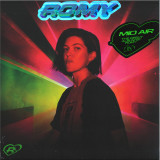
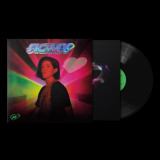
"Mid Air" ist ein Album über das Feiern, die Zuflucht und die Erlösung auf der Tanzfläche. Es ist ein Album, das sich mit Liebe, Trauer, Beziehungen, Identität und Sexualität beschäftigt. Es ist Romys Liebesbrief an die queeren Clubs, in denen sie Gemeinschaft und Anschluss gefunden hat. Die Entstehung des Albums, ihres ersten Soloprojekts, war ein Prozess, bei dem sie sich selbst außerhalb von The xx kennengelernt hat und in dem sie auch noch die Zeit hatte, sich zu verlieben. Es gibt einen Moment, ein Zwischenspiel, ein paar Tracks in "Mid Air", als Romys Stimme leise den Text "it hit me in mid air" singt. Diese Erkenntnis führt uns direkt in den Song "Enjoy Your Life", die zweite Single des Albums, die wie eine Offenbarung klingt. "Meine Mutter sagte zu mir "genieße dein Leben"", singt Musiker Beverly Glenn-Copeland im Refrain - ein Sample aus seiner Platte "La Vita". Als Romy den Satz zum ersten Mal hörte, hat er sie umgehauen - eine Erinnerung in den Tiefen der Trauer, dass das Leben kurz ist und man es in vollen Zügen genießen sollte. Freude, Verbundenheit, Liebe zu suchen. Während die Strophen die härteste Zeit nach dem Verlust ihrer Eltern zum Ausdruck bringen, ist der Refrain eine Art feierliche Ruhe. Schmerz und Freude tanzen zusammen. Die Art von Liedern, die Romy am liebsten mag - das, was sie "emotionale Musik zum Tanzen" nennt - Lieder wie "Smalltown Boy" von Bronski Beat oder "Dancing On My Own" von Robyn. Das ist die Art von Musik, die "Mid Air" inspiriert hat, die Art von Musik, die Menschen in Clubs zusammenbringt, insbesondere in queeren Clubs. Romy begann als Teenager in Londoner Queer-Clubs aufzulegen und sieht "Mid Air" als eine Rückkehr in diese Zeit, ein Pop-Dance-Album, das die Orte beschwört, an denen sie sich zum ersten Mal in das Genre und seine Kraft, Menschen zu bewegen, verliebt hat. Die Tatsache, dass das Album größtenteils unter Ausschluss der Öffentlichkeit entstand, als Romy die Clubs vermisste, machte diesen Impuls, ein Album zu schaffen, das in einem Club ein Zuhause finden könnte, umso wichtiger. Die Zusammenarbeit mit Fred Again.. und Stuart Price (der eines von Romys Lieblingsalben, Madonnas "Confessions on a Dancefloor", produziert hat) sowie mit Jamie xx, einem ganz engen Freund, Mitglied von The xx und Kollaborateur des Tracks "Enjoy Your Life", sorgte für die perfekte Balance zwischen Emotion und Tanzbarkeit. Auch wenn Romy nicht damit gerechnet hätte, dass ein solches Album jemals zustande kommen würde, als sie 2018 begann, mit Fred zu schreiben "Mid Air" führt uns durch die Höhen und Tiefen - einer Nacht, einer Beziehung, von Trauer und Heilung - und endet schließlich an einem Ort des Optimismus. Der letzte Track "She"s on My Mind" ist eine bewusste Anspielung auf den Disco-Song, der am Ende der Nacht in angesagten Queer-Clubs wie der Paradise Garage gespielt wurde und bei dem die getrennt tanzenden Körper zueinander fanden. Es ist das Ende eines Albums, das die besonderen, aber flüchtigen Momente der Ekstase feiert, die man nur in der Tanzmusik finden kann. Oder wie Romy es ausdrückt: "Das Gefühl der Gemeinschaft in den Clubs ermöglicht eine Flucht vor der Realität der Welt. Ich bin vielleicht nicht das Leben und die Seele einer Party, aber in der Atmosphäre eines Clubs zu sein, zu beobachten und sich zu verbinden - dadurch fühle ich mich weniger allein und lebendiger"
- 1: In Pieces (Radio Edit)
- 2: Cold As Ice (Live - Itunes)
- 3: Say You Will (Live)
- 4: Urgent (Live)
- 5: At War With The World (Live)
- 6: Headknocker (Live)
- 7: Juke Box Hero (Live)
- 8: Feels Like The First Time (Live)
- 9: Starrider (Live)
- 10: Hot Blooded (Live Luzern)
- 11: The Flame Still Burns (Live Luzern)
- 12: Head Games (Live Luzern)
- 13: I Want To Know What Love Is (Live)
“Can’t Slow Down“ was originally released in 2009, 15 years after Foreigner’s previous studio album. It marked the Melodic Rock comeback of the year; praised by fans and critics alike. “It was our first studio album with the new lineup and I think it has a tremendous amount of energy in it“, says founding member and lead guitarist Mick Jones. “The title just seemed to sum up the way we were feeling at the time. It captured the fact that Foreigner had become a powerful live band and was ready to take on the world again. I’m happy to say that it drew the attention of Foreigner fans, old and new, and went on to become a chart album in several countries.“ CD1 includes the complete studio album, produced by Mick Jones & Marti Frederiksen (Aerosmith, Ozzy Osbourne, Mötley Crüe) and featuring the song ‘Fool For You Anyway‘, produced by the acclaimed Grammy Award-winning producer Mark Ronson. Exclusive to this 2CD Deluxe Digipak Edition is the second CD „B-Sides And Extra Tracks“ which includes a carefully selected set of Foreigner’s biggest hits as well as beloved fan favourites – all recorded in energetic live versions of which some will be released the first time on CD. This collection istopped of by an exclusive Radio Edit of “Can’t Slow Down“’slead single ‘In Pieces‘. CD2 will also become available as a Strictly Limited Heavyweight Double LP Edition on transparent orange vinyl.
Fast-rising Dutch producer, Baril, returns to Intercept Records with the emphatic release of his debut album, For You, Forever. Set for release August 25th, the project see’s Baril build upon his chillwave approach to dance music which serves as a warm embrace to listeners. Merging contemporary songwriting with a plethora of electronic influences, the album transcends ambient, breakbeat, and Deep House - the result is one that fits perfectly both on the dancefloor, as well as home listening. The project arrives two years on from his six track EP ‘One More Rush’ which gained the artist worldwide recognition from the likes of Bicep and Fred Again.
After a long hiatus, the vinyl imprint "Endless Rotation" emerges once again with "You Name It EP." This time, label owner Fred Brune teams up with Willi Schumacher, also known as WIRED. The result is a collaborative A-side that takes listeners on a spacey minimal journey, accompanied by a captivating looped pad phrase reminiscent of the early 2000s German minimal sound. Fred Brune contributes an additional lively percussive groover, showcasing a prominent dirty saw-tooth bassline. On the flipside, Paul Walter, a highly acclaimed artist from Vienna, delivers a mesmerizing 14-minute minimal remix of "You Name It", skillfully reimagining the acoustic drums with an innovative twist.
- 1: Still Ill
- 2: Ask
- 3: There Is A Light That Never Goes Out
- 4: How Soon Is Now?
- 5: This Charming Man
- 6: Girl Afraid
- 7: Panic
- 8: Bigmouth Strikes Again
- 9: Girlfriend In A Coma
- 10: The Boy With The Thorn In His Side
- 11: Barbarism Begins At Home
- 12: What Difference Does It Make?
- 13: Please, Please, Please Let Me Get What I Want
- 14: Shoplifters Of The World Unite
- 15: The Queen Is Dead
"The Queen Is Not Dead" ist kein "durchschnittliches" SPIRITUAL FRONT Album, aber welche Veröffentlichung der Suicide Pop Band aus Italien ist das schon? Das achte Studioalbum der Römer ist vielmehr "eine Hommage an die legendären, wundervollen Hymnen von Morrissey und Johnny Marr", wie Simone Salvatori schreibt. Der Bandgründer und Frontmann von SPIRITUAL FRONT bezeichnet THE SMITHS als eine der wichtigsten musikalischen Inspirationen für jedes Mitglied der Band. Die Italiener nahmen das Album mit dem erklärten Ziel auf, eine respektvolle Hommage zu erschaffen, ohne dass dabei ein Klon entstehen sollte. Bei den fünfzehn Coversongs, die für viele Musikfreunde heilig sind, blieben die Römer den Originalaufnahmen zwar treu, sie führen die Songs jedoch näher an die Klangwelt von SPIRITUAL FRONT heran - beispielsweise indem sie klassische Instrumente hinzufügen. Zu Salvatori und seinen Bandkollegen, dem Gitarristen Francesco Conte und Andrea Freda am Schlagzeug, gesellen sich der Bassist Daniele Raggi, ein Streichsextett und ein Bläser sowie eine Fülle von Beiträgen befreundeter Musiker: Darunter befinden sich die Sängerin Durga McBroom (PINK FLOYD, BLUE PEARL), Riccardo Galati, Filippo Marcheggiani (BANCO DEL MUTUO SOCCORSO), Michal Stepien (MGLA), Jairo Zavala (CALEXICO), King Dude, Traci Danielle (MY LIFE WITH THE THRILL KILL KULT), Riccardo Spilli (IL BALLETTO DI BRONZO) und Sasha Boole (ME AND THAT MAN). SPIRITUAL FRONT wurden 1999 als Soloprojekt von Salvatori gegründet und haben seitdem zahlreiche Alben, Singles, EPs und Kollaborationen veröffentlicht. Die Italiener beschreiben ihren Sound als "eingängige Balladen für herzzerreißende nihilistische Jugendliche". Textlich beschäftigen sich SPIRITUAL FRONT mit Themen wie der Suche nach einer eigenen Identität, Sexualität, harte Realitäten und wütende Trennungen, die oft von triefendem Sarkasmus, Nihilismus sowie einem beißenden Sinn für Humor eingefärbt sind. Darüber hinaus haben die Italiener mit namhaften Künstlern wie LYDIA LUNCH, ORDO ROSARIUS EQUILIBRIO und vielen anderen zusammengearbeitet sowie an den Soundtracks der Fernsehserie "Las Vegas", des Kinofilms "Saw 2" und an weiteren Independent-Filmen, Theaterproduktionen und modernem Ballett mitgewirkt. SPIRITUAL FRONT zollen THE SMITHS, die für die Italiener zufällig den Soundtrack ihres Lebens komponiert haben mit "The Queen Is Not Dead" ihren aufrichtigen Tribut.
First ever commercial releases of New Orleans’ legend Alvin Batiste’s Spiritual Jazz albums created with the college band he instructed and led in Baton Rouge - Goes To Africa With Love and Live at The 1971 American College Jazz Festival Originally given away as souvenirs at Southern University, these albums contains deep Batiste originals and, on Live, are paired with excellent John Coltrane, Miles Davis and Freddie Hubbard covers. They are some of the most sought after albums of Americas 70s jazz underground. Each album contains extensive booklet detailing Batiste’s life and his time spent honing and recording this remarkable band of young students. That one of the great Spiritual Jazz albums of the era could be found in duplicate New Orleans thrift store in the 1980s goes a long way in illustrating the lack of acclaim this special and overlooked album maintained, even in a city where the Batiste name is musical royalty. The Southern University albums Alvin Batiste offered the world were novelies, not worthy of serious consideration, a moment captured, but not necessarily worthy of being collected or preserved by anyone not immediately involved in its creation. That changes now. With the release of the two Southern University albums, Now-Again continues a conversation begun with the late Kashmere Stage Band director Conrad O. Johnson and the issue of his high school students’ music as Texas Thunder Soul, and the continued belief that beautiful music created by youth - even under the most adverse circumstances - can always inspire us.
- 1: Past And Present Ft. Pupajim
- 2: Good Lovin Ft. Lady Ann
- 3: Sugarwater Ft. Hollie Cook
- 4: Riddim General Ft. Kiko Bun
- 5: We Pulsating Ft. Solo Banton
- 6: Only Love Ft. Prince Alla
- 7: Rain Keeps Falling Ft. Johnny Clarke
- 8: Total Disaster Ft. Shanti D & Ranking Levy
- 9: Control The Border Ft. Charlie P & Daddy Freddy
- 10: Birds Of Vice
Mungo’s Hi Fi return with their exciting new vocal project Past And Present. Released on their Dumbarton Rock label, it’s the eagerly awaited vocal companion piece to 2021 dub album Antidote. Past And Present is unique for Mungo’s in being devoted to the Rub A Dub reggae style that arose in late 70s and early 80s Jamaica. The record has its roots in both past and present. Back in 2021, Mungo’s responded to the pandemic with the dub project Antidote, an album of reflection among wide spaces and nature. As the world has reopened, Past And Present celebrates the return of verbal communication and dancing to hypnotic basslines, with the original vocal cuts by veteran and rising microphone talent. The haunting voice of French pure singjay Pupajim encourages us to face living in the now, on title track Past and Present. Pioneering Jamaican female deejay Lady Ann toasts the importance of Good Lovin’ over a sensual, waist-winding rhythm. Ethereal UK neo lovers rock singer Hollie Cook revisits her classic Sugar Water, floating above a sparse and eerie future Rub A Dub soundscape. Honey-toned Londoner Kiko Bun exudes confidence and humility as a Riddim General while veteran talker Solo Banton shakes up the dance on his seismic, much requested, We Pulsating. The biblical voice of Jamaican legend Prince Alla sounds fresh on a revisit to his immortal Only Love Can Conquer. Fellow elder statesman of reggae Johnny Clarke contributes the sole non Rub A Dub offering with the “Flying Cymbals” driven, deep roots track Rain Keeps On Falling. French singjay Shanti D and Israeli chanter Ranking Levy pair up on the mighty Jaqueline rhythm for a warning against Total Disaster. The prodigious Charlie P joins Godfather of UK emcee-ing, Daddy Freddy, to request freer movement on Control The Border. The final statement is without words or vocals: as Mungo’s production team take centre stage for the soaring Birds Of Vice – the A side to Antidote’s closing dub, Birds Of Pleasure. In reggae, the vocal traditionally precedes the dub. By completing their pairing of Antidote with Past and Present, Mungo’s have flipped the script and reversed the process – crafting a loving tribute to Rub A Dub’s rolling basslines and upward vibes in a modern style
- 1: Libertude
- 2: 100-99 (Ft. Goldlink)
- 3: Memo Of Hate
- 4: Downtown Fred
- 5: Old Man
- 6: Home Again
- 7: I Got You
- 8: Darlin
- 9: 5. Thoughtful Distress (Ft. Matt Helders & Steve Stevens)
- 1: Fast Kitten
- 2: Caught By Night
- 3: I'd Never Leave
- 4: Dead Air
- 5: One Chance
- 6: Never Stop
- 7: False Alarm
- 8: 13. Remember (Ft. Rainsford)
- 9: 818
- 10: 19. Alright Tomorrow (Ft. Rainsford)
Yellow/Green/Black[28,57 €]
Pop/rock singer, songwriter, and guitarist Albert Hammond Jr. is the lead & rhythm guitarist and songwriting member of the GRAMMY® and BRIT Awards-winning band The Strokes. He has released 4 solo albums to date, most recently the acclaimed “Francis Trouble” in 2018 which spawned the radio single “Far Away Truths”. In the 4 years, since then, The Strokes released their US Top 10 charting GRAMMY® nominated rock record “The New Abnormal” and toured the world extensively. Albert also began the songwriting process for his 5th solo album “Melodies on Hiatus”, a 19-track album, crafted in a most experimental style. Albert teamed up with his writing partner, Canadian songwriter, and poet Simon Wilcox (whom he never met during the process) and had lengthy conversations via the telephone; Simon would jot down notes from Albert’s stream of consciousness, and draft the lyrics on her typewriter, and drop them into his letterbox! Albert then added the lyrics to the melodies he had already crafted. The songwriting process became a long distant “anonymous love affair of ideas & lyrics.” The album covers themes of childhood, surviving adolescence, adulthood, vulnerability, fame, relationship with self and others, and is Albert’s “deconstructed broken down ego reaction” to “Francis Trouble.” The album also features songs with GoldLink, Matt Helders (of the Arctic Monkeys), Steve Stevens and Rainsford, and was mixed by Tony Hoffer (known for his work with Beck, Air, M83, The Kooks, Fitz and the Tantrums, Metric, Chromeo, etc.) and mastered by Dave Cooley at Elysian Masters (Paramore, Spoon, Tame Impala, Jimmy Eat World, Peanut Butter Wolfe).
The music explores Ekko´s feelings and possibilities, and the unpredictability of the improvisational music is a parallel to an echo that speaks freely. What happens then? «Hva nå, Ekko?» is a commissioned work by Liv Andrea Hauge, written for Festspillene i Helgeland 2022. The ambition behind the work is based on exploring improvisation in a bigger jazz ensemble. Composed by Liv Andrea Hauge, it´s performed by some of the foremost young jazz musicians on the Norwegian stage: Ragnhild Moan, Signe Emmeluth, Torstein Lavik Larsen, Marte Eberson, Fredrik Luhr Diecthricson and Andreas Winther. Drawing on Liv Andrea´s compositions and collective improvisations, the work appears as a collective project colored by tight interaction, and through the hour long work it´s notable how much the musicians enjoy playing with each other. Liv Andrea Hauge is an Oslo based musician, originally from Mosjøen in Northern Norway. She has studied jazz piano at the Norwegian Academy of Music, and despite her young age and carriere she has put a mark on the Norwegian music stage, with bands such as Kongle Trio and Ladybird Orchestra. In 2022 she released the album “Live From St.Hanshaugen” with Liv Andrea Hauge Trio, mentioned as one of 2022’s best Norwegian jazz albums
Jayda G, die Grammy nominierte Produzentin, DJ, Umwelttoxikologin und -aktivistin, meldet sich mit ihrem neuen Album, „Guy“, zurück. Das Album wurde gemeinsam mit Jack Peñate produziert (der bereits mit Künstler:innen wie Sault, David Byrne und Adele zusammengearbeitet hat), mit Beiträgen von Lisa-Kaindé Diaz (von Ibeyi), Ed Thomas (Stormzy, Nia Archives, Jorja Smith) und anderen.
Das Album erscheint nach ein paar ereignisreichen Jahren, in denen sie für einen Grammy nominiert wurde (für ihre Single mit Fred Again.., „Both Of Us“), eine Reihe hochkarätiger Remixe für Taylor Swift und Dua Lipa veröffentlichte, auf den größten Festivals und Bühnen der Welt spielte, darunter Glastonbury und Coachella, eine Compilation für die renommierte „DJ Kicks“-Reihe und eine hochgelobte Zusammenarbeit mit Aluna veröffentlichte, als Gastjurorin bei der BBC-Show „Glow Up“ auftrat, ihre Jugendliebe in ihrer kanadischen Heimatstadt Grand Forks heiratete und an der immersiven Installation „Undercurrent“ (New York, Juni '21) mitwirkte, die sich neben Künstler:innen wie Khruangbin, Nosaj Thing, Mount Kimbie und Bon Iver mit der Klimakrise befasste.
Das neue Album, „Guy“, stellt Jayda Gs eigene Stimme und ihre Lyrics stärker in den Mittelpunkt als je zuvor. Die 13 Tracks basieren auf ihren House-, Disco-, R&B- und Soul-Wurzeln und betonen gleichzeitig ihr Feingefühl als Pop-Songwriterin, durchsetzt mit Archivaufnahmen ihres verstorbenen Vaters, William Richard Guy. Trotz der manchmal traurigen Natur des Ausgangsmaterials erweist sich das Album letztendlich als eine erhebende und positive Erfahrung, sowohl musikalisch als auch von der Botschaft her, die es vermittelt.
Formate:
- Standard CD in FSC-certifiziertem Gatefold. Um die Produktion der CD zu kompensieren, wird der Erlös aus dem Verkauf des Albums an verschiedene Klimainitiativen gespendet, die Jayda während der Dreharbeiten zu dem Film Blue Carbon besucht hat.
- Farbiges*, limitiertes Standardvinyl in FSC-certifiziertem Gatefold inklusive Downloadcode. Um die Produktion des Vinyl zu kompensieren, wird der Erlös aus dem Verkauf des Albums an verschiedene Klimainitiativen gespendet, die Jayda während der Dreharbeiten zu dem Film Blue Carbon besucht hat. *Haftungsausschluss: die endgültige Farbe kann vom Mockup abweichen
- A1: Short Term Agreement
- A2: Slump (Feat Freddie Dredd)
- A3: Grub (Feat Jeshi)
- A4: No Witness (Feat Apoc Krysis)
- A5: 9873465923846637282385
- A6: Theroom
- A7: External Memories
- A8: Saint-Laurent (Feat 8Ruki)
- A9: Focus Point
- A10: Syntheticcigarette Interlude
- B1: Find The Bag (Feat Baby.com & Lord Pusswhip)
- B2: Hollowhunt
- B3: Panic!
- B4: Everyday Further From You Is A Better Day (Feat Arthrn)
- B5: Mosh O’clock (Feat Chlobocop)
- B6: Tell Me (Feat Pollari)
- B7: Alone (Feat Bitsu)
- B8: Head! Shot!
- B9: Short Terme Agreement Pt 2
The name NxxxxxS (pronounced "N-Five X-S”) sounds like it could be an equation, or a mystery. But to begin to unravel the identity of the French producer who just signed to Because Music and Mad Decent (the label founded by Diplo), you first have to look for clues on YouTube and Soundcloud, where so many underground artists have found a place to hone their craft. In the ten years preceding the release of his second album Short Term Agreement in 2023, NxxxxxS built up a solid reputation for himself in the international vaporwave, vaportrap & phonk scenes. This is no small feat considering he didn’t have any real knowledge of production or composition before deciding to take on these classic genres of “Internet music”.
The Paris native first gained exposure when he started making beats on YouTube, taking his inspiration from American rappers of the blog era - when artists, especially in hip hop, used digital technology to break away from traditional distribution models - like Mac Miller or Odd Future. Building on this initial success, NxxxxxS turned to Soundcloud, an essential platform for music enthusiasts, tastemakers or anyone on the lookout for the sounds of tomorrow.
Following in the footsteps of The Alchemist and other producers of the same ilk, NxxxxxS soon became one of the pioneers of vaporwave and vaportrap music. Featured prominently in modern productions, these styles originated on social media platforms such as Reddit or Tumbler in the 2010’s and are recognisable by their frequent use of commercial samples ranging from the 70’s to the 2000’s (taken from jingles, lounge, jazz or elevator music). Altered, chopped up and slowed down to around 60 to 70 BPM to match hip-hop standards, the music offered a critique or satire of capitalism, consumer society and any culture that grew out of it, most notably yuppies from the 80’s.
NxxxxxS put his own spin on the recipe by creating a new world filled with soaring melodies and countless references to movies and horror scenes, and eventually released his debut album Fujita Scale (a scale used to measure the damage inflicted by tornadoes) in 2014. The album reached a worldwide audience because of its composer’s story and of the secrecy around his French nationality, and even won over unexpected fanbases such as the highly closed off Chinese market. Fujita Scale landed on one of China's streaming platforms, making NxxxxxS an identifiable artist in Asia who went on to tour his album three times across the continent.
NxxxxxS kept the ball rolling, collaborating on a new series of more accessible projects, which aimed to be less niche in terms of the references or sub-genres they tapped into, so he could find a new audience. This led to his first hits, “Synthetic Corporation” - which would also become the name of his label - “Remember Last Summer” and “Formatted Excess”, as well as his most popular track to date, “Playa Shit”, with over 11M streams on Spotify. The upcoming album’s title, Short Term Agreement, is a playful reference to his unyielding desire for independence and productivity, and his eagerness to preserve the personal freedom he turned into strength.
Yet NxxxxxS is never one to refuse support, and he has now joined forces with Because Music & Mad Decent to further establish himself as a producer at the international level - alongside Diplo especially, who is a case in point - so that this understated and ever prolific artist can meet his ambitions of widening his audience and have his name known by all.
And so the tracks on Short Term Agreement serve as the foundation for NxxxxxS' new identity, featuring a rich and diverse array of sounds thanks to the numerous guests involved: London rapper Jeshi - a new British rap phenomenon also freshly signed to Because Music, French rappers 8ruki & Bitsu, Canadian Freddie Dredd and American underground talents Pollari . Avoiding the pitfalls of a compilation-like producer album, NxxxxxS has once again carved out his own style from the modern hip hop rule book.
In other words, NxxxxxS’ constant evolution has brought us this much closer to solving the mystery that is his name.
One of the main figures in Alabama’s music scene, Frederick Knight arrived at Stax in 1972 and hit with the country soul of "I've Been Lonely For So Long", making number 8 on the R&B chart, and the subsequent album was a real milestone in his career.
Prior to this he played a significant part as a producer/writer at Neil Hemphill's Sound of Birmingham Studios where the Stax album was cut. Later that decade Knight would again achieve commercial success with his own record label, Juana, and the recordings of The Controllers and, most notably, Anita Ward.
These early 70s tracks have never surfaced on vinyl before, both of which were also recorded in Birmingham. The plaintive ballad "You've Never Really Lived" with its subtle tempo will have you hooked from the off, while "How, When Or Where" is a mid-tempo opus that will please the dancers out there.
Two utterly fabulous tunes.
- 180 GRAM AUDIOPHILE VINYL
- INCLUDES INSERT
- 30TH ANNIVERSARY OF THE LEGENDARY ALBUM
- REMASTERED AUDIO
Fishbone was one of the most distinctive and eclectic alternative rock bands of the late '80s. With their hyperactive, self-conscious diversity, goofy sense of humor, and sharp social commentary, the group gained a sizable cult following during the late '80s.
Truth and Soul is their second album, originally released in 1988. The album features a wide array of genres including punk, ska, reggae, soul, funk, elements of hard rock and blues. Truth and Soul contains a cover version of Curtis Mayfield's Freddie's Dead', originally from the soundtrack of the film Super Fly and it is the first single of the album.
Three other tracks were released as singles Ma and Pa', with a video directed by Mike Lipscombe, Change' and One Day'.
The album was awarded four-out-of-five stars in 2004's The New Rolling Stone Album Guide. Music critic Tom Moon called the album one of his 1000 Recordings to Hear Before You Die' and Robert Dimery listed it as one of his 1001 Albums You Must Hear Before You Die'.
This year we are celebrating the 30th birthday of Truth and Soul. The album is finally available again on vinyl and includes the original insert with lyrics and liner notes.
“These things happen,” says K. Leimer of LUYU. Listen Until You Understand is a test drive through an obstacle course designed for new instruments, arrangements, juxtapositions, and real-time experiments dedicated to leaving the original impulses untouched and unadorned. Joined at times by digital percussionist Dolphie Stein, the music throws itself against itself without loyalty to genre or form, mashing granular particles into a tremulous spectrum of soundwalls, transitions, noise, distortions, and the occasional clearing. As close to live improvisation as one can get in a multitrack studio setting, LUYU takes generative techniques and drops them into short-form events by building its soundstage in thickets of shifting elements, collapsing phrases, broken signatures, and implied patterns. An outlier in Leimer’s catalog of general stillness and subtle detail, LUYU revels in the bare sound of things usually hidden in the mix.
Kerry Leimer founded Palace Of Lights in 1979. Leimer’s work has also been issued by Abstrakce, Autumn, First Terrace, Les Giants, Invisible Inc., Origin Peoples and RVNG. His work is included in the Cherry Red Noise Floor compilation series and his early cassette work is featured in the critically acclaimed VOD box set American Cassette Culture. Leimer has been actively producing music since the mid 1970s—his current catalog includes twenty solo albums plus collaborative albums with Savant, Marc Barreca, and Three Point Circle. Recent soundtracks include work for video artists Cristiane Bouger and Fred Birchman, HBO’s How To With John Wilson and the Netflix documentary John Was Trying to Contact Aliens. His work is included in the collection of The British Library.
Almost annually Peletronic releases a record on Fortunea. And this time he gives us a summer anthem that will transform festival and club goers into a frenzy!
‚Sanguine‘ is the title-track of this EP. And thats exactly the message he wants to get across.
Looking forward! Never stop believing! And celebrate life no matter how crazy the world around us is! Simple and effective thanks to an unbelievable hypnotic hookline that is building up tension and excitement every single minute, while still being true to its
underground roots.
A different but also powerful approach can be heard on the B-side. ‚Reflections‘ steeps into 909 infused techno and house patterns. More raw and analogue then he was ever before. A piece that has the capability to be the next serious dancefloor-weapon on abandoned
warehouse parties.
Both compositions will come out this july in its digital form and on limited 10“ vinyl record later this year. And yet again with the mastering expertise by Patrick Pulsinger.
_____
LIMITED TO 300 COPIES! THERE WILL BE NO REPRESS!
Support by Laurent Garnier, COEO, Glenn Underground, Manuel Sahagun, Alexi Delano, Fred P, Sune, Roman Rauch, Orlando B, Pawas, Tiptoes, Severino, Makossa, Lars Berenroth
Scottish jazz trumpeter Malcolm Strachan releases his second solo album "Point Of No Return" on Haggis Records on 27th January 2023. A follow-up to his debut album "About Time" from March 2020 (also on Haggis Records), which received great critical acclaim and strong radio support across the globe. Once again, Malcolm delivers an album of original music written by himself and featuring material covering a broad spectrum of jazz styles. From modal jazz grooves to Brazilian samba beats, Latin rhythms to cinematic soundtrack vibes, and along the way, some beautiful ballads.
If the first album nodded slightly to mid-late 1960s classic Blue Note Records type jazz, this one is more reminiscent of the jazz fusion albums that Malcolms's jazz trumpet hero Freddie Hubbard recorded for the legendary CTI Records label in the early-mid 1970s. The same groove-based jazz where soul and funk beats are at the heart of the arrangement. Rock solid rhythms that allow complex horn parts and improvisation to float over the top with ease. The ensemble playing is strong and the leader's trumpet solos show why he's been one of the most in-demand session musicians in the UK for the last 20 years.
He's recorded and toured with the likes of Mark Ronson, Amy Winehouse, Corinne Bailey Rae, Jamiroquai, Martha Reeves and The Vandellas, Jess Glynne, The Craig Charles Fantasy Funk Band, Black Honey, The New Mastersounds, Abstract Orchestra and Blue Note Records jazz saxophone legend Lou Donaldson. Of course, he's also a founder and existing band member of the UK funk kings The Haggis Horns.
The core band on "Point Of No Return" are musicians that Malcolm has known and worked with for over two decades, often in The Haggis Horns, and most appeared on the debut album. Those musicians making a welcome return are Atholl Ransome (tenor sax/flute), George Cooper (piano), Danny Barley (trombone), Courtny Tomas, (double bass), and Erroll Rollins (drums). Newcomers this time are longtime Haggis Horns guest percussionist Sam Bell plus special guest vocalist UK jazz singer Jo Harrop, who adds non-verbal Flora Purim style vocals on tracks one and three. Three tracks feature strings, arranged by Phil Steel, with all the strings played by Richard Curran. One of the tracks is the beautifully poignant ballad for strings and trumpet "The Last Goodbye" which could easily have come from a film soundtrack and where Malcolm digs deep into his love for jazz ballads in his solo.
"Point Of No Return" by Malcolm Strachan will definitely appeal to lovers of contemporary acoustic jazz with a classic jazz feel. For those who love the music of Blue Note Records and CTI Records and trumpeters Freddie Hubbard, Donald Byrd, Lee Morgan, Art Farmer, and Miles Davis. Without a doubt, it will be one of the standout UK jazz releases of 2023.
Comprehensive box of 6 LPs / EPs and the band's first rare 7inch.
Aroma Di Amore is/was Belgian’s premier cult band. Since the early eighties ADA innovatively combined electronics with rock. With a mix of razor-sharp Flemish lyrics and unconventional song structures the group earned a cult status in Belgium and abroad. 40 years later they conclude their career with a few last concerts and a vinyl box set spanning the years 1983-1987.
At the notorious Rock Rally of 1982 Aroma Di Amore stands out with their wonderful handling of the Flemish language, a deep bass, typical cold new wave drums, biting guitar riffs with the occasional flavor of absolute madness. Frontman Jos Verlooy adopts the stage name Elvis Peeters. The explanation for this remarkable pseudonym choice: in 1977 – the period of the singer's musical awakening – one of the two famous rocking Elvises (not Costello, but Presley) succumbs to his pill addiction. So, dixit Verlooy, there is an Elvis vacant. A banal surname belongs next to that exotic first name. A combination that breathes rock 'n' roll, according to the singer.
His companion Gerry Vergult – who very much determines the sound with his metallic riffs, somewhat indebted to Jean-Marie Aerts – adopts the stage name Fred Angst. Completely in line with the depressing zeitgeist of the 1980s. Gerry eats and breathes music. Besides composing most of ADA’s songs, he records & self-produces a few fantastic dark en loner solo minimal wave tracks as Fred Angst. He is still musically active, more towards the electronic leftfield nowadays under the moniker Zool.
It is clear from an early age that companion Elvis Peeters possesses the gift of the word. As an adolescent he published the punkzine “Dus”. The punk spirit stimulates Peeters. He begins to transform the poetry that he has been entrusting to paper for some time into song lyrics. It is on a whim and without any stage experience that punk friends Peeters and Angst register for the Rock Rally as Aroma di Amore. On a bed of post-punk and cold wave (Joy Division, Wire and Sisters of Mercy are the main influences), they initially let out playful, minimalist and nonsensical slogans such as "Doe De Mafia" (1982) and "Gorilla Dans De Samba" (1983). Later on, the tone becomes more serious, although Peeters' choice of words continues to show a penchant for absurdism and sarcasm. No one in Dutch songwriting imitates this verbal elasticity, certainly at that time.
The numerous songs about war are downright horrifying. In the 1980s, an arms race is underway. When the Belgian government decides to install nuclear missiles in 1981, Aroma di Amore asks for one minute of silence in the hall during performances. In "Lauwe Oorlog" (1983), Peeters exposes the core of his unrest: “paraat voor de parade / de vrede wordt begraven / met militaire eer”. To this day, the frontman of AdA still proudly wears his at least 30 year old 'atomic energy, no thanks!' button.
In 1984 Aroma releases Koude Oorlog on the new and independent Brussels label Play It Again Sam. The traditional press and radio ignore the record, but in the alternative circuits the mini-album does not go unnoticed, and the group starts to build a solid fan base, resulting in more and more offers for gigs. There's also interest in the Netherlands, and due to the international contacts of PIAS, the record also ends up in France, Switzerland, Spain and Canada.
Encouraged by this modest success, the group returns to the studio for a 12" single. With new group member Frits De Cauter on sax, they record "Voor De Dood". To this day, Voor De Dood remains the most popular AdA song, as evidenced by the countless compilations on which the song has appeared.
AdA goes to the Netherlands to record their next album “De Sfeer Van Grote Dagen”. The people from Nasmak have built a new studio in Eindhoven and one of the members, Theo Van Eenbergen (later Henry Rollins), will be the producer. “De Sfeer Van Grote Dagen” is the group's most adventurous album, and the reviews are again unanimously favorable. However, sales are disappointing and PIAS proposes to recruit Chris Reed of Red Lorry Yellow Lorry and record a new single with him. "Zonder Omzien" is recorded at the prestigious Pyramid Studio. However, PIAS is waiting to release the album and in the meantime AdA is recording a number of extra tracks with producer Ludo Camberlin, including "Koekoek In De Stad". Towards the end of the year, Lo and Elvis travel to Africa for a few months and as a result the group comes to a standstill. In this period, Zonder Omzien is released.
At the beginning of 1986, Peeters and Meulen return, and Andrea Smits leaves the group. Luc Pillards is hired as a replacement, and when Ludo Camberlin presents himself as a new label boss and producer (Anything But Records), they start recording their first full album for the label. “Harde Feiten" kicks in immediately, and the group is back up to cruising speed. In the first week of release, the record even appears in the bestseller list of the record stores.
At the beginning of 1987 the recordings for the second album start, this time in a production by Peeters and Angst themselves. Shortly after the shooting, AdA goes to Switzerland for a short but successful tour, with Men 2nd and Cas & Organized Crime as support act. "Koudvuur" is published in the autumn and considered to be their strongest record so far by the group, the reactions are rather low. Both the reviews in the press and the sales are disappointing and put a damper on the joy. Nevertheless, the group is invited to perform in Valencia, Spain, where they have an unexpected success.
MUTANT SOUNDS BLOG
Aroma Di Amore have always been outsiders, even within the confinement of the alternative rock circuit. Their peculiar blend of raw guitars, electronics, Dutch lyrics and unconventional song structures was too hybrid for many. Those howewer who, without prejudice, would lend an ear to the band's music, discovered an energetic, authentic and uncompromising collective that stood above all trends. While so many Belgian "connaisseurs" had their doubts about the possibilities of international recognition for a band singing in Dutch, Aroma Di Amore toured France, Switzerland and Spain; their records figured in alternative charts from Poland to Canada.
From beginning to end the nucleus of Aroma Di Amore consisted of Elvis PEETERS, who in a inimitable, possessed way delivered his highly original lyrics, and Fred ANGST, guitarist mastering the heaviest riffs as well as refined tapestries of sound. Furthermore, the line-up varied throughout the band's carreer with:- H.K. (Guitarist from 1982 until 1983)- Andrea SMITS (Organ from 1982 until 1985)- Luc PILLARDS (Synthsizer in 1986)- Jan WANDELAAR (Guitar and synthesizer in 1986)- Pulcherie (Saxophone in 1983)- Wout DOCKX (Bass from 1987 until 1988)and especially- Lo MEULEN (Bass from 1983 until 1987)and the late Frits DE CAUTER (Saxophone from 1984 until 1986) contributing to the music.
Box Set includes: Gorilla Dans De Samba 7" (1983), Voor De Dood 12" (1984), Koude Oorlog LP (1984), De Sfeer Van Grote Dagen 12" (1985), Zonder Omzien 12" (1986), Harde Feiten LP (1986), Koudvuur LP (1987)
First-time reissue of Aroma Di Amore's debut album, originally released in 1984.
Aroma Di Amore is/was Belgian’s premier cult band. Since the early eighties ADA innovatively combined electronics with rock. With a mix of razor-sharp Flemish lyrics and unconventional song structures the group earned a cult status in Belgium and abroad. 40 years later they conclude their career with a few last concerts and a vinyl box set spanning the years 1983-1987.
At the notorious Rock Rally of 1982 Aroma Di Amore stands out with their wonderful handling of the Flemish language, a deep bass, typical cold new wave drums, biting guitar riffs with the occasional flavor of absolute madness. Frontman Jos Verlooy adopts the stage name Elvis Peeters. The explanation for this remarkable pseudonym choice: in 1977 – the period of the singer's musical awakening – one of the two famous rocking Elvises (not Costello, but Presley) succumbs to his pill addiction. So, dixit Verlooy, there is an Elvis vacant. A banal surname belongs next to that exotic first name. A combination that breathes rock 'n' roll, according to the singer.
His companion Gerry Vergult – who very much determines the sound with his metallic riffs, somewhat indebted to Jean-Marie Aerts – adopts the stage name Fred Angst. Completely in line with the depressing zeitgeist of the 1980s. Gerry eats and breathes music. Besides composing most of ADA’s songs, he records & self-produces a few fantastic dark en loner solo minimal wave tracks as Fred Angst. He is still musically active, more towards the electronic leftfield nowadays under the moniker Zool.
It is clear from an early age that companion Elvis Peeters possesses the gift of the word. As an adolescent he published the punkzine “Dus”. The punk spirit stimulates Peeters. He begins to transform the poetry that he has been entrusting to paper for some time into song lyrics. It is on a whim and without any stage experience that punk friends Peeters and Angst register for the Rock Rally as Aroma di Amore. On a bed of post-punk and cold wave (Joy Division, Wire and Sisters of Mercy are the main influences), they initially let out playful, minimalist and nonsensical slogans such as "Doe De Mafia" (1982) and "Gorilla Dans De Samba" (1983). Later on, the tone becomes more serious, although Peeters' choice of words continues to show a penchant for absurdism and sarcasm. No one in Dutch songwriting imitates this verbal elasticity, certainly at that time.
The numerous songs about war are downright horrifying. In the 1980s, an arms race is underway. When the Belgian government decides to install nuclear missiles in 1981, Aroma di Amore asks for one minute of silence in the hall during performances. In "Lauwe Oorlog" (1983), Peeters exposes the core of his unrest: “paraat voor de parade / de vrede wordt begraven / met militaire eer”. To this day, the frontman of AdA still proudly wears his at least 30 year old 'atomic energy, no thanks!' button.
In 1984 Aroma releases Koude Oorlog on the new and independent Brussels label Play It Again Sam. The traditional press and radio ignore the record, but in the alternative circuits the mini-album does not go unnoticed, and the group starts to build a solid fan base, resulting in more and more offers for gigs. There's also interest in the Netherlands, and due to the international contacts of PIAS, the record also ends up in France, Switzerland, Spain and Canada.
Encouraged by this modest success, the group returns to the studio for a 12" single. With new group member Frits De Cauter on sax, they record "Voor De Dood". To this day, Voor De Dood remains the most popular AdA song, as evidenced by the countless compilations on which the song has appeared.
AdA goes to the Netherlands to record their next album “De Sfeer Van Grote Dagen”. The people from Nasmak have built a new studio in Eindhoven and one of the members, Theo Van Eenbergen (later Henry Rollins), will be the producer. “De Sfeer Van Grote Dagen” is the group's most adventurous album, and the reviews are again unanimously favorable. However, sales are disappointing and PIAS proposes to recruit Chris Reed of Red Lorry Yellow Lorry and record a new single with him. "Zonder Omzien" is recorded at the prestigious Pyramid Studio. However, PIAS is waiting to release the album and in the meantime AdA is recording a number of extra tracks with producer Ludo Camberlin, including "Koekoek In De Stad". Towards the end of the year, Lo and Elvis travel to Africa for a few months and as a result the group comes to a standstill. In this period, Zonder Omzien is released.
At the beginning of 1986, Peeters and Meulen return, and Andrea Smits leaves the group. Luc Pillards is hired as a replacement, and when Ludo Camberlin presents himself as a new label boss and producer (Anything But Records), they start recording their first full album for the label. “Harde Feiten" kicks in immediately, and the group is back up to cruising speed. In the first week of release, the record even appears in the bestseller list of the record stores.
At the beginning of 1987 the recordings for the second album start, this time in a production by Peeters and Angst themselves. Shortly after the shooting, AdA goes to Switzerland for a short but successful tour, with Men 2nd and Cas & Organized Crime as support act. "Koudvuur" is published in the autumn and considered to be their strongest record so far by the group, the reactions are rather low. Both the reviews in the press and the sales are disappointing and put a damper on the joy. Nevertheless, the group is invited to perform in Valencia, Spain, where they have an unexpected success.
MUTANT SOUNDS BLOG
Aroma Di Amore have always been outsiders, even within the confinement of the alternative rock circuit. Their peculiar blend of raw guitars, electronics, Dutch lyrics and unconventional song structures was too hybrid for many. Those howewer who, without prejudice, would lend an ear to the band's music, discovered an energetic, authentic and uncompromising collective that stood above all trends. While so many Belgian "connaisseurs" had their doubts about the possibilities of international recognition for a band singing in Dutch, Aroma Di Amore toured France, Switzerland and Spain; their records figured in alternative charts from Poland to Canada.
From beginning to end the nucleus of Aroma Di Amore consisted of Elvis PEETERS, who in a inimitable, possessed way delivered his highly original lyrics, and Fred ANGST, guitarist mastering the heaviest riffs as well as refined tapestries of sound. Furthermore, the line-up varied throughout the band's carreer with:- H.K. (Guitarist from 1982 until 1983)- Andrea SMITS (Organ from 1982 until 1985)- Luc PILLARDS (Synthsizer in 1986)- Jan WANDELAAR (Guitar and synthesizer in 1986)- Pulcherie (Saxophone in 1983)- Wout DOCKX (Bass from 1987 until 1988)and especially- Lo MEULEN (Bass from 1983 until 1987)and the late Frits DE CAUTER (Saxophone from 1984 until 1986)contributing to the music.
First-time reissue of Aroma Di Amore's 2nd album, originally released in 1986.
Aroma Di Amore is/was Belgian’s premier cult band. Since the early eighties ADA innovatively combined electronics with rock. With a mix of razor-sharp Flemish lyrics and unconventional song structures the group earned a cult status in Belgium and abroad. 40 years later they conclude their career with a few last concerts and a vinyl box set spanning the years 1983-1987.
At the notorious Rock Rally of 1982 Aroma Di Amore stands out with their wonderful handling of the Flemish language, a deep bass, typical cold new wave drums, biting guitar riffs with the occasional flavor of absolute madness. Frontman Jos Verlooy adopts the stage name Elvis Peeters. The explanation for this remarkable pseudonym choice: in 1977 – the period of the singer's musical awakening – one of the two famous rocking Elvises (not Costello, but Presley) succumbs to his pill addiction. So, dixit Verlooy, there is an Elvis vacant. A banal surname belongs next to that exotic first name. A combination that breathes rock 'n' roll, according to the singer.
His companion Gerry Vergult – who very much determines the sound with his metallic riffs, somewhat indebted to Jean-Marie Aerts – adopts the stage name Fred Angst. Completely in line with the depressing zeitgeist of the 1980s. Gerry eats and breathes music. Besides composing most of ADA’s songs, he records & self-produces a few fantastic dark en loner solo minimal wave tracks as Fred Angst. He is still musically active, more towards the electronic leftfield nowadays under the moniker Zool.
It is clear from an early age that companion Elvis Peeters possesses the gift of the word. As an adolescent he published the punkzine “Dus”. The punk spirit stimulates Peeters. He begins to transform the poetry that he has been entrusting to paper for some time into song lyrics. It is on a whim and without any stage experience that punk friends Peeters and Angst register for the Rock Rally as Aroma di Amore. On a bed of post-punk and cold wave (Joy Division, Wire and Sisters of Mercy are the main influences), they initially let out playful, minimalist and nonsensical slogans such as "Doe De Mafia" (1982) and "Gorilla Dans De Samba" (1983). Later on, the tone becomes more serious, although Peeters' choice of words continues to show a penchant for absurdism and sarcasm. No one in Dutch songwriting imitates this verbal elasticity, certainly at that time.
The numerous songs about war are downright horrifying. In the 1980s, an arms race is underway. When the Belgian government decides to install nuclear missiles in 1981, Aroma di Amore asks for one minute of silence in the hall during performances. In "Lauwe Oorlog" (1983), Peeters exposes the core of his unrest: “paraat voor de parade / de vrede wordt begraven / met militaire eer”. To this day, the frontman of AdA still proudly wears his at least 30 year old 'atomic energy, no thanks!' button.
In 1984 Aroma releases Koude Oorlog on the new and independent Brussels label Play It Again Sam. The traditional press and radio ignore the record, but in the alternative circuits the mini-album does not go unnoticed, and the group starts to build a solid fan base, resulting in more and more offers for gigs. There's also interest in the Netherlands, and due to the international contacts of PIAS, the record also ends up in France, Switzerland, Spain and Canada.
Encouraged by this modest success, the group returns to the studio for a 12" single. With new group member Frits De Cauter on sax, they record "Voor De Dood". To this day, Voor De Dood remains the most popular AdA song, as evidenced by the countless compilations on which the song has appeared.
AdA goes to the Netherlands to record their next album “De Sfeer Van Grote Dagen”. The people from Nasmak have built a new studio in Eindhoven and one of the members, Theo Van Eenbergen (later Henry Rollins), will be the producer. “De Sfeer Van Grote Dagen” is the group's most adventurous album, and the reviews are again unanimously favorable. However, sales are disappointing and PIAS proposes to recruit Chris Reed of Red Lorry Yellow Lorry and record a new single with him. "Zonder Omzien" is recorded at the prestigious Pyramid Studio. However, PIAS is waiting to release the album and in the meantime AdA is recording a number of extra tracks with producer Ludo Camberlin, including "Koekoek In De Stad". Towards the end of the year, Lo and Elvis travel to Africa for a few months and as a result the group comes to a standstill. In this period, Zonder Omzien is released.
At the beginning of 1986, Peeters and Meulen return, and Andrea Smits leaves the group. Luc Pillards is hired as a replacement, and when Ludo Camberlin presents himself as a new label boss and producer (Anything But Records), they start recording their first full album for the label. “Harde Feiten" kicks in immediately, and the group is back up to cruising speed. In the first week of release, the record even appears in the bestseller list of the record stores.
At the beginning of 1987 the recordings for the second album start, this time in a production by Peeters and Angst themselves. Shortly after the shooting, AdA goes to Switzerland for a short but successful tour, with Men 2nd and Cas & Organized Crime as support act. "Koudvuur" is published in the autumn and considered to be their strongest record so far by the group, the reactions are rather low. Both the reviews in the press and the sales are disappointing and put a damper on the joy. Nevertheless, the group is invited to perform in Valencia, Spain, where they have an unexpected success.
MUTANT SOUNDS BLOG
Aroma Di Amore have always been outsiders, even within the confinement of the alternative rock circuit. Their peculiar blend of raw guitars, electronics, Dutch lyrics and unconventional song structures was too hybrid for many. Those howewer who, without prejudice, would lend an ear to the band's music, discovered an energetic, authentic and uncompromising collective that stood above all trends. While so many Belgian "connaisseurs" had their doubts about the possibilities of international recognition for a band singing in Dutch, Aroma Di Amore toured France, Switzerland and Spain; their records figured in alternative charts from Poland to Canada.
From beginning to end the nucleus of Aroma Di Amore consisted of Elvis PEETERS, who in a inimitable, possessed way delivered his highly original lyrics, and Fred ANGST, guitarist mastering the heaviest riffs as well as refined tapestries of sound. Furthermore, the line-up varied throughout the band's carreer with:- H.K. (Guitarist from 1982 until 1983)- Andrea SMITS (Organ from 1982 until 1985)- Luc PILLARDS (Synthsizer in 1986)- Jan WANDELAAR (Guitar and synthesizer in 1986)- Pulcherie (Saxophone in 1983)- Wout DOCKX (Bass from 1987 until 1988)and especially- Lo MEULEN (Bass from 1983 until 1987)and the late Frits DE CAUTER (Saxophone from 1984 until 1986)contributing to the music.
First-time reissue of Aroma Di Amore's 3rd album, originally released in 1987.
Aroma Di Amore is/was Belgian’s premier cult band. Since the early eighties ADA innovatively combined electronics with rock. With a mix of razor-sharp Flemish lyrics and unconventional song structures the group earned a cult status in Belgium and abroad. 40 years later they conclude their career with a few last concerts and a vinyl box set spanning the years 1983-1987.
At the notorious Rock Rally of 1982 Aroma Di Amore stands out with their wonderful handling of the Flemish language, a deep bass, typical cold new wave drums, biting guitar riffs with the occasional flavor of absolute madness. Frontman Jos Verlooy adopts the stage name Elvis Peeters. The explanation for this remarkable pseudonym choice: in 1977 – the period of the singer's musical awakening – one of the two famous rocking Elvises (not Costello, but Presley) succumbs to his pill addiction. So, dixit Verlooy, there is an Elvis vacant. A banal surname belongs next to that exotic first name. A combination that breathes rock 'n' roll, according to the singer.
His companion Gerry Vergult – who very much determines the sound with his metallic riffs, somewhat indebted to Jean-Marie Aerts – adopts the stage name Fred Angst. Completely in line with the depressing zeitgeist of the 1980s. Gerry eats and breathes music. Besides composing most of ADA’s songs, he records & self-produces a few fantastic dark en loner solo minimal wave tracks as Fred Angst. He is still musically active, more towards the electronic leftfield nowadays under the moniker Zool.
It is clear from an early age that companion Elvis Peeters possesses the gift of the word. As an adolescent he published the punkzine “Dus”. The punk spirit stimulates Peeters. He begins to transform the poetry that he has been entrusting to paper for some time into song lyrics. It is on a whim and without any stage experience that punk friends Peeters and Angst register for the Rock Rally as Aroma di Amore. On a bed of post-punk and cold wave (Joy Division, Wire and Sisters of Mercy are the main influences), they initially let out playful, minimalist and nonsensical slogans such as "Doe De Mafia" (1982) and "Gorilla Dans De Samba" (1983). Later on, the tone becomes more serious, although Peeters' choice of words continues to show a penchant for absurdism and sarcasm. No one in Dutch songwriting imitates this verbal elasticity, certainly at that time.
The numerous songs about war are downright horrifying. In the 1980s, an arms race is underway. When the Belgian government decides to install nuclear missiles in 1981, Aroma di Amore asks for one minute of silence in the hall during performances. In "Lauwe Oorlog" (1983), Peeters exposes the core of his unrest: “paraat voor de parade / de vrede wordt begraven / met militaire eer”. To this day, the frontman of AdA still proudly wears his at least 30 year old 'atomic energy, no thanks!' button.
In 1984 Aroma releases Koude Oorlog on the new and independent Brussels label Play It Again Sam. The traditional press and radio ignore the record, but in the alternative circuits the mini-album does not go unnoticed, and the group starts to build a solid fan base, resulting in more and more offers for gigs. There's also interest in the Netherlands, and due to the international contacts of PIAS, the record also ends up in France, Switzerland, Spain and Canada.
Encouraged by this modest success, the group returns to the studio for a 12" single. With new group member Frits De Cauter on sax, they record "Voor De Dood". To this day, Voor De Dood remains the most popular AdA song, as evidenced by the countless compilations on which the song has appeared.
AdA goes to the Netherlands to record their next album “De Sfeer Van Grote Dagen”. The people from Nasmak have built a new studio in Eindhoven and one of the members, Theo Van Eenbergen (later Henry Rollins), will be the producer. “De Sfeer Van Grote Dagen” is the group's most adventurous album, and the reviews are again unanimously favorable. However, sales are disappointing and PIAS proposes to recruit Chris Reed of Red Lorry Yellow Lorry and record a new single with him. "Zonder Omzien" is recorded at the prestigious Pyramid Studio. However, PIAS is waiting to release the album and in the meantime AdA is recording a number of extra tracks with producer Ludo Camberlin, including "Koekoek In De Stad". Towards the end of the year, Lo and Elvis travel to Africa for a few months and as a result the group comes to a standstill. In this period, Zonder Omzien is released.
At the beginning of 1986, Peeters and Meulen return, and Andrea Smits leaves the group. Luc Pillards is hired as a replacement, and when Ludo Camberlin presents himself as a new label boss and producer (Anything But Records), they start recording their first full album for the label. “Harde Feiten" kicks in immediately, and the group is back up to cruising speed. In the first week of release, the record even appears in the bestseller list of the record stores.
At the beginning of 1987 the recordings for the second album start, this time in a production by Peeters and Angst themselves. Shortly after the shooting, AdA goes to Switzerland for a short but successful tour, with Men 2nd and Cas & Organized Crime as support act. "Koudvuur" is published in the autumn and considered to be their strongest record so far by the group, the reactions are rather low. Both the reviews in the press and the sales are disappointing and put a damper on the joy. Nevertheless, the group is invited to perform in Valencia, Spain, where they have an unexpected success.
MUTANT SOUNDS BLOG
Aroma Di Amore have always been outsiders, even within the confinement of the alternative rock circuit. Their peculiar blend of raw guitars, electronics, Dutch lyrics and unconventional song structures was too hybrid for many. Those howewer who, without prejudice, would lend an ear to the band's music, discovered an energetic, authentic and uncompromising collective that stood above all trends. While so many Belgian "connaisseurs" had their doubts about the possibilities of international recognition for a band singing in Dutch, Aroma Di Amore toured France, Switzerland and Spain; their records figured in alternative charts from Poland to Canada.
From beginning to end the nucleus of Aroma Di Amore consisted of Elvis PEETERS, who in a inimitable, possessed way delivered his highly original lyrics, and Fred ANGST, guitarist mastering the heaviest riffs as well as refined tapestries of sound. Furthermore, the line-up varied throughout the band's carreer with:- H.K. (Guitarist from 1982 until 1983)- Andrea SMITS (Organ from 1982 until 1985)- Luc PILLARDS (Synthsizer in 1986)- Jan WANDELAAR (Guitar and synthesizer in 1986)- Pulcherie (Saxophone in 1983)- Wout DOCKX (Bass from 1987 until 1988)and especially- Lo MEULEN (Bass from 1983 until 1987)and the late Frits DE CAUTER (Saxophone from 1984 until 1986)contributing to the music.