The first and most independent of all independent producers, Joe Meek needs little introduction. He was the first to chart in both the UK and the USA with an independently produced song -which was actually recorded in his home’s kitchen- when The Tornados' Telstar took the world in 1962. Meek was, of course, one of the most in vogue producers of the first half of the 1960s, providing the soundtrack to the evolution of UK Rock’n'Roll to Swinging London, scoring hits with actors like John Leyton (Johnny Remember Me), showmen like Screaming Lord Sutch and bands like The Outlaws and The Tornados. He also produced a wide stream of R&B and freakbeat 45s that are nowadays hardly sought after by the collectors with the biggest bank accounts.
Joe Meek experimented with all kinds of recording techniques in his home studio, his tricks and gimmicks won his productions chart placement and critical and public acclaim, but none of his projects was so advanced and way out as the avantgarde experimentation showed in his I Hear a New World electronic symphony from 1960. Aided by The Blue Men formed by Rod Freeman (group leader, guitar, vocals), Ken Harvey (tenor sax, vocals), Roger Fiola (Hawaiian Guitar), Chris White (guitar), Doug Collins (bass), Dave Golding (drums) -also known as Rodd-Ken and The Cavaliers- who provided a tight base to his electronically produced sounds, Meek came up with what he envisioned as the soundtrack of the future, the sounds he envisioned were to be heard in outer space. It was too way out for its time, certainly. To the point that of all the opus, only four tracks saw the light of day on a 7" EP released on Triumph, Meeks very own label. It wouldn’t be until 1991 that the whole recordings from the I Hear a New World sessions would see the light of day on a CD issued by the RPM label.
Wah Wah offers a new reissue of this now classic early electronics masterpiece, housed in a beautiful front-laminated back-flapped sleeve and offered as a limited 400 copies only black vinyl version and an ultra-limited 100 copies only transparent purple vinyl. Get yours before they fly!
RIYL : Delia Derbyshire and The BBC Radiophonic Workshop, Louis and Bebe Barron’s soundtrack to Forbidden Planet, Raymond Scott, Tom Dissevelt & Kid Baltan, Morton Subotnick…
quête:free son
- 1: Is It Because I’m Black
- 2: Old Fashioned Way
- 3: Artibella
- 4: You Left The Water Running
- 5: Everything I Own
- 6: A Song For You
- 7: Ain’t No Sunshine
- 8: Crying Over You
- 9: Freedom Street
- 10: Just My Imagination (Running Away With Me)
- 11: My Girl
- A1: Acknowledge Me
- A2: Disrespectful
- A3: Urrrge!!!!!!!!!!
- A4: Okloser
- A5: Masc
- A6: Piss
- A7: Headhigh
- B1: Paint The Town Red
- B2: Demons
- B3: Wet Vagina
- B4: F**K The Girls (Ftg)
- B5: Ouchies
- B6 97:
- B7: Gun
- C1: Go Off
- C2: Shutcho
- C3: Agora Hills
- C4: Can't Wait
- C5: Often
- D1: Love Life
- D2: Skull And Bones
- D3: Attention
- D4: Balut
- D5: Wym Freestyle
- A1: Laredo (Small Dark Something); Written-By – Jon Dee Graham, Mark Andes, Michael Hardwick*
- A2: South Texas Lawman
- A3: The Color Of Night; Soloist
- A4: Pinocchio In Vegas
- A5: Annie
- B1: The Black Dog And The Wandering Boy; Soloist
- B2: Back To Coeur D’alene
- B3: Sons Of The Second Sons
- B4: Sailing Away
- B5: Broken Freedom Song; Written-By – Kris Kristofferson
[c] A3 The Color Of Night; Soloist [Electric Guitar] – Tim Holt (2)
[f] B1 The Black Dog And The Wandering Boy; Soloist [Electric Guitar] – Cornbread (4)
Matching vivid world-building with a full house of kinetic rhythms, Polygonia delivers her latest album to Dekmantel as an invitation to experience 12 different dream scenarios.
As Polygonia, Munich-based Lindsey Wang has established herself as a constantly inventive, omnipresent operator within the modern electronic landscape, exploring varying shades of ambient and deep techno while increasingly spreading into downtempo and leftfield electronica with a playful yet mysterious spirit.
Dream Horizons is an instructive title — Wang approached her new album as a collection of different dream scenarios, with all the creative freedom the concept implies. From oceanic calm to artful propulsion, she was free to shift gears from track to track while relishing the strange and beautiful atmospheres her inspiration pointed towards. A multi-instrumentalist as well as a producer, Wang recorded her own voice, saxophone, flute, violin and percussion to inject organic, human vibrancy into the surreal spaces she was shaping out, capturing the uncanny sensation of alien and familiar that hangs over the places we visit when we sleep.
There are pointedly direct techno workouts on the album, from deft beatdown 'Soul Reflections' to shimmering ear worm 'Set Me Free', and 'Twisted Colours' relishes shifting blocks of flute around a sprightly, footwork-tickled framework. Elsewhere, there's space for softer expressions on pearlescent opus 'Crystal Valley' while elastic rhythms and tactile textures slither around at a lower tempo on 'Flakes Flying Upwards'. In between, Wang plays with fractured beat patterns and sharply sculpted sonic matter with a staggering level of detail and intention. 'Gate To Amygdala' is the perfect example of the bold scope of her expression — the midpoint track thrives on nervous tension and a dislocated sense of momentum without anything like a conventional techno trope. 'Mindfunk' equally pushes and pulls at sensory perception with an off-kilter, awkwardly looped synth phrase that relishes the opportunity to skew dance music conventions within the flexible rules of the dream world.
For all the smart production and knowingly experimental approaches that form the basis of the album's sound, it's also a record charged with the full range of emotions you might expect to experience on a break away from consciousness. Whether it's the melancholic impressions that smudge into incidental pauses on 'Metaphysical Scribbles' or the mantra-like breath and sax combination of 'Essential Breath' that closes the record, Polygonia's heart bursts out of the album's vibrant form as brilliantly as her exacting, studio-synced mind.
Limited to 300 copies.
Japanese musician MERMAID, focusing on new roots dub with all bases in sine wave.
The songs have plenty of echoes of chamber music, Japanese folk songs and chopped his own voices, giving the listener layered sounds with a rather odd sense of humour :)
MERMAID is one of the members of DDM (Dangerous Dance Music), which is the movement spread from 'Los Apson?' record store in Tokyo.
After participating in dub & electronic compilations, continuing his own research into Reggae, he has finally unleashed 10 songs in DUBMAID.
Black Vinyl[20,59 €]
Inverted Hyperspace Splatter Vinyl[19,96 €]
Cassette[14,08 €]
Dummy is a rock band from Los Angeles comprised of Alex Ewell, Emma Maatman, Nathan O'Dell, and Joe Trainor. Their debut full-length "Mandatory Enjoyment" (Trouble in Mind) arrived in late 2021, becoming one of the year 's sleeper hits and garnering praise from Pitchfork, Stereogum, and more. Coming out of lockdown, the band spent two years touring in support of the record, and it is this transformational experience that pulses through "Free Energy ", the exhilarating follow-up to "Mandatory Enjoyment". A creatively restless band, Dummy (Ewell: drums, synths, bass; Maatman: vocals, synths, organ; O'Dell: vocals, guitar, organ; Trainor: guitar, bass, synths) wanted to get harder, dancier, more psychedelic for their next record. This meant applying explorative potentials of electronic textures to the elemental qualities of rock i.e. more vocal loops, sampling, more crazy rhythms, and playful synths - but make those samples of Trainor 's guitar, let Maatman sing bolder, experiment with using cold mechanical elements in warm and sparkly ways, and lean harder into traditional-yet-still-awesome forms of rock guitar experimentation like feedbackThe result is a record that celebrates music's ability to move the body, whether that be through a teeth-rattling wall of MBV-esque noise, a sticky pop chorus, or a joyous drum machine_or, if you're Dummy, maybe all of them in the same song. Pop music has always been a big part of Dummy's sound and it manifests in different ways all over Free Energy: the bubbly synth sequence made with a Korg EM1 popping all over "Nullspace," the revved-up drone-pop inspired by second and third wave Dunedin Sound bands like Look Blue Go Purple and Dadamah, and the motorik beat powering "Nine Clean Nails," perhaps the most confidently pop song Dummy has ever recorded and one that exemplifies "Free Energy "'s balancing of live performance intensity with electronic augmentations, the dancier rhythmic elements created out of a drum loop recorded by Ewell while the bridge recalls the Feelies with call-and-response guitars from O'Dell and expressive vocals from Maatman. "Free Energy " also features guest appearances from Oakland-based saxophonist and electroacoustic artist Cole Pulice (Moon Glyph) contributes saxophone and wind synths and Jen Powers of Powers / Rolin Duo (Astral Editions, Feeding Tube Records).
- A1: Carnal (2 00)
- A2: House On Sand (3 33)
- A3: If It Doesn't Hurt (2 59)
- A4: Angel Song (3 05)
- A5: Freefall (3 43)
- B1: Blame It On The Drugs (3 18)
- B2: Head (2 35)
- B3: Existential Dread (2 30)
- B4: Heart (3 42)
- B5: Down The River (3 04)
- C1: Give It Time (3 36)
- C2: Sight (1 12)
- C3: Stuck (3 29)
- C4: Run For Your Life (3 32)
- C5: Sound (2 53)
- D1: We're All Gonna Die (3 05)
- D2: Freefall (3 47)
- D3: Angel Song (3 24)
- D4: House On Sand (3 01)
- D5: Angel Song (3 48)
- Listen To Me, Sister
- Haters Gonna Hate
- Ugly Me
- Craterface
- Don't Say It So
- Phone Call
- Hey, Man
- Monsters (In My Brain)
- Outro
- Pro Yarika
Ukrainian Riot Grrl Trio 'Death Pill' Return With 'Sologamy' Their Much Anticipated Second Album. Two years on from their sensational debut, Ukrainian 'Riot Grrls' Mariana, Anastasiia and Nataliia, aka Death Pill are back. And back in full force, locked and loaded with a mighty set of tunes, _ as they put it. 'A bold exploration of personal empowerment'. 'SOLOGAMY' is fierce, heavy and melodic. The album's 10 tracks mark a bold evolution in the band's sound and Death Pill really deliver with ferocity and belief through multiple gear changes and genres as if it were easy. Hardcore, punk, grunge, thrash, riot grrrl, emo, are just some of the touchstones this album moves through, and all with the accomplished ferocity and memorable melody the band introduced on their debut. There are cellos, piano's, sound effects and ornate arrangements that open out their sonic palette, there's a bit of pop and even a bit of prog. But rest assured _ It's all pure 'Death Pill'. Thematically 'Sologamy' is, at its core, a celebration of the self! DP says: "The title, inspired by the concept of marrying oneself, speaks to the importance of making a personal commitment to self-care, happiness, and emotional well-being. In an era where that can sometimes be misconstrued as selfishness, Death Pill pushes back against these misconceptions, inviting listeners to embrace the power of prioritizing their own mental and emotional health." "Each track on the album is quite different from the last, and we see this as a way of accepting and supporting yourself in any emotional state. You arrive in this world alone and you leave it alone. The bottom line is: You're the only person you've got. "Every song on the album is a story that happened to us. Maybe it'll happen to you too. But every story deserves to become a song." "Sologamy" is more than just an album-it's a call to action" The very special LP version is not only frosted clear vinyl, but comes w/ foiled sleeve art, poster, sticker and free dlc! CD is nice too.
A meeting of minds and bodies on a heady percussive trip with no clear destination, captured live at Espacio Cultural El Tanque in Tenerife. With both imaginary and lived in tropical sceneries coalescing the two units, both Tenerife's Lagoss and Kampala's Abagwagwa (aka Nihiloxica) find a common thread to disentangle cartographies. As if it was bound to happen. As it did.
Taking Abagwagwa's relentless barrage of polyrhythms as a starting point to jammin' excursions that never falter into self indulgence, brimming with ideas and spirits pulled from East African traditions, Free Jazz cosmologies, Dub tactics, urban sonic warfare and different strains of psychedelia through a vast array of drums, percussion, flutes, skewed synths, ecstatic vocals and electronic processing.Blessed with the xamanic drumming of João Pais Filipe on two tracks and feeling equally indebted to both bands' vision all the while commiting to a newfound sense of wonder, 'Island Slang' is a celebration that's truly alluring in its search for some sort of 'Universal Consciousness' - to quote Alice Coltrane - for which we're now invited to tag along. You are all welcome.
- 1: Expressions Of Regret (Feat. Remo Helfenstein) – Live At B-Sides 2024
- 2: Where We Broke Off – Live At B-Sides 04
- 3: Unsung – Live At B-Sides 2024
- 4: As Bright As A Burning Star – Live At B-Sides 202
- 5: About Atonement – Live At B-Sides 2024
Grown through collaboration, Samuel Savenberg’s EP As Bright as a Burning Star stands for a music that evolves and becomes newly tangible in the very moment of performance.
The live EP captures a concert by Savenberg and his band, recorded at the 2024 B-Sides Festival on Sonnenberg near Lucerne. In this setting, the concert with his close musical companions takes on a life distinct from the studio recordings it draws upon, casting the music in a new light: more immediate, vibrant, and warmer.
As Bright as a Burning Star features newly interpreted pieces from Unsung—Savenberg’s 2023 album released via Präsens Editionen—alongside two new songs. The title track had existed in a similar form since 2016 but had never been released—until it was rediscovered by chance during preparations for the concert. The second new piece, "Expressions of Regret", features vocals by Remo Helfenstein, a longtime friend and fellow Präsens Editionen artist.
As Bright as a Burning Star is a labor of love—shaped by shared musical histories and lasting friendships. It is available on cassette tape, for streaming and as a digital release via Präsens Editionen.
Samuel Savenberg is a composer and producer based between Lucerne and Berlin. Following the release of Unsung in 2023, he has presented selected remixes and live performances—the latter mostly in a band setup—and collaborated with other artists, taking on a variety of roles.
Founded in 2011 in the process of launching zweikommasieben, Switzerland-based publishing house and music label Präsens Editionen has released music on vinyl, cassette, CD, and digital formats—alongside magazines, books, and other printed matter. Audio releases include works by Anna Homler, Robert Turman, Belia Winnewisser, Samuel Reinhard, Martina Lussi, and Magda Drozd & Nicola Genovese’s Sopraterra.
* Edition of 66 professionally dubbed cassette tapes (colored)
* Special artwork by Denise Haeberli at INTR in custom snapbox
* Free DL
After the explosive Comme à la radio, infused with the free jazz energy of the Art Ensemble of Chicago, Brigitte Fontaine and Areski Belkacem released six albums together or separately between 1972 and 1977. Their music, often stripped down to voice, guitar, and percussion-or performed a cappella-stood in stark contrast to the orchestrated French pop of the time. This minimalist and spontaneous approach highlighted the poetic power of the lyrics and the intimacy of the melodies, earning them recognition in the counterculture and underground scenes. By the end of the 1970s, Fontaine sought to make her work more visible without losing its originality. The Baraka album marked this transitional moment, initially recorded in a home studio without external musicians. Its title (meaning "blessing" in Arabic) hinted at a desire for success. Mixing introspection, absurd humor, and bold stylistic choices, the album was technically ambitious, featuring stereo duets and layered vocals, and lyrically rich, tackling everything from metaphysical themes to playful nonsense. However, the project ultimately veered off course. After moving the recordings to the massive Studio Davout and bringing in producer and guitarist Martial "Mimi" Lorenzini, the album lost its original intimacy. Overproduced arrangements clashed with the simplicity of Fontaine and Belkacem's initial intent, resulting in an album-renamed Les églantines sont peut-être formidables-that the artists later disowned, refusing to allow its commercial release. Recently rediscovered demo tapes, stripped of their bombastic layers, reveal the raw, emotional core of the songs-showcasing the duo's voices with a rare authenticity. These recordings bridge a missing link in their discography, between their experimental lo-fi years and their later, more accessible work. Decades on, Fontaine and Belkacem remain defiant originals, never settling into a formula, always evolving, and continuing to shake the foundations of French chanson.
- A1: Premier Contact
- A2: Le Manège Des Vanités
- A3: Dead Hip Hop
- A4: Avec Les Larmes
- B1: Autour D’un Café
- B2: Ne Plus Y Croire
- B3: Toute La Vérité
- B4: Poussière D’enfants
- C1: Le Rendez-Vous Manqué
- C2: De L’amour À La Haine
- C3: Sous Le Signe Du V
- C4: Un Peu Seul
- D1: Baise Les Gens
- D2: Peut-Être Un Verre ?
- D3: Pas Stable
- D4: Depuis Que J’étais Enfant
- D5: Perspectives
- D6: Il Faut Qu’on Parle
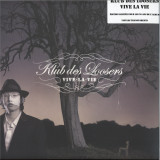
A l’occasion des 20 ans de cet album devenu culte, Record Makers réédite une version spéciale anniversaire limitée (vinyles transparents – 500 exemplaires) qui ravivera la flamme des fans de la première heure, des nouveaux fans et des collectionneurs. "Vive la Vie" est aujourd’hui un album référent pour les amateurs de rap, reconnu par ses pairs lyricistes, c’est un de ses albums qui marquent à jamais une époque, celle des années 2000 et de son rap aux rimes fines et puissantes.
Le 15 novembre 2004 sortait "Vive la Vie" le premier album du Klub des Loosers.
On ne présente plus le Klub des Loosers et son unique membre Fuzati. Pourquoi ? parce qu'on en a un peu honte quand même. Imaginez un jeune versaillais que tout prédestinait à devenir écrivain maudit ou chanteur d'un groupe de pop répétant dans le garage parental le dimanche de 16h à 20h. Le genre de type qui passait ses samedis après-midi à la bibliothèque municipale, ses samedi soir à boire de la bière dans les squats de jeunes où on recense une fille pour dix mecs et où la phrase qui revient le plus souvent est "qui roule un joint ?"
Imaginez maintenant que ce type ait une illumination, au milieu de ces jeunes que tout prédestine à la réussite (HEC, science-po) et qui lorsqu'ils se retrouvent ensemble ne savent pas faire autre chose que de se défoncer. "Nous sommes un klub de loosers".
Comme il n'aime pas trop les gens, Fuzati fondera un klub dont il sera le seul membre. Comme il n'a pas de guitare que le hip hop est son seul ami il se dit qu'il fera ça comme musique. Bah oui c'est sympa le hip hop. Comme on lui a dit qu'il n'avait pas une tête de rappeur et que les casquettes à l'envers lui vont mal il ne montrera jamais son visage et portera un chapeau. S'en suivra un parcours classique de MC underground qui rappe pour la rue (mais aussi les avenues) et représente ses refrés illégalement enfermés derrière les murs des prépas t'as vu. Mixtapes, nombreux freestyles dans l'émission Greckfrite diffusée sur la chaine internet Canalweb, concert à la MJC de Versailles mais aussi dans un entrepôt désinfecté à Dunkerque.
En 2003 Il signe sur le label parisien Record Makers parce qu'on lui a appris qu'il ne fallait pas trop se mélanger avec les gens d'autres milieux. Sortiront deux EP, "Baise les Gens" et "La Femme de Fer" qui sont déjà des classiques pour au moins 32 personnes. La même année sort également l'album de l'atelier "Buffet des Anciens Elèves" auquel il participe avec Tékilatex du groupe TTC, James Delleck, Cyanure et deux producteurs de talent, Tacteel (Lex Records) et ParaOne (Institubes). En juillet 2004 sort le maxi du Klub des Loosers où collaborent MF DOOM, légende hip hop, et Jean-Benoit Dunckel, moitié du groupe AIR.
- C4: Waka Waka (This Time For Africa)
- A1: Sale El Sol
- A2: Loca; Featuring – El Cata
- A3: Antes De Las Seis
- A4: Gordita; Featuring – Residente Calle 13*
- A5: Addicted To You
- A6: Lo Que Más
- B1: Mariposas
- B2: Rabiosa; Featuring – El Cata
- B3: Devoción
- B4: Islands
- B5: Tu Boca
- C1: Waka Waka (Esto Es África); Featuring – Freshlyground
- C2: Loca; Featuring – Dizzee Rascal
- C3: Rabiosa; Featuring – Pitbull
- D1: Loca (Freemasons Spanish Club Edit); Featuring – El Cata
- D2: Waka Waka (Esto Es Africa) (K-Mix)
- D3: Waka Waka (This Time For Africa) (K-Mix)
Khadim is a stunning reconfiguration of the Ndagga Rhythm Force sound. The instrumentation is radically pared down. The guitar is gone; the concatenation of sabars; the drum-kit. Each of the four tracks hones in on just one or two drummers; otherwise the sole recorded element is the singing; everything else is programmed. Synths are dialogically locked into the drumming. Tellingly, Ernestus has reached for his beloved Prophet-5, a signature go-to since Basic Channel days, thirty years ago. Texturally, the sound is more dubwise; prickling with effects. There is a new spaciousness, announced at the start by the ambient sounds of Dakar street-life. At the microphone, Mbene Diatta Seck revels in this new openness: mbalax diva, she feelingly turns each of the four songs into a discrete dramatic episode, using different sets of rhetorical techniques. The music throughout is taut, grooving, complex, like before; but more volatile, intuitive and reaching, with turbulent emotional and spiritual expressivity.
Not that Khadim represents any kind of break. Its transformativeness is rooted in the hundreds upon hundreds of hours the Rhythm Force has played together. Nearly a decade has passed since Yermande, the unit's previous album. Every year throughout that period — barring lockdowns — the group has toured extensively, in Europe, the US, and Japan. With improvisation at the core of its music-making, each performance has been evolutionary, as it turns out heading towards Khadim. “I didn’t want to simply continue with the same formula," says Ernestus. “I preferred to wait for a new approach. Playing live so many times, I wanted to capture some of the energy and freedom of those performances.” Though several members of the touring ensemble sit out this recording — sabar drummers, kit-drummer, synth-player — their presence abides in the structure and swing of the music here.
Lamp Fall is a homage to Cheikh Ibra Fall, founder of the Baye Fall spiritual community. The mosque in the city of Touba is known as Lamp Fall, because the main tower resembles a lantern. Soy duggu Touba, moom guey séen / When you enter Touba, he is the one who greets you. After a swift, incantatory start Mbene sings with reflective seriousness. Her voice swirls with reverb, over a tight, funky, propulsive interplay between synth and drums, threaded with one-two jabs of bass. Cheikh Ibra Fall mi may way, mo diayndiou ré, la mu jëndé ko taalibe... Cheikh Ibra Fall amo morome, aboridial / Cheikh Ibra Fall shows the way forward, he gives us strength, he gathers his disciples... Overflowing with grace, Cheikh Ibra Fall has no equal.
Interwoven with Wolof proverbs, Dieuw Bakhul is a recriminatory song about treachery, lies, and back-biting. Over moody, roiling synths and ominous, lean bass, Mbene throws out fluttering scraps of vocal, as if re-running old conversations in her head. The music shadows her despair to the verge of breakdown, at one moment seemingly so lost in thought and memories, that it threatens to disintegrate. Bayilene di wor seen xarit ak seen an da ndo... Dieuw bakhul, dieuw ñaw na / Stop judging your friends and companions... A lie is no good, a lie is ugly.
Khadim is a show-stopper; currently the centrepiece of Ndagga Rhythm Force live performances. The song is dedicated to Cheikh Ahmadou Bamba, aka Khadim, founder of the Mouride Sufi order. Serigne Bamba mi may wayeu / Serigne Bamba is the one who makes me sing. The verses name-check revered members of his family and brotherhood, like Sokhna Diarra, Mame Thierno, and Serigne Bara. Though Islam has been practised in Senegal for a millennium, it wasn’t until the start of the twentieth century that it began to thoroughly permeate ordinary Senegalese society, hand-in-hand with anti-colonialism. The verses here recall Bamba’s banishment by the French to Gabon, and later to Mauritania, in those foundational times. During exile, his captors once introduced a lion to his cell: gaïnde gua waf, dieba lu ci Cheikhoul Khadim / the lion doesn’t budge, it gives itself over to Cheikh Khadim. Deep, surging bass, steady kick-drum, and simple, reverbed chords on the off-beat lend the feel and impetus of steppers reggae. A reed plays snatches of a traditional Baye Fall melody; the dazzling polyrhythmic drumming is by Serigne Mamoune Seck. Mbene compellingly blends percussive vocalese, narrative suspense, exultant praise, introspection, and grievance.
Nimzat is a devotional tribute to Cheikh Sadbou, a contemporary of Bamba, buried in a mausoleum in Nizmat, in southern Mauritania. Way nala, kagne nala... souma danana fata dale / I call upon you and wonder about you... If I am overwhelmed, come to my aid. The town holds special significance for Khadr Sufism. An annual pilgrimage there is conducted to this day. The rhythm is buoyantly funky; the mood is sombre, reined-in, foreboding. Punctuated by peals of thunder, Mbene sings with restrained, intense reverence; huskily confidential, steadfast. Nanu dem ba Nimzat, dé ba sali khina / Let us go to Nimzat, to seal our devotion.
Mbene Diatta Seck: vocals.
Bada Seck: bougarabou, thiol, mbeung mbeung bal, tungune.
Serigne Mamoune Seck: bougarabou, khine, mbeung mbeung, tungune.
Text by Mark Ainley (Honest Jons).
Mastered by Rashad Becker.
Everything else by Mark Ernestus.
- A1: Speed Trials
- A2: Alameda
- A3: Ballad Of Big Nothing
- A4: Between The Bars
- A5: Pictures Of Me
- A6: No Name No. 5
- B1: Rose Parade
- B2: Punch And Judy
- B3: Angeles
- B4: Cupid's Trick
- B5 2: 45 Am
- B6: Say Yes
- C1: My New Freedom (Live)
- C2: Pictures Of Me (Live)
- C3: Angeles (Live)
- C4: Some Song (Live)
- C5: Rose Parade (Live)
- D1: New Monkey (Keys)
- D2: I Don't Think I'm Ever Gonna Figure It Out (Remixed/Remastered)
- D3: I Figured You Out
- D4: Bottle Up And Explode! (Alternate Version)
- Three For The Festival
- Moon Song
- A Sack Full Of Soul
- The Haunted Melody
- Blues For Alice
- We Free Kings
- You Did It, You Did It
- Some Kind Of Love
- My Delight
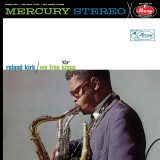
VERVE ACOUSTIC SOUNDS SERIE: komplett analog von Ryan K. Smith bei Sterling Sound von den Originalbändern gemastert, QPR-Pressung (180 g), stabiles Tip-On-Gatefold (Stoughton Printing), wattierte Innenhülle, Gatefold Sleeve.
”We Free Kings” gilt als eines der musikalisch kohärenteren Frühwerke von Roland Kirk. Obwohl der Saxofonist und Flötist es im Januar 1961 mit zwei unterschiedlich besetzten Quartetten aufnahm, gelang ihm eine wunderbare Balance zwischen Bebop-Nummern und souligeren Stücken. Das Repertoire unterstreicht Kirks Fähigkeiten als Komponist (sieben der neun Stücke stammen von ihm). Brillant ist aber auch seine Interpretation von Charlie Parkers ”Blues For Alice”.
Listening to CD3, I'm reminded of how the Vincent Over The Sink record '22 Coloured Bull Terriers' made me feel all those years ago. There's a free ranging quality to it.
It feels calmly capable of doing whatever it wants. It feels mysterious and self-generating, almost aloof to the humans who made it. I adored that record; it cascaded into so many epiphanies.
I don't want to implicate Cooper and David's music in any fleeting desire towards currency, but listening to this CD3 record over the last few weeks has felt weirdly, thematically correct. There's an echo-ey kind of referentiality to it. Not to particular styles of music, but to the recently elapsed histories those styles of music evoke. It's something that Th Blisks kind of gestures towards, but which this project seems to own entirely.
It's a kind of melted reconfiguration of popular (occasionally popular-on-the-fringes) styles. These familiar sounds are reconfigured and muddied. Hindsight frames the sources in an almost primordial light, to the extent that they feel like folk art.
Glyphted and Franzbranntwein sound like pop songs stripped to their bones and distorted, as if the styles they vaguely recall are as old as time. It's a stunningly weird effect. Songs like The Duchess and Farmhand exacerbate this impression. The record comes to feel yearningly ahistorical. But in a way that feels pertinent?
It might just be where my head is at, but the implacable nature of the record feels important to me, somehow. It's something far, far north of post-modern but... ancient too. - Shaun Prescott
- A1: Breakthrough
- A2: Innocence
- A3: Be Free
- A4: Blaze Awa
- A5: Goal
- A6: Honoo No Running Back
- B1: Dang Dang
- B2: Be Survivor
- B3: Blaze Line
- B4: A Day Dreaming…
- B5: Flower
- B6: Song Of Power
- C1: Go!!
- C2: Futari No Imi
- C3: Max Wind
- C4: Go For It!!
- C5: Atarashii Kaze
- D1: Make My Way
- D2: Thanks
- D3: Chain Of Power
- D4: Midnight Sunshine
- D5: Run To Win!
The story of Eyeshield 21 follows the protagonist Sena, the whipping boy of his classmates, who wants to earn respect by joining a club at the start of the school year. He crosses paths with Hiruma, head of the American soccer club, who recruits him for his exceptional running skills. They must quickly find 11 other players, as the inter-school championship begins in 24 hours.
Numerous artists and composers were involved in creating the theme music and accompanying songs, including Kosuke Morimoto, who contributed to various theme songs for Fullmetal Alchemist and One Piece. Any fan of the series will have a strong feeling of nostalgia when they recall the music that marked them during their teenage years. The very Pop-rock and J-pop tones will remind them of those after-school afternoons watching episodes of this epic anime on Game One. You'll also be able to hear the voices of the Japanese cast, including the voice of the main character, Sena Kobayakawa, on many of the credits and accompanying songs.
The manga turns 21 in 2023. To celebrate, the author wrote a 55-page one-shot called “Brain X Brave”, which appeared in early January 2024 in Weekly Shonen Jump. The anime has been broadcast frequently on Game One since September 2009 and on France Ô since September 2012.