
Search:free son

8
Marking its first decade of activity, Blume returns with the first ever vinyl reissue of the seminal “New Music for Electronic and Recorded Media”, from 1977, the third and final instalment in a suite of releases that includes James Tenney’s “Postal Pieces” and Ben Vida’s “Vocal Trio”. Unquestionably among the most important collections of experimental music to emerge during the 20th Century, “New Music for Electronic and Recorded Media” is the original feminist presentation in its context, releasing the work of Johanna M. Beyer, Annea Lockwood, Pauline Oliveros, Laurie Spiegel, Megan Roberts, Ruth Anderson, and Laurie Anderson under its collective banner. Includes newly commissioned liner notes by Jennifer Lucy Allen and Bradford Bailey.
Since its founding back in 2014, Blume has carved a unique place in cultural landscape, issuing free standing works, spanning the historical and contemporary, that represent singular gestures of creativity within the field of experimental sound. Joining their broad efforts in building networks of context and understanding that already includes the efforts of efforts of Werner Durand, Sarah Hennies, Bruce Nauman, John Butcher, Jocy de Oliveira, Mary Jane Leach, Valentina Magaletti, Alvin Curran, Julius Eastman, Alvin Lucier, and others, Blume delivers their third release in their first suite of releases for 2024, the fist ever vinyl reissue of the seminal “New Music for Electronic and Recorded Media” compilation, originally issued by Thomas Buckner's 1750 Arch Records in 1977. Out of print for decades on vinyl and arguably the most important feminist statement in the history of experimental music, illuminating the work of Johanna M. Beyer, Annea Lockwood, Pauline Oliveros, Laurie Spiegel, Megan Robert, Ruth Anderson, and Laurie Anderson - in a number of cases representing their recording debuts - during a crucial moment in the history of experimental music. Blume’s brand new edition - complete with newly commissioned liner notes by Jennifer Lucy Allen and Bradford Bailey, as well as reproducing Charles Amirkhanian’s original accompanying text - radically shifts perceptions of the past and present day with its truly revolutionary sounds.
Issued by Thomas Buckner's 1750 Arch Records in 1977, and out of print nearly the entire time since, “New Music for Electronic and Recorded Media” can be understood within two simple frameworks. On one hand, it is an astounding document of the landscape of experimental music toward the end of the 1970s. On the other, it is a historically significant feminist statement, being the first collection of experimental music entirely dedicated to female composers, a number of whom were grossly under-celebrated at the time, but have since gone on to be regarded as among the most important composers of their generation.
The eight pieces gathered by “New Music for Electronic and Recorded Media” - Johanna M. Beyer’s “Music of the Spheres”, Annea Lockwood’s “World Rhythms”, Pauline Oliveros’ “Bye Bye Butterfly”, Laurie Spiegel’s “Appalachian Grove I”, Megan Roberts’ “I Could Sit Here All Day”, Ruth Anderson’s “Points”, and Laurie Anderson’s “New York Social Life” and “Time To Go (For Diego)” - might be regarded as the first cohesive vision of alternate proximity or expression of experimental music to what has always been a frustratingly male dominated environment, and to the tropes, temperaments, and sensibilities that have been historically perceived to define it. It is an expanded vision of truth. While the presence of feminine sensibilities and temperaments in experimental music, however they may present themselves, were anything but new in 1977, “New Music for Electronic and Recorded Media” was the first opportunity, beyond the temporal limitations of live performance, to view them collectively, rather than as individualised expressions within a larger body of similar gestures (as was the case of Oliveros’ inclusion in Odyssey’s 1967 “New Sounds In Electronic Music” and “Extended Voices” compilations) where they might be confused for something else; to regard and celebrate a radical notion of feminine sonority for its unique characteristics and through its interrelations.
While its historical significance and groundbreaking nature can not be debated in its totality, nearly half a century on “New Music for Electronic and Recorded Media” remains compelling in both its musicality and the palpable sense of its lasting influence. Every composition across the album’s two sides is not only engrossing and deeply compelling - feeling as fresh and relevant as the day it was laid to tape - but clearly tangible in their lasting influence. Viewed in context, the album’s eight works feel like breath of fresh air when compared to much of what came before, and laid the groundwork for much of what was to come, introducing a new, often more holistic temperament and more sensitive and inclusive sensibility into the landscape of experimental music.
Particularly in the case of Annea Lockwood, Pauline Oliveros, Laurie Spiegel, Ruth Anderson, and Laurie Anderson, it's hard to throw ourselves back in time and imagine a moment when these composers rested in a fairly marginalised corner of the creative landscape. Blume’s brand new edition of “New Music for Electronic and Recorded Media” - complete with newly commissioned liner notes by Jennifer Lucy Allen and Bradford Bailey, as well as reproducing Charles Amirkhanian’s original accompanying text - brings us back to this confounding moment and points us toward a crucial moment of change set forth by these incredible composers and their sounds. Absolutely seminal and not to be missed.

I’ve lost my sense, I’ve lost control, I’ve lost my mind! Yeah, we all know how the song goes, but those words will no doubt end up driving their point home throughout the duration of Bloodstains’ self-titled debut LP. This thoroughly-welcome Euro pressing follows the album’s DIY release earlier in 2024, which is excellent news for UK/mainland fans of early 80s SoCal hardcore who’ve yet to hear it - the whole thing absolutely fkn rips. Feel free to rifle through your Adolescents, Weirdos and (natch) Agent Orange records to see what these guys have been mining, but all you’ll find is a launchpad - Bloodstains inevitably hail from California and they’re clearly au fait with all the above (not to mention a certain compilation), but they manage to inhabit that sound with a personality all of their own. Vocalist Cesar Marin splits his delivery between a sneering bark (like the most withering put-downs you’ve ever heard being delivered via nailgun) and a purposeful, melodic croon… which itself sounds it’s made from sandpaper and vitriol, but there you go. Most importantly, this is a band with SONGS. Eight of ‘em here, to be precise, and you’ll rarely have been so glad to have something turned up so loud it blows holes in your speakers. ‘Stray Bullets’ hangs its mighty chorus on a call-and-response refrain that dares you not to pick a side and bellow along, while instrumental opener ‘The Last Rites’ sets you up perfectly for the seething, volatile bundle of hooks to follow. I’d say the interplay between the band’s string-wielding Espinoza contingent is something to behold as well, but what am I, some kinda nerd? The guitars sound fkn awesome - that’ll do ya. And I don’t wanna spoil the party ahead of time, but just wait til you hear future anthem ‘Public Hanging’. I could go on about this record all day, but ultimately all you need to do is listen to it. Hell, even buy it. And dare I return to a theme, lose your mind.

10
Comes with insert and download coupon.
Imagine a Latin remake of Back to the Future. The mad scientist is Arsenio Rodriguez (the godfather of salsa) and the young student who travels through time with him is Eblis Alvarez (Meridian Brothers). This album can only be described as the perfect soundtrack for that movie that never was.
After the massive buzz generated by his first solo album, Mentallogenic, Alex Figueira got back in the studio to work in a more collective fashion this time, carefully assembling the second album of his largest project to date, Conjunto Papa Upa; a team of 6 musicians, spanning 3 generations of some of the best talent in the Latin and avant-garde scenes.
In an era where tropical music is dominated by purely electronic and rhythmically uniform sounds, the ten songs encompassed in “Fruta Madura” (“Ripe Fruit”) wander through the most diverse tempos, rhythms, and motifs effortlessly. A real breath of fresh air that gracefully incorporates soul, funk, jazz, psychedelia, and electronics into a solid tropical, irresistibly polyrhythmic foundation, without ever succumbing to the many genre clichés.
The distinctive production and catchy songwriting of Figueira shine in a very distinctive light on this second full-length. Living up to his reputation (Miles Cleret, founder of Soundway Records, called him “one of the scene's truly authentic and eccentric producers”), he takes the opportunity to show he’s not afraid to keep walking his own path.
Taking the band for a wild ride through the traditions of Africa, America, and the Caribbean; contrasting them with a ridiculously wide plethora of vintage, contemporary, and futuristic sounds, and pivoting on the exuberant musicality displayed by his musicians; the result leaves no doubt: this album is destined to be considered a future classic of the exciting tropical psychedelic music of the 21st century.
Addressing the most diverse themes in this new collection of songs, things take on a much more mature tone, as the title clearly suggests.
The opening track “El segundo es más sabroso” (“The second one is tastier”) sets the tone in the most assertive way imaginable, with the band boldly declaring, through multiple metaphorical references (laid upon a crazy mix of Dominican merengue, Detroit techno, classic and free jazz, dub, and electro), that the bar will be set higher with this second album.
The remaining compositions touch upon the most diverse subjects, with a fair dose of humor, sarcasm, and postmodern “magic realism”. “El Algoritmo” (The Algorithm) is a parranda-cumbia hybrid (for lack of a specific term) about the omnipresence of technology in our lives. The sophisticated Latin soul of the titling track “Fruta Madura” makes a case for the beauty of the maturity process. Some key philosophical teachings of Marcus Aurelius (the role of causality, the impositions of “the logos” and the importance of self-control) get a twisted cumbia treatment on “Reos del Deseo” (Prisoners of Desire). “No le pongas Coca-Cola” (“Don’t put Coca Cola in it”) shows us the most satirical side of the band, accusing those who mix Coca Cola with Rum of committing "sacrilege", on a powerful base of Dem Bow (the grandfather of Reggaeton), intertwined with touches of soul, salsa, and Cuban comparsa.
"Háblame Claro" (“Talk to me clearly”) is a story of heartbreak that evokes in its first part the spirit of the erotic salsa of the 80s (a subgenre deeply despised by purists), and after an unexpected samba interlude, leads to the hardest salsa of the 70s (a subgenre adored by purists), to end up in the surprising form of pure Afro-Cuban ceremonial music.
“Tu mamá tenía razón” ("Your Mom Was Right") is an attempt to exalt the spirit of the Latin American soap opera in the key of “acid bachata”, to recount a real-life case, witnessed by the band on countless occasions: the partying woman who arrives at the show accompanied by her bitter husband, who obviously does not like to dance. A very cheeky song to talk about the very serious and pertinent topic of female empowerment.
“La misma vaina” (“The same thing”) with its indescribable blend of bantú, candomblé, and Mozambique rhythms with abstract synthesizers, is an ode to adventure in favor of the aversion to taking risks and seeking predictability.
“Amigas picadas” (“Salty friends”) is another humorous song recounting another real-life case witnessed by the band on countless occasions: a love encounter sabotaged by the girlfriend's friends, who all happen to fancy the same guy. A jazzy take on the ancient Dominican rhythm of pambiche (grandfather of merengue), with generous psychedelic touches, resembling the classy late 60s releases of Guadeloupe's legendary producer / label owner Henri Debs.
“Vinimos a hablar” (“We came to talk”) takes sarcasm to the highest level, to ridicule the absurdity (also experienced by the band firsthand) seen in live music venues where people pay a ticket to go and have conversations that could be carried out much better on any bar, where no band is playing. The music alternates between a delicate melody with loose, sparse percussion and a full-on, pumping Angolan semba, with a techno kick drum included; bringing things to an apotheotic grooving finale, where the peculiar swing of Venezuelan calypso from the Callao region is thrown on top of all the precedent elements; closing the album in the most uplifting, “end of the carnival parade” feel.
The artwork is a delicate and impactful oil painting by Colombian artist Kevin Simón Mancera, who has collaborated many times with the label before (“Maracas, tambourines and other hellish things” tape and the Lola’s Dice LP).
What the experts are saying:
“Alex (Figueira) dove into this work with a brutal cohesion between lyrics and synths. Timbre poetry, sound poetry (you name it). And that, superimposed on his always impeccable percussive base, confirms the title of “avant-garde visionary of our beautiful Latin music”".
EBLIS ALVAREZ (MERIDIAN BROTHERS)
“Papa Upa's infectious quirkiness is a balm against boredom. A mature album, but without an expiration date”.
GLADYS PALMERA
“Here there is a lot of strength, drum, cadence and psychedelia, lost dance rhythms, united in an intercontinental Latin/African/and Caribbean journey, a unique winning combination that we could consider the new “Ritmo Figueira”.
DISCODELIC
Conjunto Papa Upa are:
Alex Figueira - Timbales, percussion, vocals.
Gerardo Rosales - Congas, percussion, vocals.
Ramón Mendeville - Bongos, percussion, vocals.
Randy Winterdal - Bass.
Andrew Moreno - Guitar.
Nico Chientarolli - Organ, piano, synths.
All songs written by Alex Figueira.
Arranged and performed by Conjunto Papa Upa.
Recorded, produced, mixed and mastered by Alex Figueira at Heat Too Hot, Amsterdam.

10
Sumer Is Icumen In is Quentin Thirionet's (Dhavali Giri, Pairi Daeza) debut album. Still, his musical escapades are vast and varied, based almost entirely on improvisation and live recordings, of which he occasionally distributes tapes without further information. Elusive to categorization and identification, unwilling to fix his musical activity under a stable pseudonym, his projects have ranged from gypsy jazz guitar swings, French traditional songs from Auvergne, and various experimental collaborations. Increasingly closer to electronic instrumentation, he crafted what Belgian label KRAAK presents here as Maibaum, his first ever solo output. As the title goes, this may be a maypole on which his multicolored sonic visions spring about.
Former rope access worker and currently a farmer of organic greens, Thirionet lives up to these lines of work as a musician. He assembles precisely what seems like a subtle balance between high manmade structures and soft fertilized soils; a high voltage pylon placed in a biotic landscape. It's all an even blend, spontaneous and steady, but this contraption comes from profound considerations. "I chose these tracks among many others," says Quentin, "because I heard the melodies all the time in my mind, and because I cried while playing them without really understanding why."
Armed with nothing more than a blackbox, a sequencer, a freeze pedal, and a tape player, Thirionet orchestrates a vivid rite of polished futures. At times reminiscent of Hans-Joachim Roedelius' enveloping arrangements, Maibaum's ambiances rely on mild repetitive patterns subsequently textured by prickling sprouts, mechanic dislocations and revamps that stoke and brighten the stirring motions. Jim O'Rourke's I'm Happy and I'm Singing comes to mind in terms of its detailed and prismatic nature, but Sumer Is Incumen In has its particular narrative. It's a tale of regeneration, of spring's delicate procedures and allure, a celebration of gracious and fortunate junctions between nature and machinery.
The album unfolds like a massive engine being made flesh to drift along the ether of a sultry land. The terrain turns pleasant and fertile in the title track; the colors and melodies of May start to unravel. Chromatic columns rise and define the scenery's depth of field breeding a synesthetic stream between crystal lights and warbling organisms. Grande Albero Buono Magico Uoma's brisk kaleidoscopic arpeggios sound like scanning a tree's litmus foliage. Then Ciguri takes us back to the foggy swamp of the beginning but is suddenly lit by an insect’s labyrinthine roundabout. The Jeweled Grid is a poem Quanta Qualia's lustrous metallic voice recites as a report of the album's phenomena. "Shiny revelations jump out. Pearls of thought flicker about." Images from within that distill to swirl around among us. The thicket dissolves as the album concludes calmly in Le Concept De Chien N'aboie Pas. Swaying under sieved solar light, leaves and branches tingle until the winds grow weak. All the warm creatures gathered along the way, and all those who danced around the maypole's splendid equilibrium now withdraw, folding up small to foster rebirth once again.
José Badía Berner

13
In 1995, schoolmates Elin Almered and Johan Duncanson started a band which they named after a gas-station-turned-radio-repair-shop called "Radioavdelningen" (Swedish for The Radio Department). In 2001, the Radio Dept. sent recordings to music magazine Sonic, receiving a positive review and being featured on the free CD sampler that came with the magazine. Labrador Records heard them on the disc and signed them to their label. The band"s debut album Lesser Matters (2003) was well received by the music press, scoring 10 out of 10 in the NME. NME would rank Lesser Matters ninth on their list of the 50 best albums of 2004. The album received an 84/100 (Universal acclaim) on Metacritic from a total of five reviews.

9
The magic and majesty of Holger Czukay’s late career works for Claremont 56 is being celebrated on a new compilation. The former Can bassist – a musical maverick renowned for his freewheeling approach to composition, recording and promotion – released a string of inspired tracks on Paul Murphy’s label between 2009 and 2012, typically delivering hard-to-pigeonhole workouts, bona-fide epics and radical reinventions of some of his most beloved tracks.
The collection has been a labour of love – fitting given the sonic details and inventive musicality that marked out the late artist’s solo career – for Claremont 56 founder Paul Murphy AKA Mudd, who first reached out to Czukay after witnessing his now legendary live performance at the Roundhouse in 2009. As Murphy details in his introductory liner notes, it led to a productive working relationship between the pair that included collaborative recording sessions with Ben Smith in Czukay’s legendary Innerspace Studio – a former cinema in Cologne in which much of Can’s music was recorded.The impact of that Roundhouse gig on Murphy is reflected in the fact that two of the tracks on the collection are based on that celebrated performance. There’s ‘Ode To Perfume’, a languid and solo-laden version of one of Czukay’s most celebrated solo records that ratchets up the original’s inherent dreaminess, and a jaunty take on quirky kraut-pop number ‘Photosong’ featuring a spoken introduction recorded at the concert in question.
Murphy’s ability to coax Czukay into delving into his archives is evident across the compilation. Opener ‘A Perfect World (Remix)’ is an eccentric, ever-building masterpiece originally recorded in 1984 – but later re-imagined for Claremont 56 – featuring vocalist Sheldon Ancel and former Can band-mates Jaki Leibezeit and Michael Karoli, while ‘Fragrance’ is a subtly re-wired slab of picturesque Balearic kraut-dub which was initially recorded as a coda for ‘Ode To Perfume’ but lay unreleased for decades.
Then there’s ‘Let’s Get Cool’, a bright and breezy, French horn-sporting 2009 take on 1979 avant-disco classic ‘Cool In The Pool’; ‘My Persian Love (Remix)’, a 2010 re-take of one of his earliest solos recordings; and the near 18-minute brilliance of ‘Music Is A Miracle’. Originally recorded for his fans in the 1980s – but only released three decades later – this widescreen epic not only features drums by Jaki Leibezeit and a fine spoken word vocal by Czukay, but also numerous nods to some of his most revered tracks.
It's fitting, too, that two of the most potent cuts feature Czukay’s much-missed wife and musical muse Ursa Major: the dense, trippy and fittingly out-there ambient soundscape ‘In Space’, and the mesmerising ‘Music To be Murdered By’. Partially inspired by hearing painfully out of tune violin practice through his studio windows, the track was originally recorded for an unreleased album but finally found a home on Claremont 56’s 10th anniversary box set ion 2017. A genuinely spaced-out and mind-mangling slab of organic dub in Czukay’s distinctive style, it delivers a fine curtain call to the iconic artist’s endlessly inventive career.

11
Cinderella's album Still Climbing is a testament to the band's enduring legacy in the realm of hard rock. This fourth and last studio album was released in 1994, combined gritty guitars with Tom Keifer's signature raspy vocals making it an authentic rock record. The track ""Hot & Bothered"" first appeared on the soundtrack of 90s comedy film Wayne's World, which starred Mike Meyers and Dana Carvey. Further standout songs from the album are ""Bad Attitude Shuffle"", ""Freewheelin"" and ""Through The Rain"". Still Climbing includes an insert with lyrics.

forgive too slow, Avant Garde artist julia-sophie’s deeply personal debut album is testament to her ability to transform adversity into raw beauty, combining her traditional songwriting roots with her own take on experimental electronica. It features her intimate voice backed by warm and precise electronic sounds whose free spirited explorations give body to the carefully written personal songs julia-sophie comes off the drama of her 2010s rock band, Little Fish, which was signed to a major label. The surreal experiences (like being flown to Las Vegas in helicopters with a bag of slot machine money or given limousines for the day to go shopping), along with having to work in environments where she felt unsafe, drove her decision to leave the fame game. She turned down the offer to emigrate to America and engage with the machinations of the system as it did not feel “true or congruent with who I was”. Instead, she focused her attention on her hometown (Oxford, UK). She started recording lo-fi pop in her garage, using an old laptop, wonky microphones and hitting whatever was around for beats. Candy Says grew to be more of a collective than a band, and eventually co-wrote a film score for indie film Burn Burn Burn and recorded a cover of Running Up That Hill for the Netflix film Close (starring Noomi Rapace). Julia-Sophie soon started recording songs with her friend B, who had a studio stacked from wall-to-wall with analogue recording gear, vintage synths and drum machines. She decided to self-release and the music reached audiences beyond her expectations, including support from BBC Radio 6 and a feature in The Quietus. forgive too slow is Julia-Sophie’s debut solo album, and concerns relationships and the struggles we go through when we “forgive too slow” and can’t break out of patterns from the past. The songs narrate her story of self-destruction (“numb”), love (“falling”), and loss (“telephone”). By the end, embers are still burning and there is no telling if Julia-Sophie has found peace, but we do get a sense that she has gotten closer to the core of her being and is finally living authentically.

7
2024 Repress
180 Gram, Tip On Sleeve RSD version of this classic. One of the rarer records of the mythical Strata East albums is finally reissued for the first time on Heavenly Sweetness!
The recording of Earth Blossom, the John Betsch Societys one and only album, seems something of an enigma nowadays. For even though Nashville is clearly one of the towns in the US with the highest number of recording studios, who would have thought that the capital of country music would give birth to one of the forgotten masterpieces of 1970s spiritual jazz. The path leading to the album starts in 1963 when John Betsch, originally from Jacksonville in Florida, arrives in Nashville to study at Frisk University. He is a young drummer and joins Bob Holmes trio. Holmes is one of the towns major jazz organists and pianists; he becomes Betschs mentor and, over the space of two years, John will play alternately with him and with the trumpeter Louis Smiths group. However, in 1965, John leaves town to go to the prestigious Berkeley University in Boston and do a two-year course along with his fellow debutants with names like John Abercrombie, Ernie Watts and Alan Broadbent. Two years later, he is invited by a pianist friend, Billy Chilf, to join the legendary singer/songwriter Tim Hardins group. Just after Woodstock, John Betsch and Tim record a psychedelic album Columbia will never release together with the members of the future group Oregon: Colin Walcott, Glen Moore, Paul McCandles and his friend Billy Chilf. But he soon leaves this group to return to Nashville where he hooks up again with his friend Bob Holmes. Two years later, he is accepted on Archie Shepp and Max Roachs famous course at the University of Massachusetts Amherst (UMASS) and for the next four years he participates in this collective of intellectuals and musicians under the aegis of the two masters.
During this period he returns to Nashville to form his Society whose music is obviously influenced by the Afrocentric ideas of the UMASS student and political movement. However, the album, recorded in one day and in one take, also bears the hallmark of their generations psychedelic experiences, and in the themes and playing of the musicians we can hear a less violent form of music than the radical free jazz of New York or Chicago. Nature and environmental themes are the inspiration behind tracks touched by the spirit of Coltrane but also of Flower Power.
After Amherst, John Betsch joins Marion Browns group in 1976, leaves Tennessee for good and makes his home in New York over the next ten years or so. He plays and records with Dollar Brand, Kalaparusha Maurice McIntyre and many others, before heading off to France. He has lived in Paris for the last twenty years and played in Steve Lacy, Mal Waldron and Archie Shepp bands, as well as forming groups of his own. He now lives in Paris and plays with many musicians/bands.

9
The album opens with a 13 minute improvisation titled “The Time Is Now For Change”. As Ranelin , Belgrave, and Harrison exchange flurries of notes and squeaks over improvised chaos from the rhythm section, the group builds to a spiritual high that calls to mind the best Albert Ayler recordings. Bebop lines and unison phrases occasionally rise to the surface, offering a glimmer of familiarity in what is largely a harsh soundscape. Yet what sets Ranelin (and indeed, all of his Tribe contemporaries) apart from the larger free and spiritual jazz scene at the time is their sense of rhythm. Even as Harrison evokes sounds that would make a Meditations era Coltrane blush, the drums stay in time, and the looping bass and piano riffs take on an almost hypnotic quality, repeating quietly under a whirlwind of sound.
Later tracks see the ensemble veer into soul jazz, and jazz-funk, with “Black Destiny” perfectly highlighting the group’s ability to meld the avant-garde with grooves that you won’t be able to stop yourself from tapping your foot to. Members of the Tribe were well known for their appreciation of African American popular music, and the influence of groups such as Sly And The Family Stone is clear in the song’s edgy rhythms and dense sound.
This double LP reissue also contains alternate versions and outtakes that are so good you’ll be wondering why they were originally left out! With modern remastering, three bonus tracks, and an obi-strip, you don’t want to miss the definitive version of Phil Ranelin’s The Time Is Now! "

13
Der US-amerikanische Rapper Vince Staples gehört ”neben Kendrick Lamar zu den anerkanntesten und
versiertesten ”Story-Teller” / Rap-Erzählern zurzeit”, schreibt der SPIEGEL.
Auf seinem sechsten Studioalbum ”Dark Times” (Blacksmith Records / Def Jam Recordings) verfeinert
der 30-jährige kalifornische Musiker alle Elemente, die seinen Katalog im letzten Jahrzehnt auszeichneten:
dichte, melancholische Lyrik, voll von Beobachtungen über das Leben, dargeboten auf üppigen vielschichtigen Beats, die Lichtnischen in der endlosen Dunkelheit suchen.
Beginning in the 60"s, the small chamber group ensemble became increasingly important in the advancement of jazz, enabling horn players including Sonny Rollins, Joe Henderson, and Ornette Coleman to seek uncharted sonic territories and achieve new levels of freedom without the support of chordal instruments. With a mature, cohesive ensemble sound, the young trio juxtaposes tranquility and space with energy and tenacity across nine original compositions showcasing their stylistic breadth. From the swinging waltz "December" with a melodic contour reminiscent of a jazz standard, the soothing folk-influenced simplicity of "Vent", the intimate lyrical interplay between bass and clarinet in "Duo", to the heavy, propulsive power of the title track, the trio demonstrates fearlessness, listening, and spontaneity in a raw and personal recording that puts each of their distinctive voices in the spotlight. Christian Holm-Svendsen, currently resides in New York, studying for a master of music at Manhattan School of Music. In Denmark he played with, among others, The Danish Radio Big Band, Copenhagen Jazz Orchestra, Odense Jazz Orchestra, Jesper Zeuthen, and Regnfang. Daniel Sommer is an award-winning artist and sought-after drummer on the international jazz scene. Known for crossing the borders of different musical landscapes with a distinctive musical approach, Sommer currently performs with Karmen Roivassepp Quartet, Foyn/Hess/AC/Sommer and recently released the trio album "From Within" with Arild Andersen and Rob Luft on April Records. Mariusz Prasniewski is a Polish double bass player, residing in Copenhagen. A part of the Danish and European jazz scene for more than a decade, the bassist has worked with musicians like Tomasz Dabrowski, Anders Mogensen, and Gilad Hekselman.

Prepare to be engulfed in the sonic maelstrom that is The Jonny Halifax Invocation as they unleash their blistering new single "Thank You”. Renowned for their mesmerising forays into extended sun-scorched psychedelic soundscapes on the critically acclaimed albums Açid Blüüs Räägs Vols.1 & 2, The Jonny Halifax Invocation now emerge with a thunderous new proposition in the form of their latest 7" single. A dynamic shift of gears in The Invocation’s sonic landscape, “Thank You” is a two minutes and thirty-seven second explosion of raw, primal energy, a revolutionary last call, an arrow shot of burning malcontent for this time. “Thank You” goes for the kill from the first beat of filthy amphetamine buzzsaw swagger cutting some heavy sonic rug with spiritual forefathers The Stooges and MC5. Cosmic free jazz saxophonic squawks soar, while the preacherman of the apocalypse invites the congregation to question the root of their original gratitude with life or death urgency. Meanwhile over on the flip side, "Gratitude Dub” slows the rumbling groove to a lurching, swaggering rollercoaster ride of hallucinogenic dub exotica just before the wheels fall off.
9
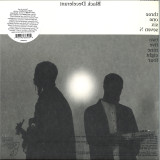
Black Decelerant is the second installment of Reflections, a series showcasing contemporary collaborations orchestrated by RVNG Intl., recently inaugurated by Steve Gunn and David Moore. Black Decelerant, the duo of Khari Lucas, aka Contour, and Omari Jazz, explores jazz traditions, improvising with synthesizers, guitars, and electronics as a practice laid forth by their musical ancestors. This experience allows for sonic meditations on themes such as Black being/nonbeing, mourning/life, expansion/limitation, and the individual/the collective. The two strive to create a sonic surface which can simultaneously allow Black listeners a place to be still, and to serve as a basis for a movement beyond "the moment." The album's ten compositions configure vast, resonant landscapes with signals, weathers and spirits, suspended in memory and distilled in time. The Black Decelerant machine recalibrates archival relics and acoustic impulses into collages of amalgamated timbres, where harmony exists not without discordance. Across the expansive space of the record, cadent storms of modulated sound ascend beside serene melodic spells. Piano keys and bass lines tumble in free fall throughout the release, accompanied on tracks "two" and "eight" by the spectral trumpet improvisations of Jawwaad Taylor. The duo arrived at their name upon reading Aria Dean's Notes on Blacceleration, an article which explores Accelerationism within the context of Black being or non-being as a foundational tenet of capitalism. Coupled with the record's intended effect, "Black Decelerant" references the music being an invitation to slow down, while hinting at the shared politics between themselves and the artists and thinkers who inspire them.

8
I needed to do some recording to cheer myself up. The studio I usually use was booked all month, but before the disasters of Brexit & Covid I’d met pianist Yves Meerschaut in Gent, and he’d shown me his recording studio, Room 13, and that did have a couple of days free in January… I decided to make a record of old songs that other people have liked, and / or that I play differently now, and / or that haven’t appeared on vinyl before. So, here, there’s: “Pennypot Lane”, a fox song that people like, “Winter Turns to Spring” that was Tony Benn’s favourite song, “The Blue Sea Says Yes”, a song about how the sea welcomes us all, heroic or fragile, equally in our mortality (something like that anyway) , that I had forgotten about till people started saying how much they liked it, “More Than Enough”, that Roy Bailey and Martin Simpson have kindly rescued from the obscurity of its previous appearance on a CD in 1992, “Babbecombe at the Closing of the Day”, a song about going to Babbecombe model village, “At the Siege of Madrid” which quite a few people like, but is one of those songs that always somehow eludes a definitive performance, “A True History of Couscous”, a song I like that is more or a less fictionalized autobiography, and lastly.. “You Don’t Have to Say Goodbye”. This is a song from my first CD; Thames Valley folk-stalwart Terry Silver used to enjoy performing it so that afterwards he could shock audiences who’d been happily singing along to it by revealing it had been written by that dreadful lefty Robb Johnson, It’s also, more recently, a song our son Arvin likes very much too, and he graces this version with his characteristically modest tasteful Spanish guitar playing. He also nagged me into doing the artwork for the cover. Three of these songs are lucky enough to have Yves’s breathtaking, exquisite piano playing embellishing them, and Sian Allen gifts “Madrid” some beautiful trumpet accompaniment too. But primarily, for good or ill, it’s mainly me with an acoustic guitar. Robb Johnson, May 24. “in my view one of the best songwriters this country has produced in many a year… the appellation National Treasure is often over-used, but in Robb’s case it is entirely appropriate (St Edith’s Folk) // “an English original”, (Robin Denselow, the Guardian) // “a national treasure” (Mike Harding) // “one of this country’s most important songwriters (no argument!)

Weniger als ein Jahr nach ihrem Album „Through and Through“ kehrt Baby Rose mit „Slow Burn“ zurück, einer Sammlung von Songs, die ihre Klangpalette von progressivem R&B zu einer raueren, reichhaltigeren und weitläufigeren Linse amerikanischer Musik erweitern. Hier behauptet sich Rose nicht nur als einmalige Sängerin, sondern auch als formidable Songwriterin, die die Punkte verbindet, an denen Muscle Shoals auf Psych trifft, Psych auf Jazz, Jazz auf Americana, und die richtigen Musiker bringen alles zusammen. Produziert von BADBADNOTGOOD, fanden Rose und die Band eine sofortige und scheinbar endlose Quelle der Inspiration; was als Einleitung begann, wurde zu einem Tag, zu einem Song, zu einer Nacht, zu „Slow Burn“. Baby Rose war bereits eine kraftvolle Performerin - sie kann die Bühne mit Robert Glasper teilen, ohne in Schweiß auszubrechen, oder einen epischen Film wie Creed III, für den sie den Abschlusssong sang, mit stählerner Zuversicht beenden. Als Rose sich das erste Mal mit BADBADNOTGOOD traf, war sofort eine Verbindung da, und gemeinsam nahmen sie die Leadsingle "One Last Dance" gleich bei diesem ersten Treffen auf. Es war Roses erster Freestyle-Song, und er brachte entscheidende Teile ihrer Vision auf den Punkt. "Ich wusste schon immer, dass es neue Räume und Sounds gibt, in die ich vordringen kann", erklärt Rose. "Ich war schon immer an verschiedenen Sounds interessiert, die diese raueren Texturen einbringen." Während die Geschwindigkeit ihrer Zusammenarbeit Rose begeisterte und überraschte, waren das Potenzial und die Endergebnisse es nicht. "Wir haben uns schnell bewegt", sagt sie, "und es war wirklich wie ein Wasserhahn. Sobald wir “One Last Dance“ hatten, wurde klar, dass alles fließen würde." Die Songs auf „Slow Burn“ wurden zum Teil von Roses Erfahrungen inspiriert, die sie auf den Fahrten zwischen den Wohnorten ihrer Familie machte: dem Lärm und Chaos von DC und der ruhigen Landschaft von Carolina. Rose drehte die Musik auf und ließ ihre Gedanken schweifen, um Raum für innere Monologe und imaginäre Dialoge zu schaffen, die man sonst vielleicht nicht zu hören wagt. Diese Momente haben etwas Verträumtes, und sie schwelen auf Slow Burn: Erinnerungen verlieren ihre Realität, Gefühle ersetzen Geschehnisse. Der Titeltrack zum Beispiel setzt sanfte, schlendernde Drums gegen Roses lyrische Wiederholungen, während sie diesen Erinnerungen - manche leben, manche fühlen - mit geduldigem, beharrlichem Verlangen nachspürt. Das herausragende "One Last Dance" kommt als Liebeslied getarnt daher, ist aber eigentlich eine Ode an eine verlorene Freundschaft und ein imaginärer Traum von einem weiteren Tag wie in alten Zeiten. Die Realität verschwimmt wieder mit dem Gefühl, der Gesang geht in ein Wiegenlied über, und BADBADNOTGOODs Bassist Chester Hansen bringt diese traumhafte Qualität in einen schleichenden, vorsichtigen, aber liebevollen Unterton. Tatsächlich haben die meisten Songs auf „Slow Burn“ dieses schleichende, schattenhafte Gefühl, als würden sie auf Zehenspitzen daherkommen: intim, aber ein wenig gefährlich, zärtlich, aber ein wenig geheimnisvoll. So vollständig und überzeugend dieses Werk auch ist, Slow Burn weist auf einen größeren, höheren Aufstieg in Baby Roses Zukunft hin.

Pleasure Planet’s kaleidoscopic debut album has been a long time coming, but good things come to those who wait. Developed over years of late-night studio improvisations, ‘Pleasure Planet’ is an affectionate and colorful patchwork of the New York City-based trio’s knotted influences that’s suspended between the rave and the chill-out room, weaving glistening pads and chunky basslines into vocal earworms and warm, saturated rhythmic cycles. Bandmates Andrew Potter, Kim Ann Foxman and Brian Hersey enter into a lysergic dialog with their discrete personal musical histories, drawing inspiration from vintage EBM, ambient music and heady early ’90s West Coast rave sounds and launching these classic elements into a transcendent new sonic universe.
Celebrated DJ and producer Foxman was a lead singer of Hercules and Love Affair when she first ran into DC rave veteran Potter, and the two rapidly realized their musical interests overlapped. So when Potter was recording with his studiomate Hersey, a NYC underground club scene mainstay, and they needed to bring in a vocalist, the choice was simple. Working together was a refreshing, freeing experience for the three seasoned artists, and the more they experimented, the closer they became; Foxman ended up moving into the studio, and Pleasure Planet was manifested into existence. “We’re like family,” says Potter. “We’re always on the same page – we couldn’t make this music solo.”
For Foxman, the open-ended jam sessions provided her with a chance to try something new, a few steps from the dancefloor-forward DJ tracks she’s best known for producing. And as the trio pooled their adolescent rave memories, reflecting on them with more mature ears, they began to develop the signature sound that was first heard on the Throne Of Blood-released ‘Animals’ 12″. Pleasure Planet aren’t trying to re-capture the past, but suggest a poetic contemplation that layers their recollections and musical obsessions into a hypnotic sci-fi dream. Harnessing a self-described “Aladdin’s cave” of analog and digital gear that help galvanize the timeline, they bridge the gap between avant-pop and icy bleep techno, curving suggestive words through lattices of tightly-engineered electronics.
On ‘Endless’, Foxman’s voice is echoed into a glistening haze that hovers around ethereal pads and tense, electroid pulses. Slow-moving and evocative, it’s a track that capture the open endedness of post-rave euphoria, touching the afterparty but moving far beyond the material world. She’s more recognizable on ‘Alien’, the album’s most upfront track, singing in a glassy, upper-register coo over urgent bass bumps, taut guitars and florid electronic atmospheres. “Are you an alien, or are you an angel?” she asks, fractalizing the borders between genres. And the band’s sense of cosmic togetherness bubbles to the surface on ‘Saved by the Bells’, a meditative after-hours experiment that diminishes the pulsing beats for a moment to bring out a spectrum of interconnected, serpentine melodies.
Modular bleeps and echoing percussion anchor the swooning ‘Planet Love’, one of Pleasure Planet’s most recent compositions and one of the album’s most outwardly psychedelic cuts, while the urgent and anthemic ‘Go With Madness’ steps back towards the main stage, evaporating Foxman’s memorable calls into a thumping procession of analog drums and squelchy, acidic bass tweaks. But they save the best for last, tugging at the heartstrings with ‘Remember (In Dreams)’, a giddy spiral of blipping synth arpeggios and haunting, reverberated chorals. It’s the perfect way to conclude an album that cryptically gestures towards the vulnerability of friendship, celebrating the shared experiences that result in some of the most meaningful memories of all.

9
The quality of the songs, including IMPRESSIONS, is also endorsed by the songs provided to CURTIS MAYFIELD and CHI-LITES, and the euphoric upsurge from the light guitar cutting to the percussive beats will get the floor going at once! Free soul full of killer songs including "DISCO CITY"!
Meditation Blue" was produced in Minneapolis in 1977 by Ernie Story, an SSW & producer who provided songs for The Impressions, The Chi-Lites, Curtis Mayfield, and many others. The simple jacket of this private pressing is very tasteful, but the high quality sound of this album has always been sought after! The album features the superb free soul "DISCO CITY" (A5) with its light cutting guitar and percussive groove, the instrumental number "The E Groove" (B2). The album is now finally being reissued and includes many gems such as "Chain Gang" (A4), a song with soulful vocals and a groovy band sound!

11
The group led by North Carolina-based singer/songwriter/guitarist Ron Henderson released this extremely rare album on the Los Angeles-based Chelsea label in 1976 -now priced at over 150,000 yen!- is being reissued on LP for the second time! As with the 2020 P Vine reissue, which has already skyrocketed in price, the cover is in the original Chelsea vinyl specification and the contents are in the reissue (probably boot) specification released in the 1980s with two additional singles from 1983, and also in 180g weight vinyl. Ron's singing is wonderful, with a hard and soft range from mellow medium, modern to crossover soul, ballads and funky, sometimes interwoven with falsetto! A great album that will make soul fans incontinent and weep!
