Search:free time

Styles
All
Toxic Waste - Belfast

Toxic Waste

Belfast

12inchSEAL006
Sealed Records
20.05.2022

TOXIC WASTE represents the hardest end of the CRASS milieu. While most anarcho-punk bands of the time sang about a war they’d only seen on TV TOXIC WASTE were being politically active in Belfast during the troubles. They played militant punk with melody and aggression. Borderline hardcore at times with a clear peace-punk message. Angry, intense and in your face. They were involved in the Warzone Collective and shared stages, experiences and activism with bands such as STALAG 17, CONFLICT , ASYLUM and ANTISECT. “Belfast” was originally released in 1987 on Vocalist Roy Wallace’s Belfast Records and has been out of print for 30 years. It was a compilation of previously released tracks and newly recorded versions of old tracks with Dino and Gary from D.I.R.T doing the female vocal parts and guitars. The 12 tracks on “Belfast” are nuggets of raging pissed off DIY anarcho punk with hard hitting lyrics and dual vocals. The recordings are raw and passionate and stand the test of time. The band released an iconic split 12” with STALAG 17 on Mortarhate (1985) - the tracks are included on “Belfast” and then the following year a split LP called We will be Free with STALAG 17 and ASYLUM before calling it a day and becoming a lost piece of the anarcho punk puzzle. This reissue comes with replica sleeve and fold-out lyric insert.

pre-order now20.05.2022

expected to be published on 20.05.2022

25,59
Pauline Oliveros & Reynols - Half a Dove in New York, Half a Dove in Buenos Aires

Recorded back in 1999, 'Half a Dove in New York, Half a Dove in Buenos Aires' is the recorded debut of a NetCast improv between deep listening pioneer Pauline Oliveros and Argentinian free music trio Reynols >> a fascinating early example of the internet’s capacity to foster remote creativity in-the-moment that deploys the slowest electronics, accordion, voice, trombone and computer sounds on a next level ritual drone incantation recorded in another era, but made for our time.

As the story goes, Oliveros first met Reynols in the mid ‘90s at a Deep Listening workshop she held in their home city, Buenos Aires, where they impressed her with an improvised brass serenade. Years later, in 1999, they met again via NetCast - a series of very early online live improvisations - to explore the Internet’s potential for collaborations between artists thousands of miles apart. Finally mixed down in 2021 and mastered by Helge Sten (aka Deathprod) after marinating in the archive for 22 years, the album resonates with the late, great Oliveros’ legendary work in exploring alternate tunings, spatial dynamics and methods of intuitive performance - a remarkable slab of omnidirectional drone bearing traces of Miguel Tomasin's vox and Oliveros’ just-intoned accordion embedded in its cosmic roil.

Broadcasting from fabled record shop The Thing in NYC, with Oliveros (Accordion) joined by Jennifer McCoy (ICR), Kevin McCoy (Computer processing), and Monique Buzzarté (Trombone), and Reynols revolving Miguel Tomasin (Electronics, subliminal voice & Alclorse drums), Rob Conlazo electronics, leather gloves & e-gtr), and Anla Courtis (electronics, rubber foot & e-gtr) and dialling-in from Florida 943 in Buenos Aires, the results are an incredibly absorbing and consistently surprising testament to vanguard, experimental spirits prizing the internet’s nascent, unprecedented ability to connect minds and art across continents, language barriers, and modalities.

The album's first side, titled 'Micro Macro Wind Dance', puts Oliveros' accordion under a microscope, enhancing it with lower case rumble and noise from Reynolds' arsenal. Shifting glacially over 22-minutes, Oliveros plays subtly and slowly at first, letting the accordion breathe in-and-out like a sleeping mythical beast, before she transitions to fluttering bird-like phrases by the end of the side.

'Astral Netcast Pigeon' expands the dissonant drones to widescreen, submerging Oliveros' trills and drones beneath layers of dirt and grit. It's time-altering music that dissasembles yr head before you've completely worked out what's happening >> basically the perfect mid-point between Oliveros' deep listening practices and Reynols' wildly inspirational free-noise-drone freakouts.

pre-order now20.05.2022

expected to be published on 20.05.2022

27,69
Hiro Ama - Animal Emotions EP

 “As a human being it’s really important to feel and express
emotions whether happy or sad,” says Hiro Amamiya, the
Teleman drummer whose solo guise is Hiro Ama. “I sometimes
struggle to and so these are a collection of songs that explore
different emotions. I want people to feel something through my
music so I called this EP ‘Animal Emotions’.”
 Amamiya follows up on swiftly on 2020’s field recording-heavy
EP ‘Uncertainty’ with a record made in his bedroom and during
a time of introspection to create something even more personal.
“On ‘Uncertainty’ I was using sounds from everywhere and
whatever sounded good,” he says. “But for ‘Animal Emotions’ I
stuck with fewer instruments so the EP feels much more united.
I also used more acoustic instruments as I sometimes feel
electronic music in general lacks some organic and human
elements so I tried to make this EP as organic as possible.”
 However, buried beneath the warm electronics, gently pulsing
grooves, infectious melodies and immersive soundscapes - that
veer from disco strut to IDM via jazz-laced ambient - you’ll still
find some field recordings. “You might not hear them as
obviously as on my previous EP but field recordings are there,”
he says. “I like them because it's very spontaneous and gives
some human feel. It also adds some air to a recording which I
quite like.” On the opener ‘Free Soul’ - which marries funk bass
with subtle electronics and squelchy grooves - you can hear a
voice sample of a woman from Southeast Asia singing a lullaby.
 “I wanted to make an up-tempo and danceable song so I can
dance in my room during the lockdown. I got lost in Jazz music
the last couple of years and it really changed and opened up
the way I make music.” The moods, tones and emotions on the
EP shift as seamlessly as the genres, never quite settling into
one single place and constantly exploring and expanding into
new musical terrain. A process mirrored by Amamiya’s own
varied influences and tastes that were funnelled into the record,
from film soundtracks to IDM to spiritual jazz such as
‘November Cotton Flower’ by Marion Brown and ‘Harvest’ by
Pharoah Sanders.

pre-order now20.05.2022

expected to be published on 20.05.2022

14,71
Berto Pisano - La Novizia

Berto Pisano

La Novizia

12inchFLIES53
Four Flies
20.05.2022

Oops, Four Flies did it again! Like other rare Italian gems, Berto Pisano's La Novizia was long thought lost before the FF team rescued, restored and remastered it from the original tapes. And wow, it's just one of the best things, if not the best thing, about the 1975 film it was written for – an erotic comedy with melodramatic overtones directed by Pisano's long-time collaborator Giuliano Biagetti (they previously worked together on Interrabang and La Svergognata) and starring a young and mesmerizing Gloria Guida.

The film's low budget meant that Pisano had to make a virtue out of necessity. Rather than using a big orchestra and strings (as is well known, he was a brilliant conductor and string arranger), he relied on a smaller ensemble – almost a chamber ensemble, but with a jazz-like rhythm section – to create sensual late-night soundscapes that exude a downtempo ambience. In a nutshell: smooth, warm, velvety music. The epitome of the lounge sound.

At times, whispered, sexy vocals by (the then ubiquitous) Edda Dell'Orso float dreamily over brushed drums, bass, guitars and electric pianos. At others, we find Italian library heavyweights like Alessandro Alessandroni (whose unmistakable whistle can be heard in "Canto Notturno") and even psychedelic rock influences, as in the acid distorted guitars, furious drums and crazy synths of "Free Dimension". At yet other times, we're taken into more easy-listening territory – "Fiore Rosso", for instance, offers a wonderfully cinematic example of Mediterranean, rather than Brazilian, bossa nova (did they ever thought of using a spinet in Brazil??).

The secret to the charm of La Novizia is that it encapsulates the Italian erotic sound of the 70s in all of its nuances, from the morbid, to the prudish, to the naïve. Because yes, this is a record of nuance and musicianship. And while the themes are in themselves simple, the fantastic quality of the writing, arrangement and production is a testament to Berto Pisano's superb talent, style and professionalism.

Finally back to life after decades of obscurity, La Novizia is a thing of beauty – which, as a pretty bright fellow once said, is a joy forever. Don't miss out on joy.

Comes on vinyl, CD and Digi with original artwork by Eric Adrian Lee and exclusive liner notes by the Pisano family. All tracks are previously unreleased in any format.

pre-order now20.05.2022

expected to be published on 20.05.2022

33,15
Dean Spunt & John Wiese - The Echoing Shell

 With their duo debut, Dean Spunt and John Wiese invite you to experience
the frenzy of percussive space and discreet sound found inside ‘The Echoing
Shell’.
 This is the first official collaboration between the two veteran music-makers,
though their connection goes back to 1999. As John recalls, “Dean was in a
high school arts program at CalArts. A friend and I were recording the first
Sissy Spacek demo in the design studios there, and taking a tape to my car
over and over again to check the mix. Dean was walking through the parking
lot with a Locust shirt on, we said hello, and he immediately got into a car
with two strangers to ‘listen to a tape’.”
 The tape-listening ended well, apparently. Dean and John became friends
and fellow travellers in LA circles and beyond: in 2005, John did a remix for
Dean’s first band, Wives; in 2007, Dean played percussion with Sissy
Spacek’s 13-Tet Los Angeles; John toured with No Age several times and
collaborated live with them in 2010.
 Under the Sissy Spacek name as well as his own, John’s recordings for his
own Helicopter label and many others kicked things off for him around the
end of the century; since then, he’s been constantly engaged in solos and
collaborations on record, performances, and installations around the world.
 In addition to Dean’s ever-growing discography with No Age, he curates his
own label, Post Present Medium. In 2018, Radical Documents released
Dean’s solo debut ‘EE Head’, which explored concrète and experimental
techniques in a four-part, album length piece.
 ‘The Echoing Shell’ is born of Dean and John’s shared understanding, using
John’s process common to Sissy Spacek: elaborate sound-collage works
using source material originating from punk, hardcore and improvised music.
A series of impositions, tape manipulation and edits recompose the material,
cracking open the crust of the source, freeing its implied guts to steam forth
in gushes of extreme noise. On ‘The Echoing Shell’, this is as often noise as
it is extreme intimacy, seeming at times to be sourced from within Dean’s
drumkit, at other times appearing to emanate from the capsules of
microphones and the circuits of the signal path itself.
 One may read these collaged sounds as abstraction, but there is a unique
language conveyed in their assembly, forming something like word-shapes
and meaning. And intention: the two side-long pieces, comprised of many
short sections, form a linear whole, creating alternately ripping and
discriminating music - and meaning - in the process.
 ‘The Echoing Shell’ is a fantastic conception in contemporary musique
concrète, combining incendiary post-rock power, dry humour and astonishing
depth of field. Whether projecting the sound through headphones, ear buds,
bookshelf speakers or your own personal amp stack, crank up ‘The Echoing
Shell’.

pre-order now20.05.2022

expected to be published on 20.05.2022

25,93
Soak - If I Never Know You Like This Again

 With their new album, If I Never Know You Like This Again, SOAK has
finally shaken the hangover of their starry debut ‘Before We Forgot How
To Dream’, and the pressures that came with it, hiding in the wings of
their ambitious follow up album, ‘Grim Town’.
 Having come up through BBC Introducing at the tender age of 15, before
signing to Rough Trade Records, as well as winning the RTE Choice
Music Prize and The Northern Irish Music Prize, in addition to being the
youngest ever Mercury Prize nominee, SOAK has again and again been
described as “the voice of a generation.”
 Showing, from a young age, an intensely artistic awareness of the poetry
of memory, Bridie Monds-Watson, aka SOAK, would incessantly
photograph and video everything, documenting and organising the
material so it was always there for them to revisit. “I always want to
remember exactly how I felt at a certain moment.” Now, at 25, SOAK’s
third album, ‘If I Never Know You Like This Again', is naturally made up
of what Bridie intimately calls ‘song-memories’.
 Working closely with Tommy McLaughlin (Villagers), with whom Bridie
has been collaborating with since the age of 15, and armed with
influences from Pavement to Radiohead to Broken Social Scene, they
wrote most of the album together before recording it with the rest of the
band in Attica Studios, Donegal.
 Throughout the album SOAK pushes and pulls at melodies, but never
milks their brilliance. Bridie masterfully glides their vocal melody slightly
off-kilter above excitable compressed high hats and flourishing guitar
lines. With the new direction of a grungier, more lo-fi production, the
swooning guitars are given a contemporary pop edge, reflected in the
rich and robust musicality of songs like ‘Bleach’, ‘Last July’ and ‘Pretzel’.
 There’s a constant pulsating beat at the album’s centre, propelling it
towards a kind of dewy happiness, like the end credits of a 90s comingof-age film. Bridie’s lyrics move through the songs almost as effortlessly
and they sing them, and the songs when read, read like poetry.
 With this album Bridie is, as the title suggests, freezing time in the
pursuit of truth: capturing their life into existence. In the world of ‘If I
Never Know You Like This Again’, a life is lived only because it's
remembered.

pre-order now20.05.2022

expected to be published on 20.05.2022

27,69
Dr. John - Gris Gris

Dr. John

Gris Gris

12inchJPR051LP
Jackpot Records
20.05.2022

Repressed at last. The classic 1968 Debut Record, this is the Original MONO mix. The first time this has been reissued and its on Limited Green Vinyl. 1968 Debut album from the king of the psychedelic bayou – the hypnotic, mystical and powerful sound of the swamp coming to life. As he became Dr. John (real name Mac Rebennack), it was his LA session work with musicians like Sonny & Cher, Canned Heat, and Zappa that allowed him to start conjuring up his visions of guitar psych-pop to walk alongside his authentic New Orleans upbringing. While “Gris Gris” contains moments that make it a type stamped symbol of its era, it might have well been made in outer space. Recorded in its own psychic and stylistic vacuum, the album borrows as heavily from the New Orleans’ musical culture in which he grew up as it does the looming continuous pulse of war, heavy drugs, and the end of the free love/hippie movement. The album was taken under the wing of a small percentage of the “underground” upon its release in 1968 and did not find a true following for years. // Original 1968 Mono Mix // Sourced From The Original Master Tapes.

pre-order now20.05.2022

expected to be published on 20.05.2022

32,73
RAPHAËL - STOP, LOOK, LISTEN LP

Raphaël

STOP, LOOK, LISTEN LP

12inchSDBANSELECTION04
SDBAN ULTRA
19.05.2022

Sdban Records is delighted to announce the reissue of this genre-defying jazz album originally released on library label Selection Records in 1972.

Delving into the story of the American pianist and composer Phil Raphaël reveals more questions than answers. He was born in New York where he played with Charlie Parker, Jon Eardley and Howard McGhee, but a 1951 recording with Red Rodney for Prestige Records is the single remaining trace of his bebop days. Raphaël appeared under unknown circumstances in Belgium in the 1960s, playing among others at the 1966 Jazz Bilzen festival, and he eventually settled in Brussels. A multifaceted musician, he did not limit himself to jazz and also worked in pop groups, directed the music for the spectacle Hair, and even had a brief residency at Pol's Jazz Club where he played the music of Johann Sebastian Bach four nights per week.

His album 'Stop, Look, Listen', which was recorded with the rhythm section of Babs Robert's group, consists of four long genre-defying tracks colored by the dreamlike vocals of opera singer Rose Thompson. A surreal blend of genres, hard to pin down. It's highly imaginative jazz, that much is sure. Raphaël shifts from serene late night piano jazz to more free or even spiritual passages, magnificently paired with the otherworldly vocals of Rose Thompson. The LP was put out by Selection Records, a label that primarily issued library music at the time, and thus went largely unnoticed upon release. The recording makes clear that Phil Raphaël was a highly gifted artist whose talent will forever remain undervalued, since it was his only effort as a leader. Raphaël's passage through the Belgian nightlife was just as mysterious as his music, and few people seem to remember him. Drummer Bruno Castellucci describes him as remarkable, both as a musician and as a person: "He was a hippie before there were hippies. He wasn't part of the system but he had a system of his own."

out of Stock

Order now and we will order the item for you at our supplier.

21,39

Last In: 3 years ago
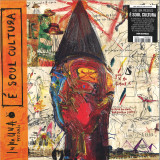
Luke Una Presents - E Soul Cultura LP 2x12"

Luke Unapresents

E Soul Cultura LP 2x12"

2x12inchMRBLP244
Mr Bongo
16.05.2022

With some of the best DJs and selectors there is a certain mysterious sound or underlying feeling which unites the music they play, regardless of genre, year or tempo Luke Una is a master of telling a story through music and this compilation is a perfect example of his musical alchemy in action. Featuring tracks from Yusef Lateef, Airto Moreira, Crooked Man, Henri Texier and many more, it is a collection of new, old, rare and under-discovered music from around the world, all united by Luke under the banner of "E-Soul Cultura".It's best described by Luke himself, who writes: "As the 5AM city sleeps and the strobe lights are slowly turned off, we gather on the wrong side of town in a transcendental journey alone together. We are the late night disenfranchised holding on in various after parties, flats, lofts, random kitchens and basements into the outer cosmos with É Soul Cultura.

Music from exotic tear jerkers, Afro- spiritual jazz, cosmic Brazilian celestial grooves, machine street soul, dark horses, lost B- sides, £1 bargain- bin bombs, hidden gems, late night Italo dubbing, deep velvet N.Y.C garage, bass buggin sonic futurism, wrong speed 33BPM pitched up +8 new beat, majestic sunset strings, sweet vocals from heaven, no half steppin jazz dancing in outer- space and odd numbers. Yes… magical moments, together, holding on in witness protection suburban cul- de- sacs and Castle Court flats. Cosmic É high, 3000ft above the city getting evangelical to murky, wonky timeless beautiful music. This thing of ours dreaming of better days. Fail we may, sail we must, the sun will come up again."

out of Stock

Order now and we will order the item for you at our supplier.

26,47

Last In: 6 months ago
Leigh Gregory - Sun Salt & Air LP

"Sun Salt & Air," is Mellow Drunk band leader Leigh Gregory's latest fulllength solo record released on limited edition LP.Recorded in Leigh's
home studio during the pandemic all of the main tracks (guitar and
vocals) were first laid down at home, then backing vocals, violin, cello,
and drums were added by additional friends and musicians remotely due
to the lockdown
San Francisco engineer/ producer Damien Rasmussen pulled all the tracks
together and mixed the record and Nikos Lavdas mastered the record for Tip Top
Recordings. Based in San Francisco Leigh Gregory has opened for the likes of
Supergrass, Luna, trashcan sinatras, The Church, The Clientele, The Morning After
Girls, LILYSand Gorky's Zygotic Mynci as part of Mellow Drunk."Sun Salt & Air" had
its beginnings back in January 2020 when I was working on a handful of new
demos. Suddenly COVID hit and the rest of the year became free to write and
polish up the tunes and finish a fully realized record. It was quite inspiring to have
plenty of free time to develop parts for the songs, plus being at home I could run
into the home studio and spend as much time as I wanted trying out guitar
sounds, vocal melodies, and lyrics as they came to mind. I wanted "Sun Salt & Air"
to be a classic vinyl record with five individual songs per side that fit together
seamlessly and flow from one song to the next. I really like the sequencing on the
record in that it has longer songs with improvised endings, short songs, an
instrumental, and an acoustic song without drums. What I've always loved about
a ten song vinyl record is that it takes you on a little musical journey from side to
side which by the end you're ready to flip over and listen again and again."

pre-order now15.05.2022

expected to be published on 15.05.2022

20,13
Bon Voyage Organisation - La Course

French finest synth-pop band Bon Voyage Organisation release his second opus after a feature on Cocktail d'Amore 10 Years compilation.

"La Course" is a cinematic, synthesized and library-esque journey that could be a mixed-up between Italian early 80's productions and french 00's disco.

"This record marks the beginning of a new attitude towards recording," says Bon Voyage Organisation's Adrien Durand. "Switching from a busy studio that I shared to having my own very quiet cabin in the North West of Paris has inspired me to adopt a more meditative approach."

Whilst it's fair to say Durand has been constantly on the move for some time - be it touring or producing records for the likes of Amadou & Mariam, Papooz and Bagarre - there's a sense of new momentum, as well as stillness, that hangs over this record. One that's fully instrumental and as he describes being more free.

The band's trademark glistening production, disco flair, shimmering electronics and incandescent melodies still remain but a more intuitive and striped back approach was favoured this time around. Some of this attitude stemming from an evening opening for Kamasi Washington. "Because of the constraints of being an opening act we played as an instrumental quintet instead of our usual 9-piece band," says Durand. "We rehearsed the day before, our set opened with John Coltrane's 'Naïma' followed by a hard-bop ish version of Kraftwerk's 'Trans Europe Express'. It felt so good to perform that repertoire in that configuration that I had the vision of bringing this aspect of the band in the studio."

There was also a removed sense of pressure with this record - no major label expectation of a radio friendly record, combined with a deconstructed approach to songwriting. "Since 2014 I've been working mostly on projects involving a lot of conventional songwriting," Durand says. "I was keen on producing a record based on performance and atmospheres more than repertoire." He also sought inspiration from a perhaps unlikely source: The Arctic Monkeys. "I was really encouraged by them going out of their comfort zone on their last album - it really caught my attention in a Bowie / Berlin period way."

The result of the album is one that oozes the natural momentum of experimentation, texture, mood and intuition while managing to retain a sonic coherence. In a none-obvious and zeitgeist clichéd way, there is perhaps a more jazz-leaning approach to the record that weaves between soft subtle moments to the more atonal and experimental, all underpinned by sweeping, engulfing soundscapes and the usual touch of non-Western musical flourishes. This vibe came from a distinct lack of editing, says Durand. "In the studio we had everyone sitting in the same room - sometimes up to 6 players - and I never edited the playing. I just went on to record some additional synth and percussion, insert the soundscapes, and mix the record."

This less is more approach, avoiding indulgence and superfluousness, is something Durand can't help but feel is an artistic response to the pace of modern life. "There is a frenetic approach to everything," he says. "People want to binge on everything, expect ultra fast changes on any political cause etc. The response is a big comeback of things like the practice of meditation, yoga and ambient music." There are times when this record falls into the territory of meditative ambience, as on the immersive plunge one takes swimming through the beautiful 'Un Am Ricain En Danger'. It's an album to bathe in and to be carried along by, it's gripping by being so rather than fighting for your attention

Ultimately the record is one that feels it's been allowed room to breath, a sonic sphere in which musicians have been allowed to roam as freely and thoughtfully as the listener. "This record is about welcoming the music and being able to let each musician express themselves during the recording process," says Durand. "This is a valuable trade that takes time."

out of Stock

Order now and we will order the item for you at our supplier.

25,08

Last In: 5 years ago
Flanger Magazine - After the Bend

After the Bend is the second album from Louisville based Flanger Magazine, and the follow up to FM’s 2018 debut, Breslin. Whereas Breslin was the solo creation of Christopher Bush, an album noted for “an astute synthesis of ‘library music’ and solo acoustic guitar,” and “a seamless blend into the uncluttered and airier side of classic 1970’s giallo,” After the Bend is an ensemble affair. An ecosystem, a perfect mutualism bodies forth—of strings, outdoor recordings, electronics, reeds, and percussion—featuring new FM players Anna Krippenstapel (Frekons (Freakwater + Mekons), The Other Years), Jim Marlowe (Equipment Pointed Ankh, Tropical Trash, Sapat), Eric Lanham and Benjamin Zoeller (both from Caboladies). The various combos perform with both a distinguished efficacy and unhurried Sunday drift—charged and beautiful, pulsating and pleasing. The production is subtle and tasteful. Mutating past the old saws of bounded individualism, a strange form of tentacular life accrues, cyborgian-fungral-tangles of the more-than-human variety.

Robert Beatty’s cover art of otherworldly and interconnected river-scape gradients, coupled with song titles like “Reservoir,” “Falls Fountain Removed,” and “Sympathies for the River,” cue and clue the listener toward a river as a singular multitude analogue for the album. Interstitial gaps, clearings and openings give rise and merge into an accumulated flow from the tributaries of spirited improvisational performance, palimpsestic song cycles, and high fidelity studio production. The composite sound-image of After the Bend refuses to put both oars down into any one of the eddies of the folk, sound, chamber, electronic, or jazz idioms, and instead glides along the currents found within the slipstreams between.

Gathering samples, a River Doctor Limnologist inspecting the properties of After the Bend might note the specter of Leroy Jenkin’s free-violin heat-light deepin the water’s thermal stratification. Or mortgage the late-Maestro’s time with Gruppo di Improvvisazione Nuova Consonanza to pay down the growing river heat budget. Or take one’s dirty buckets to the banks of the 19th laundromat where Walt Dickerson plays his vibraphone parts from Divine Gemini with dowsing rods. Or excavate the bedrock in the drainage basin, noting skeletal remains of a Shostakovich string quartet attempting to tune up a Kentucky Fiddle’s subsequent influence on the chemical composition of the water. Or consult the historical revisionist reenactment troupe’s episode of Fishing with John (Fahey) in which Codona, The Sea Ensemble and Nuno Canavarro guest host as their fleet of paddle boats churn river water into a regal lager, and all the fish get drunk in their quest for the leaner enamel Hosianna Mantra GPS coordinates of the Fattened Herb.

Bush and Marlowe recorded and produced the album at End of an Ear Studios, located in the Portland neighborhood, in the west end of the city of Louisville, bordering the Ohio River, between Kentucky’s Upper South and the Indiana’s Midwest, during the first year of the global pandemic, amidst the planet’s sixth great extinction event. As good a time to be alive as any other. (by Kris Abplanalp)

pre-order now13.05.2022

expected to be published on 13.05.2022

19,79
Pharoah Sanders - Moon Child LP

To celebrate the 45th anniversary of iconic Dutch jazz label Timeless Records, Music On Vinyl is releasing a series that features albums that are part of the Timeless Records legacy and will be released mainly throughout 2022.

Part of this series is Pharoah Sanders’ Moon Child from 1990, which bookended a decade of musical soul searching for Sanders. The acclaimed free jazz player is known to have a raw and abrasive sound, but reinvented himself on this album as a more traditional improviser capable of thoughtful deliberations. Moon Child is a grand old time throughout, and Sanders has never been more eminently sing-along-able as he is on its title track. The record was co-written with Horace Silver, George Gershwin and Abdullah Ibrahim and recorded with William Henderson, Stafford James, Eddie Moore and Cheikh Tidiane Fal

pre-order now13.05.2022

expected to be published on 13.05.2022

31,47
Those Pretty Wrongs - Those Pretty Wrongs / Zed For Zulu

Those Pretty Wrongs are Jody Stephens and Luther Russell, two old
friends and veterans of the music scene in different ways - Jody was the
drummer for the legendary band Big Star and now helps run equally
legendary Ardent Studios in Memphis & Luther Russell was the leader of
seminal roots-rock band The Freewheelers and is now an acclaimed solo
artist and producer
Those Pretty Wrongs (2016) & Zed For Zulu (2019) were both released to great
critical success and the duo toured much of the US and EU delighting crowds
with Those Pretty Wrongs music. There's an undeniable influence of Stephens'
former band in the breezy melodies, the strong, simple and straightforward
arrangements, beautifully built around the duo's harmonies. Billed as "Double the
PRETTINESS for the price of one" and inspired by the good ol' truck-stop LP twofers (along with the desire to update the vinyl pressing with premium cutting, and
packaging.) Curation Records has teamed up with Those Pretty Wrongs to not
only put their two LPs back in print but to also remind the world of the power of
"pretty music".

pre-order now13.05.2022

expected to be published on 13.05.2022

36,85
Seikatsu Kojyo Iinkai - Seikatsu Kojyo Iinkai

Ferocious JP / US free jazz bomb. A rare meeting between the NYC free jazz scene and the Japanese free music scene. Old-style Gatefold LP, with rare photographs & liner notes by Alan Cummings.

Following hot on the heels of the first, mid-sixties generation of Japanese free jazz players like Kaoru Abe, Masayuki Takayanagi, Yōsuke Yamashita, Motoharu Yoshizawa, etc., an exciting second wave of younger players began to emerge in the seventies. Two of its leading members were the saxophonist Kazutoki Umezu and multi-instrumentalist Yoriyuki Harada. Both were post-war babies and immigrants to the city, Umezu from Sendai in the north and Harada from Shimane in the west. They first met as students in the clarinet department at the Kunitachi College of Music, a well-known conservatory in western Tokyo. Harada was already securing sideman gigs on bass with professional jazz groups and was active in student politics, making good use of his connections to set up jazz concerts on campus. It was around this time that the two began to play together in an improvised duo, with Umezu on clarinet and bass clarinet and Harada on piano. They also experimented with graphic scores and prepared piano.

These experiments eventually led to the creation of a trio, with a high-school student called Tetsuya Morimura on drums, that they decided to name Seikatsu Kōjyō Iinkai (Lifestyle Improvement Committee) in joking reference to the Marxist discourse of the student radicals of the time. Around 1973, Umezu and Harada decided to call it a day and go their separate ways. Umezu began playing with the Toshinori Kondo Unit and Harada with the Tadashi Yoshida Quintet. In 1974 Harada formed his own trio and began to play at jazz coffeehouses across Japan.

Then, in September 1974 Umezu travelled alone to New York, where he set about building connections with the loft jazz scene in the city. It was a fortuitous moment to arrive in New York. Rents were cheap in the Lower East Side, possibilities for squatting existed, so many musicians and artists had moved to the area. Umezu soon became known on the scene as Kappo and he started to make connections with some of the young musicians like David Murray, Arthur Blythe, and Oliver Lake. He recalls making the rounds of the lofts every evening, checking out the performances, and getting the chance to sit in with many groups including Juma Sultan’s Aboriginal Music Society and trumpeter Ted Daniel’s orchestra.

Things were going so well that Umezu wrote to Harada and invited him to come to New York. He accepted and arrived in the city in July 1975. Harada and Umezu took the opportunity to resume their artistic collaboration. Their first concert together in over two years took place on July 20th at another loft, Sunrise Studios at 122 2nd Avenue. Umezu remembers Sunrise as an unusually sunny loft with the rarest of things, a grand piano. He invited along Ahmed Abdullah, a trumpeter he had got to know while playing with Ted Daniel. Abdullah led his own group and was a long-term Sun Ra sideman. William Parker, one of the key figures in the loft jazz scene of the period, was on bass. Abdullah also brought along Rashid Sinan on drums. Sinan drummed in Abdullah’s units throughout the seventies, but he had also played on Frank Lowe’s immortal Black Beings album and collaborated with Arthur Doyle, playing on Doyle’s Alabama Feeling album. By all accounts the evening was a huge success, with speed and dynamism of Harada’s piano playing gaining him lots of support.

Since they had managed to save some money from their day jobs, Umezu and Harada decided to set up a recording session with the same line-up on August 11 at Studio We, where there was a well-equipped studio on the third floor. Umezu recalls the session as follows, Of course, we recorded our performances in one take, with zero retakes as far as I remember. On all the tracks we recorded, we moved as one unit, sharp and fast. That was the nature of Lifestyle Improvement Committee, New York Branch.

Umezu and Harada would later become known for the elements of parody and entertainment that they brought to their music, a freewheeling blend of pastiche, humour and on-stage performativity that paralleled the approaches of the Art Ensemble, Sun Ra, and Holland’s ICP. But here, on their first recordings, the humour element is not yet present. Instead, there is a febrile sense of joy in creation and connection. On the Umezu-penned “Kim”, for example, Harada opens the piece with a speedy exploration of the full-range of the keyboard, hitting hard on the bass keys to create a rhythmic bed out of which patterns begin to emerge. Umezu enters at a much slower pace, longer held notes that at first float weightlessly over the urgency of the piano before they begin in splinter and accelerate. When Parker and Sinan kick in, it’s a rollicking tempo with Parker plucking deep and hard and the left-handed Sinan skittering hard across the topside of his kit. Abdullah kicks in a glorious solo twelve minutes in, bright and breathy at once. The piece slows and grows more spacious towards the end, giving Parker a chance to showcase some arco work that shades beautifully into the air against Abdullah’s trumpet.

pre-order now06.05.2022

expected to be published on 06.05.2022

25,17
Takayanagi Masayuki New Direction for the Art - La Grima

Famed free jazz concert registration of an early New Direction for the Art performance. Recorded in 1971. Old-style Gatefold LP, with rare photographs & extensive liner notes by Alan Cummings.

The performance by Takayanagi Masayuki New Direction for the Art at the Gen’yasai festival on August 14, 1971 was an intense, bruising collision between the radical, anti-establishment politics of the period in Japan and the febrile avant-garde music that had begun to emerge a few years before. The ferocious performance that you can hear here was received with outright hostility by the audience, who responded first with catcalls and later with showers of debris that were hurled at the performers. Takayanagi though described the group’s performance to jazz magazine Swing Journal as a success, “an authentic and realistic depiction of the situation”.

In 1962, Takayanagi, bassist Kanai Hideto and painter Kageyama Isamu went on to form an AACM-style musicians’ collective called the New Century Music Research Institute. Every Friday, members gathered at Gin-Paris, a chanson bar in the fashionable Ginza district of Tokyo, to push the outer limits of jazz creativity.

But the pivotal moment for his music was the creation a new trio version of his New Directions group in August 1969, with the free bassist Yoshizawa Motoharu and a young drummer Toyozumi (Sabu) Yoshisaburō. Experiments eventually led to the creation of two basic frameworks for improvisation that Takayagi referred to as Mass Projection and Gradually Projection.

“La Grima” (tears), the piece that was played at the Gen’yasai festival, is a mass projection and listening to it, you can get a clear sense of what Takayanagi was aiming at. Mass projection involves a dense, speedy and chaotic colouring in of space that destroys the listener’s perception of time, and thus of musical development.

The ferocity of the performance of “La Grima” at the Gen’yasai Festival in Sanrizuka on August 14, 1971 was consciously grounded by Takayanagi in a particular historical moment, ripe with conflict and violence. A month after the festival, on September 16, three policemen would die during struggles at the site. This was the context that the three-day Gen’yasai Festival existed within. The line-up reflected the radical politics of the movement, with leading free jazz musicians like Takayanagi, Abe Kaoru, and Takagi Mototeru appearing alongside radical ur-punkers Zuno Keisatsu, heavy electric blues bands like Blues Creation, and Haino Keiji’s scream-jazz unit Lost Aaraaff.

New Direction for the Arts trio topped the bill on the opening day, playing an aggressive, uncompromising “mass projection” set of polyphonic improvisation. Alongside drummer Hiroshi Yamazaki and saxophonist Kenji Mori, Takayanagi soloed hard and continuously for forty minutes. This was performance as precisely calibrated metaphor: three musicians responding to the demands of the moment with instinctive force and fury, untethered by rules, leaderless yet not rudderless (the direction part of the group’s name was no accident). The piece was entitled La Grima – tears - and the fusion between the palpable anger of the performance and hopeless sadness of its title were also perfectly apt for the situation. This was a fight that the state was always going to win. Yet, by all accounts, the band’s set went down like a fart at a funeral. The band were showered with catcalls and debris throughout, and by chants of “go home” when the music finally came to an end.

However, looking back at the event in the year-end issue of Japan’s leading jazz magazine, Swing Journal, Takayanagi was surprisingly upbeat: New Directions brought a solid political consciousness to our performance and succeeded in an authentic and realistic depiction of the situation. But journalism revealed its superficiality in its inability to penetrate the core of the music. I don’t know much about anyone else, but we at least left behind a competent record.

It’s a fascinating statement in many ways. Perhaps on one-hand it can be read as stubborn, solipsistic and self-justifying, yet in conjunction with his statement in 1971 there are points that guide us towards an understanding of just what Takayanagi intended with his performance at the festival. As Kitazato Yoshiyuki has argued, it becomes an almost religious act, directed at the earth deities of the land. A union of anger, sorrow and malevolence that can be placed nowhere effective, all it can do is find expression and channeling. The forcible land seizures at Narita, the eviction of farmers from land that had been in families for generations, the destruction of communities: none of this can be prevented, not least by an artistic action. All that can be done is an attempt to mark the land itself, to soak it with the combined force of emotions and the volume of the performances, to bury something there that cannot be drowned out, even by the coming roar of jet engines.

pre-order now06.05.2022

expected to be published on 06.05.2022

25,17
Jaymie Silk - The Rise & Fall Of Jaymie Silk & Rave Culture

Protean producer Jaymie Silk returns to Shall Not Fade with an intensely club-driven LP. On "The Rise & Fall Of Jaymie Silk & Rave Culture" a range of vocal samples tell a story over assertive rhythms that switch rapidly so that hard-hitting acid becomes breaks before melting into sleazy, low-end bass techno. Strap in!

It"s not easy to anticipate how any release from the Paris-based Jaymie Silk will sound. A self-proclaimed musical nomad and a real jack-of-all-trades, his artistic identity is defined by its undefinability. With this release - a follow-up from "The Legend of Jack Johnson" EP released on Shall Not Fade last year - Jaymie references the kaleidoscope of sounds which inspired him to make music in the first place.

Sampling an iconic Malcolm X speech, the force of which is bolstered by giant synth swells and clattering percussion, "Freedom For Everybody" places the album in the context of diaspora and resistance - themes that run ever-present through Jaymie's music. With "The Heat", he pays tribute to late '80s dance music, with a classic Lyn Collins drum break sample and diva-esque vocals. The hard-hitting acid-tinged techno of "Start Swinging" sees the album at its most assertive before "Bad B" takes things camper with deep bass pulses and
pitched-shifted vocals which affirm "I'm a bad bitch, yeah you heard about me". "Cats Love Drums" offers another direction completely with polyrhythmic percussion and real meow's before the two closing tracks leave a taste of sentimentality, with a major-key vocal melody and a giddy 150BPM pulse ("Waiting For The Day") and an intimate slow burner ("Take Time To Breathe").

The Rise & Fall Of Jaymie Silk & Rave Culture LP drops 6th May via Shall Not Fade.

out of Stock

Order now and we will order the item for you at our supplier.

10,88

Last In: 3 years ago
Tenniscoats - Papa's Ear

Tenniscoats

Papa's Ear

12inchMORR184-LP
Morr Music
06.05.2022
 
12

Just over a decade ago, Japanese indie-pop duo Tenniscoats recorded »Papa's Ear« (2012) and »Tan-Tan Therapy« (2007), two albums made with musical and production help from Swedish post-rock/folk trio Tape. Originally released on Häpna, they are beautiful documents of the exploratory music made by a close-knit collective of musicians, fully at ease with each other, playing songs written by Tenniscoats and arranging them in gentle and generous ways. Released during a particularly productive time for Tenniscoats – during the late ‘00s and early ‘10s, they would also collaborate with Jad Fair, The Pastels, Secai and Pastacas – they have, however, never been available on vinyl. In collaboration with Alien Transistor, Morr Music is now reissuing these albums both digitally and on double vinyl, with extra tracks.

This reissue mini-series starts with »Papa’s Ear«. The second album from this expanded line-up of Tenniscoats, you can hear the musicians are immediately comfortable in each other’s presence, and they’ve almost intuitively understood what they can offer to one another. Saya and Ueno of Tenniscoats bring their magical, gentle folk-pop sensibility, and their winning way with straightforward, yet lush melodies. Johan Berthling, along with fellow Tape member Tomas Hallonsten, plus guests Fredrik Ljungkvist, Lars Skoglund, Andreas Söderstrom and Andreas Werlin, all generous and creative presences in the Swedish jazz underground, shades in the songs with endlessly inventive arrangements, highlighting the warmth and curiosity at the core of the Tenniscoats’ aesthetic – sometimes taking the songs in unexpected directions, other times pillowing the melodies with the softest of brushstrokes and the kindest of tones.

»Papa’s Ear« includes some of Tenniscoats’ most memorable songs. »Papaya« is a lustrous dreamland of a song, with the Swedish musicians singing ‘pa-pa-ya’ as an enchanted tattoo, while Saya’s piano and melodica clank and huff out, further expanding the song’s horizon. It’s followed by the spindly and mysterious »Sappolondon«, where drums and double-bass shuffle and pulse under weeping accordion and bittersweet clarinet. Saya’s voice sighs into the frame while the musicians breathe lungfuls of sweet drones and flick glittering countermelodies across the song’s surface. It reminds a little of the wild kindness of Movietone, or the regal charm of Carla Bley’s compositions.

Elsewhere, you can hear Tape and their friends embracing the freedom offered by the songs of Tenniscoats: see, for example, the glistening electronics in »På floden«, like a keyboard conducting a music box on a distant planet; or the descending phrase for winds on »Sabaku«, dovetailing beautifully into a creek of moon-lit texturology. The double-LP ends with two extra tracks, drawn from the 2008 Tenniscoats/Tape split single, also released by Häpna., »Lutie Lutie« is a sweet delight, driven by a clacking drum machine, the Tenniscoats duo joined by Hallonsten on glockenspiel and synthesizer, and special guest, Japanese indie-pop legend Kazumi Nikaido, as choir. »Come Maddalena« rounds off the set, a brooding cover of an Ennio Morricone tune, the music by Tape, the vocals by Tenniscoats and Nikaido. Open-hearted and full of puckish spirit, »Papa’s Ear« is an album of great tenderness and warm friendship.

pre-order now06.05.2022

expected to be published on 06.05.2022

28,36
STEFAN GOLDMANN - VECTOR RITUALS

Proprietary rhythm: Vector Rituals sees techno polymath Stefan Goldmann constructing polymetric rites of percussion. Synthesized from the ground up, timbral characteristics, metric properties, dynamic expression and microrhythmic phrasing are shaped by the interactions of layered control voltage functions. The result is an assembly of abstract dances ranging from the intricate to the powerful.
Near-humanoid behaviour emerges from liquid patterns, laid out and brought to life by the freewheeling encounter of modular waveforms and snappy envelopes. Sounds evoke metallic textures
– ringing, scraping – and group into virtual shapes from tiny spikes to vast surfaces.
Some of the parametric relationships employed are as loose as to imply chance drifts. Others lock in with strict regularity as found in the 13 vs. 17 polymeter pattern of opening track 'Nayba'. By contrast,
in the strictly repetitive yet highly asymmetrical sequence of 'Yukagir' each metric step has its own uniquely irregular duration. The center piece of this collection is 'Ayon' with multiple autonomous and
highly agile timelines. Its constituent layers break away in radial fashion and fall back together at widely spaced points of congregation.
All compositions herein present powerful proof of the unlimited capacity of electronic music to yield new principles of organisation and to solidify their expression into clear-cut gestalt.

out of Stock

Order now and we will order the item for you at our supplier.

14,24

Last In: 3 years ago
Various - Seventies Collected Vol.1 LP (2x12")
 
27
also available

Vol.2[28,15 €]


The Decades Collected compilations are part of the Collected compilation series, which is a collaboration between Universal Music and Music On Vinyl. The compilations bring together the biggest names of each decade, combined with forgotten hits and less discovered gems, giving the listener an experience of listening to their favourite tunes while uncovering new musical grounds at the same time.

Various Artists - Seventies Collected features classic tracks and forgotten gems: Queen “Somebody To Love”, Billie Joel “Movin’ Out (Anthony’s Song)”, Lou Reed “Vicious”, Blondie “Atomic”, Paul McCartney & Wings “Mrs. Vandebilt”, Rodriguez “Sugarman”, Patti Smith Group “Dancing Barefoot”, Roxy Music “Dance Away”, Big Star “Thirteen”, Leon Russell “A Song For You”, 10CC “Dreadlock Holiday”, Grace Jones “La Vie En Rose”, Rush “Closer To The Heart”, Gerry Rafferty “Right Down The Line”, Minnie Riperton “Les Fleurs”, The Brothers Johnson “Strawberry Letter 23” a.o.

Various Artists - Seventies Collected is available on black vinyl and includes an insert.

pre-order now06.05.2022

expected to be published on 06.05.2022

39,87
Items per Page:
N/ABPM
Vinyl