First Word Records is incredibly proud to present 'Starts Again', the debut album from Tawiah.
The latest signing to the Worldwide Award-winning indie label, Tawiah is somewhat of a trailblazer in the world of alt-soul. Despite this being her debut album, she's long-established in the UK music scene, having previously self-released two EPs and a mixtape, as well as high-profile collaborations with Cinematic Orchestra, Blood Orange, Mark Ronson, Kindness, Cee-Lo, Wiley, Zed Bias and Eric Lau. Additionally being championed by the likes of Zane Lowe, Gilles Peterson and The Guardian, and supporting Moses Sumney on his recent EU tour, it's finally time to unleash a full solo project into the world.
'Starts Again' is an exploration of her identity as a queer woman of colour, raised in a pentecostal family, and a determination to express her musicianship in all its raw glory, free of the constraints of major label wrangles from before.
Co-produced with Sam Beste (Hejira), the album also features vocals from Sharlene Hector, Vula Malinga, Ladonna Young, Ade Omotayo and Rahel Debebe-Dessalegne, as well as glorious string arrangements composed by Miguel Atwood-Ferguson, with a series of field recordings from Ghana, amongst the varied components.
In Tawiah's words; "the process of creating this record independently has taken years!! From self-produced demos to live recording sessions with my good friends; Blue May, Sam Beste, Alex Reeve, Alex Bonfanti, Nathan Allen and Lewis Wright. Sam and I then had two years of long joyful studio sessions working on the post production. With no external deadlines or briefs we had the freedom to create whatever came. It was a privilege to collaborate in this way".
A triumphant 10-piece opus, the music seamlessly blends avant-garde sensibilities with low-slung beats and layered harmonies. The vestiges of Tawiah's early church vocal training contrast subtly against a distinctive South London accent, which has helped place her firmly at the vanguard of the British alternative soul movement, and establish a rep as one of the country's most exciting live performers. Time Out even saying "she slays so hard, you better hope there's a doctor in the house".
With a series of immersive live shows being planned in collaboration with spatial artist, Studio Myrrh, the latter half of 2019 headed into 2020 is looking to be a busy time for Tawiah. A decade on from her debut EP, 'Starts Again' is a creative reset of-sorts, though she is already highly revered within the music industry. A unique talent, this debut album should rightly cement her status as one of the UK's finest recording artists and songwriters.
Suche:free time
Cocada, a project which emerged as a diffuser of the musical talent present throughout Latin America, quickly spread its sounds to the four corners of the world, becoming a great initiative for electronic music. We couldn't be happier by this time, Cocada's first release as a record label is born with some respected artists and a beautiful story behind.
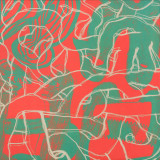
The wonderful artwork was illustrated by the Brazilian artist Paula Dornelles, who dedicates herself to the production of experimental artworks, she was able to convey through all her creative potential the depth of the meaning present in the word "freedom", a small sample of Latin American talent also in the visual arts.
On the album, who begins the work is the Brazilian duo, Diogo Vaille and Marcelo Abreu aka Bruce Leroys, with "Liberdade" (Original Vocal Version), a rework of a classic MPB song. The artists managed to perfectly merge the melancholy voice present in the song with a deep and dense bass line, bringing all the emotion present in the lyrics, causing goosebumps.
However, the duo isn't alone in this release. None other than Ricardo Villalobos has also left his trademark with a great remix, featuring fuller grooves and inserting multiple textures for the track.
'Control Voltage Project' is a long running project of Alper Maral & Mert Topel; Alper Maral is one of the most significant sound discoverers around Turkey through auditory and academical researches he has made about experimental electronic music.
Mert Topel is a versatile musician, one of the most important keyboardist for many artists in popular music in Turkey. He has released his first solo album “Serendipity” in 2017.
Control Voltage Project is named after the electric signals which are used for the interactions between various physical sound layers. Recordings of CVP -first album from the duo- was finished in 2005, and released in 2015 on “Müzik Hayvanı” as free download on web.
The album is making its roots through an endless sound pool that created by synthesizers, vocoders and tape recorders such as KORG MS 20, YAMAHA Motif 8, PROPHET 5 and TASCAM MS 16 which have characterized by different styles and times.
The duo’s 12 track album is a complete adventure from abstract
and fragile moments to groovy but spooky sounds.
Control Voltage Project is finally released on vinyl via Müstesna Records.
Volume one of a four part solo album set. (Monstruos Y Duendes).
The music of Myrddin goes through marrow and bone and is both complex, passionately rhythmic and profoundly emotional. He fully masters the compás of flamenco, which gives him the freedom to converse with elements of jazz or classical music. His swiftness sometimes seems extraterrestrial, but whoever takes the time to listen intensively to his music will soon find an immense world of pure emotions, beauty and peace. After four CDs and numerous concerts Myrddin proves that great virtuosos of flamenco don’t necessarily have to come from Spain.
Samuel Rohrer CONTINUAL DECENTERING With his Arjunamusic label and a growing catalog of categorydefying releases, Samuel Rohrer continues to quietly, yet confidently, make a name for himself as a genuinely unique Gigure within the European electronic music realm. In the current era, talk of blurring boundaries between musical genres and attitudes is more the rule than the exception, but not always something done with any degree of success. Rohrer is one of those rare alchemical explorers to have truly created a hybrid which is all his own, one that does not just exist to melt distinctions for its own sake, but is a natural result of years of experimentation with both the determination of electronic music and the ludic spirit of ‘free improvisation.’ On his newest offering, Continual Decentering, this vision is applied to a set of mostly in real time (live) performed explorations. In keeping with his many years’ worth of fruitful collaborations, the tonal palette on this new record is one that is expectedly rich for those familiar with his work, yet still surprising in terms of how exactly the differing tonal colors come together. Representative tracks like Spondee and The Fringe are brimming with dub pulses, noir shivers and blooming timbral variations that are in many places carefully isolated / focused and in other places blended together in vivid fusions. In terms of the emotional atmosphere created here, the pensive and questioning tone hearkens back to the ‘wide open’ state of electronic music in the mid-late 1990s, yet with a greater clarity and maturity of vision that makes this music feel like a possible answer to aesthetic questions being raised at that time. As with Rohrer’s most recent solo work, like the Range of Regularity LP, Continual Decentering showcases the artist’s skill in turning the drum kit into a lead instrument. While the term “lead instrument” denotes a kind of exuberant “Glash,” or a clear separation from the rest of the voices in an ensemble, we can take the term to mean something different throughout this listening program of 13 short vignettes: that is to say, everything else within the audible environment exists to complement the character of the percussive playing rather than to stand apart from it. It helps that Rohrer has, in fact, developed a unique and complex hybrid system in which drum hits trigger modular synthesizer processes, the use of which makes for an incredibly fluid response time between distinct sonic events. In contrast to the previous Range... LP, this new offering is propelled less by interlacing threads of intensity and more by a shared sense of deep listening. As displayed on pieces like All Too Human, there is a profound sense of attention to silences or thoughtful pauses that maybe hints at another crucial aspect of Rohrer’s style: over the course of this program, we tend to hear the player not only playing but listening, an activity which makes perfect sense given the sense of instrumental dialogue already mentioned. All of the above come together to give Continual Decentering a “live”-ness that will easily translate from recorded document to dynamic performance.
- A1: The Explosions - Hip Drop
- A2: Aaron Neville - Hercules
- A3: Bo Dollis & The Wild Magnolia Mardi Gras Indian Band - Handa Wanda
- A4: The Meters - Handclapping Song
- B1: Eddie Bo - Check Your Bucket
- B2: Professor Longhair - Big Chief
- B3: Cyril Nevilille - Tell Me What's On Your Mind
- B4: Lee Dorsey And Betty Harris - Love Lots Of Lovin
- C1: Mary Jane Hooper - I've Got Reasons
- C2: Lee Dorsey - Who's Gonna Help Brother Get Further
- C3: Huey Piano Smith & His Clowns - Free Single And Disengaged
- C4: Eddie Bo - Hook'n'sling (Pt Ii)
- D1: The Gaturs - Gator Bait
- D2: Danny White - Natural Soul Brother
- D3: Ernie K Doe - Here Come The Girls
- D4: Dr John - Mama Roux
- E1: Allen Toussaint - Get Out Of My Life Woman
- E2: The Explosions - Garden Of Four Trees
- E3: Robert Parker - Hip-Huggin
- E4: Chuck Carbo - Can I Be Your Squeeze
- F1: Gentleman June Gardner - It's Gonna Rain
- F2: Marilyn Barbarin - Reborn
- F3: The Meters - Just Kissed My Baby
- F4: Sonny Jones - Sissy Walk (Pt Ii)
Album features Ernie K Doe’s ‘Here Come The Girls’, The Meters, Eddie Bo, Professor Longhair, Lee Dorsey, Wild Magnolias and more.
This is the definitive collection of New Orleans Funk featuring acknowledged masters next to some of the earlier artists who shaped the meaning of funk. The album is also filled with many rare, sought after and undiscovered funk tracks. It covers the period from the emergence of New Orleans Funk in the early 1960's through to the mid-seventies.
The record is an essential part of anyone in any way interested in Funk's record collection. It has some vital ingredients in it that you can't find elsewhere. With the sound of the New Orleans Funeral March Bands, Mardi Gras Indian Tribes and Saturday Night Fish Fries all as inspiration New Orleans Funk developed into a unique sound.
New Orleans is a port town. Originally owned by the French, this was where many slaves were brought from the West Indies. Many of these slaves came from Haiti and brought with them the religion of Voodoo and its drums and music. It became one of the first parts of America to develop a strong African-American culture leading to the invention of Jazz in the early 1900's.
A main feature of Jazz in New Orleans were the Jazz Funeral Marching bands. Solemn Brass bands accompanying a coffin would, on burial, be joined by a second line of drummers and dancers which would turn the event into a celebration of the spirit cutting free from earth. This African tradition is strong in New Orleans and still goes on to this day. The backline drums play a syncopated style that is neither on the beat nor the off-beat. It is these rhythms that are the basis of New Orleans Funk.
The album comes with a booklet presenting a historical explanation to how and why this music came about, and with lots of information about the people involved.
Reviews: "A Perfect Primer For Funk Fans" Q (Top 5 albums of the year). "Probably the finest compilation that Soul Jazz has released. Essential" Time Out.
- A1: Starfish – This Town
- A2: Vampire Lezbos – Stop Killing The Seals
- A3: Nubbin – Windyyy
- A4: Saucer – Jail Ain't Stopping Us
- A5: Machine – Blind Man's Holiday
- A6: Medelicious – Beverly
- A7: Hitting Birth – Same 18
- A8: Nubbin – Wonderama
- B1: Crunchbird – Woodstock Unvisited
- B2: The Ones – Talk To Me
- B3: Pod – 123
- B4: Thrillhammer – Alice's Palace
- B5: Yellow Snow – Take Me For A Ride
- B6: Helltrout – Precious Hyde
- B7: Bundle Of Hiss – Wench
- C1: Starfish – Run Around
- C2: Thrillhammer – Bleed
- C3: Chemistry Set – Fields
- C4: My Name – Voice Of A Generation Gap
- C5: Small Stars – It's Getting Late
- C6: Shug – Am Fm
- C7: Treehouse – Debbie Had A Dream
- D1: My Name – Why I Fight
- D2: Soylent Green – It Smiles
- D5: Saucer – Chicky Chicky Frown
- D6: Attica – The System
- D3: Kill Sybil – Best
- D4: Calamity Jane – Magdalena
Soul Jazz Records new release takes us on a serious road trip into the North-West region of the USA, 1986-97, to explore the amazing lost and forgotten sounds of the Grunge era.
This Deluxe massive 28-track Double CD with 44-page outsize booklet features extensive text, band features and interviews, exclusive photos. Also Worldwide digital release + Ltd.Edition Two seperate double-vinyl albums with full notes and free download code.
The underground music scene of the North-west of America arose from the early 1980's, strung out in isolated towns across the vast state of Washington. In its early days bands who showed an allegiance to their roots of punk. Yet, by 1991,Nirvana, the biggest band in the world, had been born from this community of outsiders.
This compilation features some of the many divergent bands who emerged out of the North-west during this era. Intensely researched and documented this album features many bands who have now disappeared from history after releasing maybe just a couple of singles, or an album, or even never making it onto vinyl – alongside some bands that continue to this day.
Perhaps most fascinating is the wide-ranging styles that these grunge bands incorporated - from punk to metal, experimental and more.
All Roads lead to Nirvana: 17 of the bands featured here played alongside Nirvana in the period 1987 to 93. All 23 bands featured feature members who shared a stage with Nirvana. Jack Endino (The Ones) produced 37 Nirvana songs. Dave Foster (Helltrout) was Nirvana's 3rd drummer. Bundle of Hiss became TAD who played more gigs with Nirvana than any other band.
With fantastically in-depth sleevenotes, interviews with most of the bands, exclusive photography and all sonically remastered tracks this is a comprehensive double CD (and 2 volumes of 2x12" vinyl releases) bringing together the hidden, lost and forgotten sounds of the North-west grunge era.
Reviews & Articles: Seattle Times feature here. Irish Times here. Read article by compiler Nick Soulsby in Nirvana Legacy here Read second article by the compiler here. Read article about the artwork here.
Ivan Smagghe & Rupert Cross collaborate again.. and it's another beauty! TIP!
"This second LP on Offen is an ajar window overlooking the phantasmagoric world of Smagghe & Cross, a remembrance of days that never were. The music is sparse, the past is forever : ghosts of industries are conjured through the English countryside, fading memories play static with an idea of romance, the sun breaks through the iron clouds. A record free of uncouth nostalgia but laced with ethereal melancholia. "
Ô Paradis was created by Demian Nada in Barcelona during the 1990’s. Ever since then he has perfected his post-industrial minded free spirited folk-pop sound. The music of Ô Paradis is based on repetitive loops and samples on top of which instrumentation is added. The vocals and lyrics are very recognisable and are an important aspect of the melancholy songs and dark tunes.
Among his 20-something albums are some classics that have attracted an audience in the field of post-industrial music. “Cuando el Tiempo Sopla” is one of the classic albums by Ô Paradis …
Originally this record was released on compact disc in 2007 on the now defunct but legendary post-industrial label Punch Records.
This album represents the style and sound of Ô Paradis in a very striking way. After all those years it still sounds fresh and relevant
and has lost nothing of its power and charm … Also it features collaboration with like minded artists Jürgen Weber from Novy Svet and Tairy Ceron from Ait!/Punch Records.
Now “Cuando el Tiempo Sopla” is available for the first time on vinyl and serves both as a collector piece for the fans as well as an introduction to a new audience…
Wah Wah 45's are proud to present "Cages", the third album from southern soul boys The Milk. Having released "Favourite Worry", their critically acclaimed sophomore album and first for independent label Wah Wah 45's, in 2015, the band are able to trace the seeds of the latest LP back to their recording sessions with producer Paul Butler (Andrew Bird, Michael Kiwanuka, Nick Waterhouse) almost five years ago, blending elements of soul, funk and rock together to create their own unique sound, inspired by some of their favourite artists such as Bill Withers, Traffic and the Isley Brothers.
"I can't wait to hear you write songs that look outward" - these words from Paul subconsciously had a lasting impression on the band. To atone for more inward-looking sentiments on "Favourite Worry", there had to be a shift in perspective. During the formative stages of the new album The Milk started pursuing a Nichiren Buddhist practice. The values and principles they discovered during this have informed every aspect of the record.
"We wanted to write an album that looked outside of the walls, to people, society and the environment - embracing real freedom in musical expression by utilising more complex rhythmic structures, extended harmony and dissonance to paint an original and authentic-sounding record" explains If their debut, "Tales from the Thames Delta", was inspired by hedonism and "Favourite Worry" by introspection, "Cages" is an impassioned conversation with the world. Racism and division are all on the rise. British society is being pulled apart by forces that seek to divide us and rip the compassion and empathy from our minds and hearts. We have become distracted from the more urgent challenges of boundless consumerism, climate change, and the mental health emergency reeking havoc on our streets.
We are the birds in the cage, tied by cheap thrills and fake news to a limited world vision that is no longer fit for purpose. The good news? We can all choose to challenge this view. "Cages" is equal parts the dark black shadow of how far we've fallen and the blazing sunlight whose rays of hope can still change the world. Four life-long friends, Ricky Nunn (vocals), Mitch Ayling (drums) Luke Ayling (bass) and Dan Le Gresley (guitar) formed their first band when they were still at school in Essex, playing countless working men's clubs, and finally became The Milk.
The band have built up a following of dedicated fans around the UK, which has resulted in them selling out venues such as Scala, Koko and Shepherds Bush Empire. Keen to get back on the road where they feel most at home and where the guys really shine, the band offer up a compelling set of diverse styles, matched with an ability to effortlessly intertwine songs together, gives their music a continuous feel to it. Since signing to Wah Wah 45's, the band released their second album "Favourite Worry", which became one of BBC 6 Music's albums of the year, sold out London's Union Chapel, toured with the Fun Lovin' Criminals and completed a sell-out UK tour climaxing at London's KOKO in Camden town. ... More live dates coming very soon!
Chicago-based contemporary electronic musician Steve Hauschildt has composed panoramas of synthesized sound for over a decade. First within his former band, Emeralds, an American touchstone of 2000s home-recorded psychedelic noise music, and later across a steady and critically-acclaimed stream of solo releases spanning ambient techno, arpeggiated electronica and post-kosmische styles utilizing synthesizers, computers, and digital processing. In 2018, he extended a collection of rich, visceral tracks titled Dissolvi, his first release on Ghostly International and his most collaborative work to date. Just a year later, Hauschildt returns with Nonlin, an album that's freer, leaner, and looser, both structurally and conceptually; less linear compared to its predecessor, but still captivating. Developed and recorded in several studios during and around the edges of tour - Chicago, Los Angeles, New York, Tbilisi, and Brussels - this material emulates an alienating encounter with a smattering of places, a replicant of culture shock, a solitary and stark experience with uncanny environments, melody and dissonance as oblique locales. Nonlin finds Hauschildt evolving his palette of tools, integrating modular and granular synthesis. The improvisatory and generative nature of modular systems, when paired with his signature grid-oriented and hand-played techniques, guides these compositions slightly out of line to hypnotic effect. Opener "Cloudloss" permeates the mix with an unsettling smog, which reappears and all but engulfs "A Planet Left Behind." On cuts like "Attractor B" and "Subtractive Skies," pockets of air rest between sequenced pulses, whose crumpling and flattening folds build into a restrained rapture of crisp frequencies and milky reverb-swallowed coruscations. The album's title track and centerpiece logs on to a foreign network, a fractured percussion signal that modulates and stutters into static amidst curious melodic sparkling in the hazy bandwidth. "Reverse Culture Music" casts an elegant and brooding stream of strings, pizzicato and churning bow from Chicago cellist Lia Kohl, against chiming minimalist synth frameworks. A surprising pattern emerges in the taciturn systems at work. Hauschildt continues to expand his already horizon-wide repertoire, here exploring the effects of corrupting coordinates; a flight subject to the collapsable abilities of time in remote spaces, a smearing of the axis to elegiac ends.
Our 3rd release is the first curated series designed to expand on our beliefs of expressive, unreserved and rhythmic freedom, just like the name Tempo rubato suggests. Four timeless yet contemporary pieces that capture a moment in time and space, unique and intriguing in their own way. Let them take you on a trip through your imagination.
After a digital single on Optimo Music Digital Danceforce, Optimo Music welcomes Bergsonist to the main label with a full album. Ridiculously talented and prolific, Bergsonist is one of thee most interesting, thoughtful and important artists of our times.
Bergsonist aka Selwa Abd is a New York–based artist and musician originally from Morocco. She is the founder of Bizaarbazaar, a music platform and publication that publishes podcasts and interviews by DJs and producers from around the world.
Under the guise Bergsonist (derived from Deleuze’s Bergsonism),
she uses a variety of media to investigate social resonance through divergent conceptual aesthetics (minimalism, techno, and music concrete, to name a few). Through her work, she explores notions of identity, memory, and social politics.
In 2017, she started Pick Up The Flow, a resource to promote congregation and exchange between peers. Currently, co-run with Stephen Decker. In 2019, she co-founded 3afak with DJ Sanna, a collective that aims to empower Arab women’s creative vision in
New York.
Words about the album:
Middle Ouest is an ode to my history, present and future self. Like a sonic autobiography, It’s the first body of work that realistically depicts my identity. It’s a statement towards all the people who tried to put me into a box. I’m not a box but a genre-less ocean. I don’t make genres, I just make music I feel making in the moment.
It’s all about capturing the moment in a given time. If the aesthetic happens to be house or techno then it is. But I’m not a techno artist... I’m just a free sonic ‘voyageur’. I make music as i feel the world; it can be dark, jovial, weird… I mirror the feelings into sonic compositions. However, the only variables that never change in this equation are the message and intention.
Musique Pour La Danse invites you to rock your body and free your brain with the second and third volume of Break The Limits. Break The Limits are Bay B Kane and Mister E, two East London underground pioneers who released pivotal and visionary EPs between 1990 and 1991. Nearly 30 years later, it's still fresh.
Sauce Combo is a powerful and dynamic jazz trio lead by Marcjean, saxophonist from Bestown (Besançon), sided by the mercenary drummer Tom Moretti and the melodious
Victor Pierrel on bass. The trio's music takes place in the modern jazz renewing coming especially from England and the USA. France has now a champion. Inspirated by vintage african and west indies jazz, 70's jazz funk and fusion but also 90's drum & bass, broken beat and hip hop, the repertoire is a rich jazz bomb exploding to the
ears. Each second brings its his new colorful burst to admire. The band's brilliant game makes it a living listening experience. The music is rich and versatile but cohesive and united. Why?
Crash Test came to light in one day during a single 7 hours recording session at the Honey For Bear laboratories. Arnaud Bataillard, the sound's engineer, wanted to try several new
tubes and audio gears added in his studio set up. The trio went to test it in a crash test session. All the recordings could have been compromise somewhere but... What was before planned as a try ended into a fantastic album. The mental disposition, while playing
when you know that all can be lost in a minute, gave the musicians the proper dimension to express their feelings in a total freedom. They were playing for pleasure and without any pressure. It was for all, but it could have been also for nothing. And we can literally feel that. This unique record had to be release as soon as possible to transmit the freshness of this beautiful impact to the listeners. Above all, Clément Laurentin's "Equilibre Précaire VI" achieves this album, offering a painting with four figures at the edge of the fall, in a constant imbalance, playing with time and gravity. It's the perfect allegory for the three band's members plus the engineer while making this record.
The Planet X invasion continues ... The third release is the most-awaited EP this year featuring the Matrixxman himself. According to the Alien Council, it is his best EP so far. It contains four tracks of serious icebreaking soundscapes, running trough the listener's veins by freezing the complete solar system with a coolness.
Starting the process is A1 with the fall-out Syren track called ‘Hong Kong Day’ played exclusively in the Matrixxman Dekmantel Boiler Room set last year, now finally being released for the hungry trainspotters who have been waiting for quite some time.
Next up A2, the second installment of the Hong Kong- the Night version- the most spooky-sounding spirit-catching meltdown of a track. It is reminiscent of a lethal death scene in a brutal manga cartoon, where the Iron eagle flies over the lands looking for prey.
On the other side- B1 starts with the track ‘Power Drain’ featuring his label mate-Exos- definitely the festival track of the release which then takes the listener to the breakbeat part of town in the final track called ‘Tango Down’ on B2.
This is where the real Matrixxman signature strikes with raw, dirty rave bass turning it back and forth, finishing the EP with some analog screams. The Planet X continues tearing through the galaxy.
“Osondi owendi. What is cherished by some is despised by others. One man’s meat is another man’s poison. Different strokes for different folks. To each their own. Osondi owendi.
It’s a conventional aphorism in the Igbo language but if you utter the word “osondi owendi” in Nigeria today, the first thing that comes to anybody’s mind is the cucumber-cool highlife music maestro Chief Stephen Osita Osadebe and his legendary album that takes its name from the adage. Released in 1984, Osondi Owendi was instantly received as Osadebe’s magnum opus, the crowning event of an exalted career stretching back to the early years of highlife’s emergence as Nigeria’s predominant popular music.
Stephen Osadebe first appeared on the music scene in 1958 as a spry, twenty-two year-old vocalist in the Empire Rhythm Skies Orchestra, directed by bandleader Steven Amechi. With his dapper suits, urbane Nat King Cole-influenced vocal stylings and jaunty, uptempo, calypso-scented dance tunes, he personified the frisky spirit and anxious aspirations of a young, educated generation that had come of age in the wake of the Second World War, in a Nigeria that was rapidly shaking off British colonization and marching towards an independent future. 1959 would be the year that he truly made his mark in the business with his debut solo single “Lagos Life Na So So Enjoyment.” A giddy exhortation of the music, sex, fun and freedom availed by life in the big city, the song became a sensation and an anthem, and Stephen Osadebe became the leader of his own popular dance band, the Nigerian Sound Makers.
Osadebe would ride this wave of acclaim through most of the nineteen sixties, but a change in direction would be called for at the dawn of the seventies. As Nigeria emerged from a devastating civil war, so did a new generation of youth inspired by rock and funk, confrontational sounds reflective of a more violent, less idealistic era. All of the sudden, the idioms of the post-WWII dance orchestras that nurtured Osadebe’s cohort seemed quaint, the stuff of nostalgia. Osadebe needed to evolve to respond to the new tumultuous, turned-up times.
His response? He cooled it down.
Abetted by a new crop of fire-blooded young players, Osadebe slowed his music to a mellow, meditative tempo, brought forward the lumbering, Afro Cuban-accented bass and percussion, from the rockers he borrowed searing lead lines on the electric guitar. Over this musical bedrock, doesn’t so much as sing as he dreamily muses, coos, sighs aphorisms, words of wisdom and inspiration. “When one listens to my music, all I say appears meaningful,” Osadebe explained his lyrical approach, “at times they are in the form of proverbs which provoke much thought afterwards.” The result is a blend that is both rollicking and soothingly languid. Osadebe christened the style Oyolima—a tranquil, otherworldly state of total relaxation and pleasure. Osondi Owendi represents oyolima at its finest, and possibly Nigerian highlife in epitome.
Osondi owendi. What is cherished by some is despised by others. In some way, the album’s title constitutes a paradox. Because Osondi Owendi is a record that it’s almost impossible to imagine being despised by anybody."
Any jazz lover will tell you that one of the main considerations in their appreciation of jazz is spontaneity, and the freedom it gives to improvise. In jazz, freedom is everything.
Here we have a record that was recorded simply because some musicians met in the studio one day in 1996. They were not under instruction, they had no plans. What they had was the presence of mind to make music with one another, free to collaborate and spontaneously create new sounds.
Drummer Harbans Srih tells us about 'Short story from Tabla, Drums & Trumpet': "We were tracking some funky jazz with a full band.
All left at the end except for Pandit and myself. As there was a bit of time left I said to Pandit to have some fun tracking tabla and drums. Engineer pressed the record button and off we went without any prior rehearsal. This take is the result. Colin had turned up, took one listen and said he'd like to play trumpet on it. Again without any particular discussion he went in and recorded this take, resulting in this fusion of Indo-Jazz."
... And then in 2003, 'Oye Maia' came about: "We met at the recording studio one afternoon. I had an idea of recording an Indian themed track and had brought along a kalimba. I showed it to Shanti who started to play it. It was suggested that he recorded a 2 bar loop while Pandit and I performed alongside. Shanti then improvised on trumpet utilising Indian phrasing. The track was named after his daughter Maia, and translated it means 'Listen Maia'."
DeForrest Brown Jr. is an outspoken theorist, journalist, curator, visual artist and musician. Raised in the deep South, DeForrest moved to New York a few years ago and has been shaking things up IRL and online ever since.
- He asks difficult questions that make us relook at how we think
about race, class, post-racial ideas, historical events and the social
structures in America.
- His work defies narrow bags and he’s truly a unique cultural polygot
comfortable booking an artist like Felicia Atkinson at Issue Project
Room or shaking up people on the street with his “Make Techno
Black Again” hat line.
- His project Speaker Music was inspired by Rhythmanalysis, a book
of essays by urbanist philosopher Henri Lefebvre as well as
considerations of momentum and the “chronopolitical” from British
cultural theorist Kodwo Eshun. Mobilizing freely improvised
electronic percussion and stereophonic audio recordings, Speaker
Music yearns to caress, engineer and sculpt sentiment into a multi-
textural rhythmic body, quivering moments into a collapsed
“nonpulsed time.”
- His debut for Planet Mu centers around weary sonic portraiture of
sonorous and cybernetic energy music – a music encoded with an
encrypted heat but made “with empathy and without excess.” His
“touching of frequencies” unveils a romantic abstraction of sonic
narratives that recalls previous innovations by musicians such as
Les McCann, Urban Tribe and James Stinson.
DeForrest Brown Jr. will be present at Unsound Festival in October at which he’ll be launching a new publication w/ Primary Information.
He will also present a special event at respected New York art gallery Artist Space on Friday December 13th at which he’ll be launching a book related to the album.
Additional dates will happen between October and next Spring - A Video will also be launched when the album is announced in early October (...).
The vitality you hear on Antique Blacks is a testament to the unique energy of the community around The Foxhole Cafe in Philadelphia, as Ra honed his unique brand of Afro-Futurism through the late 60';s and 70's. Cosmic theatre, spiritual chants, and experimental electronics make this record an essential document that was ahead of its time. Ancient to future! BIG TIP !
The 1970s saw change in Sun Ra's recorded output, and as far as we can tell, the content of his live performances. By the middle of the decade, Sun Ra's music no longer seemed comprehensible as part of the jazz New Thing – quirkier, more idiosyncratic elements were more to the fore.
At this time, 1974, every Sun Ra record still surprised, and seemed radically different from everything else he had released up to then. The musical universe proposed by free jazz had never circumscribed Sun Ra. He had been part of the movement, but was able to use the possibilities it suggested without being limited by its conventions.
The Antique Blacks illustrates this well. Recorded as a radio broadcast in Philadelphia, according to Dale Williams, it has a well defined but oddball structure. Sun Ra was a master architect, very concerned to use the unfolding of an album, a broadcast or a live performance to create a satisfying structure.
Song No 1 starts on an upbeat note, it's a lively, tonal introduction, featuring John Gilmre on tenor saxophone, Sun Ra on roksichord, Dale Williams, then aged 15, on guitar, and Akh Tal Ebah on trumpet.
Sun Ra's poetry is featured on There Is Change In The Air, a track which has on occasion been used for the album title: in its original incarnation as a Saturn LP, there was no dedicated sleeve artwork, and this record appeared under many names. Ra's poetry is allusive, elusive and paradoxical, and this was its first major appearance on a record. During instrumental passages, Dale Williams' guitar is heard, along with the saxophones of Marshall Allen and Danny Davis.
The Antique Blacks is a similar setting for a Sun Ra poem, which encompasses "spiritual men", and Lucifer as a dark angel. The Arkestra is heard in conducted improvisational ensembles, in between the sections of the poem.
This Song Is Dedicated To Nature's God has Arkestral vocals, with John Gilmore's voice in th foreground. Williams' guitar is once again prominent in the instrumental passages.
Sun Ra's poetic declamations provide the structire for The Ridiculous I and The Cosmos Me, which also has a fine unaccompanied tenor solo by John Gilmore, keyboard improvisations by Sun Ra, and closes with bass clarient from Eloe Omoe.
Sun Ra's keyboards are heard with minimal Arkestra support on Would I For All That Were – a fine synthesiser improvisation, with electric piano left hand accompaniment.
Tension is resolved by Space Is The Place, which rounds the album out in an upbeat mood, with Akh Tal Ebah, James Jacson and Sun Ra prominent among the vocalists. The closing section includes the chant Sun Ra And His Band From Outer Space, often used at the close of live performances. This isn't strictly live, though: in one line the vocal is played backwards on tape!
By Geert Sermon - 'The Sound Of Belgium' - A timeless collection of unintentional psychedelic, post-everything, and pre-anything music with his one of a kind, unique, selector air, compiled by Dj Morpheus aka Samy Birnbach, member of post punk/wave band Minimal Compact and responsible for compiling the classic downtempo/ambient late 90's Freezone series on SSR Records (parent label of Crammed).
When acclaimed South African musician Guy Buttery first sought out Dr. Kanada Narahari in late 2016, it was as his patient.
“It was a dark time.” Buttery recalls, “I had been bedridden for months and had been suffering from debilitating bouts of fatigue which no diagnosis or medication could help me get to the bottom of. When I first met Kanada, I was at the stage where even picking up my guitar to make music had become a joyless and taxing exercise.”
As Buttery’s searched for a cure, a family member recommended he see Kanada an Ayurvedic doctor who had relocated to South Africa from India and set up a practice in Durban. It was during this consultation, that the musician first experienced how Narahari infused the healing properties of Indian Classical music into his practice. Rather than treating him with a smorgasbord of pharmaceuticals, Narahari played his sitar and set Buttery on a strict daily diet of Raga’s to fast track his recovery.
Buttery was not only struck by his doctor’s musical talents but by the powerful healing properties inherent in his sitar compositions. When he left Narahari’s doctors room that afternoon, he asserts he was feeling decidedly clearer, lighter and stronger.
“Diving into Kanada’s music was definitely one of the reasons I'm still here today.” he admits. “The consistent tonal centre at the heart of Indian Classical Music, literally became my support pillar over this period. A central core of sorts in which to fall back on, strengthen and discover.”
Narahari as it turned out, was not only a prominent music therapist (and one of the only Ayurvedic doctors practicing in South Africa) but like Buttery, a highly accomplished musician with a devoted following back in his homeland.
Born in a small village along the Western Ghats in Karnataka, India, Narahari, at the age of nine, had enrolled to study Carnatic classical vocal and developed an interest in Hindustani Classical music with a particular passion for the sitar. While Buttery had secured his reputation as one of South Africa’s musical treasures, a multi-instrumentalist who commands sold-out performances both locally and internationally and more recently had been awarded the prestigious 2018 Standard Bank Young Artist for Music.
From this consultation, a friendship developed between the two musicians with Buttery soon inviting Narahari to join him in his studio. But it wasn’t all plain sailing in the beginning. While Buttery and Narahari’s sensibilities were very much aligned, there were a range of cultural and musical influences, nuances and inflections that first needed to be navigated and understood.
“I suppose we had to find a common ground.” Buttery says, before adding, “Which in the end turned out to be pretty "uncommon ground" for the both of us.”
It was after a few intensive sessions together that something exhilarating began to emerge. What began as a few idle improvisations soon evolved into feverish and lengthier jams. Whenever time permitted, the musicians would meet, descending deeper into the emerging sounds, while reimagining the realms that existed between their African and Indian heritages.
Over the next few months, the duo would rack up over fifteen hours of recordings in studio, and it was up to Buttery to shape the material into an album which they collectively titled Nāḍī, which Narahari translates from the Sanskrit as "The Channel" or "An Internal River".
During this period, Narahari bestowed upon Buttery, the moniker Guruji while Guy would refer to him, in affectionate return, as Panditji. Each time the musicians would meet, the studio space would be cleared by an impromptu ritual, with Guruji burning African Imphepho while Panditji would chant a Sanskrit mantra dusting Indian Agarbatti clouds over their instruments.
Once the room had been made hazy with this aromatic alchemy (with the ancestors welcomed in) the musicians would pick up their instruments and plunge into shimmering tides of sound. Reflecting on these sessions, Narahari recalls the immense creative freedom he felt throughout: “Guy and I tried to wander as much as possible, without any speculative, preoccupied ideologies or limitations. Love remained at the forefront of our journey together.”
“Those evenings we spent together in the studio” adds Buttery, “felt incredibly rich with purpose and a profound sense of freedom. While improvising, anything could happen and mostly did.”
On a first listen, the tracks on Nāḍī emerge as salty, humid invocations to the inscrutable depths and misty myths of the Indian ocean-- that vast body of water that stretches between, and laps the shorelines, of the artists’ respective homelands.
When asked to describe the sound him and Narahari refined, Buttery prefers to relay a series of evocative images.
“For me” he explains, “Nāḍī is a lighthouse, a beacon that resides at the bottom of the ocean.” As Buttery envisions it, “what once offered light to guide ships to safety, has been submerged and re-purposed by marine life as a coral-reef temple. Similarly, this sunken lighthouse exists as a concealed cenotaph, memorializing the ancient sea-routes and passages that once connected the two distant lands.”
On paper this may sound obscure but listening to the songs, it serves as an apt metaphor.
Across each meditative movement, listeners are able to relive the journey, immersing themselves in a series of incantations, replete with high dynamics, delicate African-Indian inflections and virtuoso string playing of an entirely new order. Further complimenting the fusion of musical dialects are a range of guest artists including Shane Cooper on bass, Thandi Ntuli on vocals, Chris Letcher on organ, Ronan Skillen on tabla and percussion and Julian Redpath on guitar, synth and backing vocals.
Now like the submerged lighthouse, the recordings stand as a monument, a marker and snapshot of this fortuitous meeting, a tribute to the healing gifts of Guruji and Panditji in performance. It’s a process that already, both musicians look back on with reverence and nostalgia.
Buttery ruminates in closing, that when he first met Kanada his illness correlated with the biggest drought South Africa had experienced in many years “…for whatever reason, whenever we would connect and make music together, the sky would tend to open. Even if it was just a few drops. This went on for months, until finally the drought dissipated and my health had been restored.”
By the time the heavens did open across the East Coast, a deep friendship had been forged and with it abundant musical offerings poured down. A treasured sample of which we able to share in every time we press play and immerse ourselves in the sacrosanct musical universe that is Nāḍī.
One of the original catalysts of Latinx music in New York City, MAKU Soundsystem has been the connective tissue for several creative projects, bands and community roots for over a decade. As a group with a rotating membership, they've recorded multiple albums both DIY and for worldwide labels. Throughout their various iterations, the heart and mission of the ensemble has consistently built bridges, rather than tearing them down, remaining a remarkable beacon of positivity in a consistently competitive environment. The inspiring atmosphere has nurtured several notable musicians and acts over the years, including members of Combo Chimbita, Dilemastronauta, Bulla en el Barrio, Leon Brothers and Prince of Queens. Now down to a core group of three musicians, alongside percussionist Moris Cañate, MAKU and Names You Can Trust have finally teamed up for a vinyl edition after many years of collaborative shows and connections.
Perhaps their rawest and darkest recordings to date, this stripped down quartet is an ode to the creative source of their core members, lead singer & bassist Juan Ospina, drummer Andres Jimenez and guitarist Camilo Rodriguez. The A-side, "Culebra Coral" is a snakebitten taste ofla cumbia, played with an experience and restraint that only enhances the end result. It's a free driven approach born from familiar experimentation, rather than modern day trends — a singular jam, refined from years of playing together. Part psych, part cumbia, total MAKU. The B-side, "Contra Tambor," is emblematic of the group's roots in the traditional sounds of thetambora, a drum-forward percussive arrangement that follows Jimenez and Cañate on a free-driven approach to the ritualistic movements of the drums, this time drowned with an antidote of analog FX, synthesized glitches and atmospheric coros.
After stand out releases this year on Version and Wisdom Teeth Piezo returns to Ansia with a new 2 track EP Art Attack Gone Wrong / perccssszzzz. As has been evident with past records Piezo has always had a strong ear for using interesting sounds which have been expertly sculpted to create a unique sound universe.While releasing on other labels has allowed him to work closely with his peers the freedom of having his own label allows for him to explore his influences from the Italian rave scenes in a more direct manner. For ANSIA004 these influences are streamlined into a techno orientated sound palette with traditional four-on-the-floor beat patterns but with an approach more related to the sounds of Diagonal than Berghain.With 'Art Attack Gone Wrong' the milanese producer merges dancefloor efficiency with a playful approach to distortion, melody and sound design, while on the flip you will find 'perccssszzz', a no-frills heavy-swinged drum workout which, as the names suggests, refuses to include pretty much anything else than percussive elements. This time Ansia goes dark for the vinyl edition with white-ink stamped Tweetie on black label - and last but not least, 180gr vinyl cut deep and loud!
Franck Collin, a.k.a. Fleck E.S.C, brings some excellent winter-time electro to the London-based label untitled (recs) for their third u(r)blue record. The French-born, Tokyo-based producer has received praise from the likes of Jensen Interceptor, Dave Clarke, Laurent Garnier, and Helena Hauff. This record takes cues from several sci-fi soundtracks, and taps into Fleck's wider thoughts on cinema. After having studied film and worked in movie production for several years, he believes that movies need to be a kind of fairy tale usually a poisonous one. Likewise, u(r)blue003 delivers a capacious blend of texturesiat times delicate and expansive (e.g. 'Shelters', 'Skins & Scales'), at others assertive and grinding (e.g. 'KVFM, 'Roundup'). Together, this strikes a balance between deep club cuts and listening session tracks. Thanks to the mastering of Aphex Twin-collaborator Beau Thomas, these textures really stand out. Listen loud!
Classic UK Dub LP from 1994 gets the reissue treatment from Partial Records. This was the first album from The Bush Chemists spilling out of Conscious Sounds studio, London, at a time when the UK dub scene was just blossoming. 25 years after `Strictly Dubwise’ was released, the LP is long-deleted and the demand for this set is strong.
The Bush Chemists consist of Dougie Wardrop and Chazbo, with this album featuring guest vocals from King General, Culture Freeman and Disco Dread.
order to see someone elses perspective on his latest album "Nonlinear Times", Florian commited two of his favorite Techno producers and gave them total freedom on what they would do with the tracks.
Iconic Industrial Techno producer Black Asteroid, who is one half of the critically acclaimed MOTOR on Chris Liebings CLR Recordings and well known for his releases on Electric Deluxe, delivered a trend setting remix of "I Know The Kick" with Electro influenced industrial beats and electric guitar injections. Bryan Black aka Black Asteroid definitely knows the kick!
Jeroen Search, who recently released an impressive album on Len Faki's FIGURE Label, delivered two remixes for this EP and was able to isolate the essences of the original tracks and weave them into his very own, classic and confident interpretations. "Dimension Slip" got a hypnotic and deep treatment, whereas "Surrealist" was taken far away from its original direction into a jacking club tune - maintaining the scifiish, full of suspense feel.
“Experimental trio Giraffe crystalize time on ‘Desert Haze’, their new LP on Marionette. Giraffe is the musical project of Sascha Demand (guitar), Jürgen Hall (keys), and Charly Schöppner (percussion). Sascha Demand is a composer that comes from a contemporary and improvised musical background, collaborating with the likes of Ensemble Integrales and Vinko Globokar. Jürgen Hall works in electroacoustic experimental projects, theatre and film scores, with releases on Staubgold and Edition Stora. Charly Schöppner is known for his popular music releases such as Boytronic on major production companies in the 1980´s and composes for theatre, dance, and film scores. With only a couple of releases to date on the wonderful Meakusma imprint as well as an EP on Marmo, little is known about Giraffe. After letting go of other artistic projects, the trio now focuses solely on Giraffe by continuously searching for and finding their own unique language.
Sascha, Jürgen and Charly have quite diverse musical backgrounds, though morphing into Giraffe they tower into one single composer. Their music is a critical statement, not in a political sense but rather an artistic one. Being mindful about what it means to create and how to position themselves as artists nowadays (without the constant hassle of being en vogue and short-lived trends) shaped their rather rare and stoic artistic stance. It is refreshingly honest to see their expression develop so naturally.
On Desert Haze, they’ve created a vibrant and minimalistic tribal sound that feels inspired by the Saharan traditional music of the Tuareg, Jazz, and German psychedelic krautrock. Giraffe themselves also list the radical music of the Viennese School (Schoenberg along with his pupils Berg and Webern) as well as the Köln School with its early electronic experiments as their main influence and inspiration. More precisely the composition process and the organization of musical material within space and time, where a conceptual and intellectual approach melds with an experimental yet expressive sound searching method.
Side A focuses on the trios studio work; it is built around tone color and pitch analysis of resonating prepared guitar sounds. Through a unique mixture of free improvisation and a serialism "rule set”, they develop instrumental layers and structures to form their tracks. Side B sees Giraffe playing more freely with a reduced setup - representative of what you may hear when listening to them live.
Desert Haze, along with its track-titles, showcases an almost mimetic approach to art. The haptic music grabs the listener not as a passive recipient but as an active resonant body to vibrate through. One can almost feel the Elements, pressure and heat forming a diamond, hypnotic overtones ringing through windy caves, shamanistic rhythms conjuring up mysterious and ancient landscapes - where the constant cycle of sedimentation and erosion reveals structures of fragile beauty - always gentle to the hand’s touch and the mind’s eye.”
In her most personally narrative work to date, A Fossil Begins To Bray is the follow up on Dais Records for NYC producer Hiro Kone, furthering the dialogue set forth on her 2018 release, Pure Expenditure. While the statements on Pure Expenditure rallied behind a point of dangerous excess and injustice, the material on A Fossil Begins To Bray embark upon a journey of discovery and selfanalysis, proposing a potential reorientation towards absence in hopes of illuminating potential futures.
In Mao’s own words, “This album considers the power of absence as neither a lack or deficit, but as a quiet, indeterminable force to cultivate in this time of looming and unrelenting techno-fascism. It asks that we take pause to consider our learned languages and actualities and to better consider how desire shapes our recollections and interpretations of this ‘existence.’” This allegory is expertly applied to every song on A Fossil Begins To Bray. Mao has established a long history of employing absence in her productions to maximum effect. With a vast assortment of diverse elements at play, no single track ever feels overly convoluted and further illustrates Hiro Kone’s skillful attention to dynamic tension and flow. Tracks such as “Fabrication of Silence” and “Submerged Dragon” perfectly represent the power of absence, utilized in a matter to create unique amalgams of decisive, cinematic techno rhythms from the electronic void. As the melodic elements contained within A Fossil Begins To Bray begin to unravel and slowly take form, the unaware are rewarded with a driving yet tangible refrain that offers resolve in contrast to the dense, textureladen backdrop that forms the album’s foundation. The first single, “Feed My Ancestors”, expands upon Hiro Kone’s signature take on electronic music structures. Seemingly free from the predictable contracts imposed by any one genre’s stereotypes, Hiro Kone throttles the foreboding bassline in favor of more calculated, abstract cut-ups that gracefully hold the track in place between hopeful utopia and something more ominous.
LIMITED EDITION 500 ONLY COLOURED VINYL LP WITH DOWNLOAD CODE IN GLOSS FINISHED 350GSM BOARD SLEEVE
Way back in 2004, ACID MOTHERS TEMPLE & THE MELTING PARAISO U.F.O. released the CD only album 'Minstrel In The Galaxy' on Riot Season Records. The decision to make it CD only at the time was down to the epic title track being almost 42 minutes in length. Fast forward fifteen years and new technologies and we have the first ever vinyl release of this classic album, with a new edited especially for vinyl mix by main man Makoto Kawabata.
What we said back then ...
‘Minstrel In The Galaxy’ is the sound of the newly slimmed down four-piece AMT recorded in their smoke filled basement Studio in Nagoya during summer 2004. The sounds captured on these three tracks are the first post-Cotton Casino AMT workouts. The diminutive beer and cigarettes goddess has upped sticks and moved to the USA to start a new life and plan her solo career. We’ll miss her that’s for sure but we can’t worry about that now, AMT have another ten albums to lay down before New Year.
The AMT line up for this album features the core trio of Makoto Kawabata (Guitar), Atsushi Tsuyama (Monster Bass), Hiroshi Higashi (Guitar & effects) and new permanent drummer (and ex-Mainliner man) Hajime Koie (Drums). The free jazz style drumming from Hajime has helped give AMT their sense of improvisation back, most of their work is improvised and recorded live to tape which gives that great loose feel they have that takes them off on tangents and makes each new record that little bit different from the last. And with this new studio album I think we can safely say it’s something of a new direction.
They’re joined on this album by Japanese underground queens AFRIRAMPO, who’ve just finished a tour with Sonic Youth and look set for big things themselves in the near future. Musically this album is a slight departure for AMT, anyone buying it expecting a head-melting riff heavy record are going to be disappointed.
To these ears ‘Minstrel In The Galaxy’ sounds darker and more stripped down that any previous AMT release. The title track alone lasts a staggering 41 minutes, over the course of which the band take our heads in a few gentle directions before letting rip towards it’s crushing finale. For me it’s the gentle openings that make me tick, I love the way it rolls for what seems like ever just going round and round in your head. You almost expect it to explode way before it does and that my friends is the art of foreplay AMT style!
Kerrie makes her debut for DBA with four tracks devised originally for her high impact live sets. Other than a cut on highly regarded London label I Love Acid's 10th anniversary comp Kerrie is a relative newcomer but the ten years she has put in honing her style immediately shine through in her music. The EP ranges from Before Calm's bug-eyed, angular swagger replete with a hair raising distorted hook, to Orb Weaver's peak time techno roll via Acid8 Slider which is one of the most original 303 tracks to come out of the UK in some time and Curveball, a bolshy electro leaning stepper.
Her influences range from current UK artists like Blawan to Japanese artists such as NHK yx Koyxen & Hiroaki Iizuka and pioneers like X101, Joey Beltram and Surgeon. The running thread in her taste is a penchant for high energy, raw banging grooves with a machine funk flavour, and a love of analog sound both as a producer and DJ. No doubt this stems from her time spent working at legendary Manchester shop Eastern Bloc Records where she joined in 2013 and has worked ever since. Honing her skills through her DJ residency for EBloc Kerrie has gone on to become a regularly booked act for the UKs most prestigious underground club nights. As a live performer she has also toured the UK since 2017 with the live show being met with high acclaim. Her live set for Freerotation 2019 has been one of the festival's most talked about debuts.
I felt totally unrestrained making this album” says Lindstrøm about his 6th solo album On A Clear Day I Can See You Forever (a title inspired by the 1970’s musical On A Clear Day You Can See Forever starring Barbra Streisand). “I’ve listened to Robert Wyatt’s solo albums and his Matching Mole’s debutalbum a lot lately. It so effortless, fearless and free. And not insisting. I was very inspired by this” In the autumn of 2018, Lindstrøm composed a commissioned piece for Norway’s premiere art centre Henie Onstad Kunstsenter. Sketches from the three sold-out performances became the foundation for the new tracks. “I decided to keep some of the initial ideas and develop them further. All the songs are based on long one-take recordings”, says Lindstrøm “Also I’ve been very conscious about the music on the album not exceeding the length of the physical limitations of the vinyl-format, finding that 2 long tracks on each side were the perfect balance for this album” This is also the first time ever Lindstrøm has made an album entirely with hardware instead of computer-plugins. He utilised thirty plus synthesizers and drum-machines during his performance at Henie Onstad Kunstsenter. The experience inspired him to embrace a similar set-up when making the album. “The joy of making music on actual physical objects and devices makes a lot of sense to me now. After working on a computer for over 15 years, I don’t think I’ll ever look back” he says with an almost childlike excitement. It was the accessibility to his enviable collection of music gear – largely consisting of sought after synthesizers – that allowed Lindstrøm to experiment so freely with ideas and soundscapes. “The title track is a 10-minutes improvisation on the Moog Memorymoog. I liked the loose feel so I decided to keep everything unedited. The other tracks were written and arranged prior to the recordings. I then set up the instruments needed for my sessions, then recorded more or less everything in a single take. I’m really happy with the way this album came together.” Lindstrøm has cited classical music as an inspiration the last couple of years “I used to study classical music at school. Back then I was listening to a lot of Opera, orchestral music and solo music on the piano. Listening to classical music again has been a revisit to my childhood days, just like I did when I embraced the 80s in the early 2000s”
Once embracing the freedom and the joy of making music without inhibitions, immersing himself in to the physical realm of making music with hardware, Lindstrøm learned something new not only about music – but about himself.
“I guess I've been trying to re-educate myself”
The Goods are back with a second single, "Peach," a collection of moods with an obsession for chasing the funk. When their vocalist Black Tree heard the beat for the first time in the studio, lyrics and melodies flowed instantly. He says: "My hope is that it becomes a feel good anthem for sexual liberation. Freedom from shame is after all about opening yourself up to the world and that act of vulnerability breaks down walls and allows us to come together." Reminiscent of early Prince, "Peach" is sure to keep you dancing through the Summer with a tasty combination of sweet melody and juicy rhythm.
Photonz is the alias of Marco Rodrigues a DJ, producer and driving force of Lisbon's underground scene. For little over a decade now, he's been crafting his own deeply personal style of Portuguese house and techno. As a DJ, Photonz grew a reputation for deep crates and intensely euphoric sets and in 2017, together with Violet (co-founder at his Radio Quantica) and Lisbon's own Rabbit Hole collective, he started the now infamous Mina parties - a monthly, sex-positive, queer and intersectional-feminist techno party aimed at using the dissociative potential of intense raving to create a temporary space of suspension away from patriarchal expectations. 'Nuit' is Photonz?s debut album and a simultaneous reference the Egyptian Goddess of the Stars or Night. Marco was really swept away by the concept of ?freedom of form under the night sky?, the accepting embrace of Nuit. Ancestral, but also socially advanced and utopian; a deification of the night time. These ideas manifest themselves as eleven songs spread across two LPs that wax and wane like the moon. Photonz channels early techno, Drexciyan rhythms, balearic & atmospheric house; layering sounds, creating moments. All songs have been mastered by George Horn at Fantasy Studios in Berkeley. The vinyl comes housed in a royal blue and neon yellow jacket with duality/birth symbolism and trance-hieroglyphs designed by Eloise Leigh. Each copy includes a glow-in-the-dark sticker and a postcard with notes
- A1: Geraldo Pino - Shake Hands
- A2: Sonny Okosunds Ozziddi - Dance Of The Elephants
- A3: The Wings - We'll Get Home
- A4: Alhaji (Chief) Prof. Kollington Ayinla - E Ye Ika Se
- B1: Colomach - Kassa Kpa Sama Kpa
- B2: Geraldo Pino - Heavy Heavy Heavy
- B3: Mfb - Beware
- B4: Tony Grey And The Ozimba Messengers - You Are The One
- C1: Sonny Okosuns - Oba Erediauwa I
- C2: The Wings - Single Boy
- C3: Geraldo Pino - Power To The People
- D1: Original Wings - Igba Alusi
- D2: Don Bruce And The Angels - Sugar Baby
- D3: Geraldo Pino - Africans Must Unite
Soul Jazz Records’ Nigeria Soul Power 70 album showcases the influence of funk, rock and disco on Nigerian music during the 1970s. Originally released as a now-long-out-of-print collectors’ 7” RSD box, this fully expanded album release now also includes extra tracks from Sonny Okosuns, Wings, Chief Kollington Ayinla and more. While for many people the fusion of funk and jazz music with Nigerian rhythms and aesthetics began with Fela Kuti and his afro-beat sound, in fact this can be traced further back to the phenomena of the 1960s Nigerian artists and house bands in nightclubs and hotels who interpreted US soul and pop music with a local flavour and none more so than Geraldo Pino, the ‘African James Brown’ who features heavily in this collection. Other similarly inspired Nigerian funk and soul artists featured here included Tony Grey and his Ozimba Messengers and Don Bruce and The Angels. Nigeria Soul Power 70 includes a number of tracks from the group Wings originally known as BAF (Biafran
Air Force) Wings, an army band formed during the Biafran civil war in Nigeria. The groups’ heavy mixture of funk, rock and African styles was popular among many Nigerian groups at the time.
Beneath the shadow of the few Nigerian artists who signed international recording deals in the 1970s – Fela Kuti, King Sunny Ade, Chief Ebenezer Obey – lies of vast wealth of largely undiscovered musical transmutation and cultural cross-pollination, and included here are heavy afro-funk/rock and disco tracks
from artists such as the legendary Sonny Okosuns as well as rare cuts from little-known outside of Nigeria - groups such as Colomach and MFB. Most of these obscure artists signed to major labels in Nigeria in the commercial slipstream that opened up as Philips, Decca and EMI tried to emulate the international
success of the big three international Nigerian artists. Finally featured here is Kollington Ayinla, one of the co-founders of Nigerian Fuji music, who gives us perhaps the heaviest of all tracks on this album. Ayinla is the great moderniser of the Fuji sound and in the late 1970s began adding Bata drums and synthesizers to his authentic music to create a powerful and heavy new fusion of traditional and modernist aesthetics, embracing both new technology and experimentation while rooted firmly in Nigerian historical lineage. Nigeria Soul Power 70 is released as a heavyweight gatefold double vinyl LP (+ free download code),
deluxe slipcase CD and digital album.
Neurot Recordings are proud to reissue the landmark collaboration Neurosis & Jarboe, which was originally released in 2003. This latest version is fully remastered and with entirely new artwork from Aaron Turner.
Very limited silver metallic and black swirl 2LP - Non-Returnable
Steve Von Till explains the idea behind the remastering; "Bob Weston (Chicago Mastering Service, and member of Shellac) worked closely with Noah on making these new versions sound as good as the possibly can. Noah has the most trained critical ear for fidelity out of all of us being an engineer himself. We recorded this ourselves with consumer level Pro Tools back then, in order to be able to experiment at home in getting different sounds and writing spontaneously. The technology has come a long way since then and we thought we could run it through better digital to analog conversion and trusted Bob Weston to be able to bring out the best in it....This new mastered version is a bit more open, with a better stereo image, and better final eq treatment."
He continues about the original artwork..."Aaron felt he could create something that would unify the energy of both Jarboe and Neurosis in an elegant manner. We let him do his thing and I think it definitely adds to mystery of the album and sets it apart from the rest of our catalog."
When two independent and distinct spheres overlap, the resulting ellipse tends to emphasise the most striking and powerful characteristics of each body. Such is the case with this particular collaboration between heavy music pioneers Neurosis and the multi-faceted performer Jarboe (who performed in Swans and who has collaborated with an array of people from Blixa Bargeld, J.G. Thirlwell, Attila Csihar, Bill Laswell, Merzbow, Justin K. Broadrick, Helen Money, Father Murphy, the list goes on...) The musicians pull from one another some of the most harrowing and unusual sounds ever heard from either artist at the time - a sentiment which also rings true to some 15 years later.
Neurosis & Jarboe opens with a high-pitched whirring sound winding up as Jason Roeder's ominous tom-drum beat and Noah Landis' slinking synth line writhe in unison until Jarboe drops in, drawling in her characteristic, corrupted Southern belle voice, "I tell ya, if God wants to take me, He will." From there on in, the album is a series of abrupt shifts and cleverly juxtaposed themes that flows in a rhythm of its own. The sinister and ethereal sounds, vocal coos and electro-pulses of "His Last Words" seem like the perfect soundtrack to a David Lynch film. On "Erase," song parts are dissected and grafted one atop the other, continually building tension as Jarboe wails and yelps with Banshee fervor.
The project began with the artists working in seclusion, recording the elements that would best highlight their own characteristic integrity and personality, rather than either attempting to mimic one another's familiar elements. As recorded ideas were passed back and forth, the collaboration proved to bring out the most unhinged and urgent talents of all those involved.
Throughout the album, that signature "Neurosis note" - the sound of something simultaneously recoiling and erupting, the apocalyptic tone announcing the birth of a new world - reaches its apex and becomes evermore icy and eviscerating. Guitarists Steve Von Till and Scott Kelly trim their tones for cleaner, chorus-drenched effects layered between the thunderous distortion blasts of bassist Dave Edwardson. Likewise, Jarboe's operatic wail and other vocal contortions sound perfectly suited to the eruptive emotional fray of the music.
The collaboration is a deeply textured mosaic that is a culmination of merged aesthetics from two major influences on free-thinking sounds. It unlocked the hidden potential of electronic music as a new force in heavy rock. At a time when groups like Oneida, Wolf Eyes and Black Dice were beginning to experiment with technology in making mind-numbing leaden electro-drone freed from any essence of "dance music," Neurosis & Jarboe redefined all notions of their past - and outlined the course of heavy music to come. It's interesting to look back through the lens of this release, and think about these ideas and concepts in the present.
Neurosis & Jarboe remains the meeting point of all art that takes us beyond ourselves.
* Emika releases a remix EP of her 6th studio album ‘Falling In Love With Sadness’, (Originally released on World Mental Health Day Oct 2018)
* The remix EP explores 4 sound worlds in electronic music today. Experimental bass music, hypnotic & dark techno, and electro.
About the remixers:
* Pinch, a pioneer of UK bass-driven music, is considered to be one of the most groundbreaking, explorative producers to emerge from the UK dubstep scene.
* Rising techno star Julia Govor is an artist doing things differently, paving her own way with her own label, receiving recognition from the global dance music scene.
* Rebekah needs no introduction, pioneering her own intense sound, now entering her 20th year in the business, she is a serious artist with some seriously heavy vibes.
* Underground Berlin talent Headless Horseman, all though shrouded in mystery, is in high demand world-wide to perform his unique live sets at some of the biggest clubs and festivals.
* Emika produced original album material with cult electro icon The Exaltics.
* Solid remixes from solid underground artists.
About the remixes:
* Pinch creates a seductive environment for a scene from which could have been from David Fincher's Fight Club, one which threatens to overload at any given time, but retains tension until the end.
* Julia’s mix transports us into the next part of our journey, beyond conflict and tension, she gives us the chance to breathe, open up, be free and to dance.
* Rebekah's remix brings us hurtling back down to Earth at a tremendous pace, with crystal clear drums that wake up the soul and synths that energize the mind, this version is more than a dark techno track, it has the spirit of a self-confident grown woman running through it.
* Headless Horseman brings Emika’s original into a beautiful new song space, revoicing the harmony and finding completely fresh chords and backing.
* The artwork hits the mark with a message important for Emika: Equality. With 3 female artists and 3 male artists all featured on the cover, this is a way in which Emika highlights her love for collaboration and sharing of the spot-light.
* Green coloured vinyl (1st edition) 500 copies pressed..
‘’We are moving into a new century where collaboration is going to bring music forwards and exclusivity is going to become a thing of the past.’’ - Emika
'Sonorous Waves' is the new label run by Roberto Bosco. ... A label born to give free rein to his creativity and to release new stuff and unreleased music. Now you can listen to this first EP, which is part of the series 'Il Crononauta'. Music allows to escape and travel, somehow even over time!
360 degrees of freedom is overwhelming in music, and you need not truly begin to find freedom until you put yourself under extremely narrow constraints.” It was with this quote that Don Slepian laid the groundwork for over 40 years of musical output. Slepian’s work draws equally from the harmonic terrain he explored while performing with a Javanese gamelan ensemble, as well as his time spent building and modifying electronic audio equipment for studios and fellow musicians. Gravitating towards improvisation and experimentation, Slepian built a breathtaking sound-world that stretched the briefest of moments into an eternity of detail and depth. In 1980, Slepian self-released a series of cassette albums that built upon and perfected this practice, offering “New Music for Digital Orchestra”.
New Dawn is one of those albums - an enthralling example of New Age euphoria, and early-electronic
experimentation.
New Music For Digital Orchestra? An ironic subtitle for an album without any traces of digital technology found within. The instruments, tools, and recording techniques are entirely analog. A Korg PS3100, Mellotron voices, Mellotron flutes, analog tape echo and analog recorder were used to create both of the pieces found on New Dawn with both tracks being recorded live with no overdubs
‘Synth Expressionism/Rhythmic Cubism’ LP from Chicago’s Jamal Moss aka Hieroglyphic Being is a collection of idioms that have no past and no future, his jarring use of polyrhythmic polyphony imbues a sense of timelessness.
The prolific catalog of Moss’ covers many musical dialects from his hometown and beyond. Never standing in one artistic sphere for too long, this adventure for On the Corner Records sees Hieroglyphic Being exploring a multitude of expressions of the American Avant-garde.
Abstractions Of The Future Past — Afro-Cubism: The Designation, conceived by an African With A Mainframe — An Etude Of Effigy — A Hieroglyphic Being.
Rhythmic Cubism: In this ‘Dissertation Of Disorientation’ Neal Andrew Emil Gustafson temporal considerations are put aside as polyrhythmic propulsion is the current flowing through the work. As prelude the fastidious ‘Rhythmic Cubism’, Moss enacts a flurry of white noise and musical coda as it phases in-and-out of synchronicity.
The disjointed dance of an alternative Black Music, ‘The Spiritual Or ‘Electromagnetic Worlds’ takes the meter down a fraction to exonerate a granular groove of visceral refracted complexity. Sonorus static sits alongside spastic shards of synthesis to reveal a melancholic medley before its conclusion.
‘Apocrypha’ collages distinct rhythmic source materials in an entrancing abstraction of ‘Hypersonic Hemiola’. An assertion of Art Blakey proportions. Perpetually pushed forward through the building of distorted percussion, Moss precludes into syncopated synapsis before and end of reductive symmetry.
Evolving into a studdered off-kilter groove, ‘The Redemption Project’ flows as a dissipating organ medley dissolves into a deluge of layered sonic textures, creating an indiscernible metric center before fading to a distant vanishing point.
Departing with a common-time ‘Timbuk2’ takes off like a classic Chicago Acid track, then makes a left turn towards the center as it drives the rhythmic motion into a dystopian dreamland, as the sax line surges forcing the track to break free from it’s charted course.
The Fragmented Fantasy of The Synth Expressionism/Rhythmic Cubism LP is a conclusive work that has no end, a conundrum of conceptual calculated improvisation. Drifting through time, this fragmented abstraction of Afro-Cubism leaves room for posterity, as each listen summons a new perspective on the suite. Something ever so common in the work of Jamal Moss. Charting new sonic directions, the very nature of its precedent makes it a truly Hieroglyphic affair.
Words By Neal Andrew Emil Gustafson
Destiny is made. Realised. Driven by the acts of vision. Hireroglyphic Being is a seer. Atomic resonance echoing from the big bang defies the conceptual reality of purity. The nuclear static of ‘white noise’ is HBs canvas. Channeling poly rhythms into the universe. Experience, repetition and eternal decay. From purity back to the absolute by way of a deluge of slurry across time. Infinite layers of distortion and refracted complexity. This is HBs canvas. Sound of eternity channelled through a bass bin, represented by its own impure reflection and fragments. Always more than it's whole but never as was before.
This album seeks to reach beyond ideas and emotions, beyond the comprehension of a human archetype. Beyond ultimate history, forwards and back. To ends and a singular beginnings. Timbuk2 is the frenetic intersection where the call and response of these ideas lock and dissipate back into the void.
Moon Diagrams is the solo recording project of Deerhunter co-founder and drummer Moses John Archuleta. Two years after his acclaimed debut album Lifetime Of Love, Archuleta returns with Trappy Bats, a mini-LP that interweaves three brilliant new Moon Diagrams tracks with radiant reworks from Shigeto, Angel Deradoorian and Jefre Cantu-Ledesma. Trappy Bats was largely recorded in a single night as a means to process the intense intersection of Archuleta’s social, political and personal hysteria. Having been arrested for an unremembered missed court date, Archuleta spent 24 hours in a holding cell, offering ample time to reflect on his life, the current state of the nation (the jail televisions were showing a constant feed of the then-active Unite the Right rally in Charlottesville) and the other inmates. Upon being released the next day, Archuleta found himself suffering from a bout of insomnia and feeling the need to process everything through music. Here, Archuleta is in his freest and most grateful state, channelling the turmoil and confusion he was experiencing into an unencumbered fit of creativity. It’s pure, unadulterated escapism with an even more callous palette of sounds than before, clearly split between two moods. On what you might call the ‘up’ side, the title track could be the sonic spawn of Not Waving and Terrence Dixon: a snarling mix of percussive clatter and washes of orchestral tones coalesce into a pulsating groove across its almost 12-minute runtime, the underlying ’80s aesthetic making it feel like a turbo-charged Shep Pettibone remix of New Order, looped to infinity. Detroit electronica don Shigeto goes even further and implodes the track into a kaleidoscope of bone-jarring, viscerally giddy dance music. Over on the ‘down’ side, ‘Wipeout’ is a slow-motion waltz of dusty piano and clattering percussion loops that coolly stumble along with the woozy, nocturnal flare of The Caretaker or Philip Jeck. The haunted reverie ventures even deeper with a beatifically electrified ambient re-imagination by Jefre Cantu-Ledesma. Daisychain’ goes almost completely off the grid, offering up a sweetly submerged slab of constantly evolving murkiness in the vein of Demdike Stare or a dosed Andy Stott. The sweet shuffle levitates even higher with a celestial re-interpretation by sonic visionary Angel Deradoorian, formerly of the Dirty Projectors. The end result is an extended traipse through Saturday evening fever-dream techno, Sunday morning cigarette jazz-pop and every blank thought in between.
Previously released on CD accompanied by “Gone, Gone Beyond”, “The Mirror” is the
dreamy soundtrack of an a/v project from collage artist extraordinaire Vicki Bennett aka
People Like Us.
With ‘’The Mirror’’ Bennett continues her eternal disassembling of popular music by
exploring how the narrative of familiar sounds/songs can change dramatically under a
new context, with that context always changing, in a never-ending flow.
Each song is singular. And each song is a collage of and undefined number of other
songs from other artists. It sounds familiar because that has been the modus operandi of
People Like Us since the early 1990s. But “The Mirror” plays with the notion of familiar,
driving around a collection of famous pop songs/artists, messing around with the memory
of the listener and, of course, his unique comprehension of those specific songs applied
in a new context.
Because of the use of familiar pop sounds, “The Mirror” is often grandiose. Like an epic
film only with highs, never letting the listener down or letting him doubt the power of pop.
Even, of course, when the coordinates are twisted, mixed, over or underrepresented.
Each moment feels like something that could only happen in a parallel universe.
Although that may sound naïve, it’s just a lost thought of reaction to the beautiful collages
of People Like Us in “The Mirror”. This mirror doesn’t reflect an image of ourselves or an
image of pop. But an image on the way memories drift and are being constant rebuilt. An
unfinished collage.
Mastered by Mark Gergis
Vinyl Cut by Rashad Becker
Felix Lee has created a world for his debut album “Inna Daze“, a kind of post-human environment where the sun never really rises and everything is lit with a burnt out glow. These are survival ballads for the near future, whose vocals, mutated to fit into this setting, drift in a haze of dissociation. Musically, at first glance, it's sparse and minimal but with continued immersion, subtle iridescent-light shadows shimmer around grainy colour, sub bass rises through kicks and snares retooled from their surroundings, not so much refixed as decaying. Felix has been here before in his incarnation as Lexxi, making his debut appearance on Total Freedom’s 2012 “Blasting Voice“ compilation, and as a co-producer on Elysia Crampton's “Demon City“ album. He then went on to release his first instrumental EP “5TARB01” in 2016 on his own imprint Endless. He also runs an NTS show of the same name, along with previously holding raves, cross pollinating and interacting with the vanguard of the electronic underground. The punky crunch of those earlier releases is reflected in tracks like “Smoke” made with long time collaborator and southside resident Kamixlo. These club moments inevitably give way to the vocals, conveying a feeling of loss and renewal. Intended to exist both inside and outside the club, it's an electronic music that at times feels like a skeletal take on shoegaze, solidifying that feeling with the intense rising synths of the album closer “Slow Decay“.
Inna Daze's features include Drain Gang members Ecco2k and Whitearmor, Yayoyanoh, Quantum Natives' Oxhy, and Gaika, as well as Felix making his debut as a vocalist, his voice filtered through effects to give it a slippery, steam-like texture, echoing around the songs, giving them a second skin of sensed abstraction. One of the most thoughtful and interesting debuts of 2019, “Inna Daze“ beckons the listener into its simultaneously toxic and beautiful sound-world. Keeping enough distance to provoke more questions than answers, the album unfolds in a different way on every listen.
Picnic Record's founder Captn K is back and while he was gone he got a 909, "What are you gonna do with your 909 Captn K?" – "Try doing a bit of house I guess." So with this release the West Australian producer lends his unique style to a bit of 90s inspired house.
Sometimes you just gotta get it off your chest, and with the world the way it is there's a fair bit to get angry about. On R U COOL? Captn K shakes his fist at the sky and gets old school with his 909 and trusty bass synth to let it all out. A rant filled bad-ass-belter that cranks you up and kicks out the bad vibes. It's funny but relatable. It's simple but it's big! Included is a dub version for the club when you want the wriggle without the rant.
On the flip we got Tonite We Flying, a sexy piano driven builder that launches into a vocal filled disco/house track. Amazing husky vocals from Captn k's mate, Britt Bro tell the story of a night out and the desire to be free. Chugging piano n bass, juicy synth swells n sweeps and funky percussion get jiggy with their long time pals, 909 kicks n claps! Together it creates an uplifting energy filled anthem that makes you want to soar into the night!
Let you ears and sub be the judge, chances are you'll find a place for this one in the crate at your next party.
Pregnant Void returns with another of their deeply involving and thought-provoking albums, this time from Berlin based sound designer and live-performer Francesco Devincenti.
Devincenti has been making music all of his life and quickly established himself back home in Northern Italy. To further his talents he headed to Berlin to study at the S.A.E. Institute and soon went on to a job at Analogcut mastering studio. As such he is a sound design wizard with an exceptional ear for detail and someone who can get real meaning and soul of out the machines he often solders together himself. He is part of a couple of live hardware duos - MORK and TDV - and always fuses ambient, techno, distorted grooves, jungle beats and dub moods into his immersive recordings.
This new album draws on ten years of life experiences and uses music as a way of telling his own autobiographical story. "With the album I try to explain what I have inside in a way I cannot using only simple verbal communication: those moments of Brutal Reality where you lose something very important and cannot fully express yourself." Though always obsessed with finding his own musical voice, Devincenti is also inspired by studio masters like King Tubby, Adrian Sherwood and Mark Ernestus. His experimental music follows no existing path and is made on modular systems that result in unpredictable and unconventional ambience and rhythms. A number of collaborations add more flavours to this most rich and rewarding album, including friend Hi.Mo, label boss Simone Gatto and vocalist Alice Lobo.
Brutal Reality is filled with truly freeform electronic music - sounds without borders, but with very real narrative and an absorbing sense of emotion that makes it a moving listen in more ways than one.
R&S present the eponymous, debut, full length album transmission from Lost Souls Of Saturn.
Epic in scope, time and space, this multidimensional mind trip is for fans of Mark Leckey's 'Fiorucci Made Me Hardcore', David Morales' Red Zone dubs, Don Cherry's 'Organic Music Society', The Orb's 'Ultraworld' and KLF's 'Space' and much more besides.
This ambient house masterpiece combines flavours gathered from across the galaxy, stewing them up into a delicious primordial soup. Old sci-fi soundtracks, acid, free jazz, avant garde, musique concrete, world music and more all whirl around an underground-dance-music axis.
Primarily LSOS are Seth Troxler and Phil Moffa, plus further opaque participants congregating to combine music, imagery, and storytelling into an inextricably linked whole, all wrapped-up in a philosophy of their own making.
Mais Alors !!?... c’est à l’envers is the first release of new French Label ICI BIENTÔT (Here Soon ...), launched by Paris Fleamarket’s Record Shop, Geminicricket. On the Menu... Suspended Time,
Unsung Heroes, Hidden Records and Next Door Marvels.
In 1983, NEF released their first and only album, Mais Alors !!?... c’est à l’envers. At that point, the band already had a long history, interwoven with that of various musical trends and alternative
movements from the late sixties to the early eighties. That’s certainly what makes this record so special and able to conciliate such different worlds as Electronic Prog, Film Score, New Wave …
The band’s destiny was most certainly tied to their native region, the South of France, an idyllic environment that attracted a number of musicians during the 1970s, allowing the group to attend many
concerts or share the bill with several groups that have gone on to become well known: Can, Ash Ra Tempel, Magma, Catherine Ribeiro, Zao, Chêne Noir, Art Zoyd …
Founded in 1975 by Richard Lorenzi, NEF started as a kind of Free Rock band with multiple influences, going from Prog to Musique Concrete, in which any method of making sound, any way of
bringing out sounds was good … 2 musicians and a photographer, full member of the band who was projecting slides over the music and influenced their dreamlike universe. In 1978, Vincent Tronc came on board with his keyboards and synths. While the group had been influenced by electroacoustic techniques until then, Vincent broadened NEF’s horizons, bringing in a host of new influences: Ash Ra Tempel, Kraftwerk, Klaus Schulze … the beginnings of electronic music. When the album is recorded in 1983, new directions were taken and changed NEF’s usual sound.
First, the idea of playing the accordion, clearly not a common thing and a new Drum Machine, the Roland CJ-5000. Pressed the day a figure of French Chanson died, NEF’s pressing is botched up, a
good part of the records were unusable since the records came out totally warped. Then, at the end of the eighties the small stock of remaining records is lost in the sadly famous flood of Nîmes. 2000
records had been pressed, but very few survived! All the more reason to reissue Mais Alors !!?... c’est à l’envers, an unsung record, free and multifaceted, a quirky and daring musical ovni, transcending eras and genres, between synthetic
Krautrock and Film Score, reminiscent of NEU! (with a red nose), François de Roubaix and Pascal Comelade.
In early 2018, Jas Shaw, one half of Simian Mobile Disco was diagnosed with a rare health condition – AL amyloidosis – a disorder of bone marrow cells. Having just completed SMD’s 7th studio album Murmurations and with a special show at the Barbican scheduled for April, things were thrown into confusion. At the time, no one, including Shaw, knew how the prognosis would pan out. Jas had to start chemotherapy almost immediately, which meant cancelling the tour. The duo decided to go ahead with the Barbican show in spite of Shaw’s illness, which was especially poignant as all involved knew it could potentially be SMD’s last ever live performance – in the end it turned out to be a tour-de-force. If this was SMD’s swansong, so be it.
In the year that followed, Jas spent months receiving weekly chemotherapy, learning to live with his condition, and when he felt well enough, spending hours in his studio making music.
The result of this was twofold, firstly a collaborative album with Derwin Dicker (Gold Panda), released as Selling – On Reflection, on City Slang Records Secondly, a growing archive of solo work, which is now ready for release. Entitled “The Exquisite Cops”, this 20+ track growing body of work will see the light of day via SMD’s Delicacies label – with a 2-track single released every fortnight /month and a limited
edition double LP scheduled for 27th September.
At the end of 2018 a difficult year was capped with hopeful news. With his condition in remission, able to stop chemotherapy Jas is able to start DJing and playing live again.
Jas: “The Exquisite Cops tracks seem to have made their own system for creation. Normally I record electronic music like a band would, as a take. So, it’s kind of surprising to me that that this batch of tracks wasn’t made this way. Instead of a single take that gets edited and developed these tracks were all made in bits, usually months apart. Some days I’d make a drum track, often editing it down so that it’s some sort of semblance of a structure; on other days I’d end up just making a synth sound or texture. This wasn’t something that I gave into reluctantly, it’s nice to be able to give a feedback based pad your whole attention rather than just set it up and only attend to it if it gets really out of hand.
The process of matching these misfits together was originally born out of laziness, rather than break open the synths to make something to develop an idea, what if I could just use something that I already had; slack. The interesting thing was that in pulling two takes together that were done months apart, they cast each other in a different light and though sometimes making them fit together was a hatchet job, sometimes they locked up together in an improbable way, making the rough structures that I’d improvised make a different sort of sense; often a more interesting sort of sense.
The more I did this the more it felt like this was not just a slacker’s way to use up offcuts, this resulted in combinations that I’d probably not have chosen if I’d done the tracks in one go. Also, and I know this isn’t something that’s important to everyone, there was a level of fastidious detail that I’d never have got if I’d had the textural and rhythmic elements playing together. It’s a longwinded process but it’s changed how I record and how I think about recordings I’ve made; plus I enjoy all parts of it so why cut it short?”
Trentemøller returns with his fifth studio album 'Obverse' in September 2019! Anders Trentemøller is a well-known multi-instrumentalist, but perhaps the one he’s most adept at is the studio itself. 'Obverse' is the result of him expanding that skill even further. 'Obverse' often feels like an instrumental album because it started life as one, the driving philosophy being “what if the pressure of having to perform these songs live is removed entirely?” Granting yourself the freedom to chase down every idea a studio offers comes with privileges. What happens when you reverse a synth part mid-verse? Why not send an entire track through a faulty distortion pedal? Inspiration reveals itself in a variety of forms and, before long, a simple chord progression contorts into something entirely new. It’s a work method that yielded great results for the legendary German Kosmiche/Motorik experimentalists of the 1970’s. Intentional or not, 'Obverse' embodies more than a little of that spirit without even a hint of pastiche.
So it only makes sense that 'Obverse' would stray from its original roadmap. In due time, half of the nascent compositions featured singers, including Lina Tullgren, Lisbet Fritze, and jennylee, of Warpaint, another band deeply influenced by dream pop. While 'Obverse' was born from a different work ethic than previous efforts, it also continues an arc that started in 2006. Each successive effort has represented a logical next step beyond the album before, and 'Obverse' absolutely picks up where Fixion left off.
For the past decade Trentemøller has been perfecting this form of sonic chiaroscuro to conjure up images of severe landscapes, and to mirror the Scandinavian climate, where half the year the sun barely sets, and the other it barely tops the horizon. While there has been a film noir element in his previous work, 'Obverse' is the first time each song has felt like a collection of pocket soundtracks.
By fusing together a love of dream pop, dark synth-based music, film scores, and a deep connection with the stark Nordic panoramas, Anders has created an inimitable language. Ultimately 'Obverse' resides in a genre all its own.
Smiling C collaborate with Bahamian super talent, F.J. to compile a selection of six lost tunes from his catalogue. Many of these are first time to vinyl. TIP!
Fritz Bootle, Jr. (F.J.) created a unique blend of reggae and RNB while living on the Grand Bahama island in the early 90's. Subtly inspired by the Compass Point balearic locus of the nearby island of New Providence, and locally by a flourishing scene of soca, reggae, and disco. He developed this sound to fill a gap he saw in popular music.
He was fortunate to marry into a family that gave him unlimited access to work in the legendary studio on Freeport, G.B.I. Recordings, run by Frank Penn. Always more of a passion project, he would come up with these in the evenings after work, finding a way to blend all his different influences (Bob Marley, George Duke, Teddy Riley, Journey...). Fooling around with Cubase he navigated his way to this magical deep bass sound and new jack style drum programming. "That's The Way" is the retrospective collection of the best moments from his Bahamas chapter.
- A1: Strictly A Vibe Thing
- A2: Nostalgia
- A3: Just A Matter Of Time
- A4: Feel Good Factor
- B1: Concrete Jungle
- B2: Props
- B3: Free Spirit
- B4: There For Me
- C1: For Your Love
- C2: Until You Come Back To Me
- C3: Together
- C4: Paradise
- D1: Higher Ground
- D2: Until You Come Back To Me
- D3: Down To Business
- D4: Just A Matter Of Time
Twenty years ago the duo HIL ST SOUL released a groundbreaking debut album SOUL ORGANIC.
Zambian-born vocalist Hilary Mwelwa and producer/musician/songwriter Victor
Redwood-Sawyerr (VRS) had been working away in a North London studio creating a unique blend of neo soul, jazz and R&B that had critics on both sides of the Atlantic in raptures.
Billboard magazine enthused: “Brimming with R&B/hip-hop/jazz-flavoured rhythms and image-rich
lyrics….Even Aretha’s Until You Come Back To Me glows again under Hil’s touch”.
And talking about the lead single Strictly A Vibe Thang, US magazine Radio & Records were
smitten: “You can’t sit still on this one. While listening to this infectious tune you got to move something – even if it’s just your big toe!” In the UK Echoes magazine called it “one of the best UK soul albums ever”.
Strictly A Vibe Thang charted on the Billboard R&B Singles chart, following in the footsteps of Loose Ends, Soul II Soul and Brand New Heavies, while Hil’s acoustic take on the Stevie Wonder-composed Until You Come Back To Me came out of nowhere to be a sensation at America’s Smooth Jazz radio format It ended 2000 as the most-played vocal track of the year across US Smooth Jazz radio stations, and in the ensuing two decades it has been the most-downloaded - and one of the most-streamed - tracks on the Dome label. Also heavily played: the joyful mid-tempo groove of For Your Love
This 20th Anniversary Edition of the album – now in a gatefold sleeve – includes three bonus tracks not included on the original vinyl release: the acoustic version of Until You Come Back
To Me, the VRS Remix of Just A Matter Of Time, with its insidious groove, and Down To Business.
Hil is still very active, playing several UK shows this autumn, including one at London’s Jazz Café, where she first performed 20 years ago.
The Juan Maclean return to DFA with a compilation LP of 12-inch singles they’ve amassed over the past six years – re-edited, re-mastered, and ready for fans who may have missed the tracks the first time around. From the dub house sway of 2013’s “You Are My Destiny” to the high-energy stomp of this May’s “Zone Non Linear,” and featuring two never-before-released tracks, “Quiet Magician” and “Pressure Danger,” The Juan Maclean once again justify their longevity as a musical force that is more than capable of repurposing club tracks for every setting.
The Brighter The Light is put together in a way that lends itself to appreciating the sheer banging quality of the songs while simultaneously being able to dance to them in your living room. For example, take “Feel Like Movin,’” which Pitchfork called “gloriously beatific” and “pure DFA gold.” In the new remastered version, the fullness of the keys and the kicks takes over, unfurling across the listener. Deep house rhythms, sparkling synths and a certain spaciousness are what’s emphasized across the record. Gone is the slow-motion melancholy disco from their recent full-lengths – The Brighter The Light is all fierce enthusiasm and dance floor missives, perfect for those who aren’t quite ready to let go of summer.
Juan Maclean is a DJ and producer who has been a mainstay of the New York club scene, as well as maintaining a rigorous international touring schedule, since the release of his first records on DFA in 2002. Vocalist Nancy Whang is his longtime collaborator, best known as a founding member of LCD Soundsystem and a busy touring DJ. Together, the two artists have released an extensive catalogue of 12” singles and full-length albums for DFA, including 2014’s seminal In A Dream LP. The proper follow-up studio album will follow in 2020.
Celebrating the 50th release on the Nonplus label, Instra:mental return with their sophomore album Timelines. A long awaited record that finally uncovers the unreleased gems of the legendary Autonomic Podcast series. This eleven track album features five, previously vinyl only cuts, with another six unreleased tracks from the vault. This is an album that will feel nostalgic to some but new to others. Classics like Photograph and Pacific Heights transport the listener back to a time where Instra:mental started to blur the boundaries in a pool of multiple genres, allowing artists to dip their toes with creative freedom. This release is mainly rooted in 170bpm (with the exception of “More Than”) but effortlessly feels like its spanning multiple tempos. With the techno infused Encke Gap to the slow pulsings of Deep Night. Timelines represents the embodiment of the Autonomic “Drum & Bass” movement, a slice of time that sounds modern despite being more than a decade in existence. Timelines is a collectors piece that will sit happily in your physical or digital collection, an essential record that highlights the golden era of Instra:mental’s illustrious career.
The first album on Numbers from Complete Walkthru aka US producer Max McFerren, titled Scrolls, is out on 20th September 2019.
Scolls plays around with themes of privacy, disillusionment and personal development over eleven tracks, representing a transitional time in McFerren’s life. Through Scrolls’ early stages he moved from New York, where he was holding down a residency at Brooklyn’s Bossa Nova Civic Club and playing regularly in downtown Manhattan at the iconic China Chalet and the now much missed Santos Party House, to the open, rural setting of South Carolina.
The albums personality, and the thematic preoccupations underlying it, reflect the impact of this contrast. It’s sound textures cast widely into what McFerren describes as “the ephemera of the saturated digital realm” while moving through arcane rhythms, chiming melodies and expansive, metallically tinged ambient passages. First single Lean In, streaming in full now, is a dusty breaks-tight miasma of fragmented cyber-consciousness. There are playful, hyperactive refrains on Getting Ridiculous. Leavin’ Church Early is an expansive beat free meditation, while NYC’s dynamic momentum is a cityscape of bad-faith corporate aspiration.
McFerren refers to his motivations with Scrolls as being “anti-nihilism”, as reacting against a dark emptiness he perceives in certain forms of techno. Ultimately with the record, he is seeking the potential of centring joy in the present moment, in a conscious awareness of now.
FILE UNDER: jazz, modal jazz, spiritual jazz
- 2xLP gatefold- 180g pressing- free download card
With 20 years passing since his first foray into recorded jazz, Nat Birchall now ranks as one of the premier saxophonists of his generation. With several highly acclaimed albums in the locker, he now returns with his most ambitious project yet – a tribute to the legend that is Yusef Lateef.
"The Storyteller - A Musical Tribute to Yusef Lateef"
"When Jazzman Gerald first mentioned to me the idea of doing an album as a tribute to the jazz giant Dr Yusef A. Lateef, my first thought was "Where on earth do I start?" Lateef was such a colossus of music, and his scope so broad, that I couldn't hope to begin to cover his musical universe. He was a master of the tenor saxophone, a master of the flute, a master ballad player, a master blues player. Not to mention his skills as a composer and arranger and of course his exploration and use of musical methodology and instruments from all over the world."
"I've always been a great admirer of Lateef, and the challenge was intriguing, so I decided to give it go. We interpreted some of his own compositions (Brother John, Morning & Ching Miau) as well as some compositions by others that he made his own by careful arrangement and interpretation (Love Theme from Spartacus, Ringo Oiwake). I also wrote some original songs that, while certainly not written in his style, might be said to fall into his very broad approach to music making."
"I also wanted to utilise as many different instruments as possible, something I hadn't explored too much until this album. So it was a nice opportunity to finally get around to playing some of the many small instruments I've collected over the years; the Turkish zurna, the mbira from Zimbabwe, the balaphon from Mali and the arghul from Egypt. We have also tried to use varied time signatures in the music, so we have songs in 3/4, 5/4 and 7/4 time, as well as the standard 4/4."
"Ultimately the best music tells a story to the listener and takes them to places they might not have imagined themselves. Yusef Lateef certainly did that, and as such was a master storyteller."
Nat Birchall
- A1: Jacques Thollot - Cécile
- A2: Philippe Besombes - La Plage
- A3: Igor Wakhévitch - Materia-Prima
- A4: Mahjun - Les Enfants Sauvages
- B1: Lard Free - Warinobaril
- B2: Etron Fou Leloublan - Le Désastreux Voyage Du Piteux Python
- B3: Jean Cohen-Solal - Captain Tarthopom
- C1: Z. N. R. - Solo Un Dia
- C2: Red Noise - Sarcelles C’est L’avenir
- D1: Pierre Henry - Générique (Thème De Myriam)
- D2: Horrific Child - Freyeur
- D3: Dashiell Hedayat - Fille De L’ombre
- D4: Jean Guérin - Triptik 2
After years of mythology, misinterpretation and procrastination Nurse With Wound’s Steven Stapleton finally chooses Finders Keepers Records as the ideal collaborators to release “the right tracks” from his uber-legendary psych/prog/punk peculiarity shopping list known as The Nurse With Wound List, commencing with a French specific Volume One of this authentically titled Strain Crack Break series. Featuring some Finders Keepers’ regulars amongst galactic Gallic rarities (previously presumed to be imaginary red herrings) this deluxe double vinyl dossier demystifies some of the essential French feee jazz and Parisian prog inclusions from the alphabetical “dedication” inventory as printed the anti-bands 1979 industrial milestone debut.
When Steven Stapleton, Heman Pathak and John Fothergill’s anti-band Nurse With Wound decided to include an alphabetical dedication to all their favourite bands on the back of their inaugural LP the notion of creating a future record dealers’ trophy list couldn’t have been further from their minds. By adding a list of untravelled European mythical musicians and noise makers to their own debut release of unchartered industrial art rock they were merely providing a suggestive support system of existing potential likeminded bands, establishing safety in numbers should anyone require sonic subtitles for Nurse With Wound’s own mutant musical language. Luckily for them, the record landed in record shops in the midst of 1979’s memorable summer of abject apathy and its sound became a hit amongst disillusioned agit-pop pickers and artsy post-punks, thus playing a key role in the bourgeoning “Industrial” genre that ensued. On the most part, however, the list , like most instruction manuals, remained unreadable, syntactic and suspiciously sarcastic... As potential “real musicians” Nurse WIth Wound became an Industrial music fan’s household name, but in contrast many of the names on The Nurse With Wound List were considered to be imaginary musicians, made-up bands or booby traps for hacks and smart-arses. It took a while for the rest of the record collecting community to catch on or finally catch u
Since then, many of the rare, obscure and unpronounceable genre-free records on The Nurse With Wound List have slowly found their own feet and stumbled in to the homes of open-minded outernational vinyl junkies, D’s and sample hungry producers, self-propelled and judged on their own merit, mostly without consultation of the enigmatic NWW map. But, to the inspective competitive collector’s chagrin, one resounding fact recurs, NWW got there first! Via vinyl vacations, on cheap flights and Interrail tickets, buying bargain bin LPs on a shoestring while oblivious to the pending pension worthy price tags after their 40 year vintage, Stapleton and Fothergill, even if you’ve never heard of them, were at the bottom of the pit before “digging” became paydirt. And NOW at huge international record fairs that occur in massive exhibition halls (or within the confines of your one-touch palm pilot) amongst jive talk acronyms such as SS, PP, BIN, DNAP and BCWHES the coded letters NWW have begun to appear on stickers in the corner of original copies of the same premium progressive records accompanied by a customary 50% price hike to titillate/coerce the initiated as dealers extort the taught. Like “psych” “PINA” or “Krautrock” did before, “NWW” has become a buzzword and in the passed decades since its first publication The List has been mythologised, misunderstood and misconstrued. It’s also been overlooked, overestimated and under-appreciated in equal measures, but with a growing interest it has also come to represent a maligned genre in itself, something that all members of the original line-up would have deemed sacrilegious. Bolstered by the subtitle “Categories strain, crack and sometimes break, under their burden,” all bands on the inventory (many chosen on the strength of just one track alone) were chosen for their genre-defying qualities... A check-list for the unchart
Forty years after Nurse With Wound’s first record, Finders Keepers Records, in close collaboration with Steve Stapleton remind fans of THIS kind of “lost” music, that there once existed a feint path which was worn away decades before major label pop property developers built over this psychedelic underground. As long-running fans and liberators of some of the same records, arriving at the same axis from different-but-the-same planets, Finders Keepers and Nurse WIth Wound finally sing from the same hymn sheet resulting in a collaborative attempt to officially, authentically and legally compile the best tracks from the list, succeeding where many overzealous nerds have deferred (or simply, got the wrong end of the stick). Naturally our lavish metallic gatefold double vinyl compendium would only scratch the surface of this DIY dossier of elongated punk-prog peculiarities hence out decision to release volume one in a series which, in accordance with Steve’s wishes, focusses exclusively on individual tracks of French origin, the country that unsurprisingly hosted the highest content of bands on the list. Comprising of musique concrète, free jazz, Rock In Opposition, Zeuhl School space rock, macabre ballet music, lo-fi sci-fi, and classic horror literature inspired prog, this first volume of the series entitled Strain Crack And Break throws us in at the deep end, where the Seine meets the in-sane, introducing the space cadets that found Mars in Marseilles.
Like the Swedish flat-pack record shelves that attempt to house the vast amounts of vintage vinyl that goes into a multi-volume compilation like this, its time to prepare your own musical penchants and preconceived ideas about DIY music and hear them slowly strain, crack and b
Inner atmos and next time – rain into rivers, rivers to rain.
Sequence is subjective, irrelevant – it’s where we stand. Out of order, we dissolve and reform, coming together to come undone. There is no first, no now, no next – just precision points in the wide deep sky.
Another bang, another – it’s the reading which is important. Repeating in parallel, the natural loop is healing; repair, resonance, return. We live in a fragment; soft light and clouds drift like dreams into memory, showing movement in the mirror.
“Here the performer becomes free like the playful clouds high above the world of pain, suffering, happiness, ecstasy, disappointment, greed and ambition of human life”
In this present, we are touched to have unreleased business from Memphis. In unlocking the stoic DAT tapes we open a direct channel from 1993 to this now; three tracks which are meditative, essential rhythm with direct, organic charge. It’s Dream Night Dance Music and Osram 509, with RHK, En-Trance, and Microgravity.
More poetry in remembering our first release was also Memphis. Big complex loops and inner paths. Who’s been here before? All of us, one of us, none of us.
An extremely rare album left by Detroit-based jazz keyboard player Johnny Griffith known for the album "Together, Togetherness" on RCA. An album covering "From The Music Connection" with Freddie Redd Quartet and Jackie McLean. The Music From "The Connection" was composed by jazz pianist Freddie Redd for Jack Gelber's 1959 play The Connection. This first recording of the music was released on the Blue Note label in 1960. It features performances by Redd and Jackie McLean Jack Gelber originally planned for the play to feature improvised music performed by jazz musicians who would also play small roles in the production. Freddie Redd, however, persuaded Gelber to include his original score. Redd re-recorded the score later in 1960 as Music from the Connection.
In 1974 The pianist Johnny Griffith, who was a member of the prestigious Motown rhythm section "Funk Brothers", covered the album "The Connection" by Freddie Red as a whole album, playing electric piano here, which really changes the vibe of the music - and the players are supposedly a host of Motown studio musicians - playing jazz here, but with a nice funky soul undercurrent. Originally released on Detroit Geneva Label.
Pianist Johnny Griffith can be heard on classic Motown sides, as well as on recordings from other Detroit-area labels. Like Motown's other pianists, Joe Hunter and Earl Van Dyke, Griffith's had an extensive musical background.
Signed to Motown's Jazz Workshop label, he recorded the albums "Detroit Jazz" and "The Right Side" of Lefty Edwards. When the march of the Motown hits began, Griffith started playing on sessions for their R&B/Pop acts. But rather than signing a work-for-hire contract with Motown like other musicians, Griffith remained a freelancer, doing other dates and sessions in New York and nearby Chicago.The Motown hits that Griffith played on include: Marvin Gaye's "How Sweet It Is (To Be Loved By You)", his celeste trills are heard on "Mercy Mercy Me (The Ecology)", adding Wurlitzer electric piano on both Gaye's "I Heard It Through the Grapevine" and the Temptations' "Ain't Too Proud to Beg", organ on the Supremes' "Stop in the Name of Love and organ and shotgun effects on Junior Walker and the All Stars' "Shotgun.
Griffith's non-Motown hits are with Edwin Starr, Jackie Wilson, The Chi-Lites, and Young-Holt Unlimited's "Soulful Strut" In the '90s, Griffith was still active on the Detroit club scene.
- A1: Catherine Brénot – Et Tout Est Yin Et Tout Est Yang (Club Mix)
- A2: 1 Plus 1 – Coming Up For Air (Instrumental)
- A3: Fragile - We've Got Tonight, Boy
- B1: Jarmaz – Night City Life (Disco Remix)
- B2: Friend Of Mine – Just Your Pride
- B3: Mac & Monica – You’re So Good To Me
- B4: Sala & H – Feel The Love
- C1: Alexandra – Fantasia (Fantasy)
- C2: Gioia – No Secrets (Instrumental)
- C3: Janelle – Don’t Be Shy (Dub)
- D1: Alessandro Scellino – Dinner In The Jungle (Erotic Mix)
- D2: Brian Tatcher – Hot Love (Instrumental Dub Version)
- D3: Preludio – Mysterious Nights
Should you find yourself taking a Thames-side stroll in the shadow of the City of London, keep an eye out for the headphone-clad figure of Ilan Pdahtzur. While be-suited bankers and frustrated office workers scurry home to their families, Ilan can frequently be found casting admiring glances towards the blinking lights of towering skyscrapers while filling his ears with the synthesizer-driven sounds of lesser-known 1980s dance music.
Ilan, an avid but little-known record collector best known for sharing the artwork of obscure and under-appreciated early-to-mid ’80s club cuts on his popular Instagram feed, has been digging for vibrant, kaleidoscopic records since his teens. Now, thanks to Spacetalk, he’s been given a chance to offer a glimpse into his neon-lit nocturnal musical world.
The result is Night City Life, a killer collection of 1980s synthesizer songs inspired by Ilan’s admiration for the glow of London’s late night skyline. Over the course of 13 essential tunes, Ilan escorts us on a vibrant sprint through rare Italo-disco, steamy South African synth-boogie, fizzing American freestyle, oddball Austrian electrofunk and so much more.
There are naturally a fair few sought-after cuts present, but also a fine selection of under-appreciated gems that for one reason or other have been all but ignored since they were released three and a half decades ago. In fact, some selections are so obscure that barely any information exists about them online.
Check for example Preludio’s “Mysterious Nights”, an evocative fusion of slow electronic grooves, dreamy chords and twinkling piano motifs previously buried on a lesser-known album of unremarkable German synth-pop, or the dollar-bin brilliance of Fragile’s sweet synth-pop gem “We’ve Got Tonight, Boy”, a cut that Ilan says is capable of “wrapping itself like tendrils around your soul”. He’s not wrong.
At the other end of the scale you’ll find the ultra-rare Italo-disco breeziness of Friend of Mine’s incredible “Just Your Pride” and Mac & Monica’s soulful 1986 South African synth-boogie cut “You’re So Good To Me”, copies of which regularly change hands for hundreds of pounds online. Ilan originally reached out to the men behind the record last year to tell them how one of their other forgotten gems had been played on a Boiler Room session; naturally, they were thrilled.
There’s plenty to admire elsewhere on the compilation, too, from the waves of analogue synths, bubbly melodies and bobbing beats of the instrumental dub version of Brian Tatcher’s “Hot Love” – a cold-war era cut inspired by the idea of love blossoming in the midst of a nuclear meltdown – to the Bobby Orlando-esque freestyle bustle of Janelle’s “Don’t Be Shy (Dub)” and the sparkling post-boogie brilliance of Jarmaz’s “Night City Life (Disco Remix)”, a track Ilan has listened to countless times while admiring the midnight skyline of his home city.
Since completing his two-decade-long hip-hop trilogy as Dabrye in 2018, Ann Arbor-based artist and Bopside label head Tadd Mullinix has engaged his arsenal of aliases with renewed heat. First came the debut of X-Altera, a new project flexing a wildstyle hybrid of drum & bass and deep techno. Now, he returns to James T. Cotton, a moniker which dates back as far as Dabrye and helped define Spectral Sound, the dance imprint of Ghostly International. While historically tagged as Mullinix’s acid house alias, JTC has always expressed with a more pliable sense of genre, freely fusing an eclectic blend of classic electronic sounds; helpings of Chicago acid, Belgian New Beat, and the leftfield techno stylings popularized both in Berlin and Detroit. With Indigo, Flesh and Fire, Mullinix moves closer to the latter city, adopting a bright, optimistic tone informed by minimalism and futurism.
"I have been more withdrawn and introspective on a personal level, in a positive sense, and I think that fact has made my creativity reach toward feelings about peace, positivity, fantasy, wonder, and openness,” says Mullinix.
The EP is packed, but still playfully ambiguous; a club-ready set built to max out mixing boards with spacious and nuanced melodies and motorized percussion. Five tracks, each with roughly five-minute run-times, offering all but a few breaths in a quest for highly operative dancefloor hypnosis. The record wastes little time locking in; on the first track, “Innerloire Rendezvous,” a dense square kick plows through a brisk four-on-the-floor routine phasing over harmonious synth stacks of rubbery fifths and sevenths. The title track splatters a lenticular static spray between thumping kick, billowy melodic swells, and staticky clicks, snaps, and claps.
Mullinix’s distilled musical vocabulary, developed by his many years in the game, gives the set a misty-eyed quality without compromising its contemporary merit. This is music, inspired by history but fiercely forward-thinking, that feels both subterranean and airborne; in the grind on the ground and soaring above in an iridescent super-charged fog.
key selling points: - Debut release on Spectral Sound - Past releases on Firm Tracks, Nite Owl Diner, Sweat Equity, FCR, Clave - Limited to 300 copies worldwide.
- A1: Theme For Us Feat Joshua Idehen & Chip Wickham
- A2: The Socials Feat Soothsayers
- A3: Life Is Valuable Feat James Alexander Bright
- A4: Before
- A5: After Feat And Is Phi
- B1: I Never Feat Madison Mcferrin
- B2: Won’t Get Better Feat Emma-Jean Thackray
- B3: Don’t Stop Here Feat Ego Ella May
- B4: Thru You Feat Georgia Anne Muldrow
Albert’s Favourites co-founder Adam Scrimshire is set to release his fourth album 'Listeners'. Musically, 'Listeners' draws from Scrimshire's passion for jazz, soul and electronic music of all styles; from an energetic combination of Afrobeat and garage on 'Won't Get Better', to the lushly orchestrated neo-soul of 'Thru You', and the harmonious jazz experimentations of 'I Never'. The album features a host of esteemed guest vocalists and musicians telling their own personal stories, including Georgia Anne Muldrow, Emma-Jean Thackray, Joshua Idehen, Madison McFerrin, Chip Wickham, and James Alexander Bright.
"With this album I wanted to get a more focused sound after six years of relearning and development in the studio. But I also struggled to find my own words, to speak about where I/we are now. So I allowed my collaborators total freedom to tell their own story and as they came back to me, they were telling the same stories I wanted to. It's resulted in some deeply personal confessional pieces: mourning family, collapsing relationships, extremes of self doubt and analysis, trying to balance public and inner persona, and a reminder that life in all forms is important.
It’s called 'Listeners' as I am a listener here, I feel like I've been given these very personal experiences to care for. Listeners because, the travesty of the last few years is that we stopped listening to each other, everyone is shouting at each other and no one is learning. And Listeners because I hope I've made something that is for other people more than I have before. I've tried to craft something warmer and more enjoyable, made for those who give me their time in listening to my music."
- Adam Scrimshire
Since joining the Wah Wah 45s label in 2007, Scrimshire has released three albums of experimental cinematic jazz, and electronic sounds. Following his 2009 debut ‘Along Came The Devil One Night’, his second album ‘The Hollow’ (2011) was a BBC 6 Music Album of the Week, with Gilles Peterson calling it “A late contender for album of the year”.
In the time since the release of his last album ‘Bight’ (“An eclectic range of influences ranging from disco to fusion to more contemporary electronic styles” XLR8R) in 2013, Adam has worked with long-time musical accomplice Dave Koor on new project Modified Man, and launched Albert’s Favourites releasing projects by The Expansions, Hector Plimmer and Jonny Drop. He has continued to gain radio and DJ support for his successful “Scrimshire Edits” series and has produced and mixed records for artist including Stac, Daudi Matsiko, Bastien Keb, Ronin Arkestra, Jonny Drop. He has also continued to develop the Wah Wah 45s label, where he is now a co-owner and director.
Preceded by singles 'Thru You' featuring Georgia Anne Muldrow and 'Life Is Valuable' featuring James Alexander Bright; 'Listeners' is set for release on LP and digital formats via Albert’s Favourites on 19th July 2019.
DJ Support / Press:
Huey Morgan (BBC Radio 6 Music)
Jamie Cullum support on BBC Radio 2
Jamz Supernova on BBC Radio 1Xtra
Thru You Premiered By Mary Anne Hobbs on BBC 6 Music “So Beautiful
- A1: Woman You Made Me (Instrumental)
- A2: Love Our Love Affair (Instrumental)
- A3: Remember Me (Instrumental)
- A4: Help Me (Save Me From Myself)
- A5: Ain't That Love (Instrumental)
- B1: This Is What Love Looks Like! (Instrumental)
- B2: You Gonna Need Me (Instrumental)
- B3: I'd Better (Instrumental)
- B4: We're All We Got (Instrumental)
- B5: I Can't Love You Anymore (Instrumental)
Around the year, the sturdy red brick walls of an old Cable Factory stand there like a mountain, facing weathers of all kinds rising from the Gulf of Finland. It might be freezing winter winds whipping the whole shore line into submission, fog heavy as concrete, or the relentless sun of the summer months, softening the asphalt to a boiling point. Whatever the weather may be, the narrow courtyard of the old factory embraces those musicians, who are looking to get down. They gather from all directions, making their way towards a pair of doors that lead towards a flight of stairs, again through a few doors all the way to the last portal, where an open padlock and a loosely hangin crossbar signal that Cold Diamond & Mink are inside, locked in a groove.
Who could it be with them this time, perhaps the jazz prophet Jimi Tenor beaming out of his space ship, maybe it's the golden voiced knight of soul Tuomo "Pratt" Prättälä, the number one trumpet wielding dandy Jukka Eskola or the saxman Pope Puolitaival, who loses nothing in coolness compared to the former? The reel to reel is always there in the monitoring room, catching each analog layer of sound, even the silences and banter between takes. Seppo lays down the guitar and tries to catch the riff on organ instead, Jukka throws a rare tune on the turntable, hoping to guide their unit through that wobbly chorus, Sami waits there bass in hand, maybe already thinking about the next production.
After a whole lot of playing instruments, arranging and taking care of business, after the moon has travelled around the old industrial building for some rotations, Carlton Jumel Smith comes waltzing through those same doors. There's a handful of unnamed tracks waiting for him. He sits there listening and then starts writing, maybe echoes of soul classics from his own record collection in New York projecting inside his mind. Then the tape is rolling again. Starting with a short intro rap Carlton lets it out, singing on the edge of shouting "Woman you made me...". After the vocals are in the can, Carlton ascends out of the basement and heads out to entertain an audience somewhere. Some months later, after the mix is said and done, there's the question of the instrumentals. It seems they're pretty good as they are. And here they are.
d 4 Help Me (Save Me From Myself) [Instrumental]
We adore Big Star and Alex Chilton more than words can express. Being able to present two of Alex’s staggeringly beautiful demos on vinyl for the first time (on a cute picture sleeve 7", no less) is an absolute honour for us at Be With.
“It Isn’t Always That Easy” and “If You Would Marry Me” both sound like templates for some of Alex’s best-known Big Star numbers. These demos come from the transitional recording sessions he made with Terry Manning at the Ardent studio in 1969, but were missing from the vinyl version of the wonderful Free Again compilation that was released in 2012.
Caught between the end of the Box Tops and the birth of Big Star Alex’s song-craft was already remarkable - as these demos prove - and this release represents a fascinating, exploratory period in the career of one of pop’s most enigmatic talents.
“It Isn’t Always That Easy” is the real knockout. A tender, acoustic ballad that, stylistically, could have appeared Big Star’s “#1 Record”. Yes, it really is that good. A deeply affecting, ruminative lament that explores the ravages of Alex’s short career to date, it is also one of the sweetest and most delicate melodies he ever wrote. A song this stunning shouldn’t just be kept for the Big Star completists.
Over on the flip, “If You Would Marry Me” finds Alex in earnestly romantic mode. It’s just him and a piano, albeit one that is played in a poppy, uplifting fashion to complement the optimistic mood: “I could make you feel so glad inside and so alive” he confidently declares. It’s quite the gem. It really should be mandatory for this to be played at every wedding.
Unfortunately there seem to be no photographs of Alex from around the time he was making these recordings. But luckily we were put in touch with Pat Rainer who was photographing the Memphis music scene that Alex was still part of a few years later.
Happy to be described as “a friend with a camera who was hanging around”, Pat’s candid pictures of Alex included one of him asleep on the floor of the Ardent studio. Even though the photograph was taken 9 years after the demos were recorded, we think this intimate portrait makes a fitting cover for these equally intimate songs.
“Following on from Homenagem, Lugar Alto’s first critically acclaimed project, the São Paulo label's new endeavour is the reissue of another neglected masterpiece. This time, it’s “Poema da Gota Serena” turn by Zé Eduardo Nazário from 1982. This unique work gathers elements of free jazz, Brazilian Northeastern rhythms, Asian percussive instruments and electronics.
Zé Eduardo is a virtuoso drummer and percussionist with a prolific career as a musician and teacher. He was introduced to music in his youth and started playing professionally at the age of thirteen. In the late 60’s he was a regular at the famous Totem night club in São Paulo, where he performed alongside the pianist Tenório Jr. and other exceptional instrumentalists. It was there that he met Guilherme Franco, and together they formed the Grupo Experimental de Percussão. This period defined Nazário’s interest in different sonorities involving percussion, and he broke away from the more traditional genres, such as bossa nova and jazz. Over time, this distinctiveness in sound and playing allowed him to create his own path which culminated in an extensive number of remarkable works, including the colorful and psychedelic “M andala”, which examines Indian and hippie themes. He also played with Hermeto Pascoal’s group and joined him and Jaques Morelenbaum for the recording of the cult classic “Imyra, Tayra, Ypy” by Taiguara. For Egberto Gismonti’s “Nó Caipira”, Nazário performed with the khene, a mouth organ from Laos, a present from Gismonti himself.
But it is Nazário’s work with the 1976 collective Grupo Um which is his most well-known, who, during their 6-year legacy recorded, amongst movie and ballet soundtracks, 3 albums: “Marcha Sobre a Cidade”, “Reflexões Sobre a Crise do Desejo” and “Flor de Plástico Incinerada”. The combo is considered one of the most innovative formations of its time, unusually combining electro-acoustic elements, jazz and Brazilian traditional music.
Poema da Gota Serena was Zé Eduardo's first solo project and it was financed by the legendary Lira Instrumental, a collaboration between the ground-breaking venue, label and publisher for the São Paulo avant-garde, Lira Paulistana, along with the always interesting Continental Records, home to such luminaries as Tom Zé. The album was offered as a package deal simultaneously with the production of “Flor de Plástico Incinerada”, ensuring 2 studio sessions at JV studios in October 1982.
Each side of the album explores different duets which, with its suite formated tracks, give the album the feel of a cohesive whole. The first half of the A side, “Energia dos Três Mundos”, is shared with the improvised saxophone of Cacau. Nazário delves into free jazz rhythms and plays his drums with a rolling and tumbling swing, using the kit in full, demonstrating the power of Brazilian jazz fusion. The second half of the suite takes us into a more tranquil mode. “Só Prá Ouvir”, demonstrates Zé’s mastery on the glockenspiel, and Indian percussion instruments, such as the tabla and mridangam. Cacau, on his side, switches his saxophone for more delicate dancing flute driven passages, equal parts northeastern rhythms and deep Amazonian indigenous influences. The B side, with “Prá Pensar / Prá Sentir e Prá Contar”, contrasts heavily with the A side’s more organic and natural feel. In Prá Pensar Lelo Nazários’s synth clusters and electronic blasts strangely interact with the exploring, wandering percussion. This track leads into the sublime “Prá Sentir e Prá Contar” where South Indian inspired vocals, performed by Zé Eduardo, accompany the graceful synth chords and fluttering percussion. The result is a hypnotic, otherworldly feel to the music that is infectious and takes the listener on an extraordinary journey.
With Poema da Gota Serena, it is possible to hear music that extrapolates the lines of the avant-garde and popular music. It is an album the demonstrates that Brazilian jazz fusion can be both spiritual and challenging at the same time.
All the tracks were expertly remastered by Lelo Nazário, directly from the original tapes, maintaining the high quality of production that Lugar Alto are becoming renowned for. All the artwork was reinterpreted by the São Paulo design studio Sometimes Always, including an exclusive insert and unpublished images.
It seems that Lugar Alto have managed to excavate yet another gem from the seemingly bottomless Brazilian mines. Long may they continue to do what they do so well.”
Apollo are delighted to welcome the return of Australia duo Albrecht
La’Brooy AKA Sean La'Brooy and Alex Albrecht with their blissful new
album 'Healesville' recorded in a mud-brick hut on a strawberry crop
in the Melbourne countryside.
Apollo are delighted to welcome the return of Australia duo Albrecht
La’Brooy AKA Sean La'Brooy and Alex Albrecht with their blissful new
album 'Healesville' recorded in a mud-brick hut on a strawberry crop in the
Melbourne countryside. 'Healesville' follows on from the bucolic wonder of
their Apollo debut 'Tidal River' which took inspiration from the duo's visit to
the beautiful Wilson's Promontory (a remote national park on the South
East coast of Australia). "Late last year, we trekked out to a beautiful mudbrick studio located next to a large strawberry crop in Healesville," Albrecht
explains. "We spent a few days capturing the feeling of the slow-paced,
relaxed surrounds: The wildlife, the strawberry pickers, the sounds of the
night, and improvising a response to them with music we felt suited."
Setting up their favoured musical equipment, which included two pianos, a
Waldorf, a Nord and a clutch of microphones the long-form improvisations
began. "The physical construct of the hut imparted a warm and acoustically
interesting environment to record in," Alex explains. "It also allowed us to be
as close to the strawberry crop itself - we positioned a mic out the window
to capture the recordings of the sound outside. During one of the sessions,
a harvest was taking place, and you can hear tractors passing and workers
talking and laughing in the recording. The resulting drowsy pieces were
completely improvised (augmented by percussionist Joseph Batrouney,
guitarist Carla Oliver (Badskin) and guitarist Oliver Patterson), freeform
recordings that explores themes of relaxation, sleep and dreams;
somnambulant piano figures are caressed with delicate guitar passages
bathed in the bucolic field recordings of the Healesville environs. Recording
the album proved to be as relaxing and civilised a process as listening to it:
"We cooked nice dinners, enjoyed good wines, and took plenty of walks
through the landscape to break up the sessions," Alex shares. The resulting
record is one of quietly sozzled majesty - a delicate fusion of ambient
electronic textures, live instrumentation and field recordings that beguiles
and soothes the listener in these troubled times. — Recorded live at Earth
Mud Straw in Healesville by Alex Albrecht and Sean La'Brooy. Guitar by
Oliver Paterson and Carla Oliver (Badskin), Percussion/FXs by Joseph
Batrouney. Mastered by Corey Kikos. Thanks to Sabbine, Boomtown wines
and the strawberry pickers in Healesville.
Birthed from Arizona’s regaled Ascetic House collective, Body of Light is a dark synth-pop outfit comprised of young brothers Andrew and Alexander Jarson. What began as a vehicle for their exploration of noise and sound during their early teens has evolved into an established production over the last decade, as Body of Light continues to carve out their own style of complex, structured, and moving dancefloor electronics.
Their music is not only individually personal, but drawn from experiences shared between the two brothers – and calls on elements of new wave, freestyle, goth, and techno to create timeless and singular tracks without fear of trend or passing fashion.
On their third album Time to Kill, Body of Light refines their brand of cold and driving synth pop with a bold pallet of sounds and a focus on uncharted technique and purpose. Like the pale digital stare of the modern devices surrounding our daily lives, the album weaves stories of love and obsession in an era of technical bondage and fleeting exhilaration. Written over a period of intense and profound change, Time to Kill stands as a startling reminder of how important our existence truly is. Haunting keys, swelling pads, and punching rhythms score their work as Alex Jarson presents an alluring and romantic dialogue with confident projection. The title single “Time to Kill” kicks off the album with a merciless signature beat, complimented by distorted sample patterns against an infectious, moving bass groove
Hyperdub launch new sub-label Flatlines for the release of ‘On Vanishing Land’, an audio-essay by Justin Barton and the late Mark Fisher. ‘On Vanishing Land’ evokes a walk along the Suffolk coastline in 2006, from Felixstowe container port ("a nerve ganglion of capitalism") to the Anglo-Saxon burial ground at Sutton Hoo. A walk under immense skies, through zones of deep time, and within sunlit, liminal terrains, into the eerie. Everywhere there are charged atmospheres, shadowy incursions, enigmatic departures. A derelict radar base, coastal heathland, drifting thistledown, towers of overgrown shipping containers - music haunted by wider levels of reality, narrations about rarely visited zones and potentials, voices of dreams and stories. This music includes newly-composed tracks by John Foxx, Gazelle Twin, Baron Mordant, Raime, Pete Wiseman, Farmers of Vega, Skjolbrot, Eerie Anglia, Ekoplekz and Dolly Dolly. Alongside these are glimpsed views toward M.R.James’s ‘Oh Whistle and I’ll Come to You My Lad’ (1904), Joan Lindsay’s ‘Picnic at Hanging Rock’ (1967), and Brian Eno’s ‘On Land’ (1982). Beyond the surface of the day something becomes visible, a way forward, an escape-path from capitalist reality. ‘On Vanishing Land’ is about following the lines of terrains and dreams. It is about a micropolitics of escape, of disappearance. A micropolitics of waking the faculties. ‘On Vanishing Land’ was initially part of an exhibition commissioned by The Otolith Collective and The Showroom in London, and after ‘londonunderlondon’ (2005) it was the second audio-work collaboration by Justin Barton and Mark Fisher.
The LP cover features photos taken by Mark Fisher, and a short essay by Justin Barton. Pressed on 180g vinyl, in deluxe rigid board sleeve, with free mp3 download code.
TRjj is made up of several people that meet regularly since 2016. It is practiced collectively with interchanging names and roles, so the full control about disguised authorship would be guaranteed. Everyone involved was set to meet half way. TRjj is a filter for the kinship of many. Its the freedom attained, once you have gotten rid of yourself. This heteronomic practice would be ideal to advocate against reasons which are claimed, biographies that are scripted, economies that are fueled and histories that are written to be recognized as something apparently truly valid and fully finnished.
- A1: My Funny Valentine (Vocal Version)
- A2: Summertime
- A3: Time After Time (Vocal Version)
- A4: Long Ago & Far Away
- A5: But Not For Me (Vocal Version)
- A6: Lover Man
- B1: I Fall In Love Too Easily (Vocal Version)
- B2: Everything Happens To Me (Vocal Version)
- B3: The Chet Baker Quartet - Moon Love (Feat Russ Freeman)
- B4: The Thrill Is Gone (Vocal Version)
- B5: I Remember You (Vocal Version)
- B6: Tenderly
- A1: Phil Stroud - Banksia
- A2: Dufresne - Pick Up / Galaxy
- B1: Kuzich - There Is No Time
- B2: Audrey Powne - Bleeding Hearts
- D1: Zeitgeist Freedom Energy Exchange - Powers 2 (The People)
- C2: Laneous - Nice To See You
- D3: Silentjay - Eternal / Internal Peace
- E1: Horatio Luna -The Wake-Up
- E2: Allysha Joy – Orbit
A heavy new compilation from Brownswood shines a light on the independent underground in Melbourne, where a close-knit collection of artists have taken cues from soul, jazz and club culture to carve out a fresh Melbournian sound. Featuring nine different groups, many of them sharing members and studios, the record surveys the musical contours of this bubbling scene, nodding to house, broken beat, samba, p-funk and soul.
Recorded over a week at The Grove, a fabled house-cum-studio in the North Melbourne suburb of Coburg, it’s home to the record’s engineer, Nick Herrera, and two members of Hiatus Kaiyote, the city’s breakout gangster-soul dons with whom many of the record’s personnel have collaborated. Silentjay was musical director, the Rhythm Section-affiliated multi-instrumentalist and producer (who’s played with Joey Bada$$ and Flying Lotus) marshalling together the album’s different players, many of them part of influential collectives 30/70 and Mandarin Dreams.
Nurtured in the city’s collaborative, close-knit confines, the scene has been bubbling up under the radar of Australian music institutions, in the garages and makeshift studios of Melbourne’s suburban sprawl. Sunny Side Up is a colourful portrait of the scene’s potential, exploring the story behind this flourishing period and shining light on some of its most compelling figures.
The latest instalment in the International Black series comes from Lock Eyes representing an unusually versatile EP from the Italian producer, catering to both ecstatic peak time dance-floors with ‘Love$lust” as well as exploring new ground with his own twisted take on the slow motion 90’s Tribal Italia sound on La Guida without betraying his signature sonic universe. Something for everyone here by an artist on the ascendant.
'Junction' - a six track EP produced entirely by Samrai & Platt - features vocalists from Jamaica, Ireland & the UK and rounds off an excellent 12 months for the label & crew who've toured across North America, Mexico and Europe in 2017.
The set kicks off with ST favourite Alexx A-Game (originally voiced at his studio in Kingston in 2016) urging listeners to 'free up' their mind and souls and let the 'good times take control'. It sets the tone for upcoming Jamaican talent Blvk H3ro to step up on the soulful party number 'Can't Wait' (recorded at Equiknoxx's studios in Vineyard Town in 2016), which has been a staple in Swing Ting sets over the last 18 months.
Slowing the pace is 'Addiction', a link up with Irish artist and frequent Murlo collaborator Gemma Dunleavy who lays down an impressive vocal over the skittering drums, muted guitar and glistening keys. The listen is interrupted momentarily for an interlude from Gavsborg whose moving voicemail is accompanied by a poignant piano line from JP aka Without Understanding. One for the clubs - 'Turn it Up' features Equiknoxx's Shanique Marie riding a stripped funky-esque riddim with ease.
Fittingly the set closes with 'Contagious' which finds two of Manchester's finest vocalists - Fox & Tyler Daley searching for an escape from the reality of our turbulent times over a refined yet sparkling production. The 12' vinyl will be limited to 200 copies.
Support from: Murlo, Toddla T, Jamz Supernova, HDD & Equiknoxx across NTS Radio & BBC Radio 1 / 1xtra.
Adele Sebastian was an Afro American jazz flutist and singer, active from the early 70s (when she was still a teenager) until her untimely death at the age of 27 (!) in 1983 from a kidney failure. In fact she had been depending on monthly dialysis to stay alive for years. She lived through and for the music and you can hear it on her only solo album 'Desert Fairy Princess' which was first issued in 1981. The mostly acoustic instrumentation brings a very natural and therefore rather retrospective sound considering the year the album was recorded. Adele and her band pull it off right from the start as if it had been 1966 and it was time for a revolution to shake the dust from the old time jazz. In a perfect way she mixes classic American vocal jazz elements with playful and more free passages, Latin music and tribal African sounds in the lengthy and quite rhythm oriented 'Man From Tanganyika' and makes the title track start with a mystical 'Allahu akbar' chant while it turns more and more into a dark and gloomy song with something like a psychedelic edge reminiscent of Pharoah Sanders on his early works. Wild rhythms from drums, percussions with tons of bells and chimes weave a thick groove carpet and conjure a magical atmosphere. Those jazz aficionados who love the mid 60s John Coltrane, his sidekick Pharoah Sanders and Alice Coltrane will go crazy for this album.
After making music individually for a couple of decades, Peraud and Ferguson decided to collaborate for the first time, joined together by an instinctive desire to blur the boundaries between improvisation and composition.
FZR Sethi is a visual artist, musician and composer who works in several mediums under the expression of draw/paint/volume/sound. His work, either canvas or sculpture, hinges on the fundamental principles of his art, as evidenced in his use of the geometric form.
Ferguson created his alias Rubbish T.C (Rubbish Techno Consortium) in 2015, producing slow and heavy techno made with martial patterns of movement. A producer for 15 years, Rubbish T.C. has been prominent in the free party scene for years.
Moving away from a dance-inflicted mode, Sâd Hu achieves more of a balance with skill and craft. A dense, textural approach hints at something more expansive and insidious. Diversity and richness unexpectedly coalesce into an eerie, percussive scapefest over sonorous layers of droning bass tones and raw power.
Calling Marcelle a DJ doesn’t wholly represent what she’s doing. (Three) turntables and a mixer is more the medium that she uses to create and share sounds, ideas and moments.
The same goes for her own productions. They don't have a fixed style, as can be heard on all five EP's released by the Munich label Jahmoni since 2016. They are free in attitude and music and cross boundaries between genres. Most tracks are a collision of ideas, a magically gritty, self-aware car crash as if Muslimgauze grew up in sunny Lisbon with the Principe crew as opposed to the grim North of England.
On her new LP 'One Place For The First Time' we find nine tracks brimming with ideas that ignore stale production norms. Sure, the pulsing drum 'n' bass-esque 'Hippies Use Side Door' is weirdly danceable, just like the cackling stomp of 'Respect Caged Animals', but can we dance to 'Technicians And Their Smoke Machines'? (Answer: We’d certainly enjoy trying). It's almost a jazz song, but like with everything Marcelle does, it's jazz from a different world and has proven to be a dancefloor smash when she’s played out the dubplate over recent months.
Marcelle's life-long love for far-out dub is clear in 'Dub (Dub)' and 'Respect My Snack Foods' is in the same 'educational' tradition as was the song about how to deal with constipation (olive oil!) from the 2018 'Psalm Tree' EP. Now we learn how to apologise. 'The Mother Of All Messes' (a UK newspaper headline about Brexit) introduces perhaps a more tender side, a comforting nursery rhyme plays while a muffled kick occasionally growls with distortion - as if it knows the importance of its place in the dance.
By the time the refrain of the intro track returns it seems to carry more significance, Marcelle has made her point quite clear. Defiant til the end… ‘Don’t touch the table!’ This particular sample is taken from Marcelle's legendary Boiler Room performance at 2018's Nyege Nyege Festival in Uganda where the MC of the event repeatedly declares that 'She Plays Vinyl' and therefore asks 'Don't Touch The Table!'. It goes without saying that the latter song is full of banging on the table noises.
The sleeve - as always with Marcelle - is very colourful and features photos of knitted egg cosies and images related to individual songs. It's a bit of a puzzle to find out which photo connects to which song, an enjoyable challenge, just like the LP itself.
Shining on lineups whether they’re cutting edge festivals, big clubs, touring circus shows or DIY garage venues comes naturally given she approaches all with the same mindset ('always the same, always different'), these causes are adopting her rather than the other way round.
Marcelle is a genuine innovator who remains inherently relevant by not following trends, not focusing on technicalities, having a sense of humour, dissolving obsolete structures, being excited, defying others rules while creating new ones, eschewing #tagline posers and ‘tasteless A&R wankers’, supporting artists that need it, supporting places that need it, supporting people who need it and not giving a fuck for as long as possible.
And HUGELY welcome living proof that you can excel in doing things differently and having a bloody good time n all.
James Marrs, London, March 2019
Remastered 6 song mini LP originally produced in the
mid-80s *very in-demand with funk record collectors and
DJs worldwide. Featuring 6 upbeat synth-driven, boogie
funk dance tracks *first officially licensed vinyl reissue*
Colours of the Rainbow contains the best 6 tracks from two rare South African LPs by recording artist Bibi
the Kid Msomi: 4 tracks from the 1985 album Searching, and 2 tracks from the 1986 LP What Kind of Love
is This?
South African funk music from the 80s has recently gained recognition as some of the best funk
productions in the world; yet so many titles remain virtually unknown outside of South Africa, especially
due to the scarcity of the original pressings (due in part to the destruction of any music perceived as
subversive by South African government censors at the time).
The level of musicianship on these recordings is simply world-class. Even Paul Simon was trying to work
with Bibi Msomi while recording his Graceland album in South Africa (read more about it in this exclusive
interview).
Combining American and South African funk influences, these 6 upbeat dance tracks feature popular
synths and drum machines of the day. The subversive lyrics and infectious grooves on these recordings
address the political turmoil during the peak Apartheid years in a way that was just subtle enough to slip
under the radar of stringent government music censors. Deep messages of freedom and universal
brotherhood are backed by some of South Africa's greatest musical talent, including:
Mac Mathunjwa (Street Kids, Neville Nash), Sello Mphatsoane (Bayete), The Hot Soul Singers, Cisco the
Champ Mokoena, Blackie Sibisi (Step Ahead, Brenda & The Big Dudes), Alistair Coakley (Hotline, Stimela),
Ladysmith Black Mambazo, Jantshi Mayo (Sipho Mabuse), Peter Mokoena (Pure Magic), Solly Ledwaba
(Juluka), Joey Mabe (Mahlathini and the Mahotella Queens), Deborah Fraser (Brenda Fassie), Zamo
Mbutho, Banzi Kubheka (Banjo, CJB), Cyril Mnculwane (CJB), and Stimela vocalists: Marilyn Nokwe, Tu
Nokwe, Hlengiwe Maphumulo, Beaulah Hashe.
Meticulously re-mastered with love for maximum impact on the dancefloor; we hope you enjoy the
songs contained on this spiritual boogie masterpiece.
Patience began as bedroom synth project for songwriter Roxanne Clifford after the break up of her acclaimed indie pop band Veronica Falls. Born out of a desire to experiment with a new sound and analogue synthesizers, the project has since grown to become an all-encompassing persona and serves as the main vehicle for the full emotional spectrum always latent in Clifford’s songwriting. From her first long-sold-out 7” singles on Night School, her knack for melodic hooks and oblique emotional stances already contained a glistening sheen of promise. ‘Dizzy Spells’ serves as an intimate portrait of Clifford’s creative adventure, almost diaristic, conceived and recorded in her home studio, as well as with collaborators Todd Edwards (Daft Punk/Uk Garage fame), Lewis Cook (Free Love/Happy Meals) and engineer Misha Hering (Virginia Wing). Dizzy Spells delivers a debut album that twists Clifford’s songwriting into new shapes and ecstasies. The album dances around melancholy, thrown to the floor like a bad dream to be circled, emerging bright-eyed into the early morning full of hope. The Girls Are Chewing Gum (produced by Todd Edwards) bursts open Dizzy Spells like fresh fruit: sweet and rich with a synth-bass line beamed down from Chicago House heaven. Exquisitely sung by Clifford, it’s a wonderful, funky, instant-classic hinting at sexuality and memories dredged from our bodies’ secrets. The bouncy production expertly renders the addictive power of our ephemeral pleasures. Living Things Don’t Last chases themes of longing and loss, opening up into a life affirming chorus that sings of transience, the passing of time and railing against inertia. It’s the perfect example of a song formula that Roxanne Clifford has almost patented: simple and cutting straight to the point. There are shades of Strawberry Switchblade or French synth pop pioneer Jacno in the happy/sad dichotomy and it is all the better for it. Dizzy Spells features all three long-sold out singles, embedded in the full depth of Patience’s soundworld they fit like pieces of a puzzle. White Of An Eye, The Church and The Pressure—all recorded in Clifford’s former home of Glasgow—crackle with razor sharp melodies and dancefloor-ready dynamics. There are exciting additions to Patience’s sonic palette, brought into sharp relief on Voices In The Sand. In this song, a plaintive Clifford enunciates a heart-torn plea to the antagonist, a mournful cascade of synths and haunting vocals evocative of AC Marias, a sepia-toned ode to anxiety, “a storm is on the way”. On No Roses, a Vince Clarkesque production belies a sunburnt sadness. Clifford defiantly sings “you would go out tonight, but there’s nowhere you like,” describing a disenchantment with her adopted city of Los Angeles, she longs for home in a singular refrain “No roses… no roses for us.” An ode to English folk singer Shirley Collins, a surprising yet innate influence throughout Clifford’s work. On Moral Damage, former Veronica Falls bandmate Marion Herbain joins Clifford on an anglo-french duet that feels instant and spontaneous, a cutting comment on emotional accountability. More than a vehicle for Roxanne Clifford’s songwriting prowess, Patience is holding our hand through the night, dancing with tears in our eyes, dizzy and spellbound.
The trio have also worked together on numerous collaborative projects between each other as duos, and "Ypsilon" album finds them back together, ever expanding their shared aural ideology into new territories.
Their 2016 release, “Veerian,” [eilean rec.] focused on free-flowing soundscapes, whereas this new album incorporates more overtly melodic sequences and rhythmic elements to widen its horizon. As on “Veerian,” Zahn, Hatami, and McClure paid meticulous attention to sound design for “Ypsilon.” The inclusion of subdued beats adds a swing to the textural layers, and arpeggiat- ed sequences imply rhythm and momentum.
Other tracks remain blissfully ambient, taking time to unfold and breathe without any rhythmic framework. This balance between gentle propulsion and beatless sound- scapes, melodic and ambient, lends the album a unique character and takes it into fresh new areas of experimentation for the trio.
Third studio album from French kraut / experimental / psychedelic act Le Réveil des Tropiques after two opus on Music Fear Satan. LP with obi-strip.
After almost 10 years of existence, two studio albums and a series of live recordings, the exploration by Le Réveil Des Tropiques of the psychedelic worlds takes this time the form of a hybrid record mixing recordings from different eras and contexts: scenes, studios, abandoned factory or even in the middle of nature.
Conceived as an experience of multiple lives, the arrangement of these elements by superimpositions or contrasts echoes the different experiences of the soul as well as the encounters that each makes (or re-made) during his passage on Earth and that does not not only due to chance ...
Named in reference to this mechanical device to synchronize several displacements, and illustrated by Valentin Pinel through the reinterpretation of an engraving of alchemists of the seventeenth century, "L'Arbre à Cames" will lead the listener between several grids of readings that he will be free to interpret and apprehend both as a heterogeneous entity and as a single piece.
FSL008 “Excerpts From Layers Of Identity” brings you a piece of the pie that shows you the deeper and eclectic look into the producer and dj Lee Kelly’s musical styling Chosen from Kelly’s album last year of the same name on the excellent Where The Time Goes, we have picked some more eclectic rhythms and ambient numbers that is a slight change from his well received 12″ on Chicago’s Tasteful Nudes in 2017 but fits right at home with us as it will you. Also includes a beautiful DJ OK remix all the way from Berlin to your ears aswell as bonus beats.
After their 2015 debut Skymax are back with another cosmic disco trip on 12“.
An extended space adventure featuring the fabulous Vilja Larjosto on vocals.
Music that is truly High On Time, heavily influenced by modern theories of the free spirit and
extraterrestrial life.
Skymax are Stiletti-Ana (of finnish groups Jesse & Tähtiportti),
Feater (Running Back) and Sam Irl (Jazz & Milk / Freerange).
Don't let the date fool you, released back in 1983 this modal to slightly free jazz outfit from California takes you on a journey back to the late 60s and very early 70s, into the spiritual realms of greats like John Coltrane, Pharoah Sanders, John McLaughlin and Miles Davis among others. A soul jazz treasure from the LA scene of the early 80s - a fantastic record that I rank with the best Strata East sides of the time! The group's led by alto saxophonist Dadisi Komolafe, and features vibes by Ricky Kelly, piano by Eric Tillman, bass by Roberto Miranda, and drums by Sunship Theus - all working together in a style that's infused with soulful, post-Coltrane exploratory energy, never going too far outside, and always staying true to the rhythmic pulse at its core. Kelly's vibes are really great - sparkling underneath solos by Komolafe that remind me a lot of Gary Bartz's earliest work.
Last year, we got together with The Netherlands Institute for Sound and Vision’s RE:VIVE initiative for the second time, inviting four local artists to breathe new life into four archival films from the Sound and Vision and EYE Filmmuseum archives. Jordan GCZ, Suzanne Kraft, Parrish Smith and Upsammy were all assigned short animated films dating back to 1921. The films and their new scores debuted at EYE on August 2nd as part of Dekmantel Festival 2018. Unsurprisingly, each artist imparted their unique styles onto the films that they previously had no relation with. From Suzanne Kraft's sparse atmospherics that have become more apparent in his new SK U KNO project to Jordan GCZ’s free flowing hardware jams. Parrish Smith showed his contemplative side and sparse orchestrations that he demonstrated on his RE:VIVE release, Genesis Black, a sonic departure from his bombastic releases and DJ-sets while upsammy showed yet again her deft hand for melody and texture, a style that dominates all her releases to date.
These four scores can live apart from their films, fitting seamlessly into each artists' growing catalogs of work. But when combined, it’s as if the films and music were made simultaneously with the artist and filmmaker together in the same room. Dekmantel and RE:VIVE are proud to present these new works as the electronic music scene in The Netherlands continues to show its multifaceted talent that continues to expand far beyond the dance floor.
Over the last decade, we’ve come accustomed to Jason Letkiewicz releasing material under a dizzying array of aliases, each utilized to explore a different side of his multi-faceted musical persona. Now, some 14 years after he made his recording debut alongside Ari Goldman as Manhunter, Letkiewicz has joined forces with Into The Light Records to release his first album under his real name.
The Reflecting Pool sees Letkiewicz exploring the uncomplicated and uncluttered in the pursuit of pure aural beauty. While his recent album as Opposing Currents was dense, dark, urban and industrial, The Reflecting Pool is stripped back, quiet and melodious. The contrast between the two projects is marked, with The Reflecting Pool drawing more on Letkiewicz’s love of crystalline ambient, slow burn synthesizer soundscapes, early ’80s library music and the kind of obscure electronic new age music that has been a hallmark of Into The Light’s releases to date.
The set’s 12 tracks gently ebb and flow, with Letkiewicz making great use of dusty old drum machines, effects units and a range of vintage analogue and digital synthesizers. It’s a set-up that results in a range of complimentary mood pieces and interludes, from the delay-laden military drums and lilting lead lines of “Out of Body Experiences”, to the drowsy, sunrise bliss of “Sunspot”, the bubbling Tangerine Dream style shuffle of “Mind Awake Body Asleep” and the outer-space atmosphere of “The Kill Fee”.
Throughout, Letkiewicz showcases his seemingly intrinsic grasp of mood, atmosphere and melody. It can be heard within the glacial guitar motifs, occasional beats and elongated chords of “The Reflecting Pool”, the rhythmic bustle of “Numb Drums”, the glassy-eyed melancholia of “Arhythmia” and the cinematic paranoia of “Burning Off The Morning Fog”. It’s also evident amongst the classically beat-less ambient of closing cut “Weightless”, whose alien electronics, effects-laden pulses and opaque chords recall established masters of the genre.
With The Reflecting Pool, Letkiewicz has provided us with a much-needed dose of stress-free musical escapism, at the same time offering hope that in these troubling times, love may still save the day.
L’Illustration Musicale, Sonimage, Técipress-In Editions (Timing), Musax, Freesound,
Montparnasse 2000 in France but also De Wolfe and Chappell in England, every of these
sound illustration labels have in common to bring out as a legendary spectre the name of Jacky
Giordano and his aliases. Widespread practice in the library music world, Joachim Sherylee,
chosen for the In Motion album, is one of his plentiful aliases (with José Pharos, Jacky
Nodaro, Gruppo Sounds, Rubba...) used by the french composer, that we regain as well for
Black Devil with Bernard Fèvre or even for the Shifters with Yan Tregger.
For his enthronement on the mythical English label De Wolfe, it's under the obscure name of
the Rubba collective that Jacky Giordano aka Joachim Sherylee sneaked in the londonian De
Wolfe studios with the companionship of British colleagues such as John Hyde (aka John
Saunders, James Harrington, Astral sounds or even Wozo) and his wife Monice Hyde (aka
Monica Beale), Alan Howe (aka John Collins), Robert Poole and Tim Broughton.
Published in 1980, the In Motion: Modern Progressive Group Sounds Played By Rubba LP
and its minimalistic and utilitarian red record cover which contains 13 tracks, mainly composed
by Joachim "Giordano" Sherylee and was never reissued since then. This record became cult
over time; it will have taken that the Hip-Hop world seizes it in order to dig out from the
disregarded and underestimated musical gems graveyard. First of all with beatmaker Madlib
and Freddie Gibbs in 2011 with the track “Thuggin'”, in which he sampled the track “Way Star”,
also used more recently by Mil and the rapper Westside Gunn on his track “Brains Flew” by
(1964 Version).
Nearly 40 years after, the Farfalla Records label, after publishing Timing Archives, presents
another aspect more progressive and psychedelic of the multi-faceted composer Jacky
Giordano by fully reissuing at last this coveted, mysterious and mesmerizing "Rubba". Very
desired by crate-diggers, In Motion appears in the want-list of plenty enthusiasts in this
enigmatic world of the library music. (Erwann Pacaud)
- A1: Turning Invisible In An Imaginary Rose Garden One Evening
- A2: Amhrán An Dreoilín
- A3: Jonny Tries To Catch A Pomegranate
- A4: The Road To Your Door
- A5: Requiem For Joe Dillon / Light A Penny Candle
- B1: Somebody Else\'S Blues
- B2: God Bless Little Peter
- B3: That Go To Sleep Rag
- B4: Mad Sweeney’s Day Off
- B5: Again, But With Feeling This Time
- B6: Start Again (Carry On)
"I love it. SO beautiful"
Josh Rosenthal [Tompkins Square]
Songs For A One-String Guitar is the debut instrumental acoustic guitar LP from Jonny Dillon. Better known for his analogue electronic music productions and all-hardware live sets under the ‘Automatic Tasty’ moniker [Lunar Disko, CPU, Wrong Island], Jonny’s records (bearing heavy acid and electro influences), along with live appearances at venues like Berlin’s Panorama Bar and Kiev’s Closer belie the fact that he has been quietly exploring the musical landscape of the guitar for nearly twenty years.
Recorded as a series of sketches over the last 10 years, Songs For A One-String Guitar represents a snapshot taken over a long exposure; one individual’s private response to a variety of currents and inspirations both musical and emotional. While informed in large measure by the world of Irish traditional music and song (of Sweeney’s Men, Planxty and Seán Garvey) along with that of primitivism and the American Spiritual (of John Fahey, Hank Williams and Mississippi John Hurt) these songs are equally a personal attempt to give expression to an inner landscape, from the experience of sorrow and loss to the promise of redemption and renewal.
The LP opens with ‘Turning Invisible In An Imaginary Rose Garden One-Evening’ a contemplative piece played in free-time; “I’ve been playing this piece for years, and it’s gone by so many different names in that time. It’s a sort of shoe-staring daydream, to my mind at least. I want people to disappear when they hear it, and think it suits the LP to open up slowly and reflectively”. While a contemplative strain underpins some of these songs, others are informed more directly by the experience of grief; “I wrote ‘A Requiem For Joe Dillon’ at the death of my uncle. He used play lots of wonderful songs of his own at family gatherings when I was a child, and while a very gifted and sensitive soul, was also troubled by his own demons. The last time I saw him alive was at my family home with my father; I was going out to see some friends and Joe called me back, gave me a hug and made the sign of the cross with his thumb on my forehead, to bless me. It still chokes me up when I think about it. A song of his ‘Light A Penny Candle’ I included to finish the piece in his honour.” A sense of longing and hope is present in other pieces; “Songs like ‘Again But With Feeling This Time’ and ‘Start Again (Carry On)’ come from a sort of hopeful yearning feeling which is always within me; a melancholic sort of joy in search of redemption. For me, music has the strange capacity to express contrary positions simultaneously; to console, redeem and offer transcendence while also expressing suffering and pain. I don’t know what any of this means, but feel as though I’m trying to find my way home by writing the same song over and over again.”
Songs For A One-String Guitar may seem to represent a departure for those who know Dillon for his electronic productions alone, though the reality is that these songs merely represent a new opening onto an old landscape; they are an invitation to more fully share in one individual’s yearning to find meaning through creative expression. “These songs are very personal to me, so there’s a certain nervousness in my seeing them released. I hope that they prove of some use, and that they do some small good to those who hear them.”
- A1: Aurora Feat Madjo
- A2 5: Th Season Feat Fakear
- A3: Typical Boy Feat Zefire
- A4: Nobu Feat Grems & 20Syl
- A5: Free Flow Feat Sara Lugo
- A6: I Thought Feat Unno
- A7: What Eva Feat Mr J Medeiros
- B1: Lying
- B2: Maluca
- B3: Illa Beez
- B4: The Source Feat T3 & Illa J
- B5: Va Volver
- B6: Fonk Jedi Feat Declaime & Georgia Anne Muldrow
- B7: Ouroboros
New LP from French beat-makers La Fine Equipe featuring Illa J, T3, 20Syl, Mr J Medeiros, Georgia Anne Muldrow, Fakear ...
Let's be clear: La Fine Equipe is a band. The numerous hats wore by its four members are so various that it could mislead one's. Indeed, surrounding Blanka, oOgo, Chomsky and Mr. Gib, there are recording studios, collaborations, lives, side-projects... There is also and especially a whole universe built during the past ten years around their passion for beatmaking, embodied by the release of « 5th Season », new album.
So yes, La Fine Equipe is a band, but it's also much more than that.
Since their creation in 2006 and their first album « La Boulangerie » two years later, the four producers became inevitable when you think about a new scene breaking the barriers between musical genders. Hip Hop is at the heart of their craft, corner stone of their musical background and inspirations where the paths of J Dilla, Madlib, Flying Lotus, Kaytranada and the turntablists A-Trak, C2C and Birdy Nam Nam are crossing ways. Two things gather La Fine Equipe and those big names, the constant need of collaboration with other artists, and this thirst of discovery, main feature of the digger.
From 2008 to 2014, La Fine Equipe mastered its craft with the « Boulangerie », compilation gathering 34 beatmakers on 113 tracks. They also work on the creation of the label Nowadays Records (Fakear, Skence, Unno, Clément Bazin, Leska, Douchka...) and released more than 75 EPs and LPs in five years.
With an outrageous number of shows across the world, tour in Asia, South America, collaborations with several international artists... Their success changed the game: Whereas many producers coming from this environment where isolated, La Fine Equipe federated a growing scene and became its reference.
After years spent paving the way for other artists and creating a structure that could support the growth of a musical scene, they decided to go further and launch a new era with « 5th Season ».
Because the band works with eight hands and four brains, there's nothing surprising in the fact that the album sounds like a condensed of each and everyone inspirations and experiences, from hip hop and sampling, to electronica, jazz and Latinas inspirations. If homogeneity is the new trend, La Fine Equipe isn't ready to sacrifice its wishes to fit the mould.
« 5th Season » is also a glance at the world looking over our planet's current state, the cosmos, the vegetal and these things that are greater and stronger than us, and the things and behaviour that could led to our loss.
It's an almost apocalyptic vision of our future, but full of optimism at the same time. There is something solar and cinematographic in this album, a format that goes beyond the one chosen before, closer to playlist and compilations such as the three Boulangerie opuses remind us.
Loyal to their status of ambassadors, the four beatmakers keep on inviting other artists to complete their universe. Illa J and T3, respectively brother and partner (Slum Village) of the late J. Dilla, make the connection between a glorious past and the future embodied by La Fine Equipe on the track « The Source ». With « Aurora », it's the solemn and mystical voice of Madjo that take this electro-pop track to another level. The American rapper Mr. J. Medeiros on the boom bap anthem « What Eva », the Montrealer ZeFire on « Typical », each and every artists brings its stone to the edifice of « 5th Season », giving to the album a limitless and freed musical richness.
But to release an album isn't enough. In parallel, each member of La Fine Equipe continues to fulfil its multiples tasks and work on a new concept live show bringing a scenic and visual show in addition to their music. It is what the artists looking toward the future do, and La Fine Equipe is looking straight ahead.
_________________________________________________________________________
TRACK BY TRACK
AURORA (Ft. Madjo)
Already remixed by the quatuor on the beautiful track « Choose The Heart », it's Madjo's turn to be invited by La Fine Equipe for a collaboration. Her mystical voice, which fragility paradoxically seems to strengthen its power, turns the track into an epic pop anthem.
NOBU (Ft. Grems & 20syl)
The association of these three names seems obvious, like a family reunion. Grems did the visual of the anniversary box of La Boulangerie, 20syl (C2C, Hocus Pocus) was one of the beatmakers who took part in the project.
This time, the two big brothers are side by side behind the mic, for the first French speaking collaboration of La Fine Equipe.
On this trapy/footwork beat, the two rappers ring the alarm before it's too late to save our house, the earth.
THE SOURCE (Ft. T3 & Illa J)
In the family of Hip Hop jewels of 5th Season, here is one coming from the USA. Fans of J Dilla and Slum Village since the first hour, La Fine Equipe pays its respects to its influences by inviting T3 and Illa J. Respectively member of Slum Village and brother of the legendary Detroit producer, these two MCs build a bridge between the eras and let their sharpened flows confuse our perception of time.
5TH SEASON (Ft. Fakear)
A second collaboration with their little brother from the Nowadays Family, Fakear. Eponymous title, it represents the universe of both entities, true road trip through Fakearians melodies and La Fine Equipe's funk declined in five seasons.
TYPICAL BOY (Ft. ZeFire)
With « Typical Boy », La Fine Equipe express its love for House music with chopped rhythms and a heavy but swaying bass line. The freed track oscillate between power and lightness. A beat that quickly becomes ZeFire's playground. The Montreal singer, already heard on Her's tracks, brings a missing r'n'b touch to create the perfect chemistry.
- A1: Antonio Ruscito - Seclusion One
- A2: Antonio Ruscito - Seclusion Two
- B1: Antonio Ruscito - Seclusion Two (Aleksi Perala Remix)
- B2: Antonio Ruscito - Seclusion Three
- C1: Roberto - Into The Blue
- C2: Roberto - Dx Waves
- D1: Roberto - Chord Recall
- D2: Roberto - Chord Recall (Peverelist Remix)
- E1: Stl - Spy Vs Spy
- E2: Stl - Atomsmasha
- F1: Stl - Summer Breeze & Brotherhood
- F2: Stl - Freebird
Australian band Pleasure Symbols enter a new phase in 2019, physically and stylistically with the forthcoming release of their first full length record Closer and Closer Apart. Three years have passed since the release of their debut, self-titled EP through Avant!. The time away being a necessary moment of reflection and regeneration for singer, songwriter and bassist Jasmine Dunn. Joined by fellow musician Steven Schnorrer, the duo began the push towards a more 80’s inspired post-punk sound with a ‘pop noir’ twist. Deciding to record and produce the album themselves, gave the freedom to take time to grow and explore their new direction as a song writing duo. Despite current trends in popular music, Pleasure Symbols continues to focus on a more guitar based post punk, dream-pop sound, while slowly diverging from a previous minimal wave, synth based musical output. With themes of desire for desires sake and self confrontation, the new musical direction may seem initially harrowing, but look closer and you will see vulnerability and tenderness triumph over the struggle of the human experience.
Berlin based trio Keller Crackers collective likes to shape haunting esoteric sounds, in which self-built instruments dance with ritualistic synthesised rhythms, field recordings, psychoacoustic drones and poetical spoken silhouettes.
After a self-released MC and a mesmerising tune called “Anem” out in February 2019 on the custom-made Kashual Plastik 007 double-vinyl compilation, now they give birth to their own debut record “KC”, a four track EP resulting from various improvisational studio sessions, a bag full of spontaneous visionary DIY sound fashion that melts meandering serialism, foggy ‘Chris & Cosey’-ness, exoticism and freely expressed emotions. Some pieces are given time to evolve, being dragged through long arrangements and slow transitions, while others are playful and short. To close up the magic circle, the release includes a tripping Tolouse Low Trax signature remix.
The opening tune “Specialised” swings on a trance-like hypnotic bass line, while a self-made kalimba played through a tape delay and overtones from a DIY circuit bended device inject dynamics and colour to the composition. Out of the sonic depth, the spoken words of Sylvana Wickman emerge enchanting and unreal, naming a series of technical terms, assembling a deep notion on the specialised society we live in.
“Cow Tongue” follows, a fleeting composition of crackling electronic clicks jumping off a micro-modular device. They got overdubbed again by Sylvana’s voice, delightfully reciting phrases from a recipe of regional delicacies.
The A side of KC`s first strike finishes with a spaced-out synth bass and the lo-fi beats of a Yamaha RX15 drum machine. They are the gripping foundation of “Aithouses Anamonis“, which means “Waiting Rooms”. It describes the scene of a man sitting in a waiting room observing the consumerist behaviour by the folks around him.
The B-side opens with a Tolouse Low Trax remix of “Specialised”, elevating the original with the bass line of “Aithouses Anamonis“, while melting the all into a dark nebulous Tolouse Low Trax signature stripped down funk for endless nights in neon lights.
For their final track “Colours”, Keller Crackers invited a steady free member of their live shows to record with them: free jazz musician Robert Würz. He tuned his flute enthralling over a suspenseful bass line formed in a whirlwind of synth-sounds. The whole frenzy gets divine through sliding chords that rise from a self-built guitar.
A musical bouquet for open spirits, that value charming minimal wave zones, undefinable post-industrial psychedelics and hallucinogenic poetry reflections on the current state of our mechanical times.
Tell me and I forget. Teach me and I remember. Involve me and I learn. Julian Muller joins the Collective with a brilliant release that exposes at the maximum level his abilities to transfer emotions and vibrant landscapes where you can freely run and have your own experience, with no time indication, and with no compass. "Frustration" signs a moment in the career of the artist where his desire to show who he really is, but everything around him starts to become smaller and smaller, the artist feels the need to express in his whole form his art, and right when everything looks far, he finds his path. This record signs a very important moment for the artist, but even more for the user that will encounter the record, the idea is to let the record take you, wherever you want to go.
- A1: Five Synthesizers
- A2: Two Bonangs Coated Spheres Piano Two Synthesizers Natural Objects
- A3: Three Synthesizers
- A4: Vibraphone Marimbaphone Malleted Wood Two Synthesizers
- A5: Synthesizer Two Idiophones Rin Gong
- B1: Two Bells
- B2: Carbon Steel Four Spheres Four Drums Three Synthesizers
- B3: Two Vibraphones Two Bowed Marimbaphones_ Wooden Xylophone Two Bells Handheld Wo
- B4: Four Synthesizers Two Bells On Tuned Wood
We’ve got something a bit different from usual for our next release: Meeting of Waters by Josiah Steinbrick.
Back in 2017 the unassuming Los Angeles-based multi-instrumentalist and producer released his first collection of solo pieces and we’ve been listening to it compulsively since then. Given that its initial release was only in North America, both on cassette with Leaving records and in an extremely limited vinyl self-release via BANANA editions, we felt that this meticulously crafted, essential work righteously deserved to get a proper spin in Europe too!
The album is composed of what you could call nine sculptural environments, each a mixture of organic sketches and improvisations, recorded rapidly and more or less free of any processing. Each piece is based on up to five simple elements - electronic and/or (tonal) percussions - used to create subtle evolving patterns and harmonies. The sounds explore the wilderness of jazz in a concrete setting, devotional in nature, creating a timeless cartography.
The Growing Bin may have taken a hiatus for AW18, but don‘t be fooled into thinking this is a deciduous operation; after all the most powerful plantlife grows from below. Moving through the mulch, Basso traces the mycellium network from Hamburg‘s forests to the gentle slopes of Hasenheide, reconnecting with James Booth for the officially first Growing Bin release of 2019, or the first ever Glowing Pin Release.
Emerging from the green house with a heroic dose of wavy caps, the Mancunian export unleashes A-side sizzler ‚Space Echo Track‘, a little post-minimal magic for the peak time shamans. Built around the polyrhythmic patter of organic percussion, a touch of UK shuffle and the occasional blast of soundsystem bass, the track rolls and rattles from start to finish, tailor made for mid-set hypnosis. And while neon leadlines dance with disorienting sampler vox and papaya whistles summon the ethno-flute melodies, Booth brings us to a new level of future primitive consciousness, unlocking the Stargate once and for all. Onto the B-side and we‘re hurtling through galaxies, submerged in the entheogenic frequencies of‚ Locus of Control‘. Shimmering swathes of angelic synth vox and dreamlike pads drift freely, forming a
perfect counterbalance to the warp factor thrust and rasping resonance of the wormhole sequences. Beatless in space, ‚Locus‘ balances ambient techno and acid gurgle, cleansing your synapses like a Sven Vath warm down circa ‚94. This is music for the microdosers...
A year after Floyd Lavine & David Mayer served up the afro house bomb ‘Sondela’ from the EP of the same name, it now gets remixed by a carefully selected list of names including Jimpster, Auntie Flo, Tunnelvisions and Kususa. First up is deep house master and Freerange label boss Jimpster, who serves up the sort of quality you would expect on his remix. His cool and immersive journey brings new soul and feeling to the original with timeless melodies that have a lasting effect. Dutch duo Tunnelvisions are an act on the rise and always bring plenty of Afro, Latin and Caribbean vibes to their sounds. Here they masterfully flip the track ‘Xi’ from the Sondela EP into a percussive groove with psychedelic warmth and melodic bass that goes deep. Kususa are also rising stars of the South African scene who have Black Coffee supporting their work and have mixed the upcoming Africa Gets Physical vol.2 album. Here they pump up the beats: their percussion, arps and big synths will get hands in the air and as the bassline envelops you in warmth you cannot help but feel it deep inside. Highlife artist and recent album man Auntie Flo brings his authentic understanding of worldly groove to a fantastic remix that oozes beauty and quality. It is understated and stripped back with delicate hand percussion and an otherworldly aura that brings real mystery to the EP. An acapella version is also included as an exclusive addition to the vinyl release.
Celebrating its 25th anniversary, Far Out Recordings proudly presents two albums of previously unheard Azymuth demo recordings from 1973-75
Since their debut album release in 1975, Azymuth have risen to rank alongside the world’s greatest jazz, funk and fusion artists. As young men in Rio de Janeiro, they stood out for both their exceptional talent as musicians, and their wild rock ‘n’ roll antics in the predominantly middle-class worlds of bossa nova and jazz. Their signature ‘Samba Doido’ (crazy samba) sound ruptured the tried and tested musical structures of the day, resulting in what can only be described as an electric, psychedelic, samba jazz-funk hybrid.
Before they became Azymuth, José Roberto Bertrami (keyboards), Ivan ‘Mamão’ Conti (drums), Alex Malheiros (bass) and Ariovaldo Contesini (percussion) played backing band to just about every major artist in Brazil. Bertrami was also contracted as an arranger and songwriter at some the biggest labels of the era: Polydor, Philips, Som Livre, and EMI being just a few. Azymuth’s name can be found on record sleeves by the likes of Jorge Ben, Elis Regina, Marcos Valle, Ana Mazzotti and countless others. But at the dawn of the seventies, fascinated by developments in improvisational music - from jazz in the US, to progressive rock in the UK and of course samba, bossa and tropicália on home turf - the energetic young group were inspired and ready to move forward. Any spare moment in which they weren’t in sessions and writing music for other artists, they would be carving out their own sound.
These previously unheard recordings took place between 1973-75 at Bertrami’s home studio in the Laranjeiras district of Rio de Janeiro. At the time of recording, there was nothing in Brazil, less the world that sounded anything like them, so perhaps it’s unsurprising that when Bertrami presented his demos to the record companies he had been working for, he was turned away, and told in effect that the music was ‘wrong’.
One of the demos ‘Manhã’ would be picked up by Som Livre and Azymuth released their seminal debut album in 1975. Throughout the late seventies and eighties, the group released a series of now classic albums for Milestone Records, before taking an indefinite hiatus to pursue their individual careers.
When English producers Joe Davis and Roc Hunter arrived in Brazil in 1994 to record the first Azymuth album in over a decade, Bertrami dug out the demos which had sat virtually untouched for over twenty years. Joe recalls how he was “blown away by the freedom and intensity of the music, as well as the genius of the ideas musically.” Beginning a long and fruitful relationship, ‘Prefacio’ would be the first track Azymuth recorded for Far Out Recordings and was released on the Carnival album (1996).
Along with ‘Manhã’ and ‘Prefacio’, only a handful of these demos were ever professionally recorded and released, making this the first opportunity to hear many of these early Azymuth compositions in their raw, original form.
On every track the frenetic energy in the studio is palpable, giving the recordings a beautifully personal feel and a sense of the phenomenally creative vision Bertrami, Malheiros and Conti were realising at the time. Fifty years on, Azymuth’s earliest recorded music retains an ineffable, futuristic quality, standing amongst their most captivating and moving work.
Credits:
Keyboards: José Roberto Bertrami (Mini Moog Series One, Arp Omni, Arp 2600, Arp Solina Strings, Fender Rhodes 88, Hammond B3 with box speaker, Clavinet with Wah Wah)
Drums: Ivan ‘Mamão’ Conti
Bass: Alex Malheiros
Percussion: Ariovaldo Contesini
Produced by Azymuth and Jose Roberto Bertrami
Recorded at José Roberto Bertrami’s home studio in Laranjeiras, Rio De Janeiro, Brazil between 1973–1975.
Issue and project co-ordinator: Joe Davis
Tape transfers by Roc Hunter (thanks to Simon Hitner)
Mastered by Daniel Maunick at the Sugar Shack, Lanark, Scotland
Mastered by Frank at Carvery Cuts
All tracks published by Far Out Music Publishing/Westbury Music LTD
Celebrating its 25th anniversary, Far Out Recordings proudly presents two albums of previously unheard Azymuth demo recordings from 1973-75
Since their debut album release in 1975, Azymuth have risen to rank alongside the world’s greatest jazz, funk and fusion artists. As young men in Rio de Janeiro, they stood out for both their exceptional talent as musicians, and their wild rock ‘n’ roll antics in the predominantly middle-class worlds of bossa nova and jazz. Their signature ‘Samba Doido’ (crazy samba) sound ruptured the tried and tested musical structures of the day, resulting in what can only be described as an electric, psychedelic, samba jazz-funk hybrid.
Before they became Azymuth, José Roberto Bertrami (keyboards), Ivan ‘Mamão’ Conti (drums), Alex Malheiros (bass) and Ariovaldo Contesini (percussion) played backing band to just about every major artist in Brazil. Bertrami was also contracted as an arranger and songwriter at some the biggest labels of the era: Polydor, Philips, Som Livre, and EMI being just a few. Azymuth’s name can be found on record sleeves by the likes of Jorge Ben, Elis Regina, Marcos Valle, Ana Mazzotti and countless others. But at the dawn of the seventies, fascinated by developments in improvisational music - from jazz in the US, to progressive rock in the UK and of course samba, bossa and tropicália on home turf - the energetic young group were inspired and ready to move forward. Any spare moment in which they weren’t in sessions and writing music for other artists, they would be carving out their own sound.
These previously unheard recordings took place between 1973-75 at Bertrami’s home studio in the Laranjeiras district of Rio de Janeiro. At the time of recording, there was nothing in Brazil, less the world that sounded anything like them, so perhaps it’s unsurprising that when Bertrami presented his demos to the record companies he had been working for, he was turned away, and told in effect that the music was ‘wrong’.
One of the demos ‘Manhã’ would be picked up by Som Livre and Azymuth released their seminal debut album in 1975. Throughout the late seventies and eighties, the group released a series of now classic albums for Milestone Records, before taking an indefinite hiatus to pursue their individual careers.
When English producers Joe Davis and Roc Hunter arrived in Brazil in 1994 to record the first Azymuth album in over a decade, Bertrami dug out the demos which had sat virtually untouched for over twenty years. Joe recalls how he was “blown away by the freedom and intensity of the music, as well as the genius of the ideas musically.” Beginning a long and fruitful relationship, ‘Prefacio’ would be the first track Azymuth recorded for Far Out Recordings and was released on the Carnival album (1996).
Along with ‘Manhã’ and ‘Prefacio’, only a handful of these demos were ever professionally recorded and released, making this the first opportunity to hear many of these early Azymuth compositions in their raw, original form.
On every track the frenetic energy in the studio is palpable, giving the recordings a beautifully personal feel and a sense of the phenomenally creative vision Bertrami, Malheiros and Conti were realising at the time. Fifty years on, Azymuth’s earliest recorded music retains an ineffable, futuristic quality, standing amongst their most captivating and moving work.
Credits:
Keyboards: José Roberto Bertrami (Mini Moog Series One, Arp Omni, Arp 2600, Arp Solina Strings, Fender Rhodes 88, Hammond B3 with box speaker, Clavinet with Wah Wah)
Drums: Ivan ‘Mamão’ Conti
Bass: Alex Malheiros
Percussion: Ariovaldo Contesini
Produced by Azymuth and Jose Roberto Bertrami
Recorded at José Roberto Bertrami’s home studio in Laranjeiras, Rio De Janeiro, Brazil between 1973–1975.
Issue and project co-ordinator: Joe Davis
Tape transfers by Roc Hunter (thanks to Simon Hitner)
Mastered by Daniel Maunick at the Sugar Shack, Lanark, Scotland
Mastered by Frank at Carvery Cuts
All tracks published by Far Out Music Publishing/Westbury Music LTD
The HARP EP is to be released on PRAH Recordings and offers a balance of movement and feeling. ‘Banshee’ and ‘Feeler’ are both dance tracks intended for the dancefloor, whereas ‘Why Can’t I Remember Your Name’ and ‘Heart’ are two tracks meant for times of contemplation.
Inspired by the time when hardware was the only real option for making dance music, applying the same limitation and tactile approach lead to the creation of these tunes from a technical perspective. The equipment used was primarily analog and outboard, with the utilisation of tape for recording ‘Banshee’.
London via Margate composer, producer and multi-instrumentalist Raven has collaborated with many well-respected artists including Kate Tempest, Paul Weller, Mica Levi, Kwes and Bullion. His music upholds a balance between the orchestral and electronic, abstract and conventional. Parallels can be drawn to the artist Arthur Russell,
in terms of their diversity, creating tracks you can dance to, but also songs and music for reflection.
All tracks are taken from the results of the second week of Raven’s PRAH residency in Margate which has seen the likes of Kelsey Lu, Adult Jazz, Ben Vince, Lone Taxidermist, James Greenwood, Deep Throat Choir, Flamingods Lung Dart & London Contemporary Orchestra. Each have spent time writing and recording in the studios
as part of a free artist residency program offered by PRAH Recordings’ arts wing the PRAH Foundation.
A True piece of Hardcore History, Reminiscent of the early Rave era, a time when there were no rules. ‘Hardcore’, just before the fruition of what Jungle came to be. Experimentation in Rave music was at its utmost: chopping up 8 Bit beats & breaks re–inventing a fresh Drum Sound, Bassline’s that make your eye socket’s shake, idea’s that followed no rules. This is some of that missing History...
Originally produced in 1992, this was scheduled to be Dlux’s first official solo release on ‘Brain’ records. With lots of hype about ‘The Darkness e.p.’ (Bizzy B & DJ Dlux) 1993, The Fontage E.P. release was delayed, & finally shelved, making way for Dlux’s updated sounds of ‘The Realtime E.P.’ which got released back in 1994 on Brain Progression.
The Fontage E.P. is Dlux’s earliest material to be featured on the ‘Lost Dat’s’ series. The Dat’s have since corroded beyond repair, this was salvaged & lovingly restored & remastered, so this piece of History could get an outing on ‘Existence Is Resistance’.
Don’t miss out on this authentic piece of music history from a true Underground legend!
Initially a duo formed in Berlin, FITH have since multiplied and expanded to become a revolving collective of musicians and poets spread out across a Paris/Manchester/Berlin axis. The project, currently comprised of members Dice Miller, Enir Da, Rachel Margetts, ChrIs Lmx, & Arnaud Mathé gesture towards notions of the literary salon, expanded cinema happenings, and the ancient traditions of Greek oratory and religious sermons. Driven by the spell of the spoken word, minimal percussive refrains, oneiric textures & deep melodic synths, FITH channel cinematic imagery, enigmatic narratives & spiritual frenzy.
Their self-titled debut 12' album was released via their collectively run imprint Wanda Portal in November 2016, a 'quietly alluring debut of post punk tempered avant-pop songs' (Boomkat) that laid out the project's foreboding mystique and intoxicating dream sequences with a lurking, devastating sense of purpose and (mis)direction. Other outings have included myriad solo collections of poetry, a two-track release of lurid dissonance and elegiac elevation (Signs / Cornerstone, December 2016) and an extraordinary reinterpretation of the soundtrack for cult film & iconic document of modern alienation Wanda (1971, dir. By Barbara Loden)
With Swamp, their sequel to this activity and their first appearance on Outer Reaches, FITH become a refined force, on a record where all their compelling pluralities and attributes are honed and augmented; everything dilated to delirium. The atmosphere here is one of veiled dread and psychic disturbance, a haunting and macabre psychedelia strewn with echo and dub FX, fragmentary fever dream poetics, elemental drum patterns and volatile synthetic interference. Although the collective conserve the raw crux of their earlier material their execution is, in this special instance, heightened by an intent to broaden and prolong their unique strain of intensity.
Emphatically sinister openers like Forest and Pound present sidereal sequences before building to barrelling, corrosively processed percussion, paroxysmal free jazz and a baleful, concrète-inflected score of electronics, while Swamp introduces phasing currents and a vocal evocative of a chorale from some forgotten giallo film. Elsewhere l'au delà (the beyond) presents a stunning, sombre passage to another state entirely, like some desolate new inflection on Coil's Going Up, before Bialystok shifts into a finale of transportive and meditative evaporation. Together these tracks make for an incredibly immersive and congruous conception; an utterly complete and mesmerising document.
In Swamp's various dimensions perhaps there's comparisons to be drawn with the ritualistic krautrock of Conny Plank and Holger Czukay's Les Vampyrettes, with the hallucinatory, tribal rhythm cycles of Shackleton & Anika's Behind The Glass collaboration, with the primeval drone of Jeremie Sauvage, Mathieu Tilly and Yann Gourdon's France project, with the echoic, disquieting chamber intimacies of Tuxedomoon's Pink Narcissus material and with Lucrecia Dalt's eerie free verse abstractions. But really, we've not heard anything like this before.
Discussing their own inspirations and touchstones the collective cites Franz Kafka, Dario Argento, Lucrecia Martel's La Ciénaga (The Swamp - the film the record is named after) and Yiddish ghost theatre as figures, works and artforms that were prominently drawn upon during the making of Swamp. Yet whilst their imprints could be traced by some, they resemble more of a covert presence within a nuanced whole rather than obvious aspects which moor this record to any familiar setting.
Instead, the acutely unsettling yet poignant spoken word of Miller and the mercurial nocturnes and visitations produced by Margetts, Lmx, Mathé and Da make for a record of strange, novel and striking energies. In revealing the remarkable location and period in which Swamp was recorded Margetts and Miller give a vivid indication as to how these energies are so potently invoked:
'The record was mostly recorded in a caretaker's wing of a 17th century castle in Normandy. It was early March 2018, and our first encounter with the Spring. We had no idea how everything would unfold. There was a lot of tension. Some of us felt compelled to get out the attic room where we had set up our makeshift recording studio and just walk and walk down the vast flat meadows and explore the relics of the wartime barracks, others wanted to keep recording. The outside was serene and inviting, and even though we had been cooped up indoors recording for long stretches of time, we could see from the corner of our eyes, the branches of the trees quivering; an impersonal energy blew through us and then things just happened.'
An LP of tracks, taken from various cassette releases, by Belgian synthwave luminaries The Misz (Jan Van den Broeke and Dries Dekocker)! 600 copies on 180 grams vinyl.
The Misz formed in Gent in 1983 by Jan Van den Broeke and Dries Dekocker at a time when they had both just relocated from the country. They lived on the same street and collaborated freely with the limited equipment they had, which always centered around the Fostex 250 4-track tape recorder. They used an unknown monophonic synthesizer, casio synths, roland drum machines, hand drums and guitars through effects pedals, improvising with their voices and often and included friends for additional voices and sounds. They captured these sonic experiments and sometimes released them on cassette in editions of 100-200. They were also included on numerous cassette compilations throughout the 1980s on labels like Mad In Belgium, The Cassette Factory, 3RIO Tapes, Minimart production, Fraction Studio, Cauchy Productions, Home Product, R.R. products, ZNS Tapes, and Body Records. They described themselves as young, immature and bit strange yet totally bold and fearless. They sang about what surrounded them from world politics and environmental catastrophes to love and lust. The songs on The Lonely Crowd span from various cassette releases and have been remastered from their original reel to reel tapes.
Debut album from Bay Area producer - 10 tracks spread across 2 slabs of vinyl and a bonus flexi disc.
Vin Sol is a third-generation San Franciscan of Salvadorean descent who has released on Unknown to the Unknown, Clone, Delft, Honey Soundsystem, and Ultramajic. His DJ sets expertly span the genres of house, electro, techno, italo, disco, soul, funk, and whatever other finds he digs up. He's also a musical partner of Matrixxman, AKA Charlie Duff, with whom he started the Soo Wavey label. His current focus is on the wild monthly party and label Club Lonely, which he runs with Primo Pitino and Jeremy Castillo. 'Planet Trash' consists of 10 tracks spread across 2 slabs of vinyl and a bonus flexi disc. Vin started working on the album in the winter of 2017 while taking a break from making club tracks. Simultaneously he also wanted to disconnect from the grip of the internet and 24 hour news cycle. Spending more time outside, he became entranced by the Bay Area fog. Sutro Tower wholly enveloped in mist is a view that inspired the ambient tracks on the album. You will also hear hints of the Latin freestyle and classic acid that informed Vin's youth. By spring of 2018 Vin headed to Berlin to finish the album and work on a collaboration with Matrixxman, an homage to SF musical institution Bottom of the Hill that kicks off side C. Vin's musical approach is honest, using the tools of the trade to both innovate upon and pay respect to classic forms. All songs have been mastered for vinyl by George Horn at Fantasy Studios in Berkeley. Each copy is housed in a jacket using photos by Vin Sol, and designed by Kevin McCaughey of Boot Boyz Biz. It includes a 4-color giant newsprint fold-out poster and golden flexi disc.
Hard Fist comes back stronger than ever with a sixth release, this time from Pletnev with a remix from Sascha Funke.
Extra prolific Russian born Alex Pletnev has been making music under various aliases and in a number of live bands. Now settled in Vilnius he explores stellar chugging rhythms, afro and oriental vibes for labels like Media Fury and Bahnsteig23 and more atmospheric, dark and industrial EPs on Le Temps Perdu records. This new one is “the tale of an imaginary world, a babel myth of when human beings were together as one because they spoke a single language. It is an allusion of No Border movement supporting freedom of mobility and fighting human immigration control.”
This fantastic release is the most club focussed music Pletnev has ever produced with instrumental, heady opener ‘Guest from Bangkok’ really locking you in a groove. Loose percussion and churning drums make for dark disco of the highest order. Then comes ‘Peep of Dawn,’ an almost frightening, long and slow ceremony of menacing electronic music. A voice resonates while powerful bass sends shivers down your spine and the whole atmospheric and absorbing affair really casts a spell.
Excellent punchy guitar riffs and shamanic rhythms on ‘Red Shoes’ reminds you of a run to catch the setting sun. It’s another spellbinding and rock-laced disco track that oozes grit and rawness. With the closing track, BPitch Control man Sascha Funke remixes ‘My Word Against Yours' into a cosmic and jerky affair that alludes to a journey into outer space. It’s sparse and creepy and brilliantly evocative.
Once again here, the Hard Fist label—which has its own residency at Paris’s mighty Rex Club—tells its unique story with forward thinking club music full of a wide array of influences.
For the second release on the Galaxiid imprint, a label of electronic music archeology and quality, we are transported to the strange sonic world of an elusive 90s pioneer. Solar X's 1997 album X-Rated will be released for the first time on vinyl, as well as reissued digitally, with new artwork by the Japanese artist Keiichi Tanaami. Two worlds connecting sonically, visually and culturally.
Solar X enjoyed a burgeoning career in post-Perestroika Moscow making playful, low-tech electronica from Soviet analogue instruments, which he masterfully configured to forge animated compositions and dancefloor rarities. Fascinated by chaos and complexity, his music explores the ways in which our minds can be manipulated by structure - an endeavour quite plausibly linked to his other career as a lecturer and researcher of AI, information theory and cognitive science, his interest in which was in turn triggered by his young experiments in computer music.
Solar X gained international attention at a time when Russia was (quite unfairly) seen as a vacuum for electronic music, but was exploding in the period of piracy, poverty and freedom following the collapse of the USSR. Young Russians had benefited from the soviet education system and there was a strong DIY computer programming and music scene, fuelled by hackers, gear freaks and party animals. Viewed from today, the album is reborn at a time of further political and social strife, which many see as fuelling the huge creativity and radical thinking of modern Russia's young creatives.
X-Rated treats tempo and form as fluid concepts, administering sudden changes to its sonic landscape with disorienting effect, underlain with a subtle dose of humour and experimentation. Downtempo trip-hop sits alongside frenetic IDM and blistering electro, all bound together by peculiar melodic inflections and lively distortions. Warm, trippy harmonies and robotic synths are offset with angular drums, shifting erratically through moods and genres with cunning intent. Much like his contemporaries from the era, it's his ability to breathe life into a humble production setup that makes his music so compelling some twenty one years later.
The track titles are from a book of call girl cards in London phone booths, that reached the artist in Moscow in 1995. "I liked the titles from these cards, which were self-promoting and offering pleasure (e.g. "Mistress awaits you"). So, I thought since my tracks also offered some kind of pleasure, they might as well advertise this through their titles.'
Label head Nina Kraviz was introduced to the work of the 83 year old sensei Keiichi Tanaami by Ukawa Naoshiro, founder of Dommune in Tokyo, one of the brightest figureheads for the arts in Japan, responsible for the graphic design of the cover. In September 2017 Nina played for the opening of Tanaami-san's first exhibition in Moscow at Gary Tatintsian Gallery. Nina performed a live sound palette, to accompany the looping 7 minute animation, of experimental music from the Soviet Union, Russian pioneers of electronic music like Species Of Fishes and SolarX, Soviet-time pioneer Lev Termen, Kuryochin, avant-guard rock mixed with some Stockhausen and just pure abstract sounds, as well as treasured artists like Biogen.
Tanaami's illustrative work has strong sexual elements, so out of the five art pieces Nina selected and commissioned for Galaxiid, the first fits perfectly for 'X-rated'. The vertical line of text on the left is the traditional form for Japanese covers of foreign releases. The cover, together with the accompanying poster and sticker, are printed in Japan to ensure the highest print quality and purity of the colours.
- A1: The Flood Feat Silka
- A2: May I Assume Feat. Jimetta Rose & Fatima
- A3: My-Story Of Love / Starring You
- A4: Dmt (The Whill)
- B1: Between Us 2 Feat. Bilal
- B2: Mrs Crabtree Feat. Erykah Badu, N\\'Dambi & Aset Sosavvy
- B3: On Our Way Home Feat. Fatima & Jimetta Rose
- B4: Walking Round Town Feat. Silka
- C1: Cycles Feat. Hiatus Kaiyote
- C2: Message In A Bottle Feat. Coultrain
- C3: Its Better For You Feat. Anderson Paak
- C4: Show Me How You Feel Feat. Karen Be
- C5: Hours Away Feat Om\\'Mas Keith & Coultrain
- D1: Twelve Feat. The Dove Society
- D2: Picking Flowers Feat. El Sadiq
- D3: Optimystical Feat. Robert Glasper
- D4: New Worlds Over
'The Loop' is the new LP by Los Angeles based polymath Shafiq Husayn, an epic project which saw its inception in 2012 through a series of studio sessions at Shafiq's home, including collaborations with the likes of Thundercat, Erykah Badu, Flying Lotus, Bilal and Anderson Paak. Amongst a close knit circle of friends and family the golden tones of The Loop were created, deeply rooted in ideas of song, story, history, guidance and spirituality. The album bumps, jumps and jangles through progressions in jazz, hip hop, soul and funk, following on from his debut album 'Shafiq En' A-Free-Ka' and adding further to his rich history of timeless, unique music. On The Loop past, present and future are brought together through a psychedelic concoction of time traveling drum machines, celestial string sections and trails of synthesizer vapour. Inflections of Sly Stone, Pharaoh Sanders and Earth Wind And Fire traverse with Marley Marl and Dilla-esqe drums making for an organic yet LA-trifying experience.
Shafiq has brought together an impressive array of LA's musical royalty, enlisting the likes of Thundercat, Miguel Atwood-Ferguson, Kamasi Washington, Chris 'Daddy' Dave, Eric Rico, Coultrain, Computer Jay, Jimetta Rose, Om'Mas Keith, Kelsey Gonzalez, I-Ced and more to provide the backbone to his recording sessions. Drawing in features from an international cast of performers and artists like Erykah Badu, Robert Glasper, Hiatus Kaiyote, Fatima and Karen Be amongst others. Now complete and finally ready for release in 2019 The Loop is truly something to behold. The records is accompanied by a series of paintings by acclaimed Japanese visual artist Tokio Aoyama, who worked in tandem with Shafiq to create a painting for each song on the record.
- A1: Throbbing Gristle – Dead On Arrival
- A2: Deutsch Amerikanische Freudschaft – Der Musolini
- A3: Cabaret Voltaire – Walls Of Jericho
- B1: Polyphonic Size - Zas
- B2: The Neon Judgement - Chinese Black
- B3: Da Davo - Sex Head
- B4: Borghesia - No Hope No Fear
- C1: Chris & Cosey - Exotika
- C2: Click Click - Headf
- C3: Front 242 - Body To Body (1988 Mix)
- C4: The Cassandra Complex -One Millionth Happy Customer (Ebm Mix)
- D1: The Weathermen - Poison (Lethal Mix)
- D2: Nitzer Ebb - Control I’m Here (Strategic Dancefloor Initiative Mix)
- D3: Meat Beat Manifesto - Radio Babylon
Electronic Body Music, abbreviated as EBM, is a term whose origin stems from the Belgian group Front 242, chosen to describe their electronic music; cold and dancing, free of the dominant influences of the time. Powerful, cold and minimalist electronic rhythms were the hallmarks of this new genre.
The movement quickly garnered followers with the British group Nitzer Ebb but also in the rest of Europe, with the likes of Borghesia and The Neon Judgment, later signed to labels like PIAS, Antler- Subway, Wax Trax!, Mute, Off Beat, Zoth Ommog, Pendragon and Metropolis.
EBM’s popularity grew rapidly in the underground scene during the 1980s and early 1990s, especially in Europe, before breaking through in the rest of the world, also influencing the subsequent electro-industrial scene.
‘Dancing In Darkness: EBM, Black Synth & Dark Beats From The 80s’ - to give it its full title - is a compilation of some of these bands; bands that changed contemporary music in terms of ideology, politics and aesthetics.
CD version in digipack with poster booklet. 2LP version in gatefold sleeve.
Penalties Of Love Is The Debut 12' From 21 Year Old Vocalist, Multi-instrumentalist And Producer Sequoyah Murray. It Is A Remarkable Debut, Striking In Its Maturity And Originality. Writing Deeply Confessional Lyrics And Creating Abstract Textured Song Structures, Sequoyah Is A Product Of His Time, Place And Borderless Generation, Making Music That Is Both Wildly Experimental And Unforgettably Accessible, His Lyrics Proudly Recasting His Vulnerabilities As Strengths. He Was Born Into A Musical Family Atlanta, Georgia, One Of The Music Capitals Of The World: His Mother Is A Singer, And His Father A Percussionist, Both Having Spent Their Lives As Creative Musicians. If His Frst Loves Were The East African Music Introduced To Him By His Father And His Mother's Sumptuous Falsetto, The Booming Baritone Of Arthur Russell Became One Of His Oldest Friends And Most Important Touchstones. Just Like Russell, His Music Is At Once A Self-created World And The Result Of Deeply Organic Collaboration. While Sequoyah Serves As His Own Producer, He Enlisted The Help Of Acclaimed Producer And Remixer James Ginzburg (empstyset, Ginz, Bleed Turquoise) & David Corney To Mix. His Family Also Contributed, With His Father's Drumming Throughout, And His Mother And Little Brother Singing On penalties Of Love', And second Born', Respectively. 12' Ep Pressed On Virgin Vinyl And Packaged With With Free Download Card
Greg Foat's 9th album 'The Mage' joins the dots between the past and future of British jazz. Enlisting the talenst of jazz/library/soundtrack legends Duncan Lamont, Art Themen, Ray Russell and Clark Tracey to collaborate with their modern contemporaries Greg Foat, Moses Boyd and Heliocentric's drummer Malcolm Catto to create something undeniably British but outward looking and global.
A long time personal ambition for Greg was to work with Trinidadian songstress Kathy Garcia, on 'The Mage', this wish is granted as she joins him to re-imagine the deep Xian masterpiece 'Of my Hands', 45 years after recording it as a young girl.
Greg's compositions and arrangements showcase the old and new, downtempo folkscapes, free jazz with notes of hip-hop and soul from the young team flavouring the mix. Featuring Simon Ljungman and Friends as a male choir, Greg's EMS Synthi AKS experiments (made famous by Dr Who) the album is a testament to the versatility and pure musicality of all those involved and Greg Foat's ability to bring artists together to record beautiful, timeless music.
#Greg Foat's 9th album joins the dots between the past and future of British jazz. Bringing Jazz/Library/soundtrack legends Duncan Lamont, Art Themen, Ray Russell and Clark Tracey to the table with modern contemporaries Moses Boyd and Heliocentric's drummer Malcolm Catto. A long time personal mission for greg was to work with Trinidadian singer Kathy Garcia, she joins him on The Mage to re-record the deep Xian masterpiece 'Of my Hands' 45 years after recording it as a young girl.
Greg's compositions and arrangements showcase the young and old, downtempo folkscapes, free jazz with Notes of Hip-Hop and Soul from the young team flavouring the mix. Featuring the Simon Ljungman male choir, Gregs EMS Synthi AKS experiments (made famous by Dr Who) the album is a testament to the versatility and pure musicality of all those involved and Greg Foat's ability to bring artists together and make beautiful timeless music that moves deeply
Consisting Neither Of One Lone Woman, Nor Hailing From Either The Eurasian Country Or The North American State, This Georgia Is In Fact Comprised Of Two Human Males Working Out Of China Town, N.y.c., Namely Brian Close And Justin Tripp. Together They Form A Creative Partnership Responsible For Not Just A Slew Of Output Upon Such Highly Regarded Imprints As Meakusma, Palto Flats And Emotional Response, But Also For A Kaleidoscopic Variety Of Multimedia Work With A Whole Host Of Clients, From The Corporate To The Counter Cultural. With An All Embracing, Freeform And In Some Ways Contradictory Approach To Production, Their Sound Is At Turns Stimulating, Terrifying, Comforting And Confounding. Separated From Any Visual Representation, The Audio On Its Own Becomes A Soundtrack For The Listeners' Own Intense Internal Projection Screen.
With 'time', Georgia's Vision Is Especially Well Realised As Here, In Collaboration With Fellow Intuitionists Firecracker Recordings, They Release Into This World An Album Which, With Any Luck, Shall Help You Unlock Your Inner Portals - Should They Need Assistance In That Regard Anyway. Unquantisable Polyrhythms Knock Against One Another In An Uncannily Externalised, Conflicting Collage Of Half Remembered Dance Ritual Memories. Fragmented Melodies, Disembodied Vocal Snippets, A Hint Of Ethnomusicality In Places All Give Deep Nods Simultaneously To Ancient Experience And To Post Human Intelligence, Condensing Past Present And Future Into One Eternal Instant.
'time' The Album Asks Us: What Happens When One Removes Ones Expectations Of Where In Time A Piece Of Music Or Art Must Sit And What Of Time Itself As A Construct, Now That We Have Myriad Ways Of Measuring It, Even At The Atomic Level; But Still Its Passing Is Completely Relative According To The Observer, And Indeed May All Be In Our Minds Anyway Equally, You Can Always Just Put It On - Again, And Again - Empty Your Mind Of Such Thoughts Completely, And Allow All Of Your Particles To Move Around Freely To This Joyful Noise... After All, That's The Point, Isn't It We're Gonna Have To Stop Asking Questions Eventually.
The Mandatory Eight first appeared on the compilation "Funk, Soul & Afro Rarities: An Intro To ATA Records" released in 2015 on Here & Now recordings with the song "Suckerpunch", which has since become the label's most requested song for re-release as a 45. ATA have dug deep in the archives to unearth two dance-tempo 45 killers to placate the calls until studio time is allotted to the band for a debut album.
The band's sound and ideology definitely lies in less refined eclectic soul. Feel over precision, passion over execution, soul-on-a-budget grooves.
From the opening drum pick up of "Soul Fanfare #3" it is clear that The Mandatory 8 are here to make you move. With proud horn lines reminiscent of something that you might find in the Stax vaults, Soul Fanfare definitely takes it's lead from backing bands such as the Barkays and the funkier side of Booker T and the MGs. One can imagine that this was definitely a set opener for the group, guaranteed to put foot to floor. Guitar and bass have a care free movement and feel, conjuring up tones of late 60's summer soul hits.
The B-side "Turn It Out" has a darker, moodier feel to the previous side. Still a dance floor filling groove, the band take a direction more similar to below the radar funk outfits such as Amnesty or LA carnival. Biting minor horn lines set the tone backed by a bubbling bed of congas, rhythm guitar, unruly bass and drums which don't dip below boiling for the duration. "Turn It Out" features a manzarek-esque farfisa organ solo which sets the sonic tone of a band without funds but with plenty of soul in the bank.
Both sides will reflect well for different moods on the same dance floor.
With a discography held in such high esteem amongst fans of conceptual French pop and soundtrack composition, the likelihood of finding an unturned stone amongst maestro Jean-Claude Vannier’s fertile psychedelic rockery falls somewhere between slim and skeletal. Even the most intrepid explorers of the most fearless and fastidious nature should naturally expect to encounter one or two shadowy characters when braving the oblique corners of the Vannier vault, but few lost souls cast a darker silhouette than the cinematic obscurity known only as La Bête Noire (The Black Beast).
Lost and presumed missing for decades the soundtrack tapes to this lesser-known 1983 French thriller (featuring a cast culled from films such as Alphaville, The Modern Couple and Sweet Movie) captures the revered composer and arranger of Serge Gainsbourg’s Histoire De Melody Nelson embarking on a darker exploration of free jazz, frenzied batucadas and cyclic carousel psychedelia. Counting key players of the French jazz scene within its ranks, The Insolitudes group comprises a crack team of Palm/Futura/Actuel/Saravah regulars such as saxophonist Philippe Mate´ (Acting Trio/Mate´-Vallancien/Tacet) alongside drummer Bernard Labat (Mad Ducks) and legendary Arpadys/Voyage rhythm masters Marc Chantereau and Pierre-Alain Dahan (Brutus Drums) all of whom alongside Michel Zanlonghi (Ensemble De Percussion De Paris) make up this thunderous, tumultuous, four-headed rhythm machine bridging an authentic gap between The Jef Gilson Groups and France’s signature “cosmic” revolution. Naturally these previously unheard compositions are spearheaded by lead pianist and composer Vannier and for devotee’s of his 1972 concept album L’Enfant Assassin Des Mouche there is much to admire and cross-reference herein.
Having been the most loyal and long-running guardians of Jean-Claude’s monster archive over the past two decades Finders Keepers Records are proud to present this first catch of newfound vintage Vannier discoveries on this limited and unlikely free jazz 45 single (which should find a perfect home between coveted Euro jazz 7”s by Krzysztof Komeda, Franc¸ois Tusques and Brussels Art Quintet). Almost 15 years since Finders Keepers once liberated the Mouches it is now time to set free another Black Beast amongst discerning listeners.
- A1: Vosill
- A2: Tint 1 - Barely Barley
- A3: Paintchart
- A4: Tint 2 - Rosey Apples
- A5: Ampule
- B1: Tint 3 - Clearly Caramel
- B2: Bolselin
- B3: Spinning Jennie
- B4: Tint 4 - C\'Est Le Tempo
- B5: Tint 5 - Glittery Disco Blue
- C1: Skeek
- C2: Tint 6 - Cheeky Cherry
- C3: Iam Twisq
- C4: Tint 7 - Bloody Mary
- C5: Anklet
- D1: Spoonery (Bonus Track)
- D2: Thumbloop (Bonus Track)
- D3: Xylomat (Bonus Track)
- D4: Untitled (Bonus Track)
Special Record Store Day 2013 release! LP version includes free download! One explanation for the 90s-fascination with Casio, Korg and other analogue synthesizers is quickly at hand: The 1st video-game generation was coming of age and were happy to hear that their dearly loved “Space Invaders“-soundtrack was suddenly popping up in electronic music. It takes slightly longer to explain why one record from that time - “Beautronics“, the debut by UK-synth-duo ISAN first released in 1998 - kept its appeal until today. “Beautronics“ does not grab you immediately. You don’t hum these tunes after a few listens, in fact you might not even hum them after dozens of spins. It’s not about humming. It’s about soft cushions and a cosy duvet made of sounds, it’s about aural sheets floating around like warm humidity during a hot bath. Occasionally it’s even about IDM, but in a very late-night kind of way. Antony Ryan and Robin Saville, the two English lads behind ISAN, are very open about their goals. They separate the longer tracks with short, often abstract pieces they called “Tints“. So it’s as much about tonal colour, as it is about melodies. The “Tints“ form an interesting contrast between ambient sounds and the more focused tunes. But even their most bass-dominated songs such as “Skeek“ are not exactly four to the floor. There’s no more than one to the floor, while the rest is sailing somewhere above in a haze of beautiful sounds and melodies. The album’s sleeve and title are straightforward about this: it’s all about the human beauty in electronica. Just like your mom’s heartbeat that set the tone for the first nine months of your life, “Beautronics“ produces sounds that radiate a warmth and naturalness that make them feel familiar upon first listen. The 15 years since its initial release don’t change a thing about this. That’s why it’s certain, that “Beautronics“ will win a new generation of listeners with this re-issue.
Munich quintet Fazer are set to release their second album 'Nadi' on 12th April 2019. 'Nadi' follows the underground success of their self-released debut 'Mara', which quickly sold out on vinyl and became one of the most streamed jazz records of the year. Moving freely between composition and improvisation, the band's spacious, organic sound pitches lyrical melodies from guitar and trumpet over double-drummer polyrhythmic grooves and dub-like basslines. The album title 'Nadi' references a term rooted in traditional Indian medicine. Nadis are channels that connect points of intensity within the body. This reflects the band's feeling while playing of moving as one body. Contrary to the creation of the group's debut album 'Mara', both the writing and recording sessions for 'Nadi' were completed in relatively short periods of time.
To happiness through simplicity. Rendering a very personal tribute to well understood minimalism, the same that is based on simplicity and conceptual refinement and that is adapted to the creation and musical production -respecting that electronic maximum canonical of "less is more" - in terms of its compositional process, instrumentation, mixing, effects, etc. 'Simple Things' can be danced throughout the night. It is a collection of tracks with punch, made from the clarity and personality that characterize Nacho Marco, susceptible to being played at very different times and places. Exhale, from beginning to end, a natural love towards the dancefloor. From the simplicity of the search for this objective, its author -in his Warm Studio in Valencia- has used different rhythm boxes -programmed internally- for each track in order to, also based on a raw mix - especially in percussion and basses - to provide the tracklist with a varied air -between digital and analogue- through which to enjoy traveling through deep-house, nu-disco, acid, etc. and, therefore, in funk, soul, jazz, etc. From Chicago to Valencia, passing through N.Y. and Detroit. And all this avoiding arguments and essays of style. From a maximum freedom of creation and enjoyment. Yes, we are facing a "100% Nacho Marco" job.
Unshrouded in mystery: what once started as an anonymous underground project with stamped white labels and a clever take on sampling, has since then unfolded to be one of the longest-running and most successful teams in current dance music. Nurtured by the sounds of the past and blessed with the techniques of today, the music of Tiger & Woods always kept evolving in and around the tropes of disco, house and boogie. Classic dance music, if you will.
Celebrating the 10th anniversary this year, Marco Passarani and Valerio Delphi managed to arrive at album number three. A.O.D. is a pun on A.O.R. (adult oriented rock) and a play on their own sound. Defying the restricting rules electronic music record shop crates, it's a departure and an arrival at the same time. Inspired by the faded buildings and images of discotheques on the Italian countryside, the romantic start and bittersweet endings of summer, beach life and the excitement of travelling through the landscape to get to aforementioned temples of dance and subsequently the morning after.
Except for the 100% sample-free 1:00 am, everything on A.O.D. is based on a quiver of cleared samples from the Roman institution that is Claudio Donato and his Full Time and Goodymusic emporium. In Tiger & Woods hometown Rome, the often very electronic and futuristic sound of Italo Disco had a different twist. Much more boogie-based and influenced by the song-writing styles of New York City's dance scene, it played in a league of its own. Tiger & Woods use these materials to take them apart, out of context and into contrasting areas. Molding something completely new, one gets fooled to recognize Sade songs that aren't, pop music instrumentals and a reprise of memories that never existed. A ride through ones brain in a convertible with an Italian FM radio station playing in the background. Or to use less stiff poetry: a chill out album you can dance to or a dance album you can chill out to. Adult Oriented Dance.
Blossoming From The Depths Of Saint-etienne, Worst Records Is Proud To Present The Second Release Of Its Catalogue. Jacques Satre Delivers With « Anatole Trance » A Radical Hallucinogenic Journey Through Warped Horizons Of The Mind. This Long Time Member Of The Positive Education Crew Sets Up A Curious Yet Fascinating Mixture Of Bassdriven Downtempo Techno, Free Range Acidalia And Fierce Sense Of Absurd Humor. The Three Tracks Evolve Slowly, Building Up Between Litanies For Wrecked Concrete Samples And Colourful Enchantment. This Ambivalence Results In Dancefloor Burning Tunes That Could Also Be The Soundtrack For Mesmerizing Off-time Afterhours. A Concentrate Of Local Wizardry That Unveils Once Again Hollow Zones Of The Sound Of Saint-etienne.
Since Danielle Mana's 2017 debut EP for Hyperdub, 'Creature', which was a taut, evocative suite of beatless, almost neo-classical electronics, we now find his music has caught an alien virus and started hallucinating. On 'Seven Steps Behind', the borders between reality and the weird have collapsed on each other, and with each listen through its zigzagging course, you're rewarded by its strange twists and turns. 'Seven Steps Behind' is an electronic album that doesn't always sound electronic; a great deal of the record has been created to sound like prepared pianos, harpsichords, cellos and flutes. At other times, sampled acoustic instruments and specially recorded sessions have been processed through software and careful editing. It's this sophisticated layering of contrasting versions of the same sources that help give this record its uncanny balance. The album also plays with your sense of time in its mostly drum-free hall of mirrors, pulling from minimalism, chamber music, dark jazz, and synthesiser experiments. Mana's singing voice also makes it's debut here, albeit adorned by abrasive FXs. His lyrics are encrypted in noise, in fitting with the music's chimeric character, casting images for the listener to decipher. His heavily manipulated voice enters on second track 'Myopia For The Future', sounding something like a singing motorbike pitched over bouncing ostinatos, or on 'No Body's inhuman, word-less range, where it's impossible to tell where the human finishes and the machine starts. Or in the case of 'Leverage For Survival' it's animal and machine. Here, as with the album's eponymous final track, a sensory assault subsides to reveal a heart-wrenching melancholy that anchors the record. Listening to 'Seven Steps Behind' is like stepping into a dream, with all the curious emotions and buried meaning that involves. Yet for all its restless, shifting energy it manages to hold both dissonance and melody in sweet proportion.
A world premiere of AI-generated symphonic music!
All three audio files are compiled from two live recordings with different microphone settings. The cover image is generated by algorithms trained with the following image searches: migration, mediterranean, boat, Libyan coast, EU. Different search engines were used. »Land der Musik« celebrated its world premiere on 7 October 2018 at steirischer herbst '18 - volksfronten in Graz, Austria. Commissioned and produced by steirischer herbst in cooperation with ORF Musikprotokoll.
A1. soundalikeStrauss (an audio reverse-engineering tool is used after the initial cross-fade) A2. AIstrauss (algorithms are trained with midi-files of Johann Strauss waltzes) B1. AImahler (algorithms trained with midi-files of Gustav Mahler symphonies) B2. (untitled)
A new standard of beauty. Artificial intelligence (AI) algorithms can now group photo pixels or audio waves into meaningful categories. This is similar to how our brain operates, yet the outcome seems distinctively non-human. At the same time it appears that the sphere of our appreciation and imagination may just have expanded. The question of whether we are still able to see and hear the difference between automated and so-called autonomous artifacts should be left to historians. On the other hand, producing this analog audio record with this image on the front cover really is an antagonism. A more appropriate medium might be a tracking chip of your online and offline activities generating customized results in real time—be it images, music, or whatever.
If AI is communist (to quote the libertarian Silicon Valley entrepreneur Peter Thiel), then this statistics-based technology might actually reinforce centralized monopoly capitalism and the coming crisis of inequality, just as it might accelerate into Deleuze's notion of the Society of Control. But it might also be seen and heard as a demo, a new standard of beauty, for the redistribution of wealth and for solidarity; in short as a utopia freed from exploitation, nationalism, and racism, liberating us from our own perception of this world. »Land der musik - The Graz AI Score« demonstrates how machine learning might help us to finally create the perfect Austrian national music identity. Yet in doing so, our ultimate aim is to get rid of the construction of national identities all together.
»God created man because he dreamed him. / But man forgot God and created the machine because he dreamed it. / At the end of the twentieth century, however, the machine has forgotten man. / Who could predict who or what she dreams of« (Friedrich Kittler)
Run The Length Of Your Wildness is a weekly dance party held every Monday night at Underground SF in San Francisco, which initially launched on August 24th, 2015 in a small rave cave known as The Basement — formerly and infamously known as 222 Hyde — in San Francisco's Tenderloin neighborhood. Friends and 100% Silk labelmates Cherushii (Chelsea Faith) and Roche (Ben Winans) started the night as an opportunity to DJ more often, honing their skills in the process. But thanks to the intimate setting, The Basement's supportive owner and staff, and the wonderful crowd who attended on a regular basis, Run The Length Of Your Wildness became so much more than that: a community of music-obsessed weirdos, nerds, scene fixtures, first-time ravers, and eccentrics, leavened by the occasional random partygoer passing by, taking a chance, and finding themselves hooked on their new Monday night mainstay.
We book primarily local DJs and live acts, and make an effort to book artists and DJs who have never performed out before. We encourage experimentation, and we're proud to say Run The Length Of Your Wildness has become a place for electronic musicians and DJs to showcase their expressive freedom and GO WILD!
On December 2, 2016, Cherushii, Nackt (Johnny Igaz) and several other beautiful souls were lost in the Oakland Ghost Ship warehouse fire. The loss is beyond devastating — we miss our friends dearly. The San Francisco electronic music community has come together to do whatever we can to champion their legacy, and Run The Length Of Your Wildness is proud to be an enduring part of that legacy.
Hobo Camp is proud to be able to partner with Run The Length Of Your Wildness to produce a release containing music from Cherushii and Nackt, to preserve their legacy and contributions.
All profit from the sale of this record will be donated to the families of Chelsea Faith and Johnny Igaz.
- A1: You Make It Better
- A2: Been Thru
- A3: Weed Gunna
- A4: Voice Note #1
- B1: Strane Roses
- B2: Best Friend
- B3: Something To Say Feat. Frankie Stew
- B4: Outro
Recorded in Stockholm and produced by FAMILY_TIME and Maths Time Joy, who produced 'Best Friend', the mixtape follows the release of Ady's critically acclaimed debut album, 'Memories' in March 2018. Having worked on his debut album for some time, Ady wanted to release a collection of songs, ahead of writing and recording his second album.
A deft songwriter and a singer with soulful brilliance, Ady Suleiman has a rich era-spanning appreciation of music, and an innate need to turn life experiences into narrative. His timelessly classic yet fresh sound and lyrical distinctiveness has garnered him a broad range of influential fans from both sides of the Atlantic - from Chance the Rapper, Leon Bridges and Joey Bada$$ through to Labrinth, Michael Kiwanuka, Laura Mvula and Lianne Le Havas. Awarded 'Breakthrough Act of the Year' at Gilles Peterson's Worldwide Awards, Ady has been supported by the likes of The Fader, NME, Complex, The Line of Best Fit and Mahogany to The Independent and GQ (to name but a few).
A collection of songs which originated as voice memos on his phone, Ady comments, 'I wanted to make a project that is a bit more free, I originally wanted to do an interludes or outtakes project, but over time it changed form. 'Thoughts & Moments Vol 1' is the result."
Right here, right now ADF are the most important band in Britain. NME 1997
Rafis Revenge originally peaked at number 20 on the UK Albums Chart and was shortlisted for the 1998 Mercury Music Prize, with Bobby Gillespie hailing them at the time as the best live act in Britain. This 21 year anniversary reissue includes a limited edition, coloured 2xLP plus expanded digital & CD editions with bonus tracks selected by Adrian Sherwood. To celebrate the release the band are playing at Rich Mix, London on 28th March.
By the time they recorded Rafis Revenge in 1998, Asian Dub Foundation were primed to explode. Having initially emerged from East Londons grassroots Community Music project as a largely studio-based collective, the band had galvanised themselves into a riotously exciting touring machine by the late Nineties. Their extraordinary live shows around this period were electrifying to witness, kinetic and dynamic, incendiary and euphoric, confrontational yet celebratory. For sheer roof-raising energy, they were unrivalled. ADF have evolved enormously over the last two decades, of course, but their breakthrough album remains a fascinating chapter in the real, complex, unwritten history of Britpop. Expanded and enlarged for this anniversary edition, these multi-layered musical treasures still dazzle and delight with their grandiose ambition and riotous energ
PAUL LABRECQUE (SUNBURNED HAND OF THE MAN) and GHAZI BARAKAT (PHAROAH CHROMIUM) present two epic cosmic, dystopian tracks where guitars, synths and traditional instruments blend into an anarchic sound system.
After excessive years in rock bands like THE GOLDEN SHOWERS or his solo project BOY FROM BRAZIL, time had come for the German-Palestinian artist GHAZI BARAKAT to develop a new aesthetic - the birth of his alias PHAROAH CHROMIUM where BARAKAT creates "meta-music for meta-people in a meta-world", or in other words:a mutoid blend of post-krautrock, psychedelism, free jazz, ancient rituals, science fiction and electronics. So far the Berlin based sonic performer released a couple of solo albums on labels like GRAUTAG or TAPEWORM and a triple LP with krautrock legend GÜNTER SCHICKERT. For his latest output he decided to simply use his civilian name BARAKAT, as does PAUL LaBRECQUE (SUNBURNED HAND OF THE MAN) who contributesguitar and synthesizer to the two side-long tracks. "Jajouka Pipe Dream" is a clear reference to the MASTER MUSICIANS OF JAJOUKA, with lots of flutes and percussion, a very rhythmical, ritualistic track, while "Planet R-101" turns out a spacey trip with elements of krautrock and Kosmische Musik / Berliner Schule.
What may sound contradictionary on paper functions perfectly on LP - freeform / free-floating music, absorbing and integrating a wide range of influences and inspirations, sounds and styles - and highly psychedelic!
Credits:
Ghazi Barakat: guembri, moog synthesizer, beats, Rauschpfeife
Paul LaBrecque: guitar, synthesizer
Mastered and cut by Rashad Becker at D&M, Berlin
Artwork + photography: Nicolas Moulin
WRWTFWW Records is immensely happy to announce the reissue of impossible-to-find cult album Lady Maid by Japanese outfit Normal Brain, available on vinyl, digipack CD (for the first time ever), cassette, and digital, with liner notes by acclaimed sound artist and mastermind behind the project, Yukio Fujimoto.
Originally released in 1981 as a limited vinyl pressing of 300 copies on Agi Yuzurus fabled experimental label Vanity Records (R.N.A. Organism, Dada, Sympathy Nervous, Tolerance), Lady Maid is a testament to the creativity of the early 80s Japanese electronic and experimental scene, encapsulating a prolific era when audio gear became affordable for musicians to explore sounds in the comfort of their home, free from studio time pressure and major label rules.
Entirely imagined and brought to life by an inspired Yukio Fujimoto, the 6-track opus was conceived with a Korg MS-20, a Korg SQ-10, a Boss Dr. Rhythm DR-55, anda Texas Instruments Speak & Spell! Its elegantly minimalist, honest and witty, very playful, cleverly pop, and downright fascinating. The a-side captures the fun side of avant-garde electronica, lo-fi wave, proto-glitch, and IDM, a joyful ride beautifully interrupted by the cinematic mood switch of the b-side - a 20 minute ambient piece flirting with sci-fi, melancholy, and hints of metallic darkness. Unclassifiable and marvelous!
Yeah, we get it: You cant technically be clinically paranoid if everything youre afraid of is actually happening. Its been a few years since we were scared shitless of letting cell phones anywhere near our crotches and suddenly, the electromagnetic waves mess with our brains big time. Lets not beat around the bush here, its all true. Your thoughts are being supervised, the government even has taken complete control over them, all while your moral compass is spinning at 78rpm like a broken shellac. Its bad, it feels weird and just so wrong. It doesnt even pay well, for fucks sake.
We know, we know: You need a remedy and you need it, like, yesterday at the latest. What we can offer for now is Konrad Wehrmeister from Munich, whose handcrafted alpha waves will interlock with your brain activity and set your will free by taking it over - it hasnt been yours for a while now, after all. Wehrmeisters pummeling techno is the B2B (business to brain) or even B2B2B (business to brain to booty) solution your sorry existence needs in these dire times, and he will professionally lead you to your destination with a little splash of »Radiation« to fire you up. Hes done it for Public Possession, hes done it for Ilian Tape. He can do it for you, if you trust him enough.
So please come and join us in eternal dispersion. RSVP by the complete loss of your sanity.
Limited to 500 on gold vinyl WW!! Over two decades later, KRS One's debut solo album Return of the Boom Bap finally gets the reissue it deserves. Pressed for the first time on gold vinyl, this double LP not only includes a bonus 7' of Kenny Parker remixes, but also features the first-ever colour sleeve on a U.S. pressing. Stripping away the intricate production of the final Boogie Down Productions album, Sex and Violence, Return of the Boom Bap saw the already iconoclastic rapper return to the bare bones, gritty territory of his landmark masterpiece Criminal Minded. KRS-One's delivery, burned with a reinvigorated fury, spits out his rhymes with pummeling cadences and world-wise intelligence. Although the record isn't as focused on social activism and political protest as the latter Boogie Down albums, KRS-One never made his lyrics simplistic, nor did he turn his back on what could now be called prescient social commentary. The combination of raw beats and emotion-driven rhymes made Return of the Boom Bap a genuine comeback for KRS-One, one of the founding figures of modern hip-hop.
- A1: I Made A Date (With An Open Vein)
- A2: I Can Tell You're Leaving
- A3: Ferrari In A Demolition Derby
- A4: Ain't Nothing Wrong With A Little Longing
- B1: Excursions Into Assonance
- B2: Everytime I Close My Eyes (We're Back There)
- B3: Love Is A Velvet Noose
- B4: My Husband's Got No Courage In Him
- B5: Riding
- B6: Lord Bless All
Alt. folker Will Oldham - better known as Bonnie 'Prince' Billy - is set to drop a joint record with gently psychedelic crew Trembling Bells
Just four years after their debut album Carbeth, Trembling Bells are amassing a formidable body of work at a startling velocity. Just twelve months after the release of their critically acclaimed third album The Constant Pageant, the Glasgow quartet return to share the billing with a similarly restless creative spirit. A few thousand miles separate Will Oldham and Trembling Bells' drummer and principal songwriter Alex Neilson, but their stories intersect as far back as 2005, when the young Leeds-raised Neilson found himself playing drums on Alasdair Roberts' No Earthly Man, with Oldham producing. In time, a friendship between mentor and student became one between two kindred musicians. Neilson augmented his work with free-psych-drone practitioners Directing Hand by playing with the Bonnie 'Prince' Billy band. The drummer's eagerness to experience new epiphanies yielded unforgettable memories. In Big Sur, he recalls, 'we took mushrooms at midnight, then visited a natural hot spring built into the dramatic cliffs overlooking the Pacific Ocean. The stars were as vivid as frozen fireworks.' All of which is worth dwelling on, because without that background of mutual openness and empathy, it's hard to imagine The Marble Downs existing.
Neilson recalls a conversation about a 'collaboration' in the summer of 2010, though stresses that it 'was nothing too formal at first'. By the end of that year, a limited-edition seven-inch New Year's Eve Is The Loneliest Night of the Year showed what an inspired match the vocals of Trembling Bells singer Lavinia Blackwall and Will Oldham made. The cut-glass precision of the classically-trained student of medieval music and the worldly, careworn tones of Oldham created an unlikely chemistry. It must have seemed that way to Neilson too. He set about assembling a cache of songs with the purpose of further harnessing that chemistry. The result is an album that has, once again, redrafted the boundaries of what Trembling Bells can achieve together. Indeed, genre-lines aren't terribly helpful this time around. Yes, Trembling Bells' love affair with traditional music remains a constant — most emphatically so on the unaccompanied Blackwall/Oldham two-hander, My Husband's Got No Courage In Him. Then there is Blackwall's musical setting of Dorothy Parker's poem Excursion Into Assonance — and the thorough-going new-found classicism of Neilson's increasingly assured songwriting. Albeit delivered with Trembling Bells' rain-lashed sense of abandon, Love Is A Velvet Noose sounds like a standard of sorts — a warped consequence of Neilson's increasing fascination with the songbooks of Cole Porter and Hoagy Carmichael. 'I'm not saying I stand any chance of emulating them,' he adds, 'but the appreciation is definitely there.'
The knowledge that Oldham and Blackwall would be sharing centre-stage on The Marble Downs gave Neilson extra impetus to flex his songwriting muscles. I Can Tell You're Leaving finds both vocalists on irresistible form, dissecting their dying relationship with no heed to the other's feelings. 'You treat me like a child,' sings Oldham. 'I need a man,' she responds, barely catching breath. 'Now like Merle Haggard, you'll see the fighting side of me,' he later promises. 'I guess that's one of the lighter moments on the album,' ponders Neilson, 'I was trying to get a Planet Waves-era Bob Dylan feel there, with the piano and walking bassline.'
Here and elsewhere, the band — Blackwall, Neilson, bassist Simon Shaw and guitarist Mike Hastings — has never sounded more psychically attuned to one-other. On the slow-reveal sonic establishing shot of I Made A Date (With An Open Vein), two minutes of manic modal chaos elapses before Oldham takes the narrative reins of a majestic call-and-response folk-rock epic. The electrifying free-folk portent of Riding — a revival of the Palace Brothers classic — is no less compelling, calling to mind the words of broadcaster Stuart Maconie when he praised Trembling Bells for their ability to invoke simultaneously 'the charm of folk music and the power of rock.' Ditto Ain't Nothing Wrong With A Little Longing, in which Neilson slams down a four-to-the-floor beat over a synergy of demonic krautrock keys and a dialogue between Oldham and Blackwall that scales Nancy & Lee levels of romantic intrigue.
With nine songs gone and one remaining, the album's sonic undulations find an arresting denouement in the form of an inspired cover. Adapted from Robin Gibb's 1970 solo masterpiece Robin's Reign, Lord Bless All sees Trembling Bells tease out the hymnal qualities of Gibb's original with a slow volcanic upswell which — on four minutes — explodes into heavy psychedelic technicolour. What pleases Alex Neilson when he listens back is 'a sense of a common vocabulary and identity being forged.' If, by that, he means that there isn't another band on the planet that quite sounds like Trembling Bells, it would be hard to disagree. The evidence is right here.
'I didn't know anything about Trembling Bells. I just heard them and was knocked out. I instantly became a fan.' Paul Weller
'Trembling Bells are my kind of band.' Joe Boyd
"Jesus fucking shit! These jamz claw so hard at the tatties below methinks the Lord misnamed them, having intended to say Trembling BALLS." Will Oldham
'A poetic incantation of British identity far brighter than Michael Gove's GCSE syllabus.' Stewart Lee
'This time, I'm attempting to reclaim the art of songwriting from the charity shop bargain bin.' Alex Neilson
Third LP of Cabaret Contemporain, French band (featuring Fabrizio Rat on keys) who use acoustic instruments (piano, guitar, bass, drums, contrabass) to produce a « hand-crafted » club music infused with techno. Inspired by Jeff Mills, Robert Hood or Drexciya, the five members already had a career on classical scene; their idea is not to replay classical techno tunes but to create a new path for the electronic music. 2 tracks featuring with the label boss, Arnaud Rebotini.
« Ballaro », which opens Cabaret Contemporain's third album, begins with light percussions, which seem to turn on themselves, while being conveyed by reverberations close to dub. After a few minutes of convolutions, the piece gets out of hand, transporting the listener into a rich form of pulsating trance, irrigated by a soaring melody and punctuated by persistent piano tones. « La selva »; more subdued, has the same energy, the track ending in an even more powerful way, a kind of paroxysm.
Finally, the strangest and most minimal « Cactus », features a singular groove, which evokes the most brutal house from Chicago, or the sometimes obsessive techno from Detroit. Just like other tracks such as « Transistor » or « TGV », fuelled by sweat and trance, Séquence Collective bears all the intensity of a techno cut for clubs' dancefloors. The only difference being that their music is not played with synths, drum machines or software, but with acoustic instruments. Dual curriculum The band is composed of five musicians and a sound engineer: Fabrizio Rat on piano, Giani Caserotto on guitar, Julien Loutelier on drums, Ronan Courty and Simon Drappier on double bass and of course Pierre Favrez on console. They are all in their thirties and met at the prestigious Paris Conservatoire in the late 2000s. However, all the musicians in the band have a double curriculum and navigate freely between the institutional realm and the underground or pop music scenes. Through classical or contemporary music, jazz and improvisation, rock and experimentation, they share a common passion for the original and futuristic techno of the 1990s, that of Jeff Mills, Robert Hood or Drexciya, which they have decided to reinvent and further in their own way. Not as a simple stylistic exercise practiced by virtuoso musicians, but rather as a new path for modern music, and for their generation. « The original idea » they say, « was to make club music by hand, like craftsmen. Like in the early days of jazz, our band managed to transform itself into a kind of dancing machine. Our music is therefore functional because it is danceable, but also mental and abstract, while offering several layers of listening. You can dance and play, have a purely physical and sensory connection to the music. But you can also immerse yourself in its listening, perceive refined harmonies or more complex rhythmic superpositions »
If the tones of Cabaret Contemporain are truly unique it is because each member of the band has developed a very personal approach through the use ''prepared'' instruments. The strings of their piano, guitar or double bass may recall strange machines with literally incredible sounds, obtained using objects such as chopsticks, clothes pegs, foil, hangers, a tiny pie mould or many other utensils from a DIY store. A collective energy
Cabaret Contemporain is first and foremost a live band that has been performing in venues and festivals since its inception in 2012 (Nuits Sonores, Siestes Electroniques, L'Aéronef, Le Trabendo, Philharmonie de Paris, Gaîté Lyrique, Rewire, Dancity, Barcelona Accio Musical...), both at traditional jazz and contemporary music venues, and more often at electro music hubs. When facing the audience, the band, which plays each of its sets in one go, without a break, shows an intense physical presence, which competes with the musical power of DJs who share the stage with them. Their performance, full of tension and repetition, which requires maximum concentration and a state close to trance from the musicians, is sometimes, according to them, « a mental journey and a mystic experience ». A dimension that brings to mind the historical techno culture and its dancers who, communicating on the dancefloor, were carried until the early hours of the morning by the power of the beat. An album inspired by the stage Since their beginnings, their compositions on record have drawn their energy directly from the practice of their concerts, whether referring to Terry Riley (2014) or Moondog (2015), an EP and an album dedicated to the repertoire of the two American artists, the original compositions of Cabaret Contemporain (2016) and Satellite EP (2017), as well as this new album. Séquence collective can be listened to as a condensed transcription of their inventions and their live experiments. The tracks, more than half of which were improvised during sessions held in the former Vogue studios near Paris, were recorded in live conditions, « like an old school rock band » they say. As usual, they invited a new musician to join them in the studio. After collaborating with Étienne Jaumet or Château-Flight, Arnaud Rebotini, César winner for best film music, added a welcome synth touch on two tracks (Pro- One, Prophet 600), which boosted the group's formidable collective energy. The album ends with « October Glide », again performed with Rebotini, a lyrical and lively track, built on a powerful and slow progression of timbres and percussions, which would ideally find its place at the core of a techno party « peak time »
- A1: Etrange Balade En Forêt (Filature) 4:46
- A2: Free Money 3:27
- A3: Thème De Pierre 1:24
- A4: La Boîte De Nuit De Tonton 3:56
- A5: Orage De Grêle 1:54
- A6: La Piscine 1:54
- B1: Pissing In A River 2:23
- B2: Drone De Soleil 0:25
- B3: La Boum 2:18
- B4: Fight Club 2:59
- B5: Thème De Pierre (Variation) 1:57
- B6: Course-Poursuite 4:06
- B7: Thème De Fin 3:43
t's been a year since the last album of the French duo Zombie Zombie « Livity » came out on their historic label Versatile Records, since they explored other territories by producing two movie soundtracks : one for « Loubia Hamra » by Narimane Mari and « Irreprochable » by Sébastien Marnier as well as the music of a contemporary circus show « Slow Futur » by Martin Palisse and Elsa Guérin.
It was during their last tour that they composed and produced the new soundtrack for Sébastien Marnier's new feature film « L'heure de la Sortie ».
This is a second collaboration between the group and this director. This electronica soundtrack will delight Zombie Zombie fans with his oppressive yet surrealistic atmosphere, and without revealing so much the shadow of Patti Smith is not far this time and will surprise more than one.
- A1: Hold On To My Love
- A2: You Make Me Feel Like Dancing
- A3: Reflections
- A4: When I Need You
- A5: No Business Like Love Business
- B1: I Hear The Laughter
- B2: Magdalena
- B3: How Much Love
- B4: I Think We Fell In Love Too Fast
- B5: Endless Flight
- C1: Thunder In My Heart
- C2: Easy To Love
- C3: Leave Well Enough Alone
- C4: I Want You Back
- C5: It's Over
- D1: Fool For Your Love
- D2: World Keeps On Turning
- D3: There Isn't Anything I Wouldn't Do
- D4: Everything I've Got
- D5: We Can Start All Over Again
- E1: Stormy Weather
- E2: Dancing The Night Away
- E3: I Can't Stop Loving You (Though I Try)
- E4: La Booga Rooga
- E5: Raining In My Heart
- F1: Something Fine
- F2: Running To My Freedom
- F3: Frankie Lee
- F4: Don't Look Away
- F5: No Looking Back
In a career spanning 45 years, Leo Sayer has sold more than 80 MILLION records worldwide.
To coincide with Leo's forthcoming return to the UK for his 22-date 'Just A Boy At 70' tour, 'The Hollywood Years
1976-1978' is the second of a series of three Vinyl LP box sets.
'The Hollywood Years 1976-1978' comprises Leo's three studio albums. 'Endless Flight' (released 1976/UK
#4) 'Thunder In My Heart' (released 1977/UK #8) and 'Another Year' (released 1978/UK #15) and marked a
clear departure from his early albums.
Leo recorded these three albums with legendary producer Richard Perry, who brought in a variety of songwriters
and collaborators to work on the projects with Leo; it was a venerable Who's Who of the record industry.
Each vinyl LP Box set in this Limited Edition release, will be pressed on heavyweight 180g clear vinyl and contain
a signed 12'x12' print.
This project has been overseen by Leo Sayer, who remains one of the UK's great singer/songwriters of all time.
Book/ Cd/ 7''/ Flexi
There are still precious few women at the helm of record labels, let alone Indian women, but Vinita stands out as a proud anomaly... a champion of the underdog, an underdog herself, a surrogate mother to unsung musicians, a relentless workerbee, a fan, a carer, a catalyst...' (Richard Milward, from the Rocket Girl 20 book)
2018 marked the 20th anniversary of Rocket Girl, one of the most eclectic and resilient small independent labels in the UK, steered single-handedly by Vinita Joshi. To celebrate this milestone, in March 2019 Rocket Girl will release a very special collection of music and literature, comprising a 16-track CD compilation of Vinita's artists past and present, a collectable 7' and flexi disc, exclusive Anthony Ausgang print, full 20 track download, plus a strikingly illustrated 70-page hardback book uncovering the history of the label.
Based on extensive interviews with Vinita, with contributions from many of her bands (Füxa, God is an Astronaut, Coldharbourstores, Pieter Nooten), the book's text is written by Faber author and long-time Rocket Girl supporter Richard Milward. Beginning with Vinita's formative years in Rugby in the 1970s and 1980s, the story covers not only the eventful history of Rocket Girl but also Vinita's teenage initiation into the music industry: managing The Telescopes, founding Ché with Nick Allport out of the ashes of Cheree, before finally going it alone and setting up her own label in 1998. It is both an inspiring and bittersweet tale. Vinita's staying power alone in such a challenging industry is worthy of its own tribute: she has built a record label on her own terms from scratch, she has overcome the loss of loved ones, survived a breakdown at the height of her label's popularity, and all in all her immense love of music, her strength and positivity in the face of adversity blazes throughout the book. Along the way we learn of the hits (and why Kurt Heasley's vocal cords seemed to be malfunctioning during the Lilys' Top of the Pops appearance), the near-misses (including a never-before-seen letter from Richey Edwards of the Manic Street Preachers), the triumph of Vinita's first self-released LP A Tribute to Spacemen 3, her heartbreak losing Jason DiEmilio of The Azusa Plane in 2006, plus sad revelations concerning Television Personalities' Daniel Treacy's condition following his brain trauma in 2011...
Regular Rocket Girl designer Xiaofei Zhang has been given access to Vinita's vast collection of personal photographs, letters, flyers, press clippings and other keepsakes, arranging these alongside the text to give the book the feel of a technicolour scrapbook, a vivid chronicle of indie music past, present and future.
As Milward writes: 'The artists Vinita has worked with over the years are undisputed luminaries of alternative music, and stand up to any major indie label's roster: Spacemen 3, The Telescopes, Bark Psychosis, Disco Inferno, Lilys, Low, Bardo Pond, Mogwai, Cocteau Twins' Robin Guthrie, My Bloody Valentine's Kevin Shields, Patti Smith, Jonathan Richman, Television Personalities, to name just a handful.' Likewise, the artists featured on the accompanying CD compilation reveal just how far-ranging Vinita's taste is, and how loyal her bands have been to her over the years. The disc opens with a special 'Rocket mix' of Silver Apples' 'Susie' - the band that adorned the A-side of rgirl1, the label's first 7'. From here, there are cuts from Rocket Girl stalwarts like Füxa and Bell Gardens, as well as tracks contributed by friends and supporters of the label, such as Andrew Weatherall and Mogwai. Arguably the most notable track (certainly the most poignant) is the Television Personalities' 'All Coming Back', one of just a few unreleased songs recorded before Treacy's accident, and released here with Daniel's sister's blessing.
Vinita began her career selling Loop/Telescopes flexi discs on New Year's Eve 1988 and, in homage to this bygone format, she has included a 7' flexi (featuring 'Fight For Work', an outtake from Mogwai's most recent LP, Every Country's Sun) as well as a standard 7' bringing together rare tracks from two Philadelphia bands she has championed since their formation: Bardo Pond and The Azusa Plane. The three discs are housed in pockets found in the book's inside covers, and there are yet more gifts: an exclusive print by Anthony Ausgang (the instantly recognisable artist behind MGMT's Congratulations and Füxa's Electric Sound of Summer covers), plus a free download code for all tracks featured across the various formats of the collection.
Vinita's story is anything but ordinary, and this extraordinary collection is the most fitting tribute to the label's legacy so far: a treasure trove of rare tracks and unheard stories for Rocket Girl devotees, a comprehensive introduction to the label for the uninitiated, and both an inspirational chronicle and cautionary tale for anybody interested in the history of British independent music in the past thirty years...
"In 2013, the For Those That Knoe imprint burst into record shops with a release from one of the UK's unsung heroes, Jaime Read under his LHAS alias. 5 years later, we're proud to present a reissue of a selection of Jaime's music from his 1997 album ""The End of the Beginning"".
Jaime's take on futuristic chi-town influenced house is present across the selections. Written 21 years ago, the music is more relevant that ever. Serene galactic themes and time travel optimism permeate the collection: the music tells tales of optimism rather than the bleak images carved by other similar compositions of the time. Originally pressed in finite numbers, this is an opportunity to get a copy of the key material on vinyl again, split across two 180g 12"" EPs with a free digitial download code.
"
Long time unsung UK techno artist Aubrey is to release Gravitational Lensing, a first artist album since 2001 and his third in all. It lands in early 2019 on Out-ER and across 12 tracks it finds him getting more personal and instinctive than ever before with jazz, techno, broken beat and house all colouring this most coherent of musical adventures.
Aubrey s discography dates back to the early nineties, when he was a key part of the UK scene on labels like Solid Groove, Textures and Mosaic. Up there with the greats from Chicago and Detroit, he has turned out a steady stream of music that marries perfect dance floor functionality with real musical invention. Always inspired by anything deep with a good groove, everything from synth band Japan to funk king George Clinton, electro break beats to Jean Michel Jarre all inform his work.
As a DJ, he cut his teeth playing the biggest raves in the UK with names like Carl Cox and Eddie C having been swept up by the acid house records that hit English stores when he was just 15. Add in a love of jazz, ambient and US house, and you have all the eclectic influences that this criminally under-the-radar artist has drawn on for his latest album.
It is one that finds him really put his personal stamp on his sound. It s a chance to be more who you are and what you feel without pressure to conform to a particular sound, it s a chance to be free, says the artist of the album process. It was partially produced at Out-ER s studio in Nard , Lecce over the course of a year s worth of studio jam sessions, and is his finest and most cinematic work to date.
Things kick off with the ambient synth modulations of Aerglo Visible before exquisitely loose jazz drums and sci-fi pads suspend you in the cosmos on Floating to Rigel. There is an experimental feel to the off grid drums, rippling chords and drunken keys of Doctor Portia that keeps you brilliantly off balance, and the first deep techno trip is Journey To the Blue Planet , which has gorgeous ambience swirling over rolling, dubby kicks and soulful Detroit synth work. Carrying on through more lush, musical synth work and inventive drums, there are moments of heads down dance floor power and hi-tech soul, serene techno landscaping and chord-laced deep house that is superbly cerebral throughout the album.
In all, it makes for a complete and storytelling record that draws on a rich variety of genres and reworks them into something deep, multi-layered and hugely emotional that works as well in headphones, at home, as it will in the club.
Clutching At Straws is a brand new label established by Brian Ring. Born in Cork, Ireland. Ring has been residing in Berlin for over 4 years, during which time he has lent his dancefloor-focused, predominantly house sounds to a range of renowned labels including Freerange. Running Back and Bordello A Parigi. A producer who values a vehement quality-over-quantity approach, Clutching At Straws represents the first time Ring has helmed his own imprint. Featuring two originals as well as a remix from London producer Kiwi, the Reflections EP is most definitely deserving of the wait.
We kick off with 'Acid Sunrise', a classy house cut that envelops the listener in a warm glow from the off. Full of colourful motifs throughout, it's part acid/part Balearic-tinged sound is the perfect antidote to Europe's current climes. Characterised by a nimble, catchy-as-hell baseline, this one is pure dynamite of the sort that will sound at its most pronounced as the first signs of morning begin to enter the dancefloor.
Next up is Kiwi, a producer who's been making power moves of his own lately thanks to a host of well-received cuts for the likes of Jennifer Cardini's Correspondent, Tennis' Life & Death and Optimo's Optimo Music. His dramatic reinterpretation of Ring's 'Forest Walk' , is a highbrow gem that's full of gorgeous melodies and all-round positive vibes, with the man in charge changing the narrative quite exceptionally toward the track's final phases.
Culminating the record is the sounds of 'Emergency Tool', a real statement track that's sure to leave DJs and dancers in a frenzy over the next few months. An upfront banger of the sort that wonderfully incorporates both house and techno elements, it starts off on a fairly innocuous tip before unfurling into an uptempo beast. Full of clever bells and a vocal that demands us to 'move!' (as well as a wailing cop siren that only heightens the sense of mania), 'Emergency Tool' is a track that's destined to be used by discerning DJs when they really have to step things up a notch.
Limited to 150 copies.
- A1: Nights Out
- A2: The End Of You Too
- A3: Radio Ladio
- A4: My Heart Rate Rapid
- A5: Heartbreaker
- A6: On The Motorway
- B1: Side 2
- B2: Holiday
- B3: A Thing For Me
- B4: Back On The Motorway
- B5: On Dancefloors
- B6: Nights Outro
- C1: Our Raid
- C2: Lets Have A Party
- C3: The Chase
- C4: Holiday (Bedtime Dub)
- C5: Please Me
- C6: Over
- D1: Matthias Gathering
- D2: Heartbreaker (French Version)
- D3: A Thing For Me (Breakbot Remix)
- D4: Intro Thing (Demo)
- D5: Young Americans (Demo)
- D6: Output (Demo)
- D7: Das Booty (Demo)
As Metronomy work on their forthcoming sixth album, they take a moment to reflect on the 10th anniversary of their breakthrough album 'Nights Out'. Metronomy's Joseph Mount has delved into the archives for 'Nights Out: 10th Anniversary Edition' which will be released on February 8th on Because Music.
It features the original critically acclaimed album alongside a second LP which expands upon Mount's vision with a set of unreleased demos, rarities and b-sides - many of which make their first appearance on vinyl. Two of the highlights come with alternative versions which have become staples of the Metronomy live set: a bedtime dub version of 'Holiday' which takes it into a darker, glitchier direction, and a French-language version of 'Heartbreaker'.
Mount's Francophile leanings are also explored in Breakbot's remix of 'A Thing For Me', which contrasts French touch vibes with Mount's distinctly English-accented vocals. Previously issued on an exclusive Rough Trade bonus disc, 'Over' is an instrumental of cinematic scale, while the disc closes with four previously unreleased demos including the leftfield minimalism of 'Das Booty'.
Although Metronomy's 2006's debut album 'Pip Paine (Pay The £5000 You Owe)' was discovered by those in the know, it was 'Nights Out' that captured the imagination of a much wider audience. Mount achieved the seemingly impossible: he highlighted both the joyous atmosphere of a big night out and a taste of the resultant comedown in a set that playfully veered towards being a concept album.
About Nights Out Joseph Mount says: 'Oscar reminded me the other day how I said to him on completing Radio Ladio 'I think I've just written my first number 1'. I hadn't. We also reminisced about the day we borrowed the Honda Insight for the album artwork: I found the owner on an enthusiast chat room, we gave his daughter two Kate Nash tickets and a meet and greet with Kate in exchange for a few shots with the vehicle... simpler times. Shout out to Myspace.'
Metronomy's most recent album 'Summer 08' was released in 2016 to widespread critical acclaim. DIY described it as a 'pure-pop odyssey' and NME concluded, 'Mount has done it again. He could write music about the impact of Brexit on the UK's trade with China and make it sound amazing. He's that good.'
Metronomy bring 2018 to a close when they play Edinburgh's Hogmanay Street Party on December 31st. The 65,000 capacity show is headlined by Franz Ferdinand and completed by Free Love.
Dadub's 'Nusuth' (plus Ena Version) is the 2nd chapter of the Holotone Limited Series, invented for the purpose to create a place free from preconceived notions and format boundaries, changing from release to release with varying forms of content.
This 2 tracks EP represents the 1st episode of a miniseries of Originals + Dub Versions that the duo will release in the near future for Holotone.
This time Dadub invited Ena for an astonishing Dub Version.
Tradition and experimentation are two familiar
territories that C'mon Tigre, a duo who find
their identity by working with musicians from
all over the world, can balance between very
well. As they did for their debut album (2014),
they have put together a multicolored collective
for their second record 'Racines', out on
February 15, 2019 for BDC/K7.
The title is a French word that means "roots",
referring to the musical roots in which C'mon
Tigre's feet, head and heart are immersed, and
from which their contaminated tracks sprout to
create unusual and original sound environments. In their new album the sounds of the
Mediterranean - the sea of their land -
intersect, intertwine and overlap with a
kaleidoscope of other sounds and a new
approach based - they explain - "on the type of
work we had done when we rearranged the first
album for live shows, by emphasizing the
synthetic part of our tracks". This time around
they did it from the very beginning: "The
composition of the pieces immediately included
the use of machines and synthesizers as a
basis for acoustic instruments. The goal was to
reprocess the terrain of Mediterranean
influences that was undoubtedly our starting
point".
Imagine a work in progress where bass and
guitars interact with woodwind, synths, percussions, vibraphones, dipping the listener into a
sensual and hypnotic musical journey. Sailing
from the Mediterranean basin and being guided
by the fascination for Africa and the Middle
East, C'mon Tigre give rise to a personal
language, made up of mixtures with jazz,
afrojazz, the rhythmics of hip hop, funk, 70s
disco. All without ever confining their songs to
one style, but pushing the exploration as much
as possible, into a dimension that every journey
worthy of this name should encompass. "With
the musicians we work with the exchange and
experimentation continue till the end, the
songs can take different directions at any time'.
The result is a mixed, cosmopolitan record,
which escapes from any label for the affirmation of a free attitude. The attitude that led
C'mon Tigre to seek a connection with dancefloor culture, even if considered only as an
evocation to revisit in an absolutely personal
way
- A1: Dim Grimm -Drivel To Balsam
- A2: Zimpel / Ziolek - Wrens
- A3: Tujiko Noriko - Tennisplayer Makes A Smile
- A4: Gerhard Zander - Wabi Sabi 35
- A5: A.p.a.t.t - Young Free & Parasite
- A6: Ssellf - Visitors
- B1: The Reboot Joy Confession - Enjoy Solitude
- B2: Merz Feat. Sartorius Drum Ensemble - The Hunting Owl (Julian Sartorius Drum & Vocal Rendition)
- B3: Helen Money - Mf
- B4: Oceaneer - The Sea
'For The Colleagues Of Ubu & Their Authorities' is the brainchild of Vienna based vinyl enthusiast, DJ & producer The Reboot Joy Confession. What once started as a series of mixes has been expanded into this compilation, on which he brings together diverse genres of music like electronica, modern minimalism, folk, post-rock, avant-garde or modular music, which also reflect his own versatile musical taste. 'As I stopped thinking in genres, my attempt was to merge my musical taste in the most fluent way possible onto one record. There are mesmerizing songs from some of my favourite contemporary artists - I feel a timelessness in their music, I can ´t get tired of. With the compilation I wanted to create a contemplative, fictitious, surreal world, merging those different styles together. Giving it that title, I wanted the listener to be able to imagine a tale that is building up with each song. I am really happy about the outcome of this compilation and hope that many other listeners can feel the magic.' The compilation includes the surreal work of Swiss producer Dim Grimm (also known as Dimlite), as well as a collaboration between Merz & Julian Sartorius Drum Ensemble who radically altered the original version of 'The Hunting Owl' into a monstrous percussive live version. Taken off the debut album from one of Poland ´s most interesting musicians at the moment, Waclaw Zimpel & Kuba Ziolek, 'Wrens' is a fusion of folk, jazz and modern minimal music. Experimental pop musician & filmmaker Tujiko Noriko appears with an emotional piece that challenges the paths between pop and avant-garde. Gerhard Zander, whose musical work started on the outskirts of experimental pop music in the early seventies in Germany, delivers a modular synth masterpiece with unique sounds, textures and a far-out synth choir. Rock and ambient influenced musician Helen Money (also known as Alison Chesley) is a Los Angeles based cellist and composer who appears with a massively dark post-rock song called 'MF', which was recorded at Steve Albini's Electrical Audio studio in Chicago in 2009. Often compared to Frank Zappa and known for their richness of ideas, Liverpool's a.P.A.t.T. contribute the hypnotic 'Young Free & Parasite', with references to British glam, post-punk or synth rock, but in a fresh and obscure sounding outfit. SSELLF, the moniker of New Zealand ´s Christoph El Truento, inspired by post-punk and noise. 'Visitors' is simple and simply in your face, with lo-fi drums, distorted synths and raw vocals by Christoph himself. After a few seclusive years, The Reboot Joy Confession returns with a new, crispy and soulful track. Cinematic strings written by Martin Riedler, arranged by Flip Phillip, and recorded at the established Vienna Konzerthaus, based on a properly arranged drum outfit and played by a villain named Gurlimu. Both strings and drums are guiding through the whole song and culminate in Glockenspiel and Rhodes melodies. Oceaneer aka Japanese pianist Oneechan Nanashi completes the compilation with her beautiful and profound composition 'The Sea, Forever'. She describes her music as 'improvised instrumental underwater music from the bottom of the Pacific Ocean, played with broken instruments, directed by the spirit of drowned people who are talking through the hands of the pianist. It's lonely and bleak music for the dead.'
- A1: 20Th Century Fox Fanfare
- A2: Somebody To Love
- A3: Doing All Right... Revisited (Performed By Smile)
- A4: Keep Yourself Alive (Live At The Rainbow)
- A5: Killer Queen
- A6: Fat Bottomed Girls (Live In Paris)
- B1: Bohemian Rhapsody
- B2: Now I'm Here (Live At Hammersmith Odeon)
- B3: Crazy Little Thing Called Love
- B4: Love Of My Life (Rock In Rio)
- C1: We Will Rock You (Movie Mix)
- C2: Another One Bites The Dust
- C3: I Want To Break Free
- C4: Under Pressure (Performed By Queen & David Bowie)
- C5: Who Wants To Live Forever
- D1: Bohemian Rhapsody (Live Aid)
- D2: Radio Ga Ga (Live Aid)
- D3: Ay-Oh (Live Aid)
- D4: Hammer To Fall (Live Aid)
- D5: We Are The Champions (Live Aid)
- D6: Don't Stop Me Now... Revisited
- D7: The Show Must Go On
'Bohemian Rhapsody' Original Film Soundtrack
featuring previously unavailable QUEEN performances at Live Aid
and new versions of band classics heads for October 19 release.
Available on Virgin EMI (Universal) /Hollywood Records (USA)
For the first time ever audio tracks from Queen's legendary performance at Live Aid are being released as part of the soundtrack album to "Bohemian Rhapsody", 20th Century Fox and Regency Enterprises' forthcoming feature film celebrating the band, their music and their extraordinary lead singer Freddie Mercury. Recorded at the historic Wembley concert in July 1985, these Live Aid songs are among the rare gems and unheard versions from the band's rich catalogue.
Alongside the show-stopping Live Aid performances of Bohemian Rhapsody, Radio Ga Ga, Hammer To Fall and We Are The Champions, the album features other rare live tracks spanning Queen's entire career, new versions of old favourites, and a choice selection of the band's finest studio recordings. Among them are some of Queen's biggest hits, including eleven all-time anthems that reached Number One around the world. The track listing is being announced on 5 September 2018, which would have been Freddie's 72nd birthday.
"Bohemian Rhapsody" is scheduled to have its World Premiere in the UK on 23 October before opening across the world in early November. It stars Rami Malek as Freddie, Gwilym Lee as Brian May, Ben Hardy as Roger Taylor, Joe Mazzello as John Deacon, and Lucy Boynton as Freddie's lifelong companion Mary Austin. The soundtrack, featuring all-original Queen recordings and vocals, is released on CD and digital formats on 19 October.
The four tracks on this EP represent a bit of a transitional phase for Louis Jaquet (aka Kid Who), marking a move from a basic setup with an MPC2000XL sampler and a computer to a fully-fledged hardware studio. The initial versions of these tracks were quick jams that he had made early on in this change, but which had lay dormant on his hard drive for some time, before being revisited and reworked for this release with the new equipment.
'Rhythm Code' began life as an exercise in using only freely distributed software synths, and the majority of those sounds are still there, bar some additional acid sequences and tweaks to the rhythm parts.
On 'ZF Cut' his focus switched to samples, in an effort to squeeze the most he could out of his MPC, which at the time had only recently been upgraded. The unassuming beige box gives colour to anything you feed into it (breakbeats in particular), and a host of basic onboard effects add further quirky character, in this case hollow drones and rumbles which are the core of the track.
One of Kid Who's early purchases was a cheap old Yamaha multitrack cassette recorder, which presents many opportunities for sound manipulation. Different tape speeds, tape types and manual manipulation during playback open up a world of noisy, woozy atmospheres, some of which formed the basis of 'Spool Night'.
Of all four, 'Timescape' required the least revising, and the version presented here is very close to the original, 100% computer-based draft. Although the beat was built with Roland 707 drum machine sounds, a staple of early Chicago house records, he wanted to juxtapose these with a more up-to-date techno aesthetic, with a handful of final touches added in the new studio to finish
The four tracks on this EP represent a bit of a transitional phase for Louis Jaquet (aka Kid Who), marking a move from a basic setup with an MPC2000XL sampler and a computer to a fully-fledged hardware studio. The initial versions of these tracks were quick jams that he had made early on in this change, but which had lay dormant on his hard drive for some time, before being revisited and reworked for this release with the new equipment.
'Rhythm Code' began life as an exercise in using only freely distributed software synths, and the majority of those sounds are still there, bar some additional acid sequences and tweaks to the rhythm parts.
On 'ZF Cut' his focus switched to samples, in an effort to squeeze the most he could out of his MPC, which at the time had only recently been upgraded. The unassuming beige box gives colour to anything you feed into it (breakbeats in particular), and a host of basic onboard effects add further quirky character, in this case hollow drones and rumbles which are the core of the track.
One of Kid Who's early purchases was a cheap old Yamaha multitrack cassette recorder, which presents many opportunities for sound manipulation. Different tape speeds, tape types and manual manipulation during playback open up a world of noisy, woozy atmospheres, some of which formed the basis of 'Spool Night'.
Of all four, 'Timescape' required the least revising, and the version presented here is very close to the original, 100% computer-based draft. Although the beat was built with Roland 707 drum machine sounds, a staple of early Chicago house records, he wanted to juxtapose these with a more up-to-date techno aesthetic, with a handful of final touches added in the new studio to finish
* These recordings stretch back to the tail end of the late 1980's, with the original line up of Dub The Earth, who were one of a few dub reggae-inspired groups sprouting up in the west of England in those times, such as Military Surplus (who morphed into Radical Dance Faction), Rhythmites and Revolutionary Dub Warriors who all had a strong presence in the free festival scene in the UK at that time.* Featuring the late Steve Swann (Revolutionary Dub Warriors, On-U Sound) on vccals and mixed & produced by Rej Forte from Jah Works.
* The 10" features a vocal, dub and a violin cut.
* The vocal and violin cut have only previously appeared on the cassette only various artists release `One Foundation' from 1990.
- A1: Ohne Titel
- A2: Ländliches Kouzert
- A3: Vier Brüder Auf Der Bank
- A4: Blaue Dominante, Öl Auf Kupfer
- A5: Susanna Im Bade
- A6: Marktfrau Mit Gemüse
- B1: Halbakt Im Gegenlicht
- B2: Aargauische Kleinlandschaft
- B3: Van Der Rande, Massstäblich
- B4: Goffersberg Mit Traktor
- B5: Selbstbildnis Mit Frau Und Söhnen
- B6: Ohne Titel
Black Truffle is excited to announce the release of the first-ever vinyl reissue of Ruedi Häusermann's Galerie Randolph, a masterpiece of solo multi-tracking originally released on CD by Unit Records in 1995. Born in 1948 and residing in the medieval Swiss town of Lenzburg, and virtually unknown outside of the German-speaking world, Häusermann is a multi-instrumentalist and enormously prolific composer who works primarily in the medium of absurdist music-theatre. A virtuoso wind player and free improviser who also composes for traditional classical instrumentation, his work is characterised by subtly surreal humour and the unlikely combination of extended technique and simple, at times almost child-like, melodic ideas. Named after his rehearsal room in Lenzburg, Galerie Randolph uses an enormous array of instruments to craft a work of singular compositional vision. Each of the twelve pieces begins from the same two elements: a woozy, sliding scatter of tones played on a home-made contraption stretching two guitar strings between the top of Häusermann's alto saxophone and an amplified cup, and a series of uneasy block chords sounded on accordion and reeds. On each piece these two elements (whose pitch gradually raises throughout the record) are complemented by entirely different material, all of it played by Häusermann. Ranging from layered flutes to one-finger piano melodies to unintelligible vocals to musique concrete interjections to free jazz saxophone explosions, these additional layers combine with the endlessly returning idée fixe of the foundational elements to create a truly dream-like listening experience, a gently deranged realm in which we lose all sense of linear time. Calling up the most unlikely combinations of possible predecessors - Erik Satie, Gerry Mulligan, and Helmut Lachenmann perhaps -Galerie Randolph ultimately defies comparison. Almost unknown except to a select group of cognoscenti such as Jim O'Rourke, yet destined to become a cult classic, Galerie Randolph is an instance of that most rare thing: music the likes of which you have never heard before.
Presented in a deluxe gatefold sleeve with gorgeous archival images by the composer. Design by Stephen O'Malley. Mastered and cut by Rashad Becker at D&M, Berlin
Key selling points: - Black Truffle is excited to announce the release of the first-ever vinyl reissue of Ruedi Häusermann's Galerie Randolph, a masterpiece of solo multi-tracking originally released in 1995, the album utilises an enormous array of instruments to craft a work of singular compositional vision.
- Calling up the most unlikely combinations of possible predecessors - Erik Satie, Gerry Mulligan, and Helmut Lachenmann perhaps -Galerie Randolph ultimately defies comparison.
- Each of the twelve pieces begins from the same two elements: a woozy, sliding scatter of tones and a series of uneasy block chords sounded on accordion and reeds. On each piece these two elements are complemented by entirely different material, ranging from layered flutes to one-finger piano melodies to unintelligible vocals to musique concrete interjections to free jazz saxophone explosions, these additional layers combine with the endlessly returning idée fixe of the foundational elements to create a truly dream-like listening experience, a gently deranged realm in which we lose all sense of linear time.
- Almost unknown except to a select group of cognoscenti such as Jim O'Rourke, yet destined to become a cult classic, Galerie Randolph is an instance of that most rare thing: music the likes of which you have never heard before.
- Galerie Randolph is presented in a deluxe gatefold sleeve with gorgeous archival images by the composer with design by Stephen O'Malley. Mastered and cut by Rashad Becker at D&M, Berlin
"In 2013, the For Those That Knoe imprint burst into record shops with a release from one of the UK's unsung heroes, Jaime Read under his LHAS alias. 5 years later, we're proud to present a reissue of a selection of Jaime's music from his 1997 album ""The End of the Beginning"".
Jaime's take on futuristic chi-town influenced house is present across the selections. Written 21 years ago, the music is more relevant that ever. Serene galactic themes and time travel optimism permeate the collection: the music tells tales of optimism rather than the bleak images carved by other similar compositions of the time. Originally pressed in finite numbers, this is an opportunity to get a copy of the key material on vinyl again, split across two 180g 12"" EPs with a free digitial download code."
"It's been nearly five decades since Joe McPhee assembled a group of musicians to perform the weekend concerts that would become Nation Time, his debut LP. It was December 1970, thirty-one-year-old McPhee was inspired by Amiri Baraka's poem 'It's Nation Time,' and the students at Vassar College didn't know what hit them. 'What time is it?' shouted the bandleader. 'C'mon, you can do better than that. What time is it?!'
"The music on Nation Time came out of the fertile, but little-known creative jazz scene in Poughkeepsie, New York, McPhee's home base. Two bands were deployed, one with a funky free foundation featuring guitar and organ, the other consisting of a more standard jazz formation with two drummers and the brilliant Mike Kull at the piano. Across the concert and the next afternoon's audience-less recording session, the band was ignited by McPhee's passion and his gorgeous post-Coltrane / post-Pharoah tenor. On 'Shakey Jake,' they hit a James Brown groove filtered through Archie Shepp, while the sidelong title track is as searching and poignant today as it was during its heyday.
"Originally released in 1971 on CjR, an imprint started expressly to document McPhee's music, Nation Time has a sense of urgency and inspiration. Additional material from those December days would later appear on Black Magic Man, Hat Hut's first release. In fact, the first four records on this seminal Swiss label all featured McPhee.
"Nation Time was largely unknown a quarter century or so later, when it was first issued on CD through Atavistic's Unheard Music Series. On Corbett vs. Dempsey, we reissued the album along with all known tapes leading up to and around it as a deluxe box set, but the standalone LP has long remained incredibly rare. Now is the time for a new generation of freaks to lose their shit when settling into the cushy beat of 'Shakey Jake' and answer McPhee's call with the only appropriate response: It's NATION TIME."
– John Corbett
Sinking Into A Miracle is the debut album by Glasgow's AMOR, a quartet of musical travellers exploring the sonic open-ended-ness of dance music. Following two critically acclaimed 12-inches, this is a fully developed treatise on ecstasy and transcendence. Here, Richard Youngs, Michael Francis Duch, Paul Thomson and Luke Fowler are more honed, razor sharp in focus and timing, testing their instrumental prowess on condensed song structures and new, enlightened feelings of expansive hope and bliss. From the outset, it's an ambitious yet ultimately inclusive journey. Recorded to 24-track tape at Chem 19 and mixed by Paul Savage and Richard McMaster (Golden Teacher), this full length retains the elastic grooves of Paradise and Higher Moment, the group's previous singles, but relinquishes the classic Philadelphia International-tinged sound in favor of looser rhythmic patterns. There are new depths to the compositions: a more free-flowing approach to percussion and deft experiments in hybridity make for a full and rounded, emotionally tinged record. Indeed, there are times when AMOR sound like the lost house band from David Mancuso's Loft parties: Richard Youngs' uplifting, gospel-tinged lyrics talk about moving beyond, universal truths, sailing through the horizon. It's a wideeyed optimism Mancuso would perhaps have approved of and which is embroidered with spectral details that begs to be auditioned on large, tweaked out sound-systems.
Fantastic cover art by Robert Beatty.
- A1: Suck - The Whip
- A2: The Invaders - Astral Iii
- A3: Otis Waygood - Straight Ahead
- A4: Abstract Truth - My Back Feels Light/What Can You Say
- A5: Dickie Loader With Freedom's Children - The Eagle Has Landed
- A6: Buzzard - Blurry Visions
- A7: The Fireflies - Cathy Come Home
- B1: Hawk - Predictions
- B2: Freedom's Children - Kafkasque
- B3: Bryan Miller's Destruction - Blue Machines And Dreams
- B4: John & Philipa Cooper - The Mad Professor
- B5: Tidal Wave - Morning Light
- B6: The Idiots - Magic Dragon
- B7: Mccully Workshop - Birds Flying High
This collection brings together rarities from well-known artists like Abstract Truth, Suck, Otis Waygood, Freedom's Children, John & Philipa Cooper, McCully Workshop and Hawk, as well as lesser known acts like Buzzard, The Fireflies, The Idiots, Tidal Wave, and The Invaders. Although the South African rock movement of the late sixties and early seventies was not a major commercial success, its participants heralded an exciting new age in South African rock and started a movement aimed at changing the musical tastes of fans in a spectacular way. Stadium concerts became the vehicle for feeding the youth with heavier rock sounds, and behind studio glass were producers like Clive Calder, Billy Forrest, Graham Beggs and Selwyn Miller who acted as change agents to transform conventional pop into heavier 4 to 5 minute songs. The movement's struggle for recognition through airplay remained unanswered and only the true fans of rock knew about their existence. Licensed by the Fresh Music label in South Africa and available on vinyl for the first time, complete with insert and liner notes.
You might know Peter Matson as the founder, frontman, and guitarist of NYC-based breakout band Underground System, who recently released a debut album of otherworldly global-dance anthems (on Soul Clap's self titled imprint) and have been touring their live show at venues around the US. Matson's roots, while nestled in worldly live sounds, also firmly grip deeper dance music styles, though they manage to still pack a refreshingly eclectic energy.
His debut EP 'Short Trips' for Brooklyn's Bastard Jazz connects the dots between his time moving bodies in the club as a DJ, as well as in his group as a guitarist and producer, though this record is better suited for a woozy club floor. "Roma Norte" kicks off the wax with its soulful cocktail of latin-house styles and hypnotic basslines that would elevate the opening hours of any club night. Deep house legend and Freerange Records boss Jimpster provides an ethereal, creative remix that delves into afro-house territory. "3AM to Sete" is a warm and bubbly deep house tune that sounds like something you might hear late-night in a South London nightclub—it's all warm bass vibrations and subtle synth explorations. Matson's seasoned instrumental skills shine on "126," another breezy synth jam with just enough punch to make you move, eyes closed, of course. 'Short Trips' sounds like the work of someone not interested in where one scene ends and the other begins, but instead, where they connect.
Brainchild of Multi Culti A&R, Sascha Funke and Niklas Wandt were introduced by Dreems, who charted a course for the seasoned Berlin-based producer and funky multi-percussionist and singer.
Wandt was just about to enter the scene forcefully with his collaborative 2LP with Wolf Müller and the debut single of his band Neuzeitliche Bodenbeläge. In the icey cold of his warehouse rehearsal space, Funke had him record a variety of slapped, bowed and scratched percussions (congas, talking drum, prepared cymbals played with a bass bow) over his tracks. These first efforts were later expanded into joint sessions at Sascha's home studio and, within a few weeks, the journey reached it's destination: Wibe strasse, Deutschland.
At first glance, they seem an odd couple: a techno veteran of almost thirty years meets a side-burned upstart socialized in Free Jazz and Krautrock. But the shared sonic influences come through in the hypnotic, dubbed-out sound, perhaps rooted in the close connection the two share to the Rheinland region in West Germany, Funke as part of the Kompakt family and Wandt by origin and socialization in the Cologne and Düsseldorf music scene centered around the Salon des Amateurs. Regional flavours, global appeal.
Multi Culti, promoting local collaboration, one freaky record at a time.
Günter Schickert, four decades of multi-instrumental cosmic explorations, under Berlin's sky, above genres, and compromises.
It was memorable the time when I firstly listened to his debut LP of 1974, the monumental Samtvogel. It overwhelmed me with layers of echoing guitars roaring into space, causing a powerful release of dopamine spreading through my skin, in the way an Interstellar Overdrive', or a Richard D James Album would do. It was a proof of the divine to discover Günter Schickert, it is a profound honour today to present on Marmo his seventh album to date, Labyrinth, the first to be released on vinyl format since 1983`s Kinder In Der Wildnis.
Schickert's Samtvogel, self-published first, then licensed to Brain, equaled the imaginative leap and sonic power of the early Pink Floyd, Manuel Gottsching's Inventions For Electric Guitar or A.R. & Machines's Die Grüne Reise. What followed, from his second LP Überfällig on Sky Records to his collaborations with Klaus Schulze, Jochen Arbeit and Schneider TM, even if little acclaimed, spans a large spectrum of music styles, always through a distinctive and personal aesthetic, that is deeply linked to the one he firstly crafted back in '74, when Schickert pioneered the use of echo effects applied to guitar playing.
And now Labyrinth, a record that stands for versatility, where genres do not matter, soundscapes or life situations take over, song-writing emotions pop out, handing out a spectrum of surprises to the listener. You may find yourself flying low along steep cliffs and with a blink of eye you are thrown into a Middle Eastern scenery.
The album is divided into two parts, two different production bulks and periods of Günther Schickert's life. Side A features a selection of tracks recorded in 1996, appearing on the 2012 album HaHeHiHo, released via Pittsburgh based VCO Recordings, on a limited press of 100 units, tape format only. I felt that the visionary and emotional richness of these pieces deserved the vinyl format and a chance to reach to a wider audience.
The Raga-inspired Morning' opens Labyrinth with exotic charm and bitter-sweet nostalgia. Sieben' kicks off with the same guitar scales of the previous theme, before the motorised progressions of a Korg MS-20 synth surprisingly storm in, carrying along an intersecting multitude of filters and sharp guitar effects, flowing into an epic, paradisiac ending. Ninja Schwert' remains on astral dimensions, it is a struggle of cosmic forces, where the steady ride of a pounding beat gets embraced by different guitar layers and analogue electronic filtering. The side closes up with HaHeHiHo', a slow ballad featuring Mr. Schickert on vocals, guitar, bass guitar and drum machine - an example of simple, stripped down yet gifted songwriting that is capable to reach the heart of the listener.
Side B contains material produced between 2007 and today. The intricate, bewildering Tsunami' shows the multi-instrumental and recording abilities of Günter Schickert: a field-recorded storm with mesmerising powers, a peculiar progressive approach to guitar playing. Mysterious sinister spirits and sounds are emerging and the feeling of being lost in a pleasant trance arises. In contrast, Oase' muffles the intensity and jumps into a completely different soundscape, where in liaison with the sounds of a rolling drum tom and a desert-like trumpet, the microphone carefully captures the found sound tones of everyday-life objects and actions. Like HaHeHiHo on side A, Checking' represents the vocal gem of the B side, in a raw and direct way of songwriting like if Syd Barrett was his invisible helper. Palaver' (which means unnecessarily talk' in German) assembles different vocal recordings of Schickert into a bizarre free-style conversation through a mysterious language, where he attempts to emulate illiterate children conversating. The final track, Morning (Slide)', reprises the opening theme, this time solely performed through the caressing dilated sounds of Günter's slide guitar.
With his third single release, Y-Bayani (pronounced like Why-Bayani) shows clearly that he is the most intriguing roots-reggae sensation coming out of Ghana. He is backed again by the lushly grooving Band of Enlightenment, Reason and Love.
Asembi Ara Amba, sung in Fanti language, is an old Fanti story about having bad luck if you see a vulture up in the sky. As Y-Bayani sees one suddenly and for no reason he gets in trouble with the police. Being hold back in the police station he finally takes his chance to escape into freedom while the police men taking a nap.
On We Are The Band of Enlightenment, Reason And Love the group presents their personal anthem. The song is a cinematic journey starting with a mighty horn theme, followed up by a mantric chant and enters finally into a wall of sound in double time. It's a small symphony for sure.
Sami Baha is a Turkish producer based in South East London. His music was introduced to the world via his 2016 EP 'Mavericks'. Sami got into producing through being a rapper himself, working with local rappers in Turkey and producing beats for them, before setting his sights outside the country. 'Free For All' features MCs from all corners of the globe: UK drill squad 67's Dimzy, Stockholm's Yung Lean and Chicago rapper and singer DJ Nate (aka Flexxbabii). The record also features Egyptian MCs Dawsha and Abanob. Sami's production is refined and elegant, familiar tropes are reassembled in original ways, the instrumentation reflecting his background and influences simultaneously. Everything Sami brings to the album sounds relaxed and minimal, but tough, built from thoughtful arrangements and instruments, shot through with emotion and a dreamy night-time feel.
- A1: Intro (Prod. By Jammz)
- A2: Everything Dead (Prod. By Jammz)
- A3: Need That Now (Prod. By Sebastian Sartor)
- B1: Play That (Prod. By Jack Dat, Jammz, Joker & New York Transit Authority)
- B2: Interlude (Prod. By Jammz)
- B3: International Jammz (Prod. By Jammz & Collapsing Scenery)
- B4: Set You Free (Prod. By Jammz)
London based Grime MC and Producer Jammz continues to build upon his I Am Grime Imprint, and once again caters to his instrumental fan base, with the instrumental release of Warrior 2 (on Vinyl only). Written and produced in 2017, this release stands to be the most well rounded body of work Jammz has released yet, and shows Jammz's growth and development as one of Grime's most promising mainstay producers. In recent years Jammz has managed established himself as a very sought after producer, with previous releases such as Keep it Simple & the world being underground favourites (of both fans and DJ's) which have managed to remain in rotation even today. Once a part of 2014's 'pirate radio renaissance', Jammz has also managed to infiltrate his way into the playlists of DJ's such as Sir Spyro & Logan Sama (amongst others) who always have a Jammz instrumental to hand. Yes - I Am Grime is the label, however Jammz takes this opportunity to explore the boundaries of Grime, playing with a range tempos and influences on this EP, with music ranging from 130BPM to 150BPM. Songs like 'Everything Dead' nod to Jammz's Jamaican and British influences, with minimal weighty baselines and vocal stabs, whilst songs like the 'Intro' and 'Interlude' see Jammz experiment with the idea of Grime without drums or percussion. B side tracks like "Set You Free' and 'Play That' nod back to an earlier era of Grime and Garage; with simplistic brass-backed riffs and vocal chops. Additional production credits come from the likes of Sebastian Sartor, Bristol favourites Joker and New York Transit Authority, USA's Collapsing Scenery and Jack Dat who also has his production hat on for the occasion. Over the last 3 Years Jammz has spent his time building his I Am Grime Imprint, which is fast building a reputation for releasing sought after releases. With a newly announced Rinse FM residency and a brand new line of merchandise - it's safe to say Jammz isn't going anywhere anytime soon.
- A1: Chapter D (Dark Main)
- A2: Chapter M (Driving)
- A3: Chapter M (Karenina)
- A4: Chapter D (Swing)
- A5: Chapter M (Light)
- A6: Chapter M (Mellow)
- A7: Chapter D (Sparkling)
- A8: Chapter M (Charming)
- B1: Chapter M (Karenina 2)
- B2: Chapter D (Main)
- B3: Chapter M (Cosmic)
- B4: Chapter D (Strumm)
- B5: Chapter M (Reduction)
- B6: Chapter D (Dark)
- B7: Chapter M (Cosmic 2)
'1929 - Das Jahr Babylon" marks Thomas Fehlmann's third full length release of 2018 and presents what appears to be a creative peak in his career that spans beyond his solo career to his early days in Palais Schaumburg, collaborating with Moritz von Oswald as 3MB to his long time work with The Orb. Having left The Orb in late 2017 has set free unforeseen energies in Fehlmann's studio.
A departure from his recent dance floor-friendly album "Los Lagos" (KOM388, KOMCD148) released in September on Kompakt, Thomas Fehlmann's '1929 - Das Jahr Babylon" is a film soundtrack from the documentary that aired on ARD network on September 30, 2018 and is now available as a podcast series.
To compliment the internationally lauded TV series "Berlin Babylon", German director Volker Heise has created a documentary about 1929, the fateful year during Germany's "Weimarer Republik" in which "Berlin Babylon" is settled. Heise's stirring documentary portrays Germany's sizzling capital that is faced with radical changes by the dark forces whom are about to toss the world into the abyss we know as World War II.
This marks the second time that Fehlmann is partnering up with Volker Heise after 2010's marathon documentary "24 Stunden Berlin" which was released as "Gute Luft" (KOM211, KOMCD81) in the same year. Fehlmann's composition for "1929" consists of sample material taken from the era and thwarts the exaggerated lust for life with threatening undertones that anticipate the dawn of mankind's darkest chapter so far. Although all the sounds breathe yesterday's atmosphere this soundtrack bursts with modernity. Fehlmann accomplished the daring feat to musically render the unsettling resemblance between the political situation 90 years ago and our current time.
We at KOMPAKT feel that Fehlmann's score has turned out spectacular enough to give it proper release on limited vinyl and CD as well as on all digital platforms.
Mit '1929 - Das Jahr Babylon" legt Thomas Fehlmann schon seinen zweiter Longplayer innerhalb eines halben Jahres vor und dokumentiert damit eine kreative Hochphase seiner überaus stattlichen Musikerkarriere. Die Trennung von The Orb scheint bei ihm ungeahnte Energien freizusetzen.
Anders als auf dem cluborientierten "Los Lagos" tritt Thomas Fehlmann auf "1929" musikalisch einen Schritt zur Seite. Und das aus gutem Grund: Analog zur international gefeierten Fernsehserie "Babylon Berlin" entstand unter der Regie von Volker Heise der Dokumentarfilm "1929 - Das Jahr Babylon" - ein ergreifendes Sittengemäde Berlins während des Schicksalsjahrs der Weimarer Republik. Wie schon zu Volker Heises vorangegangener Berlin-Doku "24 Stunden Berlin" (2010 erschienen als das Album "Gute Luft" auf KOMPAKT) hat Thomas Fehlmann auch diesmal den kongenialen Soundtrack beigesteuert. Basierend auf Klangmaterial des Jahres 1929 hat Fehlmann eine beeindruckende Musik geschaffen, in der manchmal die übertriebene Lebensfreude und Dekandenz jener Zeit aufflackert. Eine Musik, deren Stimmung jedoch unterwandert ist von den bedrohlichen Strömungen, die Deutschland kurz darauf in seine dunkelste Epoche stossen werden.
Thomas Fehlmann ist damit ein wahres Kunststück gelungen. So sehr die Produktion den Geist einer vergangenen Zeit atmet, so modern mutet sie an. "1929 - Original Filmmusik" klingt somit wie die zu Musik geronnene Erkenntnis, dass sich Gestern und Heute auf erschreckende Weise ähneln.
Wir bei Kompakt sind der Ansicht, dass Thomas Fehlmanns Filmmusik zu "1929 - Das Jahr Babylon' so spektakulär geraten ist, dass wir sie nun als limitierte CD und Vinyl-Auflage, sowie auf allen digitalen Plattformen verfügbar machen.
Lost Futures is a new label that explores experimental and often radical approaches to dance music from the past. In a musical landscape that increasingly claims to seek and reward new forms and ideas, Lost Futures delves into the recent past to revisit forward-thinking, optimistic projects that, owing to the social, musical or outright political climate, perhaps struggled to find an audience. Allowing only time to re-contextualise these leftfield, sometimes misunderstood and ultimately human bodies of work, Lost Futures taps into the inherent idealism of rave.
LF001 trips back until the early nineties to revisit the alternative scene emerging from the Dutch city of Utrecht. Here, three young men - DJ Zero One (Sander Friedeman), TJ Tape TV (Arno Peeters) and DJ White Delight (Richard van der Giessen) - joined forces to form 'The Awax Foundation'. Inspired by the transcendent and revolutionary electronic music arriving on their shores imported from Chicago and Detroit, combining their knowledge, gear and ever-expanding vinyl collection allowed additional freedom in paying sincere tribute to these intoxicating sounds, while also developing their tastes in a more personal, eclectic direction.
The musical flavours of Awax initially leaned toward acid house and the roots of techno. However, with three different mindsets in the mix, their tastes were rarely fixed. One thing each shared in common was a devotion to collecting rare sounds, specifically more adventurous and international samples than those emanating from the increasingly-hard, masculine dance music emerging from the Netherlands during the period. Inspired by the cross-over global sound of bands like Suns of Arqa, or 'World Music', as it was perhaps patronisingly termed at the time, the trio became interested in the idea of making techno with 'ethnic instruments'.
Of course, this being 1992, none of The Awax Foundation had access to such instruments, instead, they had a vast, collective library of samples from all over the world. There were no collaborations and no clear plan. Instead, they set to work using a Yamaha TX16W sampler, the legendary Atari 1040ST computer, a cheap mixing desk and a couple of low-end synths and FX machines. When Richard mentioned the project to his friend, Akin Fernandez, the London DJ and owner of cult label Irdial Discs, Fernandez was intrigued enough to invite the trio to record a one-hour show for his 'Monster Music Radio' series on London's then-burgeoning Kiss FM.
Forced to come up with a name, 'CultureClash' seemed like the obvious choice, even if the members of Awax were only creatively sparring among themselves. Along with the term 'ethno-techno', slightly dubious to a hopefully more conscious Western audience in 2017, these were the only guiding principles to the quietly ambitious project that soon combined cutting-edge machine rhythms with samples sourced from everywhere from Bolivia to Togo, and inspired by everything from Ravi Shankar's epic soundtrack to the Oscar-winning movie Ghandi, to the technical limits of their own setup requiring a dazzling degree of cut-and-paste work. Some tracks even emerged out of academic studies within the ethnomusicology department at The University of Amsterdam.
The show aired on October 2nd, 1992, recorded in one blistering take and without any rehearsals, traversing a huge variety of tempos and styles. If the performance wasn't seamless, it was undeniably thrilling, fresh and ambitious. As such, several labels, including Fernandez's aforementioned Irdial Discs expressed an interesting in commercially releasing CultureClash, while another imprint proposed a series of twelve-inches and an album. But the sheer complexity of the project meant that it never saw the light of day, while the trio embarked on different journeys ahead, both creative and personal.
Twenty five years later, and the original CultureClash lineup and founding members of The Awax Foundation provide the sound of the first release from Lost Futures. An otherworldly, ambitious and optimistic compilation, accompanied by extensive sleeve notes from the trio, CultureClash is a timeless ode to experimentation in dance music's ever-overlapping culture.
SWINGTING017 is a bouncy JA-to-UK bashment banger that features a hefty combination of producers and vocalists from both the Equiknoxx & Swing Ting camps. The tune finds each artist at their most playful, riding the sparkly, jiggy riddim impeccably.
Jump to the Bar was built and voiced in two days at London Bridge's Red Bull Studios, late Summer 2017.
Day one involved Gavsborg , Time Cow , Platt & Samrai arriving from various residences of friends and family in the vicinity of the English Capital (shout to the Epsom crew). Alway early-birds, Gavs and Cow set to the task on various machines and available gear to construct the rough instrumental, with Platt & Samrai assisting on percussion and programming. Soon lush synths, tough kicks, flanged hats, grimy bass and snappy claps were combining neatly and the backdrop was set.
Day two featured Kingston's queen of the cool kids club Shanique Marie flying straight into the big smoke to lay down a witty hook in minutes before earning a lie down on the sofa. Original Brum-town don RTKal rolled in from the West-Midlands (driven by Farda Neeko) dropping a one-take freestyle (egged on by an excitable studio gathering including Randy Valentine, Mr Williamz & Specialist Moss) that later became his verse and the pre-chorus. With the clock ticking on the session, the flask was neatly passed to Mancunian stalwart Fox for the final flourish, giving shouts to buckfast tonic wine & organic herbal treats.
Supported by Toddla T (Coldest Record), Jubilee (BBC Radio 1 Residency), Chal Ravens (Top Flight), Max Glazer (Federation Sound Radio) as well as being added to Spotify's Dancehall Official Playlist.
The fifth issue of Blacksilk sees the return of label head Marc Ash. Following the debut of his one-project moniker Plovdiv in 2016, a tape EP on Clan Destine and appearances on labels such Helena Hauff's 'Return to Disorder', he now comes forth with a work that reveals a deeper side of his obscure and multifaceted vision of electronic music.
Rejecting any fixed musical categorization, the listener is left free to decide how to deal with these compositions, each one exploring different areas of Marc's approach to existence through seductively articulated synth lines.
A work of self-reflection and a stark celebration of controversial times of uncertainty and doubt.
Deadpan vocals extracted from Godard films, eerie Teutonic fairytales and Marc's own deconstructed voice take the listener by the hand on a rollercoaster of anxiety and active resignation to the absurd post-everything age in which we live.
Silent Servant's reinterpretation of 'Take your Judgments' crowns the EP with a shadowy march built on repetitive sequences, abruptly waking us up from the sinister dream and leaving a sweet yet sour taste in our mouths.
Eastern Bloc Warsaw is a new Polish record label founded by Piotr Klejment, based in Warsaw, Poland - the first country in Europe where the transition from the communist system to democracy took place. It is a definition of desire for freedom combined with respect and a sense of belonging to places. The main goal of label is to promote music and artists from former Eastern Bloc.
Piotr Klejment started music journey as a DJ in 2005. His DJ sets mixed together very disparate styles. Years ago, along with friends, he founded a group called Underground Perception. They invited a lot of prominent artists (for example Juan Atkins, Kevin Saunderson, Joey Beltram, Marcel Dettmann) and gave them a chance to play for the first time in Poland in the legendary M25 Club. He stayed there as an artistic manager and resident for three years. His two first releases appeared on Technosoul Records (also a collective of DJ's & producers from Poland, which member he also was). The releases came out with remixes by Perc, Sleeparchive and Polish techno legend - Echoplex.
Photography on the cover of EP 'Midnight Confessions' shows authentic Warsaw bloc .
Bristol-based producer Drone finally makes his bow for Coyote Records with the release of new four-track EP, 'Light Speed'. Written over the first six months of 2018, 'Light Speed' forms Drone's most accomplished and absorbing release to date, bringing new textures, layers and depth to his music and to the club - a space where his beats have been a mainstay in the sets of producers like Kahn & Neek since debuting on Hear Other Sounds in early 2017. A regular at Coyote's Bristol parties over the course of 2016 and 2017 and inspired by the clinical, freeze-dried grime of label contemporaries like Last Japan, as well as Sector 7 bosses Boofy and Lemzly Dale, Drone has probed, honed and developed his sound to marry the raw impact of his early beats with detailed, widescreen scope. There are nods to the soundsystem culture of his new home city of Bristol on the coarse textures and booming, dubby low-end of 'Narroways' for example, while title-track 'Light Speed' captures the icy, shimmering Coyote sound aesthetic in full view. B-side tracks 'Probiscus' and 'Fangz' continue this theme apace, bleeding into one another like patchwork to showcase a grime sound moulded by the club, but finessed away from it. Born in Hastings, Drone has spent the last three years studying Music Production in Bristol, during which time he's guested on Rinse FM, released on London's Hear Other Sounds and Boofy and Lemzly Dale's influential Sector 7 imprint, as well as self-releasing a limited edition USB - comprised of a slew of unreleased beats - in February 2018.
French duo Ligovskoi are to release Esam, their second artist album and first on Field Records. It features eight expertly crafted tracks that take the listener on a spacey and hypnotic journey towards inner bliss. Formed by Nikolai Azonov and Valerio Selig in 2010, Ligovskoi once again draw on a sound palette that includes samples, synths, vocals, feedback, guitar and field recordings that merge in a painterly and romantic form of music. It recalls vast landscapes, abstract patterns and poetic movement. The title 'Esam' refers to a small, isolated mountain located on the moon, and the album is a journey to a similarly otherworldly landscape absent of human life. It features free improvisations, repetitive patterns and experimental materials that convey a wide range of emotions and styles from weightless shiny atmospheres to dark, heavy and swarming textures, leading the listener to deep contemplation. 'We spend a lot of time exchanging thoughts and feelings about the experiences we had while creating and listening, like old friends looking at clouds and discussing the shapes they see. By publishing our music, we hope that listeners will recognise their own feelings and that they will understand or feel something in common with us.' From sombre musical landscapes made from lingering drones to more uplifting, light emitting tracks, this is a slow burning but high impact album. Tracks like 'Behaim' suspend you in comforting sound, the title track prompts inward reflection and the likes of 'Cortage' is the sound of being listen to the heavens. Esam is a transportive, thoughtful album that takes you deep into a unique musical world.