Reissue of early Japanese house outing by Junichi Soma, Shuji Wada and Katsuya Sayo. Comes with insert with liner notes.
All musical movements require a spark to set them alight; in the case of Japanese house music, that spark was provided by the forward-thinking resident DJs of The Bank in Roppongi, Tokyo. In 1989, to celebrate the ground-breaking club’s first birthday, the venue released a 12” EP featuring first-time productions from three of its DJs, Junichi Soma, Shuji Wada and Strong Katsuya AKS Katsuya Sayo.
Widely considered to be one of the first ever EP of house music produced in Japan, 1st Unit was never officially released. Instead, 500 of the 1000 copies pressed were given away at The Bank’s first birthday party, with the rest initially being sold not in local record stores, but rather the venue’s own in-house shop. Three decades on, the 12” is finally set to get its first worldwide release via Rush Hour’s Store JPN Series.
The record has its roots in The Bank’s willingness to give its ever-changing roster of DJs a free hand to play what they liked – at the time a rarity in Tokyo nightclubs, whose musical offerings usually revolved around strictly defined playlists. At The Bank in 1989, it was not only common to hear European body music and the kind of post-disco New York productions associated with Larry Levan’s sets at the Paradise Garage, but also acid house – something not offered at the time by other clubs in the city.
This cutting-edge blend of sounds, combined with the venue’s unique decor (it was modeled on the inside of a London bank, complete with a cashier’s window to take entrance fees), made The Bank a go-to spot for young party-goers, celebrities and forward-thinking Japanese musicians (Ryuichi Sakamoto was reportedly a weekly visitor).
When it came to celebrating the club’s birthday by cutting a unique record, it made sense for The Bank’s owners to turn to three of their most exciting resident DJs, who were assisted by Heigo Tani and Jun Ebi. The collective name, 1st Unit, was chosen to reflect the fact that all three resident DJs were debutants with no previous studio experience.
As this reissue proves, the music remains timeless, magical, and authentic to the sound of American house productions of the period – albeit with occasional twists,. Katsuya Sano’s EP opener, ‘I Need Love’, sounds like a twist on Larry Heard productions of the period – all jacking TR-909 drums, undulating analogue bass, dreamy JUNO synthesizer chords and evocative vocal samples.
The influence of Chicago acid house is also evident on Junichi Souma’s ‘Ubnormal Life’, whose unusual title contains what he says was an intentional misspelling. Driven forwards by restless drum machine handclaps, sweet chords and rising and falling melodic motifs, the track is an energetic and uplifting treat.
Perhaps the most influential of the three tracks at the time – within Japan at least – was Shuji Wada’s similarly misspelled ‘Endless Load’. Deeper and more melodic with a more expansive arrangement, the track’s combination of marimba-style lead lines, tribal drum patterns, dreamy chords and jazz-funk influenced bass offered a loose blueprint for the more successful and better-known Japanese deep house tracks that followed.
Suche:free time
At the time, Sizzla was part of Phillip Burrel's XTerminator stable, touring with Luciano and other roots&culture new wave artists. Sizzla is prolific, even by Jamaican standards. Since 1995, he has released over 30 albums and probably over 400 singles. With such an output, fans often complain about the mediocrity of many of them, but Sizzla always manages to surprise listeners with a quality album after a few mediocre ones.
Growing up on the outskirts of Manchester, Daniella Lubasu feels that the city's strong indie rock legacy has had an "inevitable" impact on her Equally significant was the music of her Congolese heritage - with its upbeat rhythms, driving bass and intricate electric guitar riffs a constant presence in her childhood. It's in this intersection between the genres where Daniella grounds her sonic identity as DellaXOZ - one which has already garnered extensive love from Clara Amfo at Radio 1, early nods from The Guardian, The Line Of Best Fit, Clash and many more, and support slots with the likes of Beabadoobee, Spill Tab, Wallice, Two Door Cinema Club and Connie Constance. At age 13, armed with a cheap mic and free software from the internet, Daniella wrote and produced her first song, using music as an emotional outlet throughout her teenage years. The potential for music to shape mood is a recurring trait of Daniella's idols too. The clever wordplay and bravado of Nicki Minaj have emboldened her to channel her own "irreverent villain energy", the untethered chaos of La Tigre and Bikini Kill directly influenced her single 'AHH!!', and she is in awe of pop stars like Lana Del Rey and Lorde's ability to seamlessly shift emotions en masse. DellaXOZ is Daniella's real-time chronicle of expression and introspection, manifested via her own brand of glitchy, alt-pop-fecked indie rock. With her formative teenage years navigated during a global pandemic, it's little wonder that Daniella sets classic coming-of-age concerns to the backdrop of wider social issues and commentary. Her current ethos as DellaXOZ is to capture "the fleeting emotions and multi-dimensionality of the teenage experience", and she rejects the narrative of apathy and distraction misassigned to her generation, explaining "I think it's necessary to know what's going on in the world to not become distanced or ignorant. Current world issues like hate crimes, bans on safe abortion and poor gun control are things that I feel personally provoked to shed light on, and have already written some rage- y unreleased songs about." Currently studying for her A-levels, her lessons too expand the narratives within her songwriting. Drama classes led her to include references to Greek mythology in her tracks, where sociology galvanised her to pen her own "riot girl feminist song". It's exactly this kind of boldness and conviction to play with sounds and ideas that mark DellaXOZ as a key young creator in the next chapter of Manchester's musical tradition.
Senegalese singer Youssou N'Dour, once described by Rolling Stone as ""perhaps the most famous singer alive in Senegal and much of Africa"" and ranked 69th on the magazine's list of the greatest singers of all time. It is easy to say that Youssou N'Dour is an icon. ""The Guide (Wommat)"" is his most successful work commercially. The duet with Neneh Cherry, ""7 Seconds"", is still one of the most successful and important protest songs of the 20th century. The Guide (Wommat) is for the first time available as a 2LP-set. The album is available as a limited edition of 1500 individually numbered copies on yellow, red & orange marbled vinyl and includes an insert.
The Guide (wommat) by Youssou N Dour, released 19 April 2024, includes the following tracks: "Without A Smile (Same) ", "7 Seconds (Duet with Neneh Cherry)", "Generations (Diamono)" and more.
This version of The Guide (wommat) comes as a 2xLP. This release comes with (a) Insert(s).
The vinyl is pressed as a yellow disc. Another vinyl is pressed as a marble, red & orange disc.
Hit La Rosa are the heirs of the psychedelic cumbia of Los Mirlos and Los Destellos. The band explores the many facets of Peruvian cumbia music, infusing it with pop music, folklore, jazz and dancehall to produce its distinctive grooves and hooks. “Ceres Entrópicos” it’s a collage of the landscapes and rhythms of Peru, product of sound exploration and free composition. This special edition of the original album has some remarkable additions like ‘El Pongo’, their single with the legendary amazonian group Los Mirlos and the remixes of the outstanding Latin producers El Remolón (Ar) and Ballcap (Mx). The band's precise-yet-dreamlike music and punk sensibility all come together to make music that explores life's shadowy sides. They are one of the Peruvian bands with the biggest international growth and one of the few with a Tiny Desk Session. The band is inspired by the sound of Peruvian Cumbia roots and also explores the folklore of other cultures around the world. Their experimentation is wrapped with a contemporary sound and psychedelic vibe that blends into a particular and unique harmony. The band hit Lima's underground scene in 2014 and released their first studio album in 2017 called "Hit La Rosa y Su Gran Unidad Tropical". In 2021 they released “Ceres Entrópicos”, their secondstudio album (digital only). From the beginning until now they have been part of the biggest festivals in Peru, the rest of Latin America, USA and Europe. “Ceres Entrópicos” it’s a collage of the landscapes and rhythms of Peru, product of sound exploration and free composition. First time vinyl edition
Ruutu Poiss with his second album “II” after his 2021’s debut full length “Palav Aed“, a welcome return to Wake Dream. Recorded in a concentrated period of time during the dark winter days of late 2022 and early 2023, “II” now finds it’s way to the public’s ears in the brighter days of the year.
An album as conceptual as it is emotional, with feelings of transformation and dreaming, hope and arrival, and an aesthetic that is both cinematic and hypnagogic, nostalgic and futuristic, it turns contradictions into harmonies, brings together the dark and the light, spinning and whirling freely around a steady core.
Recorded mainly with one synth and a collection of old drumcomputers, Ruutu Poiss once again shows his futuristic sonic virtuosity within the boundaries of a compact studio setup.
When we started playing music together in 1997, we could spend a lot of time on each individual track. It would mutate, go through many phases, until we’d get to the point when we’d decide to capture it and mix it on the fly.
Twenty-five years later, we changed gears. This album was produced across a two year period, during several sessions in our studio (the third member of the band), following this process: we plug the machines, we start a musical conversation, we press record when it gets interesting.
In the studio, that moment always comes, when a fragile and magical balance happens. That’s when we record, usually in one take, sometimes all in the same stereo channel, the computer sitting in a corner, its presence not interfering with our ears.
La Folie Studio is the fruit of this process.
Let’s get numerologistic with this new age reactionary-philosophic strategy manifesto:
Playing electronic music, whether alone or not, must be joyous, funky, and make you feelgood.
The studio is not a sanctuary but a place of life. Technology must not be intimidating.
Welcoming friends and new objects in the studio should be an infinite source of inspiration.
If nothing happens in the studio, turn off the light and play a percussion record.
Techno heads of all ages need something more spontaneous and freer than little thumbnails shared on a pocket computer. Château Flight offers a musical experience carved on grooves.
With 25 years of experience, Château Flight can cure all your musical ills, instantly and painlessly.
The key to success: midi sync + din syc + external trigs.
Nia Archives is the star at the forefront of the latest era of jungle. Since her emergence in 2020, her collagist soundscapes have helped bring the sound to a new generation of clubgoers (though fair warning: don’t call her a “revivalist” – she’s the first to point out that the scene never went away). So when it comes to talk of the 24-year-old producer, DJ, singer and songwriter’s much-anticipated debut album, the odds are you’re thinking of a full-length record of weightless jungle tracks with basslines so intense they’ll leave your ears ringing.
But the reality of the Bradford-born, Leeds-raised artist’s first ever album – while very much replete with that exquisite jungle sound she does so well – is also doing something a little different. On the thrilling and freeing Silence Is Loud, Nia Archives is looking to make music for beyond the rave. As she explains: “I think music can be experienced in different ways, and there’s different kinds of music for different scenarios. Say you’re at a festival listening to music with thousands of other people, that can feel really uniting. But then you might listen to an album on your own in the bus, or in a taxi; and this project is definitely more a record to sit and listen to than a collection of club tracks.” Nia is intent that Silence Is Loud is taken in as a full body of work of something “more song-focussed, putting interesting sounds on jungle.” It means that this is a record which finds gloomy Britpop, warm Motown, soaring indie, a love for Kings of Leon’s Aha Shake Heartbreak, skittering IDM, Madchester, classic rock, old skool hardcore and more, woven and fused into her ragga and junglist tapestry, all layered with feeling, imbued with her songwriterly lyricism about loneliness, relationships, family, navigating her 20s, and the intense potential power of silence.
The vast sonic palette on Silence Is Loud comes down to Nia’s broad array of influences through her life. With her Jamaican heritage, Nia remembers hearing jungle as a child via her nana, as well as at Bradford Carnival, where she was drawn to the soundsystem culture, dancing carefree on the floats in the parade. The first album she ever bought was Rihanna’s debut, Music of the Sun, and she also went to Pentecostal church back then, and was obsessed with gospel. Aged 16, she moved to Manchester, where she didn’t really know anybody: and so, her solution to meeting people was going out. “Partying was a huge part of my life,” she says, “They used to do little freestyle cyphers at the house parties and I would join in – that’s kind of how I got into singing.” She had found music boring at school, but in meeting all these new people she became interested in making her own music as a hobby. “I was making boom-bap kind of stuff which I didn’t really like in the end,” she laughs, “My lyrics are quite deep, so on a hip-hop beat it all sounds really depressing. I wanted people to dance to my music.” And so she began experimenting with faster tempos alongside that melancholy songwriting, teaching herself how to make beats on Logic: “It’s all been a lot of trial and error, really.”
Nia went to study music in London, and was also interested in visual art, making collages and VHS: “Before the music, I was trying to make a visual archive of my life and the people around me,” she explains, “And then my music was like my diary, and a sonic archive, as well.” Hence, she paired the word “archives” with her middle name, Nia. To this day, in her spare time she’s working on pulling together a documentary on the global nature of the jungle scene.
Back on those first two EPs, Headz Gone West (2021) and Forbidden Feelingz (2022), she honed that junglist sound, painting it with new flecks of colour and vibrance. It was only after she started releasing work that she realised pursuing music could be a viable life path for her. The decision has been paying off ever since. Nia Archives placed third in the prestigious BBC Sound Poll for 2023, alongside garnering a nomination for the Brit Awards’ Rising Star prize, plus wins at the DJ Mag, NME, the MOBOs and Artist and Manager Awards. She has also toured the world – be it North America, Europe or Asia – and even opened a show in London as part of a little something called Beyoncé’s Renaissance World Tour. She’s renowned as a party-starter in her own right, too, with takeovers at Glastonbury, Warehouse Project and her own Bad Gyalz day event. She’s done official remixes for the likes of Jorja Smith, had a huge summer hit with her Yeah Yeah Yeahs rework ‘Off Wiv Ya Headz’, and worked with brands like Corteiz, Nike, Flannels, Burberry, FIFA and Apple. In just three years, it’s fair to say that Nia Archives has become a need-to-know name in dance music.
But Nia is not interested in being one fixed thing. Building on the terrain from her third EP, Sunrise Bang Ur Head Against Tha Wall, the universe of Silence Is Loud is not totally unfamiliar territory; but it’s still emblematic of a bolder scope than we’ve heard from the artist before. Working with Ethan P. Flynn (the songwriter and producer known for his work with FKA twigs and David Byrne), the resulting record is an impressive feat of deftly-sculpted textures; sometimes big and euphoric, like the wobbly, lusty bass of ‘Forbidden Feelingz’, or elsewhere notably gentle and quiet – see: the gorgeous, surprisingly drumless ‘Silence Is Loud (Reprise)’, a heartfelt number that sits somewhere in the school of Adele. “I really sharpened my songwriting skill on this project,” Nia says, “I was really intentional about what I was writing about, and I really loved co-producing with Ethan. His process is so different to anyone I’ve worked with before, and he’s got a kind of DIY set-up like me.” Flynn’s flat overlooks the Barbican, adding that unquantifiable futurist urban quality that the area holds to the music. The pair enjoyed the collaborative process so much that the album was done within three and a half months.
Perhaps this is why Silence Is Loud maintains an exuberant immediacy while still being sleek and spacious, interspersed with flourishes of metallic beats, lush melody and topped with her sugary but powerful vocal, floating over it all. There is an intimacy to the record, perhaps in part due to Nia writing most of her lyrics while sitting in bed in her flat in Bow (once a bedroom producer, always a bedroom producer). You can hear it on the refrain for lead single ‘Crowded Roomz’, which finds rippling guitar lines cutting taut through the beats as Nia refrains: “I feel so lonely crowded rooms.” The song is an examination of life on tour, constantly surrounded by people, but not necessarily those she can be herself around; more than that, the track is exemplary in the category of sad bangers.
Silence Is Loud often finds itself in that push and pull between melancholy and euphoria. There’s a celebration of her unconditional love for her younger brother (the title track), a rumination of an evening with an Irish boy she met by Temple Bar (‘Cards On The Table), or a letter to herself on the light and airy ‘Unfinished Business’, even coming to terms with a lover having a past they haven’t quite processed yet (“nobody comes with a clean slate”). The latter was recorded the week after a music festival, and accordingly captures Nia’s vocal in its not quite healed, husky state.
Nia’s work is always a snapshot of where she’s at when she’s making it. This might not be the debut album you were expecting, but that’s what makes Silence Is Loud so special. Nia Archives has learned the rules of her sound, and is unafraid to break them, pushing jungle and herself into new, unchartered territories that, in turn, go some way to map the history of the greats of British dance music. More than that, it plants her firmly in that lineage.
- Disease And Tobacco Free
- Fisher Of Men
- Books About Trains
- The Ocean (Is Bleeding Salt)
- Claws Off
- A Children S Crusade On Acid
- Payphone
- Tiny Vampire Robot
- A Journalist Falls In Love With Deathrow Inmate #16
- Broadripple Is Burning
- Nyc Hotel Blues
- Prozac Rock
- Quiet As A Mouse
- Skeleton Key
- Ludlow Junk Hustle
- Shannon
- Talking In Code
- The Devil
- Christ
The ashtrays in the music cellar are getting cold. Nobody coughs, that Beer tastes stale, and the disco ball spins in slow motion the sequins are missing. Only a small illuminated sign shines on the counter. Tonight: LO FAT ORCHESTRA – New Wave HIT-MACHINE from Schaffhausen, Switzerland. The band – three men with a sense of well-being Melodies – sets off on a ghost ride. “I’m not your dancer,” sings Chrisi Schmid, the singer behind it powerful synthesizer that writes the lyrics without them to write down. "I'm not your fucker." I'm not your puppet, you clown. This is the essence of the new Lo-Fat album “LFO_09”, which contains eight songs. That the name of the album just as well could come from a UFO is consistent. You don't have to Wanting to fit in or be cool for the sake of being cool. If in doubt, for the doubt. “I was afraid to talk to you,” sings Chrisi in the song “Sound,” and his Synth hops a wild dance. “I was afraid I wouldn’t like you. And I didn’t want to be like you.” The band still doesn't need a guitar. The bass works for two (the new bassist is Dominic Rubli). Drummer Daniel Zimmermann switches seemingly effortlessly between high-speed, Ballade scene and assembly line. “Love is for free,” sings Chrisi in the wonderful ballad “Good Times”. “This place is killing me.”
012’s upcoming Various Artists "Lunae" is an enchanting ode to the depths of dub and deep techno. This imminent work sees a collaboration of talented producers: Danieli, Vera Logdanidi, Blazej Malinowski, and label head, Claudio PRC. Each artist brings their unique signature, unveiling an extraordinary and genre-defining musical experience. Dub techno vibrations intertwine with ambient layers and hypnotic rhythms, carrying the listener to a dimension where time seems suspended and emotions flow freely. “Lunae” it's a total immersion into an enveloping and adventurous atmosphere, embracing the depth of the human soul while merging with the immensity of sonic space.
Keyboardist and composer Carl Moore originally wrote, recorded and pressed only 100 (!) copies of these tracks, grabbing a quick moment of studio time during a tour of Japan in the early 1980s. Moore’s purple patch saw him becoming peers with artists such as Phyllis Hyman, Jean Carn, Janet Jackson and ‘The King of Gospel’, James Cleveland.
Carter Lake is an energetic 2 minutes 30 second blast of pure dance floor joy, that looks back at carefree days, teenage love and love lost. Moore’s voice soars, and showcases his love for the powerful stylings of jazz and gospel. On the flip, Must Be The Beat sees him explore very different textures and could easily be a long lost Prince recording found in the vaults in Paisley Park. Sounding like something jammed late at night, this one is perfect for the afterhours when there are 30 sweaty dancers left on the floor at 5am that just don’t want to go home!
This is the first release on Sweet Free Association, a new label founded by Sam Don, the DJ and curator responsible for the recent lovers rock and UK soul comps For The Love of You and Just A Touch. Born out of the wish to find another way of sharing ‘the fruits’ from his Free Association radio show and parties, these impossibly rare disco tracks are now available to a wider audience for the first time, as the vast majority of the original copies have been long lost.
Mastered at The Carvery, the lo-fi recordings have been skilfully lifted by Frank Merritt to sound big in the club, while retaining the original charm in the sound that made the tracks stand out to Sam in the first instance.
Causa Sui's three volumes of Summer Sessions are back in print! This time on the band's own label, on individual LPs for the first time since they were first released in 2008 and 2009. Re-packaged in El Paraiso's signature style. Originally the Summer Sessions were intended as a side project for the band - a chance to explore their love for other genres such as American free jazz, krautrock, 1970s soundtracks, as well as the psychedelia and detuned stoner-rock that characterized Causa Sui's first two albums. But these three albums came to define the band, and have become modern classics of psychedelia and progressive rock since their initial release ten years ago. In a scene often characterized by loyalty to a specific period, there's something refreshing about Causa Sui's eclectic approach. With several guest appearances by Coltrane-devotee Johan Riedenlow on sax and electronics wiz Rasmus Rasmussen, Causa Sui venture far beyond stoner-rock platitudes. Take the grandiose opening statement for example - the 24 minute "Visions of Summer" taking up the entire A-side: here new and old sounds dissolve in a mindbending excursion that recalls Future Days-era Can, breezy tropicalia or Herbie Hancocks Mwandishi group, as much as it sparks associations to Kyuss or Hendrix. Other tracks, such as the frenetic Rip Tide (vol. 2), heads into straight up free jazz territory with Riedenlow going absolutely bonkers on the sax. But this set also allows plenty of room for atmospheric pieces such as the sun-drenched "Venice by the Sea" (vol. 3) or the Morricone-esque "Cinecitta" (vol. 2).
Emotional Rescue dives back into one of its specialties, the formative years of Post Punk and Dub influenced music, presenting the, to date, unheralded Skinbat Scramble. The rarity of the unknown, the discovery of rich, lost music, it is a delight to release a compilation of the band's previously unreleased recordings. A snapshot of time, a journey that covers several decades of friendship but is concentrated here on the fertile 80's scene.
Forged around the friendship of Mark Eason and Fergus Crockford, but with ever changing line-ups, flowing in and out during misspent youths, self-taught playing, falling in and out of bands, travelling that well-worn journey from Home Counties boredom to the excitement of a rough edged London, taking in as music as possible, from Motown on to the The Velvet Underground, The Rolling Stones, Bowie, Pink Floyd, Gong and Fripp & Eno, before Dr Feelgood, Eddie & The Hotrods and a dose of John Peel led to discovering Dub and Punk and witnessing that short-lived burst of creativity at the Roxy Club, Marquee or Vortex and exploring back to early Rock'n'Roll, Rockabilly and old Surf'n'Soul, alongside the likes of Wire and Suicide.
As the Post-Punk sounds mixed simultaneously with Two-Tone, local Art College gave way to university and the early struggles of finding a way in the late 70s / early 80s of Thatcher's Britain. Music was central, Skinbat Scramble finally appearing, morphing from numerous teen bands, early studio excursions of tape loops and effects leading to the first recording sessions in 1981.
The slower tempos, introspection, open structures, and shimmering experimentation of Post Punk were pivotal. John Foxx's early Ultravox, Siouxsies' "Lord's Prayer" period and The Electric Chairs seminal "So Many Ways", influenced to a freer future. PIL, ACR, Section 25 and Pink Military let imaginations briefly roam.
'Far out and weird', those first recordings made at Leeds Uni's Fine Arts Dept utilized Revoxes, Tandberg, MiniMoog and even a borrowed drummer. This was followed up with completed sessions at Elephant Studios in London, forming the basis of this compilation.
The tight scattergun rhythms on opener Submit, in both Vocal and short Dub mix, bely an unreleased band. Taught and crisp, it's like a song you've heard propelling open-minded, leftfield dancefloors for years.
The writing, musicianship and studio mastery displayed on North By Northwest and Skiddadle should not be music unreleased for almost 40 years. In North Dub and closer, Pixie Boot Dub their understanding of the opportunities of dub Reggae are clearly apparent, ethereal music wormholes for late night smokers.
However, it is in Basement Voltaire that the band step out time. Recorded in 1986 this is a 9-minute proto-techno wonder that mixes all their psychedelic meets punk youth in a crescendo of crashing claps and rolling toms that is of a time and so far ahead of its time.
And that was that, after 6 gigs, including a couple at the infamous St Martins, to an audience total you can fit on one hand, the band's first incantation closed and the master tapes were stored for several decades, waiting for "The Psychedelic Pirates" to finally surface.
Jamwax presents the resurrection of a hard-hitting space synth masterpiece that's set to ignite your senses and shake the very foundations of sound systems worldwide. 'In Ting Sound' is a sonic juggernaut, a hard-as-nails sound bwoy killer that refuses to be confined to the constraints of time. With its pulsating beats and infectious rhythms, this track commands attention from the moment the first note hits. But it's the heavy drums that truly set it apart, pounding with relentless force and driving the groove forward with unstoppable momentum.
Get ready to embark on a sonic journey like no other as this reissue comes with three exclusive unreleased tracks :
'Mandela': Feel the pulse of liberation with this uptempo digital killer, featuring Winston's impassioned plea to "Free Nelson Mandela...he never done no wrong, he is just a conscious man..."
Let the rhythm of justice resonate as you groove to this powerful anthem of freedom. 'Life All Over': Flip over to the B-side for a digital roots tune that- hits hard with its strong bassline and conscious lyrics. "Life AllOver" dives deep into the essence of existence, delivering a message of hope and resilience that reverberates with every beat. 'Finnegan' aka 'Life All Over Dubwise': Prepare to enter the realm of dub mastery. The second part of "Life All Over" takes you on a journey through the echoes of space and time, where the music transcends boundaries and the spirit of dub reigns supreme.
About Winston Fergus : Winston Fergus, a stalwart of the UK reggae scene whose career spans over four decades. Winston kickstarted his journey in 1976 as the vibrant lead singer of The Equators, renowned for their iconic track 'Father Oh Father' released under Joe Sinclair's esteemed Klik label. Not only did The Equators make waves in their own right, but they also provided the musical backdrop for rising star Pablo Gad, solidifying Winston's reputation as a mentor in the industry.
In 1977, Winston ventured into solo territory with the soulful release 'Give Me Love' on Jah Jah Bus, marking the beginning of a prolific solo career. Lightning Records recognized his talent and signed him, resulting in the release of 'African Woman'. Throughout the '80s, Winston remained a prominent figure, collaborating with luminaries like Clement Bushay, Clive Stanhope, and John Dread, producing hits such as 'Jezebel Woman', 'Keep On Dancing', and 'Hope For The World'.
In the late 80's, Winston's entrepreneurial spirit led him to establish his own imprint, Fergie Music label, marking a new chapter in his illustrious career.
Having built a loyal local Antwerp following off of the success of their 2019 debut self released album, ‘Forgotten Kingdom’, and growing reputation for electrifying stage performances, Kolonel Djafaar achieved worldwide recognition in 2021 for the ‘Cold Heat’ EP on Batov Records, attracting praise from Music Is My Sanctuary (“triumphant), and support from Gideon Coe on BBC 6 Radio Music, and DJs across Worldwide FM, Soho Radio, Le Mellotron, and KEXP.
The group overcame busy schedules and frequent quarantine periods to hit the studio in February 2022 to lay down four tracks. However, the creative itch persisted, leading to an intense writing session in August, deep in the heart of a tranquil forest. From noon until midnight, the band immersed themselves in the creative process, embracing the freedom to make noise without restraint.
Fueled by hearty breakfasts, unwavering focus, and the ambient clucking of chickens roaming the studio, Kolonel Djafaar crafted the majority of ‘Getaway’. This period marked a pivotal shift as a number of new band members joined just in time for the August sessions.
Membership changes, including Emiel Lauryssen joining on trumpet, alongside guitarist Philip Matthhijnssens, the band's palette has broadened and new sounds are able to break through. From psychedelic rock and soul influence of the Daptone Records’ affiliated Budos Band, surf rock (“Urban Dweller”), Morricone Spaghetti Western guitar, and Afro Cuban (“Kelmendi”), alongside the brassy Afrobeat and Ethio jazz vibes the group have been known for.
The broader dynamics of ‘Getaway’, and the band’s more cinematic and experimental approach, is particularly apparent on "Siren’s Glitch" and "Phil’s First Tear". The latter, first conceived by drummer Anton Van Hove, features the lead guitar doubling up with the bass guitar for added impact. Whilst the origins of "Convoi Exceptionnel", a brass & synths stomper of a march, trace back to a jam session during the band's Hungarian tour, another vital period of prolonged time together, capturing the organic essence of their experiences on the road.
Each track on ‘Getaway’ holds a unique connection to at least one band member, and all benefit from a collaborative approach to songwriting. "Sparking Clover'', an Ethio-inspired psych & soul groover penned by tenor saxophonist Doyin Smith, carries a poignant undertone inspired by personal loss, while psych rock leaning tracks like "Apologies in Advance" showcase the band's evolution and increasing professionalism in crafting a distinct sonic experience.
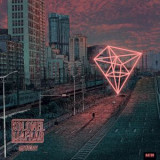
The curious cover art depicts a lone individual heading down an empty city street towards a large mysterious glowing object, evoking the common emptiness and struggle of urban life, and the search for meaning or just something better. The band envision the object to represent this album, offering a beacon to like-minded listeners. Kolonel Djafaar invite music enthusiasts on an immersive journey, to ‘Getaway’ from the daily grind of life, on an album reflecting diverse influences and marking a new chapter in their musical exploration.
"Psychedelic rock from Minneapolis psych madmen Jokers Wild! Includes all of their rare singles, plus 15 more originally unreleased mind-melting cuts - complete with slide whistle!
When looking through the amount of outta-this-world acid-tinged, garage and psychedelic rock that came out of Minneapolis during the 1960s, it wouldn’t be too far-fetched to assume that there was something in the water. Their sound was unlike any other Minneapolis ‘60s band – a true feat during that time.
Though the band began playing more local gigs during the early part of 1967, it wasn’t until May that they recorded their slide-flute-farfisa-organ infused psych wonderment, “All I See Is You "Psychedelic rock from Minneapolis psych madmen Jokers Wild! Includes all of their rare singles, plus 15 more originally unreleased mind-melting cuts - complete with slide whistle!
When looking through the amount of outta-this-world acid-tinged, garage and psychedelic rock that came out of Minneapolis during the 1960s, it wouldn’t be too far-fetched to assume that there was something in the water. Their sound was unlike any other Minneapolis ‘60s band – a true feat during that time.
Though the band began playing more local gigs during the early part of 1967, it wasn’t until May that they recorded their slide-flute-farfisa-organ infused psych wonderment, “All I See Is You / I Just Can’t Explain It.” The single was recorded at the famed Kay Bank Studios (where groups like The Trashmen, Vaqueros, Readymen, Castaways and many, many more laid down tracks) but received very little airplay. Their second single featured “Echo” as the A-side, and it’s equally as fun, bringing a ? and The Mysterians-esque farfisa beat behind a driving, delightfully fuzzy bass and guitar. Like their first single, it didn’t go anywhere. The lack of budget really hurt the band, and with too many bills to pay, they weren’t able to recoup on recording costs. Poof… it ended up sitting on the shelf.
The remnants of their unfinished album can be heard here, along with unreleased material, a cover of the Hollies’ “Have You Ever Loved Somebody,” and three of their limited release singles, “All I See Is You/I Just Can’t Explain It,” “Peace Man/Tomorrow,” and “Because I’m Free/Sunshine.” Catchy yet complex, tune out and turn on to this unsung Twin Cities garage-psych treasure and prepare to Step Outside Your Mind."
- A1: Corridor Of Dreams Feat. Systur (Sisy Ey) & Oilly Wallace
- A2: Ugle (Drømmen Om Møn)
- A3: So Much Feat. Woolfy
- A4: I Was There
- A5: Tears We Haven’t Cried Feat. Toby Ernest
- A6: Save Me Feat. Toby Ernest & Oilly Walace
- B1: Conversations Feat. Systur (Sisy Ey)
- B2: Le Trois
- B3: Love My Way Feat. Jacob Bellens
- B4: Club Paradisco
- B5: Coming Home Feat. Toby Ernest
- B6: Reflector (Reprise)
Just when you thought you had Kasper Bjørke figured out he comes back with another great musical surprise. His new album Puzzles, which will be released April 5th on hfn music, follows two recent collaborative EPs on Live at Robert Johnson and Mule Musiq as well as his second Kasper Bjørke Quartet neoclassical/ambient album Mother on Kompakt.
Puzzles is Kasper’s love letter to the sound of early 2000s New York - merged with his Scandinavian sense of producing songs that goes beyond conventional club music; combining disco tinged instrumentations mixed with elements of 80s funk, jazz and contemporary pop songwriting, creating something familiar yet, something very fresh and innovative at the same time.
The album includes collaborations with a wide range of musicians and vocalists. From California based indie-disco troubadour Woolfy (DFA, Rong, Permanent Vacation etc.) to the Icelandic dream-folk trio Systur aka Sísý Ey (who also featured on Kasper’s 2014 single Apart, where the Michael Mayer remix became a timeless club anthem), as well as other longtime collaborators and artist friends: Toby Ernest, Jacob Bellens, WhoMadeWho’s Tomas Høffding on bass, Posh Isolation affiliate Frederik Valentin on guitar and the young, rising jazz star Oilly Wallace on saxophone and flute. Essentially, the majority of Puzzles is played and recorded live, including the drums by Rasmus Littauer (School of X, MØ). Many of the songs emerged from chord progressions written during studio sessions between Kasper and Toby - which Kasper then produced into a colourful and effective album, rooted in an expressive live feeling far from programmed patterns.
Puzzles is a new step for Kasper as a producer and artist, showcasing his ability to move and flow freely between genres and expressions, however still deeply rooted in his love and affection for the classic disco groove - which is only natural after more than two decades as an active DJ.
Another piece has been added to the musical puzzle of Kasper Bjørke
The space between every love is filled with vigilance in preparation for future threat. This threat is not so much pain as failure and, above all, fatigue. Even the beginnings, when love seems at its most accessible, are disturbing. In spite of this we advance into the turmoil because we are inebriated with love.
Dominik Suchy's third album admits all this as a quality of love. Disembodied and denied to be gloom or bliss, love is revealed to be a raw process at full length. This makes for emotionally hypercharged music that is more inevitable than tense. The record unfolds, for all its ruptures and weight, as familiar. It is a music of pathos, because it benefits from the emotional knowledge that already resides in you.
The universality of this angle allows for compositions that are less than opulent. A focus on the mass of sound // verticality leads to a bareness that sets "Every Love..." apart from Suchy's previous works. At times sonically overwhelming and rhythmically ambiguous, it should be approached as free jazz rather than post-club.
Every Love Is an Exercise in Depersonalisation on a Body Without Organs Yet to Be Formed does not submit to the weariness of love // Weltschmerzen does not submit to the weariness of the world.
“In places harrowing and emotionally charged, in other places quite inconspicuous, you feel that you are standing in front of something big, transcending everything, which you observe with sacred reverence. Maybe it's the eye of the storm or that love which is the origin of everything.”
Peter Dolnik, 34.sk —
“One of the most distinct electronic artists in our geographical area.'”
Roberta Tothova, Pravda.sk —
“Everything happens with deep apprehension, the atmosphere and its variations are executed on a masterly level””
Richard Kutej, Fullmoon Zine —
“An album full of incessant soundscapes, undulations and sound-design based portrayals of magnificence.”
Mikulas Hamerla, Alterecho.cz —
Utilising a mammoth bank of saxophone samples, Shmuel Hatchwellpresents his new alias hoyah with an engrossing album captured in tape and digital form on Bruk.
The process leading to Set + Setting started out with a need for limitations to provide some focus for long-serving sound engineer and producer Hatchwell. He set out the following guidelines to accompany the overarching idea of 'set + setting':
No 'beats'
Saxophones are the voice
Stay away from the computer for as long as possible
Hatchwell took a deep dive in search of every saxophone sample he could find, threw them all into his MPC and then proceeded to weave together a variety of pieces. The focus on a particular instrument brings cohesion to the album, but equally the limited sound inspired freedom to experiment with other techniques and tools. At times one or two sax voices sound naked and undisturbed, while elsewhere you might only hear jagged shards or distant ghosts as they pass through aggravated processing.
Beyond the sound itself, the name hoyah was born with the flippancy of the 21st Century and ratified by ancient tradition. After the music had been made, After the music had been made, Hatchwell plucked the name out of thin air as a play on the TikTok meme 'can I get a hoya,' and subsequently discovered on a dive into his Jewish heritage that in old Hebrew hoyah means, 'to be, become, come to pass, exist, happen, fall out.' This distinction between Jewish concepts and modern political conflations is important to Hatchwell, who finds himself consistently having to separate Judaism from the situation in the Middle East and its ongoing genocide.
Subtly calling to mind the understated cosiness of real-life sax players like Sam Gendel as well as the fragmented sample manipulation of Matmos and Tim Hecker's approach to processed noise, hoyah's debut album absolutely manifests an idea and musical practice as something new and intentional