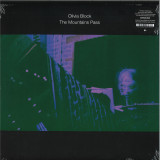
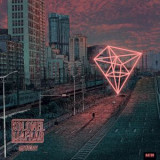
An autumnal treasure, East Village’s Drop Out has spent the past thirty years finding new ears to bewitch and new hearts to melt. The only album from this British four-piece, recorded and released in the early nineties, it’s long been considered one of the hidden jewels of its time, and is talked of with hushed reverence by people who know. Bob Stanley of Saint Etienne once called it “an elegy for a particular brand of eighties guitar music, sweet minor chords and Dylanesque lyrics”, which captures what makes it so special; in summarising its era, though, it also effortlessly transcends it.
Like all great guitar gangs, East Village fell together as a four-piece; having relocated from High Wycombe to London in mid ‘80s, brothers Martin and Paul Kelly on bass and guitar, set on forming a group together, were joined by John Wood (guitar) and Spencer Smith (drums). Wood and the Kellys shared writing and vocal duties; it was an ideal combination, and one of the many charms of East Village is their various song writing voices, a tip of the hat, seemingly, to the 60s folk-rock groups who influenced them.
Originally influenced by garage-rock and freakbeat, the band eventually came through via the same scene as groups like Felt, The Go-Betweens, The Weather Prophets, and Primal Scream. They’d formed as Episode Four, releasing an EP, Strike Up Matches, in 1986, which has gone on to become one of most sought after releases of the C86 era. Their first two singles as East Village, ‘Cubans In The Bluefields’ (1987) and ‘Back Between Places’ (1988), were released on Jeff Barrett’s Sub Aqua label.
When it came time to record Drop Out, East Village found a supporter in Bob Stanley, who bankrolled the album sessions until Barrett re-signed the band to his new imprint Heavenly Recordings in 1990. The album that took shape is dusky, heartfelt, lamplit, full of chiming minor chords, close harmonies, rattling organs, all buoyed by a rhythm section that moves as one, steady and elegant. There’s melancholy here, certainly, on songs like ‘What Kind Of Friend Is This’, but also pleasure and freedom, on ‘When I Wake Tomorrow’ and ‘Silver Train’. The group were obsessed with Dylan’s Eat The Document at the time, and the album’s rich with references to the film; Drop Out’s character is also somehow close to the thin wild mercury sound of Blonde On Blonde, and the lambent light of the Byrds’ Notorious Byrd Brothers.
In one of life’s gentler surprises, ‘Silver Train’ became an unexpected radio hit in Australia when released there as a single in 1993. The story of East Village seems marked by such unexpected turns and surprising events. None was more surprising for their fans at the time, though, than their onstage split in 1991, leaving an unreleased album in the can. Encouraged by Jeff Barrett the band revisited the tapes two years on and while mixing the album for its posthumous release in 1993 invited Debsey Wykes (Dolly Mixture, Coming Up Roses, Saint Etienne, Birdie) to sing the quietly devastating album closer, “Everybody Knows”, a perfect, sad-eyed sign-off.
Listening now to Drop Out, its timelessness is clear. It could have been recorded by young folk-pop hopefuls in the late sixties, taking their shot at the big time; but it could just as easily have been recorded yesterday, by a group that’s both reverent to music’s past, but forward looking in spirit and temperament. It’s that kind of album. Drop Out’s pop poetry is fully formed, with a singular charm that takes in wistfulness, romance, and good times, and a clutch of deeply moving songs that are overflowing with melody and gracefulness. It’s pretty much everything you’d want from a guitar pop record.
It's also an album that’s slowly accrued its own legend. From its stunning cover art, photographed by Juergen Teller originally for a Katherine Hammett campaign, to the ten perfectly formed songs within, Drop Out’s significance in the scheme of things is such that, a decade ago, it was given a rare 10/10 rating in Uncut magazine, who called the album “the lost classic of its era”. Drop Out comes round every decade or so, each edition introducing new fans to its understated beauty, and this latest reissue is its most elegant and deluxe yet.
The 30th anniversary edition of Drop Out lands in two formats: an LP with tip-on style jacket and four-page insert, designed to partner with the 2019 vinyl reissue of their singles and rarities compilation, Hot Rod Hotel; and a double CD, featuring an extra disc compiling the group’s early singles and alternative versions. This CD edition previously has only been available in Japan, though it now features a new, superior mix of their second single, ‘Back Between Places’. Both feature new, typically eloquent liner notes from writer Jon Savage.
The members of East Village have all gone on to do inspired things: Martin Kelly joined Jeff Barrett at Heavenly and has managed label mainstays Saint Etienne since 1993; Paul Kelly formed Birdie with Debsey Wykes, and is now a renowned film director and graphic designer; both Paul and Spencer Smith played in Saint Etienne’s live band; John Wood moved to China to teach, and released a lovely, understated folk album, Quiet Storm, in Japan in 2006. But with the hazy perfection of Drop Out, they’ve all already etched their names in the firmament.
Поиск:freedom call
Все
A real soul gem from 1970 on the James Brown affiliated Deluxe label, the first and only album by this mysterious singer: Marie Queenie Lyons.
It is perhaps apropos that Queenie Marie Lyons’s best known song is titled ‘See And Don’t See.’ For all the acclaim that song has accrued, and all the times it has been compiled, reissued and, yes, bootlegged — for all the times it has been seen — Queenie herself has somehow remained unseen. How did a singer from Ashtabula, Ohio record one of the great female-led soul albums and then simply fall off the map, never to record or perform again? Queenie was a natural performer and a gifted singer. At the age of fifteen, she was doing three shows a week at a local venue. In early 1962, Queenie moved to Queens and was soon playing gigs across the city — an early engagement was with Gene Krupa at the famous Metropole Café in Times Square — as well as touring with established acts like Fats Domino and Ray Charles. The following year, Queenie made her debut recording, for a subsidiary of RCA called Groove, credited to an entirely fictitious “Shelley Shoop and the Shakers.” It remained Queenie’s only presence on wax until early 1968, when a Nashville-based label called Sims gave her her first accurately attributed single, “A Minute Of His Goodtime / Good Soul Lovin’.” Although the 45 is now a highly collectible part of the Northern Soul and Lowrider Oldies pantheons, it made no impact at the time, as Sims was focused on more typical Nashville sounds. A few months later Queenie was back in New York City, performing R&B and pop covers with her band when a man passed her his business card at a performance. The card read James Brown Enterprises. James Brown “was my idol,” she says, and someone whose business acumen and stage presence she strove to emulate. Although Queenie ended up on tour with James Brown for only a month or so, when the group reached Cincinnati in mid-’68 she entered the King Records studio there to record what would become the
album you hold in your hands. The songs were a combination of covers, some of which she’d been doing in her live shows, like ‘Fever’ and ‘Try Me,’ and originals written by producer Henry Glover and pianist Don Pullen, who was the bandleader on the session. The album opener, ‘See And Don’t See,’ was also recorded by the veteran R&B singer Maxine Brown, but Queenie’s version blows hers away. “Soul Fever” is a supremely funky and soulful affair, with Queenie’s powerful and captivating voice magnetically attractive, with an urgency that is impossible to ignore. ‘Your Thing Ain’t No Good Without My Thing,’ ‘Your Key Don’t Fit It Anymore,’ and ‘I Don’t Want Nobody To Have It But You’ are as funky and soulful as the best of Tina Turner and Aretha — a statement not to be made lightly!
The album was critically acclaimed — the October 10, 1970, issue of Billboard listed it as their sole “four star” pick in the Soul category — but perhaps due to the tumult at Starday-King, whose stewardship had turned over several times in only a few years, it never seemed to be able to break through to a larger audience.
Van Halen did more than announce to the world the earthshaking arrival of a revolutionary guitarist. Performed by an enterprising California quartet that took its name from two of its principal members, the 1978 debut ripped headlines away from punk, injected fresh energy into a then-moribund rock 'n' roll scene, reimagined how heavy music and throwback pop could coexist, and invited everyone to experience the top-down pleasures of a beach-front Saturday night every day of the week no matter where they lived. Painstakingly restored by Mobile Fidelity Sound Lab, and the first of a multi-album series in an exciting partnership between the famous reissue label and Van Halen, Van Halen delivers feel-good thrills and hormonally charged desires like never before.
Limited to 12,000 numbered copies, pressed on dead-quiet MoFi SuperVinyl at RTI, and mastered from the original analogue master tapes, Mobile Fidelity's ultra-hi-fi UltraDisc One-Step 180g 45RPM 2LP collector's edition pays tribute to the record's merit and allows fans to experience Van Halen's original blend of raw power, Hollywood flair, and vaudeville fun for generations to come. Playing with reference-setting sonics that elevate a 10-times-platinum landmark whose importance cannot be quantitatively measured, this definitive version provides a clear, clean, transparent, balanced, and turn-the-volume-up-to-11 view of an album that birthed entirely new styles. Since MoFi's unique SuperVinyl compound allows you to crank the decibels to your wildest desires without risking noise-floor interference, prepare to not only hear but feel Van Halen in your chest, no fifth-row concert seat necessary.
The premium packaging and gorgeous presentation of the UD1S Van Halen pressing befit its extremely select status. Housed in a deluxe box, it features special foil-stamped jackets and faithful-to-the-original graphics that illuminate the splendor of the recording. No expense has been spared. Aurally and visually, this UD1S reissue exists as a curatorial artefact meant to be preserved, touched, and examined. It is made for discerning listeners that prize sound quality and production, and who desire to fully immerse themselves in the art – and everything involved with the album, from the iconic cover art to the meticulous finishes and, yes, of course, Eddie Van Halen's pioneering fretwork and his brother Alex's double-bass percussion.
Indeed, could a piece of music that transformed how countless guitarists approached their instrument be more fittingly named than "Eruption"? Likely not, and in just 102 seconds, Eddie Van Halen rewrote, reimagined, and reconfigured a vocabulary last significantly updated a decade earlier by fellow six-string wizard Jimi Hendrix. Akin to the Washington State legend, Eddie Van Halen developed his own techniques and tones all the while making his seismic accomplishments seem effortless. Devoid of the pretence, ego, and showiness that infected many of his imitators, the Dutch native sticks to a straightforward approach that underlines the authority, prowess, and visionary scope of his playing and then-unheard-of finger-tapping skills. Throughout Van Halen, he establishes himself as an instant idol – a savant whose otherworldly combination of breadth, poise, feel, speed, force, and melody seems beamed in from another galaxy.
As does nearly every song on the record, whose cohesiveness and dynamic put into perspective the advanced chemistry and one-for-all spirit the youthful band had out of the gates. Having paid its dues for years in bars and clubs – going as far as recording a 24-track demo for Kiss bassist Gene Simmons at Village Recorders only to be spurned by management companies that felt its music wouldn't go anywhere – Van Halen finally got a deserved break when Warner Bros. executives signed the group in 1977. The subsequent recording sessions further testify on behalf of the band's synergy and alignment. Completed in just a few weeks with producer Ted Templeman, Van Halen was primarily cut live in the studio with minimal overdubs and edits. The explosiveness, energy, and electricity remain definitive, and as heard on this UD1S set, put the group on a private stage – humming amplifiers, Frankenstrat guitar, bright spotlights, sweaty headbands, and then some.
Van Halen yielded just one hit in the form of a Top 40 single (a breathless cover of the Kinks' "You Really Got Me") but practically every song on the revered LP has become a staple. Named the 202nd Greatest Album of All Time by Rolling Stone and considered by countless experts as one of the best debuts in history, the record displays what can happen with four distinct talents gel and strive for the same purposes. In Van Halen's case, the latter almost always involved partying, freedom, sex, and, in the immortal words of singer David Lee Roth, living "life like there's no tomorrow." The celebration manifests from the opening notes of the strutting "Runnin' with the Devil" – announced with the blare of droning car horns, Michael Anthony's robust bass line, and Alex Van Halen's thumping drumming – and continues through the conclusion of the white-hot "On Fire," goosed by Eddie Van Halen's race-track-ready lines, Roth's flamboyant deliveries, and the rhythm section's cat-like pounce.
Picking out individual highlights on Van Halen is akin to trying to count all the stars in a clear nighttime desert sky: There are far too many to identify, once you see one you notice another dozen you didn't spot before, and the cluster is best enjoyed as a whole. What's evident over repeat listens is the sheer diversity, a fact that's often overlooked: The high harmonies and background funk of "Jamie's Cryin'"; the insistent cane-and-a-tophat shuffle and doo-wop shoo-bop vocal break on "I'm the One"; the throwback acoustic blues that spreads into fast-paced, single-entendre wildfire on the Roth-led standout interpretation of John Brim's "Ice Cream Man." Like the man says, on Van Halen, all the flavours are guaranteed to satisfy.
More About Mobile Fidelity UltraDisc One-Step and Why It Is Superior
Instead of utilizing the industry-standard three-step lacquer process, Mobile Fidelity Sound Lab's new UltraDisc One-Step (UD1S) uses only one step, bypassing two processes of generational loss. While three-step processing is designed for optimum yield and efficiency, UD1S is created for the ultimate in sound quality. Just as Mobile Fidelity pioneered the UHQR (Ultra High-Quality Record) with JVC in the 1980s, UD1S again represents another state-of-the-art advance in the record-manufacturing process. MFSL engineers begin with the original master recordings, painstakingly transfer them to DSD 256, and meticulously cut a set of lacquers. These lacquers are used to create a very fragile, pristine UD1S stamper called a "convert." Delicate "converts" are then formed into the actual record stampers, producing a final product that literally and figuratively brings you closer to the music. By skipping the additional steps of pulling another positive and an additional negative, as done in the three-step process used in standard pressings, UD1S produces a final LP with the lowest noise floor possible today. The removal of the additional two steps of generational loss in the plating process reveals tremendous amounts of extra musical detail and dynamics, which are otherwise lost due to the standard copying process. Every conceivable aspect of vinyl production is optimized to produce the most perfect record album available today.
MoFi SuperVinyl
Developed by NEOTECH and RTI, MoFi SuperVinyl is the most exacting-to-specification vinyl compound ever devised. Analogue lovers have never seen (or heard) anything like it. Extraordinarily expensive and extremely painstaking to produce, the special proprietary compound addresses two specific areas of improvement: noise floor reduction and enhanced groove definition. The vinyl composition features a new carbonless dye (hold the disc up to the light and see) and produces the world's quietest surfaces. This high-definition formula also allows for the creation of cleaner grooves that are indistinguishable from the original lacquer. MoFi SuperVinyl provides the closest approximation of what the label's engineers hear in the mastering lab.
The forever exploring electronical entity of a band, Gusgus, has opened yet a new era in their unique sonic multiverse. With their 12th album, the course is set to a strange mysterious place called DanceOrama. A Rave-Mall in a nostalgic future, DanceOrama is the place to be, where you can experience infinite freedom, genre and gender free. Moving from the pulsating new-wave influenced techno pop of the last album “Mobile Home” (2019), Gusgus emits the vibe of DanceOrama on their new album as an arousing, melody-rich hybrid of 80s/90s parties and raves. The 9- track album is slated for a November 10th release. The release is evenly split up in euphoric fusioned pop anthems and genre-free instrumental journeys.
Gusgus‘ last album “Mobile Home” was the later of twin albums that found the band exploring early 80’s new wave influences and reviving them in the iconic Gusgus soundscape. The highlight on the album was a pulsating techno reggae track called “Higher” that introduced a new member into the band, Margrét Rán, the lead singer of “VÖK”.
Whereas on “Mobile Home”, the concept was stationed in a rural environment of a dystopian side reality, Gusgus now moves to the city. In this city of strange discomforting future omens, DanceOrama stands out as the rave-mall of freedom. Leaving the new wave influences, this album is a strange hybrid of the 80’s and 90’s parties twisted into a genre-free blend of arousing experiences.
The album consists of 5 instrumental tracks and 4 vocal pop songs, ranging from 105-158 bpm and exploring various influences from the 80’s and 90’s and even the 70’s in a strange fusion of techno, trance, italo-disco, house and pop that emits the rawness and innocence of previous decades. The pop songs are quite strictly set as stories related to the mysteries and rumors of DanceOrama. One track in particular will be very exciting for our fans, as it has been a regular final track on our live show since the album “Arabian Horse” in 2011. This is the track “Breaking Down” that was recorded during the album “Mexico” in 2013 with “Earth” and “Högni” on vocals but, due to emotional turmoil, has never been released until now.
- Blackisgod,A Ghetto-Sci-Fi Tribute(_G)
- Smd
- Fk
- We Need Mo Color
- Black!
- Adam X Jalen, Eye Luv U
- Amerikkka, Try No Pork
- Run Pig Run
- Deadmeat
- Myhearthurt
- Chris Dorner
- Nation Tyme
- Homicide/Genocide/Ill Die
- Bebe's Kids, Apollo
- Dirt
- Faceless Wings,Black!
- Blackest Love, Like Paint On Tha Wall
- Steal From The Enemy
- On Fire, Pray!
- Black Be Tha God, Negro
- Blackisinfinite Black Alive! Spirit Shop (Understanding)
- Negro Friday
- Blackz
- Heavy
- Breathe.birth
- G Tribute Live Rehearsal /All My Nxggas Gone Prosper Rehearsal Live
- Fkoffme
- 2: Dirt
- Cointail
- Fkthapolice
- Wakeupnprosper
- Numbers On Yo Head Ft Billy Woods
- Tha Embrace Narrated By Akeema Zane
- Wblbdlnitm : Pray Rehearsal
- Nation Tyme Rehearsal Live
- Nation Tyme Psa
- Wrkouts2Jazzselfdefensealso
- Blackbethagod!!!!!!!(Culture,Freedom.cipher), Psa 4 Tha Folks
- Blackspace
- Stratosphere Status
On his album NEGRO DELUXE Siifu trades in soulful rap for punk, fueled by the Black experience in America followed by spiritual jazz and poetry. A beautiful chaotic collage of sounds that reflect the black man’s thoughts on the day-to-day. It doesn’t take long to reach the heart of NEGRO, Pink Siifu’s new album. It’s an aggressive collection of hardcore punk and free jazz, with bold lyrics that encourage shooting back at trigger-happy law enforcement. This album profoundly communicated the anger of an African-American community beset by police violence a month before the murder of George Floyd lit the streets on fire. In April 2021, he revisited the project with NEGRO DELUXE, which doubled the length of the original.
Pink Siifu tells Bomb Magazine “after we were done mastering and mixing, Zeroh was like, “Yo, NEGRO is like fire, and NEGRO DELUXE is like smoke….So I would characterize NEGRO DELUXE as, like, after you’re angry, after you’ve punched a wall, after you beat somebody up, whatever, how do I channel that into something else? How do I just let it go? I feel like NEGRO DELUXE is that, for real, in a nutshell. It’s like the chaos calmed down after all the fire’s gone and the smoke is in the air.”
It isn’t anything like ensley, Siifu’s breakthrough 2018 LP. Where that record used mid-tempo soul and hip-hop to score his upbringing, NEGRO is a riotous mix calling for Black revolution. It’s also the most fearless project in his growing discography. NEGRO harkens back to 1992, to Ice-T’s thrash metal band Body Count, song “Cop Killer”.
This album is meant to remind us of Rodney King, Racist Cops, The Black Panther Party, and Christopher Dorner, the ex-L.A. police officer who, in 2013, went on a violent shooting spree against his former colleagues and their family members due to seeing his own policeman violate the people there supposed to be protecting. “It’s about America, It’s about the trauma that comes from the flag. It’s about understanding that it’s okay to be angry.”
In the album, originally titled ‘To Be Angry’, Siifu started crafting NEGRO after listening to old Afrocentric jazz and watching clips of novelist and poet Amiri Baraka and civil rights activist Stokely Carmichael, reading Sun Ra’s sci-fi poetry book, The Planet Is Doomed, and started studying Bad Brains, June Tyson, Death, Ras G, and many others.
Singer-songwriter Thom Morecroft releases his sophomore album, “Waiting For Leo.” Drawing inspiration from the rich songwriting style of 1970s folk-rock and infusing it with the distinctive aesthetic lens of Glasgow’s C86 scene, Morecroft delivers a captivating lo-fi experience that pays homage to the past while carving its own unique path. Think Crosby, Stills, Nash & Young meets the infectious energy of Teenage Fanclub’s “Bandwagonesque.” During the pandemic-induced lockdowns of 2020 and beyond, Thom embarked on a remarkable creative journey, offering his Patreon subscribers a new digital album every month. It is within these prolific collections that the songs for “Waiting For Leo” were born. With an abundance of time and the freedom to explore his creative impulses, Morecroft crafted a collection of songs that are reflective, philosophical, and deeply personal. Some look towards the future with hope, others reminisce about the past, while some capture the essence of the present moment, and a few wander into realms of pure fantasy. As Thom navigated the challenge of selecting the final tracklist, he honed and refined each composition, adding production elements and creating a cohesive sonic tapestry. “Waiting For Leo” is an album that manages to strike a delicate balance, emanating a sense of contentment and carefree spirit while simultaneously delving into themes of family, alcoholism, grief, and loss. The introspective nature of these songs, born out of a period devoid of external stimulation, allows listeners to embark on a thought-provoking journey alongside Morecroft. Reflecting on the album’s title, Thom shares, “The album is called ‘Waiting for Leo’ because the songs were written and recorded during the period before my partner and I discovered we were expecting our son. There is also the famous Samuel Beckett play called ‘Waiting for Godot,’ which I must confess I have never seen. Is it good?” “Waiting For Leo” stands as a testament to Thom Morecroft’s artistic growth and showcases his ability to merge captivating songwriting with a distinct sonic aesthetic. As listeners immerse themselves in the intimate world he has created, they will discover a tapestry of emotions that resonate deeply.
and Sebastian Kokus and the prolific Ulf Schütte, the Hamburg-based trio has tirelessly expanded upon its sound and extended its musical style. After 2022’s »S/T« documented the results of their first jam sessions as a newly-founded group, »V.A.« started even more modestly and became an even bigger undertaking. Originally conceived as a small one-off release, it grew into a full record which sees the group embracing dub music, collaborating with Peaking Lights’ Aaron Coyes and inviting other artists—No UFO’s, Seekers International, Coco Em—who reworked select tracks in true dub style. »V.A.« is marked by inconsistency, openness, and heterogeneity in the best sense of those words: ever-changing, constantly surprising and consistently in motion.
The starting point for »V.A.« was a Hamburg concert in December 2022 together with Coyes, who played a solo set as Peaking Lights. On the request of the event organiser, Cloud Management teamed up with him for a jam session after the gig, laying the foundation for a track that the group took to the studio before sending it to Coyes to record vocals for it. Another song quickly followed and even though the band initially intended to release »PST« and »0rten Pitch« as standalone 7” single, they soon decided to have others create versions of the two tunes to round them off in the form of a 12” EP. Once more though, one thing led to another and now »V.A.« collects five original pieces by Cloud Management as well as three—four on the digital version—remixes by other artists.
Collaborating with Leipzig-based Canadian producer No UFO’s, the Canadian Seekers International collective, and Kenyan multi-disciplinary artist Coco Em came about organically. As fans of their friend Konrad Jandavs’ work for labels such as Spectrum Spools, Root Strata and his own Nice Up International, Korf, Kokus and Schütte asked him for a remix and granted him full creative freedom for his take on »PST«. Jandavs also connected them with the prolific Richmond-based soundsystem worshippers, who present their take on the same track on this record as well as a version of »Electric CD.« Also this track appears three times on the record, having been re-rubbed by Emma Mbeki Nzioka, who was introduced to the the trio by its label Altin Village & Mine.
There isn’t really a common thread running through the rough digi-dub of No UFO’s take on »PST«, Seekers International’s traditionally-minded yet infinitely playful dub-psychedelia and Coco Em’s bass-heavy, percussive, pulsating take on »Electric CD.« However, as a group dedicated to staying in flux at all times, Cloud Management ended up embracing the creative differences between their own work and those of their respective collaborators. In calling it »V.A.,« they paid tribute to their somewhat loose, but conceptually consistent concept of giving various artists full creative licence over their own work. Neither a true album in the strict sense of the world nor just a compilation, »V.A.« is actually the essential Cloud Management record: ever-changing, constantly surprising, consistently in motion.
Ruthie Foster’s ninth studio album represents a new high water mark for the veteran blues artist—a collection of songs possessing pure power, like a tidal wave of musical generosity.
Healing Time finds Foster pushing her boundaries as a singer and songwriter more than ever before, creating a truly live-sounding atmosphere with the help of her band, who sound refreshingly loose and lived-in throughout these 12 songs.
Joining Foster and her band: members of Austin psych-soul outfit Black Pumas. “They gave these songs a breath of fresh air,” she says about their contributions—and veteran producer Mark Howard (Willie Nelson, Lucinda Williams) also came in to bring new ideas to Foster’s table.
- 1: Stand By Your Man
- 2: How Can I Put Out The Flame (When You Keep The Fire Burning)
- 3: I'm Just A Prisoner (Of Your Good Lovin')
- 4: Mr And Mrs Untrue
- 5: Too Hurt To Cry
- 6: He Called Me Baby
- 7: Sweet Feeling
- 8: To Hear You Say You're Mine
- 9: What Would Become Of Me
- 10: Freedom Is Just Beyond The Door
The rising Tamil-Swiss artist Priya Ragu is set to release her long-awaited debut album ‘SANTHOSAM’ on October 20th.
‘SANTHOSAM’ (the Tamil word for ‘happiness’) is a standout dynamic album which takes her raguwavy sound – simmering R&B, masterful pop hooks, earthy soulful vocals, dance beats, and the warm tabla rhythms, and spiralling melodics of Tamil music – to even more adventurous heights. Defined by Priya’s contagiously positive spirit, it pulsates with gorgeously varied musical textures and urgent political themes. Once again crafted in collaboration with her brother and producer Japhna Gold, it’s an album that originates from Priya’s quest for self-discovery.
‘SANTHOSAM’ opens with ‘Ammama’s Note’, which features a voice recording in which Priya’s grandmothers is questioning why she isn’t married. Like many young South Asian women, Priya felt like she wanted to achieve much more before she settled down, regardless of other people’s preconceptions of what direction her life should take. That ability to write one’s own destiny continues the euphoric ‘School Me Like That’, set to a rumbling tambla beat and breezy synths. More universal issues are explored in the blazing anger of ‘Black Goose’, which was written in the wake of the murder of George Floyd and the Black Lives Matter protests, and ‘Let Me Breathe (Reprise)’, a spiritual call for freedom, emancipation, and peace.
Elsewhere, the record brims with highlight-after-highlight, taking in everything from the dancefloor disco energy of ‘One Way Ticket’ to ‘Power’ which features a rousing string arrangement that was written by Indian composer Bala and recorded with an orchestra in Budapest. It closes with ‘Mani Osai’, a song which continues a yearly family tradition in which Priya, Japhna and their father write a song together. Never intended to be a Priya Ragu track, it nonetheless felt like the perfect way to close the album – especially as the concluding “santhosam” chant conveys the meaning of the word with life-affirming zest.
A collection of work which Nookie himself calls "the best tracks I've ever written", 'Improvisions' embraces the fact that we don't live in a perfect world. Throughout the project, aided in many parts by Ruth Royall, Nookie expresses his deep-rooted love for the music he's devoted so much of his life to, backed further by a total creative freedom.
- A1: Circus Of Doom
- A2: Wings Of Light
- A3: Master Of Illusion
- B1: Where Angels Fear To Fly
- B2: Eye Of The Storm
- B3: Russian Roulette
- C1: Freedom
- C2: The Road To Avalon
- C3: Armageddon
- D1: Place That We Call Home
- D2: The Lightbringer
- D3: Tempest Of Blades
After re-signing to Nuclear Blast in early 2021, the Finnish heavy metal sextet BATTLE BEAST are once again getting ready to unleash their force upon the world in the shape of their brand new masterpiece »Circus Of Doom«. The album is set to be released on January 21st 2022 via Nuclear Blast and in true BATTLE BEAST fashion, the 10 tracks blend true heavy metal with pop and rock-vibes, paired with Noora Louhimo’s unique voice. »Circus Of Doom« was once again recorded at JKB Studios in Helsinki, Finland and produced and mixed by keyboardist Janne Björkroth, while the stunning artwork was created by Jan Yrlund (KORPIKLAANI, MANOWAR etc.), who already took care of BATTLE BEAST’s previous two album designs.
Having only formed in 2008, BATTLE BEAST first signed a record deal with the renowned German metal label Nuclear Blast in 2011. The release of their acclaimed debut »Steel« (2012), won the band a support slot for their labelmates NIGHTWISH. Frontwoman Noora Louhimo finally joined the band in 2012 and the band’s self-titled record (2013) was released shortly afterwards. BATTLE BEAST then got the opportunity to open for bands such as SONATA ARCTICA and POWERWOLF on extensive runs. Their ascent up the metal ladder was quick and the band’s 3rd studio album »Unholy Savior«, achieved remarkable chart positions all over Europe (#1 Finland, #23 UK Rock, #39 Germany etc.). This release was accompanied by another big European tour, but this time with Swedish heavy metal heroes SABATON and DELAIN. BATTLE BEAST’s very first headline run throughout the Continent rounded off their »Unholy Savior« touring cycle.
Their 4th studio album, »Bringer Of Pain« in 2017 reached even higher chart positions (a.o. #1 in Finland, #14 in Germany) and was also BATTLE BEAST’s first output without their original songwriter Anton Kabanen. In 2019, alongside the huge #1 success in the album charts of their home country, Finland, their last album »No More Hollywood Endings« reached a remarkable #11 in German album charts and proved to be their most successful piece yet.
Their latest masterpiece, »Circus Of Doom«, is overall heavier, but still as catchy as ever with bangers like “Masters Of Illusion”, “Freedom”, or the title track “Circus Of Doom”. Once again, the band stay true to their formula of “100% heavy metal - 0% bullshit!”
Toy Tonics going New Wave Disco with Baby’s Berserk’s self-titled debut album (to be released on 29 September).
There are many shades of funk in dance music. Berlin’s Toy Tonics label brings up artists that reflect many of these different aspects in dance music. Now the label comes up with a band! A band that is inspired by 1980ies New Wave as well as the Y2K Indie dance scene. Two guys and 2 girls from Amsterdam and Montreal called Baby’s Berserk.
Baby’s Berserk is about taking the freedom to be who you want to be, about being comfortable. Having played in all-girl punk bands since the age of 14, the bands singer Lieselot is an expert on female empowerment. “Dress like a girl and act like a boy,” is a catchphrase she lives up to every day and it clearly is a message that resonates with the band’s wild fans.
In the great tradition of Roxy Music, Throbbing Gristle and Malcolm McLaren, Baby’s Berserk is not just about the edgy music, but also about a very strong own visual style. They readily blend their sounds with underground fashion. What you see is what you get and seeing Baby’s Berserk is feeling right at home. Lieselot is a visionary when it comes to stage presence. Have you always wanted to see an electronic band with a punk attitude perform wearing a mix of haute couture and Flintstone-style rags? Look no further, it’s Baby’s Berserk.
Following on the critically acclaimed singles ‘What I Mean’ (2020) and ‘Toxic Kisses’ (2022), Baby Berserk’s highly anticipated self-titled full-length is now finally about to see the light on Berlin’s Toy Tonics records. Sonically designed for gritty rock venues as well as up-to-date edgy dance clubs, Mano’s lush compositions smoothly intertwine with the highly associative lyrics written by Puggy and Lieselot. Poets and literary addicts may think they’ve just discovered the rock & roll equivalents of Sylvia Plath, Kurt Vonnegut and Allen Ginsberg. To tell you the truth: their wild guess is pretty accurate as the works by these greats lie scattered around the Baby’s Berserk studio for inspiration.
The band was born in a laboratory back in 2019. Tired of being in bands with unruly and unpredictable humans, Mano Hollestelle set out to create a group of high precision robots to create the post-punk sound he had in mind. His outdated technology of floppy disks and cassette tapes worked well to program the androids, until one day a 90s rave mixtape was mistakenly entered into his computer. House music is a feeling and the punk bots instantly got hooked on it upon hearing it for the first time. They could never be reset to factory settings again. Mano worked tirelessly with his androids, currently known by their humanoid names of Lieselot Elzinga, Puggy Beales and Eva Wijnbergen, to fulfil his evil plan to make the rockers dance and the dancers rock. Baby’s Berserk is the fiendish extension of this plot. Beware, the band’s bass driven grooves and computerized beats have been known to cast a spell upon all within earshot.
So what do the songs on ‘Baby’s Berserk’ tell you? That it’s totally fine to have lots of fun in life! To have a boyfriend as an accessory (‘Accessories’), to get inspired by Sponge Bob (‘Dancing with the Fish’) and to blend your spirits with mixers whenever the hell you feel like it (‘Rum ‘n’ Kola’).
Baby’s Berserk member Puggy Beales on ‘Limousine’: “Decant the wine from my tip jar to yours. Soon we'll be on easy street, chauffeured home from the rat race each evening. Is it everything you'd hoped it would be?”
Check not only the debut album but also the forthcoming Remix EP with remixes by Each Other, Niklas Wandt, Sam Ruffillo, Kris Baha and Nicolini.
Maurice Louca & his band Elephantine announce Moonshine, shining brightly with a live, raw, collective sound. Maurice Louca's band is incredible: double drummers Tommaso Cappellato & Özün Usta, Piero Bittolo Bon on alto, Daniel Gahrton on baritone and Isak Hedtjärn on clarinet, Rasmus Svale Kjærgård Lund on tuba, Rosa Brunello on bass, Els Vandeweyer on vibraphone, Louca on guitar/lap steel/synth.
As Asher Gamedze puts it in his essay: "Abstract territories of freedom, always grounded, expansive, multiple, internally differentiated, and elephantine."
One of the most gifted, prolific and adventurous figures on Egypt's thriving experimental arts scene, Louca has in recent years garnered a global reputation through three previous solo albums and an expanding, evolving lineup of genre-defying collaborations. The Wire called his 2014 sophomore solo effort, Salute the Parrot, "remarkable music-dense, driven and splashed with colour.
For Louca, Elephantine serves as both the pinnacle of his wide-ranging experience and a bold next step in his development as a composer, arranger and bandleader, from Cosmic Jazz, African and World music to transcendental modal traditions. The music-from its pensive lulls through its stretches of hard-grooving hypnosis and moments of avant-jazz.
- A1: Chapter Three - Joe Gibbs & The Professionals
- A2: Rema Dub - Joe Gibbs & The Professionals
- A3: Tribesman Rockers - Joe Gibbs & The Professionals
- A4: Freedom Call - Joe Gibbs & The Professionals
- A5: Jubilation Dub - Joe Gibbs & The Professionals
- B1: The Entebbe Affair - Joe Gibbs & The Professionals
- B2: Angolian Chant - Joe Gibbs & The Professionals
- B3: Zion Gate - Joe Gibbs & The Professionals
- B4: Jungle Dub - Joe Gibbs & The Professionals
- B5: Dub Three - Joe Gibbs & The Professionals
Federica Grappasonni aka Mistura Pura is an Italian DJ, composer, singer, vinyl collector and music producer. She started to play and produce music at the age of 19 in Bologna, Italy. Before becoming a DJ she wrote and performed her songs live, either as a duo or with a complete band. In the ‘Acid Jazz’ era she was totally immersed in Bossanova, Jazz-funk and Jazzy Hip Hop music. At the time she wrote poetry and songs, singing melodies that burned in her mind. ‘Ed è…’ is one of the first songs she wrote. While ‘Vamo Vive’ is the result of the mix of more songs connected as part of her repertoire, made as a later piece of her musical puzzle.
At the end of the ‘90s and for the following decade Federica became known in the so called ‘lounge scene’ as a selector with Mistura Pura DJ sets in great demand, she gained residencies in the most beautiful and cool places in Milan, the isle of Panarea, Eolian Islands, and Sicily. Coming into the present day she decided to edit and rework some of her repertoire with both songs being revisited while keeping the original voice she recorded at the time and with the support of the pianist and co-arranger Alberto Napolioni and the flautist Carlo Nicita whom worked very well to define the harmonies of the musical works. After 25 years from that period and during the pandemic, Federica repeatedly told herself as a loop ‘go to live Fede’. It was during a walk on the beach that she remembered capturing a frame of a couple of children building a castle in the sand on the Adriatic sea with all the meaning and poetry that this image portrays; a sense of freedom, innocence and truth. In this sense ‘Vamo Vive’ and ‘Ed è…’ is a gentle scream of hope in a time when humanity was closed and living like prisoners in their own houses.
Producer Scrappy Jud Newcomb and Cleaves teamed up for the third time in early 2022 between Covid surges to record a new batch of songs, Slaid's first in five years.
Familiar themes of struggle and resilience will be a surprise to no one. As Scrappy puts it, "This album speaks to the hopeful, the hard working, the battered, confused, and the sad. But above all to the believers in the city of freedom that we heard in the stories of our youth and all those FM radio hits."
The first single, "Through the Dark," was co- written with Slaid's long- time collaborator and life- long friend, Rod Picott ("Broke Down," "Take Home Pay").
Slaid describes it simply as "a song about offering comfort in hard times."
Joseph Hudak of Rolling Stone calls Cleaves "a master storyteller, one influenced not by the shine of pop-culture but by the dirt of real life."
"More than 20 years into his career, Slaid Cleaves just keeps getting better . . .
There are few contemporaries that compare. He's become a master craftsman on the order of Guy Clark and John Prine." - Austin Chronicle
Belgian jazz veterans W.E.R.F. records and JazzLab are celebrating their 30th anniversary together with three unique creation projects for which they are joining forces. One of them is with percussionist Chris Joris, a veteran of Belgian jazz who is releasing a haunting new project.
Until the Darkness Fades' immediately says something about Chris Joris' career path, in which the musical and the personal invariably overlap. This percussionist has written one of the most colorful chapters of Belgian jazz. For many years he was active within various genres, but is now mostly praised as the percussionist who constantly demolished boundaries. Not only between all those oppressive genre boxes - pop, experiment, theater, world music, jazz - but also between complete worlds.
Chris Joris was playing "world jazz" long before there was that term, and he signed on for some hot-blooded jazz classics, with "Out Of The Night" perhaps the best-known example. That album was originally released in 2003, was then unavailable for years, but is back on shelves in 2023 and on vinyl for the first time. And rightfully so. Joris also eagerly seized the prospect of a new tour and a brand new album for a musical self-portrait. With "Until the Darkness Fades," he highlights different aspects of his musical identity, both expected and unexpected.
Joris composed new material, but also keeps a prominent place for free improvisation. It will be a tantalizing dichotomy full of hybrid sounds, with familiar and less familiar sounds, between romanticism and uninhibited adventure. He explores these in the presence of notable associates on violin and cello. In this way, he combines earthy percussion with the freedom of jazz and the elegance of chamber music. Discover this story of a Belgian master who is far from finished.
In 1972, a foursome of design students set out to make a record. This was, in many ways, a strictly creative endeavor. The quartet — composed of Dave Pescod, Alan Lewis, Phil Rawle, and Ted Rockley — were all trained, not as musicians, but as creatives. Art school heavyweights, the four were well-versed in the methodology of intentional experimentation, in the delicate balance of pushing the limits without completely unmooring oneself from a guiding creative intention. Emboldened by a high-brow familiarity with thoughtful experimentation and all the non-conviction of non-musicians, Bowes Road Band’s stint in the world of popular music yielded a record that is as much mind-melting as it is a direct product of its time. Their sprawling LP “Back in the HCA” embodies the exigence “art for art’s sake,” but it is for art’s sake that this record, however off the deep end it seems to travel (hear: “Doctor, Doctor”), remains a unified, and stunning, body of work. The LP’s do-ityourself garage rock noisemaking meets highfalutin creative processes. “Back in the HCA” is warbling psychedelic freakout (“Two Fingers,” “Doctor, Doctor”), Donovan-esque English countryside folk stylings (“Inside My Head,” “Goodbye to Rosie”), and avant-garde jazz improvisions (“Grass is Grass,” “Tomorrow’s Truth”) in one luminous release.
Originally an 9-track LP, Jakarta, Uno Loop, and Bowes Road Band decided to mine the six most cohesive tracks for the reissue, though the extras may be released somewhere down the line. Cohesion efforts aside, “Back in the HCA” stands alone in its singular conception of a genre-bending continuum — it evades definition. That said, the LP can easily be situated in the sonic environment in which it was conceived. By the end of the 60s, England was crawling with blues-based rock outfits that were starting to venture into prog rock territory. You can hear this popular dint cast over the folkier side of the LP. But Bowes Road Band was armed with their non-musicianship: they existed completely liberated from the motivating yet ultimately paralyzing lust for stardom. Enjoying this liberation, Bowes Road Band was utterly free to make noise. This freedom meant drawn out sax interludes amidst sweetly folk stylings (“Grass is Grass”) and Shaggs-like fuzzed-out freakouts that spiral into a void (Doctor, Doctor). This freedom also meant straight-forward tuneful cuts like “Goodbye Rosie” that conspicuously introduce heavily distorted auto-organ accompaniment mid-track amidst poignant lyricism. Bowes Road Band crafts a unified sound and then cracks it open.
With a completely off-the-radar status, Bowes Road Band could only press 50 copies of the record — 10 for each of them and 10 for the school. The band’s lifespan was to end there, or so they thought. “Back in the HCA” was the accidental fruit of a Berlin flea market treasure hunt by Jannis Stürtz, DJ and co-founder of Habibi Funk and Jakarta Records. After finding and sharing the LP with a few colleagues, Stürtz managed to get in touch with the band, get ahold of the master tapes collecting dust in Ted Rockley’s attic, and start the reissuing process. The record is still adorned with its original cover art designed by Alan Pescod, both reminiscent of bygone school days and the Zoom calls of yesterday — in short, reunion. Its re-discovery was happenstance and ought to be listened to as such. That is, “Back in the HCA” was not made to be listened to on a broad scale, or, at least, was not made with this goal in mind; it is neither in its time nor of its time. Of course, the group explicitly cites the folk tunes of the English countryside, the distorted rock groups that reigned during the record’s conception, and the fringes of psychedelic music that only the uber-underground might recognize (e.g., “Dreaming of Alice”). Yet still with these obvious influences, “Back in the HCA” always existed beyond the domain of both traditional musicianship and conventional commodification. Bowes Road Band’s DIY musicality beams through in technicolor across “Back in the HCA.” The vinyl includes an 8-page booklet detailing the albums creation and interviews with the band.
Lead single “Grass is Grass,” out July 14 along with album pre-order, encapsulates the record’s range: the track unfurls into a sprawling sax-driven trip following a sundrenched, Donovan-esque intro w/ lyrics “naively about parks and gardens, not marijuana!” The keyed-down folk cut “Goodbye to Rosie” is single 2 and elevates stripped-down acoustics with golden tinges, out August 4th. Focus track “Tomorrow’s Truth” constructs the fuzzed-out underbelly of acid folk. Listen for echoes of late Beatles, Mark Fry, and Donovan (if they were armed by an unshakabele willful naiveté). Like Sgt. Pepper’s on a shoestring budget—take a trip to the underground with LP “Back in the HCA,” available everywhere physically and digitally on September 1st via Jakarta Records and Uno Loop.
Besides online promotion from label profiles, the album will be further promoted by external agencies within the UK and US.
If you dig deep enough into the underground you will find the most precious jewels and it ain't that much of an effort these days to turn on the computer and trip through the colorful World Wide Web. But beware for not all the glitter is gold. I stepped by some dark and dusty back street club in Atlanta / Georgia, USA and some enchanting music tempted me to enter. A powerful raspy voice screaming out the pain of the world no matter if it were big or small affairs. "California dreaming on such a winter's day", wow, when the MAMAS AND PAPAS sang this in a sweet folk manner it was a light and joyful anthem for all hippies and hipsters back in 1966, like a call to love. Lee Moses' version is more of a desperate cry for sunshine and freedom. And it goes on this way. His voice has this special phrase showing determination, pain but also sheer joy of life. His 1971 album is a steady groover with a steaming hot band performing , which includes a brass section of divine greatness. These devoted players build up a massive wall of groove and melody on which Lee Moses can unleash his voice like a volcanic eruption. The groove itself stays quite relaxed but definitely hypnotizing throughout the whole album and clears up your mind for the message of love Lee Moses raves about. The high skills of Lee's backing band gets showcased in a steaming instrumental version of THE FOUR TOPS' "Reach out (I'll be there)", which appeared on an early 7" first and got added here as a bonus track. They don't stop for THE BEATLES' "Day tripper" either and next to "California dreamin'" you can find another heart warming version of "Hey Joe" on the regular album. Not as extraordinary outraging as Hendrix' turn on this classic Lee and his mates make it a slightly more epic effort. All in all this is a soul album with very few covers and even more classic anthems of this genre that should actually be worshipped by lovers of the late 1960s Motown sound. Especially the bonus tracks will drive you wild. Go for it, brothers and sisters.
The free folk/jazz sound of modern Los Angeles. Featuring a heavy bunch of musicians and vocalists including Moor Mother.
"Fearlessly Accessing the Divine Spirit From Here on Out" is the vinyl debut from pianist, composer, and producer Diego Gaeta. He has previously released projects as Club Diego and with the trio Human Error Club (whose members Mekala Session and Jesse Justice helped produce this record). He has quickly become a fixture in a number of Los Angeles musical environments, working with Lionmilk, The Pan Afrikan Peoples Arkestra, Carlos Niño, Black Nile among others. This album is a synthesis of these many LA environments, and carries chamber, jazz, ambient, and folk influences, ultimately giving it an uncategorizable feel similar to works by Arthur Verocai or David Axelrod.
Gaeta recorded the initial ideas for the album by himself after experiencing a burst of creativity during the lockdown of 2020, in the aftermath of a season of protests in Los Angeles, on a piano at his home in El Sereno. "I was constantly not in tune with myself, always awaiting outrage and tragedy in a very unstable world. However, hitting the streets in support of various ongoing pandemic community actions felt necessary and it marked a point in time that ushered in large societal changes. The weight of that era made me feel allergic to making art at the time. All of these ideas came after that period, expressing my reflections subconsciously. I remember that the ideas came in a short amount of time, and then they developed."
Once he had created the tracks as Ableton sessions, he realized the gravity and context of how he was processing his ideas so he, as he puts it, "felt like taking them outside the hands of midi and into the hands of friends." Gaeta was able to assemble his dream band, which ended up being a 9-piece ensemble, or a nonet. "I felt that at some point I was channeling the geometrical balance of that nonet...it's almost as if I had a sextet and then the three of the sextet that's not the rhythm section were doubled. It's a really dense sextet, that's how I see it."
The recording process began the following summer in June 2021 as the musicians were all adjusting to the newfound dynamic of getting tested for COVID, waiting a few days, and then meeting up to record. "We were eating Indian food, some of us were smoking, it was a nice memory, but I felt a little stressed, because I was the bandleader, and I felt the emotional weight of my music."
The title track and single, featuring vocals by Jimetta Rose, begins with a speech by Gaeta delivered when playing with Black Nile in 2019 at the Levitt Amphitheatre in MacArthur park. Gaeta provides the following account: "Even though it was in 2019, socio-political tensions and issues were at the forefront for me at that time. I wrote a speech that was intended to be critical of the US but it ended up becoming a collage inspired by different women that had messages of freedom that spoke to me the most. I quoted Nina Simone and Georgia Anne Muldrow, it wasn't something that I read but something that she said "kicking it with consciousness and style" that phrase stuck with me, so I used it in that speech. Although critical, the speech had a positive feeling to it, and it was hopeful. I gave that speech while fireworks were going off."
Moor Mother & Zeroh are found on their respective tracks, Memory Screen & Eccolo - both delivering a distinct, commanding vocal performance. Low Leaf colors the track Soft Spot with harp, a beautiful ballad nestled in the center of the album. Other players include Gregory Uhlmann on guitar, Jon Kaye on violin, Devin Daniels on alto saxophone, Caleb Buchanan on bass, Dante Luna on vibraphone, Patrick Behnke on viola, Bryan Baker on tenor saxophone/flute, and Mekala Session on drums.
"I’d like for us tonight to embody a freedom oriented life. Freedom isn’t just a dream, it’s a place we must all arrive at together, as one by one the people of the Earth help each other to be Free of power, hate, and insecurities. Let’s kick it with consciousness and style. Can y’all dig that? YEAH. I can too. So now we’d like to present to you a spiritual transmission I like to call: 'Fearlessly Accessing the Divine Spirit of Freedom From Here On Out.' YEAH" - Diego Gaeta
Nach 12 Jahren bei DragonForce präsentiert Sänger MARC HUDSON sein erstes Soloalbum Starbound Stories, das am 25. August 2023 über Napalm Records erscheint. Starbound Stories ist ein packendes Animeinspiriertes Power Metal-Abenteuer mit Einflüssen von japanischer Musik und Videospiel-Soundtracks, die der Sänger gemeinsam mit einer Vielzahl von bemerkenswerten Gästen umsetzt.
Das instrumentale „As The Twilight Met The Sea“ eröffnet die phnantasievolle Klanglandschaften des Albums und wird von Samurai Metal-Meister Ryoji Shinomoto (RYUJIN, früher bekannt als Gyze) auf traditionellen japanischen Instrumenten begleitet. Shinomoto steuert seine Stimme außerdem auf dem Track „Freedom Heart“ bei, der auch ein Solo des Gitarrenvirtuosen Syu (Galneryus) enthält. Auf der explosive Power Metal-Hymne „Dracula X“ steuert Jacky Vincent (ex Falling in Reverse, ex-Cry Venom) einen Gitarrensolo bei und der Gastgesang kommt von Adrienne Cowan (Seven Spires).
Das emotionale Stück „Stars“ wird von der klassisch ausgebildeten Violinistin Mia Asano mit einer elektrischen Violine untermalt. „One More Sight Of The Sun With You“ wird auf Japanisch gesungen und bleibt den Hauptthemen des Albums treu.
MARC HUDSONs Debüt-Soloalbum ist ein herausragendes musikalisches Abenteuer, das zwischen Power Metal, Videospiel-Soundtracks, japanischer Musik und sogar Pop-Einflüssen balanciert und von virtuosen Musikern eingespielt wurde!
- A1: The Preacher
- A2: Poinciana
- A3: Watch Your Step – The Steampacket
- A4: The Sidewinder - The Steampacket
- B1: Walkin’ - Sonny Boy Williamson
- B2: See A Man Downstairs - Sonny Boy Williamson
- B3: In& Out
- B4: Red Beans & Rice Live (Ce Soir On Danse, Paris)
- B5: I Wanna Take You Higher
- C1: Indian Rope Man
- C2: Light My Fire
- C3: This Wheels On Fire
- C4: Save Me (Live - Piper Club, Rome)
- C5: Jeanine
- D1: Total Eclipse
- D2: A Better Land
- D3: Fill Your Head With Laughter
- E1: Whenever You’re Ready
- E2: Straight Ahead
- E3: Inner City Blues - Alternative Mix
- E4: Freedom Jazz Dance (Live At Winter Garden)
- F1: Planet Earth Calling
- F2: Night Train To Nowhere
- Gumbo’! 4 Tha Folks, Hold On
- Wayans Bros
- Roscoe’!
- Fk U Mean/ Hold Me Dwn
- Bussin’ (Cold)
- Pink & Green, White & Gold
- Back’!
- Doin Tew Much. (In My Mama Name)
- 4: Sho’7
- Living Proof (Family)
- Scurrrrd
- Smile (Wit Yo Gold)
- Call Tha Bro (Tapped In)
- Bravo’!
- Voicemails Uptown
- Big Ole
- Lng Hair Dnt Care
- Play On’! Inshallah
Pink Siifu’s latest release, GUMBO!, is another sprawling Afrocentric vision from one of the boldest voices in contemporary rap. Following up on 2020’s NEGRO, the album’s songs are as rich and varied as its titular stew. Siifu’s boundless style makes for an unpredictable but rewarding ride across the album’s 18 tracks, as he explores the diverse sounds of his influences and breaks new ground with a unique class of co-stars.
Siifu, born Livingston Matthews and raised between Alabama and Cincinnati, has already notched a conspicuous list of collaborations in his burgeoning career, from legendary producer the Alchemist to Australian electronic group the Avalanches. Siifu also embodies various inspirations through a range of alter-egos, often producing under the moniker “iiye,” or as half of the duo B. Cool-Aid with Ahwlee, both of which appear on GUMBO!.
The variety of guest features and production on GUMBO! only elevates Siifu’s ability to push the boundaries of genre and song structure. “Voicemails Uptown” (produced by Soulection’s Monte Booker) is the second of two back-to-back posse cuts, sporting five plus vocalists each. “Lng hair dnt care,” the album’s first single, was produced by Ted Kamal, who first garnered attention for his outside-the-box edits of contemporary rap staples. And while several of the album’s tracks are well within his bag, the jazzy, drumless loop on “Fk U Mean/Hold Me Dwn” could’ve been a cut off of his collab album with Virginia rapper Fly Anakin, FlySiifu’s.
Though rife with standout tracks, GUMBO! is greater than the sum of its parts. Siifu’s ambitious range and impressive pool of features create an otherworldly listening experience. Overall, it reflects an intense desire for self-expression and creative growth, one which he shares with many of his influences. Like Outkast, Sun Ra, Baraka, or Bad Brains, his unique soundscapes re-imagine a genre without restrictions, breaking new ground in search of artistic and personal freedom.
SUPERB NEW ALBUM BY STRAWBS. FEATURING DAVID
COUSINS, BLUE WEAVER AND JOHN FORD.
• RADIO COVERAGE, REVIEWS IN NATIONAL PRESS, CLASSIC
ROCK, UNCUT, MOJO, RECORD COLLECTOR AND PROG
MAGAZINES PLUS WEBSITES AND FANZINES.
Vinyl LP edition of ‘The Magic Of It All’ by Strawbs,
recorded in Cape Town and featuring David Cousins, Blue
Weaver, and John Ford from classic 1970s line up joined by
some of the finest musicians and singers in South Africa.
Strawbs were high in the charts with ‘Grave New World’ and
‘Bursting At The Seams’ 50 years ago which coincided with a pivotal
moment in the struggle for freedom in South Africa, when students
and workers launched a new wave of resistance against so-called
“resettlement”. The resistance in South Africa identified with
Strawbs songs, especially ‘Part Of The Union’, ‘Lay Down’, and
‘New World’.
Recognising this, South Africa documentary maker, Niel van
Deventer, approached David Cousins with the idea of producing a
documentary about Strawbs and the band’s influence around the
world. Niel wanted to film while new songs were being recorded in
a Cape Town studio. David Cousins came up with a bunch of his
finest songs; Blue Weaver flew over to produce the sessions and cowrite some of the material, while John Ford joined in with his
contribution to the songs from New York.
Featuring brand-new songs recorded at the Academy Of Sound
Engineering in Cape Town, with engineer Peter Pearlson worked
with Paul Simon when he was recording South African musicians for
the ‘Graceland’ album. The South African musicians on this album
include Mauritz Lotz, Schalk Joubert, Kevin Gibson, Byron
Abrahams, Simangele Mashazi, Marzia Barry and Luna Paige.
Cathryn Craig and Nicole Tee joined the singers from the UK. The
documentary The Magic Of It All will be released later this year.
At the essence of this album is Ark & Pit's supreme happiness, and freedom, from adhering to the rules of arrangements and musical clichés. The delicacy in which these ten tracks are made seems at first listen to be almost breakable, like a painting on a spiderweb. Each track flows into each other like a downward bound slinky - intentionally scattered and unpredictable. The only musical rules adhered to here are those which are pure and good, all others have been discarded… This is punk by day and house by night. This is summersaults, 90s hip-hop, skateboarding in L.A and hands in the air. This is truly how a duo, or brothers (which they are), work. Text by Bruno Pronsato
- Moanin’ (Bobby Timmons)
- Superstition (Stevie Wonder)
- Iko Iko (James Crawford)
- Señor Blues (Horace Silver)
- When A Man Loves A Woman
- (C. Lewis & A. Wright)
- Freedom Jazz Dance (Eddie
- Harris)
- Sidewinder (Lee Morgan)
- Brother Where Are You?
- (Oscar Brown)
- Wade In The Water (Traditional)
- Work Song (Nat Adderley)
- Land Of 1.000 Dancers (Chris
- Kenner)
- Gimme Some Lovin’ (S
- Winwood & S. Davis)
- Motherless Child (Traditional)
- New Orleans Strutt (Jack
- Dejohnette)
- La Place Street (Stanley
- Turrentine)
- Amen (Traditional, Arr. By Bob
- Belden)
- Jubilation (Junior Mance)
- Joshua (Traditional)
- Mr. Magic (Ralph Macdonald &
- William Salter)
- Theme From Shaft (Isaac
- Hayes)
- Nobody Knows The Trouble
- I’ve Seen (Traditional)
Who did Aretha Franklin not want to miss out on when she recorded
her most inspiring albums in the early Seventies? Who gave Steely
Dan the beat? Who did Isaac Hayes, Donny Hathaway, BB King,
‘Sweet’ Lou Donaldson and Joe Cocker give the chair behind the
drums? No drummer has seen the inside of a studio as often as
Bernard ‘Pretty’ Purdie.
Not for nothing do colleagues attribute the ‘funkiest soul beat on the
scene’ to the drummer, and consequently, Purdie has never relied on
the genre of jazz alone, but rather curiously looked beyond the
borders. Sessions with The Rolling Stones, James Brown, Jimi
Hendrix or Tom Jones are no problem for him, whose precise and
sensitive playing is synonymous with drive and groove. This is
probably one of the reasons why his rhythms are still sampled by
many DJs today.
Released on CD back in 1996 and 1997 (and now out of print), the
two ‘Soul to Jazz’ recordings have a cult factor today and sound as
fresh as they did back then. Now both albums are released together
for the first time as a 3LP set.
These recordings are peppered with lots of prominent star guests
from jazz and soul, from Eddie Harris, Michael Brecker and Nils
Landgren to Hank Crawford, Stanley Turrentine and Cornell Dupree.
Purdie’s ‘Soul to Jazz’ project takes two different approaches: The
first part focuses on the renowned WDR Big Band led by Gil
Goldstein. Soul classics such as Stevie Wonder’s ‘Superstition’,
‘When a Man Loves a Woman’, Eddie Harris’s ‘Freedom Jazz Dance’
and Lee Morgan’s famous groove tune, ‘Sidewinder’, are interpreted
in large scale sound. One discovery of these recordings amidst all the
renowned guest soloists is the New York-born singer, Martin Moss.
The great success of this first album, released under ‘Soul to Jazz’,
led to ‘Soul to Jazz II’, a more intimate record, but one that picks up
where the first recording left off, by exploring similar themes. Again,
Purdie has called together a notable band of kindred spirits, including
saxophonists Hank Crawford (BB King, Ike and Tina Turner, Ray
Charles), Stanley Turrentine (Jimmy Smith, Shirley Scott) and Vincent
Herring, as well as guitarist Cornell Dupree (King Curtis) to pianists
Benny Green and Junior Mance.
Bernard Purdie’s ‘Soul to Jazz’ is a timeless classic and a blueprint of
the soul jazz genre in all its facets. Above all, it is a portrait of one of
the most influential and best drummers in the world, who made jazz
groove with his inimitable funky soul beat
Bunker New York luminary Abby Echiverri joins the Patterns of Perception imprint with her Deformation EP, a diverse collection of playfully psychedelic techno tracks infused with a radiant cosmic energy.
Produced in 2021-22, Abby drew inspiration from the captivating physics simulations her partner was working on at the time, ultimately imbuing the music with an ethereal atmosphere that permeates the entire EP, and from which the tracks derive their names.
PTN03 presents a cohesive yet diverse collection of tracks, blending psychedelic energy with delicate and profound moments. Abby's music carries an almost hopeful quality, with drum programming that leans towards groove and shuffle, and the incorporation of diminished chords and progressions that pose questions to the listener. The Deformation EP is an intricate record that showcases Abby Echiverri's distinctive, three-dimensional approach to techno: one that never feels oppressive, but calls to mind a sense of exploration and freedom.
Far Out Recordings proudly presents Hermeto Pascoal’s remarkable self-titled debut album. Recorded in 1970 at A&R studios in New York, the album features certified North American titans including Ron Carter, Hubert Laws, Joe Farrel and Googie Coppola, and Brazilian stars Airto Moreira and Flora Purim (who also produced the album).
While it was Hermeto’s first album released under his own name, he had spent the decade or so prior making a name for himself in Brazil and internationally as a composer, arranger and instrumentalist with groups including Sambrassa Trio, Quarteto Novo and Brazilian Octopus, before going on to work with (amongst countless others) Edu Lobo, Antonio Carlos Jobim, Donald Byrd, Airto Moreira and Miles Davis, who allegedly called Hermeto “one of the most important musicians on the planet”.
With Hermeto’s otherworldly orchestral arrangements, ghostly vocal performances from Flora Purim and Googie Coppola, and the inimitable drumming and percussion stylings of Airto Moreira, Hermeto easily rivals some of the oft-celebrated MPB albums of the early 1970s, sitting somewhere between the string-heavy magic of Arthur Verocai’s 1972 debut and the unplacable early experimentalism of Pedro Santos’ 1968 album Krishnanda.
With his phenomenal natural musical genius and a ceaseless sense of creative freedom, Hermeto is widely known for using unconventional objects to make music. In the album’s sleeve notes, Airto highlights the track “Velório (Mourning)” explaining how Heremto filled 36 apple juice bottles with different amounts of water and tuned them to precise pitches in order to create the beguiling harmonies heard.
The reissue of Hermeto Pascoal’s Hermeto, follow’s Far Out’s recent unveiling of a previously unheard Hermeto Pascoal live concert Planetario da Gavea from 1981, and 2017’s release of Hermeto Pascoal’s lost 1976 studio album: Viajando Com O Som.
Hermeto will be available on vinyl LP and CD from the 20th May 2022 via Far Out Recordings.
Repress!
**NEW 2018 ALBUM FROM KIKAGAKU MOYO**The shifting dimensions of Masana Temples, fourth album from psychedelic explorers Kikagaku Moyo,are informed by various experiences the band had with traveling through life together, ranging from the months spent on tour to making a pilgrimage to Lisbon to record the album with jazz musician Bruno Pernadas. The band sought out Pernadas both out of admiration for his music and in an intentional move to work with a producer who came from a wildly different background.
With Masana Temples, the band wanted to challenge their own concepts of what psychedelic music could be. Elements of both the attentive folk and wild-¬-eyed rocking sides of the band are still intact throughout, but they're sharper and more defined.
Kikagaku Moyo started in the summer of 2012 busking on the streets of Tokyo. Though the band started as a free music collective, it quickly evolved into a tight group of multi-¬-instrumentalists. Kikagaku Moyo call their sound psychedelic because it encompasses a broad spectrum of influence. Their music incorporates elements of classical Indian music, Krautrock, Traditional Folk, and 70s Rock. Most importantly their music is about freedom of the mind and body and building a bridge between the supernatural and the present. Improvisation is a key element to their sound.
More than the literal interpretation of being on a journey, the album's always changing sonic panorama reflects the spiritual connection of the band moving through this all together. Life for a traveling band is a series of constant metamorphoses, with languages, cultures, climates and vibes changing with each new town. The only constant for Kikagaku Moyo throughout their travels were the five band members always together moving through it all, but each of them taking everything in from very different perspectives. Inspecting the harmonies and disparities between these perspectives, the group reflects the emotional impact of their nomadic paths. The music is the product of time spent in motion and all of the bending mindsets that come with it.
The Search for God is a wake-up call for a troubled world that’s still worth saving, animated by a belief in the power of small connections to add up to big changes. At 10 songs delivered in a brief 15 minutes, Jimmy Whispers’ long-awaited sophomore album feels present in a way that feels brand new for the cult auteur. Like many of us, Jimmy has been affected by the pressure of the past few years. After embracing sobriety in 2019, and now as a filmmaker sharing the stories of lesser known Los Angeles community members, he’s brought his dreaming down to earth, while turning its direction even further out.
Recorded with his longtime friend Ziyad Asrar of the band Whitney (and re-recorded after a hard drive incident destroyed the original files), The Search for God was created in the wake of Jimmy’s COVID isolation, and returns to some teen influences that are out of step with the chill/lo-fi LA indie rock scene he’s found himself lumped in with. Created mostly with two vintage synths, a single Roland CR5000 drum machine, and a busted karaoke machine, it channels Midwestern emo, the Beach Boys’ Smile, subtle nods at hyper-pop production, and forgotten jewel-box era college radio of the early aughts into a pure pop sound that transcends easy categorization.
The album’s standout single—and its statement of purpose—is “Hellscape,” which packs more into a minute and 40 seconds than you’d think possible: multiple immediately-unforgettable hooks, kaleidoscopic keyboards, and a bracing reminder that even the most transcendent moments are rooted in a world full of suffering. “This is a fucking hellscape,” Jimmy sings. “This is real life / this is happening.”
That may sound like punk nihilism, but The Search for God is anything but. Every lyrical acknowledgment of how fucked things are right now comes with a promise that we can still make positive changes. Jimmy calls it “God”; you might call it Love or Peace or A Place In the Universe That Makes Some Kind of Sense.
Will The Search for God deliver whatever that is to you? Of course not. At its heart, it’s still just a really good pop album. But maybe that’s enough. For a minute or two at a time, Jimmy’s music cracks open a space where the divine can enter our lives. The utopia we’ve all been dreaming of is already here if we’re just willing to build it. Jimmy Whispers is there, ready to add his voice, whenever we want to reach out.
'Malombo music is an indigenous kind of music. If you listen to it, you can feel that it can heal you, if you’ve got something wrong. It’s healing music.'
Lucky Ranku
"Lucas ‘Lucky’ Madumetja Ranku (1941-2016) was one of the greatest African guitarists of his generation. He first made his name with the Malombo Jazz Makers – the successor group to the legendary Malombo Jazzmen, formed in Mamelodi township by guitarist Philip Tabane, drummer Julian Bahula and flautist Abbey Cindi. When Tabane left the Jazzmen in 1965, Bahula and Cindi called on Lucky to replace him, and the Malombo Jazz Makers were born. Building on the popularity and success of the original Malombo Jazzmen, the Malombo Jazz Makers become immensely popular, touring widely, winning numerous jazz competitions, and recording two successful albums for the Gallo label.
The deep and hypnotic Down Lucky’s Way was their third album. Recorded in 1969, it was the first Malombo Jazz Makers album to feature additional instruments, and the first to feature Abbey Cindi on soprano saxophone as well as flute. But more than anything else, Down Lucky’s Way is a transfixing showcase for Lucky Ranku’s sui generis guitar virtuosity. Quite different from their previous recordings, the album shifted the Jazz Makers’ sound toward hypnotic, extended compositions, layered by organ bass and guitar overdubs. Of all the Malombo Jazz Makers recordings, Down Lucky’s Way is the deepest of mood, and the richest of vision.
However, through one of the erasures that are ubiquitous in South African musical history under apartheid, it seems that the record may not ever have been properly issued. Original copies are outrageously rare – only a few are known among collectors. When we asked Lucky about the album, he was unaware it had ever been released, and had never seen a copy. Perhaps it was pulled; perhaps it was pulped; perhaps Gallo simply took their eye off the ball. Nobody knows, but it is not impossible that the apartheid authorities were involved, for by 1969, the Malombo Jazz Makers were well known to them.
Julian Bahula’s introduction of malopo drums to the music of the original Malombo Jazzmen was a moment of crucial political and cultural radicalism for South African jazz. Traditionally used by BaPedi people for healing, the malopo drums of Malombo music re-centered jazz
around indigenous sounds and culture, and over the next decade, the Malombo Jazz Makers became deeply involved in political opposition to apartheid. Their recovery of indigenous sounds made them the musical standard bearer for the Black Consciousness movement, and they toured South Africa clandestinely with the writer and anti-apartheid activist Steve Biko. They also broke apartheid laws by playing with the white rock group Freedom’s Children, sometimes appearing on stage in masks or made up with UV paint to avoid detection by the authorities; they appeared regularly at the rule-bending Free People’s Concerts organized by David Marks, where Marks’ clever exploitation of a loophole – mixed audiences were prohibited from attending ticketed concerts where anyone was being paid, but the law said nothing about private functions played by artists for free – meant people could come together in defiance of apartheid laws. The notorious Special Branch would raid their concerts; Lucky remembered police storming an auditorium, throwing smoke bombs.
Eventually the political situation became too dangerous, and the band were being actively sought by the police. Though Abbey Cindi remained in South Africa, both Julian Bahula and Lucky Ranku went into political exile in the UK, where Bahula founded the group Jabula with Lucky and former members of Cymande, Steve Scipio and Michael ‘Bami’ Rose. With Jabula, Julian and Lucky worked tirelessly for the anti-apartheid movement, raising funds and awareness all over Europe and in the US. They played with Dudu Pukwana’s Spear in the joint formation Jabula-Spear, and worked together in Bahula’s Jazz Afrika formation, and Bahula organized the first Concert for Mandela in 1984 (it was Jabula that supplied the chorus for The Special A.K.A.’s hit single ‘Nelson Mandela’). Lucky also played and recorded with Chris McGregor’s South African Exiles Thunderbolt group. After the fall of apartheid, they both remained living and working in the UK. In 2012 the South African government awarded Julian Bahula the Gold Order of Ikhamanga for his cultural work during the struggle against apartheid.
Until his death in 2016, Lucky continued to play with countless groups and musicians. putting together the band Township Express with Pinise Saul, and leading his own African Jazz Allstars. The influence of his playing on the international perception of South African township music was immense, and he was held in the highest regard by his peers – ‘Lucky was a guitarist who could bring any house down’, said Michael ‘Bami’ Rose.
But despite his continuous presence on the UK live circuit over four decades, Lucky Ranku never recorded an album as leader. And so as well as restoring an important lost piece of South African musical heritage, Down Lucky’s Way is a precious opportunity to hear one of Africa’s foremost guitarists stretching out, in focus and in his element."
First issue since 1969 of the Malombo Jazz Maker’s unknown third album.
Liner notes featuring interviews with Julian Bahula and Lucky Ranku.
Fully licensed from Julian Bahula.
Degrees of Freedom is a Canadian musical group founded in 1984 in Montreal by Janet Cadman (vocals and percussion), Martin Chartrand (bass, guitar, rhythm programming and vocals) and David Curtis (keyboards, vocals, and percussion). Established as a 5-piece New Wave cover band, Degrees of Freedom evolved into its classic quartet configuration following the departure of the original guitarist and drummer, and the subsequent enlistment of Santino Mastrocola on drums. With this lineup change came a new musical mission: the writing, recording and live presentation of original material only. Since Santino's withdrawal from the band in 1988, Degrees of Freedom has carried on as a trio in the studio while augmenting concert performances with additional musicians. In February 1985, Degrees of Freedom performed at the newly formed S.O.S. (Save Our Songwriters) Club in Montreal. Like other participants in the S.O.S. project, Degrees of Freedom was rewarded with studio time to record some of its own songs. One of these, "August is an Angel" was selected to close out the locally produced 1985 band anthology album "Listen - A Faze Compilation of Montreal Music." The next year, a new track "In This Room," was included in the follow-up release "Listen 2." Both songs, with four newly recorded works, were issued in 1988 as Degrees of Freedom's eponymous sole vinyl release, informally known as the “China” album. In 2015, the music of Degrees of Freedom experienced a renaissance thanks to a new generation of club DJs, traditional and internet-based radio hosts, vinyl disc collectors, and other aficionados of synth-based music. Local and international recognition has come in the form of record sales to fans in Canada as well as in the USA, Germany, Scotland, England, Ireland, Belgium, The Netherlands, France, Spain, Lithuania, Sweden, Bulgaria, Australia, Vietnam, and Japan. Responding to the resurgence of interest, Degrees of Freedom has twice re-issued the disc (2017 and 2019). Today, with eyes on the future and the past, Janet, Martin and David continue to collaborate on new material including the songs, "Metal Flesh" and "Be This Way" both accessible on the band's YouTube channel.
On Garden Party, Rose City Band"s country psychedelic rock evokes the wide-open spaces of the American west and free spirits who call it home. Led by acclaimed guitarist and vocalist Ripley Johnson, Rose City Band are some of the best players in contemporary rock: pedal steel guitarist Barry Walker, keyboardist Paul Hasenberg, bassist Dewey Mahood (aka Plankton Wat), drummer Dustin Dybvig, and features Sanae Yamada of Moon Duo on Synthesizer. Garden Party is both a celebration of summer and all it brings: friends gathering at backyard BBQs, cold beers on a hot porch, 12-foot sunflowers, and an exaltation of the value and respite of a moment of calm; the pleasures of time in the garden to appreciate the beauty of a contorted carrot, or a morning on a stoop watching a hummingbird. Freedom, contentment, and joy were the sources for the songs; they certainly bring the listener right there. From the soaring guitar solos to the driving rhythms, the elegant pedal steel lines to the organ grooves, Garden Party has a live band"s energy captured in exquisite detail. Garden Party is an invitation, a welcoming hand extended, and a joyous ride. Like all great music, the album taps into the listeners" emotional center and takes them to their happy place - their sunny spot. Recorded at Center for Sound, Light, and Color Therapy in Portland and mixed by John McEntire, the band"s sounds surround and embrace you. Garden Party"s last two tracks feature special guest Sanae Yamada (Moon Duo) who added some synth magic to the final two tracks. Ripley says it best "I always like when an album starts in one place and ends in another" What a beautiful journey it is!
For polymath artist Wesley Joseph, writing a song is like shooting a film - he sees in terms of scenes and colors, lighting the proper mood, drawing the right emotional arc. Music and filmmaking are Joseph’s two great loves. Film came first—he started making DIY videos at age 12 to entertain himself and his friends growing up in a small town in the UK. “There wasn’t really much happening,” he remembers, “and from a young age it created this mindset that doing everything myself was the only way to do it.”
But when he moved to London to study as a filmmaker, he discovered something in the freedom and independence of city life that demanded to be captured in song, and found a crew of collaborators—including A.K. Paul, Dave Okumu, Joy Orbison, Leon Vynehall, Lexxx, Loyle Carner and his childhood friend Jorja Smith—to help him do it. The result was his breakthrough single ‘Ghostin’’ and the 2021 debut ULTRAMARINE - released on his own imprint EEVILTWINN - a deeply textured collection of avant-R&B and soulful future-pop that stretched from psychedelic ballads to hard hip-hop bars (often in the span of a single track) and crystallized the mood of a young cohort trying to find love and live their dreams while the world is falling apart. Whilst his collaboration with Loyle Carner on single ‘Blood On My Nikes’ lead to him featuring on the artist’s critically acclaimed - and #3 charting album - earlier this year.
Now the nascent auteur returns with his Secretly Canadian debut GLOW, eight more songs of love, loss, anxiety, and joy about coming of age at a time of unprecedented change. Showcasing his range across songwriting, performing, and production—not to mention his flawless transitions between singing and rapping, between character studies and raw emotional honesty—it’s a stunningly beautiful work that makes it clear Joseph’s on the path to becoming a world-changing talent.
GLOW opens with the title track’s warm analog synths and cascading vocals that channel the harmonious Northern soul Joseph’s dad raised him on, a shimmering bed of clouds for the project’s opening credits. But like any good director, he quickly deepens the mood, drawing together disparate influences and emotions to build a unique sonic world spilling over with synchronicities and juxtapositions. “MONSOON” conjures nocturnal hedonism at the same time as it contemplates grief.
As on previous projects, Joseph is providing his own visual accompaniments for GLOW, creative directing its artwork and adding to his growing filmography as a director—he’s repped by the renowned production company Stink—with its first video. “COLD SUMMER” finds Joseph singing from a supervillain’s perspective over woozy film-score strings, and the concept bleeds over into its video accompaniment, a cryptic post-post-Tarantino film shot in Kazakhstan.
“I've never really seen them separately,” Joseph says of music and film. “They kind of just constantly drift into each other. And when they come together, it's like it was meant to be in my head the whole time.
It’s usually hyperbole to call an artist as young and new as Joseph “visionary,” but it’s undeniable that he has a vision, one that transcends old ideas of genre and medium, one that seems to get bigger and richer every time he steps into a studio or behind a camera. GLOW is one of the deepest and most satisfyingly cinematic listening experiences of the year—and Wesley Joseph is just getting started.
It is no longer a secret that Lady Linn has a very rich and unique voice with a versatility that is second to none, ensuring that she is right at home in a myriad of styles.
She proved exactly that in her new 'trilogy', a series of three E.P.'s - 'I'm Fine', 'Sea of Trees' & 'Nocturne'- each one telling its own unique story, and now bundled on the album 'Trilogy'.
The common thread throughout the album is her affinity with jazz, soul and dance, but also lyrically, various themes return: the tenderness within family life, melancholy, nature, and the magic of the dance floor.
There is also a clear evolution with the arrangements going from a sober, stripped-down quasi-electronic sound of the JX-03 on 'I'm fine' (with contributions from Gustaph, Gregory Frateur and producer Frederik Segers) to dreamy and warm analog synths by producer Joris Caluwaerts on 'Sea of Trees', to an organic, energetic sixties sound on 'Nocturne' with starring role for her partner and bass player Filip Vandebril and partners in crime: The Magnificent Seven, arranger Frederik Heirman and producer Jan Chantrain.
In addition to a selection of the three EPs, 'Trilogy' also includes the extra song 'Hurricane', one of Linn's personal favorites, recorded at Daft Studios with The Magnificent Seven:
'I had just watched a documentary on Laurel Canyon (on the topic of Los Angeles - the epicentre of the 'counter culture' or better 'hippie culture' - in the late 60's and early 70's and the habitat of The Mamas and the Papas, Frank Zappa, Jim Morrison, etc.) which fed my fascination for the 60's that I already had thanks to my parents. The way in which music was created and recorded in that era is a dream for every musician, me included. With the surplus in time due to the lack of gigs during the pandemic the time was right to follow my dream and record in the Daft Studios with my own band. I felt a bit like Carol King behind my piano, but I was also inspired by Joni Mitchell.'
A quote from the lyrics of 'Hurricane': 'I wanna feel the wind like the birds outside/Dive like a seagull, enter the water from flight/Into the deep I slide'.
'A very personal song about losing yourself and the longing for freedom. I composed this one specifically with 60's songs in mind, with loads of modulations and pretty complex chords.'
Lady Linn wrote a versatile trilogy, inspired by a diverse set of influences that had her digging in music history in a very original and contemporary way. She also made her mark on the sound of the productions. On both 'I'm Fine' and 'Nocturne' she was co-producer.

The Well & The Gentle, two of the major works of Pauline Oliveros, are presented here in a first time reissue on double vinyl in a gatefold sleeve with extensive liner notes.
If Oliveros had followed a more conventional path she may have, all social obstacles aside, been considered among the major composers of her time. However, Oliveros approached composition in a more egalitarian manner. She wrote music for musicians to interact with or, in the composers words, she wished to create "an inclusive and interdependent and unfolding world of relationships."
Oliveros' propensity towards inclusion is part of what makes this work so remarkably distinctive. The Well & The Gentle is carefully crafted, allowing performers to participate in the creation of the work. Players are asked to collaborate, focus, react and make imaginative choices. Only then can the performers "pass through stages of awakening to the possibilities inherent in making music, working together, leading to the essence of what can shape musical impulses and individual freedom simultaneously."
Unlike most major composers of the era, Oliveros' work focuses on collaboration and improvisation. For Oliveros, the processes involved in making music are as fundamental as the music itself. Oliveros creates, as Arthur Sabatini put it so eloquently in the liner notes, "A world in which sound and the practices entailed in making music merge; become, at once, source and atmosphere, energy and essence, presence and dynamic."
Pauline Oliveros was an electronic music pioneer, accordionist, composer and educator who resided in Kingston, New York. Her instrument was tuned in Just Intonation and she often included it in her meditative improvisational music. Her music is not meditative in the sense that it is intended for listening to while meditating, rather each piece is a form of meditation, such as her aptly titled Sonic Meditations.
A central figure in post-war electronic art music, Oliveros is one of the original members of the San Francisco Tape Music Center (along with Morton Subotnick, Ramon Sender, Terry Riley, Steve Reich and Anthony Martin), which was the resource on the U.S. West coast for electronic music during the 1960s. The Center later moved to Mills College, where she was its first director, and is now called the Center for Contemporary Music. Oliveros often improvised with the Expanded Instrument System, an electronic signal processing system she designed, in her performances and recordings.
Gondwana Records announces 'Goodbyes' the debut album from Estonian pianist and composer, Hanakiv, a deeply beautiful, meditative piano album featuring special guest Alabaster dePlume
"This is an album about healing. It is about saying your goodbyes to everything that doesn't serve you anymore. Each of these songs has a little goodbye in it. So, these are very beautiful and necessary goodbyes".
Hanakiv is a young composer and musician from Estonia (now based in London) who creates meditative piano-based ambient music with elements from classical and electronic music. 'Goodbyes' is her debut recording and draws on influences as diverse as Tim Hecker, Björk "Vespertine", Kara-Lis Coverdale, Arvo Pärt, Erkki-Sven Tüür and Aphex Twin as well as her own cultural heritage. Music has an important part in Estonian culture, especially choir music and its traditions, but Hanakiv also draws on her love of nature – the beautiful Estonian seaside and forests - and on her time in Iceland. However, it was moving to London that gave her the freedom to make her own music: "London gave me the freedom and courage to really be who I am (as a person and musically)" and her heritage and her new home both offer inspiration to Goodbyes, as Hanakiv moves between these two opposite places, a bustling metropolis and a small country full of nature, drawing inspiration from both as she sculpts her own voice.
Hanakiv had an unconventional music education – she started studying music at a school for handbells when she was nine and was part of a handbell ensemble for eight years. Starting on piano at the same time she went on to study composition at high school, and later at the Estonian Academy of Music. Eventually switching to electroacoustic composition, she studied in Reykjavik, and did internships in Malmö, and again Reykjavik before moving to London. She grew up in a musical family and her grandmother was a piano teacher and choir conductor.
"I would always ask her to take me to her choir rehearsals. I remember sitting under the grand piano, listening to the choir and just being mesmerised by the sounds. She also teaches in a local music school in the south of Estonia with about ten pianos, and I'd spend a lot of time there as well. I believe this was the starting point for me to get to where I am now. The last two pieces on the album (Home II and Home I) are composed in this same music school, so it feels like a full circle.
An early influence was Regina Spektor "the first artist who made me really want to play piano" alongside dream pop and Sigur Rós' as well as Estonian contemporary composers such as Erkki-Sven Tüür and Arvo Pärt. Later her studies took her to Reykjavík: "There is this amazing record shop called 12 Tónar in Reykjavik where you can drink espressos and listen to all their vinyls. I spent quite a lot of time there. There is something about Icelandic music that really excited me (the mixture of contemporary electronic sounds with melancholy, emotionality). This is when I started getting more into electronic music, and experimenting outside of classical music". Following a year long break from studying and inspired by making an electroacoustic soundtrack for a friend's abstract video, she was inspired to complete a masters in electroacoustic composition, diving fully into the worlds of sound recording and mixing and focusing on surround sound and how to position and move sounds in space, eventually doing an internship with composer Kent Olofson in Malmö, who works with multi-speaker systems for theatre productions. "I learnt a lot from him and he introduced me to some of my favourite plugins I've used a lot on this album as well."
Hanakiv moved to London just as the pandemic hit and found herself trapped, in a big new city, without any network or family and so just concentrated on making music. "I stayed in my room with my basic equipment - keyboard, Korg minilogue, SM 58 and Rode nt1-a microphones, laptop and speakers. I was reading about mixing, and trying out different things and listening to a lot of music to get the sense of the mixes and production and finishing a commission piece for 5.1 multi speaker system at that time so I set up four speakers for quadrophonic surround sound in my room!". She also found her way back to piano - my instrument – and started practicing again, playing the pieces she used to play, but also just improvising, and this was the beginning of what would become her debut album, 'Goodbyes'.
"I started appreciating everything about music again (even melody!), and everything just came together naturally, and I arrived to a point where I finally found my voice, and I had something that I wanted to say and share. I composed "Meditation I" first and started with "Goodbye", and all the other pieces are derived from that. Without "Meditation I" there wouldn't be this album. If you listen closely, "Meditation I" starts where "Goodbye" ends; "Meditation II" is born from "Meditation I".
But it was meeting Fi Roberts, a sound engineer based at the legendary Strongrom Studios in Shoreditch, London in December 2020 that really brought the album into focus. The pair bonded over an interest in prepared piano and a similar approach to production ideas (a balance of not overdoing it, and letting the songs speak for themselves, but being open to explore) and Fi became a friend but also a confidant and eventually co-producer
"Fi has a big impact on this record but I don't know how to really explain that properly. Of course, this album is sonically stunning thanks to her amazing mixes and recording skills, but she also believed in this music so much and it created something very special - that's difficult to measure with words. She just works with heart, and I really appreciate that"
This then is 'Goodbyes', the first offering from a major new voice, who offers us a meditative work full of space and tranquillity but also life and friendship and meaning. And we are very proud to welcome her to the Gondwana family.
Kate NV's WOW offers listeners a prismatic shift in perspective and scale, a parallel dimension in which the mundane becomes funny, unfamiliar, and altogether sensational. Turning the contents of her 2020 album Room for the Moon upside down and spilling them across a floor checkered with intrigue and surprise, Kate places sound, object, and ritual under the microscope to magnify the delight hidden in plain sight of everyday life. WOW is Kate Shilonosova's fourth full-length release as Kate NV in six years, and third for RVNG Intl. Her prolific musical output aligns with a highly attuned aesthetic and a deep commitment to visual world building. WOW is one of many of these worlds in which music is fully saturated with color, deeply tactile and textural. Shiny, sproingy, plastic. Where Room for the Moon embraced structure (abstractly speaking) and veered pop, WOW happily abandons conventional song shapes, parsing the experience of musical time into ecstatic fragments. It's difficult to imagine a more fitting album title: pure exclamation, an organic pitch of delight leaving the mouth, with no clear etymological links. On Room for the Moon, Shilonosova's voice was layered and lyrical, with sweeping and urgent melodies. WOW finds her as a peripheral purveyor of high jinks, peeking out from the corners, commenting on her surroundings in non-verbal, and arguably non-human, utterances. Instead of employing lyricism, Shilonosova steps outside of language, and rewards us with a gum ball machine of textures: soda fizz and wind-up teeth and scraps of bubble wrap become comically huge, as if heard from an insect's perspective. Words are tasty plosives, onomatopoeias, percussive chirps and one-liners, and singing serves as another form of what Shilonosova refers to as "funny tiny sounds." WOW skews and skitters, trips over its own feet and laughs about it, plays out of tune on purpose, tilts and leans like a top-heavy flower. Shilonosova is a longtime user of Found Sound Nation's Broken Orchestra sample pack, a sound catalog of over one thousand dilapidated instruments sourced from Philadelphia public schools. These perfectly imperfect instruments are tightly spliced into WOW's patchwork of synthesizer and reworked snippets of Shilonosova's friends playing clarinet, flute, and marimba. It's central to the record's internal logic: a disregard for what is, and isn't, broken, what is, and isn't, a sentence or a song. A commingling of subject and object, with a firmly new wave sensibility. Shilonosova has long had an unusual relationship with inanimate objects (citing her bicycle as her best friend), as if the joys they evoke for her are personality traits of the objects themselves. On WOW, she evinces a kind of inverted anthropomorphism: she shrinks her voice and becomes an object among multitudes, toylike in size and perspective, cohabitating with sedentary, indifferent roommates. This pursuit of childlike perspectives is a thread that runs through much of her catalog, and places her work on a plane with that of her personal hero Nobukazu Takemura, who for decades has treated his music as a portal to childlike curiosity, both in subject matter and tone. With an invitation to pursue this curiosity, WOW further confirms Kate NV's deeply inventive, fluid and technically dizzying artistry. By refusing constraints and rules, Shilonosova embodies a profound freedom, allowing objects, sounds, and processes to unfold organically; or, as she puts it, a commitment to "accepting randomness." She succeeds terrifically at a breed of auditory defamiliarization that is all her own, and the rewards for listeners are many: through her lens, the small becomes monstrous, the abstract becomes sensorial, and the old becomes new. Kate NV's WOW will be released on February 10, 2023 on vinyl and digital formats. On behalf of Kate NV and RVNG, a portion of the proceeds from this release will benefit War Child, an organization that supports children and their families impacted by conflict, and working to build sustainable peace for generations to come.