Поиск:freedom sessions

Стили
Все
Sonic Youth - Slaapkamers Met Slagroom

Unfettered by studio time limitations with their own home base of Echo Canyon, SYR 2 shows Sonic Youth chasing the shadows of predecessor SYR 1 and the series' distinct aesthetic: total exploration of freedom and further discovery. While the cover art evokes European contempo classical releases of yore, Sonic Youth distinctively reinvent their own personal output potential the way those kinds of records revolutionized a previously defined genre. Their ethos of utilizing the roots of the Ramones, Television, VU, Stooges, and No Wave to shape their first decade now find the band in later years bullet-pointing fascination in AMM, MEV, improvised music, free jazz and other outer-limit/organic refractions of traditional rock. While Sonic Youth's spontaneous-creation moments had long been showcased in their recordings, Peel Sessions, and live, SYR 2 sums up the band's state in 1997: rolling lots of tape, fine-tuning ideas and presenting great moments of exciting new directions, allowing deep-listener type fans to gain better insight into their sound process. Add to that the alchemy of Jim O'Rourke's gradual entry into the core band which would soon be fully on display for SYR 3, and this series is an X-ray of evolution, dissection and reconstruction.

нет на складе

Закажите сейчас, и мы закажем товар для вас у нашего поставщика.

28,53

Последний логин: 14 мес. назад
Kito Jempere - Part Time Chaos Part Time LP 2x12"
 
17
также имеющийся в продаже

180g Black Vinyl[23,95 €]


From a club-friendly chrysalid onto deploying his wings as a full fledged pop artist in recent years, Saint Petersburgs Kito Jempere has enjoyed a journey unlike any other and his newest album, Part Time Chaos Part Time Calmness live-documents the chameleonic changes / game-changing paradox experienced this year between his life both as a musician and as a family man.

Better known for his work as a house producer which has earned him accolades from prominent dance music outlets throughout well over a decade of intense work both into and outwith the limelights, Kito has for all that never been focussed on writing solely discoid material, throwing as much effort over the years into multi-faceted parallel ventures, far and apart from strictly dance floor-oriented functionality. Yet, from this partition between various projects and mindsets, this is through a radical shift towards downtempo pop and out of the 4x4 loop that Kito got to fully assert himself as a musician, embracing the rejoicing variety of tone and mood of his tender loves, secret and not. The movie Ive never made but have the soundtrack for, Part Time Chaos Part Time Calmness is the fruit of change as much as change itself. A return to the simple means of his young self, his old trusty guitar from his late teens serving as the backbone to Killer Line and Love Myself But I Cant Make It Love, and the natural development to last years Green Monster, which
initiated these deep tectonic movements in Kitos approach to his art, PTCPTC is an intimate trip down the kaleidoscope of his present life. Joined up by an impressive cast of artists, including Jimi Tenor, Adam Evald and Hard Ton, Kito didnt just bin his old persona, he took it back to where it belongs. From the low-slung emotional folk of the opener, Killer Line, to the eerie flamenco-jazz hybrid Before Music Dies. via the broken soulfulness of Put Love Into Your Heart and anthemic 80s balearic breaks meets coastal synthwave vibe of Sounds of Love, the album pulsates with a refreshingly genre-unbound vision. To the naive, laid-back sonic bokeh of Footsteps,
succeeds the left-of-centre cinematic narrative of In The Countryside, which includes some fun nods to fictional brands taken from Tarantinos imaginarium (Red Apple cigarettes) or other movies like High Fidelity, after Nick Hornbys eponymous novel.

Freed from gridlocked programming and impersonal tropes, PTCPTC showcases a wide array of songs, beats, grooves old and new, some dating back to 2018 and improvised sessions with his 9-people Kito Jempere Band, all of which were finished within the same timeframe and with this all-inclusive momentum in mind. Through the epic synths of Absent Ascent. in revamping the universal classic Over The Rainbow with Celebrine, on the appeasing ballad Shorespotting feat. Evald or in the waves-ready closing cut Lovers, Jempere tells a tale of hard-earned emancipation and life-affirming freedom.

Сделать предзаказ20.12.2024

он должен быть опубликован на 20.12.2024

23,95
Monika Werkstatt - M_SESSIONS - REWORKS

M_Sessions - Reworks is offering a contemporary version of Mania D., Malaria and Matador’s music for the 40th anniversary. Bringing the past into the now and into the future.
Monika Werkstatt seemed the perfect choice for new interpretations. Founded in 2015, comprising female electronic musicians and producers from the entourage of Monika Enterprise and Moabit Musik. The loose collective played dozens of improvised concerts around Europe and released a studio album and live recordings in everchanging artist constellations. The M_Sessions involved Pilocka Krach, Beate Bartel, Midori Hirano, Mommo G, Lucrecia Dalt, Antye Greie-Ripatti, Natalie Beridze, Annika Henderson and myself. Here the form of interpretation is focussing on keeping the freedom of their improvised work and adapting it to the collective appropriation of songs. I cannot imagine a better reinterpretation of the material with its real life ups and downs and with its enthusiasm. (G.Gut)

"The three, reunited: Malaria, Matador and Mania D, unter einem Dach, but gutted, replaced with electronic hearts, new beats, new beasts, the time has changed, yet the politics, the problems, the heartache remains the same. 2021 sees the anniversary of the 3 M’s and therewith the production of an album of songs, covering a selection of the bands’ finest output, this time assembled by a new set of feminist misfits; producers, fangirls, instrumentalists, under the strict guidance of original members Gudrun Gut and Beate Bartel. M-Sessions features: AGF, Lucrecia Dalt, Sonae, Midori Hirano, Islaja, Natalie Beridze, Pilocka Krach, Annika Henderson (Anika), Lupe, Gudrun Gut and Beate Bartel. Beginning in West Berlin, in 1979, with the inception of Mania D, spawning Malaria! and later Matador; in a time when music was essential to movement, to escape, to space, to the scene and to the rebellion of the people; three bands stood for trial and error, trial and terror, anti- conformity, and anti-consumerism, for girl power and sticking it to the man, and for just doing whatever the hell they wanted. The three, their existence slightly staggered, with different members, different grudges, different heartbreaks, different instrumental expressions, were joined by a string of barbed wire, piecing pigeon hearts, within the playground that was the desolate ex-capital, now again capital, Berlin; a place where artists and freaks could run free amongst the wrinklies and army dodgers; no microscopes, no rules, no property developers." (ANNIKA HENDERSON)

нет на складе

Закажите сейчас, и мы закажем товар для вас у нашего поставщика.

17,35

Последний логин: 16 мес. назад
The Last Poets & Tony Allen feat. Egypt 80 - Africanism LP

"This is the time that we, who have benefitted from the Last Poets shouldbe able to say, 'it's the Last Poets. It's them we should be honouring, because we did not honour them for so many years_"

KRS One wasn't just addressing the hip hop fraternity when he uttered
those words by way of introducing the video for Invocation - a poem
written thirty years ago, around the time of the Last Poets' last significant comeback. He was speaking to everyone who's been affected by the word, sound and power issuing from the most revolutionary poetry ever witnessed, and that the Last Poets had introduced to the world outside of Harlem at the dawn of the seventies.

In 2018 the two remaining Last Poets, Abiodun Oyewole and Umar Bin
Hassan, embarked on another memorable return with an album -
Understand What Black Is - that earned favourable comparison with theirseminal works of the past, whilst showcasing their undimmed passion andlyrical brilliance in an entirely new setting - that of reggae music. Trackslike Rain Of Terror ("America is a terrorist") and How Many Bullets demonstrated that they'd lost none of their fire or anger, and their essential raison d'etre remained the same.

"The Last Poets' mission was to pull the people out of the rubble o f their lives," wrote their biographer Kim Green. "They knew, deep down that poetry could save the people - that if black people could see and hear themselves and their struggles through the spoken word, they would be moved to change."

Several years later and the follow-up is now with us. The project started when Tony Allen, the Nigerian master drummer whose unique polyrhythms had driven much of Fela Kuti's best work, dropped by Prince Fatty's Brighton studio and laid down a selection of drum patterns to die for. That was back in 2019, but then the pandemic struck. Once it had passed, the label booked a studio in Brooklyn, where the two Poets voiced four tracks apiece and breathed fresh energy, fire and outrage into some of the most enduring landmarks of their career. Abiodun, who was one of the original Last Poets who'd gathered in East Harlem's Mount Morris Park to celebrate Malcolm X's birthday in May 1968, chose four poems that first appeared on the group's 1970 debut album, called simply The Last Poets. He'd written When The Revolution Comes aged twenty, whilst living in Jamaica, Queens. "We were getting ready for a revolution," he told Green. "There wasn't any question about whether there was going to be one or not. The truth was many of us still saw ourselves as "niggers" and slaves. This was a mindset that had to change if there was ever to be Black Power." He and writer Amiri Baraka were deep in conversation one day when Baraka became distracted by a pretty girl walking by. "You're a gash man," Abiodun told him. The poem inspired by that incident, Gash Man, is revisited on the new album, and exposes the heartless nature of sexual acts shorn of intimacy or affection. "Instead of the vagina being the entrance to heaven," he says, "it too often becomes a gash, an injury, a wound_" Two Little Boys meanwhile, was inspired after seeing two young boys aged around 11 or 12 "stuffing chicken and cornbread down their tasteless mouths, trying to revive shrinking lungs and a wasted mind." They'd walked into Sylvia's soul food restaurant in Harlem, ordered big meals, then bolted them down and run out the door. No one chased after them, knowing that they probably hadn't eaten in days. Fifty years later and children are still going hungry in major cities across America and elsewhere. Abiodun's poem hasn't lost any relevance at all, and neither has New York, New York, The Big Apple. "Although this was written in 1968, New York hasn't changed a bit," he admits, except "today, people just mistake her sickness for fashion." Umar is originally from Akron, Ohio, but had arrived in Harlem in early 1969 after seeing Abiodun and the other Last Poets at a Black Arts Festival in Cleveland. That's where he first witnessed what Amiri Baraka once called "the rhythmic animation of word, poem, image as word- music" - a creative force that redefined the concept of performance poetry and stripped it bare until it became a howl of rage, hurt and anger, saved from destruction by mockery and love for humanity. When Umar's father, who was a musician, was jailed for armed robbery he took to the streets from an early age where he shined shoes and raised whatever money he could to help feed his eight brothers and sisters. By the time he saw the Last Poets he'd joined the Black United Front and was ready to join the struggle. Once in Harlem, Abiodun asked him what he'd learnt in the few weeks since he'd got there. "Niggers are scared of revolution," Umar replied. "Write it down" urged Abiodun. That poem still gives off searing heat more than fifty years later. In Umar's own words, "it became a prayer, a call to arms, a spiritual pond to bathe and cleanse in because niggers are not just vile and disgusting and shiftless. Niggers are human beings lost in someone else's system of values and morals." And there you have it. It's not just race or religion that hold us back, but an economic system that keeps millions in poverty and living in fear - a system born from political choice and that's now become so entrenched, so bloated on its own success that it's put mankind in mortal danger. It was many black people's acceptance of the status quo that inspired Just Because, which like Niggers Are Scared Of Revolution, was included on that seminal first album. Along with their revolutionary rhetoric, it was the Last Poets' use of the "n word" that proved so shocking, but it would be wrong to suggest that they reclaimed it, since it never belonged to black people in the first place. There's never any hiding place when it comes to the Last Poets. They use words like weapons, and that force all who listen to decide who they are and where they stand. Umar's two remaining tracks find him revisiting poems first unleashed on the Poets' second album This Is Madness! Abiodun had left for North Carolina by then where he became more deeply enmeshed in revolutionary activities and spent almost four years in jail for armed robbery after attempting to seize funds related to the Klu Klux Klan. Meanwhile, the 21 year old Umar was squatting in Brooklyn and had developed close ties with the Dar-ul Islam Movement. A longing for purity and time-honoured spiritual values underpins Related to What, whilst This Is Madness is a call for freedom "by any means necessary," and that paints a feverish landscape peopled by prominent black leaders but that quickly descends into chaos. "All my dreams have been turned into psychedelic nightmares," he wails, over a groove now powered by Tony Allen's ferocious drumming. Those sessions lasted just two days, and we can only imagine the atmosphere in that room as the hip hop godfathers exchanged the conga drums of Harlem for the explosive sounds of authentic Afrobeat. Once they'd finished, the recordings and momentum returned to Prince Fatty's studio, since relocated from Brighton to SE London. This was stage three of the project, and who better to fill out the rhythm tracks than two key musicians from Seun Anikulapo Kuti's band Egypt 80? Enter guitarist Akinola Adio Oyebola and bassist Kunle Justice, who upon hearing Allen's trademark grooves exclaimed, "oh, the Father_ we are home!" Such joy and enthusiasm resulted in the perfect fusion of Nigerian Afrobeat and revolutionary poetry, but the vision for the album wasn't yet complete. He wanted to create a new kind of soundscape - one that reunited the Poets with the progressive jazz movement they'd once shared with musicians like Sun Ra and Pharoah Sanders. It was at that point they recruited exciting jazz talents based in the UK like Joe Armon Jones from Mercury Prize winners Ezra Collective, also widely acclaimed producer/remixer and keyboard player Kaidi Tatham, who's been likened to Herbie Hancock, and British jazz legend Courtney Pine, whose genius on the saxophone and influence on the UK's now vibrant jazz scene is beyond question. The instrumental tracks on Africanism are in many ways as revelatory and exciting as the Last Poets' own. It's important to remember that the kaleidoscope of styles and influences we're presented with here aren't the result of sampling but were played "live" by musicians responding to sounds made by other musicians. That's where the magic comes from, aided by Prince Fatty's peerless mixing which allows us to hear everything with such clarity. Music fans today have grown accustomed to listening to all kinds of different genres. Their tastes have never been so broad or all- encompassing, and so the music on this new Last Poets' album is as groundbreaking as their lyrics, and perfectly suited to the era that we're now living in. John Masouri

Сделать предзаказ06.12.2024

он должен быть опубликован на 06.12.2024

27,52
Fracatso - Fracatso (LP)

Fracatso

Fracatso (LP)

12inchVERLP48
Versatile
08.11.2024

Fracatso was born during a spontaneous weekend break away from home of four good friends, emerging from the collective desire to record together in total freedom. This remarkable album that will delight you as it did us, is made of two distinct sessions recorded in Laura Lippie's Lyon apartment, composed on site using various acoustic and electronic instruments by Lippie, Iueke, Lowjack and Zaltan, fueled by wine, laughter and song and an honest need for aimless creation and poetical collaboration .

During an impromptu meeting in Amsterdam, Zaltan played to Gilb'R these unrevised original recordings lead by the powerful and whimsical words and voice of Lippie, and the known talent of the band creating bucolic arrangements in unformatted musical identities. Gilb'R instantly proposed to release the sessions on Versatile Records on the spot! And hear you have it , Fracatso lives.

Сделать предзаказ08.11.2024

он должен быть опубликован на 08.11.2024

18,91
Rian Treanor with Rotherham Sight & Sound - Action Potential

Rian Treanor keeps knocking new doors of possibility with his new label Electronic Music Club and its initial focus on Rotherham Sight & Sound, participants of a community-based initiative in their shared post-industrial home town Rotherham. Utilising software synths designed by Rian and his dad Mark Fell, the trio twist out vortices of shearing, asymmetric anarchitecture, rudely resembling the sort of hyper-contemporary styles alluded to in Rian’s solo works, but inflected with cranky timing and an intuitive freedom that bears extraordinary results, especially when considering the fact the trio had no prior musical ability, and only encountered electronic music a few years ago.

After a couple of years of practice and performance, ‘Action Potential’ now firms up their quicksilver sound for club and home buzzes with seven actions that warp and morph from the needling jolts and hoof of ‘Pass The Go’, to shuddering detonations in ‘Dial’, each with a properly electrifying force carrying a genuine futureshock. Working within Rian’s systems-based framework, Anne, Kathleen, and Mick deploy a tactile feel for the machines, finely honed over the course of many sessions at the Rotherham Sight & Sound facility, that uses their visual impairments to synaesthetic advantage.

Between the wickedly metallic ragga swivel of ‘Hold’, the diffractive chain reactions of ‘When It Ends’, and more tempered, sloshing sensuality of ‘30 Seconds’, the trio follow their noses down wormholes that manifest an ideal of accessibility and expressionism within electronic music contexts that Rian and Mark have long worked towards, with Anne, Kathleen and Mick’s relative lack of cultural conditioning in this paradigm prompting them to act on pure instinct

Сделать предзаказ08.11.2024

он должен быть опубликован на 08.11.2024

25,42
The Joe Harriott Quintet - Movement LP

On 4 October 2024 Universal Music Recordings and Decca Records are making Jamaican/British jazz saxophonist Joe Harriott’s album ‘Movement’ available again for the first time since it was released in 1964. Long sought after by collectors and connoisseurs, original copies now sell for upwards of £1,000.

This new edition was mastered at Abbey Road using high definition 24bit/192kHz audio files, copied directly from the original stereo analogue master tapes (previously only the mono version has been on vinyl). Images of those tapes are included in the package alongside new sleeve notes written by noted author, compiler and documentary maker Tony Higgins, who also acts as Executive Producer for Decca’s ‘British Jazz Explosion’ series.

Recorded in 1963, ‘Movement’ was released as part of the Lansdowne Series, overseen by the influential Denis Preston, one of the UK’s first independent record producers, and engineered by Adrian Kerridge. Of the nine tracks, seven are Harriott originals, whilst the other two were written by another pioneer of British Jazz, Michael Garrick. Playing alongside Joe were bassist Coleridge Goode (b. 1914 Jamaica, d. 2015 London), drummer Bobby Orr (b. Scotland 1928, d. 2020), pianist Pat Smythe (b. Scotland 1923, d. 1983), and trumpet/flugelhorn player Ellsworth ‘Shake’ Keane (b. St. Vincent 1927, d. 1997).

Born in Jamaica in 1928, Joseph Arthurlin Harriott was a pupil at the Alpha Boys School (alma mater to Harold McNair, Dizzy Reece, and a myriad of Ska greats). He arrived in Britain in the early ’50s, initially touring with the Ozzie Da Costa Band, followed by a brief spell with the Ronnie Scott Big Band, and sessions backing the likes of George Chisholm, and Lita Roza.

By the mid ’50s Joe was a big enough draw to release records under his own name, and whilst these early recordings conform to the then popular bop style, the following decade would see him release albums whose titles chart his development; ‘Free Form’ in 1960, and ‘Abstract’ in 1963.

‘Movement’ is a testament to Joe Harriott’s visionary approach to jazz. It blends structure with freedom, tradition with innovation, and individual expression with collective creativity. His development of free-form jazz represents a significant contribution to the genre, paralleling yet distinct from the work of Ornette Coleman and other American free jazz artists. It is an essential listen, not only for fans of British jazz, but jazz fans in general.

It is perhaps best summed up by the epitaph that now adorns Joe’s gravestone; “Parker? There’s them over here can play a few aces too.”

Сделать предзаказ04.10.2024

он должен быть опубликован на 04.10.2024

30,67
SUUNS - THE BREAKS LP

On their seventh long player The Breaks - their second for Joyful Noise Recordings - SUUNS are lost in limbo. For some artists, being caught in flux may result in songs that are either naive, out of touch or both, simply as a consequence of being cut off from human civilization. But for SUUNS, a band who have grown more than comfortable in the oblique and the intermediate, it actually had the opposite effect. The Breaks marks the Montreal experimental rock outfit's most emotionally resonant and tonally rich collection of music to date. The trio of Ben Shemie, Joseph Yarmush and Liam O' Neill leans more zealously than ever into their pop instincts. Yet remarkably enough, with that same dauntless abandon, SUUNS have mined a more extreme sonic palette this time around, one that stretches far beyond their core fundamentals as a band. The Breaks finds Shemie, O'Neill and Yarmush gleefully experimenting with loops, synths, samples and MIDI-instruments like a post-millennial Tangerine Dream messing with downtempo triphop beats. O' Neill took point in the producer's chair for The Breaks, arranging, structuring and editing many of Shemie and Yarmush's ideas from sporadic rehearsal sessions into Pro Tools, reimagining the songs over and over during a two-year time frame. Forged between countless plane rides, road trips, van tours and text threads, The Breaks became a product of endurance and a lot of trial-and-error. It's a record forged in tight fissions of freedom, where spells of whispered intimacy - like on the stunning ballad "Doreen" - are allowed to branch out into the vast glacial dreamscapes of the album's majestic title track. It captures SUUNS at their most panoramic, curious and exuberant: a constant relay of being adrift and enlightened anew, geared up to eleven. And guess what: the wheels keep on spinning.

Сделать предзаказ06.09.2024

он должен быть опубликован на 06.09.2024

23,95
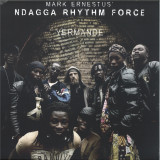
Mark Ernestus' Ndagga Rhythm Force - Yermande LP

Five years into the project, Yermande announced a thrilling new phase for this Dakar-Berlin collaboration; a giant step forward.

The group of players is boiled down to twelve for recordings, eight for shows; sessions in Dakar become steeply more focused. ‘This time around I was better able to specify what I wanted right from the initial recording sessions in Dakar,’ says Ernestus; ‘and further in the production process I took more freedom in reducing and editing audio tracks, changing MIDI data, replacing synth sounds and introducing electronic drum samples.’

Right away you hear music-making which has come startlingly into its own. Rather than submitting to the routine, discrete gradations of recording, producing and mixing, the music is tangibly permeated with deadly intent from the off. Lethally it plays a coiled, clipped, percussive venom and thumping bass against the soaring, open-throated spirituality of Mbene Seck’s singing. Plainly expert, drilled and rooted, the drumming is unpredictable, exclamatory, zinging with life. Likewise the production: intuitive and fresh but utterly attentive; limber but hefty; vividly sculpted against a backdrop of cavernous silence.

Six chunks of stunning, next-level mbalax, then, funky as anything.

нет на складе

Закажите сейчас, и мы закажем товар для вас у нашего поставщика.

22,27

Последний логин: 78 дн. назад
GRUPO DE IMPROVISACION TERCER MUNDO - UN HILO DE LUZ

Unknown spiritual jazz gem recorded in Argentina in the 80s, under the influence of Pharoah Sanders, Don Cherry, Archie Shepp_, and originally released on Litto Nebbia's label Melopea. Already supported by Gilles Peterson on his radio show, this mind-blowing album combines ethno-free jazz passages and deep progressive compositions led by saxophonist Marcelo Peralta resulting a very impressive ode to the legacy of Coltrane. First time reissue. Includes extensive notes and many previously unpublished photos. 180g vinyl. DESCRIPTION Unknown spiritual jazz gem recorded in Argentina in the late 80s, under the influence of Pharoah Sanders, Don Cherry, Archie Shepp_, and originally released on Litto Nebbia's label Melopea. This is the first and only album ever released by this band, Grupo de Improvisación Tercer Mundo (Third World Improvisation Group), formed by a quartet of young musicians based in Buenos Aires accompanied by drummer Norberto Minchillo (López Fürst, Fernando Gelbard, Jorge Navarro_) and Litto Nebbia himself during the recording sessions. They would also organize weekly jam sessions in public spaces in Buenos Aires, getting visual artists, poets and even passersby involved in these communal actions that aimed to promote self-expression in an environment of total freedom. After the gigs they'd gather again for intense listening sessions of deep jazz for hours_ Already supported by Gilles Peterson on his radio show, this mind-blowing album combines ethno-free jazz passages and deep progressive compositions led by saxophonist Marcelo Peralta resulting a very impressive ode to the legacy of Coltrane and a very accomplished work of jazz improvisation. 'Almas Liberadas' and 'Un Hilo de Luz' sound as a clear tribute to Pharoah Sanders, as the subtitle of the latter openly states. First time reissue. Includes extensive notes and many previously unpublished photos.

Сделать предзаказ12.07.2024

он должен быть опубликован на 12.07.2024

22,27
CASEY MQ - Later that day, the day before, or the day before that LP

"Remembering is not the opposite of forgetting," Casey MQ sings at the start of Later that day, the day before, or the day before that, his new LP and Ghostly International debut. It's a phrase fittingly misremembered from something the LA-based, Canadian-born composer came upon as he spiraled into unconscious and subconscious-led writing sessions at the piano. Casey's known for his 2020 breakthrough release babycasey, which gave voice to songs seen through the lens of childhood, various film score work and collaborations with artists such as Oklou (who returns here), Eartheater, and Vagabon. His gifts as a producer and songwriter are rooted in textural world-building and the excavation of personal truth. With Later that day... he questions what is true entirely, understanding our mind's tendency to bend and project onto pictures of the past. Across vivid, baroque pop balladry, Casey MQ reorients his recording project and point of view under the notion that memories are malleable. All the joy, pain, love, and loss housed within remembrance is open to interpretation and deconstruction, which he does deftly, with curiosity and complete artistic freedom. "It's a memory album," Casey puts it simply, winding up for the deeper unpacking, "and it might be a breakup album, too_there are more questions than answers." Engaging his dreams and sitting with sheet music at his newly acquired piano, he looked to new and old inspirations including the works of Claude Debussy, Joni Mitchell, and Joe Hisaishi's beloved Studio Ghibli film scores. "Since I was young, I always wanted to write a piano album." babycasey's studied electronic sound isn't wholly abandoned on Later that day... instead, it comes through like an atmosphere, giving Casey's more spacious, minimal arrangements a distinct luster and sheen. The textures and tones shift from song to song as if mirroring the way our minds constantly recontextualize, remember, and forget. Cathartic opener "Grey Gardens" _ its title derived from a dream abstractly related to the Toronto restaurant, but not the 1975 film, which he cites as another coincidental false memory _ presents the record's plaintive, haunted feeling. "Even if not reading into lyrics, sonically I wanted it to feel like you're being pulled into a universe. Not fantasy or otherworldly per se, something more tangible, of the body and mind," Casey says. "Hearing it back, I realized this track was the key to unlocking it." His tender falsetto hovers above ambient washes and echoed keys, each word falling carefully in the crevices. "Asleep At The Wheel" unfolds on arpeggiated synth before a burst of symphonic color; the synth returns inverted to harmonize with the outro, "I love a car crash, I love a story, I love a memory, I swear it's real..." Casey leans into digital imagination on the warm, introspective "Me I Think I Found It." Subdued, stuttered percussion underscores the singer as he cycles through pixelated imagery _ screenshots, smiles, streetlights _ searching for higher meaning through love. Built on ascendent chord distortions, "Dying Til I'm Born" gives the record one of its boldest pulses of emotion. The back half stretches out; "Is This Only Water" is sparse and foggy, "Baby Voice" is intimate and desperate for something to remain. "Words For Love" grooves on guitar, and "Tennisman9" aches in heartbreak. French musician Marylou Mayniel, aka Oklou, appears as the collection's only guest for the closing duet, "The Make Believe," a bright and buoyant send-off that gives Later that day... both a sense of resolve and cyclical-motion. "We are young, under the sun," they sing together, a parting image brimming with lightness.

Сделать предзаказ07.06.2024

он должен быть опубликован на 07.06.2024

27,52
CASEY MQ - Later that day, the day before, or the day before that LP

"Remembering is not the opposite of forgetting," Casey MQ sings at the start of Later that day, the day before, or the day before that, his new LP and Ghostly International debut. It's a phrase fittingly misremembered from something the LA-based, Canadian-born composer came upon as he spiraled into unconscious and subconscious-led writing sessions at the piano. Casey's known for his 2020 breakthrough release babycasey, which gave voice to songs seen through the lens of childhood, various film score work and collaborations with artists such as Oklou (who returns here), Eartheater, and Vagabon. His gifts as a producer and songwriter are rooted in textural world-building and the excavation of personal truth. With Later that day... he questions what is true entirely, understanding our mind's tendency to bend and project onto pictures of the past. Across vivid, baroque pop balladry, Casey MQ reorients his recording project and point of view under the notion that memories are malleable. All the joy, pain, love, and loss housed within remembrance is open to interpretation and deconstruction, which he does deftly, with curiosity and complete artistic freedom. "It's a memory album," Casey puts it simply, winding up for the deeper unpacking, "and it might be a breakup album, too_there are more questions than answers." Engaging his dreams and sitting with sheet music at his newly acquired piano, he looked to new and old inspirations including the works of Claude Debussy, Joni Mitchell, and Joe Hisaishi's beloved Studio Ghibli film scores. "Since I was young, I always wanted to write a piano album." babycasey's studied electronic sound isn't wholly abandoned on Later that day... instead, it comes through like an atmosphere, giving Casey's more spacious, minimal arrangements a distinct luster and sheen. The textures and tones shift from song to song as if mirroring the way our minds constantly recontextualize, remember, and forget. Cathartic opener "Grey Gardens" _ its title derived from a dream abstractly related to the Toronto restaurant, but not the 1975 film, which he cites as another coincidental false memory _ presents the record's plaintive, haunted feeling. "Even if not reading into lyrics, sonically I wanted it to feel like you're being pulled into a universe. Not fantasy or otherworldly per se, something more tangible, of the body and mind," Casey says. "Hearing it back, I realized this track was the key to unlocking it." His tender falsetto hovers above ambient washes and echoed keys, each word falling carefully in the crevices. "Asleep At The Wheel" unfolds on arpeggiated synth before a burst of symphonic color; the synth returns inverted to harmonize with the outro, "I love a car crash, I love a story, I love a memory, I swear it's real..." Casey leans into digital imagination on the warm, introspective "Me I Think I Found It." Subdued, stuttered percussion underscores the singer as he cycles through pixelated imagery _ screenshots, smiles, streetlights _ searching for higher meaning through love. Built on ascendent chord distortions, "Dying Til I'm Born" gives the record one of its boldest pulses of emotion. The back half stretches out; "Is This Only Water" is sparse and foggy, "Baby Voice" is intimate and desperate for something to remain. "Words For Love" grooves on guitar, and "Tennisman9" aches in heartbreak. French musician Marylou Mayniel, aka Oklou, appears as the collection's only guest for the closing duet, "The Make Believe," a bright and buoyant send-off that gives Later that day... both a sense of resolve and cyclical-motion. "We are young, under the sun," they sing together, a parting image brimming with lightness.

Сделать предзаказ07.06.2024

он должен быть опубликован на 07.06.2024

27,31
Jimi Hendrix - First Rays Of The New Rising Sun 2x12"

«First Rays Of The New Rising Sun» wurde im April 1997 veröffentlicht und war das erste Album, das unter der direkten Supervision der Familie Hendrix entstand. Mit siebzehn Songs, deren Entstehung von März 1968 bis zu Jimis letzten Sessions in den Electric Lady Studios im August 1970 reicht, markiert das Album das letzte grosse Werk des innovativen Künstlers Jimi Hendrix. Es beinhaltet "Dolly Dagger", "Angel", "Ezy Rider" und "Freedom". Diese Veröffentlichung ist eine neue, komplett analoge Ausgabe, die von Bernie Grundman aus den originalen 1/4"-Mixes gemastert und auf schwarzes 140-Gramm-Vinyl gepresst wurde.

нет на складе

Закажите сейчас, и мы закажем товар для вас у нашего поставщика.

28,53

Последний логин: 22 мес. назад
OBJECTIONS - OPTIMISTIC SIZING LP

Much-anticipated debut album from Leeds post-punk power-trio and 6Music favourites Objections. Optimistic Sizing is comprised of ten kitchen-sink dramas, ten miniature worlds to lose yourself in. The key topics are covered: performative royal mourning, ill-suited sexual relationships, coastal gentrification, motormouth bigots and - of course - snogging. Objections formed in the post-lockdown period after drummer Neil and guitarist Joe's former band (and cult favourites) Bilge Pump slowed to an amicable halt. They wanted to continue the musical dialogue they had built up over decades and turned to Claire Adams (Nape Neck, Beards) to start something new and Objections was born. The 3 members have also played in/with: Polaris, Yann Tiersen, HiM, Enablers, Felix and Damo Suzuki (among others). Objections released their debut 7" - BSA Day/Better Luck Next Time on Wrong Speed in 2023 and have recorded two Marc Riley / Gideon Coe BBC 6Music sessions. At Wrong Speed we are not fond of genres, we are here to release music we love not tell you how to file it. But Optimistic Sizing is genuinely post-punk in the literal sense of the term. Objections take the freedom and anyone-can-do-it promise of punk and run somewhere new and adventurous with it, creating a vibrant and living musical language with which to communicate their own unique world view. As a result, Optimistic Sizing is not only a classic debut album but a timeless one. "We like to think we know what we're talking about....believe us when we say, Objections are a band to watch" - Louder Than War

Сделать предзаказ03.05.2024

он должен быть опубликован на 03.05.2024

28,78
Mo Kolours - Original Flow 2x12"

We Release JAZZ is very happy to announce an exciting new body of work by Joseph Deenmamode aka Mo Kolours. The singular musical spirit’s new 21-track album Original Flow is available as a double LP housed in a heavy 350gsm sleeve with original artwork by Mo Kolours himself and the classic WRJ obi strip, as well as in digipack CD and digital formats.

A catalog of critically acclaimed records, including his self-titled debut (2014), ‘Texture Like Like Sun’ (2015), 2018 album ‘Inner Symbols’ and three companion EPs, established Deenmamode as a prodigious musician and vocalist. Pitchfork extolled his “hypnotic, tribal-infused dance grooves”, DJ Mag appreciated the “colourful celebration of soundsystem culture”, and Resident Advisor advocated that “no one sounds quite like Mo Kolours”. Musical analogies were drawn by The Guardian as “The best album Curtis Mayfield never made with A Tribe Called Quest and Lee Perry” and Mojo as “like Marvin Gaye produced by J Dilla”.

Five years ago, Deenmamode moved to the Japanese countryside. Far away from familiarity, he contemplated his place and further questioned his identity. “I had none of my ‘own’ people around. I had time to really find what makes me tick musically. Japan has helped me go back to those subconscious leanings, really go deep, and reflect the aspects that make up my story”.

The tracks on ‘Original Flow’ have been constructed from sessions, improvisations and soundbites captured around the world during this time; collecting contributions from musicians including Deenamode’s brothers Reginald Omas Mamode and Jeen Bassa plus Andrew Ashong, Charles Bullen, Dwaye Kilvington, Eddie Hick, Stefan Asanovic, Myele Manzanza, Ross Hughes, and Tom Dreissler. Deenamode says “I’m proud of this album’s creative process. Coming from a tradition of scouring through hours of records, I wanted to create my own samples, to find that perfect loop that no other producer could put their hands on. I decided to invite a group of friends and acquaintances, who also happen to be incredible musicians, to a studio in Crystal Palace to improvise based on some loose ideas I had. We spent all day, and recorded everything”.

‘Original Flow’ is an album of UK street-soul nouveau, future indigenous jazz fusion, Rasta Segga, Nyahbinghi jazz, Malagasy Hebrew hip hop. While retaining a spirit of exploration and improvisation, it sees Deenmamode grow and flex beyond beat tape brevity, expanding composition and stretching his musical muscle to play live with other musicians. Themes of empowerment, overcoming adversity, and mental liberation coexist with notes from ancient history, futurism, and science, as well as musings on family and togetherness.

‘Magik Momentum’ springs from a discussion that features at the start of the song, an inspiring mentor answering a question from Deenmamode about improvisation and what role it plays in life when planning and manifesting the future. ‘Rockets to Mars’ questions the lack of care for the billions of people with nothing, while governments plan to explore space. “This sparked a comparison in my mind to a Sonny Okuson song that I would reference when performing. Okuson’s song talked of the lack of resources in many communities in the world, while governments go to the moon”.

He says the music behind ‘The News These Days’ is “possibly my favourite on the album”. Looped like he would a late sixty jazz-fusion sample, there was nothing added and the track was complete within a matter of minutes. “It was the first and best moment from the entire Crystal Palace session”, he adds. The album’s contrasting title track with minimal instrumentation played solo by Deenamode. While frustratingly searching for gems in past recordings, he thought in a burst of ego, “I don’t need no-one else to make a dope beat!” picked up his ravanne, (the traditional frame drum of his fathers home-land of Mauritius), pressed record, and started to play. He says, “In my thoughts were the rhythms of the Nubians in Upper-Egypt and Sudan, the swing of the huge drums played by Mauritanian women, of-course the Sega beat of Mauritius, and the ever inspiring beat of James Yancey”.

Driven by UK broken beat, Cuban congas, Nigerian and Mauritian inflections, ‘Love Vibration’ follows the concept that all emotions carry a vibratory frequency and pays homage to the frequency of creation and the power of love. The two part ‘Tatamaka’ tells of the history of Deenmamode’s ancestors, the maroons of Mauritius. “We are people who managed to run from our oppressors and find refuge in a corner of the island called ‘Le Morne’ where they could not reach us. One bloody day they came in numbers to re-capture, to revenge. Many of us chose to jump to our deaths, rather than be taken back into subjugation. The poem by Creole Richard Sedley Assonne says; “there were hundreds of them, but my people, the maroons chose the kiss of death over the chains of slavery”. Tatamaka was the name of a famed maroon leader who was murdered for claiming his, and our people’s freedom. The song is the imagined journey of escape and freedom by an ancestor of the maroons of Le Morne”.

Born in the west midlands and raised on the traditional sega music of his father’s Indian Ocean homeland of Mauritius alongside records by the likes of Jimi Hendrix, Santana and Michael Jackson; his influences expanded with late 90s jungle and drum and bass nights in Bristol, experiments at art college in Camberwell, and the rich culture of Peckham, “at the time we called it the Afro Quarters of London” says Deenmamode, adding hip hop, dub, soul and soundsystem styles to his individual sound.

He explains, “I love drum music, from hand-drums to 808s. I love music from the ancient past, heritage music, indigenous music, traditional music passed down from the beginning of time. Music from the body, hand claps, grunts and foot stomps. Music with audible depth, busy, bustling, highly charged. Music from the soul, the music from beyond. I love music from the islands and the mountains. The music of the streets, hustle music, alleyway beats. Club music”.

He describes the creative process as thinking in images. “The visual world and the world of sound seem to intermingle in my thought process. When I play the drum with my eyes closed, a world of imagery dances and moves with beat. Improvised drumming feels like I am listening to what I want to hear, rather than trying to play what I want to hear. Following the rhythm and finding new pathways to walk within the patterns is what I experience. In this way I often feel I am just a listener, instead of the player”.
Original Flow is pressed on biovinyl, a sustainable alternative to traditional vinyl. Biovinyl replaces petroleum in S-PVC by recycling used cooking oil or industrial waste gases, resulting in 100% CO2 savings in bio-based S-PVC production. Furthermore, it is 100% recyclable and reusable, embracing the circular economy ideology.

нет на складе

Закажите сейчас, и мы закажем товар для вас у нашего поставщика.

29,29

Последний логин: 23 мес. назад
Kolonel Djafaar - Getaway LP

Having built a loyal local Antwerp following off of the success of their 2019 debut self released album, ‘Forgotten Kingdom’, and growing reputation for electrifying stage performances, Kolonel Djafaar achieved worldwide recognition in 2021 for the ‘Cold Heat’ EP on Batov Records, attracting praise from Music Is My Sanctuary (“triumphant), and support from Gideon Coe on BBC 6 Radio Music, and DJs across Worldwide FM, Soho Radio, Le Mellotron, and KEXP.

The group overcame busy schedules and frequent quarantine periods to hit the studio in February 2022 to lay down four tracks. However, the creative itch persisted, leading to an intense writing session in August, deep in the heart of a tranquil forest. From noon until midnight, the band immersed themselves in the creative process, embracing the freedom to make noise without restraint.

Fueled by hearty breakfasts, unwavering focus, and the ambient clucking of chickens roaming the studio, Kolonel Djafaar crafted the majority of ‘Getaway’. This period marked a pivotal shift as a number of new band members joined just in time for the August sessions.

Membership changes, including Emiel Lauryssen joining on trumpet, alongside guitarist Philip Matthhijnssens, the band's palette has broadened and new sounds are able to break through. From psychedelic rock and soul influence of the Daptone Records’ affiliated Budos Band, surf rock (“Urban Dweller”), Morricone Spaghetti Western guitar, and Afro Cuban (“Kelmendi”), alongside the brassy Afrobeat and Ethio jazz vibes the group have been known for.

The broader dynamics of ‘Getaway’, and the band’s more cinematic and experimental approach, is particularly apparent on "Siren’s Glitch" and "Phil’s First Tear". The latter, first conceived by drummer Anton Van Hove, features the lead guitar doubling up with the bass guitar for added impact. Whilst the origins of "Convoi Exceptionnel", a brass & synths stomper of a march, trace back to a jam session during the band's Hungarian tour, another vital period of prolonged time together, capturing the organic essence of their experiences on the road.

Each track on ‘Getaway’ holds a unique connection to at least one band member, and all benefit from a collaborative approach to songwriting. "Sparking Clover'', an Ethio-inspired psych & soul groover penned by tenor saxophonist Doyin Smith, carries a poignant undertone inspired by personal loss, while psych rock leaning tracks like "Apologies in Advance" showcase the band's evolution and increasing professionalism in crafting a distinct sonic experience.

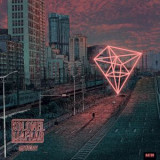
The curious cover art depicts a lone individual heading down an empty city street towards a large mysterious glowing object, evoking the common emptiness and struggle of urban life, and the search for meaning or just something better. The band envision the object to represent this album, offering a beacon to like-minded listeners. Kolonel Djafaar invite music enthusiasts on an immersive journey, to ‘Getaway’ from the daily grind of life, on an album reflecting diverse influences and marking a new chapter in their musical exploration.

Сделать предзаказ05.04.2024

он должен быть опубликован на 05.04.2024

22,65
Absolem - Les Yeux Grands Fermés LP

Absolem

Les Yeux Grands Fermés LP

12inchSIXELEVEN024LP
Six Eleven
29.03.2024

Les yeux grands fermés is a spontaneous new EP that is an ode to freedom, both in the creative process and in everyday life. This opus depicts the rather raw feelings of a young artist who had a tough time of it when he was starting out, and who is now finally experiencing the success he had been hoping for. More liberated, the protagonist is now enjoying a new life: a more freestyle lifestyle full of surprises and lightness, with days governed by studio sessions, parties and carnal relations... all the while keeping his feet firmly on the ground and his goals firmly in mind! In terms of songwriting and production, Les yeux grands fermés is an improved blend of ABSOLEM's last two projects, Leur dire and Balle d'Argent, featuring both their introspective songwriting, here even more touching, and their arrogant, second-rate side. ABSOLEM continues the journey begun on Balle d'Argent, a project in which the rapper discovered himself to be more than ever in harmony with his music (spontaneity, introspection, fluidity of text) and less concerned by all the external factors (industry, the race for numbers, social networks, pressure, etc.), social networks, pressure, etc.).

Produced in a very short space of time, Les yeux grands fermés is a highly intuitive and spontaneous project with some tracks created from scratch in just a few hours.

Entirely produced, recorded and mixed by Dee Eye in their cellar-home studio, the project retains the 'live' touch. studio, the project retains the 'home-made' touch that characterises the duo and which they are constantly perfecting. The featuring with JeanJass, who is very close to the duo, was just as natural, having worked with with Dee Eye and advises them on the creation of their projects. projects. The result is a track with a very intimate theme (esotericism and introspection), which takes the form of an astral journey.

Project after project, the chemistry between ABSOLEM and Dee Eye grew stronger and stronger and the main objective remains the same: to break new ground in every area production, writing, interpretation, mixing and mastering). Continuing to continue to work on a number of projects on their own, Dee Eye continues to progress experience and a keen eye in the artistic direction of ABSOLEM's projects. projects. With quality, consistency and efficiency always in mind and efficiency, ABSOLEM and Dee Eye are increasingly asserting their desire to create their own musical colour, a sort of hybrid between Slowthai and Asap Rocky with and Asap Rocky, with innovative production and flows, featuring rap lyrics.

Сделать предзаказ29.03.2024

он должен быть опубликован на 29.03.2024

22,90
MILES DAVIS - A Tribute To Jack Johnson LP

Miles Davis' A Tribute to Jack Johnson is the best jazz-rock record ever made. Equally inspired by the leader's desire to assemble the "greatest rock and roll band you have ever heard,” his adoration of Johnson, and Black Power politics, Davis created a hard-hitting set that surges with excitement, intensity, majesty, and power. Bridging the electric fusion he'd pursued on earlier efforts with a funkier, dirtier rhythmic approach, Davis zeroes in on concepts of spontaneity, freedom, and identity seldom achieved in the studio — and just as infrequently accepted by the mainstream.

Sourced from the original analog master tapes, pressed on MoFi SuperVinyl, and housed in a Stoughton jacket, Mobile Fidelity's 180g LP reissue brings it all to fore with startling realism. Benefitting from SuperVinyl’s nearly inaudible noise floor, superb groove definition, and clean, ultra-quiet surfaces, this 180g LP showcases everything — from the bold tonality of the headliner's white-hot trumpet solos to the decay of crashing cymbals, carry of wiry guitar notes, and echoes of the studio — in reference fashion.

Bristling with exuberance, Davis' high-register passages explode with authority and commanding presence. Around him, a barrage of urgent backbeats, knifing riffs, and supple bass lines emerge amidst black backgrounds. One of the most prominent differences long-time fans will notice is how much more aggressive, immediate, and vibrant the music sounds, with those aspects central to the composer's original desires.

Utilizing wah-wah and distortion, the go-to instrumentalist of the performances— guitarist John McLaughlin — attacks with a nasty edge, slashing style, and vicious streak that allows A Tribute to Jack Johnson< cross the until-then-impenetrable divide between rock and jazz. Davis puts both feet in the former camp and erases any gap. The stories of the record’s creation are nearly as legendary as the sounds within: Two sessions, multiple jams, different sets of musicians (several uncredited), and near-miraculous production perfectionism that made it all appear cohesive.

The least-well-known masterpiece of Davis' career, the 1971 record — seamlessly assembled and spliced together by producer Teo Macero — was a victim of limited record-label promotion. Audiences also didn’t immediately know what to make of its original cover art — faithfully replicated here. In addition, the powers that be at Columbia Records were directing the public’s attention to Miles at Fillmore, a completely different kind of album guided by two keyboardists. A Tribute to Jack Johnson practically lives in a different universe, one from the future. To many listeners who did manage to hear it — among them critic/musician Robert Quine, Stooges leader Iggy Pop, and renowned critic Robert Christgau — it surpassed everything that came before.

Indeed, Davis treated it as a personal manifesto: An opportunity to salute the Black championship boxer admired for his threatening image to the establishment and impeccable taste in clothes, cars, women and music. Davis explains in the liner notes his affinity for Johnson — a stance mirrored by the defiant music, which hits with a prize fighter's force and reflects the graceful elegance with which a pugilist navigates the ring — and closes the album with a Johnson quote read by Brock Peters.

Inspired not only by Johnson but by Jimi Hendrix and Sly Stone, Davis changed his approach and his band. He surrounds himself with a cadre of musicians in their 20s and, in the case of bassist Michael Henderson, a 19-year-old fresh from touring with Stevie Wonder. Henderson gives Davis what he requested: boogie-based grooves that don’t lose shape or direction. Soprano saxophonist Steve Grossman, drummer Billy Cobham, and organist Herbie Hancock adhere to a similar aesthetic that prizes brazenness, innovation, and energy.

In that vein, during a portion of “Yesternow,” Davis segues into a separate performance (which became known in its entirety as “Willie Nelson”) played by guitarists McLaughlin and Sonny Sharrock, bass clarinetist Bernie Maupin, keyboardist Chick Corea, bassist Dave Holland, and drummer Jack DeJohnette. Dig it!

Talking with jazz scholar Bill Milkowski — who himself noted how McLaughlin’s unrestrained style, decibel-forward volumes, and rapid-fire power chords engendered himself to the rock crowd at the same time that his harmonics and syncopation still definitely made him a jazz player — guitarist Henry Kaiser summed up part of the appeal of A Tribute to Jack Johnson as well as anyone, saying: “It’s a jazz record that way way more open than other jazz records at the time, but still not free jazz. McLaughlin’s rhythm guitar playing on ‘Right Off’ — the use of different chords in a rock shuffle than what anybody had used before — was revolutionary.”

And to think that’s just one aspect of a record that contains multitudes. “Never let them forget it.” Indeed.

Сделать предзаказ15.03.2024

он должен быть опубликован на 15.03.2024

75,21
Sonic Youth - Slaapkamers Met Slagroom

Back again for the first time in a few years, note price increase. Unfettered by studio time limitations with their own home base of Echo Canyon, SYR 2 shows Sonic Youth chasing the shadows of predecessor SYR 1 and the series' distinct aesthetic: total exploration of freedom and further discovery. While the cover art evokes European contempo classical releases of yore, Sonic Youth distinctively reinvent their own personal output potential the way those kinds of records revolutionized a previously defined genre. Their ethos of utilizing the roots of the Ramones, Television, VU, Stooges, and No Wave to shape their first decade now find the band in later years bullet-pointing fascination in AMM, MEV, improvised music, free jazz and other outer-limit/organic refractions of traditional rock. While Sonic Youth's spontaneous-creation moments had long been showcased in their recordings, Peel Sessions, and live, SYR 2 sums up the band's state in 1997: rolling lots of tape, fine-tuning ideas and presenting great moments of exciting new directions, allowing deep-listener type fans to gain better insight into their sound process. Add to that the alchemy of Jim O'Rourke's gradual entry into the core band which would soon be fully on display for SYR 3, and this series is an X-ray of evolution, dissection and reconstruction

Сделать предзаказ08.03.2024

он должен быть опубликован на 08.03.2024

33,82
LIAM BAILEY - ZERO GRACE  LP

Big Crown Records is proud to present Zero Grace, Liam Bailey's sophomore album on the label. Following the success of 2020's Ekundayo album, the tried and true chemistry of Bailey and producer Leon Michels (El Michels Affair) is on full display again as they take the sound they established and push it further. On Zero Grace they lean more into the bleeding heart singer-songwriter side of Liam. The result, much like Bailey himself, is impulsively honest without reserve. Born and raised in Nottingham, England, the son of an English mother and 2nd generation Jamaican English father, Liam will admit his early childhood was fairly chaotic and filled with "all the cliche racism that happens when people started mixing up in the '80s in England." Liam got his early influences from his mom's record collection. Bob Marley and Dillinger, Stevie Wonder and The Supremes, The Beatles and Jimi Hendrix would eventually shape the singer/songwriter we know today. Fast-forward to 2005, Liam is in London performing at every open mic and acoustic night he could, hustling with hopes of landing a record deal. It was through this time that Liam first teamed up with Michels, musician/producer luminary, and the co-founder of Brooklyn's own Big Crown Records. Liam flew out to New York and those first sessions together produced the now classic tunes "When Will They Learn" and "I'm Gonna Miss You" which still gets spins at Reggae spots around the globe and were co-signed by heavy hitters like David Rodigan & Don Letts. That first trip to NYC brought a lot of industry attention to Liam, including being noticed by a just-famous Amy Winehouse who heard one of Liam's apartment-made, lo- recordings, and liked what she heard. Regardless of the audio quality, Liam's particular sound shone through - all guitar, warm-rough and genuine soul. Eventually Liam signed to Polydor and wound up bumping against the typical major label industry obstacles. They already had an idea of the Liam they wanted to make, promote, and push With the typical large advance enticement, Liam did his best to trust that path. "Maybe I can make it work,' that's what you're thinking," Liam remembers, "but, you quickly find out that you can't." Zero Grace is full of freedom and love, in fact, working with Leon Michels and Big Crown Records has encouraged Liam to be himself. On album opener "Holding On '' Bailey speaks to his observations & fears when looking out at the world in front of him and also to the dedication it has taken to get on the other side of his personal trials & tribulations. "Dance With Me" is an instantly infectious two-stepper that nods to those incredible soul records that were coming out of Jamaica during the early Reggae days. Bailey steps into the dance with hopes of finding a new love and pulls us all out on the dance oor with him. "Disorder Starts At Home" is another close to the chest tune that addresses the difficulties he struggles with from his early chaotic childhood and his progress in getting past them. "Mercy Tree" is a powerhouse of Reggae Rebel Music. Bailey addresses the racial tensions that plague humanity and encourages everyone to step up and do their part to help foster equality. What starts out as a declaration of injustice turns into a call for action and an inspiration for hope.

нет на складе

Закажите сейчас, и мы закажем товар для вас у нашего поставщика.

22,65

Последний логин: 2 г. назад
Продуктов на странице:
N/ABPM
Vinyl