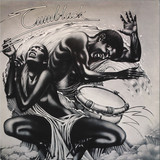
A truly special reissue of a fantastic and incredibly rare Afro-disco 12” from 1978, Tumblack - 'Caraiba/Invocation'. Originally released on the seminal French disco label Barclay, you'd be hard pressed to even find an original copy in the UK, let alone for a reasonable price, so it's high time an officially licensed, remastered reissue came around.
Taking the A side of this EP Stefano Ritteri provides a “Spaziale Version” of 'Caraiba' that seamlessly blends elements of African, Afrobeat, Funk and Disco styles, with segments that continually morph and evolve into new tracks. Irresistibly funky and percussive drumming patterns and melodies hypnotise the listener, with only the occasional outbreak of African chanting breaking up the grooves.
The B-side contains the original version of “Invocation” that is effectively one long drum track broken down into 7 segments that never drop a beat alongside the original version of 'Caraiba' in all it's glory. As EP's go, this really does take the listener on a journey to Africa, via 1978 New York, and is a true one of a kind. And for all those sample-spotters out there, there's no end of complex drum patterns and basslines to dive into.
Search:french disco
The Godfather of the Montreal disco Robert Ouimet was a resident DJ at The Limelight between 1973 to 1981.
Basically this man got history!
After a fine release on Basic Fingers last year he now got two funk-disco edits for GAMM. On the A side Robert takes on a classic, Yellow Sunshine by Yellow Sunshine (translated in French on the release) which was a well established b-boy anthem as well as a classic cut for DJs like Danny Krivit and David Mancuso.
On the B, we find another obscure funk-disco jam packed with soulful vocals, moog synths and big disco breakdowns.
Another G.A.M.M sureshot !!
After the major success of Part 1, Cosmo Vitelli & Malka Tuti are presenting Holiday in Panikstrasse Part 2, the 2nd and final part of Cosmo’s 2XLP on the label.
After collaborating with Fantastic Twins on Part 1, the amazing Julienne Dessagne’s vocals are back on Part 2 as well for the opening track Fragments of Reality. Another collaboration on the record is with Croatian singer and vocalist Tanja Vezic, whom we’ve already seen collaborating with Cosmo on his Les Disque De La Mort release, and who gives a cinematic sort of feeling to the track Party old boy.
With “He just wanted to hang out with the DJs” Cosmo creates a slow burning dark banger that will not go unnoticed.
The final track Irritable is the perfect mixture between German Krautrock heritage and the French disco-synth touch of the 80s - emotional, growing and cathartic, one cannot stay indifferent to it.
Spaziale Recordings is born. Setting their sights on reissuing highly sought-after, obscure records, alongside providing fresh new interpretations of these classic gems, they kick things off with a bang.
Presenting an official remastered limited edition reissue of a classic cosmic disco 12”, featuring extended disco versions of three superb Afro and Latin-flavoured tracks taken from John Ozila’s 1979 killer funk album ‘Boogie Salsa’.
- Released on French label Disques Vogue, the A side offers the highly
infectious afro groove of ‘Funky Boogie’, treasured by the likes of
Horse Meat Disco, Dekmantel Soundsystem and Jack J.
- Previously a fiercely-guarded record collectors’ secret, the flip
houses two great afro-cosmic, obsure disco versions of “Let’s Go
Boogie” and “L’Orange Bleue” previously only available as album
versions on the “Boogie Salsa” LP.
- Now fully remastered and cut loud and proud to 12 inch for
maximum audio pleasure.
- A1: Laurent Garnier - Water Planet
- A2: Mono Junk - Beyond The Darkness
- B1: Psychick Warriors Ov Gaia - The Valley
- B2: Melody Boy 2000 - Plenty Of Love
- C1: Drax Ltd Ii - Amphetamine
- C2: Dan Curtin - 3Rd From The Sun
- C3: Front 242 - U-Men
- D1: The Prince Of Dance Music - E3 E6 Roll On
- D2: Pan Sonic - Lahetys/Transmission
- D3: Burial - Archangel
Beyond Space And Time is the new record label from Japanese music festival, Rainbow Disco Club (RDC). RDC has been welcoming music loving people to Japan for over a decade. Throughout the festival's history, RDC have been fortunate to constantly encounter performers and DJs who've collaborated with them in establishing a beautiful dance floor year in, year out. These relationships have lead RDC to start their own label, and now gives them the opportunity to reveal one of the best-kept secrets: What is in a DJ's record bag?
This time around, festival regular DJ Nobu kindly opens up his collection and shares the music he loves with us all. On visual duty we welcome Senekt - his representational yet contemporary drawing illustrates the emotion we feel from DJ Nobu.
We have much more music to come in future from artists that we trust and respect.
▼ DJ Nobu describes 10 tracks this way ▼
A1. Laurent Garnier - Water Planet
Highly respected French DJ/Producer Laurent Garnier has been releasing tracks for decades capturing the very essence of Detroit Techno and Breakbeat. He always manages to create something truly emotional. This is not his biggest hit, but it's my favorite.
A2. Mono Junk - Beyond The Darkness
This track represents the very early days of Techno with it's ravey atmosphere. It has a primitive feel, and the obscure mixdown sounds almost unbalanced. That said, this one really stands out when DJing. Very cool.
B1. Psychick Warriors Ov Gaia - The Valley
It was always my intention to include this track in a compilation if were I ever to do one. It has a fat underlying groove, with some indigenous spices thrown in. The whole thing is put together beautifully. No complaints!
B2. Melody Boy 2000 - Plenty Of Love
I wanted to include a track that had Jacking feel to it - that is my definition of dance music. This track mixes well in both Techno and House DJ sets.
C1. Drax Ltd. II - Amphetamine
This is my all time favorite track by Thomas P Heckman. It asks questions and strikes down all the boring 'wanna be cool' techno tracks. It is obviously a well known tune already, but I include it here because I'm often asked for it's track ID from new kids in the game. This is a classic that should be passed down.
C2. Dan Curtin - 3rd From The Sun
Curtin's refined synth grooves and bass lines make this a true timeless classic. It do not get tired of listening to his rhythms and melodies - he always gets it just right.
C3. Front 242 - U-Men.
The originator of Electric Body Music. Their husky vocals, hard rhythms and strong synth basslines made the group very popular at the time, and they are still to this present day. To me, this track represents what the Belgian New Beat scene is all about.
D1. The Prince Of Dance Music - E3 E6 Roll On
This is the track I played the most up until around 2006. It is a genuine house track that cuts through trends in music. A hidden floor killer.
D2. Pan Sonic - Lähetys / Transmission
Electronic music has existed for decades, and if you are to choose some of the best from all scattered & hidden places, Pan Sonic's 'Lähetys / Transmission' must be considered. The track emerges beautifully - breaking structures and transcending the past. Every layer of the piece is produced with such delicacy and care, that as a whole it magically drags you into the world of the unknown.
D3. Burial - Archangel
This track merges melancholic emotions with technological prowess at the highest level, and deeply impacted the dance music scene on it's release. I recently played this track at the end of my set at the forward thinking Terraforma Festival in Milan. It faded out to huge applause from the open minded crowd. A moment to be remembered.
Hot off the heels of Aluxes, his 2018 Lumière Noire debut EP, young Mexican DJ/producer Iñigo
Vontier is inviting Chloé's label on a trip to the far corners of the body & mind with an album of
demented grooves, psychedelic take-offs and imaginary comic strips of mystical rituals. A
bewitching debut full-length. Mexicans may never possess the sonic science of the Germans,
the hedonistic madness of the English or the gift for synthesis of the French, but, as proven by
Iñigo Vontier's first full-length for Lumière Noire, their universe is much more exciting than
anyone would have ever thought.
The DJ/producer fully asserts his origins by brandishing the album’s title "El Hijo del Maiz" ("the
son of the corn") almost as an emblem: "in Mexico, corn is eaten daily. It has long been defined
as 'the gold of America', and I consider all Mexicans as children of corn". A spiritual and
embodied vision Iñigo's first Lumière Noire release, the four-track Aluxes, set the tone of the
young talent's distinctive interpretation of dark disco, which creeps up on the dancefloor from its
iconoclastic side. The two tracks and two remixes (one by Flügel, the other by Inigo himself)
featured on the 12" for lead single "Xu Xu" (featuring Red Axes-affiliate Xen's irrelevant vocals)
was a full-bodied confirmation that Vontier sees the dancefloor as an arena for the occult –
whether from the peoples of the equatorial jungle, the Middle East or, even from indocile
machines. But, while the spiritual element seems part and parcel of the Jalisco native’s output, it
is in no way the only ingredient of this first long-player: "this album best reflects my own vision
and spirituality, and the way I feel it" he says.
Whether contemplative or frenetic, the collection of tracks that make up “El Hijo Del Maiz” takes
the kitchen sink and throws it out the window: languid rhythms, haunted vocals, and mysterious
percussion fuel a discombobulated house set that scrambles the listener's five senses, leaving
one disoriented and exposed to the vagaries of vertigo. Following the demented, dystopian “Xu
Xu” EP, which explored an imaginary jungle that harbored Mayan and Egyptian pyramids,
Middle Eastern accents are once more present in the off-kilter “Bo Ni Ke” and its Japaneseinfluenced vocal trickery, which Moroccan flutes à la Jajouka transform into a feverish trance.
With the following three tracks, Iñigo Vontier raises himself to the same level of excellence as
the Pachanga duo (of which pride of the Mexican scene Rebolledo, is also known as a prolific
artisan of deconstruction): “Awaken”'s slumbering voice, heard as through the veil of hypnosis,
slowly introduces a techno beat which, as in follow-up “Time”, literally brings the listener to a
levitative state. In a housier vein, yet continuing in the same psychedelic, 90s-infused spirit,
“Don’t Go Back” disrupts the genre’s usual signatures with an out-of-tune keyboard that is
becoming the artist's trademark, destabilizing the listener into a drunken vertigo, with a good
helping of sexiness: "I think the sexy dimension definitely brings a kind of magic to music," says
Vontier. “I'm sure I felt this magic during my DJ sets, and I like to think that sorcerers use this
element in their practices. I might consider myself a bit of a sorcerer when I take over the DJ
booth, by the way." A mood and sound that can once again be found – in a quieter, more
bucolic version – on “Chiquitita” (feat. the flute stylings of pioneer DJ Rocca, now a partner of
cosmic disco legend Daniele Baldelli). The more cinematic, fast-paced and dreamy beat of the
no less captivating “Little Monster” might evoke the mischievous spirit of the Mayas' minor
mythological creatures, while ode to the magical herb Marijuana (feat Thomass Jackson)
proudly tramples into the debate that such a provocative title inevitably provokes: "psychedelic
drugs are powerful tools to reach a higher level of consciousness about what surrounds us, but
we must learn how to complete this psychic journey by ourselves, notably through meditation
and love.
In the end, El Hijo del Maiz is an album-length confirmation of Iñigo Vontier's uniqueness, and
his adherence to Lumière Noire's policy of letting artists fully express their vision – while letting
their passions guide their idiosyncrasies and explorations of innovative electronic signatures
SHAZZer Project created by Shazz and Jean-Marie K on their respective labels : Batignolles Square & Electronic Griot. These long-standing friends were left with an ambitious project to reissue Shazz's most outstanding titles over the past 25 years!
The SHAZZer Project was born out of the desire of these two enthusiasts to help discover or rediscover Shazz's emblematic titles from his albums or F Communications releases remixed by big players of the electronic music scene. The "A" EP is composed of remixes by French rising stars Folamour & Tour-Maubourg as long as established artists such as Ian Pooley & Oliver Dolar.
"SHAZZer Project" you're back from the future!
Sam went into an almost psychotic state when making music. He wasn’t himself. He was immersed in the creativity to such an extent that it was almost like a psychotic trance. Here’s an example. He found all this giant kelp down at Western Port bay and he would bathe himself in it for weeks. He would replenish the water and put salt in the bath, but leave the kelp in there. I used to ask Julie, his partner and wife, “How’s everything going?” and she’d say, “Just go and have a look at the bath.” - Tony Rogers
Sam Mallet could have pursued a career as a French literature professor in Paris, but decided his true calling was to remain in Australia, dedicate himself to his music and find the plateau; a word he used to describe the sensory worlds residing in music. Under the influence of Eno, Jon Hassell, Arvo Pärt, John Coltrane and Robert Fripp, Sam explored a wide variety of musical styles and put them to service soundtracking the time based works of his peers. He crafted spatial ambience, somber jazz, and drum computer driven rockers for short films and experimental video works, television shows (including the original Australian Wilfred series), feature films and live theatre. The avant garde Anthill Theatre, known for its departure from conventional staging practices and having a keen eye for talent, enlisted Mallet to provide soundtracks for approximately 40 productions throughout the 1980s and early 1990s.
Sadly, Sam passed away in 2014. A crucial piece of his legacy is undoubtedly the body of work he produced during his life, and the archive of recorded works is vast and deep. Sam seemingly saved everything, from fragments to finished pieces; and often repurposed previously released tracks by collaging them into new pieces. He self released a small number of cassettes and CDs from the mid 1980s onward, the contents of which were culled from soundtrack work and original pieces, but the majority of his music was experienced only within the ephemeral live performances.
Wetlands is the product of countless hours spent with this archive by Rowan Mason (Sanpo Disco/Recurring Dream) and Tony Remple (Musique Plastique), offering a dynamic survey of Sam’s work, and housed in a jacket evoking the minimal design and colour palette of his earliest cassette releases. Two selections of Sam Mallet’s music were featured on the compilation Midday Moon (also produced by Rowan), released last year by Bedroom Suck Records. Along with Left Ear Records’ Antipodean Anomalies, Midday Moon has served to highlight outlier musics and scenes from Australia and New Zealand, and Wetlands plunges deeper into the catalog of this obscure yet groundbreaking artist.
From Far Out Recordings’ in-house producer, Daniel Maunick’s debut solo album Macumba Quebrada conjures scenes of collective hedonism from start to finish. Spanning Afro-Brazilian spiritual dance ceremonies, late-eighties Detroit techno parties and jungle and broken beat raves in nineties London, Maunick celebrates our instinctive, age-old desire to come together and lose our sense of self.
Daniel Maunick practically grew up behind the mixing desk. As the son of Brit-funk legend Jean-Paul ‘Bluey’ Maunick (of Incognito fame), he found himself immersed in music from an early age, and quickly became involved in London’s drum n’ bass, acid-jazz, house, broken beat and soul scenes, releasing his first production at the age of sixteen on Gilles Peterson and Norman Jay’s Talkin’ Loud label. Since then, he has produced albums by the likes of Azymuth, Marcos Valle, Terry Callier, Incognito, Ivan ‘Mamao’ Conti and Sabrina Malheiros.
Reflecting his dual residence between Rio de Janeiro and East London, Macumba Quebrada features deep house stompers and broken bangers littered with Brazilian rhythms - in the form of both dusty percussion and Maunick’s intricate drum programming. But the album sees Daniel draw inspiration from across the black music continuum, and the rich histories of communal celebration in Detroit techno, Chicago house, London D’n’B and New York disco. Bringing all this together in explosive peak-time club tracks, moments of eerie ambience, South American swing and tribal earthiness, Macumba Quebrada expands on Maunick’s recent vinyl-only EPs ‘A Vicious Circle’ and ‘Sombra Do Dragao’, with a 13-track double LP and 14-track CD and digital release.
Taking its title from a syncretism of South American spiritual practices, the cover art is photograph taken by acclaimed French photographer and self-taught ethnographer Pierre Verger, who travelled the world documenting civilizations that would soon be effaced by progress. Settling for good in Salvador, Brazil, Verger became initiated into the Candomblé religion, eventually officiating rituals and ceremonies within the community. Without having become an ordained priest, Daniel Maunick shares both Verger and Far Out Recordings’ love for Brazil: its people, its culture and its music.
"He's been producing Azymuth and all kinds of great musicians in Brazil, and finally his debut album is about to be released." Gilles Peterson (BBC 6 Music)
"This one is a good one. Thanks!" Derrick Carter
"Wow couple of killers on there so it sounds!! Thanks a lot" ?? San Soda
"He is always brilliant!" Voclov (Neroli)
"Energetic, summery and full of groove. "It's like Theo Parrish went to Brazil and never decided to come back." Errol (Touching Bass)
"Super dope release from Daniel! proper Venom / Viper Squad vibes!!" Pablo Valentino (MCDE/Faces Records)
"Organic and bumpy...healthy dance music!" Mad Mats (Local Talk)
"really diverse, great sound" Chris Todd (Crazy P)
"super dope" Nick Tyson (XOA)
"Keep em coming man! ... Nice one" Earl Jeffers
"Feeling this! As always with Mr Maunick." Opolopo
"Dirty Trix is real nice!" Jkriv (Razor N' Tape)
"This is great!" Danny MoodyManc
"He's right on the money with this one, isn't he? Deep, profoundly funky stuff that Larry Heard would be proud of. You can feel it!!!!" Mark Webster (BBC 5 LIVE)
"this is so dope" Alex Attias (Visions Recordings)
"Love these tracks" Serkan Cetin (SunSplash)
"Great release, I love It! I-Robots approved!" I-Robots
"This is excellent. Dirty Trix and Somra Do Dragao are the ones!" Dane (The Love Below)
Over the years Kid Loco has become a reference in the French electronic music landscape. Firstly, known for being an activist in the French underground music scene, he cofounded Bondage Records in 1982. With Bondage Records, he introduced several bands to the French alternative music scene like Bérurier Noir, Ludwig Von 88 or Washington Dead Cats. Alongside his activity of label manager, he composed and released under the name of Kid Bravo, an experimental music at the crossroads of rock and electronic. Astonished by the beginnings of the instrumental hip-hop of DJ Shadows, Jean-Yves Prieur aka Kid Loco experimented new ways of composing music with the sample technic in his own studio near Orly. This new musical adventure led to the birth of a mini album Blues Project released in 1996 on Yellow Productions.
Exploring further his own psychedelic universe, he released his first album A Grand Love Story in 1997 under the name of Kid Loco. Acclaimed both by the French and international music review, “A Grand Love Story” established itself as an iconic album of the trip-hop and electronic music scene. During the two years following its release, Kid Loco continued to invent his own musical universe nurtured by multiples influences. In 1999, he released Jesus Life For Children Under 12 Inches, an album featuring thirty remixes he composed for French and international artists (Pulp, Talvin Singh etc.) as well as his mixed compilation for the famous DJ KICKS collection released on the German electronic music label, !K7.
After a first European tour, Kid Loco returned to his studio, nicknamed “The Lafayette Velvet Basement” and composed his second album Kill Your Darlings released in 2001. Compared to his previous compositions, Kill Your Darlings features more tracks without sampled vocals. Eager to explore new musical horizons, Kid Loco produced in 2004 the original soundtrack of the American movie The Graffiti Artist directed by James Bolton (Narrative Feature Sound Award – Austin Film Festival 2003). Cruising to new musical galaxies, Kid Loco continued to compose and released the album Party Animals & Disco Biscuits in 2009 followed in 2011 by the album Confessions Of A Belladonna Eater. In addition of his albums, Kid Loco continued to experiment with the production of compilations celebrating the trip-hop music with “Trip-Hop Classics” released in 2010 followed by a second opus released in 2013 on Wagram Music.
2019 marks the return of Kid Loco with his track Here Comes The Munchies selected in the original soundtrack of the show Vernon Subutex (Canal +), the vinyl reedition of his cult album A Grand Love Story and for the first time the digital release of the album Confessions Of A Belladonna Eater with exclusive remixes.
Half of the dark synthwave duo THE HUNT ,Herbert West is a French electronic producer heavily influenced by 70’s and 80’s horror soundtracks. This artist tends to use vintage, analog and modular synths and It ́s important to point out that he has released with the Hunt two albums through the well-known labels Giallo Disco (2014) and Bordello a Parigi (2018).
Vortice Mortale is his new project in which he mixes space disco and dark synth music.It is clear as water that Herbert West loves Italian horror movies and French disco music of the past decade considering that this work “Memento Mori” is perhaps a perfect combination of powerful beats, enigmatic passages and wicked catchy melodies.
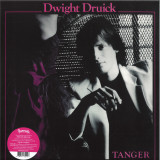
Dwight Druick’s born in Montreal to a professional gambler and an ex-Radio City Rockette. One of five children, he grew up in a family buoyed by music and beleaguered by the vagaries of miscalculated risk. After attaining a McGill University bachelor’s degree in Art
History, Dwight fully embraced both music and risk by traveling to London, where he signed a contract with Pye Records and Joe Cocker’s management company. The ensuing record,
Druick & Lorange was released to critical acclaim and relative success. After returning to Canada, Dwight recorded two albums with Phil Vyvial: Midnight and Minuit. Recorded with the Muscle Shoals Rhythm Section in Alabama, the duo’s work achieved airplay success in Quebec and across Canada. Dwight subsequently released his first French language solo album, Tanger, released in 1980 by the Canadian label, Bobinason.
Today quite hard to find in its original version, Tanger is first of all an incredibly solid album, clearly underrated and deserving more credit. Mostly known by collectors and DJs for the
stunning cover of Toto’s classic hit, “Georgy Porgy”, which was produced and arranged with the help of George Thurston (Boule Noire), it includes many other tasty titles, with amongst
them another fine rendition of “Open Your Eyes” by The Doobie Brothers. In fact, with its brilliant mix of Modern-Soul, Disco and AOR styles, the whole album is already considered
by many connoisseurs as a classic, and clearly a must have for anyone enjoying this musical blend. Never reissued on vinyl until now, there was not much more needed at Favorite Recordings
to make it happened. Officially licensed to Dwight Druick, who was unfortunately not able to provide the original tapes, Tanger has been perfectly restored and remastered by Frank Merritt, at The Carvery, London. CD and digital edition will also come with “Georgy Porgy (Version Disco)” as a bonus track.
After S3A's "Pages" double album earlier this year we asked some of our friends to re-interpret and re-construct their favorite original track off the album and deliver these fine remixes. We aimed to have a nice variety in styles on this record and hope you enjoy these tunes as much as we do!
Starting off with the live disco funk of "Lorenz Rhode" who sets the tone for a class dance floor EP and followed by the soulful deep house vibes of French master "Art Of Tones" aka "Llorca" who delivered 3 different mixes to this release. The main mix is on the vinyl and there are two bonus mixes added to the digital release, a "Beats" and a "Dub" version. Ending this brilliant first side is London's newcomer "Dampé" with that deep and jazzy electronica approach we got to love him for on his first debut Dirt Crew Recordings release.
On the flip we pick up the pace and present you the faster dancefloor tracks of Amsterdam's "Nachtbraker" with his freaky hallucinating sounds placed atop of one of these irresistible bass lines only he can come up with and leading towards an "end with a bang" in best Detroit ghetto house style by our own Icelandic fire "Felix Leifur".
Each artist perfectly transported his own unique styles into these tracks and we hope this release with its broad approach will serve any dance floor to its best!
The french and fresh production team Mochi Men (Young Pulse & ATN) is back on wax, releasing their 2nd official remix on Mochi Records ! After making a great impression with their previous and
sold out release (the deep house – UK jazz funk remix of Resolution 88’s "Taking Off), they return with a monster nu disco boogie nugget, remixing “Boys and Girls” from the famous french latin funk sensation, Setenta ! With a strong reputation since their first hit “Funky Tumbao”, followed by 4 LP's, a collaboration (on record and on stage) with Nuyorican legend Joe Bataan and even a remix
by Kenny Dope Gonzalez (Masters At Work), the Parisalseros of Setenta entrust their latest hit to the Mochi Men funky rascals.
The result is a heavy boogie bounce of a real party jam, that hits hard on the dancefloor
Moon Boots a.k.a Pete Dougherty returns with his second studio album ‘Bimini Road’ on September 6 via Anjunadeep. An ambitious and evocative follow-up to his acclaimed debut First Landing, Bimini Road combines delectable club-ready grooves with soulful songcraft into a seamlessly organic whole. Inspired by notions of mysterious lost civilizations, ancient magic utopias and the sci-fi landscapes of the mind, ‘Bimini Road’ is a joyously celebratory listen that builds off the ‘deep textures and funky melodies’ (Mixmag) of his album 'First Landing', a disco house masterpiece supported by KCRW, Annie Mac and others. Featuring familiar faces KONA, Black Gatsby and Nic Hanson among the featured vocal talent, ‘Bimini Road’ also includes new collaborators like rising US talent Niia, Kaleena Zanders and notable British sing-songwriter Little Boots. OutJuly 9, ‘Tied Up’ is the first single off the album, a sexy slice of deep house pop sure to ignite dancefloors and bedrooms alike. Moon Bootsembarks on his Live Bimini Road Tour this Fall, with dates across North America and Europe. Born in Brooklyn, Moon Boots’ musical obsession started not long after he could walk. His early love of piano lead to a passion for keyboards and synthesizers. Teenage nights lost in the work of Daft Punk, ATribe Called Quest and Herbie Hancock followed. Inspired by legends like Frankie Knuckles and Derrick Carter, he moved to the house music epicenter of Chicago, where he tirelessly passed out demos to local DJs and scoured the web for like-minded people with whom he could share and expand on his sound. Heplayed in a synth-pop trio whose demo caught the attention of Lupe Fiasco, and after a stint touring alongside the hip-hop icon, Dougherty went back to DJing with a renewed focus. The stars aligned when he had a chance encounter withPerseus, founder of an adventurous label, French Express. A fellow junkie and fan of French House and R&B-infused dance music, Perseus became a friend and mentor, the Splinter to Boots' Donatello. The label eventually disbanded but Boots has stayed true to his mission of making dance tracks that can’t be confined to one style. Pete blends the music he loves --jazz, house, funk and soul -- into songs that last longer than their runtime. Songs not just for DJs, but for everyone.
Mekanik Kommando was a post punk / New Wave band from Nijmegen, the Netherlands founded in 1979 by Peter van Vliet and Laszlo Panyigay. The duo became a quartet with the addition of Simon van Vliet and Mirjam van Hout. The name Mekanik Kommando comes from the album ?Mekan?k Destrukt?w Kommand?h? by the French progressive rock band Magma. Inspired by a DIY ethos, Kraftwerk and Magma, the band began recording songs at home using two tape recorders. Their demo cassette was discovered by Wally van Middendorp of Minny Pops and owner of Plurex Records, who booked them for a gig at Paradiso in Amsterdam. In 1981 they were asked to contribute music on a flexidisc for the first issue of newly established magazine Vinyl. In the summer of that year the band recorded their debut album ?It Would Be Quiet In The Woods If Only A Few Birds Sing? released on Torso. In February 1982 the band secured five days of studio time at Salisbury Sound in Dordrecht. The end result was the mini-album ?Dancing Elephants? released on Torso later that year. Musically, the five songs are a mix between cold wave, experimental electronic and industrial pop. The band utilized two bass guitars plus a Korg 770, KR-55 drum machine, violin, effects, metals and plastics. Lyrics explore themes of decay and morality, hypnotically spoken on top of playfully metallic sounds. All songs have been mastered by George Horn at Fantasy Studios in Berkeley. Each EP is housed in a replica of the original jacket, which features artwork by the group members, and includes a 4-page booklet with lyrics and notes designed by Eloise Leigh.
Charles Trees. Myth, tall tale, legend of a human being, one of those people who one minute you'll be scouring reddit for obscure content and the next, stepping on stage to casually DJ to thousands of people like “no big whoop” at a French music festival. Charles is unassuming, the kind of person who effortlessly mixes ghettotech into soul for lulz, who samples a speech (/rant) by Funkmaster Flex in an acid track, or rides BMG & Derek Plaslaiko’s “True Story of a Detroit Groove” with Velvet Underground’s “Sister Ray” for 8 minutes straight.
Charles' relationship with electronic music started early. In high school, Dave Shayman (Disco D) introduced Charles to DJing and he was a regular at Dubplate Pressure*– Todd Osborn's now-legendary record store in Ann Arbor. By 1998, he was already playing on raves in Detroit. A year later, he was the first person to show Zach Saginaw (Shigeto) to Ghostly International, arguably altering the course of our lives forever. In the late 2000s, they became label mates on Moodgadget, the record label of Jakub Alexander (Heathered Pearls).
Through out the years, Charles has been a musical mentor (whether DJing, producing or throwing shows) to many, danced at every weekly at every venue in Ann Arbor & Detroit, produced Hip Hop, and fronted a psych rock band. He has released music on Moodgadget (US), Musique Large (FR), Lovemonk (ES), Vanity Press (US) and JFX Lab (FR). Today, between DJing, hosting radio shows and producing new music, Charles regularly throws shows/parties/raves, and hosts a monthly at Deluxx Fluxx.
We love Charles Trees and we're proud to present "2019," the eighth record on Portage Garage Sounds.
*Additional reading: Dubplate Pressure: was the precursor to Technical Equipment Supply; how Todd Osborn was discovered by Richard D. James and signed to Rephlex Records; where Sam Valenti IV, the founder of Ghostly International, met Tadd Mullinix (Dabrye, JTC, Charles Manier, X-Altera); one of the reasons why we're all here
"Got No"
Hit the ground running.
Chopped up vocal stabs and a playful syncopated melody accompany this percussion heavy two-step shuffle as it speeds down the Lodge on a Friday night in Detroit.
"Think First"
Undeniable rhythm section pocket.
Acoustic bass and dirty ride symbols swing alongside lush keyboards and sprinkles of light melodicism in this psych house banger.
Think St. Germain with CAN playing a warped version of "Rose Rouge."
"In Arms"
Crave the rave. Whips crack and sizzle in this dubbed out techno slapper. A modern take on a classic sound. Trees conjures an era close to his heart: when the warehouse was church and service didn't stop until the sun came up.
"Acja feat. Marcus Elliot ("12 club mix)
Beautifully understated and triumphant.
This closer marks the return of Detroit Saxophonist Marcus Elliot (Detroit pt II - PGS 001). His notes dance and soar over a creeping acid line, while driving drums and warm pads effortlessly take you home in this powerful house anthem.
A welcome return from former 'Gentleman Of Leisure' Jadell who delivers a sublime slice of French house-inspired disco cut 'n' paste guaranteed to ignite dance floors. B Side "Your Love Is What I Need" is a mid tempo, deep disco monster set to get those hands in the air.
"A floor-filling disco mutant" - DJ Magazine
"This sounds FUNKY" - DJ Snuff
Yeketelale is the third album from Franco-Ethiopian group uKanDanz, combining a heady brew of rock energy, saxophone zigzags and Ethiopian melodies, all fronted by veteran singer Asnake Gebreyes grooving harder than ever.
In Ethiopia, sons follow fathers and, together, their names tell a story. Some discographies are the same way. After Yechelal (''It's Possible''), Awo (''Yes!''),here's Yeketelale (''It Continues''), the third album from Ukandanz.
The adventure that links Damien Cluzel (guitars) and Lionel Martin (tenor sax), the two founders of the group, with the Ethiopian singer Asnake Guebreyes continues and, with this album, takes on new colors and a new dimension. It is a polished synthesis that keeps the rock energy of their first recordings and gives even more space to the subtle vocal ornamentations that mark great Ethiopian singers. Add to that a groove that is more danceable than ever, carried by Adrien Spirti's synth bass and Yann Lemeunier's drums, and you have the magic formula of Yeketelale.
This came about slowly over the course of a dialogue that began in the early 2000s when Damien Cluzel, arriving with a circus in Ethiopia, met up with the occupant of the next room in their hotel. A stroke of luck: this was Francis Falceto, high priest of the Ethiopiques collection (Buda, 30 volumes to date) which had introduced to the West the treasures of swinging Addis, the capital that vibrates to the sound of big brass orchestras. With him, he dives into the capital's nightlife and meets a galaxy of musicians. The singer Asnake Guebreyes is among them.
Recruited by the famous Police Orchestra at the tender age of 16, he already had all the power, energy and class of his role model, Tlahoun Guessessé ''the Ethiopian James Brown''. He began his solo career at the beginning of the 1990s with several major successes, most famously an explosive duo with the singer Fekker Addis.
This experience made a big impact on the French guitarist. Having learned how to blend in with a uniquely Ethiopian groove, he was now ready to take it to other places and in other directions. In his old friend Lionel Martin, he found an ideal partner to engage in such experiences. But they needed a singer. The idea of Asnake Guebreyes was mentioned. Then Francis Falceto called and suggested going to see him at the Addis Music Festival. Ukandanz, a rock version of Ethiopian groove, was born.
Some pieces, like the disturbing Yene Hassab, call to mind Herbie Hancock's experiments in the seventies, as well as the Juju guitars of the Gulf of Guinea. Others, like the dark Fetsum Deng Ledj Nesh, allow Asnake's voice to soar above the synthetic waves, like a siren song for a freighter in distress. Dance and trance are not left out, with inspiration from the inexhaustible Ethiopian traditional repertoire. In a nod towards Asnaké's first album (Ahadu, also reissued by Buda) Ukandanz returns to its track Ajiré, transfigured by the guitar, claps and synthetic bass and takes us back to the glory days of breakdancing. Listening to the two versions gives the key to understanding the unique touch of Ukandanz and of the rich musical colours of Yeketelale (''It Goes On''), a fusion musical journey that brings the electric spark of the Frendj (Westerners) to Ethiopian lyricism.
“The year is 1982. Rita Mitsouko has not yet recorded its eponymous debut album. The pile of ashes that once was Disco is still smoking on the field of Comiskey Park. New Wave is a phrase, Post-Punk Rock a thing. In France, young musicians dream of New York City – some with more devotion than others. Lapassenkoff are to early 1980’s downtown New-York what seminal New Wave act Marie Et Les Garçons (who met John Cale on their way to CBGB) are to the city’s musical scene in the late 1970’s: an unexpected cousin from Lyon.
Indeed, going through Shing ‘n’ Tsé! sometimes feel like an impromptu meeting between John Lurie and Tom Tom Club in the basement of some French record store. If we press pause for a minute, a question comes to mind: how on earth such a unique blend of funk, post-punk, jazz fusion & hip hop (!) – more easily associated with, say, The Mudd Club, than with Les pentes de la Croix-Rousse – made its way to the brains of three French musicians?
The answer probably lies in a Swiss chalet, some 40 kilometers away from Zurich. Sent there by the wise people from Mosquito (the label which also gave Ramuntcho Matta and Carte de Séjour the opportunity to record their first album), the band experiences Alpine ennui and mysterious neighbours (a certain Carlos Peron, for instance). That is probably during this stay in Swiss meadows that they opened a Pandora’s box called experimental music, leading them into recording the mind-blowing sample-based – and accidentally proto-everything – M Le Maudit,, that would later grace Belgian airwaves via the famous Liaisons Dangereuses radio show.
But if we’re looking for a bigger picture, M Le Maudit is just an example of how inventive their approach to music was. This compilation is a testimony of a decade-long feverish flirt between the Lyon trio and dance music. From the infectious electric boogie cuts Shing A Ling and Roadie to the somehow euro-house-fuelled Ma Poubelle Angelina, via many unclassifiable yet iconic songs like Bossi Le Bosseman or Fièvres, Frissons, the compilation demonstrates one thing: Lapassenkoff took the road less traveled by and contributed to a different history of French Pop music.”
Pierre-Arthur Michau.