148 pages - Heavyweight paper
Exploring the great Louis Vega's legacy and re-visiting the raw impact and enduring influence of Mobb Deep, tracing their blueprint on East Coast hip-hop and beyond.
Wax Poetics is back with Volume 3, Issue 1. We've been away for a minute with fresh words but this Summer we return and return hard.
Our spiritual home is New York and in this issue the city is a character and the mag is a movie. With our cover star Louie Vega we explore his legacy - from Bronx discos to the highs of house via Latin, hip-hop, freestyle and New York club culture. This is a trademark Wax Poetics deep-dive, with classic photos provided by the man himself. Then we flip from the dancefloor to the street with our second cover stars of Mobb Deep. We go hard on their career, their role in defining that 90's gritty, loopy, heavy heavy heavy hip-hop sound. With unique photos and ephemera lifting the story, there has never been a piece like this about the duo.
Wider articles include: Ace Records, Arthur Baker, Chris Clark, Dante's HiFi, Daupe!, Jazzy Joyce, Lotti Golden, Re:Discoveries, Record Rundowns and Tony Wilson... You know the score, the best god damn music journalism around.
Cerca:fresh minute music
Francis Bebey was a visionary who explored the intersection of African traditions and global music long before it became a global trend. Born in Cameroon, Bebey's sound was an eclectic blend of his rich cultural heritage and his deep exploration of modern music, spanning genres from traditional folk and jazz to funk and electronic experimentation. As an artist, Bebey was ahead of his time, using his unique voice and instruments to forge new paths for African music to be heard worldwide. His legacy is not just in the music he created but in the way he opened doors for the global recognition of African artists, influencing generations of musicians, producers, and fans alike.
This release marks an exciting moment, as we introduce remixes of bebeys iconic productions by contemporary electronic producers, giving new life through creative re imaginings.
Tracks:
Le Grand Soleil De Dieu (Psychemagik Remix): The UK-based musical duo are known for their eclectic blend of electronic music, psychedelic rock and mystical global sounds. Formed by Danny McLewin and Tommy McLewin, the duo has carved out a unique niche within the global music scene though their intricate arrangements. Their Remixes and Collaborations have been with artists like Fleetwood Mac, Tame Impala, and Hercules & Love Affair. Their psychedelic dub remix has otherworldly qualities, with dreamy atmospheres and bouncing baselines throughout this brilliant opening track.
Guinee (Turbotito Edit): The Berlin-based DJ and producer known for his infectious blend of house, disco, and funk. With a knack for smooth, groovy beats and a deep love for melody, Turbotito's music brings a fresh, energetic vibe to the dance floor. On this track, he effortlessly re-imagines and elevates the world of Guinee to match his signature sound. A combination of a great pulsing base line, ethereal vocals and bird sound effects incorporated into the percussion makes this track an absolute stand out.
Agatha (Voilaaa Remix): Bruno "Patchworks" Hovart from Lyon is the brains behind the Voilaaa project. Fusing soulful grooves, funk, and disco with an unmistakable French touch, Voilaaa creates infectious, feel-good rhythms that blend classic and contemporary influences. In this track we find the first big hook of the album vocally, coupled with Bebey's lively humour in spoken French on top of joyous instrumentation. The smooth vocals, catchy melodies, and vibrant arrangements, bring a fresh energy to the original hit track - a brilliant homage.
Forest Nativity (Red Axes Edit): Red Axes are a dynamic electronic music duo from Tel Aviv, blending disco, house, and psychedelic influences into infectious, genre-defying tracks. Known for their unique sound, warm analog textures, and hypnotic rhythms, Niv Arzi and Dori Simao craft music that moves both the body and the mind. Forest Nativity arrives as a full circle closer, incorporating some of the most authentic African instruments such as a Balafon, an instrument similar to a xylophone and a Djembe, a hand drum central to many West African traditions. The 7 minute track is guaranteed to take you on a fascinating journey through Bebey's culture and livelihood.
- A1: The Town
- A2: Kick Off
- A3: Blue
- A4: Underground
- B1: Lost
- B2: Two Sips
Stirring, snaking riffs, set closer to Josh Homme’s sun-bleached Joshua Tree compound, than the English Channel-lashed grin-and-bear-it character of Cleethorpes, sound the return of Lincolnshire teen-trio, Revivalry as they get set for 2025. Rushing and rattling into 2025, targeting fresh terrain as last year’s land grab of main stage festival and support slots becomes yesterday’s news, most recent single "Lost"'s three-and-a-half minutes of abandon pushes at the door of another sunny season of big shows and wild memories. School was out in 2024 as the teenagers took off from their hometown to first tackle the festival fields of Kendal Calling last summer, becoming the youngest ever band to play the Main Stage, having been hand-picked by bookers who spotted them mid-flow at one of their earliest shows. With trailblazing single, The Town, accompanying them on their way as thousands of new music-hungry gig goers caught the band on stages of increasing scale, their online listeners kept pace. Touring from sweaty venues to major outdoor support slots, their impressive run included a first, major Manchester headline, playing at Deaf Institute as the year met it’s festive close. Delving into record collections and distinct individual tastes, the three members of Revivalry refer with comfort to Rage Against The Machine and Bring Me The Horizon, as easily as fellow documentarians of youth, Arctic Monkeys or Supergrass, when discussing their beyond-years writing.
Australia's left-field club renaissance keeps flowering, and Horatio Luna's cult 2020 debut Yes Doctor remains an essential root document. The LP welds dub-soaked bass pressure, broken-beat jack and smoky nu-jazz improv onto a house chassis—picture Moodymann deep cuts drifting through Dadawah's spiritual haze. Championed by Gilles Peterson after Luna appeared on Brownswood's Sunny Side Up compilation—where drummer Phil Stroud and synth maestro Dufresne also featured—the record was pieced together across 2019 during a run of late-night sessions while Hicks was living in the La Sape house. La Sape's brand-new 2025 pressing (cat. SAPE00825) uses freshly cut plates and presents the full ten-track programme on 140 g black vinyl. The package features subtle touch-ups to the jacket artwork and refreshed centre-label stickers while preserving the original aesthetic. "Yes Doctor is my coming-of-age—mixing every style I could think of into house, pushing aesthetic boundaries, making 'un-boxable' music," Luna says. File next to Theo Parrish and Yesterday's New Quintet: DJs will lock onto the title track's seven-minute bruk workout, while deeplistening customers will cherish the front-to-back journey in groove alchemy.
Teal’s debut LP, Original Watercolour, is an album that feels like a canvas come to life. A sonic blend of street-soul, digi-dub, and downtempo. Original Watercolour explores the complexities of love, oneness, and intuition — themes that resonate deeply within the context of the history women have shared with what was once known as the “ladies’ medium.”
The bi-coastal family trio—Ashleigh and Melissa Ball, better known as the Ball Sisters, alongside producer N1_SOUND—bring a fresh, genre-defying sound to the table with their latest 6-track album. Running just under 30 minutes, this immersive collection weaves together skipping beats, addictive bass lines, three-dimensional flute textures & emotional vocal melodies. This musical portrait is as ethereal as it is powerful, inviting the listener to get lost in its depths while celebrating the beauty of self-expression.
The opening track, “Original Watercolour,” takes you on a psychedelic trip-hop journey. From the first reverberous snare hit, you’re whisked away to a sonic wetland — lush and euphoric. The soft yet poignant soundscapes set the tone for the album, inviting us into a world where the boundaries between earth and music, reality and imagination, automatically seem to blur.
“Locked In 2 Love” offers a boogie-fueled bassline that pushes Teal into dance-floor territory with soaring flutes and rhythmic intricacies that make it impossible not to move — it’s a track that exemplifies the magic of Teal’s ability to craft both intimate and expansive musical landscapes. And then, there’s the hypnotic flow of “One In The Same,” where stacked vocal harmonies and mantra-esque lyrics transport you to a place that could easily be mistaken for a lost Soulquarians demo. It’s gentle yet unrelenting in its depth.
The second side of the album opens with “Sleep on It,” a track that immediately grabs attention with its dancehall-driven rhythm. Ashleigh Ball's vocals set the stage for a song that’s both introspective and emotionally charged, yet unmistakably rooted in groove. The phased-out bassline creates an almost hypnotic atmosphere. Pulling the listener into a mood of contemplation—matching the restless, sleepless night that Ball describes. As the song progresses, this groove builds in intensity, culminating in an explosive ending that mirrors the emotional release of a long-held frustration.
Original Watercolour is more than just an album — it’s a meditation on the interconnectedness of life and art. “Frog Kingdom,” the longest and only instrumental track creates a contemplative space that builds upon the themes introduced earlier. It feels like a sequel to their earlier work, Frog Legacy from their debut Bluish Green 2024 12”, expanding on the familiar sound with even more complex layers.
Yet the real emotional power of the record lies in its closing track, “Can’t Shake the Feeling.” Simple in structure but profound in impact, this song captures a deep yearning and understanding — that everything, from the ecosystems we inhabit to the relationships we nurture and the art we create, is fundamentally interconnected. As the track crescendos in a falsetto peak, it becomes clear that the album is a reflection of both the world around us and the personal journey each member of the band has embarked upon to get to this point.
Just as the medium of watercolor has been traditionally linked to women artists, Teal carries this legacy into the modern musical landscape, blending the richness of history with a unique forward-thinking perspective. The album feels like both a celebration of the past and a bold declaration of a path forward — one that welcomes anyone ready to join in and shape the future of the art form.
The beauty of Teal’s work is that it feels familiar, while simultaneously offering something new and refreshing. Original Watercolour doesn’t just push musical boundaries; it redefines them, offering a lush and textured soundtrack for those willing to listen closely.
In a world that often feels over-saturated, Original Watercolour stands as a reminder of the power of simplicity, intuition, and connection. Teal’s debut album invites you to experience something both deeply personal and universally understood. The landscapes they create are vivid, yet soft, grounding yet expansive. With each track, Teal’s music reflects the interconnectedness of all things — a truly unique piece of work in the world of experimental soul and dub adjacent electronic music.
Rising and falling. We all live in the same pond. Peace to all.
Norman Westberg (guitar), Giridhar Udupa (ghatam, konnakol, khanjira, percussion) and Jacek Mazurkiewicz (double bass, electronics)An extraordinary meeting of three artists from three different musical worlds and three different continents. Norman Westberg (ex-Swans) and Jacek Mazurkiewicz have already released one album together "First Man In The Moon" in 2021 (published by the Swiss label Hallow Ground).In the new project, they are accompanied by Giridhar Udupa, an Indian master of ghatam (a clay percussion instrument that looks like a jug). The album will feature 3 long trance compositions, referring to ambient, krautrock, free jazz and Indian music.Jacek Mazurkiewicz describes the creation of this album as follows:"I met Norman Westberg while supporting the Swans tour in Poland as 3FoNIA. A few years later, during Norman's tour with Gira, we recorded a duet.The trio session took place similarly to the previous duet session during Norman's solo concert in Warsaw on the Swans tour.Recorded with Adam Toczko, a quick meeting on a day off from work.I invited Giridhar Udupa to the trio, whom I had met earlier during the period when I co-founded the band Limboski. I once invited Wacek Zimpel to play a few concerts with Giridhar. Wacek later created Saagara and I was wondering about some unusual musical context in which I would find myself with Giridhar. I was looking for an interesting sound configuration, but also a cultural one, with a different approach to creating music. I got the impression that for both Norman and Giridhar it was a fairly fresh meeting, not obvious. And on the other hand, ordinary - everyone did their own thing."Detroit guitarist Norman Westberg moved to New York in 1980 and became a part of the experimental music scene that was experiencing its golden age. Westberg himself became a permanent fixture when he joined the iconic avant-rock band Swans in 1983, and was the only member other than frontman Michael Gira to play with them for most of the band's run, both until their 1997 disbandment and his return in 2010. Westberg has also been involved with other legendary New York noise-rock acts, including Jim Thirlwell's Foetus and the post-Swans Heroine Sheiks, in which he played with Cows frontman Shannon Selberg; and in 2014, he joined the noise-rock supergroup Hidden Rifles, whose members included Mike Watt of Minutemen and Mark Shippy of U.S. Maple. Westberg's solo compositions, most often for solo guitar and a set of effects, draw on drone and post-minimalism, bringing to mind dark ambient passages from Swans albums.Giridhar Udupa is an extremely valued teacher and world-renowned artist, an Indian master of ghatam (a clay percussion instrument that looks like a jug). He was born into a family with long musical traditions. He began learning to play at the age of four, guided by his father. At the age of twelve, he already had his first performances behind him. He currently gives concerts alongside the greatest masters. He has received many prestigious awards. He performs in the USA, Spain, Canada, France, Switzerland, Germany, Oman and Kuwait. Giridhar Udupa is a member of the band of the Indian vocalist Bombay Jayashri, nominated for an Oscar for the best song for the film Life of Pi. He is one of the founders of the Layatharanga band. He also plays virtuoso other traditional instruments of South India, such as mridangam and kanjira, and is excellent at using the konnakol technique (a type of rhythmic vocalization).For three decades, the artist has been a global ambassador and icon of Carnatic music. He is the founder of The Udupa Foundation, a charity organization established in 2015 to promote Indian music, performing arts and culture. He has participated in recording dozens of albums. He is also well-known in our country thanks to his cooperation with Polish performers, which resulted in excellent artistic effects, such as the famous Indialucia - Michał Czachowski's group / project or the Saagara formation, led by Wacław Zimpel. Udupa also played on the album Lechoechoplexita, released by Leszek Hefi Wiśniewski, and on the album of the band Layatharanga, released in our country.Jacek Mazurkiewicz is interested in music in the broad sense. He puts his sounds together based on emotional impressions and pulse. Combining acoustics with electronics, he is constantly looking for a new sound. Solo as 3FoNIA, in a duet with Mikołaj Trzaska or Tomek Dąbrowski, the JMB trio with Wojtek Jachna and Jacek Buhl, in the Modular String Trio quartet, the Afrobeat quintet Faso Tamala are just some of his musical incarnations. With Patryk Zakrocki, as part of an audio mission, he massaged hundreds of pairs of ears in the Inner Ear Massage Office. He also deals with sound design, composing and producing music for films and theatre performances. He collaborated with many Polish and foreign artists.
Laurin Rinder & W. Michael Lewis's Seven Deadly Sins is a hugely influential, synth-powered, atmospheric space-disco masterpiece. It's arguably the best American Disco LP ever made. It's certainly one of the most important albums in the history of dance music. And, like its innovative producers, it's absolute genius.
During the mid to late seventies the production team of Laurin Rinder and W. Michael Lewis helped to define the Disco sound that was coming out of Los Angeles with studio projects such as El Coco, Saint Tropez, Le Pamplemousse (with vocals from The Jones Girls), In Search Of Orchestra and many others.
Like all of their work, Seven Deadly Sins comprises beautifully arranged and incredibly well produced deep disco that is revered by aficionados. A seven track, largely instrumental concept album covering each of the sins, it was recorded for AVI in 1977. It's a brilliantly conceived, groove-fuelled album that layers moogy keys and druggy synths over club-ready rhythms. The idea that this record is celebrating rather than condemning the sins is said to be another factor that made the record a big one in the underground clubs.
Opening sin “Lust” is an intense, swelling, seven minute blockbuster synth journey. An ethereal Loft/Garage classic, it's a sprawling, brooding slice of epic dancefloor dynamite that remains a firm favourite of discerning disco heads like Harvey. So ahead of its time, it still sounds ridiculously fresh today, drifting through a multitude of melodies over a smooth, lightly percussive mid-tempo beat. A slow-mo sexy killer.
Up next, the sprightly-manic “Sloth” is nothing like its title. A driving, swaggering instrumental incorporating the same Euro-disco elements as our Daft Parisian friends did a few decades on, it's certainly not for the faint-hearted.
A clear highlight, the cosmic, throbbing proto-techno of “Gluttony” gets things firmly back on track. Pure industrial vibes with dark synth bass punctuated by uplifting melodic sequences that brilliantly utilise guitar and horns, is this the sound of Wax! Trax being born? You won't be able to get enough of this.
Opening up the B-Side, “Pride” is a breezy slice of classic late seventies jazz/funk with deft Hammond and clavinet grooves and expansive horn sections. It's absolutely fantastic. The wicked leftfield vocal cut “Envy” provides more disco pump with squelchy acid synth flourishes, funky guitar and neck-snapping percussive breaks.
The dark proto-techno/house cut “Anger” is a fully on top tour de force of drums. With heavy African percussion throughout and a short Afrobeat section towards the end, it was sampled by Carl Craig and Laurent Garnier for their Tres Demented project and was also a massive Ron Hardy / Music Box favourite. The album is rounded out by the hard-grooving “Covetousness”, another driving jazz-funk workout par excellence with liberal use of the syndrum.
As Laurin Rinder recalled in an interview with Dream Chimney, the duo essentially lived in the studio: “we really had cots, beds and the whole thing, we were just pumpin’ them out. 7 days a week, 3 different projects at the same time. I played drums on everything but had to play a little differently. I had to ask the engineer ‘What’s the name of this group?‘”.
Evidently, their prolific output was the result of a crazy cocaine-fuelled production schedule: “The amount of coke we did, to do all this, you can’t even imagine. $300 a day. I had to have plastic inserts in my nose so I could do more.” Looking at the frankly terrifying cover, you'd have never known!
Be With is beyond delighted to present the first ever legit vinyl reissue of Seven Deadly Sins, carefully remastered by Be With's engineer Simon Francisco to ensure it sounds better than ever. Cicely Balston's expert skills have made sure nothing is lost in the cut whilst the records have been pressed to the highest possible standard at Record Industry in Holland. The unforgettable cover artwork has been reproduced here at Be With - dare you stare back at it for too long?
- 1: I Can Lie
- 2: Rolling Backwards
- 3: Charred Grass
- 4: Right Thing By Me
- 5: God Fax
- 6: Cutting A Cake
- 7: Led Through Life
- 8: Dorset Area Of Natural Beauty
- 9: Pearl Through A Funnel
- 10: Designed In Hell
- 11: Crush Me
- 12: Twisted Up Fence
Cross Record's new album, Crush Me, is steeped in the pressures and wonders of existence—a profound statement, especially coming from artist and death doula Emily Cross. A two-and-a-half-year gestation period offered challenges, disappointments, and joys reflected in the cramped space of the album, which explores how we handle the weights we carry. Emily Cross had held hundreds of Living Funerals and was as many episodes deep into her podcast, What I’m Looking At. She was five years into serving clients as a death doula and fresh off a tour with Loma, her band with Jonathan Meiburg (Shearwater) and Dan Duszynski, when she began work on her fourth album. After moving from Austin, TX to Dorset, UK, she established the Steady Waves Center for Contemplation (named after a track from her second record, Wabi-Sabi ), where she hosted Living Funerals, met clients, scheduled mindful tea sessions, and showcased experimental music nights. All the while, she was scribbling down song ideas. Cross’s Tascam four-track demos finally reached readiness, and she sent them to an interested major independent label. She was encouraged to push her imagination to the limits of what a record could be. So, unlike her usual process of recording as inexpensively as possible, she prepared a two-week recording session in Germany with a group of skilled musicians from around the world. True to her previous work, Cross left plenty of room in her demos for experimentation, collaboration, chance, improvisation, and complete obliteration, then resurrection when necessary. Comfort and traditional structure were eschewed in favor of unaccountable magic, prayers whispered into The Void. Cross is comfortable with the chaotic and unpredictable, a perspective demanded by her work and writing style. The Berlin Airbnb was packed with people, instruments and luggage. During a ride down in a tiny elevator to the studio, Cross realized how central the sense of being crushed was to the album. “I thought of it later and it dawned on me that ‘Crush Me’ perfectly embodied the record,” says Cross. Yes, the weight of a body laying limply atop yours, or the tight squeeze of a hug, can be pleasant. Go too far, and you’re in the hands of a cruel, adolescent god. Upon leaving Germany, the record was unfinished, and without a roadmap. As passages were recorded as isolated parts, Cross and musician Marcin Sulewski collaborated, facing a haphazard brick pile, waiting to be assembled. Work dipped in and out of view like a buoy bobbing in a violent sea over many months. During that time, the aforementioned interested label went radio silent, suddenly not seeming so sure of a thing. Collaborators disappeared, continuing the themes of abandonment, surrender, and disarray that followed the project. Cross physically felt her entire body go numb: In a twist of fate, the record was rescued by long-time friend and supporter Ben Goldberg at Ba Da Bing Records who was eager to help realize the project. Cross worked for months on the album, all the while nursing a pregnancy and continuing her full-time funeral work. The last minute participation of Seth Manchester of Machines with Magnets, who mixed and mastered, was an essential liferaft. He gave true final form to the abstracted songs. Crush Me has the effect of a spell being cast, with songs balancing heaviness and levity. Vocals, guitars, and keyboards float above, as drums and upright bass (often bowed) lurch beneath. On “Rolling Backwards” percussion wanders about while feedback squeals and persists in the distance. “Dorset Area Of Natural Beauty” starts with a thick, unhinged church organ progression punctuated by the disquieting sounds of laughter reaching the point of hysteria. “God Fax” is a slow-moving panic attack, with shallow breaths in and out framing a guttural cacophony like a wooden freighter encountering increasingly turbulent waters and vocals struck emotionless by autotune. The album ends with “Twisted Up Fence,” a reflection on life from outside the wall--wistful, warm, and comforting. Cross, likely with a smile on her face, sings: “You say it’s an endless abyss” “And I say the abyss is the best”
In addition to the unique musical proposals and the large body of work that they have developed separately, Amelia Cuni and Werner Durand have been performing together as a duo as well as in collaborations (Tonaliens, Born of Six) for more than 20 years. Fusing her Indian Raga singing in the Dhrupad style with his minimalist and experimental approach, they have expanded the reach of their soundworlds as well as proposed new paths for contemporary music.In this occasion, Uli Hohmann joins them in a range of hand drums from the Middle East and North Africa, plus a dulcimer-sounding hammered guitar. Durand's various self-made wind instruments, soprano sax, and blown kalimba shine along with Cuni's astounding vocals, which are sometimes sung through a mirliton (a medieval type of kazoo). Clearing is the trio's first published recording.
Seconds of Thirst, recorded in one session at Uli´s studio in Bavaria in early 2014, is truly a conjuring where distinctive balances come to gather. A deep drone unfolds patiently in a hypnotic manner, comprised by Werner's characteristic PVC clarinets, a hammered guitar played by Hohmann, and subtle electronic tones. Above all, Amelia's singing voice, filtered through the mirliton, drifts buzzing along the gradually shifting harmonic waves, meandering through serpentine melodic lines and microtonality.
In the middle pieces, vocals turn into an ethereal multi-layered chorus, an exotic and astonishing instrument pulsing delicate and vaporously, like a gliding silk sail without a mast to bind it. Misty ambiances linger on as the soft atmosphere disperses the weight of undelivered syllables. Just intonation aligns the pan-ney's winds with vocal navigation. Foe to scattering, hurry, and affectation, Clearing's pace has lifted a fog translucent enough to reveal treetops calmly appearing, efficiently condensing damp into definite drops that fall drumming, forecasting what's yonder.
With a condensing sound going from Buddhist morning chants down to Indian festive traditional music, the title track, which closes the album, is the most vibrant of all, permeating a bit of commotion through buzzing drones and galloping percussion. Without disorder, yet without measure. Clearing is therefore this shuttle into the distance, this space that weaves, unites, and tenses the different cords that we are made up of.
When the clouds advance silently, gray, until they become dark in a few minutes, it means that the monsoon is coming. It reaches us without apparent noise, but then resounds in its images, leaving behind lightness, freshness, clarity, and a tremendous luminosity that comes from so far away: from the Himalayas, from so ancient, from Sanskrit, from a sound where the darkness and the divine, where the concrete and the landscape, where the rock and the humidity leave a mark that brings together and ties a sky loaded with new clouds.
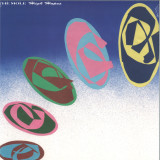
High Hopes - New album from the Mole.
High Hopes is 17 songs across 40 minutes on one slice of wax that, as advertised, sounds nothing like last month’s Ep, High Dreams. Here, rather than the long form dance form, is a continuation of the beat tape pacing from the last album, a collection of moments posing as ideas posing as a narrative stuffed with oddities and surprises that reward the close listen.
What’s heard on High Hopes is the Mole’s exploration of a love letter, from one person to a family, from the northern Pacific to the southern Atlantic, from a boy to a painted bird. Vancouver Island to Manantiales. The songs range from ambient sound bath and hip hop sludge, up to micro boogie and almost House before tumbling back down and forth again. Bubbling synths, MPCs swung out, samples chopped and chewed, bass and violins from Rick and Sophie, field recordings of birds and frogs and beaches, friends and family and fiestas. Did we mention the love ?! This album has got it all! Original collages from Antonio Carrau envelope this wax: jacket, sleeve and cookie. Antonio’s work is typified by playful combinations and bold statements about living in a embrace of analog and digital health. His co lages marry the corporeal world with an updated, digitalized age of reproduction, inducing feelings of gratitude for the simple everyday scenes we sometimes lose touch with when we forget to slow down. Good living, like breathing, requires inhaling as well as exhaling.
We can’t always produce content, make art, we must also pause, and listen. And enjoy. The Mole is joined by friends and colleagues on several songs included on High Hopes. Rick May plays bass on both Que Rico and album stand out GoinF4er. Sophie Trudeau (Godspeed You Black Emperor) plays and arranges violins on GoinF4er and Danuel Tate (Cobblestone Jazz) and Julz Chaz (Wagon Repair) both play Vibes and Emaxx throughout the album. Working with these incredible talents not only enriched this album, but fulfilled a long standing goal of the Mole’s; to work again with the musicians from whom he learned so much. People who helped inform the shape of Mole to come.
The Mole who was As High As The Sky. The Mole has been ‘recognized’ by the ‘global underground’ since his critically celebrated premiere album, As High As The Sky, but his earlier Eps (Wagon Repair, Philpot, Musique Risquee) got the attention of Top DJs, clubs, and festivals around the world first. His sound remains unique, fresh and deep: enjoying plays in a wide variety of spaces and places.
High Hopes is the Mole’s 5th solo album and his 2nd album for Circus Company (The River Widens) who have also proudly released two eps of Mole magic (Little Sunshine, High Dreams).
*Isn’t that too much time for one record? Short answer - No. Long answer - depends on the material. Due to the many quiet passages in the album, the groove spacing can be modulated and the needle can slow it’s progress towards the center/end resulting in longer sides with continued high gain and low distortion.
High Hopes - New album from the Mole.
High Hopes is 17 songs across 40 minutes on one slice of wax that, as advertised, sounds nothing like last month’s Ep, High Dreams. Here, rather than the long form dance form, is a continuation of the beat tape pacing from the last album, a collection of moments posing as ideas posing as a narrative stuffed with oddities and surprises that reward the close listen.
What’s heard on High Hopes is the Mole’s exploration of a love letter, from one person to a family, from the northern Pacific to the southern Atlantic, from a boy to a painted bird. Vancouver Island to Manantiales. The songs range from ambient sound bath and hip hop sludge, up to micro boogie and almost House before tumbling back down and forth again. Bubbling synths, MPCs swung out, samples chopped and chewed, bass and violins from Rick and Sophie, field recordings of birds and frogs and beaches, friends and family and fiestas. Did we mention the love ?! This album has got it all! Original collages from Antonio Carrau envelope this wax: jacket, sleeve and cookie. Antonio’s work is typified by playful combinations and bold statements about living in a embrace of analog and digital health. His co lages marry the corporeal world with an updated, digitalized age of reproduction, inducing feelings of gratitude for the simple everyday scenes we sometimes lose touch with when we forget to slow down. Good living, like breathing, requires inhaling as well as exhaling.
We can’t always produce content, make art, we must also pause, and listen. And enjoy. The Mole is joined by friends and colleagues on several songs included on High Hopes. Rick May plays bass on both Que Rico and album stand out GoinF4er. Sophie Trudeau (Godspeed You Black Emperor) plays and arranges violins on GoinF4er and Danuel Tate (Cobblestone Jazz) and Julz Chaz (Wagon Repair) both play Vibes and Emaxx throughout the album. Working with these incredible talents not only enriched this album, but fulfilled a long standing goal of the Mole’s; to work again with the musicians from whom he learned so much. People who helped inform the shape of Mole to come.
The Mole who was As High As The Sky. The Mole has been ‘recognized’ by the ‘global underground’ since his critically celebrated premiere album, As High As The Sky, but his earlier Eps (Wagon Repair, Philpot, Musique Risquee) got the attention of Top DJs, clubs, and festivals around the world first. His sound remains unique, fresh and deep: enjoying plays in a wide variety of spaces and places.
High Hopes is the Mole’s 5th solo album and his 2nd album for Circus Company (The River Widens) who have also proudly released two eps of Mole magic (Little Sunshine, High Dreams).
*Isn’t that too much time for one record? Short answer - No. Long answer - depends on the material. Due to the many quiet passages in the album, the groove spacing can be modulated and the needle can slow it’s progress towards the center/end resulting in longer sides with continued high gain and low distortion.
Mint Green Vinyl.[22,27 €]
Since first bonding over Slowdive at a Texas karaoke bar six years ago, musicians Uriel Avila and Jonathan Perez have grown trauma ray into Fort Worth's foremost flag bearer of crushing shoegaze. A five-piece rounded out by bassist Darren Baun, drummer Nicholas Bobotas, and guitarist Coleman Pruitt, the band's debut album, Chameleon, captures their evolving sound at an apex of majestic devastation. A fusion of downer hooks, gauzy melancholia, and bulldozer riffs, the album heaves and crashes across 50 minutes of stacked amplifier alchemy. Lyrically the songs trace similarly lofty and brooding terrain; Avila says "The theme is death. And a chameleon, like death, can shape-shift in and out our lives in different forms." Chameleon opens with "Ember," dreamy and distant, alternately anthemic and apocalyptic, defeated and deafening. Lead single "Bishop" perfectly encapsulates trauma ray's depth and dimension, ripping out of the gate with "the biggest, baddest, saddest wall of sound." Lyrics about being burnt at the stake and "tossed in the flame" float above a stop-start assault of precision distortion, eventually expanding into a lush, heavy, sorrowful end coda. "Spectre" is a mysterious, introspective dirge, envisioned as a "mellow, slowcore, Duster-thing," all feeling and heavy fuzz chords (with no lead guitar). Avila wrote it, "to be a hymnal" from the perspective of someone who won't let go - a ghost, an ex, a shadow self. Although the album is rich with subtleties, graceful lulls, and "breaths of air," the band's three guitar attack is its defining force, a power flexed to its peak on "Bardo." Perez's intentions were blunt: "I wanted to write a riff that was hard as fuck." The result is alternately mean and eerie, veering between noisy one string bends and surging headbang, mapping a middle ground between Unwound and early-Deftones. One of trauma ray's greatest gifts is their ability to make doomy, sledgehammer heaviness sound like an earworm, without production tricks or gimmicks: "Riff, verse, chorus, three guitar parts - that's all you need." This quality is particularly apparent on the title track, a churning slab of amplifier worship, swirling chords, and heavenly, defeated vocals about not belonging, shape-shifting, and death ("A twisted face / Void of attention / An empty space / In your reflection"). "U.S.D.D.O.S" closes the album, swaying across seven minutes of grey skied guitar and haunted voice, subtly thickening as it deepens. Feedback and shrapnel gradually begin raining down, like a satellite disintegrating in the atmosphere. Titled as an acronym after a poem by Chilean writer Roberto Bolaño that loosely translates to "a dream within a dream," the melody softens, smears, and then disappears, slowly swallowed by the gravity of eternal descent. Chameleon is a masterpiece of craft, balance, melody, lyricism, and gravity, flexing a fresh vision of loud-quiet-loud architectures and the vertigo depths of blasted harmonics. From Slowdive to Nothing, to Hum and beyond, the band absorb and expand on their influences into a rare and dedicated alchemy. trauma ray's cinematic tempest is a gathering storm only just taking flight.
Black Vinyl[21,22 €]
Since first bonding over Slowdive at a Texas karaoke bar six years ago, musicians Uriel Avila and Jonathan Perez have grown trauma ray into Fort Worth's foremost flag bearer of crushing shoegaze. A five-piece rounded out by bassist Darren Baun, drummer Nicholas Bobotas, and guitarist Coleman Pruitt, the band's debut album, Chameleon, captures their evolving sound at an apex of majestic devastation. A fusion of downer hooks, gauzy melancholia, and bulldozer riffs, the album heaves and crashes across 50 minutes of stacked amplifier alchemy. Lyrically the songs trace similarly lofty and brooding terrain; Avila says "The theme is death. And a chameleon, like death, can shape-shift in and out our lives in different forms." Chameleon opens with "Ember," dreamy and distant, alternately anthemic and apocalyptic, defeated and deafening. Lead single "Bishop" perfectly encapsulates trauma ray's depth and dimension, ripping out of the gate with "the biggest, baddest, saddest wall of sound." Lyrics about being burnt at the stake and "tossed in the flame" float above a stop-start assault of precision distortion, eventually expanding into a lush, heavy, sorrowful end coda. "Spectre" is a mysterious, introspective dirge, envisioned as a "mellow, slowcore, Duster-thing," all feeling and heavy fuzz chords (with no lead guitar). Avila wrote it, "to be a hymnal" from the perspective of someone who won't let go - a ghost, an ex, a shadow self. Although the album is rich with subtleties, graceful lulls, and "breaths of air," the band's three guitar attack is its defining force, a power flexed to its peak on "Bardo." Perez's intentions were blunt: "I wanted to write a riff that was hard as fuck." The result is alternately mean and eerie, veering between noisy one string bends and surging headbang, mapping a middle ground between Unwound and early-Deftones. One of trauma ray's greatest gifts is their ability to make doomy, sledgehammer heaviness sound like an earworm, without production tricks or gimmicks: "Riff, verse, chorus, three guitar parts - that's all you need." This quality is particularly apparent on the title track, a churning slab of amplifier worship, swirling chords, and heavenly, defeated vocals about not belonging, shape-shifting, and death ("A twisted face / Void of attention / An empty space / In your reflection"). "U.S.D.D.O.S" closes the album, swaying across seven minutes of grey skied guitar and haunted voice, subtly thickening as it deepens. Feedback and shrapnel gradually begin raining down, like a satellite disintegrating in the atmosphere. Titled as an acronym after a poem by Chilean writer Roberto Bolaño that loosely translates to "a dream within a dream," the melody softens, smears, and then disappears, slowly swallowed by the gravity of eternal descent. Chameleon is a masterpiece of craft, balance, melody, lyricism, and gravity, flexing a fresh vision of loud-quiet-loud architectures and the vertigo depths of blasted harmonics. From Slowdive to Nothing, to Hum and beyond, the band absorb and expand on their influences into a rare and dedicated alchemy. trauma ray's cinematic tempest is a gathering storm only just taking flight.
Amputechture Beneath the technical flash, the fury, the fearless creative brinkmanship of the first two Mars Volta albums lay a potent seam of the blues, an existential vexation that powered every twist and turn of Omar and Cedric’s imaginations. That mournful vibe would come to the surface of the group’s third full-length Amputechture, a simmering/blistering set that was unquestionably the group’s darkest yet. There was no overarching theme here, no interlinking concept binding the songs together, though Cedric concedes that, lyrically, the album was influenced “by a lot of stuff I was going through, a really bad break-up and a lot of other crazy stuff, and trying to put that feeling into the record.” But Amputechture – its name another of the late Jeremy Michael Ward’s invented words – was no downbeat bummer. Opener Vicarious Atonement might’ve been a deliciously gloomy, slow-burning thing, capturing Cedric in delirious duet with Omar’s swooning guitar lines, accompanied by squalling saxophone by Adrian Terrazas-Gonzales and dream-frequency fuckery by the group’s new sonic manipulator, former At The Drive- In member Paul Hinojos. But second track Tetragrammaton swiftly set pulses racing, an epic-in-miniature and containing more ideas within its 16 minutes than most bands manage over an entire career, its proggy, complex guitar figures tessellating in infinite configurations and converging as if conforming to mathematical formulae from another reality. The raw material Amputechture was hewn from started life on the road. Omar now travelled with his own mobile recording studio – a little Neve ten-channel tape recorder and an array of microphones – and was able to work on new ideas on tourbuses, in hotel rooms and during soundcheck (and, occasionally, after the show was done). After touring for Frances The Mute was complete, Omar relocated to Amsterdam, staying with his photographer friend Danielle Van Ark and her partner, Nils Post. It’s here that he demoed Amputechture, flying in engineer Jon DeBaun, drummer Jon Theodore and his brother, Chino, to work on these raw sketches. He later returned to Los Angeles, where the album was finally recorded. Omar ceded guitar duties to his dear friend and kindred spirit John Frusciante, instead assuming the role of musical director. “I wanted to hear the sound of the band,” he says. “I thought, I’ll be able to sit at the console, feel the air of the speakers moving, the unified sound of everything, and not feel distant from it. It was fun, but it was also challenging.” Part of Omar’s new method was to teach the musicians their parts only moments before the tapes rolled. “To keep things fresh, and to keep everyone on edge,” he says, before chuckling. “No, not on edge – on their toes. Amputechture would prove The Mars Volta’s most diverse set yet, drawing into the group’s tornado of influences moments of fiery jazz spirituality and esoteric folk introspection, finding space for passages of devastating subtlety and also their most fierce and full-on moments to date. The aforementioned Vicarious Atonement found its meditative mood echoed by Asilos Magdalena, an intimate, acoustic piece that invoked traditional Latin folk music, as Cedric sang in Spanish a sorrowful tale of a lost soul’s quest for sanctuary within a Magdalen Asylum, a refuge set up by the Catholic church for “fallen women”. The shadowy, sinister closer El Ciervo Vulnerado, meanwhile, tapped into the darker side of spiritual jazz to further explore the album’s themes of redemption and religious myth and magick. Elsewhere, the interplay between guitar and clarinet on Viscera Eyes created complex, unsettling counter-melodies, while the coiling, ornate Meccamputechture – Cedric’s wild fusion of sacred texts, occultism and dystopian science fiction – proved a great showcase for Ikey Owens’ swarming, infernal organ runs, in concert with Frusciante’s arcane guitar-play. But it was Day Of The Baphomets that would prove Amputechture’s most ambitious and most defining epic. Cedric’s lyrics tore into the hypocrisy of religious cant and myths of sin and punishment. “I wanted to make a song that was like the movie The Believers, where this cabal stole kids and did some occult shit with them,” he explains. “But I wanted it to be like, ‘What if the people you hire to do jobs you don’t wanna do rise up one day and then pull some shit like that?’ Like it was the guerrilla warfare, them taking over – wouldn’t that be some fucked up shit? And the music just lent itself to that – the big intro, the bass solo, and all of the ruckus that occurs.” That ruckus was some of the most thrilling Mars Volta music yet, as Omar directed his musicians to rumble through fiery modes of wild tribal groove, ransack-the-palaces riot- rock and supreme progressive experimentalism. Amputechture, then, is the sound of The Mars Volta in imperial mode: fearless, insatiable, unstoppable.
To commemorate the 30th anniversary of Therapy?'s Troublegum album , this 2LP set contains the original album pressed on 180g silver vinyl plus a further 14 tracks rounding up B-sides and bonus tracks of the era pressed on 180g lavender vinyl. By the time Therapy? released Troublegum in 1994 they were already well established, but it was the first time many had encountered the group's intensely melodic blend of hard rock and indie, an arresting combination of old and new, striking in its immediacy. Formed by schoolfriends in Larne, Northern Ireland, Therapy? consistently pushed the rock trio to its limits, often saying that their use of feedback was their fourth instrument. Singer, guitarist and writer Andy Cairns, bassist Michael McKeegan and drummer Fyfe Ewing had been playing together since 1989, and were signed to indie label Wiiija the following year on the strength of their live reputation. After two albums with Wiiija, they were signed to A&M Records, and their 1992 album, Nurse, reached the UK Top 40. The group paired with Mission producer Chris Sheldon and went to Chipping Norton Studios to record a follow-up. The results were stunning. Lead single "Screamager" (on the Shortsharpshock EP) reached the UK Top 10 in March 1993; follow-up "Turn" made the Top 20. By the time Troublegum was released in February 1994, it contained both singles, plus "Nowhere" and "Trigger Inside", further hits from the album. Troublegum is warm and powerful, showing that grunge was not just the preserve of bands from the western seaboard of the US. Mixed without any discernible gaps between tracks, the album offers 45 minutes of attack. Amid the originals, the band's post punk roots are shown by their storming cover of Isolation by Joy Division. Widely acclaimed, Troublegum reached No 5 in the UK charts, went Gold and was nominated for the Mercury Music Prize. It sounds as fresh today as it did in 1994.
- Knives
- Screamager
- Hellbelly
- Stop It You're Killing Me
- Nowhere
- Die Laughing
- Unbeliever
- Trigger Inside
- Lunacy Booth
- Isolation
- Turn
- Femtex
- Unrequited
- Brainsaw
- Pantopon Rose
- Breaking The Law
- C C Rider
- Evil Elvis (The Lost Demo)
- Nice 'N' Sleazy
- Reuters
- Tatty Seaside Town
- Auto Surgery
- Totally Random Man
- Accelerator
- Speedball
- Bloody Blue
- Neck Freak (New Version)
- Opal Mantra
Limited Caramel Beige180g Vinyl[35,71 €]
To commemorate the 30th anniversary of Therapy?'s Troublegum album , this 2LP set contains the original album pressed on 180g silver vinyl plus a further 14 tracks rounding up B-sides and bonus tracks of the era pressed on 180g lavender vinyl. By the time Therapy? released Troublegum in 1994 they were already well established, but it was the first time many had encountered the group's intensely melodic blend of hard rock and indie, an arresting combination of old and new, striking in its immediacy. Formed by schoolfriends in Larne, Northern Ireland, Therapy? consistently pushed the rock trio to its limits, often saying that their use of feedback was their fourth instrument. Singer, guitarist and writer Andy Cairns, bassist Michael McKeegan and drummer Fyfe Ewing had been playing together since 1989, and were signed to indie label Wiiija the following year on the strength of their live reputation. After two albums with Wiiija, they were signed to A&M Records, and their 1992 album, Nurse, reached the UK Top 40. The group paired with Mission producer Chris Sheldon and went to Chipping Norton Studios to record a follow-up. The results were stunning. Lead single "Screamager" (on the Shortsharpshock EP) reached the UK Top 10 in March 1993; follow-up "Turn" made the Top 20. By the time Troublegum was released in February 1994, it contained both singles, plus "Nowhere" and "Trigger Inside", further hits from the album. Troublegum is warm and powerful, showing that grunge was not just the preserve of bands from the western seaboard of the US. Mixed without any discernible gaps between tracks, the album offers 45 minutes of attack. Amid the originals, the band's post punk roots are shown by their storming cover of Isolation by Joy Division. Widely acclaimed, Troublegum reached No 5 in the UK charts, went Gold and was nominated for the Mercury Music Prize. It sounds as fresh today as it did in 1994.
Calm's superb Before album is the gift that keeps on giving as Hell Yeah serves up a collection of the best remixes from it. Willie Graff, Gallo and Aura Safari all step up on a fresh 12" that lands this summer.
Before arrived on double vinyl in 2022 after a CD-only release in Japan in 2021. Since then it has become a Balearic mainstay and go-to record for lovers of lavish downtempo sounds. Now, remixes of three tracks from it all appear on this one record with Ibirican-American Willie Graff going first. He is a deep house don who has held several key residencies around the world while dropping his sublime sounds on the likes of Leng, Music For Dreams and many more. His remix of 'I Love You' is a gloriously horizontal one with blissful piano keys rippling over the bubbly drums and bass. Yearning reed melodies add an emotional romantic edge to make this a standout in any setting. Then comes Gallo, the Balearic Gabba Sound System member and resident at Berlin Balearic nightspot Buena Onda. His 'Tropical Hinterhof' remix of 'I Love You' is expertly exotic and soothing as mellifluous keys rain down over a groove as smooth as silk. It's a heart-achingly beautiful sound that will make for truly special moments on the dance floor.
Italian collective Aura Safari then offers two different remixes. They are master musicians who have served up a superb double album Islands Dreams here in late 2023 where they showcased their escapist blend of dub, jazz, Afro-cosmic, Balearica and boogie. First up, 'Feel It' (Aura Safari Desert mix) is six minutes of oriental melody over loose drums. There's a playful feel to the dancing piano keys and richness in the percussion that makes this one a sophisticated sound for both early evening warm-ups or moments of late-night reflection. 'Kunpoo' (Aura Safari Daydream mix) has a nineties feel with its gentle breaks, hypnotic string loops, and sustained chords. They break over you in gentle rays of earth and euphoria to ensure utterly blissed-out results.
These four versions all bring sophisticated dance floor energy to the timeless originals.
Dark Entries again shines a spotlight on bathhouse disco don Patrick Cowley with a newly remastered release of Kickin’ In. Although Cowley tragically passed from AIDS-related illness in 1982, he left an extensive archive of unreleased tapes, many of which Dark Entries has had the honor of releasing. While working as a lighting technician at The City, SF’s disco cabaret, Cowley saw rising star Frank Loverde perform. Cowley asked Loverde to contribute vocals to some material in progress, and Frank, Linda Imperial, and Peggy Gibbons joined Cowley in the studio. The resulting songs included “Kickin’ In,” a 9-minute cybernetic disco stormer that taps into the essence of Cowley’s hi-NRG sound: equal parts spaced out and zoned in on the dancefloor. In May 1978 Cowley joined Loverde on stage at The City to perform “Kickin’ In” as they opened for disco diva Sylvester.
“Kickin’ In” was initially released in 2015 via Honey Soundsystem who found the tapes in the basement of Megatone Records owner John Hedges. This newly remastered version was made possible due to the discovery of the original multi-track recordings of "Kickin’ In," allowing for a fresh mixdown by Jim Hopkins as well as the creation of a new instrumental version. Also included are two impeccably sleazy Cowley jams recorded in 1980, “Thief of Love” and “Make It Come Loose.” Cowley narrates excerpts from his erotic journals on these raunchy slow-burners, capturing the vibe of SF’s leather bars and backrooms. “Thief of Love” features frequent Cowley collaborator Paul Parker on background vocals. This reissue of Kickin’ In includes features an illustration by Gwenaël Rattke that originally appeared Cowley’s erotic journal, Mechanical Fantasy Box, as well as a postcard with lyrics. “Patrick parted the veil and entered a dark world of forbidden vices, wondrous musical panoramas and bold, strident, hopeful possibilities. Patrick brought the future to us and laid it at our feet.” – David Diebold, Tribal Rites
repressed!
Kerri Chandler delivers ‘Lost & Found Vol.1’ this March, a four-track collection of revisited, unreleased archive cuts, including Kerri’s own Grampa, Calvin Reed Sr. as a featuring artist on the opening track.
New Jersey’s Kerri Chandler has been at the forefront of house music since the beginning of his career in the early 90’s. Over the past three decades he’s released an extensive back catalogue of material including several albums on his own Madhouse and Kaoz Theory imprints as well as the likes of DJ Deep’s Deeply Rooted, Apollonia, Jerome Sydenham’s Ibadan and Watergate Records.
Here we see Kerri dig up some never before heard archived material from the 90’s and early 2000’s for this four-track EP. Up first is ‘What Will We Do ft Grampa’, featuring spoken word and vocal lines from Kerri’s Grandfather Calvin Reed St. atop gritty swinging drums, organ lines and rounded subs. ‘Tonight’ follows and tips focus over to airy chord sequences, choppy bass notes, dreamy arpeggio lines and dynamic drums.
‘Into The Night’ opens the b-side next, bringing a raw bass hook, tension building strings and vocal chants of the track’s title into the forefront while bumpy stripped-back drums keep things driving. ‘This and That’ then rounds out the release, bringing twitchy resonant synths and phaser sweeps into the mix alongside stuttering drum programming for a funk-infused, loop driven eight minute workout.
DJ Feedback:
Honey Dijon - Classic
Kerri still has his A Game intact! Great Ep!
Laurent Garnier - Kompakt, MCDE, F Communications
PURE LOOOOOOOOOVE
Jimpster - Freerange, Delusions Of Grandeur
Kerri!!!! Classic tracks with that inimitable groove and production which makes him such an icon. Big ups!!
Terry Farley - Junior Boys Own
BACK 2 DA RAW
Fouk - Heist, House of Disco, Razor N Tape
Super hard to pick a fav as each track has its own vibe! LOVE THIS <3
Enzo Siragusa - Fuse London, InFuse
Quality as always from Kerri!
Harvey Sutherland - MCDE, PPU, This Thing
always.
Roy Davis Jnr
Full support.
Jason Kendig Honey Sound System
Always fire tracks from kerri!
DJ Bone - Subject, Metroplex
Love the entire release!
Politics of Dancing (Guillaume & David)
one love for Kerry as always :)
Joyce Muniz - Exploited Ghetto, 20:20 Vision
Nice Ep!
Massimiliano Pagliara - Panorama Bar, Ostgut Ton
groovy!
Shadow Child
king.
Tobi Neumann - What Came First
Brutally good House Music. This one I wanna have on vinyl. Thanks master Chandler for the music!
Chrissy - Chiwax, The Nite Owl Diner
Very excited for this one
Halo Varga - All Inn Music, Surface, Inmotion Music
Kerri is GOD
Mutiny - Azuli, Skint
Kerri on that deep classic vibe..Love
Alinka - Permanent Vacation, Twirl!
Brilliant as always
Diz - Robsoul
90's freshness!!!
Fish Go Deep - Innervisions, Defected
The long-awaited follow up to She's Crazy! Beautifully done. The other tracks also slamming, packed with dancefloor drive and emotion. Can't wait to play loud.
Art Of Tones, Llorca
Superb EP !
Lupe
The Grampa one, instant cult hit, very endearing! Great stuff
BD1982 - Diskotopia, Tokyo
Classic material from an absolute legend
Johannes Albert - Need Want, Mirau, Berlin Bass
vibes for days!
Joseph G. Bendavid
kerri can't fail, always bomb tracks
Terry Grant
Stone. Cold. Legend.
Harri - Sub Club
Lovely
Severino - Horse Meat Disco
oh yes quality
Perhaps one of the most exciting and anticipated projects in the world of heavy instrumental music is Parlor Greens, a fresh organ trio on Colerine Records! You could say that Parlor Greens are greater than the sum of their parts.. however, the individual parts are simply stellar on their own. Tim Carman (GA-20) on drums, Jimmy James (True Loves, formerly Delvon Lamar Organ Trio) on guitar, and Adam Scone (Scone Cash Players, The Sugarman 3) on organ. Parlor Greens started off as an idea before it even had a name. Carman had been chatting with Colemine label boss Terry Cole about their shared love for organ combo records of yesterday on labels like Blue Note and Prestige. Cole said he'd love to have an organ trio be the first project at the label's new studio, Portage Lounge, located in Loveland, Ohio, So when Carman tapped James and Scone for the session, the stage was set. Carman and Cole had started work a day early to dial in the drum sound, so when the rest of this murderer's row arrived they hit the ground running. It was instant chemistry, Within the first ten minutes of everyone plugging in, a song was written and recorded, "West Memphis". And over the next three days, these three maestros conducted a beautiful and soulful symphony straight to tape. As natural and fun as three old friends getting together after a long absence, only this was the first time they had written and performed together. True magic. So this is the result of that session. Eleven outs. Ten originals. Two sides. All killer, no filler. Straight to the old reliable Tascam 3BB tape machine, mixed up nice and dirty for your enjoyment. Parlor Greens are proud to present their debut long player, in Green / We Dream.