
- A1: Meissa
- A2: Lyra
- A3: Tarazed
- A4: Lupus
- B1: Ankaa
- B2: Altair
- B3: Terebellum
Disponible
En el almacen y preparando para el envío
Ültimo hace: 10 Meses
46,64 €
En el almacen y preparando para el envío

En el almacen y preparando para el envío

debe ser publicado en 21.11.2025

debe ser publicado en 04.07.2025

debe ser publicado en 04.07.2025

debe ser publicado en 16.06.2025

Late Night Tales welcomes back the cult figure and ultimate musical connoisseur, Bill Brewster to compile his second episode of the curated compilation series 'After Dark'. An obscure and timeless DJled journey which begins somewhere out in the near ocean, the waves are rolling and lolling gently into the shore, while a full moon shines on the surface. It's only faint, but somewhere nearby is the sound of bass, pulsing slowly, almost in time to the waves. Welcome back to 'After Dark: Nightshift'. Once again Bill Brewster comes armed with a sensitivity and sense of occasion that few other DJs possess. Delivering another batch of slow cooked musical stews, making sure the tempo stays nice and steady and the emphasis is on funk, soul, grits and corn fried chicken, Brewster has done so much digging, Late Night Tales had to hire a forklift truck and tractor. Among the unreleased nuggets, there's the Fernando mix of The Detachments; inordinate excitement about Gino Fontaine, a tune spotted a year ago but has languished in Andy Meecham's Stafford catacombs ever since. Also unearthed are some hitherto secret recordings between Robert Fripp and The Grid, and there are also some proper club faves here, too, like the daft but brilliant 'Mopedbart' by Hubbabubbaklubb and the luminous 'Boutade' by Mugwump, as well as killer oldies like Salsoul Invention and General Lee
Haga su pedido ahora y le encargaremos el artículo en nuestro proveedor.

Haga su pedido ahora y le encargaremos el artículo en nuestro proveedor.
Repress.
An incredibly important but left behind album from 1994 originally on the Concrete label and now fully remastered & reissued. Three piece Opik, which consisted of Murray Clark, Chris Deverell and Robert Ellerby delivered some of the most bustling, pulsating, instrumental electronic music of the 90’s. Driven along by forceful emotional basslines coupled with melodic synths and the occasional epic vocal sample. Think LFO, think Orbital, think Leftfield, think Underworld and you are nearly there. Music truly ahead of its time.
En el almacen y preparando para el envío
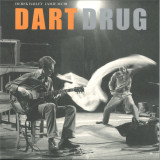
Percussionist Jamie Muir was a member of King Crimson during the recording of Larks' Tongues In Aspic, in 1973. Staying less than a year with Robert Fripp, the Scot had already cut his teeth with another master guitarist, Derek Bailey, as part of the Music Improvisation Company, along with Evan Parker, Hugh Davies and Christine Jeffrey, whose eponymous 1970 album was one of the first releases on ECM. Muir and Bailey recorded Dart Drug eleven years later, in 1981.There's no shortage of great percussionists in the brief history of free improvised music but on the strength of Dart Drug alone Jamie Muir deserves a place at High Table. Unlike for example Han Bennink and John Stevens, though, you can't hear echoes of any particular jazz drummer in Muir's playing, even if he has expressed appreciation for Milford Graves (who himself sounded like nobody else who'd come before him).What on earth did Muir's kit consist of Some instruments are clearly identifiable (bells, gongs, chimes, woodblocks); others could be... well, anything. Old suitcases thwacked with rolled up newspapers Tin cans and hubcaps inside a washing machine Who cares It sounds terrific - but if you're the kind of person who faints at the sound of nails scraping a blackboard, you might want to nip out and put the kettle on towards the end of the title track.Dart Drug is consistently thrilling, and often very amusing - but it's certainly not easy listening. In music we talk about playing with other musicians, whereas in sport you play against another opponent (or with your team against another team). Why not play against in music, too That's precisely what happens very often in improvised music, and Bailey was particularly good at it. How can a humble acoustic guitar hope to compete with a Muir in full flight Sometimes Bailey's content to sit on those open strings, teasing out yet another exquisite Webernian constellation of ringing harmonics and wait for the dust to settle in Muir's junkyard, but elsewhere he sets off into uncharted territory himself.'The way to discover the undiscovered in performing terms is to immediately reject all situations as you identify them (the cloud of unknowing) - which is to give music a future.' Bailey evidently concurred with this spoken statement by Muir, including it in his book Improvisation.Derek Bailey is no longer with us, of course, and Muir gave up performing music back in 1989. All the more reason for seeking out this magnificent, wild album.
En el almacen y preparando para el envío

Remastered limited edition double vinyl with double-sided screenprinted poster-cover (sleeve folds out to be one huge poster). A real collectors item!
When Off Off came out around June 1984, one couldn’t speak of an independent music scene in Portugal. Warm Records’ vague existence didn’t have any impact and Dansa do Som’s inaugural release appeared only in December. 10 years after the revolution, after two IMF interventions, a lot of political instability (not to say turmoil, in the first couple of years) and the natural excesses of a sudden burst of freedom, the Portuguese consumer had more choices but a generally poor standard of living. There was no entrepreneurial culture and serious second thoughts about investing private money in risky ventures.
After many complaints about the whole music scene (institutions, critics and record label executives, popular and classical music alike), something that would continue well beyond the end of the decade, Telectu decided to finance, record, produce, release and sell an album with complete independence from outside structures. Their karmic reward was profit. According to Vítor Rua, Off Off was the only album fully payed by the duo and the only one that really payed off. Not an easy accomplishment for a double LP housed in a large (also double-sided) screenprint with complicated cuts and folds. The artwork was conceived by António Palolo, a friend and multidisciplinary artist. It was based on a collage of heavily saturated and xeroxed polaroids framed in shocking pink and green. Palolo was considered the third member of Telectu, regularly producing slides, video and other visual support for their shows. The inspiration for the type of cover came from GRM’s Gramme series.
Off Off is divided in four distinct sides, each one corresponding to a “theme” or “function” related to Telectu’s manifold artistic interests and interactions. The titles are also gateways to influences and a small portion of Portuguese cultural life:
- Side 1 / “Diagonale” is dedicated to Egídio Álvaro, art critic and gallery director (he opened Diagonale in Paris). Performance art was arguably his main artistic concern over the years, so the music on this side is suggested for use by one or more performers in live or playback situations. The three tracks segue into each other, linked by a synth arpeggio much in the same way as Telectu’s previous “Belzebu” álbum (1983);
- Side 2 / “Anarké” is dedicated to the composer Filipe Pires, one of Jorge Lima Barreto’s recurring invocations when asked about worthwhile contemporary music in Portugal. It is subtitled “concert music”, proposing «a new form of listening». Three tracks also, and these are separated by “clap interludes”, which basically consisted in the following: JLB and VR each had a pair of headphones on, and they clapped their hands according to the rhythm of the music each one was listening. Both musicians were interacting with a different Steve Reich piece: Vítor with “Music for Mallet Instruments”, Jorge with “Six Pianos”. The result is disjointed clapping, an awkwardly deliberate celebration of their own music. Telectu applauded themselves.
- Side 3 / “Cornucópia” is subtitled “music for theatre” and dedicated to Luís Miguel Cintra and Luís Lima Barreto (JLB’s brother), both connected to the Cornucópia theatre company. The side consists of several short pieces previously used as interludes in the Cornucópia staging of “Mariana Espera Casamento” (1983). Field recordings, mood pieces, ambience and a numeric poem (“Soneto Soma 14x”, by E.M. de Melo e Castro) read by João Perry, a quite well-known stage actor. His voice is treated with a flanger effect;
- Side 4 / “Palolo” is “video music”. It’s a one-take mix recorded from cassette sources (Telectu studio experiences) and done live while watching António Palolo’s Om film (1978) projected on the living room wall. It’s a deep, immersive, quasi-mystical 20-minute piece perfectly suiting the meditative, abstract, fluid images created by Palolo by mixing paint and water inside a bathtub. One imagines the Cosmos, hardly suspecting the technique. The film is 90 minutes long, so the music on the LP is of course edited.
The six titles on sides 1 and 2 evoke demons, all of them with conflicting symbolism, since it varies from culture to culture, religion to religion. No explanation is given and Vítor Rua has no idea where this imagery comes from. During virtually the whole stretch of the 1980s, Jorge was the one in charge of titles and concepts, and Vítor didn’t bother too much even reading the liner notes :) In any case, when you synchronize the listening experience with the imagery, a powerful impression emerges, a feeling of being in the presence of these entities while placing yourself inside the sonic narrative.
Off Off is undoubtedly a seminal album in the history of electronic music, as much Heldon as Fripp & Eno, jazz and American minimalism, cosmic out-thereness, mantric miniatures. Telectu at the height of their powers, still very early on, delivering an album-manifesto advocating intermedia art and the fierce independence of Portuguese musicians «from the scum of capitalist music industry monopolies. It’s a path to follow, albeit one that requires enduring hardships and retaliation from music industry gangsters.» Despite a few journalists deemed «capable of being free», the media are «enslaved by the dominant and fascist imbecility of the speculators of light music.» Off Off is addressed to those journalists «and to an audience angry at the cultural misery imposed upon us ..., certain that this music will open new horizons of musical pleasure in the conception of Portuguese avant-garde music, and in the open consciousness of us all. OFF OFF repeats Freedom.»
Those two words are a direct lift from Alberto Arbasino’s 1968 book Off Off, the basis of which is a critical analysis of Theodor Adorno’s and Dwight MacDonald’s ideas concerning the stratification of culture in different levels (high, mid and low) and the pervasiveness of mass culture in the form of a culture industry. In very simplistic terms, and that is precisely the point that inspired Jorge, Arbasino argued that it was possible and desirable to effect a revolution from below, cultivating alternative circuits completely cut-off from what he termed the in-in reality. Telectu’s record was a deliberate demonstration that it could be done, displaying Freedom in the face of all the gatekeepers and other human obstacles.
debe ser publicado en 18.09.2026

Toyah’s 1991 solo album Ophelia's Shadow is issued on limited edition picture disc vinyl for the first time ever.
The picture disc features colour images on each side of the vinyl and is housed in special die-cut vinyl outer sleeves containing previously unseen colour photography from the album shoot.
A personal favourite album of her catalogue, Toyah confirms: “Above all, this is the one album I have made that truly represents me. I’m fiercely proud of it. Ophelia’s Shadow is not just a record, it’s a reflection of who I was, who I am, and who I continue to become. It’s the sound of resilience, reinvention, and raw truth.”
The album features a band line-up including Trey Gunn on stick, Paul Beavis on drums and Tony Geballe on guitar. Two tracks, Brilliant Day and Lords Of The Never Known feature Robert Fripp on guitar and were originally played live by Sunday All Over The World, the band Toyah & Robert Fripp toured and recorded with in the late 1980s.
debe ser publicado en 21.11.2025

Following the success of Highly Refined Pirates' forward-thinking guitar gymnastics and Menos El Oso's groundbreaking glitch rock, Seattle's premier pop revisionists Minus The Bear dug into some of rock music's most ostentatious years for inspiration for their 2007 album, Planet of Ice. The title alone conjures images of Yes's Relayer album art, and the influence of the elder statesmen's symphonic scope can be felt throughout Planet of Ice's lush and intricate arrangements. You can also hear the band channel the ominous instrumental interplay of Lamb-era Genesis on "Dr. L'Ling", the deceptively savvy musicianship and pristine production of Steely Dan on "White Mystery", and the tightrope walk between ethereal space and pre-metal riffage of Pink Floyd's "Echoes" on "Lotus". Not that Minus The Bear completely abandoned their earlier style_elements of Menos El Oso's sample-driven technique can be heard on the lead single "Knights". But the heart of the song ultimately belongs to the haunting Fripp-esque guitar lines spliced between verses. After being out of print on record since 2010, Suicide Squeeze is proud to reintroduce Planet of Ice's creative marriage of classic motifs and modern musical wizardry with a vinyl remaster courtesy of Bernie Grundman.
debe ser publicado en 01.11.2025

Gone to Earth ist das dritte Soloalbum von David Sylvian, ursprünglich erschienen am 1. September 1986. Das Doppelalbum folgte auf Brilliant Trees und erreichte Platz 24 der UK Album Charts.
Die zwei LPs bieten einen besonderen Kontrast: Eine Seite mit experimentellen Rock-Songs und Gesang, die andere rein instrumental und ambient. Gastmusiker sind u. a. Robert Fripp (Co-Autor von drei Songs) und Bill Nelson (Co-Autor von einem Song).
Diese Neuauflage erscheint als Corona White, Brown Opaque Black Vinyl und basiert auf dem neuesten Remaster.
Haga su pedido ahora y le encargaremos el artículo en nuestro proveedor.

MEMOTONE, aka Will Yates, has announced details of a new 12-track album, smallest things, set for release on World of Echo on 1 August 2025 on vinyl and digitally.
The album launches today with first track, ‘Time Is Away Theme’, a live favourite that is finally available on album. Watch the video HERE Talking about the release, Will has said, “Staring at a square inch of neglected concrete, I recognise the beauty of existence. Quietly hysterical. While humanitarian catastrophes bubble across the planet, the tides remain in constant and disinterested motion. Your money is worth less than the dusty moss that powders this pavement.
It's certainly not worth a life. We are the smallest things, along with everything else." Will Yates has made music as Memotone since 2007. He operates in the tradition of what Robert Fripp has called 'a small, independent, mobile, and intelligent unit.' If you book him, he will come. When he arrives, he will have everything he needs to make his complex, engaging music: a clarinet, a guitar, synths, samplers and pedals, quickly unpacked in the corner of a club, gallery or village hall. Starting small, he will build layer upon layer of melody, accompanying himself and cutting across himself, creating a music that avoids cliche and moves beyond easy description. His recordings have followed the same trajectory. Moving quickly, he has released fifteen or so albums across various labels (including Trilogy Tapes, Discrepant, Soda Gong). Taken together, these recordings are the sound of a skilled, inventive composer pushing at the edges of what he wants to listen to himself. It is possible to hear a variety ofinfluences in his music: folk and jazz forms, the textural inventiveness of British DI electronica and Chicago post-rock and the blurred sci-fi brass of Jon Hassell are all discernible. But mostly, Will's work seems to stem from a constant drift between long hours in his home studio, and time spent outside in the woods and hills around his home in Wales.
Listening to the album, lushness creeps in at the edges, tiny green shoots appear on what might at first appear to be bare soil. smallest things sheds the skin of Will's previous recordings, removing the electronics and the looping and layering of previous work, to create something almost entirely acoustic. But don't be fooled into imagining music that's folksy, pastoral or twee. Opening track 'I Could See the Smallest Things' is a statement of intent. Widely spaced guitar is underpinned by earthy cello and sleepwalking clarinet, making a gorgeous threadbare pattern, which recalls a Morton Feldman miniature or a Morandi still life.
Beyond the skill involved and the years of self-taught music making that have gone into putting this record together, it is Will's close, careful attention and his talent for existing, observing and creating in the moment that make his work special. Memotone will perform at World of Echo’s annual birthday celebration on 8 Nov Expected Music, when they take over Walthamstow Trades Hall for an inter-genre, day-long investigation into some of the more outré manifestations of the contemporary worldwide underground.
Haga su pedido ahora y le encargaremos el artículo en nuestro proveedor.

With Vermilion Hours, Melaine Dalibert offers a condensed rereading of his Musique pour le lever du jour, still exploring minimal variations and subtle piano resonances. This new version, enriched by David Sylvian's discreet electronic textures, retains the atmospheric magic of the original while offering a new density. Sylvian, best known as the singer of Japan, is also an important figure in ambient music, collaborating with Czukay, Hassell and Sakamoto. Their collaboration, born of a sincere artistic affinity, acts here as a transmission between generations. The two tracks on the album - Musique pour le lever du jour and Arabesque - evoke a soundscape where each note is reflected and diffracted infinitely. The electronic work acts like a halo, a vibrant aura. Dalibert speaks of a desire to humanize his theoretical processes, to touch through the organic. Like a Klee painting, each stratum of sound builds depth. This is, indeed, "landscape music," where, if you listen closely, you might hear birds singing in the background. And that is the true essence of these suspended harmonies, these vermilion hours-which transport us, as only the contemplation of nature can, into another space-time, a sonic bath that is also a renewal of the senses. Since his career with Japan began in 1974, David Sylvian has explored a wide range of musical territories, collaborating with the likes of Robert Fripp, Jon Hassell, Readymade FC and Ryuichi Sakamoto - venturing as far as ambient music, which he further develops here in tandem with Melaine Dalibert. While continuing to teach at the Rennes Conservatoire, Melaine Dalibert regularly releases albums on various labels and performs both his own works and those of other composers - most recently, a reworking of Keith Jarrett's Köln Concert. He also co-curates the Autres Mesures festival. The two pieces forming Vermilion Hours feel like transcending the generations. Between Melaine Dalibert (born in 1979) and David Sylvian (1958) lies the same generational gap as between Sylvian and Czukay (1938-2017) or Hassell (1937-2021). The CD versions adds two edit versions of both long tracks.
debe ser publicado en 15.08.2025
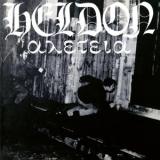
Schon bevor Richard Pinhas Anfang der 70er begann, Musik zu machen, war er Fan von King Crimson. Bis heute hat ihn die Musik der britischen Band nicht losgelassen, aber am größten war deren Einfluss sicherlich ganz am Anfang. Auf dem zweiten Heldon-Album "Allez-Teia" wird das besonders deutlich. Es erschien 1975 auf Pinhas" eigenem Label Disjuncta. Der Eröffnungssong, eine schwebende Mischung aus Mellotronklängen und einer verwischten Gitarre, trägt den Titel "In The Wake Of King Fripp". Diese doppelte Anspielung bezieht sich einerseits auf den Bandgitarristen Robert Fripp und andererseits auf "In The Wake Of Poseidon", das zweite King-Crimson-Album. Das meditative "Omar Diop Blondin" mit seinen frei schwebenden Tönen über einer repetitiven Gitarrenfigur ist ausdrücklich Brian Eno und Fripp gewidmet. Ebenfalls großen Einfluss auf Pinhas übte Robert Wyatt von Soft Machine aus. Trotzdem ist "Allez-Teia" kein Tribut-Album. Die Stücke, die Pinhas zusammen mit seinem Partner Georges Grunblatt erarbeitete, erscheinen auf den ersten Blick freudig-schön, tragen jedoch alle eine angespannte Unterströmung in sich. Sie bilden ein Wechselspiel aus federleichter Akustikgitarre, Mellotron-Teppichen, Fuzz-Sounds und schweren, sphärischen Synthesizer-Klängen.
debe ser publicado en 01.08.2025

Der britische Synth-Zauberer James Holden und der polnische Klarinetten-Guru Waclaw Zimpel (Saagara, Shackleton) setzen ihre fruchtbare Zusammenarbeit mit dem glückseligen Eskapismus ihres grossartigen Albumdebüts fort: "The Universe Will Take Care Of You" ist ein zutiefst emotionales, warmes und flauschiges Vergnügen. Reiche Texturen und eine betörende Klangpalette bewegen sich frei zwischen idyllischen Pastoralen, eindringlichen Arpeggios und schimmernder Euphorie. Die spielerisch-experimentelle Herangehensweise von Krautrock-Vorfahren wie Harmonia, Cluster oder Eno & Fripp wird aufgegriffen, um ihren tiefsten Improvisationsdrang zu erforschen. Das Ergebnis ist die freudige Konvergenz zweier gleichgesinnter Meister ihres Fachs, die Violine, Schlagzeug, Lap-Steel-Gitarre und die indische Doppelrohr-Algoza-Flöte mit gewohnt-modularem Synthesizer und Klarinette verbinden.
180g White Vinyl LP.
Haga su pedido ahora y le encargaremos el artículo en nuestro proveedor.

Sunset edition - 300 copies
Driving is Sam Wilkes’ Indie Rock record. Iit is the first release on Wilkes Records, an imprint borne of the artist’s emergent need to self-release. The songs presented here exist comfortably within the ever-expanding Wilkesian cosmos, characterized as they are by virtuosity, torqued experimentalism, and collaboration with a range of talented musicians. But Driving’s influences, its sincerity, and its allegiance to a certain pop sensibility reflects a departure for an artist who has primarily staked his claim within the experimental jazz idiom.
Take the first track, “Folk Home,” which inaugurates the album’s fecundity—a bright, green, humid, summer feel. A swirling, freakout coda of reversed vocals gives way, in no short order, to a caterwaul of flute work that conjures Van Morrison’s (in)famous Astral Weeks sessions. Standing beside Morrison, the usual suspects are all present, if somewhat abstractedly. Dylan, The Dead, Joni, the Fab Four. Wilkes has developed a reputation as an experimental jazz luminary, but his deep affinity for the pop/rock/folk idiom of the latter twentieth century rings clear throughout Driving. More so than any Wilkes release to date, Driving is a collection guided by and dedicated to the man’s attention to songcraft.
Written and recorded during a period of rain-damage induced renter’s itinerance (and the attendant desire to produce a kind of therapeutic, self-soothing, home-feeling music), Driving loosely charts the trajectory/experience of “a protagonist,” both Wilkes and not, “who has figured out how to live an enlightened and fulfilled life, but is unable to do so because he thinks about it too much.” This friction is surely relatable — a symptom of our compulsively self-aware present. But Wilkes avoids the obvious pitfalls of public hand-wringing. Rather, Driving’s nine tracks evince a genuine, and mature searching-ness, both sonically and lyrically. The ending refrain of “Own” serves like something close to a thesis— “Letting go // isn’t a concept // it’s an action.” In an attempt to beat back ego, hyper-cogitation, language itself, Wilkes arrives at an axiom that feels so true and familiar, you’d swear you’d heard it one hundred times before.
Driving’s final third is, fittingly, its most emotive and cathartic. Tracks seven and eight, “Again, Again” and “And Again,” form a diptych, joined most obviously by the jangling, recursive grooves of guitarist Daryl Johns. Wilkes is said to have encouraged Johns to go “full Lindsey Buckingham” (clearly a welcome and resonant prompt), but one also catches stray Knopfler vibes, some intermittent Fripp, and (perhaps more-so in tone than technique) the spirit of DIY prophet and jangling man himself, Martin Newell (the Cleaners from Venus). Wilkes has stated that he finds joy in creating musical environments suitable to the contribution and flourishing of his favorite musicians. Throughout Driving, and in these two tracks especially, he has more than succeeded.
The record closes with the titular track: a story-song that, according to Wilkes, poured out of him (melody, composition, and lyrics) in a single sitting. The tale is told plainly, bravely, starkly; a mistake was made, regrets have been had, and all is wrapped up in the recollection of a deeply felt adolescent heartsickness—a time when the narrator was first afire with music and automotive freedom. The song captures the moment when meaning inexplicably falls into place, when a long-nagging memory suddenly assumes narrative form, and the subsequent sense of lightness and unburdening. It is fitting that Driving, a record conceived as a form of self-therapy, should culminate with a sense of humble revelation. That Wilkes is plainly eager to share the vulnerable fruits of this labor constitutes Driving’s joyful offering.
Words by Emmett Shoemaker
debe ser publicado en 28.03.2025

Issued on le Kiosque d'Orphée in 1979, Voyage aux fonds de la Mer is the only LP by Alain Meunier (not to be confused with French classical music cellist of the same name), and is one of the most elusive collector pieces of the 1970s electronic experimental French scene.
This rare sought after album starts with an instrumental guitar introduction but from the second track onwards it becomes a totally electronic experimental psychedelic trip that can be aligned with the most kosmische side of kraut rock, and of course also with other works by French experimentalists of the era like Pascal Comelade's Fluence or Richard Pinhas' production (including Heldon). Guitar comes in now and then showing also a certain Robert Fripp influence.
Instruments used according to the insert sheet that came with the LP are a Korg 800 DV synthesizer, a K.O. Welson Clavinet, effects like a Fender Echo or a Electroharmonix Small Stone phaser and a fuzz pedal, plus Meunier also used a Gibson Les Paul Custom Guitar, a 12 string acoustic Eko guitar and a 6 string Morris guitar.
First ever vinyl reissue. Limited edition to 500 copies only. Remastered sound.
Haga su pedido ahora y le encargaremos el artículo en nuestro proveedor.

Prolific Norwegian trumpeter and ECM veteran Arve Henriksen returns with Estonian guitarist/composer Robert Jürjendal in tow, matching his idiosyncratic shakuhachi-style melodic condensations with Jürjendal's glassy electro-acoustic soundscapes and sonorous percussion.
Henriksen releases a lot but is remarkably reliable; his playing is so versatile that hearing it dematerialise into different ensembles and individual methodologies is always a treat. Jürjendal is a veteran guitarist, but doesn't approach his instrument from a purely classical standpoint, taking a Fripp-inspired path towards texture, processing and looping his sounds until they're barely recognisable. The duo share a similar love for Hassell's Fourth World ambience, and here inject new life into that mood.
Jürjendal's percussion is impressive: he offsets cascades of oddly-tuned electronics on 'Tuonela' with booming, ritualistic tom hits that punctuate Henriksen's melancholy phrases; and on the brilliant 'Ancient Bells', plays a set of gongs and gamelan-style instruments, creating swirling hammered tonal clusters that quiver beneath Henriksen's echoed-out, spirited improvisations. It's not always that corporeal, either; on 'A Remarkable Flow', he loops guitar phrases, creating gentle vibrations that rumble in the background while he mirrors Henriksen's pitchy zig-zags with high-pitched oscillator vamps.
Even on the peaceable 'Miraculous Lake', discreet kalimba loops set a celestial tempo that anchors the duo's gaseous soundscapes. And although they veer towards end-credits loveliness on the Göttsching-influenced 'Reunion Hymn', it’s balanced by the album's darker passages, like 'Rebirth' and 'Another Me'. On the latter, Henriksen's trumpet is transformed into a voice-like warble, while Jürjendal replies with glacial E-bowed drones that resonate creepily alongside his lysergic FM pads.
debe ser publicado en 21.02.2025

Over the past half century, Tony Levin has been a prolific session player and one of the most active live performers on the planet. He’s contributed his talents to over five hundred albums amongst which include 15 with Peter Gabriel and 18 with King Crimson (counting live, studio, and compilations) alongside contributions to the work of John Lennon, Alice Cooper, Lou Reed, Herbie Mann, Paul Simon and many others. On tour, he’s traveled the World many times over with the aforementioned King Crimson, Peter Gabriel, and several of his own bands including Stick Men
.
This Fall, he’ll stage 65 performances in North America as a member of BEAT, celebrating King Crimson’s ‘80s repertoire alongside Adrian Belew, Steve Vai and Danny Carey interpreting “Discipline, Beat and Three of a Perfect Pair.”
Levin’s seventh solo album, and his first since 2007, is an autobiography of sorts, with the themes drawn from Levin’s musical life. It features a myriad of collaborators from his half-century-plus on the road and in the studio with Peter Gabriel, King Crimson and many, many others.
Features a Murderer’s Row of guest musicians including Robert Fripp, Vinnie Colaiuta, Earl Slick, Mike Portnoy, Steve Gadd, Jerry Marotta, Gary Husband, L. Shankar, Pete Levin, Jeremy Stacey, David Torn, Pat Mastelotto, Larry Fast, Steve Hunter, Manu Katche, Alex Foster, Dominic Miller, Markus Reuter, Collin Gatwood, Chris Pasin, Jay Collins, Josh Shpak, Don Mikkelsen.
debe ser publicado en 31.01.2025

Naoki Zushi. Perhaps best known for his stellar guitar contributions to psych folk group, Nagisa Ni Te, Zushi has had a parallel career, for several decades, slowly releasing solo albums that spotlight his exultant guitar playing. Originally released to CD only by Shinji Shibayama of Nagisa Ni Te’s Org imprint in 2018, IV has Zushi playing and writing at a peak, its six songs slowly unfurling with a kind of paradoxical understated grandeur. This is psychedelic guitar music at its most paced and considered, yet given to flights of inspiration, and in this respect, Zushi sits within a lineage of guitarists who’ve used their instrument both as textural anchor and improvisatory tool – think of figures like Phil Manzanera and Robert Fripp, but also Roy Montgomery, Liz Harris of Grouper, even Tom Verlaine on his instrumental solo albums. Like those artists, Zushi locates moments of deep emotional resonance amidst luxuriant textural and melodic exploration. Zushi’s history stretches back to the mid 1970s. While for many, he first appeared on the scene as a founding member of noise legends Hijokaidan, alongside Jojo Hiroshige, his musical contributions predate that encounter. He started out playing progressive rock and improvised music, making home recordings of when he was in high school. He was a member of Rasenkaidan (Spiral Staircase) alongside Hiroshige and Idiot (Kenichi Takayama), the group that soon mutated into Hijokaidan (Emergency Staircase). Zushi and Takayama would soon form Idiot O’Clock, in 1982; Zushi also led his own Naoki Zushi Unit, starting in 1983. But for many, Zushi’s first significant appearance on record was as a member of Shinji Shibayama’s mid-eighties psych-pop group, Hallelujahs, whose sole album was recently reissued on vinyl. That group mutated into Nagisa Ni Te, and Zushi has played a significant role as their lead guitarist for several decades. His own solo music has appeared sporadically – Paradise (1987), Phenomenal Luciferin (1998), III (2005) and IV, with a few recent, meditative offerings, For My Friends’ Sleep (2021) and Nocturnes (2022). With IV, though, Zushi achieved something remarkable, a kind of extended exploration of the time-altering properties of echoplexed, hypnotically spiralling guitar interplay. The opening ‘Mirror’, “a song about the mirror inside me,” Zushi explains, starts out as a lush psych-folk song, slow and gentle, but soon takes to the skies with a cat’s cradle of Fripp-esque guitars, before thick, droning chords sweep the song to a drowsy coda. ‘Nocturne’ weaves silver skeins of guitar melody around a cyclical chord pattern; it gathers energy and quiet intensity through insistent repetition. The rest of the album explores the nuance Zushi can draw out of simple elements, building on what ‘Mirror’ and ‘Nocturne’ offer – the profundity of a chord change; the melancholy of a few quietly sighed words; the exhilaration of a guitar solo bursting out of the speakers; the subtle shifts in emotional register offered by tone and touch. Throughout, there’s something quiet, yet ineffable, shading the contours of the songs, such that it makes perfect sense when Zushi says, “What I want to express through music may be ‘sense of mystery’.” A few of the songs had their basic parts recorded at LM Studio and Studio Nemu with Shibayama and Masako Takeda joining on bass and drums, respectively; much of the album, however, was tracked at Zushi’s home studio. That seems appropriate for a collection of songs that are expansive in their intimacy. Asked what drove the sessions, Zushi answers, “I thought I’d make IV an album that particularly focuses on the guitar play.” And focus it does, as Zushi’s sky-scraping, soaring, elemental tone is front and centre throughout. But these are no guitar heroics; rather, Zushi uses the guitar as conduit and diviner, a tool for spirit location, and IV is his most eloquent expression yet of such singular magic.
Haga su pedido ahora y le encargaremos el artículo en nuestro proveedor.

Following the success of Highly Refined Pirates' forward-thinking guitar gymnastics and Menos El Oso's groundbreaking glitch rock, Seattle's premier pop revisionists Minus The Bear dug into some of rock music's most ostentatious years for inspiration for their 2007 album, Planet of Ice. The title alone conjures images of Yes's Relayer album art, and the influence of the elder statesmen's symphonic scope can be felt throughout Planet of Ice's lush and intricate arrangements. You can also hear the band channel the ominous instrumental interplay of Lamb-era Genesis on "Dr. L'Ling", the deceptively savvy musicianship and pristine production of Steely Dan on "White Mystery", and the tightrope walk between ethereal space and pre-metal riffage of Pink Floyd's "Echoes" on "Lotus". Not that Minus The Bear completely abandoned their earlier style_elements of Menos El Oso's sample-driven technique can be heard on the lead single "Knights". But the heart of the song ultimately belongs to the haunting Fripp-esque guitar lines spliced between verses. After being out of print on record since 2010, Suicide Squeeze is proud to reintroduce Planet of Ice's creative marriage of classic motifs and modern musical wizardry with a vinyl remaster courtesy of Bernie Grundman.
debe ser publicado en 29.11.2024

First time on vinyl for David Sylvian’s 29-track career-spanning compilation from 2000.
Features key songs from Japan and Rain Tree Crow, as well as David’s Virgin Records solo years.
Also includes key collaborations with Ryuichi Sakamoto, Robert Fripp and Alesini & Andreoni.
Alongside the remixes of “Ghosts” and “Bamboo Houses”, the album features tracks such as the beautiful ‘Ride’ from the ‘Secrets of the Beehive’ sessions, two dobro pieces written with Bill Frizell and “Cover Me with Flowers” from the ‘Dead Bees On A Cake’ sessions, plus the classic “Some Kind of Fool’ taken from Japan’s sessions for ‘Gentleman Take Polaroids’.
Haga su pedido ahora y le encargaremos el artículo en nuestro proveedor.

Hawksmoor’s new album ‘Oneironautic’ on Soul Jazz Records follows on from last year’s critically acclaimed ‘Telepathic Heights’, as well as a re-release of his album ‘Saturnalia’ on the Library of the Occult label earlier this year.
James McKeown, AKA Hawksmoor, continues his fascination with the sounds and sensibilities of 70s/80s German electronic groups – think early CLUSTER, HARMONIA, CAN, NEU!, HANS-JOACHIM ROEDELIUS and MICHAEL ROTHER.
On this new album ‘Oneironautic’, he successfully combines these pulsating ripples of Germanic electronica with a number of decidedly English references: the soaring, hypnotic and pastoral qualities of BRIAN ENO, circa ‘Another Green World’; the long, sustained lines of ROBERT FRIPP’S FRIPPERTONICS; and the poetic feel of early DURUTTI COLUMN.
McKeown combines all of these elements while also remaining with one foot firmly in the British melodic hauntological modular synth aesthetic of hauntology – Ghost Box, Mount Vernon Arts Lab, Focus Group et al.
Once again using strictly modular synths, electronic drum rhythms, and guitars, Hawksmoor has created an electronic landscaped music world that is both new and old, immediately identifiable and yet utterly unique.
debe ser publicado en 11.10.2024

September 23rd ist die erste Veröffentlichung in William Basinskis neuer Arcadia Archive-Serie. September 23rd wurde im September 1982 in seinem ersten Loft im vormodernen DUMBO-Viertel in Brooklyn, New York, aufgenommen und ist ein erst kürzlich wiederentdeckter früher Eintrag in seinem inzwischen äußerst inspirierenden und einflussreichen Katalog. Ausgehend von einem Klavierstück, das Basinski Mitte der 1970er Jahre in der High School komponierte, entwickelte sich September 23rd schnell zu einem ganz anderen Werk. Wie Basinski erklärt: ,The original piano recordings were made on on a piano belonging to my downstairs neighbor, John Epperson - later known more famously as world-renowned drag artist, Lypsinka - at 351 Jay Street aka Casa Degli Artisti, our first loft in New York. It was recoded with a little portable (probably Radio Shack) cassette deck sitting on the piano as I improvised a piece I had been working on since high school. It was pretty terrible, but when I did the John Giorno/William Burroughs cut-up technique, suddenly I had something to put through the Frippertronics loop and feedback loop tape delay system - and boy did I get results. A very prolific time for a young, wacked-out queen in NYC."
debe ser publicado en 27.09.2024

September 23rd ist die erste Veröffentlichung in William Basinskis neuer Arcadia Archive-Serie. September 23rd wurde im September 1982 in seinem ersten Loft im vormodernen DUMBO-Viertel in Brooklyn, New York, aufgenommen und ist ein erst kürzlich wiederentdeckter früher Eintrag in seinem inzwischen äußerst inspirierenden und einflussreichen Katalog. Ausgehend von einem Klavierstück, das Basinski Mitte der 1970er Jahre in der High School komponierte, entwickelte sich September 23rd schnell zu einem ganz anderen Werk. Wie Basinski erklärt: ,The original piano recordings were made on on a piano belonging to my downstairs neighbor, John Epperson - later known more famously as world-renowned drag artist, Lypsinka - at 351 Jay Street aka Casa Degli Artisti, our first loft in New York. It was recoded with a little portable (probably Radio Shack) cassette deck sitting on the piano as I improvised a piece I had been working on since high school. It was pretty terrible, but when I did the John Giorno/William Burroughs cut-up technique, suddenly I had something to put through the Frippertronics loop and feedback loop tape delay system - and boy did I get results. A very prolific time for a young, wacked-out queen in NYC."
debe ser publicado en 27.09.2024

Emotional Rescue dives back into one of its specialties, the formative years of Post Punk and Dub influenced music, presenting the, to date, unheralded Skinbat Scramble. The rarity of the unknown, the discovery of rich, lost music, it is a delight to release a compilation of the band's previously unreleased recordings. A snapshot of time, a journey that covers several decades of friendship but is concentrated here on the fertile 80's scene.
Forged around the friendship of Mark Eason and Fergus Crockford, but with ever changing line-ups, flowing in and out during misspent youths, self-taught playing, falling in and out of bands, travelling that well-worn journey from Home Counties boredom to the excitement of a rough edged London, taking in as music as possible, from Motown on to the The Velvet Underground, The Rolling Stones, Bowie, Pink Floyd, Gong and Fripp & Eno, before Dr Feelgood, Eddie & The Hotrods and a dose of John Peel led to discovering Dub and Punk and witnessing that short-lived burst of creativity at the Roxy Club, Marquee or Vortex and exploring back to early Rock'n'Roll, Rockabilly and old Surf'n'Soul, alongside the likes of Wire and Suicide.
As the Post-Punk sounds mixed simultaneously with Two-Tone, local Art College gave way to university and the early struggles of finding a way in the late 70s / early 80s of Thatcher's Britain. Music was central, Skinbat Scramble finally appearing, morphing from numerous teen bands, early studio excursions of tape loops and effects leading to the first recording sessions in 1981.
The slower tempos, introspection, open structures, and shimmering experimentation of Post Punk were pivotal. John Foxx's early Ultravox, Siouxsies' "Lord's Prayer" period and The Electric Chairs seminal "So Many Ways", influenced to a freer future. PIL, ACR, Section 25 and Pink Military let imaginations briefly roam.
'Far out and weird', those first recordings made at Leeds Uni's Fine Arts Dept utilized Revoxes, Tandberg, MiniMoog and even a borrowed drummer. This was followed up with completed sessions at Elephant Studios in London, forming the basis of this compilation.
The tight scattergun rhythms on opener Submit, in both Vocal and short Dub mix, bely an unreleased band. Taught and crisp, it's like a song you've heard propelling open-minded, leftfield dancefloors for years.
The writing, musicianship and studio mastery displayed on North By Northwest and Skiddadle should not be music unreleased for almost 40 years. In North Dub and closer, Pixie Boot Dub their understanding of the opportunities of dub Reggae are clearly apparent, ethereal music wormholes for late night smokers.
However, it is in Basement Voltaire that the band step out time. Recorded in 1986 this is a 9-minute proto-techno wonder that mixes all their psychedelic meets punk youth in a crescendo of crashing claps and rolling toms that is of a time and so far ahead of its time.
And that was that, after 6 gigs, including a couple at the infamous St Martins, to an audience total you can fit on one hand, the band's first incantation closed and the master tapes were stored for several decades, waiting for "The Psychedelic Pirates" to finally surface.
debe ser publicado en 08.04.2024

debe ser publicado en 23.03.2024

By the turn of the 80s, the impact of David Bowie’s ground- breaking Berlin recordings – the synths, the alienation, the drily futuristic production – was being felt on music across Europe. What’s more, the records being made were reflecting back and influencing Bowie’s own work – 1979’s Lodger and 1980’s Scary Monsters owed a debt to strands of German kosmische (Holger Czukay), new electronica (Patrick Cowley, Harald Grosskopf), and the latest works from old friends and rivals like Robert Fripp, Peter Gabriel and Scott Walker, all of whom had been re-energised by the fizz of 1977.
Compiled by Saint Etienne’s Bob Stanley and the BFI’s Jason Wood, Fantastic Voyage is the companion album to their hugely successful Café Exil collection, which imagined the soundtrack to David Bowie and Iggy Pop’s trans-European train journeys in the mid-to-late seventies. “Fantastic Voyage” is what happened next.
Bowie’s influences and Bowie’s own influence were rebounding off each other as the 70s ended and the 80s began, notably in the emergent synthpop and new romantic scenes as well as through the music of enigmatic acts like the Associates and post-punk pioneers such as Cabaret Voltaire.
Like Low and Heroes, some of the tracks on Fantastic Voyage are spiked with tension (Grauzone’s ‘Eisbär’) while some share those albums’ sense of travel (Simple Minds’ ‘Theme for Great Cities’, Ryuichi Sakamoto’s ‘Riot in Lagos’) and others find common ground with “Lodger’s” dark, subtle humour (Thomas Leer’s ‘Tight as a Drum’, Fripp’s ‘Exposure’).
This is the thrilling, adventurous sound of European music before the watershed moment when Bowie would abandon art- pop for America and the emerging world of MTV with “Let’s Dance” in 1983. Fantastic Voyage soundtracks the few brief years when the echo chamber of Bowie, his inspirations, and his followers created an exciting, borderless music that was ready to challenge Anglo American influences.
Haga su pedido ahora y le encargaremos el artículo en nuestro proveedor.

This album is a prime example of misunderstood genius, not particularly liked by the fans because of its rather radical low-key atmosphere, quite distant from the previous "Heavy Prog" formula. In fact, it's so moody it can verge on soporific, like a soundtrack for an opium den. But these guys are full of surprises and they succeed in paving the road for future prog acts such as PTree, NoSound, White Willow, Paatos and the brilliant Sunscape by deliberately expanding on the veil on the sonics, less rock and more roll if you will. Landberk is unquestionably led by the scintillating guitar work of Reine Fiske, a unique somber style that winks reverently at a reserved Fripp or U2's The Edge on quaaludes combined with an abundant use of fluffy mellotron carpets at the hands of producer Simon Nordberg. Both bassist Stefan Dimle and drummer Jonas Lindholm excel at setting a mood and keeping it firmly anchored, just plain solid.
debe ser publicado en 16.02.2024

Er ist ein Star unter den Produzenten. Nun ist »der Mann, der die Achtziger erfand« zurück: Trevor Horn veröffentlicht Echoes – Ancient & Modern, elf legendäre Tracks in neuer, klangvoller Form. Das Album ist erhältlich mit einem Interview, das der britische Musikjournalist Paul Morley mit seinem langjährigen Freund und künstlerischen Partner führte.
Wie wählt man die besten Künstler:innen aus, um vertraute Songs in etwas Magisches und Neues zu verwandeln? Horn selbst singt den Roxy-Music-Klassiker »Avalon« und ist Produzent von Marc Almond, Tori Amos, Rick Astley, Andrea Corr, Steve Hogarth, Lady Blackbird, Jack Lukeman, Iggy Pop, Seal und Toyah Wilcox & Robert Fripp in Songs, die einst von Pat Benatar, The Cars, Depeche Mode, Frankie Goes to Hollywood, Billy Idol, Joe Jackson, Grace Jones, Kendrick Lamar, Nirvana und Yes gespielt wurden.
debe ser publicado en 01.12.2023
Move into the Luminous is the debut album by the trio Makushin.
Double bassist Jon Thorne (Lamb, Yorkston Thorne Khan), guitarist Peter Philipson (Jane Weaver, Fenella) and singer Nancy Elizabeth (Leaf Label, James Yorkston) lead this inspiring collective whose work explores the intersection between folk, jazz and ambient music.
The album also features contributions from Andrew Wasylyk, Raz Ullah, David A Jaycock and more.
Nancy Elizabeth is a singer and multi-instrumentalist who has released three chamber folk albums under her own name on the Leaf Label. She has also previously played with James Yorkston and recorded with the late ambient composer Susumu Yokota.
Jon Thorne is a double bassist best known as a member of the pioneering electronic band Lamb and, more recently, Yorkston Thorne Khan. He has worked with many other musicians, including Jon Hopkins, Robert Fripp and his mentor Danny Thompson, as well as releasing his own music.
Peter Philipson is a guitarist who has previously performed with Jane Weaver as her guitarist for a decade and has collaborated with her and Raz Ullah on two ambient albums under the artist name of Fenella. He has also released a number of instrumental guitar albums under his PJ Philipson guise.
debe ser publicado en 27.10.2023

* First album by new age and ambient music pioneer. * One of “The 20 best new age albums.“ by Facmag. * 40th anniversary reissue on limited CD and VINYL. * Taken from Original Tapes and mastered by Grammy-nominated Jessica Thompson. * Fans of Peter Klaus Wiese, Steve Roach, Erik Wøllo, Anugama, Al Gromer Khan, Brian Eno, Robert Fripp, Steven Halpern, Pauline Anna Strom, Steven Halpern, Laraaji, Inoyama Land, Michael. * Ultimate collector’s item for those who deeply in Ambient Music history. * Available on limited CD and VINYL with original artworks from 1975.
debe ser publicado en 26.05.2023

Andrew Hargreaves’ Tape Loop Orchestra makes his first mark of the year with a post-rock deep dive that continues the themes of his ‘Liminal Live’ (2020) tape.
’Temporal In-Between’ is presented as a conceptual soundtrack to a metaphysical road trip, a journey through infinitely open space imbued with phantomatic energies”. Hand-in-hand with the cover art by collaborator Keith Ashcroft, the two-part record evokes its subject with a lesser- heard (as in, have we heard him do this before?) use of electric guitar and a patented grasp of liminal, hypnagogic atmosphere to summon sustained arcs of phased chords and an almost wind- played motorik momentum that makes it feel like gliding over unlit moors at night.
The spirits of Eno & Fripp colour proceedings as TLO’s elliptical tape loop system accretes and unfurls its information in slow motion from the shimmering keys and guitar strokes of ‘Upsurge’, and its gorgeous transition to heart-in-mouth sensations, and the soothing plangency of ’Situated Presence’, where signature choral motifs are found occluded by the atmosphere, parting thru the clouds occasionally, but more often pushed to the background, as though heard from a distance like phosphorescent city lights spied from its meridian. More simply; dream food for fans of Romance, The Caretaker, Eno.
debe ser publicado en 28.04.2023

Haga su pedido ahora y le encargaremos el artículo en nuestro proveedor.

Red Vinyl
Nach ihrem Top-30-Hit-Album "Posh Pop" und ihrem Auftritt beim Isle of Wight Festival, veröffentlicht Toyah eine Rhythm Deluxe Edition des 2019er Studioalbums "In The Court of The Crimson Queen", das als Prequel zu "Posh Pop" präsentiert wird. Die endgültige Version des Albums enthält jetzt Toyahs Interpretation des legendären Songs „Slave To The Rhythm“, mit Ehemann Robert Fripp (King Crimson, David Bowie etc.) an der Gitarre und produziert von Simon Darlow, Co-Autor des Originaltracks.
Das Album enthält außerdem drei brandneue Remakes von „Sensational“, „Heal Ourselves“ und „Latex Messiah“. Dazu ein exklusiv überarbeitetes Artwork und Texte für das Album.
2LP-Set und rotes Vinyl runden diesen exklsusiven Release der englischen Ausnahmesängerin ab.
debe ser publicado en 03.03.2023

Recorded in 1973 at the Church of Saint Mary Magdalene in Paddington, London, Unfinished Picture is Rupert Hine's second LP. The songs where all composed by Hine with lyrics by David McIver and Simon Jeffries. On its sessions, Hine was surrounded by a host of outstanding musicians that included Simon Jeffes (Penguin Cafe Orchestra), Mike Giles (Giles, Giles & Fripp / King Crimson), Mick Waller (Cyril Davis, The Steampacket, Jeff Beck Group), Ray Cooper (Eric Clapton, Elton John) among others.
Rupert Hine's recording adventures started with the release of a 7" 45 by the folk duo Rupert & David "The Sounds Of Silence". In 1971 he was approached by Purple Records for the release of his debut solo LP Pick Up A Bone, which despite its lack of commercial success featured a strong collection of critically acclaimed compositions that made Purple Records want him to record a second album - Unfinished Picture, on which Hine showed a fantastic evolution to a more conceptual, cinematic approach. Echoes of Ray Davies, Kevin Ayers or hints of Nick Drake taken to a more 'happy' territoire mix with beautiful strings by The Martyn Ford Orange Ensemble and even some ARP synth explorations to build a fantastic collection of sounds that take the listener on a trip through the worlds of folk, psych and prog.
Hine's career would soon take off as a famed producer, he did work with Kevin Ayers, Milla Jovovich, Jonesy, Steve Tilston, Anthony Phillips, Camel, Saga, Rush, Tina Turner, Howard Jones, Bob Geldof, Suzane Vega, and many others.
debe ser publicado en 24.02.2023

Horse Lords return with Comradely Objects, an alloy of erudite influences and approaches given frenetic gravity in pursuit of a united musical and political vision. The band's fifth album doesn't document a new utopia, so much as limn a thrilling portrait of revolution underway. Comradely Objects adheres to the essential instrumental sound documented on the previous four albums and four mixtapes by the quartet of Andrew Bernstein (saxophone, percussion, electronics), Max Eilbacher (bass, electronics), Owen Gardner (guitar, electronics), and Sam Haberman (drums). But the album refocuses that sound, pulling the disparate strands of the band's restless musical purview tightly around propulsive, rhythmic grids. Comradely Objects ripples, drones, chugs, and soars with a new abandon and steely control. This transformation came, in part, due to circumstance. Sidelined from touring their early 2020 album The Common Task in a world turned upside down, Horse Lords promptly returned to their Baltimore practice space and began piecing together the music that became Comradely Objects (Bernstein, Eilbacher, and Gardner have since relocated to Germany). Removed from their tried and true method of refining new music on the road, the quartet invested less energy ensuring live playability and more rehearsing and recording. The deliberate writing and tracking process, a rarity since the band's earliest days, led to a collection of pieces that signal a new peak of creativity and musical heft without devolving into studio sprawl or frippery. Comradely Objects reflects familiar elements of Horse Lords' established palette_the mantra-like repetition of minimalism and global traditional musics, complex counterpoint, the subtleties of microtonality, a breadth of timbres and textures drawn from all across the avant-garde_with some standout stylistic innovations. At different moments, the album veers closer to free jazz than anything else in the band's catalog, channels spectral electroacoustic tones, and throbs with unexpected yet felicitous synth. While these new elements are evidence of additional studio time and care, Comradely Objects retains the dizzying obsessive rhythmic energy that galvanizes the best moments of the band. Music for people who like Mdou Moctar, This Heat!, Battles, Ndagga Rhythm Force, Can, Captain Beefheart, Art Ensemble of Chicago, LaMonte Young.
debe ser publicado en 04.11.2022
