Die Power Metal-Szene braucht einen Einlauf - und dieses Album ist einer!
Das neue Album "Out Of The Dark" von FROZEN LAND ist Power Metal der alten Schule - Punkt.
Es ist ein feuchter Traum für alle, die in den 90er Jahren angefangen haben, Power Metal zu hören. Es gibt keine Füllstücke. Es gibt keine nicht-eingängigen Refrains. Es gibt keine langweiligen Gitarrensolos.
Nach der letzten Veröffentlichung machte die Band eine 4-jährige Pause.
Und warum? Weil sie in dieser Zeit ihre Depressionen überwanden - laut augenzwinkernder, eigener Aussage, half LSD dabei - daher auch der Name des Albums, "Out Of The Dark".
Das Album ist im Grunde ein 7 Songs umfassendes Gesamtkunstwerk im traditionellen Power Metal-Sinne.
Aber bei den letzten 2 Tracks wird spannend! Tuomas hat eine perverse Vorliebe für Eurodance der 90er Jahre, was bereits durch das Cover von E-Types "Angels Crying" auf dem Debütalbum der Band durchschimmerte.
Auf diesem Album dachten FROZEN LAND nun, sie nehmen das Hedt selbst in die Hand und mischen Eurodance mit Metal. Nehmt es nicht zu ernst... FROZEN LAND tun das auch nicht!
Suche:frozen land
Die Power Metal-Szene braucht einen Einlauf - und dieses Album ist einer!
Das neue Album "Out Of The Dark" von FROZEN LAND ist Power Metal der alten Schule - Punkt.
Es ist ein feuchter Traum für alle, die in den 90er Jahren angefangen haben, Power Metal zu hören. Es gibt keine Füllstücke. Es gibt keine nicht-eingängigen Refrains. Es gibt keine langweiligen Gitarrensolos.
Nach der letzten Veröffentlichung machte die Band eine 4-jährige Pause.
Und warum? Weil sie in dieser Zeit ihre Depressionen überwanden - laut augenzwinkernder, eigener Aussage, half LSD dabei - daher auch der Name des Albums, "Out Of The Dark".
Das Album ist im Grunde ein 7 Songs umfassendes Gesamtkunstwerk im traditionellen Power Metal-Sinne.
Aber bei den letzten 2 Tracks wird spannend! Tuomas hat eine perverse Vorliebe für Eurodance der 90er Jahre, was bereits durch das Cover von E-Types "Angels Crying" auf dem Debütalbum der Band durchschimmerte.
Auf diesem Album dachten FROZEN LAND nun, sie nehmen das Hedt selbst in die Hand und mischen Eurodance mit Metal. Nehmt es nicht zu ernst... FROZEN LAND tun das auch nicht!
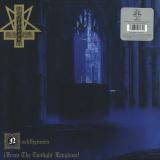
Dissections All-Time-Klassiker "Somberlain" als Deluxe Vinyl Edition, streng limitiert inkl. Embossed Cover!
The Somberlain" ist (wie auch die Zeit gezeigt hat) noch nicht das Album, das zu schreiben Dissection in der Lage waren - in mancherlei Hinsicht sind einige der Songs einfach noch nicht ganz rund. Dennoch ist die CD nichts weniger als ein Meilenstein der Black-Metal-Historie, der keinem Genre-Fan in der Sammlung fehlen sollte. Nicht zuletzt, weil DISSECTION bereits auf diesem frühen Werk so manches Riff abgeliefert haben, das bis heute Seinesgleichen sucht.
DISPLACES represents Fabris' most personal musical journey to date, inspired by the concept of hyperobjects and cartographic practices. The album sculpts a high-dimensional phased time-space composed of concrete materials and digital archetypes in a state of constant displacement. It delves into the symbolic and philosophical realms of mapping as one of the greatest sense-making mechanisms for life, in dialogue with object-oriented environments, superimposition and non-locality applied to cosmic, temporal, and emotional memory.
The sonic ecosystem expands on the image of navigating a path through a set of places, from the microcosm of quanta to the macro force of dark matter, from underwater depths to overland terrains, encapsulating the cyclical flow between birth and death, both in ecological and anthropological sense. The intersection of these shifting states is explored through the extensive processing of the langspil, Iceland's only traditional instrument, intertwined with manipulated field recordings of biophonies and geophonies captured across Icelandic and Venetian territories. These recordings form the backdrop for a meditative process that relocate familiar objects into unfamiliar realms, reflecting on the transformative power of self-reflection while encapsulating the fragmentation and entanglement found in nature and the human state. The record plunges the listener into a disconcerting and physical soundscape, as a “ghostly spectrality that comes in and out of phase with normalized human spacetime,” evoking sensations of suffocation and release as each layer continuously unfolds the palimpsest of the enclosed labyrinth.
“Extraction of the I” embodies a subatomic reaction—erupting as a molecular force that rises, only to re-submerge with a solitary exhale underwater. In this mutated dark space, beluga whales breathe into "Xanadu Phasing," creating a pulsating tension that releases only to unveil a frozen landscape.
In “Barricading the Ice Sheets” the glacial material morphs into a liquid tunnel of digital artifacts, building a wall of noise that shatters into scattered fragments of ice, resembling bird calls from another world.
A moment of stasis is offered with the appearance of an asymmetrical loop in Monolith I, evoking a primitive rite before an unknown force emerges.
The physical intensity of subsonic material in "A Quake in Being" interrupts the hieratic tone, detuning into polluted sonic matter sourced from relics of the First World War in the Venetian Prealps. The geography of this place reconciles with the original homeland in "The Map is the Territory," blending negative space with anthropogenic elements and exploited sounds of the langspil.
The burning density of "Wolf-Rayet" projects into the void, echoing the residual sounds of a local church as relics of fossilized religions. Wolf tones are the remains in Monolith II, introducing the final track, "Topography of Extinction," where evolving psilocin textures invite the listener to uncover deeper layers of meaning and dislocation.
Water can retain or wash away memory; flowing or freezing. It gives life and shapes earth, while frozen imprints of an ancient past are waiting to melt – back into sound or fluid motion, or simply to dissipate and disappear. For their split release, Yoichi Kamimura and Olli Aarni offer two distinct reinterpretations of a performance recorded live at the Temppeliaukio Kirkko – a church in Helsinki built directly into solid rock and bathed in natural light – meditating on glacial landscapes and water cycles, using shared field recordings that bifurcate into two sonic visions of “ice journey”.
Yoichi Kamimura’s extensive recordings formed the bedrock of the original performance, notably from time spent on Suomenlinna Island just outside Helsinki in 2021, aiming to capture the remnants of the glacial movements that formed the area’s geology. Elsewhere, the voices of ringed seals, underground waterways of Kyoto, and icy rivers in Lapland from Kamimura’s library float in as well. “The small, charming, and gentle islands floating in the Baltic Sea—some with little cottages and restaurants—reminded me of the drifting ice in the Sea of Okhotsk between Japan and Russia,” describes Kamimura. Fragments of a Christmas choir creep in too, recorded at the church on Suomenlinna Island. Titled Kōri no ryokō , Kaimimura’s reinterpretation of the performance emphasises a shared future across all icy sea regions of the world: thawing ancient memories and the threat of disappearing entirely.
On Jäämatkailu, Olli Aarni presents his own expansive reworking of the same source material, heavily processed alongside his own field recordings from Vantaanjoki river and Suontee lake in Finland. “I was thinking about the processes of erosion, water carving rock, the prehistoric glaciers over the landscape in my own environment,” explains Aarni. The soundscape hums with both intimate details and macrocosmic flow, and a submersible bass rumble hinting at an iceberg far below the tip, morphing at time scales beyond human comprehension.
Side A is composed by Yoichi Kamimura using field recordings of drift ice (Shiretoko, Hokkaido, 2019–2022), the Lake Biwa Canal (Kyoto, 2020), the Therme Vals baths (Vals, 2017), spring water (a fountain next to Saint Benedict Chapel, 2017), a Christmas choir (Suomenlinna Church, Helsinki, 2021), ice in the Juutuanjoki River (Inari, 2021), and recordings from Yoichi’s and Olli’s concert (Temppeliaukion kirkko, Helsinki, 2021), KORG iPolysix, and KORG minilogue xd.
Side B is composed by Olli Aarni using the aforementioned sounds + field recordings of the river Vantaanjoki and the lake Suontee, sampled sounds, and a computer.
- A1: Yaw - Where Will You Be
- A2: Flying Lotus Feat Andreya Triana - Tea Leaf Dancers**
- A3: Les Sins - Grind**
- B1: Noir & Haze - Around (Solomun Vox)**
- B2: Julien Dyne Feat Mara Tk - Stained Glass Fresh Frozen
- B3: Jitwam - Keepyourbusinesstoyourself
- C1: Dopehead - Guttah Guttah
- C2: Talc - Robot's Return (Modern Sleepover Part 2)**
- C3: Peter Digital Orchestra - Jeux De Langues**
- C4: Jai Paul - Btstu**
- D1: Beady Belle - When My Anger Starts To Cry**
- D2: Daniel Bortz - Cuz You're The One**
- D3: Joeski Feat Jesánte - How Do I Go On**
- E1: Nightmares On Wax - Les Nuits
- E2: Slf & Merkin - Tag Team Triangle**
- E3: Lady Alma - It’s House Music
- F1: Tirogo - Disco Maniac
- F2: Kings Of Tomorrow Feat April - Fall For You (Sandy Rivera's Classic Mix)**
- F3: Soulful Session, Lynn Lockamy - Hostile Takeover **Moodymann Edit
In 2016, a year after the 50th entry in the long-running series, none other but the iconic Detroit artist, DJ and producer Moodymann stepped up to helm the next landmark edition of DJ-Kicks, his first ever multi-artist DJ mix compilation. Following !K7's 40 th anniversary, this classic DJ-Kicks mix is now being repressed on coke bottle clear vinyl.
Born Kenny Dixon Jr., Moodymann is a one-of-a-kind electronic music icon, hailing from, and wholly synonymous with the Motor City. He is an outspoken, impossibly charismatic artist who has been putting a distinctive and soulful stamp on house and techno since the early 90s. Melting together jazz, funk, soul, blues and rock in captivating ways, he is responsible for some of electronic music’s most definitive tracks, EPs and LPs on labels like Planet E, Peacefrog and his own KDJ and Mahogani Music imprints. As able to serve up the sweetest and most sensual sounds as he is the darkest and most depraved grooves, his own unique voice and stream of conscious musings infuse expertly sought-out samples for music that is decisively alive and authentic.
Across 75 minutes and 30 tracks, Moodymann does not disappoint: despite being a notorious vinyl fetishist, Dixon’s aim is to present music of quality, not to one-up fellow collectors. Rather than serving up ridiculously rare or hard- to-find records, he instead focuses on creating a libidinous, blues-drenched mood that takes in heart-breaking soul, gorgeous hip-hop and love-fuelled house.
In addition to cuts from his own creative circle, the mix features 11 exclusive Moodymann edits. Like everything Kenny Dixon Jr. touches, his DJ-Kicks showcases the taste, skill, and soul of a dance music original.
RIYL: Sufjan Stevens, Pearls Before Swine, Richard Dawson, Incredible String Band, Scott Walker. When Dominic Harris started work on the follow up to 2017’s “Rural Tonic”, he had a different kind of landscape in mind than the bucolic inspiration he’d mined for that album and its predecessor (2013’s “Woodland Casual”). Instead it was nostalgia for winters of a youth (mis)spent in 90’s Berlin.
With a lucky find of a Hohner Guitaret, (a 1960s electric thumb piano), Harris began writing lyrics around its sparse and austere accompaniment. And after reconnecting with an old friend from Edinburgh, Ricky White, now living in the USA, the plan became clearer: a winter-journey to the rural Mid-West to write and record an LP. Convening in White’s new hometown of Bloomington IN, Harris would work each morning in the county library, the pair then venturing out on long, aimless drives down country roads before returning to put their ideas and conversation into music. With songs written over two weeks, Harris and White headed to a small studio space in a derelict strip mall in Indianapolis, to capture the album in as minimalistic a form as was fitting to the wintry feel of much of the music; glimmers of pedal steel and recorder shining out amid the dual acoustic guitars and piano arrangements. After the pandemic cut its swathe through all plans, the recording sessions decamped to Scotland.
By then Harris’s longtime collaborator Robert McFall had written string arrangements for each song, effortlessly capturing the spirit of the original vision whilst elevating each song towards the universal. Still there were the frosty hedgerows and abandoned factories of the rural Rust Belt. But also now the sandstone architecture and cobwebs of Edinburgh, and the cold grey of the Firth of Forth. Diminuet, the cover artwork showing a catheter transformed into a flower, captures that fragile moment where the world seems forever frozen in time, even as the Spring prepares to transform us all once again
Debut album by Akane, a new bedroom solo project by Tenerife's Carolina Machado - best known for her role as drummer and singer in space rock psychedelic outfit Gaf y La Estrella de la Muerte.
Cooked and slowly matured over the last couple of years, Carolina opens up her heart to present an intimate collec-tion of dreamy avant pop songs under the banner title Night-Time Birds.
With various nods to David Lynch’s dreamlike imagery and weird americana landscapes, Carolina gracefully merges her own local sensibilities to re-imagine a panoramic, fictional soundtrack to an unmade road movie, creating a per-sonal musical language made up of vintage pop songs, lush ambient soundscapes and West Coast lo-fi electronica. Her pursue of sonic exploration through modular synthesis techniques pushes her sound further out into a wider realm as she blends exotic alien-like melodies with her trademark soothing, shoe-gaze style voice. An album that seems to be floating gracefully and frozen in time…
The album’s seven tracks were recorded live during her performance in a disused gas tank at the Keroxen festival in 2022 and counts with the special collaboration of her bandmate in Gaf César Chinarro on guitar. No doubt, Night-Time Birds is not the last we’ll hear from Carol demonstrating once again the varied and eclectic creative energy currently flowing from the Canary archipelago shows no sign of slowing down.
The moons of Saturn are the inspiration for this brooding, often soaring and searching odyssey of dark electronica.
The second largest planet in the solar system after Jupiter, and the sixth planet from the sun, Saturn is orbited by 53 confirmed moons, with another 29 that are unnamed and still being studied.
Saturnian is a suite of thirteen choral tracks taking their names from some of Saturn's known moons; Dione, Daphnis, Phoebe, Prometheus, Rhea, Janus, Titan, Enceladus, Tethys, Telesto, Mimas, Hyperion and Iapetus, all named after figures from Greek and Roman mythology, each loaded with their own turbulent back stories. It is the debut release by Holmes + atten Ash, written, recorded and produced remotely in Edinburgh and Bristol by the duo Simon Holmes and Paul Nash.
Their project began during the 2020 lockdown. For Simon, time was spent exploring the Pentland Hills south of Edinburgh. For Paul, the Mendip Hills, south of Bristol. Both would experience the darker side of our human impact on the environment. Simon observed the wilderness as a wasteland, finding discarded, rusting metal littering the Pentland Hills while Paul witnessed the decimation of the ancient woodland of the Mendips' King's Wood due to the destructive tree fungus ash dieback.
These field trips fuelled a desire to navigate not just the landscape, but the duo's emotional place within it. Their collaboration led to a concept album that explores the outer reaches of the solar system, while simultaneously grounding them in a specific place. Looking inwards as much as outwards, theycreated soundscapes based on deeply imagined and felt connections to their surroundings.
After Simon had created a choral piece to accompany Luke Jerram's enormous, world touring artwork Museum of the Moon, Saturnian was a natural progression. When Simon was sent an initial score for the ethereal track Enceladus, composed by Paul in Bristol, he added choral arrangements recorded in Edinburgh. Their shimmering, tense opus continued to evolve from there. Just as the discarded bed springs and abandoned car parts that Simon stumbled upon in the Pentland Hills seemed to him at once "horrible but also oddly beautiful", Saturnian melds together melancholy and levity, fusing moments of dark angst with a celestial calm.
Opening with the glistening, hopeful brightness of Dione, increasingly urgent rhythms give way to digital, otherworldly calls from what might be rainforest creatures chirping into life with robotic squawks and delicate keyboard lines on Phoebe, followed by slowed down, monastic song on Rhea. Tethys is a hypnotic blur of synthesiser and soft chanting, while Rhea is a mysterious, echoing chasm, lifted by melodic, gentle male vocals. Janus has a glowing, effervescent energy, swiftly followed by a sense of tension on Titan, which throbs with driving percussive unease.
The album artwork is a pencil drawing created by Edinburgh artist Simon Kirby. It was made by a robot drawing machine, using custom algorithms that bring to life recordings of the sound of magnetic waves near Saturn's icy moon, Enceladus. The lines in the centre of the drawing are distorted by sound captured by the Cassini spacecraft which studied Saturn for over a decade.
Much like Saturn and its frozen, rocky moons, this debut album from Holmes + atten Ash is mysterious and beguiling, with a hint of foreboding in the depths of its powerful beauty and epic scale.
In The Land of Silence is the first full length album by experimental artist Ireen Amnes. The founder of the London based collective Under My Feet. debuts on Sonic Groove with an immaterial journey contemplating suffering, liberation, the importance of affection and unity. This ambient album reveals a hidden connection between these human emotions. From anger and rejection, to love and unity, the sounds explored by the artist represent a recent journey within. Recollections of distant memories are expressed with nostalgic sounds; by contrast, darker tracks are symbolic of those moments when it is more dif ficult to accept reality for what it is. Ireen expresses in this album that there wouldn’t be any joy without suffering.
Sounds created out of emotions that cannot be spoken. Beats that pulse out of gestures that can no longer be performed. Tones that screech out of bodies that can no longer be human. Echoes of all unspoken words reverb into the wounds of time; that constant ebb and flow of existence; that relentless stomping of exchanges. The slur of life is now noise – she collects its torn pieces with her bare hands and holds them close to her pounding flesh. She now sways in and out of consciousness, transported by nothing but his will to life, his ecstatic memory, his murmured love that now forms this soundtrack to her life.
- A1: Parade Ground - The Lights Gone
- A2: Diseno Corbusier - La Esperanza Esta En Antena
- A3: Lena Platonos - Mia Gata Sas Perimenei Ste Gonia
- A4: Victrola - Luca (Instrumental)
- A5: Borghesia - Magla
- B1: Tom Ellard - Ga Duum Blitzfonika
- B2: X-Ray Pop - Corto Maltese
- B3: Second Decay - Lubeckerstrasse
- B4: From Nursery To Misery - Contentment
- B5: Cyrnai - Digital Grit Box (Demo)
Celebrating a Decade of Dark Entries with a compilation titled ‘Tens Across The Board’. We revisit our roster and chose 10 songs from 10 bands from 10 different countries spanning the years 1981-1993. The songs flow in chronological order and have never appeared on vinyl, with 7 of the songs previously unreleased.
The compilation begins in 1981 with Parade Ground from Belgium, the duo of brothers Pierre and Jean-Marc Pauly with help from Patrick Codenys and Jean-Luc of Front 242. “The Light’s Gone” was one of their earliest experiments and employs a stark minimalism with modular synthesizers, guitar reverb and tape delay. Next we venture to Granada, Spain in 1982 to meet the trio of Diseño Corbusier. Influenced by Cabaret Voltaire and Dadaism, “La Esperanza está en Antenas” was the band’s take on melancholic pop fueled by a robotic DR-55 bass-line. Sailing the Mediterranean Sea to Athens to meet Greek electronic goddess Lena Platonos who shares a demo from 1983. “Μια Γάτα Σασ Περιμένει Στη Γωνία” translates to “A Cat Is Waiting On The Corner” and is possibly the witchiest sounds we’ve shared yet, ending with a blood curdling scream. Frozen in 1983 we cross Ionian Sea to Messina, Italy and visit Victrola, the duo of Antonino “Eze” Cuscinà and Carlo Smeriglio. They’ve unearthed a melodic instrumental version of “Luca” fueled by a Korg Polysix and TB-303. Traveling across the Adriatic to Slovenia circa 1984, where Borghesia are working on their album ‘Ljubav Je Hladnija Od Smrti’. “Magla” translates to “Fog” fitting for the thick, somber electronics of Aldo Ivancic providing a dense atmosphere for the baritone vocals of Dario Seraval.
On Side B we go down under to Sydney and excavate a hidden Tom Ellard song recorded in 1984 under the alias Lord Metal, an anagram of his name for copyright reasons. “Ga Duum Blitzfonika” is a slow-motion, unadulterated dance groove originally released on the cassette compilation "Independent World”. Skipping ahead to 1986 in Tours, France we salute X-Ray Pop the minimum new wave duo of Didier "Doc" Pilot and Zouka Dzaza. They contribute the hypnotically fragile “Corto Maltese” that originally appeared on the cassette compilation ‘Plop’. Crossing the German boarder we arrive in Dortmund at the apartment of Andreas Sippel of Second Decay who recorded the instrumental demo “Lübeckerstrasse” in 1988 with partner Christian Purwien. Utilizing an TR-808, SH-101 and Arp Odyssey this cold slice of futurism was named after the street Andreas lived on. Traveling westward to England, specifically Basildon, Essex to the teenage bedroom of From Nursery To Misery, the trio of identical twin sister vocalists Gina and Tina Fear and keyboard player Lee Stevens. “Contentment” is an introspective, ethereal pop song with child-like vocals that originally appeared on the Belgian tape compilation ‘Heartbeat Vol.4’ in 1989. Finally, we return home to San Francisco and close out the compilation with Cyrnai the moniker of multi-instrumentalist Carolyn Fok. “Digital Grit Box (Demo)” was an outtake from the ‘Transfiguration’ album sessions recorded in 1993, utilizing dark dance drum beats made with MIDI sequencer programs Studio Vision and Sample Cell.
All songs have been remastered by George Horn at Fantasy Studios. The vinyl is housed in a custom designed jacket by Eloise Leigh featuring our label’s colors black-white-red with connect-the-dots pattern linking the 10 songs via maps/timeline/location, all relating to the reissue process, plus source images from San Francisco, our hometown. For this landmark release we've also printed a 2-sided fold-out wall poster that includes every artist we've released in our first 10 years 2009-2019 in black, red and silver metallic ink, plus an 8x11 insert with lyrics, notes and photos.
West Mineral returns with lushly amorphous actions by Shiner, Pontiac Streator & Ben Bondy aka Shinetiac; together fused for an immersive flux of vapoured dub, chopped and droned Billie Eilish, and fidgety algorithmic jams.
There's not a single, specific sound you can peg to the West Mineral axis at this stage in the label’s evolution - it's rather a set of shared aesthetics that freely bend into various interconnected shapes. Shinetiac's contemptuous, critic-baiting gear is the ideal example; on their last album, 2023's 'Not All Who Wander Are Lost', skittery, ketamized IDM sparkled over Spice Girls samples and the Foo Fighters' 'Everlong' was transmuted into Sneaker Pimps-style trip-hop. 'Infiltrating Roku City' might be a little less blatant with its out-and-out poptimism, but it takes a similarly dim view of conservative "big ambient" snobbishness. Just a few minutes of 'Bluemosa' should be enough to let you know what's up; the overall character of the sound is hazed, with frozen pads and garbled, dubbed-out voices smudged into a mess of effects and samples. But it sups up different nuances as it wriggles, absorbing scampering breaks, dizzy acoustic guitar strums and half-heard wordless vocals, flipping in the third act to emerge from its shell as minimalist balearic folk-pop - something like Bon Iver doing 'Electric Counterpoint'.
Brooklyn's Shiner, Philly's Pontiac Streator and Berlin-based Ben Bondy navigate the labyrinthine streaming landscape, guided by their own private experiences of mindless doom-scrolling and cruising the darkest corners of YouTube. They formulated 'Infiltrating Roku City' while they were rehearsing last year and spent the winter stitching together various recordings and jams into a layered, dry-witted commentary on our algorithmic reality. Laden with inside jokes and refried memes, it's surprisingly elegant gear; handling the most unseemly elements like sonic recyclers, earnestly repurposing pop and nostalgia to create an atmospheric echo of contemporary reality.
Screwing Chief Keef's enduring 'Citgo', 'Clublyfe (hulu)' emphasises the original's AFX-pilled euphoria with Robert Miles-style piano hits, replacing Young Ravisu's brittle 128kbps trap rhythm with a glitchy rattle that picks up dembow spikes as it rolls. 'I Hate Being Sober' vaporises the Chicago drill pioneer's 'Hate Bein' Sober', blocking out his voice with glitchy, downsampled interference and elasticated Rhodes. The trio team up with Orange Milk's goo age on the sublime 'Crisis Angel', catching a ray of Malibu's sunshine in the process, and reduce Billie Eilish's voice to a Romance-does-Celine cinder on 'Billie', stretching it to fit next to gassed Future ad-libs and swooping 808 Mafia sub womps. And although the album takes a murky diversion on 'Roku Axes Ultra’, and a cloud-stepping centrepiece ‘Purelink’ in homage to the eponymous dubbed ambient dynamos, it's back on course with 'Jiafei (NETFLIX)', taking aim at TikTok bot videos and welding screams from Florida metal band Underoath to AI-strength vocal curlicues.
American ambient powerhouse zake is back with a meditation on stillness, memory and the quiet power of seasonal change. Rooted in the Midwestern winter that inspires much of his work, his latest album Cantus for Winter in Six Parts unfolds in slow-moving analogue drones, soft hiss and faint environmental textures that are both intimate and expansive and true to his signature style. Each piece drifts gently into the next, evoking cracked wood, falling snow, distant strings and the eerie calm of frozen landscapes. By the time the 19-minute finale arrives, you are lost in a world of solitude and reflecting deeply on many things that will ultimately leave you feeling restored.
A hill repeating its own name.
Ben Beinn — mountain mountain — an imagined summit, recursive and unstable.
Poole’s new album Ben Beinn follows 2024’s In a River Shadow, and deepens his exploration of environment, voice, and abstraction. If the previous record moved with flowing water and submerged hymns, Ben Beinn climbs into elemental instability: passing storms, coded skies, and sodden ground.
Across ten tracks, Poole entangles the Celtic New Age sound world — traditional instrumentation (flute, low whistle, bagpipe, piano, strings) — with synthesis, environmental recordings, and abstracted voice. The sound palette is tactile — marked by microtonal harmony, swelling dissonance, and a breathy naïvety. Voices in Gaelic, Norwegian, and English surface and dissolve, stretched beyond recognition — more weather than word.
The album’s title refers to a tautological hill — Ben Beinn, or “mountain mountain” — a recursive site where motifs surface, fracture, and re-emerge. On 365 Days of Rain, rainfall data becomes a rhythmic lattice that slips from metrical order. 1000 opens the record in cinematic emergence: mountain icicles and frozen streams swell into strings and breathy melodic weight. Pulling from the connective folktales of hill and mountain trolls — “Dance for a thousand years,” Poole writes, “for jeg har sovet tidlig så lenge.”
Recorded in Scotland between 2024–2025, Ben Beinn draws from environmental recordings of frozen hill passes, storm drains, and peat bogs using contact mics and hydrophones. Rather than simply reflecting place, these recordings press against it — layering the sonic materiality of landscape with synthesis and song. An inflection point between fabrication — folk music as performed identity, a carrier of story — and its obfuscation through digital networks, where tradition is refracted into plural forms.
Musical reference points include the emotionally saturated textures of Inoyama Land, the folk-electronic hybrids of Eli Storbekken, the hyperrealist collage practices of Noah Creshevsky, and the disquieting sonic simulations of James Ferraro. While Ferraro captures the uncanny surfaces of networked life, Ben Beinn turns inward — toward a located listening, shaped by weather, memory, and terrain.
The second in a triptych that began with In a River Shadow, Ben Beinn continues Poole’s excavation of environmental and folk material through contemporary methods. If the first record submerged itself in flowing water and submerged hymns, this one is shaped by the slow pressures of land and sky — a music of erosion, recurrence, and elemental presence.
- Play Dead
- Kowp
- Drums On The Wheel
- Play Dead (Instrumental)
- Kowp (Instrumental)
- Drums On The Wheel (Instrumental)
- Rat Skull
- Snowmobile
- Twice Fried
- Frozen Caveman
Recently I was approached by my old friend Travis Millard to make some original music for Freedom Finger - a crazy space-shooter video game he had been developing with Jim Dirschberger and Wide Right Interactive game studio. I was able to land 6 instrumentals that pop up at various points throughout the gameplay.As the game was being rolled out, the idea arose to have me do 3 more tracks - this time fully fleshed out songs with lyrics mostly inspired by Freedom Finger's gameplay. These tracks would accompany some brand new levels that would be made available as downloadable content for the game.We have decided to release all of the music I have done for Freedom Finger as a 10" vinyl EP available through Rhymesayers Entertainment. This includes the 3 full length vocal tracks, as well as the 6 shorter beats that loop throughout the game. Some of these tracks also feature additional instrumentation from my friends and frequent collaborators, Grimace Federation.Furthermore, Jim has directed a video for the song Drums on the Wheel - featuring Freedom Finger gameplay, and some brand new visuals drawn by Travis and animated by Steven Gong.The game is an absolute blast, and I hope you enjoy this music. All relevant links below. <3Love,A.R.
- 1: Coyote
- 2: Amelia
- 3: Furry Sings The Blues
- 4: A Strange Boy
- 5: Hejira
- 6: Song For Sharon
- 7: Black Crow
- 8: Blue Motel Room
- 9: Refuge Of The Roads
Mobile Fidelity's UltraDisc One-Step 180g 45RPM 2LP Set Plays with Authoritative Tonality, Airiness, and Clarity:
Pressed on MoFi SuperVinyl and Strictly Limited to
3,000 Numbered Copies
1/4” / 15 IPS Dolby A analogue master to DSD 256 to analogue console to lathe
Joni Mitchell is the only artist who could’ve made Hejira. The legendary singer-songwriter said as much when discussing the album decades after its release. Yet that fact seemed obvious from the moment the gold-certified effort streeted in fall 1976. An adventurous travelogue, probing narrative, and offbeat homage to freedom, Hejira remains an inimitable entry in the catalog of recorded music — a spare, gorgeous, meditative series of sonic vignettes comprised of floating harmonic pop, cool jazz, soft rock, and sensitive vocal elements that beckon feelings of motion, discovery, and self-examination.
Sourced from the original analog master tapes, pressed at Fidelity Record Pressing on MoFi SuperVinyl, and strictly limited to 3,000 numbered copies, Mobile Fidelity's UltraDisc One-Step 180g 45RPM 2LP set presents the record ranked the 133rd Greatest of All Time by Rolling Stone with definitive detail, richness, accuracy, and directness. Marking the first time the revered LP has received audiophile treatment, it's one of six iconic 1970s Mitchell records Mobile Fidelity is reissuing on vinyl and SACD.
Playing with a virtually nonexistent noise floor, dead-quiet surfaces, and superior groove definition, this collectible reissue reproduces in enveloping fashion the tones, textures, and craftsmanship that help Hejira function as the equivalent of a liberating trip down an open road with nothing but blue sky, natural landscape, and fresh air in the immediate vicinity. Passages bloom, carry, decay as they do amid an acoustically optimized environment. Soundstages extend far, wide, and deep, with black backgrounds and pinpoint images adding to the realism.
The reference-grade immediacy, airiness, and presence put in transparent perspective Mitchell’s dense strings of words, stream-of-conscious-like phrasing, and unhurried albeit forward momentum. Likewise, the instrumental contributions of her A-list support musicians — a cast that includes L.A. Express members John Guerin, Max Bennett and Tom Scott, plus Neil Young, Victor Feldman, and Abe Most — emerges with breathtaking clarity and dimensionality.
While Mitchell, whose intimate vocals and abstract guitar parts center everything, Mobile Fidelity's restoration of Hejira further reveals the visionary breadth of guitarist Larry Carlton and bassist Jaco Pastorius. Though heard on only four tracks, Pastorius' fretless bass epitomizes the fluid, subtle, flexible, roomy, and shape-shifting characteristics of songs that often appear to transpire out of nowhere akin to the formation of a puffy cumulus cloud overhead. In sync with Mitchell’s voice, Pastorius’ fusion hovers and floats, suspended in a fog you want to deeply inhale. The "grace notes" Mitchell desired on Hejira can now be heard in full. Ditto the luxurious tapestries of alinear lines, fills, and supplements unreeled on Carlton’s six-string.
Visually, the packaging of this UD1S set complements its identity as the copy to own. Housed in a deluxe slipcase, the LPs come in foil-stamped jackets with faithful-to-the-original graphics. This version is for listeners who desire to become immersed in everything about Hejira, including the unforgettable album cover — a pastiche of 14 different photos Mitchell used a Camera Lucida to assemble into one image that’s anchored by a portrait of her in a stoic pose — and the interior shots of Mitchell skating on a frozen Wisconsin lake wearing a pair of black skates, black shirt, and fur cape.
The notion of skating, feeling an awakening wind whipping against your face, and losing yourself to the surroundings are extremely apt for Hejira, which Mitchell wrote after a sequence of trips and relationships prompted her to reflect on the complicated conflicts between independence and marriage, success and satisfaction, duty and desire — and, more specifically, “the cost of being a woman.” The Canadian native delved into such themes before. But never as she does on Hejira, whose liberating, running-away aura doubles as another of Mitchell’s rejections of tradition as well as a suggestion of a better alternative.
At once observational and personal, expansive and insular, cheerful and poignant, Hejira spans a sea of human conditions, emotions, and circumstances. It addresses drifting, isolation, pleasure, place, time, and surroundings with strikingly poetic discourse matched with music that, save for the crooned ballad “Blue Motel Room,” forgoes conventional structures and choruses.
The jazz-based arrangements, marked by scaled-down percussion and all manner of bent, rounded, and unsettled notes, hint that Mitchell has no exact destination in mind. Excursions such as the moody “Furry Sings the Blues,” funky “Coyote” and edgy “Black Crow” throw open previously locked doors to possibility and journey. They signal it’s time for a welcome departure from norms and the past, one that leads to a heightened sense of clarity and perspective. Or, as Mitchell said upon choosing the album title, it’s time for “leaving the dream, no blame.”
- Frozen Sea
- Plaza De Toros
- Super Bloom
- Disneyland Jail
- How Does Your Sister Roller Skate
- Mom I'm Living The Life
- I Wrote A Song Called Take The Skinheads Bowling
- Mexican Chickens
- Europass
- We Hate You
- Everybody Get A Fucking Day Job
- Battle Of Leros
- Leaving Key Member Clause
- Piney Woods
- Let It Roll Down That Hill
- Pretty Girl From Oregon Hill
- It Don't Last Long
- Fat Little Babies
- Mark Loved Dogs And Babies
- Unrise In The Land Of Milk And Honey
- Vending Machine
- Fathers Sons And Brothers- Featuring The Bellrays
- Yonder Distant Shore
- Darken Your Door (Richmond Version)
- Every Time I Try To Get Out
- Beautiful (Georgia Version) David Low
- Giving Tree Father
- Art Basel
David Lowery (Cracker, Camper Van Beethoven) to release his new 28-track solo album. "Fathers, Sons and Brothers" is David"s musical autobiography, celebrating his youth, family, friends and the highs and lows of his lengthy 40-year career in the music business. The album combines three of David"s previously online-only released autobiographical solo albums "In The Shadow of the Bull", "Leaving Key Member Clause", and "Vending Machine", and also includes four new previously unreleased songs, as well as four newly re-recorded tracks: He"s been writing songs about people on the fringe for damn near a lifetime. 40+ years of detailing the idiosyncrasies of outcasts, losers, freaks and outliers in society in his two acclaimed, if not totally different, bands - Cracker and Camper Van Beethoven.
Marina y su Melao is a band from Barcelona led by Puerto Rican Marina Molina. After a period of live activity, in 2025 they will release their debut album, "Rezo al agua", where Puerto Rico's bomba, an eminently rhythmic genre, expands to fuse with the colours and flavours of other Afro-Caribbean sounds. Tradition and folklore are embodied in a powerful and innovative conception.
In "Rezo al agua", Marina Molina expresses an attachment to the land, the landscape, the culture, the beliefs and the environment where she was born, Puerto Rico. She does this through bomba, one of the country's most identifying musical expressions. Bomba is as old as the slavery of those who gave birth to it in order to tell their tribulations and hopes, armed with the instrument they had at hand: the drums. It is a kind of meta-genre that includes a multitude of rhythmic varieties.
But Marina is something more than bomba, the legacy she received from her elders and which she does not wish to turn into a frozen object of veneration, an untouchable totem, mystical and ruled by norms bequeathed by the years. Marina, who has Colombian blood in her veins, is an artist of today, of a world in which cultures can mix, people migrate, influence each other, travel, exchange their cultural traces, can see online what happens at the other end of the world and thus open the window that facilitates the mixing of identities. These mixtures redraw borders and genres, allowing popular music to avoid its fossilization.
Marina grows in this fertile territory. She has a ductile and powerful voice, as clear as her strong, independent mindset. This is a remarkable element in the lyrics of the album, which despite being written from a current perspective, contain the sense that popular lyrics have always had: they explain life with the small letters of the everyday. And all this is presented in the bomba genre. Impure. There is an African guitar, a pedal steel guitar, a Wurlitzer, an accordion and everything that Marina and Miguelito Superstar, the album's producer, thought was necessary to accentuate the musicality of a full voice and drums that resonate raw with the vibration of tradition. A tradition now in the hands of a woman who aspires to her own space in life, to write her own chapter.
Bon Iver's debut full-length For Emma, Forever Ago has been making major waves in critics circles based on the strength of an early artist-pressed advance cd and a couple awe-inspiring sets at CMJ in October 2007. The New York Times called it "irresistible" and Pitchfork stamped its early review of the album with a Recommended tag. For those of you hiding away in a cabin of your own, it's time that you hear the story, and more importantly, the music. Bon Iver (pronounced: bohn eevair; French for "good winter" and spelled wrong on purpose) is a greeting, a celebration and a sentiment. It is a new statement of an artist moving on and establishing the groundwork for a lasting career. For Emma, Forever Ago is the debut of this lineage of songs. As a whole, the record is entirely cohesive throughout and remains centered around a particular aesthetic, prompted by the time and place for which it was recorded. Justin Vernon, the primary force behind Bon Iver, seems to have tested his boundaries to the maximum, and in doing so has managed to break free from any pre-cursing or finished forms. It wasn't planned. The goal was to hibernate. Vernon moved to a remote cabin in the woods of Northwestern Wisconsin at the onset of winter. He lived there alone for three months, filling his days with wood splitting and other chores around the land. This solitary time slowly began feeding a bold, uninhibited new musical focus. The days slowly evolved into nights filled with twelve-hour recording blocks, breaking only for trips on the tractor into the pines to saw and haul firewood, or for frozen sunrises high up a deer stand. All of his personal trouble, lack of perspective, heartache, longing, love, loss and guilt that had been stock piled over the course of the past six years, was suddenly purged into the form of song.
Portland-based ambient architect and far afield sound technician Graintable, aka James Cooke returns with his debut outing on Music To Watch Seeds Grow By and his fourth in the R$N stable; 'Blue Flax'. Following his acclaimed and sold out cassette releases 'Herons', 'Universal Ash' and ‘The Rain In The Trees’ on Ransom Note Records, this new collection sees Cooke delving deeper into the intersection of natural processes and liminal organic electronics.
'Blue Flax', the resilient flowering plant celebrated for its delicate blue blooms and medicinal applications, is native to the Pacific Northwest - the region Cooke calls home. This plant has long grown on the ancestral lands of the Wasco, Klickitat, Warm Springs, Cayuse, and Umatilla tribes. Its connection to this landscape underscores the album’s themes, weaving together ten intricate ambient pieces that reflect the plant's dual nature of part healer, part object of wonder. Recorded during the transitional hours of dawn and dusk in his Portland studio, Cooke’s soundscapes capture both the meditative aspects of watching plants grow and the gradual transformation of organic matter into usable forms. The centrepiece of the album Cerulian FIelds, reminds of the early morning light, those inspiring hours before the rest of the world wakes and the first shoots break through the soil into the new dawn. It’s a beautiful crystallisation of what is Cooke’s most comprehensive collection of meditative compositions to date.
For fans of: Steve Roach, Alessandro Cortini, Suzanne Ciani, Davis Galvin
Early support including: Courtesy, Laurent Garnier, Massimiliano Pagliara, DJ Harvey, Domenic Capello
Producer, designer, publisher, filmmaker, all-round scene phenom - Lasse Marhaug returns with his first album since relocating from Oslo to the Arctic Circle, surveying his 35-year career for a set of grizzled, doom-pocked rhythms and foghorn drones pulled from the aether. Expansive and hard to categorise, it's a precision-tooled set of ice-cold tonal productions that heavily lean into Mika Vainio’s rhythm experiments, with extra levels of growling bass and curious noises to send us deep into the uncanny.
Lasse Marhaug has put his mark on literally hundreds of albums - working with artists like Jenny Hval, Merzbow, Jim O'Rourke, Kevin Drumm, Hilary Woods - so many others - yet he still regards himself as a primarily visual artist who got diverted into an occasionally different path. If his last album 'Context' was a kiss goodbye to decades of life in Oslo, 'Provoke' turns a new page, but one that draws heavily from memories of the distant past, reflecting on the way the topographies of Norway's frozen north helped shape his creative worldview. Weaving electronics into environmental recordings captured in the bleak Arctic winter, the album was mixed during the Polar night season, when, for two straight months, the sun never rose past the horizon. Somehow, even at its bleakest, Marhaug avoids the usual aesthetic signifiers for this kinda thing, finding elements of queered beauty in all the severity, juxtaposing elements that shine a bright light on all the odd spaces in-between.
A consideration of noise music's place in 2024, and whether it can still be a tool for subversion when its aesthetics have been so commodified, ‘Provoke’ also refernces an experimental '70s Japanese art magazine that attempted to define a new language for photography. Operating somewhere between these two guiding poles, Lasse feels his way through a subtly altered mode of expression, a new approach to familiar concepts. Album opener ‘Plates’, for example, gives it the full Ø treatment, like some exceptional ‘Oleva’-outtake, but , eventually, shards of interference start to exhale like horses blowing, creating uncanny sensations that hit through ambiguous feeling rather than sheer noise terror. Ritualistic, corporeal - hard to know what you’re listening to and why it makes you feel that certain way - so much more than just machine cycles optimised for their ultimately hollow brutalist aesthetic.
Marhaug paints vivid pictures from a carefully chosen palette, drawing us into a soundworld that's rich with contradictions and contrasts. Even the relatively deafening 'New Topographics' offsets its wall of distortion with a muffled, perforating kick drum, cutting into the noise like a knife through butter. And all of this preparation makes the album's lengthy centrepiece 'Monochrome Head' even more impactful; hinging on a Pan Sonic-like alloy of bass and drums, the track snowballs through tempered feedback and improv scrapes and whistles that pick up into an orchestral din. Marhaug accents the bluster with rhythmic hums that gather in momentum until they're almost oppressively heavy, as if everything's about to collapse.
A masterclass in quietly subversive world-building, 'Provoke' invites us to peer at an expansive sonic landscape and marvel at its intricacies, but this time around there's a Lovecraftian behemoth lurking somewhere beneath its icy surface.
- 1: Crazy - Patsy Cline
- 2: Behind Closed Doors - Charlie Rich
- 3: Sea Of Heartbreak - Don Gibson
- 4: Walk On By - Leroy Van Dyke
- 5: Big Bad John - Jimmy Dean
- 6: I'm A Honky Tonk Girl - Loretta Lynn
- 7: Rawhide - Frankie Laine
- 8: Funny How Time Slips Away - Willie Nelson
- 1: Welcome To My World - Jim Reeves
- 2: It's Four In The Morning - Faron Young
- 3: I Walk The Line - Johnny Cash
- 4: Single Girl - Sandy Posey
- 5: Sixteen Tons - Tennessee Ernie Ford
- 6: Hey Good Lookin' - Hank Williams
- 7: Alabam - Cowboy Copas
- 8: It Wasn't God Who Made Honky Tonk Angels - Kitty Wells
- 1: Rose Garden - Lynn Anderson
- 2: My Special Angel - Bobby Helms
- 3: I'm Sorry - Brenda Lee
- 4: Oh Lonesome Me - Don Gibson
- 5: He'll Have To Go - Jim Reeves
- 6: Dark Moon - Bonnie Guitar
- 7: Big Iron - Marty Robbins
- 8: Your Cheatin' Heart - Hank Williams
- 3: Six Days On The Road - Dave Dudley
- 4: I Fall To Pieces - Patsy Cline
- 5: Crazy - Willie Nelson
- 6: Don't Take Your Guns To Town - Johnny Cash
- 7: Singing The Blues - Marty Robbins
- 8: I Can't Stop Loving You - Ray Charles
- Haper Valley P.t.a. - Jeannie C. Riley
- 2: From A Jack To A King - Ned Miller
The songs that grace this comprehensive double vinyl package all come from the golden age of country music. For nearly a century now, country music has been captured on cylinder, vinyl, tape and compact disc. In America during the 1950s, while rock & roll battled calypso as the nation’s favourite sound, meanwhile in the background, these classic country songs could be heard across the land - all the way from the Gulf of Mexico, right up to the frozen wastes of Minnesota. After the golden age of what might be called pure country, came country-rock, alt-country and Americana. But the century of songs gathered together here is plain and simple country music - at its best
One True Pairing, auch bekannt als Tom Fleming, ehemaliger Songwriter, Sänger und Multiinstrumentalist von Wild Beasts, veröffentlicht sein zweites Soloalbum 'Endless Rain' am 25. Oktober 2024 über Domino.
Aufgenommen in Dublin im Jahr 2022 mit Produzent John 'Spud' Murphy (Lankum, black midi, caroline) in den Hellfire Studios in Dublin, bekräftigt "Endless Rain" mutig Flemings künstlerische Vision - mit einem herbstlichen, suchenden und oft erhebenden Album, das von den Einflüssen traditioneller Musik, Klassik und Noise-Rock geprägt ist. Flemings langjähriger Kollaborateur Josh Taylor-Moon arrangierte, produzierte und spielte auf dem Album, ebenso wie Cormac MacDiamarda von Lankum und Eleanor Mylor von Percolator. Klanglich ist "Endless Rain" ein ehrgeiziges und weiträumiges Album, das sich deutlich von Flemings bisherigem Werk abhebt. Das Album enthält die bereits veröffentlichten und hochgelobten Singles "Frozen Food Centre", "Mid-Life Crisis" und "Be Strong".
Flemings Songs haben sich stets mit Ideen rund um Männlichkeit auseinandergesetzt - die traurige und verführerische Musik von Wild Beasts unterlief die akzeptierten Rollenbilder junger Männer aus dem Norden. Nun älter und weiser, nutzt "Endless Rain" diese Basis, um neues Terrain zu erkunden, tritt einen Schritt zurück, schaut tiefer und verwendet die neu gewonnenen Erfahrungen, um etwas völlig anderes zu erschaffen.
- Out Of The North
- Leofirth's Honor
- The Bounteous Earth
- Kingdom Of Wessex
- Son Of Fjord
- Absence Of Light
- Leaving Valhalla
- Kingdom Of East Anglia
- Shadow - Walker
- Valhalla Nights
- Silent Ambush
- Animus Anomaly
- Ezio's Family - Ascending To
- Valhalla (Featuring Einar Selvik)
- The First Departure
- The Swarming
- The Fate Of East Mercia
- Asgard Hall Of The Aesir (Feat. Einar
- Selvik)
- Blood Red Sails
- Frozen Lands
- Wave Walker
- The Sceptred Isle
- The Bearded Axe (Feat. Einar Selvik)
- Father Of Gods
- Rivers And Fjords
- Fury Of The Northmen
- To The Next World
- The Tree Of Life
- Trust The Currents
2024 Reissue
‘Assassin’s Creed Valhalla’ takes place toward the
end of the Ninth Century, a time when Norse tribes
were leaving their homes in Scandinavia and
sailing to the collection of fractured kingdoms
known as Anglo-Saxon England. It’s here, during
this age of transition, that you’ll take on the role of
Eivor and lead your people to a new land in the
search for a new home. As you embark on
Valhalla’s epic Viking journey you’ll lead deadly
raiding parties, fight in massive battles and build
up a prosperous settlement, all within the historical
backdrop of Ninth Century England.
‘Assassin’s Creed Valhalla’ went Gold weeks
before the launch.
Score by Danish composer Jesper Kid (‘Assassin’s
Creed 2’, ‘Borderlands 3’, ‘State of Decay 2’,
‘Warhammer: Vermintide 2’) and American
composer Sarah Schachner (‘Assassin’s Creed:
Origins’, ‘Call of Duty: Modern Warfare’, ‘Anthem’).
“‘Valhalla’ marks the first time the two of them
Sarah & Jesper have worked together, and the
sheer size and scale of the Viking-themed
soundtrack is all the better for it.” - spin
Double LP with Red with Yellow Splatter (LP1) and
Teal with Black Smoke (LP2) coloured vinyl in a
gatefold sleeve with printed inners.
The second album by F.K. Raeithel, just after the operetta DIE WURLITZERORGEL DES GEISTES, explores the realms of interlocked rhythm sample and hold music. On 16 tracks different setups of self generating modular synthesizer patches are gathered on this release.
The concept of Dance With Uncertainty is deeply rooted in philosophical, artistic, and cultural traditions. The notion of embracing uncertainty and change has been explored in various forms throughout history, often symbolizing the human experience and the impermanence of life. In the context of music and sound, Dance With Uncertainty could be seen as a reflection of the constant ebb and flow of life‘s uncertainties, captured and conveyed through sonic textures and evolving compositions.
Interlocked Rhythm Sample & Hold Music, this approach to sound creation weaves a mesmerizing tapestry of rhythm, texture, and sonic exploration, captivating listeners and defying traditional musical boundaries. At its core, Interlocked Rhythm Sample & Hold Music is a synthesis of technology, creativity, and a deep understanding of rhythmic intricacies. The foundation lies in the Sample & Hold circuit, a device that captures and freezes incoming voltages, creating distinct musical snapshots that evolve over time or an Linear Feedback Shift Register (eg. Rungler), a circuit used in electronic music synthesis and sound manipulation to create unique and evolving musical textures. The Rungler was created by Rob Hordijk. A more sophisticated use of a 8 bit shift register and by combining this with a typical sequencer design is the Klee Sequencer developed by Scott Stites. A cheap version of this design is the Turing Machine. Another tool is the Analog Shift Register. In the context of creating arabesque melodies, an analog shift register (invented by Fukushi Kawakami and later adapted by Serge Tcherepnin) can be a fascinating tool to generate intricate and ornamented musical patterns. Yet, it‘s the interlocking of these snapshots that sets this genre apart, infusing the compositions with an intricate dance of patterns and pulses. A fourth device is a pendulum or random addressed sequencer, that in the first case moves in a drunken unpredictable manner. Each of these devices for uncertainty becomes a rhythmic sculptor, freezing the dynamic interplay of melodies, beats, and textures. These frozen moments are then interwoven, each snapshot forming a unique thread in a sound tableau that stretches and contracts, pulses and breathes. The result is an auditory experience that challenges preconceptions of rhythm and structure. The interlocked rhythms give rise to complex grooves that ebb and flow in unpredictable ways, evoking a sense of perpetual motion and transformation. The music becomes a living organism, its heartbeats synchronized yet untamed, its evolution both deliberate and free-spirited. The juxtaposition of staccato bursts and fluid flows, of machine-like precision and organic unpredictability. As listeners delve into the world of Interlocked Rhythmic Sample & Hold Music, they embark on a sonic odyssey. The music becomes a companion, guiding them through a labyrinth of rhythmic landscapes that simultaneously challenge and invite them to the dance with uncertainty.
Originally released as a hand-numbered CD on New Year's Eve of 2004, Last Light captures Tor Lundvall 's hushed songcraft at its most ghostly and grayscale, stripped bare like branches bracing for winter. Initially conceived of as "a piano album with sparse electronics" (with the working title November), Lundvall's palette steadily expanded, incorporating synthesizer, samples, bass, metronomes, and his signature spectral vocals. A journal entry from the spring of 2002 proved formative to his evolving vision: "I remember watching the blueish-grey light shimmering outside and hearing distant sounds echoing far away, eventually sinking into silence and stillness." The album's 12 tracks are steeped in this sense of autumnal transience, of bearing witness to what fades. The music moves in whispered swells, between dirge, drift, and devotional. Synths chime like slow-tolling bells; percussion shuffles and shivers, icy and isolated; bass traces a low-lidded plod - it's a mode both austere and seductive, lulling the listener into its landscapes of deepening dusk. Lyrically, Lundvall's language skews observational and depressive ("through lace curtains / grey light falls / dark clouds gather / in my soul" ), with each song like a gauzy glimpse into a different tableau framing winter's descent: rust - colored leaves, frozen ponds, cold crescent moons. Lundvall has long considered Last Light a "personal favorite" in his discography, and it's easy to hear why. In texture, finesse, and pacing, it vividly evokes the rare mood of fragile, frosty pastoral noir depicted in his iconic oil paintings. His is an art of the half-seen and half-remembered, of fleeting figures, shapes and shadows, and gathering darkness. Of all that disappears, and the ghosts that never leave: "So I wait / as the years / slowly drain the magic and the light / and the girl / I never loved / haunts me through the dark roads of my life."
Neither so young nor the eternal promise, Promising/Youngster is here to stay. Diego Cadierno signs his second appearance on AF with 'Bernesga EP' (tribute to his homeland), a free-flying 4-tracker full of dreamy landscapes and nostalgic electronics, with nods to the 90's golden era but exploring paths of present and future. Suitable for listening inwards or shared outwards, perfect to express emotion and lightness. Artwork by Geometric Love, UK. Enjoy!.
Originally released as a hand-numbered CD on New Year's Eve of 2004, Last Light captures Tor Lundvall 's hushed songcraft at its most ghostly and grayscale, stripped bare like branches bracing for winter. Initially conceived of as "a piano album with sparse electronics" (with the working title November), Lundvall's palette steadily expanded, incorporating synthesizer, samples, bass, metronomes, and his signature spectral vocals. A journal entry from the spring of 2002 proved formative to his evolving vision: "I remember watching the blueish-grey light shimmering outside and hearing distant sounds echoing far away, eventually sinking into silence and stillness." The album's 12 tracks are steeped in this sense of autumnal transience, of bearing witness to what fades. The music moves in whispered swells, between dirge, drift, and devotional. Synths chime like slow-tolling bells; percussion shuffles and shivers, icy and isolated; bass traces a low-lidded plod - it's a mode both austere and seductive, lulling the listener into its landscapes of deepening dusk. Lyrically, Lundvall's language skews observational and depressive ("through lace curtains / grey light falls / dark clouds gather / in my soul" ), with each song like a gauzy glimpse into a different tableau framing winter's descent: rust - colored leaves, frozen ponds, cold crescent moons. Lundvall has long considered Last Light a "personal favorite" in his discography, and it's easy to hear why. In texture, finesse, and pacing, it vividly evokes the rare mood of fragile, frosty pastoral noir depicted in his iconic oil paintings. His is an art of the half-seen and half-remembered, of fleeting figures, shapes and shadows, and gathering darkness. Of all that disappears, and the ghosts that never leave: "So I wait / as the years / slowly drain the magic and the light / and the girl / I never loved / haunts me through the dark roads of my life."
DMX Krew unearths the lost Cold War LP.
Created for 1983. Created in 2003. Released in 2023. In mistrust and blindness mankind wages a COLD WAR, East against West in a spiraling cycle of mindless escalation. For 40 years the madness continues until it reaches its inevitable climax, NUCLEAR WAR.
Armageddon is achieved at the push of a button, millions of lives are destroyed. Those who are spared struggle for survival in the bleak conditions of NUCLEAR WINTER.
Acid rain destroys the landscape, darkness falls across the face of the
earth and hope is lost as the population falls prey to radiation sickness and cancer. Deep underground, the last survivor works feverishly in his isolated laboratory. A lone scientist attempting desperately to save mankind, he uses occult technology and deep-frozen human tissue to create a group of 12 radiation-resistant HUMAN CLONES.
They set forth to rebuild and repopulate the planet, whilst the scientist continues his work to improve and strengthen mankind. He develops a technique to fuse his own living flesh with the transistorized mind of a supercomputer, transforming himself into FUTURE MAN. Synergy of man and machine. Having transcended his mortal condition, he is now deemed ready to meet THE ELOHIM, a race of super-evolved aliens who created mankind 40000 years ago and have been watching and waiting ever since for the day when man at last becomes enlightened.
They descend from the heavens in their storship telling Future Man to
rejoice, for the trials of mankind are over and they sing to him of their long wait and THE GOLDEN AGE which is about to begin. Future Mom and the Clones are taken on board the spacecraft whereupon the Elohim transport them through the STAR GATE to a planet paradise where they are able to live in peace and happiness and once again become prosperous and many.
Hania Rani announces "On Giacometti" a tender meditation on the life and art of Alberto Giacometti and family. "On Giacometti" is a collection of beautiful recordings inspired by the renowned artist and family and features some of Rani's most profoundly delicate compositions to date. Invited by film director Susanna Fanzun, to score her forthcoming documentary on the legendary artist Alberto Giacometti, Hania Rani took herself to the Swiss mountains to compose in blissful isolation. As Rani explains eloquently below the compositions are based on improvised melodies, simple harmonies and structures and inspired by the silence of the mountains as Rani returns to her main instrument, the piano. The results are beguilingly reminiscent of her beloved debut album Esja, but with subtle extra layers of synthesiser, and on two tracks cello from friend and long-running collaborator Dobrawa Czocher.
'On Giacometti' is presented as a limited edition LP with bespoke packaging featuring Les Naturals - Chocolat (Gmund) sustainable recycled paperboard made from 100 % recovered paper with Foil Artwork by Łukasz Pałczyński. Plus Double sided printed insert and download code inside.
Hania Rani "On Giacometti":
‘When I was asked to compose a soundtrack for a movie about the family of Giacometti I didn't think twice.
Alberto Giacometti, a Swiss artist, who worked mainly as painter and sculptor has been one of my favourite artists for a long time. His individual style, aesthetics and the character of his creative process is still fascinating to me on many levels, so being able to dive even deeper into his universe, getting to know not only him but also his family was an opportunity that I couldn't miss. Little did I know how far this "yes" will take me - not only mentally and on a creative level but also physically. Thanks to the director of the documentary - Susanna Fanzun and by a stroke of luck and a couple of extra questions I decided to move for a couple of months to the Swiss mountains, not far away from the place where Giacometti was born and where the place he called home was, although he didn't live there. Susanna showed me a place close to her hometown where I could rent a studio and work on the soundtrack but also for my other projects. It was the middle of a winter, the area was full of ice and snow, just like only it can happen still in the mountains. The residency house was located in a valley surrounded by high mountains and the sun in the winter season was not coming up for too long during the day. I remember she told me about it and added "that not everyone is feeling well there, but I hope you will". I did.
Being almost separated from reality, the city and its entertainments, people rushing and everything that usually takes my attention I could fully concentrate on the music and soundtrack, spending most of the day with my own thoughts and having enough space to experiment and be free in a creative process. This soundtrack would probably be a very different thing if composed in a place that I am usually living in. I took this a chance to explore something new about myself as a composer and human being, taking the opposite direction that I would usually choose for myself.
The album "On Giacometti" includes the excerpts from the soundtrack, the most representative tracks and those which became a strong voice itself. Based a lot on improvised melodies, simple harmonies, structures and silence it reminds me of my debut album "Esja" which was partly composed and recorded in another chilly place - Iceland. All these components, both mental and physical, guided me back to my main instrument - piano, which I tried to redefine again with a language of the space that I was working in. The space is usually the key element that gives me the answer about the arrangement or character of the project. Space seems to be the first to appear and music is the invisible power which is changing its angels.’ Living surrounded by mountains makes you change the perspective and understanding of scale as Alberto Giacometti once famously wrote in a letter: It gives an impression that things that are actually far away, like mountains, are close and the other ones that are not so far away, like people, seem small, watched from a distance. You feel like touching the mountain top with your finger could be as easy as touching the tip of your nose. The snow additionally protects the whole area from the noise, each sound lands softly on the ground accompanied by echoes of immeasurable space. Each scratch or whisper is becoming an autonomic entity, opening the gate to the world of ghosts and lost spirits. It's easy to think that time stands still there, while nothing is moving and changing at the first sight. But the ubiquitous ice and snow reveal the passage of time, transforming frozen paysage into the wild stream of water - each day, hour and second. Melting and vanishing, clearing the space from white powder and noise consuming surface. Invisible process for a one night traveller, becomes painfully real for longer time settlers. Time flows with each new wave of sound coming through the river, reminding us that we are part of the cycle, which endlessly repeats itself.
marbled vinyl in 3 different colours
Four years on from the release of Astral Projection, ASC's last LP for Horo, a re-listen reveals a body of work that still sounds prescient and current, mapping out a simmering landscape that stood proudly on it's own in the crowded world of electronica.
Hiding in Plain Sight takes the musical baton left by Astral Projection and expands the environment. The two opening tracks (No Mask, A Whisper In Your Ghost) are sumptuous palette cleansers that paint the walls with bliss. As we continue on, mesmerising waves of melancholy wash over Grey Area themed constructions, sometimes jagged (No Mask, Dying Star, Centrifuge, Galaxies), other times propulsive (Dreadnought, Surface Encounters). Pensive, frozen constructions that come off as soundtracks to movies only James has seen pepper the LP (Overscan, Dying Star, Mirrored Sequence) while the centrepiece of the LP soars unbound over stuttered, sculpted breaks (Orbiting Neptune).
ASC's great gift is his ability to create worlds of music that are densely layered and complex and yet project a sense of perfect effortlessness while they assimilate into your psyche.
Hiding In Plain Sight is not so much a journey, as a destination. A rich, full bodied alien planet intricately designed to envelop your senses.
2023 Repress
His five years at the helm of IDO (Intercontinental Dance Organization) have provided Valentino Mora the outlet to explore his concept of "active meditation", through the lexicon of deep and organically-textured ambient house and techno. Now with the inking of sub-label imprint EDO (Exothermal Dance Organization) Mora's newest output finds direct, molecular inspiration from deep in the aquaverse. Taking its name from the chemical release of heat, EDO's exothermic first EP delivers four tracks of heady, transformative techno atmospheres. Charting Mora's evolution from multi-channel acoustic recordings, samples and digital-analog hybridity, Hydrosphere EP continues his production complexity yet arrives at this point via the singular expression of modular synthesis. "Erosion" opens as a cryptic transmission from submersed entities, with haunting tone tendrils emerging from within the indigo unknown. A subtle echo of reverb softens the edge of its propulsive kick drum, creating an entrancing, enticing and unsettling journey into the deep. The snaking minimalist shimmer of the title track "Hydrosphere" evokes a landscape of frozen tundra, with a backdrop of shifting, urgent techno precision. Bewitching through endless motion and slow deliberation, chimes and pings are stretched out and warped to mind-bending effect. "Doppler Shift" takes a forthright approach, leading with prominent looped bass tones, percussion and rhythmic sweeps. Rounded shapes move rapidly through the inkinesss, forming repetitions that only intensify in pace and energy. To complete the resynthesis, "Solarized" embodies the life-giving warmth of it's name, beaming irregular shafts of illumination into dark, bass-heavy, chugging terrain, forming melodic wisps of tonal condensation.
Das Sony Classical-Debütalbum "Arctic" der international hochgelobten norwegischen Geigerin Eldbjørg Hemsing ist eine musikalische Reise durch die Arktis mit neuer Musik u.a. von den Star-Komponisten Jacob Shea ("The Blue Planet") von Bleeding Fingers Music und Frode Fjellheim ("Frozen"). Zusammen mit dem Arctic Philharmonic Orchestra zelebriert Eldbjørg Hemsing darauf die zerbrechliche und weithin unentdeckte Schönheit eines Ökosystems, das in einem beispiellosen Ausmaß vom Klimawandel bedroht ist. "Die Arktis wird oft als ein schroffer, unbewohnbarer Ort verkannt, dabei handelt es sich um eine Region von einmaliger Schönheit und voller Leben, die auf faszinierende Weise illustriert, wie alles in fragilen Kreisläufen zusammenhängt. 'Arctic' ist eine musikalische Reise durch diesen einmaligen, gefährdeten Naturraum", erklärt Eldbjørg Hemsing. "Ich möchte mit diesem Projekt den Menschen zeigen, wie großartig und schützenswert diese Landschaft ist und auf die Bedrohung durch den Klimawandel hinweisen, die Auswirkung auf uns alle hat." "Arctic" ist voller mitreißender Melodien und beeindruckenden orchestralen Klanglandschaften, die sich beim Anhören des Albums aufbauen, wie die atemberaubenden Lebensräume der Arktis im Lauf der Jahreszeiten. Für die musikalische Gestaltung ihres Albums hat die im norwegischen Valdres geborene Musikerin mit einer Vielzahl an Komponisten zusammengearbeitet und ein einmaliges Album kreiert, das amerikanische Filmmusik mit europäischer Klassik verbindet. So enthält "Arctic" neue Musik von den Filmkomponisten Jacob Shea von Bleeding fingers Music und Frode Fjellheim wie auch neue Arrangements von Melodien der Komponisten Selim Palmgren, Einojuhani Rautavaara, Henning Sommerro, Ola Gjeilo, Ole Bull, Edvard Grieg und James Newton Howard. Aufgenommen wurde das Album in Bodø innerhalb des norwegischen Polarkreises mit dem Arctic Philharmonic Orchestra. "Ich wollte einmalige, einprägsame Melodien mit einem malerischen orchestralen Klang verbinden, der dem großen Panorama der Arktis entspricht, um diese emotionale Geschichte zu erzählen. Entstanden ist eine sehr abwechslungsreiche Art Filmmusik für den Konzertsaal oder ein Soundtrack für eine innere Reise", sagt Eldbjørg Hemsing über die Musik von "Arctic". Das zentrale Werk des Albums ist die 20 Minuten lange "Arctic Suite" des amerikanischen Filmkomponisten Jacob Shea von Bleeding Fingers Music, der zusammen mit Hans Zimmer die millionenfach gespielte, ikonische Musik zu "The Blue Planet" geschrieben hat. In den sechs Teilen der "Arctic Suite" vertont Jacob Shea die einmaligen arktischen Naturphänomene und findet Melodien für "Frozen Worlds" im Winter, die "Aurora" in der Polarnacht oder den "Sunrise" in der Morgendämmerung des Polartages. Er gibt den Fischschwärmen im Malmström einen Klang in "Rush of Life" oder dem poetischen Pfeifen der "Polar Winds" und endet mit einem melancholischen Blick auf aktuelle Veränderungen in "Sea Ice Melting". Komponist Frode Fjellheim ist bekannt von seiner Arbeit zu "Frozen". Er entstammt den Samen, einem Volk, das bereits seit Jahrhunderten den europäischen Polarkreis bewohnt. Für seine Kompositionen "Under the Arctic Moon" und "The Return of the Sun" lässt er sich von den traditionellen Liedern der Samen, den "Joik", inspirieren. In "The Return of the Sun" singt er sogar eine dieser traditionellen Melodien. Die musikalische Reise durch die "Arctic" umfasst weitere neue und farbenfrohe Orchesterarrangements von Werken nordischer Komponisten wie das klangmalerische "Snowflakes" von Selim Palmgren, "Whispering" von Einojuhani Rautavaara, "Dawn" von Ola Gjeilo und "Vårsøg" von Henning Sommerro. "Vårsøg" ist eine bekannte Melodie in Norwegen und steht sinngemäß für die "Suche nach einem neuen Frühling". Das ursprünglich als Folk-Pop Song geschriebene Lied verkörpert damit die Hoffnung auf einen Neuanfang im Leben. Arrangeur Ben Palmer hat die Melodie in eine emotionale Hymne für Violine und Orchester gebettet.
Exklusive Wiederveröffentlichung von 'The Somberlain', dem klassischen Debütalbum der schwedischen Melodic Black/Death Metal Band Dissection, das ursprünglich in den Unisound Studios aufgenommen und 1993 veröffentlicht wurde. Die neu gemasterte Version von Dan Swanö, dem ursprünglichen Tontechniker, lässt diesen Black Metal Meilenstein besser als je zuvor klingen!
- Ltd. 2LP (Limited double picture disc edition including 8 Page vinyl size booklet)
Exklusive Wiederveröffentlichung von 'The Somberlain', dem klassischen Debütalbum der schwedischen Melodic Black/Death Metal Band Dissection, das ursprünglich in den Unisound Studios aufgenommen und 1993 veröffentlicht wurde. Die neu gemasterte Version von Dan Swanö, dem ursprünglichen Tontechniker, lässt diesen Black Metal Meilenstein besser als je zuvor klingen!
- Ltd. 2LP (Limited double picture disc edition including 8 Page vinyl size booklet)
- 1: A Single Thunder In November
- 1: 2 Silence Wore A Silver Coat
- 1: 3 A Body Of Strange Beauty
- 1: 4 Under The Weeping Mulberry Tree
- 1: 5 In My Darkness
- 1: 6 A Matter Of Days
- 1: 7 From The Edge Of A Dream
- 1: 8 Winter Queen (In Summer)
- 1: 9 Selling Disappointment
- 1: 0 Lily
- 1: Frozen Air
- 1: 2 Wild Patience
- 2: 1 Known & Unknown
- 2: Sorrow Had A Brother
- 2: 3 Run Towards The Wasteland
- 2: 4 As Water Drops On Leaves
- 2: 5 The Rains Hair
- 2: 6 London Fog
- 2: 7 The Sky Was Empty
- 2: 8 A Special Kind Of Lostness
- 2: 9 All Things Return
- 2: 10 The Lady Of The Southern Seas
- 2: 11 Emptiness Follows
- 2: 1 All Saints & All Souls
Stella Sommer, das ist diese Frau, die so zwingend nach Stella Sommer klingt Nach vier Alben mit ihrer Band Die Heiterkeit und zwei Soloplatten übertrumpft sie sich mit ihren 24 neuen Songs auf "Silence Wore a Silver Coat" nun selbst. Auch, was das schiere Volumen, die immer dichtere Stimmung ihres sehr eigenen Universums angeht, an dem sie mit diesem Doppelalbum mit vehementer Konsequenz weiterbaut. Wie bei ihren vorherigen Solowerken ist es auch auf ihrem neuen Album ihr glänzender, dunkel changierender Gesang, der vor wildwachsenden Klanglandschaften leuchtet und ihre stimmliche Ausnahmestellung in Deutschland bestätigt. Immer noch gilt: So hoffnungslos schöne und attitüdelos stolze Popmusik schreibt sonst niemand in diesem Land. Wir hören einmal mehr eine große Songschreiberin und Arrangeurin, die ihre Kunst mit leichter Hand beherrscht, und damit ein gänzlich unangestrengtes, kalkülfreies Meisterwerk schafft. Zum ersten Mal hat Sommer ihr Album mit der ihr eigenen beiläufigen Souveränität auch selbst aufgenommen und produziert, denn warum sollte man das nicht tun, wenn man es kann. "Northern Dancer" und "Was Passiert Ist", ihre beiden jüngsten Werke, solo und als Die Heiterkeit, waren in sich geschlossene, durchkomponierte Alben - dramaturgisch fein konstruiert folgten sie beim Hören wie ein kooperatives Wildpferd am hängenden Führstrick ihrer Erschafferin.
A legendary indie audio artist blurring his lifelong attachments, from spontaneous composition (in the late 70's with John Zorn) to experimental rock (with Bongwater and other bands in the 80's) alongside his recent inquiries into the intricacies of ambient-folk songcraft (with his most recent solo LP, "And The Wind Blew It All Away"), Kramer continues to explore the possibilities of shaping naturally occuring aural landscapes into intoxicatingly affecting music. Sound and language - not just melody and ambient textures - has been his raw material for decades. He nowjuggles them more deftly than ever on his newest ambient opus. In the ten compositions that comprise this new LP, mournful at times yet mysteriouslylife-affirming and generous in their scope, Kramer sees films where there arenone, and composes his accompanying ambient soundtracks in a state of interrupted grace. Words, text, complete screenplays, character arcs, shooting scripts and storyboards swirl through his head as he puts his imagery to sound, and the results evoke a world in which moths, drawn to the bright flickering lightsof Cinema and the low humming lights of Dreams, in Kramer's own words, "...might never die". The LP's nature reveals an interior dialogue between musician and choice. Each piece represents Kramer's encounter with the blank canvas of silence that greets him as a composer. Embracing sounds as objects and instruments of Truth, the end result of his process is as much about what is absent and what has been removed or edited away than what is left in its wake as artifacts of emotion. These pieces are the Spring frost of lost imaginings, vanitas to broken connections, visions nearly unrecordable by the human eye. Kramer envisions a music that functions to stoptime, as an event that always plays in the present and never needs a past to give it a reference point. It is music that communicates in the most intimate way possible, as intricately and as deeply as the way it blossoms and shifts and evades categorizationwhen exposed to thin air. Drawn toward the light of a multitude of influences, we hear echoes of the feverishly frozen dreams of composers Morton Feldman, Terry Riley, Brian Eno and Arvo Part, melting alongside the surreal cinemas of David Lynch and The Brothers Quay, all parts converging to evoke a time and place that does not exist outside of the mind's eye of the listener. These ten works are fluid adventures in fathomless landscapes, emotions distilled and offered as a paintless painting without a physical home. Each individual composition is an offering to a future memory, a chalice to be filled with the listener's own reactions to them. As a whole, the ten pieces form an image of ten circling planets in an expanding galaxy that colors itself anew with each subsequent listen. Movement, grace, and Peace.