
Suche:fruit 7

- A1: Malavoi - Te Traigo Guajira
- A2: Los Caraibes - Donde
- A3: Tropicana - Amor En Chachacha
- A4: Ryco Jazz - Wachi Wara
- A5: Eugene Balthazar - Dap Pignan
- A6: Roger Jaffort - Oye Mi Consejo
- A7: Les Kings - Oriza
- B1: Les Supers Jaguars - Tatalibaba
- B2: Super Combo De Pointe A Pitre - Serrana
- B3: L'ensemble Abricot - Se Quedo Boogaloo
- B4: Henri Guedon - Bilonga
- B5: Les Aiglons - Pensando En Ti
- B6: Los Martiniquenos - Caterate
13
In Guadeloupe, many people think that jazz and ka music are like a ring and a finger. To some extent, the same could be said about so called Latin music and the music played in the French West Indies.
Both aesthetics were born in the Caribbean and bear so many connections that they can easily be considered cousins. In constant dialogue, there are lots of examples of their fruitful alliance and have been for a while. The English country dance that used to be practiced in European lounges came to be called kadrille in Martinique and contradanza in Cuba. They both featured additional percussion instruments inherited from the transatlantic deportation. Drawing from shared feelings about the same traumatized identity – later to be creolized – it would be hard not to assume that they were meant to inspire each other. The golden age of the orchestras that graced the Pigalle nights during the interwar period further proves the point. As soon as the 1930s, Havana-born Don Barreto naturally mixed danzón and biguine music in a combo based at Melody's Bar. In the following decade, Félix Valvert, a conductor who was born and raised in Basse-Terre in Guadelupe, also worked wonders in Montparnasse with La Coupole, which was an orchestra made up of eclectic musicians. Afro- Caribbean performers of various origins were often hired on rhythm and brass sections in jazz bands, which used to enliven the typical French balls of the capital. In the 1930s and onwards, Rico’s Creole Band was one of them.
Martinican violinist-clarinettist Ernest Léardée, who would become the king of biguine music as well as the main figure of French Uncle Ben's TV commercials (a dark stigma of post-colonial stereotypes), had musicians from the whole Caribbean sphere play at his Bal Blomet – and they all enchanted "ces Zazous-là" (according the words of Léardée's biguine-calypso piece). In les Antilles (French for French West Indies), music history started to speed up in the 1950s, when trade expanded and radio stations grew bigger. The Guadelupean and Martiniquais youth tuned in their old galena radio sets to South American and Caribbean music. As for the women traders, les pacotilleuses, they bought and sold goods across different islands (the "passing of items through various hands" was thought to be most pleasurable) and brought back countless sounds in their luggage. Such was the case of Madame Balthazar, who once returned from Puerto Rico with the first 45rpm and 33rpm to ever enter Martinique.
Out of this adventure was created the famous Martinican label La Maison des Merengues, a music business she opened and undertook with her husband and which proved to be a major landmark. At the end of the 1950s, in Puerto Rico, Marius Cultier competed in the Piano International Contest playing a version of Monk's Round 'Midnight. He won the first prize and this distinction foreshadowed everything that was to come. Cultier, the heretic Monk of jazz, was quickly praised for writing superb melodies, always tinged with a twist that conferred a unique sound to his music. It didn't take long for the gifted self-taught musician to get to play with Los Cubanos, making a name for himself thanks to his impressive maestria on merengues.
The rest is history. Besides, in the late 1950s, Frantz Charles-Denis, born into the upper middle class in Saint-Pierre and better known by his first name Francisco, went back home after working at La Cabane Cubaine – a club located rue Fontaine where he had caught the Latin fever. Francisco's music was therefore heavily marked by his Cuban cousins' influence, which gave the combos he led a specific style and also led to renewal. Things were swinging hard in La Savane, located in the main square in Fort-de-France. He set up the Shango club close by and tested out the biguine lélé there, a new music formula spiced up with Latin rhythms. Soon afterwards, fate had him fly to Puerto Rico and Venezuela.
As for percussionist Henri Guédon (percussions were only a part of his many talents), he was born in Fort-de-France in May 22nd 1944, the day marking the celebration of the abolition of slavery. As an old man, he could remember that in " his father's Teppaz, a lot of hectic 6/8 music was constantly playing...". In the opening lines of his Lettre à Dizzy, a small illustrated collection of writings published by Del Arco, he highlighted the huge impact that cubop had on him as a teenage boy, around 1960. He eventually turned out to be the lider maximo in La Contesta, a big band steeped in Latin jazz. He was also the one who originated the word zouk to describe music which brought the sound of the New York barrio to Paris. It was the culmination of a journey that started in Sainte-Marie: "a mythical place for bélé, the equivalent of Cuban guaguancó". In the early 1960s, the tertiary economy developed to the detriment of agriculture. Yet rural life was where roots music emerged in Martinique and in Guadeloupe.
Record companies played a major part in the process of Latin versions sweeping across the islands – before reaching everywhere else. Producer Célini, boss of the great Aux Ondes label, and Marcel Mavounzy, both the head of Émeraude records - a firm which was founded in 1953 - as well as the brother of famous saxophonist Robert Mavounzy, were big names to bear in mind. Although there were many of them - all of whom are featured on this record - Henri Debs was definitely the major figure in the recording adventure. He proved to be so influential that he even got compared to Berry Gordy. In the mid 1950s, when he acquired his first Teppaz, he worked on his first compositions: a bolero and a chachacha. Then, he became the one man who made people discover Caribbean music, from calypso to merengue. He was among the first ones to rush out to San Juan, Puerto Rico, to buy records and distribute them through a store run by one of his brothers in Fort-de-France. He had members of the Fania All Star come and perform there, which he was madly proud about. He was also the first one to pay attention to Haitian music, such as compas direct and various other rhythms which would soon flood the market. As a result, many of the combos hitting his legendary studio would end up boosted by widespread "Afro-Latin" rhythms. However, he never denied his identity: gwo ka drums were given a major role, although they were instruments which had long been banned from the "official" music spheres. The present selection bears witness to such a creative swarming. Here are fourteen tracks of untimely yet unprecedented cross-fertilization: all types of music rooted in the Creole archipelago have found their way, whatsoever, to the tracklisting. Whether originating from the city or being more rural, they all go back to what Edouard Glissant, in an interview about the place of West Indian music in the Afro-American scope, called "the trace of singing, the one which got erased by slavery." "It is so in jazz, but also in reggae, calypso, biguine, salsa... This trace also manifests through the drums, whether Guadelupean, Dominican, Jamaican or Cuban... None of them being quite the same. They all point to the idea of a trace, seeking it out and connecting to each other through it. This is the hallmark of the African diaspora: its ability to create something new, in relation to itself, out of a trace. It may be the memory of a rhythm, the crafting of a drum, a means of expression which doesn't resort to an old language but to the modalities of it." The opening track features one of the emblematic orchestras of this aesthetic identity, criscrossing many music types from the archipelago. The 1974 Ray Barretto guajira – Ray Barretto was a major New York drummer influenced by Charlie Parker and Chano Pozzo – is magnificently performed by Malavoi, a legendary Fayolais group (i.e from Fort-de-France). Additionally, the compilation ends on a piece by Los Martiniqueños de Francisco. It symbolically closes the circle as it is a genuine potomitan of Martinique culture which also functions as a tireless campaigner for Afro-Caribbean music. Practicing the danmyé rounds (a kind of capoeiria) to the rhythm of the bèlè drum, it delivers a terrific Caterete, a kind of champeta of Afro- Colombian obedience which was originally composed by Colombian Fabián Ramón Veloz Fernández for the group Wgenda Kenya. The icing on the cake is Brazilian Marku Ribas, who found refuge in Martinique in the early 1970s, bringing his singing to the last trance-inducing track. These two "versions" convey the whole tone of a selection composed of rarities and classics of the tropicalized genre, swarming with tonic accents and convoluted rhythms. It is the sort of cocktail that the West Indians never failed to spice up with their own ingredients. For instance, the Los Caraïbes cover of Dónde, a famous Cuban theme composed by producer Ernesto Duarte Brito, has a typical violin and features renowned Martinique singer Joby Valente and his piquant voice.
The track used to be – or so we think – their only existing 45rpm. The meaningful Amor en chachachá by L'Ensemble Tropicana, a band which included Haitian musicians among whom was composer and leader Michel Desgrotte, also recalls how Latin music was pervasive in the tropics in the mid-1960s. They were the ones keeping people dancing at Le Cocoteraie in Guadelupe and La Bananeraie in Martinique. Around the same time, another "foreign" band, Congolese Freddy Mars N'Kounkou's Ryco Jazz, achieved some success on both islands by covering Latin jazz classics – such as their adaptation of Wachi Wara, a "soul sauce" by Dizzy Gillespie and Chano Pozo whose interweaving of strings and percussions can have anyone hit the dancefloor. How can you resist Dap Pinian indeed, a powerful guaguancó by Eugene Balthazar, performed by the Tropicana Orchestra and published by the Martinique-founded La Maison des Merengues? It also acts as a symbol of the maelstrom at work. Going by the name Paco et L'orchestre Cachunga, Roger Jaffory used to play guaguancó too: his Fania-inspired Oye mi consejo is one example of his style. Baila!!!!! Dancing was also one of the Kings' focus points. Oriza is a Puerto Rican bomba and a "classic" originally composed by Nuevayorquino trumpeter Ernie Agosto, which reserves major space for brasses, giving it a special sheen.
Emerging from the New York barrios crucible was also La Perfecta, a Martinique group originating from Trinidad, whose name directly references the totemic Eddie Palmieri figure as well as his own band, also called La Perfecta. Here they borrow Toumbadora from Colombian producer and composer Efraín Lancheros and interpret it by emphasizing percussions, which set fire to the track even more than the wind instruments. The same goes for Martinique's Super Jaguars, who use Tatalibaba – a composition by Cuban guitarist Florencio "Picolo" Santana which was made famous by Celia Cruz & La Sonora Matencera – as a pretext for sending their cadences into a frenzy. In a more typically salsa vein, the Super Combo, a famous Guadelupean orchestra from Pointe-Noire that was formed around the Desplan family and had Roger Plonquitte and Elie Bianay on board, adapt Serana, a theme by Roberto Angleró Pepín, a Puerto Rican composer, singer and musician also known for his song Soy Boricua. Here again, their vision comes close to surpassing the original. In the 1970s, L'Ensemble Abricot provided a handful of tracks of different syles, hence reaching the pinnacle of the art of achieving variety and giving pleasure. They played boleros, biguines, compas direct, guaguancó and even a good old boogaloo - the type they wanted to keep close to their hearts for ever, "pour toujours", as they sang along together in one of their songs. Léon Bertide's Martinican ensemble excelled at the boogaloo which had been composed by Puerto Rican saxophonist Hector Santos for the legendary El Gran Combo.
Three years later, in 1972, Henri Guédon, with the help of Paul Rosine on the vibraphone, tackled the Bilongo made famous by Eddie Palmieri. Such a classic!!!!! And so were the Aiglons, the band from Guadelupe: choosing to execute Pensando en tí, a composition by Dominican Aniceto Batista, on a cooler tempo than the original, they noticeably used a wonderfully (un)tuned keyboard in place of the accordion. On the high-value collectible single – the first one released by Les Aiglons under the Duli Disc label – there is a sticker classifying the track under the generic name "Afro". Now that is what we call a symbol. Jacques Denis

- Je Suis Sans Toi
- Rendez-Vous D'automne
- La Dernière Valse
- Le Lendemain
- Un Amour, Un Sourire, Une Fleur
- Corcovado
- Gua De Beber
- Berimbau
- Vivo Sonhando
- Fever
- Garota De Ipanema
- So Nice
- Las Flores Nuevas
- Y Hoy Te Vi
- Esa Tristeza
- Mejor Me Voy
Born as Diana Reches, Diane Denoir made her debut as a singer in 1966, backed by Eduardo Mateo on guitar. Influenced by Françoise Hardy and Astrud Gilberto, along with her own unique style, she performed a special blend of chanson française, bossa nova (sung in Portuguese, English, and French), and jazz. By then, Mateo was already a well-known guitarist in the Uruguayan music scene and a sought-after arranger. He was also beginning to establish himself as an incredible songwriter, connecting different musical universes in unique ways. The two formed a fruitful artistic partnership that lasted until the early seventies. This album, originally released in 1998 on CD, is a compilation of various unreleased recordings from different sources (concerts, radio and TV recordings, homemade tapes) made between 1966 and 1968. It is a unique document that showcases their incredible musicianship and creativity in their early years. The duo swings from bossa nova classics like "The Girl from Ipanema" to the rhythm and blues of "Fever," including chanson française standards like "Le lendemain" and "La Dernière Valse." The album also features earlier versions of the three best-known Mateo songs performed by Diane: "Y hoy te vi," "Esa tristeza," and "Mejor me voy," all of which were inspired by Diane. Inéditas unveils a new dimension of South American music from an unforgettable era.

4
Posters announce a daily action: A professional marksman shoots daily at 12 o’clock from a distance of approximately 15 meters at a paper flower. The number of shots is limited to a maximum of three per day. Upon a hit, the flower is replaced by a new one, the action ends and is continued the next day with a new flower. The bullet holes in the wall are not removed. The flowers remain lying on the floor until the end of the exhibition or event and are then given away.
Posters are produced in color variants (yellow, orange, red, violet, light blue, green) to advertise the action:
Every day at noon a professional marksman will shot at a paper flower (place of action to be filled in).
This performance was first presented at The Fruitmarket Gallery, Edinburgh in November and December 1999 and subsequently repeated (Aberystwyth, London, Nottingham, 2000 – 2002 and Langenhagen, 2007).
The action will be re-staged as part of the Klang Moor Schopfe Festival in Gais, September 4 –14, 2025.

9
Saxophonist, flautist and producer Chip Wickham casts a formidable shadow across the worldwide jazz landscape. Originally from Brighton, but now dividing his time between the UK, Spain and the Middle-East, he has made a name for himself with a series of beautifully crafted solo albums that draw equally on the hard swinging spiritual jazz of Roland Kirk, Yusef Lateef and Sahih Shihab, alongside the music of British jazz legends such as Tubby Hayes and Harold McNair and the more contemporary sounds of Jazzanova, Kyoto Jazz Massive and Robert Glasper. His close working relationship with Matthew Halsall’s Gondwana Records has spanned close to two decades (since he played on Halsall’s 2008 debut ‘Sending My Love’) and has since released three standout releases on the label (the ‘Cloud 10’ LP, and the ‘Astral Travelling’ and ‘Love & Life’ EP’s). Once again returning to the heralded label, he now prepares to release his elegant fifth studio album ‘The Eternal Now’. Further exploring his penchant for hard-hitting soulful, spiritual jazz and modal hard-bop, it denotes an exciting new chapter in his much- revered discography, once which sees his unbridled artist flourish into new and fruitful pastures.
A beautifully crafted record, ‘The Eternal Now’ is a heartfelt ode to submitting oneself to the practice of creating art, and the freedom that’s derived from letting go. Speaking on his journey to bringing it into the world, Chip explains “The Eternal Now is a creative place where time has no purpose. A place where the past and the future don’t exist. A place where an artist can create something that is timeless and relevant. Writing this album has been a deliberate journey of exploration and drive into the furthest reaches of creativity. An attempt to push myself artistically into new spaces using new colours and new energy”. On how he approached this record in comparison to his previous offerings, he divulges ‘I had to be playful and take risks. It has taken longer than any other album to make and it has been so worth it. I have been drifting and taking the road less travelled as well as not looking back. I’ve enjoyed being on the outside and the freedom it has brought me to create something new and fresh and relevant and timeless.’

- Theme For Skantagio
- Theme For Narcoleptics
- Theme For Insuffi Cient Overpreparation
- Theme For Fruitful Tangents
- Theme For All Unawares
- Theme For The Path Made Visible
- Theme For Undivided Neglect
Squanderers sind David Grubbs (Gastr del Sol), Wendy Eisenberg und Kramer. Sie kehren zurück und liefern mit Skantagio den Nachfolger ihres Debütalbums If a Body Meet a Body (Shimmy-Disc, 2024). "Wir waren einen Tag lang im Studio und haben alle Stücke der ersten LP gespielt, bevor wir in die Mittagspause gingen. Skantiago enthält die Stücke, die wir nach dem Mittagessen gespielt haben", sagt Bassist und Shimmy-Disc-Gründer Kramer. "Wir mögen Squanderer (Verschwender) sein, aber wir trödeln nicht. Und wir vertiefen uns nicht zu sehr in unseren spontanen Erfindungen, während wir im Studio sind." Für Fans von: Gastr del Sol, Editrix, Pan American & Kramer, Jim O'Rourke, Bill Orcutt

- Fruit Gathering
- Interbeing
- Ma
- Forevermore
- Seaside
- Champa Flower
- At Noon
- Like The Sun
- In Heart
"Sun" ist das erste Album der aus Tennessee stammenden Baritonsaxophonistin Zoh Amba für das in Oslo ansässige Label Smalltown Supersound - und ihr zweites Album nach "Oh Sun", das 2022 auf dem Label Tzadik erschienen ist. Auf "Sun" stellt Amba eine neu zusammengestellte Gruppe mit einer Reihe von Kompositionen vor, die die Grenze zwischen Performance und Prozess verwischen - wobei sich sowohl die Musik als auch der Akt ihrer Aufnahme in Echtzeit entfalten, teilweise geleitet von improvisatorischen Aufnahmetechniken. Als Bandleaderin bewegt sich Amba an den Rändern eines improvisatorischen Deltas, in dem spiritueller Jazz und Free Folk nicht als getrennte Genres auftreten, sondern als Nebenflüsse derselben Strömung, die beide aus einem gemeinsamen Glauben an die Musik als heilige Kraft entspringen. Die Entscheidung, "Sun" auf Smalltown Supersound zu veröffentlichen, entstand aus einer gemeinsamen Verbindung zum verstorbenen deutschen Saxophonisten Peter Brötzmann, der sowohl ein spiritueller Mentor für Amba war als auch mehrere Platten auf dem Label veröffentlicht hat. Und während das Album in amerikanischen Folk-Traditionen verwurzelt ist, ist es Brötzmanns furchtloser Geist - selbst ein immenser historischer Katalysator für den europäischen Free Jazz -, der wie ein roter Faden durch die musikalische Zusammenarbeit des Ensembles und seine experimentellen Aufnahmetechniken verläuft. Für Amba war es jedoch wichtig, dass das Ensemble - bestehend aus Caroline Morton (Bass), Lex Korton (Piano) und Miguel Marcel Russel (Percussion) - vor den Aufnahmen eine tiefere musikalische Verbindung aufbauen konnte: ,Wir haben tagelang einfach nur zusammen gespielt, und ich habe versucht, mir mental Notizen zu machen, was in dieser Band ganz natürlich vorhanden war - bevor ich Anweisungen gab oder Noten austeilte. Ich wollte sehen, wo wir alle in diesem Moment in unserem Leben standen. Von dort aus begann ich, mit ihnen den Prozess zu gestalten. So entstanden die Struktur der Band und der Ansatz für das Album."
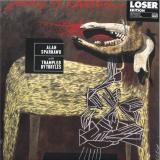
No one can help you build something beautiful quite like those who know you best. Alan Sparhawk knows this well. In his years in Low, he built decades of stirring music with his wife and lifelong creative partner Mimi Parker. In recent years, he has performed around Minnesota with his son Cyrus in DERECHO Rhythm Section, a funk band that also frequently features his daughter Hollis on vocals. There's an irreplaceable naturalism that comes with this kind of dynamic. Those who know you understand you. They love you. They want to help you bring your greatest passions to fruition. So it made sense that Sparhawk would turn to fellow Duluth musicians Trampled by Turtles to realize his latest record. As friends and mentees of Low's, taken under Sparhawk and Parker's wing from their earliest days as a bar band, Trampled by Turtles have performed with Sparhawk countless times over the years. The Duluth ties run deep: "There's a certain vibe that has to do with underdog syndrome, coming from a small town," Sparhawk muses. "Some of it is the weird grind and slackness that being at the mercy of Mother Nature puts in you. It humbles you." The two artists hold the kind of ironclad bond. Following Parker's passing in 2022, Trampled by Turtles invited Sparhawk to join them on tour to give him a space to be surrounded by friends. Occasionally, he would join them onstage. The outpouring of love was palpable every time they played together, a surge of warmth. When playing together is that powerful, why stop there? In winter, 2024, Sparhawk and Trampled by Turtles created With Trampled by Turtles, a record exactly as its name implies: Collective. Communal. Fraternal. Empathetic. A vessel for comfort, a reminder of the harmony that can exist when surrounded by those closest to you. Where White Roses, My God, Sparhawk's last album, plunged headfirst into electronica and radical vocal modulation, With Trampled by Turtles leans into the folk and bluegrass stylings of its backing band, Sparhawk's voice now completely unvarnished. With Trampled by Turtles is far more than just Alan Sparhawk and Trampled by Turtles. It's an affirmation of all the people who have been vital in Sparhawk's life and music, and an opportunity to hold each of their gifts into the light. It's producer Nat Harvie, who has been collaborating and performing with him for years. It's Sparhawk's daughter Hollis, who duets with her father on "Not Broken." And it's Mimi Parker, too: "Too High," "Princess Road Surgery," and "Not Broken" were all tracks she and Sparhawk had been working on in the last few years. These songs finally found a setting that stirringly commemorates them, bolstered by a full ensemble to make every note sing. Their presence is a kind of eternal connection to Parker, a way her musical grace will keep flourishing.

14
The Vestige is the first fruit of a new intergenerational collaboration between Giuseppe Ielasi, a quietly prolific key contributor to the European experimental music scene for over twenty years, and Jack Sheen, a young composer-conductor-sound artist from Manchester whose recent projects have seen him moving seamlessly from enigmatic chamber music composition and installations to conducting the London Symphony Orchestra. Their materials and working methods differ significantly, with Ielasi having focussed for many years on electro-acoustic techniques alongside his ongoing commitment to the guitar, and Sheen primarily composing for traditional instruments. More important, though, is what they share: a fascination with what Sheen calls “mysterious, liminal musical material,” using irregular repetition and cyclical forms to create structures at once alive with activity and almost static, as well as a rigorous exploration of spatial diffusion and the interaction of sound event and environment. Working individually with a library of acoustic instrument sounds from Sheen’s recent projects and Ielasi’s guitar, the pair eventually met for several days at Ielasi’s home studio in Monza, sculpting the fourteen pieces that make up The Vestige. Like Ielasi and Sheen’s solo works, the record shows an exquisite attention to details of sequencing and pacing, the sound palette and compositional approach consistent throughout while each piece asserts its own identity. The twenty-five seconds of the opening piece serve as an entrée into the record’s distinctive world of sound: repeated chirps fluctuate in volume as they move across the stereo spectrum, woven between strangled snatches of string glissando against a backdrop of percussive ticks, long tones, and white noise. Across the remaining thirteen pieces, Ielasi and Sheen sketch further dimensions of the ambiguous space, where distinctions between pitch and noise, repetition and irregularity, electronic and acoustic remain pointedly unclear. As the record’s title suggests, the origins of the sounds we hear have become remote: while at moments we get flashes of timbres and attacks that could come from wind instruments, bowed strings, or prepared guitar, these remain vestigial traces, glimpsed through a veil of shifting white noise textures. These textures are themselves difficult to trace, suggesting artefacts of the recording process, electronic synthesis, amplified room sound, rubbed instruments or objects. The Vestige shows an unusual degree of attention to frequency range as a compositional tool, something it shares with the hyper-subtle variations of Ielasi’s electroacoustic works and the deliberately ‘unbalanced’ midrange-heavy ensemble of Sheen’s Sub. Here, movement between episodes is as much about adding or removing a frequency band as it is about changes in density, harmonic content, or instrumental texture. Tracks are marked by the sudden appearance of subbass or exaggeration of high frequencies in otherwise similar material, contributing to our sense that these fourteen pieces are like different views on a scene that we can never quite see clearly. While calling up a range of past music, from the early works of Rolf Julius to Simha Arom’s recordings of layered polyrhythms embedded in the background sounds of central African villages to the temporal distortions and layered hiss of DJ Screw, the alluring and disconcerting world of The Vestige is entirely its own.
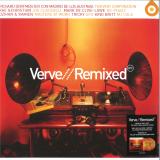
- A1: Spanish Grease (Dorfmeister Con Madrid De Los Austrias Muga Reserve Mix)
- A2: How Long Has This Been Going On (Mj Cole Remix)
- A3: Who Needs Forever (Thievery Corporation Remix)
- B1: Is You Is Or Is You Ain’t My Baby (Rae & Christian Remix)
- B2: Feeling Good (Joe Claussell Remix)
- B3: Return To Paradise (Mark De Clive-Lowe Remix)
- C1: See-Line Woman (Masters At Work Remix)
- C2: Don’t Explain (Dzihan & Kamien Remix)
- C3: Wait Till You
- D1: Summertime (Ufo Remix)
- D2: Strange Fruit (Tricky/Tool Remix)
- D3: Hare Krishna - Hail Krishna (King Britt Remix) See Him (De-Phazz Remix)
12
The Verve Remixed volume debuted in 2002, its concept – inviting top DJs and producers to select songs from the label’s storied vaults – was an instant success, introducing classic jazz recordings to a new generation of listeners and kickstarting a global trend of jazz-electronic fusion.
Now back on vinyl for the first time in 20 years, with the series’ inaugural project VerveRemixed we hear what happens when Master’s at Work meet Nina Simone, and Dzihan & Kamien take on Billie Holiday. Experience the interpretations of renowned remixers with this refreshed physical format.

- A1: Orchestre Du Jardin De Guinée Sakhodou
- A2: Orchestre De La Paillote La Guinée Moussolou
- A3: Bembeya Jazz National Guantanamera-Seyni
- A4: Bembeya Jazz National Sabor De Guajira
- B1: Balla Et Ses Balladins Sakhodougou
- B2: Balla Et Ses Balladins Samba
- B3: Orchestre De La Paillote Kankan-Yarabi
- B4: Myriam’s Quintette Solo Quintette
- C1: Pivi & Les Balladins Ka Noutea
- C2: Horoya Band National N’banlassouro
- C3: Orchestre De La Garde Républicaine Sabouya
- C4: Keletigui Et Ses Tambourinis Samakoro
- D1: Keletigui Et Ses Tambourinis Miri Magnin
- D2: 22 Novembre Band Kouma
- D3: Les Frères Diabaté N’fa
15
On October 2 1958, after over 60 years of colonial rule, Guineans voted overwhelmingly for their independence, and Guinea was declared a Republic with Sékou Touré as President. Guinea was the first of West Africa’s Francophone colonies to gain independence. To free Guinea from its colonial legacy, president Touré sought to restore dignity to his nation and give cause for Guineans to take pride in their culture, history and newfound freedom. To achieve this, he instructed his government to implement new cultural policies that were intended to revitalise and celebrate indigenous culture. The focus of these new policies was on music.
In 1961, President Touré launched authenticité, the name of his new cultural policy for Guinea. One of its first acts was to assemble the best Guinean musicians into a new state-sponsored orchestras that were tasked with presenting traditional Guinean music in a new and modern style. All musicians in Guinea’s orchestras were officially designated as members of the public service. During the years of Sékou Touré’s presidency (1958 – 1984), the government’s cultural policy of authenticité was applied strictly to the creative arts. Guinea’s sole political party, the Parti Démocratique de Guinée exercised complete authority over artistic production. The scale of the Guinean government’s commitment and efforts to invigorate its indigenous musical cultures was unmatched in Africa, and it presented a clear contrast to the minimal endeavours undertaken by Guinea’s former colonial rulers.
From 1967 to 1983, Guinea’s government presented selections of songs from the Voix de la Révolution catalogue on its own recording label, Syliphone. These recordings were described as ‘the fruit of the revolution’. Syliphone was revolutionary in many aspects: it was the first recording label to feature traditional African musical instruments such as the kora and balafon within an orchestre setting; it was the first to present the traditional songs of the griots within an orchestre setting; and it was the first government-sponsored recording label of post-colonial Africa. Syliphone represented authenticité in action, and over 750 songs were released by the recording label on 12-inch and 7-inch vinyl discs. All are highly sought after by collectors worldwide.
This first volume of a two-volume series presents a selection of the best of early Syliphone recordings. The songs demonstrate not only the essence of Guinea’s authenticité policy and of its subsequent Cultural Revolution, but of a confluence of musical styles from Cuba, jazz, highlife and the diverse influences of Guinea’s cultural groups.

A truly essential piece of early Detroit Techno history here, Octave One's original white label "Octivation" EP from 1990 has long been a sought after and coveted slab of wax. This 5 track journey charts the Burden brothers mood from sinister, spacey, acidic Techno jams ("Sonic Fusion") to deeper, more melancholic mid-tempo cuts ("Nicolette") and along the way manages to usher in a new wave of Detroit Techno sounds.
Steeped in soul and depth "Octivation" was hinting towards the epic style Octave One would shape with their various projects in the following decades and releases. The earliest glimpse (Their 1st release) into a long and fruitful career that is still continuing today. This EP was a game changer and it's influence can still be felt in contemporary House and Techno right now.
Now, finally made available again to be re-discovered and experienced.
Re-mastered, re-pressed and re-issued with all the original 430 West white label and sticker artwork intact, in conjunction with the Burden brothers / 430 West Records.

- Do Ya Dub
- Dubbed Days
- Make Me Dub Ft. Ranking Joe
- Dub And Reckless
- Dub Him Away
- Dub More Crying
- Soldier Dub
- Dub Must Be Good
- Dub This
- Tin Tin Dub
- Dub Love
Over the course of The Slackers' nearly 35-year career, the NYC legends have paid respect to numerous interconnected genres of Jamaican music, including ska, reggae, and rocksteady. Dub mixing - a process of creating new "versions" of songs that emphasize the rhythm section and heavy utilization of atmospheric effects such as delay and reverb - looms so large as a driving force in that world, it is no wonder that the band would approach it with the same mix of reverence and creativity. "Dub is the other side of The Slackers," says the band's guitarist, Agent Jay. "A contrast to the uptempo danceable wit of our ska." The Dub Classics LP - originally released (and sold out) in 2021 and now available from Pirates Press Records - represents a collection of some of the greatest fruits of that labour. More than just a "re-mix" album, it is an essential part of the band's catalog that reinvents their sound and reveals all new perspectives on their many talents.

- 1: Mayfair - St Sound Techniques Session – March 968
- 2: Time Has Told Me - 1St Sound Techniques Session – March 1968
- 3: Man In A Shed- 1St Sound Techniques Session – March 1968
- 4: Fruit Tree - 1St Sound Techniques Session – March 1968
- 5: Saturday Sun - 1St Sound Techniques Session – March 1968
- 6: Strange Face - 1St Sound Techniques Session – March 198
- 7: Strange Face – Rough Mix With Guide Vocal – September 1968
- 8: Day Is Done – Take 5 – April 196
- 9: Day Is Done – Take 2 – November 168
- 10: Day Is Done – Take 7 – April 1969
- 11: Man In A Shed – Take 1 – May 1968
- 12: My Love Left With The Rain – Cambridge, Lent Term 1968
- 1: Blossom – Cambridge, Lent Term 968
- 2: Instrumental – Cambridge, Lent Term 1968
- 3: Made To Love Magic – Cambridge, Lent Term 1968
- 4: Mickey’s Tune – Cambridge, Lent Term 1968
- 5: The Thoughts Of Mary Jane – Cambridge, Lent Term 1968
- 6: Day Is Done – Cambridge, Lent Term 198
- 7: Time Has Told Me – Cambridge, Lent Term 1968
- 8: Three Hours – Take 2 – November 196
- 9: Time Has Told Me – Take 4 – November 168
- 10: Strange Face – Take 1 – November 1968
- 11: Saturday Sun – Take 1 – November 1968
- 12: Fruit Tree – Take 4 – November 1968
- 3: Mayfair – Take 5 – January 1969
- 4: River Man – Take 1 – January 1969
- 5: Way To Blue – Cambridge – Winter 1968
- 6: The Thoughts Of Mary Jane – Take 2 – April 199
- 7: Saturday Sun – Take 1 Into Take 2 – April 1969
- 8: River Man – Take 2 – April 1969
- 1: Time Has Told Me
- 2: River Man
- 3: Three Hours
- 4: Way To Blue
- 5: Day Is Done
- 6: Cello Song
- 7: The Thoughts Of Mary Jane
- 8: Man In A Shed
- 9: Fruit Tree
- 10: Saturday Sun
- 1: Time Of No Reply – Take 3 Into Take 4 – December 968
- 2: Cello Song – Take 4 – January 1969
10
The Making Of Five Leaves Left tells the story of how Nick Drake’s debut album ‘Five Leaves Left’ came to be released in 1969. This Nick Drake Estate authorised 4LP edition comprises over 30 previously unheard outtakes from the sessions, compiled across three discs. The final disc to complete the package is the original Joe Boyd produced album. The whole set has been mastered by John Wood. Accompanied by a 60 page book printed on special textured paper stock, written by Neil Storey in collaboration with Richard Morton-Jack, complete with full track recording details, charts and recording history. This Nick Drake Estate authorised 4CD edition comprises over 30 previously unheard outtakes from the sessions, compiled across three discs. The final disc to complete the package is the original Joe Boyd produced album. The whole set has been mastered by John Wood.
Accompanied by a 60 page book printed on special textured paper stock, written by Neil Storey in collaboration with Richard Morton-Jack, complete with full track recording details, charts and recording history.

- A1: 1000 Light Years Dub (Feat. High Times Players, Lloyd Obeah Denton)
- A2: In The Shadow Dub (Feat. Vin Gordon, Glen Dacosta, Sheldon "Atiiba" Bernard)
- A3: Whitewater Dub (Feat. Ibo Cooper, Lew Chang)
- A4: Memories Of Old Dub (Feat. Ernest Ranglin, Tyrone Downie)
- A5: Rose Hall’s Birds Dub (Feat. Vin Gordon, Glen Dacosta)
- B1: Squirrel Inna Barrel Dub (Feat. Ernest Ranglin, Vin Gordon, Karl Bryan)
- B2: Under The Cotton Tree Dub (Feat. Glen Dacosta, Ibo Cooper, Cat Coore)
- B3: 45 Charles Street Dub (Feat. Roots Radics, Dwight Pickney, Dean Fraser)
- B4: Everlasting Love Dub (Feat. Sly & Robbie, Dean Fraser, Peace Diouf)
9
Bringing together over 50 of Jamaica's greatest session musicians, whose work spans from the birth of reggae in the late 1960s until today, Roots Architects is the largest gathering of Jamaican musical talent on one all-instrumental album. Never before have so many veterans, who helped create the immortal rhythms that made reggae internationally successful, been assembled to play on new material without vocals. This project aims to celebrate and pay tribute to the unsung heroes of reggae music: the rhythm builders or Roots Architects. Following the outstanding success of the first chapter of the project, From Then 'Til Now (2024), Fruits Records is pleased to reveal the dub album From Dub 'Til Now. A veritable immersion in the mythical sound of Kingston studios in the late 1970s. Dub master Roberto Sánchez sublimates the work of the Roots Architects with wildly inventive sound experiments. Reminiscent of the finest years of King Tubby, Lee "Scratch" Perry and Scientist.
The project is the brainchild of Swiss keyboardist and producer Mathias Liengme. In 2013, he travelled to Kingston, Jamaica, to produce The Inspirators project, an all-star album gathering Leroy ”Horse-mouth” Wallace, Lloyd Parks, Earl ”Chinna” Smith and Sangie Davis, the four of them acting both as musicians and vocalists. This first experience in Kingston studio life paved the way to what would become the Roots Architects project. In February and March 2017 Mathias Liengme travelled for the fifth time to Kingston to record as many of reggae’s greatest living veteran musicians as he could. With the help of a few of these Architects like Robbie Lyn, Fil Callender or Dalton Browne, he managed to gather over 50 session musicians aged 60 to 85 on nine instrumental songs.
Roots Architects are legends back together in Kingston studios doing what they do best: creating in-strumental music all together!

- A1: Design - Premonition
- A2: Vision - Lucifer’s Friend
- A3: Richard Bone - Alien Girl
- A4: John Howard - I Tune Into You
- A5: Ian North - We’re Not Lonely
- A6: Selwin Image - The Unknown
- B1: Harry Kakoulli - I’m On A Rocket
- B2: Rich Wilde - The Lady Wants To Be Alone
- B3: Billy London - Woman
- B4: Alan Burnham - Science Fiction
- B5: The Microbes - Computer
- B6: The Goo-Q - I’m A Computer
- C1: Gerry & The Holograms - Gerry & The Holograms
- C2: The Warlord - The Ultimate Warlord
- C3: Die Marinas - Fred From Jupiter
- C4: Dee Jay Bert & Eagle - I Am Your Master
- C5: Peta Lily & Michael Process - I Am A Time Bomb
- C6: Sole Sister - It’s Not What You Are But How
- D1: Alasdair Riddell - Do You Read Me?
- D2: Karel Fialka - Armband (The Mystery Song)
- D3: John Springate - My Life
- D4: Idncandescent Luminaire - Famous Names
- D5: Disco Volante - No Motion
- D6: Dream Unit - A Drop In The Ocean
24
Compiled by Philip King
“And then came the rise of synth pop : blokes with dodgy haircuts hunched over keyboard-operated
machines stuffed with wires and do-it-yourself tone oscillators making sounds like a brood of geese
passing gas in a wind tunnel. Whoopee! This is the way the ‘70s ended : not with a blood-curdling bang
bang but with a cheap, synthesized, emasculating whimper.”
NICK KENT, NME.
All The Young Droids: Junkshop Synth Pop 1978-1985 is a new compilation that charts the
underbelly of the epoch-defining sound of the synthesiser in 80s popular music. Compiled by Philip
King (previously seen compiling All The Young Droogs, Glitterbest and Boobs - The Junkshop
Glam Discotheque), the music here connects the dots between DIY synth enthusiasts grappling with
new, cheap synthesisers at the tail-end of punk and wannabe, jobbing songwriters enthral to the new
music pioneered by Gary Numan, Depeche Mode and Daniel Miller’s Mute Records. Featuring rare
tracks of auto-didactic progressive pop music, proto-techno punk, shoot-for-the-stars-land-in-the-gutter
chart flops and heralded, underground synth classics, School Daze paints a picture of beautiful failure.
Complete with extensive sleeve notes written by King and never before seen imagery, all 24 tracks
were remastered by RPM in-house engineer Simon Murphy, many from vinyl copies due to lost master
tapes. The story told on All The Young Droids is one of the dawning opportunity presented by both the
emergence to the market of cheaper analog synthesisers and the distribution networks plus indie labels
that exploded with the advent of punk music in 1976. While the music that sprouted out all over the
globe in the wake of these factors was decried as fake, plastic, a refutation of punk’s guitar-led
revolution, it’s telling that much of the music on All The Young Droids.. was created in bedrooms,
ramshackle studios and home-made set ups with often borrowed equipment. In the era of record labels
jumping to capitalise on the success of The Sex Pistols, The Clash (both on major labels, of course)
these artists struggled to stand out from a new gold-rush with next to no budget or PR team. With radio
and labels desperate for the new Yazoo, what resulted was a testament to necessity being the mother
of invention.
At the time, the synthesiser was the music of the future, a shiny new machine that could paint like an
orchestra with a single finger and a 4-track. In the hands of Manchester avant-pranksters Gerry & The
Holograms it’s a pulsing, sardonic weapon.. the only instrument on the Messthetics classic lampooning
of New Wave fashion. In Hamburg, a 16 year old Andreas Dorau used it to write and record (with his
female classmates on vocals) a global smash in Fred Vom Jupiter (later licensed to Mute Records).
The hard-to-find English version (Fred From Jupiter, natch) is included here. Many artists with alreadystoried careers caught the bug and recorded synthesiser-fuelled peons to space, computers, the future
and, of course, love-interests. Harry Kakoulli, late of Squeeze, recorded a solo album in 1979 that
included the incredible power-synth-pop smash-that-never-smashed I’m On A Rocket. Similarly, Ian
North of Neo and American Power Pop stalwarts Milk ’n’ Cookies bought a Korg MS20 and used a
tape machine to record We’re Not Lonely, an absolute lost-classic of minimal synth pop. We’re Not
Lonely also features on the Junkshop Synth Pop sampler 7” twinned with John Howard unreleased
track You Will See, released April 12th 2025.
There are plenty of compilation debuts in evidence. Sole Sister were a mysterious trio who were
featured on the Scaling Triangles compilation of female-fronted, queer-adjacent post-punk /
underground music that also featured The Petticoats. Selwin Image were from San Francisco and
featured members of the recently defunct power pop/punk group The Pushups. Their stupidly catchy
The Unknown fizzes with New Wave energy - think XTC to Sparks but remains unreleased until now.
Dream Unit’s A Drop In The Ocean is an early synth wave cut, positively teaming with Joy Division
instrumentation, previously only released on a long-forgotten and super rare, self-released EP.
Incandescent Luminaire’s Famous Names belies an archetypal struggle of a small-town trying to
make it in a cruel industry but is a thrilling New Romantic-Synth Wave cross over with a OMD
gloominess that’s a joy to hear. Feminist Minimal Wave track I Am A Time Bomb by performance artist
Peta Lilly and Michael Chance is a revelation destined for new found cult status. It was released on 7”
and lost until now.
The flipside to the subterranean, never-made-it synth pop mentioned above are the ambitious, even
fruity attempts at success that have a perennial elegance to their confidence. New Jersey-ite Billy
London (real name Ed Barth) tried to cash in on the synth boom with Woman, released by a major
label, a lurching new wave track built on the Louie Louie rhythm and a wonderfully camp Lou Reedstyle sleazy vocal before exploding in the synthesised chorus. The song bombed but with a chorus like
this, you have to wonder why? Ex-Glitter Band member John Springate’s My Life is truly epic, with
doomed chord progressions and massive sounding drums turning into at least 3 different songs in the
course of the track. Before you wonder what’s going on the song resolves with a glorious return to the
main refrain.
The dry-ice-dressed dance floor is well catered for too. Design’s Premonition and Vision’s Lucifer’s
Friend are stone-cold minimal synth bangers, well loved but given a new lease of life here. The
Warlord’s The Ultimate Warlord was released in 1978, a homespun proto Hi NRG banger that was
later re-recorded by The Immortals in Canada who had a club hit with it. One-man- band Disco
Volante’s No Motion was re-issued by Synth wave label Medical in 2012 but makes its first vinyl
compilation appearance here. Close your eyes and you can imagine what Lawrence of Felt would have
sounded like with some cheap Korgs a little earlier in his career. Gibraltar-based trio The Microbes
imagined a computer programming people to dance - how prescient - and ended up with a propulsive,
robo-funk track with splendid rubbery bass playing over a tectonic drum machine. Previously picked up
by Belgian label Stroom TV, Dee Jay Bert & Eagle’s heavily Euro-accented I Am Your Master
demands the listener to “come to paradise!” In a frankly terrifying manner.
All The Young Droids is the first compilation to peel away from the narrative that dour, Minimal Synth
and Cold Wave were the only musical children of the first rush of synth pop. Philip King and School
Daze Records describe a much more complicated world: along with the austere, Brutalist children of
Daniel Miller (who produced Alan Burnham’s Bowie-Low-influenced Science Fiction here) was a
plethora of desperate cash-ins, accidental mainstream hits, ambitious pop dramas and major label
punts that went nowhere. Crucially, the compilation blurs the line between junk and treasure. What if the
two things are interchangeable. What if it’s all science fiction?

- A1: Design - Premonition
- A2: Vision - Lucifer’s Friend
- A3: Richard Bone - Alien Girl
- A4: John Howard - I Tune Into You
- A5: Ian North - We’re Not Lonely
- A6: Selwin | Image - The Unknown
- B1: Harry Kakoulli - I’m On A Rocket
- B2: Rich Wilde - The Lady Wants To Be Alone
- B3: Billy London - Woman
- B4: Alan Burnham - Science Fiction
- B5: The Microbes - Computer
- B6: The Goo-Q - I’m A Computer
- C1: Gerry & The Holograms - Gerry & The Holograms
- C2: The Warlord - The Ultimate Warlord
- C3: Die Marinas - Fred From Jupiter
- C4: Dee Jay Bert & Eagle - I Am Your Master
- C5: Peta Lily & Michael Process - I Am A Time Bomb
- C6: Sole Sister - It’s Not What You Are But How
- D1: Alasdair Riddell - Do You Read Me?
- D2: Karel Fialka - Armband (The Mystery Song)
- D3: John Springate - My Life
- D4: Incandescent Luminaire - Famous Names
- D5: Disco Volante - No Motion
- D6: Dream Unit - A Drop In The Ocean
24
Compiled by Philip King
“And then came the rise of synth pop : blokes with dodgy haircuts hunched over keyboard-operated
machines stuffed with wires and do-it-yourself tone oscillators making sounds like a brood of geese
passing gas in a wind tunnel. Whoopee! This is the way the ‘70s ended : not with a blood-curdling bang
bang but with a cheap, synthesized, emasculating whimper.”
NICK KENT, NME.
All The Young Droids: Junkshop Synth Pop 1978-1985 is a new compilation that charts the
underbelly of the epoch-defining sound of the synthesiser in 80s popular music. Compiled by Philip
King (previously seen compiling All The Young Droogs, Glitterbest and Boobs - The Junkshop
Glam Discotheque), the music here connects the dots between DIY synth enthusiasts grappling with
new, cheap synthesisers at the tail-end of punk and wannabe, jobbing songwriters enthral to the new
music pioneered by Gary Numan, Depeche Mode and Daniel Miller’s Mute Records. Featuring rare
tracks of auto-didactic progressive pop music, proto-techno punk, shoot-for-the-stars-land-in-the-gutter
chart flops and heralded, underground synth classics, School Daze paints a picture of beautiful failure.
Complete with extensive sleeve notes written by King and never before seen imagery, all 24 tracks
were remastered by RPM in-house engineer Simon Murphy, many from vinyl copies due to lost master
tapes. The story told on All The Young Droids is one of the dawning opportunity presented by both the
emergence to the market of cheaper analog synthesisers and the distribution networks plus indie labels
that exploded with the advent of punk music in 1976. While the music that sprouted out all over the
globe in the wake of these factors was decried as fake, plastic, a refutation of punk’s guitar-led
revolution, it’s telling that much of the music on All The Young Droids.. was created in bedrooms,
ramshackle studios and home-made set ups with often borrowed equipment. In the era of record labels
jumping to capitalise on the success of The Sex Pistols, The Clash (both on major labels, of course)
these artists struggled to stand out from a new gold-rush with next to no budget or PR team. With radio
and labels desperate for the new Yazoo, what resulted was a testament to necessity being the mother
of invention.
At the time, the synthesiser was the music of the future, a shiny new machine that could paint like an
orchestra with a single finger and a 4-track. In the hands of Manchester avant-pranksters Gerry & The
Holograms it’s a pulsing, sardonic weapon.. the only instrument on the Messthetics classic lampooning
of New Wave fashion. In Hamburg, a 16 year old Andreas Dorau used it to write and record (with his
female classmates on vocals) a global smash in Fred Vom Jupiter (later licensed to Mute Records).
The hard-to-find English version (Fred From Jupiter, natch) is included here. Many artists with alreadystoried careers caught the bug and recorded synthesiser-fuelled peons to space, computers, the future
and, of course, love-interests. Harry Kakoulli, late of Squeeze, recorded a solo album in 1979 that
included the incredible power-synth-pop smash-that-never-smashed I’m On A Rocket. Similarly, Ian
North of Neo and American Power Pop stalwarts Milk ’n’ Cookies bought a Korg MS20 and used a
tape machine to record We’re Not Lonely, an absolute lost-classic of minimal synth pop. We’re Not
Lonely also features on the Junkshop Synth Pop sampler 7” twinned with John Howard unreleased
track You Will See, released April 12th 2025.
There are plenty of compilation debuts in evidence. Sole Sister were a mysterious trio who were
featured on the Scaling Triangles compilation of female-fronted, queer-adjacent post-punk /
underground music that also featured The Petticoats. Selwin Image were from San Francisco and
featured members of the recently defunct power pop/punk group The Pushups. Their stupidly catchy
The Unknown fizzes with New Wave energy - think XTC to Sparks but remains unreleased until now.
Dream Unit’s A Drop In The Ocean is an early synth wave cut, positively teaming with Joy Division
instrumentation, previously only released on a long-forgotten and super rare, self-released EP.
Incandescent Luminaire’s Famous Names belies an archetypal struggle of a small-town trying to
make it in a cruel industry but is a thrilling New Romantic-Synth Wave cross over with a OMD
gloominess that’s a joy to hear. Feminist Minimal Wave track I Am A Time Bomb by performance artist
Peta Lilly and Michael Chance is a revelation destined for new found cult status. It was released on 7”
and lost until now.
The flipside to the subterranean, never-made-it synth pop mentioned above are the ambitious, even
fruity attempts at success that have a perennial elegance to their confidence. New Jersey-ite Billy
London (real name Ed Barth) tried to cash in on the synth boom with Woman, released by a major
label, a lurching new wave track built on the Louie Louie rhythm and a wonderfully camp Lou Reedstyle sleazy vocal before exploding in the synthesised chorus. The song bombed but with a chorus like
this, you have to wonder why? Ex-Glitter Band member John Springate’s My Life is truly epic, with
doomed chord progressions and massive sounding drums turning into at least 3 different songs in the
course of the track. Before you wonder what’s going on the song resolves with a glorious return to the
main refrain.
The dry-ice-dressed dance floor is well catered for too. Design’s Premonition and Vision’s Lucifer’s
Friend are stone-cold minimal synth bangers, well loved but given a new lease of life here. The
Warlord’s The Ultimate Warlord was released in 1978, a homespun proto Hi NRG banger that was
later re-recorded by The Immortals in Canada who had a club hit with it. One-man- band Disco
Volante’s No Motion was re-issued by Synth wave label Medical in 2012 but makes its first vinyl
compilation appearance here. Close your eyes and you can imagine what Lawrence of Felt would have
sounded like with some cheap Korgs a little earlier in his career. Gibraltar-based trio The Microbes
imagined a computer programming people to dance - how prescient - and ended up with a propulsive,
robo-funk track with splendid rubbery bass playing over a tectonic drum machine. Previously picked up
by Belgian label Stroom TV, Dee Jay Bert & Eagle’s heavily Euro-accented I Am Your Master
demands the listener to “come to paradise!” In a frankly terrifying manner.
All The Young Droids is the first compilation to peel away from the narrative that dour, Minimal Synth
and Cold Wave were the only musical children of the first rush of synth pop. Philip King and School
Daze Records describe a much more complicated world: along with the austere, Brutalist children of
Daniel Miller (who produced Alan Burnham’s Bowie-Low-influenced Science Fiction here) was a
plethora of desperate cash-ins, accidental mainstream hits, ambitious pop dramas and major label
punts that went nowhere. Crucially, the compilation blurs the line between junk and treasure. What if the
two things are interchangeable. What if it’s all science fiction?

Alpenglühen continues to establish itself as a trusted source for forward-thinking ambient techno with its latest vinyl release, introducing Vanertia, the new collaborative alias from Vand and !nertia. This debut offering fuses the distinctive sonic DNA of both artists into a deeply textured and rhythmically intricate EP.
The record draws heavily from the dub techno tradition, with spacious delay lines and submerged chord stabs setting the tone across all tracks. Yet it’s the subtle interplay between syncopated grooves and classic 4x4 pulse that gives the record its driving energy. The percussion is detailed and organic, riding a bed of carefully sculpted low-end that never overwhelms but always supports the movement.
The result is a hypnotic, immersive listen that balances club functionality with introspective richness.
With Vanertia, Vand and !nertia have laid the groundwork for what promises to be a highly fruitful collaboration.

- A 1: Scoop
- A2: I Never
- A3: Breakdown
- A4: Slap 5. Cue
- B 1: Semitones
- B2: Paycheck
- B3: They Go Wild
- B4: All I Need
“My hero’s back,” Madeline Kenney sings on the second track of her newest effort, Kiss from the Balcony. In a sense, she means herself; made with friends Ben Sloan and Stephen Patota across just a few in-person studio sessions in Oakland, these tracks represent a culmination of Madeline’s musings on growth and resilience reaching back years, brought to life through this generative and vibrant collaboration. Close listeners can hear the breadth of stylistic elements and themes carried through from various eras of her work, which all come together in a cohesive and timeless record.
In two week-long intensive sessions, the three collaborators grew these nine songs from fragments, sketches, and seeds. With a background in experimental percussion and sound design, Ben Sloan brings an electronic sound to Kenney’s writing; Stephen Patota provides ingenious guitar melodies throughout and grounds the project in acoustic elements. Kiss from the Balcony was originally intended to be an EP, but the sessions brought forth such fruitful ideation and play that the project was expanded to a full length album. It sits in Madeline’s discography as a thematic and musical progression that sees her iterate on ideas about love and explore new sonic motifs through her work with Patota and Sloan.
Much of Kiss from the Balcony is a meditation on modern relationships, a feminist and utterly human contemplation of power and who holds it. “Hereditary backward leaning,” she describes in ‘Slap,’ of the female condition; “But no-one ever likes to see the girls break down / So they keep it to the bathroom floor” she sings in the rapturous opener, ‘Scoop.’ While the songs are shrouded in metaphor, the ubiquity of heartbreak and resilience decode much of the internal conflict Kenney depicts. The album sees her recognize the precarity and peculiarity of life and take it by the horns, realizing she controls her own narrative:
She explores the relationships between joy and suffering, choosing to see them as inseparable, two sides of a single coin. “It’s never over / When will they love me?” Kenney asks on ‘They Go Wide,’ describing her positionality both as a woman in relationship and as an indie artist in the modern music industry.
A playful hopefulness pervades the record, providing a sense of revelation in the journey throughout, Kenney’s radical acceptance of life as it is like a lyrical tongue out at the absurd.

16
Accomplished Polish beat-maker Emapea has made memorable appearances on many Cold Busted label compilations – such as in the IWYMI and Bust Free series – and has been selected for inclusion in Mark Farina’s next Mushroom Jazz installment. All this activity has mouths watering for the debut full length album from Emapea, and the appearance of Seeds, Roots & Fruits doesn’t disappoint one bit. Featuring sixteen exceptional tracks ranging from hip hop to acid jazz to psychedelic trip hop in the style of Mo’Wax, Emapea’s long player is indeed, as a wise man once said, “a journey into sound.” Seeds, Roots & Fruits rises above the average beats album to reveal the enduring depth of this young producer
