Der Mittlere Westen, insbesondere der Teil, aus dem Eric D. Johnson stammt, ist eine weitgehend flache Weite. Wenn man auf der Autobahn hindurchbraust, sieht man Städte und Ortschaften in der Ferne aufragen, doch wenn man blinzelt, verpasst man andere von Menschenhand geschaffene Gegenstücke zum Leben in der Ebene, die die Landschaft prägen: Hügel um Hügel, erbaut aus den Abfällen der Vergangenheit: Mülldeponien. Einige dieser Hügel eignen sich hervorragend als Schlittenhügel, Parks und Wanderwege. Andere verwandeln organische Abfälle in Kompost. ,The Landfill" ist etwas ganz anderes: ein Berg, der die Landschaft in Johnsons Herzen dominiert. Im Laufe seiner mittlerweile 25-jährigen Karriere unter dem Namen Fruit Bats war der Großteil von Eric D. Johnsons Schaffen das Ergebnis von Geduld und Feinschliff. Seine Songs sind, um einen Ausdruck zu verwenden, Langzeitprojekte, die auf Alben zum Leben erweckt werden, welche lange Zeiträume und Erinnerungen umfassen. "Baby Man" änderte das - er verbot sich, auf Material zurückzugreifen, an dem er vor der Aufnahme des Albums gearbeitet hatte. Es war sowohl ein atemberaubendes Dokument von Johnsons Können als Singer-Songwriter als auch ein ungeschönter Bericht über die zwei Wochen, in denen er das Album aufnahm. "Diese Session war vorbei", erklärt er, "aber es gab noch viel mehr zu erkunden. Mir gefiel die Unmittelbarkeit davon, und ich wollte sehen, wie sich das auf ein Fruit-Bats-Album mit voller Bandbesetzung übertragen lassen würde." Innerhalb weniger Wochen war er wieder im Studio, diesmal mit seiner Band: David Dawda (Bass), Josh Mease (Gitarren, Synthesizer), Frank LoCrasto (Klavier, Synthesizer) und Kosta Galanopoulos (Schlagzeug). Wenn man sich "The Landfill" anhört, stellt man fest: Diese Band rockt. Johnson produzierte die ersten Aufnahmesessions in den Bear Creek Studios in Washington und machte sich daran , "den Sound dieser Band einzufangen, die mich immer wieder in Staunen versetzt - das Gefühl, in einem Raum mit Musikern zu sein, die man liebt und denen man genug vertraut, um sie einfach machen zu lassen." Sie nahmen das meiste davon in einem Durchgang auf - ohne Click-Tracks, ohne zusammengestellte Gesangsparts und mit minimalen Overdubs, wobei der häufige Mitwirkende Thom Monahan zurückkehrte, um zusätzliche Produktionsarbeit zu leisten und den finalen Mix von ,The Landfill" zu erstellen. "So machen wir es auch mit meiner anderen Band, Bonny Light Horseman, und ich war neugierig, wie es bei den Fruit Bats funktionieren würde", bemerkt Johnson. "Es ist sowohl ein sehr persönliches Album als auch mein bisher kollaborativstes." Es ist zudem das live-orientierteste Album der Fruit Bats seit "The Ruminant Band" aus dem Jahr 2009, und durch die Reduzierung der Spuren, die einen Song einer kompletten Band normalerweise ausmachen, ist die psychedelische, technicolorartige Verträumtheit ihres Sounds lebendiger denn je. Die Songs auf "The Landfill" zeichnen sich sofort als einige der besten in Eric D. Johnsons Werk aus, Suchende und Hymnen gleichermaßen. Es ist der bisher gewaltigste Gipfel, den er erklommen hat.
Buscar:füse
- 1: The Saddest Part Of The Song
- 2: All Wounds
- 3: Think Aboutcha
- 4: That Goddamn Sun
- 5: Silverfish In The Sink
- 6: Wild Pony Tower Moment
- 7: Fishin' For A Vision
- 8: Perhaps We're A Storm
- 9: Hummingbird Sage
- 10: The Landfill
PINK SPLATTER IN CLEAR VINYL[22,27 €]
Der Mittlere Westen, insbesondere der Teil, aus dem Eric D. Johnson stammt, ist eine weitgehend flache Weite. Wenn man auf der Autobahn hindurchbraust, sieht man Städte und Ortschaften in der Ferne aufragen, doch wenn man blinzelt, verpasst man andere von Menschenhand geschaffene Gegenstücke zum Leben in der Ebene, die die Landschaft prägen: Hügel um Hügel, erbaut aus den Abfällen der Vergangenheit: Mülldeponien. Einige dieser Hügel eignen sich hervorragend als Schlittenhügel, Parks und Wanderwege. Andere verwandeln organische Abfälle in Kompost. ,The Landfill" ist etwas ganz anderes: ein Berg, der die Landschaft in Johnsons Herzen dominiert. Im Laufe seiner mittlerweile 25-jährigen Karriere unter dem Namen Fruit Bats war der Großteil von Eric D. Johnsons Schaffen das Ergebnis von Geduld und Feinschliff. Seine Songs sind, um einen Ausdruck zu verwenden, Langzeitprojekte, die auf Alben zum Leben erweckt werden, welche lange Zeiträume und Erinnerungen umfassen. "Baby Man" änderte das - er verbot sich, auf Material zurückzugreifen, an dem er vor der Aufnahme des Albums gearbeitet hatte. Es war sowohl ein atemberaubendes Dokument von Johnsons Können als Singer-Songwriter als auch ein ungeschönter Bericht über die zwei Wochen, in denen er das Album aufnahm. "Diese Session war vorbei", erklärt er, "aber es gab noch viel mehr zu erkunden. Mir gefiel die Unmittelbarkeit davon, und ich wollte sehen, wie sich das auf ein Fruit-Bats-Album mit voller Bandbesetzung übertragen lassen würde." Innerhalb weniger Wochen war er wieder im Studio, diesmal mit seiner Band: David Dawda (Bass), Josh Mease (Gitarren, Synthesizer), Frank LoCrasto (Klavier, Synthesizer) und Kosta Galanopoulos (Schlagzeug). Wenn man sich "The Landfill" anhört, stellt man fest: Diese Band rockt. Johnson produzierte die ersten Aufnahmesessions in den Bear Creek Studios in Washington und machte sich daran , "den Sound dieser Band einzufangen, die mich immer wieder in Staunen versetzt - das Gefühl, in einem Raum mit Musikern zu sein, die man liebt und denen man genug vertraut, um sie einfach machen zu lassen." Sie nahmen das meiste davon in einem Durchgang auf - ohne Click-Tracks, ohne zusammengestellte Gesangsparts und mit minimalen Overdubs, wobei der häufige Mitwirkende Thom Monahan zurückkehrte, um zusätzliche Produktionsarbeit zu leisten und den finalen Mix von ,The Landfill" zu erstellen. "So machen wir es auch mit meiner anderen Band, Bonny Light Horseman, und ich war neugierig, wie es bei den Fruit Bats funktionieren würde", bemerkt Johnson. "Es ist sowohl ein sehr persönliches Album als auch mein bisher kollaborativstes." Es ist zudem das live-orientierteste Album der Fruit Bats seit "The Ruminant Band" aus dem Jahr 2009, und durch die Reduzierung der Spuren, die einen Song einer kompletten Band normalerweise ausmachen, ist die psychedelische, technicolorartige Verträumtheit ihres Sounds lebendiger denn je. Die Songs auf "The Landfill" zeichnen sich sofort als einige der besten in Eric D. Johnsons Werk aus, Suchende und Hymnen gleichermaßen. Es ist der bisher gewaltigste Gipfel, den er erklommen hat.
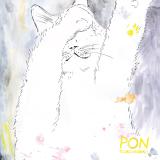
Pon is Tujiko Noriko’s sixth album for Editions Mego and a further extension of her already significant body of work as both a solo and collaborative artist. Dedicated to her cat who she adopted as an infant and passed away due an accident having been born deaf, Pon is imbued with abstraction, tenderness and a deep emotional resonance.
Noriko’s palette of electronics, romantic melodies and surprising sonic details are all fully present here, and like her last full length, 2023’s Crépuscule this is an epic work, released as a 2LP by Editions Mego alongside a Japanese CD release.
The unmistakable hue of Japan hovers throughout this emotional rich landscape. Subtle field recordings and fragile, abstract motifs drift through the album, all cloaked in a warmth and humanity that only Noriko seems able to conjure.
Pon moves effortlessly between the childlike and the obscure. There are moments of deceptive simplicity where unexpected elements suddenly surface — strange voices emerge on Boku Wa Obaka, Knife of Yonder is a standout: a startling ten-minute unfolding that begins with a warm, almost Eno-esque drift before launching into a soaring mid-section and finally landing somewhere unexpectedly blues-adjacent.
Kikoeru Pon is brimming with childlike wonder — a heartfelt ballad that dissolves into domestic field recordings, including sounds of the feline for whom both the album and track are named. A quietly devastating ending that brings the personal nature of the record into sharp focus.
There is a deep sense of the human in the way Noriko embraces technology. This is far from cold abstraction; rather, Ponfeels like a colourful photo album, documenting Noriko’s inner world and instincts with remarkable intimacy. Hovering in liminal states between pop, ambient and abstraction, this is a deeply affective and moving release that reveals new surprises with each listen.
The emotional range of Noriko’s latest offering inspires hope in a world in disarray. It is both gentle and epic and one which we feel embodies the work of an artist fully at the height of her powers.
- A1: Not The Country You Know
- A2: This Ain't That
- A3: Am I Wrong
- A4: Comin Right Back
- A5: Bad For You
- A6: Nasty Player
- B1: God Mode
- B2: Freddy Tiffany
- B3: Is You Cool
- B4: How You Wanna Play
- B5: No Fun
- B6: Ain't Going
- C1: Should I
- C2: Always Something
- C3: Who Am I
- C4: Psychology Of Revenge
- C5: Control What I Can
- C6: What's Really Real
- D1: Plant A Seed
- D2: Chasing
- D3: Massage Envy
- D4: Walk Away
- D5: Bad At Goodbyes
In the evolving landscape of modern Southern hip-hop, the pairing of Starlito and Bandplay stands out as a unique bridge between street-level authenticity and refined, calculated musicality. Their collaborative project, Not The Country You Know, functions less like a standard release and more as a manifesto—a masterclass in the chemistry between a seasoned, introspective lyricist and a producer who possesses an intuitive grasp of the region's pulse. It is an exploration of legacy and adaptation, capturing the tension between where they came from and where the culture is currently headed.
Bandplay, long recognized for sculpting the sonic identity of Memphis icons, brings his signature, trunk-rattling 808s to the project, yet he manages to pivot here. The production feels remarkably expansive, masterfully blending the raw, stripped-back aesthetics of classic Tennessee rap with forward-thinking textures that refuse to be confined to a single sub-genre. Complementing this, Starlito operates with his trademark mix of cynical observation and genuine vulnerability. He navigates these beats with the weary grace of an artist who has weathered the music industry's relentless cycles, treating every bar like a necessary piece of a larger, ongoing story.
The album’s title serves as a direct commentary on these shifting tides. Across the tracklist, the duo investigates the growing disparity between the romanticized South and the cold realities of the streets, alongside the inevitable evolution of the music business itself. There is no frantic chasing of streaming-era trends or algorithmic bait here; instead, the project remains a stubborn, confident assertion of artistic identity. By weaving together Starlito’s "voice-of-reason" flow and Bandplay’s evolving, genre-bending sound, Not The Country You Know challenges the listener to abandon their preconceived notions of the region, offering instead a complex, urgent vision of a South that is as haunting as it is vibrant.
- 1: Sherpa
- 2: Tohogd
- 3: Tamebsz
- 4: Ababa Hotel
- 5: Sahardnieh
- 6: L'aberek
Das zeitreisende Duo Angine de Poitrine aus dem kanadischen Quebec, inspiriert von den größten Rockstars der Welt, ist fasziniert von Hotdogs, Pyramiden und der schieren Grandiosität der Rockmusik. Mit treibenden Drum-Grooves und kunstvoll geschichteten mikrotonalen Gitarren erzeugen Klek und Khn de Poitrine hypnotische Klang- und Bildwelten im psychedelischen Math-Rock-Kosmos. Ihre Live-Session bei KEXP hat bereits Millionen von Aufrufen erzielt – Tendenz steigend. Im Februar 2026 zählt die neue Single "Fabienk" zu den 50 meistgesuchten Songs weltweit auf Shazam. Hinzu kommen in wenigen Minuten ausverkaufte Konzerte, Auftritte auf internationalen Festivals und zehntausende Vinylpressungen, um die Nachfrage zu decken… All das ist vor allem für uns Menschen wichtig. Angine de Poitrine hingegen spielen einfach nur gerne Rock’n’Roll.
- 1: Premonition
- 2: Brutalist With Filigree
- 3: Loose Canon
- 4: Pulse
- 5: Index Of Memories
- 6: It Ignites
- 7: Union Pool Melody
BASIC - das Trio aus Chris Forsyth (Gitarre), Mikel Patrick Avery (Percussion, Drumcomputer, Elektronik) und Douglas McCombs (Fender Bass VI) - hat sein neues Album mit sieben Titeln innerhalb von zwei Tagen in den Electrical Audio Studios in Chicago aufgenommen und die Overdubs sowie den Mix zusammen mit Je Zeigler in Philadelphia fertiggestellt. Die Aufnahmen sind groovig, aber leicht und locker, wobei die Songs viel größer klingen, als man es von einem Trio erwarten würde. Für reichlich Detail sorgen die ineinandergreifenden Gitarren und Averys einzigartige Kombination aus elektronischen Beats und akustischer Percussion, die er live mit verschiedenen selbstgebauten elektronischen Prozessoren bearbeitet und manipuliert. Kurz nach der Veröffentlichung ihres Debüts (This Is BASIC, 2024) stieß Bassist McCombs (Tortoise, Brokeback) zu der Gruppe, und zusammen mit den in Philly ansässigen Kernmitgliedern Forsyth (Solar Motel Band) und Avery (Natural Information Society) tourte die Band mit dem Album die Westküste rauf und runter sowie durch den Nordosten und Mittleren Westen der USA und machte Halt bei einflussreichen Festivals wie Sound & Gravity und Big Ears. Die Chemie zwischen den dreien führte fast sofort zur Entwicklung von neuem Material, und die ,Dream City"-EP erschien im Frühjahr 2025.
Do You Feel Me sees New York house staple NY’s Finest (Victor Simonelli) return with one of his most iconic productions, bringing the unmistakable garage house sound back to vinyl.
Built around uplifting piano lines, soulful vocal elements and groove-led rhythms, the track captures the feel-good energy of classic New York dancefloors and remains a timeless cut for DJs.
A recognised name within the New York house scene, Victor Simonelli’s productions sit comfortably alongside legendary artists such as Masters At Work, Todd Terry and Tommy Musto.
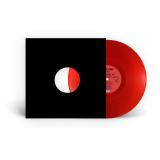
Back on fresh 12" red vinyl and featuring full suite of mixes including Club Mix, Instrumental, Dub, Bonus Beat and Piano Pella, this release brings an essential garage house record to a new generation while maintaining strong appeal for long-time collectors.
As the so-called “Latin boom” becomes a new anchor for hard-swung club sounds, it is crucial to recognize that the region’s musical culture extends far beyond dembow edits and the pop-trap hybrids that have edged into the mainstream. Monterrey-born, New York City-based producer and DJ Delia Beatriz, aka Debit, returns to NAAFI with Potpourri, a generous and kinetic collection of dancefloor-oriented tracks filled with percussive flourishes, squelching 303 basslines, and rhythmic mutations that actively challenge the status quo. Rather than rebuilding “Latin sounds” as a fixed category, the album rethinks their internal logic, tracing the evolution of techno and house in cities like Detroit, Chicago, and New York alongside parallel innovations emerging in Mexico, Colombia, and across the wider Latin world. Positioned on the bridge between Mexico and the US, Potpourri does not seek synthesis as a gesture of smooth fusion, but as a site of disruption.
The album can be heard as a loose follow-up to System (2018), Debit’s NAAFI-released EP that expanded the sonic potential of tribal guarachero through triplet-driven rhythms, industrial pressure, and noisy reconstruction. Potpourri retains guaracha as a structural backbone while drawing further influence from veteran DJ and producer Javier Estrada—who also appeared on System—and particularly from his fast-paced, nonlinear style of mixing. That approach becomes a formal principle here: canonical structures are dismantled, repetition is avoided, and tracks evolve without sacrificing propulsion. Coming after the introspective temporal inquiry of Desaceleradas and the speculative historical acoustics of The Long Count, Potpourri arrives as a deliberate surge of energy. As Beatriz explains: “It’s a manifesto for rethinking form and sound in dance music. By stepping outside traditional structures and embracing the potpourri approach, I’m creating new meaning with familiar rhythms. I’ve also been applying this to my DJ sets, using it as a tool to break free from established norms and explore new narrative possibilities.”
Years in the making, Potpourri imagines an alternate timeline in which the psychedelic squelch of acid—echoing pioneers such as DJ Pierre and Mr. Fingers—and the dub-inflected atmospheres of Basic Channel entered into direct and sustained contact with Latin American club mutations. Those references are legible, but never merely quoted. Instead, they are folded into syncopated hi-hats, overdriven kicks, and unstable arrangements that absorb both the intensity of the parties Beatriz remembers from Monterrey and the abrasive edge she sharpened at DIY noise shows in New England. The result is unmistakably a dancefloor record—heard in tracks as forceful as “Pero like” and the peak-time pressure of “tuvesuerte”—but one saturated with grotesque, psychedelic atmospheres, where sounds dissolve into hoarse croaks, acidic smears, and anxiety-inducing growls. Here, the rave becomes not simply a site of release, but a platform for navigating identity, hybridity, and artistic formation across borders. Moving through peaks and ruptures, Potpourri reveals a party narrative that is not linear but multidimensional.
By folding together the fluidity of DJ culture, the experimental charge of acid, and the rhythmic vitality of guaracha, Potpourri proposes a space of formal and political innovation within Latin America’s rapidly expanding electronic music landscape. It is a record that refuses containment, pushing against the templates through which Latin electronic music is often consumed, and insisting instead on friction, instability, and transformation as generative conditions for the dancefloor.
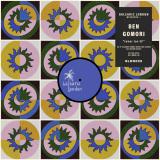
Balearic London's very own Ben Gomori presents his first extended play since his 2024 debut album 'Collapsing Time', collecting an array of sensual sounds across four tracks. 'It's Always Sunny Above The Clouds' is a punchy collaboration with German powerhouse Lauer, powered by bright piano and synths paired with '80s acid house drums and a thick melodic bassline. 'Mucho Gusto!' goes full Italo, bouncy energy matched to an anthemic horn sample. 'Fun As Fk' makes great use of rising star Caio Cenci's infectious guitar licks over a phat-bottomed groove and camp '80/90s sample synths, and 'Inner Luv' slows the tempo for a chuggy flamenco-flecked bliss-out.
- 1: Fabienk
- 2: Mata Zyklek
- 3: Sarniezz
- 4: Perep Utz
- 5: Yor Zarad
- 6: Angor
Das zeitreisende Duo Angine de Poitrine aus dem kanadischen Quebec, inspiriert von den größten Rockstars der Welt, ist fasziniert von Hotdogs, Pyramiden und der schieren Grandiosität der Rockmusik. Mit treibenden Drum-Grooves und kunstvoll geschichteten mikrotonalen Gitarren erzeugen Klek und Khn de Poitrine hypnotische Klang- und Bildwelten im psychedelischen Math-Rock-Kosmos. Ihre Live-Session bei KEXP hat bereits Millionen von Aufrufen erzielt – Tendenz steigend. Im Februar 2026 zählt die neue Single und Album-Opener "Fabienk" zu den 50 meistgesuchten Songs weltweit auf Shazam. Hinzu kommen in wenigen Minuten ausverkaufte Konzerte, Auftritte auf internationalen Festivals und zehntausende Vinylpressungen, um die Nachfrage zu decken… All das ist vor allem für uns Menschen wichtig. Angine de Poitrine hingegen spielen einfach nur gerne Rock’n’Roll.
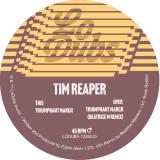
A little over a year ago Tim Reaper made his first appearance in the town LoDubs is based in, Portland, Oregon, at the always forward thinking westside venue Barn Radio. The bill was rounded out by yours truly, Jon AD, who set the standard for the night, which was a boggy, thick warehouse vibe, even though the venue was more of a tightly packed repurposed storefront with an overactive fog machine.
This stop turned into a bit of a several day stopover for the TR, who saw the town, met up with other Portland people, and after that was left with a bit of a aural vision of the whole experience, the DIY ethos of the Portland, and the desire to document these impressions on the label of his bill mate for the aforementioned night, LoDubs.
Shortly thereafter "Triumphant March" arrived at the LoDubs mailbox, and reverb heavy, oozing slab of Jungle funkiness.
Upon realizing this would be good material for a dubby remix, the next step was reaching out for people to do so, and Beatrice M was at that time really getting noticed with their take on Dub. This year has seen them really move up the ranks, needless to say.
- 1: Testcard
- 2: Horizontal Hold
- 3: Not Waving
- 4: Water
- 5: Twilight Furniture
- 6: 24 Track Loop
- 7: Diet Of Worms
- 8: Music Like Escaping Gas
- 9: Rainforest
- 10: The Fall Of Saigon
- 11: Testcard (Locked Groove)
‘They went beyond punk before punk had properly started…the entire album is a controlled explosion of ideas. Nearly fifty years on, This Heat’s debut is something the world has still not completely caught up with.’ - Simon Reynolds
‘Over the years, there have been bands to play as aggressively, or even as strangely, but very few have been able to rise from their collective influences and histories to create music so singularly distinctive and inspiring.’ – Pitchfork 9/10
‘This Heat sounded like the future then ... and still do now.’ - Dan Snaith (Caribou)
Although widely considered to be Post-Punk’s finest, This Heat actually began performing and recording their music in 1976, the early days of London’s punk era. Within their two albums and an EP they perfected a strange and volatile new strain of avant-garde rock that time has proved to be massively influential, a blueprint for much that would follow: post-rock, math rock, homemade musique concrète, experimental electronica.
Numerous critics have recognised the band's influence on the music of Sonic Youth, Glenn Branca, Steven Wilson, Public Image Ltd., Radiohead, Swans, Shellac, Young Knives, Black Dice, Lightning Bolt and numerous other experimental and post-rock bands. Disbanding in 1982 they have left an undeniable legacy that has only continued to grow in stature and relevance.
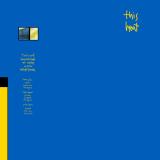
The album This Heat, also known to fans and critics as the ‘Blue and Yellow’, was their eponymous debut release, recorded in sessions between February 1976 and September 1978 in a variety of studios including their own Cold Storage, a converted cold storage room in the Acme Studios complex. Innovating throughout, they combined loops and tape manipulation (producing for example the proto-drum and bass ‘24 Track Loop’) with live performance and haunting vocals to a complex, dissonant whole. The band recorded everything they ever did – including gigs – and tracks such as “Water” were entirely improvised in the studio.
Having recently passed the 50 year anniversary of their first gig, and the recording of material that appears on their debut album, the group’s surviving members Charles Bullen and Charles Hayward, true to their DIY roots, have set up an imprint to release their recordings for their growing fan base that is increasingly recognising their influential place in music history.
2026 Repress
Tresor Records is fortunate enough to be sitting on a catalogue of past releases that no other label in electronic music would turn down. Three of the finest in this collection were contributed by Surgeon;
“Basictonalvocabulary”, “Balance” and “Force + Form”, which all came out between 1997 and 1999.
Surgeon’s inimitable combination of Detroit techno and post-industrial sounds emanating from his British homeland found its fullest expression in these masterful trio of releases.
Following the release of Surgeon's first album in 5 years "Crash Recoil" earlier in 2023, Tresor Records have decided that its high time to give these seminal albums another airing.
2026 Repress
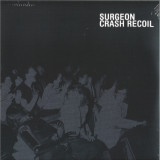
In March 2023, Tresor Records will release "Crash Recoil", a new album by Surgeon. It marks Anthony Child's first techno LP in five years, following a period in which he felt uncertainty in his role as a techno producer and found it tough to locate inspiration. This new album encounters him drawing on spontaneous techniques to arrive at unchartered topographies.
"Crash Recoil" originates from Surgeon's recent live sets, where he experimented with constraints in performing and embracing the twists, turns and paradoxes that arrive from this. Each fresh iteration on consistent MIDI sequences and hardware reconfigured tracks into dierent constellations, creating an inspiring vortex of unpredicted events where ideas could flourish. This new approach allowed him to capture the spontaneous energy of his live shows in a way he had never done before. "This is not a live album, since it has not been recorded in one go during a live performance. In the same way that bands tour songs before going into the studio to record an album, I was able to explore these songs and hone their eectiveness during my live performances before creating a studio version."
The result is eight tracks that emphasise a new techno sound for Surgeon, drawing in references from across the musical spectrum. "I can hear Coil, King Tubby, Detroit Techno and The Cure all wrapped up with 30 years of DJing," Surgeon says of the album. Melancholic hum-like ambiences smudge around unadorned, near-droning basslines, crunching rhythm and percolating arpeggiations. The tracks carry unique and potent locomotion, with a low-slung grind through toughened terrains, breathing with a free spirit, untethered by a studio-based perspective. We hear manifestations of the same raw material across the album, like a textural motif, carving new variants and creating a cohesive work full of recollection.
Original Funk Band from Paris
With just three years on the scene, Jéroboam is already considered as one of the most exciting and essential new voices in contemporary soul funk.
A true manifesto for live music and the dancefloor, this 11-piece live machine hits the stage like a juggernaut and doesn’t just play funk, they live and breathe it.
After a slew of certified underground classic releases on Space Grapes and Chuwanaga which have been supported worldwide by tastemakers and connoisseurs, Jéroboam is now presenting its long awaited first LP on Favorite Recordings.
From boogie-funk to 2-step soul crossover, Jéroboam delivers 8 heartelf songs, combining razor-sharp compositions with genuine and relatable lyrics.
Achieving such an exciting and challenging piece of work is the outcome of a long and inspiring process started more than 10 years ago in Paris.
From their early beginnings on the local scene, the core musicians of Jéroboam thrived on their mutual love for funk music under the name and concept of Echoes Of.
Building on these successful experiences and expanding its line up over the years, the band has been able to sharpen its sound, craft a distinctive crossover identity and create its own original music under a brand new entity : Jéroboam.
This momentum culminates in their debut full-length album, set for release in june 2026 on Favorite Recordings, a defining moment for one of Europe’s most vital modern funk acts.
- 1: Intro
- 2: Sciatiq
- 3: Sakakinik
- 4: Regarding Others Ft. Talin
- 5: Flayosc Ft. Jules Regard
- 6: Proud B - Pt1
- 7: Proud B – Pt2
- 8: From The Ending F. Mathieu Fabre
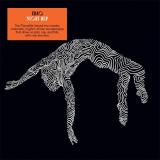
Growing together both personally and musically… That is indeed the good fortune of the musicians in the Marseille-based trio ubaq. We’re talking about bassist Antoine Carletto, guitarist Lucas Schemidt, and drummer Antoine Saussol, winners of the Rezzo springboard competition at Jazz à Vienne 2025. In their early twenties, they met in their late teens while still honing their musical skills. Nearly ten years later, they burst onto the scene, in perfect harmony, with their very first album, “Night WIP,” a follow-up to their EP, “20bis,” released in 2024. They owe their stylized stage name—written in lowercase with a “q”—to the ubac, that side of a mountain with very little sun exposure, where twilight reigns. “We liked that idea because we’re night owls,” says bassist Antoine Carletto. Hence the “night” for “nuit” and the “WIP” for “Work In Progress,” explains guitarist Lucas Shemidt. ubaq’s music is characterized by a nocturnal, melancholic heaviness, pierced by beams of light. “We love creating music that soothes us and highlights the precious nature of composing and playing in complete harmony,” says Antoine Carletto. “We cultivate complex tones, sometimes difficult to bear, whether they’re nostalgic or even verging on depression. But we manage to convey emotions without falling into clichés,” adds Antoine Saussol. Night and twilight serve as the perfect catalysts for this trio, which moves forward with perfect chemistry and harmony.
On this album, they feature the German-Armenian rapper and singer Talin, who is also based in Marseille. She appears on the track “Regarding Others,” where she chants that even though the year 2026 may see mothers weeping in every corner of the world, she still manages to smile. Thus, this track explores the three musicians’ relationship with the world and the necessity of looking at others. The unsettling “Sciatiq,” the haunting “Sakakinik,” and the ambivalence of “Flayosc”—the final track, on which the trio features trombonist Jules Regard—owe their titles to the musicians’ own observations and experiences. The multi-faceted track “Proud,” in two parts, is a tribute to Lucas Schemidt’s mother, who has since passed away. The presence of wind instruments—whether Jules Regard’s trombone or Mathieu Fabre’s saxophone on the intense track “From The Ending”—adds textures missing from the natural landscape depicted in “Night WIP.” This debut album captures the obsessions and introspective wanderings—sometimes anxious, sometimes enchanted—of a trio that cultivates melody as a pledge of warm fulfillment.
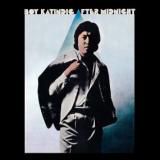
Jazz-fusion, disco-funk, Latin jazz and batucada rhythms get the Filipino treatment onAfter Midnight, the sublime second album from keyboardist Boy Katindig. Originally released in 1980, After Midnight draws heavy influence from soul and funk contemporaries in the US as well as Latin America, in particular the famed Brazilian percussionist Paulinho da Costa.
It’s a testament to his musical prowess that Katindig weaves effortlessly between styles and tempos. His reverence for Paulinho da Costa extends far, with covers of several songs from the latter’s 1979 Happy People album. This includes slow-burner ‘Déjà Vu’ written by Isaac Hayes originally for Dionne Warwick; on the Filipino instrumental version, local legends Jun Regalado and Roger Herrera (from Regalado’s ‘Pinoy Funk’ single) are reunited on drums and bass respectively.
But Katindig’s original compositions hold just as much weight and unique personality: title track ‘After Midnight’ opens with a sultry funk serenade reminiscent of The Isley Brothers, and quickly transforms into a catchy, blistering, saxophone chorus that brims with swagger. Hidden B-side gem ‘Got The Need’ is an uptempo tribute to batucada that would not be out of place in a jazzy house set, and boasts increasingly elaborate and psychedelic solos from Katindig on keys and Ben Concepcion on soprano sax.
Meanwhile, ‘Love Till the End of Time’ is a masterclass in instrumental disco funk, penned by the prolific Greg Phillanganes who at that same time was writing for many of the greats including Chaka Khan, George Benson, Stevie Wonder, The Jacksons and Cheryl Lynn.
This album is lovingly reissued by Sama Sama Records, a boutique label from DJ and collector Norsicaa, who ran the esteemed Soundway Records for 8 years and released the compilation Ayo Ke Disco in late 2024.
Emerging from a shared love of long-form storytelling and hypnotic groove, Techfui presents a stunning double album from Ada Kaleh and Wareika, a cross-continental dialogue between two singular visions of deep and micro house.
Romanian composer and sound alchemist Ada Kaleh channels his signature world of organic textures, dub-soaked spaces and slowly evolving rhythms, known from his forward-thinking work on R&S, Apollo and his own Ada Kaleh Romania imprint. His part of the productions unfolds like a ritual: subtle, detailed and endlessly spiralling, built for dancers who like to disappear inside the groove.
On the other side, trio Wareika bring their unique blend of live jazz sensibility, meditative dub and electronic body music, honed over years of improvisation and boundary-blurring club performances. Their contributions lean into fluid polyrhythms, elastic basslines and shimmering harmonies, tracks that feel alive, breathing and in constant motion.
The journey is expanded by a heavyweight remix cast: minimal house icon Thomas Melchior, Techfui founder and Bahrain mainstay Salah Sadeq, whose deep house productions are crafted to move both heart and floor, and the elusive studio force DUST. Each rework dials the hypnosis in further, stretching time and space without ever losing the warmth of the original material.
True to Techfuis ethos of bringing family, friends and fresh talent together to create honest, unconventional art, this double album is not just a collection of tracks, but a deep, carefully produced listening experience, timeless deep house and micro house for late nights, early mornings and every hazy moment in between.
- A1: Independent Woman (Part 1)
- B1: Independent Woman (Part 2)
Back on Celestial Echo Records with a true modern soul classic — Jan Jones “Independent Woman”, finally given the treatment it deserves.
A record that’s been circulating in DJ sets and collector circles for years, often via bootlegged pressings as the originals are incredibly rare, this is the first fully licensed reissue, presented properly and with both sides intact - something the bootleggers didn’t do.
A-side Part 1 delivers the track in its purest form — tight, uplifting, and driven by that unmistakable modern soul groove. On the flip, Part 2 stretches things out into a longer, more open version, letting the arrangement breathe and giving the dancefloor the 6 minutes it deserves.
Musically, it sits right in that sweet spot for us — rich vocals, warm keys, and a rhythm section that just grooves. It’s one of the ultimate modern soul tracks.
Licensed officially, as always. Celestial Echo is here to put proper soul records back into circulation — respectfully cut, properly pressed, and ready to play.