Repress
While our precious scene is going through high restrictions, Marco Bailey who fights for the techno scene since dot one of techno history, strikes back to MATERIA with his new EP "Fight For The Oppressed" featuring 4 high-octane modular analog productions. Currently limited for public expression but fueled with time, space and his usual never-ending motivation, MATERIA's main man keeps giving the one message we all should never stop sharing; techno is a way of life, techno never ends.
Search:fuel
Far heavier than their previous record. That’s evident from the get go, as they bash their way through the opening track “Give Me Your Hand,” a rhythm-heavy number fueled by fiery guitar solos, strident vocals, and a hard rocking sound. Yet the band still takes some interesting excursions along the way. “Good Lord,” for instance, encompasses Latin rhythms, a Southern rock segment, space rock passages, and even pop. The Beatles get a nod on “Any Way,” and funk goes psychedelic on “Get One Together”. Still it’s a hard rocking extravaganza. In later years, Charge’s reputation among prog rock fans soared, more so than their self-titled album.
Charge! is available as a limited edition of 1000 individually numbered copies on silver coloured vinyl.
"When Candy Opera first appeared on the kaleidoscopic early 1980s Liverpool music scene, by rights they should have changed the world" ~ Louder Than War
"Very welcome news as a highly underrated band who is now back with a force. While their previous output is stellar, this new single is even more commanding of attention. This is absolutely stunning, the band reaching higher than ever before" ~ Big Takeover Magazine
Sometimes it takes a while to realise what you’ve got. So it goes with pop craftsmen Candy Opera, who emerged during Liverpool’s 1980s golden age and whose new LP 'The Patron Saint of Heartache' is their first collection of new material in nearly three decades.
Ahead of that, they present 'These Days Are Ours', a rally cry of hope for the current times and the first single from this long-play, which is due for release in mid-November via European / UK label A Turntable Friend Records. The video was created / produced by James
Davies and Paul Malone.
Mixed by Grammy award-winning producer Guy Massey and featuring back vocals by Paul Simpson of The Wild Swans, the track was recorded at Elevator Studios in Liverpool.
With all the hallmarks of an enduring pop anthem, this impeccably produced, adrenalin-fuelled song captures the essence of Candy Opera’s infectious energy and celebrates life with a genuine wonder-lust, whilst delivering the excitement of their live performances.
Following the overdue release of two archival sets - '45 Revolutions Per
Minute' and 'Rarities' (released in 2018 by Firestation Records., quickly selling out of their first runs) - their new album 'The Patron Saint of Heartache' picks up where the band left off, with 14 fresh songs ready for discovery of a sound as timeless as any Candy Opera output.
Candy Opera were formed in Liverpool in 1982 and went through various incarnations before calling it a day in 1992. By 1985, the band had played alongside the likes of The Pogues, The Go-Betweens and The Redskins, as well as appearing on Granada TV.
The band's current line-up is drawn from all eras of the band’s existence and features Brian Chin Smithers (guitar, vocals), Alan Currie (drums), Frank Mahon (bass), Paul Malone (vocals, guitar), Ken Moss (guitar) and Gary O'Donnell (keyboards, vocals, percussion).
This new LP also features a swathe of friends and contemporaries, including Paul Simpson (The Wild Swans) and Phil Jones (Afraid of Mice). The result is an exquisite piece of pop craftsmanship that brings their songs into the light. This is a labour of love born of experience, but retaining the sense of wonder that brought the band together in the first place.
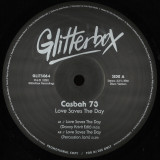
Casbah 73 makes his Glitterbox Recordings debut with an insatiably funky slice of disco soul ‘Love Saves The Day’. Driven by a soul-filled vocal hook from Angela Goode, this timeless jam’s authenticity lies in its rawness, sounding like it’s been ripped straight from a 1970s dancefloor while maintaining a freshness for today’s listeners. This special 12” delivery includes two stellar re-works, opening with master of the disco edit Danny Krivit’s funk-fuelled mix that smacks with New York City flare, bubbling keys and slap bass breakdowns to boot. The snapping Percussion Jam closes out the A-Side, before Chicago’s Rahaan takes control on the flip, taking the vintage sounding original and transforming it into a pumping, modern disco cut. Finally Casbah 73’s original rounds off the 12”, completing this package that is a must have for any discerning disco DJ.
Sometimes the best edits are the simple ones, those that still leave the core of the track intact but still extends or extract parts of the original.
This is exactly what Krewcial wanted to do with this EP.
Here you'll find 3 of his fave DJ tracks with some slight modifications...but all made with good taste!
Ranging from Latin inspired Jazz Dance, Caribbean Funk and raw ghetto Funk you get a solid 12" with all you need to fuel up that rare groove party !
blue LP[25,63 €]
Blue Note 1963 - Classic Vinyl Reissue Series Lee Morgan’s magnum opus The Sidewinder — recorded in 1963 and release in 1964 — was both a comeback and a coronation. The prodigious trumpeter had debuted on Blue Note in 1956 at the age of 18, but personal problems in the early-60s forced him off the scene temporarily. His rebound recording turned out to be The Sidewinder, an assured and energetic set of 5 indelible Morgan originals featuring tenor saxophonist Joe Henderson, pianist Barry Harris, bassist Bob Cranshaw, and drummer Billy Higgins. The album became his biggest commercial success fuelled by the irrepressible title track.
Having previously released a slew of tapes on labels such as Clan Destine Records and Live Adult Entertainment, Penelope’s Fiancé lands on Hypermedium for his vinyl debut. Hailing from Stavroupoli, Thessaloniki, Penelope’s Fiancé has been keeping over the past few years a fast pace of work, constantly producing tracks and releasing new music, having shaped a unique sound that drifts across the borders of lo-fi, post-industrial and fuzzy techno. The Cutting Edge Of A Knife is the culmination of all these previous excursions, a solid display of his ability to craft emotionally intense tracks, merging a ghostly, gloomy grandeur with squelching percussive patterns. Opener ‘Lethe’ emerges from the haze with its cryptic atmosphere, moulded in lethargic drones, scattered vocalisms and sparse yet piercing beats and rhythmic build-ups. A panic-fuelled, 160bpm ravey epic, ‘Futile Endevours’ brandishes an ecstatic, pumelling rhythm over recurring trance- flavored melodic phrases and unnerving vocal samples. ‘I Wasn’t Always There’ is a seductive, dark elegy whose melancholic and lush synth melodies wash over chopping kicks and ice-cold hi-hats. ‘Anxiety’ sounds like a slow techno roller, where frozen metallic percussion meets a cavernous bass, right before the off-kilter, cacophonous buzz of ‘The Lie Closest To The Truth’. Closing track ‘The Cutting Edge Of A Knife’ is an intoxicated oriental-stepper, soaked in vaporous middle-eastern percussion and muezzin-like chants.
Connected to the Occulto LP, this 7-inch single by Sorgini features two alternative versions of
'Telecinesi' (Telekinesis), a dark, nocturnal tune with a supernatural, macabre flavour, fuelled by solid drum breaks, percussions and restless synths harmonies.
On the flip side you've got a drums and synths only version, which sounds even more spectral and abstract than the original mix. Ideal for beatmakers looking for the perfect sample.
Fischgeist was recorded in a former water tank in Berlin-Prenzlauer Berg in August 2019. The nineteenth-century brick building consists of five layered circles, with a spiral staircase in the middle leading up to an exit to a hilltop. Inside, it’s humid and cold, the temperature always around 8–10 C°. The building’s acoustics produce a long reverberation that lasts up to 20 seconds.
‘One day between recording sessions, a man, a passerby, wanted to look inside the building. He told me that it used to be full of fish. For a second I imagined a huge round aquarium with loads of fish swimming around in circles. Then I realized that he meant dead fish were kept there, to be sold on markets during the GDR era. But the image of fish swimming in the space stayed with me.’
In conversation with the space of the water tank, Tomoko Sauvage searches beyond the limits of her self-invented ‘natural synthesizers’: porcelain and glass bowls, filled with water and amplified with hydrophones.
While she continues to develop some of the classic techniques heard on her previous album Musique Hydromantique (Shelter Press, 2017) – hydrophonic feedback (Kinetosis Study) and ‘fortune biscuits’ (porous pieces of terracotta that emit tiny singing bubbles) (Deluge) – here new elements are combined with delicate gestures to make curious noises: stroking bowls’ surfaces to imitate the voices of sea mammals (Metamorphosis), drawing dots and circles by rubbing stones against stones underwater (Exit) … The underwater amplification of quasi-inaudible sound is even more magnified in the air by the echo of the water tank. Not only tiny bubbles, but also micro-movements of the bones and veins of the hand holding the sonorous objects in the water, are intensely amplified – sounding like a tempest on the opening Deluge. Sauvage’s longtime research into hydrophonic feedback develops with her new obsession with natural harmonics and sympathetic resonance. In Flying Vessels, the percussive notes of struck bowls resonate and turn into feedback loops before decaying, fueled by electric signal gain. Kinetosis Study is a sonic etude on fluid dynamics – the flow velocity, pressure and density of manually shaped water waves directly controlling the aquatic synthesizer’s parameters.
August, when the mid-summer Ghost Festival is held, is traditionally known as the Ghost Month throughout East Asia. The spirits of the dead visit their living families, who welcome them with feasts, dancing and music. Miniature lantern-laden boats are released in rivers, to help lost ghosts find their way home.
Animated by formless matter – water, electricity, sound – Fischgeist celebrates a phantasmagoric journey, as the souls of aquatic lifeforms find their way out of the labyrinth of the water tank.
Credits
Composed, performed and mixed by Tomoko Sauvage
Recorded and produced by bohemian drips prior to ‘Speicher’ festival in Berlin, August 2019 (binaural recording with a KU-100 dummy head microphone)
Mastered by Andreas Kauffelt in Berlin
Cover drawings by Baien Mōri (1798-1851)
© Tomoko Sauvage and bohemian drips – all rights reserved
Having studied the complicated art of dreaming on Live At The Robert Johnson earlier this year, DC Salas returns with another remarkable clutch of cosmic excursions. Linking up with long-standing Parisian chic beat connaisseurs Slowciety, it's time for Salas to show us a little 'Exquisite Chaos'…
Presentation (long version)
The clue is in the title; 'Exquisite Chaos' is smooth, classy, hi-definition piece of intergalactic drama. Sweeping synths, rocket-fuelled kicks and a bassline that could circumnavigate the universe many times over without needing to refuel, it's a classic DC Salas trip, the likes of which we've soaked up on labels such as Correspondant, Nein, BPitch and beyond.
It's backed up by the poignantly titled 'Undivided'. A call for unity, it's rattled with acid and sinewy synth lines all thrusting upwards with the positivity we missed for so long this year. Finally 'Forgotten Memories' if a full-on march into a neon unknown. Complete with flying flurries of breakbeats and rasping acid missives, it wraps up Salas's chaos theory exquisitely…. And it's backed by a remix from Roman Flügel.
Ensuring the EP climaxes with a fitting bang Flügel divides 'Undivided' into three movements, each one more bulldozing than the last. Supercharged with venomous acid and neck-snap breakbeats, it's Flügel at his most chaotic. And Slowciety at their most exquisite. We wouldn't expect anything less from DC Salas.
Creole poetry, folk mysticism and heavy-grooving cosmic synths combine on this unprecedented survey of spiritual Martinique polymath Gratien Midonet's first four albums. For Midonet, pushing musical boundaries was less a choice than an extension of his spirit. A self-taught guitarist and composer, drawing on his childhood memories of bélé and beguine rhythms, Midonet's musical life developed in parallel to his academic and spiritual pursuits. Studying philosophy and psychopedagogy in France, it was his fascination with pan-Africanism and animism which fuelled the transcendent energy of his music. Although Midonet honed his sound in France, the four albums he released during the late '70s and '80s were heavily inspired by diasporic nostalgia, or what he describes as the "smells and colours... subliminal noises... fruity notes, the memories of funeral wakes, the bombastic organ of the cathedral and the gasps of the drums" of his childhood home on the Caribbean island of Martinique.
GES: Anthology of American Pop Music
Six great pop standards remembered: five pop songs are dissected by sampler, stretched, compressed, and re-collaged. In this way, their identity is lost. What remains is a vague concreteness: flashes of déjà vu and remote echoes that evoke the original.
GES (Gesellschaft zur Emanzipation des Samples)
-
Active members: Helmut Schmidt, Jan Jelinek
Founded: 2009
Headquarters: Federal Court of Justice, Karlsruhe, Germany
-
GES Glossary
Acoustic Surveillance Series
A 7-inch vinyl record series curated by GES focussing on historical methods of acoustic surveillance. Each record introduces a surveillance system from the past. Starting with Uguisubari in 2017, the series will continue with the release of Orecchio di Dionisio in 2021. GES is open to further suggestions on this subject.
Bundesgerichtshof (German Federal Court of Justice), Karlsruhe
“The use of audio samples as artistic practice may justify the infringement of copyright and intellectual property rights.” (ruling of the German Federal Court of Justice pertaining to Metall auf Metall II, 2016). The court is also the official headquarters of GES.
Circulations
What happens to copyright claims when music from a passing car is captured in a street recording? Is it legal to use this recording freely or is it necessary to obtain licensing rights? Circulations re-enacts this recording situation: audio players are placed in public spaces, where they reproduce the desired sample material. The acoustically choreographed space is then recorded, creating a field recording in which everyday noises circulate together with seemingly incidental music.
Emancipation of Sampling
Fuelled by its criminalization, the act of sampling existing recordings forfeited some of its artistic prestige (see Sampling). GES wishes to rehabilitate and re-emancipate the practice of sampling as a form of art in its own right. Strategy: 1. Name samples and sources explicitly. 2. Choose samples that are as popular and as recognizable as possible (Beatles, Carpenters, etc.). 3. The editing and manipulation of the sample must not compromise its recognizability (negotiable). 4. Use as many samples as possible. 5. Always name more sample sources than were actually used in the composition.
Field Recording
A compositional practice widely used in sound art and ethnomusicology that involves the recording of natural acoustical phenomena. Two additional requirements are usually imposed: The recording process should take place outside a studio environment, i.e. outdoors. And the person recording does not generate any of the acoustic material him/herself. GES expands this definition by introducing the concept of choreographed public space (see Circulations).
Gambling
An acoustic event favoured by GES, already used in numerous sound collages (must take place in public). The most popular option is thimblerig, a cup and ball gambling game commonly played in the street. Compositional instruction by GES: Place an audio playback device in the proximity of a thimblerigger. Play works for orchestra (by Debussy or Mahler). Move slowly towards the gamblers with a microphone.
Helmut Schmidt
Multiple identity and fictional character devised by GES. Figures variously within the semiotic system of GES as member, guest artist or public representative. Following the historical example of Subcommandante Marcos (EZLN).
Kraftwerk
The German band founded by electropop musicians Florian Schneider-Esleben and Ralf Hütter (a.k.a. Die Prozessoren) is the natural enemy of GES. Protected by computer-generated avatars, Kraftwerk operates a quote-hostile cultural hegemony. Their strategy: Install a special brand in the collective consciousness by means of a sophisticated system of quotations and references that may in turn not be quoted by anyone else. Other bands with such delusions of omnipotence: U2, Metallica.
Marcel Duchamp
As the inventor of the readymade, Duchamp may be viewed as a precursor to the art of sampling. However, the artist is appreciated above all for his sonorous qualities, as his vocal silence has often been sampled and processed. It was the inspiration for Jelinek's radio play Zwischen.
Orecchio di Dionisio
This 65-meter-deep limestone cave in the Sicilian town of Syracuse, carved out of a hillside in ancient times, has exceptional acoustics: A person standing at the cave entrance can hear every word whispered deep down inside it. The painter Michelangelo da Caravaggio gave it its name (The Ear of Dionysius) in 1608. The cave indeed resembles an ear and – according to Caravaggio – had a specific function: The tyrant Dionysius I imprisoned his political prisoners in the cave in order to spy on them. Orecchio di Dionisio will be featured in the Acoustic Surveillance Series in the near future.
Sampling
Compositional practice whereby recorded music is fragmented, turned into sound collages and transferred into different contexts of meaning. Since the advent of affordable sampling technology in the 1990s, the music industry has been trying to criminalize and/or promote the practice. Both strategies are driven by the same principle: Profit.
Uguisubari
Sound-making floorboards in Japanese temple and castle complexes, featured in the Acoustic Surveillance Series in 2017. In the Edo period, the “nightingale floor” (literal translation of uguisubari) was a popular acoustic warning system. The principle was straightforward: When someone stepped onto the boards, nails would rub against metal clamps beneath the floor, creating a tell-tale squeaky sound that was said to resemble the chirping of the Japanese nightingale.
Wind
A generator of acoustic events and an amplifier/transmitter of existing sounds. A meteorological form of energy appreciated by the GES on account of its unpredictability. A series about wind as an acoustic phenomenon is planned. Working title: Hotel Corridors.
Zwischen (Between)
Radio play by GES member Jan Jelinek based on recordings of various public interview situations. From the speech of the interviewees (all of them eloquent personalities) the pauses between coherent utterances were extracted and assembled. What we hear is an archaic body language: modes of breathing, word particles and onomatopoeic turmoil. A key question for GES: Which comes first, personal rights or artistic freedom? For Zwischen, Jelinek used only recordings by public figures that were already available to the public.
Part 2 of the compilation series sees the journey evolving, this time with a more upbeat affair. Not much has changed in terms of selection, as we continue to draw inspiration from the wider world, we bring to you the sounds of artists originating from Argentina, Japan, Netherlands, Portugal, Brazil and the UK. Beyond the restrictions of this physical realm, let you ears nourish the mind & soul as they traverse the world for you…
Argentinian resident Silvio Astier introduces us to the record with the aptly named ’Santa Maria del Buen Ayre’ - the former name of his hometown Buenos Aires. Easing us in with a wonderfully atmospheric piece, carefully mixing simple percussion patterns with his own well-crafted luscious guitar work.
Next up, we have Japan native/Berlin resident Kotoe continuing the flow of downtempo sounds that slowly settle us into this compilation. ‘Ondami’ conjures up images of a distant dream… the floating vocals and echoing chimes capable of drifting the listener to a place of blissful escapism.
The tempo is turned up a notch for the last track of side A, provided by UK born folklorica maestro El Buho. Renowned for his love of merging the traditional and natural sounds of South America with modern electronica, ’Swifts’ certainly ticks those boxes with an added touch of dance-floor-ready groove.
Portuguese native duo Oxhala continue to push the sounds on the flip side into heavier territory. ’Earth Spirit’ builds from an amalgamation of stomping tribal drums, hypnotically playful keys and distorted vocals, channeling the listener to our innate primitive spirit - this is one for the body & mind.
Dutch party-starter Mytron’s contribution ’Oil’ provides the fuel for the party as he turns to fast-paced conga rhythms, cowbells and elephant trumpets. These exotic sounds bounce along with ever-persistent energy to create the soundtrack to a hedonistic carnivalesque celebration of all things wild.
If you haven’t already peaked with the previous offering, Brazilian native El Peche wraps things up nicely with track ‘Rastro De Fogo’ (ft. Mari Branco). Tripped out vocals phase in and out as the track is dominated by a tight bassline before delicate keys bring in a softer element to finish.
2LP Over the past decade, SUED co-founder SW. has arranged the building blocks of dreamy rave and techno music-billowing pads, undulating sub-bass and adroit, nuanced drum programming-into and novel dance floor structures. TRUElipS, SW.’s first full album since 2016 and his first for Avenue 66, is a beguiling, fully-realised statement. The 12-track LP is rooted in the storied ’90s era when the spirit of orbital raves and free parties was channeled into massive leaps forward in the studio. A combination of house and drum & bass looms large, as does the much-referenced intelligent techno era, but if you’ve listened to an SW. record, you already know TRUElipS is the work of a singular auteur. Breakbeats, rave stabs and major chords permeate the album, motoring along on a chassis of sine-wave bass lines and SW’s widescreen percussive vision. Forays into downtempo and sweeping ambience keep the listener’s head in the clouds, while the superb melodic techno constructions that comprise the album’s core are at once contemplative and liable to bring on a giddy head rush. TRUElipS brims with the optimistic, escapist spirit that fueled dance music’s original triumph, a throwback to bright, imagined futures.
Good Vids, Vile Times is the second album by Ant Antic. Its central themes are the never-ending flood of information and its effects on us. The Berlin-based singer and producer Tobias Koett wraps serious questions into radiant pop songs. What does constant bombardment of information do to us? What's lost along the way?
On his new album, Ant Antic observes the emotional power of media and information. The helplessness we feel in the face of predominantly bad news and the growing inability to take pleasure in good news. The way an overload of junk information leaves no mental capacity for real social connections. As a child of the first globally connected generation, he witnesses geographical boundaries dissolve and people consider humanity as one. At the same time, everyone seems to struggle to come to terms with a reality overflowing with possibilities. Slowly, we collectively turn into superficial nihilists.
"When I wrote my first album Wealth I looked inward to examine my own emotions, asking myself "How do I really feel?". For Good Vids, Vile Times I was focusing less on the how and more on the question of why. "Why do I feel that way?"", Tobias explains the creative writing process behind his second album as Ant Antic.
"I'm a bag of hot air / Push me up density / Feel like a millionaire / Don't bring me down gravity", he admits on the single Yellow Press. Referencing the album's cover artwork by Austrian photographer Erli Grünzweil, Tobias describes how it feels to advertise his own life to other people - when behind the meticulously crafted presentation, there's sometimes nothing left but emptiness and anxiety.
Good Vids, Vile Times is an album rich in variety, ranging from indie-pop to contemporary R&B. In stark contrast to the somber tone of the lyrics, the songs radiate a cheerful liveliness. Fueled by analog synthesizers and an electric guitar often not discernible as such, the record builds on Ant Antic's signature sound. It's all Tobias on Good Vids, Vile Times - writing songs, recording vocals, guitars and synths, all the way to production and mixing. Essential elements and ideas are put into focus by getting rid of everything else. At the same time, the new album sees singer and producer Tobias openly flirting with pop, exploring new sounds and aesthetics, and maturing musically and lyrically. No song is alike, each one tells an honest and relatable story - all held together by the magic glue that is Tobias' distinctive voice, which might stay with you forever.
The Analogue Cops' "Zigulí" E.P. for Vitamina is an earthshaking four trackers dancefloor banger which melts old- school roughness and cutting-edge spectral enhancement.
"Climate Exchange" and "Take your vitamina" wisely blend Chicago fuelled drums with ballistic delays, toward a frantic peak-time climax.
"Passage to the door" and "The green door" instill romantic acid madness from emerging minimalistic tight rhythms incautiously driving to a late-night daydream.
Shift Imprint gives a warm welcome to one of the best producers and DJs ever to come out of the UK, nothing more, nothing less than Mr. Allen Aubrey!
The sixth cut of the label is composed by four original tracks fueled by dark, noisy, foggy, groovy, distorted jazzy and funky vibes, accurately named as the “Sleeze Funk EP”, no other title could do the job better.
So, here’s an invitation to transcend the mundane and expand your thoughts deep into the raw sound of the British maestro, Aubrey.
- A1: L'aventurier (Feat Helena Noguerra & Louis Ronan Choisy)
- A2: Putain Putain (Feat Camille)
- A3: Marcia Balla (Feat Adrienne Pauly)
- A4: Sandy Sandy (Feat Soko)
- A5: Ou Veux-Tu Qu'je R'garde (Feat Emily Loizeau)
- A6: Two People In A Room (Feat Cocoon)
- A7: Dereglee (Feat Melanie Pain)
- A8: Oublions L'amerique (Feat Nadeah Miranda)
- B1: Voila Les Anges (Feat Coeur De Pirate)
- B2: Week-End A Rome (Feat Vanessa Paradis)
- B3: Mala Vida (Feat Olivia Ruiz)
- B4: Anne Cherchait L'amour (Feat Julien Dore)
- B5: Ophelie (Feat Yelle)
- B6: Amoureux Solitaires (Feat Hugh Coltman)
- B7: So Young But So Cold (Feat Charlie Winston)
- B8: Je Suis Deja Parti (Feat Coralie Clement)
The 80s owed everything to the punk revolution ... and betrayed it time and again.
ln 76-77, the incredible explosion of English-speaking bands focused the energies of a whole generation of Western youth - rebels ready to pick up a guitar and use it like a weapon. Yet more than punk music itself, it was the creative burst it triggered that radically shaped 80s pop and heralded an unending stream of inspired performers.
Although we often speak of the British and American golden age of post-punk from 78 to 84, with artists that included Talking Heads, Joy Division, PIL and Devo, France (together with Switzerland and Belgium) joined the movement too. Today, on a new album, the group Nouvelle Vague have paid tribute to this sumptuous "Frenchy" period clothed in the nihilism of punk, along with bitterness fuelled by the economic crisis and, paradoxically, the bewitching spirit of pop.
lts title, Couleurs sur Paris (Colours on Paris) is based on both a famous postcard collection and Oberkampf's 1981 punk anthem, and reflects the period, which oscillated between elation and despair. Written by artists sometimes known as "the modern young people" and including faux naïf electropop nursery rhymes by Elli & Jacno ("Anne cherchait l'amour", 1979), Lio ("Amoureux solitaires" , 1980)
and Etienne Daho ("Week-end à Rome", 1984), along with Lili Drop ("Sur ma mob", 1979) and Taxi Girl ("Je suis déjà parti", 1986), the songs clearly express the hopes and disappointments of the day.
The sense of melancholy suggested by the disenchanted lyrics of "Déréglée" - performed in 1977 by Marie-France, an icon of Paris nightlife - is even more noticeable on the 1981 hit by The Civils, who cynically sang, "Tonight, they're dying in Chad, but l'm buying my dream Walkman" before taking it to the chorus: "The economic crisis is fantastic, decadence is the right feel".
The punk shockwave con also be felt in the music of bands who radically shaped French culture and song. Like Rouen, with Les Dogs ("Sandy, Sandy", 1982), every provincial town and city in France began to produce bands at the end of the 70s and the start of the 80s. Wunderbach's 1983 punk pamphlet "Oublions l'Amérique" was a foretaste of what is now called alternative punk, a genre that won acclaim in 1988 with Mano Negra's "Mala Vida". Indochine, French pop legends for the last thirty years, also encouraged the trend in the summer of 1983 with "L'aventurier", after a first single brimming with the spirit of rebellion, "Dizzidence Politik".
Rita Mitsouko, the duo that emerged from the underground Parisian punk scene of the late 70s, rocketed to stardom in 1984 with "Marcia Baïla". Equally baroque, TC Matic - the first band fronted by Belgian singer Arno - released an ironic, political underground hit in 1983: "Putain, putain". Other artists fuelled a post-punk movement that explored the romanticism of machines and the darkness of new wave, including the cult, much-neglected duo from Nancy, Kas Product ("So Young but so Cold", 1982) and Switzerland's Stephan Eicher, whose "Two People ln A Room" (1985) followed on from "Eisbaer", a hit in a more underground style written with Grauzone in 1981. However, the genre's most influential practitioners were certainly Noir Désir. From their first single in 1987 ("Où veux-tu qu' je r'garde?"), they won mainstream success with their unique fusion of 80s gloom and power rock. Beyond from the meteoric success of Bordeaux's Gamine ("Voilà les anges", 1988) and the subversive spirit of Jad Wio ("Ophélie", 1989), French post-punk reached its climax with the success of Noir Désir, Rita Mitsouko, Stephan Eicher and Manu Chao, whose albums reigned supreme in the 90s French charts. From the underground scene to gold records: the eternal story of pop.
A 38 minutes exorcism, dionysac sexyness fueled with romanticism, made of mechanical incantations mixed with spectral vocals of forgotten imaginary tribes, words from a physicist (Incomprehensible Image), and mystical breathings… To remind you that music is demanding your soul and body, fully.
A master irritator, disclosing this talent all the way, down to every chosen title, for the album itself and all of its components (would you put Milk in Water ?). As repetitive or minimalist music may already make some of you feel nervous, it seems more accurate to talk here about primitive music – notwithstanding a non violent anarchism. But those are only words and vain attempts to attach TLT to a region or a family. Neither the burden of classical European music legacy, which eventually lead to pop music, seemed to interfere with his wild mind, and if it is no surprising to hear Bach in German electronic music, there is here a clear statement that you are out of this sirupy prison…
For D.W. is a sorcerer. He’s been empirically learning the speaking of trance with years of touring and experimenting with all kinds of audience and venues, from clubs to museums, from Mongolia to Brazil, from his performances with his bands Kreidler or Toresch to solo ones, sustained by a steady limited set up, as the one used when he’s recording : one MPC, rudimentary synths, few effects and a mixer. No sound engineer on stage as only he knows his secret language… Raw dubmaking, leaning towards hip hop, indubitably underlining here a significant distanciation from his previous industrial inspirations. The bewitchment of this record is operating with no warning from the very first seconds until the last epiphany of Sales Pitch.
He is using his knowledge of techno, psychedelism (Inverted Sea), UK bass (Jumping Dead Leafs), only to bring you out of it. We all tend to be slaves, without even being conscious about it, and a balance must be existing between being a slave and showing off. Mr. Weinrich’s answer is unsettling because it is an utter call to this balance, in our world of black and white and political correctness. There is no morality in music… Don’t expect anything else than an unaccountable liberating immediate experience. Don’t expect any kind of music because you are already in the past or the future… From his recording technique mainly relying on one takes, his adoration of mistakes and jeopardy, to the core essence of repetitive music, it is all here about being in the present. No ears no glasses.
Walter ‘Junie’ Morrison released his third solo LP, Suzie Super Groupie, in 1976. A slick, smooth and soulful record, it’s a genre-melting tour de force with rich elements of proto-boogie, funk and jazz. In short, this is yet another essential album reissue from Be With.
The sublime “Suzie Thundertussy”, is a favourite of Harvey and Theo, and was brilliantly sampled by Madlib for Kanye West’s “No More Parties In LA”. The track opens with a sinuous synth and combines Junie’s storytelling abilities with an emphatic vocal style and funky arrangements. The powerful bass and sinister chords create an undeniable groove, and the explosive chorus is full of ambition and joy.
“If You Love Him” is a great, mid-tempo soul song. With a swinging jazz-infused middle-eight, it demonstrates Junie was much more than a mercurial funkateer. The laconic groove of “What Am I Gonna Do” recalls “Fresh”-era Sly Stone, whilst the frantic “Super Groupie” showcases his sharp imagination and sense of fun. The lyrics range from humorous to dirty, all fuelled by an infectious groove and tight horn arrangements.
The P-Funk of B-side opener “Surrender” bounces and sparkles, with a strutting Junie backed by great harmony vocals and joyous horns. “Suzie” is a sleek, softer affair albeit with a disco pulse; a beautiful combination of bright, funky horns, fluid basslines and vigorous rhythms. “Stone Face Joe” is another character song, this time one that chugs along on a sweet boogie rhythm.
The winner for us, however, is the closing piece. An extended funk-rock jam, “Spirit” has a heart-rending spoken-word intro and, as a nod to Jimi Hendrix, creates a live concert sound, complete with screaming crowd and fuzzy vocals.
Junie made his name as the lead singer and keyboardist of the Ohio Players. As the mastermind behind “Pain”, “Pleasure”, “Ecstasy”, and the oft-sampled “Funky Worm”, he was beloved by countless musicians, not least Prince. As co-writer of some of Funkadelic’s seminal works - “One Nation Under A Groove”, “(Not Just) Knee Deep” – his standing as one of the structural fathers of funk is undisputed.
In late 2016, Solange’s “A Seat At The Table” featured a track called “Junie”, a tribute to the freedom he created in music. His work continues to be as relavent and inspiring as it was when it was first recorded.
In February 2017, Junie died, aged just 62. With records as mighty as Suzie Super Groupie, his legacy will live forever and Be With is proud to be able to do our bit to make this LP accessible again on vinyl.