Marc Mac's Visioneers project returns after a long anticipated wait with a summary of everything we've loved about the project and more. The classic Hip Hop joints reimagined, BBOY bombs and the super-fly Jazz n' funky lounge originals have all become Visioneers trademarks. The record has you sitting back chilling and head nodding for one song and wanting to jump up and bust a move on another. The addition of guest musicians from all parts of the globe brings another dimension to the grooves and compositions. A very dope welcomed return for the Visioneers.
Available in 2 x 12" 180g Heavy Weight Vinyl and CD (with bonus tracks)
Buscar:fun 2
Fom the Sleevenotes by Paul Murphy: Jazz Room Records:
"I took a trip to the If Music Store, 2nd Floor, above the paint shop and that got me hooked on the sound of COPA SALVO.
"You NEED this!" said Jean-Claude. "They're an amazing and unique Jazzy Combo from Japan!" But at the time I was stuck in some dead end Gulag job getting things together for the launch of a record label idea I'd been working on and the bobs were just not in abundance. Especially in the part of the wallet marked "Japanese Vinyl Import Department". But he gave it a spin and I was pretty much hooked from that day on.
Things soon looked up though and the next sighting of COPA SALVO was on the BBE Records release: A Journey Into Deep Jazz Vol. 3 (Compiled by that very same Jean-Claude!) which featured COPA SALVO - Hasta La Victria Siempre, a pounding piano driven homage to Fidel which incidentally is one of the featured numbers of the album that is soon to be released on Jazz Room Records.
I kept looking for more COPA SALVO as I was really intrigued by the sound they produced and, over a period of time I managed to obtain nearly all of their sparse catalogue. Once Jazz Room Records had started to get established and the release of the Colin Curtis Presents: indigo jam unit compilation had been a success I thought "Time for COPA SALVO to make their Jazz Room debut!"
This Jazz Room Records Compilation will feature their unique and highly original compositions which are an energetic meltdown of Funk, J-Jazz, Afro-Cuban, Boogaloo and range from the Heavy Latin Jazz Vibes of Bolivia 67 to the Kung Fu '70's sound of Tong King Rock with a journey that takes in an Eastern Folktale and a Jump Up Life along the way."
Vocal/Guiro : Tadahiro Masuda
Piano : Eri Konishi
Bass : Hironori Kobayashi
Percussion : Yo Sato
Percussion : Pyon Nakajima
Timbales/Drum : Peach Iwasaki
Moodena’s London-based imprint Tropical Disco’s latest offering is a shimmering journey into the heart of the underground, blending nu-disco, classic house, and contemporary electronic funk in a way that feels both nostalgic and totally fresh. Featuring four standout tracks from Vagabundo Club Social, Scruscru, Da Lukas, and Fun Kool feat. vocals from Bcleo and Anna Dee Tee, — the EP is a testament to the evolving sound of the dancefloor, where groove meets grit, and melody flirts with sultry rhythm. This release channels the spirit of sweaty basement parties, neon-soaked nights, and a collective desire to get lost in the music.
Opening the record is Colombian duo Vagabundo Club Social, presenting Latin-soaked funk colliding with shimmering brass instrumentation, creating a deep, rolling pulse that invites movement from the first beat. 'Zumba Z' is a track that feels right at home in a DJ’s warm-up set or closing down an all-nighter, with a hypnotic flow and vocals that seep into your bones.
Scruscru’s story pushes things deeper into late-night, cosmic territory. 'Konyaalti' is a lush, sun-drenched production, utilising sublime sax, Scruscru delivers a cut that's both playful and distinctly driving.
Da Lukas adds a sophisticated touch, remixing Rosario Cristofaro, and taking you on a slick ride that leans into Italo-disco influences. Swooning synths and crisp percussion form the backbone while gliding melodies create a sense of elevation. It’s elegant yet laced with energy, ideal for a peak-time set where the vibe is euphoric but refined.
Rounding off the release is veteran DJ and producer Gerardo Cinquegrana, whose playful Fun Kool moniker belies the serious funk he delivers in his production. German-born, and now Italy-based, Fun Kool’s sharp, syncopated rhythms and sexy vocal lines from Anna Dee Tee bring an irresistible groove to the forefront, with the kind of bassline that takes over your entire body and mind.
Altogether, 'Tropical Disco Volume 28' encompasses a record that’s both familiar and exploratory—rooted in the timeless grooves of disco and house but pushing forward into new musical territory and picking up sonics from different continents along the way. Whether you’re looking for late-night celestial cosmosis, sophisticated Italo-inspired dubs, or straight-up, no-nonsense funk, this release has something for every dance floor.
The title track, Pink Velvet is as smooth as velvet and as playful as pink. Featuring a full string and horn section in the choruses. Harking back to the glory age of musical sounds heard at iconic places like Paradise Garage and The Loft, but with modern production and arp synth lines and solos filling verses.
A2 Don’t Wait was a 'note to self'. Life’s short, do the thing, do the thing now. Funnily enough the track is kinda the opposite, it meanders, it noodles, it’s a journey, until… until the choruses, then it doesn’t wait, it drops, it happens, just like life!!
Flipping over to the B side, On My Mind is a love song, a ballad if you will. This dubbed out, solo ridden number explores existential themes like life, love, thought and spring reverb… all things fundamental to human existence.
And rounding out the EP, really giving you something for every occasion - B2 features Inkswel’s masterful REMIX/reinterpretation of On My Mind featuring two new vocalists LYMA bringing that sultry magic he is becoming renowned for and Elf Trazporter laying down the absolute heat. It’s broken beat in feel and party in nature.
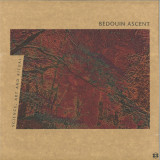
'Science, Art And Ritual' is a story of ‘process'. Growing up in Harrow (a then quiet suburb of London) in the 70’s and 80’s from the age of about 10, Kingsuk Biswas aka Bedouin Ascent's ears opened up to sound as he scanned the airwaves. The undeniable righteousness of 80’s dub via David Rodigan’s Roots Rockers shows was the first prominent influence he received, and with punk roots —and his burgeoning record collection— became exposed to the breathless post punk experimentation that followed in the early 80’s sweeping up free jazz, noise, dub and much more. Throughout though, he maintained his fascination with Indian Classical music which was a mainstay in his parent’s house and spoke with the same infinite space as Joy Division's 'Unknown Pleasures', and King Tubby’s Studio dispatches. Through those teens he assembled and de-assembled, knocking about with fellow travellers —punk bands, garage, space rock, noise. Something was happening. On-U Sound, ECM, Factory Records kept him plugged in and sane.
At that time Kingsuk's core studio setup revolved around his vintage Gretsch, Fender Jazz, Moog, TR-606 and rudimentary FX. He added congas, folk instruments, pipes, hand percussion, gongs, and jammed out shards of funk, noise, jazz fusion, electro and ambience into his hungry Tascam Portastudio. By 1987 these had morphed into what we’d now refer to broadly as techno, but the genre didn't exist beyond the reverberating walls of his bedsit, and he hadn’t yet plugged into the global conversation.
'Science, Art And Ritual' was released in 1994 by Rising High Records and was presented as Bedouin Ascent's debut album, although 'Music for Particles' (released in 1995, again on Rising High) was recorded even before —'SAR' sessions span from 1992-1993, whereas 'Music for Particles' were earlier from 1989-1992, with some older 4-track references from about 1986 too.
Weaved in throughout the album are subconscious references to music that Kingsuk heard in the past that still remained within sight as companions. The opening track "Ancient Ocean III", referencing the extinct ocean Tethis, unapologetically channels Tackhead, Colourbox, Mantronix and Lee Perry. The style was also deliberately juxtaposed to the prevailing sound in techno at the time, which had locked onto a rigid form of symmetrical kicks and light snare drums. Elsewhere 80’s soul and funk are frozen and captured in fragile glass lattices. Electric pianos resound throughout, such as in "He Is She", probably a half-memory of 70’s MOR radio from childhood sleepy night drives. A duel between kick drums from three generations of Roland drum machines —TR-808, TR-707 and R-8— is a central theme in "Transition-R", all in conversation, calling and responding. These were not just machines to Bedouin Ascent, but part of an extended family, with heart and soul.
Three decades after seeing the light, Lapsus is proud to present a special 30th anniversary reissue of this
left-field techno gem in a repackaged and redesigned edition. All pressed on a deluxe 3LP marbled vinyl and including a limited lithographic insert print of the original album cover. All tracks have been restored and remastered directly from the original DAT tapes, and the album also features previously unreleased tracks such as "In the Clouds" and "Thru Water" —regularly performed live at that time and produced in the same period as the album sessions in 1993.
'Science, Art And Ritual’ may refer to esoteric traditions in Indian philosophy, but equally embodies the collision of the science, the art and the ritual that is at the core of being immersed in a deep musical journey.
Releasing as a vinyl 45, Bad Night is the lead offering from The Cromagnon Band's new album Mode. This is the band's second LP and the first of theirs to be released on BBE Music. Mode itself is an album of cinematic and psychedelic dark Funk tinged and tinted with Nordic psych/jazz, classical, boom-bap Hip-Hop breaks and riff heavy rock. Bad Night is backed with Quadrant, a stand alone track that won't be on the album, thus making the vinyl single release a unique addition to the music lover's record collection. That said, these are are two tracks which give both a genuine flavour of the forthcoming album as well as the band's own musical influences and heritage as instrumentalists and producers. The Cromagnon Band's recording technique of taking breaks, riffs and melodies from favourite tracks and then improvising from there with completely live jam sessions in the studio allows them to record in their distinct and trademark 'reverse engineering' style. The trio of Drummer Tom Watt, Bassist Lenny Walker and multi-instrumentalist Bert Page work by making music as a team, playing for hours and united by a love of Hip-Hop breaks and psychedelic Jazz/Rock/Funk and classical music. They choose to record only instrumentals which allows space for Bert to weave intricate soundscape with Fender Rhodes, Moog, Sax and Clarinet over the beats and breaks they have written from their improvised jams. Bad Night b/w Quadrant are the lead releases from The Cromagnon Band's new album Mode. They will be released as a 7" vinyl and digitally.
Glenn Astro leans into the twilight months of 2024 with a new album from his Delta Rain Dance project. Divining fourth world sensibilities from his restlessly curious studio workflow, Astro weaves a mesmerising tapestry of sound on Music For Autumn which treads the line between horizontal meditation and head- nodding, backroom-ready groove.
Amongst his constellation of myriad aliases, Delta Rain Dance spells out the inspiration Astro takes from fourth world pioneer Jon Hassell. The project first surfaced with a string of tapes, LPs and digital releases around 2018, all carried on a label of the same name to keep Delta Rain Dance enclosed in its own space
independent of Astro's many other musical endeavours.
"I’m really into the world building aspect in science fiction and fantasy," says Astro. "This is my way of creating worlds and spaces that co-exist next to each other. Sometimes they collide but mostly they exist peacefully next to each other or pursue some form of cultural exchange by collaborating with each other."
There's a strong sense of balance and cohesion throughout Music For Autumn, as organic percussion and instrumentation wraps around delicate synthesis and patient drum machine pulses so naturally it's hard to spot the joins. The sound has plenty of room to stretch out, from the mantra-like chimes and rattles of the album opener 'Green Light Fade' to the luxury funk of 'Mmmh, Nice' (featuring fellow Tartelet alumni Nelson of the East). At times the electronic elements seem to entirely dissolve, not least behind the loping strings and tumbledown percussion of 'Second Sleep', while achingly beautiful closer 'Plucked' centres on the fluttering movement and expression Astro elicits from his modular setup.
True to the project's influences, a consistent ambiguous mood lingers in the air over Music For Autumn somewhere between far- flung mystery and comforting familiarity, reliably calm but equally contemplative. It's an odyssey of serenity with enough nuance to make you really think, perfect for the days getting shorter, leaves crunching underfoot and the last fading rays of warmth from the sun.
- A1: A Beautiful & Idiosyncratic Luminescence (++)
- A2: Assisting Sirens Escaping Velocity
- B1: While Patterns Unfold
- B2: Made Of Broken Glass & Astonishing Mirrors
- C1: Perpetuated On Canvas That Sets Us Apart
- C2: Fighting Against Legions Of Pricks
- C3: Cut A Sketch To Survive
- D1: Death By 9 To 5
- D2: Diving Solo
"Diving Solo" is the debut album of an artist who, after years of recognition under a different alias, has now redefined himself as "sr²." Central to this project is a deliberate departure from self-staging—shifting the focus entirely onto the art itself.
The album emerges from a deeply rooted vision that took shape over a decade ago. It navigates the fundamental questions of existence: the inevitability of impermanence, the search for meaning, and the quest to carve one's own path. Each track draws from formative experiences—from the electrifying pulse of countless club nights to the quiet, introspective moments that challenge our understanding of everyday life.
The tracks on this 9-track double LP transcend mere functionality; they evoke profound emotions and offer space for personal reflection. "Perpetuated on Canvas..." delves into how the first encounter with mortality can profoundly shape one's perception of life. "Diving Solo" inspires a break from conventions to seek what truly matters—even if that journey must sometimes be taken alone.
While the album weaves a coherent narrative, every listener is invited to discover their own nuances and shades of meaning within it. For, in the end, the artwork always extends beyond the artist.
- A1: World Is Dog
- A2: Cctv (Feat Creature)
- A3: Yottabyte
- A4: Bad Pollen (Feat Billy Woods)
- A5: Slum Of A Disregard
- A6: Rfid
- A7: Instant Transfer (Feat Billy Woods)
- A8: Ikebana
- B1: In The Shadow Of If
- B2: Skp
- B3: Hushpuppies
- B4: 14 4 (Feat. Skech185)
- B5: Voice 2 Skull
- B6: Xolo
- B7: Zigzagzig
Black Vinyl[35,08 €]
We’re teaming up with ELUCID and Fat Possum for a limited edition of 300 copies of a Rush Hour black ice coloured edition.
E L U C I D, one half of the illustrious duo Armand Hammer, is here with the full-length follow-up to 'I Told Bessie'. Further experiments in the sonic, expanding on the 'live' side of music paired with the embracing of chaos. Something you haven't heard, or not so for a very long time. E L U C I D is here to reveal the bleakness of reality.
---------------------------------------------------------------------------------
''There is never time in the future in which we will work out our salvation. The challenge is in the moment; the time is always now.''
James Baldwin
A raw, crackling urgency runs through rapper-producer ELUCID’s new album REVELATOR like an underground power line. There is no space here for sepia-toned reminiscences or indulgent self-mythologizing. Intellectual rabbit holes have been filled in with concrete and rebar ; there is nowhere to hide and no off ramp from the audio Autobahn that ELUCID has fashioned—a renegade Robert Moses with gold fronts, bulldozing the homes of the powerful and the complicit. REVELATOR brims with the energy of now, with a refusal to look away. Carpe diem in a murder one mask.
Born in Jamaica, Queens, ELUCID has been on the cutting edge of New York’s underground scene since the mid-2000s. From the beginning, he has defied both convention and expectation. He ran with Okayplayer darlings Tanya Morgan, but his own music eschewed their throwback charm for glitchy noise experiments and bass-swamped culture jamming. His 2016 debut studio project Save Yourself (re-released in a deluxe edition last year) announced him in earnest. But in recent years, his Armand Hammer releases with partner-in-crime billy woods have received significant attention and acclaim. Serving as a followup to his last solo album—2022’s comparatively balmy I Told Bessie—ELUCID hoped to “re-distinguish” himself with REVELATOR, setting himself apart amidst the increasing attention around the music he and his friends are making together.
For ELUCID, this meant setting bold new challenges for himself. One of these was diving further into live instrumentation than ever before—”getting my Quincy Jones on,” as he puts it. The testing ground for this approach was Armand Hammer’s most recent project, 2023’s We Buy Diabetic Test Strips’ Möbius strip soundscapes, warmed with instrumental flourishes and skin-shedding beat progressions. With REVELATOR, though, ELUCID strove to create an atmosphere of chaos, embracing experimental electronics and atonal sample bursts. He worked on much of the album with co-producer Jon Nellen, who comes from a background in avant-garde and Indian classical music. “I wanted to get as freaky as I could at this moment. I wanted people to hear things, maybe for the first time, or in a way they haven’t for a long while,” the rapper explains.
ELUCID arrived at the studio with a collection of noise sources: non-referential samples, glitches and noises. Together he, Nellen, and others created forms out of them and, as ELUCID recalls, “just started playing drums with it.” Their fried, distorted sound was directly inspired by Miles Davis at his most uncompromising—specifically, the tone-clustering funk track “Rated X” from his 1974 double LP Get Up With It. At times, the pairing of rap with avant-fusion sounds also brings Emergency! from The Tony Williams Lifetime to mind, perhaps in an alternate timeline where the late drummer was listening to Ice Cube’s AmeriKKKa’s Most Wanted.
“The World is Dog,” REVELATOR’s lead single, functions as the album’s aesthetic thesis statement. Like the Davis track, the textures are punishing, the tonality is in free-fall, and the driving breakbeat of a groove cuts in and out unceremoniously. Avant-jazz bassist Luke Stewart, who appears throughout the record, holds the whole thing together just long enough for ELUCID to tightwalk over the beat. This tension is exactly where REVELATOR sets itself apart; in a time of drumless loops, and safe soul samples, this is a high-wire act with no safety net. Similarly, the song announces the themes of the album within just a few phrases, evoking the way societies accept and adjust to new levels of debasement and brutality while suffocating under the weight of history: “Can’t clock the kill, all a mystery/Forced past will eating everyone eventually/The world is dog.”
Many of the songs on REVELATOR grapple obliquely with dissolution and disenfranchisement in America and across the world—the grim realities of our domestic sociopolitical climate and our involvement in foreign conflicts. “Much of my artistic and political sensibility comes from the Black arts movement here in New York,” ELUCID explains. “Recognizing the interconnected global struggles against oppression, artists and thinkers created works and actions in solidarity with freedom movements in South Africa and Palestine.” ELUCID cites intellectuals like Amiri Baraka, Kwame Nkrumah, Audre Lorde, Sonia Sanchez, and Nikki Giovanni among his heroes. (One track on the album is specifically inspired by Lorde’s work, “SKP,” citing the scholar’s paper “Uses of the Erotic: The Erotic As Power.”) Songs like REVELATOR’s insistent closer “ZIGZAGZIG,” find ELUCID applying up-to-the-minute messaging, making explicit reference to the conflict in Gaza: “Feed a war machine…from river to sea, in lieu of peace.”
Despite ELUCID’s preference for cacophonous system overload here, the rapper also provides moments of respite. Recorded at The Alchemist’s Los Angeles studio, the laid-back, wheezing “INSTANT TRANSFER” is a collaboration with billy woods, which crystallizes their shared sense of creative determination. “With much momentum behind us and even more on the horizon, I knew a purpose, and that every step was ordered to that purpose,” ELUCID said of the experience. Meanwhile, the jittery “HUSHPUPPIES” is a playful anomaly on the track list, providing a snapshot of ELUCID watching his grandparents in the kitchen while preparing for Friday night fish fry dinners.
“Love still rules over on this side,” ELUCID says. ”I’m raising a family. We are making meaning and finding joy in the midst of all the fucked up-ness of everything around us because the alternative is cowardice and slow death. We remain rooted. We celebrate our people and our wins. Struggle is necessary.”
“IKEBANA” is one of ELUCID’s strongest statements of purpose on the record, blending the record’s heaviest themes with its most hopeful sentiments. supported by a shoutalong refrain and an urgent prog-funk groove. Breaking away from images of dissolution and crumbling societal systems that populate REVELATOR, ELUCID notes that the only way to navigate life’s bleakest landscapes is to cling to love and believe in those around you—to look forward toward something better that may or may not be possible. For the rapper, one of the album’s most trenchant lines comes during a centerpiece of a beat drop: “Being alive/I must look up.”
“The lyric ‘being alive I must look up’ is important especially in the context of this album. Much of the album imagery is harsh and reflects the actual doom some of us experience. But still I/we exist,” ELUCID explains.
Every artist is, in one way or another, the product of their time, bound by life’s leaden gravity to operate within the space of that which is already known. But there are some who are able to shake free of these ties, to shape the culture as it unfolds, to make the present their own.
Revelation, as a concept, points to the scales falling from people’s eyes—something that has been hiding in plain sight becoming clear. “The revelator relates to things that have been talked about, things that have been forecasted,” ELUCID adds. “And now they’re really here, and everyone sees it. And there’s no escaping.” REVELATOR plays out with the unmitigated power of those storms, laying waste to any genre conventions in pursuit of a certain physicality. Here, ELUCID develops a wholly distinctive musical language to explore our fractured modernity.
REVELATOR's packaging was designed by longtime Armand Hammer / Backwoodz art director, Alexander Richter.
Anadol and Marie Klock have teamed up for a joint album, La Grande Accumulation. They met two years ago at a festival in England crowded with violent seagulls and outsider musicians. Klock being prone to barking on stage and Anadol not laughing at jokes she doesn’t find funny, they straight away had the intuition that they would meet again. And so they did, a few months later, at Anadol’s studio in Istanbul.
Today, the two Pingipung artists present the fruit of this musical friendship. La Grande Accumulation was born out of the peculiar atmosphere of the studio neighbourhood in Büyükada, an island where thousands of cats run free and humans randomly destroy things during apocalyptic times when parts of Turkey had just been turned into dust by terrible earthquakes. The French lyrics are inspired by hours of conversations, the music is consequently drenched in absurdity, overflowing with a strong urge to live and enjoy. According to the LP sticker, this album has been certified “Best handshake of 2024”, and stickers never lie.
La Grande Accumulation brings together Marie Klock's mysterious metaphors and Anadol's intriguing radiophonic psych-pop. Stretching forms beyond common sense to see how long they can resist is probably their favourite game. The result are six highly imaginative tracks that challenge the sub-3-minutes standards of Spotify pop.
Gözen Atila aka Anadol is well known to the Pingipung audience, with three solo LPs on the label. Her music follows a kind of collage logic, she interweaves countless styles, combining field and studio recordings with obscure quotation marks here and there. "I hope no one will come and explain this music to me, because it's the most beautiful music there is", says Kristoffer Cornils about her solo album Felicita.
Marie Klock is a French writer and musician who produces songs oscillating between synthpop and neo-folk, full of anarchic humour and existential dread. Her recent solo LP on Pingipung was a captivating tribute to the recently deceased poet Damien Schultz entitled Damien est vivant.
Marie Klock delivers her lyrics in song or spoken word, stream-of-consciousness musings on strange human adventures, and her rich keyboard melodies culminate in a nonchalant dialogue with the bass trombone (La Reine des Bordels). In the opulent opening piece (La Grande Accumulation), a woman is cursed to take home everything she kicks in the street; a bit later, we stumble upon a ghoul hiding in the gutter (Sirop amer), Mona Lisa loses her teeth (Sonate au Jambon) and a warthog struggles to climb the stairs of a silver tower (Sabots triviaux).
La Grande Accumulation was mixed and mastered by Jonas Romann at Chaos Compressor Club in Hamburg and cut to vinyl by Kassian Troyer at D&M in Berlin. It's an audiophile LP that invites to focus on every detail in this heap of musical ideas.
Michael Mayer albums don’t come round too often, which is one of many reasons why his fourth collection, The Floor Is Lava, is a genuine event. It’s been eight years since his last one, the collaborative & released on !K7; its predecessors, Mantasy (2012) and Touch (2004), took their sweet time, too. It’s no real surprise, given the many hats Mayer wears – globetrotting DJ, revered remixer, inveterate collaborator, and boss of both Kompakt and Imara – that his solo productions are relatively sparing. But this also speaks to their quality: Mayer’s name on a record sleeve is a sign of quality, of music that’s both looking to the future and calling back to the past, that balances the imperatives of the dancefloor and the loungeroom, that’s as exploratory as it is functional.
On The Floor Is Lava, Mayer seems to be taking the temperature of both the music that surrounds him (past and present), and the ides of the industry he works within. There’s that iconic album title, for a start. “The album’s mindset,” he says, reflecting on those four words together. For Mayer, it’s partly a critique of the way the industry boxes in both producer and listener, focuses them on genre, on market, on the next new thing: “Being a free minded spirit that transcends genres has become an uphill battle.” A battle worth fighting, though, and with The Floor Is Lava, the result is an album that’s varied, quixotic, idiosyncratic, charming, and deeply, addictively listenable.
Throughout, Mayer finds thrills in exploration and juxtaposition, allowing unexpected things to blossom and giving them their life, their platform, throwing the listener exciting curveballs: “It’s a DJ album by a DJ that’s easily bored.” Either easily bored, or endlessly curious, The Floor Is Lava is rich with ideas. It opens with “The Problem”, which looks back to look forward, embracing the rickety way early house productions threw samples together with gleeful abandon. Mayer mentions Pal Joey, and the scene around Rockers Hi-Fi and their Different Drummer imprint, as reference points, and you can hear that freewheeling spirit throughout.
It’s followed by “Vagus”, a slinky, sensual minimal house number that Mayer describes as his “musical catnip”. The flow of these two opening cuts defines the dynamic of The Floor Is Lava, defining the dialectical drive at its core: thesis and antithesis leads to synthesis, but with a welcome prickliness that means you’re always excited, always engaged. It’s also productive in the way it derives energy from rubbing genres and sounds against each other, in unexpected ways, for maximum musical frisson. There’s psychedelic techno on “Feuerstuhl”, more minimal techno with “Ardor” (Mayer mentions ‘Immer 1’ era 90s minimal as inspiration), slippery, Shepard-tone breakbeat through “Sycophant”, a lovely, lush vocal turn on the poppy “The Solution”.
The album closes with the melancholy “Süßer Schlaf”, where Mayer sets a poem by Goethe to one of his most haunted, moving pieces of music yet, in abstract tribute to a lost friend. It’s one of the most affecting moments on The Floor Is Lava. There’s also an update on 2020’s wild Brainwave Technology EP, with the surrealist glitter-stomp of “Brainwave 2.0” (check out those handclaps!),where Mayer’s thinking about the socio-political precipice of the now: “I’m reading with great interest about this whole complex of how humanity is about to cross so many lines and the implications that the resulting financial and educational inequality will bring.”
That’s The Floor Is Lava: then and now, brainwaves and nerve structures, problems and solutions, genres on fire; the real, the unreal, and the surreal. An album for the easily bored and the endlessly curious. Mayer has the last word, telling us all you need to know about the album’s spirit: “Burning for the cause, being zealous, being addicted to the heat of the night, the exuberant powers of music.”
Michael Mayer veröffentlicht nicht oft Alben, was einer von vielen Gründen ist, warum ‘The Floor Is Lava’ ein echtes Ereignis ist. Es sind acht Jahre vergangen seit seinem letzten Werk, dem Kollaborationsalbum &, das auf !K7 erschien; seine Vorgänger, Mantasy (2012) und Touch (2004), ließen ebenfalls auf sich warten. Es überrascht nicht wirklich, da Mayer viele Rollen gleichzeitig erfüllt – weltreisender DJ, vielbeschäftigter Remixer, unermüdlicher Kollaborateur und Chef von sowohl Kompakt als auch Imara – weshalb seine Solo-Produktionen eher sparsam ausfallen. Doch das spricht auch für deren Qualität: Ein Album mit Mayers Namen auf dem Cover steht für Qualität, für Musik, die sowohl in die Zukunft blickt als auch auf die Vergangenheit verweist, die das Gleichgewicht zwischen den Anforderungen des Dancefloors und des Wohnzimmers hält, die genauso erforschend wie funktional ist.
Auf The Floor Is Lava scheint Mayer sowohl die Musik um ihn herum (vergangen und gegenwärtig) als auch die Strömungen der Branche, in der er arbeitet, zu reflektieren. Da wäre zunächst der ikonische Albumtitel. „Die Grundhaltung des Albums“, sagt er, drückt sich in diesen vier Worte aus. Für Mayer ist es teilweise eine Kritik daran, wie die Industrie sowohl Produzenten als auch Hörer in Schubladen steckt, sie auf Genres, auf den Markt und auf das nächste große Ding fokussiert: „Ein freier Geist zu sein, der Genres überschreitet, ist zu einem steinigen Weg geworden.“ Ein Kampf, der sich jedoch lohnt, und mit The Floor Is Lava ist das Ergebnis ein Album, das vielfältig, eigenwillig, charmant und tiefsinnig, aber auch süchtig machend ist.
Im gesamten Album findet Mayer Freude an der Erforschung und Gegenüberstellung von Stilen, lässt unerwartete Dinge erblühen und gibt ihnen Raum, überrascht den Hörer mit spannenden Wendungen: „Es ist ein DJ-Album von einem DJ, der sich schnell langweilt.“ Entweder langweilt er sich schnell oder er ist unendlich neugierig – The Floor Is Lava ist reich an Ideen. Es beginnt mit „The Problem“, das in die Vergangenheit blickt, um nach vorne zu schauen, und die wilde Art, wie frühe House-Produktionen Samples mit fröhlicher Unbekümmertheit zusammenwarfen, aufgreift. Mayer nennt Pal Joey und die Szene um Rockers Hi-Fi und ihr Label Different Drummer als Referenzpunkte, und dieser freie Geist zieht sich durch das gesamte Album.
Es folgt „Vagus“, eine sinnliche Minimal-House-Nummer, die Mayer als seine „musikalische Katzenminze“ beschreibt. Der Fluss dieser beiden Eröffnungstracks definiert die Dynamik von The Floor Is Lava und den dialektischen Antrieb im Kern: These und Antithese führen zu einer Synthese, jedoch mit einer willkommenen Schärfe, die dafür sorgt, dass man immer aufgeregt und engagiert bleibt. Zudem gewinnt das Album Energie, indem es Genres und Klänge auf unerwartete Weise aneinanderreibt, um maximalen musikalischen Nervenkitzel zu erzeugen. Es gibt psychedelischen Techno in „Feuerstuhl“, mehr Minimal Techno mit „Ardor“ (Mayer erwähnt ‘Immer’ Ära Minimal als Bezugspunkt), gleitenden Shepard-Ton-Breakbeat in „Sycophant“ und einen lieblichen, üppigen Vocal-Auftritt im poppigen „The Solution“.
Das Album schließt mit dem melancholischen „Süßer Schlaf“, in dem Mayer ein Gedicht von Goethe vertont und eine seiner bisher eindringlichsten und bewegendsten musikalischen Kompositionen schafft, als abstrakten Tribut an eine verschiedene Freundin. Es ist einer der ergreifendsten Momente auf The Floor Is Lava. Ebenfalls gibt es ein Update der wilden Brainwave Technology-EP von 2020, mit dem surrealistischen Glitzer-Stampfer „Brainwave 2.0“ (hör dir diese Handclaps an!), in dem Mayer über den sozio-politischen Abgrund der Gegenwart nachdenkt: „Ich lese mit großem Interesse über diesen ganzen Komplex, wie die Menschheit dabei ist, so viele Grenzen zu überschreiten und welche Auswirkungen die daraus resultierende finanzielle und bildungstechnische Ungleichheit haben wird.“
Das ist The Floor Is Lava: Damals und heute, Gehirnwellen und Nervengeflechte, Probleme und Lösungen, brennende Genres; das Reale, das Unreale und das Surreale. Ein Album für die schnell Gelangweilten und die unendlich Neugierigen. Mayer hat das letzte Wort und sagt uns alles, was wir über den Geist des Albums wissen müssen: „Brennen für die Sache, leidenschaftlich sein, süchtig nach der Hitze der Nacht, den überschwänglichen Kräften der Musik.“
Space Drum Meditation unveils Four Tusks, their debut album and seventh re- lease on the label. This 12-track journey blends tribal rhythms, atmospheric textures, and electronic elements, interweaving darkness and light. The album unfolds like a ritual, revealing a murky, immersive soundscape shaped by primal beats, ethereal ambience, rumbling thunder, and the whisper of rain, reminiscent of a primeval marshland and drawing one into its depths. Featuring a wide array of instruments – including deep percussion, traditional flutes, throat singing, and field recordings – Four Tusks crafts a mysterious tapestry that feels both ancient and futuristic, resonating with nature's elements.
Mood Child is back with 'Various Moods Vol. 3', a captivating collection of six tunes, each possessing its own distinct mood and power.
Led by founders Manda Moor and Sirus Hood, this superb album features standout contributions from label favorites Reboot and Marian (BR), while also shining a spotlight on fresh talent, including Crewcutz, Band&Dos, Sterium, Samarone, and Drewski.
Available now on both vinyl and digital formats, *
'Various Moods Vol. 3' continues Mood Child's tradition of delivering innovative, boundary-pushing music.
- A1: Earthtone Intro Ft. Earthtone
- A2: Get Your Thing Together
- A3: No One's Ready
- A4: The Plan Ft. Earthtone
- B1: Don't You Doubt It
- B2: Help Is On The Way Ft. Lowell Pye
- B3: Summa Funk
- B4: Like Dat
- C1: We Stand In Need
- C2: Feel It
- C3: Give Us Your Light Ft. Dames Brown
- D1: Fake & Unholy Ft. Honey Dijon
- D2: What A Friend
- D3: Flashe No Deux
Robert and Lyric Hood deliver their acclaimed fourth studio album The Master’s Plan on vinyl. This one-of-a-kind pressing features gold foiling on the sleeve and contains two transparent, red-coloured records, loaded with the remaining tracks from the LP that have not yet seen wax. Spanning 14 crafted house and techno tracks, Robert and Lyric playfully juxtapose the light and dark of their signature sound, navigating a spectrum of genres and styles on the revered body of work. The father and daughter duo demonstrate their unparalleled outlook on electronic music, operating on a divine level of blood harmony with their generational gap only strengthening their breadth of musical inspiration. From the dreamy house soundscapes of single ‘Feel It’, to features from Detroit artists Dames Brown, Earthtone and Lowell Pye, The Master’s Plan is an album with its sound deeply rooted in Floorplan’s Motor City home. With Classic remaining the duo’s home for some time since their solo debut on the imprint in 2021, it seems only right that label-mate Honey Dijon would also feature, adding her signature allure to ‘Fake & Unholy’. Described by Robert as “an invitation to eternal salvation”, Floorplan’s faith remains at the forefront of what they do, cementing this special vinyl edition of The Master’s Plan as a must-have for house and techno lovers globally.
There is the new release by acid jazz superstar rad. available, for which I’m happy to provide, attached the tools. The recordings feature no less than Tower Of Power Horns, David Garibaldi, Roger Troutman, Ray Obiedo, Bobby Vega and Michael Spiro…
vIt was the San Francisco Bay Area where Herbie Hancock founded his Headhunters. It was the San Francisco Bay Area where Prince recruited Sheila E., Rosie Gaines and Larry Graham.
Bands and artists such as Tower Of Power, Sly & The Family Stone, Meshell Ndegeocello and Santana came from the San Francisco Bay Area, and Rose Ann Dimalanta, or rad.for short,
also originated from the San Francisco Bay Area. A Heavy Dose Of Oakland Funk – rad. did what she promised. Her 2nd album “gotta be" (1994) had all the ingredients that made the funk heartbeat
faster and the legs fidget: razor-sharp breaks, excellent hooklines, staccato clavinet and organ licks, driving bass lines, forward oriented drum grooves and a voice tofall in love with.
For these remastered two songs, she back then recruited her colleagues from the Syncopated Funk Champions League. Guitarist Ray Obiedo played in Herbie Hancock's band and
with George Duke during the "Thrust" era. The percussionistMichael Spiro worked for Ella Fitzgerald, Bobby McFerrin and Carlos Santana, Bobby Vega played the base for BoDiddley, Booker T,
Santana, Tower of Power, Etta James, Sly Stone and Jefferson Starship to name a few. Beside thefuzz guitar solo of mega funk star Roger Troutman on Come My Way, it is David Garibaldi and the
Tower of Power Horns who add the undeniable quality of this two funk classics now pressed on 7“ vinyl for the first time ever…
Sundries has already established the now well-known "Disco Goodies" series, with the fourth VA compilation in a row featuring obscure disco and boogie gems that cater to diverse tastes and occasions. This series is dedicated in memory of Juan Vargas aka Sould Out who sadly passed away 2 years ago. This 6-tracks EP kicks off with "Soul Driven Dynamics" by Berobreo, which opens dramatically, setting a curious tone as it builds tension, leaving us anticipating a resolution that arrives unexpectedly in the form of a loose, seductive soul sample cut. Oldchap brings a touch of sunshine with groovy, free-flowing track "Coloridos", that carry the happy spirit of latin disco, perfect for enriching any feel-good DJ set. "Still Come Home" by X Gets The Crest wraps up the A-side, combining a baritone sax and funky bassline into a well-balanced blend of styles. The B-side ventures into Afrobeat house with "People Says" by Alexny, featuring hand-drummed rhythms and chanted vocals layered over solid kicks. Sould Out delivered another boogie-funk gem with the excellent "City Gal", while Workerz closes the EP with "Since You Came" an uplifting track filled with soulful vibes and heartfelt expression.
Nous'klaer Audio proudly presents Nicola Cruz's latest full-length album, Kinesia. On his third studio album, the Ecuadorian producer masterfully blends rich studio sessions with deep analog synthesis. Kinesia invites the listener to channel an inner voice - to pick up thoughts, words, and messages as if ancient information traveling through time has been received. This album functions as a form of 'antenna,' translating these ideas into compositions and movement. The album begins with a 5/4 rhythm structure, summoning the voice of machina into a textural atmosphere, led by Perma, Nicola's vision of an infinite breaks vortex, and sustains the tension with the meditative Telepathine, a substance fictionally associated with telepathy. Regardless of the tempo, each track is intricately laced with chants, subtle percussion, textures, and spacious details that draw you back for more. With Kinesia, Nicola Cruz continues to evolve his signature sound and takes you along for the ride. While the album is crafted for a deep, introspective journey, the kinetic influence remains ever-present on dance floors.
On his latest full-length, Low End Activist swerves towards weightless grime and suspended hardcore miniatures to tell a very personal story. The UK-rooted producer continues his habit of zeroing in on a distinct approach for each release, leaving a logical breadcrumb trail of soundsystem science in his wake as he channels decades of bass absorption into 14 atmospheric cuts that prize patience and precision over obvious club functionality.
Municipal Dreams plays out as a semi-autobiographical tour through the Blackbird Leys estate that the Activist grew up on. It’s a lived reflection on inequality and the ripple effect it has in working class communities, using the sonic palette to set the mood and scattering pointed samples throughout to spell out the story.
In sampling the exhaust of a stolen Subaru Impreza, ‘TWOC’ looks back to the recreational car theft which was standard entertainment for the kids in his community. There’s an underlying idea that this ‘council estate sport’ wouldn’t have been so prevalent if there were public services and opportunities presented to the scores of disaffected youth looking for somewhere to direct their energy and frustration.
In ‘Just A Number (Institutionalised)’ LEA alludes to the shattered juvenile detention system, growing up seeing friends and family members locked up at ease with little to no support on being released back into society, just meant that the same cycles of behaviour would play out over and over.
‘Violence’ samples from a short film shot by the drama division of the Blackbird Leys Youth Club to evoke the physical threat which formed a background hum to life on the estate. The industrial mechanics of the local car factory, which served an integral role as a workplace for many in the community, gets sampled in ‘They Only Come Out At Night’ while the ‘Everyone I look up to are either junkies or criminals’ sample in ‘Broke’ looks to a lack of positive role models.
Municipal Dreams isn’t a one-note indictment of life on the estate, ‘Innocence’ captures the simplicity of a child at birth before their environment has time to shape them. The Hope interludes cut through the grim honesty of the longer tracks while a subtle thread of wry humour finds its way into some of the talking heads cutting through the signature LEA murk.
But honesty is the operative word here, and the message feels all the more meaningful at a time when the UK’s social divisions are laid bare in the wake of a devastating stretch of austerity. Returning to Blackbird Leys to shoot images for the photo-zine and album cover, the Activist found the local community centre being demolished. The local pub stands derelict, its faded Welcome sign a grimly ironic portent of the options facing children of the estate in the wider world.
Funnelling his memories, hopes and fears into a singular twist on the bass weight tradition, LEA captures evocative scenes that land somewhere between kitchen sink realism and rave futurism.