quête:fun club

Genres
Tout
Mirko & Meex - I Feel The Love EP

DJ Support: DJ Spen, Honey Dijon, Tedd Patterson, Mousse T, Terry Hunter, The Shapeshifters, Groovy P and more

I Feel The Love" is a vibrant 4-track EP from the Serbian duo Mirko & Meex, Known for their high-energy blend of funky house and nu-disco, the duo delivers a cohesive package designed for peak-time dancefloors. Expect heavy, driving basslines paired with shimmering disco strings and infectious vocal loops that lean into the classic "Groove Culture" sound championed by label heads Micky More & Andy Tee. Each track is built for utility, featuring extended arrangements that allow DJs to bridge the gap between soulful house and more aggressive disco-house sets. The EP oscillates between sun-drenched daytime energy and sweatier, club-focused grooves, cementing the duo's reputation for "feel-good" house music.

En stock du19.06.2026

14,24

Derniere entrée: 3 jours
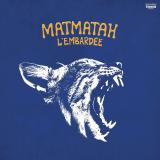
Matmatah - L'Embardée LP 2x12"

Matmatah

L'Embardée LP 2x12"

2x12inchLOP2633004
Upton Park
30.04.2026
  • 1: Pour Moi La Vie Va Commencer
  • 2: Cancion De Jinete
  • 3: Tombé Pour La France
  • 4: Love Will Tear Us Apart (L'amour Nous Séparera)
  • 5: Miss Maggie
  • 6: Eisbär (Feat. Fanny Gillard)
  • 7: Gimme Some Truth
  • 8: Anne, Ma Sœur Anne
  • 9: Goldfinger
  • 10: O Que Faz Falta
  • 11: Ar Miliner (Feat. Patrick Marie)
  • 12: La Pulce D'acqua
  • 13: Putain Putain
  • 14: Boys Don't Cry
  • 15: Sweet Amanite Phalloïde Queen
  • 16: Alison Gross (Feat. Morgane Mercier)
  • 17: Lisa
  • 18: Oh Madeleine
  • 19: The Winner Takes It All
  • 20: Qu'est-Ce Que Sera Demain

After months of working exclusively on his own repertoire, Matmatah is slowly recovering from his 30th birthday by returning to his first love: covering other people’s songs !
Because Matmatah comes from there, from the steamy atmosphere of bars and clubs.
Back in the day, they played loads of covers. Oh yes, they certainly did.
So why not put a few of them together on an album?
It’s a must, isn’t it?
Except that… There are many ways to record an album of covers.
The band could have taken the easy route and covered the songs they loved in their early days. But that would be to misunderstand these lads. They needed to come up with a proper concept to justify such a project.
They came up with two:
To tackle styles that are diametrically opposed to their own, so they could better make them their own.
To broaden their linguistic repertoire and experiment with different sounds.
The result is a rich, joyful and socially conscious collection of 20 songs, written between the 18th and 21st centuries and performed in no fewer than 10 European languages. A fine tribute to the continent’s diversity.
To spice up this project, they’ve brought in the whirlwind that is Fanny Gillard on vocals for ‘Eisbär’ and ‘Putain Putain’, the powerful voice of Morgane Mercier on the eerie ‘Alison Gross’, mentor Patrick Marie for a space-age ‘Kan Ha Diskan’, and the immense Kevin Camus on the uilleann pipes and whistle for ‘The Winner Takes It All’.
Matmatah takes a wild ride, travelling across Europe and through time, having fun and cheekily reworking songs he never imagined he’d play.
Find the lynx!

pré-commande30.04.2026

il devrait être publié sur 30.04.2026

27,31
Anané - It Looks Like Love
 
2

Anané’s colourful life in music has seen her do everything from singing at the famous pre-game show at Super Bowl XLI as part of the group Elements of Life, DJ at hotspots like Hi Ibiza, Pacha NYC and Ushuaïa to name a few, while also curating her own monthly residency Nulu Movement, now ten years strong at Le Bain NYC, release unique blends of Afro, house, and pop on labels like Vega Records, and head up her own imprints, Nulu Music and Nulu Electronic. The Cape Verdean-born DJ, producer, vocalist, and songwriter has had countless club hits and has released acclaimed albums like ‘Ananésworld’ and ‘Chapters Of Becoming’, often with a lush, live, and orchestrated style that is truly unique.

With this release, Anané steps forward with her first solo production to date. Here she serves up the sumptuous ‘It Looks Like Love’, a poised, elegant house sound with her own smoking, soulful vocals and classy strings bringing colour to an Afro groove packed with infectious bounce. Neat guitar riffs and silky synths all enrich this most sophisticated sound. The first mix sees Anané link up with veteran Italian Christian Mantini, who has hosted Sunset Ritual parties with Anané and Louie Vega since 2013. Their dub is rooted in warm, rubbery drums that are even deeper and more immersive than the original.

Manda Moor & Sirus Hood are a red-hot contemporary pair who run the Mood label and are defining the contemporary underground. Their remix is more driving, but it retains the soulful vibe with breezy pads and jazzy motifs drifting in and out above the swaggering groove.

Rotterdam-based Chicagoan Jamie 3:26 is a master at blending disco, soul, and house into timeless sounds, and here he delivers a loopy rework that pairs deep drive and sun-kissed vibes with funky, Chic-style bass guitar motifs.

En stock du19.06.2026

16,39

Derniere entrée: 17 jours
The Supremes - Come into my life (7")

This is a super funk soul double A by The Supremes, a much wanted 45 that has never been released before. A: “Come into my life” is a timeless song that you feel you already know; stunning. A percussive groove loaded with samples and perfect vocals; this track wasn’t a chart-topping hit but has always been a club banger. B: “I Don’t want to be tied down” a sassy and uplifting vocal groove all about love and freedom, an utterly delightful b- side.

pas en stock

Commandez maintenant et nous commanderons l'article pour vous chez notre fournisseur.

15,55

Derniere entrée: 45 jours
NO WAY BACK MAGAZINE - BETTER WAYS FORWARD THROUGH MUSIC AND SUBCULTURE STORIES, 1979-1994 - LEARNING FROM, NOT LONGING FOR

After all of the fun had - and, if we may brag a bit - the acclaim for NWB001, we're back with a follow-up.

So here's NWB002. Our start and end points shift this time (1979–1997 vs 1977-1989) but again the focus is on revolutionary moments in music and subculture.

We've got pieces from The Face, i-D, Time Out, Village Voice, Rolling Stone, Mixmag, The Observer and - a particularly big pleasure - Collusion magazine. We've got brilliant photography, too, documenting seminal afterdark moments. And we've put it all together with much love, craft and attention to detail.

This is material that lets us experience culture in its rawest form. In-the-moment and before endless layers of post-rationalisation have kicked in. Breakthrough events in dance music, hip-hop and pop – and parallel shifts in art, design and fashion. Inspirational, ground-level creativity and enterprise that set the scene(s) for subsequent decades.

We hope you enjoy reading NWB002 as much as we enjoyed bringing it together.

Inside No Way Back 002

Behind The Groove - the epic 1983 feature by Steven Harvey in David Toop's Collusion magazine, charting the NYC disco underground

Photographer Steve Eichner documenting the club kids scene at The Limelight, Palladium, Tunnel and Club USA

Year zero reporting as The Face's Sheryl Garratt visits Chicago in 1986, witnessing the emergent house sound

The Mudd Club - 'disco for punks' as Rolling Stone put it; the Lower East Side party which arguably spawned a thousand indie discos

In the 'socialist city' of Sheffield, meanwhile, Jon Savage heads for a night of sharp clothes and even sharper moves at Jive Turkey

Paul Morley writing in Time Out in 1988 on the tension materialising between glossy style mags and the the monochrome music press

The House That Rap Built - Village Voice celebrates the short but sweet glory years of hip-house

Mixmag in 1992 on the 'return of sex' to clubs like Roxy and the Sound Factory

Images and commentary from Eddie Otchere, rewinding to jungle's halcyon days

Kodwo Eshun reporting on jungle's full-throttle ascent for i-D in 1994

+ Editor’s notes, supporting commentary, playlists, and covers, spreads and imagery from original titles

ISSN - 2977-8530

pré-commande24.04.2026

il devrait être publié sur 24.04.2026

22,90
PPJ - Joker
  • A1: Me Pega
  • A2: Tem Carnaval
  • A3: Sexy Doce
  • B1: Coeur
  • B2: Então Tá Bem
  • B3: Para Ser Feliz
  • B4: Tô Nem Aí

Fresh from releasing projects on Method 808 and Future Classic, landing a huge collaboration with Chloé Caillet, and delivering an official remix for Fatboy Slim, PPJ are entering a new chapter in full force. Their expansive take on global street sounds, ranging from neoperreo to Miami bass, gets a cool re-coating.

Led by the magnetic vocalist Páula, with production from Povoa (individually supported by Four Tet, Ben UFO, and Barry Can't Swim, with recent releases on Live From Earth), the duo operates in maximalist mode: playful, sensual, and slightly unhinged.PPJ’s new era, JOKER, embraces a figure that appears everywhere from card decks to carnival culture as a symbol that mirrors their own DNA: funny, eerie, seductive, unpredictable. The EP leans further into club territory, but rather than polishing their edges, PPJ amplify them.

At the emotional core of the record sits “Coeur,” co-produced with Chloé Caillet. It begins with an MPB-tinged foundation flirting with bossa nova. It’s unmistakably Brazilian, bathed in sunset hues before being sped up and twisted into a dance-floor-ready electronic form. The groove shimmers with tension: warm percussion, elastic basslines, and Páula’s voice hovering between intimacy and tease. It feels like a remix of itself, romantic, but slightly untrustworthy.

If “Coeur” glows, “To Nem Ai” is a slow burner. A very deep and downtempo house cut, it unfolds slowly, almost luxuriously, guided by sensual vocals that feel whispered directly into the ear of the listener. A hypnotizing piano sample that feels like a late-night confession. It’s the kind of record that transforms a dancefloor into something tactile.

Elsewhere, “Me Pega” is a high-energy reinterpretation of the tech-house sounds from Santa Catarina, one of southern Brazil’s most feverish party states, twisted and accelerated for ferocious impact. Drawing direct inspiration from Sarro, a raw and vibrant Brazilian street dance, the track captures physical intensity in its purest form: sweat, bass pressure, collective release.

Its counterpart, “Tem Carnaval” channels Páula’s vivid storytelling into a thunderous ode to Rio’s carnival spirit, euphoric, chaotic, cinematic landed just in time for this year’s celebrations.

On “Sexy Doce,” rugged electroclash melodies collide with unexpected references. “It was inspired by Budots, which is dance music from the streets in the Philippines,” Povoa explains. “Then we mixed it with Páula’s Brazilian vocals. Baile funk is similarly from the streets, so there is a connection.” The result is raw yet futuristic, a cross-continental flirtation that feels both underground and explosive.

With this new EP, PPJ make music like they’re tuning into a dozen pirate frequencies at once. Pirate radio from Rio to Berlin to Manila intercepting fragments of street culture, sensuality, and chaos, and stitching them into something deliriously cohesive.
JOKER doesn’t just nod to club culture. It challenges it, twists expectation and leaves a lasting impression.

pré-commande24.04.2026

il devrait être publié sur 24.04.2026

20,97
Len Faki - Zera

Len Faki

Zera

12inchFIGURE X52
Figure
24.04.2026

With Zera, Len Faki returns to Figure with a tightly focused EP that moves between raw, driving functionality and more open, atmospheric moments. Across five tracks, he explores variations in groove, tone and energy, balancing direct, floor-ready structures with a more fluid and spacious approach.

Opening cut Maschine Girl locks into a restless, forward-driving groove. Crisp percussion and a tightly coiled low end create immediate momentum, while sharp synth fragments and metallic accents add a nervous edge. The track stays stripped and efficient, letting its steady build and controlled tension carry the energy.
Kobold follows with a darker and more twisted tone. Warped synth figures weave through a heavy rhythmic backbone, giving the track a slightly mischievous character while maintaining a firm, heads-down drive. The interplay between tonal movement and grounded percussion keeps the groove dynamic without breaking its focus.
Closing the A-side, Maschine Girl (Version) revisits the opener from a different angle. Elements are tightened and subtly rebalanced, shifting the emphasis further toward rhythm and direct impact. More reduced and tool-like in nature, it pushes the groove forward with a sharper, club-ready feel.
On the flip, Zera unfolds with a broader sense of space. Hypnotic synth movement and layered atmospheres sit atop a firm low-end framework, gradually building intensity while maintaining a deep, immersive flow. The track thrives on its slow development, drawing the listener further into its evolving structure.
Rounding out the release, Zera (Hardspace Mix) reimagines the original with a heavier, more physical approach. The groove becomes more pronounced and the rhythmic pressure more direct, tightening the structure into a denser, floor-driven tool that emphasises impact and propulsion.
With Zera, Len Faki delivers a cohesive and wide-ranging release that connects raw, driving tools with more expansive, early morning-leaning grooves — further reflecting the breadth and versatility that has defined his output in recent years.

pas en stock

Commandez maintenant et nous commanderons l'article pour vous chez notre fournisseur.

13,24

Derniere entrée: 36 jours
Various - Carnal Savana vol. 1
 
2

Solar Operandi is a new Parisian label born from a B2B project and developed into a curated platform rooted in electro and exploring its darker intersections with techno, acid and trance. It's focusing on peak-time energy with depth and character.

Its first various artists release, Carnal Savana Vol. 1, brings together standout producers from across the globe, each delivering a distinctive yet cohesive vision of modern electro. The compilation balances raw club functionality with refined sound design, built for powerful systems and late-night intensity.

En stock du16.06.2026

12,56
Various - NOW Yearbook – THE VAULT: 1983
  • Orchestral | Manoeuvres In The Dark - Telegraph
  • Blancmange | - That’s Love, That It Is
  • China | Crisis - Tragedy And Mystery
  • Adam | Ant - Strip
  • Divine | - Love Reaction
  • Yello | - I Love You
  • Talk | Talk - My Foolish Friend
  • Japan | - Canton
  • Fun | Boy Three – The More I See (The Less I Believe)
  • Tracie | – Give It Some Emotion
  • The | Teardrop Explodes - You Disappear From View
  • Xtc | - Love On A Farmboy's Wages
  • The | Stranglers - Midnight Summer Dream
  • The | Kinks - Don’t Forget To Dance
  • Mari | Wilson - Cry Me A Rive
  • Bauhaus | - Lagartija Nick
  • Marc | And The Mambas - Black Heart
  • The | Glove - Like An Animal
  • Freur | - Doot Doot
  • The | B-52'S - Song For A Future Generation
  • Wall | Of Voodoo - Mexican Radio
  • Joe | Jackson - Breaking Us In Two
  • Oliver | Cheatham - Get Down Saturday Night
  • Rockers | Revenge - The Harder They Come
  • Freeez | - Pop Goes My Love
  • Malcolm | Mclaren - Soweto
  • Culture | Club - I'll Tumble 4 Ya
  • The | Belle Stars - Indian Summer
  • Level | 42 - Out Of Sight Out Of Mind
  • Daryl | Hall & John Oates - One On One
  • Sparks | & Jane Wiedlin - Cool Places
  • The | Romantics - Talking In Your Sleep
  • The | Fixx - Saved By Zero
  • The | Motels - Suddenly Last Summer
  • Modern | English - I Melt With You
  • Missing | Persons - Walking In L A
  • Naked | Eyes - Always Something There To Remind Me
  • Taco | – Puttin On The Ritz
  • Electric | Light Orchestra - Secret Messages
  • Men | At Work - Overkill
  • Pat | Benatar - Little Too Late
  • Journey | - Separate Ways (Worlds Apart)
  • Styx | - Mr Roboto
  • Giorgio | Moroder & Joe Esposito - Lady, Lady
  • Stephen | Bishop - It Might Be You
également disponible

The Vault: 1984[24,16 €]


The year that NOW’s story began, and where we started our ‘Yearbook’ series back in 2021. An incredible year in Pop music, and a fabulous selection of the years’ hits have featured on that first ‘Yearbook’, and on the ‘80-84 Final’ as part of our appreciation of 1983. Those tracks were generally the bigger hits of the year, with their Chart achievement a factor in their inclusion. However, that’s not the whole story, and our celebration of 1983 wouldn’t be complete without shining a light on some of the year’s singles that have been compiled much less frequently over the past 40 years. Welcome to the THE VAULT for 1983…Some of the tracks were Top 40 hits, some missed the Chart completely, and some were huge in the U.S. and not in the U.K. – but all are part of the wonderful Pop story of 1983. Released as 80 tracks across 4-CDs, available as a standard 4CD and as a a special edition 4CD in ‘hardback book’ packaging featuring a 28-page track by track guide, original singles artwork and a quiz and 45 tracks across 3-LPs, pressed on stunning translucent red vinyl -

pas en stock

Commandez maintenant et nous commanderons l'article pour vous chez notre fournisseur.

24,16

Derniere entrée: 52 jours
Various - Funk & Soul Instrumentals 1967 LP
  • A1: Sweet Potato Gravy Maurice Simon & Pie Men
  • A2: Mmm Mmm Mmm Dave Lewis
  • A3: Sorry ‘Bout That Harold Johnson Sextet
  • A4: Sophisticated Funk John Roberts
  • A5: Chittlin' Salad The Soul Runners
  • A6: Hijack Jackie Hairston
  • A7: Whip You Little Charles Whitworth
  • A8: The Shing-A-Ling Thing The Naked Truth
  • B1: I Can't Afford To Lose Him Sound Stage House Band
  • B2: Sunny Jerome Richardson
  • B3: Bucket O Grease Les Mccann
  • B4: Cornbread And Buttermilk Leon Haywood
  • B5: Dead The Mark Ii
  • B6: The Skrooch Little Eddie
  • B7: Flunky Flunky The Soul Set
  • B8: Mother Blues Gene Ludwig

Soul meets Funk 1967-style. Club Sounds, Funk Guitar Groovers, Soul Cha-Cha, Hammond Magic, Freak-Out Party Sounds, Slinky Organ Smoochers. Cornbread And Buttermilk, Chittlin' Salad, Sweet Potato Gravy, and a Bucket Of Grease. Just Instrumentals Soul and Funk-Style. Mmm Mmm Mmm.

pré-commande18.04.2026

il devrait être publié sur 18.04.2026

22,65
Spunk - Tighten It Up

Spunk

Tighten It Up

12inchST71001P
Cold Coast
18.04.2026

LP Red Vinyl in Picture Sleeve

A criminally overlooked P-Funk treasure from 1981, Tighten It Up captures Chicago’s funk underground at its raw, electric best — with none other than Frankie Knuckles contributing as mixing consultant, giving the record an unmistakable dance-floor edge ahead of the house era. Long out of print and increasingly hard to find, this beautifully remastered RSD edition brings the Gold Coast classic back into circulation, this time on a Transparent red vinyl with restored artwork. An essential 2026 pick that shines a light on a missing link between P-Funk, disco, and early Chicago club culture — exactly the kind of deep, collector-grade rediscovery Record Store Day was made for. 1xLP, Picture Sleeve, Remastered, Transparent Red Vinyl.

En stock du19.06.2026

22,27
Various - Soho Scene ’63 Vol 2: Jazz Goes Mod LP
  • A1: Dick Morrissey Quartet - Bang!
  • A2: Emcee Five - Mike's Dilemma
  • A3: Michael Garrick Quintet - Vishnu
  • A4: Vic Lewis & His Bossa Nova All Stars - Last Minute Bossa Nova
  • A5: Johnny Burch Octet - Early In The Morning
  • B1: Pony Poindexter - 4-11-44
  • B2: Terrell Prude - Princess
  • B3: Johnny Hartsman - Soppin
  • B4: Eddie Kochak & Hakki Obadia - Jazz In Port Said
  • B5: Charles Kynard With Clifford Scott - Where's It At
  • B6: Gene Ammons - Jungle Soul

Compare the best of British jazz circa 1963 with American sounds from labels such as Prestige, Tangerine and World Pacific. This album captures the period when rhythm and blues is emerging as the dominant club sound, forcing Soho jazz clubs to change their music policy in order to survive. On the British side, you’ve got Ronnie Scott’s arrangement of Last Minute Bossa Nova; Bang!, taken from Dick Morrissey Quartet’s first session for the BBC’s World Service, recorded around the time of the release of their first album Have You Heard? The version here is take two. You can hear take one along with the rest of the eleven-track session on R&B18 Jazz For Moderns.
Early In The Morning is a Ginger Baker/Jack Bruce arrangement of the traditional work song realized as a repeated blues riff, and is the first ever recording that is recognizably British Blues. Graham Bond features on alto sax along with Bruce and Baker together as members of the Johnny Burch Octet heard playing live at a BBC staff party from March 1963. Side Two features Jazz Stateside, such as West Coast guitarist Johnny Hartsman, Gene Ammons veering into proto jazz-funk on Jungle Soul, aka Ca' Purange plus a couple of top notch Hammond workouts from Terrell Prude and Charles Kynard.

pré-commande18.04.2026

il devrait être publié sur 18.04.2026

22,65
Various - What Dance Is This? UK Post Punk Dancefloor Vol.1 (1979-1983)
également disponible

Vol.1[27,52 €]


Straight from an alternative dancefloor, a recollection of stone cold classics from huge & influential post-punk pioneers. They called it white funk once, but here you can even catch echoes of latin, dub and club influences, a mutant disco manifesto from a series of British champions such as Normil Hawaiians, Glaxo Babies, Playgroup, C Cat Trance, Suns of Arqa & Prince Far I and many more.

Tracklist Side A:
Normil Hawaiians - Obedience
Vee VV - Keep Beat
Spit Like A Paint - For The Life Of Me
Group Therapy - Arty-Fact
C Cat Trance - Hypnotised

Tracklist Side B:
The Chicken Granny - Quit The Body
Machine Gunn Hogg And Co - Bed Bound Saga
Playgroup - Hoggs Might Fly
Glaxo Babies - Shake (The Foundations)
Suns of Arqa feat. Prince Far I - G.D. Magik

pré-commande18.04.2026

il devrait être publié sur 18.04.2026

27,52
Various - Tchic Tchic: French Bossa Nova 1963-1974  Colored Edition LP 2x12"
  • A1: Les Masques - Il Faut Tenir (1969)
  • A2: Isabelle Aubret - Casa Forte (1971)
  • A3: Christianne Legrand - Hlm Et Ciné Roman (1972)
  • A4: Jean Constantin - Pas Tant D'chichi Ponpon (1972)
  • A5: Billy Nencioli & Baden Powell - Si Rien Ne Va (1969)
  • B1-: Marpessa Dawn - Le Petit Cuica (1963)
  • B2: Jean-Pierre Sabar - Vai Vai (1974)
  • B3: Sophia Loren - De Jour En Jour (1963)
  • B4: Isabelle - Jusqu’à La Tombée Du Jour (1969)
  • B5: Sylvia Fels - Corto Maltesse (1974)
  • C1: Frank Gérard - Comme Une Samba (1972)
  • C2: Ann Sorel - La Poupée Des Favellas (1971)
  • C3: Charles Level - Un Enfant Café Au Lait (1971)
  • C4: Andrea Parisy - Les Mains Qui Font Du Bien (1970)
  • C5: Audrey Arno - Quand Jean-Paul Rentrera (1969)
  • C6: Aldo Frank - T’as Vu Ce Printemps (1970)
  • D1: Christianne Legrand - Cent Mille Poissons Dans Ton Filet (1972)
  • D2: Clarinha - Lemenja (1970)
  • D3: Hit Parade Des Enfants - Aquarela (1976)
  • D4: Jean-Pierre Lang - Tendresse (1965)
  • D5: Magalie Noël - Une Énorme Samba (1970)
  • D6: Françoise Legrand - La Lune

Ever since the late 1950s bossa-nova revolution, Brazil’s influence on French music has been undeniable. Pierre Barouh, Georges Moustaki and a vast array of lesser known artists, all made the Musica Popular Brasileira (MPB) an axis of promotion at the service of a cool and metaphysical, modern and mixed Brazilian lifestyle. Some were seduced by the poetic languors of the bossa, some were looking for fun, and others just loved the American hybridization of jazz-bossa, jazz-samba.


What is bossa nova? One of its creators, Joao Gilberto said: "Its style, cadence, everything is samba. At the very start, we didn't call it bossa nova, we sang a little samba made up of a single note - Samba de uma nota so .... The discussion around the origins of bossa nova is therefore useless”. It is nevertheless useful to remember that these magnificent Brazilian songs, which the guitarist describes as samba, were shifted and balanced around improbable chords. "I like things that lean, the in-betweens that limp with grace," said Pierre Barrouh, quoting Jean Cocteau.


With emotion, arrangements for violin and supple guitar licks, bossa nova rapidly changed. A transformation that can be heard in the Tchic, tchic, French Bossa Nova 1963-1974 compilation, the result of a cultural reappropriation, which traveled through the United States and supplemented itself in France.

A musical revolution that has remained significant, bossa nova was born in Rio. From 1956 to 1961, Brazil lived through its golden years. In five years, the country had invented its modernist style. Elected president in 1956, Juscelino Kubitschek de Oliveira, an elegant man with a broad forehead, brandished a promising slogan: "Fifty years of progress in five years". He quickly got to work. Not worried about increasing debt, he launched the project for a new federal capital, Brasilia, designed by the communist architect Oscar Niemeyer. Volkswagen opened state-of-the-art factories and created the “fusquinha”, the Beetle. In Rio, the Vespa made its first appearance. The Arpoador Surf Club crew run into the “girl” from Ipanema, Helô Pinheiro - the tanned garota ("chick"), between a flower and mermaid, who at 17 walked by the Veloso bar, where the fiery author and composer, Tom Jobim and Vinicius de Moraes, were getting drunk on whiskey. From then on, bossa symbolized cool.

In 1958, Joao Gilberto recorded Chega de Saudade, which the directors of Philips denied, calling it "music for fagots". The marketing director, who believed in it, secretly pressed 3000 78-inch vinyls and distributed them at schools around Rio, creating a tidal wave.

American jazzmen then took over. In particular, trumpeter Dizzy Gillespie and guitarist Charlie Byrd. In November 1962, the Brazilian Ministry of Foreign Affairs funded a "Bossa-Nova" concert at Carnegie Hall in New York, inviting the genre’s pioneers. Unprepared, the show soon turned to disaster. But the troupe was invited to the White House by Jackie Kennedy. The first lady loved "the new beat" and in particular Maria Ninguem, a song by Carlos Lyra, later covered by Brigitte Bardot.

In Brazil, the 1964 military coup quickly ended this euphoria. The destructive atmosphere that ensued pushed many Brazilian musicians to leave, if not to exile. Thus, Tom Jobim, Sergio Mendes and Joao Gilberto arrived to the United States. In New York, Joao Gilberto met saxophonist Stan Getz. At the time, he was married to the Bahianese Astrud Weinert Gilberto, who had a German father. She had never sung before, but she knew how to speak English. Getz therefore asked her to replace her husband on The Girl From Ipanema. The Getz/Gilberto record with Tom Jobim on piano, was released in March 1964. Phil Ramone, the "pope of pop" was in charge of sound.

Bossa nova arrived in Paris through the classic “guitar-voice” channel (Pierre Barouh, Baden Powell, Moustaki…) But France loved jazz and Paris had already welcomed its American contributors. All these good people were to pass through Saint-Germain-des-Prés. The cabaret l'Escale became the Mecca of Latin American sound where one could find Pierre Barrouh and his friends, such as the Camara Trio, samba-jazz aces, whose only record was published by the Saravah label. With a band strangely called Les Masques (a band that included Nicole Croisille and Pierre Vassiliu, among others), the Camara Trio recorded an interesting Brazilian Sound, including the track Il faut tenir which is present on this tasty compilation of rarities.

Other enlightened musicians can also be found on the compilation, such as Jean-Pierre Sabar (songwriter for Hardy, Auffray, Leforestier ...) and the French pop rock organist Balthazar. In 1975, Sabar recorded Aurinkoinen Musiikkimatka on a Finnish label, which featured the crazy Vai, Vai, included on this record. We are now following the footsteps of Brazilian electronic musicians such as Sergio Mendes, Eumir Deodato or Marcos Valle who created funk and disco sounds on their keyboards and synthesizers. A style that influenced Véronique Sanson when she wrote Jusqu’à la Tombée de la nuit in 1969 for Isabelle de Funès, the niece of Louis and a great friend of Michel Berger - Sanson did end up singing this track on her 1992 Sans Regret record.


The pinnacle of exoticism and travel, Sylvia Fels’ Corto Maltese includes bongos, sea mist and ocean sounds. The title was taken from Jacky Chalard’s concept album written in 1974, Je suis vivant, mais j’ai peur (I am alive, but I am scared), based on Gilbert Deflez’s science fiction novel.


However, bossa nova extended the scope of popularity. "In the 1970s, I was a fan of Sergio Mendes, Getz / Gilberto. I fell in love with this music that I knew because I had been an orchestral singer, " explained Isabelle Aubret, who in 1971 delivered a composite record of covers by the very funky Jorge Ben, Orfeu Negro, Tom Jobim, Vinicius de Morais and Jean Ferrat. "I recorded this album for Meys Records in Paris, far from Brazil, with wonderful musicians, François Raubert, Roland Vincent, Alain Goraguer...". The latter wrote the arrangements for Casa Forte, a very percussive title borrowed from Edu Lobo, one of the initiators of the bossa who spent time in California. "Jazz and bossa came together and produced very rhythmic music. I love singing, it allows me to dream, to have fun, to feel a high on stage, and these songs brought me joy, made me swing, my singing felt like a dance.”


The world tours of French singers and their desire for the tropics, often brought them to Rio with its hills, forests, caipirinhas and tanned bodies. There are surprises though, like this Iemenja (Iemenja is the goddess of the sea in the Afro-Brazilian candomblé religion). Not unlike the composer and musician Jean-Pierre Lang, based in Sao Paulo, Claire Chevalier taught Brazil to Brazil. In 1970, the singer and painter published a 45-inch vinyl, Mon mari et mes amants (My husband and my lovers), under the improbable pseudonym of Clarinha (little Claire). She was then living in Rio, with her husband, Joël Leibovitz, who founded a band called Azimuth, and who owned a record label specialized in "sambas enredos" songs for samba school parades.


For its B side, she asked Pierre Perret to come up with lyrics for a song composed by Carlos Imperial: "Oh goddess of the sea, o goddess Iemenja, I bring a white rose to adorn your long hair ..." . "Perret came to see us, and we had fun, remembers Joël Leibovitz. We wrote Lemenja for fun, we recorded it at the Havaí studio, behind the Central do Brasil the central station. Erlon Chaves, the arranger who worked with Elis Regina, joined us" adding his share of Afro-Brazilian percussions and funky brass to the mix.

There is a common misunderstanding in Franco-Brazilian history: that bossa, admittedly hedonistic, is perceived as funny, even though the poets who wrote the texts are often philosophizing on the human condition. Its French interpreters pull it towards a carnival inspired universe, far removed from its fundamental essence. Thus, Jean Constantin covered the famous Samba da minha terra, an ode to the art of samba written by the classic Bahian composer Dorival Caymmi, renaming it with the enticing title of Pas tant de tchi tchi pompon: "On your pier there is no tchi tchi / when you arch your back, you know everything is alright ”(lyrics by Gérard Calvi). This expedited bossa aims for the absurd, but retains a certain elegance.

Indeed, Jean Constantin was not an idiot, the rather large man had a huge mustache and liked fantasy, (Les pantoufles à papa, Le pacha, inspired by cha-cha-cha-cha, salsa and jazz) but he was also the lyricist of Mon manège à moi interpreted by Edith Piaf, the composer of Mon Truc en plume by Zizi Jeanmaire and the soundtrack of François Truffaut’s 400 Blows. Le Poulpe, published in 1970, from which this bossa is extract, was arranged by Jean-Claude Vannier, an accomplice of Serge Gainsbourg’s Melody Nelson. In short: "There is enough of samba / By looking at the parasol / Because my poor cabeza / Is going to die in the sun".

Even the American actress Marpessa Down, who was at the heart of the bossa nova revolution with her role as Euridyce in Marcel Camus’ film Orfeu Negro, winner of the 1959 Cannes Palme d'or, fed the clichée with Je voudrais parler au petit cuica - "Tell me how you manage to always make people want to dance / It's true, I must admit that I cannot resist your magic" - in consequence, once can hear the cuica, a little drum inherited from the Bantu.


But bossa nova had many angles. Societal, of course, pushing actresses who were symbols of women's liberation like Brigitte Bardot, Jeanne Moreau, or Sophia Loren to engage in the exercise of accelerated bossa. In February of 1963, Sophia Loren made a record in French in Rome, Je ne t'aime plus, featuring the song De jour en jour, a bossa written by two Italians, Armando Trovajoli and Tino Fornai, which was released a little later by Barclay. Bossa accompanied the 1960s, a decade of moral liberation. Ann Sorel, who interpreted La Poupée des favellas, caused a sensation with L’amour à plusieurs, a provocative song written by Frédéric Bottom and Jean-Claude Vannier. As for the actress Andrea Parisy, she displayed her bourgeois cheekiness in Marcel Carné's Les Tricheurs before interpreting Les mains qui font du bien. And Magalie Noël, the friend of Boris Vian, who sung Johnny fais-moi mal, was hired to sing Une énorme Samba, composed by Alain Goraguer (arranger to Gainsbourg, Bobby Lapointe and Jean Ferrat) with lyrics by Frédéric Botton.

But in the end, of what wood is bossa nova made of? The answer is given by Christianne Legrand, daughter of Raymond the conductor, and sister to Michel the composer: "With me, with jà" - jà means "immediately" in Portuguese. In 1972, the singer, an expert in vocal jazz and a member of the Double Six, published Le Brésil de Christianne Legrand. Two songs included on the Tchic Tchic compilation that demonstrate how bossa, jazz, funk, rock, etc. work like a swiss army knife: the music is used to denounce broken systems, or miracles, HLM et ciné roman, Cent mille poissons dans ton filet, two songs from the O Cafona soundtrack, a successful telenovela broadcast, at the time in black and white, on TV Globo. The first was adapted in French by the fighter and friend of the Legrand tribe, Agnès Varda. The second is content with a play on words, jostling them into a summer fun.


Véronique Mortaigne

pré-commande

Cet article n'a pas encore été publié. Vous pouvez pré-commander le produit maintenant.

27,31
Banda Maje / N-Zino - Mo... / Living Disco Club (N-Zino Remixes)

180 GR Records is proud to present a new release by N-Zino, reimagining two tracks previously released by Four Flies Records: Mo... and Living Disco Club, offering two distinct yet complementary interpretations. Mo... (180 GR Disco Mix) takes its cue from the original Banda Maje version, itself a contemporary homage to Peppino Di Capri, already given a club reinterpretation. N-Zino elevates the track with a nu disco approach, emphasizing its elegant groove and sunnier, funkier side, blending disco influences with pulsing basslines, shimmering percussion, and warm synth textures, all infused with contemporary sensibilities while keeping the original melody alive. The result is a bright, danceable reinterpretation designed for both listening and the dancefloor. In a different yet perfectly complementary direction, Living Disco Club (Don Ciccio Tribute Mix) explores a deep house dimension, turning Banda Maje's disco-inspired original into a hypnotic, late-night groove. Deep bass, soft drum machines, essential rhythms, and atmospheric pads create a rich, warm, immersive vibe, ideal for after-hours or more refined, introspective club moments. Together, these remixes highlight N-Zino and 180 GR Records' vision: celebrating strong musical roots, connecting Italy's musical past with contemporary club culture, offering tracks that honor the tradition and the originals released by Four Flies, while speaking directly to modern dancefloors.

pas en stock

Commandez maintenant et nous commanderons l'article pour vous chez notre fournisseur.

15,34

Derniere entrée: 32 jours
Guilty Razors - Complete Recordings 1977 - 1978

UILTY RAZORS, BONA FIDE PUNKS.


Writings on the topic that go off in all directions, mind-numbing lectures given by academics, and testimonies, most of them heavily doctored, from those who “lived through that era”: so many people today fantasize about the early days of punk in our country… This blessed moment when no one had yet thought of flaunting a ridiculous green mohawk, taking Sid Vicious as a hero, or – even worse – making the so-called alternative scene both festive and boorish. There was no such thing in 1976 or 1977, when it wasn’t easy to get hold of the first 45s by the Pistols or the Clash. Few people were aware of what was happening on the fringes of the fringes at the time. Malcolm McLaren was virtually unknown, and having short hair made you seem strange. Who knew then that rock music, which had taken a very bad turn since the early 1970s, would once again become an essential element of liberation? That, thanks to short and fast songs, it would once again rediscover that primitive, social side that was so hated by older generations? Who knew that, besides a few loners who read the music press (it was even better if they read it in English) and frequented the right record stores? Many of these formed bands, because it was impossible to do otherwise. We quickly went from listening to the Velvet Underground to trying to play the Stooges’ intros. It’s a somewhat collective story, even though there weren’t many people to start it.
The Guilty Razors were among those who took part in this initial upheaval in Paris. They were far from being the worst. They had something special and even released a single that was well above the national average. They also had enough songs to fill an album, the one you’re holding. In everyone’s opinion, they were definitely not among the punk impostors that followed in their wake. They were, at least, genuine and credible.

Guilty Razors, Parisian punk band (1975-1978). To understand something about their somewhat linear but very energetic sound, we might need to talk about the context in which it was born and, more broadly, recall the boredom (a theme that would become capital in punk songs) coupled with the desire to blow everything off, which were the basis for the formation of bands playing a rejuvenated rock music ; about the passion for a few records by the Kinks or the early Who, by the Stooges, by the Velvet mostly, which set you apart from the crowd.
And of course, we should remember this new wave, which was promoted by a few articles in the specialized press and some cutting-edge record stores, coming from New York or London, whose small but powerful influence could be felt in Paris and in a handful of isolated places in the provinces, lulled to sleep by so many appalling things, from Tangerine Dream to President Giscard d’Estaing...
In 1975-76, French music was, as almost always, in a sorry state ; it was still dominated by Johnny Hallyday and Sylvie Vartan. Local rock music was also rather bleak, apart from Bijou and Little Bob who tried to revive this small scene with poorly sound-engineered gigs played to almost no one.
In the working class suburbs at the time, it was mainly hard rock music played to 11 that helped people forget about their gruelling shifts at the factory. Here and there, on the outskirts of major cities, you still could find a few rockers with sideburns wearing black armbands since the death of Gene Vincent, but it wasn’t a proper mass movement, just a source of real danger to anyone they came across who wasn't like them. In August 1976, a festival unlike any other took place in Mont-de-Marsan – the First European Punk Festival as the poster said – with almost as many people on stage as in the audience. Yet, on that day, a quasi historical event happened, when, under the blazing afternoon sun, a band of unknowns called The Damned made an unprecedented noise in the arena, reminiscent of the chaotic Stooges in their early adolescence. They were the first genuine punk band to perform in our country: from then on, anything was possible, almost anything seemed permissible.

It makes sense that the four+1 members of Guilty Razors, who initially amplified acoustic guitars with crappy tape recorder microphones, would adopt punk music (pronounced paink in French) naturally and instinctively, since it combines liberating noise with speed of execution and – crucially – a very healthy sense of rebellion (the protesters of May 1968 proclaimed, and it was even a slogan, that they weren’t against old people, but against what had made them grow old. In the mid-1970s, it seemed normal and obvious that old people should now ALSO be targeted!!!).
At the time, the desire to fight back, and break down authority and apathy, was either red or black, often taking the form of leafleting, tumultuous general assemblies in the schoolyard, and massive or shabby demonstrations, most of the time overflowing with an exciting vitality that sometimes turned into fights with the riot police. Indeed, soon after the end of the Vietnam War and following Pinochet’s coup in Chile, all over France, Trotskyist and anarcho-libertarian fervour was firmly entrenched among parts of the educated youth population, who were equally rebellious and troublemakers whenever they had the chance. It should also be noted that when the single "Anarchy in the UK" was first heard, even though not many of us had access to it, both the title and its explosive sound immediately resonated with some of those troublemakers crying out for ANARCHY!!! Meanwhile, the left-wing majority still equated punks with reckless young neo-Nazis. Of course, the widely circulated photos in the mainstream press of Siouxsie Sioux with her swastikas didn’t necessarily help to win over the theorists of the Great Revolution. It took Joe Strummer to introduce The Clash as an anti-racist, anti-fascist and anti-ignorance band for the rejection of old-school revolutionaries to fade a little.

The Lycée Jean-Baptiste Say at Porte d’Auteuil, despite being located in the very posh and very exclusive 16th arrondissement of Paris, didn’t escape these "committed" upheavals, which doubled as the perfect outlet for the less timid members of this generation.
“Back then, politics were fun,” says Tristam Nada, who studied there and went on to become Guilty Razors’ frontman. “Jean-Baptiste was the leftist high-school in the neighbourhood. When the far right guys from the GUD came down there, the Communist League guys from elsewhere helped us fight them off.”
Anything that could challenge authority was fair game and of course, strikes for just about any reason would lead to increasingly frequent truancy (with a definitive farewell to education that would soon follow). Tristam Nada spent his 10th and 11th unfinished grades with José Perez, who had come from Spain, where his father, a janitor, had been sentenced to death by Franco. “José steered my tastes towards solid acts such as The Who. Like most teenagers, I had previously absorbed just about everything that came my way, from Yes to Led Zeppelin to Genesis. I was exploring… And then one day, he told me that he and his brother Carlos wanted to start a rock band.” The Perez brothers already played guitar. “Of course, they were Spanish!”, jokes their singer. “Then, somewhat reluctantly, José took up the bass and we were soon joined by Jano – who called himself Jano Homicid – who took up the rhythm guitar.” Several drummers would later join this core of not easily intimidated young guys who didn’t let adversity get the better of them.

The first rehearsals of the newly named Guilty Razors took place in the bedroom of a Perez aunt. There, the three rookies tried to cover a few standards, songs that often were an integral part of their lives. During a first, short gig, in front of a bewildered audience of tough old-school rockers, they launched into a clunky version of the Velvet Underground's “Heroin”. Challenge or recklessness? A bit of both, probably… And then, step by step, their limited repertoire expanded as they decided to write their own songs, sung in a not always very accurate or academic English, but who cared about proper grammar or the right vocabulary, since what truly mattered was to make the words sound as good as possible while playing very, very fast music? And spitting out those words in a language that left no doubt as to what it conveyed mattered as well.
Trying their hand a the kind of rock music disliked by most of the neighbourhood, making noise, being fiercely provocative: they still belonged to a tiny clique who, at this very moment, had chosen to impose this difference. And there were very few places in France or elsewhere, where one could witness the first stirrings of something that wasn’t a trend yet, let alone a movement.

In the provinces, in late 1976 or early 1977, there couldn’t be more than thirty record stores that were a bit more discerning than average, where you could hear this new kind of short-haired rock music called “punk”. The old clientele, who previously had no problem coming in to buy the latest McCartney or Aerosmith LP, now felt a little less comfortable there…
In Paris, these enlightened places were quite rare and often located nex to what would become the Forum des Halles, a big shopping mall. Between three aging sex workers, a couple of second-hand clothes shops, sellers of hippie paraphernalia and small fashion designers, the good word was loudly spread in two pioneering places – propagators of what was still only a new underground movement. Historically, the first one was the Open Market, a kind of poorly, but tastefully stocked cave. Speakers blasted out the sound of sixties garage bands from the Nuggets compilation (a crucial reference for José Perez) or the badly dressed English kids of Eddie and the Hot Rods. This black-painted den was opened a few years earlier by Marc Zermati, a character who wasn’t always in a sunny disposition, but always quite radical in his (good) choices and his opinions. He founded the independent label Skydog and was one of the promoters of the Mont-de-Marsan punk festivals. Not far from there was Harry Cover, another store more in tune with the new New York scene, which was amply covered in the house fanzine, Rock News (even though it was in it that the photos of the Sex Pistols were first published in France).
It was a favorite hang-out of the Perez brothers and Tristam Nada, as the latter explained. “It’s at Harry Cover’s that we first heard the Pistols and Clash’s 45s, and after that, we decided to start writing our first songs. If they could do it, so could we!”
The sonic shocks that were “Anarchy in the UK”, “White Riot” or the Buzzcocks’s EP, “Spiral Scratch” – which Guilty Razors' sound is reminiscent of – were soon to be amplified by an unparalleled visual shock. In April 1977, right after the release of their first LP, The Clash performed at the Palais des Glaces in Paris, during a punk night organised by Marc Zermati. For many who were there, it was the gig of a lifetime…
Of course, Guilty Razors and Tristam were in the audience: “That concert was fabulous… We Parisian punks were almost all dressed in black and white, with white shirts, skinny leather ties, bikers jackets or light jackets, etc. The Clash, on the other hand, wore colourful clothes. Well, the next day, at the Gibus, you’d spot everyone who had been at this concert, but they weren’t wearing anything black, they were all wearing colours.”

It makes sense to mention the Gibus club, as Guilty Razors often played there (sometimes in front of a hostile audience). It was also the only place in Paris that regularly scheduled new Parisian or Anglo-Saxon acts, such as Generation X, Siouxsie and the Banshees, the Slits, and Johnny Thunders who would become a kind of messed-up mascot for the venue. A little later, in 1978, the Rose Bonbon – formerly the Nashville – also attracted nightly owls in search of electric thrills… In 1977, the iconic but not necessarily excellent Asphalt Jungle often played at the Gibus, sometimes sharing the bill with Metal Urbain, the only band whose aura would later transcend the French borders (“I saw them as the French Sex Pistols,” said Geoff Travis, head of their British label Rough Trade). Already established in this small scene, Metal Urbain helped the young and restless Guilty Razors who had just arrived. Guitarist for Metal Urbain Hermann Schwartz remembers it: “They were younger than us, we were a bit like their mentors even if it’s too strong a word… At least they were credible. We thought they were good, and they had good songs which reminded of the Buzzcocks that I liked a lot. But at some point, they started hanging out with the Hells Angels. That’s when we stopped following them.”

The break-up was mutual, since, Guilty Razors, for their part, were shocked when they saw a fringe element of the audience at Metal Urbain concerts who repeatedly shouted “Sieg Heil” and gave Nazi salutes. These provocations, even still minor (the bulk of the skinhead crowd would later make their presence felt during concerts), weren’t really to the liking of the Perez brothers, whose anti-fascist convictions were firmly rooted. Some things are non-negotiable.
A few months earlier (in July 1978), Guilty Razors had nevertheless opened very successfully for Metal Urbain at the Bus Palladium, a more traditonally old-school rock night-club. But, as was sometimes the case back then, the night turned into a mass brawl when suburban rockers came to “beat up punks”.

Back then, Parisian nights weren’t always sweet and serene.

So, after opening as best as they could for The Jam (their sound having been ruined by the PA system), our local heroes were – once again – met outside by a horde of greasers out to get them. “Thankfully,” says Tristam, “we were with our roadies, motorless bikers who acted as a protective barrier. We were chased in the neighbouring streets and the whole thing ended in front of a bar, with the owner coming out with a rifle…”
Although Tristam and the Perez brothers narrowly escaped various, potentially bloody, incidents, they weren’t completely innocent of wrongdoing either. They still find amusing their mugging of two strangers in the street for example (“We were broke and we simply wanted to buy tickets for the Heartbreakers concert that night,” says Tristam). It so happened that their victims were two key figures in the rock business at the time: radio presenter Alain Manneval and music publisher Philippe Constantin. They filed a complaint and sought monetary compensation, but somehow the band’s manager, the skilful but very controversial Alexis, managed to get the complaint withdrawn and Guilty Razors ended up signing with Constantin with a substantial advance.

They also signed with Polydor and the label released in 1978 their only three-track 45, featuring “I Don't Wanna be A Rich”, “Hurts and Noises” and “Provocate” (songs that exuded perpetual rebellion and an unquenchable desire for “class” confrontation). It was a very good record, but due to a lack of promotion (radio stations didn’t play French artists singing in English), it didn’t sell very well. Only 800 copies were allegedly sold and the rest of the stock was pulped… Initially, the three tracks were to be included on a LP that never came to be, since they were dropped by Polydor (“Let’s say we sometimes caused a ruckus in their offices!” laughs Tristam.) In order to perfect the long-awaited LP, the band recorded demos of other tracks. There was a cover of Pink Floyd's “Lucifer Sam” from the Syd Barrett era – proof of an enduring love for the sixties’ greats –, “Wake Up” a hangover tale and “Bad Heart” about the Baader-Meinhof gang, whose actions had a profound impact on the era and on a generation seeking extreme dissent... On the album you’re now discovering, you can also hear five previously unreleased tracks recorded a bit later during an extended and freezing stay in Madrid, in a makeshift studio with the invaluable help of a drummer also acting as sound engineer. He was both an enthusiastic old hippie and a proper whizz at sound engineering. Here too, certain influences from the fifties and sixties (Link Wray, the Troggs) are more than obvious in the band’s music.

Shortly after a final stormy and rather barbaric (on the audience’s side) “Punk night” at the Olympia in June 1978, Tristam left the band ; his bandmates continued without him for a short while.

But like most pioneering punk bands of the era, Guilty Razors eventually split up for good after three years (besides once in Spain, they’d only played in Paris). The reason for ceasing business activities were more or less the same for everyone: there were no venues outside one’s small circuit to play this kind of rock music, which was still frightening, unknown, or of little interest to most people. The chances of recording an LP were virtually null, since major labels were only signing unoriginal but reassuring sub-Téléphone clones, and the smaller ones were only interested in progressive rock or French chanson for youth clubs. And what about self-production? No one in our small safety-pinned world had thought about it yet. There wasn’t enough money to embark on that sort of venture anyway.

So yes, the early days of punk in France were truly No Future!
pas en stock

Commandez maintenant et nous commanderons l'article pour vous chez notre fournisseur.

21,43

Derniere entrée: 63 jours
Alma Negra - Free EP

Alma Negra

Free EP

12inchTOYT193
TOY TONICS
10.04.2026

Coming in hot on Berlin's Toy Tonics label: a new EP by the talented duo ALMA NEGRA!

Founded in 2013, Alma Negra is a Swiss collective centered around the brother duo Dersu and Diego Figueira, whose diverse roots in Switzerland and Cape Verde inform their sound. The project was launched with the ambitious vision to explore the world's diverse rhythms and drive musical innovation by mixing different styles. Their work is anchored in a process of digging and sampling, skillfully blending traditional sounds-from Fela Kuti-influenced Nigerian afrobeat and Angolan Lamento to Caribbean Zouk and the Maloya sound of Réunion-into a contemporary dance music context.

The Figueira brothers' eclectic DJ sets embody this ethos, peppering disco and house with salsa, samba, jazz, and Afro-Caribbean carnival rhythms, all under their guiding motto: "As long as it's Funky."

Since 2014, Alma Negra has made an important contribution to intercultural exchange in their hometown of Basel. Their international presence began in 2015 with their first shows abroad in countries like France, the Netherlands, and Portugal. From 2016 to 2019, their reach expanded significantly, with performances in major hubs like London, Paris, and Berlin, as well as Istanbul, Tel Aviv, and Tunisia. Highlights from this period include sets at the Montreux Jazz Festival, Dimensions Croatia, and Fuse Club in Brussels. Their standing is further cemented by releases on respected labels like Heist Recordings, Sofrito, and Basic Fingers, alongside remixes from an elite group of peers, including Soulphiction, Kuniyuki, and Yuksek.

Parallel to their studio and DJ work, the project expanded into the Alma Negra Live Band, formed with jazz musicians from Basel. While the band is currently on hiatus, this collaboration made live instrumentation increasingly central to their productions, creating a dynamic they feel is essential for any dancefloor. The live band has performed in cities like London and Hamburg and has led to collaborations with artists such as French singer Pat Kalla and jazz trumpeter Bodo Maier.

pas en stock

Commandez maintenant et nous commanderons l'article pour vous chez notre fournisseur.

9,87

Derniere entrée: 25 jours
Toolate Groove - Librame EP

Toolate Groove

Librame EP

12inchMATE023
Mate
09.04.2026

Mate knows that you can't really beat the original deep house blueprint so the music it releases doesn't often try. Instead, it just tweaks and refines, colours a little around the edges, but always keeps musicality and soul at the centre. Toolate Groove is next up with a super tasteful offering that opens with quietly euphoric 'Librame' and also comes as a delicious dub. '97 Ride' (Club Mix) has a distinctly 90s feel with fun Rhodes jamming and swinging claps. The Destiny Dream Dub ups the heat with a smoking female vocal and more pronounced bassline then 'Fresh From Abidjan' brings some dusty breaks to a surging groove. As classy as it gets from front to back, frankly.

pas en stock

Commandez maintenant et nous commanderons l'article pour vous chez notre fournisseur.

13,87

Derniere entrée: 35 jours
Various - X5

Various

X5

12inchFIDESX5
Fides Records
07.04.2026

Fides Records continues its 10-year anniversary journey with X5. This instalment widens the emotional spectrum while staying locked to the club: dub-soaked pressure, sunrise euphoria, cinematic tension, and leftfield elegance: six tracks that underline the label’s taste for both functionality and narrative depth.

Side A opens with Jon Hester’s “Oblique”, a timeless cut where dubby undertones meet crisp percussion, crowned by a high-pitched saturated motif that results warm, powerful, and sharply functional. “Caballo Azul (Z.I.P.P.O Rework)” follows, reshaping Franzizca’s original through Z.I.P.P.O’s lens into a dub-infused, precise reinterpretation, layered with meticulous sound design and understated force. Closing the side, Pink Concrete’s “Now We Are” keeps the emotional momentum alive with euphoric tones and introspective energy that feel built for sunrise closings.

Flipping to Side B, Tal Fussman’s “Ghost” adds cinematic weight, driven by an organ-inspired chord progression and dynamic percussion showing his bold, colorful, and razor-precise creative process. Aasthma is the project of Swedish heavyweights Peder Mannerfelt and Pär Grindvik and land on FIDES with “The Love Bees”, a genre-defying anthem where disco and house flair shine through a peak-time techno skeleton. The record closes with Hiver’s “Restless”, an IDM-infused finale rich in harmonic complexity and breaky elegance, perfectly capturing the Milan-based duo’s distinctive, emotionally charged signature

pas en stock

Commandez maintenant et nous commanderons l'article pour vous chez notre fournisseur.

13,03

Derniere entrée: 30 jours
TOXIC SHOCK - FUTURE IS CALLING
  • 1: Into The Garden Of Grief
  • 2: Reborn
  • 3123: 9
  • 4: Lifelong Sentence
  • 5: Quick To Forget
  • 6: Earth
  • 7: Hq
  • 8: Through The Poison
  • 9: Procrastination-Frustration
  • 10: Creepy Reaper
  • 11: Sex Beat

Ok Leute, die fünf legendären Thrasher aus Antwerpen kommen mit einem dicken Moshbrett zurück auf das europäische Crossover-Parkett! Glatte 9 Jahre nach 20 Last Century brettert "Future Is Calling" straighter und direkter, aggressiver als je gehört - I know, das liest man bei jeder neuen Platte, aber hier stimmt es ausnahmsweise mal. Im Ernst, das neue Zeug klingt in keinster Weise angestaubt oder so, als wäre es schon das 100. Mal wieder aufgewärmt - im Gegenteil: Toxic Shock hat die kleine Pause der letzten Jahre offensichtlich gutgetan und ordentlich Fuel in den Motor geschüttet. Hier passt alles - die Gitarren sind super aufeinander abgestimmt, das Drumming ist tight und vor allem Wally, der Sänger, hat einen fetten Sprung in die A-Liga der Shouter geschafft. Aber klar - Toxic Shock erfinden das Crossover-Thrash-Game nicht neu, im Gegenteil, sie zollen den Großen des Genres Tribut! Klar, Excel, Suicidal Tendencies, Testament - das sind die Referenzen. Gleichzeitig merkt man die Hardcore/Punk-Wurzeln der fünf - nicht zuletzt durch das überaus passende und gelungene Cover von The Gun Club. Und fun fact - bei dem Gun Club-Song klingen Toxic Shock stellenweise wie Lee Hollis zu seinen besten Spermbirds-Zeiten! Was "Future Is Calling" aber wirklich auszeichnet, ist diese rohe, ungebremste Energie, die trotzdem nie ins Chaos kippt. Die Songs sind kompakt, kommen schnell auf den Punkt und haben trotzdem genug Hooks, um im Ohr zu bleiben. Kein unnötiger Schnickschnack, kein selbstverliebtes Gefrickel - einfach ehrlicher, wuchtiger Crossover mit Haltung. Genau so muss das 2020er-Thrash-Revival klingen. Moshpit-Garantie inklusive.

pré-commande03.04.2026

il devrait être publié sur 03.04.2026

23,11
Articles par page:
N/ABPM
Vinyl