
11

funcionário delights in the freedom of creating freeform music for the first time in his career. On “horizonte”, he loosens the reins, his sound follows a wavy, organic structure rather than a rigid, formal one. If it feels freer and more colourful, that’s because it truly is.
Eight years ago, when we first encountered his work, he was composing soundtracks for imaginary video games and crafting sonic landscapes that felt like destinations for sci-fi anime characters. With “Cavalcante” (2022), he broke away from that past. It marked a turning point, he was ready to explore a “fourth world” in both sound and concept. The feedback was overwhelming.
Three years later, “horizonte” marks another evolution. He sends us music regularly, but this album stood out immediately. It felt right: more synth-driven, more open to improvisation. As he put it: “It’s like using oil pastels for the first time and discovering new possibilities. In a way, I’ve found new ways of creating using the same colours.”
Listening to horizonte is like waking up from a dream. Again and again. The opening track, “nascer”, suggests a new dawn, but it’s in “pássaros” that the vision fully takes flight: less processed, more raw, yet still detailed and expansive.
Finding new ways with the same colours has been his quiet mission all along. What’s new here aren't the tools, but the feeling. The movement. The invitation to travel with him. You can hear - and feel - his sense of wonder. Every sound radiates joy. Every moment sparks a new thought. The music moves quickly, but breathes slowly.
Tracks like “renascer” and “o caminho do regresso” echo the spirit of late-70s/early-80s Vangelis, in deep reverence. And just as you approach the end, “fantasma” arrives - a stunning closer, reminiscent of Eno’s “An Ending”. By then, it’s clear: the “fourth world” is behind him. funcionário has moved on. To where? We’re about to discover.

Repress!
200 COPIES ONLY
Nils Frahm has unexpectedly confirmed details of a new collection of solo piano music, his first album since 2022’s three-hour Music For Animals. Day will be released by LEITER on March 1st, 2024, and it will be available on limited edition vinyl as well as via all digital platforms. Recorded in the summer of 2022 in complete solitude and away from his studio at Berlin’s famed Funkhaus complex, it is preceded by a single, ‘Butter Notes’, out on January 19. Day may come as a surprise to those who, over the last decade, have watched Frahm shift slowly away from the piano compositions with which he first made his name in favour of a nonetheless still-distinctive approach that’s considerably more instrumentally complex and intricately arranged. In addition, in 2021, having spent the early part of the pandemic arranging his archives, he released the 80 minute, 23-track Old Friends New Friends, a compilation of previously unreleased piano music intended to enable him to ”start over” with a clean slate. Judging from the extended, ambient nature of Music For Animals, it proved a successful gambit, but Frahm has never been able to resist returning to his first love, and those who enjoyed earlier acclaimed albums like The Bells, Felt and Screws will once again revel in Day’s familiar, personal style. Day, which contains six tracks, three over the six-minute mark, is the first in a pair of albums Frahm has lined up for 2024. In keeping with their nature, however, he won’t be making a song and dance about the release. Instead, he’ll resume his ongoing world tour, which has already included fifteen sold-out dates at Berlin’s Funkhaus as well as a show at Athen’s Acropolis. It will continue with shows all over the world, among them several sold-out dates at London’s Barbican in July 2024, where he previously curated a weekend of music, film and art, Possibly Colliding, in 2016. The album is best enjoyed in the manner in which it was recorded, in the intimacy of a peaceful, cosy room. There are muffled pedal creaks on the cyclical, quietly jazzy ‘You Name It’ and, during the palliative ripples of ‘Butter Notes’’ arpeggios, the sound of dogs barking in the streets outside. The compassionate, hesitant ‘Tuesdays’ and emotionally ambiguous ‘Towards Zero’ linger with the poignant persistence of Harold Budd’s earliest work, while ‘Hands On’ is a sometimes brighter, airier tune that sets its own, deliberate pace, and, as he has on occasions before, ‘Changes’ sees Frahm employing elements of his instrument’s construction in a ‘prepared piano’ fashion. Characterised by its confidential mood, Day confirms that, while Frahm is arguably now best known for elaborate, celebratory concerts calling upon an arsenal of pianos, organs, keyboards, synths, even a glass harmonica, he’s still a prolific master of affecting simplicity, tenderness and romance.

The word "amateur" originates from the Latin word "amator," meaning "lover" or "admirer". This Latin term is derived from "amare," which means "to love". The French adopted "amateur" from Latin, and the English then borrowed it from French, initially retaining the sense of someone who loves or is devoted to something. Over time, the English usage of "amateur" also developed a meaning related to a lack of professional skill or experience. How did a word derived from love become a slur? Is love really so defenseless? They say love conquers all, but in reality isn’t love quite ridiculous? It has no intention, no motive, no agenda. How could it possibly prevail? It can’t be bought or sold, or so they say.Its mere existence can't be proven or even measured. What an impossible thing. Trying and failing, time and time again, no wonder cynicism always seems to win. I see “amateurism” as a delighted, even foolish, protest. Protest against everything. Of what’s expected of someone, or expected of someone to desire or strive for. To be elite, to be expert, to be professional, to be a master, to excel and succeed. Where’s the joy in that? I just want to have fun. I want to want. I want to love. And keep doing it, forever. I want to have fun, even when it’s tiring and sometimes even heaven is boring as hell. I want to be bad. I want to do my own thing. “I vant to be alone”. I want to be someone so dedicated to their passion that it starts to seem like there’s something wrong with them. All the way. We can take it all the way, and never get it back. ” - Molly Nilsson Amateur is the 12th studio album by Molly Nilsson. Deep in the teeth of a career that threatens to tip into something resembling a “legacy,” Molly Nilsson celebrates with an album recorded instinctively, quickly and bursting with so many moments of emotional brilliance and clarity it may be her greatest yet. Hers has been a career spent reaching out, perennially powerful in her earnestness, a warrior ridiculously defenceless and armed with a glittering sincerity. Shearing herself of the machinations of the music industry, recording at home, writing direct to the heart. Amateur is a jubilee for losers. A treatise in 13 songs, Amateur states clearly that we should live our life with eternal curiosity, offers us an open hand of comradeship out of the rat race. The songs on the album are both some of the most personal of Nilsson’s career and the most anthemic. First single How Much Is The World asks us to re-evaluate value in the face of a Neo-liberal system squeezing the life out of our loves. Pulsing opener Die Cry Lie satirises the commercialisation of emotion in the form of a shout-along diss-track. With a pounding rhythm track held down by gorgeous chord changes, heartbreaker Valhalla carries the torch for the main themes of the album: never growing up, making mistakes with kindness, moving on. When the drums crash in on the line “It’s going to get better now, you’ll see, going to be much better off without me” there is a world of feeling swirling about in the vocal delivery. One reading of the track might be that it’s a break up song but the subtext is classic Molly Nilsson: by living truthfully, making mistakes, we’re active agents against the myriad oppressions of the world. All The Way takes the theme for a run into the eternal sunset. It’s a manifesto for living fully. “Take it all the way, and never get it back” - it’s the process that’s the important point. The journey not the destination. Big Life, follows on like a part 2: An ode not only to Molly Nilsson’s career of endless gigs, endless connections with people, it’s a massive ode for following your dreams, doing it yourself. Closer The Bitter End is a powerful anthem for friendship, another definition of love infused in Nilsson’s work, A beautifully poignant ode to comradeship til the end, it seems to be the songwriter approaching aging, approaching life’s inevitability with the same vigour and earnestness, the same love of life she enjoyed at the onset of her career. There are moments on Amateur shrouded in reverb, slightly out of focus, forcing the listener to step deeper into the Mollyverse.. Nilsson’s open-armed beseeching to the world permeates every beat, every chord. These are songs exploding with life: the chunky, aggressive bassline on the punker Get A Life can’t hide its massive, catchy chorus. The sweeping Swedish Nightmare might be a tongue-in-cheek self-reference, but at its heart it’s a song about the duality of living life large, what is a dream, what is a nightmare? Molly Nilsson says you can’t have one without the other, and why would you want to? Here’s to making mistakes.
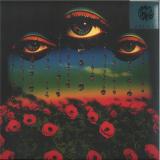
Following the cult success of the first two EPs and debut album Cinema 3000, Common Saints returns with the highly anticipated EP, Equinox - a release that"s already generating excitement within the Common Saints community. The record blends the signature soul, funk, and psychedelic influences fans have come to love, but this time with a livelier tempo and renewed energy.

Tesfa Williams' La Clique EP is a masterclass in house music's evolution - a sprawling, intricate journey that seamlessly connects the genre's past, present, and future.
Drawing from a well of deep musical knowledge, the Londoner continues to push things forward, offering a stunning five-track release that moves effortlessly through Deep, Afro, Bassline, UK Funky, and everything in between. He's also brought a few friends along for the ride: Zansika, Obi, and Tendai, each adding their own unique touches to this sonic exploration.
Opening track 'Beat & Break' is a perfect introduction to what the La Clique EP has in store, Tesfa leans heavily on a classic house sound and keeps the momentum with 'Don't Stop' featuring Obi Franky. 'Brain' is a rich and bass heavy swinger while 'Gonna Get Through' featuring Zansika hits all the right notes for an anthem in the making. Last but not least there is 'Shake It Up' featuring Tendai, a pairing that is a good as it gets when Tesfa's signature Uk house goes full into swing.
Each track stands as a distinct creation, unique in its flavour and style, but all delivering the same high level of quality we've come to expect from Tesfa Williams.

Recital releases The Holy Restaurant, the new full-length album by Derek Baron, and their first solo LP since Curtain (Recital, 2020).
The album is built from years of miniature transcriptions of improvisations, functioning in many ways as a sister to Curtain. Half-thoughts and mistakes are revisited, gilded, and illuminated. The floorboards of the album are laid with piano, organ, string pads, while serrated accruements (distortions, flourishes, and recording interferences) step and drop overhead. The resulting conflux, as Baron notes in the accompanying booklet “becomes the point and the problem to explore.”
The second track “Oven Girls” opens with us galloping on a horse in some video-game meadow on a bed of MIDI strings. Abruptly, a helicopter soars over us and we transition to a latticed guitar and woodwind exploration. The album rolls on in this fashion, juxtaposing musical half-sentences within a museum of sounds rag-picked from history and daily life. Emotional interviews with Midwestern friars who build and sell caskets are set against gothic piano and guitar duets. On “Music in the Casket,” A disorienting and hilariously epic guitar solo erupts. The penultimate titular piece, “The Holy Restaurant,” sets a text written by Baron’s grandfather. A small chorus voices his words, echoing the humanistic storytelling of “Blue” Gene Tyranny’s A Letter From Home. Under sunlit piano progressions, a fleet of smokey trumpets emerges.
Running throughout the album is a series of “traces”: short melodic phrases painted over again and again with different real and MIDI instrumentation. The “luxurious asceticism of doubling” as Baron puts it. They explain, “Part of the allure for me is that the ‘original’ material is itself kind of thin, sketchy, meaningless, maybe calling attention to itself only by way of a felicitous mistake. Hearing, transcribing, and learning what was basically only ever played first on accident becomes the guiding concern.”
The album’s shifting, variegated forms and voices pass quickly; the record feels both comforting and elusive, suitable for any hour of the day.
The Holy Restaurant features guest players Ed Atkins, Lucy Liyou, Quentin Moore, Emily Martin, Dominic Frigo, Jacob Wick, and several of Baron’s family members. It is released in a limited edition vinyl pressing of 200 copies, accompanied by a booklet of effusive program notes by the composer, alongside an assemblage of photographs, scores, and artwork.

Downwards present Alexander Tucker in metamorphosis from psych folk to techgnostic bard, aided by notable guests – Justin K Broadrick, Regis, Phew, Karl D’Silva, JJOWDY, and Elvin Brandhi – in a quest for disordered convention and new thrills. One up to Tucker’s outings for Alter and The Tapeworm, and spiritual successor to his »Nonexistant« trio on Downwards, »Clear Vortex Chamber« is an enigmatic take on the brownfield edgelands where the eldritch intersects electronic heck. Decades of work spread between hardcore punk, psych rock, folk, and drone — including work with Stephen O’Malley (Ginnungap) and Neil Campbell (Astral Social Club, ESP Kinetic) — feed forward into this album’s unsteady machine rhythms and cranky junkyard atonalities, where Tucker panel-beats aspects of his previous sound with a newfound industrial thrust and cyber-punky lust that suits him dead well.
A crafty example of how to mutate without losing sight of yourself, the album’s eight parts feel like a cyborg patching itself into modernity. On opener »Udug« Tucker’s signature falsetto peals from a A Scanner Darkly-style scramble suit of stereo-strobing electronics, setting a melodramatic, neo-gothic tension that riddles the album thru the knotted, fractured industrial dancehall bullishness of »Mallets« with Yeah You’s feral gob Elvin Brandhi, via a pair of standout »Fedbck« parts with Tucker’s personal idol, Justin K Broadrick (Godflesh, Jesu, and the rest), featuring the Brum deity’s claw-handed riffs and howl on the first, and smeared with Karl D’Silva’s brass in its noctilucent second part.
Regis also proves a staunch foil for the album’s most robust, club-ready cut »Zona«, hammered out from buzzing metallic drums and monotone bass drones, and pitting his severed vox against Tucker’s own androgynous harmonies to recall aspects of The Ephemeron Loop via British Murder Boys, whilst scene legend, Can and Ryuichi Sakamoto spar Phew (aka Aunt Sally) ideally tempers the flow in a relatively soothing »Sansu«, sharing more cyber-romantic, recombinant sentiments with the channelling of Robert Wyatt gone Funk Bruxaria on »Folded«.

oDYSea is back for its second release with the much-awaited debut EP of Penelope, featuring four compelling club tracks brimming with power and grace.
Opener ‘Unexpected Dreams’ surges with muscular basslines and acid liquidity, while ‘Usual Suspects’ adds crashing breaks into the mix.
On the B-side, ‘Strange World’ steps into outer space with a broken beat, alien foghorn motif and big synth riffs, before the electro-house groove of ‘Flow’ sends us home with a funky bang. A hypnotic blend of techno pulse and delicate breaks, ready to take you on a full dance floor immersion.


Das 1970 veröffentlichte, selbstbetitelte Debüt von Funkadelic war eine radikale Kollision von psychedelischem Rock, Gospel, Blues und Soul - ein chaotisches, genreübergreifendes Statement, das die Möglichkeiten der schwarzen Musik neu definierte. Wo Motown auf Hochglanz und Crossover-Appeal abzielte, stürzten sich Funkadelic kopfüber in Verzerrungen, Improvisationen und spirituelle Zweideutigkeiten, mit einem Sound, der so düster und unberechenbar war wie die Ära selbst. Unterstützt von einer wilden jungen Band, lehnte das Album Konventionen zugunsten von rohem Groove und existentiellem Lärm ab. Als Teil der Westbound Records Reissue Serie von Org Music stellt diese Ausgabe die volle Wirkung des Albums wieder her. Die Deluxe-Doppel-LP, die von Dave Gardner direkt vom analogen Band mit 45RPM neu gemastert wurde, bietet das bisher beeindruckendste Hörerlebnis dieses Klassikers. Gardner und die Restaurationsspezialistin Catherine Vericolli archivierten und restaurierten die Original-Masterbänder in den 54 Sound Studios in Ferndale, Michigan, mit Unterstützung des hauseigenen Ingenieurs Nick King. Neben CD, Kassette und digitalen Formaten ist auch eine einfache LP-Ausgabe erhältlich, die von hochauflösenden Bandüberspielungen geschnitten wurde. Funkadelic waren zu ihrer Zeit eine klangliche Revolution mit bleibendem Einfluss, ihr selbstbetiteltes Album ist ein bahnbrechendes Zeugnis für Musik ohne Regeln und Freiheit ohne Grenzen.

Ein unverzichtbares Album von Roy Ayers, das soulige Jazz-Wurzeln mit knackigem 1970er-Jahre-Funk verbindet. Mit Ayers' charakteristischen Vibes, präzisen Arrangements und herausragenden Tracks wie "The Boogie Back" (gesampelt von NWA, 2Pac, De La Soul_) und "Change Up the Groove" ist diese LP ein Muss für jeden Fan von Jazz-Funk und Vintage-Grooves, ein etwas verstecktes Juwel aus Roy Ayers Ubiquitys frühen Polygram-Jahren. Dieses soulige Album, das oft zugunsten von Ayers' größeren Hits übersehen wird, ist eine Meisterklasse in Jazz-Funk-Fusion und fängt die Essenz von Ayers' sich entwickelndem Stil ein, als er die Lücke zwischen seinen Jazz-Wurzeln und dem rhythmischen Snap der Funk-Revolution der 70er Jahre überbrückte. Vom ersten Track an steht Ayers' charakteristischer Vibraphon-Sound im Mittelpunkt, der vor Emotionen und Groove nur so sprüht. Das Album besticht durch seine instrumentale Vielfalt, zu der Jazzgrößen wie der legendäre Bernard Purdie am Schlagzeug einen herausragenden Beitrag leisten. Streicher verweben sich subtil und unterstreichen Ayers' ohnehin schon tiefgründige und strukturierte Arrangements. Zu den Höhepunkten gehören der unverkennbare Funk von "The Boogie Back", ein Breakbeat-Favorit für Crate-Digger und DJs (der oft gesampelt wird, um andere Tracks zu garnieren), und eine üppige, elektrifizierte Interpretation von "Feel Like Makin' Love", die vor sanfter Soul-Musik nur so glüht. Der Titeltrack "Change Up the Groove" liefert den typischen, emotional aufgeladenen Funk, der diese Ära geprägt hat. "Change Up the Groove" ist nicht nur ein Album - es ist eine Momentaufnahme von Roy Ayers' künstlerischer Entwicklung, voller Rhythmus, Herz und zeitlosem Groove. Egal, ob Sie ein langjähriger Fan sind oder nun neun entdecken. Essential listening!

An electrified meeting of minds, Candy Girl is a lost 1975 session by jazz pianist Mal Waldron, recorded in Paris with core members of the mighty Lafayette Afro Rock Band, the American funk unit who had made France their home and whose deep grooves would later be mined by generations of hip-hop producers.
By 1975, Waldron was a decade into his self-imposed exile from the United States—a transformed musician who had reassembled his sound in Europe and Japan after a devastating breakdown in the early '60s. His post-1969 output had stripped jazz down to its core elements: modal intensity, locked grooves, and hypnotic repetition. Candy Girl doesn’t interrupt this trajectory—it extends it, wrapping Waldron’s minimalist mantras around the funked-up chassis of the Lafayette rhythm section.
Originally released in microscopic quantities on the Calumet label and long shrouded in obscurity, Candy Girl was recorded spontaneously in the studio of French producer Pierre Jaubert, whose Paris HQ had become the workshop for both avant-garde jazz (Archie Shepp, Art Ensemble of Chicago, Steve Lacy) and psychedelic funk (Lafayette Afro Rock Band AKA Ice). This session finds Waldron jamming freely with bassist Lafayette Hudson, drummer Donny Donable, and keyboardist Frank Abel on clavinet, Moog and more—laying down raw, unfiltered instrumental funk with an experimental edge.
Highlights include the low-slung vamp of “Home Again”, the crisp, break-laden groove of “Red Match Box”, and the mesmeric swirl of the title track “Candy Girl” —a minor-key electric piano waltz with hints of cosmic soul. There's even a deep cut for the crate diggers: the somber yet meditative “Dedication to Brahms”, where Waldron deconstructs the Romantic composer’s third symphony into a sparse jazz reverie.
Unlike his polished sessions for Japanese labels or the avant-garde swing of his earlier Prestige work, Candy Girl feels more spontaneous, even accidental — and that’s part of its power. It’s a document of Waldron as bandleader, collaborator, and explorer, captured in the midst of a vibrant, cross-cultural scene in mid-70s Paris. Never officially issued with a cover and barely released at all, Candy Girl is a rare convergence of two underground traditions: Waldron’s Euro-exile electric jazz and the raw, sampled-future funk of the Lafayette Afro Rock Band. Now finally resurfaced, it deserves its rightful place in both stories.

Hailing from Raw Culture, Anna Funk Damage returns with his third release on the Roman label, delivering a record as fierce as it is intimate. Tarantola was born out of a winter suspended between contrasting emotions – melancholy, anger, love, confusion – distilled into a sound that transforms personal fragility into collective energy. There’s no pursuit of perfection here, but rather an urgency running through the veins, taking shape across supersonic punk, wave, ambient and industrial.
Each track is an emotional fragment, a bite that leaves its mark: from the electric tension of Vivere Distaccati to the feverish rush of Trasmissione, from the rawness of Decadente to the hypnotic title track Tarantola, which embodies the beating heart of the album. Side B unfolds into more nocturnal and intimate landscapes, from Chiang Mai to the disenchanted sincerity of Lavoro Troppo, closing with a party that carries the bittersweet taste of reality.
Tarantola is a journey into the chaos of human emotions, an album that doesn’t just narrate but pulls you deep into its sonic labyrinth, giving noise back its vulnerable yet powerful soul.

A samba funk essential. This debut album from Jorge Ben's iconic backing band blends Brazilian rhythms, soulful vocals, and American funk energy into one unforgettable groove. Includes the hit single 'Coqueiro Verde' along with standout tracks like 'Meu País,' 'Aleluia, Aleluia,' and 'O Canto da Ema.' A timeless gem for fans of Brazilian soul, vintage funk, or global grooves. Trio Mocotó is best known for being the powerhouse backing band behind Brazilian legend Jorge Ben during the height of his creative explosion in the early 1970s. But their contribution to music goes far beyond the supporting role-they were instrumental in shaping what would become known as samba funk, a vibrant fusion of traditional Brazilian rhythms with the groove and energy of American soul and funk music. Formed in Sao Paulo's iconic Jogral nightclub, Trio Mocotó-featuring Fritz Escovao, Joaozinho Parahyba, and Nereu Gargalo-began their musical journey as resident musicians, providing live accompaniment for a rotating cast of performers. It was here that Jorge Ben first encountered their raw talent and unmistakable chemistry, ultimately inviting them to join his band. The collaboration would go on to define an era. In 1971, Trio Mocotó stepped into the spotlight with their debut solo album, "Muita Zorra! (...Sao Coisas Que Glorificam a Sensibilidade Atual)." The record made an immediate impact, climbing the charts with the infectious single 'Coqueiro Verde' and marking the start of a prolific period in the group's career. "Muita Zorra!" is a dazzling blend of styles-mixing the baroque funk and melodic sophistication of artists like Marcos Valle with the soulful spirit of Jorge Ben. Layered with elements of American funk, the album delivers a dynamic, rhythm-driven sound that still feels fresh today. The trio's vocal harmonies are front and center, weaving through each track with warmth and richness, creating a captivating sonic tapestry that energizes every beat. This album isn't just a snapshot of a musical moment-it's a cornerstone of Brazilian soul. A must-listen for fans of global grooves, vintage funk, and timeless Brazilian music, "Muita Zorra!" is once again available and ready to take its well-deserved place in your collection. First time official reissue.
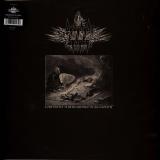
BEWARE! THE ECHOES OF DEATH’S HORRID CHANT ARE DRAWING CLOSER…From the endless fields of obsidian darkness rise eerie hymns, echoing an ancient, long-forgotten apocalypse that slices through the eternal night. OBSIDIAN SCAPES are the embodied nightmare – a deathly veil of cascading riffs, raining down like the lethal erosion of cosmic worlds. Layered with relentless, thunderous drums and ghostly dirges, their music summons visions of a dying universe.Their sounds crawl like molten madness into the depths of the mind, painting aphotic images of shadowy, chthonic cathedrals and titanic monoliths rising against a crumbling horizon. Despair and anguish permeate every note – dirges for a world drowning in the abyss of decay and tributes to powers lurking beyond human comprehension.Including one song from the upcoming debut-album Death Chants Echo From Aphotic Void and an unique and exclusive cover-version from SIGH’s “At My Funeral” (only available on the 12″EP).Mixed and mastered by Thomas Taube at FiveLakes Tonstudio.ltd 500, 300 x black vinyl, 200 x cream white bone. Incl. download-code. S

Dolette Mcdonald's single has long been a sought-after keeper amongst DJs and collectors. Recorded in 1982 at Blank Tape Studios, New York, as a cover version of Atmosfear’s ‘Xtra Special’, Dolette was assigned to work with producer and label owner, Began Cekic. "He played me a tape of the original version. I hadn't heard it before and we went over it a few times until I had it down. Buster Jones played the bass. I remember it being a lot of fun," recalls Dolette. She'd first met Jones whilst singing with The Bombers. At the time, the Talking Heads were looking to expand their band and after Buster recommended Dolette's vocal talents to them, she joined as backing singer, both touring and recording. Amongst DJ's and boogie fans alike, the single has become a flagship release from Began Cekic's productions and his various Brooklyn-based labels.
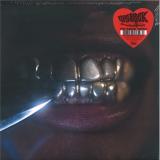
Domino Records haben mit Upchuck eine rohe Punk-Wucht aus Atlanta unter Vertrag genommen. Die fünfköpfige Band um Sängerin KT entstand 2018 aus der lokalen Skater:innen-Szene – laut, wild und kompromisslos.
Mit „Plastic“ legen sie nun ihre erste Single beim neuen Label vor: ein wütender, knapp zweiminütiger Ritt durch schrammelnde Gitarren und aufgeladene Vocals. Produziert wurde der Track von Ty Segall, gemastert von Heba Kadry und visuell in Szene gesetzt von Ian Cone. Inhaltlich dreht sich alles um den verzweifelten Versuch, in einer künstlichen Welt echte Verbindungen zu finden.
Der Rolling Stone brachte ihren Sound nach einem SXSW-Gig auf den Punkt: „Everything explodes.“
