1st press sold out
LTD repress soon
Following Chicago’s tradition in special edits and dj personal reworks to extend crucial parts and surprise the dancers, Theo Parrish has always sparkled his legendary sets with his own versions of classic and obscure disco, funk and soul cuts to maximum effect! Some of those were available to fans in mid 2000s via the Ugly Edits series, now it’s finally time for the LOVELY EDITS.
Officially licensed and using the original parts from the master tapes, here we have Theo’s takes on two absolute staples: BT EXPRESS ‘Peace Pipe’ and GEORGE DUKE ‘I Want You For Myself’.
Suche:funk 2000
Incredible new album from our new signing to BDQ records ZAN on the Boogie - Jazz Funk tip, due May. We’re so happy to be releasing this fabulous album.
Zan’s beautiful voice is an abiding part of the Australian music landscape. In the 80’s, she came to prominence out front of Melbourne’s iconic pop funk band
I’m Talking with Kate Ceberano, Zan’s lead vocals shine on one of the bands biggest hits ‘Holy Word’, which is still considered a trail-blazing Australian classic today. She loaned her vocal
talents to some of the most memorable Australian songs including The Models “Out Of Mind Out Of Sight” and “Barbados”. She appears in numerous videos singing backing vocals for a number
of Australian artists.
Zan appeared with I’m Talking in the classic music film Australian Made directed by Richard Lowenstein of Dogs in Space and Mystify fame. The film captured the incredible concert tour, which featured a plethora of major Australian performers such as INXS, Jimmy Barnes, The Divinyls & The Models. In her time with the I’m Taking band and as a solo performer she has made countless appearances on Australian TV including the legendary music programme Countdown.
In the 80’s she even performed for Princess Diana and Prince (now King) Charles at the
Rockin’ the Royals concert, at the Arts Centre in Melbourne, meeting the Royal couple after the show. Zan was bitten by the soul/R&B bug at an early age. Born in London of Sri Lankan heritage,
arriving to the shores of Australia as a young girl. Her love of music took her from Australia to New York and London, where she lived in the 90’s and early 2000’s regularly performing and recording with top international session musicians/artists. She’s also
had the extraordinary honour of performing live with both U2 &
B. B. King, Zan’s self-titled solo album was released through Amber Records in Germany in the mid 90’s and she also toured with UK Acid Jazz band
Mother Earth throughout Europe & Japan, eventually returning to the city she calls home, Melbourne.
Since being back in Melbourne, Zan has performed at various popular music venues such as The Night Cat, Memo and The Espy and in 2019, to the delight of 80’s music fans, Zan sang once again with the re-formed I’m Talking, playing a number of shows supporting Bryan Ferry on his acclaimed Australian tour. The re-formed band received several rave reviews for their shows. Zan’s new material is influenced by her considerable experiences, her rich musical history and the songs and artists she grew up on - soul and R’N B singers such as Chaka Khan, Renee Geyer and many others of that genre. Her new songs are steeped in 80’s dance/boogie funk/soul & pop flavours, re-capturing that feel-good factor from the era whilst bringing to it a new unique and contemporary edge.
Singer, songwriter and producer Johnny Burgos returns with veteran producer Jeremy Page (Kendra Morris, Czarface, MF Doom) for "Hit Me Like," the
instrumental is dripping with retro soul nostalgia, serving up the drums and bass-forward and funky, under
a blanket of buttery guitar chords. The production carries Burgos' silky smooth and heartfelt delivery
effortlessly, offering a brilliant take on a timeless-sounding, soul-inspired love song.
Singer, songwriter, and producer Johnny Burgos returns with
veteran soul producer, Jeremy Page, (Kendra Morris, Czarface, MF Doom, That Handsome
Devil) for "Get Back." The fourth single off of the duo's upcoming album titled, 'All I Ever Wonder,' is a vulnerable retrospective of a love gone cold, with hopes of rekindling the
magic that once kept its flame alive. In true Neo Soul form, the song is driven heavily by the
drum and bass groove, distinctly reminiscent of an early 2000's J Dilla beat. Page's signature
colorful chords evoke the struggle in Burgos' story, as he confronts his inability to accept the fate
of his relationship and let go of the magic it once embodied.
Johnny Burgos is a Brooklyn - born singer, songwriter, producer & engineer. His brand of retro-soul embodies a
raw uncompromising sound revealing beauty from pain, hope from despair, and the will to keep fighting.
Influenced by his uncle and world-class percussionist, Andre Martinez, growing up Johnny developed a
fascination with the percussive rhythms of salsa and soul music, eventually manifesting into a devoted passion
for hip-hop production using an Akai MPC. With influences from Michael Jackson, OutKast, J Dilla, Lauryn Hill
and D'Angelo, Johnny's music draws upon the core principles of R&B, while encompassing elements of
hip-hop, funk, pop, salsa, and reggae. Collaborations include artists such as DJ Skizz, Mobb Deep & M.O.P.,
Marco Polo, Frans Mernick, and Liza Colby (The Gold Setting) and his band Bridge City Hustle, with whom he
toured nationally.
As a solo artist Johnny debuted with back-to-back brand endorsements from French's Mustard and Samsung
US, using them as a platform to launch his 2018 EP Love Through it All. In March 2021 his debut album Gone
Into The Grey received critical acclaim and has since been added to multiple editorial playlists by Spotify, Apple
Music and Tidal, resulting in an ever-growing listening fan base. In 2022, Burgos' song "Wild About You" was
then used as the soundtrack for Neiman Marcus' It's Your Moment global streaming campaign.
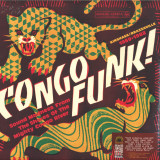
- A1: Sungu Lubuka - Petelo Vicka Et Son Nzazi
- A2: Mfuur Ma - Groupe Minzoto Ya Zaïre
- A3: M.b.t's Sound - M.b.t's
- A4: Musique Tshiluba - Abeti Et Les Redoutables
- B1: Lalia - Trio Bydoli
- B2: Adeito - Tabu Ley Et L'orchestre Afrisa
- B3: Ngantsie Soul - Les Bantous De La Capitale
- C1: Nganga - Les Frères Soki Et L'orchestre Bella-Bella
- C2: Tembe Na Tembe Ya Nini - Orchestre Celi Bitshou
- C3: Lolo Soulfire - Lolo Et L'orchestre O.k. Jazz
- D1: Femme Ne Pleure Pas - Zaiko Langa Langa
- D2: Kiwita Kumunani - Orchestre O.k. Jazz
- D3: Fiancée Laya - G.o. Malebo
- D4: Ah! Congo - Orchestre National Du Congo
The making of Congo Funk!, our long-awaited journey to the musical heart of the African continent, took the Analog Africa Team on two journeys to Kinshasa and one to Brazzaville. Selected meticulously from around 2000 songs and boiled down to 14, this compilation aims to showcase the many facets of the funky, hypnotic and schizophrenic tunes emanating from the two Congolese capitals nestled on the banks of the Congo River.
On its south shore, the city of Kinshasa – capital of Democratic Republic of the Congo, the country formerly known as Zaïre – is often seen as Africa’s musical Mecca, the city that spawned such immortal bands as African Jazz, O.K. Jazz and African Fiesta, and the place to which aspiring musicians from throughout the continent would go to make a name for themselves.
But the city of Brazzaville on the north shore of the river – capital of the Congo Republic – played an equally important role in spreading Congolese sounds continentally. In addition to producing legendary bands such as Les Bantous de la Capital, it was the powerful transmitters of Radio Brazzaville that allowed the unmistakable groove of Congolese Rumba to be heard as far away as Nairobi, Yaoundé, Luanda and Lusaka thus turning the electric guitar into the continent’s most important instrument!
Although the musical landscape of these cities had been defined by a core group of bands in the late 1950s, the modernisation of Congolese music has been steadily evolving until the events surrounding the Muhammad Ali vs George Foreman boxing match marked a turning point. The promoter of that event known as “Rumble In The Jungle” was none other than the notorious Don King who needed 10 millions dollars to get Ali and Foreman into a boxing ring. The only candidate willing to put this kind of cash on the table was Mobutu Sese Seko, President of the Democratic Republic of the Congo.
Mobutu - the megalomaniac dictator who got to power with the support of the United States and Belgium in exchange for unlimited and affordable access to the riches of the country - had a soft spot for music and it doesn’t come as a surprise that he agreed to a three-day live music festival being organised prior to the “Rumble”. Zaïre 74 - as the festival was dubbed - was meant to hype the boxing match and many stars were invited.
Although a myriads of artists flocked in for the occasion, it was the performance of James Brown on Zairian soil that caused havoc among the younger generation, inspiring hundreds of would-be musicians to take up their electric guitars and reverbs cranked to the max in search of a new sound in which hyperactive Rumba was blended with elements of psych and funk. While the results were very different from the popular music of the three Musketeers - as Tabu Ley, Franco and Verckys were known - they weren’t a complete break with tradition.
These new sounds emerged at a time when the Congolese record industry – previously dominated by European major labels – was experiencing a period of decline due to rising production costs and needed a radical change. The void was filled by dozens of entrepreneurs willing to take chances on smaller scale releases. It was the beginning of a golden age for Congolese independent record labels, and the best of them – Cover N°1, Mondenge, Editions Moninga, Super Contact – preserved the work of some of the region’s finest artists, while launching a generation of younger musicians into the spotlight.
The movement was greatly helped by legendary radio shows but it was the dynamic productions of Télé-Zaïre that set the dynamite on fire. Legend has it that TV shows were so huge that president Mobutu himself ordered RTV du Zaïre to put on daily concerts since it halted criminal activities for the duration of the evening.
Congo Funk! is the story of these sounds and labels, but most of all it is the story of two cities, separated by water but united by an indestructible groove. The fourteen songs on this double LP showcase the many facets of the Congolese capitals, and highlight the bands and artists, famous and obscure, who pushed Rumba to new heights and ultimately influenced the musical landscape of the entire continent and beyond.
It’s the new millennia. We find ourselves outside the Packard Plant in Detroit. Inside dancers coalesce on the work floor of another decaying American metropolis. Part two of Terrestrial Funk’s six part series with Dan Piu brings us to the year 2000. Four more tracks from the three decade compendium with nods to contemporaries like the late great James Stinson. Astral ancestors on celestial highways.
Comes with a foldout 17" x 24" poster of Dan Piu's oil painting of the Detroit skyline in the year 2000.
Bolina Records, born in Italy and based in Stockholm, is the brainchild of the Cerrado Studio crew, a dynamic team of artists and DJs who have been organizing events and innovative initiatives since 2008.
Veteran DJ-producer Sebra Cruz (formerly of Margot and A&R for Bolina Records), after releasing his debut album with Life And Death by Dj Tennis, has teamed up with his protégé, Giacomo Cancellieri. Over the years, Cancellieri has become one of Sebra's favorite artists, with Sebra often describing him as a truly brilliant mind, consistently impressed by the new tracks he produces. Giacomo has notable releases on Rebellion and Margot Records.
"Rollerball," titled after Norman Jewison's 1975 film, carries a powerful anti-war message. It includes 4 versions plus an acapella, the latter intended to encourage DJ-producers of various genres to incorporate it in their tracks, thereby spreading the anti-war message on dance floors worldwide.
The original mix captures the essence of intimate club settings — intense yet lucid, with a sound texture fitting for an underground label. It continuously and forcefully spreads the anti-war message with deep seriousness.
The Funky Vocal Mix offers an Italo-French vibe, blending the smooth ambiance of 2000s dance music with a raw vocal tone.
Buck's version, hailing from Otranto, a quaint seaside town in the extreme south of Italy and owner of Substrato label, is marked by solid, rolling grooves that complement a deep and refined atmosphere.
Delphi's remix, one half of Tiger And Woods with Marco Passarani, completes the set. Its arrangement skillfully connects Chill and Detroit styles, infusing the project with a sense of robustness and insight.
Skatebård is one of the very best Classic Techno producers from Norway since the early 2000's - the distinction from others simply lies within his sense of melody, rhythm and live arrangements. The 2002 release "Skateboarding Was A Crime" on Tellektro had a clear thread of Detroit Techno and Electro, a craft and influence that also heavy club hitters "Conga", "Ta-Ta Arr" and "Emotional Bits" on Sex Tags Mania strongly carried. It's unarguably always a "classic touch" in his dance music, but still it always sounds like a Skatebård production - there is simply no blueprinting in true inspiration.
"Spektral LP" has been compiled and edited by DJ Sotofett with material from Skatebård's 2001-2005 recording archive. In short it's recordings nobody else cold get a hold of – fine tuned and restored into a synergetic and consolidated world of riding, mechanical and electronic funk - released on Skatebård's own Digitalo Enterprises.
Tracks "Seventh" and "Vaskemaskin" are both cymbal driven Techno cuts by the former metal drummer, one with chorded synth stabs growing in harmony, the other leaning on a dark sci-fi pad and a flipped vocal loop. There's a bit more of Skatebård's vocals on the beautifully robotic "Ei Anna Framtid", an alternate take of "Future" which Finlands Keys Of Life released in 2003. DJ Sotofett's mix of "Den Anarkistiske Anode" is nothing but a distorted head-schredding basement Techno blaster, while "Strengje", "Bassi" and "Spektral Elektro" punctuates the catchy Electro & Italo grooves Skatebård crafts so much better than most current producers.
Aphrose reveals her sophomore album, 'Roses,' a captivating amalgamation of Neo-Soul and R&B, delving into the wellspring of ancestral strength and love.
Hailing from Toronto, Canada, Aphrose, also known as Joanna Mohammed, unveils her sophomore album, establishing her as one of Toronto's best-kept musical treasures. Known for her commanding vocal prowess within her hometown, this gifted songwriter and vocalist is rapidly garnering global acclaim and accolades from both fans and music critics alike. Signed to independent Soul label LRK Records, 'Roses' remains firmly rooted in Aphrose's signature style characterized by resounding R&B vocals. However, it also embraces a softer, more introspective aura that brilliantly showcases her remarkable versatility in navigating diverse genres, moods, and musical approaches with remarkable finesse.
This album offers a little something for everyone, catering to enthusiasts of Neo-soul, traditional Soul, Hip Hop, and R&B. Produced by her longtime friends/collaborators at SafeSpaceship Music (Scott McCannell, Chino De Villa, Ben Macdonald), the album serves as a compelling testament to the collective creativity of Aphrose and this exceptional production trio, delivering a kaleidoscope of soundscapes, textures, rhythms, and grooves. 'Roses' weaves together both lighthearted and profound elements as Aphrose explores her life journey, delving into her familial past and present, grappling with the challenges of new motherhood, and contemplating her relationships with herself, her partner, and her friends. Across the 35-minute LP, Aphrose draws inspiration from Neo-soul icons like Jill Scott and Erykah Badu, pays homage to Soul legends such as Aretha Franklin and MJ, and infuses contemporary R&B influences from artists like Frank Ocean, SiR, and SZA. The result is a sound that distinctly bears the 'Aphrose sound,' reflecting her deep admiration for her inspirations while imparting a refreshing twist to familiar genres.
The album commences with its title track, 'Roses,' which was released as a single on August 25th. This song sets the stage, invoking the strength of Aphrose's ancestors, particularly her late Grandmother Rose. Following suit is 'YaYa,' also released as a single on July 7th. This buoyant dance track whisks listeners back to the disco era of the late 70s and early 80s. The album's third track, 'Heavenly Father,' offers a brief interlude featuring a recording of Aphrose's Grandmother Rose engaged in prayer, setting the tone for the subsequent track, 'In The Time Of Sorrow.' This contemplative, chill piece captures Aphrose's musings on navigating a world often shrouded in fakery, while craving authenticity. 'Honey (Don't) Come Back' seamlessly transitions between two distinct musical personalities, commencing with a deep, almost Trap-like bass/drum beat before transforming into a spirited Funk/Soul jam—an anthem of empowerment encouraging the listener to leave a situationship that is no longer working. 'What You Don't See' strips the production down to its core, as Aphrose and guitarist/co-writer Heather Crawford craft an intimate ode to a friendship's sad ending.
The B-side opens with the evocative 'Weapons,' featuring a five-person choir including LRK label-mate Claire Davis, Nevon Sinclair (Daniel Caesar and LOONY), Kyla Charter (Aysanabee and Alessia Cara), Lydia Persaud, and Marla Walters. The track is adorned with a stirring string arrangement courtesy of Jessica Deutsch. 'Chop The Cake' acts as a breather, interlude-style, easing the intensity. 'Soft Nuclear' channels the spirit of the early 2000s R&B movement, bearing traces of influence from Lucy Pearl. 'Good Love,' released as the first single off this body of work on May 19th, transports listeners to the 70s with its soulful resonance, drawing inspiration from the likes of Michael Jackson and Teddy Pendergrass. 'Higher' stands as Aphrose's tribute to Prince, capturing the essence of his music within its hook and production. The album's culmination arrives with 'ZAG,' an acronym derived from Aphrose's daughter's name, commencing with the sound of her daughter's heartbeat in-utero from a sonogram taken when Aphrose was pregnant. This heartfelt composition serves as a dedication to her daughter and all parents navigating the rollercoaster of parenthood, emphasizing the imperative of nurturing love to shape the future.
'Roses' stands as Aphrose's homage to her history—her Grandma Rose and the ancestral trailblazers who paved her path to the present life she enjoys; her current experiences—her self-discovery, her relationships with her partner and friends; and her aspirations for the future—her daughter and the generations to come. This album crystallizes these temporal dimensions, prompting introspection, celebration, laughter, and tears. 'Roses' is a musical odyssey that scrutinizes the multifaceted beauty of existence, inviting listeners to partake in this thing called life.
The radio world has taken notice of Aphrose's talent, with national Radio Capital's Italy Massimo Oldani spinning her latest single "YaYa" for the entire month of July on his show "Vibe." And both singles getting to number 10 in the UK soul chart.Additionally, Aphrose has received national radio play on renowned stations such as BBC in the UK, RTVE in Spain, and Radio France FIP.
Aphrose has also made CBC's Top 100 finalist list for their Searchlight competition.
Huey Morgan played "YaYa" the second track off the album on his BBC radio six show
Afroterraneo Music founder Kiko Navarro joins forces with old friends and fellow Balearic heroes DJ Pippi and Willie Graff for the 'Tempistica Mistica EP', comprising two percussive, Afro-Latin flavoured prime cuts of dancefloor-ready House music.
Kiko Navarro met DJ Pippi and Willie Graff in the early 2000's, when he was resident at Pacha Mallorca. Making a pilgrimage to Pacha's Ibizan mothership to make sure two venues were musically aligned, he quickly became friends with Pippi, who was resident at the club, and Graff, who was hosting the Funky Room upstairs. Unbelievably, the three had never collaborated together before until December 2022, when Graff and Pippi finally visited Kiko's Mallorca studio and 'Tempistica Mistica' was born.
Heavily inspired by Cuban conga rhythms, opening track 'N'Fumbei' deftly blends live percussion, horns and vocals with pristine rhythmic synths and warm electronic touches to summon up a cosmic carnival taking place somewhere between the past and the future...
The floaty, piano-led 'Esanah' raises the tempo into timeless Latin House territory, paying homage to the fusion sounds pioneered by the likes of Julien Jabre & Dj Gregory in the late 90s, while updating the sonics and arrangements to sound completely fresh.
Finally, 'N'Fumbeats' strips 'N'Fumbei' down to bare bones and lets the percussion ride out, making an essential DJ weapon for those serious dancers.
Radio Slave drops ‘Wild Life’ on Rekids this May
Following the recently dropped ‘Strobe Queen’, which picked up support from Honey Dijon, Sean Johnston, Laurent Garnier, BBC Radio 1’s Pete Tong and Danny Howard amongst many more, Radio Slave returns with another standout House cut ‘Wild Life’, turning in two exceptional Disco and Dub mixes.
“I’ve always adored the “Wildpitch” era of DJ Pierre, Roy Davis Jnr, DJ Duke and labels like Power Music It’s definitely influenced my work as Radio Slave and “Wild Life” started out as a nod to that early nighties sound. Conceived during the pandemic, I had the track mapped out and then with help of a good friend I decided to add live bass, loads of analogue keyboards and record the whole thing live and it became this super funky disco jam.” - Radio Slave
Radio Slave aka Matt Edwards is one of dance music’s undisputed heavyweights. Having made his name as a DJ in the 90s, he went on to become the king of edits, twisting pop, R&B and indie cuts into essential versions that consistently set clubs alight. Since the mid-2000s, Edwards’ originals have helped define modern dance music, tackling techno, house, breakbeat, minimal and disco whilst exploring dub, balearic sounds and ambient across the myriad of other aliases and projects.
Repress.
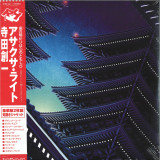
Back in 2015, Japanese DIY house pioneer Soichi Terada stepped back into the limelight courtesy of Rush Hour's 'Sounds From The Far East', a Hunee curated retrospective of material first released on his own Far East Recording label in the 1990s and early 2000s. Buoyed by the positive response and renewed interest in his work, Terada went back into studio to record his first new album of house music for over 25 years, Asakusa Light.
Developed over 18 months, Terada tried to recreate the mental and physical processes that led to the creation of his acclaimed earlier work. Those familiar with Terada’s celebrated, dancefloor-focused sound of the 1990s – a vibrant, atmospheric, and emotive take on deep house powered by the twin attractions of groove and melody – will find much to enjoy on Asakusa Light.
“I tried to recall my feelings 30 years ago, but when I tried it, I found it super difficult,” he explains. “I didn’t even know what I thought about myself five years ago, and the mental metabolic cycle seems to be faster than I thought. I tried different methods, including digging up my old MIDI data and composing by remembering old experiences. With the help of Rush Hour, I found some of the light from my heart that I had 30 years ago. I nicknamed the light I found in my heart, ‘Asakusa Light’.”
Produced using the very same synthesizers and drum machines that powered his 1990s work, the album is a joyous, colourful and life-affirming collection of timeless house music that not only recalls Terada’s own impeccable back catalogue, but also that of similarly celebrated contemporaries such as the Burrell Brothers or Ben Cenac (Dream 2 Science, Sha-Lor).
Terada, who has spent much of the last two decades writing video game music, has always had a gift for combining warm, undulating synthesizer basslines and perfectly programmed machine drums with stirring chords, smile-inducing melodies and mellow musical flourishes. It’s this immersive, sun-kissed and tuneful trademark style that takes centre stage on Asakusa Light, an album for the ages.
The set begins with the alien-sounding chords, soft-touch percussion and dawn-friendly warmth of ‘Silent Chord’ and ends on a high via the bouncing string stabs, starlight chords and thickset grooves of ‘Blinker’; in between, you’ll find a deluge of effortlessly feelgood music that’s the aural equivalent of a dopamine rush at sunrise.
There are subtle variations aplenty throughout the album – see the 8-bit lead lines and pulsing electronic textures of ‘Takusambient’, the vintage Tony Humphries flex of ‘Diving Into Minds’ and the effortlessly funky ‘Marimbau’ – but it’s the uniquely atmospheric, vivid and tactile nature of Terada’s loved-up sound that resonates. After well over 30 years in house music, the light in his heart is shining brighter than ever.
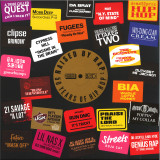
- A1: Dr. Jeckyll & Mr. Hyde - Genius Rap (7" Single Version)(1981)
- A2: Run Dmc - It's Tricky (1986)
- A3: Rob Base & Dj Ez Rock - It Takes Two (Radio Edit) (1988)
- A4: A Tribe Called Quest - Can I Kick It (7" Radio Edit) (1990)
- A5: Dj Jazzy Jeff & The Fresh Prince - Summertime (Single Edit)
- A6: Da Brat - Funkdafied (1994)
- B1: Cypress Hill - Insane In The Brain (1993)
- B2: Wu-Tang Clan - C.r.e.a.m. (Cash Rules Everything Around Me)
- B3: Mobb Deep - Shook Ones (Part 2) (1995)
- B4: Fugees - Ready Or Not (1996)
- B5: Nas - Ny State Of Mind (1996)
- B6: The Beatnuts - Watch Out Now (1999)
- C1: Outkast - Ms. Jackson (2000)
- C2: Clipse - Grindin' (2003)
- C3: Dead Prez - Hip-Hop (2000)
- C4: Three 6 Mafia - Poppin' My Collar (2005)
- C5: Too $Hort - Blow The Whistle (2006)
- C6: Ugk (Ft. Outkast) - Int'l Players Anthem (I Choose You)('07)
- D1: Travis Scott - Goosebumps (2016)
- D2: 21 Savage - A Lot (2018)
- D3: Doja Cat - Streets (2019)
- D4: Future - Mask Off (2017)
- D5: A$Ap Rocky (Ft. Skepta) - Praise The Lord (Da Shine) (2019)
- D6: Lis Nas X (Ft. Billy Ray Cyrus) - Old Town Road (Remix)(2019
- D7: Bia - Whole Lotta Money (2020)
Repressed! Jurassic 5 flexed serious old-to-the-new muscles in the ‘90s, beginning with their independently released single “Unified Rebelution” in 1994, and book-ending with their stellar debut full-length: 2000’s Quality Control. They walked a tightrope between underground and mainstream hip-hop, and toured alongside rap peers as well as punk rockers on the Vans Warped Tour. With double the pleasure of your average hip-hop group – two DJs and producers (Cut Chemist and DJ Nu-Mark); and four MCs (Chali 2na, Akil, Marc 7 and Zaakir aka Soup) – they brought the late 1970s “unison MC” style of pioneering groups like the Fantastic 5 and the Force MCs to a new generation. Even more surprisingly, they did so out of Los Angeles, whose hip-hop flavors generally leaned towards Gangsta, G-Funk or Electro lines. Musically inventive and lyrically forward-thinking, each song on Quality Control is a new adventure, exploring engaging territory, delivered via one of the best live hip-hop shows fans had seen in years. From singles like the strutting groove of the title track to the throwback doo-wop samples on “The Influence” and the catchy, keyboard groove-driven “World of Entertainment (WOE Is Me),” to deeper album tracks like the lyrical gymnastics of “Jurass Finish First” and the thought-provoking “Lausd,” Jurassic 5 consistently stepped to the plate and their fans responded in kind, nearly pushing the album to Gold status. Add the innovative DJ-and-sample workout which closes out the album, “Swing Set,” and you have one of the 2000s’ most unique and solid full-length platters.
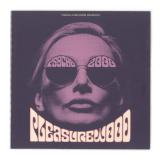
Psycho 2000 - A dark but funky theme that begins with an occulting Italian echo-oscillator drone that is soon followed by pulsating bass and breakbeat drums, leads to tremolo guitars, an ostinato on electric mandolas, strings climbing eloquent ladders, otherworldly electronics, and a cinematic finale.
An evocation of a parade of wooden nutcracker soldiers elaborately dressed in gold-trimmed black uniforms down a wide avenue decorated with mardi gras beads and animal skulls upon golden cobblestones toward a tornado spiralling out purple-hued glissandos and curlicues of elephant smoke.
White Spiritual - Head nod action, the twinkling of a late 60’s Vox Continental II with sickly transistors, the noodling matrix of an intergalactic telephone exchange carried on a bed of bouncy bass with a firm backbeat.
The Johnny Guitar Watson-esque bite and sting of a ‘67 Teisco guitar preludes slabs of unison dark brown moog and organ giving way to the dance of fingers over the black naturals and white sharps of the Continental II.
MUSTA presents an elaborate six track EP project, titled 'Tamburi
Parlanti' which translates to 'Talking Drums' in English. The body of
work marks a turning point in his career to make more than electronic
music, and delves into a plethora of live music and field recordings
recorded for the EP, ranging from polyrhythmic tribal drum-patterns to
Afro-funk bass chords, congas and jazz-keyboard, played by local
musicians as well as himself.
Musta's love for music began during his 11 years spent living in the
Dominican Republic. This encounter of Latin rhythms started the musical
genre contamination that to this day distinguishes his productions. In
this EP, like the rest of his releases, the music is diverse, tribal and
hypnotic. Respectful of the past yet constantly innovative. This love of
the past and future has led him to release edits and originals on staple
labels such as Nervous Records, Samosa Records.
Music aside the EP artwork has significant meaning, the mask shown is
that of the ancient Mamuthone icon of Sardinian folklore which goes back
further than 2000 years, defined as a representation of the collective
soul of Sardinia, the ancient ritual of the Mamuthone creatures is that
of a rhythmic dance where 12 of the creatures dance together,
representing the 12 months of the year. With this theme, Musta aims to
connect the dots of this pastime tradition into the EP, reflecting it
visually as well as through the music itself.
"Tamburi Parlanti EP is a collection of songs that I've made myself
around the world, recording and collaborating with various musicians of
many different nationalities. The music reflects my musical path in
recent years which draws strong inspiration from afro-funk and latin
disco from the 70s and 80s. My intent is to create music that presents a
journey between the hottest Latin sounds, over to more African disco
rhythms.
Gudu Records continues a busy start to 2022 with Italian due Hiver’s debut for the label - a high-definition EP that draws on classic electro and techno, following the group’s acclaimed past releases for Curle Recordings, Bokhari and Deeplabs.
A record that both marks and celebrates Hiver’s 10 years of operation, ‘Wave Sliding’ wears its influences on its sleeve: lead track ‘The Initiative’ is a “tribute to Detroit’s Hi-Tech Funk of the early 2000s”, lead by the sort of ostinato bassline and legato strings that have become Hiver’s trademark. ‘Vapour’ and ‘Entangle’ continue the EP’s retro-futurist outlook, drawing on sci-fi imagery and themes of travel, while ‘Stateless’ looks to the “easy-trance” sounds of 90s dancefloors for inspiration. Together, the tracks mark a perfect summary of Hiver’s vision of the dancefloor - bound together by vibrant colours and a starry-eyed, utopian nature.
Reissue of Elizio De Buzios's "Tamanquiro". Remastered and pressed on 45 RPM!
Sitting a good 90-minute drive away from Rio de Janeiro’s crowded beaches and packed tourist hot-spots, Campo Grande is not a neighbourhood that attracts travellers from around the World. Traditionally it is home to the city’s lower middle-class, whose aspirations of moving up the social ladder were played out in a suburb that has always been solidly working-class.
Campo Grande is home to Elizio De Buzios, a Brazilian musician who started playing music in the late 1970s and early 1980s. De Buzios began as a drummer, before learning to play guitar and starting to compose and sing his own music. When he turned 18, De Buzios joined a local band formed by some of his friends and other like-minded local musicians: Sol da Terra. The band mostly played samba in neighbourhood bars and small venues around Camp Grande, but De Buzios was interested in more than just samba. While he naturally admired great samba composers such as Cartola and Beth Carvalho, his musical pass went far beyond Brazil’s national music. He also loved MPB and bossa-nova and at home he listed to Joäo Bosco, Milton Nascimento, Luis Melodia, Tom Jobim, and many bossa-nova singers.
In 1980 De Buzios was noticed by a local representative of international major label Polygram, who gave him the opportunity to record two songs. He was excited, so started searching for inspiration for the songs he would eventually lay down. He found that inspiration close to home while passing a neighbourhood shop which made and sold clogs. After noticing a display of then fashionable Portuguese clogs outside the store, De Buzios popped inside to talk to the owner. It turned out that he was a tamanqueiro – as clog-makers are traditionally called in his native Portugal – and was as passionate about music as he was about the footwear he made. Thus inspired, De Buzios returned home to work more on the lyrics and music.
The next day, he headed into the studio to record the song, with Vale Ribeiro, who later went on to produce tracks for Marcos Valle, behind the desk. With Ribeiro’s assistance, De Buzios managed to record two songs in one day: ‘Tamanqueiro’ and ‘Sou Um Louco’, a ballad with English lyrics blended into the mostly Portuguese text. From the start, it was clear that ‘Tamanqueiro’ would be the single’s A-side. Incredibly catchy and funky, with some subtle disco elements, the song remained distinctively Brazilian thanks to the use of the cuíca. Listening back all these years on, De Buzios’ lyrics seem almost spontaneous, carry the track forward, and make it almost impossible not to sing along. Its infectiousness and funkiness made it an instant hit with the first few people to hear it.
When it was released, responses to the song were enthusiastic, even if it never became the Brazil-wide smash it should have been. It resonated well in the local clubs and on the radio, but unfortunately the marketing was handled by an inexperienced Polygram employee who failed to adequately promote the track. As a result, the record sank without trace and De Buzios’ dreams of stardom evaporated. Having just started a family, he realized he could not live off the uncertainty of being a musician. Instead, he got a job at city hall as a civil servant, a role he continued until his retirement a few years ago. ‘Tamanqueiro’ and ‘Sou Um Louco’ remain the only two songs he ever recorded.
In the early 2000s, with the rise of diggers’ culture, ‘Tamanqueiro’ slowly surfaced again. It became a sought after, hard to find seven-inch single, finding its way onto the airwaves once more and into the ears of a new generation of listeners. Some started appreciating the song so much that it was referred to as the “best-Jorge-Ben-song-Jorge-Ben-never-recorded”. And they are right: ‘Tamanqueiro’ does have that Jorge Ben-straight-forwardness. It’s a completely honest song that’s almost impossible not to fall in love with. Thanks to this remastered reissue on Rush Hour, De Buzios may now get the props his sole record so richly deserves.
Now for the good news: De Buzios is still singing in local bars and clubs in and around Campo Grande. He is surprised, but also incredibly proud, that the record he had almost forgotten about is appreciated so much by a group of music lovers he didn’t even know existed. But above all, he is happy that more than 40 years after the recording session, the record lives on – not only on this re-release, but also in his weekend sets in the bars of Campo Grande.
- A1: Assia (Feat. Pat Kalla)
- A2: Ben Bene La (Feat. Lass)
- A3: Women Can Do (Feat. Ayuune Sule)
- B1: Mbaal Mu Teer (Feat. Lass)
- B2: Water No Get Enemy (Feat. Pat Kalla)
- B3: Tu Mens Devant Moi (Feat. Rama Traore)
- B4: Faut Pas (Dub 2000)
- C1: Fighting Slowly (Feat. Ayuune Sule)
- C2: Faut Pas Dire Des Choses Comme Ça (Feat. Pat Kalla)
- C3: Lymye-A (Feat. David Walters, Pat Kalla & Lass)
- D1: Manu Écoute Ça (Feat. Pat Kalla)
- D2: Ku La Foon (Feat. Lass)
- D3: François Va Te Laver (Feat. Pat Kalla)
- D4: Tenor Jam For Manu (Feat. Boris Pokora)
2026 Repress Favorite Recordings proudly presents Voiciii, the 3rd and new album by Voilaaa, an immersive dip into its Afro-Disco universe spread across 14 tracks. Needless to say you’ll find in this new LP all the ingredients that made him famous: strong dancefloor-friendly festive bangers, irresistible funky arrangements and an undeniable sense of humor and irony.
Bruno “Patchworks” Hovart, behind Voilaaa, is as often surrounded by amazing vocal featurings from previous LP’s regulars (Pat Kalla, Lass) but also new voices you may already have heard on its recent EPs (David Walters, Rama Traore, Ayuune Suule), as well as the saxophonist Boris Pokora. The LP is also an occasion to pay tributes to major artists of the African sound, such as Fela Kuti (on “Water No Get Enemy”), or Manu Dibango (“Manu Écoute Ça” and “Tenor Jam For Manu”).
Since the release of Voilaaa’s previous LP’s Des Promesses and On Te L’Avait Dit and their massive international support, the Voilaaa Soundsystem did travel through the world to deliver its message of infectious joy and groove, from Equator to Thailand, from Kazakhstan to the infamous French “Fête de l’Huma”. Now you know: Voilaaa is everywhere and Voiciii (“here it is”) their new album.
London Based Deadbeat is a techno label founded in 2000 as an outlet for the more eclectic, risk taking and aggressive elements of the genre. Dedicated to unveiling forward thinking new talent, championing cult underground producers and celebrating established global acts the label has created a loyal fan base and now after more than two decades presents its first vinyl release, a massive six track EP that covers a lot of creative ground and features three artists well known for pushing boundaries while delivering face melting, dancefloor destroying beats.
Sane ( Don't Recordings / Fun In The Murky ) is a Uk based producer and techno DJ who has featured multiple times on the 'Best electronic music on bandcamp' pages. Described there by music journalist Joe Muggs as 'Filthy, dirty, vile and brilliant. His techno will tear the top off your head and make soup with the contents. It screeches, it blurts, it whistles, and it roars. Above all, it crashes and clangs like a dancing mech warrior, crushing all before it. What more do you need to know?'
TSR ( Analog Records / Hörspielmusik ) are a highly regarded creative force of Swedish musical mentalists, a crazed, technologically berserk band of electronic wizards who relentlessly conjure up the most brilliant, silliest, toughest, most dance bootable funky techno on this train of existence. Known for high-energy, raw, and sometimes humorous tracks they have released to high acclaim on many notable labels and played all over the world.
DJ Ze MigL ( Djax-Up-Beats / Minimalistix ) is first and foremost a DJ, but also a producer & a Dude! Creating crazy, funky and sometimes brutal techno mayhem. Residentially from Portugal, he’s been the one of most prolific Portuguese techno producer/ DJ during the last 25 years. Producing and Spinning his own special brand of honkin’ techno, not changing a single cowbell. Never too serious or dark, always with proper party ON!
The record additionally features full sleeve artwork by Ed Twist ( of the influential 'Ugly Funk' label ) and is pressed on yellow vinyl.