Der legendäre ghanaische Afrobeat-Pionier Ebo Taylor veröffentlicht in Zusammenarbeit mit den Jazz Is Dead-Gründern Adrian Younge und Ali Shaheed Muhammad ein neues Studioalbum. Im Alter von 88 Jahren reiste der ghanaische Highlife- und Afrobeat-Pionier Ebo Taylor zum ersten Mal in die USA, um bei der inzwischen kultigen Jazz Is Dead-Konzertreihe aufzutreten, die landesweit ausverkaufte Hallen bescherte. Während dieser Zeit nahm Ebo zusammen mit den Jazz Is Dead-Produzenten Adrian Younge und Ali Shaheed Muhammad ein psychedelisches Afrobeat-Album auf. Eine Zusammenarbeit, die Ebo-Fans auf der ganzen Welt nicht erwartet hätten und die Kenner des klassischen westafrikanischen Funks sicherlich zufriedenstellen wird. Die wirbelnden Bläser und düsteren Gitarren auf "Ebo Taylor JID022" erinnern an seine bahnbrechenden Aufnahmen aus den Siebzigern, die ihn zu einem der produktivsten und revolutionärsten afrikanischen Künstler aller Zeiten machten. Aufgenommen im Linear Labs Studio von Adrian Younge, beweist dieses Album mit polyrhythmischer Perkussion und twangy, fuzzed out Gitarren, dass Rhythmus der Schlüssel zu allem ist. Das Ensemble ghanaischer Backgroundsänger*innen verströmt einen einzigartig spirituellen Sound, der die Hörer*innen in Ebos Glanzzeit zurückversetzt. Eine der aufregendsten Komponenten dieses Albums ist jedoch Taylors unverkennbarer Ansatz beim Gesangsstyling. Seine zu Herzen gehenden Texte über Liebe, Frieden und Spiritualität spiegeln seine jahrzehntelange Erfahrung und Weisheit wider. Dies ist ein Afrobeat-Klassiker, der ein echtes Highlight im Kanon von Ebo Taylors unbestreitbarem Katalog und ein Kronjuwel in der Jazz Is Dead-Bibliothek darstellt.
Search:funk afrika
Der legendäre ghanaische Afrobeat-Pionier Ebo Taylor veröffentlicht in Zusammenarbeit mit den Jazz Is Dead-Gründern Adrian Younge und Ali Shaheed Muhammad ein neues Studioalbum. Im Alter von 88 Jahren reiste der ghanaische Highlife- und Afrobeat-Pionier Ebo Taylor zum ersten Mal in die USA, um bei der inzwischen kultigen Jazz Is Dead-Konzertreihe aufzutreten, die landesweit ausverkaufte Hallen bescherte. Während dieser Zeit nahm Ebo zusammen mit den Jazz Is Dead-Produzenten Adrian Younge und Ali Shaheed Muhammad ein psychedelisches Afrobeat-Album auf. Eine Zusammenarbeit, die Ebo-Fans auf der ganzen Welt nicht erwartet hätten und die Kenner des klassischen westafrikanischen Funks sicherlich zufriedenstellen wird. Die wirbelnden Bläser und düsteren Gitarren auf "Ebo Taylor JID022" erinnern an seine bahnbrechenden Aufnahmen aus den Siebzigern, die ihn zu einem der produktivsten und revolutionärsten afrikanischen Künstler aller Zeiten machten. Aufgenommen im Linear Labs Studio von Adrian Younge, beweist dieses Album mit polyrhythmischer Perkussion und twangy, fuzzed out Gitarren, dass Rhythmus der Schlüssel zu allem ist. Das Ensemble ghanaischer Backgroundsänger*innen verströmt einen einzigartig spirituellen Sound, der die Hörer*innen in Ebos Glanzzeit zurückversetzt. Eine der aufregendsten Komponenten dieses Albums ist jedoch Taylors unverkennbarer Ansatz beim Gesangsstyling. Seine zu Herzen gehenden Texte über Liebe, Frieden und Spiritualität spiegeln seine jahrzehntelange Erfahrung und Weisheit wider. Dies ist ein Afrobeat-Klassiker, der ein echtes Highlight im Kanon von Ebo Taylors unbestreitbarem Katalog und ein Kronjuwel in der Jazz Is Dead-Bibliothek darstellt.
War Head Constriction, a trio that defined an uncompromising afro psych-rock sound, began by playing shows that combined dark proto-metal influences from Black Sabbath and Deep Purple with afro-rhythmic elements. Their raw energy caught the attention of Afrodisia, a progressive record label, which signed them to release a single in 1973: "Graceful Bird" b/w "Shower of Stone." Unfortunately, the record was too experimental for mainstream audiences and quickly faded, leading to the band's breakup. Despite this, they played their biggest show opening for Fela & the Afrika 70 at the National Stadium in Lagos before disbanding. However, the members quickly moved on, continuing to form new groups.
Amenechi recalls jamming with Soga Benson, his cousin Skid, and Ben Bruce at St. Gregory’s, where they wrote and performed together. Benson, who had previously been in rival groups, became close with Amenechi once he joined Greg’s. Benson, a talented guitarist, joined Ofege for their second and third albums in 1975 and 1977. Despite this, his main group, Grotto, had yet to record. That changed when EMI Records, the leading afro-rock label, took interest in Grotto in 1977.
Odion Iruoje, A&R manager at EMI Nigeria, recalls his first encounter with Grotto, noting their cocky attitude and raw material. He sought to help them find an authentic sound, avoiding the typical influences of British rock or groups like Ofege. Iruoje was passionate about youth bands, seeing them as a fresh opportunity to experiment and create something unique. Despite skepticism from EMI Nigeria about the youth market, Iruoje felt confident that Grotto’s originality would shine through.
Tommy Boy reissues exclusive limited edition pressing of Afrika Bambatta & Soulsonic Force's "Planet Rock” Considered one of founding fathers of rap, Afrika Bambaataa has long been considered a revolutionary, both within the music business and beyond. Raised in the South Bronx, Afrika Bambaataa made his name as a DJ, rapper and songwriter, eventually becoming the foremost DJ, event organizer and promoter of the large block parties that rocked the neighbourhood during the mid-to-late 70's. Leading into the 80's, Bambaataa had found acclaim for releasing countless genre-defining tracks, infusing Hip Hop and Electronic elements into a sound that would influence other artists for years to come. With the groundbreaking release of Soulsonic Force assisted, "Planet Rock," in 1982, Afrika Bambaataa forever cemented his place in the history books as one of the most revered and innovative artists of his time. Since its release, "Planet Rock" has gone on to be recognized as one of the earliest Hip Hop hits and remains one of the genres most pioneering recordings. A long-time favourite amongst break-dancers, DJ's and music lovers alike, "Planet Rock" was ranked by Rolling Stone magazine at #240 on its list of the 500 Greatest Songs of All Time and has received Gold certification by the RIAA. Originally released in 1986 as a collection of previous singles, this highly sought after record has long since been out of production, until now. Ranked at #84 by Slant Magazine on their "Best Albums of the 1980s" list and was also included in the book, "1001 Albums You Must Hear Before You Die".
This work has become more popular in recent years because of its gentle style. Of particular note is the masterpiece "Walk The Way Of The New World," which is beautiful to the core due to the balance between the mellow electric piano melody, light flute, a flowing track with female scat, and Madhubuti's heroic poetry. The plaintive and mystical tone of the song is ear-catching. The funky, high-speed jazz of "Talking Stick" and the fast-paced title track "Rise, Vision, Comin" are also superb. This is a masterpiece of an album that is even better than "Medasi".
- A1: I Been Good (Feat Fullee Love)
- A2: Dance With Me (Feat Carys Abigail)
- A3: Strut
- A4: Get Out The House (Dirty Version)
- A5: Doin` My Thing
- A6: Here It Comes
- B1: Get Loose (Feat Dr. Syntax & Professor Elemental)
- B2: Watch Me Walk (Feat Carys Abigail)
- B3: Gimme Soul
- B4: Bap Bap
- B5: Love Inside
- B6: Talkin` (Album Version)
Introducing X-Ray Ted's debut album 'Moving On', a testament to years spent honing his craft and refining his signature sound. Seamlessly blending Funk, Soul, Hip Hop, Beats and Breaks, X-Ray Ted delivers a collection that encapsulates his diverse influences as both a producer and turntablist who is endlessly crate digging for hidden gems. From the infectious opening guitar riff to the final beat, it is clear that 'Moving On' promises an experience that is as engaging as it is dancefloor focused. Each track showcases X-Ray Ted's innate ability to re-interpret vintage sounds from decades past, offering listeners something that is both alluringly familiar and refreshingly new.
X-Ray Ted is not alone in creating his musical vision. He is joined by Hip Hop royalty in the form Jungle Brother's Afrika Baby Bam, Jurassic 5's Fullee Love (AKA Soup), and UK MCs Dr Syntax and Professor Elemental. Adding soulful depth and irresistible hooks to the mix are the vocals from fellow Bristolian Carys Abigail. Together, they effortlessly bridge the gap between retro 60's vibes and contemporary beats, creating something that is truly timeless, celebrating the past while embracing the future.
d 04: Get out the House (Dirty Version) feat. Afrika Baby Bam
Wah Wah 45s präsentiert die Debüt-LP des ghanaischen Sängers und Djembe-Trommlers Afla Sackey. Mit seiner Band Afrik Bawantu hat er sich den Traum erfüllt, traditionelle ghanaische Musik mit knisternden Afrobeat-Grooves zu verbinden und das Ganze mit einem unwiderstehlich funky Twist abzurunden. Die einzigartige Mischung aus vitalen, afrikanischen Rhythmen mit flotten, lebhaften Bläsersektionen und heavy Basslinien bringt eine frische Perspektive in das Afrobeat-Genre.
Afrik Bawantu veröffentlichten 2013 ihre vielgelobte Debüt-EP "Noko Hewon" und 2014 die Debüt-LP "Life On The Street". Afla selbst arbeitete mit legendären Künstlern wie Sun Ra Arkestra, Ginger Baker und Tony Allen zusammen und ist bei zahlreichen zeitgenössischen Projekten mit Ibibio Sound Machine, Sons Of Kemet, Dele Sosimi, The Estuary 21, Eparapo sowie seiner jüngsten afroelektronischen Kollabo mit Produzent Raz Olsher, Raz & Afla, dabei.
- "Vibrant, uplifting Afrobeat and highlife from the master of percussion!" - Cerys Matthews, BBC 6 Music
- "Excellent track. Will playlist on PBB Radio." - Laurent Garnier, PBB France
- "If you need a weekend livener then look no further than this Ghana vs Nigeria soundclash from Afla Sakey & his fellow funkateers, it’s a proper trip down Afro funk memory lane. The vibes are unrepentantly throwback, but when the 70s were this good & their essence captured so well I’m all in." - The Slow Music Movement
- A1: Dennis Coffey And The Detroit Guitar Band - Scorpio
- A2: The Jimmy Castor Bunch - It's Just Begun
- A3: B T. Express - Energy Level
- A4: James Brown - Get On The Good Foot
- A5: Afrika Bambaataa & The Soul Sonic Force - Planet Rock
- B1: Manu Dibango - Soul Makossa
- B2: Esther Williams - Last Night Changed It All
- B3: The Mohawks - The Champ
- B4: Herman Kelly & Life - Dance To The Drummer’s Beat
- B5: Spanky Wilson - Sunshine Of Your Love
- C1: James Brown - Give It Up Or Turnit A Loose
- C2: Candido - Soulwanco
- C3: Arthur Baker - Breaker's Revenge
- C4: Manu Dibango - The Panther
- D1: Abaco Dream - Life And Death In G & A
- D2: The Jackson 5 - Dancing Machine
- D3: Mongo Santamaria - Cloud Nine
- D4: Edwin Starr - I Just Wanna Do My Thing
- D5: Badder Than Evil - Hot Wheels
Compiled by legendary producer Arthur Baker, ‘Breakers Revenge’ is a near-definitive collection of original Funk, Soul, Latin, Disco and Electro classic tracks from 1970-1984. These tracks, a combination of classics and obscurities, have all since become legendary to Breakdancers everywhere.
First played at South Bronx block parties, community halls and park jams in the 1970s and 80s, spun endlessly by the first three major hip-hop DJs – Kool Herc, Grandmaster Flash and Afrika Bambaataa – and found in the record crates of any DJ of note ever since. Seminal funk and soul tracks such as Dennis Coffey’s ‘Scorpio’, The Jimmy Castor Bunch’s ‘It’s Just Begun’, James Brown’s ‘Get on the Good Foot’, The Mohawks’ ‘Champ’ sit side-by-side here with the ground-breaking, classic electro of Afrika Bambaataa’s ‘Planet Rock’, and Arthur Baker’s own definitive ‘Breaker’s Revenge.’ Breakdancing has come a long way from its New York roots to its respected position as an art form today where, for the first time ever, it is to be featured in the Olympics held in Paris this August 2024.
The ‘breakbeat’ remains at the very heart of hip-hop, the mercurial funk, soul and disco tracks, always 100% guaranteed to get B-Boys, B-Girls and Breakdancers moving at any block party, with the percussive breakdown of each track the pinnacle soundtrack to any dance/battle between Breakdancers of any note. Similarly these tracks have been sampled many 1000s of times over by every hip-hop artist and producer of note. KRS-ONE, Marley Marl, Kanye West, Jay-Z, Public Enemy, Eric B, The Fugees, Outkast, Mos Def, Main Source, Jungle Brothers, LL Cool J, De La Soul and, well, everyone!
Compiler Arthur Baker played a pivotal role in hip-hop history when in 1982 he produced Afrika Bambaataa’s seminal ‘Planet Rock’ (as featured here), introducing electronic instruments into hip-hop for the first time ever and in the process created electro. After ‘Planet Rock’, Arthur Baker went on to remix or produce every major artist of note – from New Order to the Rolling Stones, Al Green to the Pet Shop Boys
repress !
Following acclaimed singles from Powell, Blood Music, Shit & Shine and Prostitutes, the next release from Diagonal is a landmark. It marks both the London label's first full-length album release, and the return of abrasive and furiously funky hip-hop deconstructionists Death Comet Crew, one of the most quietly influential underground acts to emerge from the creative melting pot of 1980s New York.
Ghost Among The Crew documents the group's return to studio operations for the first time since the 80s, as well as their first ever full-length studio album. It's a remarkable trip: a consolidation of their early feral disassemblies of hip-hop and electro, but also broader in scope, chewing up and spitting out fragments of soul, jazz fusion, punk and industrial music.
Death Comet Crew were founded in New York City in 1983 by Stuart Argabright, a founder member of post-punk/industrial mavericks Ike Yard and the mind behind Dominatrix and later Black Rain. Their sound, then as now, was a singular proposition: urban in mood, exploratory, often compellingly danceable, yet confrontational. It emerged from the interweaving talents of the group's varied members: guitarist Michael Diekmann (of Ike Yard), bassist Shinichi Shimokawa (later of Black Rain) and Nick Taylor aka DJ High Priest, frequently joined by the late, great hip hop artist and graffiti writer Rammellzee. Having recorded two studio EPs - 1985's At The Marble Bar (featuring Rammellzee) and its follow-up Mystic Eyes - the group disbanded barely a year after forming. They left behind a reputation for their incendiary live performances, several recordings from which were gathered on crucial 2004 compilation This Is Riphop.
The musical climate that first birthed Death Comet Crew was one of fertile cross-pollination of styles. In the late 1970s and early 1980s, the seeds of modern day urban musics - hip hop, punk and post-punk, no wave - were taking root in the streets of recession-struck New York City. Argabright recalls dancing at the downtown Mudd Club around 1980 to a bold mixture of styles, with DJs cutting from synth-pop and post-punk to funk, soul and early hip-hop: Bowie and James Brown next to Run DMC, Ultravox and Gary Numan. Indeed, the names of his New York contemporaries operating around the same time - the likes of Liquid Liquid, Run DMC, Afrika Bambaataa, Arthur Russell, ESG, Swans, Sonic Youth, Bill Laswell and more - have since been inscribed in modern music history.
With previous projects Dominatrix and Ike Yard having recently become inactive, in 1984 Argabright formed Death Comet Crew as a means of exploring new sonic avenues. He'd been experimenting with tape, recording and procesing the sounds of his surrounding environment and dialogue from films and TV. Joined by Shimokawa, Diekmann and Taylor, and using drum machines, turntables, spidery guitar and bass, the group assembled a scrambled collage of rhythms and sampled voices. Their live performances were, in Argabright's words, "aurally violent, sharp-edged, downright lacerating", hacking gleefully away at hip hop and electro's rhythmic frameworks. Rammellzee joined the group to vocal 1985 debut EP At The Marble Bar; his MC turn on highlight 'Exterior Street' is all the more remarkable for having been entirely freestyled in the studio. When Death Comet Crew reformed in 2003 for a string of live shows, he continued as an active member of the group, touring and working with them during the recording of Ghost Among The Crew, until he sadly passed away in 2010.
After reforming, Death Comet Crew began writing and recording new material. Now, following on from their just-released Galacticoast 12" through Citinite, Ghost Among The Crew - its title a homage to Rammellzee - hones the group's abrasive early experimentations while tripping into bold and astrally minded new territory. Alongside the core quartet of Argabright, Diekmann, Shimokawa and Taylor are new voices, including Rapscallion (a friend of Rammellzee's), Jessica 6/Hercules & Love Affair singer Nomi Ruiz, and Carolyn 'Honeychild' Coleman. Its eight tracks are steeped in the impulsive spirit of electric Miles and the deep space romances of Sun Ra, and possessed of an enigmatic yet undeniable pop edge. But equally they're pricked with urban paranoia and dread, traits that have long been hallmarks of Argabright's musical projects.
'Me Czar Of The Magyars' opens the album in a twist of tension like the turning of a ratchet. Its taut electroid shudder is paired with machine gunned cymbal hits and a voice telling of "wormwood and opium dens" - the sound of being teleported from everyday city streets into the astral plane, where every sensory input is heightened and the promise of danger or pleasure lurks unseen around every corner. Later, Coleman's lyrics pay tribute to Rammellzee on the sci-fi funk of 'Deep Space Woman'. 'Let The Clubs Ring' melts lounge bar organs and frazzled guitar into freakishly unstable shapes, while 'Drag Racing' matches its title, rocketing along frantically atop clattering drums. 'Moons On Titan's Seas' is halfway interlude pause for rest, like an exotic cocktail in a bar orbiting some as-yet-undiscovered new world. These varied strands are somehow all summarised in album closer 'Ignition Spark', which sets Ruiz's vocals alongside Taylor's and Argabright's. The zone the trio inhabit in this final track exists in perpetual push-pull between contemplation, memory, intrigue and violence, a decisive opening of a new chapter in Death Comet Crew's history.
As with all Diagonal releases, the initial vinyl pressing will be packaged in unique, specially designed artwork.
Yellow Vinyl
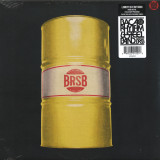
Bacao Rhythm & Steel Band, die mysteriöse Steel Pan Band aus Hamburg, hat sich weltweit einen Kultstatus erspielt. Mit einer Reihe von klassischen 7" Singles und drei hochgelobten Alben haben sie die Messlatte für sich selbst hoch gelegt, die sie mit diesem neuen Werk noch weiter nach oben schieben wollen. Auf ihrem vierten Album BRSB sind Bacao zurück mit mehr vom Gleichen, aber mehr vom Gleichen ist bei ihnen von Natur aus anders. Sie covern Songs aus verschiedenen Genres, von Megahits bis hin zu Underground-Songs, und machen sie sich mit ihrer einzigartigen Herangehensweise an die traditionellen Steel Pans aus Trinidad und Tobago zu eigen. Während ein Teil des Reizes eines neuen Bacao Rhythm & Steel Band-Albums darin besteht, herauszufinden, welche Songs sie covern, ist es ebenso faszinierend zu sehen, welche originellen Melodien sie ausgeheckt haben – denn dieses Album ist ebenso voller herausragender Originale. Der Opener des Albums, "In The Crosshairs", ist ein rauer und harter Midtempo-Kopfnicker, während "Grilled" und "Treasure Quest" das Tempo mit starken afrikanischen Funk-Einflüssen anziehen. Bacao geht mit "Hazy Memories", einem basslastigen Slowburner, der zwischen Hypnose und Hype wandelt, in die Tiefe. Diese Originale sind ein Beweis dafür, dass der Begriff "Coverband" ein Schuh ist, der niemals zu Bacao passen könnte. Und doch gibt es auch dieses Mal in der Tradition der Steel-Pan-Musik eine Reihe Coverversionen. Der große West Coast Hip Hop Einfluss wird offenbar mit Covers von Game & 50 Cent's "How We Do", Dr. Dre & Snoop Dogg's "Nuthin But A G Thang" und Tupac's "Got My Mind Made Up”, die alle eine neue Energie bekommen und sich für die BRSB Stahlbehandlung eignen. Mit ihrem Covern von Claudja Barrys Disco-Klassiker "Love For The Sake Of Love", die sie in eine synchronisierte Version umwandeln und sogar den Titel in "Love For The Sake Of Dub" ändern, fügen Bacao ihrem Lebenslauf einen weiteren zertifizierten Dance-Floor-Filler hinzu. Aus dem Bereich der zeitgenössischen Smash-Hits covern sie Drakes "Hotline Bling" und "Love$ick" von Mura Masa & A$AP Rocky. Dann gehen sie mit dem "Stranger Things Theme" einen sehr unerwarteten Weg, indem sie den Synthie-lastigen Titelsong der Hit-Show nehmen und ihm einen hypnotischeren Ton geben als dem Original. Wenn BRSB fertig ist, hat die Bacao Rhythm & Steel Band den Hörer auf eine Reise mitgenommen, die eine Vielzahl von Energien, Tempi und Stimmungen umfasst, aber alles unter einem Dach hält.
- A1: Freedom Train
- A2: Give And Take
- B1: Beautiful World
- B2: Beginning Of The End
- B3: Long Way To Go
A groundbreaking album, originally released on Belgian label Antler in 1984. Fesobi Olawaiye debut is finally been re-issued, showcasing the incredible talent of the African musician, a longtime Fela Kuti associate in the legendary Afrika 70. Ander the moniker Feso Trombone he just prove an authentically brilliance, moving forward the afro-beat dogma while providing incredible white funk harmonies and contagious rare groove. Remastered from the original tapes!
Bacao Rhythm & Steel Band, die mysteriöse Steel Pan Band aus Hamburg, hat sich weltweit einen Kultstatus erspielt. Mit einer Reihe von klassischen 7" Singles und drei hochgelobten Alben haben sie die Messlatte für sich selbst hoch gelegt, die sie mit diesem neuen Werk noch weiter nach oben schieben wollen. Auf ihrem vierten Album BRSB sind Bacao zurück mit mehr vom Gleichen, aber mehr vom Gleichen ist bei ihnen von Natur aus anders. Sie covern Songs aus verschiedenen Genres, von Megahits bis hin zu Underground-Songs, und machen sie sich mit ihrer einzigartigen Herangehensweise an die traditionellen Steel Pans aus Trinidad und Tobago zu eigen. Während ein Teil des Reizes eines neuen Bacao Rhythm & Steel Band-Albums darin besteht, herauszufinden, welche Songs sie covern, ist es ebenso faszinierend zu sehen, welche originellen Melodien sie ausgeheckt haben – denn dieses Album ist ebenso voller herausragender Originale. Der Opener des Albums, "In The Crosshairs", ist ein rauer und harter Midtempo-Kopfnicker, während "Grilled" und "Treasure Quest" das Tempo mit starken afrikanischen Funk-Einflüssen anziehen. Bacao geht mit "Hazy Memories", einem basslastigen Slowburner, der zwischen Hypnose und Hype wandelt, in die Tiefe. Diese Originale sind ein Beweis dafür, dass der Begriff "Coverband" ein Schuh ist, der niemals zu Bacao passen könnte. Und doch gibt es auch dieses Mal in der Tradition der Steel-Pan-Musik eine Reihe Coverversionen. Der große West Coast Hip Hop Einfluss wird offenbar mit Covers von Game & 50 Cent's "How We Do", Dr. Dre & Snoop Dogg's "Nuthin But A G Thang" und Tupac's "Got My Mind Made Up”, die alle eine neue Energie bekommen und sich für die BRSB Stahlbehandlung eignen. Mit ihrem Covern von Claudja Barrys Disco-Klassiker "Love For The Sake Of Love", die sie in eine synchronisierte Version umwandeln und sogar den Titel in "Love For The Sake Of Dub" ändern, fügen Bacao ihrem Lebenslauf einen weiteren zertifizierten Dance-Floor-Filler hinzu. Aus dem Bereich der zeitgenössischen Smash-Hits covern sie Drakes "Hotline Bling" und "Love$ick" von Mura Masa & A$AP Rocky. Dann gehen sie mit dem "Stranger Things Theme" einen sehr unerwarteten Weg, indem sie den Synthie-lastigen Titelsong der Hit-Show nehmen und ihm einen hypnotischeren Ton geben als dem Original. Wenn BRSB fertig ist, hat die Bacao Rhythm & Steel Band den Hörer auf eine Reise mitgenommen, die eine Vielzahl von Energien, Tempi und Stimmungen umfasst, aber alles unter einem Dach hält.
In O.D.O.O. singt Fela über die Auswirkungen der militärischen Machtübernahme und die Zerstörung der jungen afrikanischen Demokratien seit der Unabhängigkeit - insbesondere der jungen Demokratien, die nach langen Auseinandersetzungen und manchmal sogar Kriegen mit den Kolonialmächten ihre Unabhängigkeit erkämpft und gewonnen haben. Er sagte, dass Putschisten, wenn sie an die Macht kommen, Namen annehmen wie: Nigerianischer Oberster Militärrat, Ghanaischer Erlösungsrat, Libyscher Revolutionär usw. In den meisten Fällen wurden die Putschversuche von den ehemaligen Kolonialmächten geplant und finanziert. Für diejenigen, die sich dessen nicht bewusst sind, schafft die Präsenz des Militärs auf der politischen Bühne die Illusion einer friedlichen "demokratischen" Partizipation und einer funktionierenden Regierung. Zumal der größte Teil der täglichen Regierungsarbeit von Zivilisten geleistet wird, die den Militärchefs unterstehen. Für Fela besteht die Aufgabe der Streitkräfte unter normalen Umständen darin, die zivile Regierung zu verteidigen und zu unterstützen, und nicht darin, sie zu stürzen oder die Aufgaben eines Regierungszweiges an sich zu reißen, weil sie kein politisches Mandat haben. Das Gegenteil zu tun - das bedeutet "überholen". Jede Vorstellung von einem wohlhabenden und friedlichen Land, in dem das Militär an der Spitze der Macht steht, ist eine Illusion.
Die anhaltenden Skandale und die Korruption auf höchster Ebene, die alle Regime seit der Unabhängigkeit kennzeichnen, tragen dazu bei, Felas Desillusionierung und sein Misstrauen gegenüber dem Militär ins rechte Licht zu rücken. Er weist auf die Zweideutigkeit hin, daß die Verfassungen der neuen unabhängigen afrikanischen Nationen an die Verfassungen der scheidenden Kolonialherren angelehnt sind. Identifiziert das als Ursache der Probleme. In seiner sarkastischen Art bezeichnet Fela das, was in Afrika als Regierung durchgeht, als: '…soldier go! Soldier come!' Damit meint er, dass die Institution, die die militärische Struktur geschaffen hat, die Armee absichtlich dorthin gebracht hat, um ihr koloniales Werk fortzusetzen. Um die Not der Afrikaner unter einer solchen Diktatur deutlich zu machen, führt Fela eine Liste von Liedern an, die er geschrieben hat und in denen er die Ungerechtigkeiten des Systems kritisiert: Kalakuta Show! Mr. Follow-Follow! Zombie! Shuffering und Shmiling! Leider sind es die armen Massen, die am meisten unter der Misswirtschaft und Korruption der Regierung leiden. Von klein auf müssen afrikanische Kinder lernen, wie man in einem System überlebt, in dem man nicht weiß, woher die nächste Mahlzeit kommt - keine soziale Sicherheit, keine Bildung etc.
Trotz all dieser Rückschläge versuchen die Afrikaner weiterhin, ihre Kinder zu erziehen. Die Kinder wachsen auf, nehmen feste Jobs an, um ihr Leben zu verbessern, sparen hier und dort, um zu überleben. Letzten Endes jedoch machen die Ereignisse der Misswirtschaft verschiedener Verwaltungen alle Opfer und Abstriche, die der Einzelne zur Verbesserung seines Lebens macht, nutzlos.
O.D.O.O. war im Box Set #5 enthalten, das von Chris Martin und Femi Kuti kuratiert wurde. Das Album wurde auf grünem, transparentem Vinyl neu gepresst und mit einem bedruckten Inlay versehen in einer single sleeve Außenhülle.
- Ltd. Col. LP: (Transparent Green Vinyl)
Mixed LP:
tracklist:
A1 Dimples D– Sucker DJ
A2 The KLF– 3 AM Eternal
A3 Nomad– Devotion
A4 2 Brothers On The 4th Floor– Can't Help Myself
A5 Twenty 4 Seven– Are You Dreaming?
A6 Afrika Bambaataa– Just Get Up And Dance
A7 FPI Project– Everybody
A8 Real McCoy– Don't Stop
A9 Quadrophonia– Quadrophonia
A10 A Homeboy, A Hippie & A Funki Dredd– Total Confusion
A11 DJ Dick– Weekend
B1 Various– Radio Mix Version
B2 Various– Dimples Beat (112 Bpm)
B3 Various– Twenty Beat (124 Bpm)
B4 Various– Two Beat (123 Bpm)
B5 Various– Devotion Beat (120 Bpm)
B6 Various– Afrikan-Baataa Beat (123 Bpm)
B7 Various– Mc Beat (122 Bpm)
B8 Various– Replay Beat (122 Bpm)
B9 Various– Get Bussy With Skateboard 2
In der Musik einer der einflussreichsten Bands von Lomé kommt eine große Vielfalt von Einflüssen zum Ausdruck: Togo All Stars. Die Gruppe fügt ihrer Musik ein weiteres sehr originelles Element
hinzu: den togolesischen Sound, der in Voodoo-Rhythmen und Afrofunk verwurzelt ist.
Spirits", das neue Album der Togo All Stars, ist dem spirituellen Erwachen der Welt und insbesondere des afrikanischen Kontinents in diesen unruigen Zeiten, die wir derzeit erleben, gewidmet. Jeder
muss aufwachen, seinen Beitrag leisten und seine Rolle spielen, das ist die Botschaft. Dabei kommt dem Künstler eine besondere Rolle zu.
Seit ihrem Debüt im Jahr 2018 hat die Band nie aufgehöt, sich
eiterzuentwickeln und ständig an ihrem Handwerk zu feilen. Der kreative Kopf Energy Federator (Ekue Leopold Messan) hat für das
neue Album Musiker aus dem Ausland rekrutiert, was zu einer erfrischenden Mischung aus Stilen, Techniken und Ansätzen beiträgt.
Der Einfluss der westafrikanischen Religion auf die moderne Musik sollte nicht unterschätzt werden, und doch geschieht dies ständig. Eigentlich ist die Verbindung von Voodoo und Funk eine sehr
logische, wenn man bedenkt, dass Voodoo mit dem Sklavenhandel nach Amerika gebracht wurde.
In der "Neuen Welt" wurde er von den Plantagenbesitzern verboten, die Angst vor der Spiritualität und dem Rhythmus der Trommeln hatten. So kam Voodoo unverdientermaßen zu seinem schlechten Ruf.
Aber er überlebte im Untergrund, in der Musik selbst. Die Gesänge und Beats haben sich in das eingebettet, was wir heute Jazz, Salsa, Blues und Funk nennen. Wenn Sie die ursprünglichen Rhythmen der funkigsten Götter der Welt hören wollen, müssen Sie die Landkarte zücken und nach Togo reisen. Oder Sie gehen hin und sehen und hören den Togo All Stars zu, die diese musikalische Tradition wie keine anderen ehren und am Leben erhalten, auch jetzt - vor allem jetzt.
'I heard about Seif Abu Bakr and The Scorpions maybe 3-4 years ago. Their album 'Jazz, Jazz Jazz' ended up on my radar because of an eBay auction with the bids eventually rising daily up to a staggering 1000$. The music is a unique combination of incredible horn arrangements powerfully performed, a vigorous drummer contributing a funky backbone and Seif's vocals uniting those elements. The results range from instrumental tracks awaking memories of 1970s crime thriller soundtracks to more Sudanese-rooted tracks, a lot of them modernized versions traditional rhythms of the diverse regions of Sudan and even an excursion into Colgolese Soukouss.
I went for my second trip to Sudan in December 2018 and after doing some research on the first trip my local colleagues Larissa and Yassir had managed to reach Amir, The Scorpions band leader and he was happy to meet. We got together with him in a Cafe right at the Nile in Omdurman. It was a happy occasion for everyone. He told us stories about him meeting Jimmy Cliff and Lewis Armstrong when they visited Sudan and how he and his band mates from The Scorpions played extensively in Kuwait, both in club residencies as well as for television. Amir brought tons of incredible photos illustrating not only the bands history but the vivid cultural live in the many music clubs in Khartoum of the 1970s. During this decade up until 1983 the capital was home to a huge number of clubs, bards and concert halls. This scene started to perish after president Nimeiry's turn away from his socialist policies, that he was widely associated with in the first decade of his rule, towards the implementation of Sharia law in 1983. During the first decade of his rule he had actively supported various artists of the Jazz scene, taking some of them on trips throughout Africa. The 1989 coup of Bashir and his generals then caused the final blow to a once thriving scene. Both of these political events within 6 years lead to significant drawbacks for the Sudanese jazz scene resulting into hardly no gig opportunities left and parties and concerts being critically observed. A number of musicians faced prosecution, most of the time for their political views; some left Sudan for good. Music never completely vanished from public life and even the regime kept selected artists close, but for a majority of those bands affiliated to the jazz scene life and making ends became a lot harder. The Scorpions dissolved as a group around the same time.
The re-release was produced with a clean copy of the vinyl version as a source. The original reel tape of the album stayed with Saif Abu Bakr along with another reel with other recordings that were never released. Unfortunately it was lost when Saif Abu Bakr had to flee to Kuwait temporarily during the second gulf war when Iraq raided Kuwait. Vinyl version comes with extensive booklets with photos, interviews, liner notes. The vinyl version also has a DLL code.
- A1: The Sugarhill Gang - Rapper's Delight
- A2: Joe Bataan - Rap-O Clap-O
- A3: Funky 4 + 1 - That's The Joint (Remix)
- A4: Afrika Bambaataa X Zulu Nation & Cosmic Force - Zulu Na
- B1: Grandmaster Flash & The Furious Five - The Message
- B2: Super-Wolf - Super-Wolf Can Do It
- B3: Spoonie Gee - Spoonin' Rap
- B4: Cold Crush Brothers - Basketball Throwdown
- B5: Fab 5 Freddy - Down By Law
- C1: Boogie Down Productions - 9Mm Goes Bang
- C2: Jungle Brothers - Straight Out The Jungle
- C3: Digital Underground Feat 2Pac - Same Song
- C4: Monie Love Feat True Image - It's A Shame (My Sister)
- C5: Grand Puba - I Like It (I Wanna Be Where You Are)
- D1: The Pharcyde - Runnin
- D2: Capone-N-Noreaga - Invincible
- D3: D I.t.c. Feat. Ag., Big L & O.c. - Thick
- D4: Dj Honda Feat Mos Def - Travellin' Man
- D5: Rza - Grits
- E1: Percee P - Raw Heat (45 Version)
- E2: Guilty Simpson Feat Spacek - Smoking
- E3: Brooklyn Academy - Black Out
- E4: Dizzee Rascal - Fix Up, Look Sharp
- E5: Chinese Man Feat Kendra Morris & Dillon Cooper - Liar
- F3: Brand Nubian - Slow Down
- F4: Bozoo Bajou Feat Oh No - Back Up
- F5: Greyboy Feat Main Flow & Elgin Park - Uknowmylife
- F1: Beat Assailant - Hard Twelve (The Ante)
- F2: Lanu Feat Kero One - It's Time
- A1: Back On The Road
- A2: Beats On A String
- A3: Come Down
- A4: Down Right Funk
- A5: Funky Magic
- A6: Back To The Ol Skool
- B1: My Streets On Fire
- B2: Ital Stew (Skeewiff Mix)
- B3: I Got U
- B4: Sunshine
- B5: Take It Back
- B6: We Love You Jb's
- C1: Ital Stew
- C2: Ancestors
- C3: Call Me
- C4: I Got U
- D1: New Day Comin
- D2: Sunshine 2K4
- D3: The Brothers
Black Vinyl[39,87 €]
First time on vinyl, expanded version of Japan-only CD album from 2006! Now a double LP with unreleased tracks on audiophile grade colored vinyl (Disc 1: Opaque Baby Blue, Disc 2: Opaque Brown) The Jungle Bros embraced of a range of styles -- including house music, Afrocentric philosophy, a James Brown fixation, and of course, the use of jazz sample , on this reissue double LP Release on Colored Audiophile grade Vinyl , the I got U album is remastered and re-released with additional tracks .Michael Small (Mike Gee), Nathaniel Hall (Afrika Baby Bam), and Sammy Burwell (DJ Sammy B). Known as the pioneers of the fusion of jazz, hip-hop, and house music, they were the first hip-hop group to collaborate with a house-music producer. The trio released their debut album, Straight out the Jungle in July 1988. Their hip-house club hit single, "I'll House You" was added to the album in late-1988 reissues. Fostered by Kool DJ Red Alert, the Jungle Brothers success would pave the way for De La Soul, A Tribe Called Quest, and eventually the Native Tongues collective that they founded. Hip-Hop-House with a jazzy feel including "I Got U", a re-recorded "Sunshine" and four bonus tracks/versions. -- The Jungle Bros embrace of a range of styles -- including house music, Afrocentric philosophy, a James Brown fixation, and of course, the use of jazz samples -- _John Bush, All Music
The highly esteemed, A7 Edits lines up Volume 6 in their much sought after, official edits series. Four feel good dancefloor re-works of obscure Afro-disco gems, plucked from the extensive Africa Seven vaults.
Opening up the EP, John Talabot & Pional take on Cameroon’s Ekambi Brillant giving a deep electronic twist to ‘Afrika Afrika’ before Ghana’s Gyedu Blay Ambolley gets his disco funk heater ‘Highlife’ re-edited by Alan Dixon.
On the B, another double dose of Cameroonian cuts, as Jacques Renault breathes new life into the jazz funk joint from Michael Amara - New Bell and Pasteur Lappe’s standout hit ‘Na Real Sekele Fo Ya’ gets a housed up edit from Escapade.