Heatwave is an international disco-funk group formed in 1975. They are known for their singles "Boogie Nights", "The Groove Line", and "Always and Forever".
Heatwave's Greatest Hits is a compilation album from 1984 and features all their biggest hits from their entire discography, with the lone exception of the Hot Property album. Most of the songs on this compilation album are written by Rod Temperton, who later wrote several hit singles for Michael Jackson.
Heatwave's Greatest Hits is available as a limited edition of 750 individually numbered copies on translucent green coloured vinyl.
Cerca:funk ho
Julian Cannonball Adderley's only Blue Note album, Somethin' Else, would likely forever be famous in music lore if just for the presence of Miles Davis. The iconic composer/trumpeter steps into the role of sideman on the 1958 set, one of just a handful of times he'd make such a move after the calendar passed the mid-1950s. Yet evaluating Somethin' Else strictly on Davis' involvement misses the big picture. Plain and simple, Adderley's jubilant work remains a jazz landmark due to the chemistry of its Hall of Fame personnel, enthusiasm of its participants, and sophistication of its arrangements – not to mention the reference-grade production and inclusion of the definitive renditions of two all-time jazz standards.
Limited to 6,000 numbered copies, pressed on dead-quiet MoFi SuperVinyl at RTI, and mastered from the original master tapes, Mobile Fidelity's ultra-hi-fi UltraDisc One-Step 180g 45RPM 2LP collector's edition pays tribute to the record's merit and includes the bonus track "Allison's Uncle." Offering reference-calibre sonics, this spectacular collector's version provides a clear, transparent, ultra-dynamic, and up-close view of a cornerstone effort that witnesses Adderley and Davis sharing horn duty alone for the only time in their fabled careers – an arrangement that occurred as a result of Adderley having joined Davis' majestic sextet a year prior.
The premium packaging and beautiful presentation of the UD1S Somethin' Else pressing befit its extremely select status. Housed in a deluxe slipcase, it features special foil-stamped jackets and faithful-to-the-original graphics that illuminate the splendour of the recording. No expense has been spared. Aurally and visually, this UD1S reissue exists as a curatorial artefact meant to be preserved, touched, and examined. It is made for discerning listeners that prize sound quality and production, and who desire to fully immerse themselves in the art – and everything involved with the album, from the iconic photos to the gorgeous finishes.
The vibrant potency reveals itself openly on an analogue set that provides full-range reproduction of an ensemble that also includes pianist Hank Jones, bassist Sam Jones, and drummer Art Blakey. Each and every snare hit, downbeat, and cymbal splash registered by the latter take on realistic proportions, blooming and decaying as they would right in front of you on a stage. Jones' foundational bass lines register with uncommon depth and palpability, the litheness of the strings and fullness of the instrument epitomizing the definition of rhythm. Stellar, too, are the surefooted 88s. Sublime in scale, tonality, and attack, with the delineation such you can practically separate the white and black keys in your mind. As for that liquid interplay between Adderley and Davis? Breathtakingly lifelike in timbre, naturalism, purity, and presence. This collector's version takes you there – there being Rudy Van Gelder's legendary New Jersey studio in March 1958 to witness it all unfold, again and again.
For reasons that extend far beyond the outstanding playing and flawless repertoire, Somethin' Else is without question a record you'll always want to watch and hear come together. As veteran critic Bob Blumenthal observed writing about the album four decades after its release, "The instant rapport achieved by the quintet is thus the product of much shared and common history, though the tensile strength that they create throughout created a totally unique feeling that can be attributed to the sensitive musicianship of all concerned, including the supposedly hard bopping leader and drummer." Such inimitable feeling, or emotion, courses throughout every passage, and no where more obviously than on "Autumn Leaves" and "Love for Sale."
Without question, the discreet interpretations of the Johnny Mercer and Cole Porter songs, respectively, found on Somethin' Else have long been considered part of jazz's alluring mystique. Adderley and Davis bring contrasting approaches to the table yet sound of a singular mind on "Autumn Leaves," with the latter's muted trumpet and the headliner's lush alto saxophone dovetailing into a performance that endures as a blueprint for expression, counterpoint, sophistication, fluidity, and linearity. Blues, melody, and romance pour from their horns. Their bandmates, picking up on the intimate vibe and calm mood here – as well as on the spry, head-over-heels spirit of "Love for Sale" – join in on the conversation with sharp economy and float-on-air roundedness.
Not to undersell the other three numbers, all deserving five-star status. Twelve measures in length, the title track offers a slow burn in swing. Written by Adderley's brother, Nat, the 12-bar "One for Daddy-O" transmits funk flavors. The closing "Dancing in the Dark" pops with lushness and temptation, its stream of bold colours and understated textures calling for a moonlight twirl, or at least fantasies suggestive of a memorable night. Somethin' else, indeed.
2023 repress !
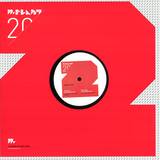
This year Robert Hood celebrates the 20th anniversary of his M-Plant label with a sequence of EPs featuring classic M-Plant releases and rarities remixed and re-edited, a compilation bringing Hood's huge body of work together and a series of special events.Kicking off the EP releases, UK techno stalwart Mark Broom delivers these exceptional edits of 'Untitled 1' from Hood's series 'Moveable Parts' and 'One Touch' from the 'Minimal Nation' album.Released in 1995 'Moveable Parts Chapter 1' was seen by many as one of Hood's greatest EPs. This four-tracker opened with the heavy-hitting 909 and dappled metallic sounds of 'Untitled 1'. Now, Mark Broom's edit adds even further depth and a dirty funk feeling to this hypnotic dancefloor killer. In 1994 Robert Hood first released his game-changing 'Minimal Nation' album. It was so influential that a special edition of this iconic masterpiece was released in 2009 and still sounded as fresh as ever with its stripped-back grooves inspiring a new generation of techno producers as it had over a decade before. Setting the tone was its opener 'One Touch'. On his new edit, Mark Broom plays with the bass and chops up the beats to intensify this dark mover.
After the success of the earlier releases, The TFunk Collective teams up with Atomphunk for his debut track for Regulate Recordings on the labels fifth release. Atomphunk has deep house roots and productions on labels such as Toko Records, 3AM Recordings, Deepfunk Records (USA) and more recently Manuscript Records and he brings his A game to the flip side for this release.
‘Since I fell for you’ takes its influence from classic 90s street soul. It blends classic horns, phat drums, a Jupiter synth base line, delicious keys, all layered with a delightful vocal to create an upbeat summer anthem.
‘Come Boogie’ has a classic 70s disco vibe with its infectious brass and strings driven along by solid drums and a funky rhythm guitar and a squelchy bass line.
- A1: Don't Stop
- A2: Message From The Other Side
- A3: 3 A.m. At Moëf Gaga
- A4: When The Rain Is Falling ('85 Interlude)
- A5: Talk Too Much (Instrumental)
- B1: Jump In The Water (24-Track Mix)
- B2: Armer Teufel Am Morgen Nach Dem Maskenball
- B3: Close To You ('86 Interlude)
- B4: September Garden (Instrumental)
- B5: Message From The Other Side (Alternative Instrumental Mix)
"Don't Stop" is the third album retrospectively released by Ghia. As the subtitle "Early Works & Artefacts 1984-1987" implies, it features some of their earliest compositions as well as tracks that were recorded during the same period as their "Curaçao Blue" LP.
The album is a fusion of diverse music styles. Listeners will delight in a range of genres, including electro, funk, soul, jazz-funk, synth pop, and even rap/hip-hop, all woven together as a cohesive work that remains mostly instrumental. As a whole, "Don't Stop" represents Ghia's funkiest and most experimental release to date. Notably, the LP features a rap version of Hermann Hesse's controversial German poem "Armer Teufel am Morgen nach dem Maskenball" ("Poor Devil the Morning After the Costume Ball") from 1926, accompanied by a drum machine rhythm and funky guitar. This poem depicts a person who drank too much the night before, telling the story and describing his hangover. The title track "Don't Stop" and the thrilling minimal electro-funk tune "3 A.M. at Moëf Gaga" both evoke old-school electro influences. The latter references the Spanish discotheque Moëf Gaga, located on the Balearic coast, which the dynamic duo of Lutz Boberg and Frank Simon frequented during their 1980s holidays. While the exact music played at 3 A.M. is unknown, listening to Ghia's track will undoubtedly capture the mood of the place.
One of the key tracks of the album is "Message From The Other Side", which could easily be noted as one of the nicest European synth-funk instrumental pieces ever. The track is based on a sick synth bass line, sparkled with DX7 chord hits, funky guitar, and a delightful "marimba" solo in the last third. The solo was actually played on Boberg's keyboard, using a special sound cartridge. This particular track had to be edited and technically revised by Marian Tone and DJ Scientist as the existing demo version of the song could not be used as is. With its stunning groove, this track will surely be a DJ's favorite.
Listening to the complete album, there is more of Boberg's keyboard wizardry: could you believe that the trumpet solo on "Jump In The Water" as well as the short but stunning slap bass solo on "Talk Too Much" were both played by on the DX7? However, this new release, unlike the jazzy "Curaçao Blue", is not about solos or virtuous playing - it clearly shows the duo's direction towards more electronic composition and clear song structures. The versions of "September Garden", "When The Rain is Falling" as well as "Talk Too Much" are actually instrumental mixdowns of vocal songs. And again, we get a blissful take of "Close To You", here a version from 1986. This soulful jazz-funk ballad could already be heard on "Curaçao Blue" while the final vocal version with singer Lisa Ohm can be found on the recently released "This Is" LP. This shows that the Ghia composers, Boberg and Simon, were perfectionists - tracks were reworked again and again, making them better and better.
The album was mastered and restored with great care, and we are pleased to provide you with a perfect example of mid 1980s home-recording pleasures, tinged with a youthful spirit and providing a sound that cannot be recaptured anymore nowadays. Alongside "This Is" and "Curacao Blue" it should be another perfect addition to any 80s groove collection as well as a great pick for DJs that love and play disco, leftfield electro and funk. The LP is limited to 500 copies.
The summer of 2016 marked the fortuitous meeting of two talented musicians, Zaidi Kiggundu (Ziggy Funk) and Jamie Mcshane, at a music festival. Sharing a love for Funk, Jazz, and Soul music, the duo knew they had to collaborate on a project together. Both Zaidi and Jamie had established music careers, bringing their unique backgrounds and experiences to the table. They also had their own music labels, contributing to their respective scenes.
Their collaboration began with a series of demo sessions at Jamie's studio in Scotland. Together, they laid down the foundation for their debut album, which they named 'Fortuitous.' This album fused Funk, Jazz, and Soul with a contemporary touch, paying homage to the classic albums of the past that deeply inspired them. Despite facing challenges such as scheduling conflicts and the disruptive impact of the COVID-19 pandemic, Zaidi and Jamie remained committed to completing the project.
To bring their musical vision to life, they enlisted the help of top-notch musicians on horns, including Ewan Mains, Konrad Wisniewski, and James Steele. With their contributions, the album 'Fortuitous' delivers solid grooves and captivating arrangements, showcasing the duo's dedication to their craft. The quality of the music caught the attention of Splash Music, who eagerly embraced the project. What started as a chance encounter and a few simple ideas many years ago has now transformed into a fully realized album, ready to be released to the world for everyone to enjoy.
The collaboration between Klara Lewis and Nik Colk Void somehow seemed inevitable. Both artists having seen their releases published by Editions Mego, individually carving out idiosyncratic voices in the worlds of extreme, abstract electronic music. With Full-On, Lewis and Void explore and assimilate the very edge of their individual practice where a unique collaborative interface allows two voices to combine and morph into a third voice.
Lewis and Void play ping pong with the conversation of sounds, generating ideas and bouncing them off each other, simultaneously encouraging the other to go further with their ideas opening up an opportunity to engage with previously unexplored terrain. Guitars, synths, euro rack modular systems, voice, sampling and outboard processing are folded in a playful unification with a propensity to tease, explore and extract new ideas and shapes, sometimes brutal, sometimes playful.
Trust was also a compositional tool allowing instinct to freely move on any aspect of the sound and space. This sound/feeling/instinct/association let this wild and wonderful material grow organically into something new.
The result of this exploratory interplay are 17 intense miniatures reveling in the process of unadulterated experimentation and whimsical interplay, not just between the humans, but the machines themselves. United in an endless series of sonic U-turns, this daring duo intertwine pop and noise whilst also bringing together visions of tender techno and forthright ambient.
The various zones which manifest from all this reveals vocals shifting in mysterious ways, dust drenched beats churning limpidly and devilish string loops navigating a disorientating domain. The experience of listening to Full-On is to be confronted with a range of ideas resulting in a platter of emotions. A place where beauty and the beast collide with the impulsive and outright weird. What a wonderful world.
Dark Entries has a surprise delivery! Malebox brings us six previously unreleased funk-fueled jams from the archives of the cybernetic disco titan himself, Patrick Cowley. Best known for his chart-topping disco anthems, Cowley left us with an incredible body of work before his tragic death in 1982 due to AIDS-related illness. Since 2009, Dark Entries has been working with Cowley’s friends and family to uncover the singular artist’s lesser-known sides, including his soundtracks for gay pornographic films on compilation albums School Daze, Muscle Up, and Afternooners.
But Malebox gives us more of the Cowley we know and love: churning disco-funk and hi-NRG tracks that are spacey and sleazy, gritty and sublime. Recorded from 1979-1981, these six tracks illuminate what was one of Patrick’s most creatively exciting periods. “If You Feel It” and “Love Me Hot” were both early Paul Parker demos; the former is a peak hour hi-NRG bomb, while the latter dips into Cowley’s zoned-out space disco sound. Jeanie Tracy’s soulful vocals feature on the demo version of “Low Down Dirty Rhythm”, which was later re-recorded by Sarah Dash. The slower, less-varnished rendition here hits with a wild psychedelic edge. Meanwhile, Patrick’s gifts for careful orchestration and infectious melodies shine on “Floating” and “Love and Passion”, which were likely demo tracks for Loverde. The songs on Malebox display the vitality and inventiveness of a brilliant composer taken from us too soon.
Malebox sleeve design was by Gwenaël Rattke, and features a hyper-color retro collage. Also included is an air mail envelope containing a letter from Patrick Cowley to French disco producer Pierre Jaubert as well as liner notes and hand-written lyrics. Malebox will be released on November 12th , which is the 40th anniversary of Patrick’s passing.
2023 Repress in updated tea stained sleeve
For the 20th Samurai Red Seal 12 we welcome the grand master of breakbeats for his debut with Samurai Red Seal. Paradox now appears rarely outside his own labels so we are honoured to have him as a special guest on Samurai Red Seal. 'Scorpius' is a potent, menacing, refurbishing of the golden years of DnB with the heaviest drums and bass on any tune in your set.'Crate Logic' is perhaps the funkiest tune you will hear in the genre in 2013, built around an authentic funk break that is transformed into and unmistakeable Paradox groove. The full artwork dedicated sleeve is designed around the ethos and theme of the 12, reflecting the dusty crate groove and highlighting the lost artform of 'crate digging' in modern DnB. This will be the 147th Paradox 12 single!
Bristol meets Brooklyn! Produzent Claude Cooper und der New Yorker Sänger Brain Fog liefern gemeinsam eine inspirierte Bonusrunde zu Coopers viel beachtetem, unbändigem Debüt 'Myriad Sounds' (2022) ab. Das Duo hat die Originalinstrumentals zu einem rauen transatlantischen Amoklauf mit punkig-psychedelischen Jazz-Breaks gemacht, die mit allem kollidieren, was New Yorks reiches musikalisches Erbe zu bieten hat.
- 'There's no doubt that this psych-funk/jazz/seventies-soundtrack/hip-hop album absolutely scorches. It's vital and vibrant and exactly what we need to kick start the year.' - Louder Than War**** Album of the Week
- 'Raucous rhymes and blistering jazz breaks make for one rebellious reworking.' Backseat Mafia 8.8
- 'Bristol's beat scene backdrops late night jams.' - MOJO****
Fünftes Album von Holy Wave aus Austin, Texas. Im Tarot steht die Karte der Fünf Kelche für Verlust und Trauer. Die Karte zeigt eine verhüllte Gestalt mit gesenktem Kopf, die über drei verschüttete Kelche blickt, während sie die beiden verbleibenden Gefäße ignoriert. Die Fünf Kelche wird im Allgemeinen so interpretiert, dass sie ein verzweifeltes Verharren in der Vergangenheit und die Unfähigkeit darstellt, die positiven Dinge der Gegenwart zu schätzen. Die Tarotkarte wurde zur Muse für das sechste Album von Holy Wave, "Five of Cups". Zu Beginn ihrer Karriere lehnten sich Holy Wave in ein ruhiges Reich der Psychedelik zurück und verzichteten auf lange Jams und Gitarren-Heldentaten zugunsten eines verträumten Pop-Ansatzes. Als sich die Band weiterentwickelte, wich der frühe Sgt. Peppers-meets-the-Velvets-Sound ausgefeilteren Melodien und einer ausgefallenen Instrumentierung und lenkte ihre Musik weg von sonnengebleichter Nostalgie hin zu einer farbenfrohen Dimension, in der sich Klänge der Vergangenheit, Gegenwart und Zukunft vermischten. Wie Pink Floyd in den frühen 70er Jahren haben Holy Wave es verstanden, auf ihrem neuen Album aus dem Pathos ein Gefühl tiefer Erheiterung zu zaubern, indem sie dunkle Elemente durch eine Linse filtern und sie in ein Kaleidoskop des Lichts verwandeln. Five of Cups eröffnet mit dem Titeltrack, der von Anfang an den auditiven und thematischen Modus Operandi des Albums festlegt. Die lysergische Texturpalette von Holy Wave wird sofort in den wabernden Synthie-Leads und dem Gitarren-Jangle des Songs deutlich, aber die untypischen Akkordfolgen und die Gesangsmelodie lenken die Musik weg vom anodynen Eskapismus hin zu einer nachdenklichen Auseinandersetzung zwischen Selbstbestimmung und Defätismus. Holy Wave reiten weiter auf dem wehmütigen und phantasmatischen Zug von "Bog Song" und schwanken zwischen Anschwellungen von strengen Moll-Akkorden und überlagerter elektrischer Orchestrierung. Die zuvor veröffentlichte Single "Chaparral" spielt mit der Nostalgie der Band und verwebt Verweise auf ihre Vergangenheit in El Paso zu einem Teppich des transzendentalen Triumphs. Wie so oft bei klassischer, albumorientierter Rockmusik entfaltet sich die wahre Magie erst in der zweiten Hälfte von Five of Cups. Auf "The Darkest Timeline" rekrutieren Holy Wave ihre Freunde Lorena Quintanilla und Alberto Gonzalez von dem Psych-Duo Lorelle Meets The Obsolete aus Baja California, Mexiko, um ihren berauschenden After-Mid-Night-Grooves zusätzliche ätherische Schichten hinzuzufügen. "Nothing in the Dark" funktioniert nach einem ähnlichen Prinzip, wobei ein gleichmäßiges, treibendes Schlagzeugmuster als Fundament für bandverwaschene Synthesizer, arpeggierte Gitarrenakkorde, Fuzz-Sounds und ruhige Vocals dient. Die Überlegungen von Five of Cups zur Bekämpfung von Niederlagen und Enttäuschungen werden im letzten Stück des Albums, "Happier", direkt aufgegriffen. Wieder einmal auf der melodischen Linie zwischen Melancholie und luftiger Raffinesse, untersuchen Holy Wave das synthetische Konstrukt des Glücks in unserem modernen Zeitalter und wie oft die Erlangung von Komfort jegliches wahre Gefühl von Freude vermissen lässt. Dennoch ist dies kein nihilistisches Klagelied. Vielmehr ist es eine beschwingte Erinnerung daran, dass die Bandbreite menschlicher Erfahrung von Natur aus Höhen und Tiefen erfordert und dass Euphorie oft in der Suche außerhalb des Vertrauten zu finden ist.
Codek is the brainchild of Jean-Marie Salaun who grew up in Paris influenced by the folklore of the inner city. In 1978 he joined art rock group SpionS and collaborated with Robin Scott (M 'Pop Music'). He began working as Codek, a play on the brand name Kodak with the 'Me Me Me' single released in 1980. In 1981 the 'Tam Tam'/'Closer' single was released on West African Music, a tiny label from the Ivory Coast, and re-released a year later by Island Records in the UK (where the B-side was re-named 'Tim Toum'). 'Tam Tam' was inspired by Burundi drummers playing in the plaza in front of Beaubourg where the song was recorded. Jean-Marie enlisted one of the drummers from the circle, Georges Atta Dikalo, to lay down percussion for the song. The female singers were from the French Caribbean and added falsetto tribal chants. Claude Arto achieved complex rhythmic patterns using a modular synthesizer and heavy processing. Jean-Marie recorded himself beating his chest for the thump noises. The recording of spanned over two years. They started on 16-track in Studio d'Auteuil, where Jean-Marie blew the woofers, before resuming in Studio Centre Georges Pompidou with an added 8-track recorder.
In 2017 we reissued the 'Tam Tam'/ 'Closer' single and shortly after the 24-track master tapes were discovered in Paris by original engineer Gérard Chiron. We arranged for graphic designer Maycec to pick up the tapes and immediately began to think of remixers for this project. First up is producer and DJ Daniele Baldelli who gave the original single a spiritual home in the Cosmic 80s scene of Italy. Here he's teamed up with Marco Dionigi for two remixes. Remix A goes full on funky disco baseline while Remix B a more balearic affair. We remember Justin sharing a memory of DJing the original Island Records promo at the Mudd Club in 1981 so we had to ask him for remix. He teamed up with his Whatever/Whatever production partner Bryan Mette and delivered an hypnotic pulsing house remix and an extended edit. All songs have been mastered for vinyl by George Horn at Fantasy Studios in Berkeley. The jacket is new twist designed by Eloise Leigh on the 1981 edition artwork by Angela Boy, inspired by primitive electronics and African paintings.
After taking time out from working together to focus on separate musical projects, maverick composer Alan Roberts (Jim Noir) and crowd-rousing vocalist Leonore Wheatley (International Teachers of Pop / The Soundcarriers) have re-joined forces to introduce Co-Pilot. Each the other’s wing person, they’re plotting an escape through Manchester’s claustrophobic grey skies with the pencil case colour of a hand-sewn multi-coloured primary school patchwork quilt. “We are both the creators in charge of navigating Co-Pilot’s overall sound which changes from track to track,” Leonore hints at what to expect. “There are about 6 different genres on one album, it's a pick n mix record!”
Happy in the haze of many boozy hours the album was recorded over just a few months whilst holed up and hanging out in Al’s city centre Dookstereo studio. The former Mill allowed the pair to relax, laugh and create without constraint. Armed with their original demos and vocal recordings from Al’s flat, they’d nip by the offie to pick up some Dutch courage before setting to work: building arrangements from a drum beat and basic chord pattern, the pair were so in tune they rarely spoke, allowing only the music to lead the way. “We’d communicate through nods of agreement or grimaces of dismay,” Leonore recalls. “Using the instruments with Al in production mode, we let the sound dictate the process whilst being drunk enough to follow it.”
The sound of life coming full circle after honing their separate crafts, Leonore had previously played keys and vocals in Jim Noir’s live band before moving on to front International Teachers of Pop for two critically lauded albums of joyous dancefloor filling bangers - their self-titled debut (2019) and Pop Gossip (2020). During that time Al would further expand Jim Noir’s universe with AM Jazz, which was celebrated as the no.1 album in Piccadilly Records’ ‘End of Year Review’ (2020), followed by the Deep View Blue E.P. (2021) cementing his status as one of Manchester’s finest songwriters.
As Leonore added her vocal magic to Al’s early demos of what would eventually become Co-Pilot’s ‘Spring Beach’ and a crooked original version of closing track ‘Corner House’, the vibe was prophetic “like the ending of Grease as Danny and Sandy take flight through the clouds”, letting their imaginations fly. The songs were the catalyst to spark a new phase of the pair working together, picking up where they left off. “From messing about with sounds during rehearsals in the very beginning it was always clear we liked the combination of sounds we made,” Leonore recalls.
Powered by a ‘try anything’ approach, Co-Pilot blends the musical DNA of what you’ve come to expect from each of the pair’s previous flight paths. “Whatever is switched on or nearby gets used. There's no 'correct' for us. If it sounds good, record it,” Al tells. United through typically turbulent wonky pop and lurking samples, whether culled from 70s TV themes or recreations of past and found sounds (see Al’s 60s tropicalia guitar on ‘Brick’, or the innocent ‘Swim to Sweden’ which opens with an ice cream van jingle Al recorded from his bedroom window) their process offers up a bucket load of Easter eggs. The album even features snippets from dearly departed pal Batfinks whilst ‘Motosaka’ is perhaps the most expensive 2-minutes on the album, featuring a Columbia Records Japan-cleared sample of Ryuichi Sakamoto’s ‘Thousand Knives’. Its synth squelches and Tom Tom Club funk also received the blessing of Haroumi Hosono, Godfather of Japanese Electronica, who agreed to being sampled in an original version of the song. “We just kept listening back and hitting gold,” Al recalls. “I was thinking ‘yeah, not sure what this is but I like it! We were buzzing with what we had made.”
But the sound wouldn’t come without self-imposed instrumental challenges. Thanks to an old mellotron sample on ‘Move To It,’ the moog riff and nautical accordion breaks on ‘Swim To Sweden’ and the 6/8 and 7/8 jaunt of ‘Brick’, time signatures were lovingly skewed to create Co-Pilot’s unique mood. “It was a bastard getting the drums right,” Leonore reveals, “but I like the wonkiness”. Levelling up through the lyrics, the words of smoky and evocative ‘She Walks In Beauty’ are based on a Lord Byron poem, with the sentiment of remembering Leonore’s late grandparents. “I wanted to see how much I could get away with just singing on one note, and how I could harmonically change everything else around it vocally,” she says. Elsewhere ‘Can You See’ was written from the perspective of a concerned sister to a brother which tells of keeping someone safe. “The lyrics are quite metaphorical about day-to-day happenings, people loved and lost. Others are rhythmic nonsense! It’s up to the listener to figure out what’s true.”
It’s clear from Al’s productive production techniques and Leonore’s knack for vocals and lyricism, Co-Pilot’s course is engineered by two aeronautically adept sonic storytellers. “We share a pretty similar sense of humour,” Al tells, “It is funny listening to this quite serious album but knowing we were giggling as we recorded it all. It’s been great to have another brain to bounce off.” Their destination might be unknown, but the clouds are about to part for a sound that is light years ahead. “You'll like at least one song,” Leonore suggests, “and hopefully them all.”
- A1: Vai Te Curar (Voilaaa Remix) 04 56
- A2: Chuva (Poirier Remix) 03 48
- A3: Menina Me Encanta (Uptown Funk Empire Remix) 05 33
- A4: Sete Ventos (Alternate Version) 03 53
- B1: Passarinho (Patchworks Remix) 02 51
- B2: Por Um Amor (Berimbau Remix) 03 10
- B3: Cantar Cantar (Art Of Tones Remix) 03 16
- B4: Sete Ventos (Ireke Remix) 04 21
After the success of “Navegar” (2021) Joao Selva continues to spread wings, taking us on a journey into his musical universe, always as sunny as it is abundant. His new album “Passarinho” span a generous palette of musical influences: from Angolan semba to Cape Verdean funaná, via Caribbean zouk or Congolese rumba – João Selva's music channels the musical pulse of the Black Atlantic. In the most (im)pure Brazilian tradition, he also digests the contribution of North American music and freely incorporates elements from elsewhere into the irresistible rhythms of Brazil.
This new album transposes the elegant melodies and magnetic vocals of Joao Selva into unexpected musical universes, each producer having had complete freedom to add their own soundscapes. Patchworks present a sublime acoustic version of "Passarinho" mixing Caribbean percussion and captivating vocal harmonies. Art of Tones brings its sense of fiesta, transforming the infectious optimism of “Cantar cantar" into exuberant Afro-Latin euphoria. Voilaaa serve us his raw afro-disco grooves on “Vai te curar” adding smooth horns, sparkling funky keys and acid basslines. Canadian dancefloor killer Poirier takes "Chuva" to another dimension, adding his science of beats and a powerful bass to keep us dancing all night long (and even in the rain!). Uptown Funk Empire delivers an additive version of the irresistible "Menina me encanta", while Ireke elegantly revisits “Sete Ventos”.
Joao Selva and his crew distill lively and joyful music, full of good vibes and perfect for fully enjoying the summer. Take your caipirinha and go dance!
Southener Hiatt dB makes his debut on RNT with a 6 track mini-LP of swampy dance floor cuts. Born in Texas and based in New Orleans, Hiatt delivers a unique offering with “11pm-Til’” that bridges the gap between House, Breaks, Acid, Disco, Funk, and Boogie.
Having established his name with releases on Rhythm Section and his own Mystery Zone label, this record is his strongest musical statement yet, packed with live instrumentation, and vibrant organic productions that make for both a perfect listen and a groovy club spin!
DJ Support:
Charles Webster, Justin Robertson, Blair French, Moplen, Dicky Trisco, Nick The Record, Lex, Lars Behrenroth, Willie Graff, Ravanelli Disco Club, Androosh, Max Essa, & Massimiliano Pagliara
Following his tenure fronting British psychedelic rock act The Web, who cut a couple of likeable albums featuring his bluesy, soulful lead, US-born vocalist Mississippi John L. Watson went solo, working with Pete Wingfield on his 1970 debut, White Hot Blue Black. Superior sophomore set Let’s Straighten It Out was released on Bob Kingston’s Spark label in 1975 and credited to John L. Watson and White Mouse, with Watson headed in a funk direction; along with the potent title track, there’s a fine cut of Gwen McCrae’s ‘Rockin’ Chair,’ making the set a sure-fire winner for Watson fans and lovers of British funk and soul.
Carl Finlow keeps on keepin' on. Not only is Finlow one of the most respected names in electro, a producer who boasts a sprawling catalogue that takes in a wide variety of aliases, but he's also spent recent years establishing himself as a mainstay for Sheffield's Central Processing Unit label. Soft Robotics, the new EP from Finlow's Silicon Scally project, is the fifth Silicon Scally release in five years to boast one of CPU's instantly-recognisable black-and-white covers.
The reason that Silicon Scally and CPU keep linking up is simple; they're a perfect fit for one another. Central Processing Unit has established itself as a haven for post-Drexciya producers since launching in 2012, and there are few artists better than Finlow at building on the Detroit group's sound. The union bears fruit once more on Soft Robotics, an EP of lithe machine-funk jams that will both do damage in the dance and also reward more concentrated home listening.
Things begin at a steadier speed than one might expect. Rather than barrelling off with the kind of sinewy roller one associates with the CPU name, Soft Robotics' title-track takes things at mid-pace. The groove reveals itself without hurry, Silicon Scally adding or subtracting elements - twitchy modular loops, pensive pads, the occasional blurt of low-end - atop the chugging bass/drums groove. It's a track which wins you over with guile rather than force.
As the name of subsequent cut 'Jitters' intimates, this one picks things up a little after 'Soft Robotics'. The tempo is higher here, the central beat more nervy. At their cores, though, 'Jitters' and 'Soft Robotics' are kindred spirits. Here, another slyly insistent bit of drum programming comes swirled up with all sorts of extraterrestrial tones, from little nuggets of melody supplied by the keys to electrifying synth stabs and percussive squelches.
Things limber up further still on first B-side 'Spin Ratio'. The track's 808 kicks are punchier than those of the A-side jams, and there's a dizziness to the bass tone which gives 'Spin Ratio' an intriguingly off-kilter feel. Atop the booming beat we find ourselves hypnotised by cells of melody and harmony interlocking or moving apart - particularly the staccato module at the track's heart. Sure enough, 'Spin Ratio' is the Soft Robotics joint which cleaves closest to Drexciya, invoking other Detroit disciples like Jensen Interceptor in the process.
After Soft Robotics picks up speed in the middle, closer 'Super Fluid Tones' brings us back to where we started. This track returns to the more measured delivery of the record's opener - there's a steady pulse to the drums, and once again Silicon Scally packs the mix with so many intriguing whizzes, bangs, blips and blurts that it's impossible not be won over by this tune's construction. 'Soft Robotics' and 'Super Fluid Tones' bookend Soft Robotics very nicely, and Silicon Scally's smart pacing gives the EP a lovely ebb and flow.
The ever-excellent Carl Finlow drops a Silicon Scally release via Central Processing Unit for the fifth year running. Like its predecessors, Soft Robotics is an excellent and deftly-crafted collection of modern machine-funk.
RIYL: Drexciya, Jensen Interceptor, Fleck E.S.C., The Advent
Betty Davis was a musical maverick with vision. Image, substance, sex, and grit combined with a badass band that could deliver the funk bed backbone to the sultry music between the sheets. After cutting two notorious discs for the Just Sunshine label (Betty Davis and They Say I’m Different), and Nasty Gal for Island Records, Davis went to work on her most personal and expressive record yet. After capturing 10 hard-hitting tracks in 1976 at the remote Studio In The Country (Louisiana), a creative difference with her then label caused the platter to be unexpectedly shelved. Davis would cut one final album and soon retreat from the music business, completely disappearing from the public eye.
Is It Love Or Desire is a little-known gem in the Davis catalog. Mastered from the original tapes, and untouched for over 30 years, this release features detailed liner notes, the originally intended artwork housed in a lavishly packaged digipak, rare photos, archival material, and recent interviews with Davis and her skin-tight band Funk House.
Never bootlegged, never released, never heard until now, the secret story of this lost album will finally enter the history books and cement this bold soul sisters contributions to music and popular culture. Its time to get down…
A central figure in Seattle’s fading disco scene, radio DJ, producer, engineer, writer and multi-instrumentalist…Tony Benton was the driving force behind the Seattle soul-funk sound during the late 70s & 80s. Starting off his career at the age of ten he learned how to play the piano and then finally got to take a music class in the 7th grade. Having access to an electric piano made him fall in love with the thought that he could make his own music. At the age of 16 Tony and his friends already formed their first band called ‘Crystal Clear’ and were making up songs in his basement.
Things would really start off when Tony Benton teamed up with his group to form the avant-boogie group Teleclere who went on to release their first single in 1982 (Fantasy Love / Ultra Groove). That’s when Tony started playing all of the other instruments and thus earning him the title ‘multi-instrumentalist’. Teleclere was all about creating and performing original music, there was no music scene in Seattle at that time for a black artist or group who played original compositions. Rap-music was also emerging and clubs slowly started to switch from live performances to deejays.
Through the success of their independent EP release, Teleclere followed up a year later with their Affection/Defection album which created a serious hype. This gave them the chance to regularly open at concerts for national artists in halls and clubs. They played at nightclubs, bars, festivals, private parties and did mini tours in the Washington State cities & Canada…including opening for Grammy-award winning soul-star Peabo Bryson (performing for a crowd of 3,000 in their hometown Seattle)
Sadly, radio would not play their music so folks never really had the chance to hear it unless they saw them perform live (they always won the crowd over). To add insult to injury, venues and the likes started to mainly book cover bands playing top 40 music. Disappointed by this Tony Benton became a radio personality but would continue to record and perform under the name ‘Teleclere’ with various players and vocalists for many years to come. Only a handful of his tracks recorded were released in the end.
Thankfully we are left with the unique audio-document that is the Affection/Defection LP. The album took the scene by storm in 1983 and sounds like a sci-fi space odyssey unfolding on an intergalactic dance floor…a chopped and slapped slice of 80ies electro-funk, sensual soulful serenades, pulses of Innervisions-worthy bass, top of the line vocals and a plethora of vocoder magic. Also included is the hit ‘Steal Your Love’ that was featured on the acclaimed 2014 Light In The Attic compilation ‘Wheedle’s Groove Volume II: Seattle Funk, Modern Soul And Boogie 1972-1987’.
Tidal Waves Music (in collaboration with the Numero Group) now proudly presents the first ever vinyl reissue of this fantastic private pressed Seattle electronic soul/funk album (originally released in 1983 on Telemusic Productions). This rare record (original copies tend to go for large amounts on the secondary market) is now finally back available as a limited 180g vinyl edition (500 copies) complete with the original artwork and obi strip.
-15 year anniversary and first time on vinyl with brand new artwork, including previously unseen pieces from the Tame One archive.
-Remixed and remastered audio for a fresh listening experience. -Featuring guest appearances from Sean Price and Del Tha Funky Homosapien - One half of legendary graffiti rap group The Artifacts. -140 gram black vinyl, matte flood jacket with spot uv, 12x12 double sided insert with black poly lined inner sleeves. Rough, rugged and raw. Nothing better describes one's listening experience when they first heard Tame One & Parallel Thoughts, “Ol Jersey Bastard”. It was 15 years ago when Tame One came to "The Paradigm", the recording studio of Freehold's own Parallel Thought. One session turned into two, then quickly turned into three, resulting in a twice-weekly recording ritual that spanned three years. This ritual would give birth not only to this album, but three (Acid Tab Vocab & Parallel Uni-Verses w/ Del Tha Funky Homosapien) instilling a lifelong creative partnership. But let's focus on "Ol Jersey Bastard," Tame One's homage to the almighty and original OL Dirty Bastard. It was not the cleanest record to listen to, but it was true to Tame One's style and vision. He was not constrained by working with a group or having to answer to a label. As a side note, Amalgam Digital, the joke of a label who originally released this album wouldn't let us follow through with our original artwork concept. So the new cover and layout created by close friend Michael Interrante is Tame’s original concept. We also were able to include original scans of unseen artwork, tags & lyrics from Tames archive. This was unfiltered raw hip-hop, showcasing Tame One's unparalleled ability on the mic. Sometimes that called for no hook or maybe a 54 bar verse, traditional song structures were out the window. That being said, coming back to this album all these years later as producers, we wanted to elevate the album's listening experience. We cleaned up the mixes, so you might notice Tame sounds a little clearer, or those beats might knock a bit louder. It was what was needed to further elevate the music while not compromising our and Tame’s vision. Further demonstrating that music is a living, breathing piece of art. Always able to evolve. We hope you enjoy it!