Born in 1949 in Recife (Brazil), Roberto De Melo Santos, despite a very light discography, is among
the true icons of the Brazilian Soul music under his artist alias, Di Melo. He’s indeed only needed an
eponymous album, released in 1975 on Odeon, to assert himself as a star in his native country, but
also as a legend for all collectors and connoisseurs of the world. More than 40 years after its release,
this famous album sells for several hundred euros in its original version, and even for the few
reissues that were offered. Not very active since then, Di Melo however returned in 2016 with the
album O Imorrível, released on the Brazilian label Casona Produções.
It is then that a year later, came a meeting with the French group Cotonete, that Florian Pellissier,
founding member and keyboard within the band tells us about: “On tour in Brazil with Cotonete, we
had a few days off in Sao Paulo and I really hoped to make a collaboration with an important artist or
band from the Brazilian funk scene. We had thought of Marcos Valle, Meta Meta or Ed Motta... but
Rafaela Prestes our Brazilian "sound ingineer/genious" told me she’d worked with Di Melo for his
recent comeback and gave me his number. No sooner said than done, as I'm a huge fan of Di Melo.
The next day he arrived at our house with Jo, his wife, and Gabi, his daughter. He takes the guitar in
front of us and gives us a private show of 3 hours… we cried the tears of joy. He had 400 original
songs never recorded, a gold mine. On the same night, we started working the arrangements for 2
days, followed by a rehearsal and two small gigs in Sao Paulo. Immediately after, we recorded in the
magical Epsilon B studio. This album is the summary of this moment, of these 5 days of madness
spent together between “the best band in the world” and the legend Roberto Di Melo… Simple,
beautiful, Brazilian-French, human music…”
Today, Atemporal found its final version in collaboration with Favorite Recordings and is proudly
presented as what we believe will become the genuine long-awaited follow-up to the classic Di
Melo’s LP.
Suche:funk ho
Poté returns to Benji B’s Deviation Music following the release of his acclaimed debut album 'Spiral, My Love' last year. 'Waters of Praslin' is the first in of a run of club-focused 12"s from the artist entitled the Versiclub series.
St. Lucia born and London-raised, Poté (real name Sylvern Mathurin) has always been drawn to African diasporic futuristic beats from baile funk to kuduro and gqom. Before Benji stepped in to release his debut record Poté put out multiple EPs for Enchufada, the independent record label founded by his spiritual forbearers in Lisbon, Buraka Son Sistema.
The Brazilian influence is definitely evident in opening track 'Jacquot (Waters of Praslin)', with its afro-samba rhythm laced with the metallic synth work of UK bass. Track 2, 'Sirens' feels like a future dance floor favourite that channels UK funky, dub step and of course the power of the siren in the dance.
"Waters of Praslin is my homage to the people and spirit of my hometown, Praslin in St.Lucia. These are the waters which gave us life, stories, joy and memories” says Poté “these waters saw many of us grow and and eventually pass."
Following on from their debut band releases in 2018, Daytoner follow up with a single for this year's festival season, a double A-Side featuring 2 tracks that have proved popular in their live sets at over 30 UK festivals to date, both of which have already received radio support on The Craig Charles Funk & Soul Show on BBC6 Music and BBC Radio Cornwall.
"Daytoner knocking it out the park! Over the years I've known this Cornish crowd they've been going from strength to strength to be honest, this season continuing their one direction"
(Craig Charles on 'Shout Love' - BBC Radio 6 Music - Oct 2018)
"Daytoner continue in their love of updating the 60s sound, and they do it very well"
(Craig Charles on 'My Sweet Baby' - BBC Radio 6 Music - Jan 2019)
Introducing a new label and musical direction for Lee Renacre from 100Hz with, PUSHER. His aim is to push the boundaries of electronic music by using different time signatures and poly rhythmic patterns, and by not using 4/4 patterns and the standard hat clap beats it’s possible to create a different style of mood and dancing which is deep loose and skippy. Pusher has a bold new Techno sound and also a gentle side with tracks of deep emotive strings and melody’s.
This Series of tracks is called Drug Music, a stripped down funky style with unusual beat patterns and poly rhythmic elements best enjoyed and fully understood when in an euphoric state, always recorded from a live studio jam where Lee’s improvised sounds come to life with some unexpected results. Lee also collaborates with artist and good friends for some extra depth and to mix up this unique style of electronica.
The first of the Pusher EP’s is a thumping minimal and full on affair with infectious killer acid riffs in odd time signatures. Crisp funky modulating hats monster bass lines and dramatic interplanetary sounds with live tweaks, twists and turns. Also some seriously deep and intense music is coming from this live jam situation with a thrilling string track to round off the Pusher experience.
Mount Liberation Unlimited are Tom and Niklas, two Swedes from space who have spent the last 5 years
carving out a particularly vivid niche in contemporary electronic music. Their previous work has seen them
connect with an impressive list of global dance powerhouses: New York's Beats In Space, Melbourne's
Superconscious and Munich's Permanent Vacation have all released 12'' heat from the duo, while their
hometown buddies at Studio Barnhus provided an outlet for what has been perhaps their biggest and boldest
release yet, 2017's double smash single Double Dance Lover. Their live shows are fervent, fast-paced and very
multi-instrumental affairs, performed non-stop at an increasingly prestigious list of clubs and festivals, serving
as prime examples of the MLU boys' core obsession: the interaction of human rhythm and electronic pulse.
They have their own great little radio show on Gilles Peterson's Worldwide FM! Australia loves them! They
got their artist friend Tom-Hadar Elde to sculpt their heads for their debut album cover!
That self-titled debut, to be released May 31 on Studio Barnhus, has been in progress since the very formation
of the MLU project in 2014. It contains some of their earliest work and of course their very latest – all perfected
at the Neve desk of legendary Gothenburg studio Svenska Grammofonstudion, in cahoots with mix engineer
Christoffer Berg (Depeche Mode, Robyn, Fever Ray).
The result is a sonically fascinating, endlessly generous and straight up FUN record that takes the listener on a
joyride through bittersweet stoner disco, frenzied scando-kraut jams and some of the sweetest dance pop to
come out of Sweden this side of Super Trouper.
The record is preceded by a limited 10'' release of album track Climb Me Up, complete with an exclusive club
mix of the song.
Celebrating its 25th anniversary, Far Out Recordings proudly presents two albums of previously unheard Azymuth demo recordings from 1973-75
Since their debut album release in 1975, Azymuth have risen to rank alongside the world’s greatest jazz, funk and fusion artists. As young men in Rio de Janeiro, they stood out for both their exceptional talent as musicians, and their wild rock ‘n’ roll antics in the predominantly middle-class worlds of bossa nova and jazz. Their signature ‘Samba Doido’ (crazy samba) sound ruptured the tried and tested musical structures of the day, resulting in what can only be described as an electric, psychedelic, samba jazz-funk hybrid.
Before they became Azymuth, José Roberto Bertrami (keyboards), Ivan ‘Mamão’ Conti (drums), Alex Malheiros (bass) and Ariovaldo Contesini (percussion) played backing band to just about every major artist in Brazil. Bertrami was also contracted as an arranger and songwriter at some the biggest labels of the era: Polydor, Philips, Som Livre, and EMI being just a few. Azymuth’s name can be found on record sleeves by the likes of Jorge Ben, Elis Regina, Marcos Valle, Ana Mazzotti and countless others. But at the dawn of the seventies, fascinated by developments in improvisational music - from jazz in the US, to progressive rock in the UK and of course samba, bossa and tropicália on home turf - the energetic young group were inspired and ready to move forward. Any spare moment in which they weren’t in sessions and writing music for other artists, they would be carving out their own sound.
These previously unheard recordings took place between 1973-75 at Bertrami’s home studio in the Laranjeiras district of Rio de Janeiro. At the time of recording, there was nothing in Brazil, less the world that sounded anything like them, so perhaps it’s unsurprising that when Bertrami presented his demos to the record companies he had been working for, he was turned away, and told in effect that the music was ‘wrong’.
One of the demos ‘Manhã’ would be picked up by Som Livre and Azymuth released their seminal debut album in 1975. Throughout the late seventies and eighties, the group released a series of now classic albums for Milestone Records, before taking an indefinite hiatus to pursue their individual careers.
When English producers Joe Davis and Roc Hunter arrived in Brazil in 1994 to record the first Azymuth album in over a decade, Bertrami dug out the demos which had sat virtually untouched for over twenty years. Joe recalls how he was “blown away by the freedom and intensity of the music, as well as the genius of the ideas musically.” Beginning a long and fruitful relationship, ‘Prefacio’ would be the first track Azymuth recorded for Far Out Recordings and was released on the Carnival album (1996).
Along with ‘Manhã’ and ‘Prefacio’, only a handful of these demos were ever professionally recorded and released, making this the first opportunity to hear many of these early Azymuth compositions in their raw, original form.
On every track the frenetic energy in the studio is palpable, giving the recordings a beautifully personal feel and a sense of the phenomenally creative vision Bertrami, Malheiros and Conti were realising at the time. Fifty years on, Azymuth’s earliest recorded music retains an ineffable, futuristic quality, standing amongst their most captivating and moving work.
Credits:
Keyboards: José Roberto Bertrami (Mini Moog Series One, Arp Omni, Arp 2600, Arp Solina Strings, Fender Rhodes 88, Hammond B3 with box speaker, Clavinet with Wah Wah)
Drums: Ivan ‘Mamão’ Conti
Bass: Alex Malheiros
Percussion: Ariovaldo Contesini
Produced by Azymuth and Jose Roberto Bertrami
Recorded at José Roberto Bertrami’s home studio in Laranjeiras, Rio De Janeiro, Brazil between 1973–1975.
Issue and project co-ordinator: Joe Davis
Tape transfers by Roc Hunter (thanks to Simon Hitner)
Mastered by Daniel Maunick at the Sugar Shack, Lanark, Scotland
Mastered by Frank at Carvery Cuts
All tracks published by Far Out Music Publishing/Westbury Music LTD
Celebrating its 25th anniversary, Far Out Recordings proudly presents two albums of previously unheard Azymuth demo recordings from 1973-75
Since their debut album release in 1975, Azymuth have risen to rank alongside the world’s greatest jazz, funk and fusion artists. As young men in Rio de Janeiro, they stood out for both their exceptional talent as musicians, and their wild rock ‘n’ roll antics in the predominantly middle-class worlds of bossa nova and jazz. Their signature ‘Samba Doido’ (crazy samba) sound ruptured the tried and tested musical structures of the day, resulting in what can only be described as an electric, psychedelic, samba jazz-funk hybrid.
Before they became Azymuth, José Roberto Bertrami (keyboards), Ivan ‘Mamão’ Conti (drums), Alex Malheiros (bass) and Ariovaldo Contesini (percussion) played backing band to just about every major artist in Brazil. Bertrami was also contracted as an arranger and songwriter at some the biggest labels of the era: Polydor, Philips, Som Livre, and EMI being just a few. Azymuth’s name can be found on record sleeves by the likes of Jorge Ben, Elis Regina, Marcos Valle, Ana Mazzotti and countless others. But at the dawn of the seventies, fascinated by developments in improvisational music - from jazz in the US, to progressive rock in the UK and of course samba, bossa and tropicália on home turf - the energetic young group were inspired and ready to move forward. Any spare moment in which they weren’t in sessions and writing music for other artists, they would be carving out their own sound.
These previously unheard recordings took place between 1973-75 at Bertrami’s home studio in the Laranjeiras district of Rio de Janeiro. At the time of recording, there was nothing in Brazil, less the world that sounded anything like them, so perhaps it’s unsurprising that when Bertrami presented his demos to the record companies he had been working for, he was turned away, and told in effect that the music was ‘wrong’.
One of the demos ‘Manhã’ would be picked up by Som Livre and Azymuth released their seminal debut album in 1975. Throughout the late seventies and eighties, the group released a series of now classic albums for Milestone Records, before taking an indefinite hiatus to pursue their individual careers.
When English producers Joe Davis and Roc Hunter arrived in Brazil in 1994 to record the first Azymuth album in over a decade, Bertrami dug out the demos which had sat virtually untouched for over twenty years. Joe recalls how he was “blown away by the freedom and intensity of the music, as well as the genius of the ideas musically.” Beginning a long and fruitful relationship, ‘Prefacio’ would be the first track Azymuth recorded for Far Out Recordings and was released on the Carnival album (1996).
Along with ‘Manhã’ and ‘Prefacio’, only a handful of these demos were ever professionally recorded and released, making this the first opportunity to hear many of these early Azymuth compositions in their raw, original form.
On every track the frenetic energy in the studio is palpable, giving the recordings a beautifully personal feel and a sense of the phenomenally creative vision Bertrami, Malheiros and Conti were realising at the time. Fifty years on, Azymuth’s earliest recorded music retains an ineffable, futuristic quality, standing amongst their most captivating and moving work.
Credits:
Keyboards: José Roberto Bertrami (Mini Moog Series One, Arp Omni, Arp 2600, Arp Solina Strings, Fender Rhodes 88, Hammond B3 with box speaker, Clavinet with Wah Wah)
Drums: Ivan ‘Mamão’ Conti
Bass: Alex Malheiros
Percussion: Ariovaldo Contesini
Produced by Azymuth and Jose Roberto Bertrami
Recorded at José Roberto Bertrami’s home studio in Laranjeiras, Rio De Janeiro, Brazil between 1973–1975.
Issue and project co-ordinator: Joe Davis
Tape transfers by Roc Hunter (thanks to Simon Hitner)
Mastered by Daniel Maunick at the Sugar Shack, Lanark, Scotland
Mastered by Frank at Carvery Cuts
All tracks published by Far Out Music Publishing/Westbury Music LTD
Eno Williams, frontwoman of Ibibio Sound Machine, uses both English and the Nigerian language from which her band's name is derived for the dazzling new album Doko Mien. Long lauded for jubilant, explosive live shows, Ibibio Sound Machine fully capture that energy on Doko Mien, the followup to their Merge debut Uyai.
In a glowing piece in the New York Times, those songs were praised for following 'in the tradition of much African music, [making] themselves the conscience of a community.' By pulsing the mystic shapes of Williams' lines through further inventive, glittering collages of genre, Ibibio Sound Machine crack apart the horizon separating cultures, between nature and technology, between joy and pain, between tradition and future. That propensity for duality and paradox seems common in people whose lives span continents.
Williams was born in the UK, but grew up in Nigeria, always steeped in her family heritage. She obsessed over West African electronic music, highlife, and the like, but was equally empowered by Western genres such as post-punk, disco, and funk. The London octet have enveloped themselves in that maximalist quilt proudly since their 2013 formation. Though it can often bring with it news of stress and uncertainty, the modern world further brings all these disparate traditions into connection.
'Everyone has everything now,' says multi-instrumentalist Max Grunhard. 'Everyone has immediate access to every genre, picking things up from everywhere—like magpies.' And while they haven't suddenly left their African roots behind, Doko Mien does find increased representation of English lyrics in the ratio. By sharing more directly with more universal lyrics, the record feels more anthemic, reaching for grander heights.
'We wanted to give people a reason to sing along, to find their soundtrack every day,' Williams says. 'We wanted everyone to feel as if they're part of the music as well.'
Late album highlight 'Guess We Found a Way' addresses the change with a coy smile. 'Guess we found a way to speak to you/ Guess we found a way to say what's true/ To say what's real,' Williams coos over glistening chains of reverberant synth and diamond dust percussion, before returning to Ibibio in the chorus. Perhaps the best example of the group's ability to convey meaning across language and tradition, to blend past and future into a singular present comes on 'She Work Very Hard'. The traditional Ibibio folk tale bobs over the waves of tuned percussion, chunky synth, and pinprick highlife-esque guitar, while Jose Joyette's drums and Derrick McIntyre's bass funk groove bring everyone to the dance floor. 'These stories won't be forgotten. Feel the music: it speaks to everybody,' Williams says. 'We can travel back in time together, while convening on a futuristic, present tense. We hope that we can give people that reason to wake up, that one song to sing and dance and be happy.'
Doko Mien: Tell me everything. On their new album, Ibibio Sound Machine provide the perfect companion, ready to digest as much as possible and then further unfurl beauty and hope. They remember and honor the past and charge forward toward the future, all while intensely expanding the present.
Following on from big recent releases from Neue Grafik & Oliver Night, CoOp Presents Sivey, with an all-new double-header of heat, 'Nobody Else' and 'Somebody Samebody'.
For those that don't know, Manchester-based Sivey became a player in the future beats scene a couple years back, releasing music with the LA-based collective Soulection, as a solo artist and via collaborations with Evil Needle, which came to fruition after a series of online beat battles, as well as releases and remixes with labels like Astral Black and Ninja Tune.
His last wave of output was greeted with enthusiasm by fans of soulful beats championed by artist collectives such as HW&W and Darker Than Wax, and saw Sivey subsequently spinning at events across the UK, and perform shows as far afield as Los Angeles and Tokyo.
Rooted in hip hop production, Sivey's largely instrumental tracks have brought together elements of millennial R&B, neo-soul, UK garage, jazz and 80s funk. In the few years since his previous releases, Sivey has continued to experiment with new ways of exploiting his diverse influences in his productions. As his listening habits became increasingly orientated around jazz and obscure 70s fusion records, his own productions began to reflect the shift.
The recent resurgence of the broken beat movement was something that also inspired him, admiring the balance between musicality and danceability of the genre. He made his first experiments with bruk in 2017 and found that it mixed perfectly with what he'd already been creating. Eager to share the results with the world, it made perfect sense for his first offerings of this ilk to find a home here with us at CoOp Presents.
These two tracks exemplify the ever-evolving progression of Sivey's sonics; the familiar deep keys and synth sounds of his previous productions are there, but nestled alongside more uptempo grooves, and the lush rhythmic complexity of bruk. Tied in with his love for jazz fusion, 'Somebody Samebody' sees Sivey reinterpret a late 70's track by Japanese guitarist, Kazumi Watanabe; this one also enlisting the help of Trian Kayhatu on keys. As well as the original tracks, prolific Selectors Assemble crew member Danvers adds in his own tasty heads-down version of 'Nobody Else', and label co-founder IG Culture (who recently received a Worldwide Award for 'lifetime achievement'!) provides a dope bruk-funk flip of 'Somebody Samebody' to close out the set.
After a break of some 10 years producer and DJ Mat Carter felt the time was right to wake his imprint from hyper sleep.
It was started as and will continue to be an outlet for both Mat’s own material and that of other like-minded beings and as the name Varial suggests the label is not limited, instead it reflects Mat’s tastes and touches on many styles.
Varial launches with the remaster and re-release of the much sought after cult classic, Zark Time E.P. Written and produced by Mat himself, this E.P. pulls on influences of fractured imagery, fuzzyelectronics and dense soundscapes to form five tracks of warm, funk-fuelled jams that 17 years on still refuses to neatly conform with any one genre. As Mat himself says, “I can’t help my influences.”
During his time away from the music scene Mat’s focus was on raising a family and honing a physical craft but the pull of music never went away.
Moonshoe Records has bowled over first listeners by presenting this new side of their sphere - Air Space Ark’s debut, “All Rivers Lead” charts the course of divergent streams of contemporary ambient music, downtempo rhythms, and electroacoustic experimentation, arriving at a calming confluence of these sources. Across the 6 songs on these two sides, they evoke a calming and contemplative headspace
333 is an exquisite study in balance - the intermingling of bird song water sounds that could equally be field recordings or synthesized foley - the ambiguity adding a delightful trompe l'oreille effect - and crystalline keys ; these airy sounds weighted by washes of subbass.
BLANK PAGE is almost like a version of the previous track, retaining the nimble birdsongs and heavy sub, but foregrounding a lolling, stumbling hip-hop beat and placing more emphasis on the effects wizardry as abstract sounds careen across the track in wipes and wisps, before stripping down to a beautiful coda of birdsong, piano plinks and a textured backdrop.
The celestial keys, flute-like thrums and gentle chimes of WORDS BETWEEN SELF evoke the golden age of spiritual jazz, but the hazy ambiance and shuffling beats transmute the other elements around them into something more introspective and personal than jubilant praise. Lyrics aside, the subtle funk coupled with the pensive, meditative air channels the spirit of Stanley Cowell’s classic TRAVELLIN’ MAN.
LOFT IN 7 Is the most “out” moment here. It has echoes, literally, of jazz. Like decaying tape reels disintegrating in real time, we feel the tape buckling and warping under the weight of time as the sounds of a synthetic band warp and shift against electronic impulses and glitches, eventually leaving just a lingering, ghostly imprint. .
DUST SONG veers the closest towards a straightforward instrumental hip hop cut - a submerged sounding breakbeat coupled with a tender piano melody - but is buoyed by drifting pads and a dense, hallucinatory bed of effects.
CONCRETE closes proceedings. Charged with a crepuscular energy, it’s all-together as mercurial and magical as the transition from day to night. Different elements swirl and coalesce, honing in on dense, textural moments across a horizontal drift. The end effect is hypnotic yet captivating, so much so that when the track eventually blooms into silence at the end you’re struck by the brevity of the whole experience. Thankfully you can listen to it again!
After numerous features and collaborations Obenewa, Kaidi Tatham and dego combine together to form Blacks & Blues.Three song based dance tracks to fill the void of underground vocal club music.
'Spin' is flavoured with S.A house & afrobeatz whilst Obenewa sings about the wonder that is love. 'You Know The Feeling' moves towards the funk that is synonymous with 2000Black and 'Don't Know Why (chant for love)' is purely the marriage between reggae and jazz.
Cochemea Gastelum is coming home to connect with his roots. After nearly 15 years of touring the world with Sharon Jones and The Dap-Kings, the saxophonist offers a deeply personal album of jazz and indigenous-influenced rhythms. All My Relations¸ out February 22 on Daptone Records, is 10 tracks of mesmerizing and spiritually ascendant instrumentation. The first single 'All My Relations' is available now.
'All My Relations is a way for me to explore my roots through music. Some of it is a memory that is imagined from a time and place I've never been ('Sonora') or a musical impression of ritual ('Mitote'),' Cochemea says. 'I felt compelled to add the way I feel when I go to ceremony, when I feel connected with my ancestors, to the musical narrative.'
A California native with Yaqui and Mescalero Apache Indian ancestry, Cochemea grew up surrounded by music but without knowing much about his heritage. Both his parents were musicians, and they gave their son a heavy name meaning 'they were all killed asleep.' Cochemea has spent much of his diverse musical career - as a soloist, musical director, composer and ensemble player - exploring and iterating on roots music, and All My Relations is a capstone meditation on his own ancestry.
Originally conceived during Sharon Jones and The Dap-Kings' final year of touring, Cochemea and Daptone's Gabe Roth cast a varied but familial set of New York musicians to bring All My Relations to life. A large portion of the album was created through improvisation and collective writing, where its 10 musicians created a melodic, percussive conversation. 'It was a beautiful experience - people would start playing and we'd work up these arrangements on the spot, then record it.'
'In a sense, this record is a prayer for unity, love and the recognition that we are all part of a web, and everything we do effects everything else,' Cochemea says. 'These days there's so many lines being drawn, I wanted to focus on what unites us.'
Cochemea has a long history of uniting multiple genres with his powerful polyrhythmic sensibilities. His roots in jazz, Latin, funk and rock led to multiple tours with funk-jazz organist Robert Walter's 20th Congress, and connected him with Sharon Jones & the Dap-Kings for their 2005 Naturally tour. Cochemea also played tenor sax with The Budos Band and Antibalas, and Baritone sax on the Amy Winehouse sessions, before becoming a full-time Dap-King in 2009.
In between marathon tours, Cochemea recorded a critically acclaimed solo album of soul, funk, and afro-Latin jazz, The Electric Sound of Johnny Arrow, all while doing session work for the likes of Mark Ronson, Rick Rubin and Quincy Jones. He's performed alongside Archie Shepp, Beck, David Byrne, Public Enemy and The Roots. Cochemea was also a featured soloist in the award-winning Broadway play Fela!, which led to historic performances in Lagos, Nigeria.
'Boomerang' was first recorded in 1979, when the Broomfield Corporate Jam leader was attempting to plot a solo career. It was the first cut Aaron Broomfield recorded under his own name - Initially, at the family band's home studio, Kilimanjaro, and later at professional studios in L.A and Miami - but it was never released.
'I always wanted to be able to share 'Boomerang' with my fans some day - I didn't release it back then because I thought the time wasn't right,' Broomfield explains. 'It was so different to what was considered commercial then and felt ahead of its time.'
Before deciding against releasing it, Broomfield had two test pressings made. It was the accidental discovery of the
one remaining record by digger Arun Brown (the other perished when Broomfield's Kilimanjaro studio was damaged by a fire in 1996) that set in motion the chain of events that finally led to its release.
The jacket boasts a written essay by Broomfield himself, telling the remarkable story behind the song. The wax
features the two versions of Boomerang, of which both were meticulously restored and re-mastered by celebrated
Australian sound engineer, Dan Elleson.
Head to side A for the 'test press' version, a cosmic, starry-eyed chunk of elastic Miami disco-funk where the
Broomfield family's killer instrumentation - all rubbery bass, deep space synths and crunchy Clavinet motifs - arcs
around the sound space like a boomerang in flight. The vocal arrangement, in which Aaron Broomfield's conscious
lyrics come through loud and clear, brings it home. On the flipside, you'll hear how dynamic the band was through the
'Demo Version' - a relaxed, loose and spacey groover that sounds as ahead of its time in 2018 as it would have when it was recorded in 1979.
SOUL/DISCO/FUNK SINGLE HERE FOR THE FIRST TIME EVER ON VINYL 7'/45!
FROM THE INDEPENDENT UK LABEL SIX NINE RECORDS Ltd, BASED IN
NEWCASTLE UPON TYNE, COOL MILLION IS HERE WITH TWO BRILLIANT SONGS.
'TONIGHT' (FEATURING GLENN JONES) HAS GOT A STUNNING REMIX BY YUKI
'T-GROOVE' TAKAHASHI MAKING IT SOUND REALLY FRESH AND CRISP. 'LEAVE
ME' (FEATURING LAURA JACKSON) IS NOW GETTING ITS LONG OVERDUE FIRST
VINYL RELEASE, TRULY A TIMELESS MID-TEMPO MOVER. DEFINITELY NOT TO
BE MISSED AS IT IS A LIMITED UK PRESS WITH SMALL HOLE AND FULL
COLOUR PRINTED PICTURE COVER!
The story of TodoTodo is one of the most incomprehensible and surprising in the history of Spanish electronic music. Without doubt it is, sadly, also one of the most ephemeral. The curse that has haunted them since their forming in 1980 and during their short year and half of life is already legendary. Domestica Records did justice to the group in 2012 with a comprehensive compilation and this EP joins this initial tribute as it reimagines some of these trailblazers most representative productions: Digital Dancer and Autoga´s.
Almost forty years later, Frigio is bringing some of their music to a fresh audience. Juanpablo with his extended edit of 'Digital Dancer.' A steady kick tethers a tripping mechanical melody, a melody that bubbles and simmers as toms, horns and daring funk collide for this seven minute odyssey into the world of Iberian underground synth. The original version from 81 closes the A, a brief and brilliant piece of proto-techno. The flip is introduced by Catalan Dj, journalist and author of ¡Bacalao! Historia Oral de la Mu´sica de Baile en Valencia, Luis Costa. Costa re-imagines 'Autogas' with his Tool Edit, reshaping the off-kilter keys and future highways and byways of the original. The finale is a true treasure from the annals of time. A live version of 'Autogas' from the legendary Rock'Ola club in Madrid, an unreleased work that is as audacious and bold as it was when it was first performed in 1981.
A Quest Called Tribe begins with a series of portraits drawn by Stéphane Carricondo in
2017 dedicated to Hip-Hop legends. As close partner in art Medline proposed to create a
soundtrack for them, and first interpreting ATCQ's classics with elements of the past,
present and future. The best way to materialize this multidimensional tribute was obviously
a vinyl. And it's the one we unveil today.
On the visual side, ATCQ's portraits are composing the front cover and, assembled into a
great scene, are printed on a colorful A2 poster. Stéphane Carricondo's natural lines are
highlighting each member's soul map. The alchemy of the dark ink on emptiness gives to
them an impressive sparkle of life.
On the musical side, the classic themes are transformed into a polymorphic fusion, were
jazz, funk and soul from the original sample sources converse with Tribe's characteristic
beats. Medline added a hint of his magic, unique rhythms, improvisations, arrangements,
original orchestration and inspired melodies.
The album is an ode to the band that marked both artist's life and mind. A cultural print and
school of sound that designed Hip-Hop foundations. With a blooming expression Medline
and Stéphane Carricondo are going to the roots of ATCQ in a quest for the tribe.
Texan / Mexican neighbours, the Silver Rider and the Funk District hold hands in disco diplomacy that will break down any wall.
What a time to be alive: 20 years ago, these would have been buried on the b-side, but in 2019 they rock down the house of the largest of clubs.
- A1: Heroes
- A2: Post Requisite
- A3: Heroes In A Half Shell
- A4: More Feat. Anderson .Paak
- A5: Capillaries
- A6: Burning Down The House Feat. George Clinton
- A7: Spontaneous Feat. Little Dragon
- A8: Takashi
- A9: Pilgrim Side Eye
- A10: All Spies
- A11: Yellow Belly Feat. Tierra Whack
- A12: Black Balloons Reprise Feat. Denzel Curry
- A13: Fire Is Coming Feat. David Lynch
- A14: Inside Your Home
- A15: Actually Virtual Feat. Shabazz Palaces
- A16: Andromeda
- A17: Remind U
- A18: Say Something
- A19: Debbie Is Depressed
- A20: Find Your Own Way Home
- A21: The Climb Feat. Thundercat
- A22: Pygmy
- A23: Carrots Feat. Toro Y Moi
- A24: Ff4
- A25: Land Of Honey Feat. Solange
- A26: Thank U Malcolm
- A27: Hot Oct
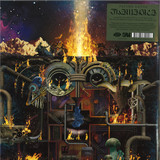
New Fly-Lo.. First outing since 5 years!
Drawing the lines between the galaxies of hip-hop, funk, soul, jazz, global dance music, tribal poly-rhythms, IDM and the beat scene of his hometown L.A, Lotus creates a universe that is uniquely his own. Calling on an all-star cast from the cosmos, Anderson .Paak, George Clinton, Little Dragon, Tierra Whack, Denzel Curry, David Lynch, Shabazz Palaces, Thundercat, Toro y Moi and Solange; Lotus takes these artists on an astral plane to explore his world of fire.
- A1: Heroes
- A2: Post Requisite
- A3: Heroes In A Half Shell
- A4: More Feat. Anderson .Paak
- A5: Capillaries
- A6: Burning Down The House Feat. George Clinton
- A7: Spontaneous Feat. Little Dragon
- A8: Takashi
- A9: Pilgrim Side Eye
- A10: All Spies
- A11: Yellow Belly Feat. Tierra Whack
- A12: Black Balloons Reprise Feat. Denzel Curry
- A13: Fire Is Coming Feat. David Lynch
- A14: Inside Your Home
- A15: Actually Virtual Feat. Shabazz Palaces
- A16: Andromeda
- A17: Remind U
- A18: Say Something
- A19: Debbie Is Depressed
- A20: Find Your Own Way Home
- A21: The Climb Feat. Thundercat
- A22: Pygmy
- A23: Carrots Feat. Toro Y Moi
- A24: Ff4
- A25: Land Of Honey Feat. Solange
- A26: Thank U Malcolm
- A27: Hot Oc
Sein letztes Werk "You're Dead" (2014) bescherte ihm eine Grammy-Nominierung, sein Brainfeeder-Label ist zu einem der innovativsten Klanglabors der Welt avanciert, er co-produzierte Kendrick Lamars mit fünf Grammies ausgezeichnetes Meisterwerk "To Pimp A Butterfly" (2015). Nun veröffentlicht Flying Lotus sein neues Album für Warp: "Flamagra" greift alle kreativen Quantensprünge und innovativen Elemente aus 12 Jahren FlyLo-Karriere auf und denkt sie weiter, größer, epischer und universeller: Hip-Hop, Funk, Soul, Jazz, Electro, IDM, die Ansätze der befreundeten Beatmaker aus L.A., Tribal-Elemente, Polyrhythmen. Aber selbst diese Liste reicht nicht aus, um "Flamagra" auch nur ansatzweise zu verorten, weil es immer wieder ausbricht aus diesem Koordinatensystem. Die Gästeliste liest sich wie ein Traum: Anderson .Paak, George Clinton, Little Dragon, Solange, Tierra Whack, Denzel Curry, Ishmael Butler (Shabazz Palaces), Toro Y Moi, sein musikalischer Stammesbruder Thundercat, ja selbst David Lynch ist zu hören. Der legendäre Regisseur steuert ein paar schaurige Worte bei, eine düstere Erzählpassage, mit der er uns eindringlich warnt: "Fire is coming". "Flamagra" ist die Essenz des letzten Jahrhunderts im Bereich der afroamerikanischen Musik, vollkommen neu und weitergedacht, kollektiv gefiltert und feingeschliffen. Auch wenn Flying Lotus ein Nachkomme seiner ehrwürdigen Großtante Alice Coltrane ist, die mit John verheiratet war (wobei auch Miles und Madlib, Dilla und DOOM als seine Vorfahren gelten dürfen), hat er inzwischen seinen eigenen Kult geschaffen: Eine Gefolgschaft, die alles Geniale aus der Vergangenheit absorbiert und in Bereiche überführt, die sich die genannten Vorfahren nicht mal im Traum hätten ausmalen können. Flying Lotus ist zurück. Fire is coming.