With Get Together III, the journey moves into its next chapter, as four artists come together once again to bring the many colors of electronic music to life.
modul808 opens the journey with deep, warm chords and a driving groove that instantly pulls the listener into the depths of its sonic landscape. In “Kamuro”, shimmering details line the explorer’s path, while the magical vocals of Igor Pose are elegantly woven into the arrangement, creating a dense and hypnotic atmosphere. With “Habits”, Heidmann continues the journey in a similarly groovy fashion, leading the way to sunlit clearings filled with memorable melodic gems. Cie effortlessly picks up the uplifting mood on the B-side, where the magnificent “Schlosshotel” unfolds with majestic chords and shimmering strings, inviting every house lover to stay for a while.
Finally, the journey home begins with Dip’s “Module”, which follows a deep path once more, uncovering sparkling sonic secrets along the way.
Together, the four tracks form another chapter in the Get Together series - a warm and timeless deep house journey shaped by four distinct artistic voices.
Mit Get Together III geht die Reise in ihr nächstes Kapitel: Vier Künstler kommen erneut zusammen und bringen die vielfältigen Farben elektronischer Musik zum Leuchten.
modul808 eröffnet die Reise mit tiefen, warmen Chords und einem treibenden Groove, der den Hörer sofort in die Tiefen seiner Klangwelt zieht. In „Kamuro“ säumen glitzernde Details den Weg des Entdeckers, während die magischen Vocals von Igor Pose elegant in das Arrangement verwoben sind und eine dichte, hypnotische Atmosphäre entstehen lassen. Mit „Habits“ führt Heidmann die Reise ebenso groovig fort und öffnet den Weg zu sonnendurchfluteten Lichtungen voller einprägsamer melodischer Klangperlen. Die gute Laune greift Cie auf der B-Seite mühelos auf: Vor ihm erhebt sich das prächtige „Schlosshotel“, das mit majestätischen Chords und schimmernden Strings jeden House Liebhaber zum Verweilen einlädt. Beschwingt beginnt schließlich die Heimreise mit Dip’s „Module“, das erneut einen deepen Pfad einschlägt und auf seinem Weg funkelnde klangliche Geheimnisse offenbart. So entsteht ein weiteres stimmiges Kapitel der Get Together-Reihe - vier Künstler, vier Perspektiven und eine gemeinsame Reise durch warme, zeitlose Deep-House-Landschaften.
Early DJ Feedback:
Christian Seitz / Show "Neuland" on Radio Z
A beautiful compilation that brings together deepness and dancefloor
Sebastian / f.a.r.e.s / Bass And Space
Great EP, thanks!
ed2000 / Dangerous Drums, Cashmere Radio, Face Radio, dub intervention
Very nice set of tracks, support and thanks radio and dj set plays.
Sasha / Circus Recordings, Renaissance, Global Underground
Cool from Cie
Anthony Pappa / Selador / Renaissance
Nice tunes. Thank you.
Timo Maas / Cocoon Recordings, Crosstown Rebels, Rockets and Ponies, Mobilee, Moon
Harbour, Tenampa, etc etc
Nice Heidmann
Stéphane Chambord / Radio Resonance ("DeeJay Academy" Radio Show)
repérages : Kamuro & Habits je prépare une émission spéciale avec un mix des productions du label
Cyprien Rose / Lui, Houz-Motik, Waxdoesmatter
Amazing > Modul808 - Kamuro feat. Igor Pose
Rob Zile / Brain Food Radio (Kiss FM) / Brain Food Records
Great deep tunes
John Digweed / Bedrock Records
Downloading
T. Carlita / In My House
Good Vibe
Laurent / WTM
Another wtm's playlist is coming soon…;)
Douglas Arellanes / Radio 1
Cool chilled out vibe on this record.
Valerio Vaudano
I like "Kamuro" and "Habits". Will try these warming up the dance floor. thx for sending
Stuart Bruce / Chain DLK
Downloading for possible review on ChainDK
Noah Pred / Thoughtless, Biotop, Highgrade
Some nice ones here, thanks.
Ninu / Hipodrome
I like Habits
BARRcode / Backseat Mafia
Solid release.
Carl Craig / Planet-E
dl 4 erno thx!
Ilario Alicante / Cocoon Recordings, Alphahouse, Bosconi, Prism
Downloading for Ilario Alicante, thanks for the music!
Andrew Till / Machine, Fnoob
Cool dubbed out grooves ,,,Heidmann - Habits is my pick.
Ju / Upperberry
Dope =)
Kat Davids
nice and smooth!
Como Las Grecas / Kali Modernphase, Denis Yurgens, Alejandro Club, German MT, Como Las
Grecas
Deep mind in house groove. Interesting VA of deep house.
Dole & Kom / Death By Disco, Mixmag
Really liking Modul808's and Cie's traxxx Thank you
quête:funk ho
With Get Together III, the journey moves into its next chapter, as four artists come together once again to bring the many colors of electronic music to life.
modul808 opens the journey with deep, warm chords and a driving groove that instantly pulls the listener into the depths of its sonic landscape. In “Kamuro”, shimmering details line the explorer’s path, while the magical vocals of Igor Pose are elegantly woven into the arrangement, creating a dense and hypnotic atmosphere. With “Habits”, Heidmann continues the journey in a similarly groovy fashion, leading the way to sunlit clearings filled with memorable melodic gems. Cie effortlessly picks up the uplifting mood on the B-side, where the magnificent “Schlosshotel” unfolds with majestic chords and shimmering strings, inviting every house lover to stay for a while.
Finally, the journey home begins with Dip’s “Module”, which follows a deep path once more, uncovering sparkling sonic secrets along the way.
Together, the four tracks form another chapter in the Get Together series - a warm and timeless deep house journey shaped by four distinct artistic voices.
Mit Get Together III geht die Reise in ihr nächstes Kapitel: Vier Künstler kommen erneut zusammen und bringen die vielfältigen Farben elektronischer Musik zum Leuchten.
modul808 eröffnet die Reise mit tiefen, warmen Chords und einem treibenden Groove, der den Hörer sofort in die Tiefen seiner Klangwelt zieht. In „Kamuro“ säumen glitzernde Details den Weg des Entdeckers, während die magischen Vocals von Igor Pose elegant in das Arrangement verwoben sind und eine dichte, hypnotische Atmosphäre entstehen lassen. Mit „Habits“ führt Heidmann die Reise ebenso groovig fort und öffnet den Weg zu sonnendurchfluteten Lichtungen voller einprägsamer melodischer Klangperlen. Die gute Laune greift Cie auf der B-Seite mühelos auf: Vor ihm erhebt sich das prächtige „Schlosshotel“, das mit majestätischen Chords und schimmernden Strings jeden House Liebhaber zum Verweilen einlädt. Beschwingt beginnt schließlich die Heimreise mit Dip’s „Module“, das erneut einen deepen Pfad einschlägt und auf seinem Weg funkelnde klangliche Geheimnisse offenbart. So entsteht ein weiteres stimmiges Kapitel der Get Together-Reihe - vier Künstler, vier Perspektiven und eine gemeinsame Reise durch warme, zeitlose Deep-House-Landschaften.
Early DJ Feedback:
Christian Seitz / Show "Neuland" on Radio Z
A beautiful compilation that brings together deepness and dancefloor
Sebastian / f.a.r.e.s / Bass And Space
Great EP, thanks!
ed2000 / Dangerous Drums, Cashmere Radio, Face Radio, dub intervention
Very nice set of tracks, support and thanks radio and dj set plays.
Sasha / Circus Recordings, Renaissance, Global Underground
Cool from Cie
Anthony Pappa / Selador / Renaissance
Nice tunes. Thank you.
Timo Maas / Cocoon Recordings, Crosstown Rebels, Rockets and Ponies, Mobilee, Moon
Harbour, Tenampa, etc etc
Nice Heidmann
Stéphane Chambord / Radio Resonance ("DeeJay Academy" Radio Show)
repérages : Kamuro & Habits je prépare une émission spéciale avec un mix des productions du label
Cyprien Rose / Lui, Houz-Motik, Waxdoesmatter
Amazing > Modul808 - Kamuro feat. Igor Pose
Rob Zile / Brain Food Radio (Kiss FM) / Brain Food Records
Great deep tunes
John Digweed / Bedrock Records
Downloading
T. Carlita / In My House
Good Vibe
Laurent / WTM
Another wtm's playlist is coming soon…;)
Douglas Arellanes / Radio 1
Cool chilled out vibe on this record.
Valerio Vaudano
I like "Kamuro" and "Habits". Will try these warming up the dance floor. thx for sending
Stuart Bruce / Chain DLK
Downloading for possible review on ChainDK
Noah Pred / Thoughtless, Biotop, Highgrade
Some nice ones here, thanks.
Ninu / Hipodrome
I like Habits
BARRcode / Backseat Mafia
Solid release.
Carl Craig / Planet-E
dl 4 erno thx!
Ilario Alicante / Cocoon Recordings, Alphahouse, Bosconi, Prism
Downloading for Ilario Alicante, thanks for the music!
Andrew Till / Machine, Fnoob
Cool dubbed out grooves ,,,Heidmann - Habits is my pick.
Ju / Upperberry
Dope =)
Kat Davids
nice and smooth!
Como Las Grecas / Kali Modernphase, Denis Yurgens, Alejandro Club, German MT, Como Las
Grecas
Deep mind in house groove. Interesting VA of deep house.
Dole & Kom / Death By Disco, Mixmag
Really liking Modul808's and Cie's traxxx Thank you
Originally released in 2004, this record now fetches up to 50 euros for a used copy on Discogs. It has recently regained attention and support from current DJs and featured on Paramida’s mix for The Mudshow.
Da Sunlounge handles the A side with a funky, jacked-up track, while the B side features a collaboration with Office Gossip (Winding Road / Urban Tourq) for some deep, twisted tech house music. This release was initially supported in 2004 by Inland Knights, The Lawnchair Generals, Hipp-e, The Littlemen, and David Duriez.
Analog Fingerprints Vol. 0 is a compilation bringing together the early 2000s works of Marco Passarani under his Analog Fingerprints alias, collecting key tracks originally released on Rome’s Plasmek and Pigna labels.
For Numbers, the story starts long before the label itself. In their formative years, digging in Glasgow’s Rubadub, Passarani’s records felt like dispatches from a future city. Releases on his own Nature Records and on labels such as Generator and Interr-Ference Communications were mind blowing: rooted in Detroit techno, Chicago house and electro, yet pushing somewhere new. Much like fellow travellers Autechre, who would remix him in 2001, Passarani’s music balanced machine funk with restless experimentation.
Information was scarce, and you would hear these records first on the dancefloor or at listening stations in shops like Rubadub. Print fanzines like Ear and early web outposts such as Forcefield offered only fragments. But there was a palpable axis forming between Detroit techno and a new European wave of record labels including Skam, Rephlex, Clone, Viewlexx and Nature itself. It was the sound that defined Saturday nights at Rubadub’s ‘69’ parties in Paisley, just outside of Glasgow.
Passarani’s records, in particular, were instrumental in bringing together the future Numbers co-founders. Richard had already booked him pre-Numbers; meanwhile Calum (Spencer) and Jack (Jackmaster), then 16/17 year olds working alternate Saturdays in Rubadub, were so enamoured with the Roman sound that they travelled to Rome for the Bitz Festival in 2003 to seek out Passarani and Lory D at their source.
The first Analog Fingerprints release landed as a 12” on Plasmek in 2001, following the fractured, IDM-leaning 6 Katun material. For Passarani, the project marked a recalibration. A DJ first and foremost, he had moved into production via early computer setups, from a Commodore Amiga through primitive PC audio, Cubase and Logic, later experimenting with Ableton. The IDM scene had offered a playground for trial and error, but there was always a tension between abstraction and the dancefloor. Analog Fingerprints became the bridge: still intelligent, but with more dance than distance. After years of broken beats and complex arrangements, he wanted directness without surrendering identity.
Working closely with Francesco de Bellis and Mario Pierro in the Pigneto district, the trio formed Pigna as a vehicle for reclaiming a more accessible dance sound, deliberately steering away from the minimal wave beginning to dominate Europe. Sessions were fast, instinctive, often stretching late into the night with friends dropping by. It was a studio as social space, production as collective energy.
“In that constant search for balance, Analog Fingerprints was my way of expressing something closer to the classic dance floor. The track 'Tribute' - a tribute to my favourite early Detroit techno track of all time, 'First Bass' by Separate Minds - came after I realised I had almost lost my connection with the dance floor. The simplest step was to take inspiration from early Chicago and Detroit and twist it in our Roman ‘Pigna’ way. My goal was to create more accessible dancefloor tracks by mixing my unconscious Italo roots with my teenage love for that early US sound, ensuring the result was as far as possible from the minimal sound that was starting to dominate everywhere.” - Marco Passarani
Technically, the Analog Fingerprints tracks span a transitional era: Roland TR-909, SH-101 and Alpha Juno hardware met early software experiments. A Novation Drumstation rack stood in for the unattainable TR-808, syncing with TB-303 and TR-606. Yet the true secret weapon was Jeskola Buzz, a tracker-style modular environment that allowed step-by-step parameter control and strange melodic constructions, later exported into the audio sequencer. Even the lead on ‘Tribute’ came from an early PPG Wave-style plugin. It was hybrid thinking at a moment when digital tools still felt unstable but full of possibility for technologists like Passarani.
Behind the music sat Finalfrontier, a loose Roman collective orbiting Nature and Plasmek. Distribution and production were intertwined; importing obscure records into Italy built connections with like-minded outsiders across Europe and the US. Expensive phone bills and fax machines forged an “electronix network” that linked Rome to Clone, Viewlexx, Skam, Rephlex, Rubadub and Detroit’s Underground Resistance. There was a shared sense of survival and resistance, of operating against commercial systems.
Passarani recalls “The first time I found a sheet of paper inside an Underground Resistance 12” with info about upcoming releases... and a huge picture of Spock on the back. Imagine that: you love the music, you love Star Trek, and there’s someone on the other side of the ocean sharing those same values and sounds. It was the perfect match. We even gave our original company the suffix ‘Finalfrontier’: that says it all.”
Feedback in that era arrived physically: distributor faxes, conversations with visiting DJs, the experience of playing abroad and meeting kids who had connected with the records. Glasgow became a key node in a scattered outlier network. Passarani personally brought the first two Nature releases to Fat Cat in London, playing them in-store. Shortly after, a fax arrived from Rubadub in Glasgow requesting copies.
“I still remember that phone buzz and the fax paper slowly sliding out, with someone I didn’t know saying they wanted 75 copies of Nature 001. Or like the time we got a fax from the Rephlex crew just saying, “Hello Nature Records, Keep up the good work.” That was how we knew the message was getting through. It was a fantastic feeling; just one piece of thermal fax paper as an analog notification - the mood for the entire week would change.” - Passarani
The connection to Glasgow has since stretched across generations. As Passarani reflects, links often fracture as scenes renew themselves, but in Glasgow something different happened. New and old mixed seamlessly. There was a visible trust in what came before, and a willingness to carry it forward rather than discard it. Observed from Rome, it was deeply encouraging.
Analog Fingerprints Vol. 0 captures that moment of exchange: Rome to Glasgow, Detroit to Europe, experiment to dancefloor. It documents an artist recalibrating his sound and a network of scenes discovering one another in real time, connected by vinyl, faxes and shared intent.
Our next release is a superb funky Latin double by Mr percussion Candido “Candido’s Funk” is great bass driven groove loaded with samples and latin horns, a perfect dancer for the dance floor. On the flip is “Soulwanco”, A very long awaited 7” delight uplifting percussive groove, more killer horns and bass lines, with a famous bongo sample at the start – a B-Boy / B-Girls delight. A MUST HAVE 45 for the collection
2026 Repress
Maltese talent Human Safari debuts on Mutual Rytm with jazz-influenced techno EP, 'Culture Shock'.
Human Safari is a key player in his native scene in Malta. He's a resident at Glitch Festival, has played cult spots, and has a dynamic sound that brings jazz improvisation to techno, often featuring live instrumental elements. His music has found its place on top labels like R&S Records, and most of this new EP for SHDW's Mutual Rytm imprint was produced during his Colombian summer tour last year - written and recorded amongst inspiring and unusual settings with just a laptop and headphones.
"This EP represents embracing new beginnings that, though might bring uncertainty and fear, the
light always guides you to where you were always meant to be." - Human Safari.
Opener 'Mouse on Keys' has been a key cut for the label boss across the past year, a unique track that peaks curiosity from dancers to DJs whenever it's played. Its cantering techno rhythm is overlaid with delicate, heartfelt piano keys straight from a smoky jazz bar, making for a great counter to the physical drums. 'Fragments' is a deeply personal track dedicated to the artist's late grandfather. It's a funky, soulful techno roller with blissed-out and sunny chords full of hope.
Next, 'Classique' gets more gritty with loopy drums and bass and glitchy percussion that fizzes with energy, while 'The Labyrinth' features piano motifs recorded in just one take. It brings a dark paranoia in the uneasy, off-grid keys which dart about with nervous energy over the booming low ends. There is just as much intensity and edge to the unresolved keys that loop over the raw drums on 'A Rainy Day in Bogota', before digital bonus cuts 'Dorian' and 'Phantom' bring more jazzed out techno madness with warped keys and expressive elements bringing great invention.
2026 Repress
Houseworx is back with VOL.9 of the"Lost Housetracks" mini compilation series.
This time we present tracks from long time fellows Amaury Trevino on A1 with a peaktime summer house anthem and Franco Strato feat. Ale Castro on A2 with a perfect matching house tool for club entertainment.
On B side we welcome 2 new faces to the Label: Lucia Scholtus originally from Argentina now based in Hamburg / Berlin with a funky oldskool flavoured tune and Sebastian Habben from the cologne collective and Label I'm in Love with a deep house mover called "Neighbors" that perfectly rounds up the ep.
House music all night long!
Since debuting in the mid-1990s, Kurt Spichiger aka Shaka has released rather a lot of high-quality deep house, in the process notching up appearances on the likes of Local Talk, Traxx Underground, Yore, Housewax and, most recently, Mate. Here he evokes the atmosphere of a 'smoky' basement club via a three-track Seasons Limited label debut. Title track 'Smoky Club' is undeniably classy and carefully crafted, with starry electronic motifs, dreamy pads and jammed-out Wurlitzer organ motifs rising above a languid, leisurely deep house groove. Spichiger's love of jazz comes to the fore on the even warmer and more seductive 'City Park' - all sampled disco drums, smooth jazz-funk bass and extended electric piano solos - while 'The World Goes Oriental' sounds like vintage Larry Heard mixed with the afterglow of late night lovin'.
Dublin meets Rotterdam.
Following the highly acclaimed Combination 2 EP featuring Pineal Navigation & Stanislav Tolkachev, Dublin-based label Awareness System returns with its boldest statement yet. Combination 3 EP unites the rising label head Pineal Navigation with Rotterdam’s prolific techno force Charlton for a powerful six-track split release. This third instalment in the Combination series delivers a deep dive into raw, machine-driven Techno and Electro, embodying the spirit and authenticity of the true underground. Each artist contributes three tracks, creating a dynamic and immersive listening experience designed for peak dance-floor impact.
Charlton opens the record with relentless grooves in “Whats The Answer” and “Relentless Pressure”, setting the tone with punchy Detroit tinged poly rhythmic driving energy. Pineal Navigation answers on Side B with “Forward Ever” and “Datafried”— two tracks of mechanical funk layered with cerebral textures that push the listener into a state of sonic bliss.
The journey continues as Charlton closes Side 1 with “Feeling Cloudy” an emotive track that blends his signature gritty, rhythmic percussion sound with dub-inflected techno elements. On Side 2, Pineal Navigation finishes the EP with “Purpose” exploring his electro influences through hypnotic synth lines and wandering vocal fragments that propels and image of a futuristic terrain.
Combination 3 EP stands as a testament to both artists’ commitment to crafting forward-thinking electronic music while honouring the underground ethos that defines Awareness System
- A1: La Mosca
- A2: Desfile Na Praia
- A3: Funk Sin Cuenta
- A4: Al Son
- B1: Salir Del Agujero
- B2: Los Bsoaso De Paris
- B3: Quando Lembro
- B4: 6X8 En La Mañana
- B5: San Bon
ElCalefón
Salir Del Agujero
El Calefón's 1985 LP Salir Del Agujero is a rare bird.
Self-produced and privately released in Zurich, the albumdocuments one of the very few South American groups that were resident in Europe at the time, and certainly the only such band working in Switzerland. Co-founded by two Argentinians in Europe – the multi-instrumentalist, vocalist and composer Coqui Recaand the guitarist Pablo Miguez–the group consisted of Argentinian and Brazilian musicians, most of whom were present initially Europe as tourists, but had stayed on, without official sanction, as immigrants.Their music gathered its primary influences from the varied sounds of their home countries, fusing these elements drawn from the manifold indigenous styles of Argentina and Brazil with the international sounds of rock,jazz, pop and pan-Latin music.
Honed and polished by the steady gigging through which the group earned their living in Zurich, the music that appeared onSalir Del Agujero was sophisticated, original and filled with light. Resonating with a freshness undiminished in forty years, the album brims with possibility and hums with tropical warmth, bearing testament to the open-hearted musical freedoms of a mercurial musical era.
After finding homes in all the right record boxes last summer with their debut 'Anthem' - 'You & Me & The Music'
The CJP Band return to Supa Jams with two more perfectly crafted sides of Disco Jazz Funk and Soul.
Side A delivers a monster rework of the Aquarian Dream classic 'You're A Star".
A tour de force from start to finish. Taking the timeless original to stratospheric new heights.
Side B brings things back down to earth, literally. Joe Bell joins the band on vocal duties for 'World Gone Crazy'.
A string drenched lament on the madness the earth, despite enduring multiple ills for far to long already, Seems to herald yet new levels of crazy on an almost daily basis. Is there nothing we can do?
Limited Black Vinyl Pressing
Hand Stamped Sleeve
Don't Sleep
- 01: Arp Amp Chasm
- 02: Drift Vector
- 03: Modloop 138 Fragment
- 04: Foldsp4
- 05: Osc Hop (Slow Collapse)
- 06: Tweak 3 Driftmass
- 07: Blurform Dust
- 08: Wogglebug Remembered
- 09: Trippy135 Phase 0
- 10: Nachtgrain
- 11: Chronoroute Fank
- 12: Freeqwarp 2025 Redux
- 13 30: 3 Template Refract
- 14: Dln - Soft Ruin
- 15: Cr78 Mesh
- 16: Volca Signal 06
- 17: Ctrssalms (Cold Render)
- 18: Oceans Past And Present
- 19: Jt33Unstable Core
- 20: Modern Birds (Origin Edit)
Contemplating the role of the album format in an attention-deficient society, Speedy J presents Walkman -- a constantly shifting, 90-minute soundtrack to a journey of your choice. Jochem Paap's first solo album in over 20 years is a freewheeling, 20-track testament to his decades-deep studio skill and sonic versatility, running from skewed rhythmic rabbit holes to exploratory tonal abandon. For Paap, the traditional idea of the album had become obscured by listening habits and the non-stop information barrage of our digital lives. Having moved on from his breakthrough years releasing LPs and touring off the back of them, he was more inspired to develop his many-sided STOOR project and feed into a bigger artistic body of work than the temporary shelf-life of a single release. As is natural for any artist, his perspective shifted over time and he found himself drawn back to the idea of an album, realising he connected best with longer releases while he was on a walk, out for a run or generally in transit one way or another. With an endearing call back to the humble Walkman, he selected an hour and a half of material created during studio sessions at the beginning of 2025, perfectly sized to fit on two 45-minute sides of a cassette tape. As has long been the case for his studio practice, there were no fixed intentions when sitting down in the STOOR lab to start making noise -- just a wealth of experience and an expansive set of tools to start exploring with. From hours of jams Paap pulled together standout moments and moulded them into a mixtape-like narrative ranging from two-minute beat nuggets to full-tilt techno workouts and immersive ambient drops. Every sound is intentional, but the overall delivery is instinctive and curious, showing multiple new dimensions to Paap's sound and offering unpredictability at every turn. 'Arp Amp Chasm' opens the album up in a thick blanket of humming, harmonic waves with an electric emotional charge, while 'Ctrssalms17 (Cold Render)' journeys through evocative blooms of melancholic, gritty pads and rugged, half-submerged tech funk. 'Modern Birds (Origin Edit)' reaches skywards with grand sweeps of dynamic, brilliantly rendered synthesis. From the dexterous drum science of 'Drift Vector' to 'Osc Hop (Slow Collapse)'s lurching, beatless swamp of synths, on Walkman even the briefest snapshots leave an impression that lasts beyond the quick-scan cycle of the modern music experience. With his return to the album format, Paap's message is clear --put your headphones on, get outside and lose yourself in the sound of an artist constantly committed to moving forwards.
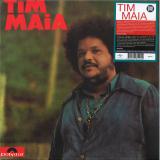
Tim Maia’s self-titled 1973 album is one of those records that hits you from the very first groove and doesn’t let go. Originally released on Polydor Brazil, this was the fourth in a series of Tim’s self-titled albums and many fans and critics still consider it the crown jewel. Packed with irresistible hooks, lush arrangements, and that unmistakable Tim Maia swagger, the album captures the singer at the peak of his creative powers.If you’re new to Tim Maia, here’s the quick story: born in Rio de Janeiro, Tim was a larger-than-life icon whose music married American soul and funk with Brazilian samba and pop long before “fusion” was a buzzword. A true musical polymath, he absorbed everything from Curtis Mayfield to Motown and translated it into a sound entirely his own, gritty, passionate, and full of groove.
He didn’t just introduce soul to Brazil; he made it Brazilian.On this 1973 release, Tim pushes everything up a notch. The arrangements are bigger, slicker, and surprisingly majestic, without losing the raw spirit that earned him a devoted following. From the moment ‘Réu Confesso’ opens the album, you know you’re in for something special—smooth, funky, and heartfelt in all the right ways. The bittersweet ‘Gostava Tanto de Você’ remains one of his most beloved classics, while ‘O Balanço’ bursts with Brazilian flavor that practically dares you not to move. And with tracks like ‘Do Your Thing, Behave Yourself’ and ‘Over Again,’ Tim shows just how naturally the soul idiom fit him, even when he switched to English.This record has everything: deep grooves, soaring strings, magnetic vocals, and that unmistakable sense of joy that Tim Maia carried into every session. It’s a front-to-back winner—one of those albums that deserves a spot not just in Brazilian music history, but in any collection that celebrates great soul, funk, and timeless grooves.If you’re a longtime fan, it’s a reminder of why Tim Maia is legendary. If you’re discovering him for the first time, this is the perfect place to start. Either way: press play, turn it up, and let Tim do his thing.
Light Touches Records is devoted to shed new lights on hot rarities, unknown grooves as well as forgotten classics.
While the older numbers are much sought after on Discogs, Light Touches pushes further and invites Irish underground heroes Frawl and Blackout (respectively founder and one of the resident djs of the connaisseur Backwards parties in Limerick) for the new release on the highly revered Light Touches Records.
On A side, “Fortune Teller” is a masterpiece of a lost disco tune with infectious funky bassline, while “Foxee” goes deeper into a brass driven relentless grooves with psychedelic melodies. On the flipside, “Me, Me, Me” is a 10 minutes journey, with a strong moody and deeper vibe.
All tracks have been carefully edited without overdubs, in order to bring the spirit of classic disco manipulators to today’s dancefloors!
12” limited to 300 copies (no digital).
Bound to break the new year in with all our might, we are excited to unveil our new baby, RYCX. Expanding the scope of our main catalogue to bottle what we consider pure techno quality with its idiosyncrasies and inherent untamedness, RYCX will serve as our platform of choice to embrace the more minimalist, dubby vibe of techno, focussing on tracks that sound more like a rabbit hole, trippier, psychedelic, and immersive, yet still powerful enough to fill a dance floor. Kicking off the journey is 'RYCX01' by Ruben Ganev, up with his debut solo release after contributing a track to our 2023-issued 'Heimat' VA. The music here featured packs the very defining qualities RYCX aims to engage its audience with: a raw, inspired, quality-driven combination of force and thoughtfulness, ruggedly honest yet built to meet the expectations of the most picky dance floors and home listeners out there. Ganev's quartet of stormy churners, cut from the most hypnotic cloth and eerily vibrant machine funk, has us diving deep into a throbbing furnace of charred dubs, steely industrial reliefs and post-apocalyptic atmospheres. A most fitting manifesto in sound, telling the beads of the sonic revolution in march.
The latest from master editor Mr. K, a jazz-funk classic backed by a Philly sure shot!
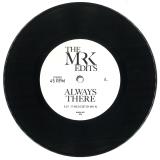
Debuting in 1975, the jazzy RnB instrumental ‘Always There’ from original Earth Wind and Fire saxophonist Ronnie Laws was a hidden gem until Side Effect’s vocal version took off the following year, one of many cover versions to come (Incognito’s hit the pop top ten in the ’90s). Mr. K's edit streamlines the original, mimicking Side Effect’s distinctive horn stab intro and adding a DJ-friendly drums-only outro. With original 7-inch releases being either fragile styrene or unreasonably short, this extended vinyl pressing is very welcome.
A song that needs no introduction—coming from the very best there is—the O’Jays backed by MFSB! ‘For the Love of Money’ rides one of the most immense bass lines ever committed to wax and, while that would be enough to carry a track on its own (see the Armada Orchestra’s cover), here we have the talents of the timeless O’Jays vocals to top things off. Mr. K has found the perfect balance between the Lp and single versions, giving us the very best DJ-friendly 7" mix that should never leave your bag.
Amsterdam-based producer Retromigration makes his debut on the launch of a new Oathcreations imprint "KARAMÜRSELL?" with 'Can't Go', a hyper-kinetic and rapturous piece of dance music sure to ensnare any dancefloor.
Inspired by soul, funk, jazz, and hip-hop, his auditory identity is one of profound melodic effusion and expert percussive sequences, absorbed within life-affirming atmospheres.
'Can't Go' feels like yet another landmark, tuning itself into the pulsating energies of the club, drawing lines between bass music, footwork, garage and jungle.
The EP is completed with 'Distant', featuring fuller harmonies, a tear-jerking chordal line and a spiritual sax solo.
- 77: Blackout
- Bust The Bust Stop
- Never Give Up
- Voodoo Gates
- Come Back 4 Real Love
- Shameless
- Life During Wartime
- The Girl From Outer Space
- Black Butterfly
‘Black Butterfly’ is Brooklyn Funk Essentials eighth studio album and includes the bands recent hits ‘Never Give Up’, ‘Bust The Bus Stop’ and ‘Life During Wartime’. Playlisted on BBC Radio 2 and Jazz FM and supported by Craig Charles and Cerys Matthews at 6 Music as well as many stations across Europe and the Americas. The album was produced and co-written by bassist Lati Kronlund and features Alison Limerick, Ebba Åsman and Desmond Foster on vocals.
Kronlund and Limerick have been enjoying the recent renewed interest in ‘Where Love Lives’. Kronlund wrote and produced it for Limerick in 1990, it was remixed by Frankie Knuckles and David Morales and became a club classic and was featured in this year’s John Lewis Christmas TV Ad. Arthur Baker heard the original in a club in 1991 that he contacted Kronlund about working together and they then formed Brooklyn Funk Essentials.
Since then, Brooklyn Funk Essentials have built a devoted international following and notched up over 100 million streams. Fusing Soul, Hip Hop, Spoken Word, Jazz, Latin, and, of course,
Funk, the band’s journey began experimenting with drum machines and loops in Baker’s Shakedown Sound Studio in Jersey City—hunting for that perfect beat. The early recordings featured greats such as Maceo Parker, Lenny Pickett, Tower of Power Horns, Michigan & Smiley, and Dizzy Gillespie, leading to the acclaimed debut ‘Cool & Steady & Easy’ (1994). Fast-forward to April 2024, when Kronlund reunited with Baker in Miami, rediscovering recordings featuring percussion prodigy Bashiri Johnson, which inspired new creative sparks for the next chapter of Brooklyn Funk Essentials.
Gatefold Sleeve
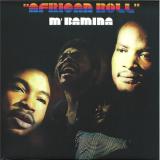
M’Bamina – African Roll (1975)
The story of an album born between Africa, Italy, and the nightclub culture of the 1970s
In the heart of 1970s Italy — a country undergoing profound social change and a music scene just beginning to open itself to distant sounds and cultures — an extraordinary, almost improbable story took shape. It is the story of a group of young African musicians who found their way to Europe, of a Turin nightclub that became a crossroads for communities and experimenters, and of an album which, released in small numbers and largely unnoticed at the time, is now considered a rare jewel of Afro-fusion.
The band called themselves M’Bamina — an ensemble of musicians from Congo, Cameroon, and Benin, who arrived in Italy in the early Seventies. Settling between northern Italy and the Pavia area, they began performing in small clubs and community events, bringing with them a vibrant rhythmic heritage: African polyrhythms, call-and-response vocals, funk-infused bass lines, and Caribbean or Afro-Latin colours absorbed along their musical journeys. Their raw, contagious energy on stage quickly drew attention.
Meanwhile, in Turin, another story was unfolding. There was a venue becoming almost legendary: Voom Voom, one of the city’s liveliest nightclubs, run by Ivo Lunardi. The club attracted an eclectic crowd — students, artists, foreigners, night owls — and Lunardi quickly understood that the dancefloor wasn’t just a place for music, but a melting pot for a new kind of cultural energy. Out of this vibrant atmosphere came his idea: to turn the club’s name into a small independent record label, Voom Voom Music, capable of capturing the spirit of those years and giving voice to unconventional projects.
When Lunardi heard M’Bamina, he immediately sensed that this was the sound he had been searching for: fresh, different from anything circulating in Italy at the time, and capable of blending African tradition with funk and European sensibility. He brought them into the studio.
Production was handled by Lunardi along with Christian Carbaza Michel, while the engineering was entrusted to Danilo Pennone, a young sound technician with a sharp, intuitive ear.
The recording sessions — held in Turin in 1975 — produced a remarkably warm and direct sound. The music feels almost live: grooves rooted in African tradition, but open to funk-rock structures and modern arrangements. It is a natural fusion, never forced. Tracks move between tribal rhythms, funk basslines, light electric guitars, congas and Afro-Latin percussion, with call-and-response vocals and melodies that echo both Congolese tradition and the lineage of Latin jazz. Not by chance, one of the album’s most striking tracks, Watchiwara, reinterprets a Latin standard through M’Bamina’s own rhythmic language.
The album was titled African Roll — a name that was already a statement of intention. It is African music that “rolls,” that moves, adapts, transforms within a new geographic and cultural setting. It is not strictly Afrobeat, nor Congolese rumba, nor Western funk: it is a spontaneous, hybrid blend, shaped more by lived experience than by any calculated aesthetic program.
When African Roll was released, the world around it barely noticed. Distribution was limited, and 1970s Italy had yet to develop a cultural framework for receiving such music. The national music press rarely paid attention to African or “world” productions. The album slipped into silence — though the band’s own story did not.
M’Bamina continued performing across Europe and Africa, even sharing a stage in Cameroon with none other than Manu Dibango. By the late Seventies, they moved to Paris, signed with Fiesta/Decca, and recorded a second LP, Experimental (1978). Meanwhile, the peculiar record they had made in Turin began to resurface quietly among vinyl collectors, Afro-funk enthusiasts, and DJs hunting for forgotten grooves.
That is when the album’s fate began to shift.
Over the decades, African Roll emerged as an almost unique document: a snapshot of an intercultural Italy before the word “intercultural” even existed, a fragment of migrant history, a spontaneous experiment in musical fusion born far from major industry circuits but rich in authenticity. Original copies began commanding high prices on the collector’s market, and the album became recognized as one of the hidden classics of European Afro-fusion from the 1970s.
Today, more than fifty years later, this reissue finally restores visibility and dignity to a project that deserves to be heard, studied, and celebrated. It is not simply an album: it is the testimony of a rare cultural encounter, born in an Italy unaware of how fertile such exchanges would one day become.
It is the story of a visionary producer, an extraordinary band, and a fleeting moment in which music, migration, and nightlife came together to create something genuinely new.
African Roll is — now more than ever — the sound of a bridge: between continents, between eras, between cultures. A record that, after rolling far and wide, has finally come home.
- 1: John Holt - You’ll Never Find Another Love Like Mine (3.48)
- 2: Cornell Campbell - Be Thankful (3.58)
- 3: Elizabeth Archer & The Equators - Feel Like Making Love (.4)
- 4: The Chosen Few - People Make The World Go Round (3.22)
- 5: Dave & Ansel Collins - Single Barrel (3.17)
- 6: The Now Generation - Shaft (3.19)
- 7: The Marvels - Some Day We’ll Be Together (3.05)
- 8: The Darker Shades Of Black - War (2.41)
- 9: Winston Curtis - Private Number (3.42)
- 10: Lee Perry & The Upsetters - Bathroom Skank (4.30)
- 11: Slim Smith - Watch This Sound (2.43)
- 12: Winston Francis - Sitting In The Park (3.29)
- 13: The Sensations - If I Don’t Watch Out (2.57)
- 14: Carl Bert & The Cimarons - Slipping Into Darkness (3.04)
- 15: The Darker Shades Of Black - Ball Of Confusion (3.10)
- 16: Jah Youth - Ain’t No Sunshine (2.35)
Sixteen killer 70s reggae funk and soul cuts from the likes of John Holt, Lee Perry, Cornel Campbell, The Cimarons, The Chosen Few and more featuring superb reggae takes on songs by artists including The Jackson 5, William DeVaughn, Diana Ross and The Supremes, War, The Temptations, Roberta Flack, The Stylistics and others!
Well-documented is the influence of American black music on Jamaican styles of the 1960s – from the birth of ska music, when The Skatalites ska-ified the jump-up southern USA rhythm and blues music of Rosco Gordon, Louis Jordan and Fats Domino, through to the creation of rocksteady when Jamaican artists like The Techniques, The Paragons, Alton Ellis and The Melodians turned to the slower rhythms and soulful harmonies of groups such as The Impressions and The Drifters for inspiration.
Less-well established is that in the 1970s Jamaicans didn’t (shock!) stop listening to American black music styles, with many 70s reggae artists as invested in soul, funk and the proto-disco sounds of Philadelphia, as was the case with rhythm and blues in the previous decade. In the 1970s, while Jamaica promoted its own roots reggae styles around the world, powerhouse USA soul labels such as Motown, Philadelphia International and Stax Records were at the same time all popular on the island.
This interaction between American and Jamaican music was not limited to Jamaica. In Britain, first-generation Caribbean-émigré children in the 1960s and early 70s grew up with an equal love of both soul and reggae, which manifested itself in the home-grown arrival of lovers rock in the mid-1970s.
Soul Jazz Records’ new ‘Reggae Island Soul’ tells this story of how soul and funk-infused reggae in the 1970s united the sounds of Jamaica, USA and the UK into a highly addictive cultural hybrid of styles.