quête:funk ho

Genres
Tout
Alesisa Cosmos - Exclusivo!

Alésia Cosmos was a collective of musicians led by Bruno de Chénerilles formed in the early 1980s in Strasbourg, France. The group consisted of Pascal Holtzer (guitar, synthesizer, tapes, drum machine, vocals), Pierre Clavreux (vocals, gong), Marie-Berthe Servier (vocals), Bruno (guitar, tapes, synthesizer, drum machine, vocals) and Tunisian percussionist Lotfi Ben Ayed (darbukas, bendir). In 1981 Bruno composed and wrote some sci-fi radio plays for French state radio channel France Culture. Under the influences of William Burroughs, John Cage, Pierre Henry and others, he developed tape music studio work. By 1982 he appeared for the first time under the name Alésia Cosmos Furi Show. It was a solo performance on guitar, voice, analog synth and tapes. This experimental show lead to a music project based on Bruno and Pascal's compositions to be performed and recorded with other musicians in the beginning of 1983.

Exclusivo! was the group's debut album recorded and self-released in 1983 on Planetarium. Pascal and Bruno would compose tunes in their personal home studios. Then they would bring the tapes, electronics, guitar lines and lyrics to experiment and rehearse with the other members of the group. Improvisations and adaptations brought more ideas and the album was recorded in a few days. The result was a musical mixing of electronic music, field recordings, North African and Asian percussion, electric guitars and voices, compositions and free improvisations. All four musicians take turns singing onomatopoeic phrases and backing vocals, even sometimes in an unknown language, a sort of mixed bag between Breton and Japanese. All songs have been remastered cut by George Horn at Fantasy Studios in Berkeley. Each LP is housed in a replica of the 1983 cover and includes a 6-page insert with photos, lyrics, reviews and liner notes by Bruno de Chénerilles.

pas en stock

Commandez maintenant et nous commanderons l'article pour vous chez notre fournisseur.

15,08

Last In: 8 years ago
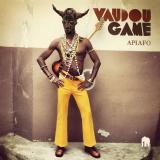
Vaudou Game - Apiafo (2025 Repress)
  • A1: No Problem
  • A2: Dangerous Bees
  • A3: Pas Contente Feat Roger Damawuzan
  • A4: Meva
  • A5: Happiness
  • B1: Ata Calling
  • B2: Wrong Road
  • B3: No Way To Go
  • B4: Djin Ku Djin
  • B5: Think Positive

Repress of the 1 st album of the fresh Afro funk sensation ! Recorded on analog equipment in Lyon in 2014 !


Peter Solo is a singer and composer born in Aného-Glidji, Togo, the birthplace of the Guin tribe and a major site of the Voodoo culture. He was raised with this tradition’s values of respect for all forms of life and the environment. With his new band, Vaudou Game, Peter Solo claims, and spreads this spiritual and musical heritage. Chants are at the heart of the Voodoo practice, but for times immemorial, harmonic instruments have never accompanied them. No balafon, no kora - only the “skins” support the singers. However, in 2012, Peter, along with his band based in Lyon, France, decided to explore and codify the musical scales that are found in sacred or profane songs of Beninese and Togolese Voodoo so they can be played easily on modern instruments. Peter composed the album Apiafo, using the two main musical scales of this tradition. The first musical scale on Apiafo leans towards raw Funk with a sound similar to the famous 70’s bands, L’Orchestre Poly Rythmo De Cotonou and El Rego. Funk, is the skeletal structure of this record, and provided the opportunity for Peter to invite his uncle, Roger Damawuzan - the famous pioneer of the 70s Soul scene - on two tracks. Their collaboration on “Pas Contente” is a highlight on this 100% analog album. Apiafo was entirely recorded, mixed and mastered with old tapes and vintage instruments. The second scale, which had never before been transposed for instruments, evokes deeper feelings and a sacred ambiance. The moving song Ata, an invocation to a supreme divinity is another highlight of this record. Even if some can recognize similarities between this scale and Ethiopian scales, they are in fact different. Peter, the only African band member, introduced the other musicians to the universal values of Voodoo and he taught them his native language. On the recording of Apiafo and during their live performances, the musicians all sing and answer Peter in the Mina language. The strive for authenticity, the analog sound and vintage looks don’t mean that Vaudou Game is looking backwards. This is Togolese funk, born in the post-colonial era but that never before explored its ancient roots so deeply and proudly.


Antoine RAJON

pré-commande17.04.2026

il devrait être publié sur 17.04.2026

24,58
Various - Groove Is In The Heart Vol.3

DJ Support: Kerri Chandler, Folamour, Louie Vega, Jazzy Jeff, Dimitri From Paris, David Morales, Dave Lee, The Shapeshifters, Brian Tappert, Quentin Harris, Michael Gray, Terry Hunter, Hector Romero, Tedd Patterson, Dr. Packer, Marcel Vogel, Dj Pippi and many others

Groove Culture main men Micky More and Andy Tee are once again at the controls as the label presents its' Third collection of “Groove Is In The Heart”. As with the popular imprint's various EPs, the focus is on joining the dots between organic house, revivalist disco, uplifting dancefloor soul and colourful jazz-funk. There's much to admire from start to finish, a very strong bunch including MM & AT,Gianni Bini and Angela Johnson celebratory cover of EWF swirling disco-funk ‘In The Stone', a wonderfully rolling and funky-House joint titled ‘Let The Rhythm’ from Ralph Session & Djfudge, Memi P. And Gisele Jackson tasty Feel Good Classic-house Tune “Make It On My Own” and the soulful-house warmth of Audiowhores ‘Touch The Ground' Feat. Angela Johnson.

pré-commande17.04.2026

il devrait être publié sur 17.04.2026

14,24
Purple Disco Machine - Dished (Male Stripper)

Collecting Orders For 2025 Repress

Backing it up can mean so many things. According to the urban dictionary, it means to carry on drinking the next day in spite of a rather large one the night before. According to Apple, it means to take your I-phone and attach it to an I-pad or Apple Mac - and copy the information to the cloud. Or the device. But in music.....what we mean is basically this....."Damn......that was a big hit......how the hell are they going to emulate that success on the next one."And it's hard for so many reasons. Was it luck Timing That one in a million sample With all the pressure, soon the artist can start second guessing themselves........and that's when backing it up becomes a real problem.But not for our boy PURPLE DISCO MACHINE. If BODY FUNK, his last outing on CLUB SWEAT, wasn't one of THE biggest songs of last year, from Ibiza to Miami and back again.....played by every single DJ under the sun, from BLACK MADONNA to JAMIE JONES to your mama......then I'm not sitting at my lap top writing this shpeel....which I'm very sure I am. AND I'm going to back myself (see what I did there) - and say that DISHED (MALE STRIPPER) is the best way to back up a hit ever. With another hit. Doesn't sound the same....doesn't worry about what the last one did...just does what it does.....which to be honest - is GO OFF!!!! It builds and builds and builds and......In the same way that BODY FUNK masterly made the sum of 2 disco songs bigger than their parts had ever been, this time PDM takes some Italo Disco from MAN TO MAN MEET MAN PARRISH's MALE STRIPPER and mashes it with the aptly named ELLIS D's DISHAPELLA to create a 12/10. Back it up PDM - you are a legend!!!!

pré-commande17.04.2026

il devrait être publié sur 17.04.2026

13,66

Last In: 2 years ago
Various - Pure Garage Collectible Classics Volume 1 (2x12")

PURE GARAGE RETURNS WITH A CAREFULLY CURATED SELECTION OF COLLECTIBLE CLASSICS.

Pure Garage, the best-selling UKG compilation of all time, returns with a fresh stack of high value collectible classics on DJ friendly vinyl.

With a host of gold & platinum selling compilation albums under it’s belt, plus countless sold out events across the UK, Pure Garage is known and trusted by both hard-nosed purists & the casual listener.

This latest foray coincides with an incredible resurgence in interest for the UK Garage sound, bringing together 8 high collectible infectiously funky cuts, spread across a DJ Friendly 2 slices of vinyl.

Pure Garage Collectible Classics Volume 1 opens with Buggin Me by garage pioneer Zed Bias alongside Al Brown, a groovy bassline, funky beats and a great vocal hook combine perfectly to showcase the mighty Zed Bias at his funky best.

Set It Off, by Chris Mack / Flavour, is a truly collectible record. Originally only available on vinyl as a limited white label press, copies of Set It Off have been trading hands on sites such as Discogs for as much as £130… It’s worth buying this compilation purely to get hold of this track on vinyl!

Another track that is going for big money on reseller sites is Romantic 2001 by DJ Deller. With this minimal 2 step riddim having sold for up to £120. This is definitely one for the collectors.

Funkaholics aka Jeremy Sylvester rounds off the first piece of vinyl on this album with the bass heavy Down 2 Da Ground.

Vinyl 2 kicks off with the sing-a-long classic from 1998, Anthill Mobs’s track Don’t Leave Me, followed hotly by the speed garage sounds of Body Grooving by M.F. Project.

Finally, Deep Impact drops My Fantasy followed up with a regular name of the Pure Garage live event line ups, Scott Garcia drops his soulful club classic Music Takes You, rounding out an impressive batch of tracks representing everything exciting about the UK Garage genre.

PURE GARAGE COLLECTIBLE CLASSICS VOL 1 will be released on double vinyl 16th December 2022!

pré-commande17.04.2026

il devrait être publié sur 17.04.2026

28,78

Last In: 18 months ago
Various - Ministry Of Sound - Origins Of House 2x12"

Back in stock !

First three releases in Ministry Of Sound's new 'Origins Of' series of vinyl releases. Taking it right back to where it all began, Ministry of Sound’s Origins series charts a selection of pioneering records responsible for shaping the sound of modern day dance music. It’s hard to imagine a world without House; this 2x LP release explores the origins of the genre from its early beginnings in 1980s Chicago presenting some of the key building blocks of a sound that went on to change the world. Featuring, Frankie Knuckles&Jamie Principle, “Steve” Silk Hurley, Marshall Jefferson, Farley “Jackmaster” Funk, Ron Hardy, RalphiRosardo, Joe Smooth and many more.

pré-commande17.04.2026

il devrait être publié sur 17.04.2026

31,72

Last In: 3 months ago
ZERO NETCOST - TEN YEARS LATER EP

Zero Netcost returns with “Ten Years Later”: an elegant downtempo cut driven by delicate piano and a spellbinding vocal. To beef up the maxi, the legendary duo Bent reunites once again with Zero Netcost, delivering two remixes packed with warm, finely textured detail. And there’s more heavy company: Funki Porcini drops an instrumental version with an oblique, late-night twist. A vinyl made to glide from warm-up to after-hours without losing the thread.

pré-commande17.04.2026

il devrait être publié sur 17.04.2026

13,03
Various - Tchic Tchic: French Bossa Nova 1963-1974  Colored Edition LP 2x12"
  • A1: Les Masques - Il Faut Tenir (1969)
  • A2: Isabelle Aubret - Casa Forte (1971)
  • A3: Christianne Legrand - Hlm Et Ciné Roman (1972)
  • A4: Jean Constantin - Pas Tant D'chichi Ponpon (1972)
  • A5: Billy Nencioli & Baden Powell - Si Rien Ne Va (1969)
  • B1-: Marpessa Dawn - Le Petit Cuica (1963)
  • B2: Jean-Pierre Sabar - Vai Vai (1974)
  • B3: Sophia Loren - De Jour En Jour (1963)
  • B4: Isabelle - Jusqu’à La Tombée Du Jour (1969)
  • B5: Sylvia Fels - Corto Maltesse (1974)
  • C1: Frank Gérard - Comme Une Samba (1972)
  • C2: Ann Sorel - La Poupée Des Favellas (1971)
  • C3: Charles Level - Un Enfant Café Au Lait (1971)
  • C4: Andrea Parisy - Les Mains Qui Font Du Bien (1970)
  • C5: Audrey Arno - Quand Jean-Paul Rentrera (1969)
  • C6: Aldo Frank - T’as Vu Ce Printemps (1970)
  • D1: Christianne Legrand - Cent Mille Poissons Dans Ton Filet (1972)
  • D2: Clarinha - Lemenja (1970)
  • D3: Hit Parade Des Enfants - Aquarela (1976)
  • D4: Jean-Pierre Lang - Tendresse (1965)
  • D5: Magalie Noël - Une Énorme Samba (1970)
  • D6: Françoise Legrand - La Lune

Ever since the late 1950s bossa-nova revolution, Brazil’s influence on French music has been undeniable. Pierre Barouh, Georges Moustaki and a vast array of lesser known artists, all made the Musica Popular Brasileira (MPB) an axis of promotion at the service of a cool and metaphysical, modern and mixed Brazilian lifestyle. Some were seduced by the poetic languors of the bossa, some were looking for fun, and others just loved the American hybridization of jazz-bossa, jazz-samba.


What is bossa nova? One of its creators, Joao Gilberto said: "Its style, cadence, everything is samba. At the very start, we didn't call it bossa nova, we sang a little samba made up of a single note - Samba de uma nota so .... The discussion around the origins of bossa nova is therefore useless”. It is nevertheless useful to remember that these magnificent Brazilian songs, which the guitarist describes as samba, were shifted and balanced around improbable chords. "I like things that lean, the in-betweens that limp with grace," said Pierre Barrouh, quoting Jean Cocteau.


With emotion, arrangements for violin and supple guitar licks, bossa nova rapidly changed. A transformation that can be heard in the Tchic, tchic, French Bossa Nova 1963-1974 compilation, the result of a cultural reappropriation, which traveled through the United States and supplemented itself in France.

A musical revolution that has remained significant, bossa nova was born in Rio. From 1956 to 1961, Brazil lived through its golden years. In five years, the country had invented its modernist style. Elected president in 1956, Juscelino Kubitschek de Oliveira, an elegant man with a broad forehead, brandished a promising slogan: "Fifty years of progress in five years". He quickly got to work. Not worried about increasing debt, he launched the project for a new federal capital, Brasilia, designed by the communist architect Oscar Niemeyer. Volkswagen opened state-of-the-art factories and created the “fusquinha”, the Beetle. In Rio, the Vespa made its first appearance. The Arpoador Surf Club crew run into the “girl” from Ipanema, Helô Pinheiro - the tanned garota ("chick"), between a flower and mermaid, who at 17 walked by the Veloso bar, where the fiery author and composer, Tom Jobim and Vinicius de Moraes, were getting drunk on whiskey. From then on, bossa symbolized cool.

In 1958, Joao Gilberto recorded Chega de Saudade, which the directors of Philips denied, calling it "music for fagots". The marketing director, who believed in it, secretly pressed 3000 78-inch vinyls and distributed them at schools around Rio, creating a tidal wave.

American jazzmen then took over. In particular, trumpeter Dizzy Gillespie and guitarist Charlie Byrd. In November 1962, the Brazilian Ministry of Foreign Affairs funded a "Bossa-Nova" concert at Carnegie Hall in New York, inviting the genre’s pioneers. Unprepared, the show soon turned to disaster. But the troupe was invited to the White House by Jackie Kennedy. The first lady loved "the new beat" and in particular Maria Ninguem, a song by Carlos Lyra, later covered by Brigitte Bardot.

In Brazil, the 1964 military coup quickly ended this euphoria. The destructive atmosphere that ensued pushed many Brazilian musicians to leave, if not to exile. Thus, Tom Jobim, Sergio Mendes and Joao Gilberto arrived to the United States. In New York, Joao Gilberto met saxophonist Stan Getz. At the time, he was married to the Bahianese Astrud Weinert Gilberto, who had a German father. She had never sung before, but she knew how to speak English. Getz therefore asked her to replace her husband on The Girl From Ipanema. The Getz/Gilberto record with Tom Jobim on piano, was released in March 1964. Phil Ramone, the "pope of pop" was in charge of sound.

Bossa nova arrived in Paris through the classic “guitar-voice” channel (Pierre Barouh, Baden Powell, Moustaki…) But France loved jazz and Paris had already welcomed its American contributors. All these good people were to pass through Saint-Germain-des-Prés. The cabaret l'Escale became the Mecca of Latin American sound where one could find Pierre Barrouh and his friends, such as the Camara Trio, samba-jazz aces, whose only record was published by the Saravah label. With a band strangely called Les Masques (a band that included Nicole Croisille and Pierre Vassiliu, among others), the Camara Trio recorded an interesting Brazilian Sound, including the track Il faut tenir which is present on this tasty compilation of rarities.

Other enlightened musicians can also be found on the compilation, such as Jean-Pierre Sabar (songwriter for Hardy, Auffray, Leforestier ...) and the French pop rock organist Balthazar. In 1975, Sabar recorded Aurinkoinen Musiikkimatka on a Finnish label, which featured the crazy Vai, Vai, included on this record. We are now following the footsteps of Brazilian electronic musicians such as Sergio Mendes, Eumir Deodato or Marcos Valle who created funk and disco sounds on their keyboards and synthesizers. A style that influenced Véronique Sanson when she wrote Jusqu’à la Tombée de la nuit in 1969 for Isabelle de Funès, the niece of Louis and a great friend of Michel Berger - Sanson did end up singing this track on her 1992 Sans Regret record.


The pinnacle of exoticism and travel, Sylvia Fels’ Corto Maltese includes bongos, sea mist and ocean sounds. The title was taken from Jacky Chalard’s concept album written in 1974, Je suis vivant, mais j’ai peur (I am alive, but I am scared), based on Gilbert Deflez’s science fiction novel.


However, bossa nova extended the scope of popularity. "In the 1970s, I was a fan of Sergio Mendes, Getz / Gilberto. I fell in love with this music that I knew because I had been an orchestral singer, " explained Isabelle Aubret, who in 1971 delivered a composite record of covers by the very funky Jorge Ben, Orfeu Negro, Tom Jobim, Vinicius de Morais and Jean Ferrat. "I recorded this album for Meys Records in Paris, far from Brazil, with wonderful musicians, François Raubert, Roland Vincent, Alain Goraguer...". The latter wrote the arrangements for Casa Forte, a very percussive title borrowed from Edu Lobo, one of the initiators of the bossa who spent time in California. "Jazz and bossa came together and produced very rhythmic music. I love singing, it allows me to dream, to have fun, to feel a high on stage, and these songs brought me joy, made me swing, my singing felt like a dance.”


The world tours of French singers and their desire for the tropics, often brought them to Rio with its hills, forests, caipirinhas and tanned bodies. There are surprises though, like this Iemenja (Iemenja is the goddess of the sea in the Afro-Brazilian candomblé religion). Not unlike the composer and musician Jean-Pierre Lang, based in Sao Paulo, Claire Chevalier taught Brazil to Brazil. In 1970, the singer and painter published a 45-inch vinyl, Mon mari et mes amants (My husband and my lovers), under the improbable pseudonym of Clarinha (little Claire). She was then living in Rio, with her husband, Joël Leibovitz, who founded a band called Azimuth, and who owned a record label specialized in "sambas enredos" songs for samba school parades.


For its B side, she asked Pierre Perret to come up with lyrics for a song composed by Carlos Imperial: "Oh goddess of the sea, o goddess Iemenja, I bring a white rose to adorn your long hair ..." . "Perret came to see us, and we had fun, remembers Joël Leibovitz. We wrote Lemenja for fun, we recorded it at the Havaí studio, behind the Central do Brasil the central station. Erlon Chaves, the arranger who worked with Elis Regina, joined us" adding his share of Afro-Brazilian percussions and funky brass to the mix.

There is a common misunderstanding in Franco-Brazilian history: that bossa, admittedly hedonistic, is perceived as funny, even though the poets who wrote the texts are often philosophizing on the human condition. Its French interpreters pull it towards a carnival inspired universe, far removed from its fundamental essence. Thus, Jean Constantin covered the famous Samba da minha terra, an ode to the art of samba written by the classic Bahian composer Dorival Caymmi, renaming it with the enticing title of Pas tant de tchi tchi pompon: "On your pier there is no tchi tchi / when you arch your back, you know everything is alright ”(lyrics by Gérard Calvi). This expedited bossa aims for the absurd, but retains a certain elegance.

Indeed, Jean Constantin was not an idiot, the rather large man had a huge mustache and liked fantasy, (Les pantoufles à papa, Le pacha, inspired by cha-cha-cha-cha, salsa and jazz) but he was also the lyricist of Mon manège à moi interpreted by Edith Piaf, the composer of Mon Truc en plume by Zizi Jeanmaire and the soundtrack of François Truffaut’s 400 Blows. Le Poulpe, published in 1970, from which this bossa is extract, was arranged by Jean-Claude Vannier, an accomplice of Serge Gainsbourg’s Melody Nelson. In short: "There is enough of samba / By looking at the parasol / Because my poor cabeza / Is going to die in the sun".

Even the American actress Marpessa Down, who was at the heart of the bossa nova revolution with her role as Euridyce in Marcel Camus’ film Orfeu Negro, winner of the 1959 Cannes Palme d'or, fed the clichée with Je voudrais parler au petit cuica - "Tell me how you manage to always make people want to dance / It's true, I must admit that I cannot resist your magic" - in consequence, once can hear the cuica, a little drum inherited from the Bantu.


But bossa nova had many angles. Societal, of course, pushing actresses who were symbols of women's liberation like Brigitte Bardot, Jeanne Moreau, or Sophia Loren to engage in the exercise of accelerated bossa. In February of 1963, Sophia Loren made a record in French in Rome, Je ne t'aime plus, featuring the song De jour en jour, a bossa written by two Italians, Armando Trovajoli and Tino Fornai, which was released a little later by Barclay. Bossa accompanied the 1960s, a decade of moral liberation. Ann Sorel, who interpreted La Poupée des favellas, caused a sensation with L’amour à plusieurs, a provocative song written by Frédéric Bottom and Jean-Claude Vannier. As for the actress Andrea Parisy, she displayed her bourgeois cheekiness in Marcel Carné's Les Tricheurs before interpreting Les mains qui font du bien. And Magalie Noël, the friend of Boris Vian, who sung Johnny fais-moi mal, was hired to sing Une énorme Samba, composed by Alain Goraguer (arranger to Gainsbourg, Bobby Lapointe and Jean Ferrat) with lyrics by Frédéric Botton.

But in the end, of what wood is bossa nova made of? The answer is given by Christianne Legrand, daughter of Raymond the conductor, and sister to Michel the composer: "With me, with jà" - jà means "immediately" in Portuguese. In 1972, the singer, an expert in vocal jazz and a member of the Double Six, published Le Brésil de Christianne Legrand. Two songs included on the Tchic Tchic compilation that demonstrate how bossa, jazz, funk, rock, etc. work like a swiss army knife: the music is used to denounce broken systems, or miracles, HLM et ciné roman, Cent mille poissons dans ton filet, two songs from the O Cafona soundtrack, a successful telenovela broadcast, at the time in black and white, on TV Globo. The first was adapted in French by the fighter and friend of the Legrand tribe, Agnès Varda. The second is content with a play on words, jostling them into a summer fun.


Véronique Mortaigne

pré-commande17.04.2026

il devrait être publié sur 17.04.2026

27,31
Boogie Vice, N-You-Up - Decadisco EP

Boogie Vice & N-You-Up Return to Definitive Recordings with 'Decadisco EP'

Definitive Recordings continues its run of forward-thinking house releases with DEF2603, the new four-track 'Decadisco EP' from Boogie Vice and N-You-Up. Following their 2025 collaboration 'Come On Closer', the duo returns to the label with a fresh collection of groove-driven club tools that balance modern energy with classic house foundations. Recent releases on sister label Get Physical Music further underline the duo's strong creative momentum.

Boogie Vice is a French DJ and producer known for his groove-led house sound that blends funk, soul, and percussive club energy. With releases on labels such as Get Physical, Rekids, and Definitive Recordings, he has built a reputation for warm, dancefloor-focused productions supported by tastemakers worldwide. Now based in Cape Town, Boogie Vice has expanded his creative work into film scoring and executive production, adding new depth to his already rich musical palette.

N-You-Up, Southern France native Nick, brings decades of DJ experience and a deep-rooted love for jazz, funk, and disco. Formerly known as The Beatangers, he now channels those influences into a refined house fusion under his N-You-Up alias. Alongside Boogie Vice, his collaborative releases have appeared on labels such as Nervous Records and Get Physical Music, with their joint productions receiving support from key artists including Solomun, Dennis Ferrer, Jamie Jones, Pete Tong, Laurent Garnier, Radio Slave or Mita Gami, firmly establishing the duo as a reliable source of dancefloor-ready house music.

The EP opens with 'Game Concept', a driving house cut built on percussive drums, a rolling classic house bassline, and catchy vocal samples. Dreamy, deep synth chords float above the groove, creating a hypnotic yet energetic opener. 'Wurkin Like Dat' follows with a disco-infused house vibe, stacking groove upon groove as vocal snippets and disco elements take center stage, delivering pure dancefloor momentum. Rounding out the EP are two DJ-focused versions of 'Wurkin Like Dat'. The Invasion Tool strips the track back into a flexible club weapon, while the Drumapella isolates the rhythm and percussion, offering maximum versatility for creative mixing.

With 'Decadisco EP', Boogie Vice and N-You-Up once again showcase Definitive Recordings' ability to deliver modern house weapons that honor the genre's past while pushing the sound firmly forward.

pré-commande17.04.2026

il devrait être publié sur 17.04.2026

15,92
Sasho Uzun - Da Funk

Sasho Uzun

Da Funk

12inchBM001
Bare Minimum
17.04.2026

Marking both the debut of the label and his first solo EP, Sasho Uzun fuses classic and contemporary house influences into 4 percussive and sensual cuts crafted purely for the floor. Shaped by the legendary club “Sektor 909”, this EP embodies raw groove, deep tension and southern warmth that perfectly captures the sound of Bare Minimum.

Mastered by DJ Goce Artwork by David Manev

Expédié17.04.2026

L'article est déjà en route pour nous et devrait être expédié de 17.04.2026.

15,08
DATA / THE MASTER SCRATCH BAND - IT WAS RIDICULOUS / IT WAS AMAZING! LP

Despite its tragic breakup, Yugoslavia as a political, social and cultural phenomenon still inspires generations, especially those who were born or lived at the time of this utopian land of South Slavs. Those who didn’t enjoy the privilege are still amazed by its 1970s and ’80s music scene and the number of very modern, high quality acts that were so often ahead of their time. Two such acts were Data and The Master Scratch Band, both founded by Zoran Jevtic and Zoran Vracevic, who introduced synth-pop, breakbeat, and hip-hop music in Yugoslavia in 1984 with their releases: SP Neka Ti Se Dese Prave Stvari/Ne Zovi To Ljubavlju and miniLP Deogut (Jugoton). Our latest release, “It Was Ridiculous, It Was Amazing!” gathers their earliest unreleased material from 1981-1983, showcasing a broader range of genres – alongside synth-pop and breakbeat/hip-hop, they also experimented with industrial, EBM, minimal synth, and electro-funk!

The whole record is divided into two parts: on A side there are 7 previously unpublished songs by group DATA, and on B side there are 4 previously unreleased recordings by The Master Scratch Band.

The Data side opens with two unexpected “shocker” tracks: Ja Nisam Kao Ti” (eng. I am Not Like You) and “Izumi” (eng. “Inventions”) from 1981, where they sound like early Deutsch-Amerikanische Freundschaft with unusual vocal pan sound effects on Serbian lyrics and uncompromising synth-based sound. Equally unpredictable are the next two songs: atmospheric “España” and dusty “Damage In My Head,” where Zoran Jevtić boldly steps into the lead vocal role. But the surprises don’t end there. The next two songs, France and Strahovi (eng. “Fears”), bring a mysterious and nostalgic atmosphere, elevated by the irreplaceable sound of the modular Roland System-100M. At the end comes the greatest surprise of all: Data covers YMO-Ballet in a song called Ne Zelim Da Tako Zive (eng, I Don’t Want Them Living Like That) and puts some extra energy in rhythm without losing the original song’s sensibility. Like in the original, the lyrics are tender and yet mysterious and provocative.

The Master Scratch Band side contains the very first versions of the songs Break War, Jailbreak, and Computer Break, originally recorded in studio Druga Maca in Belgrade in 1983. These versions were not released on their mini-LP album Dégout (Jugoton, 1984), and they are actually the first ever hip-hop/Breakbeat recordings in Yugoslavia. With great enthusiasm, every sound was uniquely crafted from scratch using the finest analog gear available in the early ’80s. The two young artists, aiming for international success, chose to write their lyrics in English. The album’s final track, “Mad Scratch,” showcases their talent for creating impressive sound effects, which would be a delight for contemporary DJs and producers who specialize in sampling and scratching old-school hip-hop.

This release is truly a “100% digger’s gem” – 11 previously unreleased tracks from legendary pioneers of electronic, hip-hop, and breakbeat. A collection to discover, enjoy, play, and treasure forever!

pré-commande17.04.2026

il devrait être publié sur 17.04.2026

24,33
Marcel Dettmann - Running Back Mastermix: Marcel Dettmann - Edits & Cuts (Cassette)
 
18
également disponible

LP 3x12"[28,99 €]


A DJ, producer and significant figure in contemporary electronic music, Marcel Dettmann steps forward to contribute to Running Back’s ongoing Mastermix series. Whereas previous editions of Mastermix have taken an ear to the sound of lapsed, legendary clubs such as Wild Pitch and Front, Dettmann’s curation deftly captures the man himself in ongoing perpetual motion, raiding the vault for his own precision-tooled edits, long-employed on dancefloors to devastating effect. Alongside a continuous mix, this release arrives as a 3LP gatefold, and as a limited edition cassette.

Closely associated with Berlin’s techno landscape, Dettmann was born and raised in the former GDR, then later immersed in the bleary-eyed counter cultural landscape of post-unification Berlin. Initially oriented by post-punk, industrial and new-wave music, Dettmann has been DJing since 1993, always expanding and perfecting his repertoire. He later began working behind the counter at the city’s tastemaking rave boutique Hard Wax, and a decade after he first dropped a needle, became (and remains) resident at notable local nightspot Berghain/Panorama Bar, where his instincts have helped sculpt the signature sound of both main dancefloors.

Of course, you’re probably not asking, “Who is Marcel Dettmann?” More importantly, you might want to know; just what treats has he gifted us here? The trip begins with a simple pitch-shift skywards, transforming Identified Patient’s creeping ‘The Female Medical College of Pennsylvania’ into a peak-time freakout, before an alternate take on Toctronic’s ‘Bis uns das Licht vertreibt’ emerges from the vaults for the first time. Dating from 1995, and one of Dettmann’s all-time favourites, Cristian Vogel’s ‘Untitled’ clambers back into the box with respectable cuts, while John Bender’s ‘Victims of A Victimless Crime’ kicks off the flip sporting a new arrangement, transporting us back to the foundations of a confident, stripped-back sound.

A few subtle edits to Clark’s perilously funky ‘Dirty Pixie’ takes us to Dettmann’s remix of Junior Boys. Produced in 2010, it transposes the Canadian duo’s sophisticated pop with our curator in his minimal prime, and has since become an irresistible prize for high-minded diggers. The same can be said for Experimental Products’ explosive proto-electro anthem ‘Who Is Kip Jones?’, empowered from pricey Discogs purgatory with just the slightest of tweaks. It’s deservedly sandwiched between the guiding influences of Chicago and Detroit in the form of Mutant Beat Dance’s raw ‘The Human Factor’ and a shimmering new version of previous solo production ‘Water’, featuring close friend and Ostgut Ton ally, Ryan Elliot.

The second half of the Mastermix seamlessly connects the mechanical past and digital present of EBM and industrial in the dance, with Dettmann’s instincts as a guiding hand. Severed Heads’ iconic ‘We Have Come To Bless This House’ emerges with mere nips and tucks, while Nitzer Ebb’s ‘Shame’ is significantly reimagined as a highwire act of rhythm and tension, setting up a sensual second take on a 2017 remix of ‘Limbo’ from Swiss synth heroes, Yello.

Core musical memories are shaken and stirred with a context-shifting take on Frank Duval’s emotional classic ‘Ogon’, while Ian North’s ‘Sex Lust You’ and Ford Proco’s notable Coil collaboration ‘Expansion Naranja’ effectively throb with only minor adjustments, respectfully imagined as “shadow versions”. Meanwhile, a simple breakbeat lifts Albert Kuningas’s ‘Astraalprojektio’ in the direction of wide-eyed dancefloors, while a fresh take on K-Alexi Shelby’s ‘Season of The Real’ inexplicably emerges somehow even funkier than before.

The conclusion of the compilation leads back to Das Tier from the prolific experimentalist Conrad Schnitzler, whose swirling synths and hypnotic vocals are duly tightened by Dettmann, but only as he puts it, “in conversation with the original.” Concluding three discs and thirty years of commitment to the dancefloor, this Mastermix not only offers us the opportunity to eavesdrop on this endless exchange, but to gain some sought-after material for our own record collections.

pré-commande17.04.2026

il devrait être publié sur 17.04.2026

16,18
Soul of Hex - Constellation EP

Limited Silver Vinyl Repress!

Mexican brothers Soul Of Hex are back on Delusions Of Grandeur and deliver an absolute gem of an EP entitled Constellation. With recent releases on Underground Resistance (as Mano De Fuego) and an upcoming release on Kilometro 4.5 which features Mad Mike Banks and Kuniyuki it’s safe to say Soul Of Hex are keeping good company and have earned the respect they deserve through their talent, consistency and hard work.

Leading the charge we have Face Down which is an absolute barnstormer of a track which features a killer electric bass line and low slung dubby disco drums and twisted FX. Simple, powerful and funky AF!

Constellation is up next, picking up the BPM’s for a full on soulful piano house jam which features Javonntte and Mariana Phelts on vocals. Far from being a retro throwback, Soul Of Hex have successfully created a fresh and original slice of feel good, disco-influenced house music while doffing their caps to to the OG maestro Marshall Jefferson.

Next up is Dimension Spell which brings some full on funk vibes to the table courtesy of More Lotion’s heavy guitar work. Euphoric synth pads bring the deep ness while the stripped back beats and punchy Moog bassline ensure maximum dance floor pressure.

Closing out this brilliant EP we have Into The Night, a beast of a tune which fizzes with an understated energy thanks to it’s rolling, minimal groove. In your face syncopated Rhodes stabs skip around the disco drums while a repeating vocal sample brings that top line ear candy.

pré-commande17.04.2026

il devrait être publié sur 17.04.2026

16,39

Last In: 16 months ago
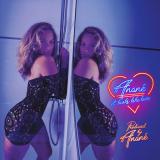
Anané - It Looks Like Love

Anané’s colourful life in music has seen her do everything from singing at the famous pre-game show at Super Bowl XLI as part of the group Elements of Life, DJ at hotspots like Hi Ibiza, Pacha NYC and Ushuaïa to name a few, while also curating her own monthly residency Nulu Movement, now ten years strong at Le Bain NYC, release unique blends of Afro, house, and pop on labels like Vega Records, and head up her own imprints, Nulu Music and Nulu Electronic. The Cape Verdean-born DJ, producer, vocalist, and songwriter has had countless club hits and has released acclaimed albums like ‘Ananésworld’ and ‘Chapters Of Becoming’, often with a lush, live, and orchestrated style that is truly unique.

With this release, Anané steps forward with her first solo production to date. Here she serves up the sumptuous ‘It Looks Like Love’, a poised, elegant house sound with her own smoking, soulful vocals and classy strings bringing colour to an Afro groove packed with infectious bounce. Neat guitar riffs and silky synths all enrich this most sophisticated sound. The first mix sees Anané link up with veteran Italian Christian Mantini, who has hosted Sunset Ritual parties with Anané and Louie Vega since 2013. Their dub is rooted in warm, rubbery drums that are even deeper and more immersive than the original.

Manda Moor & Sirus Hood are a red-hot contemporary pair who run the Mood label and are defining the contemporary underground. Their remix is more driving, but it retains the soulful vibe with breezy pads and jazzy motifs drifting in and out above the swaggering groove.

Rotterdam-based Chicagoan Jamie 3:26 is a master at blending disco, soul, and house into timeless sounds, and here he delivers a loopy rework that pairs deep drive and sun-kissed vibes with funky, Chic-style bass guitar motifs.

pré-commande17.04.2026

il devrait être publié sur 17.04.2026

16,39
Gigi - Illuminated Audio (2x12")

180g Heavy double vinyl LP with liner notes by Tyran Grillo. Limited Japanese Obi for the first pressing. Original artwork by Russell Mills and photography by Jean-Baptiste Mondino.

The third Time Capsule is a body of dub reinterpretations by celebrated producer Bill Laswell of Ethiopian singer Gigi. Curated by Tokyo record collector, music researcher and seasoned reissue supervisor Ken Hidaka, it is the first time Illuminated Audio is pressed to vinyl after its CD release in 2003.

Ejigayehu Shibabaw was born in 1974 in Chagni, northwestern Ethiopia and by pursuing a career as a singer, went against her father’s strict, traditional gender roles. As Gigi, she embraced the same musical freedom she had strived for in her personal life, incorporating the Ethiopian church, funk, hip-hop, West and South African music into her work. She first settled in Nairobi, then Addis Ababa, where she quickly established herself as one of the city’s leading singers. A move to San Francisco in 1998 led to a long and fruitful creative partnership with bassist and producer Bill Laswell.

Around the same time, Chris Blackwell had stepped away from Island Records to start the art house film company and label Palm Pictures. He took an interest in Gigi and together with Laswell, pulled together an all-star cast of musicians for her self-titled US debut album, including Herbie Hancock, Pharoah Sanders and Wayne Shorter. It won international critical acclaim, not just for its musicianship but for making Gigi a “defining voice for the Ethiopian expatriate community”, as journalist Tyran Grillo praises in his Time Capsule liner notes. From the nation-defining 1896 victory over Italian invaders to the quiet revolutionaries who wear simple shemma garments, Grillo believes the themes in Gigi make it “a shower of sunlight on her homeland for those ignorant of its struggles.”

After its success, Blackwell encouraged them to go back into the studio to rethink the album and Illuminated Audio was born. “Anyone can make a voice sound worldly”, Grillo remarks, “but rare are those who can make one sound inner-worldly.” Gigi was clear with Laswell to give her vocals a minor role “because it’s already been done.” Instead her Amharic verse is fleeting, exhaling through the textures like ghostly fragments; soaring yet muted. Yet the album is still titled under her name, an assertion by Laswell of her central role in the album’s creation. Not only was it a fully endorsed project by Gigi, but she would be present throughout its development, giving feedback on half-finished ideas as Laswell played them back in the studio. “It works perfectly”, she reflected after the album’s release. “We wanted to capture the whole spirit of each track, and Bill’s remixes create a different music language that really puts you in a pleasant place”.

This new vocabulary takes its lead from a technical approach that Laswell had been perfecting during a furtive creative period at the turn of the millennium. Much like his ambient interpretations of Miles Davis (Panthalassa, 1998), Bob Marley (Dreams of Freedom, 1997), and Carlos Santana (Divine Light, 2001), Laswell approached Illuminated Audio by returning to the original multitrack masters. Gigi wasn’t just reworked, but recomposed into an expansive lattice of instruments, submerged in a watery ambience of dub and trance undercurrents.

Sonically, this new language that Gigi refers to, is manifested by the original album’s more understated parts being pushed to the fore. Explaining his contrasting methods, Laswell saw Gigi as being “put together in a way that fits”. Contrastingly, in Illuminated Audio, “a lot of things that I featured in the remix weren’t as audible in the original.” Instrumentation laying near-dormant, deep in the mix, are brought to the fore: the acid rock guitar and Wayne Shorter’s saxophone on ‘Tew Ante Sew’, Graham Haynes’ flugelhorn on ‘Nafekeñ’, Laswell’s bass on ‘Kahn’, the melodica in Mengedegna or the floating synths and talking drums in ‘Gud Fella’.

Brought to his attention by mentor DJ Nori, Hidaka describes Illuminated Audio as a “masterful sonic exploration into ethereal ambience and dub” and made sure this reissue also contained a full remaster to give its “deep musicality” much better dynamics and density in the overall sound. Hidaka admits that Laswell's music “is sometimes so out-there, it is often misunderstood” and, indeed, to dub album non-believers this might seem like a prolific producer imposing himself on another artist’s work; eternally developing rearrangements that never quite get to its destination. But that’s missing its true power and triumph. This is more than the reissue of a remix, but “a wholly unique musical entity”, as Hidaka describes. Illuminated Audio refers to the illuminated manuscripts that comprise the major part of Ethiopian art and its new compositions stand in proud solitude as a rare body of reworks that both informs and enhances their originals.

pré-commande17.04.2026

il devrait être publié sur 17.04.2026

18,07
Bonus Points - Off Topic

Bonus Points

Off Topic

7"-VinylCB117B-7
Cold Busted
17.04.2026

The first Jet Set series is back in print and now repressed on colored vinyl. St. Louis producer Bonus Points scores high with Off Topic, an outstanding four-song EP for the Cold Busted label. With previous appearances on Chillhop Records, Sundae Sauuce, Horizon, and others, Bonus Points delivers a dazzling take on boom-bap beats and future funk. Bonus Points is a graphic designer by day and, in turn, his musical compositions reflect attention to color, form, and detail. These beats are visual. The release’s title cut opens things with a spacey intro before delving into some serious sunshine lounge vibes. A cool breeze wafts through these melodies. “Zoned Out” follows with a distant, romantic guitar and a lonesome, pensive feeling that’s perfect for seaside pondering. Next up is the old-timey jazz bop of “Coffee Lounge,” recalling the St. Louis swing of yesteryear over some phat beats. Off Topic closes with “Back And Forth

pré-commande17.04.2026

il devrait être publié sur 17.04.2026

14,71
Anderson .Paak - Malibu (10 Year Anniversary) (Lp 2x12")
  • A1: The Bird
  • A2: Heart Don't Stand A Chance
  • A3: The Waters (Feat. Bj The Chicago Kid)
  • A4: The Season / Carry Me
  • B1: Put Me Thru
  • B2: Am I Wrong (Feat. Schoolboy Q)
  • B3: Without You (Feat. Rapsody)
  • B4: Parking Lot
  • C1: Lite Weight (Feat. The Free Nationals United Fellowship Choir)
  • C2: Room In Here (Feat. The Game & Sonyae Elise)
  • C3: Water Fall (Interlude)
  • C4: Your Prime
  • D1: Come Down
  • D2: Silicon Valley
  • D3: Celebrate
  • D4: The Dreamer (Feat. Talib Kweli & Timan Family Choir)
également disponible

Colored Vinyl:[30,88 €]

Green Cassette[15,08 €]


Ten years ago, Anderson .Paak didn't just release an album; he staged a full-scale takeover of the soul and hip-hop landscape. Released on January 15, 2016, Malibu served as the definitive arrival of an artist who had spent years grinding in the underground before a star-making turn on Dr. Dre’s Compton. While his previous work hinted at his potential, Malibu was the moment the world met the "Cheeky Andy" persona in full—a virtuosic drummer, a raspy-voiced crooner, and a sharp-witted rapper all rolled into one. The album is a sprawling, sun-drenched journey through the Southern California coast, blending 1970s funk, church-reared gospel, and gritty boom-bap into something that feels both nostalgic and entirely futuristic. With a heavyweight production lineup including 9th Wonder, Madlib, Kaytranada, and Hi-Tek, the record maintains a warm, analog texture that was a breath of fresh air in an increasingly digital era. It’s an album that breathes, full of intentional imperfections and the kind of "in-the-pocket" groove that can only come from a seasoned live performer. Beyond the infectious, dance-floor-ready energy of tracks like "Am I Wrong" and "Come Down," the album is a deeply autobiographical masterwork. .Paak uses the 65-minute runtime to unpack his life story with startling clarity, touching on his mother’s gambling addiction, his father’s incarceration, and his own brushes with homelessness with a sense of resilience that never feels heavy-handed. He weaves these heavy themes through a lens of triumph, grounded by vintage surfing documentary samples that give the project its cinematic, coastal atmosphere. It’s a celebratory record born out of struggle, anchored by his impeccable technicality on the drums and a guest list—featuring ScHoolboy Q, Rapsody, and The Game—that feels hand-picked to complement his specific brand of West Coast swagger. A decade later, Malibu stands as a modern classic and the blueprint for the soulful revivalism that would eventually lead .Paak to global superstardom and Grammy-winning heights. It remains a testament to the idea that the most profound music often comes from the most personal places, proving ten years on that the best way to move forward is to stay rooted in the groove.

pré-commande17.04.2026

il devrait être publié sur 17.04.2026

41,13
Anderson .Paak - Malibu (10 Year Anniversary) (Lp 2x12")

Ten years ago, Anderson .Paak didn't just release an album; he staged a full-scale takeover of the soul and hip-hop landscape. Released on January 15, 2016, Malibu served as the definitive arrival of an artist who had spent years grinding in the underground before a star-making turn on Dr. Dre’s Compton. While his previous work hinted at his potential, Malibu was the moment the world met the "Cheeky Andy" persona in full—a virtuosic drummer, a raspy-voiced crooner, and a sharp-witted rapper all rolled into one. The album is a sprawling, sun-drenched journey through the Southern California coast, blending 1970s funk, church-reared gospel, and gritty boom-bap into something that feels both nostalgic and entirely futuristic. With a heavyweight production lineup including 9th Wonder, Madlib, Kaytranada, and Hi-Tek, the record maintains a warm, analog texture that was a breath of fresh air in an increasingly digital era. It’s an album that breathes, full of intentional imperfections and the kind of "in-the-pocket" groove that can only come from a seasoned live performer. Beyond the infectious, dance-floor-ready energy of tracks like "Am I Wrong" and "Come Down," the album is a deeply autobiographical masterwork. .Paak uses the 65-minute runtime to unpack his life story with startling clarity, touching on his mother’s gambling addiction, his father’s incarceration, and his own brushes with homelessness with a sense of resilience that never feels heavy-handed. He weaves these heavy themes through a lens of triumph, grounded by vintage surfing documentary samples that give the project its cinematic, coastal atmosphere. It’s a celebratory record born out of struggle, anchored by his impeccable technicality on the drums and a guest list—featuring ScHoolboy Q, Rapsody, and The Game—that feels hand-picked to complement his specific brand of West Coast swagger. A decade later, Malibu stands as a modern classic and the blueprint for the soulful revivalism that would eventually lead .Paak to global superstardom and Grammy-winning heights. It remains a testament to the idea that the most profound music often comes from the most personal places, proving ten years on that the best way to move forward is to stay rooted in the groove.

pré-commande17.04.2026

il devrait être publié sur 17.04.2026

30,88
Anderson .Paak - Malibu (10 Year Anniversary) (MC)

Ten years ago, Anderson .Paak didn't just release an album; he staged a full-scale takeover of the soul and hip-hop landscape. Released on January 15, 2016, Malibu served as the definitive arrival of an artist who had spent years grinding in the underground before a star-making turn on Dr. Dre’s Compton. While his previous work hinted at his potential, Malibu was the moment the world met the "Cheeky Andy" persona in full—a virtuosic drummer, a raspy-voiced crooner, and a sharp-witted rapper all rolled into one. The album is a sprawling, sun-drenched journey through the Southern California coast, blending 1970s funk, church-reared gospel, and gritty boom-bap into something that feels both nostalgic and entirely futuristic. With a heavyweight production lineup including 9th Wonder, Madlib, Kaytranada, and Hi-Tek, the record maintains a warm, analog texture that was a breath of fresh air in an increasingly digital era. It’s an album that breathes, full of intentional imperfections and the kind of "in-the-pocket" groove that can only come from a seasoned live performer. Beyond the infectious, dance-floor-ready energy of tracks like "Am I Wrong" and "Come Down," the album is a deeply autobiographical masterwork. .Paak uses the 65-minute runtime to unpack his life story with startling clarity, touching on his mother’s gambling addiction, his father’s incarceration, and his own brushes with homelessness with a sense of resilience that never feels heavy-handed. He weaves these heavy themes through a lens of triumph, grounded by vintage surfing documentary samples that give the project its cinematic, coastal atmosphere. It’s a celebratory record born out of struggle, anchored by his impeccable technicality on the drums and a guest list—featuring ScHoolboy Q, Rapsody, and The Game—that feels hand-picked to complement his specific brand of West Coast swagger. A decade later, Malibu stands as a modern classic and the blueprint for the soulful revivalism that would eventually lead .Paak to global superstardom and Grammy-winning heights. It remains a testament to the idea that the most profound music often comes from the most personal places, proving ten years on that the best way to move forward is to stay rooted in the groove.

pré-commande17.04.2026

il devrait être publié sur 17.04.2026

15,08
FreedomB - Essence Of Soul EP

FreedomB Delivers Timeless Groove on 'Essence Of Soul EP'. FreedomB is an artist defined by groove and movement rather than place. Drawing influence from jazz, funk, soul, and the earliest house and electronic rhythms, his sound is rooted in timeless dance music traditions and built for long, immersive nights on the floor. Focused on rhythm, flow, and emotional energy, FreedomB's productions exist to make people dance without compromise. With releases on labels such as Knee Deep In Sound, Roush, Toolroom, Sola, ElRow Music, and Flashmob Records, FreedomB has earned support from leading names including Hot Since 82, Supernova, Hector Couto, Solardo, and Flashmob. Now joining the Definitive Recordings catalogue, FreedomB presents 'Essence Of Soul EP', a two-track release that captures his deep-rooted love for classic house, disco, and soulful dancefloor energy. On 'Mi House Es Tu House', FreedomB delivers pure house nostalgia. A groovy beat and subtle bassline form the foundation, joined by classic piano chords that immediately set the tone. As the track unfolds, disco samples, a 90s-style synth melody, and a soulful female vocal sample build toward a powerful breakdown before dropping back into full groove, introducing a second timeless house synth theme. It's uplifting, energetic, and perfectly designed for any house music dancefloor. The title track 'Essence Of Soul' shifts into a deeper, more disco-infused direction. A straighter, nu-disco- inspired rhythm sets the pace while layered synths evolve throughout the arrangement. An 80s-style bassline anchors the groove, accompanied by filtered vocal chants, disco effects, and a spoken-word vocal reflecting on the meaning of music and the dancefloor. As the track progresses, rich piano chords and classic high house strings lift the energy into an emotional, late-night crescendo. 'Essence Of Soul EP' is a celebration of groove, soul, and timeless house energy. A release that lets the music speak and invites you to dance.

pré-commande17.04.2026

il devrait être publié sur 17.04.2026

14,71
Articles par page:
N/ABPM
Vinyl